
Julian Symons (1912–1994)
Author of Bloody Murder From the Detective Story to the Crime Novel: A History
About the Author
Series
Works by Julian Symons
The Julian Symons Omnibus: The Man Who Killed Himself | The Man Whose Dreams Came True | The Man Who Lost His Wife (1967) 32 copies
El hombre que se mato a si mismo. El circulo se estrecha. El hombre cuyos suenos se realizaron (1983) 19 copies, 1 review
Criminal acts : three by Julian Symons (The Narrowing Circle; The End of Solomon Grundy; and The Blackheath Poisonings) (1978) 12 copies
The second man: poems 3 copies
Credit to Shakespeare [short story] 3 copies
Confusions about X 2 copies
The Santa Claus Club 2 copies
Colin Watson 1 copy
Ungdom, galskab - mord 1 copy
Symons Julian 1 copy
The Book Collector (109) 1 copy
Nettet strammes 1 copy
VENENOS VITORIANOS (PE2L64) 1 copy
Slutet på visan 1 copy
Drohende Schatten 1 copy
Associated Works
The New Bedside, Bathtub, and Armchair Companion to Agatha Christie (1986) — Foreword, some editions; Introduction — 615 copies, 5 reviews
The Bedside, Bathtub, and Armchair Companion to Agatha Christie (1979) — Introduction, some editions — 230 copies, 3 reviews
Murder by the Book: Literary Mysteries from Alfred Hitchcock Mystery Magazine and Ellery Queen's Mystery Magazine (1995) — Contributor — 71 copies
The Murder Book: An Illustrated History of the Detective Story (1971) — Foreword, some editions — 70 copies, 3 reviews
Murder at Teatime: Mysteries in the Classic Cozy Tradition (1996) — Contributor — 56 copies, 2 reviews
Bodies from the Library 5: Forgotten Stories of Mystery and Suspense from the Golden Age of Detection (2022) — Contributor — 48 copies, 1 review
All but Impossible! An Anthology of Locked Room and Impossible Crime Stories by Members of the Mystery Writers of America (1981) — Contributor — 30 copies
Ellery Queen's murdercade: 23 stories from Ellery Queen's mystery magazine (Mystery annual ; 29) (1975) — Contributor — 25 copies
Agenda : Wyndham Lewis special issue — Contributor — 6 copies
Killers of the Mind: A Collection of Stories by the Mystery Writers of America (1974) — Contributor — 5 copies
Den lystige bedemand og andre hårrejsende historier af gæster i Poe-klubben (1975) — Author, some editions — 3 copies, 1 review
New poems 1944. An anthology of American and British verse with a selection of poems from the armed forces. (1944) — Contributor — 2 copies
Appendici in giallo 1 — Contributor — 1 copy
Ellery Queen's Mysterie Magazine 5 — Contributor — 1 copy
Tagged
Common Knowledge
- Canonical name
- Symons, Julian
- Legal name
- Symons, Julian Gustave
- Birthdate
- 1912-05-30
- Date of death
- 1994-11-19
- Gender
- male
- Occupations
- crime novelist
editor
literary critic
historical novelist
essayist
biographer (show all 8)
teacher
poet - Organizations
- Detection Club
Amherst College
British Army (WWII) - Awards and honors
- MWA Grand Master (1982)
Cartier Diamond Dagger (1990) - Relationships
- Symons, A. J. A. (brother)
- Short biography
- Julian Symons, born in London, was a younger brother, and later the biographer, of the writer A. J. A. Symons. He left school at 14. He founded the poetry magazine Twentieth Century Verse in 1937 and edited it for two years. He tried crime writing in a light–hearted way before World War II, and later became a leader of the genre. As an early Trotskyite, he applied for recognition as a conscientious objector at the start of WW II, but ended up in the Royal Armoured Corps from 1942 to 1944. After a period as an advertising copywriter, he became a full-time writer in 1947. His use of irony and black humor to show the violence behind the respectable masks of society, and his emphasis on character and psychology, have caused many to consider his books mainstream fiction. During his career, he won two Edgar Awards from the Mystery Writers of America and, in 1982, received the MWA's Grand Master Award. Symons served as the president of the Detection Club from 1976 to 1985. His 1972 book Bloody Murder: From the Detective Story to the Crime Novel (published as Mortal Consequences in the USA) is one of the best-known critical works in the field of crime fiction. Symons wrote more than 30 crime novels and story collections and also made occasional forays into historical mystery, such as The Blackheath Poisonings (1978), which was filmed for television in 1992.
- Nationality
- UK
- Birthplace
- Clapham, London, England, UK
- Places of residence
- London, England, UK
- Place of death
- Walmer, Kent, England, UK
- Map Location
- England, UK
Members
Reviews
The Progress of a Crime: A Fireworks Night Mystery (British Library Crime Classics) by Julian Symons
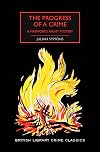
‘’They went out into the streets of the city where it seemed always to be raining, the soft rain of autumn that made the few cars now moving around the city centre suck and lick out the shiny black roads.’’
A stubbing takes place on Guy Fawkes Night. The bonfire is enough to light the faces of the murderers.
Or is it?
Two young men are accused of the crime, members of one of the local gangs, formed by children - for that is what they are - who are desperate for someone to listen to show more them and their needs. The parents’ utter failure to be there for their children becomes the root of a crime that draws the attention of the Press aka. the vultures with pens and cameras instead of claws. But not all of them are the same. A young journalist becomes involved in the case - in more ways than one - and tries to discover the truth.
Julian Symons’s mystery is a powerful, solemn commentary on how family and society can ostracise a person and drive them to crime and madness. This is what isolation and lack of understanding do to the young members of our societies. This is why parents need to take a good, long look into the mirror before they drive their children to despair. This is why teachers need to educate and nurture and stop treating the classroom as a field to exercise our twisted notion of authority over young souls. In Symons’s story, the crime takes a secondary role. What really counts is the psychological impact of being the accused in a secretive community that points the finger without a second thought.
We witness the machinations of the trial process, the intrigues and calculations of seeking the sensational material for the first page, the battle of Labour VS Tories, two parties that don’t give a fig about the people, and the changes that defined England during the 60s. The beautiful relationship between Jill (I loved her!) and Hugh made this excellent courtroom drama even more striking. And don’t tell me there is no such thing as love at first sight because THERE IS and you are utterly clueless. Pun intended.
Poignant Introduction - as always - by Martin Edwards.
My reviews can also be found on https://theopinionatedreaderblog.wordpress.com/ show less
A stubbing takes place on Guy Fawkes Night. The bonfire is enough to light the faces of the murderers.
Or is it?
Two young men are accused of the crime, members of one of the local gangs, formed by children - for that is what they are - who are desperate for someone to listen to show more them and their needs. The parents’ utter failure to be there for their children becomes the root of a crime that draws the attention of the Press aka. the vultures with pens and cameras instead of claws. But not all of them are the same. A young journalist becomes involved in the case - in more ways than one - and tries to discover the truth.
Julian Symons’s mystery is a powerful, solemn commentary on how family and society can ostracise a person and drive them to crime and madness. This is what isolation and lack of understanding do to the young members of our societies. This is why parents need to take a good, long look into the mirror before they drive their children to despair. This is why teachers need to educate and nurture and stop treating the classroom as a field to exercise our twisted notion of authority over young souls. In Symons’s story, the crime takes a secondary role. What really counts is the psychological impact of being the accused in a secretive community that points the finger without a second thought.
We witness the machinations of the trial process, the intrigues and calculations of seeking the sensational material for the first page, the battle of Labour VS Tories, two parties that don’t give a fig about the people, and the changes that defined England during the 60s. The beautiful relationship between Jill (I loved her!) and Hugh made this excellent courtroom drama even more striking. And don’t tell me there is no such thing as love at first sight because THERE IS and you are utterly clueless. Pun intended.
Poignant Introduction - as always - by Martin Edwards.
My reviews can also be found on https://theopinionatedreaderblog.wordpress.com/ show less
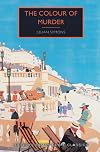
I'm always tempted by these British Library Crime Classics editions; they promise nostalgic tales of detection where Cambridge dons lace their rivals' tea with arsenic. The Colour of Murder comes from a later, less comforting period of British history – the postwar years of the Profumo scandal. There are more peroxide blondes and seedy bars than high tables and gowns in this squalid modern environment. At the centre of the book is a relationship that starts out as fantasy and takes a sour show more turn, not dissimilar from the Thompson/Bywaters murder of the 1920s. Minor characters are clearly important to Symons, and he peoples his suburban and seaside locations with callous and self-centred individuals who would be at home in one of Balzac's grimmer novels. The book is well-written; Julian Symons was the brother of AJA Symons, whose biography he wrote, but he has a more 'social realist' bent than his aesthetic sibling. The Colour of Murder is not much fun as a novel, but better than many in the genre – just don't expect anything in the Poirot/Whimsey/Allen/Campion line. show less
Everyone in this book is awful, pathetic, or both. Not terribly so: just ordinarily awful, mundanely pathetic. And I suppose not quite everyone. There's a barrister whose only character flaw is a measure of egotism, and a likeable prostitute. But every other character, minor or major, is composed in a rebarbative key. It's quite an achievement to make even the brief walk-on parts believably unpleasant.
The narrative centres on John Wilkins, a minor-league fantasist in denial about his show more drinking problem. His fantasies and his drinking owe much to his grasping, social-climbing wife, May, and his overbearing, meddling mother. Their intertwined lives induce an atmosphere of intense entrapment. The reader is given to wonder how many similar miserable situations have been avoided by the liberalisation of the divorce laws and the loosening of stifling middle-class social norms since the 1950s. If John and May could just have separated painlessly, and acceptably to all, none of the plot happens.
Since they can't separate, the plot happens. John's fantasies lead him into a tangle of lies and a delusional semi-affair with a young woman; his lies, along with his drinking and concomitant blackouts, contribute to the credibility of the murder case against him when she's found dead. The book has two parts. The first is a long pre-trial interview between John and a psychiatrist. He was irrationally involved with her. He may have killed her. He doesn't know. He can't remember. The second is the trial itself. An epilogue seems intended to cement the ambiguity surrounding the murder case, but rests on a coincidence so far-fetched that the ambiguity instead collapses. The book might have been better without it.
The Colour of Murder was reissued as a British Library Crime Classic in 2018, so it wasn't just a prize-winner in 1957; it is esteemed today. Both accolades deserve inquiry.
Why did it win a prize in 1957? Perhaps because of the forensic focus on the states of mind of the central suspect. The introduction to the BL edition highlights this as a novelty at the time, and certainly in comparison to novels from the "Golden Age" of crime novels, there is considerable depth, nuance, and plausibility to the psychological characterisation. This is mostly in the first part of the book. The trial part is nicely done, and I might have appreciated it more had I not recently read Grierson's similar, better effort. The introduction claims that Symons uses this part to "explore the nature of justice", but I can't say I found much exploration worth considering.
Symons' reputation in the world of crime fiction now rests mostly on his history of the genre, Bloody Murder, rather than on his own novels. So why reissue this one (and one other, The Belting Inheritance)? While it certainly has merits as a novel, it's also fascinating as a social document of the 1950s. The introduction notes this, but in relation to concrete facts about the prevalence of "television parties" and racism. I was more struck by what the book tells about the claustrophobic, small-minded, straitened nature of lower-middle-class 1950s life: among other elements, how painfully important it was to cleanse oneself from any taint of unsuitable social origins or associations, and how temptingly easy it was to re-associate oneself to disastrous effect. If you ever want to read a novel that makes you both aware and glad that the not-too-distant past really is the past, this is one to consider. show less
The narrative centres on John Wilkins, a minor-league fantasist in denial about his show more drinking problem. His fantasies and his drinking owe much to his grasping, social-climbing wife, May, and his overbearing, meddling mother. Their intertwined lives induce an atmosphere of intense entrapment. The reader is given to wonder how many similar miserable situations have been avoided by the liberalisation of the divorce laws and the loosening of stifling middle-class social norms since the 1950s. If John and May could just have separated painlessly, and acceptably to all, none of the plot happens.
Since they can't separate, the plot happens. John's fantasies lead him into a tangle of lies and a delusional semi-affair with a young woman; his lies, along with his drinking and concomitant blackouts, contribute to the credibility of the murder case against him when she's found dead. The book has two parts. The first is a long pre-trial interview between John and a psychiatrist. He was irrationally involved with her. He may have killed her. He doesn't know. He can't remember. The second is the trial itself. An epilogue seems intended to cement the ambiguity surrounding the murder case, but rests on a coincidence so far-fetched that the ambiguity instead collapses. The book might have been better without it.
The Colour of Murder was reissued as a British Library Crime Classic in 2018, so it wasn't just a prize-winner in 1957; it is esteemed today. Both accolades deserve inquiry.
Why did it win a prize in 1957? Perhaps because of the forensic focus on the states of mind of the central suspect. The introduction to the BL edition highlights this as a novelty at the time, and certainly in comparison to novels from the "Golden Age" of crime novels, there is considerable depth, nuance, and plausibility to the psychological characterisation. This is mostly in the first part of the book. The trial part is nicely done, and I might have appreciated it more had I not recently read Grierson's similar, better effort. The introduction claims that Symons uses this part to "explore the nature of justice", but I can't say I found much exploration worth considering.
Symons' reputation in the world of crime fiction now rests mostly on his history of the genre, Bloody Murder, rather than on his own novels. So why reissue this one (and one other, The Belting Inheritance)? While it certainly has merits as a novel, it's also fascinating as a social document of the 1950s. The introduction notes this, but in relation to concrete facts about the prevalence of "television parties" and racism. I was more struck by what the book tells about the claustrophobic, small-minded, straitened nature of lower-middle-class 1950s life: among other elements, how painfully important it was to cleanse oneself from any taint of unsuitable social origins or associations, and how temptingly easy it was to re-associate oneself to disastrous effect. If you ever want to read a novel that makes you both aware and glad that the not-too-distant past really is the past, this is one to consider. show less
The Progress of a Crime: A Fireworks Night Mystery (British Library Crime Classics) by Julian Symons
An unexpectedly excellent crime story which takes the form of a murder investigation and follow it from the time of the crime, right through to the trial its conclusion. Rather than being a classic who-dunnit. the story follows the progression of events from multiple angles - the small and large press journalists covering it, the witnesses, the detectives, the families and the barristers - and the social effects it has on everything that goes on around it within 1960's Britain
An apparent show more open/shut case, there are twists and turns to the crime that give it an extra dimension of sensationalism to offset the drier aspects of following what feels like a real life crime story playing out in a condensed time frame. Genre aside, what Progress of Crime does so well is keep everything extremely tight and should be considered a work aspiring writers could take lessons from in how to keep a plot to its essentials and remain engaging throughout.
It's fine little story and whilst it was apparently a big deal in its time, has dropped off the radar in the modern day - perhaps because of how dated the sensibilities, the society and the people of the day feels against life today. Certainly that didn't put me off and I believe it deserves more recognition as a top quality slice of British crime fiction. show less
An apparent show more open/shut case, there are twists and turns to the crime that give it an extra dimension of sensationalism to offset the drier aspects of following what feels like a real life crime story playing out in a condensed time frame. Genre aside, what Progress of Crime does so well is keep everything extremely tight and should be considered a work aspiring writers could take lessons from in how to keep a plot to its essentials and remain engaging throughout.
It's fine little story and whilst it was apparently a big deal in its time, has dropped off the radar in the modern day - perhaps because of how dated the sensibilities, the society and the people of the day feels against life today. Certainly that didn't put me off and I believe it deserves more recognition as a top quality slice of British crime fiction. show less
Lists
Edgar Award (1)
Awards


You May Also Like


Associated Authors
Statistics
- Works
- 117
- Also by
- 137
- Members
- 3,613
- Popularity
- #7,011
- Rating
- 3.9
- Reviews
- 77
- ISBNs
- 401
- Languages
- 10
- Favorited
- 4