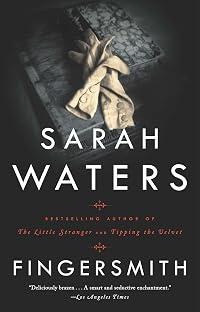
Fingersmith
by Sarah Waters
On This Page
Description
A Penguin Book Club Pick "Oliver Twist with a twist . . . Waters spins an absorbing tale that withholds as much as it discloses. A pulsating story."--The New York Times Book Review Sue Trinder is an orphan, left as an infant in the care of Mrs. Sucksby, a "baby farmer," who raised her with unusual tenderness, as if Sue were her own. Mrs. Sucksby's household, with its fussy babies calmed with doses of gin, also hosts a transient family of petty thieves--fingersmiths--for whom this house show more in the heart of a mean London slum is home. One day, the most beloved thief of all arrives--Gentleman, an elegant con man, who carries with him an enticing proposition for Sue: If she wins a position as the maid to Maud Lilly, a naïve gentlewoman, and aids Gentleman in her seduction, then they will all share in Maud's vast inheritance. Once the inheritance is secured, Maud will be disposed of--passed off as mad, and made to live out the rest of her days in a lunatic asylum. With dreams of paying back the kindness of her adopted family, Sue agrees to the plan. Once in, however, Sue begins to pity her helpless mark and care for Maud Lilly in unexpected ways. . . . But no one and nothing is as it seems in this Dickensian novel of thrills and reversals. show lessTags
Recommendations
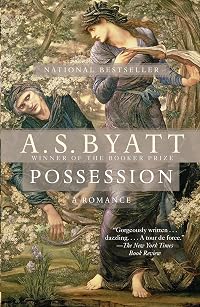
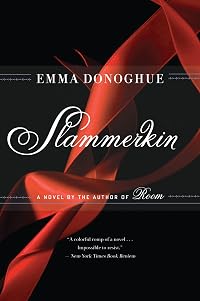
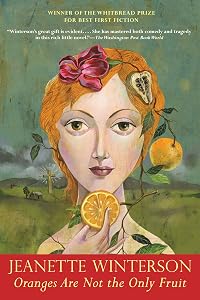
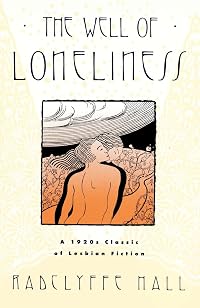
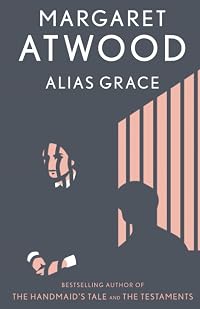
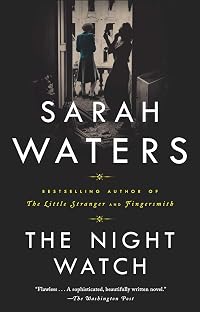
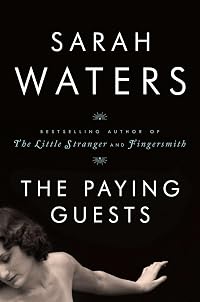
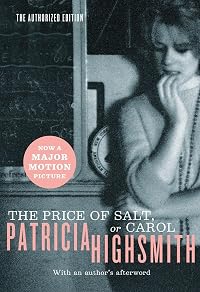





Member Recommendations
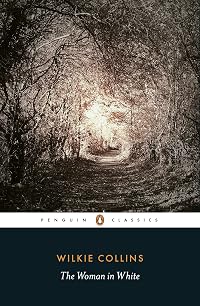
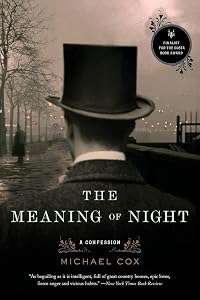
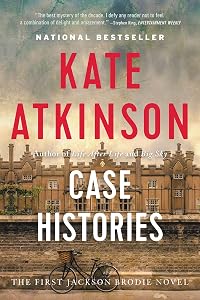
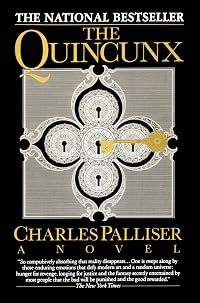
teelgee Definitely see where Sarah Waters got her inspiration!
Also recommended by wonderlake
201
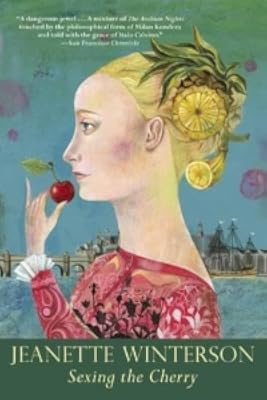
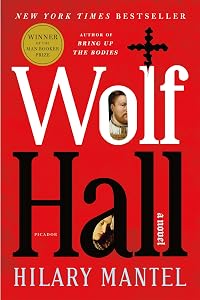
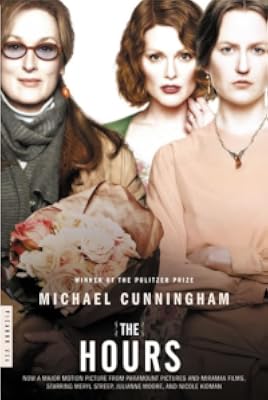
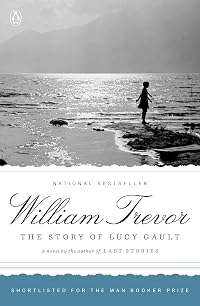
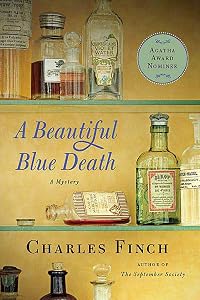
YossarianXeno Both rollicking reads covering the more seedy aspects of life in 19th Century London
Also recommended by starfishian, Booksloth
122
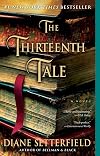
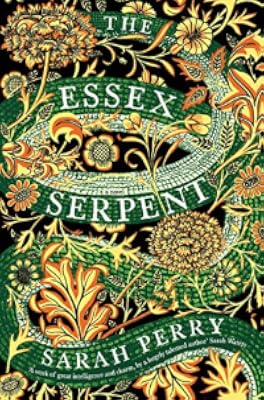
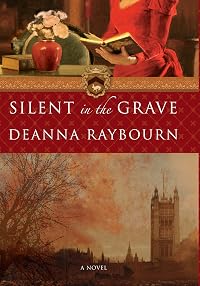
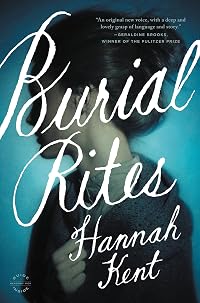
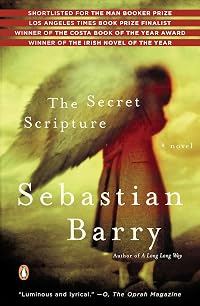
BookshelfMonstrosity These novels offer gothic suspense's classic creepy atmosphere, though with somewhat different story-lines. Fingersmith takes place in Victorian England while The Thirteenth Tale is contemporary, but both emphasize books, mysteries about birth and identity, insanity, and grand houses.
Also recommended by Alialibobali
72
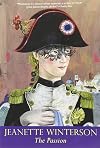
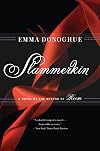
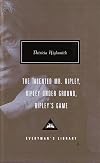
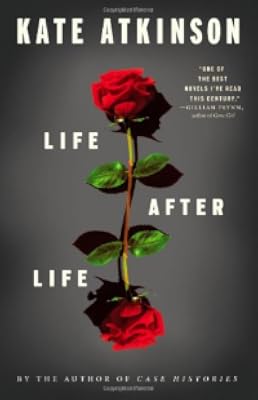
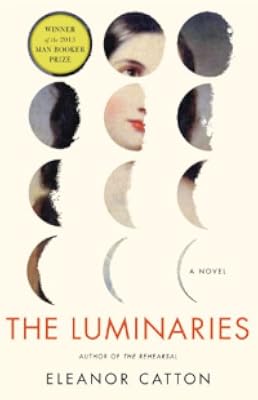
charlie68 Also a series of stories of the anti-hero.
30
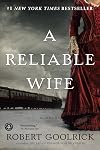
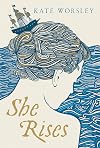
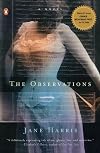
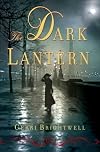
charlie68 Thematically similar.
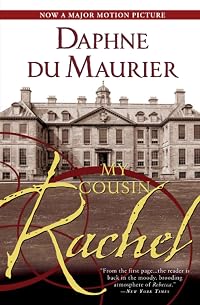
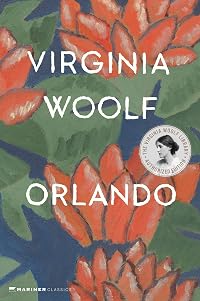
themulhern Books set in an historical English and evoking the writers of that time.
22
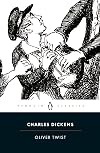
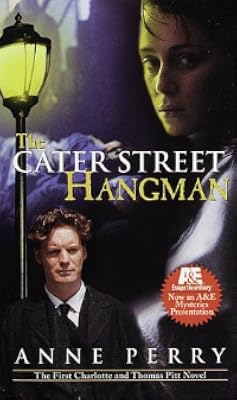
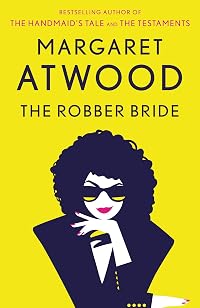
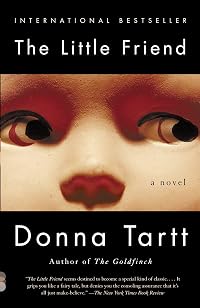
charlie68 Similar look at the underclass of London in Victorian times, but better written.
22
Member Reviews
I read this ages ago at the behest of a good friend who had found it "mesmerizing". She was wrong. For all the things she loved about it, I hated, and so we provided a perfect counterpoint.
Occasionally, I rate novels as a mess for various inherent failings: this one is the prototype of all those messes. It is a mish-mash of disparate genres, writing styles, themes, motifs, composition and extremely poor characterization and development. The ingredients are quite repulsive in fact when blended together, to make a veritable Monster Mash of a Mess.
I see what Waters is "trying" to do, but the novel fails completely, in my world.
The plot is brilliantly humdrum and also so melodramatically overwrought that I envisioned tortured hankies lying show more by the wayside, in heaps, for those readers who walk the path that leads to the mansion of cheerless porn and mid-Vic titillation.
Yawn.
That being said, this was a masterpiece compared to Tipping the Velvet.
"Honestly, my dear," my mother would say, "I just can't believe what passes for literature anymore!" show less
Occasionally, I rate novels as a mess for various inherent failings: this one is the prototype of all those messes. It is a mish-mash of disparate genres, writing styles, themes, motifs, composition and extremely poor characterization and development. The ingredients are quite repulsive in fact when blended together, to make a veritable Monster Mash of a Mess.
I see what Waters is "trying" to do, but the novel fails completely, in my world.
The plot is brilliantly humdrum and also so melodramatically overwrought that I envisioned tortured hankies lying show more by the wayside, in heaps, for those readers who walk the path that leads to the mansion of cheerless porn and mid-Vic titillation.
Yawn.
That being said, this was a masterpiece compared to Tipping the Velvet.
"Honestly, my dear," my mother would say, "I just can't believe what passes for literature anymore!" show less
An atmospheric Dickensian tale of a family of crooks and schemers who set their sights on a noblewoman of fortune. Central to this plot is Susan, an orphaned pickpocket who will pose as a ladies maid to help John Rivers, posing as a gentleman, to woo and abscond with young heiress, Maud Lilly. Sue has been waiting her whole life for this moment when she will make her fortune and by extension, the fortune of her odd little family.
However, after spending a few weeks with her mark, Maud, Susan finds herself second guessing the plan. To her eyes, Maud is little more than a lonely prisoner in her Uncle's country estate. She has never travelled much and lives under the weight of her dead mother's madness. Although the plan is to have Rivers show more marry her and immediately commit her to a home for the insane, Sue cannot help but pity her. As time goes by, these feelings begin to transmute into ones she doesn't have words for. The secret touches she shares with Maud confuse her, and although the scheme she is putting in motion disgusts her, she finds herself incapable of stopping it.
After the marriage however, it is Susan who is committed to an asylum. The whole plot has been years in the making and both Maud and Sue find themselves imprisoned. They both discover that they have been lied to their entire lives. Now they will need all their wits and bravery if they are to escape and find each other again.
I love books like this where I can really spend time getting to know characters and their history. This book is immersive and hauntingly personal. Each character is fully developed and detailed. The twist mid book took me totally by surprise and left me reeling. Masterfully done. show less
However, after spending a few weeks with her mark, Maud, Susan finds herself second guessing the plan. To her eyes, Maud is little more than a lonely prisoner in her Uncle's country estate. She has never travelled much and lives under the weight of her dead mother's madness. Although the plan is to have Rivers show more marry her and immediately commit her to a home for the insane, Sue cannot help but pity her. As time goes by, these feelings begin to transmute into ones she doesn't have words for. The secret touches she shares with Maud confuse her, and although the scheme she is putting in motion disgusts her, she finds herself incapable of stopping it.
After the marriage however, it is Susan who is committed to an asylum. The whole plot has been years in the making and both Maud and Sue find themselves imprisoned. They both discover that they have been lied to their entire lives. Now they will need all their wits and bravery if they are to escape and find each other again.
I love books like this where I can really spend time getting to know characters and their history. This book is immersive and hauntingly personal. Each character is fully developed and detailed. The twist mid book took me totally by surprise and left me reeling. Masterfully done. show less
http://culturalsnow.blogspot.com/2007/07/untruth-universally-acknowledged.html
I came to this novel knowing only one thing about Sarah Waters; that she writes saucy historical fiction about lesbians. Add to this the fact that the book is published by Virago, and was nominated for the women-only Orange Prize, and I think I'd be justified in supposing that I'm not the target market.
Which may be true, but it would be a pity if anyone were to be discouraged by outmoded notions that Ms Waters writes in a Spare Rib-reading time warp, all bare wood tables, ethnic trousers and dangly earrings. Or, indeed, that it's just smut. Fingersmith is a rollicking, satisfying read, as packed with twists and reverses as the 19th-century novels in the show more milieu of which it operates.
It's the story of two orphans: Sue Trinder, raised among thieves in a ramshackle house in South London; and Maud Lilly, isolated amid her uncle's books in a damp house in the Thames Valley. Their lives interact in a series of double-crosses and revelations, during which the reader's sympathies ebb and flow between the protagonists. There's quite a bit of mental instability in the mix and, yes, some fumbles of the ladies-only variety.
Which is something you wouldn't find in the works of the great 19th-century novelists, determined as they were not to "bring a blush into the cheek of the young person". But Waters is clearly besotted with her predecessors. For a start, her central figures are orphans, that reliable stock figure of Dickens and his contemporaries; Sue's upbringing among the fingersmiths inevitably suggests Oliver Twist. The theme of insanity echoes Charlotte Brontë's Mrs Rochester; Maud's bibliophile uncle is a malevolent version of George Eliot's Causaubon; the subordinate position that romantic love takes to financial reality hints at Jane Austen.
Of course, Fingersmith is more than a pastiche. Apart from the subjects that Dickens or Eliot could not have begun to tackle, not least the true nature of Uncle's library, it's the Victorian age seen through 21st-century eyes, with the understanding that we should also consider the areas in which we've made little or no progress. An asylum-keeper considers the moral turpitude that has driven one of his potential charges out of her mind:
'But the over-exposure of girls to literature– The founding of women's colleges–' His brow is sleek with sweat. 'We are raising a nation of brain-cultured women. Your wife's distress, I'm afraid to say, is part of a wider malaise. I fear for the future of our race, Mr Rivers, I may tell you now. And her wedding-night, you say, the start of this most recent bout of insanity? Could that' – he drops his voice meaningfully, and exchanges a glance with the doctor who writes – 'be plainer?'
See, a clever woman who doesn't like shagging. No wonder the country's gone to the dogs. But this is no po-faced tract about the tribulations endured by madwomen in the attic. The literary analogies are wry and winking, defiantly metafictional. "I will not swoon," says Maud. "Only girls in books do that, for the convenience of gentlemen." Fiction, after all, is a lie, a deception, and it is deception that acts as the engine to the story. Maud, deceiver and deceived, becomes a writer by the end of the book; is there any difference between her deceptions and the ones that Sarah Waters practises on us?
At its heart, Fingersmith owes the most not to the big Georgian and Victorian hitters of the novel, but to a slightly later, less reverential tradition. Like Cold Comfort Farm and The Young Visiters, like the works of Pirandello and Calvino and Borges, it's a book about books. show less
I came to this novel knowing only one thing about Sarah Waters; that she writes saucy historical fiction about lesbians. Add to this the fact that the book is published by Virago, and was nominated for the women-only Orange Prize, and I think I'd be justified in supposing that I'm not the target market.
Which may be true, but it would be a pity if anyone were to be discouraged by outmoded notions that Ms Waters writes in a Spare Rib-reading time warp, all bare wood tables, ethnic trousers and dangly earrings. Or, indeed, that it's just smut. Fingersmith is a rollicking, satisfying read, as packed with twists and reverses as the 19th-century novels in the show more milieu of which it operates.
It's the story of two orphans: Sue Trinder, raised among thieves in a ramshackle house in South London; and Maud Lilly, isolated amid her uncle's books in a damp house in the Thames Valley. Their lives interact in a series of double-crosses and revelations, during which the reader's sympathies ebb and flow between the protagonists. There's quite a bit of mental instability in the mix and, yes, some fumbles of the ladies-only variety.
Which is something you wouldn't find in the works of the great 19th-century novelists, determined as they were not to "bring a blush into the cheek of the young person". But Waters is clearly besotted with her predecessors. For a start, her central figures are orphans, that reliable stock figure of Dickens and his contemporaries; Sue's upbringing among the fingersmiths inevitably suggests Oliver Twist. The theme of insanity echoes Charlotte Brontë's Mrs Rochester; Maud's bibliophile uncle is a malevolent version of George Eliot's Causaubon; the subordinate position that romantic love takes to financial reality hints at Jane Austen.
Of course, Fingersmith is more than a pastiche. Apart from the subjects that Dickens or Eliot could not have begun to tackle, not least the true nature of Uncle's library, it's the Victorian age seen through 21st-century eyes, with the understanding that we should also consider the areas in which we've made little or no progress. An asylum-keeper considers the moral turpitude that has driven one of his potential charges out of her mind:
'But the over-exposure of girls to literature– The founding of women's colleges–' His brow is sleek with sweat. 'We are raising a nation of brain-cultured women. Your wife's distress, I'm afraid to say, is part of a wider malaise. I fear for the future of our race, Mr Rivers, I may tell you now. And her wedding-night, you say, the start of this most recent bout of insanity? Could that' – he drops his voice meaningfully, and exchanges a glance with the doctor who writes – 'be plainer?'
See, a clever woman who doesn't like shagging. No wonder the country's gone to the dogs. But this is no po-faced tract about the tribulations endured by madwomen in the attic. The literary analogies are wry and winking, defiantly metafictional. "I will not swoon," says Maud. "Only girls in books do that, for the convenience of gentlemen." Fiction, after all, is a lie, a deception, and it is deception that acts as the engine to the story. Maud, deceiver and deceived, becomes a writer by the end of the book; is there any difference between her deceptions and the ones that Sarah Waters practises on us?
At its heart, Fingersmith owes the most not to the big Georgian and Victorian hitters of the novel, but to a slightly later, less reverential tradition. Like Cold Comfort Farm and The Young Visiters, like the works of Pirandello and Calvino and Borges, it's a book about books. show less
A young female thief helps a con man swindle a naive rich girl out of her fortune.
While I was in the middle of this book, I tried to describe it to someone else. We both laughed and laughed, because it sounded so absurd. And, when you break it down into its component parts, this is the sort of book that could easily have been over the top and absurd. It's a testament to Sarah Waters's skills that the overall product is anything but. This is a tight, suspenseful, extremely readable con job tale that draws the reader in and holds her tight. I wasn't too sure about it at first, but after the big twist at the end of Part I was completely hooked. I was soon reading at breakneck speed, desperate to see how it would all turn out.
While I was in the middle of this book, I tried to describe it to someone else. We both laughed and laughed, because it sounded so absurd. And, when you break it down into its component parts, this is the sort of book that could easily have been over the top and absurd. It's a testament to Sarah Waters's skills that the overall product is anything but. This is a tight, suspenseful, extremely readable con job tale that draws the reader in and holds her tight. I wasn't too sure about it at first, but after the big twist at the end of Part I was completely hooked. I was soon reading at breakneck speed, desperate to see how it would all turn out.
Sue Trinder is a petty thief living in the criminal underbelly of stinking London-town. Orphaned at a young age (her mother hanged for murder) she is raised in a dark, dank house full of gin-soaked infants kept by ‘Mrs Sucksby’ and her band of ruffians. Forming part of this entourage is Mr Richard Rivers, a young aristocrat fallen on hard times; otherwise known as ‘Gentleman’ to people of the Borough and, as it goes, a man with a plan.
Maud Lilly, an orphan like Sue, lives isolated in a large country mansion with her odd-ball, scholarly uncle. Cloistered in her uncle’s great library, dressed in girlish clothes and pristine-white gloves, Maud is sitting on a fortune. A fortune that Gentleman intends to have for himself. To do show more this he requires Sue’s charms as a fraudulent lady’s maid to lure the young woman into his clutches, get their hands on the dough and then, inevitably, find a way of getting rid of her for good….
Waters’ portrayal of a dark and twisted Victorian England is delicious. Much like Michael Faber’s wonderful Crimson Petal and the White, Waters’ London is one whose stench you can almost taste it is so biting. A city whose inhabitants live in third-world poverty and squalor, all combining to create an atmosphere that kept me gripped throughout. Like Faber, by virtue of the fact that this is a novel written by a contemporary author, the situations and characters are released from their restraints in all of their filthy glory, making this cleverly-plotted tale all the more convincing. In sharp contrast we are treated to a glimpse of life inside a dank country house, quite evocative of the Wilkie Collins and, if that weren’t enough, the stark, terrifying lives of those trapped inside a Victorian asylum. Shudder.
I adore my historical fiction and, although I don’t claim to be David Starkey, I find it all the more enjoyable when it is reasonably accurate. It strikes me that Sarah Waters knows her Victorian England yet has the talent not to let her research overcome a fabulous yarn. Fingersmith is evocative, provocative and uniquely written. It is shocking and entertaining and can stand proud next to my go-to authors for a quick burst of well-written historical fiction, without having to put in the effort. Hilary Mantel, Kate Mosse, Sarah Waters….thanks very much!
http://relishreads.wordpress.com/2013/02/09/fingersmith/ show less
Maud Lilly, an orphan like Sue, lives isolated in a large country mansion with her odd-ball, scholarly uncle. Cloistered in her uncle’s great library, dressed in girlish clothes and pristine-white gloves, Maud is sitting on a fortune. A fortune that Gentleman intends to have for himself. To do show more this he requires Sue’s charms as a fraudulent lady’s maid to lure the young woman into his clutches, get their hands on the dough and then, inevitably, find a way of getting rid of her for good….
Waters’ portrayal of a dark and twisted Victorian England is delicious. Much like Michael Faber’s wonderful Crimson Petal and the White, Waters’ London is one whose stench you can almost taste it is so biting. A city whose inhabitants live in third-world poverty and squalor, all combining to create an atmosphere that kept me gripped throughout. Like Faber, by virtue of the fact that this is a novel written by a contemporary author, the situations and characters are released from their restraints in all of their filthy glory, making this cleverly-plotted tale all the more convincing. In sharp contrast we are treated to a glimpse of life inside a dank country house, quite evocative of the Wilkie Collins and, if that weren’t enough, the stark, terrifying lives of those trapped inside a Victorian asylum. Shudder.
I adore my historical fiction and, although I don’t claim to be David Starkey, I find it all the more enjoyable when it is reasonably accurate. It strikes me that Sarah Waters knows her Victorian England yet has the talent not to let her research overcome a fabulous yarn. Fingersmith is evocative, provocative and uniquely written. It is shocking and entertaining and can stand proud next to my go-to authors for a quick burst of well-written historical fiction, without having to put in the effort. Hilary Mantel, Kate Mosse, Sarah Waters….thanks very much!
http://relishreads.wordpress.com/2013/02/09/fingersmith/ show less
If you read a lot of book blogs, I'm sure you've come across a few reviews of Fingersmith by Sarah Waters. And I bet they all have one thing in common: the reviewer laments the fact that they can't really tell you any more than the bare bones of the plot because then it would spoil the book for you. Then they go on to praise the book and tell you "Just read it. Trust me. It is that good."
So who am I to attempt to do the impossible? You truly cannot write too much about Fingersmith without spoiling everything that makes Fingersmith such a dizzying, delightful read. I saw a comment by Nymeth from Things Means A Lot (who wrote one of the best reviews of this book I've come across) on another blogger's review of Fingersmith that said:
The show more first rule of Fingersmith is that you don't talk about Fingersmith.
Of course, this is a reference to Fight Club (of which I've only seen the movie and not read the book), but, when I thought about it, there are definite parallels between Fight Club and Fingersmith (aside from the need to be close-mouthed about plot points). And so I felt I must respect the code and not talk too much about this book. But here is what I can tell you.
* Reading this book is like looking into a kaleidoscope. You see things fitting together in an intricate pattern but then you turn it and all the pieces align in a new pattern. And then you turn it again ...
* Reading this book is like boarding those Wild Mouse rides you see at amusement parks where you get whipped around on these crazy sharp turns that make your head spin.
* Reading this book is like watching Mission Impossible where the ... WAIT ... I can't continue with that one. It might give too much away.
Let's just say that if Fingersmith was a food, it would be a pretzel. (Because of the twists). I think the true brilliance and fun of Fingersmith is the plot twists that leave you feeling dizzy, invigorated, duped, nodding, shaking, and wanting to leap ahead to find out where Waters is going to take you next. (But don't think the plot twists are all the book has going for it. It is also amazingly well-written; provides a brilliant sense of atmosphere; and creates memorable, indelible characters that will stay with you.)
So, what else can I tell you?
* The book is set in Victorian England. Now usually this is a turn-off for me. I associate "Victorian" with "dead boring." (Unfairly, I suppose, as I haven't read all that much of it.) I always think books set in the Victorian era will focus too much on virtue and being good and social niceties and the big scandal would be if someone used the wrong spoon to stir their tea. (I'm totally speaking out of my ass here, by the way. I don't know ANYTHING about Victorian novels ... just a vague sense of what I think Victorian novels are or would be like. I'm sure many of you will try to convert me now.) So, if you have an unfair prejudice against books from the Victorian era like I did, discard them. This book is ANYTHING but boring and stuffy.
* Fingersmith is a term that means "petty thief," which is how one of the main characters, Sue Trinder, earns her living in London. Fingersmith might also refer to someone who has mastered a skill involving the use of his or her fingers. It could also have another connotation that makes more sense after you read the book but I'm not going to tell you about it. OK ... I will ... let's just say the book has been called "lesbian Victoriana." So now you figure it out yourself. (And that is your only "warning" that this book deals with the Love That Dare Not Speak Its Name.)
* The book is 582 pages but once you hit the end of the first part, you will want to read the book at every available opportunity so make sure you have the time available. Once you board the crazy ride that is Fingersmith, you won't want to get off!
* You will never look at a pair of white gloves in quite the same way.
Oh ... enough already. Just read it!!! Trust me!!!! You'll love it!! (Unless you really don't care for suspenseful, twist-filled, well-written, unforgettable, kick-ass, Gothic, big themed, psychologically thrilling, heart-in-your-mouth historical fiction. If that isn't your type of book, then by all means skip it.)
I hereby award Fingersmith 5 stars and pretty much guarantee it is going to be one of my Top 10 reads of the year. show less
So who am I to attempt to do the impossible? You truly cannot write too much about Fingersmith without spoiling everything that makes Fingersmith such a dizzying, delightful read. I saw a comment by Nymeth from Things Means A Lot (who wrote one of the best reviews of this book I've come across) on another blogger's review of Fingersmith that said:
The show more first rule of Fingersmith is that you don't talk about Fingersmith.
Of course, this is a reference to Fight Club (of which I've only seen the movie and not read the book), but, when I thought about it, there are definite parallels between Fight Club and Fingersmith (aside from the need to be close-mouthed about plot points). And so I felt I must respect the code and not talk too much about this book. But here is what I can tell you.
* Reading this book is like looking into a kaleidoscope. You see things fitting together in an intricate pattern but then you turn it and all the pieces align in a new pattern. And then you turn it again ...
* Reading this book is like boarding those Wild Mouse rides you see at amusement parks where you get whipped around on these crazy sharp turns that make your head spin.
* Reading this book is like watching Mission Impossible where the ... WAIT ... I can't continue with that one. It might give too much away.
Let's just say that if Fingersmith was a food, it would be a pretzel. (Because of the twists). I think the true brilliance and fun of Fingersmith is the plot twists that leave you feeling dizzy, invigorated, duped, nodding, shaking, and wanting to leap ahead to find out where Waters is going to take you next. (But don't think the plot twists are all the book has going for it. It is also amazingly well-written; provides a brilliant sense of atmosphere; and creates memorable, indelible characters that will stay with you.)
So, what else can I tell you?
* The book is set in Victorian England. Now usually this is a turn-off for me. I associate "Victorian" with "dead boring." (Unfairly, I suppose, as I haven't read all that much of it.) I always think books set in the Victorian era will focus too much on virtue and being good and social niceties and the big scandal would be if someone used the wrong spoon to stir their tea. (I'm totally speaking out of my ass here, by the way. I don't know ANYTHING about Victorian novels ... just a vague sense of what I think Victorian novels are or would be like. I'm sure many of you will try to convert me now.) So, if you have an unfair prejudice against books from the Victorian era like I did, discard them. This book is ANYTHING but boring and stuffy.
* Fingersmith is a term that means "petty thief," which is how one of the main characters, Sue Trinder, earns her living in London. Fingersmith might also refer to someone who has mastered a skill involving the use of his or her fingers. It could also have another connotation that makes more sense after you read the book but I'm not going to tell you about it. OK ... I will ... let's just say the book has been called "lesbian Victoriana." So now you figure it out yourself. (And that is your only "warning" that this book deals with the Love That Dare Not Speak Its Name.)
* The book is 582 pages but once you hit the end of the first part, you will want to read the book at every available opportunity so make sure you have the time available. Once you board the crazy ride that is Fingersmith, you won't want to get off!
* You will never look at a pair of white gloves in quite the same way.
Oh ... enough already. Just read it!!! Trust me!!!! You'll love it!! (Unless you really don't care for suspenseful, twist-filled, well-written, unforgettable, kick-ass, Gothic, big themed, psychologically thrilling, heart-in-your-mouth historical fiction. If that isn't your type of book, then by all means skip it.)
I hereby award Fingersmith 5 stars and pretty much guarantee it is going to be one of my Top 10 reads of the year. show less
maybe this should be 5 stars. 4.75 for sure. i don't know that i'd feel this way if i reread it someday (i can be hot and cold with sarah waters), but in this reading, i was blown away. by the writing, the story, the plotting, the pacing. all of it. she is such an incredible writer, and sets the tone and place so perfectly.
to say anything at all about this book spoils it so i'll just say that she does such an excellent job writing in susan and maud's voice, and that i actually gasped out loud at the first twist in the story.
i loved this.
"She holds herself above me. I feel the rapid beating of a heart, and suppose it my own. But it is hers. Her breath comes, fast. She has begun, very lightly, to tremble.
Then I catch the excitement of show more her, the amazement of her.
'Do you feel it?' she says. Her voice sounds strangely in the absolute darkness. 'Do you feel it?'
I do. I feel it as a falling, a dropping, a trickling, like sand from a bulb of glass. Then I move; and I am not dry, like sand. I am wet. I am running, like water, like ink." show less
i loved this.
"She holds herself above me. I feel the rapid beating of a heart, and suppose it my own. But it is hers. Her breath comes, fast. She has begun, very lightly, to tremble.
Then I catch the excitement of show more her, the amazement of her.
'Do you feel it?' she says. Her voice sounds strangely in the absolute darkness. 'Do you feel it?'
I do. I feel it as a falling, a dropping, a trickling, like sand from a bulb of glass. Then I move; and I am not dry, like sand. I am wet. I am running, like water, like ink." show less
Members
- Recently Added By
Published Reviews
Queen Victoria, while accepting homosexuality in men, is said not to have been able to believe lesbians existed.
Sarah Waters sets out once again to prove Her Majesty wrong in her latest novel, Fingersmith, set - as her other two novels, Tipping the Velvet and Affinity - in Victorian London.
This is hardly niche writing - or even erotic fiction, although the few love scenes are tenderly show more drawn.
It is instead a tremendous read that draws the reader swiftly into the teeming life that thrived underneath the various repressions of the Victorian era. show less
Sarah Waters sets out once again to prove Her Majesty wrong in her latest novel, Fingersmith, set - as her other two novels, Tipping the Velvet and Affinity - in Victorian London.
This is hardly niche writing - or even erotic fiction, although the few love scenes are tenderly show more drawn.
It is instead a tremendous read that draws the reader swiftly into the teeming life that thrived underneath the various repressions of the Victorian era. show less
added by Ariane65
let's just say that Dickens, the great performer of his own work, would surely have blushed to read it.
added by Ariane65
Lists

1001 Books You Must Read Before You Die
1,448 works; 1,136 members

The Guardian's 1000 Novels Everyone Must Read
1,005 works; 548 members

Best Historical Fiction
620 works; 257 members

Favourite Women's Prize for Fiction, Orange & Bailey's Prize contenders
132 works; 52 members

David Bowie's Top 100
97 works; 23 members

Best Contemporary Literary Fiction (Around the Last 30 Years)
400 works; 122 members

Best 21st Century Books (So Far)
679 works; 86 members

Recommend the 20 best books you've read in the last five years
2,168 works; 607 members

Best Lesbian Fiction (And Narrative Non-Fiction)
155 works; 36 members

Read the book and saw the movie
1,170 works; 195 members

Favorite Long Books
330 works; 42 members

Books With a Twist
69 works; 46 members

Female Author
1,234 works; 67 members

Historical Fiction
889 works; 91 members
Booker Prize
491 works; 62 members

The Guardian's 100 best books of the 21st century
100 works; 21 members
Female Protagonist
1,056 works; 57 members

Best Books Set in London
157 works; 42 members
Unreliable Narrators
170 works; 43 members

Top Five Books of 2020
982 works; 350 members

Unread books
1,063 works; 87 members

Best LGBT Fiction
144 works; 25 members
Booker Prize Shortlist: Titles Read
103 works; 10 members

Vulture's 100 Best Books of the 21st Century (So Far)
98 works; 9 members

Pleasant Surprises: Books That Exceeded Our Expectations
418 works; 143 members

Books Read in 2023
5,638 works; 147 members

Crime Writers' Association Daggers
76 works; 4 members

Top Five Books of 2021
604 works; 181 members

Top Five Books of 2014
1,064 works; 398 members

BBC Radio 4 Bookclub
341 works; 13 members

Houses and Buildings as Characters in Fiction
182 works; 29 members
Literature About Women and Girls
394 works; 39 members

Top Five Books of 2015
811 works; 241 members

seedy victorian novels
16 works; 4 members

Blue Pyramid 1,276 Best Books of All Time
1,248 works; 32 members

My E-Book Collection - Opinions Welcome
92 works; 10 members

A Novel Cure
742 works; 23 members
Anti-heroines in fiction
59 works; 9 members

Movie Adaptations
111 works; 4 members

Five star books
1,767 works; 110 members

Books Read in 2016
4,666 works; 199 members

Good LGBT fiction for LGBT folk and friends
553 works; 55 members

2000s decade
85 works; 7 members
David Bowie's List of Top 100 Books
94 works; 6 members
Overdue Podcast
808 works; 9 members

Man Booker Prize Longlist 2002
20 works; 2 members

Authors from Wales
7 works; 1 member

A's favorite novels
100 works; 3 members

Secrets Books
94 works; 3 members

Retrospective of Historical Fiction
48 works; 7 members

Historical fiction by women authors
15 works; 5 members
Books Read in 2015
3,299 works; 129 members

5 Best 5 Years
71 works; 4 members

Books Set in London
49 works; 3 members

Books Read in 2013
65 works; 1 member

Top Five Books of 2024
795 works; 264 members

Read in 2010
48 works; 1 member

.
184 works; 1 member
Books We Couldn't Put Down
443 works; 197 members

Books Read in 2010
631 works; 11 members
David Bowie’s Top 100 Favourite Reads
100 works; 3 members

Books We Discovered On LibraryThing
530 works; 130 members

Books Read in 2024
4,727 works; 128 members
Best Audiobooks
240 works; 114 members

Books discovered on LibraryThing
256 works; 35 members

Best Mysteries With a Historical Setting
292 works; 160 members

hypatian_kat to-read
429 works; 3 members

Books With the Most Memorable Titles
478 works; 158 members

KayStJ's to-read list
1,616 works; 11 members

Alphabetical Books
211 works; 3 members

To Read
29 works; 2 members

Allie's Wishlist
217 works; 2 members

Most Frequently Tagged "Read in 2015"
70 works; 1 member

Books With Body Parts in the Title
153 works; 9 members

Lesbian young adult fiction
50 works; 1 member

Books Read in 2026
2,116 works; 70 members
Talk Discussions
Past Discussions
Bowie's Top 100, Fingersmith by Sarah Waters in 75 Books Challenge for 2016 (April 2016)
Author Information

8+ Works 31,644 Members
Sarah Waters was born in Wales in 1966. She has a Ph.D. in English. She is the author of several books including Tipping the Velvet, Affinity, The Night Watch, and The Paying Guests. Fingersmith won the CWA Ellis Peters Dagger Award for Historical Crime Fiction and the South Bank Show Award for Literature. She has won a Betty Trask Award and the show more Somerset Maugham Award. In 2003, she was chosen as one of Granta's Best of Young British Novelists and was named Author of the Year by the British Book Awards, The Booksellers' Association and Waterstone's Booksellers. Several of her novels have been adapted for television. (Bowker Author Biography) show less
Some Editions
Awards and Honors
Awards
Distinctions
Notable Lists
Series
Belongs to Publisher Series
TEAdue [TEA] (1457)
Work Relationships
Has the adaptation
Common Knowledge
- Canonical title*
- Du bout des doigts
- Original title
- Fingersmith
- Original publication date
- 2002-02-04
- People/Characters
- Maud Lilly; Susan Trinder; Sue Trinder; Mrs. Sucksby; Richard "Gentleman" Rivers; Mr Ibbs (show all 13); Mrs Stiles; Mr Way; Mr Lilly; Dr Christie; Charles; John Vroom; Dainty
- Important places
- London, England, UK; Briar
- Related movies
- Fingersmith (2005 | IMDb); Ah-ga-ssi (2016 | IMDb)
- Epigraph*
- Een zinderende liefdesthriller.
- Dedication
- To Sally O-J
- First words
- My name, in those days, was Susan Trinder.
- Quotations
- "You've heard, perhaps, of my Index? ... Has there ever been its like? A universal bibliography, and on such a theme? They say the science is a dead one amongst Englishmen. ... Fantastic, when one knows the degrees of obscuri... (show all)ty in which my subject is shrouded. ... the authors of the texts I collect must cloak their identity in deception and anonymity. The texts themselves are stamped with every kind of false and misleading detail as to place and date of publication and impress. They are burdened with obscure titles. They must pass darkly, via secret channels, or on the wings of rumour and supposition. Consider those checks to the bibliographer's progress. Then speak to me, sir, of fantastic labour!" ... "And the Index is organized --?" "By title, by name, by date when we have it; and, mark this, sir; by species of pleasure. We have them tabled, most precisely."
- Last words
- (Click to show. Warning: May contain spoilers.)She put the lamp upon the floor, spread the paper flat; and began to show me the words she had written, one by one.
- Publisher's editor
- Jean-Claude Zylberstein
- Original language
- English
- Canonical DDC/MDS
- 823.914
- Canonical LCC
- PR6073.A828
- Disambiguation notice
- Please do not combine Fingersmith, the novel, with Fingersmith, the 2005 TV mini series.
*Some information comes from Common Knowledge in other languages. Click "Edit" for more information.
Classifications
Statistics
- Members
- 8,702
- Popularity
- 1,261
- Reviews
- 311
- Rating
- (4.05)
- Languages
- 25 — Catalan, Czech, Danish, Dutch, English, Estonian, Finnish, French, German, Italian, Japanese, Korean, Norwegian (Bokmål), Norwegian, Polish, Romanian, Russian, Croatian, Slovenian, Spanish, Swedish, Turkish, Portuguese (Portugal), Portuguese (Brazil), Chinese, traditional
- Media
- Paper, Audiobook, Ebook
- ISBNs
- 65
- ASINs
- 22