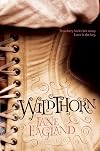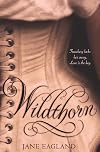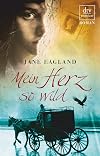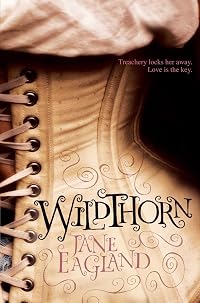
Wildthorn
by Jane Eagland
On This Page
Description
Seventeen-year-old Louisa Cosgrove is locked away in the Wildthorn Hall mental institution, where she is stripped of her identity and left to wonder who has tried to destroy her life.Tags
Recommendations



Member Recommendations
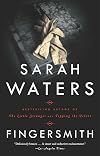
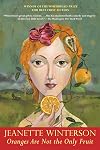
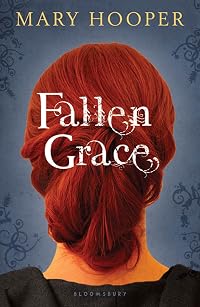
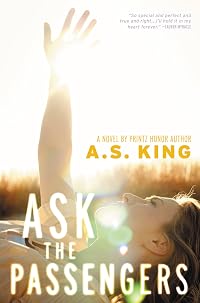
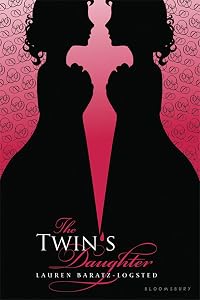
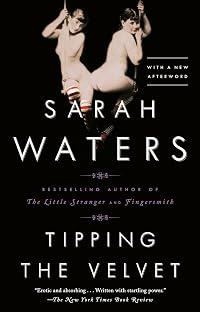
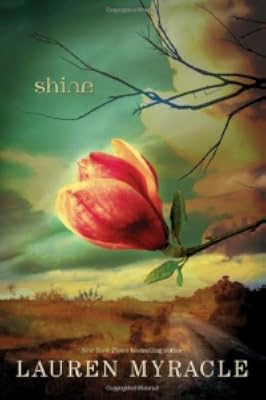
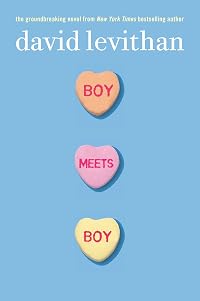
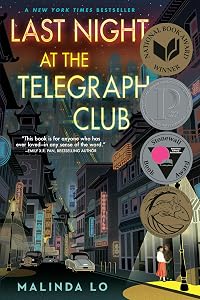
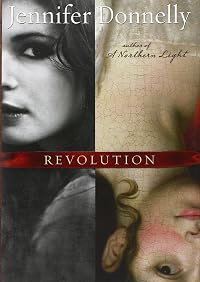
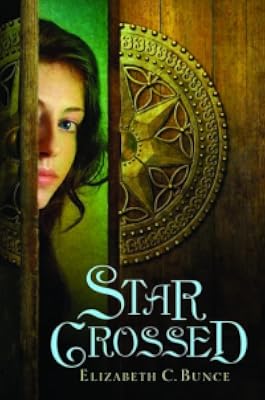
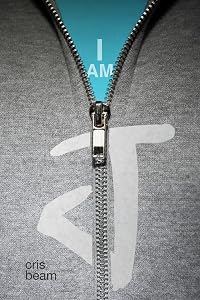
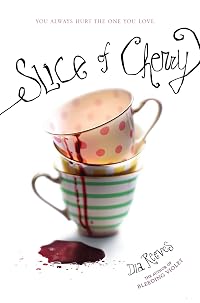
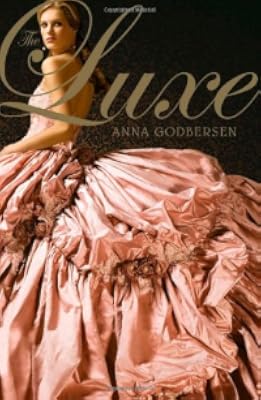
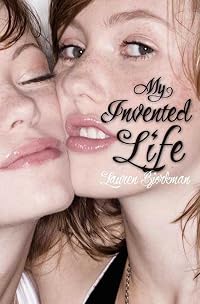
ijustgetbored Coming-of-age story about a lesbian teen coming from a screwed-up family situation; this one's fairly funny, though, so look at this as a "light side of things" recommendation.
Member Reviews
Did... I feel like I might be going a bit mad, along with Louisa?: YES. Like Dracula in Love, I found the historically accurate description of Wildthorn to be chilling.
Did... I totally melt over the unexpectedly sweet romance?: YES. It felt a bit like restitution for the suffering Louisa experienced.
Review: This is the kind of book that makes you feel as if you're a little mad yourself. In the best way. Told in four parts, the story opens with Louisa's arrival at Wildthorn, where she's committed under the name of Lucy. Her confusion is our confusion but through flashbacks, we slowly start to learn what might have lead to this horrible event.
The treachery surrounding Louisa's commitment is grim enough but I found Eagland's descriptions show more of life in the asylum and it's various 'wards' (levels of hell, in some ways) to be the most frightening part of the story. How she survives is a miracle -- and happily, the story doesn't end there. Louisa begins to repair herself and finds an unexpected and rather sweet romance. Eventually, the cause and agents of her commitment to are revealed -- and while the plot is nefarious, in some ways, it's very mundane, and again, the stark reality of what could happen to a young woman in Victorian England is what makes the story so chilling. A quick, enjoyable read. show less
Did... I totally melt over the unexpectedly sweet romance?: YES. It felt a bit like restitution for the suffering Louisa experienced.
Review: This is the kind of book that makes you feel as if you're a little mad yourself. In the best way. Told in four parts, the story opens with Louisa's arrival at Wildthorn, where she's committed under the name of Lucy. Her confusion is our confusion but through flashbacks, we slowly start to learn what might have lead to this horrible event.
The treachery surrounding Louisa's commitment is grim enough but I found Eagland's descriptions show more of life in the asylum and it's various 'wards' (levels of hell, in some ways) to be the most frightening part of the story. How she survives is a miracle -- and happily, the story doesn't end there. Louisa begins to repair herself and finds an unexpected and rather sweet romance. Eventually, the cause and agents of her commitment to are revealed -- and while the plot is nefarious, in some ways, it's very mundane, and again, the stark reality of what could happen to a young woman in Victorian England is what makes the story so chilling. A quick, enjoyable read. show less
"Excessive study, especially in one of the fair sex, often leads to insanity..."
The Dangers of Excessive Learning: (girls who studied too much would become) "dogmatic and presumptuous, self-willed and arrogant, eccentric in dress and disagreeable in manner."
Can you imagine living in times when this was the norm? When you could be deemed insane because you didn't want to be a housewife and mommy? Sounds crazy to us and we are lucky to live in the age that we do.
This book was one hell of a ride! From page one I was grabbed by the throat and carried along. The writing was so alive that I felt like I was in Louise's body feeling the fear, the anger, the confusion that she was. I was in that asylum with her and it was as horrible to read as show more it had to be to live it. The fact that this book is based on true stories turns me stomach even more.
I accused everyone in her family but was floored by the events that came out as the book went along. (Can't go into detail, read the book!!!) I loved the relationship between Louisa and Grace but at the same time I wanted to shake some sense into Grace!
Eliza was a godsend. From the moment she entered the story to the end, she was an angel in disguise.
I am not sure that I liked the ending but I did understand why it ended as it did. That's all you are getting from me. Find this book and read it. It says Young Adult but I wouldn't have called it that.
Recommended to anyone, females especially and yes, young adults so they can appreciate what they have and what people had to endure do they could have it. show less
The Dangers of Excessive Learning: (girls who studied too much would become) "dogmatic and presumptuous, self-willed and arrogant, eccentric in dress and disagreeable in manner."
Can you imagine living in times when this was the norm? When you could be deemed insane because you didn't want to be a housewife and mommy? Sounds crazy to us and we are lucky to live in the age that we do.
This book was one hell of a ride! From page one I was grabbed by the throat and carried along. The writing was so alive that I felt like I was in Louise's body feeling the fear, the anger, the confusion that she was. I was in that asylum with her and it was as horrible to read as show more it had to be to live it. The fact that this book is based on true stories turns me stomach even more.
I accused everyone in her family but was floored by the events that came out as the book went along. (Can't go into detail, read the book!!!) I loved the relationship between Louisa and Grace but at the same time I wanted to shake some sense into Grace!
Eliza was a godsend. From the moment she entered the story to the end, she was an angel in disguise.
I am not sure that I liked the ending but I did understand why it ended as it did. That's all you are getting from me. Find this book and read it. It says Young Adult but I wouldn't have called it that.
Recommended to anyone, females especially and yes, young adults so they can appreciate what they have and what people had to endure do they could have it. show less
In Wildthorn, Louisa Cosgrove desires to become a doctor herself, despite her mother and oppressive Victorian society in general's disapproval of the idea of a female physician. Her father supports her in this desire, providing a balance against her oppressive mother, while her brother remains ever on the sidelines, derailing Louisa at every possible opportunity, from earliest childhood on. Her aunt and cousin Grace, while never weighing in on the physician issue in the early parts of the novel, nonetheless are generally kind and supportive of Lousia.
So, all continues apace until her father's abrupt death. Not long after that, Lousia finds herself shipping off to Wildthorn Hall, an insane asylum, and rechristened Lucy Childs. She show more doesn't know why she's there, or who sent her there. We see the worst atrocities of Victorian "medicine" being practiced here along with some simply horrid physicians who are nothing at all like Lousia's devoted father (who is, incidentally, the only positive physician role model we see in the entire book). The attendants come from One Flew Over the Cuckoo's Nest, many patients there are not, in fact, crazy, Lousia is stripped of her precious books as reading is deemed to be mentally deranging, and conditions are generally deplorable.
Eagland paints a very vivid world; the madhouse descriptions are particularly well-done and haunting. These scenes are the ones that will really have you flipping pages, wanting to see what happens next. The asylum sections of the plot are, by far, the most compelling. A little slower going is the first part of the book, which is told in alternating past tense and present tense flashbacks of Lousia's youth and her arrival at Wildthorn Hall. This section is a bit hard to get into because the reader is constantly yanked from one world to the other with no transition, and the change in narrative tense is a bit disconcerting. There is a part later in the story when Lousia relates a story from her past to another character (I won't say any more because of spoilers) and does so all in the same narrative tense that dominates the rest of the book, and it reads much more seamlessly and naturally. If the first section could have been worked like this later tale, I believe Part One would have read a lot more smoothly.
And I'm going to go ahead and write this, because I think it's obvious and not really a spoiler, but stop reading here if you truly want nothing given away. I had a slight issue with Lousia's lesbianism and her "always wanting to be a boy." For me, there was some undercurrent there of Lousia's being a lesbian being equated with her actually wanting to be a man. And in order for Lousia to be a feminist and want to become a doctor, did she have to be portrayed as a lesbian? I felt like there was some stereotyping going on on Eagland's part, that for Lousia not to want to conform in one aspect (not to want to be a wife and mother), she had to not conform in all aspects. I have no problem with Lousia's being a lesbian, and I liked the romantic element it added to the story (what a break from Team Edward versus Team Jacob), though there is some potential class conflict that remains unresolved at the end.
The end gets all the loose ends tied up, perhaps too neatly; can such an unconventional character really be expected to have a tidy ending to her story? It's satisfying for the reader, sure; I was happy to see things work out. But is it realistic? Yes, I'm aware I'm reading fiction, but Eagland dug so deeply into the gritty realism of social stereotypes and the asylum narrative, it's a little disappointing to see her waver on the ending.
Overall, though, the novel is satisfying to the reader. I liked Lousia, liked her narrative voice, and clung to her throughout her struggles. There was one other character in particular I found particularly compelling. The cast of the novel is fairly large, and I think Eagland handles it well for a fairly short novel, in terms of character development within a limited number of pages to work with. As stated before, she handles description of events and places quite capably; it's a seamy, real Victorian England filled with inequality and frustration.
Fans of historical fiction, YA and adult, should enjoy this one; adults shouldn't be put off by the YA label. Teens will be swept away by a Victorian world that's different from the one in their history textbooks and that is told by a voice much different from the Dickens they will encounter in the English courses. The heroine of this story is a lot different not only from heroines of her own day but from a lot of the cookie-cutter heroines of today's young adult fiction, and her perspective merits a reading. show less
So, all continues apace until her father's abrupt death. Not long after that, Lousia finds herself shipping off to Wildthorn Hall, an insane asylum, and rechristened Lucy Childs. She show more doesn't know why she's there, or who sent her there. We see the worst atrocities of Victorian "medicine" being practiced here along with some simply horrid physicians who are nothing at all like Lousia's devoted father (who is, incidentally, the only positive physician role model we see in the entire book). The attendants come from One Flew Over the Cuckoo's Nest, many patients there are not, in fact, crazy, Lousia is stripped of her precious books as reading is deemed to be mentally deranging, and conditions are generally deplorable.
Eagland paints a very vivid world; the madhouse descriptions are particularly well-done and haunting. These scenes are the ones that will really have you flipping pages, wanting to see what happens next. The asylum sections of the plot are, by far, the most compelling. A little slower going is the first part of the book, which is told in alternating past tense and present tense flashbacks of Lousia's youth and her arrival at Wildthorn Hall. This section is a bit hard to get into because the reader is constantly yanked from one world to the other with no transition, and the change in narrative tense is a bit disconcerting. There is a part later in the story when Lousia relates a story from her past to another character (I won't say any more because of spoilers) and does so all in the same narrative tense that dominates the rest of the book, and it reads much more seamlessly and naturally. If the first section could have been worked like this later tale, I believe Part One would have read a lot more smoothly.
And I'm going to go ahead and write this, because I think it's obvious and not really a spoiler, but stop reading here if you truly want nothing given away. I had a slight issue with Lousia's lesbianism and her "always wanting to be a boy." For me, there was some undercurrent there of Lousia's being a lesbian being equated with her actually wanting to be a man. And in order for Lousia to be a feminist and want to become a doctor, did she have to be portrayed as a lesbian? I felt like there was some stereotyping going on on Eagland's part, that for Lousia not to want to conform in one aspect (not to want to be a wife and mother), she had to not conform in all aspects. I have no problem with Lousia's being a lesbian, and I liked the romantic element it added to the story (what a break from Team Edward versus Team Jacob), though there is some potential class conflict that remains unresolved at the end.
The end gets all the loose ends tied up, perhaps too neatly; can such an unconventional character really be expected to have a tidy ending to her story? It's satisfying for the reader, sure; I was happy to see things work out. But is it realistic? Yes, I'm aware I'm reading fiction, but Eagland dug so deeply into the gritty realism of social stereotypes and the asylum narrative, it's a little disappointing to see her waver on the ending.
Overall, though, the novel is satisfying to the reader. I liked Lousia, liked her narrative voice, and clung to her throughout her struggles. There was one other character in particular I found particularly compelling. The cast of the novel is fairly large, and I think Eagland handles it well for a fairly short novel, in terms of character development within a limited number of pages to work with. As stated before, she handles description of events and places quite capably; it's a seamy, real Victorian England filled with inequality and frustration.
Fans of historical fiction, YA and adult, should enjoy this one; adults shouldn't be put off by the YA label. Teens will be swept away by a Victorian world that's different from the one in their history textbooks and that is told by a voice much different from the Dickens they will encounter in the English courses. The heroine of this story is a lot different not only from heroines of her own day but from a lot of the cookie-cutter heroines of today's young adult fiction, and her perspective merits a reading. show less
"Excessive study, especially in one of the fair sex, often leads to insanity..."The Dangers of Excessive Learning: (girls who studied too much would become) "dogmatic and presumptuous, self-willed and arrogant, eccentric in dress and disagreeable in manner."Can you imagine living in times when this was the norm? When you could be deemed insane because you didn't want to be a housewife and mommy? Sounds crazy to us and we are lucky to live in the age that we do.This book was one hell of a ride! From page one I was grabbed by the throat and carried along. The writing was so alive that I felt like I was in Louise's body feeling the fear, the anger, the confusion that she was. I was in that asylum with her and it was as horrible to read as show more it had to be to live it. The fact that this book is based on true stories turns me stomach even more.I accused everyone in her family but was floored by the events that came out as the book went along. (Can't go into detail, read the book!!!) I loved the relationship between Louisa and Grace but at the same time I wanted to shake some sense into Grace!Eliza was a godsend. From the moment she entered the story to the end, she was an angel in disguise.I am not sure that I liked the ending but I did understand why it ended as it did. That's all you are getting from me. Find this book and read it. It says Young Adult but I wouldn't have called it that.Recommended to anyone, females especially and yes, young adults so they can appreciate what they have and what people had to endure do they could have it. show less
Louisa Cosgrove arrived at Wildthorn in a horse-drawn carriage unhappy but safe. Minutes later she is stripped of her clothing, told her name is Lucy Childs, and committed to the asylum. Shaken, she struggles to maintain her identity as she reflects on the events leading up to her involuntary and unexpected imprisonment. Reading this book was a very enjoyable experience, in no small part because it kept reminding me of Sarah Waters' Fingersmith which I adored. A Victorian setting, highlighting a young lesbian fighting to be an independent woman... carriages, corsets, asylums, forbidden love, horrid nurses, tortured souls.... how can one not enjoy a book like this?
As always I am horrified and completely intrigued by the Victorian views show more on mental health. There is something at once sickening and morbidly pleasurable in reading about the incarceration of women for no good reason (by today's standards) and in seeing the wretched way the patients were treated. I'm convinced this is normal; that it does not, in fact, make me a bad person. It's like staring at a car crash or being fascinated by horror films or enjoying reality television.
I get the most joy out of the wonderful reasons Victorian women were committed. Here's a quick compilation of the reasons Louisa is thought mad:
An interest in medical matters inappropriate for one of her age and sex
Excessive book-reading and study leading to a weakening of the mind
Desiring to ape men by nursing an ambition to be a doctor
Self-assertiveness in the face of male authority
Obstinacy and displays of temper
Going about unchaperoned
Well holy heavens Batman, someone needs to come lock me up. My "excessive book-reading" alone is probably enough damning evidence to have them lock me up and throw away the key. The Victorian sensibility both supported and damned independent women, as is the way in transitory times. But back to the book...
I thought the book very delicately paced. The present tense accounting of Louisa's time in the asylum manages to be tense without being hurried, mimicking a sense of the unbearable oppression Louisa felt. Interspersed in this narrative are flashbacks to Louisa's past, incidents which come together to offer a picture of a family at once appropriately loving, wracked by jealousy, and struggling to understand each other.
If you have not yet picked this one up, head to the nearest book store or library. show less
As always I am horrified and completely intrigued by the Victorian views show more on mental health. There is something at once sickening and morbidly pleasurable in reading about the incarceration of women for no good reason (by today's standards) and in seeing the wretched way the patients were treated. I'm convinced this is normal; that it does not, in fact, make me a bad person. It's like staring at a car crash or being fascinated by horror films or enjoying reality television.
I get the most joy out of the wonderful reasons Victorian women were committed. Here's a quick compilation of the reasons Louisa is thought mad:
An interest in medical matters inappropriate for one of her age and sex
Excessive book-reading and study leading to a weakening of the mind
Desiring to ape men by nursing an ambition to be a doctor
Self-assertiveness in the face of male authority
Obstinacy and displays of temper
Going about unchaperoned
Well holy heavens Batman, someone needs to come lock me up. My "excessive book-reading" alone is probably enough damning evidence to have them lock me up and throw away the key. The Victorian sensibility both supported and damned independent women, as is the way in transitory times. But back to the book...
I thought the book very delicately paced. The present tense accounting of Louisa's time in the asylum manages to be tense without being hurried, mimicking a sense of the unbearable oppression Louisa felt. Interspersed in this narrative are flashbacks to Louisa's past, incidents which come together to offer a picture of a family at once appropriately loving, wracked by jealousy, and struggling to understand each other.
If you have not yet picked this one up, head to the nearest book store or library. show less
This young adult, historical fiction novel was a nice change of pace. We follow Louisa from her daily life and unusual desire to become a doctor (during this time period, women working as doctors was a very new idea). She is smart and not at all a silly, frivolous girl as many teenagers are written as. Then something goes horribly wrong and we are moved along with Louisa into an asylum and following her day to day activities there. As the book unfolds, there is a mystery to solve…how did such a smart girl wind up in a place like this?
The story switches back and forth between flashbacks of the events preceding her arrival at Wildthorn and the agony she faces day to day with the horrible treatment she undergoes there. A wonderful show more character, Eliza, is introduced at Wildthorn and it is through Eliza that we still see the good in the world, someone willing to help and believe and right the wrongs of the world. The last 1/3 of the book moves along so quickly, the action peaking and pulling me along to the end, that I sat and read that all the way through. A truly charming novel with characters that are very real to life. show less
The story switches back and forth between flashbacks of the events preceding her arrival at Wildthorn and the agony she faces day to day with the horrible treatment she undergoes there. A wonderful show more character, Eliza, is introduced at Wildthorn and it is through Eliza that we still see the good in the world, someone willing to help and believe and right the wrongs of the world. The last 1/3 of the book moves along so quickly, the action peaking and pulling me along to the end, that I sat and read that all the way through. A truly charming novel with characters that are very real to life. show less
Wildthorn is not an ideal choice for those in search of happy fun times all the way through, but definitely an interesting topic not much touched on in teen literature. The first half of the novel switches between Louisa's experiences in the mental institution and her memories of her life and how she ended up there. Louisa is very sympathetic for a modern audience. The portrayal of the mental institution clearly reveals the horridness of that setup. Troublesome women truly were shunted off into these institutions and they could do nothing to escape. Most poignant is the impossibility of proving one's sanity. How do you convince people that you are not crazy when they keep calling you by a name that is not your own?
The lesbian angle was show more interesting too. Finding LGBT fiction for teens can be difficult; I took a course on young adult resources and in the week on this topic, we had no books about lesbians. This book fills a gap in teen literature and does quite a good job of it. Eagland does not shy away from the topic, nor does she overdo it. The story manages to be sweet and serious, a solid, slightly more deep than average teen read. It also has a beautiful cover!
Recommended if you like Sarah Waters, since this seems much like a teen version of Fingersmith. show less
The lesbian angle was show more interesting too. Finding LGBT fiction for teens can be difficult; I took a course on young adult resources and in the week on this topic, we had no books about lesbians. This book fills a gap in teen literature and does quite a good job of it. Eagland does not shy away from the topic, nor does she overdo it. The story manages to be sweet and serious, a solid, slightly more deep than average teen read. It also has a beautiful cover!
Recommended if you like Sarah Waters, since this seems much like a teen version of Fingersmith. show less
Members
- Recently Added By
Lists

Lesbian young adult fiction
50 works; 1 member

KayStJ's to-read list
1,616 works; 11 members
Author Information
6 Works 655 Members
Awards and Honors
Awards
Distinctions
Notable Lists
Common Knowledge
- Original publication date
- 2010-09-06
- People/Characters
- Lousia Cosgrove (Lucy Childs); Edward Cosgrove (Papa); Amelia Cosgrove (Mama); Tom Cosgrove; Grace Illingworth; Phyllis Illingworth (show all 9); Weeks; Beatrice Hill; Eliza Shaw
- Important places
- Essex, England, UK; Wildthorn Hall; London, England, UK; Carr Head
- First words
- The carriage jolts and splashes along the rutted lanes flooded by the heavy November rains.
- Last words
- (Click to show. Warning: May contain spoilers.)And I rest my cheek on her head, knowing that sometimes, this is enough . . . more than enough.
Classifications
Statistics
- Members
- 507
- Popularity
- 59,228
- Reviews
- 52
- Rating
- (3.68)
- Languages
- English, German
- Media
- Paper, Ebook
- ISBNs
- 9
- ASINs
- 5