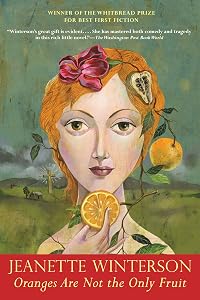
Oranges Are Not the Only Fruit
by Jeanette Winterson
On This Page
Description
The coming-of-age story of Jess, the adopted daughter of a deeply religious woman, who grows up isolated and insulated in the north of England in the 1960's. Jess meets Melanie, and the two teenagers fall in love, greatly upsetting Jess's mother and her congregation.Tags
Recommendations
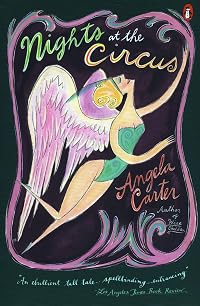

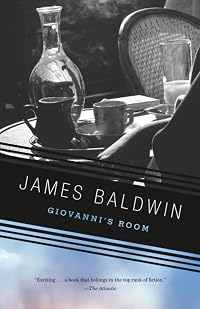
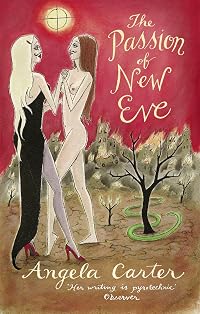
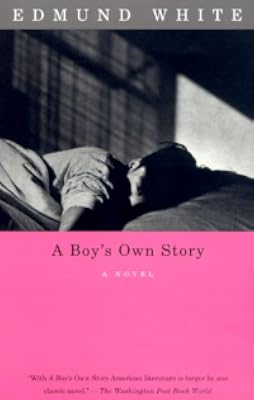
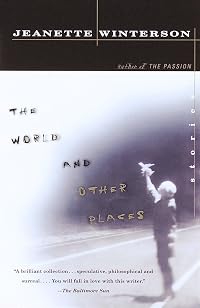
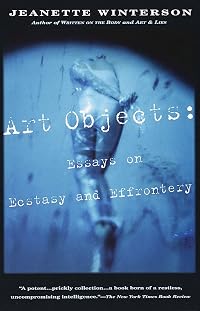
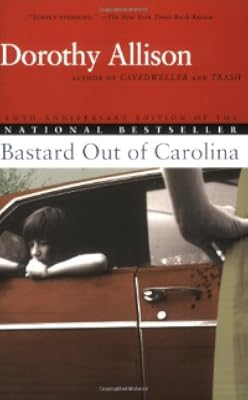
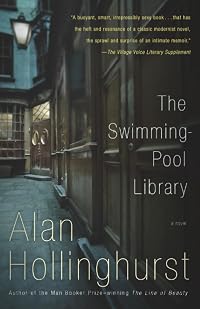

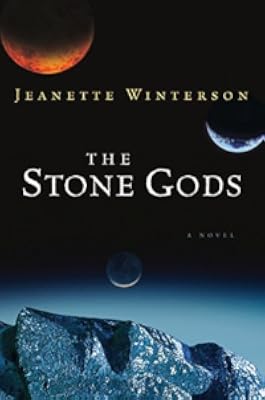
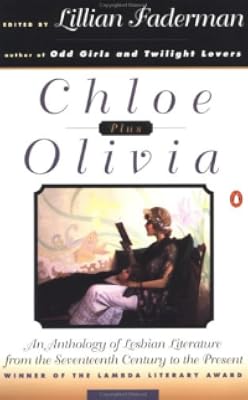
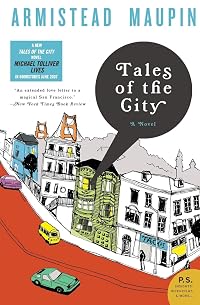
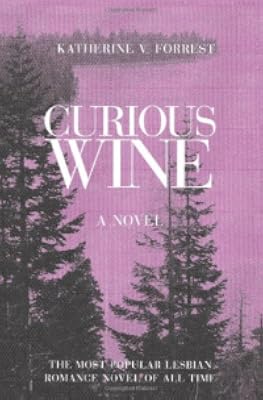
Member Recommendations
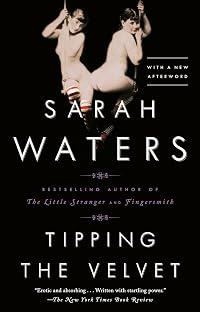
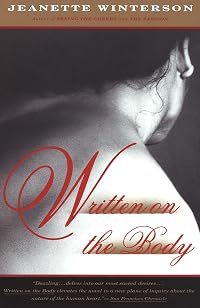
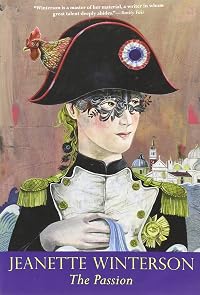
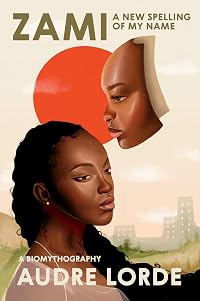
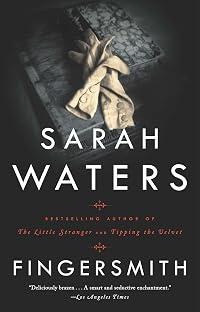
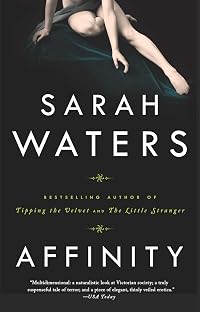
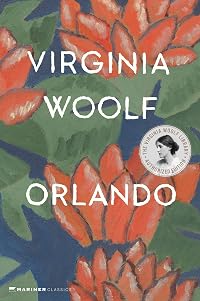
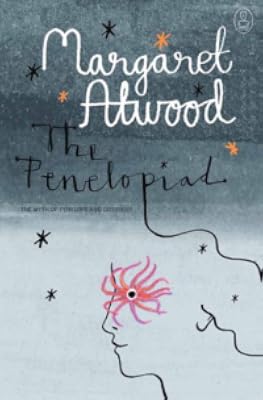
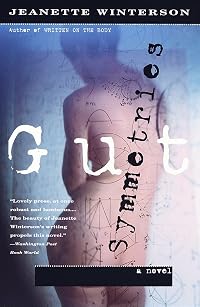
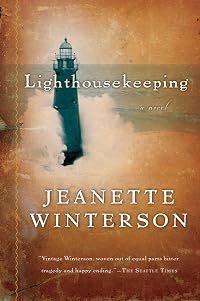
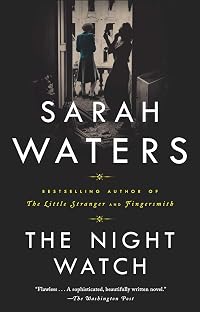
Tinker_Books Independent twin Novel to Oranges Are Not the Only Fruit by Jeanette Winterson.
Also recommended by anonymous user
90

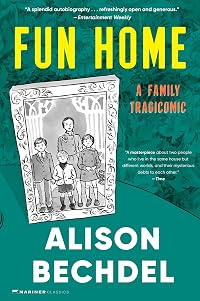
librorumamans Also autobiographical fiction about growing up gay in a hostile, lower-class environment.
Member Reviews
Highly recommended. Wonderful. Beautifully written and incisive about fundamentalist parenting. This novel is heartbreaking given its autobiographical basis. I actually liked it much more than I liked the first thing I read by her, Why Be Happy When You Could Be Normal, which is a memoir. (Although it was the latter that inspired me to read the former, in the first place.)
Like most books about growing up in fundamentalist religious environments, Oranges provides a fascinating glimpse into this life. I read lots of books, fiction and non, about insular communities like these; they're my catharsis the way some people read/watch horror. I thought this one was especially well done in the way that it juxtaposed pretty abnormal beliefs and show more actions with a child's desire for parental love. show less
Like most books about growing up in fundamentalist religious environments, Oranges provides a fascinating glimpse into this life. I read lots of books, fiction and non, about insular communities like these; they're my catharsis the way some people read/watch horror. I thought this one was especially well done in the way that it juxtaposed pretty abnormal beliefs and show more actions with a child's desire for parental love. show less
Books that have a big impact the first time you read them are sometimes difficult to return to: Oranges isn't like that. Rereading it for the fourth or fifth time in 25 years, it still impresses me with its strength, originality and wit. Of course, having read more and lived longer in the meantime, I can spot things here and there that don't really work, or are obviously borrowed. Having seen a re-run of Winterson's own TV adaptation recently, it's also obvious that there were points where the tighter plotting and more economical use of characters forced by TV led to significant improvements. But still, it's all aged remarkably well.
Having grown up in the same part of the world as Winterson, at much the same time (although in a slightly show more less extreme church), there's a lot I recognise in the people and their way of looking at the world. In particular, I remember that sense of a community run by and for strong, single-minded women, in which men (with a few honorary exceptions like ministers and doctors) existed as vague grey presences seen occasionally at breakfast and tea. Of course, that's also typical of a child's view of the world: Mothers are fearless in the fight against dirt, ungodliness, and nasty foreign notions; fathers are away at work. Winterson pushes this a bit further by bringing in the element of religious certainty. This is something you usually only see represented from the outside in literature (the obstinate, righteous parent and the liberal, doubting narrator), but here the narrator has the same rock-hard conviction of the rightness of her ideas and feelings as the mother does of her own. It's the irresistible force and the immovable object. Of course, the problem with this is that the toughness of her narrator rather undermines the argument Winterson seems to be putting forward about the destructive nature of the quest for perfection here on earth. Perhaps this is why the interposed narratives in mythical or fairy-tale style take over more and more of the story as we move towards the end: the narrator is an epic figure who can't be allowed to exhibit guilt or self-doubt, but her struggle has to be made interesting enough for the reader to persist with it. show less
Having grown up in the same part of the world as Winterson, at much the same time (although in a slightly show more less extreme church), there's a lot I recognise in the people and their way of looking at the world. In particular, I remember that sense of a community run by and for strong, single-minded women, in which men (with a few honorary exceptions like ministers and doctors) existed as vague grey presences seen occasionally at breakfast and tea. Of course, that's also typical of a child's view of the world: Mothers are fearless in the fight against dirt, ungodliness, and nasty foreign notions; fathers are away at work. Winterson pushes this a bit further by bringing in the element of religious certainty. This is something you usually only see represented from the outside in literature (the obstinate, righteous parent and the liberal, doubting narrator), but here the narrator has the same rock-hard conviction of the rightness of her ideas and feelings as the mother does of her own. It's the irresistible force and the immovable object. Of course, the problem with this is that the toughness of her narrator rather undermines the argument Winterson seems to be putting forward about the destructive nature of the quest for perfection here on earth. Perhaps this is why the interposed narratives in mythical or fairy-tale style take over more and more of the story as we move towards the end: the narrator is an epic figure who can't be allowed to exhibit guilt or self-doubt, but her struggle has to be made interesting enough for the reader to persist with it. show less
At first this seems a bit inconsequential, charming at best and twee at worst, and you don't so much expect the gay coming-of-age story that's the novel's big claim to fame to catapult it into the stratosphere. It feels like the kind of novel that would make a good BBC serial (which, ipso facto, it did).
But that faint praise is hardly the whole story, as Oranges becomes by turn a work of anthropological realism about the depressed North and the fading evangelical England, and about the heroine (for such a quiet story, it says a lot that that's the appropriate term rather than just "protagonist") and her attempts to make sense of the church that expects great things of her (the "Society of the Lost"), the loving but strident and cruel show more and utterly unchangeable mother, and the Winterson-figure's self-reliance in the face of adversity as she discovers her burgeoning, not sexuality so much, but self. It's a self-reliance that she was granted by the God she no longer believes in--by the utter certainty that leaves its vestiges, like the oranges that pop up fruitfully in this book at the weirdest times, even when she's lost her religious life. Even when you turn away from something, the you that didn't turn away walks alongside you all the days of your life, as she notes, and in that sense the unlikeliest but undeniable touchstone for this is Edmund Gosse's Father and Son, similarly about stepping from an anachronism of invisible Truth into a full-colour world of clashing experiences, and then realizing that all you want to do is talk about how it was in that intimate infinite you can no longer visit.
And so, also, about the pain of growing up, and the wrongness of being able to deny that you're different and hang on to who you were. The so so characteristic fantasy allegories--Sir Perceval trying to reclaim dead Camelot, a quest for the old light and life that's now pathological. Winnet, the wandering girl, who is taken in and then cast out by a sorcerer and uses the magic he taught to be something he never dreamed of. The Prince who ruins the perfect in search of the flawless, breaching the skins of his advisors and his wise love and his magic talking goose and bathing the world in gore, a crimson flawlessness that's all bloody flaw. I will remember these.
The title--not just a silly pun; you don't need to stay, because there are other (strange) fruit to be tasted; you don't need to go, because those fruit aren't the only fruit either. You don't have to be what you have to be.
This sober thought, which strikes me as the hard ball of ruling truth that Winterson has delved into her past to find: "I miss God. I miss the company of someone utterly loyal. I still don't think of God as my betrayer. The servants of God, yes, but servants by their very nature betray. I miss God who was my friend. I don't even know if God exists, but I know that if God is your emotional role model, very few human relationships will match up to it. I have an idea that one day it might be possible. I thought once it had become possible, and that glimpse has set me wandering, trying to find the balance between earth and sky. If the servants hadn't rushed in and parted us, I might have been disappointed, might have snatched off the white samite to reveal a bowl of soup. As it is, I can't settle, I want someone who is fierce and who will love me until death and know that love is as strong as death, and be on my side for ever and ever. I want someone who will destroy and be destroyed by me."
There are times when I could almost reconcile myself with religion--meaning Christian religion as practiced in our secular Western world--and then I think about the dependency it creates. The walking wounded. It's almost worse than the intolerance, because it's not just something that people indulge to the degree that their constitution lets them--not just an excuse for the worst, in other words, but something that cripples the innocent. I admire Winterson for not letting that be the whole story, for recognizing that her upbringing brought her strengths too, and for being able to bring her pain forth and sit with it without letting it crush her fancy and delight. show less
But that faint praise is hardly the whole story, as Oranges becomes by turn a work of anthropological realism about the depressed North and the fading evangelical England, and about the heroine (for such a quiet story, it says a lot that that's the appropriate term rather than just "protagonist") and her attempts to make sense of the church that expects great things of her (the "Society of the Lost"), the loving but strident and cruel show more and utterly unchangeable mother, and the Winterson-figure's self-reliance in the face of adversity as she discovers her burgeoning, not sexuality so much, but self. It's a self-reliance that she was granted by the God she no longer believes in--by the utter certainty that leaves its vestiges, like the oranges that pop up fruitfully in this book at the weirdest times, even when she's lost her religious life. Even when you turn away from something, the you that didn't turn away walks alongside you all the days of your life, as she notes, and in that sense the unlikeliest but undeniable touchstone for this is Edmund Gosse's Father and Son, similarly about stepping from an anachronism of invisible Truth into a full-colour world of clashing experiences, and then realizing that all you want to do is talk about how it was in that intimate infinite you can no longer visit.
And so, also, about the pain of growing up, and the wrongness of being able to deny that you're different and hang on to who you were. The so so characteristic fantasy allegories--Sir Perceval trying to reclaim dead Camelot, a quest for the old light and life that's now pathological. Winnet, the wandering girl, who is taken in and then cast out by a sorcerer and uses the magic he taught to be something he never dreamed of. The Prince who ruins the perfect in search of the flawless, breaching the skins of his advisors and his wise love and his magic talking goose and bathing the world in gore, a crimson flawlessness that's all bloody flaw. I will remember these.
The title--not just a silly pun; you don't need to stay, because there are other (strange) fruit to be tasted; you don't need to go, because those fruit aren't the only fruit either. You don't have to be what you have to be.
This sober thought, which strikes me as the hard ball of ruling truth that Winterson has delved into her past to find: "I miss God. I miss the company of someone utterly loyal. I still don't think of God as my betrayer. The servants of God, yes, but servants by their very nature betray. I miss God who was my friend. I don't even know if God exists, but I know that if God is your emotional role model, very few human relationships will match up to it. I have an idea that one day it might be possible. I thought once it had become possible, and that glimpse has set me wandering, trying to find the balance between earth and sky. If the servants hadn't rushed in and parted us, I might have been disappointed, might have snatched off the white samite to reveal a bowl of soup. As it is, I can't settle, I want someone who is fierce and who will love me until death and know that love is as strong as death, and be on my side for ever and ever. I want someone who will destroy and be destroyed by me."
There are times when I could almost reconcile myself with religion--meaning Christian religion as practiced in our secular Western world--and then I think about the dependency it creates. The walking wounded. It's almost worse than the intolerance, because it's not just something that people indulge to the degree that their constitution lets them--not just an excuse for the worst, in other words, but something that cripples the innocent. I admire Winterson for not letting that be the whole story, for recognizing that her upbringing brought her strengths too, and for being able to bring her pain forth and sit with it without letting it crush her fancy and delight. show less
Rating: 5* of five
The Book Description: Jeanette, the protagonist of Oranges Are Not The Only Fruit and the author's namesake, has issues--"unnatural" ones: her adopted mam thinks she's the Chosen one from God; she's beginning to fancy girls; and an orange demon keeps popping into her psyche. Already Jeanette Winterson's semi-autobiographical first novel is not your typical coming-of-age tale.
Brought up in a working-class Pentecostal family, up North, Jeanette follows the path her Mam has set for her. This involves Bible quizzes, a stint as a tambourine-playing Salvation Army officer and a future as a missionary in Africa, or some other "heathen state". When Jeanette starts going to school ("The Breeding Ground") and confides in her show more mother about her feelings for another girl ("Unnatural Passions"), she's swept up in a feverish frenzy for her tainted soul. Confused, angry and alone, Jeanette strikes out on her own path, that involves a funeral parlour and an ice-cream van. Mixed in with the so-called reality of Jeanette's existence growing up are unconventional fairy tales that transcend the everyday world, subverting the traditional preconceptions of the damsel in distress.
In Oranges Are Not the Only Fruit, Winterson knits a complicated picture of teenage angst through a series of layered narratives, incorporating and subverting fairytales and myths, to present a coherent whole, within which her stories can stand independently. Imaginative and mischievous, she is a born storyteller, teasing and taunting the reader to reconsider their worldview. --Nicola Perry
My Review: I was twenty-five when I read this for the first time, and now upon re-reading it at fifty-three, I am as impressed and more moved than I was even then.
No news to friends, I had a religious nut mother whose deeply insane reliance on a Manichaean gawd-versus-devil double bind system of understanding the universe screwed me up royally. Winterson, poor lambkin, had it even worse because her deeply insane mother was about as unloving as it's possible for a human being to be. There is nothing of tenderness in this rigid religiosifier.
I can't help myself, reading this in late middle years, from judging the mother more harshly than ever. To raise a child is hard, but to seek the job out by adopting and then to do it so harshly should be actionable. Not everyone should be a parent, and this old buster should not have been.
Winterson's writing is so low-key that it's easy to miss the felicities of expression and the sheer cliffs of peerless perception she scales:
Breathtaking.
Poignant. Also powerful.
If you've read the book at a younger age, revisit it as you would pay a call on your uncomfortably eccentric auntie. If you've never read the book, why ever not? Don't hesitate. show less
The Book Description: Jeanette, the protagonist of Oranges Are Not The Only Fruit and the author's namesake, has issues--"unnatural" ones: her adopted mam thinks she's the Chosen one from God; she's beginning to fancy girls; and an orange demon keeps popping into her psyche. Already Jeanette Winterson's semi-autobiographical first novel is not your typical coming-of-age tale.
Brought up in a working-class Pentecostal family, up North, Jeanette follows the path her Mam has set for her. This involves Bible quizzes, a stint as a tambourine-playing Salvation Army officer and a future as a missionary in Africa, or some other "heathen state". When Jeanette starts going to school ("The Breeding Ground") and confides in her show more mother about her feelings for another girl ("Unnatural Passions"), she's swept up in a feverish frenzy for her tainted soul. Confused, angry and alone, Jeanette strikes out on her own path, that involves a funeral parlour and an ice-cream van. Mixed in with the so-called reality of Jeanette's existence growing up are unconventional fairy tales that transcend the everyday world, subverting the traditional preconceptions of the damsel in distress.
In Oranges Are Not the Only Fruit, Winterson knits a complicated picture of teenage angst through a series of layered narratives, incorporating and subverting fairytales and myths, to present a coherent whole, within which her stories can stand independently. Imaginative and mischievous, she is a born storyteller, teasing and taunting the reader to reconsider their worldview. --Nicola Perry
My Review: I was twenty-five when I read this for the first time, and now upon re-reading it at fifty-three, I am as impressed and more moved than I was even then.
No news to friends, I had a religious nut mother whose deeply insane reliance on a Manichaean gawd-versus-devil double bind system of understanding the universe screwed me up royally. Winterson, poor lambkin, had it even worse because her deeply insane mother was about as unloving as it's possible for a human being to be. There is nothing of tenderness in this rigid religiosifier.
I can't help myself, reading this in late middle years, from judging the mother more harshly than ever. To raise a child is hard, but to seek the job out by adopting and then to do it so harshly should be actionable. Not everyone should be a parent, and this old buster should not have been.
Winterson's writing is so low-key that it's easy to miss the felicities of expression and the sheer cliffs of peerless perception she scales:
There are many forms of love and affection, some people can spend their whole lives together without knowing each other's names. Naming is a difficult and time-consuming process; it concerns essences, and it means power. But on the wild nights who can call you home? Only the one who knows your name.
Breathtaking.
But where was God now, with heaven full of astronauts, and the Lord overthrown? I miss God. I miss the company of someone utterly loyal. I still don't think of God as my betrayer. The servants of God, yes, but servants by their very nature betray. I miss God who was my friend. I don't even know if God exists, but I do know that if God is your emotional role model, very few human relationships will match up to it. I have an idea that one day it might be possible, I thought once it had become possible, and that glimpse has set me wandering, trying to find the balance between earth and sky. If the servants hadn't rushed in and parted us, I might have been disappointed, might have snatched off the white samite to find a bowl of soup.
Poignant. Also powerful.
If you've read the book at a younger age, revisit it as you would pay a call on your uncomfortably eccentric auntie. If you've never read the book, why ever not? Don't hesitate. show less
Look, why oranges anyway? When one of my students asked that in class, we came up with a tremendous list of resonances and symbolisms that the oranges have in this novel-- the cover of my edition, at least, makes a sort of "forbidden fruit" interpretation obvious. One of the meanings of the oranges comes from fairy tale narratives embedded in the text of the novel, like the tale of Sir Perceval or the tale of Winnet. These are the stories that young Jeanette needed to hear but never did, the kind of stories that could have helped her operate in the world, but she never received; she only had one source of stories, her mother's (often warped) Bible tales. She had a steady diet of oranges, so to speak.
Oranges Are Not the Only Fruit is show more filled with embedded narratives like the fairy tales. This novel, as Mikhail Bakhtin would say all novels are, is heteroglossic, different-tongued. Bakhtin reminds us that you can't separate the form from the content; the fairy tales aren't a sideshow or a diversion, they're part of the meaning of the text as much as the plot is. Everything in a novel refracts the intentions of the author. So why the fairy tales? We should remember that, as Jeanette/Winterson tells us, stories are "a way of explaining the universe while leaving the universe unexplained" (93). Every story explains something and fails to explain something else; we all forget the aspects of the past that make us uncomfortable. So what can we do about this? As we're told (95), the world is a sandwich made up of other peoples stories, so you need to add your own mustard! Or, go even further, and make your own sandwiches.
Jeanette's mother never gets it. She only has one story. She reflects near the end of the novel, "After all… oranges are not the only fruit" (172), but this is in the context of her feeding a group of houseguests only pineapple! She's just substituted one universal story for another. Oranges Are Not the Only Fruit argues that the world is heteroglossic, that everyone needs a different story, and the worst thing that you can do is fail to recognize that. Jeanette grows up and loses the simplicity of her old world, the one where oranges were the only fruit, but she gains a new world with new stories-- and yet the old stories remain there too. She can go back and see her mother, and Jeanette is different but the same, and her mother is different but the same.
We're always finding new stories and discarding old ones when they don’t work. Jeanette’s mother’s stories work for her, but Jeanette needs a different set of stories, and yet the old stories remain inside her. Our sandwiches need mustard. We need oranges and pineapples and many other fruits. Oranges Are Not the Only Fruit is filled with different stories because we all need to be filled with different stories if we're going to survive. show less
Oranges Are Not the Only Fruit is show more filled with embedded narratives like the fairy tales. This novel, as Mikhail Bakhtin would say all novels are, is heteroglossic, different-tongued. Bakhtin reminds us that you can't separate the form from the content; the fairy tales aren't a sideshow or a diversion, they're part of the meaning of the text as much as the plot is. Everything in a novel refracts the intentions of the author. So why the fairy tales? We should remember that, as Jeanette/Winterson tells us, stories are "a way of explaining the universe while leaving the universe unexplained" (93). Every story explains something and fails to explain something else; we all forget the aspects of the past that make us uncomfortable. So what can we do about this? As we're told (95), the world is a sandwich made up of other peoples stories, so you need to add your own mustard! Or, go even further, and make your own sandwiches.
Jeanette's mother never gets it. She only has one story. She reflects near the end of the novel, "After all… oranges are not the only fruit" (172), but this is in the context of her feeding a group of houseguests only pineapple! She's just substituted one universal story for another. Oranges Are Not the Only Fruit argues that the world is heteroglossic, that everyone needs a different story, and the worst thing that you can do is fail to recognize that. Jeanette grows up and loses the simplicity of her old world, the one where oranges were the only fruit, but she gains a new world with new stories-- and yet the old stories remain there too. She can go back and see her mother, and Jeanette is different but the same, and her mother is different but the same.
We're always finding new stories and discarding old ones when they don’t work. Jeanette’s mother’s stories work for her, but Jeanette needs a different set of stories, and yet the old stories remain inside her. Our sandwiches need mustard. We need oranges and pineapples and many other fruits. Oranges Are Not the Only Fruit is filled with different stories because we all need to be filled with different stories if we're going to survive. show less
Five stars!
Taking place in a financially struggling English community in the 1960s through the mid 1970s, baby Jeanette (the protagonist, yes, same name as the author) is adopted by an enthusiastic Holy Roller mother and by someone else, um, who was it, oh yes, and by a father, a man barely visible as are most of the other menfolk around.
The adoptive mother is quite the energetic bag of nuts, called "mad" by her friends. She now has her praying (preying?) hands on a female babe and can project onto the child her own dreams to become a missionary in some far away place full of heathen souls, all ripe for some Jesus love and uplifting Christian rules which, of course, will include prohibiting literal but not spiritual cannibalism. show more
Unfortunately for the maniacal mother, her vicarious dreamlife is spoiled by one latent flaw: at 14 the child exhibits "Unnatural Passions" for same-sex romance and must be cast out at 16. Whereupon, the said child grows up and writes this wonderful award-winning autobiography, oops I mean "novel" at 25.
Yikes, I'd call that a bit of just desserts, orange flavored, with a cherry on top.
Whatever it is, novel or autobiography, classified LGBTQ+ or feminist, I adored it. It easily could have been just another coming of age tear-jerker with a delectable mix of fruity female characters who help and hinder this precocious child. But it's not that. For one thing, the strong-willed precocious child grown up isn't having any of that feel sorry for me vibe in her work. And second thing, she has a bigger mission now: she is going to sort out things. The transgression itself doesn't seem to worry her much; she felt it easily fell under the scriptural rebuttal that "To the pure, all things are pure," (Titus 1:15). But what she does desperately need is to sort out the answer to how to move on with an undecimated soul: if the religion I loved can't love me back, what can?
And that's where I found those head-scratching bits of disembodied philosophy, myth, and fairy tale interjections fit in. As she writes, she is slowly building a new place based on new thoughts, bigger, wider than the old thoughts, constructing a place of acceptance, love, and wisdom. I grew to look forward to those juxtapositions, to their pagan-like spiritual embraces for the little girl who, incidentally, also probably would have more than welcomed a few hugs from her mom.
P.S. I haven't read Why Be Happy When You Could Be Normal? yet but have added it to my ridiculously long TBR. I do hope I get to it sometime because I especially want to know more about the change of the mantra from "Oranges are the only fruit" to "Oranges are not the only fruit." Was that autobiographical? Or a fiction writer's tidy prerogative?
P.P.S I just found a follow-up and more proof Winterson is heavenly, including something of an answer about the oranges which is as nutty as should be expected. "Jeanette Winterson: the last Christmas I spent with my mother" show less
Taking place in a financially struggling English community in the 1960s through the mid 1970s, baby Jeanette (the protagonist, yes, same name as the author) is adopted by an enthusiastic Holy Roller mother and by someone else, um, who was it, oh yes, and by a father, a man barely visible as are most of the other menfolk around.
The adoptive mother is quite the energetic bag of nuts, called "mad" by her friends. She now has her praying (preying?) hands on a female babe and can project onto the child her own dreams to become a missionary in some far away place full of heathen souls, all ripe for some Jesus love and uplifting Christian rules which, of course, will include prohibiting literal but not spiritual cannibalism. show more
Unfortunately for the maniacal mother, her vicarious dreamlife is spoiled by one latent flaw: at 14 the child exhibits "Unnatural Passions" for same-sex romance and must be cast out at 16. Whereupon, the said child grows up and writes this wonderful award-winning autobiography, oops I mean "novel" at 25.
Yikes, I'd call that a bit of just desserts, orange flavored, with a cherry on top.
Whatever it is, novel or autobiography, classified LGBTQ+ or feminist, I adored it. It easily could have been just another coming of age tear-jerker with a delectable mix of fruity female characters who help and hinder this precocious child. But it's not that. For one thing, the strong-willed precocious child grown up isn't having any of that feel sorry for me vibe in her work. And second thing, she has a bigger mission now: she is going to sort out things. The transgression itself doesn't seem to worry her much; she felt it easily fell under the scriptural rebuttal that "To the pure, all things are pure," (Titus 1:15). But what she does desperately need is to sort out the answer to how to move on with an undecimated soul: if the religion I loved can't love me back, what can?
And that's where I found those head-scratching bits of disembodied philosophy, myth, and fairy tale interjections fit in. As she writes, she is slowly building a new place based on new thoughts, bigger, wider than the old thoughts, constructing a place of acceptance, love, and wisdom. I grew to look forward to those juxtapositions, to their pagan-like spiritual embraces for the little girl who, incidentally, also probably would have more than welcomed a few hugs from her mom.
P.S. I haven't read Why Be Happy When You Could Be Normal? yet but have added it to my ridiculously long TBR. I do hope I get to it sometime because I especially want to know more about the change of the mantra from "Oranges are the only fruit" to "Oranges are not the only fruit." Was that autobiographical? Or a fiction writer's tidy prerogative?
P.P.S I just found a follow-up and more proof Winterson is heavenly, including something of an answer about the oranges which is as nutty as should be expected. "Jeanette Winterson: the last Christmas I spent with my mother" show less
"Then one week she wasn't there any more.
There was nothing I could do but stare and stare at the whelks.
Whelks are strange and comforting."
The perfect mix of confusion and love. A narrative always just shy of disjointed, trailing thoughts that stumble along in all the right ways.
There was nothing I could do but stare and stare at the whelks.
Whelks are strange and comforting."
The perfect mix of confusion and love. A narrative always just shy of disjointed, trailing thoughts that stumble along in all the right ways.
Members
- Recently Added By
Published Reviews
ThingScore 75
Narratively, Oranges Are Not the Only Fruit is built on a particular irony - a contradiction in which it takes some sly delight....The novel may be a story of self-liberation for a secular age, but it recalls a traditional sense that a person's story is made significant by reference to the Bible. Why should any individual's story matter, after all? Because it follows the pattern of God-given show more precept and God-directed narrative. All the early heroes and heroines of the English novel - Defoe's Robinson Crusoe, Richardson's Pamela and Clarissa - make sense of their peculiar lives by reference to the Bible show less
added by vancouverdeb
Lists

1001 Books You Must Read Before You Die
1,448 works; 1,137 members

The Guardian's 1000 Novels Everyone Must Read
1,005 works; 552 members
Best of British Literature
226 works; 41 members

Best Lesbian Fiction (And Narrative Non-Fiction)
155 works; 36 members
501 Must-Read Books
529 works; 72 members

Favorite Coming of Age Novels.
164 works; 51 members
20th Century Literature
1,161 works; 55 members

Female Author
1,234 works; 67 members
Female Protagonist
1,076 works; 57 members

Magic Realism
371 works; 52 members

1980s
356 works; 23 members

Books I've Read More Than Once
602 works; 49 members

Women's Stories
88 works; 13 members

Best LGBT Fiction
144 works; 25 members
Literature About Women and Girls
426 works; 41 members

Publishing Triangle 100 Best Lesbian and Gay Novels
97 works; 6 members

BBC Radio 4 Bookclub
341 works; 13 members
TML 200 Best Books 1950-1999
202 works; 10 members

Mothers and Daughters
114 works; 11 members

My E-Book Collection - Opinions Welcome
92 works; 10 members

Dysfunctional Families
133 works; 7 members

A Novel Cure
742 works; 23 members

Books Read in 2023
5,638 works; 147 members

Good LGBT fiction for LGBT folk and friends
553 works; 55 members
First Novels
373 works; 17 members

Powell's 50 Books for 50 Years
50 works; 4 members

Books Read in 2022
5,226 works; 115 members

Read This Next
120 works; 3 members

Michael Dirda's 100 Best Comic Novels
100 works; 1 member

The Modern Library (The Two Hundred Best Novels....
202 works; 1 member

Books whose title names an object usually found in the kitchen
171 works; 14 members

A Rainbow of Books: Colors in the Title
570 works; 24 members

Books Read in 2026
2,206 works; 71 members

BBC World Book Club
267 works; 5 members

Books Read in 2013
1,630 works; 51 members

KayStJ's to-read list
1,616 works; 11 members
Great Short Books: A Year of Reading-Briefly
59 works; 4 members

Books Read in 2021
5,361 works; 114 members

Books Featuring Teens
25 works; 4 members

Tonikat reading completed on Librarything journals
329 works; 2 members

Best books made into television
66 works; 4 members

Alphabetical Books
211 works; 3 members

Books With Complete Sentence Titles
501 works; 17 members
Books with Colourful Titles
171 works; 8 members

World Book Club (BBC World Service)
212 works; 1 member
Talk Discussions
Past Discussions
Oranges are not the only Fruit in Le Salon Littéraire du Peuple pour le Peuple (March 2012)
Author Information

57+ Works 37,239 Members
Jeanette Winterson was born in Manchester, England in 1959 and graduated from St. Catherine's College, Oxford. Her book, Oranges Are Not the Only Fruit, is a semi-autobiographical account of her life as a child preacher (she wrote and gave sermons by the time she was eight years old). The book was the winner of the Whitbread Prize for best first show more fiction and was made into an award-winning TV movie. The Passion won the John Llewelyn Rhys Memorial Prize for best writer under thirty-five, and Sexing the Cherry won the American Academy of Arts and Letters' E. M. Forster Award. (Bowker Author Biography) Jeanette Winterson lives in London & the Cotswolds. (Publisher Provided) show less
Some Editions
Awards and Honors
Awards
Notable Lists
Greatest Books algorithm (688)
Series
Belongs to Publisher Series
Work Relationships
Is a retelling of
Has the adaptation
Has as a student's study guide
Common Knowledge
- Canonical title*
- Sinaasappels zijn niet de enige vruchten
- Original title
- Oranges Are Not the Only Fruit
- Alternate titles*
- Sinaasappels en demonen
- Original publication date
- 1985-03-21
- People/Characters
- Jeanette; Elsie; Mother
- Important places
- Accrington, Lancashire, England
- Related movies
- Oranges Are Not the Only Fruit (1990 | IMDb)
- Epigraph
- 'When thick rinds are used the top must be thoroughly skimmed, or a scum will form marring the final appearance.'
From The Making of Marmalade by Mrs Beeton.
'Oranges are not the only fruit.'
-- Nell Gwynn - Dedication
- For Gill Saunders and Fang the cat
TO PHILLIPPA BREWSTER WHO WAS THE BEGINNING - First words
- Like most people I lived for a long time with my mother and father. My father liked to watch the wrestling, my mother liked to wrestle; it didn't matter what. She was in the white corner and that was that.
Oranges Are Not the Only Fruit was written during the winter of 1983 and the spring of 1984. (Introduction) - Quotations
- Everyone thinks their own situation most tragic. I am no exception.
Going back after a long time will make you mad, because the people you left behind do not like to think of you changed, will treat you as they always did, accuse you of being indifferent, when you are only different.
Of course that is not the whole story, but that is the way with stories; we make them what we will. It's a way of explaining the universe while leaving the universe unexplained, it's a way of keeping it all alive, not boxing ... (show all)it into time. Everyone who tells a story tells it differently, just to remind us that everybody sees it differently.
She was Old Testament through and through. Not for her the meek and paschal Lamb, she was out there, up front with the prophets, and much given to sulking under trees when the appropriate destruction didn't materialise. Quite... (show all) often it did, her will or the Lord's I can't say.
I didn't know quite what fornicating was, but I had read about it in Deuteronomy, and I knew it was a sin. But why was it so noisy? Most sins you did quietly so as not to get caught.
Whelks are strange and comforting.
They have no notion of community life and they breed very quietly.
But they have a strong sense of personal dignity.
Even lying face down in a tray of vinegar, there is something no... (show all)ble about a whelk.
Which cannot be said for everybody.
Uncertainty to me was like Aardvaark to other people. A curious think I had no notion of, but recognized through secondhand illustration.
I have a theory that every time you make an important choice, the part of you left behind continues the other life you could have had.
The priest has a book with the words set out. Old words, known words, words of power. Words that are always on the surface. Words for every occasion. The words work. They do what they're supposed to do; comfort and discipline... (show all). The prophet has no book. The prophet is a voice that cries in the wilderness, full of sounds that do not always set into meaning. The prophets cry out because they are troubled by demons.
In those days, magic was very important, and territory, to start with, just an extension of the chalk circle you drew around yourself to protect yourself from elementals and the like. It's gone out of fashion now, which is a ... (show all)shame, because sitting in a chalk circle . . . is a lot better than sitting in the gas oven. Of course people will laugh at you, but people laugh at a great many things, so there's no need to take it personally. Why will it work? It works because the principle of personal space is always the same, whether you're fending off an elemental or someone's bad mood. . . .
The training of wizards is a very difficult thing. Wizards have to spend years standing in a chalk circle until they can manage without it. They push out their power bit by bit, first within their hearts, then within their bodies, then within their immediate circle. It is not possible to control the outside of yourself until you have mastered your breathing space, it is not possible to change anything until you understand the substance you wish to change. Of course people mutilate and modify, but these are fallen powers, and to change something you do not understand is the true nature of evil.
Walls protect and walls limit. It is in the nature of walls that they should fall. That walls should fall is the consequence of blowing your own trumpet.
Families, real ones, are chairs and tables and the right number of cups; but I had no means of joining one, and no means of dismissing my own; she had tied a thread around my button, to tug when she pleased. - Last words
- (Click to show. Warning: May contain spoilers.)‘This is Kindly Light calling Manchester, come in Manchester, this is Kindly Light.’
(Click to show. Warning: May contain spoilers.)Just the knack of knowing when to stop. (Introduction) - Blurbers
- Vidal, Gore; Spark, Muriel; Bayley, John
- Original language
- English
- Canonical DDC/MDS
- 823.914
- Canonical LCC
- PR6073.I558
*Some information comes from Common Knowledge in other languages. Click "Edit" for more information.
Classifications
Statistics
- Members
- 7,006
- Popularity
- 1,701
- Reviews
- 159
- Rating
- (3.74)
- Languages
- 21 — Chinese, Czech, Danish, Dutch, English, Estonian, Finnish, French, German, Italian, Norwegian (Bokmål), Norwegian, Polish, Portuguese, Romanian, Russian, Croatian, Slovenian, Spanish, Swedish, Turkish
- Media
- Paper, Audiobook, Ebook
- ISBNs
- 78
- ASINs
- 27