
On This Page
Description
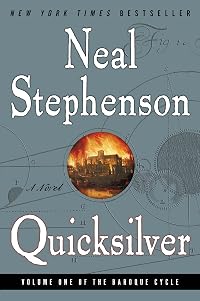
Quicksilver is the story of Daniel Waterhouse, fearless thinker and conflicted Puritan, pursuing knowledge in the company of the greatest minds of Baroque-era Europe, in a chaotic world where reason wars with the bloody ambitions of the mighty, and where catastrophe, natural or otherwise, can alter the political landscape overnight. It is a chronicle of the breathtaking exploits of "Half-Cocked Jack" Shaftoe -- London street urchin turned swashbuckling adventurer and legendary King of the show more Vagabonds -- risking life and limb for fortune and love while slowly maddening from the pox. And it is the tale of Eliza, rescued by Jack from a Turkish harem to become spy, confidante, and pawn of royals in order to reinvent Europe through the newborn power of finance. A gloriously rich, entertaining, and endlessly inventive novel that brings a remarkable age and its momentous events to vivid life, Quicksilver is an extraordinary achievement from one of the most original and important literary talents of our time. And it's just the beginning ... show lessTags
Recommendations

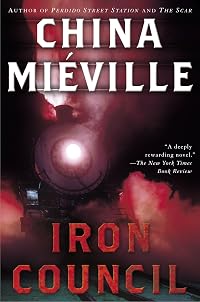
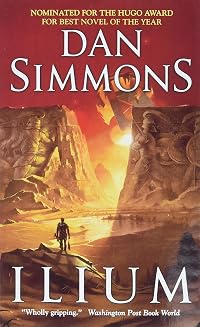
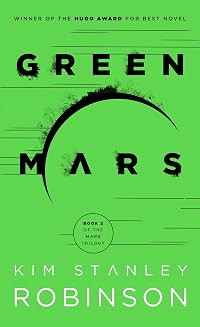
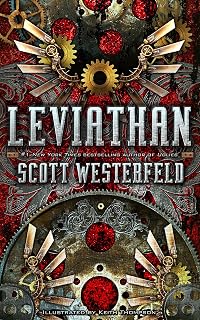
Member Recommendations
lyzadanger Similar buffoonish, humorous treatment of English historical figures.

YossarianXeno Both are compellingly written historical novels
Mind_Booster_Noori Neal Stephenson retelling History with his excellent writing skills...
ehines Both interesting contemporary books set amidst the scientific enlightenment, Pears is a bit more historical where Stephenson is more flashily contemporary, but fans of one certainly should look at the other.
uncultured Quicksilver is to Mason & Dixon as Agatha Christie is to Sir Arthur Conan Doyle.
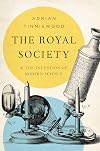
themulhern Both books are in at the creation of The Royal Society.
Member Reviews
Well, I've been pleasurably wading through this slab of witty exposition for what feels like most of the year now, re-reading it, to be exact, and finding comfort in the chaos, warfare, catastrophe and upheaval of the late 1600s. Daniel Waterhouse wends his way back to England beset by pirates and recalls his formative years attending Cambridge with a young Isaac Newton. Raised by a religious extremist who believed the world would end in 1666 (obviously) and wanted Daniel to stand on the Cliffs of Dover ready to great the returned Jesus in a variety of ancient languages, Daniel's education begins as a great revolution in science and philosophy takes hold, shaking the world to its core simply by explaining it. Then we have Half-Cocked show more Jack Shaftoe, who rescues Eliza from a seraglio at the Siege Of Vienna. Together they cross Europe as Vagabonds, ready to take the world of finance by storm.
These books aren't everybody's cup of tea: too big, bloated and clever-clever. I love 'em. I eat 'em up. They're epic, picaresque, hilarious celebrations of wild intelligence at war with crazed irrationality, and you're not always sure which of them are the good guys at any given time.
2021 - here comes the autumn and winter of yet another plague year, time for comfort reads.
Found my original review from 2004:
This vast, sprawling historical (actually an alternative history) novel is the first in a vast, sprawling historical trilogy that ambitiously sets out to chart the rise of the age of reason and enlightenment, which, it must be noted, marks no abatement in man’s eternal quest for new and interesting way to kills each other, but which certainly saw a marked increase in the numbers of obsessive scientists suffering from mercury poisoning.
1713, the story opens in the Colonies and the arrival of Enoch Root, Stephenson’s more sanguine immortal Melmoth figure (who also figures in Cryptonomicon, to which this trilogy is a prelude) searching for the now aged Daniel Waterhouse and prevailing upon him to return to England to mediate in a bitter, wildfire scientific feud that has riven the ranks of the Philosophical Society which Daniel helped found. Old Daniel then spends the rest of the nine hundred-odd pages on a ship trying to leave Boston Harbour. Unfortunately the ship is beset by a large fleet of pirates and is captained by a man with a real hard-on for buccaneers and whose idea of a good time is to send as many of them as possible to a watery grave. Lively and all as the ensuing maritime manoeuvres prove to be, the bulk of the actual book is thankfully filled with the tale of Daniel’s early career in the Philosophical Society and his friendships with various historical characters, most significantly one Isaac Newton. Against the backdrop of plague, fire, revolution and restoration, we are treated to debates, feuds, intrigues, dissections, theories, revelations and the whole cloistered, obsessive world of mad, venerable old scientists who can’t blow their nose without making new and awesome discoveries and then writing treatises of thousands of closely reasoned pages on the issue, and others who blunder down disastrous dead ends ruining their lives, fortunes and reputations.
Book One ends, and Old Daniel is finally making progress for England. But never mind about him, Book Two brings us the exciting adventures of the legendary Jack Shaftoe, King of the Vagabonds, and Eliza, rescued from a Turkish harem at the Siege of Venice. The two set out to make their fortune in the markets, courts and battlefields of war-torn Europe. ‘Half-Cocked’ Jack is slowly going mad from a fatal dose of the pox while Eliza has a gift for numbers, intrigue and networks which gets both of them into horrible amounts of trouble. Swashbucklingly stupid exploits and fiendishly clever stratagems which flounder and backfire keep the second book a lively read, and we even get to revisit young Daniel – well… getting on for middle-aged Daniel - in filthy, teeming bristling London.
Personally, I love this sort of thing, and I’m also a fan of Stephenson anyway, so Quicksilver was never going to be a hard sell to this particular reviewer. The giddy sense of scientific discovery fuelling the progress of civilisation, for better and for worse, is all part of the pure bliss of science fiction, and the counterpart in historical fiction can be every bit as exhilarating. The work of the Philosophical Society does not occur in a vacuum, cannot be divorced from the cultural, political, religious and economic milieu in which it is set, which enables it far more than it hampers. The scientists are not innocently unaware of the personal dangers of questioning widely held beliefs of the nature of the universe, nor are they ignorant of the admittedly unpredictable, potentially catastrophic repercussions on the wider world (or, in the case of their work on cannon and gunpowder, very predictable) it is simply the nature of the world in which they live.
Tons of historical detail abound, but Stephenson makes no effort to capture much in the way of period dialect or idiom, though he does well in capturing the rhetorical rhythms of courtiers and Natural Philosophers. The ferment of scientific endeavour and extremes of thought and behaviour in the Philosophical Society allow for a great deal of high and low comedy, while unashamedly vicious behaviour can shock and the uncertainties of life in such tumultuous times leads to much tragedy and horror. One passage consists of an hilarious description of the outrageously flamboyant dress of a foppish young aristocrat, a patron of Isaac Newton and a deadly swordsman. In the very next paragraph amusement gives way to revulsion as the same fop horribly abuses an agent in his pay.
Ending with all the principal characters in assorted unpleasant if not downright disgusting circumstances and with two equally massive books to go, it’s clear Stephenson is just getting started. Reading the whole lot looks like as potentially exhausting experience: heck just lifting the damn things could leave you prostrate, but me, I’m a glutton for punishment. show less
These books aren't everybody's cup of tea: too big, bloated and clever-clever. I love 'em. I eat 'em up. They're epic, picaresque, hilarious celebrations of wild intelligence at war with crazed irrationality, and you're not always sure which of them are the good guys at any given time.
2021 - here comes the autumn and winter of yet another plague year, time for comfort reads.
Found my original review from 2004:
This vast, sprawling historical (actually an alternative history) novel is the first in a vast, sprawling historical trilogy that ambitiously sets out to chart the rise of the age of reason and enlightenment, which, it must be noted, marks no abatement in man’s eternal quest for new and interesting way to kills each other, but which certainly saw a marked increase in the numbers of obsessive scientists suffering from mercury poisoning.
1713, the story opens in the Colonies and the arrival of Enoch Root, Stephenson’s more sanguine immortal Melmoth figure (who also figures in Cryptonomicon, to which this trilogy is a prelude) searching for the now aged Daniel Waterhouse and prevailing upon him to return to England to mediate in a bitter, wildfire scientific feud that has riven the ranks of the Philosophical Society which Daniel helped found. Old Daniel then spends the rest of the nine hundred-odd pages on a ship trying to leave Boston Harbour. Unfortunately the ship is beset by a large fleet of pirates and is captained by a man with a real hard-on for buccaneers and whose idea of a good time is to send as many of them as possible to a watery grave. Lively and all as the ensuing maritime manoeuvres prove to be, the bulk of the actual book is thankfully filled with the tale of Daniel’s early career in the Philosophical Society and his friendships with various historical characters, most significantly one Isaac Newton. Against the backdrop of plague, fire, revolution and restoration, we are treated to debates, feuds, intrigues, dissections, theories, revelations and the whole cloistered, obsessive world of mad, venerable old scientists who can’t blow their nose without making new and awesome discoveries and then writing treatises of thousands of closely reasoned pages on the issue, and others who blunder down disastrous dead ends ruining their lives, fortunes and reputations.
Book One ends, and Old Daniel is finally making progress for England. But never mind about him, Book Two brings us the exciting adventures of the legendary Jack Shaftoe, King of the Vagabonds, and Eliza, rescued from a Turkish harem at the Siege of Venice. The two set out to make their fortune in the markets, courts and battlefields of war-torn Europe. ‘Half-Cocked’ Jack is slowly going mad from a fatal dose of the pox while Eliza has a gift for numbers, intrigue and networks which gets both of them into horrible amounts of trouble. Swashbucklingly stupid exploits and fiendishly clever stratagems which flounder and backfire keep the second book a lively read, and we even get to revisit young Daniel – well… getting on for middle-aged Daniel - in filthy, teeming bristling London.
Personally, I love this sort of thing, and I’m also a fan of Stephenson anyway, so Quicksilver was never going to be a hard sell to this particular reviewer. The giddy sense of scientific discovery fuelling the progress of civilisation, for better and for worse, is all part of the pure bliss of science fiction, and the counterpart in historical fiction can be every bit as exhilarating. The work of the Philosophical Society does not occur in a vacuum, cannot be divorced from the cultural, political, religious and economic milieu in which it is set, which enables it far more than it hampers. The scientists are not innocently unaware of the personal dangers of questioning widely held beliefs of the nature of the universe, nor are they ignorant of the admittedly unpredictable, potentially catastrophic repercussions on the wider world (or, in the case of their work on cannon and gunpowder, very predictable) it is simply the nature of the world in which they live.
Tons of historical detail abound, but Stephenson makes no effort to capture much in the way of period dialect or idiom, though he does well in capturing the rhetorical rhythms of courtiers and Natural Philosophers. The ferment of scientific endeavour and extremes of thought and behaviour in the Philosophical Society allow for a great deal of high and low comedy, while unashamedly vicious behaviour can shock and the uncertainties of life in such tumultuous times leads to much tragedy and horror. One passage consists of an hilarious description of the outrageously flamboyant dress of a foppish young aristocrat, a patron of Isaac Newton and a deadly swordsman. In the very next paragraph amusement gives way to revulsion as the same fop horribly abuses an agent in his pay.
Ending with all the principal characters in assorted unpleasant if not downright disgusting circumstances and with two equally massive books to go, it’s clear Stephenson is just getting started. Reading the whole lot looks like as potentially exhausting experience: heck just lifting the damn things could leave you prostrate, but me, I’m a glutton for punishment. show less
Judging by the first book, The Baroque Cycle is well named. Not only because that of the historical period it treats, but because it itself contains the key characteristics to such an extent. It does not come to expression so much in a particularly ornate language, but in a wealth of detail which is there, I think, not so much in order to create any sort of reality effect, but for its own sake. It could be he overdoes it a little at times, but if you are writing a Baroque Cycle I suppose you might as well write a Baroque cycle.
This can be exhausting. Certainly if, like me, you reach for books to check whether these historical ``facts'' are indeed facts or just facts of the fictional variety. This is the frustrating bit. Stephenson makes show more no secret of his novels having a fictional element, which means that it occasionally feels like reading a text book without the added bonus of being allowed to trust the information that textbook offers. The majority of the book, however, was so well researched, I was delighted. I had to force myself to stop checking up on it all after a while, and someone really could have told me that there was an appendix containing a list of dramatis personæ in which the fictional were distinguished from the real (or as Stephenson puts it, some are historical, others might ``produce confusion, misunderstanding, severe injury, and death if relied upon by time travelers visiting the time and space in question''). He sometimes makes use of some rather stretched devices in order to include this research, and at other times he makes too much of information that is really common knowledge, but I won't quibble too much.
Stephenson gets stars aplenty for his research. I have always been vaguely insulted by authors who felt it was all right to riddle their novels with inaccuracies. It suggests, or states flat out, that they believe their readers will be too ignorant to notice the difference. Checking up on obscure facts and finding they were accurate made me very happy.
The real strength of the book is craftsmanship. Not just in terms of research, but also in the variety of literary styles. I am a little annoyed that this is not done in a coherent way, but the styles fit their subject so well, I have no real issue with it. He starts off playing with time, presenting the opening of the story as a series of protracted flashbacks from an old man trapped on a ship attacked by pirates, runs off into history and frolics about (there is no other word for it) with the Royal Society for a while, before changing the style completely into a semblance of the picaresque (which, of course, also has the picaresque novel as a participant). He also uses occasional bouts of drama to good effect, and large portions of the last third of the book take the epistolary form.
The book is divided into three sections. The first focuses on Daniel Waterhouse (fictional), a close friend of Isaac Newton (not so fictional) and a great and lovely cast of Royal Society members like Hooke, Wilkins, Boyle, Oldenburg and that lot in 1660s and 1670s London. The second is the picaresque, mainly focused on Jack Shaftoe, a Vagabond (also fictional). I wonder to what extent it is a coincidence that the portrayal of Daniel's youth is shown in apparently objective flashbacks, whereas Jack is allowed to tell his own story to a beautiful woman, with the truth value that entails. The third and final part is not so easily connected to one character, but it is closely tied to Eliza, a former harem slave (and fictional to the extent that she comes from a fictional country) picked up by Jack in part two. Leibniz, rather than Newton, dominates the latter two halves, as the question of Leibniz and Newton and the Calculus hovers in the background throughout.
Historical figures like Huygens, Rossignol, Charles II, James II, William of Orange, Louis XIV and any number of others gravitate (oh dear) around these three protagonists with varying appeal, while the historical moment with its mix of experimental science, theoretical physics, alchemy and other murky activities is presented in full glory. I think he does a very good job of showing that the modern scientific theories did not spring pure and fully formed out of the head of Rationality, but are the result of a general willingness to try everything and investigate it all, while also showing off the fascination with the more spectacular elements (mercury and phosphorous in particular) -- after all, if they did not have spectacular properties, they would not look so cool, right?
I will not try to pronounce on the plot as a whole (I assume the missing resolutions of major questions will be dealt with in the following two volumes), and I would generally not dwell too much on Stephenson's language (while it does occasionally take on the flavour of the period, this sometimes succeeds and sometimes does not; but on the whole it is perfectly serviceable, although not something I would go into raptures about). I really wish there weren't quite so many gratuitous sex scenes. And if someone could properly explain to me how on earth the binary/I Ching code works in Eliza's letters, I will be both more impressed with Stephenson and very grateful to whoever does the explaining. But on the whole I recommend it to anyone with patience who is willing to get lost in the details of the period, particularly those with an interest in history and/or science. show less
This can be exhausting. Certainly if, like me, you reach for books to check whether these historical ``facts'' are indeed facts or just facts of the fictional variety. This is the frustrating bit. Stephenson makes show more no secret of his novels having a fictional element, which means that it occasionally feels like reading a text book without the added bonus of being allowed to trust the information that textbook offers. The majority of the book, however, was so well researched, I was delighted. I had to force myself to stop checking up on it all after a while, and someone really could have told me that there was an appendix containing a list of dramatis personæ in which the fictional were distinguished from the real (or as Stephenson puts it, some are historical, others might ``produce confusion, misunderstanding, severe injury, and death if relied upon by time travelers visiting the time and space in question''). He sometimes makes use of some rather stretched devices in order to include this research, and at other times he makes too much of information that is really common knowledge, but I won't quibble too much.
Stephenson gets stars aplenty for his research. I have always been vaguely insulted by authors who felt it was all right to riddle their novels with inaccuracies. It suggests, or states flat out, that they believe their readers will be too ignorant to notice the difference. Checking up on obscure facts and finding they were accurate made me very happy.
The real strength of the book is craftsmanship. Not just in terms of research, but also in the variety of literary styles. I am a little annoyed that this is not done in a coherent way, but the styles fit their subject so well, I have no real issue with it. He starts off playing with time, presenting the opening of the story as a series of protracted flashbacks from an old man trapped on a ship attacked by pirates, runs off into history and frolics about (there is no other word for it) with the Royal Society for a while, before changing the style completely into a semblance of the picaresque (which, of course, also has the picaresque novel as a participant). He also uses occasional bouts of drama to good effect, and large portions of the last third of the book take the epistolary form.
The book is divided into three sections. The first focuses on Daniel Waterhouse (fictional), a close friend of Isaac Newton (not so fictional) and a great and lovely cast of Royal Society members like Hooke, Wilkins, Boyle, Oldenburg and that lot in 1660s and 1670s London. The second is the picaresque, mainly focused on Jack Shaftoe, a Vagabond (also fictional). I wonder to what extent it is a coincidence that the portrayal of Daniel's youth is shown in apparently objective flashbacks, whereas Jack is allowed to tell his own story to a beautiful woman, with the truth value that entails. The third and final part is not so easily connected to one character, but it is closely tied to Eliza, a former harem slave (and fictional to the extent that she comes from a fictional country) picked up by Jack in part two. Leibniz, rather than Newton, dominates the latter two halves, as the question of Leibniz and Newton and the Calculus hovers in the background throughout.
Historical figures like Huygens, Rossignol, Charles II, James II, William of Orange, Louis XIV and any number of others gravitate (oh dear) around these three protagonists with varying appeal, while the historical moment with its mix of experimental science, theoretical physics, alchemy and other murky activities is presented in full glory. I think he does a very good job of showing that the modern scientific theories did not spring pure and fully formed out of the head of Rationality, but are the result of a general willingness to try everything and investigate it all, while also showing off the fascination with the more spectacular elements (mercury and phosphorous in particular) -- after all, if they did not have spectacular properties, they would not look so cool, right?
I will not try to pronounce on the plot as a whole (I assume the missing resolutions of major questions will be dealt with in the following two volumes), and I would generally not dwell too much on Stephenson's language (while it does occasionally take on the flavour of the period, this sometimes succeeds and sometimes does not; but on the whole it is perfectly serviceable, although not something I would go into raptures about). I really wish there weren't quite so many gratuitous sex scenes. And if someone could properly explain to me how on earth the binary/I Ching code works in Eliza's letters, I will be both more impressed with Stephenson and very grateful to whoever does the explaining. But on the whole I recommend it to anyone with patience who is willing to get lost in the details of the period, particularly those with an interest in history and/or science. show less
He may be over it by now (as I have not read any of his more recent work), but I’m convinced that at the time he was writing Cryptonomicon and the Baroque Cycle (of which Quicksilver is the first volume), the first thing Neal Stephenson did every morning right after getting out of bed was to shamble into the bathroom and stand there for ten minutes, just staring bleary-eyed into mirror and bemoaning his fate that it was not Thomas Pynchon looking back at him.
If with Cryptonomicon Stephenson tried to write Gravity’s Rainbow, then the Baroque Cycle is his attempt at authoring Mason & Dixon, an exploration of modern technology and the effect it has had on the 20th century followed by a sprawling, weird, detail-obsessed historical show more novel. Unfortunately, Neal Stephenson was not only too late in both cases, but is also not nearly the writer Pynchon is, and therefore ended up failing rather spectacularly, producing a series of novels that, in spite of their massive bulk, seems rather flat and shallow if held up against Pynchon.
Admittedly, I am being somewhat unfair here – not every writer can be a Pynchon, and usually that is not something you’d hold against anyone. It is just that Stephenson so clearly, desperately wants to be Pynchon, making it impossible to not judge him by that standard, a standard which he just cannot measure up to. I already disliked Cryptonomicon, but that was at least was somewhat entertaining; while Quicksilver, when I first read it (shortly after it was released) was just a terrible slog to get through. I did made it to the end somehow, but didn’t touch another novel by Stephenson afterwards.
But sometimes I do get those strange urges, and a few months back I started ogling the Baroque Cycle again. Whatever the reason, after some months of futile resistance the urge became irresistible, I got myself the e-book version of Stephenson’s trilogy and started – not without some misgivings – digging into Quicksilver. And ended up surprised at how much I was enjoying it – so much so, in fact, that I read the whole of the Baroque Cycle, all almost 3000 pages of it in almost exactly a month.
Which is not to say that I did not still have some problems with it. If one comes to this novel with Patrick O’Brian’s Aubrey-Maturin series fresh in one’s mind it is almost painfully obvious to what degree Quicksilver fails as a straight historical novel. Not that I’d have thought even for a moment that Stephenson attempted to write one, but his attempts at mimicking the Baroque writing style are quite grating after O’Brian’s full immersion in his chosen period (and don’t even get me start on a comparison to Mason & Dixon). Stephenson seems half-hearted by comparison, his occasional usage of old spellings seems arbitrary (for example he inexplicably keeps writing “roofs” as “rooves” but is perfectly happy to use a modern spelling for most words) and generally gives the impression of someone just wanting to show off (which I strongly suspect is the raison d’être for a lot of the extended, quite often tedious descriptions of all sorts of minutiae). But then, this is not really supposed to be a strictly historical novel – Stephenson liberally peppers his narrative with anachronisms, and the auctorial is distinctly contemporary and postmodern. Which has the rather unfortunate effect that the novel reads like it wasn’t able to take itself seriously – on the one hand, it is a serious historical novel with a plethora of period detail, on the other it seems more preoccupied with finding precursors modern concerns like programming languages and arbitrary signifiers; on the one hand it seems to want to say something important, on the other it’s just here to have some fun.
Quicksilver is separated into three parts, each with a different protagonist, each of which seems to also work as some kind of allegory – Daniel Waterhouse who is the protagonist of the first book, is a Man of Science, Jack Shaftoe, protagonist of the second, is a rogue and classical picaro, and Eliza (not sure we ever learn her second name), protagonist of the third book and a genius of financial manipulation. Personally, I rather liked the first books but I suspect that was mostly because I already had an interest in the history of science of that period, but most readers (and that would include me) tend to prefer the second, because it is there that Stephenson changes from trying to write serious literature (which, seriously, he is just no good at) to spinning a yarn of colourful adventure (which, it turns out, he is really good at). “King of te Vagabonds,” the Jack Shaftoe part of the novel is an inordinate amount of fun, taking our morally doubtful hero from Vienna to the Netherlands to Paris in a series of increasingly wild and improbable adventures in the true picaresque manner and lets the reader forget about the ponderous, slow-moving first part with several hundred pages of glorious entertainment.
Unfortunately, Stephenson then goes and ruins it all (well, part of it, anyway) with the third part where things just fall apart – for some reason, he decided to not tell his tale straight any more but instead approaches all the important events in his narrative at an oblique angle, only telling of them indirectly and second-hand, which gets really annoying after a while and again slows the novel’s speed down to a crawl.
I’m really not someone who scolds novel for being pretentious – usually, I find that it is just a convenient (and extremely flimsy) excuse for lazy readers to not have to read novels that are difficult or challenging in any way and which might possibly ask of them to think about what they are reading, or even only just pay attention to it. With Quicksilver, however, I think the shoe fits – this is a wonderful adventure novel (almost) ruined by its pretensions to be something more. Thankfully, Neal Stephenson seems to have realized where his true talents lie, and things improve steadily over the next two volumes. show less
If with Cryptonomicon Stephenson tried to write Gravity’s Rainbow, then the Baroque Cycle is his attempt at authoring Mason & Dixon, an exploration of modern technology and the effect it has had on the 20th century followed by a sprawling, weird, detail-obsessed historical show more novel. Unfortunately, Neal Stephenson was not only too late in both cases, but is also not nearly the writer Pynchon is, and therefore ended up failing rather spectacularly, producing a series of novels that, in spite of their massive bulk, seems rather flat and shallow if held up against Pynchon.
Admittedly, I am being somewhat unfair here – not every writer can be a Pynchon, and usually that is not something you’d hold against anyone. It is just that Stephenson so clearly, desperately wants to be Pynchon, making it impossible to not judge him by that standard, a standard which he just cannot measure up to. I already disliked Cryptonomicon, but that was at least was somewhat entertaining; while Quicksilver, when I first read it (shortly after it was released) was just a terrible slog to get through. I did made it to the end somehow, but didn’t touch another novel by Stephenson afterwards.
But sometimes I do get those strange urges, and a few months back I started ogling the Baroque Cycle again. Whatever the reason, after some months of futile resistance the urge became irresistible, I got myself the e-book version of Stephenson’s trilogy and started – not without some misgivings – digging into Quicksilver. And ended up surprised at how much I was enjoying it – so much so, in fact, that I read the whole of the Baroque Cycle, all almost 3000 pages of it in almost exactly a month.
Which is not to say that I did not still have some problems with it. If one comes to this novel with Patrick O’Brian’s Aubrey-Maturin series fresh in one’s mind it is almost painfully obvious to what degree Quicksilver fails as a straight historical novel. Not that I’d have thought even for a moment that Stephenson attempted to write one, but his attempts at mimicking the Baroque writing style are quite grating after O’Brian’s full immersion in his chosen period (and don’t even get me start on a comparison to Mason & Dixon). Stephenson seems half-hearted by comparison, his occasional usage of old spellings seems arbitrary (for example he inexplicably keeps writing “roofs” as “rooves” but is perfectly happy to use a modern spelling for most words) and generally gives the impression of someone just wanting to show off (which I strongly suspect is the raison d’être for a lot of the extended, quite often tedious descriptions of all sorts of minutiae). But then, this is not really supposed to be a strictly historical novel – Stephenson liberally peppers his narrative with anachronisms, and the auctorial is distinctly contemporary and postmodern. Which has the rather unfortunate effect that the novel reads like it wasn’t able to take itself seriously – on the one hand, it is a serious historical novel with a plethora of period detail, on the other it seems more preoccupied with finding precursors modern concerns like programming languages and arbitrary signifiers; on the one hand it seems to want to say something important, on the other it’s just here to have some fun.
Quicksilver is separated into three parts, each with a different protagonist, each of which seems to also work as some kind of allegory – Daniel Waterhouse who is the protagonist of the first book, is a Man of Science, Jack Shaftoe, protagonist of the second, is a rogue and classical picaro, and Eliza (not sure we ever learn her second name), protagonist of the third book and a genius of financial manipulation. Personally, I rather liked the first books but I suspect that was mostly because I already had an interest in the history of science of that period, but most readers (and that would include me) tend to prefer the second, because it is there that Stephenson changes from trying to write serious literature (which, seriously, he is just no good at) to spinning a yarn of colourful adventure (which, it turns out, he is really good at). “King of te Vagabonds,” the Jack Shaftoe part of the novel is an inordinate amount of fun, taking our morally doubtful hero from Vienna to the Netherlands to Paris in a series of increasingly wild and improbable adventures in the true picaresque manner and lets the reader forget about the ponderous, slow-moving first part with several hundred pages of glorious entertainment.
Unfortunately, Stephenson then goes and ruins it all (well, part of it, anyway) with the third part where things just fall apart – for some reason, he decided to not tell his tale straight any more but instead approaches all the important events in his narrative at an oblique angle, only telling of them indirectly and second-hand, which gets really annoying after a while and again slows the novel’s speed down to a crawl.
I’m really not someone who scolds novel for being pretentious – usually, I find that it is just a convenient (and extremely flimsy) excuse for lazy readers to not have to read novels that are difficult or challenging in any way and which might possibly ask of them to think about what they are reading, or even only just pay attention to it. With Quicksilver, however, I think the shoe fits – this is a wonderful adventure novel (almost) ruined by its pretensions to be something more. Thankfully, Neal Stephenson seems to have realized where his true talents lie, and things improve steadily over the next two volumes. show less
What a mess! This volume commits several heinous sins; the Sin of Protagonist Switching occurs twice. The Sin of Rambling Aimlessly occurs through out. The Sin of Being Pointless might possibly be redeemed in the remaining volumes...but can I be bothered to read them?
There are fun and exciting passages that account for the two star rating but they are islands floating on the structural swamp.
There are fun and exciting passages that account for the two star rating but they are islands floating on the structural swamp.
Delightful, if perhaps not for everyone's tastes. Stephenson sets this doorstopper of a novel in the early Age of Enlightenment, among such historical luminaries as Newton, Hooke, and Leibnitz, as well as their political contemporaries such as Charles II, Louis XIV and William of Orange. The author of [b:Cryptonomicon|816|Cryptonomicon|Neal Stephenson|https://images.gr-assets.com/books/1327931476s/816.jpg|1166797] (to which this book is loosely connected) draws on similar themes about science and communication, but set centuries earlier. Stephenson clearly did abundant research into the period, and sprinkles his work with both obscure references and just the right amount of period jargon. As someone who's read a decent amount (but by no show more means extensively) about the period, I loved almost every page: even when the action lagged (as it sometimes did, especially in the first third, where Stephenson added a framing story involving a battle against pirates seemingly just to liven up the less exciting action of his main plot, and near the end, when too much of the action is told in the form of cyphered letters) the setting was immersive and enlivened with a droll wit. People who don't know their Leibnitz from their Leipzig might find the exhaustive detail less charming than I did, though the storytelling style is certainly much more accessible than, say, the self-consciously arty grammar of Wolf Hall. show less
Y'know, I love me some immersive historical fiction, and I've enjoyed some of the Stephenson I've read (I must set Anathem aside) ... but. I am going to inch forward with Quicksilver; however, I have found the "huge backstory database" dumps at the beginning to be so hamfistedly handled that I had an impulse to throw the book across the room.
C'mon, Neal -- NOT doing those things is one of the things that Heinlein taught. I know this isn't strictly speaking science fiction, but jeez.
C'mon, Neal -- NOT doing those things is one of the things that Heinlein taught. I know this isn't strictly speaking science fiction, but jeez.
Earnest readers approach new books like a relationship. They size up the heft of the tome, the thickness of spine, the cosmetics of the cover, and they think to themselves, "Should I get involved? Do I really want to commit?" After all, for three days or three weeks, they will be wedded to these pages.
Maybe it will be a good marriage with staying power all the way to the final breath of the last page; or, if the book's especially bad, the reader will opt for a quick divorce, leaving the poor book wondering what it did wrong, what it could have done better.
Neal Stephenson's novel, Quicksilver, requires some serious marital commitment.
At more than 920 pages and weighing a few ounces shy of three pounds, Quicksilver can be a draining show more experience—like having a 300-pound bride sit on your chest and demand your full attention—and along about page 730, you're really starting to ponder those words "to have and to hold."
The novel, the first of a trilogy Stephenson is calling The Baroque Cycle, is set in the late 17th and early 18th centuries and is stuffed with a museum's worth of miscellany. Cameos are made by historical and literary figures like Samuel Pepys, Mother Goose, D'Artagnan the Musketeer, Blackbeard the Pirate, William Penn and Winston Churchill (no, not that Winston, but one of his ancestors). Here in these pages, readers will also find such diverse topics as the beginnings of the stock market, French politics, metaphysics, mathematics, archeology, etymology, cryptology, metallurgy, genealogy, high-seas piracy, purloined letters, torture, the medicinal use of manure and scientific discussions involving the gravitational pull of billiard balls and the architecture of snowflakes. I'm sure I've left at least a dozen subjects off the list.
Quicksilver weighs as heavy on the mind as it does the hand.
The densely-packed pages are filled with characters sitting around having conversations about God, gravity and alchemy—characters like Isaac Newton, Robert Hooke and Gottfried Leibniz, who is known for believing all knowledge could be coded and numbered. If that was true, he postulated, then determining the mysteries of the universe would be a simple matter of calculation.
This appears to be one of Stephenson's chief aims as well. The novelist has built a reputation, and a devoted legion of fans, with cyberpunk literature like Snow Crash and The Diamond Age. His most recent novel, Cryptonomicon, centered around World War Two code-breaking. It, too, weighed in at more than 900 pages, which of course begs the question "Did Stephenson's editor lose his red pen?"
The author is well aware of the stir his heavy-handed volume will cause and has even written in a couple of self-referential winks. Here's an excerpt from a play-within-the-novel (Quicksilver is filled with diagrams, genealogical charts, letters and plays):
WATERHOUSE: Here, m'lord, fresh from Cambridge, as promised, I give you Books I and II of Principia Mathematica by Isaac Newton—have a care, some would consider it a valuable document.
APTHORP: My word, is that the cornerstone of a building, or a manuscript?
RAVENSCAR: Err! To judge by weight, it is the former.
APTHORP: Whatever it is, it is too long, too long!
WATERHOUSE: It explains the System of the World.
APTHORP: Some sharp editor needs to step in and take that wretch in hand!
While Quicksilver doesn't exactly explain the system of the world, it goes to great pains and lengths to show us where the basis for much of our modern scientific and philosophic thought originated: the fervid minds of the Natural Philosophers and members of the Royal Society, a men's club which puzzled over everything from dog anatomy to snowflake geometry. Stephenson masterfully shows us how raw and uncharted science was three centuries ago:
"Lately, every time Mr. Hooke peers at something with his Microscope he finds that it is divided up into small compartments, each one just like its neighbors, like bricks in a wall," Wilkins confided.
"What do these bricks look like?"
"He doesn't call them bricks. Remember, they are hollow. He has taken to calling them 'cells'…but you don't want to get caught up in all that nonsense.
Another character claims his goal is to translate all human knowledge into a new philosophical language, consisting of numbers. To write it down in a vast Encyclopedia that will be a sort of machine, not only for finding old operations on those numbers—and to employ all of this in a great project of bringing religious conflict to an end, and raising Vagabonds up out of squalor and liberating their potential energy.
The novel's title might hold a clue to unraveling what Stephenson is trying to do on these pages:
Quicksilver=Mercury=messenger of the Roman gods=transfer of information=computers
Using this formula, it's not too great a leap from the alchemy of Stephenson's 17th-century characters to his 20th-century hackers in other books. To those early Royal Society gearheads, quicksilver was "the pure living essence of God's power and presence in the world." Newton, Hooke and Leibniz are all hackers, trying to crack the code of knowledge. So, you can see why their skulls were in such torment and turmoil and why, more than 300 years later, Stephenson's cranium seethes with equal energy. God is the x in the algebra equation, and we're all dying to know the answer (but no cheating on the final exam, boys and girls).
All the fireworks of Stephenson's impressive research and fluid documentary style might distract you from the simple fact that, at heart, nothing really happens in Quicksilver. There's no arrow-shot arc of a story, no perpetual-motion of a plot. Characters become chess pieces and Stephenson moves them around the board with his God-fingers.
Quicksilver is actually three books bound in one volume: Book the First follows Daniel Waterhouse, Newton's college roommate, and his associations with the Royal Society. Much ale drinking and mathematical ruminations abound. In Book Two, we turn to the Dickensian tale of Half-Cocked Jack Shaftoe the Vagabond, a lusty adventurer whose genitalia met with an unfortunate accident (hence, the nickname). Jack rescues the lovely, high-spirited Eliza from a Turkish harem and the two set off across Europe. For about 100 pages, the novel turns into a brainier version of a swashbuckler starring Errol Flynn, Tyrone Power or, even, Johnny Depp (whose Pirates of the Caribbean character is, coincidentally, also named Jack). There's swordplay aplenty on these pages, with scenes cut straight from the best of Robert Louis Stevenson or Rafael Sabatini. The third part blends the stories of Waterhouse and Eliza with royal intrigue. Eliza becomes a spy at Versailles, at one point concealing coded message in embroidery. All three of the main characters are ancestors of characters from Cryptonomicon, though it's possible to appreciate Quicksilver without having read the earlier book.
This is, at times, a lusty, bloody tale in which bodily fluids spill, clotting the page like month-old cottage cheese. At one point, Eliza is asked by Louis XIV to fake an orgasm to cover up his own screams during a hemorrhoid operation as his courtiers wait in an adjoining room. Eliza's performance makes Meg Ryan in When Harry Met Sally look like an amateur moaner. It's just one of many scenes where Stephenson gleefully gets his fingers bloody writing about early science (here, wittily blending sex with surgery). In fact, the book ends on a particularly skin-puckering note as Hooke prepares to remove Waterhouse's kidney stones…sans local anesthesia, of course.
Those are the high points of the book (a recounting of the Great London Fire of 1666 is another). Then there are the dreadfully dense passages where the paragraphs move slow as mercury on a cold winter day.
According to a USA Today story from 1999, Quicksilver was to be published in 2000, on the heels of Cryptonomicon. At the time, it appears that Stephenson was ready to publish his story in one gargantuan volume. "The publisher informed me that I'd exceeded the physical size a book can be," he told the newspaper. "Beyond a certain page length, the machinery explodes."
Now, three years later, the rubble of gears and cogs lies strewn across every inch of Quicksilver. The machine exploded and what came out of the smoking wreck is either brilliant or balderdash. The other two parts of the Baroque Cycle will be published in April 2004 (The Confusion) and October 2004 (The System of the World). So, by this time next year, we should have nearly ten pounds of Stephenson's brain on our hands.
Sure, a lot of reviews will be focused on the sheer tonnage of Quicksilver and it makes for a relatively easy way to overlook the book's content. But I offer this in the way of argument: the elements of weight and content are irrevocably linked. Information overload is the whole point behind Quicksilver. Your fingers go numb, your eyes swell and—if you're particularly sensitive—your nose bleeds. This is an encyclopedia in the guise of a novel and it takes a particular kind of person to turn its pages.
You the reader must decide a) to make the commitment, then b) to stay faithful to the commitment to the last page or death do you part. But somewhere along the way (page 863, perhaps), you have to ask yourself, "What's the payoff? What do I get in return, other than a pair of sore wrists which have held three pounds of small print close to my eyes for the past two weeks?"
Will your brain swell in its cranial bone-case with all the information Stephenson has crammed there, or will you just sit back and take the ride for whatever it's worth and wherever it leads? Either way, it's doubtful you'll echo the words of one character who says, "I love reading novels. You can understand them without thinking too much." show less
Maybe it will be a good marriage with staying power all the way to the final breath of the last page; or, if the book's especially bad, the reader will opt for a quick divorce, leaving the poor book wondering what it did wrong, what it could have done better.
Neal Stephenson's novel, Quicksilver, requires some serious marital commitment.
At more than 920 pages and weighing a few ounces shy of three pounds, Quicksilver can be a draining show more experience—like having a 300-pound bride sit on your chest and demand your full attention—and along about page 730, you're really starting to ponder those words "to have and to hold."
The novel, the first of a trilogy Stephenson is calling The Baroque Cycle, is set in the late 17th and early 18th centuries and is stuffed with a museum's worth of miscellany. Cameos are made by historical and literary figures like Samuel Pepys, Mother Goose, D'Artagnan the Musketeer, Blackbeard the Pirate, William Penn and Winston Churchill (no, not that Winston, but one of his ancestors). Here in these pages, readers will also find such diverse topics as the beginnings of the stock market, French politics, metaphysics, mathematics, archeology, etymology, cryptology, metallurgy, genealogy, high-seas piracy, purloined letters, torture, the medicinal use of manure and scientific discussions involving the gravitational pull of billiard balls and the architecture of snowflakes. I'm sure I've left at least a dozen subjects off the list.
Quicksilver weighs as heavy on the mind as it does the hand.
The densely-packed pages are filled with characters sitting around having conversations about God, gravity and alchemy—characters like Isaac Newton, Robert Hooke and Gottfried Leibniz, who is known for believing all knowledge could be coded and numbered. If that was true, he postulated, then determining the mysteries of the universe would be a simple matter of calculation.
This appears to be one of Stephenson's chief aims as well. The novelist has built a reputation, and a devoted legion of fans, with cyberpunk literature like Snow Crash and The Diamond Age. His most recent novel, Cryptonomicon, centered around World War Two code-breaking. It, too, weighed in at more than 900 pages, which of course begs the question "Did Stephenson's editor lose his red pen?"
The author is well aware of the stir his heavy-handed volume will cause and has even written in a couple of self-referential winks. Here's an excerpt from a play-within-the-novel (Quicksilver is filled with diagrams, genealogical charts, letters and plays):
WATERHOUSE: Here, m'lord, fresh from Cambridge, as promised, I give you Books I and II of Principia Mathematica by Isaac Newton—have a care, some would consider it a valuable document.
APTHORP: My word, is that the cornerstone of a building, or a manuscript?
RAVENSCAR: Err! To judge by weight, it is the former.
APTHORP: Whatever it is, it is too long, too long!
WATERHOUSE: It explains the System of the World.
APTHORP: Some sharp editor needs to step in and take that wretch in hand!
While Quicksilver doesn't exactly explain the system of the world, it goes to great pains and lengths to show us where the basis for much of our modern scientific and philosophic thought originated: the fervid minds of the Natural Philosophers and members of the Royal Society, a men's club which puzzled over everything from dog anatomy to snowflake geometry. Stephenson masterfully shows us how raw and uncharted science was three centuries ago:
"Lately, every time Mr. Hooke peers at something with his Microscope he finds that it is divided up into small compartments, each one just like its neighbors, like bricks in a wall," Wilkins confided.
"What do these bricks look like?"
"He doesn't call them bricks. Remember, they are hollow. He has taken to calling them 'cells'…but you don't want to get caught up in all that nonsense.
Another character claims his goal is to translate all human knowledge into a new philosophical language, consisting of numbers. To write it down in a vast Encyclopedia that will be a sort of machine, not only for finding old operations on those numbers—and to employ all of this in a great project of bringing religious conflict to an end, and raising Vagabonds up out of squalor and liberating their potential energy.
The novel's title might hold a clue to unraveling what Stephenson is trying to do on these pages:
Quicksilver=Mercury=messenger of the Roman gods=transfer of information=computers
Using this formula, it's not too great a leap from the alchemy of Stephenson's 17th-century characters to his 20th-century hackers in other books. To those early Royal Society gearheads, quicksilver was "the pure living essence of God's power and presence in the world." Newton, Hooke and Leibniz are all hackers, trying to crack the code of knowledge. So, you can see why their skulls were in such torment and turmoil and why, more than 300 years later, Stephenson's cranium seethes with equal energy. God is the x in the algebra equation, and we're all dying to know the answer (but no cheating on the final exam, boys and girls).
All the fireworks of Stephenson's impressive research and fluid documentary style might distract you from the simple fact that, at heart, nothing really happens in Quicksilver. There's no arrow-shot arc of a story, no perpetual-motion of a plot. Characters become chess pieces and Stephenson moves them around the board with his God-fingers.
Quicksilver is actually three books bound in one volume: Book the First follows Daniel Waterhouse, Newton's college roommate, and his associations with the Royal Society. Much ale drinking and mathematical ruminations abound. In Book Two, we turn to the Dickensian tale of Half-Cocked Jack Shaftoe the Vagabond, a lusty adventurer whose genitalia met with an unfortunate accident (hence, the nickname). Jack rescues the lovely, high-spirited Eliza from a Turkish harem and the two set off across Europe. For about 100 pages, the novel turns into a brainier version of a swashbuckler starring Errol Flynn, Tyrone Power or, even, Johnny Depp (whose Pirates of the Caribbean character is, coincidentally, also named Jack). There's swordplay aplenty on these pages, with scenes cut straight from the best of Robert Louis Stevenson or Rafael Sabatini. The third part blends the stories of Waterhouse and Eliza with royal intrigue. Eliza becomes a spy at Versailles, at one point concealing coded message in embroidery. All three of the main characters are ancestors of characters from Cryptonomicon, though it's possible to appreciate Quicksilver without having read the earlier book.
This is, at times, a lusty, bloody tale in which bodily fluids spill, clotting the page like month-old cottage cheese. At one point, Eliza is asked by Louis XIV to fake an orgasm to cover up his own screams during a hemorrhoid operation as his courtiers wait in an adjoining room. Eliza's performance makes Meg Ryan in When Harry Met Sally look like an amateur moaner. It's just one of many scenes where Stephenson gleefully gets his fingers bloody writing about early science (here, wittily blending sex with surgery). In fact, the book ends on a particularly skin-puckering note as Hooke prepares to remove Waterhouse's kidney stones…sans local anesthesia, of course.
Those are the high points of the book (a recounting of the Great London Fire of 1666 is another). Then there are the dreadfully dense passages where the paragraphs move slow as mercury on a cold winter day.
According to a USA Today story from 1999, Quicksilver was to be published in 2000, on the heels of Cryptonomicon. At the time, it appears that Stephenson was ready to publish his story in one gargantuan volume. "The publisher informed me that I'd exceeded the physical size a book can be," he told the newspaper. "Beyond a certain page length, the machinery explodes."
Now, three years later, the rubble of gears and cogs lies strewn across every inch of Quicksilver. The machine exploded and what came out of the smoking wreck is either brilliant or balderdash. The other two parts of the Baroque Cycle will be published in April 2004 (The Confusion) and October 2004 (The System of the World). So, by this time next year, we should have nearly ten pounds of Stephenson's brain on our hands.
Sure, a lot of reviews will be focused on the sheer tonnage of Quicksilver and it makes for a relatively easy way to overlook the book's content. But I offer this in the way of argument: the elements of weight and content are irrevocably linked. Information overload is the whole point behind Quicksilver. Your fingers go numb, your eyes swell and—if you're particularly sensitive—your nose bleeds. This is an encyclopedia in the guise of a novel and it takes a particular kind of person to turn its pages.
You the reader must decide a) to make the commitment, then b) to stay faithful to the commitment to the last page or death do you part. But somewhere along the way (page 863, perhaps), you have to ask yourself, "What's the payoff? What do I get in return, other than a pair of sore wrists which have held three pounds of small print close to my eyes for the past two weeks?"
Will your brain swell in its cranial bone-case with all the information Stephenson has crammed there, or will you just sit back and take the ride for whatever it's worth and wherever it leads? Either way, it's doubtful you'll echo the words of one character who says, "I love reading novels. You can understand them without thinking too much." show less
Members
- Recently Added By
Published Reviews
ThingScore 88
"A great fantastical boiling pot of theories about science, money, war and much else, by turns broadly picaresque and microscopically technical, sometimes over-dense and sometimes too sketchy, flawed but unarguably magnificent, Quicksilver is something like a Restoration-era Gravity's Rainbow."
added by bookfitz
"A book of immense ambition, learning and scope, Quicksilver is often brilliant and occasionally astonishing in its evocation of a remarkable time and place -- Europe in the age of Newton, Pepys and Locke, to name just a few of the myriad characters who flock across its pages."
added by bookfitz
Lists

Best Historical Fiction
620 works; 261 members

Unread books
1,063 works; 87 members

Blue Pyramid 1,276 Best Books of All Time
1,248 works; 32 members

Arthur C. Clarke Award Winners and Shortlisted Books
219 works; 14 members

What if... a speculative history list
25 works; 2 members

Stories featuring characters who are mathematicians
42 works; 5 members

Books with Colourful Titles
171 works; 8 members

Speculative Fiction to Read
706 works; 32 members

Jean's Sci Fi/Fantasy Reading list
189 works; 12 members

A Rainbow of Books: Colors in the Title
570 works; 24 members

Cryptology - non-fiction and fiction
57 works; 4 members

The Hive Recommends
62 works; 2 members

Mustich's 1000 Books to Read Before You Die: A Life Changing List
1,001 works; 19 members
Books We Couldn't Put Down
443 works; 197 members

Worst books read in 2011
36 works; 20 members
Author Information

80+ Works 118,676 Members
Neal Stephenson, the science fiction author, was born on October 31, 1959 in Maryland. He graduated from Boston University in 1981 with a B.A. in Geography with a minor in physics. His first novel, The Big U, was published in 1984. It received little attention and stayed out of print until Stephenson allowed it to be reprinted in 2001. His second show more novel was Zodiac: The Eco-Thriller was published in 1988, but it was his novel Snow Crash (1992) that brought him popularity. It fused memetics, computer viruses, and other high-tech themes with Sumerian mythology. Neal Stephenson has won several awards: Hugo for Best Novel for The Diamond Age (1996), the Arthur C. Clarke for Best Novel for Quicksilver (2004), and the Prometheus Award for Best Novel for The System of the World (2005). He recently completed the The Baroque Cycle Trilogy, a series of historical novels. It consists of eight books and was originally published in three volumes and Reamde. His latest novel is entitled The Rise and Fall of D. O. D. O. Stephenson also writes under the pseudonym Stephen Bury. (Bowker Author Biography) show less
All Editions
Some Editions
Awards and Honors
Awards
Distinctions
Series

Belongs to Publisher Series
Goldmann (46183)
Work Relationships
Is contained in
Common Knowledge
- Canonical title
- Quicksilver
- Original title
- Quicksilver
- Original publication date
- 2003-10
- People/Characters
- Isaac Newton; Gottfried Wilhelm von Leibniz; Daniel Waterhouse; Jack Shaftoe; Robert "Bob" Shaftoe; Enoch Root (show all 20); John Churchill, 1st Duke of Marlborough (in fiction); Eliza Countess de la Zeur; Louis Anglesey; Duc D'Arachon; Jean-Antoine de Mesmes D'Avaux; Roger Comstock; Elisabeth Charlotte; Robert Hooke; George Jeffreys, 1st Baron Jeffreys of Wem; Bonaventure Rossignol; Drake Waterhouse; John Wilkins; William III, King of England (William of Orange - in fiction); Louis XIV, 1638-1715
- Important places
- Amsterdam, North Holland, Netherlands; Black Sun (referenced); France; London, England, UK; The Netherlands; North Holland, Netherlands (show all 7); Paris, France
- Important events
- plagues (London, 1665); Great Fire of London; Edict of Fontainebleau; Monmouth Rebellion; Bloody Assizes; Battle of Vienna (show all 8); Glorious Revolution; Thirty Years' War
- Epigraph
- Those who assume hypotheses as first principles of their speculations ... may indeed form an ingenious romance, but a romance it will still be.
— Roger Cotes,
Preface to Sir Isaac Newton's
Principia... (show all) Mathematica,
second edition, 1713
There is, doubtless, as much skill in pourtraying a Dunghill, as in describing the finest Palace, since the Excellence of Things lyes in the Performance; and Art as well as Nature must have some extraordinary Shape or Quality... (show all) if it come up to the pitch of Human Fancy, especially to please in this Fickle, Uncertain Age.
— Memoirs of the Right Villanous John Hall, 1708
In all times kings, and persons of sovereign authority, because of their independency, are in continual jealosies, and in the state and posture of gladiators; having their weapons pointing, and their eyes fixed on one another... (show all); that is, their forts, garrisons, and guns upon the frontiers of their kingdoms; and continual spies upon their neighbors; which is a posture of war.
— Hobbes, Leviathan - Dedication
- To the woman upstairs
- First words
- Enoch rounds the corner just as the executioner raises the noose above the woman's head.
- Quotations
- "Crying loudly is childish, in that it reflects a belief, on the crier's part, that someone is around to hear the noise, and come a-running to make it all better. Crying in silence, as Daniel does this morning, is the mark of... (show all) the mature sufferer who no longer nurses, nor is nursed by, any such comfortable delusions."
"'As I'm now beginning to understand–you are something of a virtuoso when it comes to manipulating men's mental states,' Monmouth said.
'You make it sound ever so much more difficult than it really is,' Eliza answered. '... (show all)Mostly I just sit quietly and let the men manipulate themselves.'" - Last words
- (Click to show. Warning: May contain spoilers.)Hooke took up his blade and reached for Daniel.
- Original language
- English
- Canonical DDC/MDS
- 813.6
- Canonical LCC
- PS3569.T3868
- Disambiguation notice
- This is the first volume of the three-volume edition. Please don't combine with the first volume of the eight-volume edition with the same title.
Classifications
Statistics
- Members
- 9,464
- Popularity
- 1,100
- Reviews
- 167
- Rating
- (3.89)
- Languages
- 8 — Czech, English, French, German, Greek, Italian, Portuguese, Russian
- Media
- Paper, Audiobook, Ebook
- ISBNs
- 36
- UPCs
- 3
- ASINs
- 16