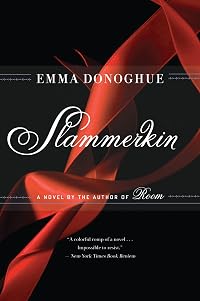
Slammerkin
by Emma Donoghue
On This Page
Description
From Emma Donoghue, the national bestselling author of Room, Slammerkin is "[a] colorful romp of a novel" (The New York Times Book Review) following one woman's journey of self-discovery and survival at the dawn of the industrial revolution in eighteenth century England. Slammerkin: A loose gown, a loose woman. Born to rough cloth in Hogarth's London, but longing for silk, Mary Saunders's eye for a shiny red ribbon leads her to prostitution at a young age. A dangerous misstep sends her show more fleeing to Monmouth, and the position of household seamstress, the ordinary life of an ordinary girl with no expectations. But Mary has known freedom, and having never known love, it is freedom that motivates her. Mary asks herself if the prostitute who hires out her body is more or less free than the "honest woman" locked into marriage, or the servant who runs a household not her own? And is either as free as a man? Ultimately, Mary remains true only to the three rules she learned on the streets: Never give up your liberty. Clothes make the woman. Clothes are the greatest lie ever told. show lessTags
Recommendations

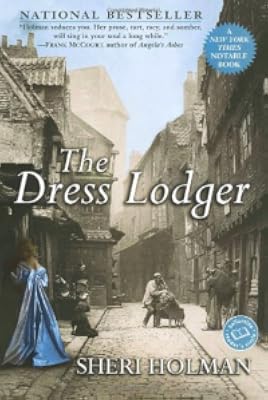
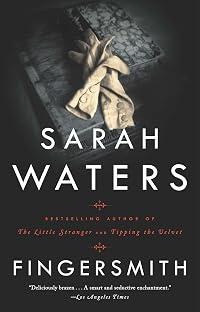
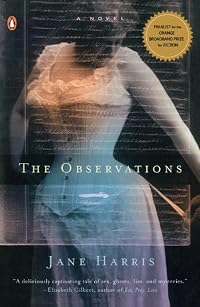
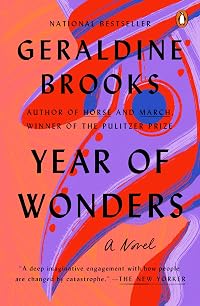


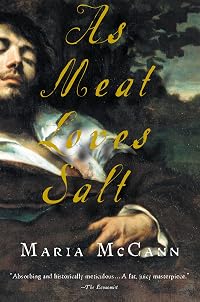
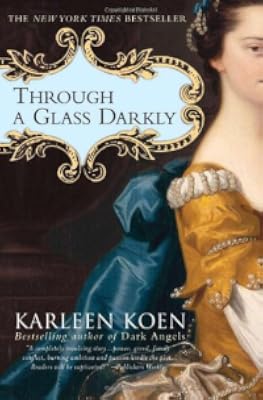
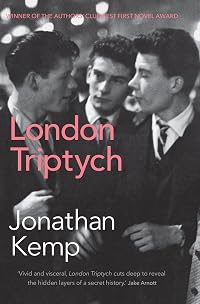
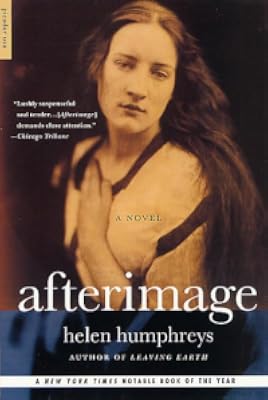


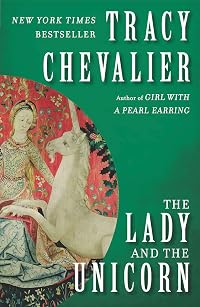
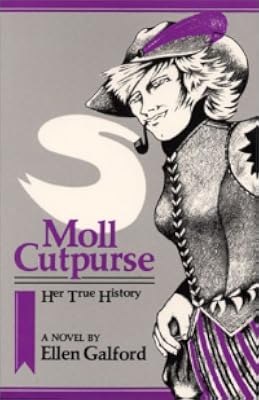
Member Recommendations
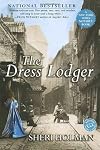
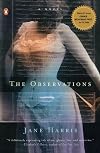

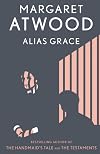
BookshelfMonstrosity Based on sensational true crimes of yesteryear, these character-driven historical novels focus on young women whose attempts to escape lives of poverty and abuse lead to violence. Both disturbing, suspenseful books present nuanced psychological portraits of their protagonists.
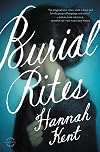
BookshelfMonstrosity Although Slammerkin is more suspenseful and richly detailed than the spare, reflective Burial Rites, both character-driven historical novels draw upon true stories of young women accused of murder. Emphasis on the protagonists' impoverished backgrounds allows for exploration of social issues.
inbedwithbooks Deze boeken zijn zusters!
Member Reviews
A stunning and mesmerizing work of imaginative reconstruction, Emma Donoghue’s novel Slammerkin (in 18th-century England the word referred to both “loose dress” and “loose woman”) tells the harrowing tale of a real historical figure named Mary Saunders, who was born into working-class destitution in 1740s London. Donoghue’s London, where Mary grows up, is a filthy, brutal, morally bankrupt place where poverty and privilege exist side by side, where the wealthy flaunt their finery and the poor scramble to survive by any means possible. Mary has no wish to follow her mother’s example and spend her days as a seamstress, condemned to a life of drudgery, working her fingers to the bone for peanuts. But she does develop a taste show more for fine clothes and garish colours, and at age 13 succumbs to temptation and barters her virginity on the street in exchange for a red ribbon. Turned out of home when she becomes pregnant, Mary finds herself with nothing of value but her own body, which, under the tutelage of a prostitute named Doll Higgins, she learns to exploit in order to make a living and dress herself up in style. Mary admires and seeks to emulate Doll’s world-weary cynicism and resourcefulness, but most of all she appreciates Doll’s independent spirit: her refusal to take orders from anyone. But eventually Mary tires of the demands of her “cullies” as well as the dangers and infections that street life exposes her to, and, in an attempt to straighten herself out, checks into a charity hospital. A few months later, clean finally, but still with no prospects, and recalling stories her mother had passed on to her about her own early life, Mary leaves London and follows the trail to Monmouth. Here she wangles her way with lies and pleading into the Jones household, old friends of her mother’s, taking a position as maid and, eventually, all-purpose assistant and confidant of her mistress, Mrs. Jones, a professional dressmaker. But Mary, never satisfied with her lot, driven by envy and misguided confidence that she was meant for finer things, and horrified at the prospect of ending up married to a dolt, falls back into her old ways, raising money to finance her escape back to London by turning tricks behind a local tavern. Exposed, humiliated, and facing expulsion, Mary resorts to violence, and her downfall is complete. Donoghue uses a scant historical record as a basis for a psychologically rich and gripping tale of a tragically self-aware young woman, doomed from the start, filled with jealousy, bitterness and, eventually, consumed by rage at an unjust world that crushes her dreams and thwarts her every attempt to raise herself up. We do not love Mary—some readers will not even like her. She can be sentimental, and in extreme situations she is moved to tears. But she is also dishonest, devious, scornful, covetous and self-pitying. But let there be no mistake: in Emma Donoghue’s dramatic rendition of her brief and sordid life, Mary Saunders is as engaging a protagonist as you’re likely to find in a work of fiction. And as we get deeper into her story, she becomes someone whose fate matters greatly. show less
So how did a tawdry historical crime novel set in the 18th century win any awards? Or was even a contender? After reading this bleak, grim, relentlessly depressing book about a greedy, thoughtless (did I mention unappealing) dolt, I just can't understand the glowing reviews. Given more than one opportunity to pull herself out of the cesspool, our girl dives back in every time. The author did not create a sympathetic character in Mary. Little insight and little common sense. Some cunning and definite evidence of sociopathy. Not only does she ruin her life but the twit manages to destroy every good thing or person who touches her life along the way. (Moral of the story? No good deed shall go unpunished in you're involved with Mary.)
I show more must live on a whole 'nother planet. I've read better books. And I expect Ireland has better books to offer too. If you come across this book in your travels, just shoot it and put it out of its misery. show less
I show more must live on a whole 'nother planet. I've read better books. And I expect Ireland has better books to offer too. If you come across this book in your travels, just shoot it and put it out of its misery. show less
While I really, really, really enjoyed this novel, I couldn't help wondering at Mary's motives. I know that we all do self-destructive things from time to time, but Mary was intent upon destroying everything clean and good that came into her life.
She was a very sad character, and quite delusional. Her aim for becoming a great lady clad in beautiful clothes, living in a great house with servants to wait upon her seems overreaching; how can you reach such heights by debasing yourself so much? With the modern standards of today, it is quite possible, but in the novel's place and time, it was grasping for the impossible. No matter that England's class system already cut a great divide between the haves and have-nots; try striving to become show more better by being a whore, and a cheap street whore at that.
Mary's desire for beautiful things was her undoing. You think that perhaps she'll realize throughout the book that a loving environment and honest trade could give her a lovely, clean, safe life, but Mary disappoints in the end.
Donaghue's descriptions are fantastic. The reader uses all five senses when reading this book. You can smell the filthy London back alleys, taste the gin and wine, hear the whore's cackle and the city's great humanity roaring in celebration of life and death. The visuals are outstanding; everything comes to life in your minds eye, the fireworks, the base doings of Mary's true profession, the colors of ribbons and sack dresses. Most importantly, you can feel the clothing, and the fine rasp of silk.
Stunning. show less
She was a very sad character, and quite delusional. Her aim for becoming a great lady clad in beautiful clothes, living in a great house with servants to wait upon her seems overreaching; how can you reach such heights by debasing yourself so much? With the modern standards of today, it is quite possible, but in the novel's place and time, it was grasping for the impossible. No matter that England's class system already cut a great divide between the haves and have-nots; try striving to become show more better by being a whore, and a cheap street whore at that.
Mary's desire for beautiful things was her undoing. You think that perhaps she'll realize throughout the book that a loving environment and honest trade could give her a lovely, clean, safe life, but Mary disappoints in the end.
Donaghue's descriptions are fantastic. The reader uses all five senses when reading this book. You can smell the filthy London back alleys, taste the gin and wine, hear the whore's cackle and the city's great humanity roaring in celebration of life and death. The visuals are outstanding; everything comes to life in your minds eye, the fireworks, the base doings of Mary's true profession, the colors of ribbons and sack dresses. Most importantly, you can feel the clothing, and the fine rasp of silk.
Stunning. show less
Mary Saunders has always longed for luxury. Born to working-class parents, she lives with her mother, step-father, and baby half-brother in a basement in lower-class eighteenth century England. Though she is somewhat educated, she really has only two options in life; sewing, like her mother, or service. Mary rebels and loses her virginity, health, and respectability for a single red ribbon, falling into a life of prostitution and alcoholism. Based on the story of a maid who killed her mistress for a beautiful dress, Mary’s story is heartbreaking but surprisingly compelling and evocative of her time.
I will admit that I struggled with this book in the beginning. Mary was extremely difficult to care about. She is so frivolous that she show more covets the lifestyle of a prostitute just so she can have pretty clothes. Her sojourn in a rehabilitation facility and later time with the Jones family both open her eyes a little to the respectability of honest work, but her craving for luxury undoes her good intentions every time. It is something that is a little mystifying, especially given when she sees how the Joneses have worked up the career ladder to a life which she craves.
On the other hand, however, she is a very well-rounded character. Frustrating as she is, it’s easy to see how her childhood, friendships, and longings translate into the way she lives her life. Surprisingly we can see how prostitution does suit her, creepy as that feels. She seems to enjoy her power over men while reveling in the fact that she can buy beautiful clothes and spend most of her time laughing and drinking with her prostitute friends. It’s only when she gets seriously ill that she has to pursue ways of healing and thinks about where she has gone wrong.
This is, unfortunately, an unrelentingly negative book. We learn that Mary is in prison in the first few pages and then are sent back to figure out how she got there. Even when happier things happen in her life, the reader is always aware that they aren’t going to last. I had a span of about 10 pages where I loved the book; I thought Mary’s life was going to take a turn for the better. I had been struggling with the book and then I fell in love. I fell out of love about as quickly and finished it more because I had to than because I wanted to. It was just so depressing and Mary’s obsession with money, escape, and luxury became all-consuming even though she was perhaps the happiest she’d ever been in her life.
This is a story about a girl who makes very poor choices, all of which catch up to her in the end. Knowing that from the beginning makes this a challenge, but it is still an excellent book for its portrayal of eighteenth century London, the countryside, and the insights into Mary’s mind. In startling contrast to most historical fiction which focuses on the wealthy and privileged, I do think this book is worth reading. show less
I will admit that I struggled with this book in the beginning. Mary was extremely difficult to care about. She is so frivolous that she show more covets the lifestyle of a prostitute just so she can have pretty clothes. Her sojourn in a rehabilitation facility and later time with the Jones family both open her eyes a little to the respectability of honest work, but her craving for luxury undoes her good intentions every time. It is something that is a little mystifying, especially given when she sees how the Joneses have worked up the career ladder to a life which she craves.
On the other hand, however, she is a very well-rounded character. Frustrating as she is, it’s easy to see how her childhood, friendships, and longings translate into the way she lives her life. Surprisingly we can see how prostitution does suit her, creepy as that feels. She seems to enjoy her power over men while reveling in the fact that she can buy beautiful clothes and spend most of her time laughing and drinking with her prostitute friends. It’s only when she gets seriously ill that she has to pursue ways of healing and thinks about where she has gone wrong.
This is, unfortunately, an unrelentingly negative book. We learn that Mary is in prison in the first few pages and then are sent back to figure out how she got there. Even when happier things happen in her life, the reader is always aware that they aren’t going to last. I had a span of about 10 pages where I loved the book; I thought Mary’s life was going to take a turn for the better. I had been struggling with the book and then I fell in love. I fell out of love about as quickly and finished it more because I had to than because I wanted to. It was just so depressing and Mary’s obsession with money, escape, and luxury became all-consuming even though she was perhaps the happiest she’d ever been in her life.
This is a story about a girl who makes very poor choices, all of which catch up to her in the end. Knowing that from the beginning makes this a challenge, but it is still an excellent book for its portrayal of eighteenth century London, the countryside, and the insights into Mary’s mind. In startling contrast to most historical fiction which focuses on the wealthy and privileged, I do think this book is worth reading. show less
The more I read by Emma Donoghue, the more I want to read. I consumed this last, sorrowful tale in less than a day- wrapped up so entirely in this fact-based story of the unhappy life of Slammerkin Mary Saunders. Slammerkin: a loose dress, a loose woman- but who makes these? Seamstresses for the former, an evil world for the latter. Poor Mary doesn’t stand a chance, being born a poor woman to a poor woman.
Throughout her short life, she struggles, attempts to make progress, is continually thrust back.
The history woven through the book is fascinating- the bitter cold of the winters recall Helen Humphreys’ “Frozen Thames”- the treatment of former (but really current) slaves, the hypocrisy abounding as all try to survive in show more horrendous conditions.
Besides being a fascinating, involving story, it brings forward issues we still wrestle with today- prejudice, sexism, repressive religiosity, the loathing of the rich for the poor, and vice versa.
Heartbreaking, but well worth the immersion. Highly recommended.
Ps: some say they couldn’t relate to the main character because she seemed not to grow, or seemed unsympathetic. Ah, well. Many be those of you who think this haven’t experienced hardship. Or heartbreak. With enough hurt, you form a shell- one which Emma Donoghue describes so well. Mary is out into a life in which no choices were given, she is continually cut off from escape, her chances at joys continually snuffed out by the men who raped her, the women who judged her, the people who robbed her. I felt admiration for her ability to cope with her awful life, her inner honour when she stopped away from her one choice at the standard “happy” life, knowing she would be inflicting harm.
One has to wonder how any of us would have coped with such unrelenting hurt? show less
Throughout her short life, she struggles, attempts to make progress, is continually thrust back.
The history woven through the book is fascinating- the bitter cold of the winters recall Helen Humphreys’ “Frozen Thames”- the treatment of former (but really current) slaves, the hypocrisy abounding as all try to survive in show more horrendous conditions.
Besides being a fascinating, involving story, it brings forward issues we still wrestle with today- prejudice, sexism, repressive religiosity, the loathing of the rich for the poor, and vice versa.
Heartbreaking, but well worth the immersion. Highly recommended.
Ps: some say they couldn’t relate to the main character because she seemed not to grow, or seemed unsympathetic. Ah, well. Many be those of you who think this haven’t experienced hardship. Or heartbreak. With enough hurt, you form a shell- one which Emma Donoghue describes so well. Mary is out into a life in which no choices were given, she is continually cut off from escape, her chances at joys continually snuffed out by the men who raped her, the women who judged her, the people who robbed her. I felt admiration for her ability to cope with her awful life, her inner honour when she stopped away from her one choice at the standard “happy” life, knowing she would be inflicting harm.
One has to wonder how any of us would have coped with such unrelenting hurt? show less
Born to rough cloth in working-class London in 1748, Mary Saunders hungers for linen and lace. Her lust for a shiny red ribbon leads her to a life of prostitution at a young age, where she encounters a freedom unknown to virtuous young women. But a dangerous misstep sends her fleeing to Monmouth and the refuge of the middle-class household of Mrs. Jones, to become the seamstress her mother always expected her to be and to live the ordinary life of an ordinary girl. Although Mary becomes a close confidante of Mrs. Jones, her desire for a better life leads her back to prostitution. She remains true only to the three rules she learned on the streets of London: Never give up your liberty; Clothes make the woman; Clothes are the greatest lie show more ever told. In the end, it is clothes, their splendor and their deception, that lead Mary to disaster.
My Thoughts:
This book is brilliant ! It weaves the tale of little Mary Saunders who at the age of only fourteen has a terrible change of evenst in her life just because she wants a piece of pretty ribbon. From her life on the streets of London with her new mate Doll, and then to Monmouth where her life seems to get a little better I followed Mary around. I couldn’t wait to turn the pages to see what she was going to get up to next.
The book is full of wonderful descriptions and I felt that I was really there with Mary. What I also enjoyed about this book is that is is based on the real Mary Saunders. I am really struggling however to find out more about her on the internet.
I would highly recommend this book. Its funny, colourful racy at times but very tragic and sad. This book has everything show less
My Thoughts:
This book is brilliant ! It weaves the tale of little Mary Saunders who at the age of only fourteen has a terrible change of evenst in her life just because she wants a piece of pretty ribbon. From her life on the streets of London with her new mate Doll, and then to Monmouth where her life seems to get a little better I followed Mary around. I couldn’t wait to turn the pages to see what she was going to get up to next.
The book is full of wonderful descriptions and I felt that I was really there with Mary. What I also enjoyed about this book is that is is based on the real Mary Saunders. I am really struggling however to find out more about her on the internet.
I would highly recommend this book. Its funny, colourful racy at times but very tragic and sad. This book has everything show less
Emma Donoghue's powerful 2000 novel “Slammerkin” shows how delicately balanced a life can be — balanced between happiness and despair, success and failure, good and evil, a feeling of belonging and a feeling of abandonment.
The title of the novel, set in mid-18th century England, is an old word with two meanings: a loose gown or a loose woman. Both meanings become important to Donoghue's plot.
Mary is bright 14-year-old girl in London who, unlike so many girls, is getting an education. She gets pregnant after being raped, however, and is thrown out of the house by her mother. To survive, she turns to prostitution, then has an abortion. She quickly becomes settled into her new life, tutored by a new friend named Doll, who is just a show more few years older. Soon enough, we are told, she "couldn't remember what innocence looked like."
Due to a series of circumstances that put her life in danger, Mary flees to Monmouth, getting a job as a maid with Mrs. Jones, her mother's childhood friend. She tells the woman her mother is dead. Mrs. Jones makes gowns for upperclass women, and Mary turns out to be a talented seamstress and a big help to the business run by Mrs. Jones and her husband.
Mary misses her old life on the streets of London, yet loves being loved and accepted by this family. They begin to feel like they could be her own family. "She could almost believe she was a virgin again," we are told. Yet still thinking about returning to London, she turns to occasional prostitution and accumulates a bag of coins. This money proves her undoing.
The novel is based loosely on real people and real events. Always fascinating, the story packs an emotional wallop. show less
The title of the novel, set in mid-18th century England, is an old word with two meanings: a loose gown or a loose woman. Both meanings become important to Donoghue's plot.
Mary is bright 14-year-old girl in London who, unlike so many girls, is getting an education. She gets pregnant after being raped, however, and is thrown out of the house by her mother. To survive, she turns to prostitution, then has an abortion. She quickly becomes settled into her new life, tutored by a new friend named Doll, who is just a show more few years older. Soon enough, we are told, she "couldn't remember what innocence looked like."
Due to a series of circumstances that put her life in danger, Mary flees to Monmouth, getting a job as a maid with Mrs. Jones, her mother's childhood friend. She tells the woman her mother is dead. Mrs. Jones makes gowns for upperclass women, and Mary turns out to be a talented seamstress and a big help to the business run by Mrs. Jones and her husband.
Mary misses her old life on the streets of London, yet loves being loved and accepted by this family. They begin to feel like they could be her own family. "She could almost believe she was a virgin again," we are told. Yet still thinking about returning to London, she turns to occasional prostitution and accumulates a bag of coins. This money proves her undoing.
The novel is based loosely on real people and real events. Always fascinating, the story packs an emotional wallop. show less
Members
- Recently Added By
Published Reviews
ThingScore 75
The novel is structured in such a way that it exerts a considerable grip, the tension slowly, painfully building, yet the writing is also evocative and Donoghue has a particularly good eye for costume and the way cloths confer status, the fine stitching, the liquid warmth of velvet and the stays that sculpt a woman's body as if it were putty, as if it were a sinful thing that needed to be fixed.
added by Nickelini
But both the writing and the story find their rhythm soon enough, and they're almost impossible to resist.
added by Nickelini
Irresistible, and deeply satisfying. Donoghue has surpassed herself.
added by Nickelini
Lists

Historical Fiction
889 works; 91 members

EU Fiction: 1950-2022
223 works; 70 members

Best Books Set in London
157 works; 42 members

Good LGBT fiction for LGBT folk and friends
551 works; 55 members
Author Information

42+ Works 34,640 Members
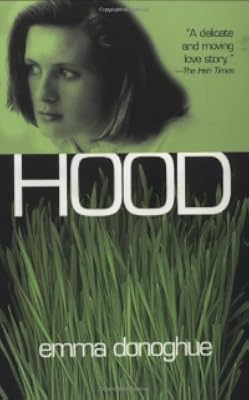
Emma Donoghue was born on October 24, 1969 in Dublin, Ireland. She received her BA degree from the University College Dublin and PhD in English from University of Cambridge. Her first novel was Stir. Her next novel was Hood which won the 1997 American Library Association's Gay, Lesbian and Bisexual Book Award for Literature. Her novel Slammerkin show more was a finalist in the 2001 Irish Times Irish Literature Prize for Fiction. The Sealed Letter, published in 2008, is a work of historical fiction. This work was the joint winner of the 2009 Lambda Literary Award for Lesbian Fiction. She continued writing several award winning novels including Room which was shortlisted for the Man Booker Prize in September 2010. Some of her other works include Astray, Three and a Half Deaths, and Frog Music. (Bowker Author Biography) show less
Awards and Honors
Common Knowledge
- Canonical title
- Slammerkin
- Original publication date
- 2000-02-01
- People/Characters
- Mary Saunders; Doll Higgins; Su Digot; Mrs Jane Jones; Mr Thomas Jones; Abi (show all 10); Daffy Cadwaladyr; Joe Cadwaladyr; Mrs Nance Ash; Henrietta Jones
- Important places
- London, England, UK; Monmouth, Monmouthshire, Wales, UK
- Epigraph
- Naked came I out of my mother's womb, and naked shall I return thither.
The Book of Job, 1:21
Slammerkin, noun, eighteenth century, of unknown origin.
1. A loose gown. 2. A loose woman. - Dedication
- This book is for my agent and tireless ally, Caroline Davidson.
- First words
- There once was a cobbler called Saunders who died for eleven days. At least, that was how his daughter remembered it. -Prologue
The ribbon had been bright scarlet when Mary Saunders first laid eyes on it, back in London. 1760: she was thirteen years old. The fat strip of satin was the exact colour of the poppies that grew in Lamb's Conduit Fields at t... (show all)he back of Holborn, where the archers practised. It was threaded into the silver hair of a girl Mary used to look out for at the Seven Dials. -Chapter One, Ribbon Red - Last words
- (Click to show. Warning: May contain spoilers.)She came down with a clean snap, and the crowd scattered like birds from the swing of her feet.
- Blurbers
- Freed, Lynn; Forster, Margaret
- Canonical DDC/MDS
- 823.914
- Canonical LCC
- PR6054.O547
Classifications
Statistics
- Members
- 2,629
- Popularity
- 7,160
- Reviews
- 93
- Rating
- (3.69)
- Languages
- Dutch, English, German
- Media
- Paper, Audiobook, Ebook
- ISBNs
- 20
- ASINs
- 16