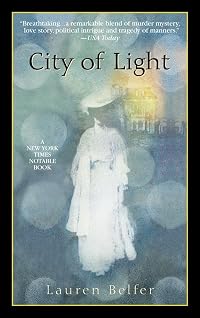
City of Light
by Lauren Belfer
On This Page
Description
A NEW YORK TIMES NOTABLE BOOKIt is 1901 and Buffalo, New York, stands at the center of the nation's attention as a place of immense wealth and sophistication. The massive hydroelectric power development at nearby Niagara Falls and the grand Pan-American Exposition promise to bring the Great Lakes “city of light” even more repute.
Against this rich historical backdrop lives Louisa Barrett, the attractive, articulate headmistress of the Macaulay School for Girls. Protected by its show more powerful all-male board, “Miss Barrett” is treated as an equal by the men who control the life of the city. Lulled by her unique relationship with these titans of business, Louisa feels secure in her position, until a mysterious death at the power plant triggers a sequence of events that forces her to return to a past she has struggled to conceal, and to question everything and everyone she holds dear.
Both observer and participant, Louisa Barrett... show less
Tags
Recommendations


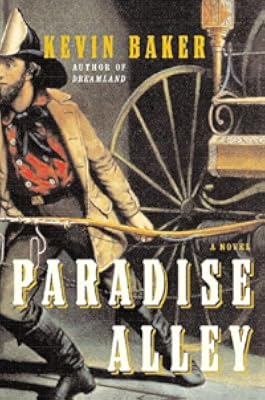
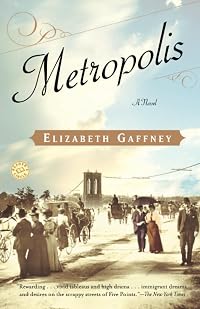
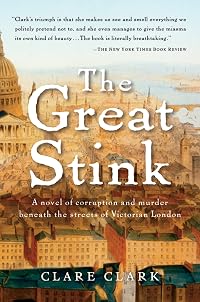
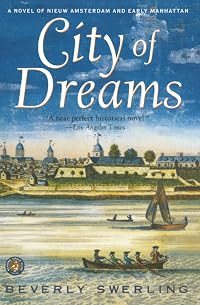



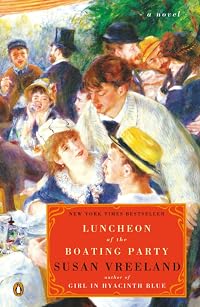
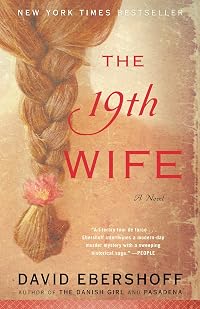
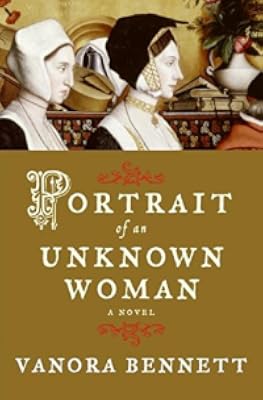
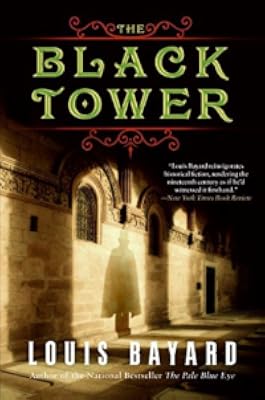
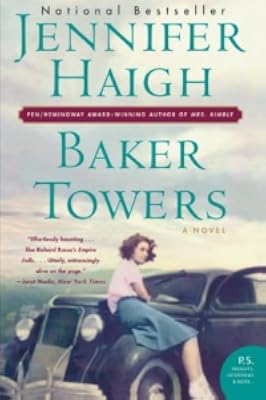



Member Recommendations
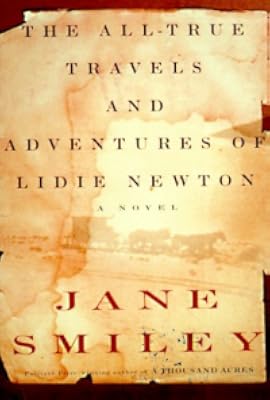
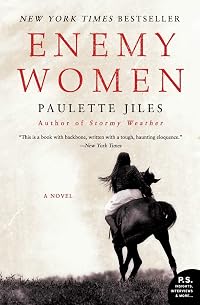
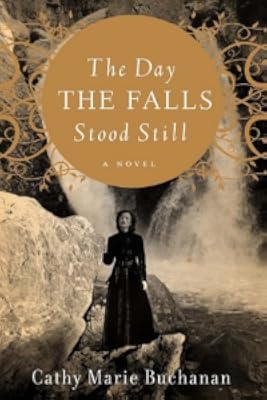
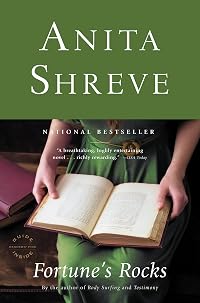
jordantaylor Both books revolve around Niagara Falls and the development of electricity, though in my opinion "City of Light" is by far the stronger of the two.
Also recommended by bnbookgirl
20
Member Reviews
As a 36 year-old spinster Louisa Barrett is the headmistress of a well-to-do boarding school and she harbors a dark secret. While she is trusted and beloved by her community she is a contradiction in character. It's this contradiction that makes her human and extremely likable. She worries about propriety and yet goes out of her way to create confusion about her personal life. She's modern and yet knows her place in society when dealing with members of the opposite sex. At the height of Louisa's tenure as headmistress Buffalo, New York is going through a metamorphosis. The husband of her late best friend owns a power plant that, by using nearby Niagara Falls, promises to light the entire region. Environmentalists are up on arms over the show more draining of the falls and suddenly people start dying. Somehow, Louisa finds herself in the middle of the mess. It's her secret that has her tied to the drama.
City of Light is one of those books I like to call a "location" book. It brings the sense of a particular place to reality. For City of Light that place is Buffalo, New York and its famed Niagara Falls. Set in the early 1900s this is a period piece. A time when women barely held a place in society beyond practiced restraint and stiff decorum. City of Light is also an environment versus science debate as the development of a hydro-electric plant threatens to drain Niagara Falls of its rushing waters for the sake of lighting Buffalo and beyond. Set against the political and environmental debates of the era City of Light is also a mystery as two men are found dead under suspicious circumstances. It is hard to ignore they were both prominent men, connected to the power plant. Yet, no one can prove with absolute certainty they were murdered. Finally, City of Light is a nontraditional love story. Louisa learns the best way to love is to let go. show less
City of Light is one of those books I like to call a "location" book. It brings the sense of a particular place to reality. For City of Light that place is Buffalo, New York and its famed Niagara Falls. Set in the early 1900s this is a period piece. A time when women barely held a place in society beyond practiced restraint and stiff decorum. City of Light is also an environment versus science debate as the development of a hydro-electric plant threatens to drain Niagara Falls of its rushing waters for the sake of lighting Buffalo and beyond. Set against the political and environmental debates of the era City of Light is also a mystery as two men are found dead under suspicious circumstances. It is hard to ignore they were both prominent men, connected to the power plant. Yet, no one can prove with absolute certainty they were murdered. Finally, City of Light is a nontraditional love story. Louisa learns the best way to love is to let go. show less
The amount of research and thought that went into the weaving of [City of Light] is staggering. As a portrait of Buffalo at a particular moment in time--just before the Pan-American Exhibition--when it appeared that Buffalo was destined to be, literally, the powerhouse of the United States, it is superb. The narrator is the headmistress of the premier private girl's school, Macauley. Through her eyes we witness the machinations between various factions over the electrification of the city--the question being who will get to use this power? Only industry? Or is it something so wonderful (makes me think of our own issues now with the internet) that it should be made available asap to everyone. All the action swirls around this critical show more question, public and private lives deeply affected. However, and I am sorry there is a however, there is simply too much crammed into it, and too much that I have to ask myself, where do the real stories stop and the fictional ones begin? I can't go into which story threads stretched to snapping with the disbelief factor without spoiling . . . and while I suspect that even these, particularly the narrator's personal story, may have grains of truth in them, the handling, especially in the latter half of the book, went right over "the falls" as it were. And the end succumbs to easy melodrama, in my humble, which it needn't have. There are some truly memorable characters -- like Mr. Krakauer, J.P. Morgan's "observer" whose job is simply to know everything that is going on and to report back to Morgan so he can decide how to act. Mrs Love, a battleaxe who runs the settlements and charity programs in the city is also marvelously well done and I sincerely hope is a portrait of a real person. The narrator, Louisa Barrett, is also mostly very well done, but made to do things I don't believe she would have in order to make various points about the condition and treatment of women at that time. [City of Light] highlights (sorry) the problem I have with historical fiction of not knowing what happened and what is imagined. But no regrets, I do have a firm picture now of Buffalo at that time, which interests me, as a good part of my growing-up time took place not far from there. ***1/2 show less
I would never have picked this book up had it not been for a book club, but I actually feel more enriched after having read it.
It's only fair to note I grew up not far from Buffalo and live in the suburbs now. That probably makes the book even more interesting to me than it would to someone who didn't know the places the author mentions. I do love how it takes place in a real city and involves many places with which I am familiar: Delaware Park, Niagara Falls, Goat Island, Three Sisters Islands, East Aurora, Medina, etc. And the people in the book are real as well: Grover Cleveland, John Albright, George Urban ...
This piece of historical fiction taught me a lot about the city in which I live and a lot about how bringing electricity to show more the people of Buffalo wasn't necessarily a welcome change. I loved learning about some of the people whose names I've heard, but never read about. And the fiction characters brought into the story made it more interesting and worthwhile.
The story is not an easy, light read. There are about 500 pages and there are a lot of characters to learn as you go. I often had to ask myself, "Now, who was Milburn again?" and would flip back to find him earlier in the story. Of course, I was reading it quickly to complete before a book club meeting, so you may read it more slowly than I did and retain some of those facts a little better.
City of Light has history, romance, murder, underhanded business dealings and everything you could possibly want all rolled up into one story. Of course, it's based on life, and don't we have all those things in everyday life too? show less
It's only fair to note I grew up not far from Buffalo and live in the suburbs now. That probably makes the book even more interesting to me than it would to someone who didn't know the places the author mentions. I do love how it takes place in a real city and involves many places with which I am familiar: Delaware Park, Niagara Falls, Goat Island, Three Sisters Islands, East Aurora, Medina, etc. And the people in the book are real as well: Grover Cleveland, John Albright, George Urban ...
This piece of historical fiction taught me a lot about the city in which I live and a lot about how bringing electricity to show more the people of Buffalo wasn't necessarily a welcome change. I loved learning about some of the people whose names I've heard, but never read about. And the fiction characters brought into the story made it more interesting and worthwhile.
The story is not an easy, light read. There are about 500 pages and there are a lot of characters to learn as you go. I often had to ask myself, "Now, who was Milburn again?" and would flip back to find him earlier in the story. Of course, I was reading it quickly to complete before a book club meeting, so you may read it more slowly than I did and retain some of those facts a little better.
City of Light has history, romance, murder, underhanded business dealings and everything you could possibly want all rolled up into one story. Of course, it's based on life, and don't we have all those things in everyday life too? show less
Enjoyable story, not only about the building of the new Niagra falls power station, the racism and sexism dealt towards people, but also a detective story surrounding the deaths of several of those involved in the power station
Set in Buffalo, New York, in 1901, City of Light is told from the point of view of Louisa Barrett, a 36-year-old spinster and the headmistress of a prestigious girls’ school in town. She is extremely modern, almost to the point of yawning, and her progressive views on girls’ education and the position of women in society in general got to be wearying after a while. The novel starts with a sensational murder connected to the power plant that’s owned by Louisa’s best friend Tom.
This novel was a little confusing. At some points it’s a murder mystery; at others, it’s social commentary; at others the novel focuses more on the technological and political issues of the day. It’s as though the author conducted tons and tons of show more research on her subject (by no means a bad thing) and she decided that she just had to get it all in. Everything about the use of electricity is detailed, so much so that I became bored by the author’s descriptions of every single little thing.
Another thing I couldn’t stand about this novel is the main character. She’s full of contradictions: she’s modern and progressive and has salons at her home that are attended by all the notables of Buffalo. She’s also concerned about appearances; on the other, she encourages people to think that she’s got a “Boston marriage with her friend.” She’s strong and independent, but she allows something to happen to her that basically makes her a victim in the situation, that basically goes against the character the author created in the first 400 pages.
The plot had a lot of potential, but there were some serious holes; and there were some twists that were interesting but not particularly skillfully revealed (I could see the twist about Grace coming from a mile away). I liked the premise of the book, but there were some major flaws about the book that couldn’t get me seriously interested in the plot or the characters. It’s too bad, because there’s a lot of promise here. show less
This novel was a little confusing. At some points it’s a murder mystery; at others, it’s social commentary; at others the novel focuses more on the technological and political issues of the day. It’s as though the author conducted tons and tons of show more research on her subject (by no means a bad thing) and she decided that she just had to get it all in. Everything about the use of electricity is detailed, so much so that I became bored by the author’s descriptions of every single little thing.
Another thing I couldn’t stand about this novel is the main character. She’s full of contradictions: she’s modern and progressive and has salons at her home that are attended by all the notables of Buffalo. She’s also concerned about appearances; on the other, she encourages people to think that she’s got a “Boston marriage with her friend.” She’s strong and independent, but she allows something to happen to her that basically makes her a victim in the situation, that basically goes against the character the author created in the first 400 pages.
The plot had a lot of potential, but there were some serious holes; and there were some twists that were interesting but not particularly skillfully revealed (I could see the twist about Grace coming from a mile away). I liked the premise of the book, but there were some major flaws about the book that couldn’t get me seriously interested in the plot or the characters. It’s too bad, because there’s a lot of promise here. show less
Intriguing. I enjoyed this turn-of-the-century (previous turn) novel for what it really is. Ignore the misleading USA Today review (on the book cover) which claimed it to be a "remarkable blend of murder mystery, love story, political intrigue, and tragedy of manners," as the book could disappoint if approached from any of those perspectives. Rather, it works perfectly as a whimsical portrait of life in what was poised to become the greatest modern city on earth (Buffalo), showcasing human nature with all of its foibles. One aspect of the books ends as if the author ran out of paper, but it is irrelevant as a portrait has no beginning or end.
I love novels that are a mix of genres, and the back of this book billed it as a mix of murder mystery, romance and historical fiction--set in the Buffalo, New York of 1901. The story is told by Louisa Barrett, a progressive thirty-something headmistress of an elite girls school for the daughters of the wealthy and powerful. She's close to the wealthy Thomas Sinclair, the adoptive father of nine-year-old Grace. (I guessed the so-called secret of her birth and parentage as soon as she was mentioned. I think Belfer would have done better to hang a lantern on it from the beginning rather than endlessly, heavily hint. Well, half-guessed, and the other half is just too ridiculous.) Louisa is quick to suspect Sinclair when a man he argued show more with is killed. Far too quick--even though she claims to be close to the Sinclairs and there's no good reason to believe the death isn't an accident. Soon her help is recruited by reporter Franklin Fiske.
The narrative flowed well, and Belfer was good at conjuring up both the opulent wealth and squalid poverty of the Gilded Age. However, I soon found myself irritated by the heavy handed left-wing pieties and platitudes about this period and her too modern sensibilities and the outright headshaking nonsensical. We're supposed to believe that to be respectable yet mix among men, her cover is to let people think she's a lesbian. A charity and the woman who works hard for it is supposed to be evil because she cares about efficiency, efficacy and dependency--that is she makes this evil distinction between "deserving" and "undeserving" poor and wants to make sure help goes to those who need it and won't use it to buy gin rather than feed their children. I rolled my eyes when I hit the passage from Fiske about electricity belonging "to the people" and after that was sure where the so-called mystery was headed. Before many more pages after that I just headed to the back and checked, and I wasn't wrong. Too annoyingly predictable with clanging anvils streaming behind. show less
The narrative flowed well, and Belfer was good at conjuring up both the opulent wealth and squalid poverty of the Gilded Age. However, I soon found myself irritated by the heavy handed left-wing pieties and platitudes about this period and her too modern sensibilities and the outright headshaking nonsensical. We're supposed to believe that to be respectable yet mix among men, her cover is to let people think she's a lesbian. A charity and the woman who works hard for it is supposed to be evil because she cares about efficiency, efficacy and dependency--that is she makes this evil distinction between "deserving" and "undeserving" poor and wants to make sure help goes to those who need it and won't use it to buy gin rather than feed their children. I rolled my eyes when I hit the passage from Fiske about electricity belonging "to the people" and after that was sure where the so-called mystery was headed. Before many more pages after that I just headed to the back and checked, and I wasn't wrong. Too annoyingly predictable with clanging anvils streaming behind. show less
Members
- Recently Added By
Lists

Academia in Fiction
158 works; 23 members

Authors from the United States
245 works; 3 members
Talk Discussions
Past Discussions
Lauren Belfer: City of Light in Historical Mysteries (August 2006)
Author Information

4 Works 2,047 Members
Awards and Honors
Notable Lists
Common Knowledge
- Canonical title
- City of Light
- Original publication date
- 1999-05-11
- People/Characters
- Louisa Barrett; Grover Cleveland; Tom Sinclair
- Important places
- Buffalo, New York, USA; Niagara Falls, New York, USA
- Dedication
- For my parents
- First words
- I am lucky: I know what people say about me.
- Last words
- (Click to show. Warning: May contain spoilers.)To him, she must have seemed an emissary from a different world.
Classifications
- Genres
- Fiction and Literature, General Fiction, Historical Fiction, Mystery
- DDC/MDS
- 813.54 — Literature & rhetoric American literature in English American fiction in English 1900-1999 1945-1999
- LCC
- PS3552 .E467 .C58 — Language and Literature American literature American literature Individual authors 1961-
- BISAC
Statistics
- Members
- 1,061
- Popularity
- 24,253
- Reviews
- 33
- Rating
- (3.64)
- Languages
- 5 — English, German, Italian, Spanish, Swedish
- Media
- Paper, Audiobook, Ebook
- ISBNs
- 18
- ASINs
- 8