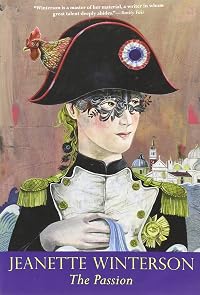
The Passion
by Jeanette Winterson
On This Page
Description
Set during the tumultuous years of the Napoleonic Wars, The Passion intertwines the destinies of two remarkable people: Henri, a simple French soldier, who follows Napoleon from glory to Russian ruin; and Villanelle, the red-haired, web-footed daughter of a Venetian boatman, whose husband has gambled away her heart. In Venice's compound of carnival, chance, and darkness, the pair meets their singular destiny.Tags
Recommendations






Member Recommendations
CGlanovsky Fictional characters interwoven with real historical figures and events ranging across the European continent.
Member Reviews
A beautiful, lyrical, magical-realistic, heart-breaking love story. A French country boy signs up for Napoleon’s army with dreams of glory and escape and learns what war really is. A Venetian boatman’s daughter who works in a casino loses her heart to a married woman. Each tells their story, and these stories of course ultimately entwine. Winterson’s writing is beautiful, as always. Some of my favorite passages:
“Most of these recruits aren’t seventeen and they’re asked to do in a few weeks what vexes the best philosophers for a lifetime; that is, to gather up their passion for life and make sense of it in the face of death.show more
“They don’t know how but they do know how to forget, and little by little they put aside
the burning summer in their bodies and all they have instead is lust and rage.”
“News of the Coronation was spreading and I saw in the smiles of the people I travelled with how welcome it was. None of us thought that only fifteen years ago we had fought to do away with Kings for ever. That we had sworn never to fight again except in self-defence. Now we wanted a ruler and we wanted him to rule the world. We are not an unusual people.”
“The mystics and the churchmen talk about throwing off this body and its desires, being no longer a slave to the flesh. They don’t say that through the flesh we are set free. That our desire for another will lift us out of ourselves more cleanly than anything divine.”show less
Dans le Noir
“A blind pedlar… never spilt his stew or missed his mouth the way I did. ‘I can see,’ he said, ‘but I don’t use my eyes.’”
I recently ate unknown food, served in total darkness, by blind waiters.
It was an intense and disorienting experience. Boundaries break down: you touch the stranger who guides you to your seat, talk to invisible people sitting beside you (how un-English!), can’t judge or be judged by looks or clothing, and are tempted to eat with your fingers, despite the cutlery you feel before you. Phones and even watches must be locked away before you enter, so you lose sense of time as well as place.
Deprived of vision, your other senses are more intense. But surprisingly, this makes it harder to show more recognise what you are eating, not easier. You taste a medley of familiar (and delicious) flavours, but their individual identities are oddly elusive. Names only spring to mind where shape or texture are unique (scallops, figs, and pomegranate seeds).
Reading this early Winterson was similar. I’m not sure if it’s a good book, and I’m not even sure I understood it, but it was a rich, kaleidoscopic, and confusing carnal feast that I enjoyed.
“I like the early dark. It’s not night. It’s still companionable… Real dark is thicker and quieter, it fills up the space between your jacket and your heart… the Dark only lets you take one step at a time. Step and the Dark closes round your back. In front, there is no space for you until you take it. Darkness is absolute. Walking in the Dark is like swimming underwater except you can’t come up for air… Lie still at night and Dark is soft to the touch.”
Masked kiss - image source: http://www.holidaypirates.com/media/images/2014/10/13009264023-a30b8aae98-z-1413....
Not the Plot
This is set in the Napoleonic wars, and told in four parts: The Emperor (narrated by Henri, a kitchen hand and faithful server of Bonaparte), The Queen of Spades (narrated by Villanelle, a web-footed, Venetian boatman’s daughter who cross dresses, works in a casino, and picks pockets), The Zero Winter (French troops trudging through Russia, narrated by Henri), and The Rock (set in Venice, and narrated by both).
But the reading experience is not really about a linear narrative with its sprinkling of magic and occasional forays into the philosophy of passion and love.
Just indulge your senses.
That’s what Venice requires.
That's what passion demands.
Invented, Magical, Invisible City?
Venice is portrayed as invented, magical, invisible and more, and hence reminded me strongly of Calvino’s Invisible Cities:
• In the introduction, Winterson explains, “My own cities were invented; cities of language, cities of connection, words as gang-ways and bridges to the cities of the interior where the coin was not money, where it was emotion.”
• “Arriving at Venice by sea, as one must, is like seeing an invented city rise up and quiver in the air. It is a trick of the early light to make the buildings shimmer so that they seem never still.”
• “There is a city surrounded by water with watery alleys that do for streets and roads and silted up back ways that only the rats can cross.”
• “This is the city of mazes. You may set off from the same place to the same place every day and never go by the same route.”
• “Although wherever you’re going is always in front of you there is no such thing as straight ahead.”
• “The city I come from is a changeable city. It is not always the same size. Streets appear and disappear overnight, new waterways force themselves over dry land.”
• “I come from the city of mazes… but if you ask me a direction I will tell you straight ahead.”
• “’I need a map.’
‘It won’t help. This is a living city. Things change.’”
Liturgy
This is a strange, mystical, and eponymously passionate book, with recurring lines that are almost liturgical. Sometimes the exact same word or phrase is repeated, but other times they weave a subtly different route every time, like the enchanted streets and canals of the city itself, especially these variations:
• “Somewhere between fear and sex passion is. Passion is not so much an emotion as a destiny.”
• “Somewhere between the swamp and the mountains. Somewhere between fear and sex. Somewhere between God and the Devil passion is and the way there is sudden and the way back is worse.”
• “Man cannot live without passion. Religion is somewhere between fear and sex.”
• "In between freezing and melting. In between love and despair. In between fear and sex, passion is."
Passion is... elusive, but where IS it? Everywhere, nowhere, or in a parallel realm?
THE Passion
John 15:13 “Greater love has no one than this: to lay down one’s life for one’s friends.”
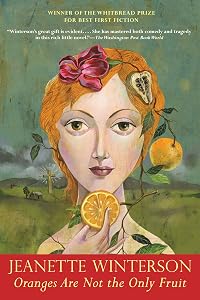
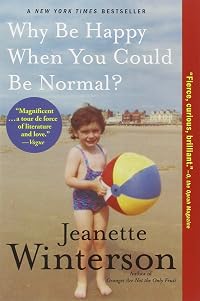
The title has the definite article (“The Passion”, not just any old passion), which makes one think of Jesus’ crucifixion. Winterson’s infamous Pentecostal upbringing (Oranges are Not the Only Fruit and Why Be Happy When You Could Be Normal?) means this is no accident, and yet the connection is more subtle than the title leads you to expect.
There are Biblical allusions (some think Bonaparte might be the Son of God, and like Samuel, “He’ll call you”) and references to “basking” in the glow of a church or religion you don’t believe in, but most of the passion is fiercely carnal.
Kaleidoscopic Cornucopia
With a browser and laptop, you'll see key words in bold; with a phone app, I don't think you will.
• “Surely a god can meet passion with passion?”
• “We’re a lukewarm people.”
• “They say that every snowflake is different. If that were true… how could we ever recover from the wonder of it?”
• “I would have preferred a burning Jesuit, perhaps then I might have found the extasy I needed to believe.”
• “Romance is not a contract between equal parties but an explosion of dreams and desires that can find no outlet in everyday life.”
• Recruits have to “gather up their passion for life and make sense of it in the face of death.”
• “The King and Queen had no care for us, except as revenue and scenery.”
• “Adults talk about being happy because largely they are not. Talking about it is the same as trying to catch the wind.”
• Stories and even diaries are not, need not, be true: “The way you see it now is no more real than the way you’ll see it then.” If stories make people happy, “Why not?”
• Non-believers can bask in the trappings of religion:
“longing for strong arms an certainty and quiet holiness around.”
• “In the dark you are in disguise and this is the city of disguises.”
• “We don’t build our bridges simply to avoid walking on water… A bridge is a meeting place. A neutral place.”
• “To kiss well one must kiss solely… The lips and the lips alone are the pleasure.”
• “There’s no dark like it. It’s soft to the touch and heavy in the hands. You can open your mouth and let it sink into you till it makes a close ball in your belly. You can juggle with it, dodge it, swim in it. You can open it like a door.”
• “Bridges join but they also separate.”
• “’Will you kill people, Henri?’…
‘Not people… just the enemy.’
‘What is enemy?’
‘Someone who’s not on your side.’”
• Kissing only: “The greedy body that clamours for satisfaction is forced to content itself with a single sensation and, just as the blind hear more acutely and the deaf can feel the grass grow, so the mouth becomes the focus of love and all things pass through it and are re-defined. It is a sweet and precise torture.”
• “Up she went, closing the dark behind her.”
• “How is it that one day life is orderly and content… and then without warning you find the solid floor is a trapdoor and you are now in another place whose geography is uncertain and whose customs are strange? Travellers at least have a choice… We who were fluent find life is a foreign language.”
• “Is every snowflake different? No one knows.”
• “I longed for feeling though I could not have told you that. Words like passion and extasy, we learn them but they stay flat on the page. Sometimes we try to turn them over, find out what’s on the other side… We fear passion and laugh at too much love and those who love too much. And still we long to feel.”
• “We gamble with the hope of winning but it’s the thought of what we might lose that excites us.”
• “I like passion, I like to be among the desperate.”
• “’They’re all different… snowflakes. Think of that.’ I did think of that and I fell in love with her.”
• “A true gambler… prepared to risk the valuable, fabulous thing.”
• “Fingertips that had the feel of boils bursting… whose hands crept over her body like crabs.”
• “Why would people who love the grape and the sun die in the zero winter for one man? Why did I? Because I love him. He was my passion and when we go to war, we feel we are not a lukewarm people any more.”
• “Being with her was like pressing your eye to a particularly vivid kaleidoscope.”
• “Beware of old enemies in new disguises.”
• “I say I’m in love with her. What does this mean? It means I review my future and my past in the light of this feeling. It is as though I wrote in a foreign language that I am suddenly able to read. Wordlessly, she explains myself to me.”
• “Pleasure on the edge of danger is sweet. It’s the gambler’s sense of losing that makes winning an act of love.”
• “The cities of the interior are vast and do not lie on any map.”
• “The one who took your heart wields final power.”
• “When passion comes late in life for the first time, it is harder to give up” and only “devilish choices” are offered: give up the familiar to follow it, juggle, or “refuse the passion as one might sensibly refuse a leopard in the house, however tame it might seem at first…So you refuse and then you discover that your house is haunted by the ghost of a leopard.”
• “This is the city of disguises. What you are one day will not constrain you on the next.”
• “What am I interested in? Passion. Obsession… The dividing line is as thin and cruel as a Venetian knife.”
• What is freedom? “To love someone else is to forget about yourself… through the flesh we are set free. Our desire for another will lift us out of ourselves more cleanly than anything divine.”
• “I longed for feeling though I could not have told you that. Words like passion and extasy, we learn them but they stay flat on the page. Sometimes we try to turn them over, find out what’s on the other side… We fear passion and laugh at too much love and those who love too much. And still we long to feel.”
• "You play, you win, you play, you lose. You play."
As a wise man said, “Love is akin to risk”.
Take a chance on passion.
See also
For a magical short story about the power of flavours to transport - in more ways than one - see Tina Connolly's The Last Banquet of Temporal Confections, which I reviewed HERE. show less
“A blind pedlar… never spilt his stew or missed his mouth the way I did. ‘I can see,’ he said, ‘but I don’t use my eyes.’”
I recently ate unknown food, served in total darkness, by blind waiters.
It was an intense and disorienting experience. Boundaries break down: you touch the stranger who guides you to your seat, talk to invisible people sitting beside you (how un-English!), can’t judge or be judged by looks or clothing, and are tempted to eat with your fingers, despite the cutlery you feel before you. Phones and even watches must be locked away before you enter, so you lose sense of time as well as place.
Deprived of vision, your other senses are more intense. But surprisingly, this makes it harder to show more recognise what you are eating, not easier. You taste a medley of familiar (and delicious) flavours, but their individual identities are oddly elusive. Names only spring to mind where shape or texture are unique (scallops, figs, and pomegranate seeds).
Reading this early Winterson was similar. I’m not sure if it’s a good book, and I’m not even sure I understood it, but it was a rich, kaleidoscopic, and confusing carnal feast that I enjoyed.
“I like the early dark. It’s not night. It’s still companionable… Real dark is thicker and quieter, it fills up the space between your jacket and your heart… the Dark only lets you take one step at a time. Step and the Dark closes round your back. In front, there is no space for you until you take it. Darkness is absolute. Walking in the Dark is like swimming underwater except you can’t come up for air… Lie still at night and Dark is soft to the touch.”
Masked kiss - image source: http://www.holidaypirates.com/media/images/2014/10/13009264023-a30b8aae98-z-1413....
Not the Plot
This is set in the Napoleonic wars, and told in four parts: The Emperor (narrated by Henri, a kitchen hand and faithful server of Bonaparte), The Queen of Spades (narrated by Villanelle, a web-footed, Venetian boatman’s daughter who cross dresses, works in a casino, and picks pockets), The Zero Winter (French troops trudging through Russia, narrated by Henri), and The Rock (set in Venice, and narrated by both).
But the reading experience is not really about a linear narrative with its sprinkling of magic and occasional forays into the philosophy of passion and love.
Just indulge your senses.
That’s what Venice requires.
That's what passion demands.
Invented, Magical, Invisible City?
Venice is portrayed as invented, magical, invisible and more, and hence reminded me strongly of Calvino’s Invisible Cities:
• In the introduction, Winterson explains, “My own cities were invented; cities of language, cities of connection, words as gang-ways and bridges to the cities of the interior where the coin was not money, where it was emotion.”
• “Arriving at Venice by sea, as one must, is like seeing an invented city rise up and quiver in the air. It is a trick of the early light to make the buildings shimmer so that they seem never still.”
• “There is a city surrounded by water with watery alleys that do for streets and roads and silted up back ways that only the rats can cross.”
• “This is the city of mazes. You may set off from the same place to the same place every day and never go by the same route.”
• “Although wherever you’re going is always in front of you there is no such thing as straight ahead.”
• “The city I come from is a changeable city. It is not always the same size. Streets appear and disappear overnight, new waterways force themselves over dry land.”
• “I come from the city of mazes… but if you ask me a direction I will tell you straight ahead.”
• “’I need a map.’
‘It won’t help. This is a living city. Things change.’”
Liturgy
This is a strange, mystical, and eponymously passionate book, with recurring lines that are almost liturgical. Sometimes the exact same word or phrase is repeated, but other times they weave a subtly different route every time, like the enchanted streets and canals of the city itself, especially these variations:
• “Somewhere between fear and sex passion is. Passion is not so much an emotion as a destiny.”
• “Somewhere between the swamp and the mountains. Somewhere between fear and sex. Somewhere between God and the Devil passion is and the way there is sudden and the way back is worse.”
• “Man cannot live without passion. Religion is somewhere between fear and sex.”
• "In between freezing and melting. In between love and despair. In between fear and sex, passion is."
Passion is... elusive, but where IS it? Everywhere, nowhere, or in a parallel realm?
THE Passion
John 15:13 “Greater love has no one than this: to lay down one’s life for one’s friends.”
The title has the definite article (“The Passion”, not just any old passion), which makes one think of Jesus’ crucifixion. Winterson’s infamous Pentecostal upbringing (Oranges are Not the Only Fruit and Why Be Happy When You Could Be Normal?) means this is no accident, and yet the connection is more subtle than the title leads you to expect.
There are Biblical allusions (some think Bonaparte might be the Son of God, and like Samuel, “He’ll call you”) and references to “basking” in the glow of a church or religion you don’t believe in, but most of the passion is fiercely carnal.
Kaleidoscopic Cornucopia
With a browser and laptop, you'll see key words in bold; with a phone app, I don't think you will.
• “Surely a god can meet passion with passion?”
• “We’re a lukewarm people.”
• “They say that every snowflake is different. If that were true… how could we ever recover from the wonder of it?”
• “I would have preferred a burning Jesuit, perhaps then I might have found the extasy I needed to believe.”
• “Romance is not a contract between equal parties but an explosion of dreams and desires that can find no outlet in everyday life.”
• Recruits have to “gather up their passion for life and make sense of it in the face of death.”
• “The King and Queen had no care for us, except as revenue and scenery.”
• “Adults talk about being happy because largely they are not. Talking about it is the same as trying to catch the wind.”
• Stories and even diaries are not, need not, be true: “The way you see it now is no more real than the way you’ll see it then.” If stories make people happy, “Why not?”
• Non-believers can bask in the trappings of religion:
“longing for strong arms an certainty and quiet holiness around.”
• “In the dark you are in disguise and this is the city of disguises.”
• “We don’t build our bridges simply to avoid walking on water… A bridge is a meeting place. A neutral place.”
• “To kiss well one must kiss solely… The lips and the lips alone are the pleasure.”
• “There’s no dark like it. It’s soft to the touch and heavy in the hands. You can open your mouth and let it sink into you till it makes a close ball in your belly. You can juggle with it, dodge it, swim in it. You can open it like a door.”
• “Bridges join but they also separate.”
• “’Will you kill people, Henri?’…
‘Not people… just the enemy.’
‘What is enemy?’
‘Someone who’s not on your side.’”
• Kissing only: “The greedy body that clamours for satisfaction is forced to content itself with a single sensation and, just as the blind hear more acutely and the deaf can feel the grass grow, so the mouth becomes the focus of love and all things pass through it and are re-defined. It is a sweet and precise torture.”
• “Up she went, closing the dark behind her.”
• “How is it that one day life is orderly and content… and then without warning you find the solid floor is a trapdoor and you are now in another place whose geography is uncertain and whose customs are strange? Travellers at least have a choice… We who were fluent find life is a foreign language.”
• “Is every snowflake different? No one knows.”
• “I longed for feeling though I could not have told you that. Words like passion and extasy, we learn them but they stay flat on the page. Sometimes we try to turn them over, find out what’s on the other side… We fear passion and laugh at too much love and those who love too much. And still we long to feel.”
• “We gamble with the hope of winning but it’s the thought of what we might lose that excites us.”
• “I like passion, I like to be among the desperate.”
• “’They’re all different… snowflakes. Think of that.’ I did think of that and I fell in love with her.”
• “A true gambler… prepared to risk the valuable, fabulous thing.”
• “Fingertips that had the feel of boils bursting… whose hands crept over her body like crabs.”
• “Why would people who love the grape and the sun die in the zero winter for one man? Why did I? Because I love him. He was my passion and when we go to war, we feel we are not a lukewarm people any more.”
• “Being with her was like pressing your eye to a particularly vivid kaleidoscope.”
• “Beware of old enemies in new disguises.”
• “I say I’m in love with her. What does this mean? It means I review my future and my past in the light of this feeling. It is as though I wrote in a foreign language that I am suddenly able to read. Wordlessly, she explains myself to me.”
• “Pleasure on the edge of danger is sweet. It’s the gambler’s sense of losing that makes winning an act of love.”
• “The cities of the interior are vast and do not lie on any map.”
• “The one who took your heart wields final power.”
• “When passion comes late in life for the first time, it is harder to give up” and only “devilish choices” are offered: give up the familiar to follow it, juggle, or “refuse the passion as one might sensibly refuse a leopard in the house, however tame it might seem at first…So you refuse and then you discover that your house is haunted by the ghost of a leopard.”
• “This is the city of disguises. What you are one day will not constrain you on the next.”
• “What am I interested in? Passion. Obsession… The dividing line is as thin and cruel as a Venetian knife.”
• What is freedom? “To love someone else is to forget about yourself… through the flesh we are set free. Our desire for another will lift us out of ourselves more cleanly than anything divine.”
• “I longed for feeling though I could not have told you that. Words like passion and extasy, we learn them but they stay flat on the page. Sometimes we try to turn them over, find out what’s on the other side… We fear passion and laugh at too much love and those who love too much. And still we long to feel.”
• "You play, you win, you play, you lose. You play."
As a wise man said, “Love is akin to risk”.
Take a chance on passion.
See also
For a magical short story about the power of flavours to transport - in more ways than one - see Tina Connolly's The Last Banquet of Temporal Confections, which I reviewed HERE. show less
'The Passion' is set against the backdrop of Napoleon’s tumultuous campaigns in Europe and Russia in the early 1800s and interweaves the stories and destinies of two main characters. Henri, a French soldier, whose sole job is to prepare chickens for Napoleon’s dinners. Henri's passion for his leader leads him from glory in France to frozen destitution in Russia. Meanwhile in Venice, Villanelle is the flame-haired, cross-dressing, web-footed daughter of a Venetian boatman, who makes her living as a croupier and pickpocket. Her passion is for a married woman, who has stolen her heart. Not figuratively speaking, she quite literally keeps it in a jar. When her married lover's husband returns to the city from a business trip Villanelle show more makes a disastrous marriage and is eventually sold by her husband to a French General to act as a sex slave for French officers.
The pair meet in Russia, where Henri falls in love with Villanelle, deserts the army and, along with a defrocked Irish priest Patrick, they start the two-thousand mile trek back to Venice, that city of dreams and chance.
This is an historical novel only in so far as it is set within a specific historic time, and is a novel of magic realism. The book contains a pair of severed hands framed on the wall of a gambling casino, a woman with webbed feet that ca walk on water, a heart is kept in a jar, a midget who is Napoleon's groom, a priest who can see for miles through a magic eye and gold chain that remains frozen within an icicle that will not melt. But passion, a force that drives all life onwards, is the central theme or more importantly, what will you risk for that passion? Gambling becomes a metaphor for love, for what is love if not one continuous gamble?
"Gambling is not a vice, it is an expression of our humanness."
Henri gambles his life initially on Napoleon and when that gamble fails, he plays again, this time gambling on Villanelle.
Alongside all this talk of love there are also the horrors of war. Winterson's passages set on the frozen plains of Russia, where soldiers are wounded and starving, are as brutal as any war writing I’ve read. Whilst her depiction of Venice is of a place of mazes, mirages and rituals, which can never be truly known.
'The Passion' is a relatively short novel that encompasses a rich tapestry of life. Winterson deftly fuses the surreal with the worldly and shines a beacon on the nature of passion itself – sexual, spiritual, and familial. Overall this vivid tale that is also a relatively quick and easy read. show less
The pair meet in Russia, where Henri falls in love with Villanelle, deserts the army and, along with a defrocked Irish priest Patrick, they start the two-thousand mile trek back to Venice, that city of dreams and chance.
This is an historical novel only in so far as it is set within a specific historic time, and is a novel of magic realism. The book contains a pair of severed hands framed on the wall of a gambling casino, a woman with webbed feet that ca walk on water, a heart is kept in a jar, a midget who is Napoleon's groom, a priest who can see for miles through a magic eye and gold chain that remains frozen within an icicle that will not melt. But passion, a force that drives all life onwards, is the central theme or more importantly, what will you risk for that passion? Gambling becomes a metaphor for love, for what is love if not one continuous gamble?
"Gambling is not a vice, it is an expression of our humanness."
Henri gambles his life initially on Napoleon and when that gamble fails, he plays again, this time gambling on Villanelle.
Alongside all this talk of love there are also the horrors of war. Winterson's passages set on the frozen plains of Russia, where soldiers are wounded and starving, are as brutal as any war writing I’ve read. Whilst her depiction of Venice is of a place of mazes, mirages and rituals, which can never be truly known.
'The Passion' is a relatively short novel that encompasses a rich tapestry of life. Winterson deftly fuses the surreal with the worldly and shines a beacon on the nature of passion itself – sexual, spiritual, and familial. Overall this vivid tale that is also a relatively quick and easy read. show less
What to say about this book . . . it is one of the very few to which I have given 5 stars. Needless to say, I absolutely loved it.
The Passion is an amazingly imaginitive, truly magical, and very thought provoking book. Winterson's writing is fluid, lyrical and sensuous, and the whole story is crafted quite brilliantly. Set during the Napoleonic Wars, it has Napoleon as a minor character only. The two major characters are Henri, one of Napoleon's soldiers and his chicken chef, and Villanelle, the daughter of a Venetian boatman. It begins in France, moves to Venice, then Russia in the heart of winter, and back to Venice. The descriptions of Venice "a living city" are extraordinarily vivid; you can feel yourself gliding down the dark icy show more canals and tunnels into the hidden interior of the city.
It is a book about passion, as the title says. About passion for an ideal, and transferred to an idealised leader. About passion in a sensual as well as a sexual sense, and also in a romantic sense. About the price one may be required to pay for feeling that passion. It is also about love, loving and being in love and "giving your heart away". About what we value and what we are prepared to risk.
The quality of this book, and of Winterson's writing is astounding. Having said all that, you will still have no idea what it is actually about and what she is saying until you have read it.
Just read it. show less
The Passion is an amazingly imaginitive, truly magical, and very thought provoking book. Winterson's writing is fluid, lyrical and sensuous, and the whole story is crafted quite brilliantly. Set during the Napoleonic Wars, it has Napoleon as a minor character only. The two major characters are Henri, one of Napoleon's soldiers and his chicken chef, and Villanelle, the daughter of a Venetian boatman. It begins in France, moves to Venice, then Russia in the heart of winter, and back to Venice. The descriptions of Venice "a living city" are extraordinarily vivid; you can feel yourself gliding down the dark icy show more canals and tunnels into the hidden interior of the city.
It is a book about passion, as the title says. About passion for an ideal, and transferred to an idealised leader. About passion in a sensual as well as a sexual sense, and also in a romantic sense. About the price one may be required to pay for feeling that passion. It is also about love, loving and being in love and "giving your heart away". About what we value and what we are prepared to risk.
The quality of this book, and of Winterson's writing is astounding. Having said all that, you will still have no idea what it is actually about and what she is saying until you have read it.
Just read it. show less
Most mondok valami meglepőt: ez a könyv a szenvedélyről szól. Ha a címből nem is esett volna le, a szövegnél már biztos gyanút fogok: ezek a burjánzó, csurig töltött mondatok olyan lendülettel záporoznak az érzelmi idegközpontokra, hogy az már helyenként zaklatásnak minősül. Másrészt bár ez a regény névleg történelmi regény, de a korszak (a XIX. század eleje) csak operai díszlet, aminek alig van több szerepe, mint hogy kiemelje a szereplők játékát. Szóval aki elvárja egy regénytől az egyértelmű, lecsupaszított nyelvezetet, a használható történelmi információkat, és ódzkodik a jelzős szerkezetekben megnyilvánuló túlzásoktól, az óvatosan bánjon vele. Általában véve én is show more ilyen egyén vagyok, mégsem tudtam függetleníteni magam attól az eleven erőtől, amivel Winterson következetesen megteremti a szenvedély szövegterét. (Mondjuk nem is akartam függetleníteni magam.) Ráadásul Winterson azt sem felejti el, hogy a szenvedélynek, akár az érmének, két oldala van. Napóleon szereti a csirkét, a nép szereti Napóleont, a katonák pedig szeretik az örömlányokat – de mit szólnak az örömlányok a katonákhoz? Mivel hálálja meg Napóleon a nép szeretetét? Hogy a csirkék érzéseiről ne is beszéljünk… Szóval jó sűrű, színes-szagos próza ez, némi mágia, némi borzalom, és töménytelen szenvedély: egy rendkívül tudatos írónő rendkívül tudatos építménye. Ha sikerül elkapni az ívét, nagyon lehet szeretni. show less
Estamos en Venecia y corren los años en que Napoleón arrasa Europa con sus ejércitos. Henri, un joven cocinero al servicio del general, se enamora perdidamente de Villanelle, una hermosísima criatura de pelo rojizo y pies deformes que conoce como nadie los secretos de las góndolas y de las salas de juego donde los nobles del lugar apuestan su fortuna entre sonrisas y frases galantes...
Esa, que podría ser la trama de una novela histórica al uso, en manos de Jeanette Winterson se convierte en un material precioso, capaz de transformar Venecia en una ciudad nueva, hecha de palabras y de luz. En ese lugar, donde la emoción es tan viva como el agua, los jóvenes enamorados aprenden a desgranar su pasión por vías insólitas y show more arriesgadas que ponen en tela de juicio lo que creíamos saber del sexo y del amor.
«La pasión no habla de la Historia con mayúsculas; tampoco es una novela
romántica... Lo que quise fue hablar de un mundo peculiar que sirviera de
espejo secreto para perfilar y multiplicar las posibilidades de nuestro
propio mundo. Basta con mirarse en este espejo, y ahí estamos, ubicados
en otro tiempo y otro lugar, y con otra vida entre manos.»
Jeanette Winterson
La crítica ha dicho:
«Un libro de gran audacia imaginativa y descaro, tremendamente físico y detallado. Divertidísimo.»
The Times Literary Supplement
«Recuerda a García Márquez: los toques mágicos bailan sobre la luminosidad de este cuento de hadas sobre la pasión, el juego, la locura y el éxtasis andrógino.»
Edmund White
«Tan buena como la literatura de Poe: te incita a reír para luego mirarte fijamente.»
The New York Review of Books
«Su prosa es concentrada y bellamente minuciosa, su trama incorpora magia, ingenio y brutalidad. [...] Un libro que sorprende por ser tan imaginativo y hermoso.»
The New York Times
«Con el pesimismo hechizado de los mejores cuentos de hadas, La Pasión se presenta como una historia de amor, una meditación sobre el placer y sus límites, una novela poética escrita con un estilo totalmente original.»
Interview
«[Winterson] sabe cómo decir la pura verdad y a la vez satisfacer nuestro anhelo por lo fabulosO.»
The Washington Post
«Una fantasía, un sueño vívido. Ingenioso y brillante.»
The Guardian
«Conmovedor y divertido, funciona de maravilla y logra reflejar las enormes ganas de vivir de la autora.»
The Sunday Times
«Una escritora con una imaginación explosiva.»
London Free Press
«Una novela histórica muy diferente de cualquier otra. [...] Se nota que Winterson sabe dar uso a su material. Una escritora de un inmenso talento.»
Vanity Fair
«Un clásico moderno que la confirma como una de las mejores escritoras británicas.»
Matías Crowder, Diari de Girona
«Una novela maravillosa. Una fiesta literaria que nos convoca para hablarnos de las varias formas de entender y vivir la pasión. Nos provoca, nos hipnotiza, nos hace disfrutar de la buena literatura con unos personajes extraordinarios.»
Aniol Rafel, editor de Jeanette Winterson en Cataluña
Sobre la autora:
«Winterson [...] a través de la heterodoxia de sus textos, dinamita categorías, vocabularios y convenciones tristes. Una escritora maravillosa.»
Marta Sanz, Babelia
«Jeanette Winterson es una fuerza desatada de la naturaleza. Ella sola es el cambio climático entero.»
Carmen Morán Breña, El País
«Mientras la mayoría de autores y autoras se limitan a regurgitar la imaginación de sus antecesores, [...] esta inglesa rebelde se pone la literatura por montera y la reinventa.»
M. Ángeles Cabré, Babelia
«Una autora de extraordinaria sensibilidad cuya obra es devota de Virginia Woolf.»
Jacinto Antón, El País
«Una escritora outsider de referencia en Inglaterra.»
Esther L. Calderón, Divinity show less
Esa, que podría ser la trama de una novela histórica al uso, en manos de Jeanette Winterson se convierte en un material precioso, capaz de transformar Venecia en una ciudad nueva, hecha de palabras y de luz. En ese lugar, donde la emoción es tan viva como el agua, los jóvenes enamorados aprenden a desgranar su pasión por vías insólitas y show more arriesgadas que ponen en tela de juicio lo que creíamos saber del sexo y del amor.
«La pasión no habla de la Historia con mayúsculas; tampoco es una novela
romántica... Lo que quise fue hablar de un mundo peculiar que sirviera de
espejo secreto para perfilar y multiplicar las posibilidades de nuestro
propio mundo. Basta con mirarse en este espejo, y ahí estamos, ubicados
en otro tiempo y otro lugar, y con otra vida entre manos.»
Jeanette Winterson
La crítica ha dicho:
«Un libro de gran audacia imaginativa y descaro, tremendamente físico y detallado. Divertidísimo.»
The Times Literary Supplement
«Recuerda a García Márquez: los toques mágicos bailan sobre la luminosidad de este cuento de hadas sobre la pasión, el juego, la locura y el éxtasis andrógino.»
Edmund White
«Tan buena como la literatura de Poe: te incita a reír para luego mirarte fijamente.»
The New York Review of Books
«Su prosa es concentrada y bellamente minuciosa, su trama incorpora magia, ingenio y brutalidad. [...] Un libro que sorprende por ser tan imaginativo y hermoso.»
The New York Times
«Con el pesimismo hechizado de los mejores cuentos de hadas, La Pasión se presenta como una historia de amor, una meditación sobre el placer y sus límites, una novela poética escrita con un estilo totalmente original.»
Interview
«[Winterson] sabe cómo decir la pura verdad y a la vez satisfacer nuestro anhelo por lo fabulosO.»
The Washington Post
«Una fantasía, un sueño vívido. Ingenioso y brillante.»
The Guardian
«Conmovedor y divertido, funciona de maravilla y logra reflejar las enormes ganas de vivir de la autora.»
The Sunday Times
«Una escritora con una imaginación explosiva.»
London Free Press
«Una novela histórica muy diferente de cualquier otra. [...] Se nota que Winterson sabe dar uso a su material. Una escritora de un inmenso talento.»
Vanity Fair
«Un clásico moderno que la confirma como una de las mejores escritoras británicas.»
Matías Crowder, Diari de Girona
«Una novela maravillosa. Una fiesta literaria que nos convoca para hablarnos de las varias formas de entender y vivir la pasión. Nos provoca, nos hipnotiza, nos hace disfrutar de la buena literatura con unos personajes extraordinarios.»
Aniol Rafel, editor de Jeanette Winterson en Cataluña
Sobre la autora:
«Winterson [...] a través de la heterodoxia de sus textos, dinamita categorías, vocabularios y convenciones tristes. Una escritora maravillosa.»
Marta Sanz, Babelia
«Jeanette Winterson es una fuerza desatada de la naturaleza. Ella sola es el cambio climático entero.»
Carmen Morán Breña, El País
«Mientras la mayoría de autores y autoras se limitan a regurgitar la imaginación de sus antecesores, [...] esta inglesa rebelde se pone la literatura por montera y la reinventa.»
M. Ángeles Cabré, Babelia
«Una autora de extraordinaria sensibilidad cuya obra es devota de Virginia Woolf.»
Jacinto Antón, El País
«Una escritora outsider de referencia en Inglaterra.»
Esther L. Calderón, Divinity show less
The story is told directly from two different perspectives, that of Henri, and that of Villanelle, and yet there is another character whose passion brings these two together: that of Napoleon Bonaparte himself. We never see the story from his perspective and yet it is all the more poignant seeing him from Henri’s doting perspective. Henri is Napoleon’s personal chef of sorts when he is with the army, serving him roast chicken (apparently Napoleon’s favorite dish) at all hours of the day and night. In Napoleon’s case, his passion for chicken emulates his passion for the world. Imagine him looking at a globe instead of a covered dish of roast chicken as “he [would] lift the lid and pick it up and push it into his mouth. He show more wishes his whole face were mouth to cram a whole bird” (4). His appetite for chicken is his appetite for conquering the world, just as unquenchable, just as unreachable. He is the Ahab of world leaders. His great white whale, his Moby Dick, is Europe, and in just the same way, his monomania consumes him until there is nothing left but a good story.
The passion of Villanelle is similar to that of Napoleon in its veracity, but whereas Napoleon sought to conquer whole civilizations to slake his passion, Villanelle’s desires are more earthly and attainable, and yet more transient. Hers are the passions of experience, of carnality, of youth. She seeks to enjoy everything, and she finds both her imprisonment and her freedom in this. Her passion has her teetering wildly on life’s knife-like edge, “somewhere between fear and sex” (55) at all times. Unlike Napoleon however, whose passion is like a wildfire that burns fierce and bright until it suddenly finds itself unable to sustain its ferocity and dies, Villanelle’s passion is tapered to a point, like a blowtorch, driven to unbearable heat because it is focused on one area at a time. Her description of kisses demonstrates this: “I like such kisses. They fill the mouth and leave the body free. To kiss well one must kiss solely. No groping hands or stammering hearts. The lips and the lips alone are the pleasure. Passion is sweeter split strand by strand. Divided and re-divided like mercury then gathered up only at the last moment” (59). I like that idea of Passion split strand by strand. It’s the idea of indulgence, but controlled enough to prolong the consummation of whatever pleasure is the end goal, like a tasting menu that builds up to some magnificent pièce de résistance. This is the secret to Villanelle’s flame: that she is able to prolong the completion of her passion to such a degree that she never runs out of fuel or burns herself up.
Henri’s passion is of an entirely different breed than that of the latter two. His is passion tempered with rationality and self-sacrifice, which is ironic considering of the three Henri is the only one to end up in a madhouse, though happily, it would seem. Henri is the martyr. He gives all of himself to the people he loves, first to Napoleon and then to Villanelle, who loves him back in her own way but cannot reciprocate in the manner Henri needs. He is carried along on the fast-moving Lethe-like rivers of other people’s passions until he almost loses himself. There is a moment when he gets a taste of the more destructive and violent strain of passion when he kills Villanelle’s creepy, abusive husband. He describes it as follows:
Travellers at least have a choice. Those who set sail know that things will not be the same as at home. Explorers are prepared. But for us, who travel along the blood vessels, who come to the cities of the interior by chance, there is no preparation. We who were fluent find life is a foreign language. Somewhere between the swamp and the mountains. Somewhere between fear and sex. Somewhere between God and the Devil passion is and the way there is sudden and the way back is worse (68).
Unlike Villanelle, whose being has been virtually fireproofed in order to sustain the strength of her passion, part of Henri is burnt up in this act. It is after this that he relinquishes any hold on Villanelle. He very calmly takes responsibility for the murder and is sent to prison, and then to a madhouse. This madhouse becomes his haven, the four walls of his cell confine his existence in a way that comforts him. And it is within these walls, where Henri sometimes looks out his window to see Villanelle rowing her boat by his window, his small passion all but smothered while hers still burns with white-hot intensity, that the story ends.
For more book reviews (err... book musings?), visit my blog For Love and Allegory at http://www.forloveandallegory.wordpress.com/ show less
The passion of Villanelle is similar to that of Napoleon in its veracity, but whereas Napoleon sought to conquer whole civilizations to slake his passion, Villanelle’s desires are more earthly and attainable, and yet more transient. Hers are the passions of experience, of carnality, of youth. She seeks to enjoy everything, and she finds both her imprisonment and her freedom in this. Her passion has her teetering wildly on life’s knife-like edge, “somewhere between fear and sex” (55) at all times. Unlike Napoleon however, whose passion is like a wildfire that burns fierce and bright until it suddenly finds itself unable to sustain its ferocity and dies, Villanelle’s passion is tapered to a point, like a blowtorch, driven to unbearable heat because it is focused on one area at a time. Her description of kisses demonstrates this: “I like such kisses. They fill the mouth and leave the body free. To kiss well one must kiss solely. No groping hands or stammering hearts. The lips and the lips alone are the pleasure. Passion is sweeter split strand by strand. Divided and re-divided like mercury then gathered up only at the last moment” (59). I like that idea of Passion split strand by strand. It’s the idea of indulgence, but controlled enough to prolong the consummation of whatever pleasure is the end goal, like a tasting menu that builds up to some magnificent pièce de résistance. This is the secret to Villanelle’s flame: that she is able to prolong the completion of her passion to such a degree that she never runs out of fuel or burns herself up.
Henri’s passion is of an entirely different breed than that of the latter two. His is passion tempered with rationality and self-sacrifice, which is ironic considering of the three Henri is the only one to end up in a madhouse, though happily, it would seem. Henri is the martyr. He gives all of himself to the people he loves, first to Napoleon and then to Villanelle, who loves him back in her own way but cannot reciprocate in the manner Henri needs. He is carried along on the fast-moving Lethe-like rivers of other people’s passions until he almost loses himself. There is a moment when he gets a taste of the more destructive and violent strain of passion when he kills Villanelle’s creepy, abusive husband. He describes it as follows:
Travellers at least have a choice. Those who set sail know that things will not be the same as at home. Explorers are prepared. But for us, who travel along the blood vessels, who come to the cities of the interior by chance, there is no preparation. We who were fluent find life is a foreign language. Somewhere between the swamp and the mountains. Somewhere between fear and sex. Somewhere between God and the Devil passion is and the way there is sudden and the way back is worse (68).
Unlike Villanelle, whose being has been virtually fireproofed in order to sustain the strength of her passion, part of Henri is burnt up in this act. It is after this that he relinquishes any hold on Villanelle. He very calmly takes responsibility for the murder and is sent to prison, and then to a madhouse. This madhouse becomes his haven, the four walls of his cell confine his existence in a way that comforts him. And it is within these walls, where Henri sometimes looks out his window to see Villanelle rowing her boat by his window, his small passion all but smothered while hers still burns with white-hot intensity, that the story ends.
For more book reviews (err... book musings?), visit my blog For Love and Allegory at http://www.forloveandallegory.wordpress.com/ show less
Members
- Recently Added By
Published Reviews
ThingScore 50
We know from her first two novels that Jeanette Winterson is not lacking in a sense of humor and a sense of the absurd, but these qualities are greatly attenuated in The Passion, and one must hope that she does not renounce them altogether in pursuit of romantic high seriousness. In other respects The Passion represents a remarkable advance in boldness and invention, compared to her previous show more novels, show less
added by jburlinson
Lists

The Guardian's 1000 Novels Everyone Must Read
1,005 works; 552 members

1001 Books You Must Read Before You Die
1,448 works; 1,137 members

Magic Realism
371 works; 52 members

Women in War
148 works; 30 members

Books Set in Italy
167 works; 19 members

BBC's 100 Novels That Shaped Our World
100 works; 22 members

Novels Published in 1987
81 works; 19 members

1980s
356 works; 23 members

Harold Bloom - The Western Canon: D. The Chaotic Age
833 works; 24 members

Books tagged favorites
390 works; 30 members

Lithub: The 50 Best Contemporary Novels Under 200 Pages
50 works; 4 members

Short and Sweet
246 works; 24 members

Publishing Triangle 100 Best Lesbian and Gay Novels
97 works; 6 members

Historical Fantasy
93 works; 14 members

Books Read in 2016
4,666 works; 199 members

Llibres que he llegit el 2015
34 works; 1 member

KayStJ's to-read list
1,616 works; 11 members

A Novel Cure
742 works; 23 members

Top Five Books of 2013
1,562 works; 715 members

My Lesbian Literature Library
14 works; 1 member

Travel Reads
26 works; 1 member

Take Four Books
130 works; 1 member

Queer Fiction (Owned TBR)
142 works; 1 member
Author Information

56+ Works 37,224 Members
Jeanette Winterson was born in Manchester, England in 1959 and graduated from St. Catherine's College, Oxford. Her book, Oranges Are Not the Only Fruit, is a semi-autobiographical account of her life as a child preacher (she wrote and gave sermons by the time she was eight years old). The book was the winner of the Whitbread Prize for best first show more fiction and was made into an award-winning TV movie. The Passion won the John Llewelyn Rhys Memorial Prize for best writer under thirty-five, and Sexing the Cherry won the American Academy of Arts and Letters' E. M. Forster Award. (Bowker Author Biography) Jeanette Winterson lives in London & the Cotswolds. (Publisher Provided) show less
Some Editions
Awards and Honors
Awards
Notable Lists
Series
Belongs to Publisher Series
Work Relationships
Common Knowledge
- Canonical title
- The Passion
- Original title
- The Passion
- Original publication date
- 1987
- People/Characters
- Henry; Villanelle; Napoleon Bonaparte; Josephine
- Important places
- Venice, Veneto, Italy; France; Russia
- Important events
- Napoleonic Wars
- Epigraph
- You have navigated with raging soul and far from the paternal home, passing beyond the seas' double rocks and now you inhabit a foreign land.
Medea - Dedication
- For Pat Kavanagh
My thanks are due to Don and Ruth Rendell
whose hospitality gave me the space to work.
To everyone at Bloomsbury, especially Liz Calder.
To Philippa Brewster for her patience. - First words
- It was Napoleon who had such a passion for chicken that he kept his chefs working around the clock. What a kitchen that was, with birds in every state of undress; some still cold and slung over hooks, some turning slowly on t... (show all)he spit, but most in wasted piles because the Emperor was busy.
- Quotations
- I'm telling you stories. Trust me.
- Last words
- (Click to show. Warning: May contain spoilers.)I'm telling you stories. Trust me.
- Blurbers
- White, Edmund
- Original language
- English
Classifications
Statistics
- Members
- 3,920
- Popularity
- 4,042
- Reviews
- 64
- Rating
- (4.04)
- Languages
- 18 — Catalan, Czech, Danish, Dutch, English, Estonian, Finnish, French, German, Hungarian, Italian, Norwegian (Bokmål), Polish, Romanian, Spanish, Swedish, Turkish, Portuguese (Portugal)
- Media
- Paper, Audiobook, Ebook
- ISBNs
- 66
- ASINs
- 17