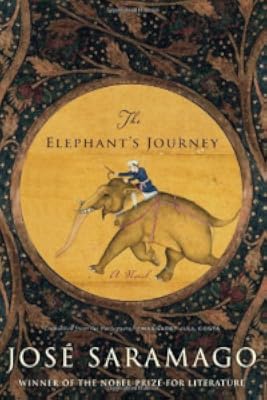
The Elephant's Journey
by José Saramago
On This Page
Description
"The enchanting tale of an elephant, his keeper, and their journey through sixteenth-century Europe, based on a true story." (from the back cover).Tags
Recommendations
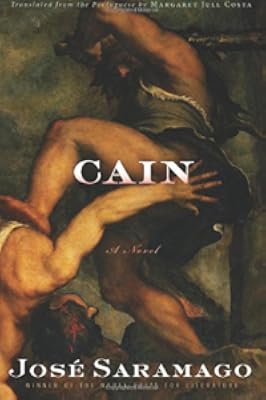
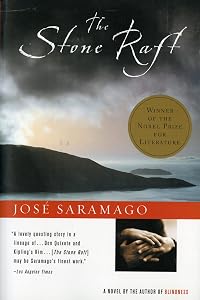

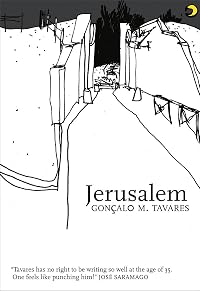

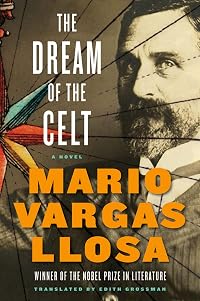
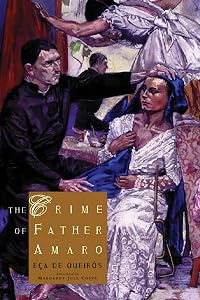
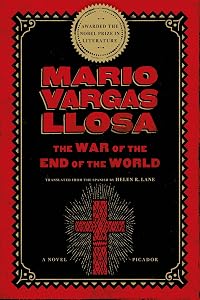
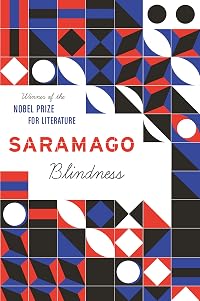
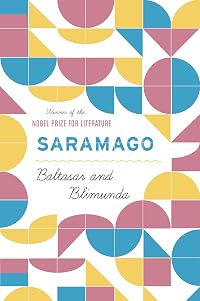

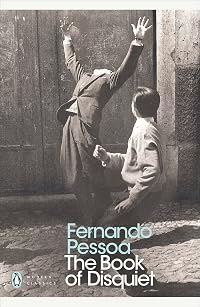
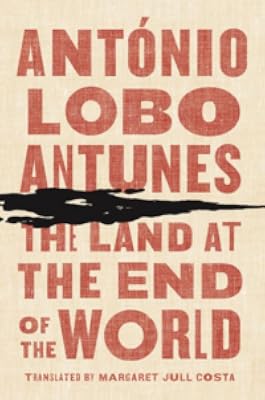
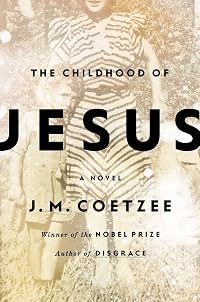





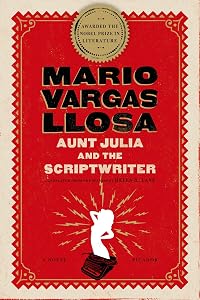
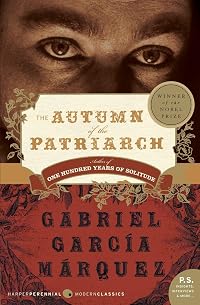
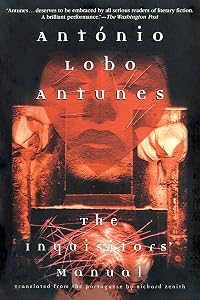

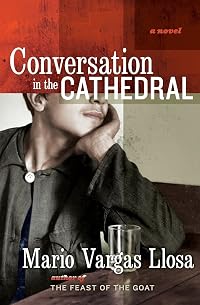

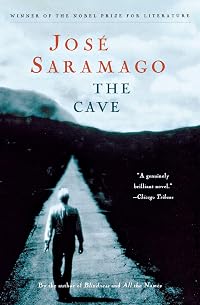
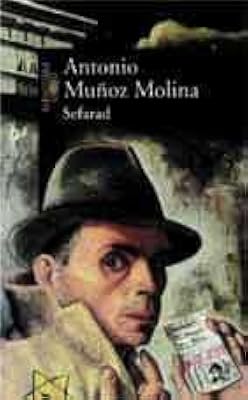
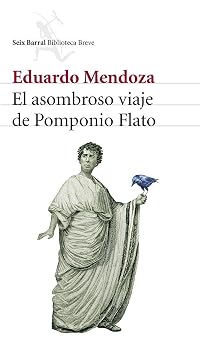
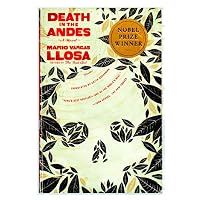

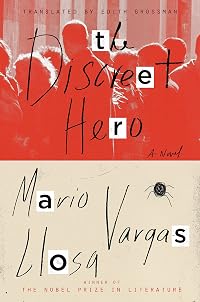


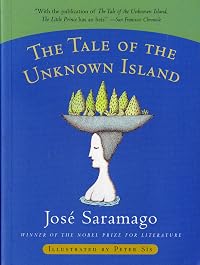
Member Recommendations
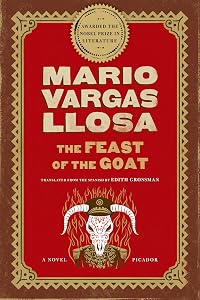
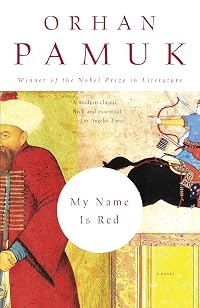
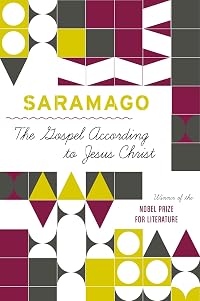
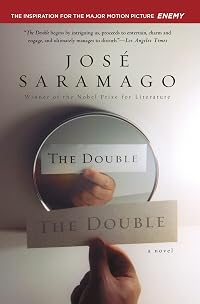
jordantaylor Both books involve an exotic animal (a tiger and an elephant) and a young man who journeys with them. Both have a spiritual undertone.
40
jordantaylor This book provides a vivid picture into the life of a mahout, men who rode elephants in historical India.
jordantaylor Both books are historically set and are about transporting large African animals across the world.
CGlanovsky Fictional characters interwoven with real historical figures and events ranging across the European continent.
Member Reviews
The Elephant's Journey is a short book and a charming tale, one that might almost be mistaken for a children's story. Except for the fact that it is also a tale about tales, an historical, philosophical meta-narrative. The narrator, quite engagingly, with warmth and evoking maximum human interest, recounts the journey in 1551 of Solomon, an Indian elephant and his mahout, Subhro from the Portuguese court of King João III in Lisbon (they had arrived several years earlier by ship from Goa) to Vienna and the court of Archduke Maximilian, soon to be Emperor Maximilian, of Austria. The tale is smooth and seamless, in one sense, and constantly disrupted in another. The narrator's comments on a myriad of historical, philosophical & linguistic show more topics effectively transform a small book into an expansive volume. In fact, the author implies that any tale, even one lacking overt meta-fictional intentions, must be so. For, any tale of an earlier time or another place, must be told in the teller's language and from the teller's contemporary perspective. The narrator cannot not know about the world what he or she does know. There is no way, ultimately, to achieve "beginner's mind," so to speak, where language is concerned:
"It will be as if we were adding subtitles in our own language to a film, a concept unknown in the sixteenth century, to compensate for our ignorance or imperfect knowledge of the language spoken by the actors. We will, therefore, have two parallel discourses that will never meet, this one, which we will be able to follow without difficulty, and another, which, from this moment on, will remain silent. An interesting solution." show less
"It will be as if we were adding subtitles in our own language to a film, a concept unknown in the sixteenth century, to compensate for our ignorance or imperfect knowledge of the language spoken by the actors. We will, therefore, have two parallel discourses that will never meet, this one, which we will be able to follow without difficulty, and another, which, from this moment on, will remain silent. An interesting solution." show less
The elephant's journey was Saramago's penultimate novel - it's a superficially light and straightforward story, based on a real incident, the gift of an elephant from King João III of Portugal to Archduke Maximilian of Austria in 1551. The elephant Solomon (renamed Suleiman by the Archduke) has to travel on foot from Lisbon to Valladolid and then on to Vienna, accompanied by his mahout and a suitable military escort (Portuguese on the first stage; Maximilian's Austrian retinue thereafter).
Saramago treats this simple journey narrative with his usual irony and stubborn refusal to take the past on its own terms - there are plenty of witty swipes at royalty, clergy, the military, civil servants and the foibles of 16th century humanity in show more general, contrasted with the patient tolerance of the elephant, who remains determinedly just an elephant, whatever symbolic roles the people around it are trying to impose. And the mahout, an Indian a long way from home, whose straightforward relationship with the elephant is contrasted with his complex human worries about what is going to happen to them. Wonderful! show less
Saramago treats this simple journey narrative with his usual irony and stubborn refusal to take the past on its own terms - there are plenty of witty swipes at royalty, clergy, the military, civil servants and the foibles of 16th century humanity in show more general, contrasted with the patient tolerance of the elephant, who remains determinedly just an elephant, whatever symbolic roles the people around it are trying to impose. And the mahout, an Indian a long way from home, whose straightforward relationship with the elephant is contrasted with his complex human worries about what is going to happen to them. Wonderful! show less
A delightful, almost meditative fictional account of the actual journey of Solomon the elephant, from his home in Lisbon to a rendezvous with his new owner, the Archduke Maximilian of Austria, in the 16th century. We view the undertaking, a physical and philosophical challenge for the men involved, mainly through the eyes of Solomon's mahout Subhro. Several near-miraculous events attributed to the beast lend epic status to the journey. The author's wit and love of irony are a joy to share. I look forward to getting better acquainted with Saramago.
In 2008’s The Elephant’s Journey, Nobel Prize winner José Saramago recounts the 1552 handing-over of adult Asian elephant Solomon (or Suleiman or Solimon), from Dom João III, the king of Portugal, to Archduke Maximilian of Austria. Told with tongue firmly in cheek, it leaves no social stratum un-hoisted on the petard of our clever author’s sense of irony. It’s funny cover to cover; it strictly maintains a 21st Century point of view, and doesn’t let latter-day foolishness go unpunished, either. I can’t remember laughing out loud so often while reading a semi-serious work of fiction.
Dom João III, mighty king of the vast Portuguese trading and military empire, puzzles at the outset, wondering what kind of gift he can give show more his friend and ally Austrian Archduke Maximilian to further cement their relations. It would be difficult to name two more august royals in Europe at the time — Portugal nearly at the height of its global power, and the Holy Roman Empire that epoch’s European colossus.
However, Saramago portrays these august personages as insecure, petty, self-aggrandizing and sometimes downright silly. However, the author reserves his most barbed observations for the two military contingents, one from each empire. The way they torture themselves over minute details, and whose pride will be damaged by whom, is simply beyond the pale — in the hands of this world-renowned author, it’s gorgeous, and gorgeously funny. in this Saramago imagines they turn the simplest of transactions into trouble over trifles about who will stand where, and who will be allowed into the Portuguese outpost for the transfer. Spoiler: NOT the Austrians!
Our Nobelist author saves his most open-hearted passages for the two characters at the center of his narrative: the elephant and his mahout, or handler. The elephant is cooperative and rather quick to learn; and Subhro, the handler, learns about European rivalries, Catholic hypocrisy and showmanship during the bloody Lutheran Reformation and its religious wars, and tries to monetize his main asset by selling elephant hair as a cure for baldness.
Needless to say, I’m recommending this tour de force comic novel in the highest terms possible. Take and enjoy.
https://bassoprofundo1.blogspot.com/2025/12/the-elephants-journey-by-jose-sarama... show less
Dom João III, mighty king of the vast Portuguese trading and military empire, puzzles at the outset, wondering what kind of gift he can give show more his friend and ally Austrian Archduke Maximilian to further cement their relations. It would be difficult to name two more august royals in Europe at the time — Portugal nearly at the height of its global power, and the Holy Roman Empire that epoch’s European colossus.
However, Saramago portrays these august personages as insecure, petty, self-aggrandizing and sometimes downright silly. However, the author reserves his most barbed observations for the two military contingents, one from each empire. The way they torture themselves over minute details, and whose pride will be damaged by whom, is simply beyond the pale — in the hands of this world-renowned author, it’s gorgeous, and gorgeously funny. in this Saramago imagines they turn the simplest of transactions into trouble over trifles about who will stand where, and who will be allowed into the Portuguese outpost for the transfer. Spoiler: NOT the Austrians!
Our Nobelist author saves his most open-hearted passages for the two characters at the center of his narrative: the elephant and his mahout, or handler. The elephant is cooperative and rather quick to learn; and Subhro, the handler, learns about European rivalries, Catholic hypocrisy and showmanship during the bloody Lutheran Reformation and its religious wars, and tries to monetize his main asset by selling elephant hair as a cure for baldness.
Needless to say, I’m recommending this tour de force comic novel in the highest terms possible. Take and enjoy.
https://bassoprofundo1.blogspot.com/2025/12/the-elephants-journey-by-jose-sarama... show less
An Indian elephant meets the kings of Europe after Luther splits the Church
It’s impossible to tell if the balance world affairs are influenced by the intervention of an elephant and his mahout – Indian word for handler – and even if the relationship between this mahout and the kings and archdukes of 1500’s Portugal and Austria could ever be repeated among the modern world’s leaders. But Saramago is willing to try it.
Once alone, the archduke had begun to think that perhaps he had said too much, that his words, if the mahout let his tongue run away with him, would be of no benefit to the delicate political balance he had been trying to keep between Luther’s reforms and the ongoing conciliar response.
We are deep into the show more bitter division and emerging bloody political situation of the 16thC church schism. Those of us reading Michel de Montaigne at the moment will get the feel of this quickly. Saramago treats us to a free-form speculative structure as much as the journey narrative structure using the bones of this true story of the elephant Solomon and his mahout given by King Dom Joao of Portugal to Archduke Ferdinand of Austria. The gift is not easy to hand over. An elephant traveling from Belem in Lisbon to Vienna is an arduous matter for those times. Its handler-mahout – Sabhro – is forced to negotiate first with King Joao, the captain of the cavalry detachment travelling to Spain on the initial leg of the journey, and then the Archduke, a local bishop and on and on to make sure the elephant gets to its destination safely. There is always much at stake, including inquisitive/Inquisitional eyes on the stories Sabhro tells of the elephant god Ganesh. Sabhro was baptised into Christianity as a boy in India, and yet comes close to getting into trouble.
An object of awe and wonder such as an elephant makes for either a simple distraction in hard times, or a political tool – at one point a bishop would like Solomon to perform a miracle near Venice to give the authentic Catholic church an edge on their protestant opponents. Sabhro is a worthy handler, not just of his elephant for which he was brought all the way over with Solomon from India two years previously, but also in order for the journey to succeed, precarious no doubt, food, weather, military insecurity, ablutions, the Alps, petty ambitions, all need traversing. If not for Sabhro, the deal could probably not get done. One thing I like here, is how this foreigner, almost heathen, low-level employee becomes the essential link between the political forces. Without him there is no elephant as no one else would have a clue how to manage it. Sabhro seems to know that he can use this to help himself and the elephant get to the end of the journey.
Saramago must’ve had a lot of fun writing this book. We often read speculative historical fiction that has a motivation to reimagine the world for modern sensibilities. But often such books in my experience fail at one critical point – they think the world is better because of the reimagining, that suddenly we moderns have figured it all out. By way of doing that they only manage to add another layer of incompleteness and hubris. Saramago wants to tell us nothing more than human nature is what it is, and that writing about the past is no more than conjecture, and in this case he makes that explicit through narrative interventions reminding us that this is fiction, that the world might seem greatly improved, but if we look back and compare, we realise it isn’t. So, our humanity is restored. In thinking we have answers, we can easily look back to another time when we thought we had answers, and so the mirror on ourselves shows a reflection to infinity.
A glance at a map is enough to make you feel tired. And yet it looks as if everything were so close, within easy reach so to speak. The explanation, of course, lies in the scale. It’s easy to accept that a centimetre on the map equals twenty kilometres in reality, but what we tend not to consider is that, in the process, we ourselves suffer an equivalent dimensional reduction, which is why being but specks on the earth’s surface, we are still smaller on maps.
The small scale reveals the larger forces, reducing them back to the smaller scale of their humanity. Which is a mahout and the journey of his elephant, Solomon among the kings of Europe.
The relationship that forms between the Portuguese cavalry captain and the elephant handler in the first leg of the journey is a very clever and heart-warming feature of this story. Saramago is a political writer, not only an artist. I can't help thinking that is a theme of this work, the hope that we can bridge seemingly hostile and social-geographical distances. In that case, it takes an eastern elephant handler to disarm the perceived superiority of the western mind. show less
It’s impossible to tell if the balance world affairs are influenced by the intervention of an elephant and his mahout – Indian word for handler – and even if the relationship between this mahout and the kings and archdukes of 1500’s Portugal and Austria could ever be repeated among the modern world’s leaders. But Saramago is willing to try it.
Once alone, the archduke had begun to think that perhaps he had said too much, that his words, if the mahout let his tongue run away with him, would be of no benefit to the delicate political balance he had been trying to keep between Luther’s reforms and the ongoing conciliar response.
We are deep into the show more bitter division and emerging bloody political situation of the 16thC church schism. Those of us reading Michel de Montaigne at the moment will get the feel of this quickly. Saramago treats us to a free-form speculative structure as much as the journey narrative structure using the bones of this true story of the elephant Solomon and his mahout given by King Dom Joao of Portugal to Archduke Ferdinand of Austria. The gift is not easy to hand over. An elephant traveling from Belem in Lisbon to Vienna is an arduous matter for those times. Its handler-mahout – Sabhro – is forced to negotiate first with King Joao, the captain of the cavalry detachment travelling to Spain on the initial leg of the journey, and then the Archduke, a local bishop and on and on to make sure the elephant gets to its destination safely. There is always much at stake, including inquisitive/Inquisitional eyes on the stories Sabhro tells of the elephant god Ganesh. Sabhro was baptised into Christianity as a boy in India, and yet comes close to getting into trouble.
An object of awe and wonder such as an elephant makes for either a simple distraction in hard times, or a political tool – at one point a bishop would like Solomon to perform a miracle near Venice to give the authentic Catholic church an edge on their protestant opponents. Sabhro is a worthy handler, not just of his elephant for which he was brought all the way over with Solomon from India two years previously, but also in order for the journey to succeed, precarious no doubt, food, weather, military insecurity, ablutions, the Alps, petty ambitions, all need traversing. If not for Sabhro, the deal could probably not get done. One thing I like here, is how this foreigner, almost heathen, low-level employee becomes the essential link between the political forces. Without him there is no elephant as no one else would have a clue how to manage it. Sabhro seems to know that he can use this to help himself and the elephant get to the end of the journey.
Saramago must’ve had a lot of fun writing this book. We often read speculative historical fiction that has a motivation to reimagine the world for modern sensibilities. But often such books in my experience fail at one critical point – they think the world is better because of the reimagining, that suddenly we moderns have figured it all out. By way of doing that they only manage to add another layer of incompleteness and hubris. Saramago wants to tell us nothing more than human nature is what it is, and that writing about the past is no more than conjecture, and in this case he makes that explicit through narrative interventions reminding us that this is fiction, that the world might seem greatly improved, but if we look back and compare, we realise it isn’t. So, our humanity is restored. In thinking we have answers, we can easily look back to another time when we thought we had answers, and so the mirror on ourselves shows a reflection to infinity.
A glance at a map is enough to make you feel tired. And yet it looks as if everything were so close, within easy reach so to speak. The explanation, of course, lies in the scale. It’s easy to accept that a centimetre on the map equals twenty kilometres in reality, but what we tend not to consider is that, in the process, we ourselves suffer an equivalent dimensional reduction, which is why being but specks on the earth’s surface, we are still smaller on maps.
The small scale reveals the larger forces, reducing them back to the smaller scale of their humanity. Which is a mahout and the journey of his elephant, Solomon among the kings of Europe.
The relationship that forms between the Portuguese cavalry captain and the elephant handler in the first leg of the journey is a very clever and heart-warming feature of this story. Saramago is a political writer, not only an artist. I can't help thinking that is a theme of this work, the hope that we can bridge seemingly hostile and social-geographical distances. In that case, it takes an eastern elephant handler to disarm the perceived superiority of the western mind. show less
While dining with a colleague in Salzburg, Saramago noticed several small wooden sculptures lined up in a row. He learned that they were representations of stops made by an elephant, on a long journey from Portugal to Vienna in 1551. Intrigued, Saramago did more research and then imagined the journey for us through this short and witty novel.
The story begins with Portuguese King João III and his wife, Catarina, in bed one night trying to decide what to give Archduke Maximilian of Austria as a wedding gift. The queen suggests the elephant, Solomon, who came to them from India two years previously, but has "done nothing but eat and sleep" since then. They decide that Solomon and his mahout, Subhro, will travel first to Valladolid, Spain, show more where the archduke is residing as Regent of Spain. From there, it will be the responsibility of the Archduke and his wife, Maria, daughter of Charles V, to get the elephant to Vienna.
Much has already been written about the adventures of the fascinating characters of Solomon, Subhro, and the Portuguese master of horse who is responsible for safely delivering the elephant to the Archduke. Instead of trying to add to that discussion, I thought I would focus on Saramago's frequent references to the act of writing peppered throughout the book. The author and the narrator of the book appear to be the same, and I believe that the comments about writing shed light on Saramago the author.
I find the self-references to himself as a writer to be particularly interesting. When the boat carrying Solomon reaches the Italian port of Genoa, Saramago writes about the orderly and efficient manner of arriving, then he says:
We hereby recognize that the somewhat disdainful, ironic tone that has slipped into these pages whenever we have had cause of speak of austria and its people was not only aggressive, but patently unfair. Not that this was our intention, but you know how it is with writing, one word often brings along another in its train simply because they sound good together, even if this means sacrificing respect for levity and ethics for aesthetics, if such solemn concepts are not out of place in a discourse such as this, and often to no one's advantage either. It is in this and other ways, almost without our realizing it, that we make so many enemies in life.
News of the miracle had reached the doge's palace, but in somewhat garbled form, the result of the successive transmissions of facts, true or assumed, real or purely imaginary, based on everything from partial, more or less eyewitness accounts to reports from those who simply liked the sound of their own voice, for, as we know all too well, no one telling a story can resist adding a period, and sometimes even a comma.
The idea of placing levity and aesthetics ahead of respect for tradition and truth is evident in Saramago's disregard for the usual rules of punctuation and paragraph formation and in his creative stories which bear little resemblance to the real world. And yet there is a different kind of truth at work, that of the nature of humanity and society. Besides, Saramago seems to be saying, what is the truth anyway?
It must be said that history is always selective, and discriminatory too, selecting from life only what society deems to be historical and scorning the rest, which is precisely where we might find the true explanation of facts, of things, of wretched reality itself. In truth, I say to you, it is better to be a novelist, a fiction writer, a liar.
But Saramago also finds that novelists are inept at depicting the reality they do try to illuminate. In trying to describe the landscape of the snowy, cold, and windy Brenner Pass, Saramago inserts this aside:
The greatest disrespect we can show for reality, whatever that reality might be, when attempting the pointless task of describing a landscape, is to do so with words that are not our own and never were, by which we mean words that have already appeared on millions of pages and in millions of mouths before our turn to use them finally comes, weary words, exhausted from being passed from hand to hand, leaving in each one a part of their vital substance.
These "weary words" are "merely humble recognition of how much truth is contained in that well-known phrase, Words fail me. Because words really do fail us." Yet new words are created all the time "doubtless going around knocking on doors, with the absent-minded air affected by all new words, asking to be let in." If we substitute "work" for "word", an interesting image arises of authors with new ways of writing and new truths to tell peddling their ideas to publishers, "asking to be let in."
Saramago was a genius at creating new ideas and new works from the weary words we have inherited. Without being disingenuous or ostentatious, he was able to present the weary reader with a fresh and unique way of seeing the world. If Destiny, when it chooses, is as good or even better than god at writing straight on crooked lines,"* then Saramago was best at writing crooked, convoluted, and symbolic stories that gave us the straight truth as he saw it.
*The idea of God being able to write the truth even when faced with imperfect humans is an interesting one. According to an article in the journal Folklore, the proverb is widely known as a Portuguese proverb, but some scholars link the phrase to the writings of St. Augustine. show less
The story begins with Portuguese King João III and his wife, Catarina, in bed one night trying to decide what to give Archduke Maximilian of Austria as a wedding gift. The queen suggests the elephant, Solomon, who came to them from India two years previously, but has "done nothing but eat and sleep" since then. They decide that Solomon and his mahout, Subhro, will travel first to Valladolid, Spain, show more where the archduke is residing as Regent of Spain. From there, it will be the responsibility of the Archduke and his wife, Maria, daughter of Charles V, to get the elephant to Vienna.
Much has already been written about the adventures of the fascinating characters of Solomon, Subhro, and the Portuguese master of horse who is responsible for safely delivering the elephant to the Archduke. Instead of trying to add to that discussion, I thought I would focus on Saramago's frequent references to the act of writing peppered throughout the book. The author and the narrator of the book appear to be the same, and I believe that the comments about writing shed light on Saramago the author.
I find the self-references to himself as a writer to be particularly interesting. When the boat carrying Solomon reaches the Italian port of Genoa, Saramago writes about the orderly and efficient manner of arriving, then he says:
We hereby recognize that the somewhat disdainful, ironic tone that has slipped into these pages whenever we have had cause of speak of austria and its people was not only aggressive, but patently unfair. Not that this was our intention, but you know how it is with writing, one word often brings along another in its train simply because they sound good together, even if this means sacrificing respect for levity and ethics for aesthetics, if such solemn concepts are not out of place in a discourse such as this, and often to no one's advantage either. It is in this and other ways, almost without our realizing it, that we make so many enemies in life.
News of the miracle had reached the doge's palace, but in somewhat garbled form, the result of the successive transmissions of facts, true or assumed, real or purely imaginary, based on everything from partial, more or less eyewitness accounts to reports from those who simply liked the sound of their own voice, for, as we know all too well, no one telling a story can resist adding a period, and sometimes even a comma.
The idea of placing levity and aesthetics ahead of respect for tradition and truth is evident in Saramago's disregard for the usual rules of punctuation and paragraph formation and in his creative stories which bear little resemblance to the real world. And yet there is a different kind of truth at work, that of the nature of humanity and society. Besides, Saramago seems to be saying, what is the truth anyway?
It must be said that history is always selective, and discriminatory too, selecting from life only what society deems to be historical and scorning the rest, which is precisely where we might find the true explanation of facts, of things, of wretched reality itself. In truth, I say to you, it is better to be a novelist, a fiction writer, a liar.
But Saramago also finds that novelists are inept at depicting the reality they do try to illuminate. In trying to describe the landscape of the snowy, cold, and windy Brenner Pass, Saramago inserts this aside:
The greatest disrespect we can show for reality, whatever that reality might be, when attempting the pointless task of describing a landscape, is to do so with words that are not our own and never were, by which we mean words that have already appeared on millions of pages and in millions of mouths before our turn to use them finally comes, weary words, exhausted from being passed from hand to hand, leaving in each one a part of their vital substance.
These "weary words" are "merely humble recognition of how much truth is contained in that well-known phrase, Words fail me. Because words really do fail us." Yet new words are created all the time "doubtless going around knocking on doors, with the absent-minded air affected by all new words, asking to be let in." If we substitute "work" for "word", an interesting image arises of authors with new ways of writing and new truths to tell peddling their ideas to publishers, "asking to be let in."
Saramago was a genius at creating new ideas and new works from the weary words we have inherited. Without being disingenuous or ostentatious, he was able to present the weary reader with a fresh and unique way of seeing the world. If Destiny, when it chooses, is as good or even better than god at writing straight on crooked lines,"* then Saramago was best at writing crooked, convoluted, and symbolic stories that gave us the straight truth as he saw it.
*The idea of God being able to write the truth even when faced with imperfect humans is an interesting one. According to an article in the journal Folklore, the proverb is widely known as a Portuguese proverb, but some scholars link the phrase to the writings of St. Augustine. show less
This delightful novella reads like a fable or morality tale, but is based on a true incident in European history. In 1550 King Joao III of Portugal decided that the perfect wedding gift for Archduke Maximilian of Austria would be an elephant. The elephant, Solomon, had been languishing in a corner of the king’s palace for a couple of years, along with his mahout, Subhro; the two of them all but forgotten. The decision to present them to Maximillian made, the only dilemma was how to get the gift to Vienna. Solomon had arrived in Lisbon via ship, but Vienna is an inland city. So, Solomon and Subhro, accompanied by a caravan of soldiers, laborers, and numerous wagons and ox carts full of provisions, set out to walk across Central Europe. show more
Along the way they encounter various officials, peasants, priests, and wildlife, each providing an excuse for Saramago to engage in philosophical asides and/or to skewer sacred institutions and beliefs. He treats us to his thoughts on power, dignity, friendship, religion, and human weaknesses. Saramago’s writing is not for the faint of heart. He uses minimal punctuation, and the only capitalization is at the beginning of each sentence. A sentence can be as long as a paragraph. A paragraph can last three or four pages. If the reader can surrender to this style, s/he will be rewarded with a wonderful story told by a master storyteller. I’ve read two other books by Saramago - Blindness and The Double. This book is certainly the most approachable of the three, and would make a good introduction to this author. show less
Along the way they encounter various officials, peasants, priests, and wildlife, each providing an excuse for Saramago to engage in philosophical asides and/or to skewer sacred institutions and beliefs. He treats us to his thoughts on power, dignity, friendship, religion, and human weaknesses. Saramago’s writing is not for the faint of heart. He uses minimal punctuation, and the only capitalization is at the beginning of each sentence. A sentence can be as long as a paragraph. A paragraph can last three or four pages. If the reader can surrender to this style, s/he will be rewarded with a wonderful story told by a master storyteller. I’ve read two other books by Saramago - Blindness and The Double. This book is certainly the most approachable of the three, and would make a good introduction to this author. show less
Members
- Recently Added By
Published Reviews
ThingScore 100
The Elephant’s Journey is a work of great and sly charm, taking its time to weave the nets in which its readers will find themselves delightfully enmeshed.
added by lkernagh
The real genius, however, is to tell the tale ahistorically. The narrator zooms in and out, forward and back, so we get a good look at Suleiman plodding up ancient mountains overlooking a deep blue sea, as if from a helicopter
added by lkernagh
"The Elephant's Journey" is a tale rich in irony and empathy, regularly interrupted by witty reflections on human nature and arch commentary on the powerful who insult human dignity.
added by lkernagh
Lists

Authors from Portugal
3 works; 1 member

Books Read in 2013
1,630 works; 51 members
Author Information

243+ Works 53,324 Members
José Saramago was born on November 16, 1922. He spent most of his childhood on his parent's farm, except while attending school in Lisbon. Before devoting himself exclusively to writing novels in 1976, he worked as a draftsman, a publisher's reader, an editor, translator, and political commentator for Diario de Lisboa. He is indisputably show more Portugal's best-known literary figure and his books have been translated into more than 25 languages. Although he wrote his first novel in 1947, he waited some 35 years before winning critical acclaim for work such as the Memorial do Convento. His works include The Year of the Death of Ricardo Reis, The Stone Raft, Baltasar and Blimunda, The History of the Siege of Lisbon, The Gospel According to Jesus Christ, and Blindness. At age 75, he was awarded the Nobel Prize for Literature in 1998 for his work in which "parables sustained by imagination, compassion and irony, continually enables us to apprehend an elusory reality." He died from a prolonged illness that caused multiple organ failure on June 18, 2010 at the age of 87. (Bowker Author Biography) show less
Some Editions
Awards and Honors
Series
Belongs to Publisher Series
Work Relationships
Is contained in
Common Knowledge
- Canonical title*
- De tocht van de olifant
- Original title
- A viagem do elefante
- Alternate titles*
- De tocht van de olifant : roman
- Original publication date
- 2008; 2010-08-05 (English: Costa) (English: Costa)
- People/Characters
- Subhro; Solomon (elephant); Pero de Alcacova Carneiro; João III, King of Portugal (1558&ndash | 1618); Maximilian, Archduke of Austria; The Queen
- Important places
- Lisbon, Portugal; Austria; Alps; Spain; Italy
- Epigraph
- In the end, we always arrive at the place where we are expected.
Book of Itineraries - Dedication
- For Pilar, who wouldn't let me die
- First words
- Strange though it may seem to anyone unaware of the importance of the marital bed in the efficient workings of public administration, regardless of whether that bed has been blessed by church or state or no one at all, the fi... (show all)rst step of an elephant's extraordinary journey to austria, which we propose to describe hereafter, took place in the royal apartments of the portuguese court, more or less at bedtime.
- Quotations*
- Lässt man der Zeit nur Zeit, werden alle Dinge des Universums sich ineinanderfügen.
Eine weinende Königin ist ein Schauspiel, bei dem es der Anstand gebietet, den Blick abzuwenden. - Last words
- (Click to show. Warning: May contain spoilers.)And she ran off and shut herself in her room, where she wept for the rest of the day.
- Original language
- Portugese
*Some information comes from Common Knowledge in other languages. Click "Edit" for more information.
Classifications
- Genres
- General Fiction, Fiction and Literature, Historical Fiction
- DDC/MDS
- 869.342 — Literature & rhetoric Spanish Literature Literatures of Portuguese and Galician languages Portuguese fiction 20th Century 1945-1999
- LCC
- PQ9281 .A66 .V5313 — Language and Literature French, Italian, Spanish and Portuguese literatures Portuguese literature Individual authors, 1961-2000
- BISAC
Statistics
- Members
- 1,755
- Popularity
- 12,583
- Reviews
- 82
- Rating
- (3.73)
- Languages
- 20 — Catalan, Czech, Danish, Dutch, English, Finnish, French, German, Greek, Hebrew, Hungarian, Italian, Norwegian (Bokmål), Polish, Portuguese, Romanian, Russian, Serbian, Spanish, Turkish
- Media
- Paper, Audiobook, Ebook
- ISBNs
- 65
- ASINs
- 18