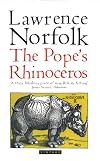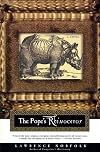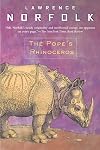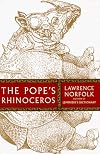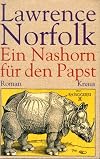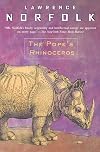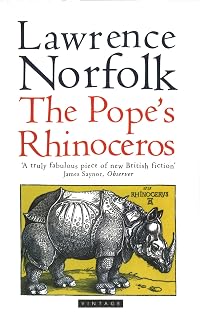
The Pope's Rhinoceros
by Lawrence Norfolk
On This Page
Description
The Pope's Rhinoceros is a vivid, antic, and picaresque novel spun around one of history's most bizarre chapters: the sixteenth-century attempt to procure a rhinoceros as a bribe for Pope Leo X. In February 1516, a Portuguese ship sank off the coast of Italy. The Nostra Senora de Ajuda had sailed fourteen thousand miles from the Indian kingdom of Gujarat. Her mission: to bribe the "pleasure-loving Pope" into favoring expansionist Portugal over her rival Spain with the most exotic and least show more likely of gifts -- a living rhinoceros. Moving from the herring colonies of the Baltic Sea to the West African rain forest, with a cast of characters including an order of reclusive monks and Rome's corrupt cardinals, courtesans, ambassadors, and nobles, The Pope's Rhinoceros is at once a fantastic adventure tale and a portrait of an age rushing headlong to its crisis. show lessTags
Recommendations


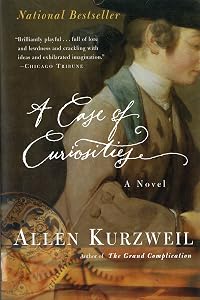


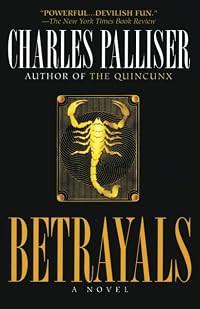
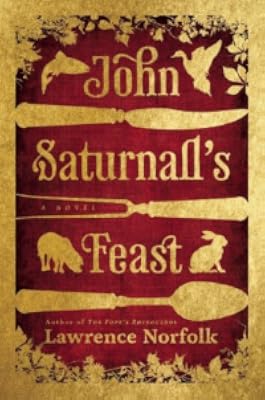

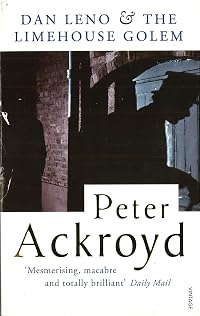





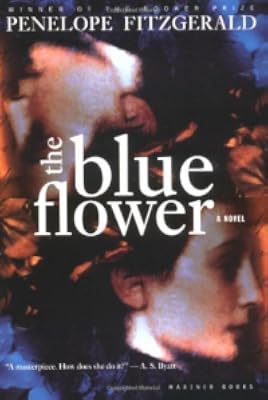
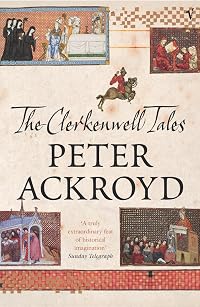
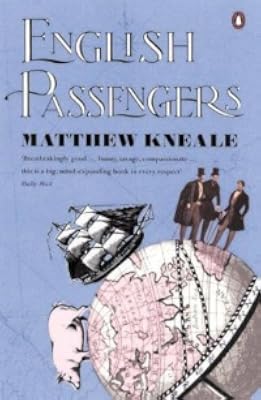
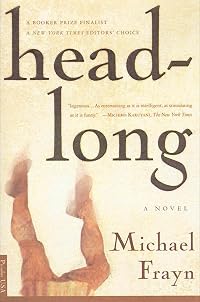
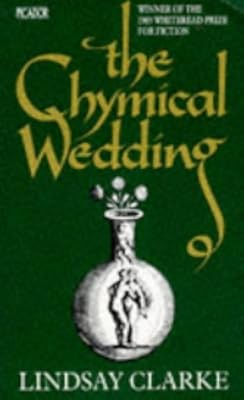

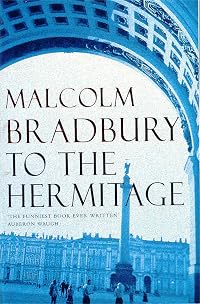
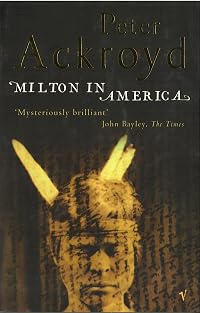
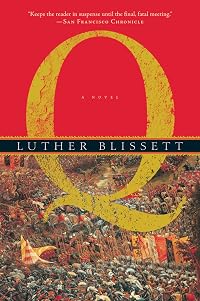
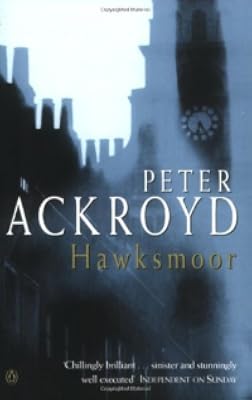
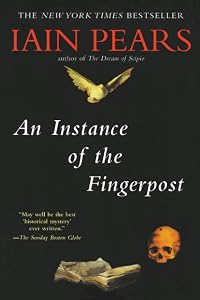

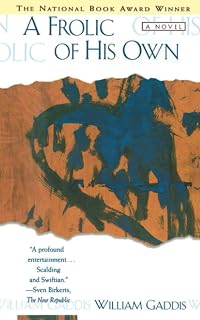


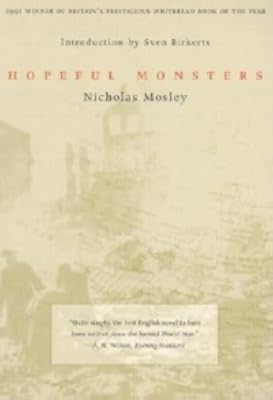







Member Recommendations
jordantaylor Both books are historically set and are about transporting large African animals across the world.
Member Reviews
An exhausting read. A dense, literate novel, with some staggering sequences (the sequence of mankind's conquest of the sea, as narrated by successive generations of herring, is one of the most masterful things I have ever read) but also with a sprawl that, ultimately, the author cannot control. I love large novels, however this one feels like the editor's attentions were elsewhere. No masterpiece, true. Yet I can confidently state that Norfolk's love of words, and oddball character insight, will definitely have me visiting his back catalogue sooner rather than later.
It took me forever to get through this book. Not because it is awful, but because the author's style is very dense. What I can describe using three or four words, he uses fifteen.
Pope Leo X owns an elephant, and wants a rarer beast, a rhinoceros. No one knows what it looks like, but the Spanish and the Portuguese are vying with each other to deliver one and gain the favor of this Pope. The life story of one man, Salvestro, is woven in and around the finding of this beast. Herring and especially rats are rampant.
This novel is sometimes amusing, sometimes surprising, one small section that springs to mind was rather boring to me, but it was worth it.
Pope Leo X owns an elephant, and wants a rarer beast, a rhinoceros. No one knows what it looks like, but the Spanish and the Portuguese are vying with each other to deliver one and gain the favor of this Pope. The life story of one man, Salvestro, is woven in and around the finding of this beast. Herring and especially rats are rampant.
This novel is sometimes amusing, sometimes surprising, one small section that springs to mind was rather boring to me, but it was worth it.
If anything, The Pope's Rhinoceros is even more densely written than Lempriere's Dictionary. I can quite honestly say that I wasn't really sure what the plot was until about 300 pages in. But the wonderful thing about it is that it doesn't matter. What I could follow was hilarious, surprising and extraordinary and gradually, it starts to fall together and become something so original and startling that I felt not having perservered would have been a terrible loss. I know that I missed bits - huge bits where I was simply too tired to read the lush descriptions or follow the meaning of the contrastingly sparse dialoge closely enough. All that means is that I get to read it again and enjoy it even more.
I dunno ... "A" for effort, I guess?
The writing obviously took a lot of work, and there is some consummate craftsmanship going on here. Sure, the vocabulary seems too often to reach for the more obscure word (or the more obscure meaning of a word, such as using factor to refer to an agent) when there is a perfectly serviceable common word, but that is more irritating than blameworthy.
The real problem is that the novel just doesn't really work. The jokes in the carnivalesque Rome chapters fall flat, the opening tale of the sunken city (Vintra? Vespa? I've already forgotten) and its monastry-sentinel is chucked overboard when the great sea-voyage begins, and there is an entire chapter centered around an African tribe (Nri) that seems out show more of place. Oh, and that hackneyed device of a eurocentric author writing from a superstitious, aboriginal perspective as if he knows how they think? Yeah, that's in here too. I cringe every time I encounter one of those.
Still, the technique is superb, and at least half of the novel is quite good. I won't say that it's necessarily worth sticking through to the end, but the more stoic reader will plenty to enjoy in this novel. show less
The writing obviously took a lot of work, and there is some consummate craftsmanship going on here. Sure, the vocabulary seems too often to reach for the more obscure word (or the more obscure meaning of a word, such as using factor to refer to an agent) when there is a perfectly serviceable common word, but that is more irritating than blameworthy.
The real problem is that the novel just doesn't really work. The jokes in the carnivalesque Rome chapters fall flat, the opening tale of the sunken city (Vintra? Vespa? I've already forgotten) and its monastry-sentinel is chucked overboard when the great sea-voyage begins, and there is an entire chapter centered around an African tribe (Nri) that seems out show more of place. Oh, and that hackneyed device of a eurocentric author writing from a superstitious, aboriginal perspective as if he knows how they think? Yeah, that's in here too. I cringe every time I encounter one of those.
Still, the technique is superb, and at least half of the novel is quite good. I won't say that it's necessarily worth sticking through to the end, but the more stoic reader will plenty to enjoy in this novel. show less
A unique book that defies categorisation, this is a huge, surreal, complex, all-encompassing sixteenth century picaresque shaggy dog (or should I say rhinoceros) story full of humour, complex plot twists, period detail and arcane vocabulary, ranging from the Baltic coastal island of Usedom via Rome to West Africa and back, taking in large chunks of history, geography, geology, papal politics and many other subjects.
Not an easy read, particularly the opening which spends several pages explaining the geological evolution of the Baltic in almost wilfully obscure language, but ultimately a rewarding one, and an impressive feat of research and imagination.
Not an easy read, particularly the opening which spends several pages explaining the geological evolution of the Baltic in almost wilfully obscure language, but ultimately a rewarding one, and an impressive feat of research and imagination.
I started this about four times, and eventually persevered to the end. But I am not really sure why.
I love historical novels and I don't mind dense, complicated prose, or convoluted plots. But it has to be worth it. And for me, this novel didn't deliver enough to justify the seriously large amount of time, attention and effort required to read it. It started particularly well - Northern Europe and Renaissance Rome were vividly recreated. However, you have to keep your wits about you to follow the plot - just as you think you may be starting to see where he is leading, he stops dead in his tracks and whisks you off somewhere else. This was bearable in the first half – just – but the second half was just bizarre. It went from dense show more historical treatise to flights of surreal magical nonsense. The complexity of the language and of the plot often seemed to be deliberate showing off - wanting to dazzle with the author’s erudition and skills - rather than basic to the story. A less indulgent editor could have insisted the book be trimmed by a good quarter, which would have improved it.
Like the rhinoceros in the title, heavy, somewhat impressive, but totally lacking elegance and finesse. show less
I love historical novels and I don't mind dense, complicated prose, or convoluted plots. But it has to be worth it. And for me, this novel didn't deliver enough to justify the seriously large amount of time, attention and effort required to read it. It started particularly well - Northern Europe and Renaissance Rome were vividly recreated. However, you have to keep your wits about you to follow the plot - just as you think you may be starting to see where he is leading, he stops dead in his tracks and whisks you off somewhere else. This was bearable in the first half – just – but the second half was just bizarre. It went from dense show more historical treatise to flights of surreal magical nonsense. The complexity of the language and of the plot often seemed to be deliberate showing off - wanting to dazzle with the author’s erudition and skills - rather than basic to the story. A less indulgent editor could have insisted the book be trimmed by a good quarter, which would have improved it.
Like the rhinoceros in the title, heavy, somewhat impressive, but totally lacking elegance and finesse. show less
I give up. This novel has been a trusty paperweight and book-end for a few years now. The bookmark has moved forward a few pages at irregular intervals. Usually, each dip into the text puts me off reading for a while. I get the impression that the author consulted a thesaurus twice for every sentence on every one of the 753 pages. Perhaps literary reviewers enjoy this sort of book, as it gives them the chance to demonstrate how clever they are. But it's not for me. Enough is enough. There are other things to do in life.
Members
- Recently Added By
Lists

International IMPAC Dublin Literary Award
179 works; 6 members

History novels (not too romancey)
37 works; 5 members
Author Information

Some Editions
Awards and Honors
Awards
Series
Belongs to Publisher Series
btb (72406)
Common Knowledge
- Canonical title*
- Ein Nashorn für den Papst
- Original title
- The pope's rhinoceros
- Original publication date
- 1996 (Englisch) (Englisch); 1996 (Deutsch) (Deutsch)
- People/Characters
- Leo X, 1475-1521
- Important places
- Rome, Italy; Africa
*Some information comes from Common Knowledge in other languages. Click "Edit" for more information.
Classifications
Statistics
- Members
- 662
- Popularity
- 43,648
- Reviews
- 9
- Rating
- (3.44)
- Languages
- 9 — Danish, Dutch, English, French, German, Hungarian, Italian, Portuguese, Spanish
- Media
- Paper, Ebook
- ISBNs
- 24
- ASINs
- 14