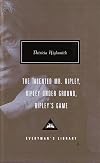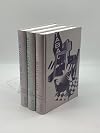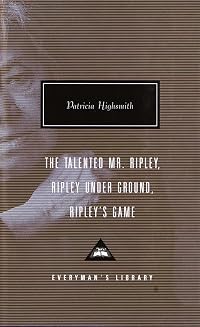
The Talented Mr. Ripley | Ripley Under Ground | Ripley's Game
by Patricia Highsmith
Tom Ripley (Collections and Selections — Omnibus 1-3)
On This Page
Description
"Suave, agreeable, and completely amoral ... Tom Ripley stops at nothing--not even murder--to accomplish his goals."--Jacket.Tags
Recommendations




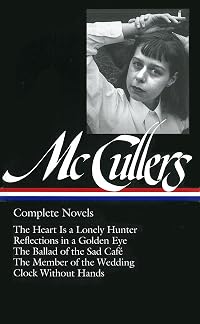
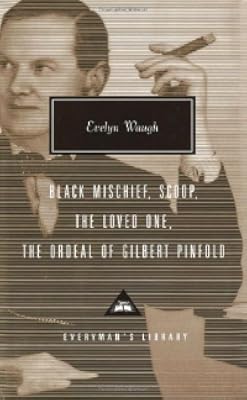
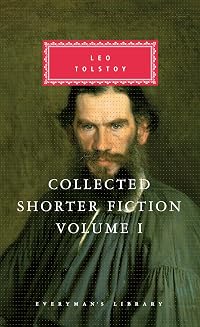
Member Recommendations
Member Reviews
[[Patricia Highsmith]]'s Ripley character is wildly popular, and I wanted to see what all that was about. Spoiler Alert - I only read the first of the three books in this omnibus. Anytime I've heard someone talk about Ripley, or seen a film adaptation, Ripley is portrayed as this savant psychopath, a chameleon able to slip through the gaps in society as he preys on everyone. But I found Highsmith's Ripley a particularly weak and overly lucky character. He doesn't really bear any of the hallmarks of a true psychopath, and he is all too often frozen in fear and guilt and, well, tears. To make him the anti-hero of the story, Highsmith simply makes everyone else around him dumber. He's not a master thief or manipulator, he's just lucky show more everyone else is soooo stupid. I don't understand why everyone points to this as such a touchstone of early crime writing.
2 1/2 bones!!! show less
2 1/2 bones!!! show less
With Tom Ripley, Patricia Highsmith created one of the more memorable sociopath serial killers of fictional history. And, despite the fact that parts of her plot are not quite believable, The Talented Mr. Ripley, written in 1955, has to be considered a classic crime novel.
Tom Ripley was not the kind of man who was willing to work hard for the finer things that he felt that life owed him. Rather, he found it enjoyable to manipulate those around him into giving him some of those things and, if that didn't work, he was more than willing to take those things however he could get them. When Dickie Greenleaf's father asked Ripley to go to Italy in an attempt to talk his son into returning to the family's New York business, Ripley immediately show more recognized an opportunity to escape his unhappy New York existence at the expense of someone else. Unfortunately, for Dickie Greenleaf, Tom fell in love with Greenleaf's European lifestyle and decided to take that for his own, too.
Patricia Highsmith achieved the difficult task of making the reader, at the very least, sympathize with Tom Ripley, if not actually like him. The reader spends so much time in Ripley's mind, listening to his logic, his fears and his aspirations, that his murders and other crimes seem almost inevitable and beyond his control. He is a true sociopath and has no feelings of guilt about killing when he thinks it is necessary to ensure the lifestyle that he sees as due him. His feeling of invincibility allows him to take chances that a sane person would never take, and he gets away with fantastic crimes as a result. That is where Highsmith's plot loses a few points for not being totally believable: Tom Ripley easily passes for Dickie Greenleaf even when using Greenleaf's passport and being interviewed by the same Italian policeman as both "Dickie" and later as "Tom," Greenleaf's parents accept a forged will in favor of Tom despite the fact that it is not witnessed and a New York bank has questioned recent signatures of their son, and Tom's fingerprints are assumed to be that of the real Dickie Greenleaf when Greenleaf's personal belongings are found in Venice near where Tom is living.
But really these are minor quibbles when placed against what Highsmith achieved in this novel. One suspects that the plot details were always secondary to her and that her goal was to create an unforgettably horrific character like Tom Ripley. And, in that, she was completely successful. In fact, Highsmith eventually returned to the Tom Ripley character for several more novels that I look forward to reading.
Rated at: 4.5 show less
Tom Ripley was not the kind of man who was willing to work hard for the finer things that he felt that life owed him. Rather, he found it enjoyable to manipulate those around him into giving him some of those things and, if that didn't work, he was more than willing to take those things however he could get them. When Dickie Greenleaf's father asked Ripley to go to Italy in an attempt to talk his son into returning to the family's New York business, Ripley immediately show more recognized an opportunity to escape his unhappy New York existence at the expense of someone else. Unfortunately, for Dickie Greenleaf, Tom fell in love with Greenleaf's European lifestyle and decided to take that for his own, too.
Patricia Highsmith achieved the difficult task of making the reader, at the very least, sympathize with Tom Ripley, if not actually like him. The reader spends so much time in Ripley's mind, listening to his logic, his fears and his aspirations, that his murders and other crimes seem almost inevitable and beyond his control. He is a true sociopath and has no feelings of guilt about killing when he thinks it is necessary to ensure the lifestyle that he sees as due him. His feeling of invincibility allows him to take chances that a sane person would never take, and he gets away with fantastic crimes as a result. That is where Highsmith's plot loses a few points for not being totally believable: Tom Ripley easily passes for Dickie Greenleaf even when using Greenleaf's passport and being interviewed by the same Italian policeman as both "Dickie" and later as "Tom," Greenleaf's parents accept a forged will in favor of Tom despite the fact that it is not witnessed and a New York bank has questioned recent signatures of their son, and Tom's fingerprints are assumed to be that of the real Dickie Greenleaf when Greenleaf's personal belongings are found in Venice near where Tom is living.
But really these are minor quibbles when placed against what Highsmith achieved in this novel. One suspects that the plot details were always secondary to her and that her goal was to create an unforgettably horrific character like Tom Ripley. And, in that, she was completely successful. In fact, Highsmith eventually returned to the Tom Ripley character for several more novels that I look forward to reading.
Rated at: 4.5 show less
I think everyone has seen the 1999 movie, but here is a brief overview: Tom Ripley reminds me of Iago in Shakespeare's Othello in the way he is able to manipulate any situation to his advantage. Tom comes from poverty and loneliness having grown up without parents. His formative years were shaped by an overbearing aunt who belittled him at every opportunity. Tom learned early on he would need to con his way through life in order to survive it. When the IRS begins to close on him concerning a check cashing scheme, Tom is approached with a business proposition by the wealthy father of an acquaintance he cannot refuse. The opportunity is simple: Mr. Greenleaf has hired Tom to travel to Italy to convince his son, Dickey, to come home. He show more pays all of Tom's expenses for the trip including an allowance. Only, Dickey has no intentions of ever coming home. Realizing he has failed, he can longer be of use to Mr. Greenleaf and the money will soon dry up, Tom decides he needs a new angle - to steal Dickey's identity. Tom is a strangely likeable character. Told from his point of view, you can't help but root for him. He's not a psychopath because he has the ability to imagine the suffering of others but he thinks nothing of killing someone if it is the only way to get out of a jam. show less
Collection has 3 novels. In Aug. '22 I read the first "Talented Mr. Ripley."
Liked it. Reading about a murderer who feels no guilt (*) is disturbing, but by all accounts, that's what she's going for. Suspenseful with good writing style. I was expecting prose to be more literary/wordy, like Graham Greene or Evelyn Waugh, but it's more straightforward like Fitzgerald / Hemingway. The movie version took liberties that were probably good for the movie, gave SOME reason for what he was doing, made you more sympathetic. In the book, he's a sociopath w/almost zero redeeming qualities or sympathetic attitudes. Not a seria-killer sociapath like American Psycho, but more a pathetic loser w/trouble childhood who dislike the few people who are show more willing to be friendly w/him. He's unlikable but I was interested in what would happen to him (it's told from his POV) and interested/repelled by his lack of moral compass. show less
Liked it. Reading about a murderer who feels no guilt (*) is disturbing, but by all accounts, that's what she's going for. Suspenseful with good writing style. I was expecting prose to be more literary/wordy, like Graham Greene or Evelyn Waugh, but it's more straightforward like Fitzgerald / Hemingway. The movie version took liberties that were probably good for the movie, gave SOME reason for what he was doing, made you more sympathetic. In the book, he's a sociopath w/almost zero redeeming qualities or sympathetic attitudes. Not a seria-killer sociapath like American Psycho, but more a pathetic loser w/trouble childhood who dislike the few people who are show more willing to be friendly w/him. He's unlikable but I was interested in what would happen to him (it's told from his POV) and interested/repelled by his lack of moral compass. show less
I'm rereading "The Talented Mr. Ripley," and I might keep going with the others again, too.
I've never been one much for the murder mystery, and I generally don't super-enjoy books about affluent Americans living abroad in a wisened old Europe.
But I love this Ripley guy. I just can't help it. Highsmith's prose is spare and loving - and about a sociopath.
I've never been one much for the murder mystery, and I generally don't super-enjoy books about affluent Americans living abroad in a wisened old Europe.
But I love this Ripley guy. I just can't help it. Highsmith's prose is spare and loving - and about a sociopath.
I'm rereading "The Talented Mr. Ripley," and I might keep going with the others again, too.
I've never been one much for the murder mystery, and I generally don't super-enjoy books about affluent Americans living abroad in a wisened old Europe.
But I love this Ripley guy. I just can't help it. Highsmith's prose is spare and loving - and about a sociopath.
I've never been one much for the murder mystery, and I generally don't super-enjoy books about affluent Americans living abroad in a wisened old Europe.
But I love this Ripley guy. I just can't help it. Highsmith's prose is spare and loving - and about a sociopath.
This was my first real introduction to Patricia Highsmith. I had read novellas in anthology. Tom Ripley is one messed up young man. Fascinating to watch, to read about, I'm not sure I would want to meet him. This is now a classic in the genre. It is set in the time it was written, mid 50's, but it hasn't aged a bit. The plot flows, we follow the struggles of Ripley to stay a step ahead of disaster and impending doom. I'm looking forward to read the next Ripley adventure. I haven't watched the Damon-Law movie but I have vague memories of the movie with Alain Delon. So my Tom Ripley looks like a young Alain Delon.
Members
- Recently Added By
Lists

Best Antiheroes and Antiheroines
119 works; 7 members
Author Information

302+ Works 33,022 Members
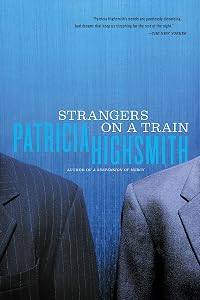
Patricia Highsmith wrote twenty-one novels including "Strangers on a Train" & the "Ripley" series. She died in 1995 in Switzerland, where she resided much of her life. (Publisher Provided) Patricia Highsmith (January 19, 1921 -- February 4, 1995) was an American novelist and short story writer, most widely known for her psychological thrillers, show more which led to more than two dozen film adaptations. She was born in Fort Worth, Texas. Highsmith grew up with her maternal grandmother in Astoria, Queens, and attended Barnard College. Her first novel, Strangers on a Train (1950), was adapted for stage and screen numerous times, notably by Alfred Hitchcock in 1951. In addition to her acclaimed series about murderer Tom Ripley, which was made into a film in 1955, she wrote many short stories, often macabre, satirical or tinged with black humor. Highsmith liked to examine the ways in which people can get to the point where they are capable of murder, as well as who they become after they have committed a crime. In carefully constructed stories and novels, she integrated this scrutiny of the human psyche into complex plots that often took unexpected twists. In Strangers on a Train, architect Guy Haines meets Charles Bruno on a train. Bruno conceives a plan to have Haines kill Bruno's father, while Bruno will kill Haines's wife. The effect that this plan has on Haines is the focus of the story. Highsmith's awards include: O. Henry Award for best publication of first story, for "The Heroine" in Harper's Bazaar (1946), Grand Prix de Littérature Policière, for The Talented Mr. Ripley (1957), and the Dagger Award -- Category Best Foreign Novel, for The Two Faces of January from the Crime Writers' Association of Great Britain (1964). Highsmith died of aplastic anemia and cancer in Locarno, Switzerland, at age 74. Her last novel, Small G: A Summer Idyll, was published one month after her death in 1995. (Bowker Author Biography) show less
Series

Belongs to Publisher Series
Work Relationships
Common Knowledge
- Canonical title
- The Talented Mr. Ripley | Ripley Under Ground | Ripley's Game
- People/Characters
- Tom Ripley
- Related movies
- Plein soleil (1960 | IMDb); The Talented Mr. Ripley (1999 | IMDb); Ripley Under Ground (2005 | IMDb); Der amerikanische Freund (1977 | IMDb); Ripley's Game (2002 | IMDb)
- Blurbers
- Vidal, Gore; Greene, Graham
- Disambiguation notice
- This is a collection of only the first 3 (of 5) Ripley novels: The Talented Mr. Ripley, Ripley Underground, and Ripley's Game.
Classifications
Statistics
- Members
- 953
- Popularity
- 27,871
- Reviews
- 17
- Rating
- (4.19)
- Languages
- English, French, Norwegian (Bokmål), Swedish
- Media
- Paper
- ISBNs
- 9
- ASINs
- 2