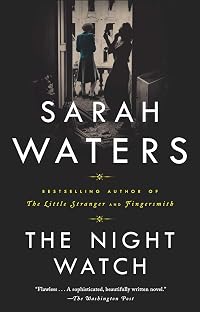
The Night Watch
by Sarah Waters
On This Page
Description
Former ambulance driver Kay lives life fast, wandering the war-torn streets and hunting for other women. Kind and clever Helen guards her secrets--and her lover--closely. Glamorous Viv remains utterly devoted, for better or worse, to the soldier she adores. And Duncan fights to make a new life for himself after spending time in prison. As these four people survive the devastation of war and the experience life's dizzying highs, their paths cross in ways none of them can forsee.Tags
Recommendations




















Member Recommendations

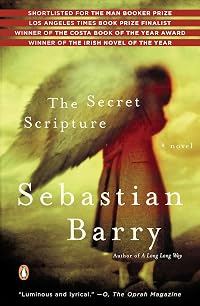
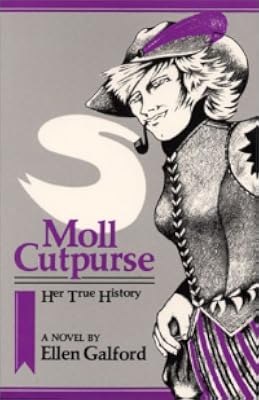
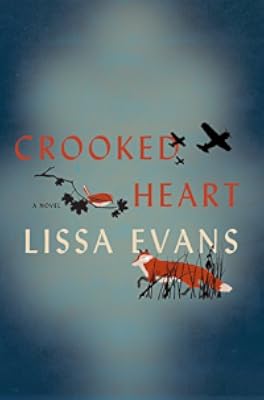
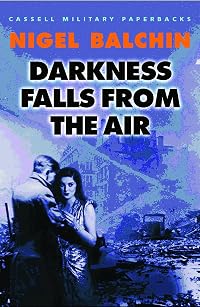
jayne_charles Both employ reverse chronology to tell a story with its roots in WWII

kiwiflowa both have female protagonists and are about the London Blitz during WWII
13
Member Reviews
Sarah Waters has created a very moving, and erotic, tale of how several lives are interwoven. The setting is in London during World War II and traces backwards how a small group of people came to be associated with each other. My previous exposure to Ms Waters’ was through film adaptations of two of her other novels, Fingersmith and Tipping the Velvet, so I was not surprised that she continues her theme of love between women, but I was delighted to find her prose very delicate and fluid.
One unsettling aspect of the book is the author does not treat time in a strictly linear fashion, she bounces around from post WWII, to the middle of WWII and then to the beginnings of WWII. Within each era, time does flows in a forward direction, but show more the jumps backward are abrupt. Once the narrative begins again, however, the reader is quickly oriented to where you are and becomes immersed in the detail. This trick of chronology helps heighten the action of the characters and works very effectively on the reader.
I mentioned this is an erotic story, but the eroticism is secondary to the real love, and betrayal, between the main characters. We also learn that not all love translates to a physical act, either. There is a friendship between two of the characters, Duncan and Alec, which is revealed as love, yet it is not the physical love we are expecting to have occurred between them, yet it is not totally platonic either. To say more would spoil one of the twists in this plot.
With the extreme character development Sarah Waters has imparted to her protagonists, this novel is elevated above a novel of erotic love. The sex, while relevant to the story, it is secondary to the underlying relationships of the characters. If you are looking for a read full of cheap thrills, this is not your novel. If you are offended by same sex love scenes, this is not for you either. If you are still with me, try this for something seriously different. It is a deep story of a very trying time and shows how the many aspects of friendship will get someone through those trying times. Well worth the reading. show less
One unsettling aspect of the book is the author does not treat time in a strictly linear fashion, she bounces around from post WWII, to the middle of WWII and then to the beginnings of WWII. Within each era, time does flows in a forward direction, but show more the jumps backward are abrupt. Once the narrative begins again, however, the reader is quickly oriented to where you are and becomes immersed in the detail. This trick of chronology helps heighten the action of the characters and works very effectively on the reader.
I mentioned this is an erotic story, but the eroticism is secondary to the real love, and betrayal, between the main characters. We also learn that not all love translates to a physical act, either. There is a friendship between two of the characters, Duncan and Alec, which is revealed as love, yet it is not the physical love we are expecting to have occurred between them, yet it is not totally platonic either. To say more would spoil one of the twists in this plot.
With the extreme character development Sarah Waters has imparted to her protagonists, this novel is elevated above a novel of erotic love. The sex, while relevant to the story, it is secondary to the underlying relationships of the characters. If you are looking for a read full of cheap thrills, this is not your novel. If you are offended by same sex love scenes, this is not for you either. If you are still with me, try this for something seriously different. It is a deep story of a very trying time and shows how the many aspects of friendship will get someone through those trying times. Well worth the reading. show less
Stories of several intertwined people. starting in post-war London and going backwards. In 1947 they're adjusting to post-war life. Someone remarks on how during the war, everybody was so kind and helpful to each other, just as in the Rebecca Solnit book I read recently. As the book moves backwards in time various things are revealed. Each of the characters has their own secrets and I liked seeing how relationships changed – had changed – in ways I didn't expect. There were also great descriptions of wartime life – ambulance drivers, air raids, a huge fire.
I liked it a lot, though at the end I was frustrated, hoping it would circle back to 1947 and we'd see what became of the characters, if changes hinted at the end of the first show more section came to pass. I'm still thinking about all the characters, comparing now and then, and re-read the earlier chapters to glean hints. I like feeling this engaged by a book.
The scene where Kay is certain that Helen has been killed by a bomb, and rushes to the scene, is very exciting and well written - the way Mickie helps her, the description of the fire and the firefighters. But don't we know, the whole time, that Helen's perfectly fine - because she's with Julia? So it's kind of an anticlimax.
One thing that was really wrong was the suicide scene between Alec and Duncan. It didn't work because we hadn't seen Alec before this, hadn't seen anything of his and Duncan's relationship. He tells Fraser everyone thinks Alec was his boyfriend, but he wasn't, and we don't see much more of him. Had he always been impulsive, always been able to convince Duncan to go along with his schemes? Beyond that, it just wasn't believable. "I've been called up - what am I going to do? I know, I'll kill myself - you do it too - that will convince them that war is wrong!" "I say, that's a wizard idea!"
Duncan's portrayed as an utterly passive character. He moved in with Mr Mundy and is having some kind of sexual relationship - that he doesn't like - with him. After Fraser re-enters his life, we see him putting on Brylcream and leaving his shirt open, the way Fraser does. So it's possible his relationship with Alec was the same, and going along with the suicide idea is in character, but I wasn't convinced.
I re-read the earlier chapters because I didn't understand what happened in the kitchen. After Alec made the cut and bled to death, what did Duncan do - get hysterical? make an attempt that failed? lose his nerve entirely? In 1944 when he's talking to Fraser he can't tell him "the simple truth" which I guess is that he couldn't go through with it. I wish I knew more about the law at that time - was he prosecuted for attempting suicide because he signed the note? Or is it that he aided a suicide, or what?
Other reviewers complain about something else that I think she got absolutely right: that Viv and Reggie are still together in 1947 despite how he abandoned her at the hospital after the abortion. Why is she still with this cad? Because that's exactly what people do, make excuses and stay with someone even though they do awful things. Maybe she likes the excitement, maybe she likes having the freedom of not being married to him, maybe she really is in love. Now in 1947, maybe seeing Kay and remembering why she gave her the ring is going to galvanize her to end it. She does say to Fraser "...what she'd done for me, you see, made me think of something else, that I didn't want to remember" and she feels like she could do anything. Will she and Fraser get together? I like to think so.
show less
I liked it a lot, though at the end I was frustrated, hoping it would circle back to 1947 and we'd see what became of the characters, if changes hinted at the end of the first show more section came to pass. I'm still thinking about all the characters, comparing now and then, and re-read the earlier chapters to glean hints. I like feeling this engaged by a book.
One thing that was really wrong was the suicide scene between Alec and Duncan. It didn't work because we hadn't seen Alec before this, hadn't seen anything of his and Duncan's relationship. He tells Fraser everyone thinks Alec was his boyfriend, but he wasn't, and we don't see much more of him. Had he always been impulsive, always been able to convince Duncan to go along with his schemes? Beyond that, it just wasn't believable. "I've been called up - what am I going to do? I know, I'll kill myself - you do it too - that will convince them that war is wrong!" "I say, that's a wizard idea!"
Duncan's portrayed as an utterly passive character. He moved in with Mr Mundy and is having some kind of sexual relationship - that he doesn't like - with him. After Fraser re-enters his life, we see him putting on Brylcream and leaving his shirt open, the way Fraser does. So it's possible his relationship with Alec was the same, and going along with the suicide idea is in character, but I wasn't convinced.
I re-read the earlier chapters because I didn't understand what happened in the kitchen. After Alec made the cut and bled to death, what did Duncan do - get hysterical? make an attempt that failed? lose his nerve entirely? In 1944 when he's talking to Fraser he can't tell him "the simple truth" which I guess is that he couldn't go through with it. I wish I knew more about the law at that time - was he prosecuted for attempting suicide because he signed the note? Or is it that he aided a suicide, or what?
Other reviewers complain about something else that I think she got absolutely right: that Viv and Reggie are still together in 1947 despite how he abandoned her at the hospital after the abortion. Why is she still with this cad? Because that's exactly what people do, make excuses and stay with someone even though they do awful things. Maybe she likes the excitement, maybe she likes having the freedom of not being married to him, maybe she really is in love. Now in 1947, maybe seeing Kay and remembering why she gave her the ring is going to galvanize her to end it. She does say to Fraser "...what she'd done for me, you see, made me think of something else, that I didn't want to remember" and she feels like she could do anything. Will she and Fraser get together? I like to think so.
In The Night Watch, Sarah Waters has created tension and mystery by peering backwards into the past - beginning in 1947 and regressing back in time so that the end of the novel is actually the beginning of the story. This structure is at once unsettling and fascinating.
The novel spins around four Londoners and their significant others and explores the impact of war on relationships. The reader is introduced to each character - Kay, Helen, Viv and Viv's brother, Duncan - immediately following WWII in the year 1947. Each character carries secrets and is struggling with events in their history which are undisclosed to the reader. As the novel progresses, Waters carefully unwraps the past, drawing the threads of the characters' lives show more together to create a stunning expose about sexuality and the tenuous nature of love amid the historical significance of war.
One of the aspects of the novel which touched me was the exploration of the repercussions of war on youth.
Waters' prose - nuanced and full of empathy for her characters - is a bit like reading a narrative poem. Her descriptions set the reader into the novel, revealing the beauty of the human spirit amid the horror of night-time air raids and causalities. The story is a beautifully rendered, character driven look at World War II from 1941 to 1947.
The Night Watch was shortlisted for the Booker and Orange Prizes - and it is easy to see why. This was my first Sarah Waters novel, but it will not be my last.
Highly recommended; rated 4.5/5 show less
The novel spins around four Londoners and their significant others and explores the impact of war on relationships. The reader is introduced to each character - Kay, Helen, Viv and Viv's brother, Duncan - immediately following WWII in the year 1947. Each character carries secrets and is struggling with events in their history which are undisclosed to the reader. As the novel progresses, Waters carefully unwraps the past, drawing the threads of the characters' lives show more together to create a stunning expose about sexuality and the tenuous nature of love amid the historical significance of war.
One of the aspects of the novel which touched me was the exploration of the repercussions of war on youth.
Waters' prose - nuanced and full of empathy for her characters - is a bit like reading a narrative poem. Her descriptions set the reader into the novel, revealing the beauty of the human spirit amid the horror of night-time air raids and causalities. The story is a beautifully rendered, character driven look at World War II from 1941 to 1947.
The Night Watch was shortlisted for the Booker and Orange Prizes - and it is easy to see why. This was my first Sarah Waters novel, but it will not be my last.
Highly recommended; rated 4.5/5 show less
The Night Watch follows the intertwined lives of several people -- mostly women -- in London during and after WWII. All of whom have secrets, or parts of their lives the rest of the world would consider unacceptable: homosexuality, affairs, a stint in jail...
It's an interestingly structured novel, as it's divided into three parts, each of which takes place three years before the previous one, making it a sort of journey backwards through these characters' lives. It's a structure that works remarkably well; I was always interested in what was happening to the characters at the current point in the narrative, but also curious to learn the details of past events and what led them from point A to point B. And the way the novel leaves us show more with the beginnings of things we've already seen the ending (or at least the evolution) of is rather poignant.
I didn't find it quite as addictively compelling as the other two of Waters' novels that I've read -- Fingersmith and The Little Stranger -- but for a novel that's character- rather than plot-based, it's a remarkably fast read. And I find myself extremely impressed, this time, by how well Waters captures ordinary, realistic, awkward moments, in relationships in sex, and in life. There were a few places where I found that realism almost painful, but always in a good way. show less
It's an interestingly structured novel, as it's divided into three parts, each of which takes place three years before the previous one, making it a sort of journey backwards through these characters' lives. It's a structure that works remarkably well; I was always interested in what was happening to the characters at the current point in the narrative, but also curious to learn the details of past events and what led them from point A to point B. And the way the novel leaves us show more with the beginnings of things we've already seen the ending (or at least the evolution) of is rather poignant.
I didn't find it quite as addictively compelling as the other two of Waters' novels that I've read -- Fingersmith and The Little Stranger -- but for a novel that's character- rather than plot-based, it's a remarkably fast read. And I find myself extremely impressed, this time, by how well Waters captures ordinary, realistic, awkward moments, in relationships in sex, and in life. There were a few places where I found that realism almost painful, but always in a good way. show less
I found The Night Watch by Sarah Waters one of the most interesting books I have read about London during the war. The book follows an assorted group of people and drifts back and forth in time from 1947 to 1944 and finally to the catalyst year of 1941. These Londoners are loosely connected and we follow them through their desires, their guilt, their regrets. Although many of the characters are gay this is not a story about ones’ sexual preference, rather that of people trying to live their lives in a London that has been changed by war.
With Sarah Waters, one must be patient, she is wordy and her books are long and could probably do with some tighter editing, but the reward is there, a gem of a story just waiting to be discovered. show more This author writes beautifully, and has the ability to move her readers while she also educates. I can’t promise that the reader will find many characters that are truly likeable, but they are all very much alive and living lives that engaged my attention thoroughly. I know there are many that find her work a real slog to get through, but I really relished her unique point of view and enjoyed puzzling this story out.
The Night Watch is an historical novel that is rich in period details and with a few strokes of her pen she is able to place her readers on the dark streets of London during the air raids or at a government Ministry working in a typing pool. The story is complex, filled with twists and rather sad. At the end of the story, which is really the beginning, it’s almost impossible not to start in again and read the beginning, which is really the end. show less
With Sarah Waters, one must be patient, she is wordy and her books are long and could probably do with some tighter editing, but the reward is there, a gem of a story just waiting to be discovered. show more This author writes beautifully, and has the ability to move her readers while she also educates. I can’t promise that the reader will find many characters that are truly likeable, but they are all very much alive and living lives that engaged my attention thoroughly. I know there are many that find her work a real slog to get through, but I really relished her unique point of view and enjoyed puzzling this story out.
The Night Watch is an historical novel that is rich in period details and with a few strokes of her pen she is able to place her readers on the dark streets of London during the air raids or at a government Ministry working in a typing pool. The story is complex, filled with twists and rather sad. At the end of the story, which is really the beginning, it’s almost impossible not to start in again and read the beginning, which is really the end. show less
The Night Watch is Sarah Water's fourth novel, and marks a departure from her usual Victorian subject matter. It is a brave choice for a writer to take such a deliberate step away from the very material which won her many fans and garnered heaps of praise from reviewers and much sought-after spots on the Booker and Orange Prize shortlists. Whether it was a calculated risk or not must remain with Waters and her publisher; for the reader, however, the risk has paid off. This novel should cement Waters' reputation as an elegant and consummate storyteller, regardless of the subject matter.
The novel centers around a group of young people in London during World War II. Its structure ambitiously moves backwards in time, beginning in 1947, and show more then tunneling backwards to 1944 and 1941. It is an unusual approach, but one that Waters deftly manages.
In 1947, we meet Kay, a bright, mannish young woman who lives in an upper floor in Mr. Leonard's house. She roams the streets of London , and lurks in the cinemas for hours, in a state of furtive desperation.
Duncan escorts Mr. Mundy, or Uncle Horace, to Mr. Leonard's house on a weekly basis, so that Uncle Horace can receive Mr. Leonard's own particular brand of “medicinal treatment'” – the laying on of hands and peculiar administration of vocalized affirmations designed to heal Uncle Horace's afflictions – in the manner of Mary Baker Eddy.
Duncan is an old man living in a young man's body, voluntarily living in a stultified, passive world, beyond time or age, with Uncle Horace. He works at a candle factory, and holds himself apart from his more uproarious and carefree co-workers. His is an almost solitary life.
Helen works at a matchmaking agency with Duncan 's sister, Viv. Each woman guards her own secret – Helen, that her roommate Julia is, in fact, her lover, and Viv, that she is involved with a married man. Nonetheless, they work together companionably, attempting to pair up London 's lonely and brokenhearted.
Helen's partner, Julia, is a writer of some renown, producing crime fiction. A London radio producer, Ursula Waring, takes Julia under her wing and publicizes her work on her radio show. Helen is intensely jealous of their relationship, and frequently obsesses over whether or not Julia is cheating on her. This feeling is irrationally fed by Helen's belief that she is, in some vague way, unworthy of Julia's love.
After establishing the characters' loves, labors, and liaisons in 1947, following the war, Waters shifts backwards in time to 1944, when London was on the perpetual verge of attack, or recovering from the previous one. Interpersonal relationships are shifted, revealing how the various characters meet, shedding light on their past histories – also revealing Waters' mastery of foreshadowing, the dropping of subtle clues in the first section of the novel.
The novel jumps back once more, to 1941, and in this section, Waters reveals key scenes that further explain the idiosyncrasies of her characters and the coincidences they find themselves in.
It is a testament to Waters' skills as a storyteller that she is able to pull off the feat of a tale that moves backwards in time. Ordinarily, readers want to know what happens next – is there a “happily ever after” for the characters they have grown to care about? In The Night Watch, the reader never learns about what happens to the characters after 1947. They don't get the “what next;” it is left to their imaginations. Instead, they get the “why.” Delving into each of the characters' intertwined pasts, Waters shows the reader why the events in 1947 came to pass as they did. With other authors, this might seem like a pointless exercise, but not with Sarah Waters.
Sarah Waters' impeccable research skills are also on display with this novel, though perhaps this took a bit more work since she couldn't simply draw on her years as a graduate student in Victorian studies. Walls are “done in lincrusta, painted a glossy chocolate brown.” Mr Leonard owns a “luster bowl, very beautiful, with a design of serpents and fruits.” Authenticity is complete, right down to the characters' lingo. Reggie asks Viv, “Have you gone barmy?” Viv's friend Betty tries to get her to go to a military party being organized by a friend, Jean, and Jean describes the event by saying, “All those boys are after is a few swell-looking girls in tight sweaters.”
It's not surprising that every one of Sarah Waters' previous novels have been made into movies. Her controlled handling of plot, minute attention to detail, and keen eye for visualization, all contribute to the sense that the reader is right there in the action, savoring every nuance as the story unfolds ahead (or in this case, backwards). It seems almost guaranteed that The Night Watch will be made into a movie as well.
This novel is a magnificent achievement, and is perhaps Waters' finest work to date. It should secure her a spot on the 2006 Booker Prize shortlist, and hopefully will win many new fans of her work. show less
The novel centers around a group of young people in London during World War II. Its structure ambitiously moves backwards in time, beginning in 1947, and show more then tunneling backwards to 1944 and 1941. It is an unusual approach, but one that Waters deftly manages.
In 1947, we meet Kay, a bright, mannish young woman who lives in an upper floor in Mr. Leonard's house. She roams the streets of London , and lurks in the cinemas for hours, in a state of furtive desperation.
Duncan escorts Mr. Mundy, or Uncle Horace, to Mr. Leonard's house on a weekly basis, so that Uncle Horace can receive Mr. Leonard's own particular brand of “medicinal treatment'” – the laying on of hands and peculiar administration of vocalized affirmations designed to heal Uncle Horace's afflictions – in the manner of Mary Baker Eddy.
Duncan is an old man living in a young man's body, voluntarily living in a stultified, passive world, beyond time or age, with Uncle Horace. He works at a candle factory, and holds himself apart from his more uproarious and carefree co-workers. His is an almost solitary life.
Helen works at a matchmaking agency with Duncan 's sister, Viv. Each woman guards her own secret – Helen, that her roommate Julia is, in fact, her lover, and Viv, that she is involved with a married man. Nonetheless, they work together companionably, attempting to pair up London 's lonely and brokenhearted.
Helen's partner, Julia, is a writer of some renown, producing crime fiction. A London radio producer, Ursula Waring, takes Julia under her wing and publicizes her work on her radio show. Helen is intensely jealous of their relationship, and frequently obsesses over whether or not Julia is cheating on her. This feeling is irrationally fed by Helen's belief that she is, in some vague way, unworthy of Julia's love.
After establishing the characters' loves, labors, and liaisons in 1947, following the war, Waters shifts backwards in time to 1944, when London was on the perpetual verge of attack, or recovering from the previous one. Interpersonal relationships are shifted, revealing how the various characters meet, shedding light on their past histories – also revealing Waters' mastery of foreshadowing, the dropping of subtle clues in the first section of the novel.
The novel jumps back once more, to 1941, and in this section, Waters reveals key scenes that further explain the idiosyncrasies of her characters and the coincidences they find themselves in.
It is a testament to Waters' skills as a storyteller that she is able to pull off the feat of a tale that moves backwards in time. Ordinarily, readers want to know what happens next – is there a “happily ever after” for the characters they have grown to care about? In The Night Watch, the reader never learns about what happens to the characters after 1947. They don't get the “what next;” it is left to their imaginations. Instead, they get the “why.” Delving into each of the characters' intertwined pasts, Waters shows the reader why the events in 1947 came to pass as they did. With other authors, this might seem like a pointless exercise, but not with Sarah Waters.
Sarah Waters' impeccable research skills are also on display with this novel, though perhaps this took a bit more work since she couldn't simply draw on her years as a graduate student in Victorian studies. Walls are “done in lincrusta, painted a glossy chocolate brown.” Mr Leonard owns a “luster bowl, very beautiful, with a design of serpents and fruits.” Authenticity is complete, right down to the characters' lingo. Reggie asks Viv, “Have you gone barmy?” Viv's friend Betty tries to get her to go to a military party being organized by a friend, Jean, and Jean describes the event by saying, “All those boys are after is a few swell-looking girls in tight sweaters.”
It's not surprising that every one of Sarah Waters' previous novels have been made into movies. Her controlled handling of plot, minute attention to detail, and keen eye for visualization, all contribute to the sense that the reader is right there in the action, savoring every nuance as the story unfolds ahead (or in this case, backwards). It seems almost guaranteed that The Night Watch will be made into a movie as well.
This novel is a magnificent achievement, and is perhaps Waters' finest work to date. It should secure her a spot on the 2006 Booker Prize shortlist, and hopefully will win many new fans of her work. show less
Set in 1940s London, The Night Watch revolves around the lives of four people: Kay, Helen, Vivien, and Duncan. The book opens in 1947; each character has experienced the dramatic impact of World War II, living through bombings and coping with loss. Duncan is an ex-con working a menial job. Duncan's sister Vivien is having an affair with a married man. Helen is in a committed but troubled relationship with another character, Julia. Kay is leading a somewhat aimless and lonely existence.
Sarah Waters spends nearly 200 pages building up each of these characters, whose lives appear to be independent from each other. But there is much Waters leaves unsaid. Just as I was wondering where all this was going, Waters employed a very interesting show more device: she took me backwards in time. Part 2 of The Night Watch is set in 1944, and there the reader learns much more about each character's history. Some of the connections between characters are explained. In part 1, Vivien briefly encounters Kay and gives her something she's had for a long time. It seems like a minor detail. But in part 2, a particularly harrowing sequence reveals the significance of the encounter in part 1. Part 3, set in 1941, portrays the protagonists at the time of the Blitz, explains how Duncan came to spend time in prison, and provides the backdrop for romantic relationships in place during parts 1 and 2.
It's an effective technique. Moving in reverse allows Waters to show only the most essential details of the past. She weaves a rich tapestry of characters and relationships. And she writes about lesbian love in a refreshingly candid way. The erotic scenes are no more or less explicit than fiction about heterosexual relationships. And they are not there to titillate, but to say, "hey, this is what happens, this is normal." I do believe this type of candor is, in some way, advancing societal understanding and acceptance of gay and lesbian relationships.
However, there was one flaw in The Night Watch: the lavatory figured far too prominently in the story. I know that every character in a novel needs to pee now and then. But does the reader really need to be informed? A couple made love and then one person "went to the lavatory." Someone would "need to use the lavatory" before leaving home. Or, a character would be sitting in their quiet house late at night and hear their partner upstairs, washing up and using the lavatory. A lavatory even featured in the aftermath of a bombing, although it was not being used at the time. What was that about? It really drove me crazy and caused me to knock half a star off the rating of an otherwise good book. show less
Sarah Waters spends nearly 200 pages building up each of these characters, whose lives appear to be independent from each other. But there is much Waters leaves unsaid. Just as I was wondering where all this was going, Waters employed a very interesting show more device: she took me backwards in time. Part 2 of The Night Watch is set in 1944, and there the reader learns much more about each character's history. Some of the connections between characters are explained. In part 1, Vivien briefly encounters Kay and gives her something she's had for a long time. It seems like a minor detail. But in part 2, a particularly harrowing sequence reveals the significance of the encounter in part 1. Part 3, set in 1941, portrays the protagonists at the time of the Blitz, explains how Duncan came to spend time in prison, and provides the backdrop for romantic relationships in place during parts 1 and 2.
It's an effective technique. Moving in reverse allows Waters to show only the most essential details of the past. She weaves a rich tapestry of characters and relationships. And she writes about lesbian love in a refreshingly candid way. The erotic scenes are no more or less explicit than fiction about heterosexual relationships. And they are not there to titillate, but to say, "hey, this is what happens, this is normal." I do believe this type of candor is, in some way, advancing societal understanding and acceptance of gay and lesbian relationships.
However, there was one flaw in The Night Watch: the lavatory figured far too prominently in the story. I know that every character in a novel needs to pee now and then. But does the reader really need to be informed? A couple made love and then one person "went to the lavatory." Someone would "need to use the lavatory" before leaving home. Or, a character would be sitting in their quiet house late at night and hear their partner upstairs, washing up and using the lavatory. A lavatory even featured in the aftermath of a bombing, although it was not being used at the time. What was that about? It really drove me crazy and caused me to knock half a star off the rating of an otherwise good book. show less
Members
- Recently Added By
Lists

The Guardian's 1000 Novels Everyone Must Read
1,005 works; 547 members

Best Historical Fiction
620 works; 261 members

Favourite Women's Prize for Fiction, Orange & Bailey's Prize contenders
132 works; 52 members

Favourite Booker Prize contenders
73 works; 21 members

Best Lesbian Fiction (And Narrative Non-Fiction)
155 works; 36 members

Best 21st Century Books (So Far)
670 works; 86 members
Booker Prize
491 works; 62 members

Women in War
148 works; 30 members

Best Books Set in London
157 works; 41 members

Recommend the 20 best books you've read in the last five years
2,168 works; 602 members

Female Author
1,235 works; 67 members

Top Five Books of 2020
982 works; 348 members

Books about World War II
241 works; 22 members

Literature About Women and Girls
394 works; 39 members

Books Read in 2015
3,299 works; 129 members

Top Five Books of 2015
811 works; 240 members

Man Booker Prize Longlist 2006
19 works; 2 members

Urban Fiction
74 works; 7 members
Books Read in 2016
4,666 works; 197 members

Good LGBT fiction for LGBT folk and friends
546 works; 54 members

Booker Prize Shortlist: Titles Not Yet Read
161 works; 4 members

Retrospective of Historical Fiction
48 works; 7 members

Books Set in London
49 works; 3 members

Llibres que he llegit el 2007
24 works; 1 member

Books Read in 2018
4,360 works; 110 members

Books Read in 2012
816 works; 34 members

Top Five Books of 2025
954 works; 303 members

Allie's 2015 Reading List
33 works; 1 member

Books With Time Words in the Title
160 works; 4 members

Lesbian young adult fiction
50 works; 1 member
Books read in 2015
213 works; 5 members

Queer Fiction (Owned TBR)
142 works; 1 member

Novels that you shouldn't waste your time on
94 works; 52 members

Best War Stories
87 works; 16 members
Talk Discussions
Past Discussions
The Night Watch: 1940s vocabulary in One LibraryThing, One Book (June 2015)
Author Information

8+ Works 31,644 Members
Sarah Waters was born in Wales in 1966. She has a Ph.D. in English. She is the author of several books including Tipping the Velvet, Affinity, The Night Watch, and The Paying Guests. Fingersmith won the CWA Ellis Peters Dagger Award for Historical Crime Fiction and the South Bank Show Award for Literature. She has won a Betty Trask Award and the show more Somerset Maugham Award. In 2003, she was chosen as one of Granta's Best of Young British Novelists and was named Author of the Year by the British Book Awards, The Booksellers' Association and Waterstone's Booksellers. Several of her novels have been adapted for television. (Bowker Author Biography) show less
Some Editions
Awards and Honors
Awards
Series
Belongs to Publisher Series
Keltainen pokkari (77)
Keltainen kirjasto (382)
Work Relationships
Has the adaptation
Common Knowledge
- Canonical title*
- De nachtwacht
- Original title
- The Night Watch
- Original publication date
- 2006
- People/Characters
- Kay Langrish; Helen Giniver; Duncan Pearce; Viv Pearce; Reggie Nigri; Julia Standing (show all 9); Mickey Carmichael; Robert Fraser; Mr. Mundy
- Important places
- London, England, UK
- Important events
- World War II; The Blitz
- Related movies
- The Night Watch (2011 | IMDb)
- Dedication
- To Lucy Vaughan
- First words
- So this, said Kay to herself, is the sort of person you've become: a person whose clocks and wrist-watches have stopped, and who tells the time, instead, by the particular kind of cripple arriving at her landlord's ... (show all)door.
- Quotations
- "But, isn't it funny -- we never seem to love the people we ought to."
- Last words
- (Click to show. Warning: May contain spoilers.)Kay brushed a little longer, then moved her hand to the curve of Helen's jaw and cupped it with her palm--not wanting to leave her, after all; unable to believe that something so fresh and so unmarked could have emerged from so much chaos.
- Original language
- English
- Canonical DDC/MDS
- 823.914
- Canonical LCC
- PR6073.A828
*Some information comes from Common Knowledge in other languages. Click "Edit" for more information.
Classifications
Statistics
- Members
- 4,650
- Popularity
- 3,102
- Reviews
- 157
- Rating
- (3.69)
- Languages
- 23 — Catalan, Czech, Danish, Dutch, English, Finnish, French, German, Galician, Greek, Hebrew, Italian, Japanese, Norwegian (Bokmål), Norwegian, Polish, Portuguese, Russian, Croatian, Spanish, Swedish, Turkish, Chinese, traditional
- Media
- Paper, Audiobook, Ebook
- ISBNs
- 58
- ASINs
- 21