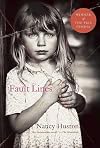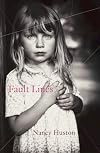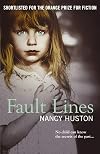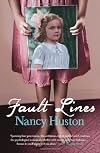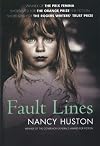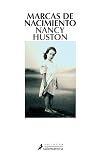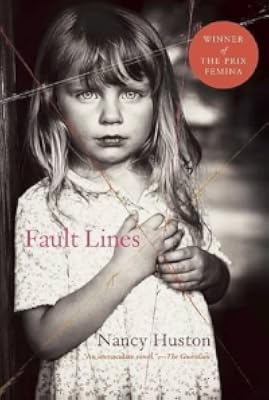
Fault Lines
by Nancy Huston
On This Page
Description
Sol is a gifted but also terrifying six year old; his mother believes he is destined for greatness. He has a birthmark, like his dad, his grandmother and great-grandmother. But when they all make an unexpected trip to Germany, terrible secrets emerge about their family's story during World War II. Perhaps birthmarks are not all that has been passed down through this family. With its domestic focus but epic scope, Fault Lines is a compelling, touching and often funny novel about four show more generations of children and their parents. From California to New York, from Haifa to Toronto and Munich, the secrets unwind back through time, the present haunted by the past, until the devastating truth is reached. show lessTags
Recommendations













Member Recommendations
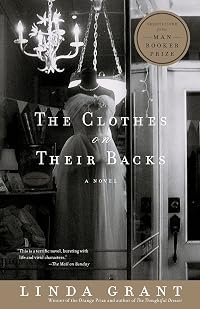
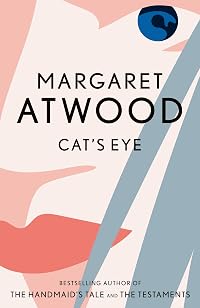
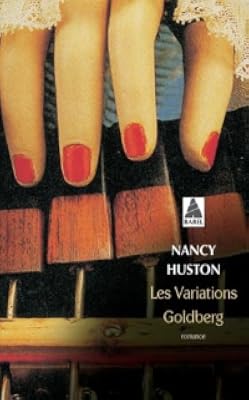
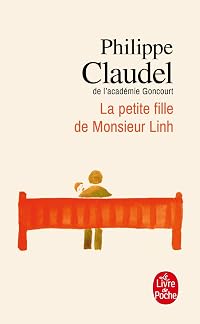
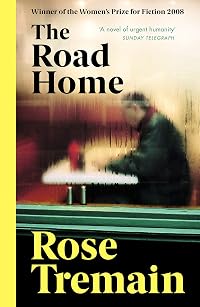
jayne_charles Both employ reverse chronology to tell a story with its roots in WWII
Member Reviews
This multi-generational family saga explores the impact of World War II and Nazi Germany, from some very unusual angles. It's told through the eyes of four 6-year-olds, each from a different generation. The reader meets each generation through Sol, a precocious boy living in California in 2004. His father Randall works as a computer programmer, and circumstances have recently forced him to take a job with higher pay but a much longer commute. Randall has a distant relationship with his mother, Sadie, and is closer to his grandmother, Erra, a professional singer known as Kristina in her youth. Sol's section of the novel ends as the entire family arrives in Germany to visit Erra's dying sister.
From there, author Nancy Huston takes us back show more to 1945 one generation at a time, from Randall to Sadie to Kristina (all age 6). She peels the onion of family relationships and secrets to show how they came to North America, and the physical and emotional toll wrought by the Nazi regime. I can't say much without spoilers, but their story was not at all what I expected. Judaism and Nazi atrocities played a part, but in unusual ways. And both the family tree and the inter-generational relationships were much more intricate than they first appeared.
I found Erra/Kristina the most interesting character, perhaps because she appeared in each generation's story. She arrived on the scene first as a staunchly independent elderly woman who dearly loves her great-grandson, and is appalled at some of his parents' philosophies. She despairs over their plans to surgically remove a birthmark. Her fears seem irrational, but by the time Kristina appeared as a child, I understood the birthmark's significance and her modern-day reaction was completely understandable. Fault Lines was filled with revelations like this, that really drove home the importance of understanding the societal and familial forces that shape each generation. This was a well-written, enjoyable, and thought-provoking novel. show less
From there, author Nancy Huston takes us back show more to 1945 one generation at a time, from Randall to Sadie to Kristina (all age 6). She peels the onion of family relationships and secrets to show how they came to North America, and the physical and emotional toll wrought by the Nazi regime. I can't say much without spoilers, but their story was not at all what I expected. Judaism and Nazi atrocities played a part, but in unusual ways. And both the family tree and the inter-generational relationships were much more intricate than they first appeared.
I found Erra/Kristina the most interesting character, perhaps because she appeared in each generation's story. She arrived on the scene first as a staunchly independent elderly woman who dearly loves her great-grandson, and is appalled at some of his parents' philosophies. She despairs over their plans to surgically remove a birthmark. Her fears seem irrational, but by the time Kristina appeared as a child, I understood the birthmark's significance and her modern-day reaction was completely understandable. Fault Lines was filled with revelations like this, that really drove home the importance of understanding the societal and familial forces that shape each generation. This was a well-written, enjoyable, and thought-provoking novel. show less
Fault Lines, by Nancy Huston, is a riveting fast read. She takes one aspect of Hitler’s atrocities and brings it to life – that of stealing Aryan babies and children (be they Polish, Ukranian, Jewish or not, 200,000 of them!) and giving them to good German households to raise. This novel gets inside the heads of not only those stolen, but those around them, as well as the future generations of these stolen children. Thus giving a thoughtful look at the multi-generational impact of such a terrible war atrocity and how it may still be playing out in our lives today, very possibly unbeknownst to us. The violence skirts the main text so you’re not wholly immersed in blood and gore, but you know it’s out there, as seen through the show more mind of a six year old. .Huston has a great writing style, low-key yet poignant, and a fluid capacity to delve into the mind of a six year old, making it seem completely rational from their perspective. It’s refreshing to read a novel about WWII fallout that focuses on something other than battles and concentration camps. MAT show less
Holy cow, what a great book. The only thing I knew about it going in is that one of my least favorite book club members recommended it along with the execrable Poet of Baghdad. It is family history, told by one generation in each part.
Huston unfolded the narrative, the pacing and gradual revelations, masterfully, and the reverse development of her characters was fascinating. In the first section, you meet the youngest member, his father, grandmother, and great-grandmother, and get an idea of their personalities, and then in the next section, you meet the older three when the third generation is only six and the older two that much younger. Etc.
It is hard enough to write one six-year-old's point of view for an adult novel. It staggers show more me that she wrote four. show less
Huston unfolded the narrative, the pacing and gradual revelations, masterfully, and the reverse development of her characters was fascinating. In the first section, you meet the youngest member, his father, grandmother, and great-grandmother, and get an idea of their personalities, and then in the next section, you meet the older three when the third generation is only six and the older two that much younger. Etc.
It is hard enough to write one six-year-old's point of view for an adult novel. It staggers show more me that she wrote four. show less
I picked up this book knowing nothing about it except that it was a bestseller in France, where it won the Prix Femina. The idea is intriguing; the book is divided into four parts, each subsequent section following a parent of the six-year-old child in the previous chapter, explaining their odd behaviors as parents as caused by events occurring when they were young. Each child is profoundly affected by the wars fought at the time of each story although none are in war zones. Huston writes with ease and beauty.
All the other girls are smug and competent and quick. They calmly snip away at paper snowflakes while I sweat and fret because my scissors are too dull. In the locker room they change smoothly into and out of their gym clothes show more while I struggle and blush. Their clothes are cooperative and neat, mine are rebellious: buttons jump off, stains blossom and hems surreptitiously unstitch themselves.
However, the first section is really bad. It proceeds with an angry cleverness but no heart. It's a parody that pokes fun at the characters without understanding them. The mother is a bundle of contradictions, simultaneously over-protective and oddly negligent, conflicted and stubborn, but we never discover why because the next segment concerns the passive husband. The structure means that this is really a collection of four novellas, each (except for the first) which could have been a compelling book, but remained too short, each chapter closed as I became involved in their story. Too much remained unrevealed, unspoken, unresolved.
I didn't like or dislike this book. I suspect that it won't stay with me long, despite the agile writing and the many shocking revelations. show less
All the other girls are smug and competent and quick. They calmly snip away at paper snowflakes while I sweat and fret because my scissors are too dull. In the locker room they change smoothly into and out of their gym clothes show more while I struggle and blush. Their clothes are cooperative and neat, mine are rebellious: buttons jump off, stains blossom and hems surreptitiously unstitch themselves.
However, the first section is really bad. It proceeds with an angry cleverness but no heart. It's a parody that pokes fun at the characters without understanding them. The mother is a bundle of contradictions, simultaneously over-protective and oddly negligent, conflicted and stubborn, but we never discover why because the next segment concerns the passive husband. The structure means that this is really a collection of four novellas, each (except for the first) which could have been a compelling book, but remained too short, each chapter closed as I became involved in their story. Too much remained unrevealed, unspoken, unresolved.
I didn't like or dislike this book. I suspect that it won't stay with me long, despite the agile writing and the many shocking revelations. show less
“God gave me this body and mind and I have to take the best possible care of them so I can put them to the best possible use. I know He’s got high intentions for me, otherwise I wouldn’t have been born in the wealthiest state of the wealthiest country in the world, with the most powerful weapons system capable of blasting the whole human species to kingdom come. Fortunately, God and President Bush are buddies.” (page 4)
The year is 2004 and six year old Sol, who is wise beyond his years, is pontificating about the state of the human species, among other things. He is the first of four related characters who tell the story of their childhood in Nancy Huston’s brilliant 2008 Orange Prize short listed novel, Fault Lines. Huston show more uses a variety of literary devices to tell the story of four generations of this California family. She very effectively tells the story backwards chronologically, taking us from present day California to 1980’s Hiafa, to 1960’s Toronto, to 1944 Germany. Along the way the author slowly reveals the family’s secret, by planting clues in each narrative and weaving the story together in a way that exposes the mystery as you peel away the narrative layers. Each character telling the story is about six years of age and very intelligent. Almost too intelligent; like the smartest kids I’ve ever heard of with language skills beyond belief. But if you can suspend disbelief here, you’re in for a very enjoyable read.
If I say much more I will give away the secret. So let me just say that if you like a mystery, if you enjoy peeling away layers of intrigue, if unexpected developments are right up your alley, if you like the charm of literary devices and smooth, poetic writing and excellent historical fiction, this may be the book for you. show less
The year is 2004 and six year old Sol, who is wise beyond his years, is pontificating about the state of the human species, among other things. He is the first of four related characters who tell the story of their childhood in Nancy Huston’s brilliant 2008 Orange Prize short listed novel, Fault Lines. Huston show more uses a variety of literary devices to tell the story of four generations of this California family. She very effectively tells the story backwards chronologically, taking us from present day California to 1980’s Hiafa, to 1960’s Toronto, to 1944 Germany. Along the way the author slowly reveals the family’s secret, by planting clues in each narrative and weaving the story together in a way that exposes the mystery as you peel away the narrative layers. Each character telling the story is about six years of age and very intelligent. Almost too intelligent; like the smartest kids I’ve ever heard of with language skills beyond belief. But if you can suspend disbelief here, you’re in for a very enjoyable read.
If I say much more I will give away the secret. So let me just say that if you like a mystery, if you enjoy peeling away layers of intrigue, if unexpected developments are right up your alley, if you like the charm of literary devices and smooth, poetic writing and excellent historical fiction, this may be the book for you. show less
This was an interesting and thought provoking book. Written in such a way as to follow a family backwards through time, each chapter being narrated by a member of the generation older than the previous one, it weaves its way through America, Israel and back to Germany during the war.
This method of narration was interesting, but had the limitation that just as you got to know a character they disappeared from the book altogether, as the story moved back in time to before they were born. It wasn't so much that I liked and missed the characters (it wasn't really that sort of book), but the precocious child of the first section was so gloriously obnoxious and so desperately in need of a good kicking that it was disappointing not to know show more whether he ended up getting one. show less
This method of narration was interesting, but had the limitation that just as you got to know a character they disappeared from the book altogether, as the story moved back in time to before they were born. It wasn't so much that I liked and missed the characters (it wasn't really that sort of book), but the precocious child of the first section was so gloriously obnoxious and so desperately in need of a good kicking that it was disappointing not to know show more whether he ended up getting one. show less
Fault Lines, by bilingual Canadian-born author Nancy Huston, is a brilliant, inventive, and thought-provoking literary tour-de-force, but what draws readers into this gem, and keeps their attention riveted, is Huston's masterful skill at creating and maintaining an overriding sense of quiet mystery and suspense at every turn of the page. No wonder the author's original French language version was a bestseller and won the 2006 Prix Femina. No wonder the author's English version, released last year in the U.K and Canada, was shortlisted for the 2008 Orange Prize. This is one great book!
Lost identity and the destructive fault lines that run through families are the twin themes that run through this novel. Four successive generations of show more six-year-old children narrate the story; each is the son or daughter of the next narrator. Each separate narration forms its own approximately 75-page novella. The stories intertwine like the tangled roots of a family tree to form a mysterious whole. We follow these children backwards in time, from California, to Canada, to Israel, and ultimately to Nazi Germany. Far before we get to the last narrator, we know that she was a victim of the Nazi Lebensborn program—one of thousands of Aryan-looking children who were kidnapped from their parents and taken to Germany to be raised as Germans. As the story progresses backwards in time, we pick up many pieces of a puzzle. Finally, in the end, they all come together and form a stark picture of truth.
In the beginning, we are introduced to Sol, an outlandishly disturbing young narrator. Sol is a six-year-old, one-of-a-kind 21st-century bad seed—a child with an IQ in the stratosphere, an obsession for hard-core pornography, and a personality that is edging as close to a sociopath as any normal kid can get and still have the outside chance of maturing into a psychologically stable adult. Sol is a kid who can run circles around his parents—an Arab-hating, beer-swigging, bigot of a father, and a clueless mother who caters to Sol's every whim. Sol sees himself as the all-powerful center of his own universe. But if Sol's a monster, he's as crazy as he is amusing…and, at least to this reader, wickedly endearing.
The structure of the novel is compelling, moving us backwards in time from child to parent through four generations. At first this feels awkward—to move backwards—but getting at the truth in this manner ultimately proves wholly authentic. In real life we generally stumble upon difficult questions and solve them by working backwards until we finally get at the source and uncover the truth. We know we've arrived at the truth where all the crucial pieces of the puzzle fit together and make sense.
As I write this review in mid-August 2008, Fault Lines is scheduled for its U.S. publication debut in a few weeks. Personally, I would be delighted to see this quiet intriguing literary mystery novel hit the American book market with the same rumbling earthquake that its publication produced in France…but the publisher and the author don't see it that way. They fear American readers will be turned off by the distinct anti-American shadow cast by Sol and his parents…and they have a point. Certainly some of the other reviews on this site have proven them right. The same odd character traits that caught the attention of the French and made them smile, will probably cause Americans to become uncomfortable and angry. This book will probably not be an American bestseller; however, I'm confident that literary readers will discover this book and it should sell well in that niche.
Over a year ago, there was quite a hullabaloo when the press got word that the American publisher was encouraging the author to modify her U.S. version in order to improve its marketability. I'm pleased to report that the author chose the path of literary integrity and did not take this advice. show less
Lost identity and the destructive fault lines that run through families are the twin themes that run through this novel. Four successive generations of show more six-year-old children narrate the story; each is the son or daughter of the next narrator. Each separate narration forms its own approximately 75-page novella. The stories intertwine like the tangled roots of a family tree to form a mysterious whole. We follow these children backwards in time, from California, to Canada, to Israel, and ultimately to Nazi Germany. Far before we get to the last narrator, we know that she was a victim of the Nazi Lebensborn program—one of thousands of Aryan-looking children who were kidnapped from their parents and taken to Germany to be raised as Germans. As the story progresses backwards in time, we pick up many pieces of a puzzle. Finally, in the end, they all come together and form a stark picture of truth.
In the beginning, we are introduced to Sol, an outlandishly disturbing young narrator. Sol is a six-year-old, one-of-a-kind 21st-century bad seed—a child with an IQ in the stratosphere, an obsession for hard-core pornography, and a personality that is edging as close to a sociopath as any normal kid can get and still have the outside chance of maturing into a psychologically stable adult. Sol is a kid who can run circles around his parents—an Arab-hating, beer-swigging, bigot of a father, and a clueless mother who caters to Sol's every whim. Sol sees himself as the all-powerful center of his own universe. But if Sol's a monster, he's as crazy as he is amusing…and, at least to this reader, wickedly endearing.
The structure of the novel is compelling, moving us backwards in time from child to parent through four generations. At first this feels awkward—to move backwards—but getting at the truth in this manner ultimately proves wholly authentic. In real life we generally stumble upon difficult questions and solve them by working backwards until we finally get at the source and uncover the truth. We know we've arrived at the truth where all the crucial pieces of the puzzle fit together and make sense.
As I write this review in mid-August 2008, Fault Lines is scheduled for its U.S. publication debut in a few weeks. Personally, I would be delighted to see this quiet intriguing literary mystery novel hit the American book market with the same rumbling earthquake that its publication produced in France…but the publisher and the author don't see it that way. They fear American readers will be turned off by the distinct anti-American shadow cast by Sol and his parents…and they have a point. Certainly some of the other reviews on this site have proven them right. The same odd character traits that caught the attention of the French and made them smile, will probably cause Americans to become uncomfortable and angry. This book will probably not be an American bestseller; however, I'm confident that literary readers will discover this book and it should sell well in that niche.
Over a year ago, there was quite a hullabaloo when the press got word that the American publisher was encouraging the author to modify her U.S. version in order to improve its marketability. I'm pleased to report that the author chose the path of literary integrity and did not take this advice. show less
Members
- Recently Added By
Lists

Favourite Women's Prize for Fiction, Orange & Bailey's Prize contenders
132 works; 52 members

Llibres que he llegit el 2020
50 works; 1 member
Author Information

80+ Works 2,679 Members
Awards and Honors
Awards
Distinctions
Series
Belongs to Publisher Series
Common Knowledge
- Canonical title*
- Lignes de faille
- Original title
- Lignes de faille
- Original publication date
- 2006
- People/Characters
- Sol; Tessa Williams; Randall; Sadie; Erra (G.G.)
- Important places
- California, USA; New York, New York, USA; Haifa, Israel; Toronto, Ontario, Canada; Germany
- Important events
- Iraq War (2003 | ); World War II (1939 | 1945); Lebanon War (1982); Lebanese Civil War
- Epigraph
- 'What was it—that burning, that amazement, that endless insufficiency, that sweet, that deep, that radiant feeling of tears welling up? What was it?'
R. M. RILKE - Dedication
- For Tamia
and her song - First words
- I'm awake.
- Last words
- (Click to show. Warning: May contain spoilers.)It's all very solemn and grave and the next day Janek vanishes, throwing the Centre into an uproar, and a week later I'm on an ocean liner staring out at the endless grey billowing pillows of the Atlantic Ocean.
- Blurbers
- Hospital, Janette Turner
- Original language*
- Français
- Disambiguation notice
- Original title: Lignes de faille
*Some information comes from Common Knowledge in other languages. Click "Edit" for more information.
Classifications
- Genres
- Fiction and Literature, General Fiction
- DDC/MDS
- 843.914 — Literature & rhetoric French Literature French fiction 1900- 20th Century 1945-1999
- LCC
- PQ3919.2 .H87 .L5413 — Language and Literature French, Italian, Spanish and Portuguese literatures French literature Provincial, local, colonial, etc.
- BISAC
Statistics
- Members
- 789
- Popularity
- 35,404
- Reviews
- 42
- Rating
- (3.71)
- Languages
- 14 — Catalan, Czech, Dutch, English, Estonian, Finnish, French, German, Italian, Norwegian (Bokmål), Portuguese, Spanish, Swedish, Turkish
- Media
- Paper, Audiobook, Ebook
- ISBNs
- 56
- ASINs
- 6