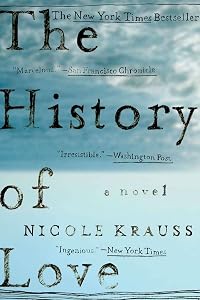
The History of Love
by Nicole Krauss
On This Page
Description
Sixty years after a book's publication, its author remembers his lost love and missing son, while a teenage girl named for one of the book's characters seeks her namesake, as well as a cure for her widowed mother's loneliness.Tags
Recommendations
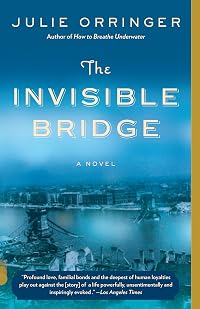
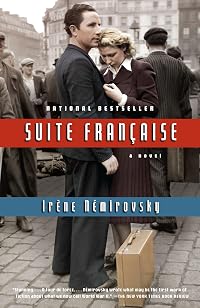

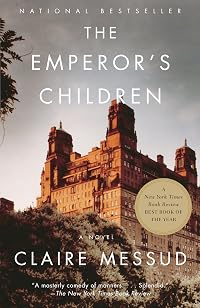
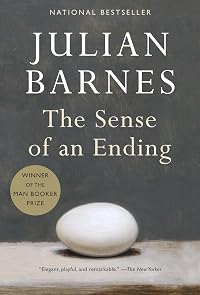
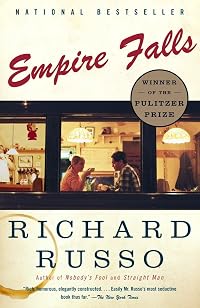
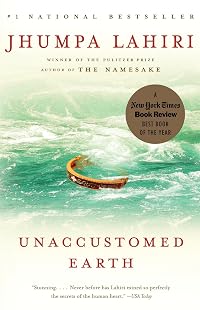

Member Recommendations
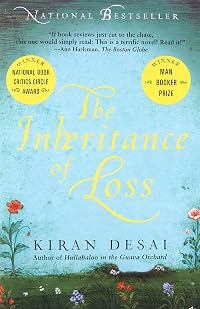
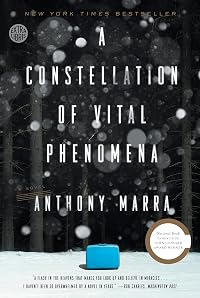
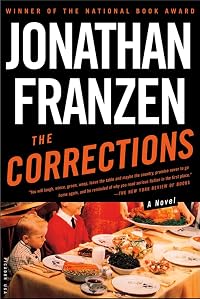
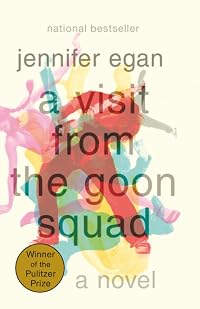
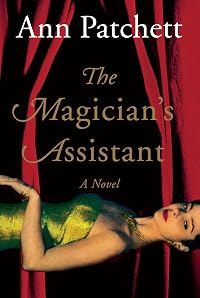
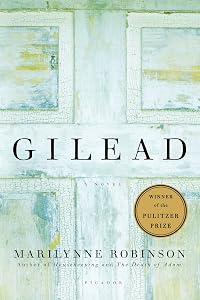
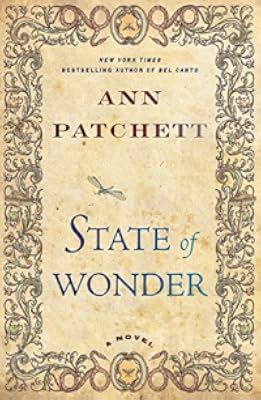
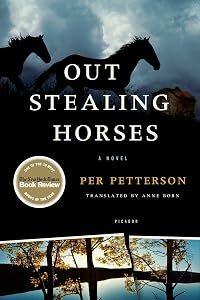
SimoneA Both of these books are beautifully told novels, set in World War II.
11
Member Reviews
I don't remember the last time a novel compelled me to read it as fiercely as Krauss' lovely gem of a book. With a strength equal to works such as The English Patient and Love in the Time of Cholera, The History of Love depicts the pain and beauty that comes with loving someone who is no longer yours to love. The heart is an organ of fire and oftentimes the fire persists in its burning, even when the torchbearer left what seems like lifetimes ago. The lives of Alma Singer and Leopold Gursky are the alternating narratives that Krauss gives us to meditate on, with great humor and sadness, the difficulties of navigating a world where the loss of love has done so much to hurt you and others. Alma's mother hasn't been the same since the loss show more of her husband; Alma's brother desperately yearns for a sign from G-d that he's loved and special. Leo Gursky never got over the love of his life moving from Poland to America before the Germans could reach her during WWII; resigned to loving his son from afar--of his life, and yet not part of his life. The lives of Singer and Gursky are brought together by a book, The History of Love, and are so much closer to each other than each truly knows until the very end. Similar to my love for North by Northwest, Alma's favorite film, Krauss' book is one that kept me engaged with every page, my heart racing to uncover the mystery underneath it all, wanting desperately for the truth to be revealed for everyone concerned. Wanting them to feel something where before there was only a void; a pain. show less
To paraphrase author Merritt Tierce, this is a book that made a wound and then stitched it up. It made my heart ache. Krauss really captures in small thoughts and gestures the depth of tenderness Leo feels for the love of his life Alma, for his friend Bruno, and especially for his son Isaac. It’s a book that truly conveyed all the pain and joy and beauty of love.
And oh my goodness, what a fantastic job narrator George Guidall did on the parts from the POV of Leo Gursky!
And oh my goodness, what a fantastic job narrator George Guidall did on the parts from the POV of Leo Gursky!
Yes, this is about love, but for me, it’s mostly about writing. It begins with a brave and endearing portrait of the old man, Leo Gursky, the writer who has lost his book. He spends his time working on being visible to the people around him, making sure that people will know he is walking the earth with them.
Leo wrote a book when he was still a young man in Poland, but he lost it when he had to hide from the Nazis. This novel is about that book, and the independent life it leads. It is published under a different name; it travels and is translated; it brings lovers together; it gives a young girl her name. This novel is also the story of that young girl and her brother. They themselves seem like refugees in this world, looking for show more their places.
All the characters in this book, including the book, struggle with the question of identity. All of them feel blessedly special and yet unutterably lonely and apart.
At times, the writing is crystalline and perfect, and at other times, it is a little jerky, like the labored breathing of a runner. It switches voices frequently, and not always smoothly, but generally the slightly off-key structure works well. It reminds us that writing doesn’t have to fit any particular structure; it just has to be honest. show less
“there are two types of people in the world: those who prefer to be sad among others, and those who prefer to be sad alone.”
Alma Singer is almost 15 years old and was named after every girl in a little known book called 'The History of Love' supposedly written by Polish emigrant Zvi Litvinoff which her widowed mother has been asked to translate. Alma sets out to find the real Alma from the book and the man who commissioned her mother to translate it.
Alma doesn't know that Leo Gursky, the real author of 'The History of Love', now lives in New York, or that he's never stopped loving Alma Mereminski, the girl whom he wrote about 60 years before and who escaped Poland carrying his child just before the arrival of the Nazis in the show more country. Leo Gursky is a survivor - he survived the Holocaust, Alma leaving for America and finding out that the woman he loves has married another man. What Leo doesn't know is that 'The History of Love' has also survived the trip across the Atlantic without him, was translated from Yiddish into Spanish and published, and although few people have ever read it, it had a special place in Alma Singer's parents' marriage.
'The History of Love' is a book of parallels. Leo's adoration for Alma Mereminsky parallels Alma Singer's parents' love. Leo and Alma's separation, parallels the death of Alma Singer's father. The manuscript Gursky wrote, and how it came to be published and translated without his knowledge, parallels Gursky's own life of invisibility. And Alma's experiences as she looks for the book's Alma, take place in parallel to Gursky's present life as an old man in New York.
This book is about love and loneliness in all their forms but is also about searching. Alma Singer is searching for the real Alma Mereminski. Alma's mother is searching for the right words to translate a beloved book into English, Alma's brother is searching for a meaning to his life despite only being 12. And Leo is searching his memories and fantasies. This book is also about history :the history of the manuscript, the history of Leo's friend Zvi Litvinoff, who published Leo's book, the history of Alma Singer as well as the history of Leo's life.
Krauss uses first person to tell her story meaning that the reader can get and personal with each character. Since Alma is only 14, her immature wanderings of a young girl's mind mix with her determination for her quest. Leo is an old man, his voice has the wisdom of age, mixed with a longing for the past and a need to be noticed. Alma's younger brother's voice as he struggles to find his destiny adds yet another dimension. Krauss succeeds to balance these various voices in a narrative that has an elegance as well as a certain humanity that I found both moving and heart-warming.
Overall I found this a fascinating and well written book that get me intrigued but was let down a little by a rather rushed ending. A bit of a shame. show less
Alma Singer is almost 15 years old and was named after every girl in a little known book called 'The History of Love' supposedly written by Polish emigrant Zvi Litvinoff which her widowed mother has been asked to translate. Alma sets out to find the real Alma from the book and the man who commissioned her mother to translate it.
Alma doesn't know that Leo Gursky, the real author of 'The History of Love', now lives in New York, or that he's never stopped loving Alma Mereminski, the girl whom he wrote about 60 years before and who escaped Poland carrying his child just before the arrival of the Nazis in the show more country. Leo Gursky is a survivor - he survived the Holocaust, Alma leaving for America and finding out that the woman he loves has married another man. What Leo doesn't know is that 'The History of Love' has also survived the trip across the Atlantic without him, was translated from Yiddish into Spanish and published, and although few people have ever read it, it had a special place in Alma Singer's parents' marriage.
'The History of Love' is a book of parallels. Leo's adoration for Alma Mereminsky parallels Alma Singer's parents' love. Leo and Alma's separation, parallels the death of Alma Singer's father. The manuscript Gursky wrote, and how it came to be published and translated without his knowledge, parallels Gursky's own life of invisibility. And Alma's experiences as she looks for the book's Alma, take place in parallel to Gursky's present life as an old man in New York.
This book is about love and loneliness in all their forms but is also about searching. Alma Singer is searching for the real Alma Mereminski. Alma's mother is searching for the right words to translate a beloved book into English, Alma's brother is searching for a meaning to his life despite only being 12. And Leo is searching his memories and fantasies. This book is also about history :the history of the manuscript, the history of Leo's friend Zvi Litvinoff, who published Leo's book, the history of Alma Singer as well as the history of Leo's life.
Krauss uses first person to tell her story meaning that the reader can get and personal with each character. Since Alma is only 14, her immature wanderings of a young girl's mind mix with her determination for her quest. Leo is an old man, his voice has the wisdom of age, mixed with a longing for the past and a need to be noticed. Alma's younger brother's voice as he struggles to find his destiny adds yet another dimension. Krauss succeeds to balance these various voices in a narrative that has an elegance as well as a certain humanity that I found both moving and heart-warming.
Overall I found this a fascinating and well written book that get me intrigued but was let down a little by a rather rushed ending. A bit of a shame. show less
I’m not so sure “The History of Love” is about love as much as it is loss…or maybe searching for loves that have been lost. It’s a sad but beautiful book about people trying to regain and understand the most important relationships of their lives.
During most of the book, I felt lost myself. I knew the plot lines and characters would somehow come together…but always felt like I was about 2 steps behind the author. Which was OK, and in some books it’s not – I just want to throw the book down in frustration. But in this, sometimes a feeling is expressed so well, that I found myself nodding in agreement.
“Yesterday I saw a man kicking a dog and I felt it behind my eyes. I don’t know what to call this, a place before show more tears. The pain of forgetting: spine. The pain of remembering: spine.”
Krauss takes on a major challenge in her characters…she voices a World War II survivor, a fifteen-year old girl, a twelve-year old boy and a few others…and makes them authentic. Their voices are very clear and very convincing.
From Leo, the old man: “If we do talk, we never speak in Yiddish. The words of our childhood became strangers to us – we couldn’t use them in the same way and so we chose not to use them at all. Life demanded a new language.”
He’s experienced such grief, such horrors in his life that he was never able to fully live it.
“After she left, everything fell apart. No Jew was safe. There was rumors of unfathomable things, and because we couldn’t fathom them we failed to believe them, until we had no choice and it was too late.”
He remains trapped in the past, searching for that which he lost, and creating the answers that he can, either through words or imagination.
While I believe Leo is truly the main character of the book, for it is about him that the major revelations are made – I was drawn more to Alma, the girl who is searching for answers about her life after the death of her father. Where Leo has had many years to search and reflect and live, she is still trying to find a way in the world, some idea of how to become her own person.
Her voice is at times so childlike and bewildered…but there is an underlying strength that leads one to believe that given time, she will get where she needs to go.
“It wasn’t that far, so I decided to walk, and while I did, I imagined rooms all over the city that housed archives no one had ever heard of, like last words, white lies, and false descendants of Catherine the Great.”
There are not many answers to be found in “The History of Love”…but the questions that are asked and the way they are phrased should be familiar to us all. Is the end of a search finding the answers or the way that we change while we are searching? Will we ever truly find that which we seek or will we become someone whose life is defined by our journey?
“And then I realized that I’d been searching for the wrong person. I looked into the eyes of the oldest man in the world for a boy who fell in love when he was ten.”
Or is the search for love the one journey that defines us all? show less
During most of the book, I felt lost myself. I knew the plot lines and characters would somehow come together…but always felt like I was about 2 steps behind the author. Which was OK, and in some books it’s not – I just want to throw the book down in frustration. But in this, sometimes a feeling is expressed so well, that I found myself nodding in agreement.
“Yesterday I saw a man kicking a dog and I felt it behind my eyes. I don’t know what to call this, a place before show more tears. The pain of forgetting: spine. The pain of remembering: spine.”
Krauss takes on a major challenge in her characters…she voices a World War II survivor, a fifteen-year old girl, a twelve-year old boy and a few others…and makes them authentic. Their voices are very clear and very convincing.
From Leo, the old man: “If we do talk, we never speak in Yiddish. The words of our childhood became strangers to us – we couldn’t use them in the same way and so we chose not to use them at all. Life demanded a new language.”
He’s experienced such grief, such horrors in his life that he was never able to fully live it.
“After she left, everything fell apart. No Jew was safe. There was rumors of unfathomable things, and because we couldn’t fathom them we failed to believe them, until we had no choice and it was too late.”
He remains trapped in the past, searching for that which he lost, and creating the answers that he can, either through words or imagination.
While I believe Leo is truly the main character of the book, for it is about him that the major revelations are made – I was drawn more to Alma, the girl who is searching for answers about her life after the death of her father. Where Leo has had many years to search and reflect and live, she is still trying to find a way in the world, some idea of how to become her own person.
Her voice is at times so childlike and bewildered…but there is an underlying strength that leads one to believe that given time, she will get where she needs to go.
“It wasn’t that far, so I decided to walk, and while I did, I imagined rooms all over the city that housed archives no one had ever heard of, like last words, white lies, and false descendants of Catherine the Great.”
There are not many answers to be found in “The History of Love”…but the questions that are asked and the way they are phrased should be familiar to us all. Is the end of a search finding the answers or the way that we change while we are searching? Will we ever truly find that which we seek or will we become someone whose life is defined by our journey?
“And then I realized that I’d been searching for the wrong person. I looked into the eyes of the oldest man in the world for a boy who fell in love when he was ten.”
Or is the search for love the one journey that defines us all? show less
“He was a great writer. He fell in love. It was his life.”
The Simplest Questions Are the Hardest to Answer
1. What is love?
2. Who am I?
3. Is there a word for everything?
4. What sort of book is this?
5. What is a palaeontologist?
5. What is a Palaeontologist?
“If he took a complete, illustrated guide to the Metropolitan Museum of Art, shred it into a hundred pieces, cast them into the wind from the museum’s steps, let a few weeks pass, went back and scoured Fifth Avenue and Central Park for as many surviving scraps as he could find, then tried to reconstruct the history of painting, including schools, styles, genres, and names of painters from his scraps, that would be like being a palaeontologist.”
This beautiful book is a show more similar cornucopia of fragments. The narratives have different textures, colours, size, shape, weight, mood, and style. They connect in often unexpected ways: pieces may split, run parallel, then diverge, or be reunited. And yet. The result is wondrous, strange, and deceptively simple.
4. What Sort of Book is This?
“A kind of half-light in which the reader can project his or her own imagination.”
It is ostensibly about love, but is at least as much about surviving loss and postponing death. It’s also about identity. And yet. The book itself has no single identity: love stories, investigative journal, self-help book, memoir, philosophical musings, historical fiction, bildungsroman, quest, survival manual, teenage diary, spiritual metaphor...
It is like Newton's Third Law interpreted as poetic allegory. Every force is counterbalanced by an equal and opposite force: writing and reading, truth and lies, taking and giving, youth and age, future and past, hope and despair, hiding and being seen, and ultimately, life and death.
3. Is There a Word for Everything?
“When will you learn that there isn’t a word for everything?” a reader says to a writer. Long ago, “sometimes people felt things and, because there was no word for them, they went unmentioned.” Trying to describe the emotion of being moved “must have been like trying to catch something invisible”. Years later, the writer calls a book “Words for Everything”.
Many characters read, and all the main characters write, whether for publication or not, one “because an undescribed world was too lonely”. And yet. The bigger issue is the things that cannot be said, are not said, or are lost in transit or translation (whether by accident or design). Silence. Gaps. Absence. Loss.
“So many words get lost. They leave the mouth and lose their courage, wandering aimlessly until they are swept into the gutter like dead leaves.”
There are three main narrators, but secondary sources (paratexts?), often with unknown or misattributed authorship, are key to the plot: letters, photos, obituaries, drawings, and books that may be “not unlike the truth”. Things are further muddied by mentions of real-life people (JL Borges, for instance), people who are real in Krauss’ book and are central to works of fiction within it, and a couple of characters who may not be real, even in that fictional realm. Where is truth?
2. Who Am I?
I thought I knew who I was. I don’t need to investigate or assert the truth of my identity in any legalistic sense, but like Alma S, I’m named after someone. Unlike her, I chose to claim my name for myself, rather than learn more about the one whose name I bear.
And yet. Of all the labels I can ascribe myself, many are in relation to others: mother, daughter, wife, friend, even English, British, European. I am not myself alone - even when it might feel like it. I can claim membership of numerous collective identities. Even as a reader, I am connected to other readers, as well as authors and their creations.
Silence. Gaps. Absence. Loss
“I lost the sound of laughter. I lost a pair of shoes… I lost the only woman I wanted to love. I lost years. I lost books. I lost the house where I was born. And I lost Isaac. So who is to say that somewhere along the way… I didn’t also lose my mind?”
The characters on these pages have variously lost lovers, a parent, a child, their homeland, their health, their mission, and acknowledgement of their authorship, and some are concerned with extinctions at a species-wide level. And yet. Like Tennyson’s Ulysses, they continue "To strive, to seek, to find, and not to yield".
Survival may happen by accident, but it usually continues by will. While some focus on practical skills, most concentrate on ways to enhance and prolong life, and thus delay death - whether their own or someone else’s.
And yet. Krauss offers no easy answers, or even any definite ones. Just as there are many permutations to define who we are, so there are many, sometimes contradictory, ways to endure loss:
Notice and be noticed - or hide to survive?
Keep things the same - or change everything?
Acknowledge and remember - or forget in order to live?
Tell people you love them - or ask them to “Love me less”?
Look forward - or look back?
Develop rituals and superstitions - or apply cold logic?
“Sacrifice the world” to “to hold on to a certain feeling”
Fill the gaps with facts or fiction - or…
Learn to appreciate the beauty found in absence: the silence between notes of music, the pauses of punctuation:
"Where he saw a page of words, his friend saw the field of hesitations, black holes, and possibilities between the words. Where his friend saw dappled light, the felicity of flight, the sadness of gravity, he saw the solid form of the common sparrow."
Image of leaf/bird by Ukranian architect Oleg Shuplyak.
This isn’t a trite message about seeing the silver lining, but about finding a different way to see, to experience, to live, while acknowledging and appreciating who or what is missing.
“He learned to live with the truth. Not to accept it, but to live with it.”
1. What is Love?
I am fortunate that the tragedies in my life have been minor compared with those experienced by the characters here. The cultural context and the smattering of Yiddish words are largely unfamiliar to me, too. And yet. Krauss spoke to me from these pages: to me, of me, and of others.
“I tried to make sense of things. It could be my epitaph.”
Sometimes, even if I've really enjoyed a book, I find myself thinking "And yet."
Not with this. Not even a little bit.
I guess that means it's perfect - even if I can’t adequately explain why, nor answer this final question.
I am a reader. Krauss is a writer. I am in awe.
Quotes
• “Once upon a time, there was a boy who loved a girl, and her laughter was a question he wanted to spend his whole life answering.”
• “The boy became a man who became invisible. In this way he escaped death.”
• “At times I believed that the last page of my book and the last page of my life were one and the same.”
• “The truth is a thing I invented so I could live.”
• “All I want is not to die on a day when I went unseen.”
• “The words of our childhood [Yiddish]... became strangers to us… Life demanded a new language.”
• “The traffic lights bled into the puddles.”
• “Life is a beauty… and a joy forever.” Later, “Life is beautiful… and a joke forever.”
• “In the most important moment of his life he had chosen the wrong sentence.”
• “What is not known about Zvi Litvitoff is endless... These things were lost to oblivion like so much about so many who are born and die without anyone ever taking the time to write it all down.”
• “Holding hands… is a way to remember how it feels to say nothing together.”
• “Some were bought and read, many were bought and not read, some were given as gifts, some sat fading in bookstore windows serving as landing docks for flies, some were marked up with pencil, and a good many were sent to the paper compactor, where they were shredded to a pulp along with other unread or unwanted book, their sentences parsed and minced in the machine’s spinning blades.”
• A writer imagines books “As a flock of… homing pigeons that could flap their wings and return to him to report on how many tears shed, how many laughs, how many passages read aloud, how many cruel closings of the cover after barely reading a page, how many never opened at all.”
• “Only now my son was gone did I realise how much I’d been living for him.”
• “I’ve always arrived too late for my life.”
• “I thought it would be strange to live in the world without her in it. And yet. I’d gotten used to living with her memory a long time ago.”
• “The door between the lives we could have led and the lives we had led had shut.”
• “The grammar of my life:... wherever there appears a plural, correct for the singular.”
• Not everyone stays in love:
JM married young “before we knew enough about disappointment, and once we did we found we reminded each other of it.”
Another says, “It’s hard to imagine any kind of anything - happiness or otherwise - without her. I’ve lived with Frances so long.”
• “She seemed to pull light and gravity to the place where she stood.”
• “Perhaps this is what it means to be a father - to teach your child to live without you. If so, no one was a greater father than I.”
• “At the end, all that’s left of you are your possessions… Perhaps that’s why I hoarded the world: with the hope that when I died, the sum total of my things would suggest a life larger than the one I lived.”
• “To paint a leaf, you have to sacrifice the whole landscape.”
• “After my Uncle Julian left, my mother became more withdrawn, or maybe a better word would be obscure, as in faint, unclear, distant.”
• “In another room, my mother slept curled next to the warmth of a pile of books.”
• “FOR MY GRANDPARENTS who taught me the opposite of disappearing and FOR JONATHAN, my life.“
• “Once upon a time, there was a boy who loved a girl, and her kiss was a question he wanted to spend his whole life answering.”
Further Notes
I have jotted down lists about the story, characters, and themes, showing the many and complex connections, HERE, but it is not a review (this one is), and it’s full of spoilers.
Reread
Read in January 2016 and again in July 2016. This review was updated slightly, and my further notes/appendix one significantly.
The reread was a bit like watching The Sixth Sense for the second or subsequent time: at least as good, but utterly different. The multi-threaded plot is so cleverly woven, and once you know the pattern, you spot all the little threads early on. In particular, on first reading, I didn't pay much attention to the irritating and self-important little brother, so his actual importance came as something of a shock. Knowing the outcome meant I was more interested in and sympathetic to him, and even more appreciative of the book as a whole.
Image sources
A heart, like the one used to represent Leo Gursky:
https://openclipart.org/image/2400px/svg_to_png/181644/anatomical-heart.png
Leaf/bird:
http://amazingdata.com/amazing-pictures-weird-fun-cool-images/Opticalillusionpai.... show less
The Simplest Questions Are the Hardest to Answer
1. What is love?
2. Who am I?
3. Is there a word for everything?
4. What sort of book is this?
5. What is a palaeontologist?
5. What is a Palaeontologist?
“If he took a complete, illustrated guide to the Metropolitan Museum of Art, shred it into a hundred pieces, cast them into the wind from the museum’s steps, let a few weeks pass, went back and scoured Fifth Avenue and Central Park for as many surviving scraps as he could find, then tried to reconstruct the history of painting, including schools, styles, genres, and names of painters from his scraps, that would be like being a palaeontologist.”
This beautiful book is a show more similar cornucopia of fragments. The narratives have different textures, colours, size, shape, weight, mood, and style. They connect in often unexpected ways: pieces may split, run parallel, then diverge, or be reunited. And yet. The result is wondrous, strange, and deceptively simple.
4. What Sort of Book is This?
“A kind of half-light in which the reader can project his or her own imagination.”
It is ostensibly about love, but is at least as much about surviving loss and postponing death. It’s also about identity. And yet. The book itself has no single identity: love stories, investigative journal, self-help book, memoir, philosophical musings, historical fiction, bildungsroman, quest, survival manual, teenage diary, spiritual metaphor...
It is like Newton's Third Law interpreted as poetic allegory. Every force is counterbalanced by an equal and opposite force: writing and reading, truth and lies, taking and giving, youth and age, future and past, hope and despair, hiding and being seen, and ultimately, life and death.
3. Is There a Word for Everything?
“When will you learn that there isn’t a word for everything?” a reader says to a writer. Long ago, “sometimes people felt things and, because there was no word for them, they went unmentioned.” Trying to describe the emotion of being moved “must have been like trying to catch something invisible”. Years later, the writer calls a book “Words for Everything”.
Many characters read, and all the main characters write, whether for publication or not, one “because an undescribed world was too lonely”. And yet. The bigger issue is the things that cannot be said, are not said, or are lost in transit or translation (whether by accident or design). Silence. Gaps. Absence. Loss.
“So many words get lost. They leave the mouth and lose their courage, wandering aimlessly until they are swept into the gutter like dead leaves.”
There are three main narrators, but secondary sources (paratexts?), often with unknown or misattributed authorship, are key to the plot: letters, photos, obituaries, drawings, and books that may be “not unlike the truth”. Things are further muddied by mentions of real-life people (JL Borges, for instance), people who are real in Krauss’ book and are central to works of fiction within it, and a couple of characters who may not be real, even in that fictional realm. Where is truth?
2. Who Am I?
I thought I knew who I was. I don’t need to investigate or assert the truth of my identity in any legalistic sense, but like Alma S, I’m named after someone. Unlike her, I chose to claim my name for myself, rather than learn more about the one whose name I bear.
And yet. Of all the labels I can ascribe myself, many are in relation to others: mother, daughter, wife, friend, even English, British, European. I am not myself alone - even when it might feel like it. I can claim membership of numerous collective identities. Even as a reader, I am connected to other readers, as well as authors and their creations.
Silence. Gaps. Absence. Loss
“I lost the sound of laughter. I lost a pair of shoes… I lost the only woman I wanted to love. I lost years. I lost books. I lost the house where I was born. And I lost Isaac. So who is to say that somewhere along the way… I didn’t also lose my mind?”
The characters on these pages have variously lost lovers, a parent, a child, their homeland, their health, their mission, and acknowledgement of their authorship, and some are concerned with extinctions at a species-wide level. And yet. Like Tennyson’s Ulysses, they continue "To strive, to seek, to find, and not to yield".
Survival may happen by accident, but it usually continues by will. While some focus on practical skills, most concentrate on ways to enhance and prolong life, and thus delay death - whether their own or someone else’s.
And yet. Krauss offers no easy answers, or even any definite ones. Just as there are many permutations to define who we are, so there are many, sometimes contradictory, ways to endure loss:
Notice and be noticed - or hide to survive?
Keep things the same - or change everything?
Acknowledge and remember - or forget in order to live?
Tell people you love them - or ask them to “Love me less”?
Look forward - or look back?
Develop rituals and superstitions - or apply cold logic?
“Sacrifice the world” to “to hold on to a certain feeling”
Fill the gaps with facts or fiction - or…
Learn to appreciate the beauty found in absence: the silence between notes of music, the pauses of punctuation:
"Where he saw a page of words, his friend saw the field of hesitations, black holes, and possibilities between the words. Where his friend saw dappled light, the felicity of flight, the sadness of gravity, he saw the solid form of the common sparrow."
Image of leaf/bird by Ukranian architect Oleg Shuplyak.
This isn’t a trite message about seeing the silver lining, but about finding a different way to see, to experience, to live, while acknowledging and appreciating who or what is missing.
“He learned to live with the truth. Not to accept it, but to live with it.”
1. What is Love?
I am fortunate that the tragedies in my life have been minor compared with those experienced by the characters here. The cultural context and the smattering of Yiddish words are largely unfamiliar to me, too. And yet. Krauss spoke to me from these pages: to me, of me, and of others.
“I tried to make sense of things. It could be my epitaph.”
Sometimes, even if I've really enjoyed a book, I find myself thinking "And yet."
Not with this. Not even a little bit.
I guess that means it's perfect - even if I can’t adequately explain why, nor answer this final question.
I am a reader. Krauss is a writer. I am in awe.
Quotes
• “Once upon a time, there was a boy who loved a girl, and her laughter was a question he wanted to spend his whole life answering.”
• “The boy became a man who became invisible. In this way he escaped death.”
• “At times I believed that the last page of my book and the last page of my life were one and the same.”
• “The truth is a thing I invented so I could live.”
• “All I want is not to die on a day when I went unseen.”
• “The words of our childhood [Yiddish]... became strangers to us… Life demanded a new language.”
• “The traffic lights bled into the puddles.”
• “Life is a beauty… and a joy forever.” Later, “Life is beautiful… and a joke forever.”
• “In the most important moment of his life he had chosen the wrong sentence.”
• “What is not known about Zvi Litvitoff is endless... These things were lost to oblivion like so much about so many who are born and die without anyone ever taking the time to write it all down.”
• “Holding hands… is a way to remember how it feels to say nothing together.”
• “Some were bought and read, many were bought and not read, some were given as gifts, some sat fading in bookstore windows serving as landing docks for flies, some were marked up with pencil, and a good many were sent to the paper compactor, where they were shredded to a pulp along with other unread or unwanted book, their sentences parsed and minced in the machine’s spinning blades.”
• A writer imagines books “As a flock of… homing pigeons that could flap their wings and return to him to report on how many tears shed, how many laughs, how many passages read aloud, how many cruel closings of the cover after barely reading a page, how many never opened at all.”
• “Only now my son was gone did I realise how much I’d been living for him.”
• “I’ve always arrived too late for my life.”
• “I thought it would be strange to live in the world without her in it. And yet. I’d gotten used to living with her memory a long time ago.”
• “The door between the lives we could have led and the lives we had led had shut.”
• “The grammar of my life:... wherever there appears a plural, correct for the singular.”
• Not everyone stays in love:
JM married young “before we knew enough about disappointment, and once we did we found we reminded each other of it.”
Another says, “It’s hard to imagine any kind of anything - happiness or otherwise - without her. I’ve lived with Frances so long.”
• “She seemed to pull light and gravity to the place where she stood.”
• “Perhaps this is what it means to be a father - to teach your child to live without you. If so, no one was a greater father than I.”
• “At the end, all that’s left of you are your possessions… Perhaps that’s why I hoarded the world: with the hope that when I died, the sum total of my things would suggest a life larger than the one I lived.”
• “To paint a leaf, you have to sacrifice the whole landscape.”
• “After my Uncle Julian left, my mother became more withdrawn, or maybe a better word would be obscure, as in faint, unclear, distant.”
• “In another room, my mother slept curled next to the warmth of a pile of books.”
• “FOR MY GRANDPARENTS who taught me the opposite of disappearing and FOR JONATHAN, my life.“
• “Once upon a time, there was a boy who loved a girl, and her kiss was a question he wanted to spend his whole life answering.”
Further Notes
I have jotted down lists about the story, characters, and themes, showing the many and complex connections, HERE, but it is not a review (this one is), and it’s full of spoilers.
Reread
Read in January 2016 and again in July 2016. This review was updated slightly, and my further notes/appendix one significantly.
The reread was a bit like watching The Sixth Sense for the second or subsequent time: at least as good, but utterly different. The multi-threaded plot is so cleverly woven, and once you know the pattern, you spot all the little threads early on. In particular, on first reading, I didn't pay much attention to the irritating and self-important little brother, so his actual importance came as something of a shock. Knowing the outcome meant I was more interested in and sympathetic to him, and even more appreciative of the book as a whole.
Image sources
A heart, like the one used to represent Leo Gursky:
https://openclipart.org/image/2400px/svg_to_png/181644/anatomical-heart.png
Leaf/bird:
http://amazingdata.com/amazing-pictures-weird-fun-cool-images/Opticalillusionpai.... show less
My first encounter with this book wasn't really nice. Almost five years ago, I was completing my undergraduate studies and at some point in time I, with two of my friends, decided to go to the bookstore to unwind. One of my friends asked the bookseller if they had a copy of The History of Love. I didn't hear what she said or what the bookseller told her so I asked what was she looking for. I still remember the disappointment on her face when she said they didn't have a copy of The History of Love. Out of stock, they said. She read somewhere that it was a beautiful book. I, on the other hand, scoffed, appalled, because the title seemed to me something Nicholas Sparks had written. It was saccharine to my ears. My face contorted to a show more disgusted expression. I left it at that and we left the bookstore.
Fast forward to a month ago whilst I was roaming around another bookstore I saw this in one of the shelves. It reminded me of my friend who at the present was planning her wedding. I didn’t know what pushed me to buy this book but I would like to think the thought of my friend alone did. I was really grateful for that. I would like to think that in sudden sentimentality we find unexpected fondness towards things we haven't thought of twice. Moreover, things we initially did not like.
---
History of Love is indeed a beautiful book. It is arguably one of the most intimate books I have ever read. It is a revelation. I admit it very unfair of me to put it in the same level as Nicholas Sparks' works. What this book has given me in exchange of my unfounded assumption is love; a love that transcends time through memories and fiction. It doesn't shy away from the human condition and instead gives it to you until you take it wholeheartedly. It perceives life for what it is; we try to figure it out until the end without knowing what we ought to figure out in the first place. It reminds us that a memory is both a friend and an enemy.
Krauss' vivid characters complements her gripping, wonderful, and intriguing writing style. How her characters' lives are bound together by another character's work of fiction, which I did not expect until almost halfway through the book, is what made it all the more special and poignant. When I finished the book I thought about the hidden truth about one of the characters' work of fiction and Kiarostami's film, Certified Copy, came to mind. He has put it well when he said, ** "When we fall in love, we see everything as an original. We're the ones pulling the wool over our own eyes. We inflate the value so much, and add zeroes to it, that we can't afford it ourselves. Then when we can't pay the price, we start eliminating, one by one, the zeroes on the price tag. We discount the price. Then we arrive at the truth. Access to the original is out of reach for many of us. Therefore, we should value and appreciate a copy." I would like to believe that the love we give, no matter how much time has gone and the amount of people who have received it, trampled it, and returned it our capacity to give it again doesn't diminish.
I believe The History of Love is one of those books that make you discover something new every time you reread. I guess the only gripe I have is how it could jump from one chapter to another quite quickly and the amount of Jewish words I translated (it is also a learning), and how I failed to finish it in one-sitting because I had to go to work (not the book’s fault).
** "Sometimes I thought about nothing and sometimes I thought about my life. At least I made a living. What kind of living? A living. I lived. It wasn't easy. And yet. I found out how little is unbearable." (p224)
Life is painful, also joyous. It is also nonsensical. But don’t forget it is hopeful. It can be long yet it can be loving. We eventually learn how to love it back. And what each of us can do is to live it the best way we possibly can. show less
Fast forward to a month ago whilst I was roaming around another bookstore I saw this in one of the shelves. It reminded me of my friend who at the present was planning her wedding. I didn’t know what pushed me to buy this book but I would like to think the thought of my friend alone did. I was really grateful for that. I would like to think that in sudden sentimentality we find unexpected fondness towards things we haven't thought of twice. Moreover, things we initially did not like.
---
History of Love is indeed a beautiful book. It is arguably one of the most intimate books I have ever read. It is a revelation. I admit it very unfair of me to put it in the same level as Nicholas Sparks' works. What this book has given me in exchange of my unfounded assumption is love; a love that transcends time through memories and fiction. It doesn't shy away from the human condition and instead gives it to you until you take it wholeheartedly. It perceives life for what it is; we try to figure it out until the end without knowing what we ought to figure out in the first place. It reminds us that a memory is both a friend and an enemy.
Krauss' vivid characters complements her gripping, wonderful, and intriguing writing style. How her characters' lives are bound together by another character's work of fiction, which I did not expect until almost halfway through the book, is what made it all the more special and poignant. When I finished the book I thought about the hidden truth about one of the characters' work of fiction and Kiarostami's film, Certified Copy, came to mind. He has put it well when he said, ** "When we fall in love, we see everything as an original. We're the ones pulling the wool over our own eyes. We inflate the value so much, and add zeroes to it, that we can't afford it ourselves. Then when we can't pay the price, we start eliminating, one by one, the zeroes on the price tag. We discount the price. Then we arrive at the truth. Access to the original is out of reach for many of us. Therefore, we should value and appreciate a copy." I would like to believe that the love we give, no matter how much time has gone and the amount of people who have received it, trampled it, and returned it our capacity to give it again doesn't diminish.
I believe The History of Love is one of those books that make you discover something new every time you reread. I guess the only gripe I have is how it could jump from one chapter to another quite quickly and the amount of Jewish words I translated (it is also a learning), and how I failed to finish it in one-sitting because I had to go to work (not the book’s fault).
** "Sometimes I thought about nothing and sometimes I thought about my life. At least I made a living. What kind of living? A living. I lived. It wasn't easy. And yet. I found out how little is unbearable." (p224)
Life is painful, also joyous. It is also nonsensical. But don’t forget it is hopeful. It can be long yet it can be loving. We eventually learn how to love it back. And what each of us can do is to live it the best way we possibly can. show less
Members
- Recently Added By
Published Reviews
Beskrivelse:
I en nedslitt leilighet i New York prøver Leo Gursky å overleve litt til. Hver kveld banker han på radiatoren for at naboen over skal høre at han fortsatt lever.Men livet hans har ikke alltid vært slik. For seksti år siden bodde han hjemme i Polen, der han forelsket seg og skrev en bok. Kjæresten mistet han da hun flyktet til Amerika rett før krigen. Boken ble også show more borte. Men uten at han selv er klar over det, har den overlevd: Den har krysset hav, blitt overlevert mellom generasjoner, og forandret liv. Fjorten år gamle Alma er oppkalt etter en person i denne boken. Etter at faren hennes døde, er hun fullt opptatt med å finne en ny kjæreste til moren, holde styr på en lillebror som tror han er Messias, og ta utførlige notater i et hefte hun kaller Hvordan overleve i villmarken, Bind tre. En dag dukker det opp et mystisk brev i posten, og Alma begir seg ut på jakt etter sin navnesøster.Personene i Kjærlighetens historie er mennesker man blir glad i. Hver for seg sysler de med gåter som på bemerkelsesverdig vis er forbundet med hverandre. Nicole Krauss har skrevet en medrivende og imponerende sammensatt roman om mennesker som har blitt avkuttet fra sin fortid, og som på hver sin pussige, rørende måte forsøker å få livet til å henge sammen. show less
I en nedslitt leilighet i New York prøver Leo Gursky å overleve litt til. Hver kveld banker han på radiatoren for at naboen over skal høre at han fortsatt lever.Men livet hans har ikke alltid vært slik. For seksti år siden bodde han hjemme i Polen, der han forelsket seg og skrev en bok. Kjæresten mistet han da hun flyktet til Amerika rett før krigen. Boken ble også show more borte. Men uten at han selv er klar over det, har den overlevd: Den har krysset hav, blitt overlevert mellom generasjoner, og forandret liv. Fjorten år gamle Alma er oppkalt etter en person i denne boken. Etter at faren hennes døde, er hun fullt opptatt med å finne en ny kjæreste til moren, holde styr på en lillebror som tror han er Messias, og ta utførlige notater i et hefte hun kaller Hvordan overleve i villmarken, Bind tre. En dag dukker det opp et mystisk brev i posten, og Alma begir seg ut på jakt etter sin navnesøster.Personene i Kjærlighetens historie er mennesker man blir glad i. Hver for seg sysler de med gåter som på bemerkelsesverdig vis er forbundet med hverandre. Nicole Krauss har skrevet en medrivende og imponerende sammensatt roman om mennesker som har blitt avkuttet fra sin fortid, og som på hver sin pussige, rørende måte forsøker å få livet til å henge sammen. show less
added by kirstenlund
Lists

1001 Books You Must Read Before You Die
1,448 works; 1,136 members

Favourite Women's Prize for Fiction, Orange & Bailey's Prize contenders
132 works; 52 members

Best books about books
209 works; 106 members

Recommend the 20 best books you've read in the last five years
2,168 works; 607 members

Female Author
1,234 works; 67 members

Jewish Books
367 works; 24 members

Unread books
1,063 works; 87 members

The Immigrant's Stories
74 works; 19 members

Books With a Twist
69 works; 46 members

Book Riot's 100 must-read works of Jewish Fiction
100 works; 8 members

Top Five Books of 2014
1,064 works; 398 members
Books tagged favorites
390 works; 30 members

Story Within a Story
65 works; 17 members
Top Five Books of 2016
795 works; 229 members

Blue Pyramid 1,276 Best Books of All Time
1,248 works; 32 members

A Novel Cure
742 works; 23 members

BBC Radio 4 Bookclub
341 works; 13 members

Books about World War II
241 works; 22 members

Writers as Characters in Fiction
120 works; 19 members
Books read in 2019
4 works; 1 member

Books To Get From The Library
115 works; 5 members

Llibres que he llegit el 2012
28 works; 1 member

Overdue Podcast
808 works; 9 members
Favourite Love Stories
53 works; 1 member

5 Best 5 Years
71 works; 4 members

American Lit for Eng 11 Research Project
368 works; 6 members

BF: 31 Books You Won't Be Able To Stop Thinking About
8 works; 2 members

Fiction Books Worthy of Reading Again
37 works; 1 member

Books Read in 2024
4,727 works; 128 members

KayStJ's to-read list
1,616 works; 11 members

Books Read in 2021
5,361 works; 114 members

Books by Jewish Authors
68 works; 5 members

Best books I read in 2013
152 works; 3 members
Best Audiobooks
240 works; 114 members
Author Information

16+ Works 14,411 Members
Nicole Krauss is an international best selling author. The History of Love (W.W. Norton 2005) won the William Saroyan International Prize for Writing, France's Prix du Meilleur Livre ?tranger, was named #1 book of the year by Amazon.com, and was short-listed for the Orange, Médicis, and Femina prizes. Nicole's first novel, Man Walks Into a Room, show more was a finalist for the Los Angeles Times Book Award for First Fiction. In 2007, she was selected as one of Granta's Best Young American Novelists, and in 2010 The New Yorker named her one of the 20 best writers under 40. Her most recent novel is GREAT HOUSE (W.W. Norton October 2010). Nicole's books have been translated into more than thirty-five languages. Krauss recently completed a Cullman Fellowship at the New York Public Library. She lives in Brooklyn, New York. (Bowker Author Biography) show less
Some Editions
Awards and Honors
Awards
Distinctions
Series
Belongs to Publisher Series
Common Knowledge
- Canonical title
- The History of Love
- Original title
- The History of Love
- Original publication date
- 2005
- People/Characters
- Leopold Gursky; Alma Mereminski; Alma Singer; Zvi Litvinoff; Emanuel Chaim "Bird" Singer; Charlotte Singer (show all 13); Isaac Moritz; Bruno; Bernard Moritz; Mordecai Mortiz; Rosa; David Singer; Mischa
- Important places
- Chile; Europe; Latin America; Manhattan, New York, New York, USA; New York, USA; New York, New York, USA (show all 9); Poland; Russia; South America
- Important events
- World War II
- Dedication
- For my grandparents, who taught me the opposite of disappearing and for Jonathan, my life
- First words
- When they write my obituary. Tomorrow. Or the next day. It will say, Leo Gursky is survived by an apartment full of shit.
- Quotations
- A thought crossed his face in a language I didn’t understand.
It’s also true that sometimes people felt things and because there was no word for them, they went unmentioned. The oldest emotion in the world may be that of being moved, but to describe it and just to name it – mu... (show all)st have been like trying to catch something invisible.
Maybe this is how I'll go, in a fit of laughter, what could be better, laughing and crying, laughing and singing, laughing so as to forget that I am alone, that it is the end of my life, that death is waiting outside the door... (show all) for me.
The truth was I'd given up waiting long ago. The moment had passed, the door between the lives we could have led and the lives we led had shut in our faces. Or better to say, in my face.
Once upon a time there was a boy who loved a girl, and her laughter was a question he wanted to spend his whole life answering.
Everything snapped into focus. It's one of those unforgettable moments that happen as a child, when you discover that all along the world has been betraying you.
You asked if I was married. I was once, but that was a long time ago, and we were clever or stupid enough not to have a child. We met each other when we were young, before we knew enough about disappointment, and once we did ... (show all)we found we reminded each other of it.
Having begun to feel, people's desire to feel grew. They wanted to feel more, feel deeper, despite how much it sometimes hurt. People became addicted to feeling. They struggled to uncover new emotions. It's possible that this... (show all) is how art was born. New kinds of joy was forged, along with new kinds of sadness: The eternal disappointment of life as it is; the relief of unexpected reprieve; the fear of dying.
People hurried past me. And everyone who walked by was happier than I. I felt the old envy. I would have given anything to be one of them.
"Once I start to think about it, it's hard to imagine any kind of anything—happiness or otherwise—without her. I've lived with Frances for so long that I can't imagine what life would look or feel like with another person... (show all)."
I finally understood that no matter what I did, or who I found, I—he—none of us—would ever be able to win over the memories she had of Dad, memories that soothed her even while they made her sad, because she'd built a w... (show all)orld out of them she knew how to survive in, even if no one else could.
I lay in the dark and the silence, which was nothing like the dark and the silence my father lay in as a boy in a house on a dirt street in Tel Aviv, or the dark and the silence my mother lay in on her first night at Kibbutz ... (show all)Yavne, but which held those darknesses and those silences, too.
Now that mine is almost over, I can say that the thing that struck me most about life is the capacity for change.
There's even a moment when it becomes exhilarating to realize just how little needs to stay the same for you to continue the effort they call, for lack of a better word, being human.
it's like some tiny nothing that sets off a natural disaster halfway across the world, only this was the opposite of disaster, how by accident she saved me with that thoughtless act of grace, and she never knew, and how that,... (show all) too, is part of the history of love. - Last words
- (Click to show. Warning: May contain spoilers.)He fell in love. It was his life.
- Blurbers
- Coetzee, J.M.; McCann, Colum; Berg, Elizabeth
- Original language
- English
Classifications
Statistics
- Members
- 9,674
- Popularity
- 1,071
- Reviews
- 339
- Rating
- (3.88)
- Languages
- 21 — Chinese, Czech, Danish, Dutch, English, Estonian, Finnish, French, German, Greek, Hebrew, Italian, Norwegian (Bokmål), Farsi/Persian, Polish, Portuguese, Romanian, Russian, Croatian, Spanish, Swedish
- Media
- Paper, Audiobook, Ebook
- ISBNs
- 80
- UPCs
- 1
- ASINs
- 19