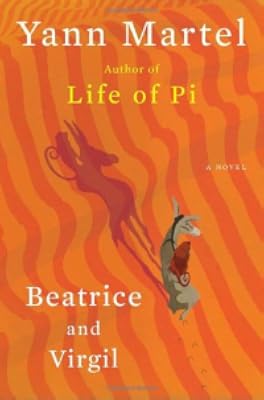
Beatrice and Virgil
by Yann Martel
On This Page
Description
When Henry receives a letter from an elderly taxidermist, it poses a puzzle that he cannot resist. As he is pulled further into the world of this strange and calculating man, Henry becomes increasingly involved with the lives of a donkey and a howler monkey--named Beatrice and Virgil--and the epic journey they undertake together.Tags
Recommendations
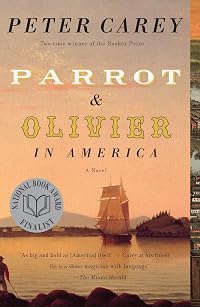

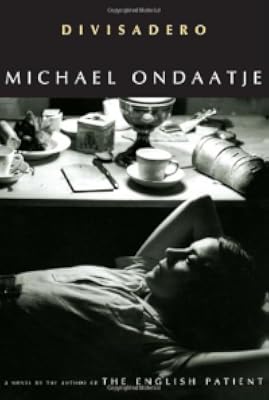
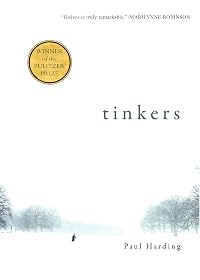
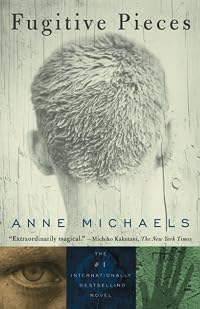

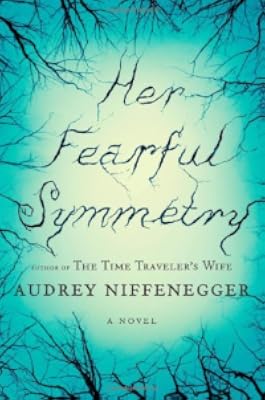

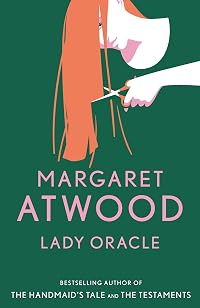
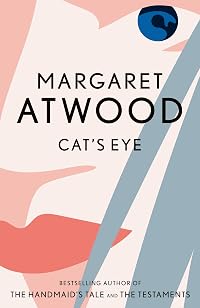
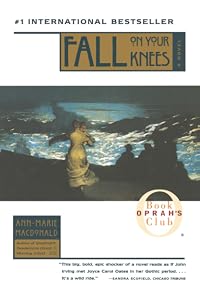
Member Recommendations

Member Reviews
Every once and awhile a book comes along that seriously rattles my cage and messes with my head. This is one of those books. I was warned that this book was light years away from "Life of Pi". I was told that it was an allegory about the holocaust. I thought I was prepared. I was not.
I had to think about this book for a long time before I was willing to put out a review for it. It helped that I was able to meet Martel and talk with him about the book, but I still needed more time to process the book. I've decided that it really is a brilliant book, unique and powerful. Many will hate it, and I can understand that, but I don't think it's fair. It's good that books can take us by the intellectual shoulders sometimes and shake us and force show more us to see the world in a different way for at least a brief bit of time. That's what this book does, and does well.
The Library of Congress cataloging includes 1. Authors--Fiction. 2.
Taxidermists--Fiction. 3. Animals--Fiction. That's all true. But the one you have to look out for is the final one mentioned--4. Psychological fiction. That is the danger, the power, and the marvel of this book. The majority of the book--90% roughly--is a slow yet fascinating intellectual puzzle that offers disjointed pieces that your brain slowly moves around, trying to figure out what the final picture will be. You'll notice, off and on, similarities to the work of Beckett and Camus, the author even admits to naming the titled two
characters after those in Dante's Inferno. Hints are given teasingly of inner secrets that are far removed from the intellectual mind game that makes up the bulk of this book, told rather impersonally and at best two dimensionally. I frankly could not put the thing down--I was enjoying the puzzle, the literary and psychological maze that is this book.
And then I reached the final 30ish pages, when just enough of the final pieces were given to me to turn my knuckles white with horror. The black and white pages became red, the quiet tone became an endless shriek not unlike the howler monkey's, passively described earlier in the book but deafening in the brutality of the final scenes. Insanity and brutality replace intellectualism. The picture is never made quite complete, despite it's graphic telling--mysteries still exist. Pieces are literally destroyed in the fire of the final, devastating moments. There are not answers to every question. But, as a epilogue, there are questions, asked in the same, intellectually removed, distant voice that the majority of the story is told in that are far more devastating than even the cataclysmic final scene. As you read them, somewhere in the distance, a howler monkey begins to scream.
I feel like this book was an intellectual and emotional challenge that will echo in me for a very long time. I want to talk about it--I want to prepare people for it so they can get past the shock and appreciate the brilliance. I don't know how to do that, really, more than with these words here, now. I hope they make a difference. show less
I had to think about this book for a long time before I was willing to put out a review for it. It helped that I was able to meet Martel and talk with him about the book, but I still needed more time to process the book. I've decided that it really is a brilliant book, unique and powerful. Many will hate it, and I can understand that, but I don't think it's fair. It's good that books can take us by the intellectual shoulders sometimes and shake us and force show more us to see the world in a different way for at least a brief bit of time. That's what this book does, and does well.
The Library of Congress cataloging includes 1. Authors--Fiction. 2.
Taxidermists--Fiction. 3. Animals--Fiction. That's all true. But the one you have to look out for is the final one mentioned--4. Psychological fiction. That is the danger, the power, and the marvel of this book. The majority of the book--90% roughly--is a slow yet fascinating intellectual puzzle that offers disjointed pieces that your brain slowly moves around, trying to figure out what the final picture will be. You'll notice, off and on, similarities to the work of Beckett and Camus, the author even admits to naming the titled two
characters after those in Dante's Inferno. Hints are given teasingly of inner secrets that are far removed from the intellectual mind game that makes up the bulk of this book, told rather impersonally and at best two dimensionally. I frankly could not put the thing down--I was enjoying the puzzle, the literary and psychological maze that is this book.
And then I reached the final 30ish pages, when just enough of the final pieces were given to me to turn my knuckles white with horror. The black and white pages became red, the quiet tone became an endless shriek not unlike the howler monkey's, passively described earlier in the book but deafening in the brutality of the final scenes. Insanity and brutality replace intellectualism. The picture is never made quite complete, despite it's graphic telling--mysteries still exist. Pieces are literally destroyed in the fire of the final, devastating moments. There are not answers to every question. But, as a epilogue, there are questions, asked in the same, intellectually removed, distant voice that the majority of the story is told in that are far more devastating than even the cataclysmic final scene. As you read them, somewhere in the distance, a howler monkey begins to scream.
I feel like this book was an intellectual and emotional challenge that will echo in me for a very long time. I want to talk about it--I want to prepare people for it so they can get past the shock and appreciate the brilliance. I don't know how to do that, really, more than with these words here, now. I hope they make a difference. show less
In Beatrice and Virgil, Martel plays with novel form once again. The main character - Henry - is clearly a representation of Martel. He is a successful author who has spent 5 years working on a book which is an allegory of the Holocaust, only to have it crushed by his editors. Utterly defeated and wishing to leave his craft for good, he and his wife move to a new country and city and are enjoying getting on with life when he receives a letter from a reader of his previous novel, and is pulled into the mysterious world of a taxidermist who is trying to perfect a play allegory of the Holocaust, in which a monkey called Virgil and a donkey called Beatrice represent the Jewish victims.
A lot more transpires beyond this, but.... no show more spoilers.
This novel got fairly annihilated by critics at the time. Most of this criticism seemed to be on two fronts - firstly, it was felt that Martel was being disrespectful of the Holocaust through his allegory, and secondly, it was felt that in writing a version of himself into the novel he was overly consumed by his own egotism.
I didn't feel either of these things when I read it. It shouldn't have worked but it did, despite being really quite odd. I don't think for a minute Martel was making light of the Holocaust - on the contrary, as his character was trying to do, I feel he was simply trying to use an alternative view to bring home the horrors of what happened. It's difficult reading in places, and I think it successfully enables you to properly place the horrors in your mind in relation to the actual Holocaust, despite it being represented in a different way. I also enjoyed Martel as a writer writing about him writing the book we were essentially reading. I think that's been done before, but for me it was interesting rather than a display of arrogance and self-importance.
4.5 stars - a short yet astonishing read. show less
A lot more transpires beyond this, but.... no show more spoilers.
This novel got fairly annihilated by critics at the time. Most of this criticism seemed to be on two fronts - firstly, it was felt that Martel was being disrespectful of the Holocaust through his allegory, and secondly, it was felt that in writing a version of himself into the novel he was overly consumed by his own egotism.
I didn't feel either of these things when I read it. It shouldn't have worked but it did, despite being really quite odd. I don't think for a minute Martel was making light of the Holocaust - on the contrary, as his character was trying to do, I feel he was simply trying to use an alternative view to bring home the horrors of what happened. It's difficult reading in places, and I think it successfully enables you to properly place the horrors in your mind in relation to the actual Holocaust, despite it being represented in a different way. I also enjoyed Martel as a writer writing about him writing the book we were essentially reading. I think that's been done before, but for me it was interesting rather than a display of arrogance and self-importance.
4.5 stars - a short yet astonishing read. show less
I've put off this review for several weeks because Beatrice and Virgil is so unlike anything I was expecting. After I finished listening to the story, I was stunned into silence, left waffling between wanting to yell WTF and yet proclaiming Martel's brilliance as loudly as possible. After two weeks of thinking about it, therein lies the appeal of Beatrice and Virgil. It forces the reader to stop and think, refusing to let the reader slide without forming some opinion. Furthermore, regardless of the opinion, the novel and its messages linger, haunting the reader for weeks after finishing. It is a tale of responsibility unlike any other, one that continues to fill my thoughts as I struggle to discern my own meaning from it.
Beatrice and show more Virgil continues Mr. Martel's fascinating use of animals as allegory. Of even more interest is the suspicion that Mr. Martel explores his own thoughts on literature and writing through the main character, Henry. At times, Henry's thoughts and opinions sound extremely personal, and one cannot help but wonder if Henry is a touch autobiographical. For example, Mr. Martel specifically addresses the use of animals in dialogue between Henry and the taxidermist. While he states that animals have no set expectations for behavior which makes it easy to shape and mold them, I tend to disagree. Animals have their own built-in characteristics and set behaviors one expects, thereby minimizing the need for character development. We expect a tiger to act in a certain manner, and a donkey in another. The personification of these animals is going to come with the expectations that their human representatives will act in a similar vein. In addition, there is a fine line between animal behavior and human behavior. Humans can be very animalistic and vice versa. This makes it relatively easy to have one symbolize another. As we've come to expect in Mr. Martel's novels, his own use of a donkey and a howler monkey in the taxidermist's story leave the reader questioning the reasons and implications behind their usage.
Again, similar to Life of Pi, there are enough twists and turns to throw the most astute reader off the scent of the ending and the truth. While there are red flags that indicate the story is flowing in a direction not expected, it isn't until the reader reaches this astounding ending where the red flags become apparent. No matter what, the sleight of hand works. The ending is so shocking in its abruptness that the reader is left gasping in astonishment at the truth. In fact, I would recommend not trying to deduce the climax of the novel but rather let Mr. Martel's words carry you to the end. The ending is most valuable when it is a complete and utter surprise.
I remain astonished at the simple brilliancy of this novel. It confirms the idea that people are animals and can be driven to do extraordinary things when it is essential to do so. In fact, Beatrice and Virgil hint that humans are even more dangerous than animals because any cruelty is unexpected. Readers instinctually know that the animal kingdom is cruel in the fight to survive; we do not expect the same from humans. The psychology behind this discovery forces the reader to stop and consider the implications of what Mr. Martel is trying to state. It is a disturbing truth that should be acknowledged more than it ever is and is just one of the ideas that continues to haunt me.
As much as I enjoyed the novel itself, I am not certain that audio is the best format to "read" Beatrice and Virgil. The beginning is painfully slow and almost boring as Mr. Martel introduces the reader to Henry and sets the stage for future interactions with the mysterious taxidermist. More importantly, Beatrice and Virgil is a novel that deserves to be savored and re-read many times over. One cannot savor an audio novel, and wanting to find passages to listen to again and again has proven extremely difficult and frustrating. Yet, Mr. Bramhall's portrayal of Henry, the taxidermist, Beatrice and Virgil is astounding. The reader is never left questioning who is speaking at a given time, and he does an excellent job of bringing all the characters to life. It is well worth listening to the story at least once to be able to get a feel for the characters and their voices, but having a hard copy on hand to re-read passages is essential.
Overall, I loved Beatrice and Virgil. It is a challenging read, to say the least; it does not deliver its message outright but forces the reader to wrestle with the ideas presented and truly think about the lessons being learned. Mr. Martel forces the reader to re-think the Holocaust and even what it means to be human. show less
Beatrice and show more Virgil continues Mr. Martel's fascinating use of animals as allegory. Of even more interest is the suspicion that Mr. Martel explores his own thoughts on literature and writing through the main character, Henry. At times, Henry's thoughts and opinions sound extremely personal, and one cannot help but wonder if Henry is a touch autobiographical. For example, Mr. Martel specifically addresses the use of animals in dialogue between Henry and the taxidermist. While he states that animals have no set expectations for behavior which makes it easy to shape and mold them, I tend to disagree. Animals have their own built-in characteristics and set behaviors one expects, thereby minimizing the need for character development. We expect a tiger to act in a certain manner, and a donkey in another. The personification of these animals is going to come with the expectations that their human representatives will act in a similar vein. In addition, there is a fine line between animal behavior and human behavior. Humans can be very animalistic and vice versa. This makes it relatively easy to have one symbolize another. As we've come to expect in Mr. Martel's novels, his own use of a donkey and a howler monkey in the taxidermist's story leave the reader questioning the reasons and implications behind their usage.
Again, similar to Life of Pi, there are enough twists and turns to throw the most astute reader off the scent of the ending and the truth. While there are red flags that indicate the story is flowing in a direction not expected, it isn't until the reader reaches this astounding ending where the red flags become apparent. No matter what, the sleight of hand works. The ending is so shocking in its abruptness that the reader is left gasping in astonishment at the truth. In fact, I would recommend not trying to deduce the climax of the novel but rather let Mr. Martel's words carry you to the end. The ending is most valuable when it is a complete and utter surprise.
I remain astonished at the simple brilliancy of this novel. It confirms the idea that people are animals and can be driven to do extraordinary things when it is essential to do so. In fact, Beatrice and Virgil hint that humans are even more dangerous than animals because any cruelty is unexpected. Readers instinctually know that the animal kingdom is cruel in the fight to survive; we do not expect the same from humans. The psychology behind this discovery forces the reader to stop and consider the implications of what Mr. Martel is trying to state. It is a disturbing truth that should be acknowledged more than it ever is and is just one of the ideas that continues to haunt me.
As much as I enjoyed the novel itself, I am not certain that audio is the best format to "read" Beatrice and Virgil. The beginning is painfully slow and almost boring as Mr. Martel introduces the reader to Henry and sets the stage for future interactions with the mysterious taxidermist. More importantly, Beatrice and Virgil is a novel that deserves to be savored and re-read many times over. One cannot savor an audio novel, and wanting to find passages to listen to again and again has proven extremely difficult and frustrating. Yet, Mr. Bramhall's portrayal of Henry, the taxidermist, Beatrice and Virgil is astounding. The reader is never left questioning who is speaking at a given time, and he does an excellent job of bringing all the characters to life. It is well worth listening to the story at least once to be able to get a feel for the characters and their voices, but having a hard copy on hand to re-read passages is essential.
Overall, I loved Beatrice and Virgil. It is a challenging read, to say the least; it does not deliver its message outright but forces the reader to wrestle with the ideas presented and truly think about the lessons being learned. Mr. Martel forces the reader to re-think the Holocaust and even what it means to be human. show less
What an incredibly powerful mix of genres and subjects! I loved the way Martel uses the novel, the play and the short story to talk about a painful and incomprehensible moment in history. The play, with its Brecht-like characters, perfectly conveys the alienation and dissociation of humanity with events, an absurd and baffling experience. The novel with the creepy taxidermist, so malevolent and yet luring neatly brings the various elements together carefully leading to the shocking conclusion. Flaubert's short story with its intriguing message and bloody carnage sets the tone as a warning and fearful message to be heeded.
This is not a light and fluffy read; the flimsy book is surprisingly dense; a cruel and emotional message which will show more stay with me for a long time. show less
This is not a light and fluffy read; the flimsy book is surprisingly dense; a cruel and emotional message which will show more stay with me for a long time. show less
I guess everyone is introduced to Yann Martel's writing through the beautiful and wonderful LIFE OF PI. I loved that novel and although it has been several years since I read it, the story stays with me.
It was with eagerness that I picked up BEATRICE AND VIRGIL. The prose is excellent, though it seems to lack the depth and beauty of PI. The narrative, though seemingly pedestrian at first, carries you along.
Martel loves language, that is obvious in this novel as well as LIFE OF PI, and he makes his readers love language as well. He also loves art and obviously believes in its power.
This novel seems to be an exploration of the power of art set against the backdrop of processing the horror of the Holocaust. If that sounds strange, it is, show more but it seems to work in this book.
In this novel, we see the power of art to help us process things that are too terrible to deal with in all of their ugliness. They must be filtered, subdued, even tamed through art forms. Only then can they be handled and only then can their power over us be destroyed, or at least managed.
The story in this novel, and the story within the story in this novel was lovely until, quite suddenly, it wasn't. And when it got ugly, it got hideous and it did so at lightening speed and in such a way that it leaves you feeling attacked and ill at ease.
I find it unsettling that in a novel about trying to use art to heal, Martel uses it to harm.
In short, this story is going to stay with me for a while. Though I think I would like to set side and forget much of it. I won't be able to. show less
It was with eagerness that I picked up BEATRICE AND VIRGIL. The prose is excellent, though it seems to lack the depth and beauty of PI. The narrative, though seemingly pedestrian at first, carries you along.
Martel loves language, that is obvious in this novel as well as LIFE OF PI, and he makes his readers love language as well. He also loves art and obviously believes in its power.
This novel seems to be an exploration of the power of art set against the backdrop of processing the horror of the Holocaust. If that sounds strange, it is, show more but it seems to work in this book.
In this novel, we see the power of art to help us process things that are too terrible to deal with in all of their ugliness. They must be filtered, subdued, even tamed through art forms. Only then can they be handled and only then can their power over us be destroyed, or at least managed.
The story in this novel, and the story within the story in this novel was lovely until, quite suddenly, it wasn't. And when it got ugly, it got hideous and it did so at lightening speed and in such a way that it leaves you feeling attacked and ill at ease.
I find it unsettling that in a novel about trying to use art to heal, Martel uses it to harm.
In short, this story is going to stay with me for a while. Though I think I would like to set side and forget much of it. I won't be able to. show less
I fell in love with all aspects of the book. The narrative (novel in novel), the reference to the author's attempts at writing two books in one (flip book), the taxidermist (including the choice of the profession and the details of it), the veiled background of holocaust, the anthropomorphism - the monkey and the donkey (simply adorable), their attempt at describing a banana, .....
And the end, what an end it was! Was numbed by it. For half an hour could not get out of the chair I was reading it in. Thought I was hit by a cannon-ball. One of the best I have read.
And the end, what an end it was! Was numbed by it. For half an hour could not get out of the chair I was reading it in. Thought I was hit by a cannon-ball. One of the best I have read.
What begins as an entertaining exercise in "ego" quickly becomes SO much more.
The novel's protagonist is an eerily familiar author who is in a holding pattern following the wild success of his first book --a fabulist narrative featuring animals as the main characters. "Henry" recedes from public life while politely continuing to answer his fan mail which, on one occasion, includes some oddly compelling script-pages from a play-in-progress and a plea for writerly help to complete it.
Henry meets the playwright, a gruff and talented taxidermist, and begins to suspect that the play in question might be an attempt at something he had recently failed to find: a new way to discuss the Holocaust.
The play-within-the-book is largely a dialog show more between Beatrice, a donkey and Virgil, a howler monkey. It is parceled out to the reader(s) in a disjointed fashion which heightens its dreamlike surrealism, its uncomfortable but thought-provoking beauty, and its author's quiet desperation.
The back-and-forth between Henry and the taxidermist is tense and mysterious and yields vapors of revelation that eventually coalesce into a surprising (and somewhat horrific) ending.
I love the way the scope of this book grows using simple tools and spare prose. Martel artfully explores the difficulties of his core themes without alienating the reader or going too far over her/his head. This is an impressive trick done expertly. Highly recommended! show less
The novel's protagonist is an eerily familiar author who is in a holding pattern following the wild success of his first book --a fabulist narrative featuring animals as the main characters. "Henry" recedes from public life while politely continuing to answer his fan mail which, on one occasion, includes some oddly compelling script-pages from a play-in-progress and a plea for writerly help to complete it.
Henry meets the playwright, a gruff and talented taxidermist, and begins to suspect that the play in question might be an attempt at something he had recently failed to find: a new way to discuss the Holocaust.
The play-within-the-book is largely a dialog show more between Beatrice, a donkey and Virgil, a howler monkey. It is parceled out to the reader(s) in a disjointed fashion which heightens its dreamlike surrealism, its uncomfortable but thought-provoking beauty, and its author's quiet desperation.
The back-and-forth between Henry and the taxidermist is tense and mysterious and yields vapors of revelation that eventually coalesce into a surprising (and somewhat horrific) ending.
I love the way the scope of this book grows using simple tools and spare prose. Martel artfully explores the difficulties of his core themes without alienating the reader or going too far over her/his head. This is an impressive trick done expertly. Highly recommended! show less
Members
- Recently Added By
Published Reviews
ThingScore 50
I'm sorry, but this allegory is no "Animal Farm" or "Watership Down." It's a cloying episode of "Winnie the Pooh" In Which Piglet and Rabbit Are Hacked Apart and Eaten. Martel's attempt to represent 6 million Jews with a pleasant donkey and a friendly monkey is just well-meaning sentimentality dressed up with postmodern doodads. "Beatrice and Virgil" does little to bring us closer to show more appreciating the plight of those victims or to fathoming the cruelty of their murderers. Whatever "artful metaphor" Martel began with, it ends up skinned and stuffed -- not alive, not even lifelike. show less
added by Shortride
Mr. Martel’s new book, “Beatrice and Virgil,” unfortunately, is every bit as misconceived and offensive as his earlier book was fetching. It, too, features animals as central characters. It, too, involves a figure who in some respects resembles the author. It, too, is written in deceptively light, casual prose... Nonetheless, his story has the effect of trivializing the Holocaust, using show more it as a metaphor to evoke “the extermination of animal life” and the suffering of “doomed creatures” who “could not speak for themselves.” show less
added by Shortride
As the Holocaust has forever recast our understanding of humanity and historiography, so might Beatrice & Virgil, which ingeniously ruptures the division between worlds real and imagined, forcing us to reconsider how we think of documentary writing. Forget what this book is “about”: Yann Martel's new novel not only opens us to the emotional and psychological truths of fiction, but also show more provides keys to open its fictions ourselves, and to become, in some way, active participants in their creation. show less
added by ShelfMonkey
Lists

Penguin Random House
458 works; 4 members

Fiction with Men's Given Names in the Title
302 works; 11 members

Adult Stories Involving Animals
76 works; 6 members
Author Information

12+ Works 52,773 Members
Yann Martel was born in Salamanca, Spain on June 25, 1963. After studying philosophy at Trent University in Peterborough, Ontario, he worked at odd jobs and travelled widely before turning to writing. His works include Seven Stories, What Is Stephen Harper Reading?, and Beatrice and Virgil. He was awarded the Journey Prize for the title story in show more The Facts Behind the Helsinki Roccamatios. His second novel, Life of Pi, won numerous awards including the 2002 Man Booker. He continued to make the bestseller list in 2018 with his title, The High Mountains of Portugal. (Bowker Author Biography) show less
Some Editions
Awards and Honors
Awards
Distinctions
Common Knowledge
- Canonical title
- Beatrice and Virgil
- Original title
- Beatrice and Virgil
- Original publication date
- 2010-04-13
- People/Characters
- Henry L'Hote; Sarah L'Hote; Theo L'Hote; Henry the taxidermist; Beatrice; Virgil (show all 8); Erasmus; Mendelssohn
- Important events
- Holocaust (1933 | 1945); World War II (1939 | 1945)
- First words
- Henry's second novel, written, like his first, under a pen name, had done well.
- Last words
- (Click to show. Warning: May contain spoilers.)Game Number Thirteen
Classifications
Statistics
- Members
- 2,165
- Popularity
- 9,454
- Reviews
- 142
- Rating
- (3.23)
- Languages
- 17 — Czech, Danish, Dutch, English, Finnish, French, German, Greek, Hungarian, Italian, Norwegian (Bokmål), Polish, Portuguese, Slovenian, Spanish, Swedish, Turkish
- Media
- Paper, Audiobook, Ebook
- ISBNs
- 55
- ASINs
- 13
