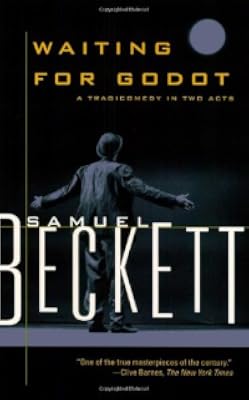
Waiting for Godot: A Tragicomedy in Two Acts
by Samuel Beckett
On This Page
Description
From an inauspicious beginning at the tiny Left Bank Theatre de Babylone in 1953, followed by bewilderment among American and British audiences, Waiting for Godot has become of the most important and enigmatic plays of the past fifty years and a cornerstone of twentieth-century drama. As Clive Barnes wrote, "Time catches up with genius … Waiting for Godot is one of the masterpieces of the century."The story revolves around two seemingly homeless men waiting for someone-or something-named show more Godot. Vladimir and Estragon wait near a tree, inhabiting a drama spun of their own consciousness. The result is a comical wordplay of poetry, dreamscapes, and nonsense, which has been interpreted as mankind's inexhaustible search for meaning. Beckett's language pioneered an expressionistic minimalism that captured the existential post-World War II Europe. His play remains one of the most magical and beautiful allegories of our time. show lessTags
Recommendations
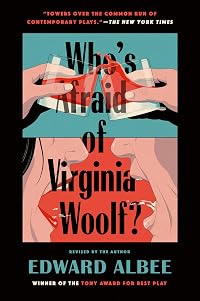
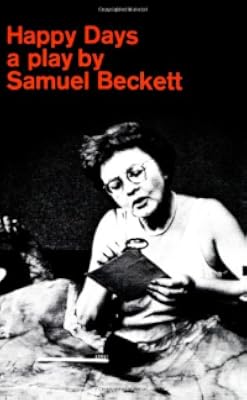

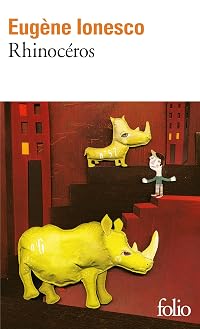
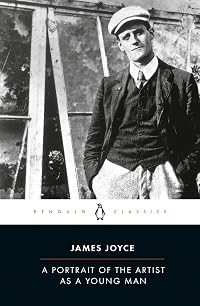









Member Recommendations
acenturyofsleep Stoppard's play's been called "Waiting for Hamlet," as both are existentialist plays featuring a pair of clueless (yet tragic) idiots.
172
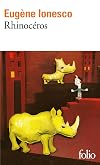

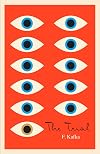

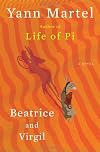
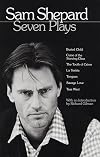

EMS_24 Two man, trying to escape the city what doesn't succeed. Absurdism, exentialism, repetition.
Member Reviews
Samuel Beckett is like the John Cage of literature; their work can be looked at as either absurdly intricate or blatantly daft, which as a result, causes a lot of contentions for the ostentatious critics and breezy consumers alike. I'm personally very much on the fence when it comes to minimalism in general; there's a point where I have to draw the line and say this is too much. Fortunately for Beckett, he falls comfortably on the side of brilliance for this work alone and deserves his leather armchair in Irish heaven amongst the likes of Joyce and Yeats.
No use reading any play by Beckett, they must be seen to make sense. When done well they are powerful! Beckett's WAITING FOR GODOT has been called the quintessential play of the twentieth century. With good reason.
Samuel Beckett spent a lifetime writing about the nothingness of existence. In general, for Beckett, life was a dung-heap where individuals passed the time waiting for something to happen. What does happen while a person waits can be boring, tragic, funny, silent, loud, philosophical, scatological, cruel, tender, but never purposeful or fulfilling.
Two tramps wait on a country road for the mysterious Godot. Godot is never identified except to say that he has a white beard, does nothing, and may show up tomorrow. The waiting is show more killing Joel Swetow’s Estragon. He wants to get on with it and leave, separate from his companion of fifty years, Vladimir, or just go ahead and hang himself. But death isn’t in the cards, because there is no rope to be had, and the logistics of hanging himself on the puny tree that is available are impossible.
Unlike his other plays, Beckett allows several rays of hope in Waiting For Godot. Vladimir and Estragon do love each other and the tree blooms. In later plays all that is gone. show less
Samuel Beckett spent a lifetime writing about the nothingness of existence. In general, for Beckett, life was a dung-heap where individuals passed the time waiting for something to happen. What does happen while a person waits can be boring, tragic, funny, silent, loud, philosophical, scatological, cruel, tender, but never purposeful or fulfilling.
Two tramps wait on a country road for the mysterious Godot. Godot is never identified except to say that he has a white beard, does nothing, and may show up tomorrow. The waiting is show more killing Joel Swetow’s Estragon. He wants to get on with it and leave, separate from his companion of fifty years, Vladimir, or just go ahead and hang himself. But death isn’t in the cards, because there is no rope to be had, and the logistics of hanging himself on the puny tree that is available are impossible.
Unlike his other plays, Beckett allows several rays of hope in Waiting For Godot. Vladimir and Estragon do love each other and the tree blooms. In later plays all that is gone. show less
Existentialism served raw! After reading The Stranger by Camus, I did not think that existentialism could be more plainly defined in prose, but Godot has left me debating (and yes, also waiting). Beckett, it seems, is also magically able to actualize ennui as a comedy -- as he puts it, a tragicomedy. But moreover, the piece does well to capture a subtlety of the existential mood: man's inextinguishable, incorrigible hope.
Whoa. What did I just watch? (Is watching a play an equivalent to having "read" the play? Yes, yes, why not. Same as listening to an audiobook in my way of thinking.)
Definitely a re-read (re-watch) candidate. Absolutely entertaining and even haunting, but I haven't a clue what it was about. Kind of like having a vivid dream and waking so certain of all the feelings and crave to pin down the meaning. But when you start to talk about it, or write in journal about it, you must concede that part of the meaning is the letting go of conscious logic and it's not going to fully translate to daytime. But it doesn't change the fact that you loved that dream and it's part of you now.
Definitely a re-read (re-watch) candidate. Absolutely entertaining and even haunting, but I haven't a clue what it was about. Kind of like having a vivid dream and waking so certain of all the feelings and crave to pin down the meaning. But when you start to talk about it, or write in journal about it, you must concede that part of the meaning is the letting go of conscious logic and it's not going to fully translate to daytime. But it doesn't change the fact that you loved that dream and it's part of you now.
The amazing thing about Waiting for Godot is that it has always engendered confusion, uncertainty and half-formed theories. It’s puzzling to most viewers and reviewers. So much so, you have to wonder why anyone likes it, since they don’t seem to be able to understand it. Yet far from an enigmatic muddle, Godot is crystal clear. It is an Irish vision of Purgatory/Limbo.
All the evidence points to it; no evidence contradicts it. It lets the whole story come together consistently and rationally. Two ragged fellows meet every morning and do nothing all day. Not that there is anything to do - the world is essentially flat, boundless, gray and barren, save for one derisory dead tree. There is no water, no food (save for a single old show more vegetable in the pocket of one of them - every day), no shelter, no objects of any kind. Not even a place to sit. Estragon is doomed to remember nothing except being beaten up the night before. Every night. Vladimir is cursed with an inkling of having been here and done this before, but can't quite nail it. Total frustration.
They consider suicide, but don't even have the means to do even that little. They are dead men already, so it is redundant. They cross paths with another pair, similarly cursed, and this happens every day with no one remembering the previous encounter. They are doomed to repeat this meaningless activity every day for eternity. And part of it is waiting for a man who they've never met and who never comes. He cancels on them every afternoon.
What fresh hell is this? to borrow from Ms. Parker. They are waiting for God(ot) to decide their eternal fates. And every day, God doesn’t show. It’s Limbo (since cancelled).
It is precisely the same Limbo envisioned by another great Irish author and playwright, Flann O'Brien, in his last novel - The Third Policeman. In it, the nameless "hero" awakens in a land much like the one he came from, but can't interact with. Instead, his wanderings continually take him to the police station, where the two constables tell him he'll have to wait for the third policeman, who never shows. The police talk endlessly about a bicycle parked there, and whether or not it has moved, is capable of moving, should move, has the will to move, didn't it just move? After 150 pages of this, our hero surmises this can't go on and must be a bad dream, because it's not as if he is dead, he says. And it hits you; yes, of course that’s it - he is dead. This is Purgatory. Doomed to endlessly repeat the same boring, pointless rounds all day every day, visiting a deep well of lockers where he can withdraw anything he wants or needs, but he cannot take any of it back up the elevator if it adds even a fraction of an ounce to the personal weight he came down with.
Nonsense. Frustration. Boredom. Futility. Pointlessness. Endlessness. Hopelessness. Agony. There is no climax, no love, no betrayal – the minimum requirements of drama. There’s just the same again. That is Beckett and O'Brien's vision of what awaits Irishmen. In other words, more of the same. Forever. That is as powerful as anything truly dramatic, and accounts for Godot’s undiminished popularity.
Waiting for Godot is, in more ways than one, timeless. show less
All the evidence points to it; no evidence contradicts it. It lets the whole story come together consistently and rationally. Two ragged fellows meet every morning and do nothing all day. Not that there is anything to do - the world is essentially flat, boundless, gray and barren, save for one derisory dead tree. There is no water, no food (save for a single old show more vegetable in the pocket of one of them - every day), no shelter, no objects of any kind. Not even a place to sit. Estragon is doomed to remember nothing except being beaten up the night before. Every night. Vladimir is cursed with an inkling of having been here and done this before, but can't quite nail it. Total frustration.
They consider suicide, but don't even have the means to do even that little. They are dead men already, so it is redundant. They cross paths with another pair, similarly cursed, and this happens every day with no one remembering the previous encounter. They are doomed to repeat this meaningless activity every day for eternity. And part of it is waiting for a man who they've never met and who never comes. He cancels on them every afternoon.
What fresh hell is this? to borrow from Ms. Parker. They are waiting for God(ot) to decide their eternal fates. And every day, God doesn’t show. It’s Limbo (since cancelled).
It is precisely the same Limbo envisioned by another great Irish author and playwright, Flann O'Brien, in his last novel - The Third Policeman. In it, the nameless "hero" awakens in a land much like the one he came from, but can't interact with. Instead, his wanderings continually take him to the police station, where the two constables tell him he'll have to wait for the third policeman, who never shows. The police talk endlessly about a bicycle parked there, and whether or not it has moved, is capable of moving, should move, has the will to move, didn't it just move? After 150 pages of this, our hero surmises this can't go on and must be a bad dream, because it's not as if he is dead, he says. And it hits you; yes, of course that’s it - he is dead. This is Purgatory. Doomed to endlessly repeat the same boring, pointless rounds all day every day, visiting a deep well of lockers where he can withdraw anything he wants or needs, but he cannot take any of it back up the elevator if it adds even a fraction of an ounce to the personal weight he came down with.
Nonsense. Frustration. Boredom. Futility. Pointlessness. Endlessness. Hopelessness. Agony. There is no climax, no love, no betrayal – the minimum requirements of drama. There’s just the same again. That is Beckett and O'Brien's vision of what awaits Irishmen. In other words, more of the same. Forever. That is as powerful as anything truly dramatic, and accounts for Godot’s undiminished popularity.
Waiting for Godot is, in more ways than one, timeless. show less
One can understand why the Irish critic Mercier quipped it’s a play in which “nothing happens, twice.” In Waiting for Godot Beckett is certainly not telling a conventional story, and while he includes small bits of humor, he’s really commenting on the human condition, and with a very existential view. Life is absurd, meaningless, repetitive, confusing, cruel, and isolated.
Some have equated Godot, who the characters Vladimir and Estragon wait unsuccessfully for throughout the play, to God, and I think there is some truth to that as Beckett references or alludes to religion in several places – but I think more generally, Godot symbolizes any higher meaning, anything that would give this brief, transient life a purpose. That show more could be God for some and something else for others, but regardless, for these two, that meaning never comes. They end the play having answered no questions or taken any direction, pondering suicide, and are frozen into inaction by waiting for Godot so much so that they simply stand there even after agreeing to go. Oops, was that a spoiler?
The play is full of contradictions, repetitiveness, and questions – and there is little wonder why theatergoers and critics at the time exited thinking, wow, I just saw a whole bunch of nothing. Even the brutality and cruelty to others is presented as matter of fact and subdued. Beckett is making a philosophical statement at a time when, post-WWII, existentialism was on the rise, that feeling of bewilderment at life and the world around us, in part a reaction to man’s inhumanity to man, in part due to continued modernism and the growing disbelief in a grandfatherly higher power in the sky.
I wouldn’t guess this would be a ‘date play’ unless you’re dating an intellectual or a philosophy major, and I suppose one’s enjoyment of the written form is going to vary wildly as well, but I found it timeless, and a great artistic representation of the philosophy.
Quotes:
“quaquaquaqua” :) show less
Some have equated Godot, who the characters Vladimir and Estragon wait unsuccessfully for throughout the play, to God, and I think there is some truth to that as Beckett references or alludes to religion in several places – but I think more generally, Godot symbolizes any higher meaning, anything that would give this brief, transient life a purpose. That show more could be God for some and something else for others, but regardless, for these two, that meaning never comes. They end the play having answered no questions or taken any direction, pondering suicide, and are frozen into inaction by waiting for Godot so much so that they simply stand there even after agreeing to go. Oops, was that a spoiler?
The play is full of contradictions, repetitiveness, and questions – and there is little wonder why theatergoers and critics at the time exited thinking, wow, I just saw a whole bunch of nothing. Even the brutality and cruelty to others is presented as matter of fact and subdued. Beckett is making a philosophical statement at a time when, post-WWII, existentialism was on the rise, that feeling of bewilderment at life and the world around us, in part a reaction to man’s inhumanity to man, in part due to continued modernism and the growing disbelief in a grandfatherly higher power in the sky.
I wouldn’t guess this would be a ‘date play’ unless you’re dating an intellectual or a philosophy major, and I suppose one’s enjoyment of the written form is going to vary wildly as well, but I found it timeless, and a great artistic representation of the philosophy.
Quotes:
“quaquaquaqua” :) show less
What a relief!
I had been under the impression that Waiting for Godot was a religious allegory, where Estragon and Vladimir represented the two thieves crucified with Jesus, or society in general; Lucky represented Jesus; Pozzo represented organized religion; and the whole thing was some tortured, surreal / comedic commentary on the pointlessness / necessity of faith. Gar, I thought, if I wanted earnest religious allegory I could just read Life of Pi again, borrrrrrring.
"It's never the same pus from one second to the next."
But then I read it, and it's not that at all. It turns out it's just about kinky gay BDSM relationships: Pozzo and Lucky kindle latent longings in Vladimir and Estragon that they try and fail to act on. You can pretty show more much just watch the Gimp scene from Pulp Fiction; it's exactly the same story. Whew! This is way sexier than I'd been led to believe.
"Perhaps he could dance first and think afterwards, if it isn't too much to ask of him."
This isn't really my scene, but I appreciate the exploration of it. To each his own!
"We are all born mad. Some remain so."
Recommended soundtrack: "One More Try," George Michael. show less
I had been under the impression that Waiting for Godot was a religious allegory, where Estragon and Vladimir represented the two thieves crucified with Jesus, or society in general; Lucky represented Jesus; Pozzo represented organized religion; and the whole thing was some tortured, surreal / comedic commentary on the pointlessness / necessity of faith. Gar, I thought, if I wanted earnest religious allegory I could just read Life of Pi again, borrrrrrring.
"It's never the same pus from one second to the next."
But then I read it, and it's not that at all. It turns out it's just about kinky gay BDSM relationships: Pozzo and Lucky kindle latent longings in Vladimir and Estragon that they try and fail to act on. You can pretty show more much just watch the Gimp scene from Pulp Fiction; it's exactly the same story. Whew! This is way sexier than I'd been led to believe.
"Perhaps he could dance first and think afterwards, if it isn't too much to ask of him."
This isn't really my scene, but I appreciate the exploration of it. To each his own!
"We are all born mad. Some remain so."
Recommended soundtrack: "One More Try," George Michael. show less
Members
- Recently Added By
Lists

Classics you know you should have read but probably haven't
421 works; 409 members

Rory Gilmore Book Club
193 works; 5 members

Greatest Books, allegedly
484 works; 9 members

Top 50 Favourite Books
50 works; 2 members

Well-Educated Mind
150 works; 3 members

1:28 p.m.'s 350 Stage Plays Challenge
94 works; 3 members

Fake Top 100 Fiction
81 works; 4 members

EU Fiction: 1950-2022
223 works; 70 members

My 100 Favorite Books of All Time
57 works; 2 members

Books Read in 2022
5,226 works; 115 members

Mustich's 1000 Books to Read Before You Die: A Life Changing List
1,001 works; 20 members

Ambleside Books
459 works; 18 members

Books Read in 2009
464 works; 11 members
r/acting on Reddit - Essential Plays
44 works; 2 members
Stage Plays/Screenplays/Dialogues/Anything Dialogue-Storytelling Related
81 works; 2 members

Books Read in 2021
5,361 works; 114 members

Blackwell's Five Foot Bookshelf
72 works; 4 members

aborted books in 2020
36 works; 1 member

The Well-Educated Mind Reading Challenge
75 works; 7 members

AP Lit
363 works; 6 members
Essential/Recognized Stage Plays
115 works; 4 members

Books Read in 2019
4,052 works; 110 members
My Play Collection
769 works; 3 members

bound
100 works; 1 member
.
396 works; 1 member

Read For Your Life
157 works; 1 member

School Made Us Read It
380 works; 196 members

.
194 works; 2 members

Widely acclaimed, one book per year
105 works; 3 members

The Complete Rory Gilmore Reading List
506 works; 5 members

Favorite Books in Translation
320 works; 133 members

scav
54 works; 2 members

Recommended Reading : 600 Classics Reviewed, Editors of Salem Press, 2015
634 works; 6 members

Les 50 meilleurs livres de langue française de 1900 à aujourd’hui
69 works; 2 members
The Well-Educated Mind, Susan Wise Bauer, 2016
179 works; 3 members

top 100
39 works; 1 member
Books We Love to Reread
695 works; 298 members

Books Read in 2024
4,727 works; 128 members
New Lifetime Reading Plan by Fadiman and Major
225 works; 5 members

Books With the Most Memorable Titles
478 works; 158 members

My TBR Challenge Leftovers
22 works; 1 member

Books Read in 2018
4,360 works; 110 members

Best 20th Century French Plays
30 works; 4 members
Nifty Fifties
129 works; 14 members
New York Public Library's Books of the Century
120 works; 20 members
Existentialism
90 works; 11 members

20th Century Literature
1,161 works; 55 members

Metafiction
86 works; 23 members
Stream of Consciousness
87 works; 8 members

Best of Irish Literature
37 works; 7 members
Allegorical Fiction
16 works; 4 members

1950s
340 works; 22 members

Philip Ward's Lifetime Reading Plan
592 works; 22 members
Favourite Books
1,820 works; 316 members
1001 Books You Must Read Before You Die
1,448 works; 1,137 members

Books You Read During High School (For School)
301 works; 53 members

Slipstream or Interstitial Fiction
160 works; 19 members
Plays I Like
230 works; 31 members
Folio Society
831 works; 53 members

Unread books
1,063 works; 87 members

Irish writers
87 works; 17 members
Le Monde - Les 100 livres du siècle
121 works; 25 members
New York Public Library's Books of the Century - All
170 works; 14 members

Amanda's Guaranteed Books
110 works; 5 members
Experimental Literature
141 works; 19 members
The College Board: 101 Great Books Recommended for College-Bound Readers
111 works; 7 members
Okuduklarım
1 work; 1 member
http://thegreatestbooks.org's Greatest Fiction Books
59 works; 1 member

100 Most Recommended Works
100 works; 11 members
Harold Bloom - The Western Canon: D. The Chaotic Age
833 works; 24 members
Nobel Price Winners
222 works; 20 members

Modernism
140 works; 9 members
Blue Pyramid 1,276 Best Books of All Time
1,248 works; 32 members
The Top Ten: Writers Pick Their Favorite Books
240 works; 33 members
Favourite Theatre of the Absurd
30 works; 4 members
100 World Classics
99 works; 15 members

Speculative Fiction: Slipstream Literature
166 works; 16 members

University literature
145 works; 5 members

Meditations on Death
18 works; 3 members

Books Featured on Gilmore Girls
307 works; 21 members

Tonikat reading completed on Librarything journals
329 works; 2 members
Translingualism
191 works; 4 members

Favorite French Fiction
210 works; 90 members
Author Information

532+ Works 43,221 Members
Nobel Prize winner (1969) Samuel Beckett was born on April 13, 1906 near Dublin, Ireland into a middle-class Protestant family. As a boy, he studied French and enjoyed cricket, tennis, and boxing. At Trinity College he continued his studies in French and Italian and became interested in theater and film, including American film. After graduation, show more Beckett taught English in Paris and traveled through France and Germany. While in Paris Beckett met Suzanne Deschevaus-Dusmesnil. During World War II when Paris was invaded, they joined the Resistance. They were later forced to flee Paris after being betrayed to the Gestapo, but returned in 1945. Beckett and Deschevaus-Dusmesnil married in 1961. Samuel Beckett's first novel was Dream of Fair to Middling Women. Among his many works are Murphy; Malone Dies; and The Unnameable. His plays include Endgame, Happy Days, Not I, That Time, and Krapp's Last Tape. In 1953, the production of Waiting For Godot in Paris by director and actor Roger Blin earned Beckett international fame. Beckett was awarded the Nobel Prize in Literature in 1969. His style was postmodern minimalist and some of his major themes were imprisonment in one's self, the failure of language, and moral conduct in a godless world. Despite his fame, Samuel Beckett led a secluded life. In his later years he suffered from cataracts and emphysema. His wife Suzanne died on July 17, 1989 and Beckett died on December 22nd of the same year. (Bowker Author Biography) show less
Some Editions
Awards and Honors
Awards
Notable Lists
Greatest Books algorithm (102)
Schecks Bücher (99)
Series
Belongs to Publisher Series
Work Relationships
Is contained in
The Dramatic Works of Samuel Beckett: Volume III of The Grove Centenary Editions (Works of Samuel Beckett the Grove Centenary Editions) by Samuel Beckett
The Grove Centenary Editions of Samuel Beckett Boxed Set: Contains Novels I and II of Samuel Beckett, The Dramatic Works of Samuel Beckett, and The Poems, Short Fiction and Critcism of Samuel Beckett by Samuel Beckett (indirect)
Has the adaptation
Is parodied in
Has as a study
Has as a supplement
Has as a commentary on the text
Has as a student's study guide
Common Knowledge
- Canonical title*
- En attendant Godot
- Original title
- En attendant Godot
- Alternate titles*
- Waiting for Godot : a tragicomedy in two acts
- Original publication date
- 1953
- People/Characters
- Vladimir (Didi); Estragon (Gogo); Lucky; Pozzo; Boy
- Important places
- A country road
- First words*
- Camino en un descampado, con árbol. Atardecer.
ESTRAGÓN, sentado en el suelo, trata de descalzarse con ambas manos. Se detiene, agotado; descansa, jadeando; vuelve a empezar. - Quotations
- "Don't talk to me. Don't speak to me. Stay with me."
ESTRAGON: Nothing happens, nobody comes, nobody goes, it's awful!
ESTRAGON: We've lost our rights?
VLADIMIR: [Distinctly.] We got rid of them.
VLADIMIR: That passed the time.
ESTRAGON: It would have passed in any case.
VLADIMIR: Yes, but not so rapidly.
VLADIMIR: Moron!
ESTRAGON: Vermin!
VLADIMIR: Abortion!
ESTRAGON: Morpion!
VLADIMIR: Sewer-rat!
ESTRAGON: Curate!
VLADIMIR: Cretin!
ESTRAGON: [With finality.] Crritic!
VLADIMIR: Oh!
ESTRAGON: We always find something, eh, Didi, to give us the impression we exist?
VLADIMIR: [impatiently] Yes, yes, we're magicians. (show all 7)
ESTRAGON: [Aphoristic for once.] We are all born mad. Some remain so. - Last words*
- (Click to show. Warning: May contain spoilers.)ESTRAGÓN. -Entonces, ¿nos vamos?
VLADIMIRO. -Súbete los pantalones.
ESTRAGÓN. -¿Qué?
VLADIMIRO. -Súbete los pantalones.
ESTRAGÓN. -¿Qué me quite los pantalones?
VLADIMIRO. -Que te los subas.
ESTRAGÓN. -Es verdad
(Se sube los pantalones. Silencio)
VLADIMIRO. -Entonces, ¿nos vamos?
ESTRAGÓN. -Vámonos - Blurbers
- Mailer, Norman; Bengley, Eric; Fraser, G.S.
- Original language
- French
- Canonical DDC/MDS
- 848.99415
- Disambiguation notice
- 3518365010 1971 softcover trilingual suhrkamp taschenbuch 1
*Some information comes from Common Knowledge in other languages. Click "Edit" for more information.
Classifications
- Genre
- Fiction and Literature
- DDC/MDS
- 848.99415 — Literature & rhetoric French Literature French miscellaneous writings 1900- French-language literature outside of France (Francophone) Europe & Eastern Europe British Isles Ireland
- LCC
- PQ2603 .E378 .E53 — Language and Literature French, Italian, Spanish and Portuguese literatures French literature Modern literature 1900-1960
- BISAC
Statistics
- Members
- 14,691
- Popularity
- 496
- Reviews
- 191
- Rating
- (3.89)
- Languages
- 23 — Bengali, Catalan, Czech, Dutch, English, Estonian, Finnish, French, German, Greek, Hungarian, Italian, Korean, Kurdish, Multiple languages, Norwegian (Nynorsk), Norwegian (Bokmål), Polish, Portuguese, Russian, Spanish, Swedish, Turkish
- Media
- Paper, Audiobook, Ebook
- ISBNs
- 135
- UPCs
- 2
- ASINs
- 108