
The Woman in the Dunes
by Kōbō Abe
On This Page
Description
The Woman in the Dunes, by celebrated writer and thinker Kobo Abe, combines the essence of myth, suspense and the existential novel.After missing the last bus home following a day trip to the seashore, an amateur entomologist is offered lodging for the night at the bottom of a vast sand pit. But when he attempts to leave the next morning, he quickly discovers that the locals have other plans. Held captive with seemingly no chance of escape, he is tasked with shoveling back the show more ever-advancing sand dunes that threaten to destroy the village. His only companion is an odd young woman. Together their fates become intertwined as they work side by side at this Sisyphean task. show less
Tags
Recommendations



















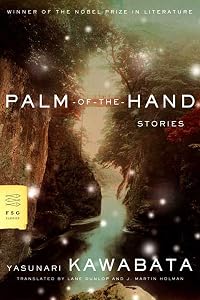


Member Recommendations



CGlanovsky protagonists wind-up imprisoned in surreal and somewhat absurd circumstances
Member Reviews
4.5/5
One of the highest candidates on my 'to be re-read' list. I don't know if I was fully prepared or invested enough to properly dissect the layers of The Woman in the Dunes, even though it has a simple premise. An entomology teacher takes a vacation to a sandy beach on the hunt for new insects for his collection. In doing so, he discovers a small village that is in the process of being swallowed up by the dunes. He is invited to stay the night at a woman's home by some of the villagers, a home that is at the bottom of a forty foot pit of sand. Soon, the man discovers that he has been trapped with/by her with the explicit purpose of helping the woman, and thus the village, prevent the sand from destroying her home.
There's a strong show more sense of ambiguity that obfuscates the facts behind the story that I enjoyed greatly. Is the woman a victim of the villagers imprisonment, or a willing accomplice in the man's? Is the man actually trapped as he appears, or is his prison more mental than physical? How much time passes between events? How does the village benefit from the sand removal, really? All of these questions could be argued multiple ways, and convincingly so. This is a mysterious world, one where magic almost feels at work, and yet is so grounded in human emotions that it retains it's sobriety.
How the man handles his circumstances is where Abe focuses most of the attention. The story goes to some extremely dark places rather quickly as the man experiences the full range of possible responses to his predicament. Both him and the woman feel detailed and intimately written, both struggling to cope in their own ways. Abe's prose has a similar flavor to Yoko Ogawa's The Memory Police in it's surface level simplicity, and yet Abe also provides some really vivid and ornate passages that jumped off the page. He can write beautifully, but does so as points of emphasis against the rest of the writing.
The Woman in the Dunes is an exploration of how our emotions effect our outlook on the world more than our circumstances. It implies that even with 'meager' means and purpose, great happiness and satisfaction can be accomplished. This is one of those novels that greatly rewards deep study and analysis. The harder you look, the more questions you find to ponder over. I'm sure that I will find more appreciation for it when I revisit it with more space to do so. show less
One of the highest candidates on my 'to be re-read' list. I don't know if I was fully prepared or invested enough to properly dissect the layers of The Woman in the Dunes, even though it has a simple premise. An entomology teacher takes a vacation to a sandy beach on the hunt for new insects for his collection. In doing so, he discovers a small village that is in the process of being swallowed up by the dunes. He is invited to stay the night at a woman's home by some of the villagers, a home that is at the bottom of a forty foot pit of sand. Soon, the man discovers that he has been trapped with/by her with the explicit purpose of helping the woman, and thus the village, prevent the sand from destroying her home.
There's a strong show more sense of ambiguity that obfuscates the facts behind the story that I enjoyed greatly. Is the woman a victim of the villagers imprisonment, or a willing accomplice in the man's? Is the man actually trapped as he appears, or is his prison more mental than physical? How much time passes between events? How does the village benefit from the sand removal, really? All of these questions could be argued multiple ways, and convincingly so. This is a mysterious world, one where magic almost feels at work, and yet is so grounded in human emotions that it retains it's sobriety.
How the man handles his circumstances is where Abe focuses most of the attention. The story goes to some extremely dark places rather quickly as the man experiences the full range of possible responses to his predicament. Both him and the woman feel detailed and intimately written, both struggling to cope in their own ways. Abe's prose has a similar flavor to Yoko Ogawa's The Memory Police in it's surface level simplicity, and yet Abe also provides some really vivid and ornate passages that jumped off the page. He can write beautifully, but does so as points of emphasis against the rest of the writing.
The Woman in the Dunes is an exploration of how our emotions effect our outlook on the world more than our circumstances. It implies that even with 'meager' means and purpose, great happiness and satisfaction can be accomplished. This is one of those novels that greatly rewards deep study and analysis. The harder you look, the more questions you find to ponder over. I'm sure that I will find more appreciation for it when I revisit it with more space to do so. show less
Niki Jumpei, an amateur entomologist, seeks a rare beetle in the desert. The day ends, and he is lost in the sand dunes. In desperation, he agrees to assistance from another man who finds the entomologist shelter for the night. He is taken to a sand cliff from which he is lowered by rope ladder to a small house, partially covered by sand and inhabited by a lone woman. In the morning, the rope is gone but the woman remains.
The story was terrifying and engrossing all at once. It had the essence of one person being alone, yet not being alone; disappearing and yet not disappearing. Thinking of a person placed in a captive situation, it made me question whether it would be better to remain aloof or to befriend a captor. Presenting just as show more many questions as answers, this book turned out to be an incredible mind trip. I kept on trying to figure out what it all meant, whether it was a metaphor for anything at all or just a bizarre tale meant for entertainment. It was a story, complete with perfectly situated pen-and-ink drawings, about the meaning of being held captive and containing sequences of events and scenery which made for surreal and fascinating reading. show less
The story was terrifying and engrossing all at once. It had the essence of one person being alone, yet not being alone; disappearing and yet not disappearing. Thinking of a person placed in a captive situation, it made me question whether it would be better to remain aloof or to befriend a captor. Presenting just as show more many questions as answers, this book turned out to be an incredible mind trip. I kept on trying to figure out what it all meant, whether it was a metaphor for anything at all or just a bizarre tale meant for entertainment. It was a story, complete with perfectly situated pen-and-ink drawings, about the meaning of being held captive and containing sequences of events and scenery which made for surreal and fascinating reading. show less
If you like feeling trapped in an episode of the Twilight Zone where nothing makes sense and there’s no way out, this may be for you. An ordinary office worker, who happens to be an insect collector, decides to take a holiday. He stumbles into a town that exists in a labyrinth built in dunes. The inhabitants are constantly shoveling to keep the sand walls from collapsing. If you try to climb out you will be inundated. He’s paired with a woman who can not or will not help him. I still feel like I’ve been plastered with sand. I’m sure there’s a lot of symbolism that is completely lost on me. If you like frustrating existentialist tales this may be your cup of sandy cha.
An amateur entomologist is wandering the dunes looking for rare beetles and seeks shelter for the night in a village. The elders direct him to the home of a woman whose house is in a sand pit. He′s lowered in and thus begins his captivity, endlessly shoveling to keep the house from being subsumed by sand.
At first the sand is a scientific phenomena; it′s properties, composition, and movement are discussed in an interesting, academic way. But gradually the sand becomes a character in and of itself, and its weight and endless encroachment seem deliberately menacing. It falls on the house and strains the timbers, it seeps through the ceiling and requires that the man sleep with a towel over his face, it invades every crease of clothing show more and skin, it gets in his mouth and eyes. It is increasingly claustrophobic both physically and psychologically.
Equally unsettling is the relationship between the the man and the woman who lives there. She is never named, and it is unclear whether she is there willingly or not. She is an amorphous being who may be a tacit jailkeeper, an ignorant dupe, a fellow prisoner, or a simple villager who has drunk the Kool-Aid. She becomes the target of the man′s anger, defiance, despair, and frustration. Her passiveness is annoying, and because her character is never fleshed out, it is hard to either sympathize with her or hate her. It makes it harder to judge the man′s treatment of her, because we don′t know what she is.
In turn, it′s not clear exactly what the novel is either. Is it a metaphor for the futility of work and life? Is it a psychological novel about a captive′s changing mindset and emotional state? Is it all a hallucination or schizophrenic nightmare?
Although I found the book unsettling and tense, I enjoyed the vivid imagery and unusual premise. I haven′t read enough Japanese literature to know how it fits into the canon thematically or style-wise, but I would recommend the book to those who enjoy Kafka or are seeking something different. show less
At first the sand is a scientific phenomena; it′s properties, composition, and movement are discussed in an interesting, academic way. But gradually the sand becomes a character in and of itself, and its weight and endless encroachment seem deliberately menacing. It falls on the house and strains the timbers, it seeps through the ceiling and requires that the man sleep with a towel over his face, it invades every crease of clothing show more and skin, it gets in his mouth and eyes. It is increasingly claustrophobic both physically and psychologically.
Equally unsettling is the relationship between the the man and the woman who lives there. She is never named, and it is unclear whether she is there willingly or not. She is an amorphous being who may be a tacit jailkeeper, an ignorant dupe, a fellow prisoner, or a simple villager who has drunk the Kool-Aid. She becomes the target of the man′s anger, defiance, despair, and frustration. Her passiveness is annoying, and because her character is never fleshed out, it is hard to either sympathize with her or hate her. It makes it harder to judge the man′s treatment of her, because we don′t know what she is.
In turn, it′s not clear exactly what the novel is either. Is it a metaphor for the futility of work and life? Is it a psychological novel about a captive′s changing mindset and emotional state? Is it all a hallucination or schizophrenic nightmare?
Although I found the book unsettling and tense, I enjoyed the vivid imagery and unusual premise. I haven′t read enough Japanese literature to know how it fits into the canon thematically or style-wise, but I would recommend the book to those who enjoy Kafka or are seeking something different. show less
Such a strange book about the prisons we live our lives in, those self-constructed and imposed by others, what we'll trade our freedom for, and how hard (or not) we'll fight to regain it. At times an incredibly frustrating book, but always a great book. I sometimes felt so violent reading this, but then would think, "What sand am I digging? Day after day?" Thinking about this book too much can be truly dangerous.
One day a teacher in his early thirties, Niki Jumpei (surname first, Japanese-style) goes off on holiday and never returns. There’s no trace of him or clues to his disappearance—no suicide note or debts, no obvious problem with women or work—and seven years later he’s pronounced officially missing. The story here describes what happened to him.
The holiday was in fact an outing to collect beetles (Jumpei is a keen entomologist) which leads him to an isolated village on the coast. There, the encroaching dunes have left many of its houses at the bottom of deep pits in the sand and the village itself is in perpetual danger of being completely buried. For the villagers—or some of them at least—it’s a never-ending task show more keeping this sand at bay, shovelling it up out of the pits to where it is carted away. As we soon discover, though, something far more sinister is going on…
There’s quite a bit about sand in this book, its composition and the peculiar way it behaves: although a solid substance, in many respects it’s more like a fluid—rippling in the wind, flowing downhill, filling holes and levelling itself flat like a grainy ocean. My first thought, perhaps a quarter of the way in, was that the sand here represents entropy, the one-way running down of things we’re all battling against just being here at all: “The only certain factor was its movement; sand was the antithesis of all form.”
But, then again, does the sand represent time? The thing about time of course, or entropy, is that there’s no escaping it; the windblown sand gets in everywhere, wears everything away, makes things look old and will eventually smooth them to a flat bland nothing. Built on sand, made of sand—not just a village, but our entire civilisation. Back at work on yet another dreary Monday morning, you could easily feel you’re living in this story yourself: each of us in our own personal hole in the ground, performing pointless tasks, battling impossible odds, merely delaying the inevitable.
This was Kōbō Abe’s first novel, published in 1962 and an immediate success. An intelligent, patient and absorbing read. show less
The holiday was in fact an outing to collect beetles (Jumpei is a keen entomologist) which leads him to an isolated village on the coast. There, the encroaching dunes have left many of its houses at the bottom of deep pits in the sand and the village itself is in perpetual danger of being completely buried. For the villagers—or some of them at least—it’s a never-ending task show more keeping this sand at bay, shovelling it up out of the pits to where it is carted away. As we soon discover, though, something far more sinister is going on…
There’s quite a bit about sand in this book, its composition and the peculiar way it behaves: although a solid substance, in many respects it’s more like a fluid—rippling in the wind, flowing downhill, filling holes and levelling itself flat like a grainy ocean. My first thought, perhaps a quarter of the way in, was that the sand here represents entropy, the one-way running down of things we’re all battling against just being here at all: “The only certain factor was its movement; sand was the antithesis of all form.”
But, then again, does the sand represent time? The thing about time of course, or entropy, is that there’s no escaping it; the windblown sand gets in everywhere, wears everything away, makes things look old and will eventually smooth them to a flat bland nothing. Built on sand, made of sand—not just a village, but our entire civilisation. Back at work on yet another dreary Monday morning, you could easily feel you’re living in this story yourself: each of us in our own personal hole in the ground, performing pointless tasks, battling impossible odds, merely delaying the inevitable.
This was Kōbō Abe’s first novel, published in 1962 and an immediate success. An intelligent, patient and absorbing read. show less
A man out searching for beetles in the seaside dunes stumbles across a village that fights the advancement of sand each day. This book questioned my ideas about imprisonment and made me wonder just who is a prisoner. Is it the one held captive and forced to do something against his will or is it the one who goes about each day working as a salary man, reading the papers, paying bills, and fulfilling life's many duties?
Reading this book did make me hate sand... really hate sand.
Reading this book also reminded me of the book Concrete Island by J. G. Ballard… but I enjoyed this one better.
“The theory had been advanced that the man, tired of life, had committed suicide. One of his colleagues, who was an amateur psychoanalyst, held to show more this view. He claimed that in a grown man enthusiasm for such a useless pastime as collecting insects was evidence enough of a mental quirk. Even in children, unusual preoccupation with insect collecting frequently indicates an Oedipus complex. In order to compensate for his unsatisfied desires, the child enjoys sticking pins into insects, which he need never fear will escape. And the fact that he does not leave off once he has grown up is quite definitely a sign that the condition has become worse. Thus it is far from accidental that entomologists frequently have an acute desire for acquisitions and that they are extremely reclusive, kleptomaniac, homosexual. From this point to suicide out of weariness with the world is but a step. As a matter of fact, there are even some collectors who are attracted by the potassium cyanide in their bottles rather than by the collecting itself, and no matter how they try they are quite incapable of washing their hands of the business.” show less
Reading this book did make me hate sand... really hate sand.
Reading this book also reminded me of the book Concrete Island by J. G. Ballard… but I enjoyed this one better.
“The theory had been advanced that the man, tired of life, had committed suicide. One of his colleagues, who was an amateur psychoanalyst, held to show more this view. He claimed that in a grown man enthusiasm for such a useless pastime as collecting insects was evidence enough of a mental quirk. Even in children, unusual preoccupation with insect collecting frequently indicates an Oedipus complex. In order to compensate for his unsatisfied desires, the child enjoys sticking pins into insects, which he need never fear will escape. And the fact that he does not leave off once he has grown up is quite definitely a sign that the condition has become worse. Thus it is far from accidental that entomologists frequently have an acute desire for acquisitions and that they are extremely reclusive, kleptomaniac, homosexual. From this point to suicide out of weariness with the world is but a step. As a matter of fact, there are even some collectors who are attracted by the potassium cyanide in their bottles rather than by the collecting itself, and no matter how they try they are quite incapable of washing their hands of the business.” show less
Members
- Recently Added By
Lists

Japanese Literature
230 works; 40 members

Best of World Literature
437 works; 52 members

Recommend the 20 best books you've read in the last five years
2,168 works; 604 members

20th Century Literature
1,161 works; 55 members

Best Psychological Fiction
81 works; 16 members

Experimental Literature
141 works; 19 members
Canon de la narrativa universal del siglo XX
254 works; 6 members

1960s, Best books published therein
254 works; 22 members

Significant works of postmodern fiction
86 works; 25 members

Best Japanese Fiction
41 works; 10 members

A Novel Cure
742 works; 23 members

Existentialism
90 works; 11 members

Books Read in 2020
4,379 works; 123 members
Speculative Fiction from around the World
610 works; 18 members

20 Books Off the Beaten Path
20 works; 2 members

Philip Ward's Lifetime Reading Plan
592 works; 22 members

psychological
14 works; 1 member

current
52 works; 1 member

Canon de la narrativa universal del s. XX (cicutadry)
499 works; 3 members

Recommended Reading : 600 Classics Reviewed, Editors of Salem Press, 2015
634 works; 6 members

NTS Book Channel
316 works; 1 member
Talk Discussions
Past Discussions
The Woman in the Dunes by Kōbō Abé in Author Theme Reads (May 2012)
Author Information

85+ Works 9,156 Members
Kobo Abe is the pseudonym of Kimifusa Abe, who was born in Tokyo, Japan on March 7 1924. He was brought up in Manchuria where he lived with his father, a doctor of the hosipital attached to the Imperial Medical Colledge of Manchuria. In elementary school, he was educated in the experimental way, in which a teacher trained children to debating and show more rapid reading. Abe went back to Tokyo and went to Sejo Koko High School, a famous private school. He was later admitted to the faculty of medicine of Tokyo University. In 1944, Abe heard that Japan would lose the war before long and he forged a medical certificate to get home to Manchuria. He earned his medical degree in 1948, but never practiced. After graduation he began his writing career and became a member of a literary group led by Kiyoteru Hamada. Often compared to Kafka , he treated the contemporary human predicament in a realistic yet symbolic style. In 1951 he got the Akutagawa Award by his first masterpiece, Kabe (The Walls). Among Abe's novels are Woman in the Dunes, published in 1962 and made into a film in 1964, and his best-known work, Secret Rendezvous. His plays include Friends, published in 1967. The first of his short stories to appear in English were collected in Beyond the Curve, 1944-66. Abe died in 1993. (Bowker Author Biography) show less
Some Editions
Awards and Honors
Awards
Notable Lists
Series
Belongs to Publisher Series
Jahrhundert-Edition (Club Bertelsmann) (Abe, Kobo)
Work Relationships
Has the adaptation
Inspired
Has as a student's study guide
Common Knowledge
- Canonical title
- The Woman in the Dunes
- Original title
- 砂の女; Suna no Onna
- Alternate titles
- Sand Woman
- Original publication date
- 1962 (original Japanese) (original Japanese); 1964 (English translation) (English translation)
- People/Characters
- Niki Junpei
- Important places
- Tokyo, Japan; Japan
- Important events
- 1950s; 1955
- Related movies
- Suna no onna (1964 | IMDb)
- Epigraph
- WITHOUT THE THREAT
OF PUNISHMENT
THERE IS NO JOY
IN FLIGHT
罰がなければ、逃げるたのしみもない - First words
- One day in August a man disappeared.
八月のある日、男が一人、行方不明になった。 - Quotations*
- Es gibt wahrhaftig kein wunderlicheres, so von Neid zerfressenes Wesen wie einen Schullehrer! Da strömen die Schüler Jahr für Jahr gleich einem Fluß an ihm vorbei, nur er selber bleibt wie ein tief auf dem Grund des Fluss... (show all)es liegender Stein zurück. Er kann wohl anderen von Hoffnungen erzählen, aber ihm selber sind sie nicht erlaubt. Er kommt sich nutzlos vor und verfällt entweder in selbstquälerischen Trübsinn oder wird ein Moralprediger, der anderen vorschreiben will, wie sie zu leben haben. Eigenwilligkeit und Tatkraft anderer müssen ihm schon deswegen zuwider sein, weil er selber sich aus tiefster Seele danach sehnt.
"... Schriftsteller werden zu wollen, bedeutet, von Egoismus besessen zu sein; man will sich von einer Marionette dadurch unterscheiden, daß man selber als Puppenspieler in Erscheinung tritt. Insofern unterscheidet man sich ... (show all)nicht wesentlich von Frauen, die ein Make-up benutzen."
"Das ist zu hart formuliert! Aber wenn sie schon das Wort Schriftsteller in diesem Sinne gebrauchen, sollten Sie wenigstens bis zu einem gewissen Grad zwischen einem Schriftsteller und dem Schreiben unterscheiden!"
"Ja, genau das meine ich. Eben aus diesem Grund wollte ich Schriftsteller werden. Und wenn mir das nicht gelingt, sehe ich nicht ein, weshalb ich schreiben sollte!" - Last words
- (Click to show. Warning: May contain spoilers.)Anyone knowing anything about the person in question is requested to report to this court by the above date.
- Original language
- Japanese
*Some information comes from Common Knowledge in other languages. Click "Edit" for more information.
Classifications
- Genres
- Fiction and Literature, General Fiction
- DDC/MDS
- 895.635 — Literature & rhetoric Literatures of other languages Literatures of East and Southeast Asia Japanese Japanese fiction 1945–2000
- LCC
- PL845 .B4 .S813 — Language and Literature Languages and literatures of Eastern Asia, Africa, Oceania Languages of Eastern Asia, Africa, Oceania Japanese language and literature Japanese literature Individual authors and works
- BISAC
Statistics
- Members
- 3,571
- Popularity
- 4,619
- Reviews
- 76
- Rating
- (3.82)
- Languages
- 22 — Czech, Dutch, English, Estonian, Finnish, French, German, Greek, Hebrew, Hungarian, Italian, Japanese, Lithuanian, Norwegian (Bokmål), Farsi/Persian, Polish, Romanian, Russian, Spanish, Swedish, Portuguese (Portugal), Chinese, traditional
- Media
- Paper, Audiobook, Ebook
- ISBNs
- 63
- ASINs
- 32