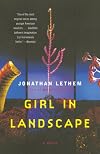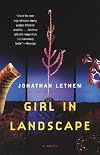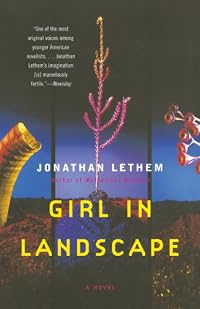
Girl in Landscape
by Jonathan Lethem
On This Page
Description
One the irrepressibly inventive Jonathan Lethem could weld science fiction and the Western into a mesmerizing novel of exploration and otherness, sexual awakening and loss. At the age of 13 Pella Marsh loses her mother and her home on the scorched husk that is planet Earth. Her sorrowing family emigrates to the Planet of the Archbuilders, whose mysterious inhabitants have names like Lonely Dumptruck and Hiding Kneel--and a civilization that and frightens their human visitors. On this new show more world, spikily independent Pella becomes as uneasy envoy between two species. And at the same time is unwilling drawn to a violent loner who embodies all the paranoid machismo of the frontier ethic. Combining the tragic grandeur of John Ford's The Searchers and the sexual tension of Lolitanbsp;and transporting them to a planet light years, Girl in Landscapenbsp;is a tour de force.nbsp; show lessTags
Recommendations



































Member Recommendations
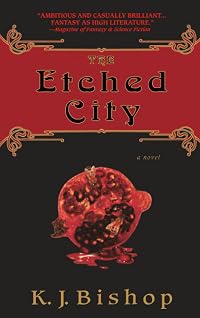
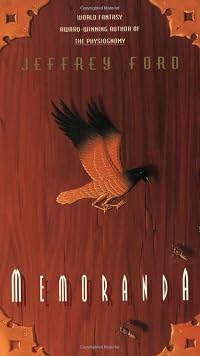
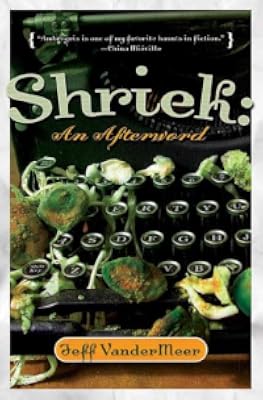
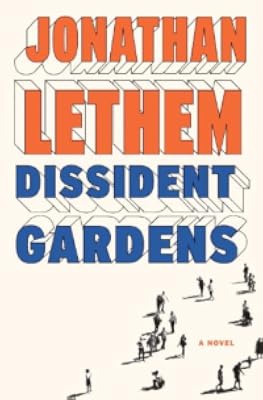
CGlanovsky Visions of humans colonizing planets with declining civilizations

Member Reviews
This was my introduction to Jonathan Lethem, and wow, I think I'm hooked already. Full disclosure: I'm a big fan of Philip K. Dick, and I know Lethem is as well.
Girl in Landscape reminded me a lot of PKD's novel Martian Time-Slip as far as the setting with the good-natured native population being disrespected and subjugated while the handful of colonizers meddle with things they obviously don't understand. But the PKD novel lacked the clear, consistent point of view that we have here with the titular "girl." They're two very different books, obviously, but it was interesting to compare them in my head as I went along.
I absolutely loved the concept of the "household deer" presented here. Without giving too much away, that's what made it show more "dreampunk" for me. And as a PKD fan, I really enjoyed the echos of "Zebra," which was part of the author's bizarre real-life experiences, not so much from his fiction.
I'd recommend this to fans of Philip K. Dick or other authors of classic pastoral SF like Clifford Simak, James Tiptree Jr., or Theodore Sturgeon. It had a throwback feel to it, not because the tech was old-fashioned at all, simply because the story takes place in a small frontier town, something you don't see much of on Earth these days. show less
Girl in Landscape reminded me a lot of PKD's novel Martian Time-Slip as far as the setting with the good-natured native population being disrespected and subjugated while the handful of colonizers meddle with things they obviously don't understand. But the PKD novel lacked the clear, consistent point of view that we have here with the titular "girl." They're two very different books, obviously, but it was interesting to compare them in my head as I went along.
I absolutely loved the concept of the "household deer" presented here. Without giving too much away, that's what made it show more "dreampunk" for me. And as a PKD fan, I really enjoyed the echos of "Zebra," which was part of the author's bizarre real-life experiences, not so much from his fiction.
I'd recommend this to fans of Philip K. Dick or other authors of classic pastoral SF like Clifford Simak, James Tiptree Jr., or Theodore Sturgeon. It had a throwback feel to it, not because the tech was old-fashioned at all, simply because the story takes place in a small frontier town, something you don't see much of on Earth these days. show less
After her mother dies of a brain tumor, 13-year-old Pella and her family emigrate from a nearly uninhabitable future Earth to a colony on the planet of the Arch-Builders in this coming-of-age story.
As is typical of many of his literary science fiction novels, Jonathan Lethem is most interested in placing his characters, and his readers, in a bizarre environment and watching how they adapt. In this case, the environment is an alien planet, once the home of an advanced civilization that has now been abandoned and left in ruins by all but a few of its original inhabitants. The aliens are called the Arch-builders because they left immense, now crumbling arches of unknown purpose all over the desert-like landscape. While most of the human show more colonists take pills to prevent contracting the alien viruses, Pella and her brothers do not, and this leads to her becoming strangely integrated with the planet and its alien life, just as she enters adolescence. She finds that she is able to mentally inhabit the bodies of the household deer -- small, unsatisfactorily described creatures that go everywhere and, apparently, observe everything that happens within the small human community. In this way, she witnesses the animosity and violence displayed toward the aliens, particularly by larger-than-life Efram Nugent, the informal leader of the colony.
This novel quietly grew on me. As Pella becomes more integrated with the life of the Arch-builders' planet, she adapts herself to living there in a way that the adults in her community cannot. She and many of the other children become something new. Lethem depicts this transformation slowly, gradually and subtly. At the same time, he unravels a sinister plot of conflict between Nugent, his fellow colonists and the Arch-builders that shares tropes with an old-fashioned Western. There is a lot going on under the surface of this novel, and I think it would benefit from rereading. Like pretty much any other Lethem novel I have read, it takes the genres we are all so familiar with, and contorts them in exciting new ways. show less
As is typical of many of his literary science fiction novels, Jonathan Lethem is most interested in placing his characters, and his readers, in a bizarre environment and watching how they adapt. In this case, the environment is an alien planet, once the home of an advanced civilization that has now been abandoned and left in ruins by all but a few of its original inhabitants. The aliens are called the Arch-builders because they left immense, now crumbling arches of unknown purpose all over the desert-like landscape. While most of the human show more colonists take pills to prevent contracting the alien viruses, Pella and her brothers do not, and this leads to her becoming strangely integrated with the planet and its alien life, just as she enters adolescence. She finds that she is able to mentally inhabit the bodies of the household deer -- small, unsatisfactorily described creatures that go everywhere and, apparently, observe everything that happens within the small human community. In this way, she witnesses the animosity and violence displayed toward the aliens, particularly by larger-than-life Efram Nugent, the informal leader of the colony.
This novel quietly grew on me. As Pella becomes more integrated with the life of the Arch-builders' planet, she adapts herself to living there in a way that the adults in her community cannot. She and many of the other children become something new. Lethem depicts this transformation slowly, gradually and subtly. At the same time, he unravels a sinister plot of conflict between Nugent, his fellow colonists and the Arch-builders that shares tropes with an old-fashioned Western. There is a lot going on under the surface of this novel, and I think it would benefit from rereading. Like pretty much any other Lethem novel I have read, it takes the genres we are all so familiar with, and contorts them in exciting new ways. show less
Girl in Landscape has been compared to Nabokov's Lolita which I have never read. As a result of my ignorance I was able to read Girl in Landscape without preconceived notions of what it was about. I'm glad I did. This was great in an extremely strange way. When you first meet old-for-her-age thirteen year old Pella Marsh and her family they are getting ready to go to the beach in what you or I would consider ordinary Brooklyn Heights, New York. Only planet Earth has become a post-apoplectic wasteland where exposure to the sun has become too dangerous without complicated protective gear. It has been decided the Marsh family will leave Earth for the Planet of the Arch-builders. Before they can leave Pella's mother is stricken with a brain show more tumor and quickly dies. Pella, her father and two brothers must travel to the Planet of the Arch-builders without her. This is where things go from odd to downright bizarre. The Planet of the Arch-builders is sparsely populated with a few earthlings, a smattering of Arch-builder aliens and an overabundance of a creature called household deer. Pella's father, a failed politician, has hopes of creating a lawful society on the Planet of the Arch-builders but soon discovers there is an ominous rift between the humans and the aliens. The plot gets darker and darker the deeper into the story you go. show less
It's a terrific coming-of-age story, a terrific space Western, and a really smart reflection on human nature. But you can't quite hold it directly. There is something about it, like the sun out West, where it seems too bright to approach directly. The shattered sense of this future America sets it off on that foot; the scene at the beginning at Coney Island. We almost don't want to look but at the same time feel compelled and so those two impulses meet somewhere just off to the side of the thing itself. That's a masterful achievement if I do say so.
More TK at RB: http://ragingbiblioholism.com/2014/11/21/girl-in-landscape/
More TK at RB: http://ragingbiblioholism.com/2014/11/21/girl-in-landscape/
Worldbuilding, careful word choice, not over-expository
- Ending a little rushed
This is the third novel I’ve read by Lethem, and I may have to read them all. In this genre (he writes in several), Lethem creates what I’d call literary science fiction. Here (and in [b:Amnesia Moon|32078|Amnesia Moon|Jonathan Lethem|http://photo.goodreads.com/books/1168324923s/32078.jpg|2209]) the reader is immediately in medias res with little preliminary exposition and even less later clarification. This works only because Lethem is so skillful at evoking environments and social circumstances through spare, nuanced prose. Though their styles and concerns are not particularly similar, Ursula K. Le Guin’s most recent novels utilize similar techniques. show more The characters know where they are and why it is the way it is; the reader enters almost as an accidental observer, able to see only a small segment of a broader but obscured world.
Girl in Landscape is a bildungsroman in which the main character, the 13-year old Pella Marsh, comes of age on an alien planet, and in doing so, perhaps also signals a greater coming of age for humanity. Lethem deftly captures both adolescent angst and interpersonal complexity and shows the relationship between the qualities of the characters’ psychology and expectations and their ways of seeing and understanding the world they inhabit. The landscape of the title is interior and exterior, physical and social, real and metaphorical. Overtly a tale of misplaced hopes and xenophobia, this is also a narrative of self-discovery and acknowledgement. I only wish the concluding sections had been about 20 pages longer and slightly more archetypal. Still, a terrific read. show less
- Ending a little rushed
This is the third novel I’ve read by Lethem, and I may have to read them all. In this genre (he writes in several), Lethem creates what I’d call literary science fiction. Here (and in [b:Amnesia Moon|32078|Amnesia Moon|Jonathan Lethem|http://photo.goodreads.com/books/1168324923s/32078.jpg|2209]) the reader is immediately in medias res with little preliminary exposition and even less later clarification. This works only because Lethem is so skillful at evoking environments and social circumstances through spare, nuanced prose. Though their styles and concerns are not particularly similar, Ursula K. Le Guin’s most recent novels utilize similar techniques. show more The characters know where they are and why it is the way it is; the reader enters almost as an accidental observer, able to see only a small segment of a broader but obscured world.
Girl in Landscape is a bildungsroman in which the main character, the 13-year old Pella Marsh, comes of age on an alien planet, and in doing so, perhaps also signals a greater coming of age for humanity. Lethem deftly captures both adolescent angst and interpersonal complexity and shows the relationship between the qualities of the characters’ psychology and expectations and their ways of seeing and understanding the world they inhabit. The landscape of the title is interior and exterior, physical and social, real and metaphorical. Overtly a tale of misplaced hopes and xenophobia, this is also a narrative of self-discovery and acknowledgement. I only wish the concluding sections had been about 20 pages longer and slightly more archetypal. Still, a terrific read. show less
An enjoyable read. I struggled with this author's Fortress of Solitude, but this 'sci-fi western' set on a distant planet where settlers try to live amongst the ruins of an ancient civilisation was much more to my liking. The characters, especially the main protagonist Pella Marsh, were believable and there were some nice touches, such as the tiny household deer. Probably not up there with the classics of the genre but I'd recommend it to any SF fan.
It's a terrific coming-of-age story, a terrific space Western, and a really smart reflection on human nature. But you can't quite hold it directly. There is something about it, like the sun out West, where it seems too bright to approach directly. The shattered sense of this future America sets it off on that foot; the scene at the beginning at Coney Island. We almost don't want to look but at the same time feel compelled and so those two impulses meet somewhere just off to the side of the thing itself. That's a masterful achievement if I do say so.
More TK at RB: http://ragingbiblioholism.com/2014/11/21/girl-in-landscape/
More TK at RB: http://ragingbiblioholism.com/2014/11/21/girl-in-landscape/
Members
- Recently Added By
Lists

Dystopian and Apocalyptic Literature
350 works; 74 members

Best Books With Aliens
67 works; 10 members

Strange Westerns
11 works; 4 members

Female Protagonist
1,056 works; 57 members

Books Read in 2013
1,630 works; 51 members

Books With Girls in Titles
27 works; 2 members
Author Information

100+ Works 24,650 Members
Jonathan Lethem was born in Brooklyn, New York on February 19, 1964. His first novel, Gun, with Occasional Music was published in 1994. His other works include As She Climbed across the Table (1997), Amnesia Moon (1995), The Fortress of Solitude (2003), You Don't Love Me Yet (2007), Chronic City (2009), and Dissident Gardens (2013). He won the show more National Book Critics Circle Award for Motherless Brooklyn (1999). He also writes short stories, comics and essays. His work has appeared in The New Yorker, Harper's, Rolling Stone, Esquire, The New York Times, The Paris Review, McSweeney's and other periodicals and anthologies. (Bowker Author Biography) show less
Awards and Honors
Notable Lists
Series
Belongs to Publisher Series
Common Knowledge
- Canonical title
- Girl in Landscape
- Original publication date
- 1998-04-01
- Important places
- Planet of the Archbuilders (planet)
- Epigraph
- The sight of the montains far away was sometimes so comprehensible to Natalie, that she forced tears into her eyes, or lay on the grass, unable, after a point, to absorb it ... or to turn it into more than her own capacity fo... (show all)r containing it; she was not able to leave the fields and the mountains alone where she found them, but required herself to take them in and use them, a carrier of something simultaneously real and unreal ...
--Shirley Jackson, Hangsaman
Screw ambiguity. Perversion and corruption masquerade as ambiguity. I don't trust ambiguity.
--John Wayne - Dedication
- TO PAMELA
- First words
- Mother and daughter worked together, dressing the two young boys, tucking them into their outfits.
- Last words
- (Click to show. Warning: May contain spoilers.)That was who she would wait for.
Classifications
Statistics
- Members
- 924
- Popularity
- 28,912
- Reviews
- 32
- Rating
- (3.52)
- Languages
- English, Italian, Spanish
- Media
- Paper, Audiobook, Ebook
- ISBNs
- 12
- ASINs
- 3