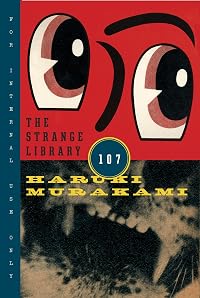
The Strange Library
by Haruki Murakami
On This Page
Description
In a fantastical illustrated short novel, three people imprisoned in a nightmarish library plot their escape.Tags
Recommendations
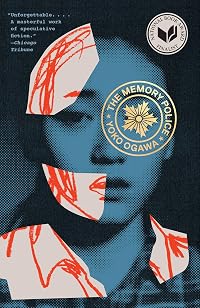

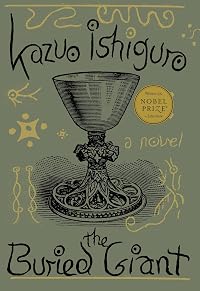
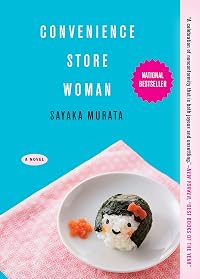
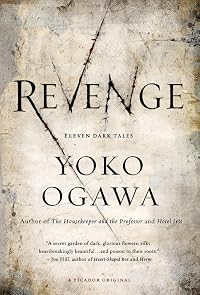







Member Recommendations
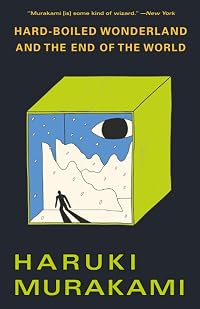
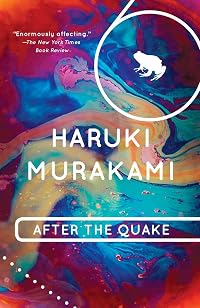
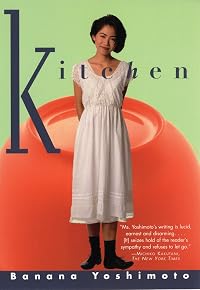
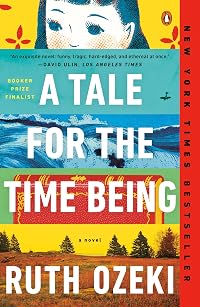
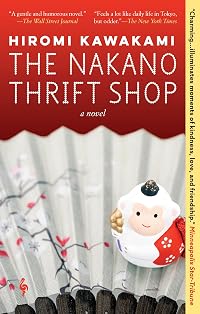
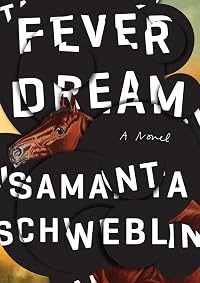
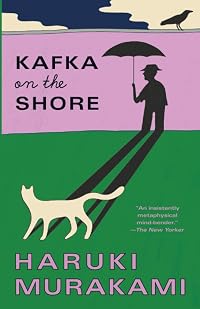
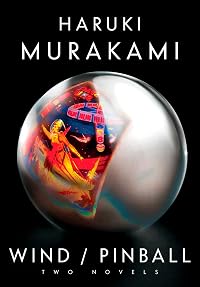
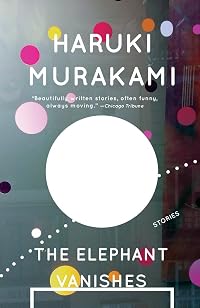
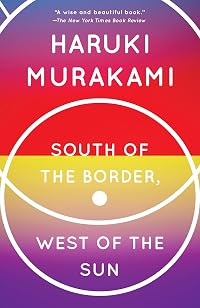
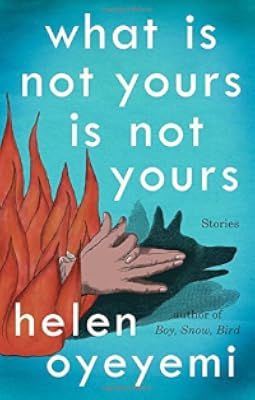
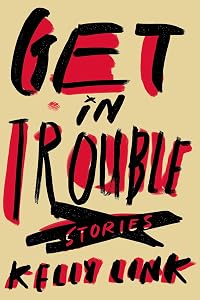
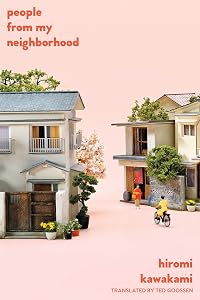
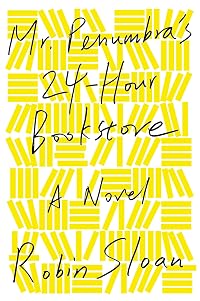
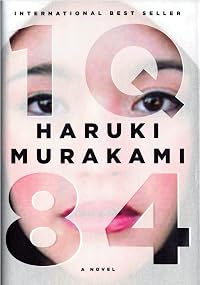
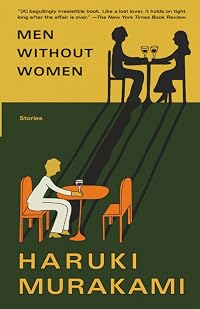
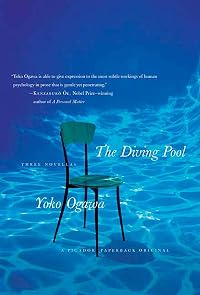
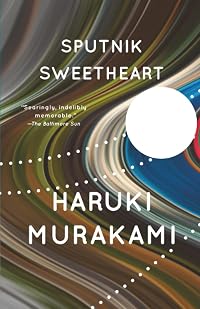
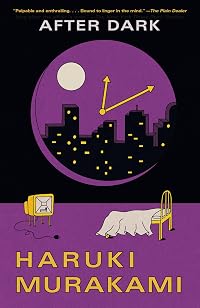
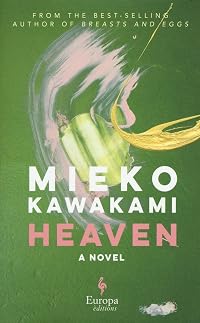
CGlanovsky protagonists wind-up imprisoned in surreal and somewhat absurd circumstances
11

bluepiano Eerie short stories centred on, although not taking place in, a room in a library basement.
Member Reviews
This is such a neat book to see in its printed form because the cover folds differently, printing on the front & back edges of the spine relates to the story, interior pages are set in large Courier type, & a photo or illustration graces almost every other page. I'm not sure if this is meant to be a YA book or a short story or ...? It's creepy & a bit surreal & makes me think of spooky, weird stories told around a campfire that scare the bejesus out of kids before they crawl into a dark tent on a moonless night. Since I checked this strange, odd little book out of my library, does that make it even a little bit creepier? Maybe. And, then, on the very last page, one paragraph in much smaller type floats there... the contents of which show more broke my heart open & made me rethink everything I just read. Bravo, Murakami-san! Bravo. show less
Imagine climbing up a tower from the inner staircase. It's dark, creepy, and challenging, but you keep going up the spirals in spite of the difficulties in the hope of reaching the end and seeing a magnificent view from the top. Then suddenly, you come to an unexpected dead end with just a teeny window on the sidewall, and all that is visible from the window is darkness. You peek out the window in the hope of making sense of the view when someone pushes you out and you plunge into a free fall. All you can do while tumbling to the end is wonder why you began to climb the tower in the first place. That was my experience with 'The Strange Library'.
I expect weirdness from Murakami, and he always delivers. I also expect senseless open show more endings, but this time, he surprised me even beyond my expectations. I'm still in my free fall of thoughts about the library and I can't think of anything else. show less
I expect weirdness from Murakami, and he always delivers. I also expect senseless open show more endings, but this time, he surprised me even beyond my expectations. I'm still in my free fall of thoughts about the library and I can't think of anything else. show less
My impression upon finishing The Strange Library: what the hell did I just read? Due to this, it took me quite some time to decide how I felt about The Strange Library to give it a rating and to write up a review.
The Strange Library was my first Murakami book and while I have been told it is a bit more eccentric than some of his other works, I've also been told it isn't too far off from what I should expect either. This leaves me unsure if I want to attempt reading any of his other work. The Strange Library felt as though it was written by a ten year old (or perhaps that it was only a first draft). There were far too many areas in which the story, or simply the text, felt clunky to me. The similes were unique, but often made no sense. show more The extent of the surrealism of this particular novella would've been fascinating if it had a bit more drive to the plot. The characters were intriguing and I really liked the ethereal, not-quite-there girl, but I felt as though I was left wanting with these characters.
It cannot be denied that many of my complaints may also be things that were lost in translation - literally. But maybe not.
Perhaps I am not a short story reader. Perhaps I am not a Murakami reader. Perhaps the Strange Library simply wasn't for me. I can tell you that I was not especially fond of The Strange Library, but will still try another Murakami novel to make a final decision. show less
The Strange Library was my first Murakami book and while I have been told it is a bit more eccentric than some of his other works, I've also been told it isn't too far off from what I should expect either. This leaves me unsure if I want to attempt reading any of his other work. The Strange Library felt as though it was written by a ten year old (or perhaps that it was only a first draft). There were far too many areas in which the story, or simply the text, felt clunky to me. The similes were unique, but often made no sense. show more The extent of the surrealism of this particular novella would've been fascinating if it had a bit more drive to the plot. The characters were intriguing and I really liked the ethereal, not-quite-there girl, but I felt as though I was left wanting with these characters.
It cannot be denied that many of my complaints may also be things that were lost in translation - literally. But maybe not.
Perhaps I am not a short story reader. Perhaps I am not a Murakami reader. Perhaps the Strange Library simply wasn't for me. I can tell you that I was not especially fond of The Strange Library, but will still try another Murakami novel to make a final decision. show less
I had no idea this book would be so dark! The reason I picked this up as my first Murakami book was that it was the shortest: only 96 pages, half of them illustrations.
The Strange Library is indeed that ... strange! It is whimsical, surreal, and dark. It contains a lot of themes and symbolism that's left for the readers to analyze and interpret. The narrator is unreliable, and the ending is ambiguous.
"The sheep man has his world. I have mine. And you have yours, too...just because I don’t exist in the sheep man’s world, it doesn’t mean that I don’t exist at all."
I ended up enjoying this weird little book! It explores obedience, grief, friendship, and fear. Murakami's writing style is unique and surreal. Also, I heard that show more paperback and hardbound books provide a better reading experience compared to an ebook. Have you read this? Would love to hear your thoughts about it! show less
The Strange Library is indeed that ... strange! It is whimsical, surreal, and dark. It contains a lot of themes and symbolism that's left for the readers to analyze and interpret. The narrator is unreliable, and the ending is ambiguous.
"The sheep man has his world. I have mine. And you have yours, too...just because I don’t exist in the sheep man’s world, it doesn’t mean that I don’t exist at all."
I ended up enjoying this weird little book! It explores obedience, grief, friendship, and fear. Murakami's writing style is unique and surreal. Also, I heard that show more paperback and hardbound books provide a better reading experience compared to an ebook. Have you read this? Would love to hear your thoughts about it! show less
I think this only makes sense as an addition to an already complex Murakami universe. On its own it might seem both too shallow and too weird.
Although it contains several prototypical Murakami characters/settings/themes they are not fully developed and missing the counterbalance with reality which for me is one the core strengths of his other works. This is partly due to the briefness of the story. I do not entirely understand why exactly this short story has been picked twice to be released as an illustrated book. In my opinion there are better candidates within his body of work.
Although it contains several prototypical Murakami characters/settings/themes they are not fully developed and missing the counterbalance with reality which for me is one the core strengths of his other works. This is partly due to the briefness of the story. I do not entirely understand why exactly this short story has been picked twice to be released as an illustrated book. In my opinion there are better candidates within his body of work.
An entertaining, if bewildering bit of magical realism. I'm not sure what it is "about" exactly. A boy in squeaky shoes goes into a library and is captured in a Kafka-esque nightmare. But it is very evocative about loneliness, loss, and the mysterious absurd.
The illustrations are likewise strong but fragment-y.
The illustrations are likewise strong but fragment-y.
I'm not sure if this was the aim of this story, but while wonderfully creepy and strange, it captures perfectly what a bad or odd dream really feels like, which is not something a lot of authors manage.
Members
- Recently Added By
Published Reviews
ThingScore 100
Haruki Murakami’s “The Strange Library” is a short story, not a novel. So why, one might wonder, has it been published as a single volume?
added by dcozy
Lists

Japanese Literature
230 works; 40 members

Weird and Weirder Fiction
270 works; 35 members

novels in or about bookshops (or libraries)
59 works; 21 members

Books Read in 2016
4,666 works; 199 members

fictional librarians
53 works; 19 members

Books Read in 2025
4,128 works; 98 members
Author Information

316+ Works 175,401 Members
Haruki Murakami was born on January 12, 1949 in Kyoto, Japan and studied at Tokyo's Waseda University. He opened a coffeehouse/jazz bar in the capital called Peter Cat with his wife. He became a full-time author following the publication of his first novel, Hear the Wind Sing, in 1979. He writes both fiction and non-fiction works. His fiction show more works include Norwegian Wood, Colorless Tsukuru Tazaki and His Years of Pilgrimage, The Strange Library, and Men Without Women. Several of his stories have been adapted for the stage and as films. His nonfiction works include What I Talk About When I Talk About Running. He has received numerous literary awards including the Franz Kafka Prize for Kafka on the Shore, the Yomiuri Prize for The Wind-Up Bird Chronicle, and the Jerusalem Prize. He has translated into Japanese literature written by F. Scott Fitzgerald, Raymond Carver, Truman Capote, John Irving, and Paul Theroux. (Bowker Author Biography) show less
Some Editions
Awards and Honors
Distinctions
Work Relationships
Is contained in
Common Knowledge
- Canonical title
- The Strange Library
- Original title
- ふしぎな図書館
- Alternate titles*
- Fushigi na Toshokan
- Original publication date
- 1982 [Japanese]; 2005 [illustrated edition]; 2014-12-02 [English]; 2015-11-17 [Italian]
- First words
- The library was even more hushed than usual.
- Quotations*
- La notte di luna nuova si avvicinava silenziosamente, come un delfino cieco.
- Last words
- (Click to show. Warning: May contain spoilers.)Darkness as pitch black as the night of the new moon.
- Original language
- Japanese
*Some information comes from Common Knowledge in other languages. Click "Edit" for more information.
Classifications
- Genres
- Fiction and Literature, General Fiction, Fantasy, Graphic Novels & Comics
- DDC/MDS
- 895.63 — Literature & rhetoric Literatures of other languages Literatures of East and Southeast Asia Japanese Japanese fiction
- LCC
- PL856 .U673 .F8813 — Language and Literature Languages and literatures of Eastern Asia, Africa, Oceania Languages of Eastern Asia, Africa, Oceania Japanese language and literature Japanese literature Individual authors and works
- BISAC
Statistics
- Members
- 2,609
- Popularity
- 7,290
- Reviews
- 151
- Rating
- (3.46)
- Languages
- 10 — Chinese, Czech, Danish, English, French, German, Italian, Japanese, Spanish, Turkish
- Media
- Paper, Audiobook, Ebook
- ISBNs
- 31
- ASINs
- 11