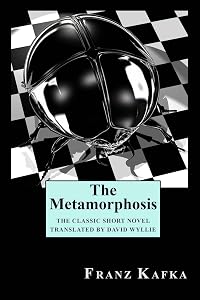
The Metamorphosis [novella]
by Franz Kafka 
On This Page
Description
Franz Kafka's 1915 novella of unexplained horror and nightmarish transformation became a worldwide classic and remains a century later one of the most widely read works of fiction in the world. It is the story of traveling salesman Gregor Samsa, who wakes one morning to find himself transformed into a monstrous insect. This hugely influential work inspired George Orwell, Albert Camus, Jorge Louis Borges, and Ray Bradbury, while continuing to unsettle millions of readers. In her new show more translation of Kafka's masterpiece, Susan Bernofsky strives to capture both the humor and the humanity in this macabre tale, underscoring the ways in which Gregor Samsa's grotesque metamorphosis is just the physical manifestation of his longstanding spiritual impoverishment. show lessTags
Recommendations
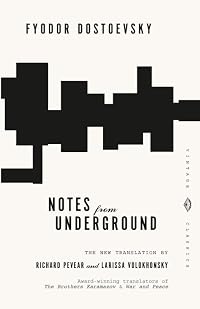


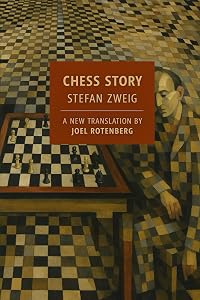


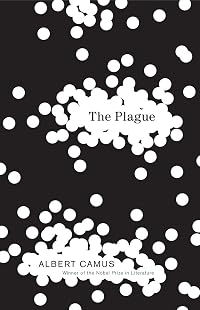
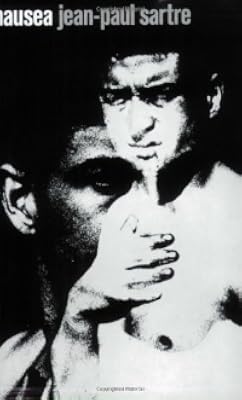


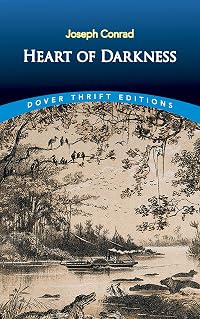
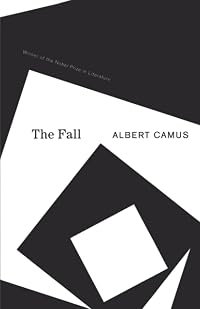
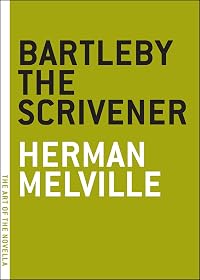
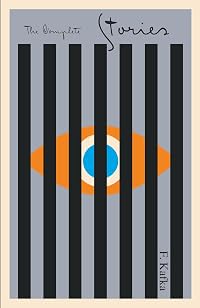




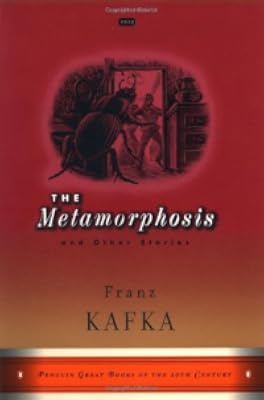
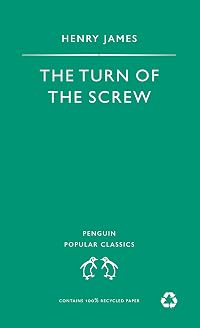

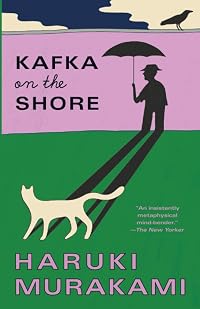

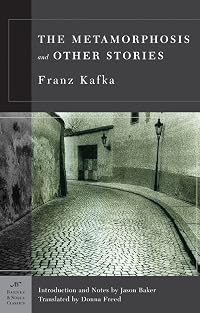
Member Recommendations
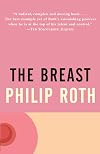
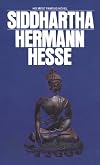

olonec both books are about transformation
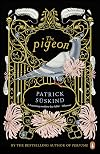
P_S_Patrick Short, deeply existentialist novels of literary character.
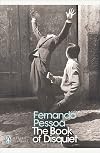
Member Reviews
A classic in the sense that it is actually incredibly well-written and fundamentally challenges how we see ourselves and society. Many (Marx among them) have written about how money alienates human beings from themselves and others, and in this book, we see it play out in a highly-realistic way. Although I'd been meaning to read it for a while, it was finally recommended to me by an 18-year-old student of mine who speaks English as a second language - that should tell you enough about who is capable of understanding this book. This will enrich your life and your book collection.
The opening chapter of this was very chilling and uncomfy because ew, bugs… but it was honestly a tragic story. It was kinda cooked how waking up as a bug his first thought was “i’m late to work, how do i make it in time?”
It felt almost like an allegory for sudden onset severe disfigurement/disability (whether accident induced or caused by some kind of medical issue) due to the way his family found it difficult to tend to his new needs, could barely even look at him, and eventually they became lazy about it. From what I can gather (although I’ve never experienced the kind of disability i described or had a close loved one go through that kind of thing) usually it probably starts with one or a few of the family members tending show more to the disabled person’s needs, like how Greta is willing to feed her brother and bravely enter his room where his mother would have fainted, but it eventually gets tiring for people to support this person and in the worse cases (of which i think the story about the family member who turned i to a giant beetle/bug is probably the biggest shock to a family dynamic that could ever happen) they become lazy like Greta, and stop being as attentive.
Of course, I may be reading too far into the application of the story, but it does highlight a lot of the difficulties of assisting a family member who requires lots of support and attention much like Gregor; minus the many legs and exoskeleton.
Overall, very eerie and weird, and eventually tragic but also beautiful to see how the family has grown to be far more functional even though they lost Gregor. Before Gregor became a bug, he was working to earn money for the benefit of the household. By the end, his father, mother and sister are all earning good money and working hard, as well as showing love and care to one another in a way they never would have dreamt of before Gregor’s metamorphosis. show less
It felt almost like an allegory for sudden onset severe disfigurement/disability (whether accident induced or caused by some kind of medical issue) due to the way his family found it difficult to tend to his new needs, could barely even look at him, and eventually they became lazy about it. From what I can gather (although I’ve never experienced the kind of disability i described or had a close loved one go through that kind of thing) usually it probably starts with one or a few of the family members tending show more to the disabled person’s needs, like how Greta is willing to feed her brother and bravely enter his room where his mother would have fainted, but it eventually gets tiring for people to support this person and in the worse cases (of which i think the story about the family member who turned i to a giant beetle/bug is probably the biggest shock to a family dynamic that could ever happen) they become lazy like Greta, and stop being as attentive.
Of course, I may be reading too far into the application of the story, but it does highlight a lot of the difficulties of assisting a family member who requires lots of support and attention much like Gregor; minus the many legs and exoskeleton.
Overall, very eerie and weird, and eventually tragic but also beautiful to see how the family has grown to be far more functional even though they lost Gregor. Before Gregor became a bug, he was working to earn money for the benefit of the household. By the end, his father, mother and sister are all earning good money and working hard, as well as showing love and care to one another in a way they never would have dreamt of before Gregor’s metamorphosis. show less
This story, in the translation I got, was fifty-five pages. I could have read five hundred pages of it. This has proven to be the highlight of the reading year for me, and it's not close. Finished in one afternoon, and all I want to do is restart it tomorrow and read it all again.
The storytelling is quick and avoids all the crap meant to draw out a longer piece. This story is the perfect length. There isn't a page that was unnecessary. The plot is fast paced and has high stakes like I've never seen. The exposition is brilliant, and I can't quite figure out why. But in a matter of one or two pages, I had fallen in love with every character and felt despair at the plight of Gregor Samsa.
The theme of the story is amazing as well. Over the show more course of the story, you see how hard Gregor worked for his family in the past. He entered into a field he hated after going to college and joining the military, to pay off his father's debts. He travels most days of the year for work and is rarely home. He had kept this up for a while and was prepared to work even harder to send his sister to college. However, when the roles were forced to reverse, Gregor's family refused to do the same for him. It only took months for them to give up on him, knowing he was still a member of their family, despite his grotesque form. It is heartbreaking and breathtaking. show less
The storytelling is quick and avoids all the crap meant to draw out a longer piece. This story is the perfect length. There isn't a page that was unnecessary. The plot is fast paced and has high stakes like I've never seen. The exposition is brilliant, and I can't quite figure out why. But in a matter of one or two pages, I had fallen in love with every character and felt despair at the plight of Gregor Samsa.
The theme of the story is amazing as well. Over the show more course of the story, you see how hard Gregor worked for his family in the past. He entered into a field he hated after going to college and joining the military, to pay off his father's debts. He travels most days of the year for work and is rarely home. He had kept this up for a while and was prepared to work even harder to send his sister to college. However, when the roles were forced to reverse, Gregor's family refused to do the same for him. It only took months for them to give up on him, knowing he was still a member of their family, despite his grotesque form. It is heartbreaking and breathtaking. show less
Kafka's quintessential novella about transformation and alienation can be read as allegory for many worldly things, but none seem to me more fitting than that of depression's ability to turn a man into a creature; something friends and family come to regard with pity or disgust. There's a dry humor at parts but the ultimate conclusion feels like Shakespearian tragedy in this light.
When Gregor Samsa woke one morning from uneasy dreams, he found himself transformed in his bed into a monstrous insect.
This is one of the most famous opening lines in literature, and the general concept of The Metamorphosis, which hovers on the borderline of being a short story or a novella, is one of literature’s most famous and fascinating stories. No explanation is given for Gregor Samsa’s terrible fate; he and his family must simply endure it. Almost the entire novella takes place within the Samsa family’s apartment, and over a mere 61 pages Kafka develops an overwhelming sense of claustrophobia, alienation and sheer misery at the unjustness of the world.
This is a book many students are forced to read in high school, probably show more because of its short length, like The Great Gatsby, with no consideration for the fact that high school students probably aren’t yet equipped to appreciate the themes it explores (again like The Great Gatsby). There are dozens if not hundreds of scholarly interpretations as to what The Metamorphosis is allegorising; mental illness and depression are popular ideas. If I had to throw my hat into the ring I’d suggest it’s about the struggles of adulthood, the sometimes crushing sense of responsibility, the loss of innocence; much is made of the fact that Gregor, in his early twenties, has been working as a salesman to support his recently impoverished family, and following his transformation his inability to work and provide for them leaves him with a terrible sense of guilt. On the very morning of the metamorphosis the head clerk arrives from his office, demanding to know why he has not turned up for work, and it’s almost a scene of black comedy as Gregor attempts to leave the bed and open the door, to reassure his superior that he is fit and able and enthusiastic. The fact that he has turned into a monster is of secondary concern to his job security.
This particular edition has a couple of Kafka’s other short stories at the back, presumably because the publisher wanted to pad the length out. None of them struck me as particularly memorable. The Metamorphosis, on the other hand, deserves its status as a literary classic – an enduring symbol of alienation in human society. show less
This is one of the most famous opening lines in literature, and the general concept of The Metamorphosis, which hovers on the borderline of being a short story or a novella, is one of literature’s most famous and fascinating stories. No explanation is given for Gregor Samsa’s terrible fate; he and his family must simply endure it. Almost the entire novella takes place within the Samsa family’s apartment, and over a mere 61 pages Kafka develops an overwhelming sense of claustrophobia, alienation and sheer misery at the unjustness of the world.
This is a book many students are forced to read in high school, probably show more because of its short length, like The Great Gatsby, with no consideration for the fact that high school students probably aren’t yet equipped to appreciate the themes it explores (again like The Great Gatsby). There are dozens if not hundreds of scholarly interpretations as to what The Metamorphosis is allegorising; mental illness and depression are popular ideas. If I had to throw my hat into the ring I’d suggest it’s about the struggles of adulthood, the sometimes crushing sense of responsibility, the loss of innocence; much is made of the fact that Gregor, in his early twenties, has been working as a salesman to support his recently impoverished family, and following his transformation his inability to work and provide for them leaves him with a terrible sense of guilt. On the very morning of the metamorphosis the head clerk arrives from his office, demanding to know why he has not turned up for work, and it’s almost a scene of black comedy as Gregor attempts to leave the bed and open the door, to reassure his superior that he is fit and able and enthusiastic. The fact that he has turned into a monster is of secondary concern to his job security.
This particular edition has a couple of Kafka’s other short stories at the back, presumably because the publisher wanted to pad the length out. None of them struck me as particularly memorable. The Metamorphosis, on the other hand, deserves its status as a literary classic – an enduring symbol of alienation in human society. show less
There are a number of ways of looking at the Metamorphosis, but I like to see it as an allegory which represents the slippery slope of tempered justice. In the elementary example of a child who breaks her grandmother's vase and hides the shards under the rug on a fearful impulse, how easy it is for one to neglect one's morals and resolve to cover up one's wrongdoing. And once this has been done, would it not be too farfetched to say it would be easy for the child then to lie about the vase's whereabouts when questioned about it, and thus dive further down the rabbit hole of sin? We often treat justice the same way, especially when our reputations or egos are threatened. Guilt may keep us at bay for a while, but time and familiarity are show more the greatest killers of one's conscience, and eventually it disappears altogether. (potential spoiler) This is the kind of creeping normality which happens to Gregor Samsa's family, and it is what causes them to squash the bug at last and be done with it. show less
https://fromtheheartofeurope.eu/the-metamorphosis-by-franz-kafka/
Well known, fascinating and awful; the story of a man who ceases to be a man, who finds that humanity, including his close family, collectively turns its back on him. Does his transformation represent disability? Sexual identity? Mental illness? Something else entirely? It doesn’t matter in a way; the writing is mesmerising.
It’s also thoroughly infused with a spirit of place. Kafka comprehensively conveys the feeling of those central European apartment blocks which you will find in Prague, Vienna, Budapest, Bratislava, Zagreb, Ljubljana, and dozens if not hundreds of other towns and cities throughout the former Habsburg Empire. And you really feel that you are in the show more city, with its trams, bureaucracy and social structure.
It’s a short story, but it packs a heck of a punch. show less
Well known, fascinating and awful; the story of a man who ceases to be a man, who finds that humanity, including his close family, collectively turns its back on him. Does his transformation represent disability? Sexual identity? Mental illness? Something else entirely? It doesn’t matter in a way; the writing is mesmerising.
It’s also thoroughly infused with a spirit of place. Kafka comprehensively conveys the feeling of those central European apartment blocks which you will find in Prague, Vienna, Budapest, Bratislava, Zagreb, Ljubljana, and dozens if not hundreds of other towns and cities throughout the former Habsburg Empire. And you really feel that you are in the show more city, with its trams, bureaucracy and social structure.
It’s a short story, but it packs a heck of a punch. show less
Members
- Recently Added By
Published Reviews
35 livres cultes à lire au moins une fois dans sa vie
Quels sont les romans qu'il faut avoir lu absolument ? Un livre culte qui transcende, fait réfléchir, frissonner, rire ou pleurer… La littérature est indéniablement créatrice d’émotions. Si vous êtes adeptes des classiques, ces titres devraient vous plaire.
De temps en temps, il n'y a vraiment rien de mieux que de se poser devant show more un bon bouquin, et d'oublier un instant le monde réel. Mais si vous êtes une grosse lectrice ou un gros lecteur, et que vous avez épuisé le stock de votre bibliothèque personnelle, laissez-vous tenter par ces quelques classiques de la littérature. show less
Quels sont les romans qu'il faut avoir lu absolument ? Un livre culte qui transcende, fait réfléchir, frissonner, rire ou pleurer… La littérature est indéniablement créatrice d’émotions. Si vous êtes adeptes des classiques, ces titres devraient vous plaire.
De temps en temps, il n'y a vraiment rien de mieux que de se poser devant show more un bon bouquin, et d'oublier un instant le monde réel. Mais si vous êtes une grosse lectrice ou un gros lecteur, et que vous avez épuisé le stock de votre bibliothèque personnelle, laissez-vous tenter par ces quelques classiques de la littérature. show less
added by Joop-le-philosophe
Lists

1001 Books You Must Read Before You Die
1,448 works; 1,134 members

Magic Realism
371 works; 52 members

German Literature
518 works; 55 members

20th Century Literature
1,161 works; 55 members

Best Fantasy Novels
821 works; 361 members

New York Public Library's Books of the Century
120 works; 20 members

Philosophical Fiction
97 works; 27 members

Best Horror Books
281 works; 84 members

Best Psychological Fiction
81 works; 16 members

Favourite Books
1,819 works; 308 members

1910s
90 works; 16 members

Jewish Books
367 works; 24 members

New York Public Library's Books of the Century - All
170 works; 14 members
Canon de la narrativa universal del siglo XX
254 works; 6 members

Slipstream or Interstitial Fiction
160 works; 19 members

Short and Sweet
246 works; 24 members

Recommend the 20 best books you've read in the last five years
2,168 works; 606 members

Speculative Fiction: Slipstream Literature
166 works; 16 members

Blue Pyramid 1,276 Best Books of All Time
1,248 works; 32 members

Best Fantasy Originally Published in a Language Other Than English
84 works; 24 members
LibraryThingers' 1001 Books You Must Read Before You Die
442 works; 30 members

Books You Read During High School (For School)
301 works; 53 members

Survey of Science Fiction and Fantasy
101 works; 13 members

Survey of Gothic and Horror Literature
18 works; 4 members

A Novel Cure
742 works; 23 members

Books tagged favorites
390 works; 30 members

Most Disturbing Books
124 works; 27 members

Best First Lines
133 works; 8 members

Daria Morgendorffer's Bookshelf
70 works; 5 members
Out of Copyright
244 works; 14 members

Rory Gilmore Book Club
193 works; 5 members

Most Depressing Books
69 works; 16 members

Modernism
140 works; 8 members

Amanda's Guaranteed Books
110 works; 5 members
The College Board: 101 Great Books Recommended for College-Bound Readers
111 works; 7 members
Existentialism
90 works; 11 members

Metamorphoses
35 works; 4 members

SHOULD Read Books!
354 works; 9 members

BBC Top Books
78 works; 3 members
Five star books
1,755 works; 108 members

Speculative Fiction from around the World
610 works; 17 members

First published in 1915
87 works; 11 members

CCE 1000 Good Books List
1,033 works; 12 members
Overdue Podcast
806 works; 9 members

SF & Fantasy in Translation
95 works; 18 members

Animaux romanesques
4 works; 1 member

Top 50 Favourite Books
50 works; 2 members

Books Read in 2020
4,379 works; 123 members
Books set in Prague
40 works; 1 member

Books I Own But Haven't Read
144 works; 2 members
DELETE
48 works; 2 members
http://thegreatestbooks.org's Greatest Fiction Books
59 works; 1 member
BingoDOG - Animals in Adult Fiction
78 works; 20 members

Books Read in 2008
335 works; 8 members
The Complete Rory Gilmore Reading List
506 works; 5 members

Retrospective of 20th- and 21st-century literature
154 works; 1 member
Canon de la narrativa universal del s. XX (cicutadry)
499 works; 3 members

Books Read in 2024
4,623 works; 126 members

Top Five Books of 2024
795 works; 264 members
Books in Riverdale
123 works; 3 members

Favorite Books in Translation
320 works; 133 members

Magical Realism
23 works; 2 members
Global Reads: Books Set in Western Europe
186 works; 10 members

Books I have read
16 works; 1 member

Books That Changed Our Perspective
423 works; 168 members

Recommended Reading : 600 Classics Reviewed, Editors of Salem Press, 2015
634 works; 6 members

Read in 2010
48 works; 1 member

.
194 works; 2 members

The 150 Greatest Novels of All Time
150 works; 6 members

Books Read in 2018
4,360 works; 110 members
"would you still love me if i was a worm?"
2 works; 1 member

Greatest Books, allegedly
484 works; 9 members

Literary Works Read in College
316 works; 15 members
Bibliografia essenziale
86 works; 2 members
Favourite Short Stories
22 works; 2 members
Novels/Poems/Short Stories/Anything Storytelling Related
112 works; 2 members

Books Read in 2021
5,361 works; 113 members
books featured on the book struggles twt
97 works; 2 members

Forbes: The 25 Greatest Short Stories of All Time
25 works; 4 members
AP Lit
363 works; 6 members
Books With Our Favorite First Lines
168 works; 104 members
Daria
8 works; 1 member

Classics Book Club 2024
9 works; 1 member

Books Read in 2010
631 works; 11 members
BitLife
212 works; 4 members
.
396 works; 1 member

EU Fiction: 1950-2022
223 works; 70 members
Talk Discussions
Past Discussions
Kafka's Metamorphosis DLE in Easton Press Collectors (September 2022)
Author Information

1,502+ Works 103,675 Members
Franz Kafka -- July 3, 1883 - June 3, 1924 Franz Kafka was born to middle-class Jewish parents in Prague, Czechoslovakia on July 3, 1883. He received a law degree at the University of Prague. After performing an obligatory year of unpaid service as law clerk for the civil and criminal courts, he obtained a position in the workman's compensation show more division of the Austrian government. Always neurotic, insecure, and filled with a sense of inadequacy, his writing is a search for personal fulfillment and understanding. He wrote very slowly and deliberately, publishing very little in his lifetime. At his death he asked a close friend to burn his remaining manuscripts, but the friend refused the request. Instead the friend arranged for publication Kafka's longer stories, which have since brought him worldwide fame and have influenced many contemporary writers. His works include The Metamorphosis, The Castle, The Trial, and Amerika. Kafka was diagnosed with tuberculosis (TB) in August 1917. As his disease progressed, his throat became affected by the TB and he could not eat regularly because it was painful. He died from starvation in a sanatorium in Kierling, near Vienna, after admitting himself for treatment there on April 10, 1924. He died on June 3 at the age of 40. (Bowker Author Biography) show less
Franz Kafka has a Legacy Library. Legacy libraries are the personal libraries of famous readers, entered by LibraryThing members from the Legacy Libraries group.
Some Editions
Awards and Honors
Awards
Distinctions
Notable Lists
Series
Belongs to Publisher Series
Kleine Diogenes Taschenbücher (70006)
SFFaudio Podcast (223)
Der jüngste Tag (22-23)
Clube de Literatura Clássica (CLC) (36.1 [April 2023])
Campaña Nacional Eugenio Espejo (Luna de Bolsillo)
Newton Compton Live (21)
Columna Jove (30)
Oriento-Okcidento (31)
Colecção Mil Folhas (30)
L&PM Pocket (242)
Bibliothek Suhrkamp (351)
Reclams Universal-Bibliothek (9900)
Gallimard, Folio (74)
Work Relationships
Is contained in
Great Modern Writers: Three Lives, the Metamorphosis and Other Stories, a Room With a View, Death in Venice, a Portrait by Dover Publications Inc (indirect)
The Metamorphosis, In the Penal Colony, and Other Stories: The Great Short Works of Franz Kafka by Franz Kafka
The Essential Kafka: The Castle; The Trial; Metamorphosis and Other Stories (Wordsworth Classics) by Franz Kafka
The Transformation [Metamorphosis] and Other Stories: Works Published During Kafka's Lifetime by Franz Kafka
EinFach Deutsch : Textausgaben : Franz Kafka : Die Verwandlung, Brief an den Vater und weitere Werke [1st edition] by Elisabeth Becker
Has the adaptation
Is parodied in
Inspired
Has as a reference guide/companion
Has as a supplement
Has as a commentary on the text
Common Knowledge
- Canonical title
- The Metamorphosis [novella]
- Original title
- Die Verwandlung
- Alternate titles
- The Transformation
- Original publication date
- 1915-10
- People/Characters
- Gregor Samsa; Grete Samsa; Herr Samsa; Frau Samsa
- Related movies
- Die Verwandlung (1975 | IMDb | TV); Förvandlingen (1976 | IMDb); The Metamorphosis of Mr. Samsa (1977 | IMDb); Metamorphosis (1987 | IMDb | TV); Metamorphosis: Beyond the Screen Door (1997 | IMDb); Prevrashchenie (2002 | IMDb) (show all 8); La metamorfosis (2007 | IMDb); A Metamorfose (2007 | IMDb)
- First words
- One morning, as Gregor Samsa was waking up from anxious dreams, he discovered that in bed he had been changed into a monstrous verminous bug.
When Gregor Samsa woke up one morning from unsettling dreams, he found himself changed in his bed into a monstrous vermin.
When Gregor Samsa woke one morning from troubled dreams, he found himself transformed right there in his bed into some sort of monstrous insect. (tr. Susan Bernofsky) - Last words
- (Click to show. Warning: May contain spoilers.)And it was like a confirmation of their new dreams and good intentions when at the end of the ride their daughter got up first and stretched her young body.
(Click to show. Warning: May contain spoilers.)And when they arrived at their destination, it seemed to them almost a confirmation of their new dreams and good intentions when their daughter swiftly sprang to her feet and stretched her young body. (tr. Susan Bernofsky) - Original language
- German
- Disambiguation notice
- This is the novella only and should not be combined with works that collect the novella with other short stories by Kafka.
Classifications
- Genres
- Fiction and Literature, General Fiction, Fantasy
- DDC/MDS
- 833.912 — Literature & rhetoric German & related literatures German fiction 1900- 1900-1990 1900-1945
- LCC
- PT2621 .A26 — Language and Literature German, Dutch and Scandinavian literatures German literature Individual authors or works 1860/70-1960
- BISAC
Statistics
- Members
- 15,204
- Popularity
- 467
- Reviews
- 277
- Rating
- (3.89)
- Languages
- 28 — Catalan, Chinese, Czech, Danish, Dutch, English, Esperanto, Finnish, French, German, Greek, Hebrew, Hungarian, Indonesian, Italian, Japanese, Korean, Norwegian (Bokmål), Farsi/Persian, Polish, Romanian, Russian, Spanish, Swedish, Thai, Turkish, Portuguese (Portugal), Portuguese (Brazil)
- Media
- Paper, Audiobook, Ebook
- ISBNs
- 747
- UPCs
- 3
- ASINs
- 230
