On This Page
Description
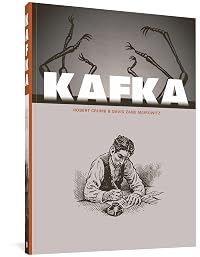
What do I have in common with the Jews? I don't even have anything in common with myself.' Alienated from his roots, his family, his surroundings, and primarily from his own body, Kafka created a unique literary language in which to hide away, transforming himself into a cockroach, an ape, a dog, a mole or a circus artiste who starves himself to death in front of admiring crowds. Introducing Kafka helps us to see beyond the cliche 'Kafkaesque' and to peer through the glass wall at the show more unique creature on display there. show lessTags
Recommendations





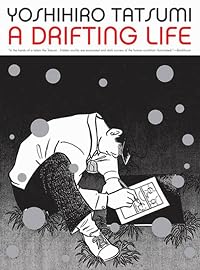
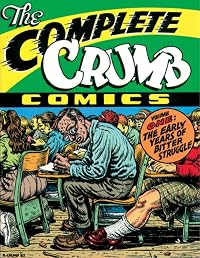
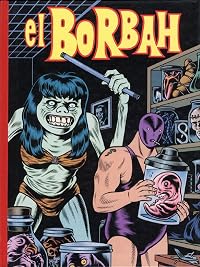
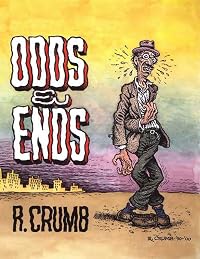






Member Recommendations

by hpfilho
Member Reviews
Part illustrated biography, part comics adaptation, R. Crumb's Kafka is a vibrant biography that examines this Czech writer and his works in a way that a bland textbook never could! R. Crumb's Kafka is a work of art in its own right, a very rare example of what happens when one very idiosyncratic artist absorbs another into his world view without obliterating the individuality of the absorbed one. Crumb's art is filled with Kafka's insurmountable neuroses. They are all there: Gregor Samsa's sister, the luscious Milena Jesenska, the Advocate's 'nurse' Leni, Olda and Frieda, and the ravishing Dora Diamant drawn in that mixture of self-command, tantalizing knowingness and sly sexuality that Amazonian randiness and thick-limbed physicality show more that is Crumb." show less
A nearly perfect blend of style and substance. I'm a longtime Crumb fan & Kafka novice. The text told me all I want to know & the amazingly controlled & excellent illustrations filled in the rest, providing a surpisingly satisfying learning experience.
I have to admit to not being much of a Robert Crumb fan, which must make me something of a pariah among comics aficionados. I've always found his brand of intense autobiographical navel-gazing to be regrettable, especially given the huge influence it has apparently had on mediocre cartoonists of a younger generation, such as Gabrielle Bell, Jeffrey Brown, and Joe Matt.
Now that my bias is clear, I have to come clean and say that I love Crumb's work on Kafka. With someone else (David Zane Mairowitz) handling the writing duties, Crumb is free to concentrate on the artwork, which is exceptional and extremely well-suited to the topic at hand. Given that Crumb's traditional weaknesses are his choice of subject matter and his explication show more thereof, Kafka presents him with an ideal forum in which to excel.
Mairowitz deserves much of the credit for his thoughtful, insightful, and well-reasoned analysis of Kafka and his works, and the marriage of that highly readable text with Crumb's slightly exaggerated black-and-white drawings couldn't be better. The excesses inherent in Crumb's pen work are entirely appropriate for visualizing Kafka's world and the parallel worlds of his fiction. Overall, this volume is both a great introduction to Kafka and a wonderful "mid-course" review for those who have already indulged in some of the Kafka canon. show less
Now that my bias is clear, I have to come clean and say that I love Crumb's work on Kafka. With someone else (David Zane Mairowitz) handling the writing duties, Crumb is free to concentrate on the artwork, which is exceptional and extremely well-suited to the topic at hand. Given that Crumb's traditional weaknesses are his choice of subject matter and his explication show more thereof, Kafka presents him with an ideal forum in which to excel.
Mairowitz deserves much of the credit for his thoughtful, insightful, and well-reasoned analysis of Kafka and his works, and the marriage of that highly readable text with Crumb's slightly exaggerated black-and-white drawings couldn't be better. The excesses inherent in Crumb's pen work are entirely appropriate for visualizing Kafka's world and the parallel worlds of his fiction. Overall, this volume is both a great introduction to Kafka and a wonderful "mid-course" review for those who have already indulged in some of the Kafka canon. show less
David Zane Mairowitz thinks Kafka's writing has insufficient Jewish content, so too much of the text here talks about the Jewish situation in Prague in Kafka's time and adduces a lot of highly questionable and possibly discriminatory ideas about Jewish psychology (really? all of them with the same psychology?) such as self-loathing. Although the cover extracts Kafka's comment, "What do I have in common with the Jews? I don't even have anything in common with myself," and it appears in the text too, he is undaunted, and his regret that the only person Kafka seems to have truly loved was not Jewish is palpable. His excoriation of the city of Prague, which he has established meant little if anything to Kafka, for cashing in on its native show more son makes for a pretty flat ending.
However, this is a comic book, not read for the text but for Robert Crumb's drawings, which have long interested me. He is master of the horror-comic style, which here is aptly used to illustrate Kafka's stories (and perhaps depictions of his father), but also does attractive portraits of sympathetic characters and classic comic-book two-page spreads, especially of cityscapes, real or imaginary. When the text describes a character as a strapping young woman, we know the artist is home free: those familiar with his work will know that strapping young women are a special feature of his work.
The best parts are the retelling of Kafka's stories, which include various bits of information, painlessly delivered, about the circumstances of their creation and some bibliographic details. Max Brod seems somewhat slighted, though I have to say Kafka's original title for his last work, "The Man Who Disappeared," is a better title than Brod's "America." Because of the detailed drawings with many telling and funny details, this little book takes longer to read than you'd think -- but with the stories embedded in it, it's best, and most fun, to take it in slowly. show less
However, this is a comic book, not read for the text but for Robert Crumb's drawings, which have long interested me. He is master of the horror-comic style, which here is aptly used to illustrate Kafka's stories (and perhaps depictions of his father), but also does attractive portraits of sympathetic characters and classic comic-book two-page spreads, especially of cityscapes, real or imaginary. When the text describes a character as a strapping young woman, we know the artist is home free: those familiar with his work will know that strapping young women are a special feature of his work.
The best parts are the retelling of Kafka's stories, which include various bits of information, painlessly delivered, about the circumstances of their creation and some bibliographic details. Max Brod seems somewhat slighted, though I have to say Kafka's original title for his last work, "The Man Who Disappeared," is a better title than Brod's "America." Because of the detailed drawings with many telling and funny details, this little book takes longer to read than you'd think -- but with the stories embedded in it, it's best, and most fun, to take it in slowly. show less
Ogni parola si guarda attorno
in tutte le direzioni prima di
lasciarsi scrivere da me.(pagina 85)
Avvertenza per i passeggeri: SALTARE a piè pari l'introduzione di Goffredo Fofi.
Avvertenza per Fofi: leggere i libri di Kafka prima di parlarne.
Infine, forse, se Crumb avesse lasciato perdere le varie letture / interpretazioni psicoanalitiche sul senso dei libri di Kafka ne avrebbe ricavato un ottimo lavoro (tanto, quelle interpretazioni, sono sempre identiche: la mamma, il papà ed il p. (per i maschietti)).
Infine, sul serio, Max Brod (salvatore dei testi di Kafka) ha voluto riportare 'a baita' (Sergentmagiù, ghe rivarem a baita? - Mario Rigoni Stern) ossia ha voluto riportare alla fonte ebraica l'origine dei pensieri tradotti in scritti da show more Kafka. Ma lasciamo perdere, dato che una più grossa l'aveva già combinata Elisabeth Förster-Nietzsche.
La metamorfosi: a fronte della nostra immagine allo specchio, giorno dopo giorno...
Il processo: a fronte dei tanti muri quotidiani...
Il castello: a fronte delle forze che non ci aiutano nel nostro cammino...
America: dove Kafka a fronte, finalmente, di un mondo reale riesce a fantasticare. show less
in tutte le direzioni prima di
lasciarsi scrivere da me.(pagina 85)
Avvertenza per i passeggeri: SALTARE a piè pari l'introduzione di Goffredo Fofi.
Avvertenza per Fofi: leggere i libri di Kafka prima di parlarne.
Infine, forse, se Crumb avesse lasciato perdere le varie letture / interpretazioni psicoanalitiche sul senso dei libri di Kafka ne avrebbe ricavato un ottimo lavoro (tanto, quelle interpretazioni, sono sempre identiche: la mamma, il papà ed il p. (per i maschietti)).
Infine, sul serio, Max Brod (salvatore dei testi di Kafka) ha voluto riportare 'a baita' (Sergentmagiù, ghe rivarem a baita? - Mario Rigoni Stern) ossia ha voluto riportare alla fonte ebraica l'origine dei pensieri tradotti in scritti da show more Kafka. Ma lasciamo perdere, dato che una più grossa l'aveva già combinata Elisabeth Förster-Nietzsche.
La metamorfosi: a fronte della nostra immagine allo specchio, giorno dopo giorno...
Il processo: a fronte dei tanti muri quotidiani...
Il castello: a fronte delle forze che non ci aiutano nel nostro cammino...
America: dove Kafka a fronte, finalmente, di un mondo reale riesce a fantasticare. show less
Of course I do not know what would fix human beings individually or collectively, but of one thing I am fairly certain, that humans individually add up to the collective and that humans individually are way too stupid for our own good, and I suspect there will be possible genetic solutions to that although we are probably too near the end of our rope for it to happen on a large scale. Sooner or later the partisan politicization of issues like the Ebola outbreak are going to prove as fatal however politically successful. I don't think individuals (or small groups) in power have a lot of ability to do good, game changing good, but they do have the power to do bad, to make things worse. History is chock full of that. On a grand scale there show more is always Hitler, Stalin, and Mao, on a smaller scale the likes of George Bush. We do not usually get to choose between good and bad politics, only bad and worse, sometimes very much worse. So far our social institutions have been able to change and adjust and keep things afloat, but in our Western world the trend is bad and when someone like Bush comes along and gives it a push, that is the case of an individual President making a big difference.
Kafka of course is dealing with non-eugenic humanity based on his knowledge and experience of the past and present. The Cosmos, or Nature, which we as organisms are part of and, if you like, are no more than that, does not in any way seem to care about us in terms of our individual subjectivity or mentality. It always kills us, if we are lucky it ages and debilitates us, and at any time can erupt into a sickness or accident or natural disaster etc. that kills us individually or en masse, regardless of innocence, age, or anything else. You get the picture. In Kafka's world even though societies were nowhere near the size, complexity, or as pervasively organized on a mass scale (that is villages might have intimately organized but not nations), he saw that society internally was becoming a mirror of Nature. That it could kill or harm us as impersonally as the Cosmos and that that was becoming the norm. Many factors contributed to it, industrialization, population growth, advances in communication and transportation and so on. In many ways it was good, but it had a dark side: depersonalization and alienation and social structures that fostered them. Bureaucracy represented this the best, the Court and the Castle are at least in part bureaucracies which have a life and purposes of their own and which are allowed to operate almost as secret societies which can do whatever they like and also have official sanction. In many countries the police and security agencies, even private ones, function like this. They can usually do whatever they want to you nor, as you say, does anyone need to be in charge really. Society is not just outside anyone's control, but it does not act indifferently. In fact Society arguably grows more perverse, permits more perversity, as it grows and evolves, although it may, on a mass scale, provide us, in larger and larger numbers with lots and lots and lots of goodies. It becomes full of twists and turns that are literally Kafkaesque, and the Kafkaesque is a kind of implicit zeitgeist that haunts us all. Kafka right at the beginning sensed the brave new world, and it was his artistry that turned it into our collective nightmares and anguish. It was his artistry that made him so unique and made his nightmares our nightmares, not just in thought but in feeling.
In particular he went to the heart of our existential crisis in a purely material way. We, within the vast and powerful social structures we have created, have become our files, ALL OF US. It was a whole new way to understand human marginalization or residualization, turning people into something less than a person, into their own shadow. Although perhaps not the first to see this, Kundera puts it very nicely which I attach as a separate posting. show less
Kafka of course is dealing with non-eugenic humanity based on his knowledge and experience of the past and present. The Cosmos, or Nature, which we as organisms are part of and, if you like, are no more than that, does not in any way seem to care about us in terms of our individual subjectivity or mentality. It always kills us, if we are lucky it ages and debilitates us, and at any time can erupt into a sickness or accident or natural disaster etc. that kills us individually or en masse, regardless of innocence, age, or anything else. You get the picture. In Kafka's world even though societies were nowhere near the size, complexity, or as pervasively organized on a mass scale (that is villages might have intimately organized but not nations), he saw that society internally was becoming a mirror of Nature. That it could kill or harm us as impersonally as the Cosmos and that that was becoming the norm. Many factors contributed to it, industrialization, population growth, advances in communication and transportation and so on. In many ways it was good, but it had a dark side: depersonalization and alienation and social structures that fostered them. Bureaucracy represented this the best, the Court and the Castle are at least in part bureaucracies which have a life and purposes of their own and which are allowed to operate almost as secret societies which can do whatever they like and also have official sanction. In many countries the police and security agencies, even private ones, function like this. They can usually do whatever they want to you nor, as you say, does anyone need to be in charge really. Society is not just outside anyone's control, but it does not act indifferently. In fact Society arguably grows more perverse, permits more perversity, as it grows and evolves, although it may, on a mass scale, provide us, in larger and larger numbers with lots and lots and lots of goodies. It becomes full of twists and turns that are literally Kafkaesque, and the Kafkaesque is a kind of implicit zeitgeist that haunts us all. Kafka right at the beginning sensed the brave new world, and it was his artistry that turned it into our collective nightmares and anguish. It was his artistry that made him so unique and made his nightmares our nightmares, not just in thought but in feeling.
In particular he went to the heart of our existential crisis in a purely material way. We, within the vast and powerful social structures we have created, have become our files, ALL OF US. It was a whole new way to understand human marginalization or residualization, turning people into something less than a person, into their own shadow. Although perhaps not the first to see this, Kundera puts it very nicely which I attach as a separate posting. show less
A pretty good comic biography of Kafka. I learned several things about his life and might pick up "a letter to my father." based on that tortured relationship.
It does leave out a few things. How did Kafka lose all of his money and die penniless? How much was published in his lifetime and what was the reception? He is mentioned as a member of the Prague intellectual scene, but it doesn't go much further than that.
It does leave out a few things. How did Kafka lose all of his money and die penniless? How much was published in his lifetime and what was the reception? He is mentioned as a member of the Prague intellectual scene, but it doesn't go much further than that.
Members
- Recently Added By
Author Information

20+ Works 1,666 Members

Robert Crumb was born in Philadelphia, Pennsylvania on August 30, 1943. In 1962, he worked for the American Greetings Corporation. He first worked as a color separator before getting promoted to an illustrator position. He entered the public eye as an underground cartoonist during the late 1960s as the creator of Zap Comix. He created such show more characters as Fritz the Cat, Angelfood McSpade and Mr. Natural. He created cover art for Big Brother and the Holding Company's Cheap Thrills album. His numerous collections include Weirdo, Black and White, Big Ass Comics, People's Comics, Dirty Laundry Comics, The Crumb Family Comics, The R. Crumb Handbook, and The Book of Genesis. (Bowker Author Biography) show less
Series

Common Knowledge
- Canonical title
- Introducing Kafka
- Original publication date
- 1993
- People/Characters
- Franz Kafka; Theodor Herzl; Max Brod; Rabbi Judah Loew; Golem; Gustav Meyrink (show all 13); Baal Shem Tov; Leopold Hilsner; Hermann Kafka; Georg Bendemann; Gregor Samsa; Horace Fletcher; Milena Jesenska
- Important places
- Prague, Czechoslovakia
Classifications
- Genres
- Literature Studies and Criticism, Graphic Novels & Comics
- DDC/MDS
- 833.912 — Literature & rhetoric German & related literatures German fiction 1900- 1900-1990 1900-1945
- LCC
- PT2621 .A26 .Z7697 — Language and Literature German, Dutch and Scandinavian literatures German literature Individual authors or works 1860/70-1960
- BISAC
Statistics
- Members
- 1,032
- Popularity
- 24,979
- Reviews
- 21
- Rating
- (3.88)
- Languages
- 15 — Chinese, Czech, Danish, Dutch, English, Finnish, French, German, Italian, Norwegian (Bokmål), Polish, Spanish, Swedish, Turkish, Portuguese (Portugal)
- Media
- Paper, Ebook
- ISBNs
- 39
- ASINs
- 3