On This Page
Description
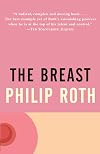
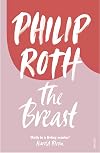
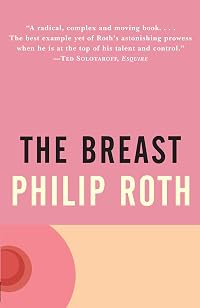
Like a latter-day Gregor Samsa, Professor David Kepesh wakes up one morning to find that he has been transformed. But where Kafka's protagonist turned into a giant beetle, the narrator of Philip Roth's richly conceived fantasy has become a 155-pound female breast. What follows is a deliriously funny yet touching exploration of the full implications of Kepesh's metamorphosis—a daring, heretical book that brings us face to face with the intrinsic strangeness of sex and subjectivity.Tags
Recommendations


















Member Reviews
This book was suggested to me during a discussion about an irksome segment of the 20thC literary canon: middle-aged male Americans obsessed with adultery, daddy issues or declining sexual appetite, usually relayed through obnoxiously academic or otherwise “intellectual” main characters, who think their navel-gazing is Such Serious Business. My example was John Updike; a friend suggested this novella by Philip Roth as a fun example of the subgenre.
And fun it was: The breast deals indeed with an aging American academic who is full of himself and who is obsessed with grandstanding through bragging about his intelligence and his sexual prowess. One day, though, he finds he has transformed into a female breast unattached to a body, an show more excessively grotesque development which leads to an unholy amount of introspection.
The fun part is that the novella is run through with a layer of tongue-in-cheek self-awareness: Roth walks the line between playing the subgenre straight and highlighting its pathological absurdity. Its over-the-top quality is what saves it: I don’t think it would have worked if any of it were any less outrageous. show less
And fun it was: The breast deals indeed with an aging American academic who is full of himself and who is obsessed with grandstanding through bragging about his intelligence and his sexual prowess. One day, though, he finds he has transformed into a female breast unattached to a body, an show more excessively grotesque development which leads to an unholy amount of introspection.
The fun part is that the novella is run through with a layer of tongue-in-cheek self-awareness: Roth walks the line between playing the subgenre straight and highlighting its pathological absurdity. Its over-the-top quality is what saves it: I don’t think it would have worked if any of it were any less outrageous. show less
Kafka for the 20th Century, this is not. What The Breast is is one of the most hilarious explorations of the occurrence of the utterly absurd ever written, almost as if it were a cross between "The Metamorphosis" and The Stranger.
What's most fascinating is that the reader never questions the conceit of the novella: we never once doubt that Kepesh can hear, speak, or even think. And it is this delicate balance between the sublimely ridiculous and the perfectly normal that Roth handles so well here.
The evolution of Kepesh's thoughts regarding "This" (what he calls his transformation) are completely natural and very human: from contemplating his situation to the awkwardness of sexual satisfaction to, eventually, the very nature of his show more reality.
And by the end, as Kepesh finds himself forced to deal, somehow, with his new reality, we have realized that this novel, which more or less pretends to be about a giant breast, is actually a lucid and fascinating exploration of the human condition. That, and it's positively hilarious to boot. show less
What's most fascinating is that the reader never questions the conceit of the novella: we never once doubt that Kepesh can hear, speak, or even think. And it is this delicate balance between the sublimely ridiculous and the perfectly normal that Roth handles so well here.
The evolution of Kepesh's thoughts regarding "This" (what he calls his transformation) are completely natural and very human: from contemplating his situation to the awkwardness of sexual satisfaction to, eventually, the very nature of his show more reality.
And by the end, as Kepesh finds himself forced to deal, somehow, with his new reality, we have realized that this novel, which more or less pretends to be about a giant breast, is actually a lucid and fascinating exploration of the human condition. That, and it's positively hilarious to boot. show less
Only Philip Roth could tell this story of a middle aged man who metamorphoses into a 155 pound breast. Yes, you read that right. This is unlike any other novel I have read by Roth due to its Kafkaesque nature. What does it mean to change from a person to an object? Roth is somehow able to do the question justice with wit and psychological depth. Wonderful novella!
This is a short novella by Philip Roth and like Kafka and Gogol, the narrator becomes something else. He becomes a 155 lb female breast. While a cockroach is disgusting and a nose would be odd at least it doesn't require clothing, a breast is sexual and generally kept covered. I will quote, "Roth has a genius for making everything potentially beautiful and joyful filthy and disgusting. . . . Roth writes dirty books, not pornography." https://www.semanticscholar.org/paper/A-New-Fable-for-Critics%3A-Philip-Roth%27s.... There is a good deal of sexual writing that I did not appreciate. The question is, did Roth write this to make some quick money, did he sit down and think, I can write something like Kafka and Gogol. Not long. Fast to the show more publisher. The Breast is concluded with a poem by Rainer Maria Rilke, "Archaic Torso of Apollo". The last line, "You must change your life." The breast is an object, a thing that really is just passive. It is not fully human. The breast cannot communicate much on how it feels other than arousal. To live life, you must become more that a statue, you must be active, make changes. show less
Typical middle-aged white male literary angst (bored with attractive younger mistress, not taken seriously by work colleagues, etc), with a weird, Kafka-esque twist. I'm still deciding what I think about this one - though, since it's the holiday season, I will say that it'd definitely be an interesting (read: ill-advised) gift. I can only imagine what the recipient would assume was being implied by the choice.
A sexually active male professor turns into a breast overnight and is placed in hospital. After much turmoil as to why this happened to him and what he should do with himself for the rest of his life, he accepts his lot in life. At one point he believes his new life as a breast is punishment for having taught fiction literature to students! I knew it; much better to stick to non-fiction for surely this is proof that too much fiction makes irrevocable physical changes. Thankfully the book is short.
Self-consciously clever parody of Kafka's Metamorphosis that adds a dimension of sexuality that is coarse in its directness. Much of the humour is adolescent, which is why I liked it more when I first read it than I did later in life.
Members
- Recently Added By
Published Reviews
Technically at least, "The Breast" seems to me Roth's best book so far. The humor and pathos (it has fair amounts of both) come from his solid grasp of how life is, his firm knowledge of the importance of strength of character and the will to live. Or, as Kepesh calls them in his meetings with his psychiatrist, "S. of C., and the W. to L." He explains: "These banal phrases are the therapeutic show more equivalent of my lame jokes. In these, my preposterous times, we must keep to what is ordinary and familiar."
The trick which is the heart of the book is brilliant: to celebrate the ordinary, the silly, the banal, create a grotesque and extraordinary banality--a huge detached breast with human consciousness and feeling. The trick is so good, so obvious and easy and yet so rich with meaning, it's a little hard to translate from what it is, a piece of art, to reviewer's language. show less
The trick which is the heart of the book is brilliant: to celebrate the ordinary, the silly, the banal, create a grotesque and extraordinary banality--a huge detached breast with human consciousness and feeling. The trick is so good, so obvious and easy and yet so rich with meaning, it's a little hard to translate from what it is, a piece of art, to reviewer's language. show less
added by SanctiSpiritus
Lists

Stephen King's 'Danse Macabre' reading list
111 works; 25 members

1001 Books You Must Read Before You Die
1,448 works; 1,137 members

Inspired by Kafka
18 works; 4 members

Stephen King's Danse Macabre Full Appendix List
110 works; 2 members
Author Information

123+ Works 74,933 Members
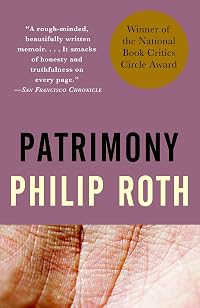
Philip Milton Roth was born in Newark, New Jersey on March 19, 1933. He attended Rutgers University for one year before transferring to Bucknell University where he completed a B.A. in English with highest honors in 1954. He received an M.A. from the University of Chicago in 1955. His first book, Goodbye, Columbus, received the National Book Award show more in 1960. His other books include Letting Go, When She Was Good, Portnoy's Complaint, My Life as a Man, The Ghostwriter, Zuckerman Unbound, I Married a Communist, The Plot Against America, The Facts, The Anatomy Lesson, Exit Ghost, Deception, Nemesis, Everyman, Indignation, and The Humbling. He won the National Book Critic Circle Awards in 1987 for his novel The Counterlife and in 1992 for his memoir Patrimony: A True Story. He won the PEN/Faulkner Award for Fiction in 1993 for Operation Shylock: A Confession and in 2001 for The Human Stain, the National Book Award in 1995 for Sabbath's Theater, and the Pulitzer Prize in 1998 for American Pastoral. He stopped writing in 2010. He died from congestive heart failure on May 22, 2018 at the age of 85. (Bowker Author Biography) show less
Awards and Honors
Notable Lists
Series

Belongs to Publisher Series
Work Relationships
Common Knowledge
- Canonical title
- The Breast
- Original title
- The Breast
- Alternate titles*
- La mammella (1973) (1973)
- Original publication date
- 1972
- People/Characters
- David Alan Kepesh; Claire Ovington; Dr. Klinger; Dr. Spielvogel; Miss Zuckerman
- Dedication*
- A Elizabeth Ames, direttore esecutivo di Yaddo, dal 1924 al 1970, e alla Corporation di Yaddo, Saratoga Springs, New York, i migliori amici che uno scrittore possa avere.
- First words*
- Cominciò stranamente. Ma poteva forse esserci un altro inizio?
- Last words*
- (Click to show. Warning: May contain spoilers.)Tu devi mutarla.
- Original language
- English
*Some information comes from Common Knowledge in other languages. Click "Edit" for more information.
Classifications
Statistics
- Members
- 943
- Popularity
- 28,357
- Reviews
- 21
- Rating
- (3.05)
- Languages
- 8 — Dutch, English, Finnish, French, German, Italian, Polish, Spanish
- Media
- Paper, Audiobook, Ebook
- ISBNs
- 41
- ASINs
- 18