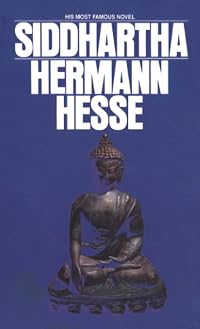
Siddhartha
by Hermann Hesse
On This Page
Description
Hermann Hesse wrote Siddhartha after he traveled to India in the 1910s. It tells the story of a young boy who travels the country in a quest for spiritual enlightenment in the time of Guatama Buddha. It is a compact, lyrical work, which reads like an allegory about the finding of wisdom.Tags
Recommendations




















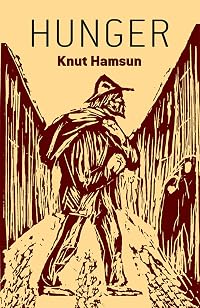




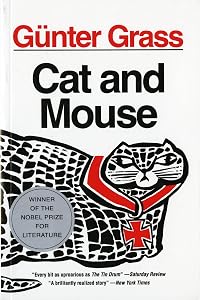
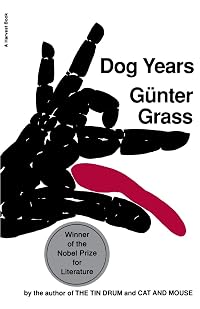
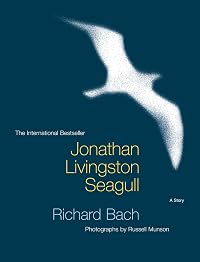


Member Recommendations


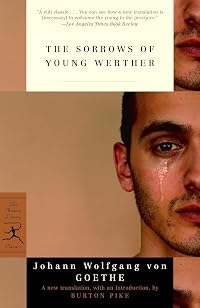
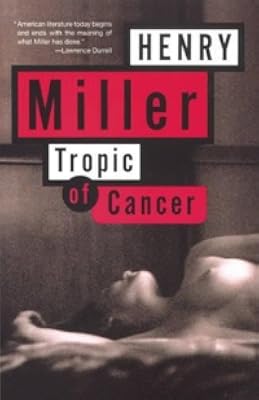
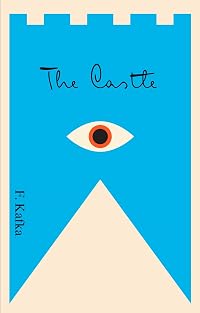
by JFDR

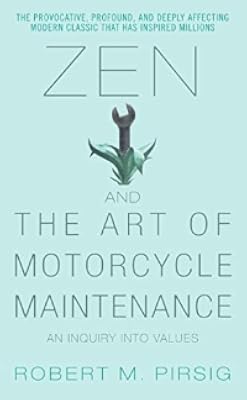
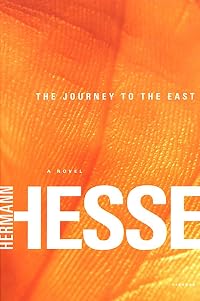
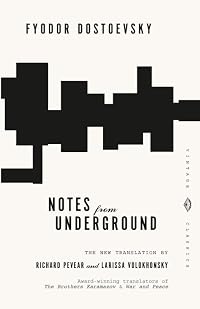
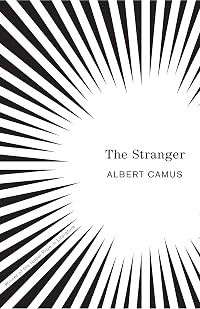
charlie68 Similar thematically.

charlie68 Similar themes of a young man looking for spiritual meaning.
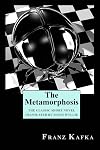
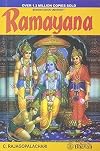
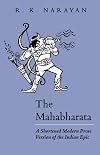
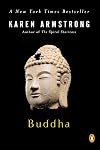



charlie68 Connects with a lot of the same themes in Ecclesiastes and the Gospels.
15

Othemts These books share a similar quest for self-knowledge with the ultimate realization that what one is looking for was with you all the time. After all, there's no place like Om
411
Member Reviews
So far, I have loved everything I've read by Hermann Hesse, and I'm excited to dig into the rest of his works.
This was a book that felt like it should be cliche, but somehow wasn't? There's just a consistent authenticity present that just makes it feel so... human?
The lessons and ideals expressed seem like they could be very shallow, but the more you think about them, the more depth is revealed. This feels like the type of book you could read 10 times, and take away something differently every time you read it depending on what stage of life you are in. I do think a lot of the philosophy was lost on me, due to not being read at the right time in life.
That being said, the discussions about the river were amazing, and very profound. I show more loved that whole section: the lesson that a river is simultaneously the small stream at it's source, as well as the large body of water, ending, and returning the water to the ocean and not one or the other. Similarly, a person is not removed from their past, their source, nor defined by their future, but it is a part of them. To accept that is the only way to truly exist in the present, and live, and grow. Time does not exist. (sidenote: this greatly reminded me of Slaughterhouse Five, one of my favorite books of all time). show less
This was a book that felt like it should be cliche, but somehow wasn't? There's just a consistent authenticity present that just makes it feel so... human?
The lessons and ideals expressed seem like they could be very shallow, but the more you think about them, the more depth is revealed. This feels like the type of book you could read 10 times, and take away something differently every time you read it depending on what stage of life you are in. I do think a lot of the philosophy was lost on me, due to not being read at the right time in life.
That being said, the discussions about the river were amazing, and very profound. I show more loved that whole section: the lesson that a river is simultaneously the small stream at it's source, as well as the large body of water, ending, and returning the water to the ocean and not one or the other. Similarly, a person is not removed from their past, their source, nor defined by their future, but it is a part of them. To accept that is the only way to truly exist in the present, and live, and grow. Time does not exist. (sidenote: this greatly reminded me of Slaughterhouse Five, one of my favorite books of all time). show less
I really loved this one. It's especially illuminating if you have some understanding of Vedic religion and how that fed developments in Buddhism, Hinduism, and Jainism, though that's not essential. Set on the Gangetic Plain about 2600 years ago, it's about one man's search for enlightenment. This man, Siddhartha, son of a Brahmin, even in the presence of Gautama Buddha himself, is unable to find a way if it depends on the teachings of others. There is, Siddhartha comes to believe, no single illuminated path for all men and women to follow. We must each of us make our own mistakes. We must all suffer, and no warning against it will ever help us. For to live some kind of bizarre life of comfort that prevents suffering also prevents our show more finding peace. The writing style is very honed down, lean, without abstruse digressions. It fulfills for me that fundamental need that all good fiction must meet: it reveals a completely imagined world. And isn't that what we really require from fiction: that it take us out of ourselves? That it, to paraphrase John Gardner, perpetuate the dream? Highly recommended. I much prefer it to Steppenwolf. Up next Journey to the East and The Glass Bead Game. show less
Earlier this summer I read Paulo Coelho's 'The Alchemist' and wondered to myself, 'Why am I not having to think right now?' I read the whole book, trying to think about thinking about it, and I was continually blocked. Perhaps, I concluded, there isn't as much to think about here as there is supposed to be.
'Siddhartha,' on the other hand, is a book that demands that you think whilst reading it. It doesn't give you any real answers, but instead lets you think of your own. It is instructive, it is difficult in places, it is irksome, it is enlightening. It isn't always wonderful, and some of the writing is heavy-handed by today's standards. Hesse's is a style often copied or imitated, though not usually to any degree of success.
If you want show more a spiritually compelling book, read this, not 'The Alchemist.' Or, better yet, take a weekend and read both, and compare - I wonder if you'll come to the same conclusions that I did. show less
'Siddhartha,' on the other hand, is a book that demands that you think whilst reading it. It doesn't give you any real answers, but instead lets you think of your own. It is instructive, it is difficult in places, it is irksome, it is enlightening. It isn't always wonderful, and some of the writing is heavy-handed by today's standards. Hesse's is a style often copied or imitated, though not usually to any degree of success.
If you want show more a spiritually compelling book, read this, not 'The Alchemist.' Or, better yet, take a weekend and read both, and compare - I wonder if you'll come to the same conclusions that I did. show less
This might have influenced me when I was younger, as it has many others. While Hesse is again exploring his theme of the intellectual's place in society, this famous novel of course is also strongly centered on Eastern religion. But it follows a character arc I never saw coming. The opening chapters lulled me with their expected tone, filled with contemplative and indulgent overlapping sentences. I had falsely assumed this was a fictionalized biography of the Buddha, but in an early chapter Siddhartha actually meets the Buddha (Gotama), and from that point on I had no idea where this was going.
Siddhartha steps away from the Buddha's teaching - from all teaching - in the belief that he cannot find true peace of soul through following show more anyone else's path, only through pursuing his own to self-discovery. He begins to indulge in the world, to experiment with the senses, beginning with sexual pleasure and then proceeding to capitalism and riches. This proves to be a dead end that I felt was an unfair analysis, but Siddhartha has more stones to turn over before his journey is complete and these bring missing shades of meaning to his experience. The lesson about fathers allowing sons to make their own errors and follow their own paths was well portrayed. There are many paths up the spiritual mountain and all may arrive at inner peace. We must allow for this in witnessing the journeys of others, and in looking back on our own. show less
Siddhartha steps away from the Buddha's teaching - from all teaching - in the belief that he cannot find true peace of soul through following show more anyone else's path, only through pursuing his own to self-discovery. He begins to indulge in the world, to experiment with the senses, beginning with sexual pleasure and then proceeding to capitalism and riches. This proves to be a dead end that I felt was an unfair analysis, but Siddhartha has more stones to turn over before his journey is complete and these bring missing shades of meaning to his experience. The lesson about fathers allowing sons to make their own errors and follow their own paths was well portrayed. There are many paths up the spiritual mountain and all may arrive at inner peace. We must allow for this in witnessing the journeys of others, and in looking back on our own. show less
I was always curious as to why I was named so - my mother tells me that my father started reading this book two to three months before I was born. He finished it a week before my birth - and it made such an impression that I was named Siddhartha after the book's central character. This book, for this reason, has a permanent place in our bookshelf. I picked it up on a whim, and was absolutely blown away. This book is truly timeless - Hesse expresses simple and pure ideas with magnificent elegance.
In Buddhist mythology, Siddhartha Gautama is a man who realises that the world is meaningless, if lived either fully in desire or asceticism - after achieving enlightenment, he becomes the Buddha, and spreads the concept of a 'middle path'. show more Hesse takes this concept even further, and separates Siddhartha and Gautama - in his work, Siddhartha is the son of a Brahmin who longs to rise above his mortal shell, and Gautama (stylized as Goutama) is the Buddha, who has already achieved enlightenment by the time Siddhartha steps to find out meaning in his life.
The journey of Siddhartha never stops - whether sinning, repenting or at peace with himself, Siddhartha never ceases to be static. And yet he would not trade these experiences for anything in the world - because they are what has moulded him. Learning that money, love, cowardice and avarice exist - and learning to experience them, while rising above them, is what Siddhartha learns through the course of the novel.
In a sense, Siddhartha is the ultimate existentialist. He loves everyone and everything, warts and all, simply because they are - thus freeing himself from both human and material attachments, and achieving enlightenment. He can be easily dismissed as something to be read about, absorbed and dismissed, because of his philosophy's seeming naïveté.
However, the central theme of Siddhartha is not the protagonist's teachings per se, but his unwavering belief that introspection and self-taught lessons are always better than what a teacher may impart, because secondhand knowledge can be dangerous. And that is a belief that is as valid in a utopia, as it is in ours. This, and other such concepts scattered around the work, makes the book stay with you long after you've read it. show less
In Buddhist mythology, Siddhartha Gautama is a man who realises that the world is meaningless, if lived either fully in desire or asceticism - after achieving enlightenment, he becomes the Buddha, and spreads the concept of a 'middle path'. show more Hesse takes this concept even further, and separates Siddhartha and Gautama - in his work, Siddhartha is the son of a Brahmin who longs to rise above his mortal shell, and Gautama (stylized as Goutama) is the Buddha, who has already achieved enlightenment by the time Siddhartha steps to find out meaning in his life.
The journey of Siddhartha never stops - whether sinning, repenting or at peace with himself, Siddhartha never ceases to be static. And yet he would not trade these experiences for anything in the world - because they are what has moulded him. Learning that money, love, cowardice and avarice exist - and learning to experience them, while rising above them, is what Siddhartha learns through the course of the novel.
In a sense, Siddhartha is the ultimate existentialist. He loves everyone and everything, warts and all, simply because they are - thus freeing himself from both human and material attachments, and achieving enlightenment. He can be easily dismissed as something to be read about, absorbed and dismissed, because of his philosophy's seeming naïveté.
However, the central theme of Siddhartha is not the protagonist's teachings per se, but his unwavering belief that introspection and self-taught lessons are always better than what a teacher may impart, because secondhand knowledge can be dangerous. And that is a belief that is as valid in a utopia, as it is in ours. This, and other such concepts scattered around the work, makes the book stay with you long after you've read it. show less
Forty-odd years ago, when everyone else my age was reading and quoting Hesse at each other (and me, dammit) interminably, I kind of missed out: I had perhaps three tries at The Glass Bead Game, but never got beyond about page 50. The turn of the year from 2009 to 2010 inspired me to redress this lack in my literary education, so I doughtily pulled from the shelf Siddhartha, purchased somewhere a few years back and having the considerable merit of being shorter than his other books.
Oh, my, what a treat I have been missing all these years.
Telling the tale of a religious seeker who meets but does not become a disciple of the Buddha, instead wending his own merry way through thickets of cod philosophy, this reads like the sort of book show more you expect to be given at airports by people in brightly coloured clothing. The translation is either godawful or should have been copyedited. Take this, from page 76 of my edition, for a flavour of so much more:
". . . But today you have met such a pilgrim in such shoes and dress. Remember, my dear Govinda, the world of appearances is transitory, the style of our clothes and hair is extremely transitory. Our hair and our bodies are themselves transitory. You have observed correctly. I am wearing the clothes of a rich man. I am wearing them because I have been a rich man, and I am wearing my hair like men of the world and fashion because I have been one of them."Hands up anyone else who's reminded of that old MAD Magazine parody of Longfellow, in which Hiawatha sets out to make a pair of gloves: "First he turned the skin side inside . . ." and so on for about fifty similar lines in which the mittens are no closer to being completed.
"And what are you now, Siddhartha?"
"I do not know. I know as little as you. I am on the way. I was a rich man, but I am no longer and what I will be tomorrow I do not know."
I suppose Siddhartha was really the Jonathan Livingston Seagull of its day -- short, pretentious, ultimately empty, seemingly designed for those who want to absorb just enough off-the-rack metaphysics to see them through an outburst or three of gastric upheaval. show less
Told with remarkable clarity and refreshing brevity, Hermann Hesse's Siddhartha is a fantastic book for providing oneself with an environment in which to ponder deep spiritual questions. It tells the story of the eponymous Siddhartha, a restless and thoughtful young man who embarks on a spiritual quest of self-discovery. Despite being only 117 pages long (in my Penguin Modern Classics edition), Hesse manages to tell the story of Siddhartha's whole life, from restless youth to contented, enlightened old age.
Indeed, it is because of this brevity that Siddhartha is a better spiritual treatise than it is a novel. As a novel, a story in which to become engrossed, it is practically non-existent. Aside from Siddhartha's spiritual fulfilment show more which serves as the plot line, there is no character development. We do not know why Vasudeva embarked upon or continued his own spiritual quest, why Siddhartha and Kamala developed a relationship of such intensity, or why Govinda possesses such loyalty, or a spiritual restlessness that mirrors Siddhartha's. There is also little description of the world which Siddhartha experiences (except perhaps the river which is so important to the final part of the story), and indeed little narrative.
However, when taken as a spiritual treatise, Siddhartha is exceptional. There is a persistent theme that one cannot attain spiritual harmony through established teachings and doctrines, and certainly not organised religion. As early as page 4, the young Siddhartha is contemptuous of the Brahmin (Hindu priests) and rejects becoming one like ten thousand others of [his] kind"; he rejects being a "good stupid sheep amongst a large herd". He becomes obsessed with transcending the body and mind to become one with the Self (Atman), "the eternal which each person carried within him" but few realised (pg. 5), which will connect him to Brahman (with an 'a'), which is the unchanging, divine oneness of the universe. From then on, Siddhartha is a chronicle of the titular character's spiritual journey. Riffing on a phrase found on page 73, there is Siddhartha the Brahmin, Siddhartha the Samana (a sort of spiritual pilgrim), Siddhartha the materialistic rich man, Siddhartha the child, Siddhartha the father and, finally, Siddhartha the ferryman. Siddhartha's spiritual beliefs change throughout this time, but there is a clear progression and maturation of his philosophy so that, by the end, his thoughts seem a logical summation of all that he has learned and experienced.
That phrase - 'learned and experienced' - is crucial to whether the reader enjoys and appreciates this book. Whilst Siddhartha's spiritual philosophy is refined over time, the themes of learning and experience are a constant foundation. As mentioned above, there is the conviction expressed by Siddhartha that established teachings and doctrines, even those of the venerable Buddha, cannot in themselves bring spiritual enlightenment. They may set one on the right path (it is Siddhartha's time as a Samana that opens up the world to him) but cannot in themselves bring an achievement. Siddhartha samples various spiritual philosophies and teachings but every time his thirst is quenched, he feels new thirst, and although these paths take him away from the Self, "in the end they always led back to it." (pg. 13). Somewhat unusually for a writer, someone who makes a living based upon his utilisation and manipulation of words, Hesse argues that words cannot communicate spiritual truth. In Siddhartha's meeting with the Buddha, he tells the 'Illustrious One' that he cannot become his follower because "... nobody finds salvation through teachings. To nobody, O Illustrious One, can you communicate in words and teachings, what happened to you in the hour of your enlightenment." (pg. 28). In contrast to the teachings of the Western monotheistic religions, there are no set of rules, teachings or commandments that one must follow in order to be considered a holy man in the same way that one must follow the holy texts and gospels to be a good Christian, Jew or Muslim.
Hesse, through Siddhartha, tells us that one's own life experiences dictate our progression, not the teachings of others ("I will learn from myself, be my own pupil. I will learn from myself the secret of Siddhartha." (pg. 31)). After Siddhartha has succumbed to the materialistic life of a merchant, he acknowledges that he needed to experience it himself in order to reject it. He had been taught in his youth that shallow materialism was not good, but the teaching, the rule, was not enough. Now he had experienced it, and overcome it, he now knew the lesson "not only with my intellect, but with my eyes, with my heart, with my stomach." (pg. 77). We cannot always decide what experiences we may have, but we can be more receptive to them, and more willing to learn from them, and indeed, increase our chances of attaining more valuable experiences through conscious and thoughtful choice (Siddhartha, after all, chooses to embark on a journey of self-discovery, to leave home and pursue the path of the Samana). Many are unwilling to be receptive to new ideas and experiences; there is a neat example where Vasudeva notes how the ferry across the river which serves as a great spiritual inspiration to Siddhartha has "taken thousands of people across and to all of them my river has been nothing but a hindrance on their journey." (pg. 83). To them, the river is an inconvenient obstacle to their ordinary daily lives. In contrast, through his introspective thoughtfulness and receptiveness, Siddhartha seems able to see the spiritual lessons in earthly events (see pages 53-54 for an example of how a trip to a village becomes a lesson on the benefits of karma). More than anything, it is Hesse's advocacy for individualistic, non-conformist spiritual thinking that is the most rewarding and life-affirming lesson from Siddhartha.
Although the spiritual conclusions reached by Siddhartha at the end were not entirely convincing to me, they were told with such clarity and assertiveness that, though they may not harmonise completely with one's own thoughts, they are rewarding for the reader merely to ponder and digest them. Indeed, through the final dialogue between Siddhartha and Govinda, Hesse seems to acknowledge this and implies at the end that he knows many people will not be wholly accepting of his findings. As people are at different stages of their journeys, and have different experiences to draw from, they may not find Siddhartha's professed enlightenment convincing, just as Govinda could not completely accept them from Siddhartha himself ("... yet it also pleases me and seems right that what is of value and wisdom to one man seems nonsense to another", Siddhartha mischievously muses on page 112). As with page 28 mentioned above (when Siddhartha told the Buddha he could not communicate the sensation of his enlightenment to others), one must experience it for oneself before they can truly understand it. It is through his own experiences that Siddhartha comes to find enlightenment and contentment. Realising that all the things in the world are connected in spiritual harmony, Siddhartha claims that "love is the most important thing in the world" (pg. 113); not necessarily love for another human being, but compassionate understanding and affection for all things. As he tells Govinda, "everything needs only... my loving understanding; then all is well with me and nothing can harm me." (pg. 111). Time and suffering, life and death, are all relative; whereas one may feel pain in this moment, one may feel happiness in another, or in another life. Like the river, these moments are ever-flowing and exist alongside one another: "... every sin already carries grace within it, all small children are potential old men, all sucklings have death within them, all dying people - eternal life." (pp110-11). Whereas the hippy-istic message that 'all you need is love' may seem like a cop-out, when it comes at the end of this small but seismic book, it is a revelation. After a restless journey, Siddhartha no longer needs to compare the world to "some kind of desired imaginary world, some imaginary vision of perfection, but to leave it as it is, to love it and be glad to belong to it." (pg. 111). Contentment and affection for the world, after a difficult journey: that is as life-affirming as any message can be." show less
Indeed, it is because of this brevity that Siddhartha is a better spiritual treatise than it is a novel. As a novel, a story in which to become engrossed, it is practically non-existent. Aside from Siddhartha's spiritual fulfilment show more which serves as the plot line, there is no character development. We do not know why Vasudeva embarked upon or continued his own spiritual quest, why Siddhartha and Kamala developed a relationship of such intensity, or why Govinda possesses such loyalty, or a spiritual restlessness that mirrors Siddhartha's. There is also little description of the world which Siddhartha experiences (except perhaps the river which is so important to the final part of the story), and indeed little narrative.
However, when taken as a spiritual treatise, Siddhartha is exceptional. There is a persistent theme that one cannot attain spiritual harmony through established teachings and doctrines, and certainly not organised religion. As early as page 4, the young Siddhartha is contemptuous of the Brahmin (Hindu priests) and rejects becoming one like ten thousand others of [his] kind"; he rejects being a "good stupid sheep amongst a large herd". He becomes obsessed with transcending the body and mind to become one with the Self (Atman), "the eternal which each person carried within him" but few realised (pg. 5), which will connect him to Brahman (with an 'a'), which is the unchanging, divine oneness of the universe. From then on, Siddhartha is a chronicle of the titular character's spiritual journey. Riffing on a phrase found on page 73, there is Siddhartha the Brahmin, Siddhartha the Samana (a sort of spiritual pilgrim), Siddhartha the materialistic rich man, Siddhartha the child, Siddhartha the father and, finally, Siddhartha the ferryman. Siddhartha's spiritual beliefs change throughout this time, but there is a clear progression and maturation of his philosophy so that, by the end, his thoughts seem a logical summation of all that he has learned and experienced.
That phrase - 'learned and experienced' - is crucial to whether the reader enjoys and appreciates this book. Whilst Siddhartha's spiritual philosophy is refined over time, the themes of learning and experience are a constant foundation. As mentioned above, there is the conviction expressed by Siddhartha that established teachings and doctrines, even those of the venerable Buddha, cannot in themselves bring spiritual enlightenment. They may set one on the right path (it is Siddhartha's time as a Samana that opens up the world to him) but cannot in themselves bring an achievement. Siddhartha samples various spiritual philosophies and teachings but every time his thirst is quenched, he feels new thirst, and although these paths take him away from the Self, "in the end they always led back to it." (pg. 13). Somewhat unusually for a writer, someone who makes a living based upon his utilisation and manipulation of words, Hesse argues that words cannot communicate spiritual truth. In Siddhartha's meeting with the Buddha, he tells the 'Illustrious One' that he cannot become his follower because "... nobody finds salvation through teachings. To nobody, O Illustrious One, can you communicate in words and teachings, what happened to you in the hour of your enlightenment." (pg. 28). In contrast to the teachings of the Western monotheistic religions, there are no set of rules, teachings or commandments that one must follow in order to be considered a holy man in the same way that one must follow the holy texts and gospels to be a good Christian, Jew or Muslim.
Hesse, through Siddhartha, tells us that one's own life experiences dictate our progression, not the teachings of others ("I will learn from myself, be my own pupil. I will learn from myself the secret of Siddhartha." (pg. 31)). After Siddhartha has succumbed to the materialistic life of a merchant, he acknowledges that he needed to experience it himself in order to reject it. He had been taught in his youth that shallow materialism was not good, but the teaching, the rule, was not enough. Now he had experienced it, and overcome it, he now knew the lesson "not only with my intellect, but with my eyes, with my heart, with my stomach." (pg. 77). We cannot always decide what experiences we may have, but we can be more receptive to them, and more willing to learn from them, and indeed, increase our chances of attaining more valuable experiences through conscious and thoughtful choice (Siddhartha, after all, chooses to embark on a journey of self-discovery, to leave home and pursue the path of the Samana). Many are unwilling to be receptive to new ideas and experiences; there is a neat example where Vasudeva notes how the ferry across the river which serves as a great spiritual inspiration to Siddhartha has "taken thousands of people across and to all of them my river has been nothing but a hindrance on their journey." (pg. 83). To them, the river is an inconvenient obstacle to their ordinary daily lives. In contrast, through his introspective thoughtfulness and receptiveness, Siddhartha seems able to see the spiritual lessons in earthly events (see pages 53-54 for an example of how a trip to a village becomes a lesson on the benefits of karma). More than anything, it is Hesse's advocacy for individualistic, non-conformist spiritual thinking that is the most rewarding and life-affirming lesson from Siddhartha.
Although the spiritual conclusions reached by Siddhartha at the end were not entirely convincing to me, they were told with such clarity and assertiveness that, though they may not harmonise completely with one's own thoughts, they are rewarding for the reader merely to ponder and digest them. Indeed, through the final dialogue between Siddhartha and Govinda, Hesse seems to acknowledge this and implies at the end that he knows many people will not be wholly accepting of his findings. As people are at different stages of their journeys, and have different experiences to draw from, they may not find Siddhartha's professed enlightenment convincing, just as Govinda could not completely accept them from Siddhartha himself ("... yet it also pleases me and seems right that what is of value and wisdom to one man seems nonsense to another", Siddhartha mischievously muses on page 112). As with page 28 mentioned above (when Siddhartha told the Buddha he could not communicate the sensation of his enlightenment to others), one must experience it for oneself before they can truly understand it. It is through his own experiences that Siddhartha comes to find enlightenment and contentment. Realising that all the things in the world are connected in spiritual harmony, Siddhartha claims that "love is the most important thing in the world" (pg. 113); not necessarily love for another human being, but compassionate understanding and affection for all things. As he tells Govinda, "everything needs only... my loving understanding; then all is well with me and nothing can harm me." (pg. 111). Time and suffering, life and death, are all relative; whereas one may feel pain in this moment, one may feel happiness in another, or in another life. Like the river, these moments are ever-flowing and exist alongside one another: "... every sin already carries grace within it, all small children are potential old men, all sucklings have death within them, all dying people - eternal life." (pp110-11). Whereas the hippy-istic message that 'all you need is love' may seem like a cop-out, when it comes at the end of this small but seismic book, it is a revelation. After a restless journey, Siddhartha no longer needs to compare the world to "some kind of desired imaginary world, some imaginary vision of perfection, but to leave it as it is, to love it and be glad to belong to it." (pg. 111). Contentment and affection for the world, after a difficult journey: that is as life-affirming as any message can be." show less
Members
- Recently Added By
Published Reviews
ThingScore 75
[It] attempts to postulate an answer to the riddle of man's confused and contradictory existence in this universe.
added by Shortride
Lists

1001 Books You Must Read Before You Die
1,448 works; 1,137 members

Best Historical Fiction
620 works; 261 members

Philosophical Fiction
97 works; 27 members

German Literature
518 works; 56 members
Books That Changed Me
158 works; 47 members

20th Century Literature
1,161 works; 55 members

PBS The Great American Read
100 works; 21 members

Favorite Coming of Age Novels.
164 works; 51 members
In and About the 1920s
181 works; 31 members

All Things India
95 works; 21 members
Nobel Price Winners
222 works; 20 members
Favourite Books
1,820 works; 316 members

Good Buddhist Novels
30 works; 4 members

Best Books About Journeys and Quests
117 works; 30 members

Religious Fiction
58 works; 13 members

Out of Copyright
244 works; 14 members

Dishonourable Mentions of 2013
189 works; 63 members
Most Popular Books Tagged India
36 works; 5 members
Didactic Fiction
29 works; 3 members

Books You Read During High School (For School)
301 works; 53 members

Blue Pyramid 1,276 Best Books of All Time
1,248 works; 32 members
1,001 BYMRBYD Concensus
723 works; 27 members

Top 100 to Read before you Die
109 works; 7 members

A Novel Cure
742 works; 23 members

Short and Sweet
246 works; 24 members
Mind Expanding Books by hackerkid
581 works; 8 members

Books Read in 2022
5,226 works; 115 members

Recommended Philosophic Novels
26 works; 1 member

Books Read in 2017
4,249 works; 130 members

Books Read in 2023
5,638 works; 147 members
1920s
141 works; 6 members

SomethingAwful TBB BOTM
66 works; 2 members
Existentialism
90 works; 11 members

once upon a time ~ ancient world
46 works; 7 members

Literature in Translation
113 works; 5 members

Books Read in 2016
4,666 works; 199 members

Undiscovered Classics to Read
70 works; 15 members
Overdue Podcast
808 works; 9 members

I Can't Finish This Book
189 works; 22 members

Books I want to read
25 works; 3 members

Macho Fiction
7 works; 4 members
School Made Us Read It
380 works; 196 members

Top Five Books of 2024
795 works; 264 members

current
52 works; 1 member
religion, myth, folktales
13 works; 1 member

Recommended Reading : 600 Classics Reviewed, Editors of Salem Press, 2015
634 works; 6 members
NPR Books You Love: Books That Shaped You in High School
26 works; 1 member
Book Recommendations Masterlist
28 works; 1 member

El Castillo del Alma: Viajes de Crisis y Transformación (Alquimia)
6 works; 1 member
The Complete Rory Gilmore Reading List
506 works; 5 members

.
396 works; 1 member
Gen X Library
245 works; 4 members

Retrospective of 20th- and 21st-century literature
154 works; 1 member
spirituality & consciousness
22 works; 1 member

Read in 2006
140 works; 1 member

el
1,139 works; 1 member

philosophy
28 works; 2 members

The Five Books That Represent Us
391 works; 150 members
BitLife
212 works; 4 members

The Books I Read in 2017
96 works; 1 member
Global Reads: Books Set in South Asia
30 works; 3 members

Fate vs. Free Will
63 works; 8 members

Read
293 works; 4 members

Biggest Disappointments
606 works; 168 members

Books Read in 2012
816 works; 34 members

Books Read in 2018
4,360 works; 110 members

Books Read in 2006
424 works; 8 members

Books Read in 2019
4,052 works; 110 members
Bibliografia essenziale
86 works; 2 members

AP Lit
363 works; 6 members

Books We'd Want on a Desert Island
204 works; 133 members

Florida
366 works; 3 members

Five star books
1,767 works; 110 members

Books Featured on Gilmore Girls
307 works; 21 members

Unread books
1,063 works; 87 members
Author Information

1,022+ Works 94,105 Members
Hermann Hesse (July 2, 1877 -- August 9, 1962) was a German poet, novelist, essayist and painter. His best-known works included Steppenwolf, Siddhartha, and The Glass Bead Game, each of which explores an individual's search for authenticity, self-knowledge and spirituality. In 1946, he received the Nobel Prize in Literature. Hess publicly show more announced his views on the savagery of World War I, and was considered a traitor. He moved to Switzerland where he eventually became a naturalized citizen. He warned of the advent of World War II, predicting that cultureless efficiency would destroy the modern world. His theme was usually the conflict between the elements of a person's dual nature and the problem of spiritual loneliness. His first novel, Peter Camenzind, was published in 1904. His masterpiece, Death and the Lover (1930), contrasts a scholarly abbot and his beloved pupil, who leaves the monastery for the adventurous world. Steppenwolf (1927), a European bestseller, was published when defeated Germany had begun to plan for another war. It is the story of Haller, who recognizes in himself the blend of the human and wolfish traits of the completely sterile scholarly project. During the 1960s Hesse became a favorite writer of the counter culture, especially in the United States, though his critical reputation has never equaled his popularity. Hermann Hesse died in 1962. (Bowker Author Biography) show less
Some Editions
Awards and Honors
Awards
Notable Lists
Bulgarian Big Read (96)
Series
Belongs to Publisher Series
Kwintessens (nr. 4)
Suhrkamp Geschenkbuch (suhrkamp taschenbuch 4354)
New Directions Classics (NC34)
Biblioteca Folha (16)
suhrkamp taschenbuch (0182 / 4554)
Bibliothek Suhrkamp (227)
Lanterne (L 314)
rororo (951)
A tot vent (521)
Work Relationships
Is contained in
Revue Française de Yoga N°1 : De maître à disciple by Fédération nationale des libres penseurs de France et de l'Union française
International Collector's Library Classics 19 volumes: Crime & Punishment; Twenty Thousand Leagues Under the Sea; Mysterious Island; Magic Mountain; Around the World in 80 Days; Count of Monte Cristo; Camille; Quo Vadis; Hunchback of Notre Dame; Nana; Scaramouche; Pinocchio; Fernande; War and Peace; The Egyptian; From the Earth to the Moon; Candide; Treasure of Sierra Madre; Siddhartha/Steppenwolf by Jules Verne
Has the adaptation
Was inspired by
Inspired
Has as a commentary on the text
Has as a student's study guide
Has as a teacher's guide
Common Knowledge
- Canonical title*
- Siddharta
- Original title
- Siddhartha. Eine indische Dichtung
- Alternate titles*
- Siddarta
- Original publication date
- 1922
- People/Characters
- Buddha (Siddhartha); Kamala (courtesan); The Illustrious One (Gotama); Govinda (friend); Vasudeva (the ferryman); Kamaswami (show all 11); Hermann Hesse; Joachim Neugroschel; Ralph Freedman; Siddhartha (son of Siddhartha); Siddhartha Gautama, the Buddha
- Important places
- India
- Related movies
- Siddhartha (1972 | Conrad Rooks | IMDb)
- Dedication
- (German)
Lieber, verehrter Romain Rolland!
Seit dem Herbst des Jahres 1914, da die seit kurzem angebrochene Atemnot der Geistigkeit auch mir plötzlich spürbar wurde, und wir einander von fremden Ufern her die ... (show all)Hand gaben, im Glauben an dieselben übernationalen Notwendigkeiten, seither habe ich den Wunsch gehabt, Ihnen einmal ein Zeichen meiner Liebe und zugleich eine Probe meines Tuns und einen Blick in meine Gedankenwelt zu geben. Nehmen Sie die Widmung des ersten Teiles meiner noch unvollendeten indischen Dichtung freundlichst entgegen von Ihrem
Hermann Hesse - First words
- In the shade of the house, in the sunshine of the riverbank near the boats, in the shade of the Sal-wood forest, in the shade of the fig tree is where Siddhartha grew up, the handsome son of the Brahman, the young falcon, tog... (show all)ether with his friend Govinda, son of a Brahman.
In the shade of the house, in the sunshine on the river bank by the boats, in the shade of the sallow wood and the fig tree, Siddhartha, the handsome Brahmin's son, grew up with his friend Govinda. - Hilda Rosner translation - Quotations
- [attributions added]
Kamaswami: "... And what is it now what you've got to give? What is it that you've learned, what you're able to do?"
Siddhartha: "I can think. I can wait. I can fast."
Kamaswami: "That's everythi... (show all)ng?"
Siddhartha: "I believe, that's everything!"
Seeking means: to have a goal; but finding means: to be free, to be receptive, to have no goal.
Knowledge can be communicated, but not wisdom.
But I think it is important to only love the world, not to despise it, not for us to hate each other, but to be able to regard the world and ourselves and all beings with love, admiration, and respect.
The purpose and the essential properties were not somewhere behind the things, they were in them, in everything. - Last words
- (Click to show. Warning: May contain spoilers.)Deeply, he bowed, touching the ground, before him who was sitting motionlessly, whose smile reminded him of everything he had ever loved in his life, what had ever been valuable and holy to him in his life.
- Blurbers*
- Miller, Henry
- Original language
- German
- Canonical DDC/MDS
- 833.912
- Disambiguation notice
- 3518012274 1969 hardcover German Bibliothek Suhrkamp 227
3518366823 1974 softcover German suhrkamp taschenbuch 182
3518463543 2021 softcover German suhrkamp taschenbuch 4554 (Geschenkbuch)
3518736507 2011 ebook Germa... (show all)n suhrkamp
*Some information comes from Common Knowledge in other languages. Click "Edit" for more information.
Classifications
- Genres
- Fiction and Literature, General Fiction
- DDC/MDS
- 833.912 — Literature & rhetoric German & related literatures German fiction 1900- 1900-1990 1900-1945
- LCC
- PT2617 .E85 .S513 — Language and Literature German, Dutch and Scandinavian literatures German literature Individual authors or works 1860/70-1960
- BISAC
Statistics
- Members
- 31,515
- Popularity
- 104
- Reviews
- 421
- Rating
- (3.95)
- Languages
- 41 — Bulgarian, Catalan, Czech, Danish, Dutch, English, Esperanto, Finnish, French, German, Galician, Greek, Hebrew, Hindi, Hungarian, Indonesian, Italian, Japanese, Korean, Latin, Latvian, Lithuanian, Macedonian, Malayalam, Malay, Nepali, Norwegian (Bokmål), Farsi/Persian, Polish, Russian, Serbian, Croatian, Slovenian, Spanish, Swedish, Thai, Turkish, Urdu, Vietnamese, Portuguese (Portugal), Chinese, traditional
- Media
- Paper, Audiobook, Ebook
- ISBNs
- 709
- UPCs
- 5
- ASINs
- 257