On This Page
Description
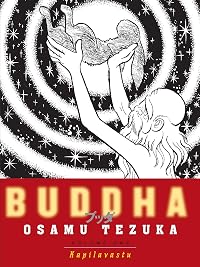
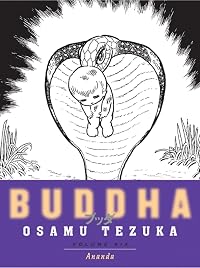
The first volume of Osamu Tezuka's fictional biography of Siddhartha, Gautama Buddha. Introduces Chapra, a slave boy who tries to escape his fate; Chapra's slave mother, who sticks by him no matter what; Tatta, a crazed wild child pariah who communes with animals; and Naradatta, a monk attempting to decipher strange portents of the Buddha's birth.Tags
Recommendations








Member Recommendations
by JqnOC
Member Reviews
Osamu Tezuka’s vaunted storytelling genius, consummate skill at visual expression, and warm humanity blossom fully in his eight-volume epic of Siddhartha’s life and times. Tezuka evidences his profound grasp of the subject by contextualizing the Buddha’s ideas; the emphasis is on movement, action, emotion, and conflict as the prince Siddhartha runs away from home, travels across India, and questions Hindu practices such as ascetic self-mutilation and caste oppression. Rather than recommend resignation and impassivity, Tezuka’s Buddha predicates enlightenment upon recognizing the interconnectedness of life, having compassion for the suffering, and ordering one’s life sensibly. Philosophical segments are threaded into show more interpersonal situations with ground-breaking visual dynamism by an artist who makes sure never to lose his readers’ attention.Tezuka himself was a humanist rather than a Buddhist, and his magnum opus is not an attempt at propaganda. Hermann Hesse’s novel or Bertolucci’s film is comparable in this regard; in fact, Tezuka’s approach is slightly irreverent in that it incorporates something that Western commentators often eschew, namely, humor. show less
Absolute genius work by the godfather of manga. Just enough "Astro Boy" to keep sci fi otaku interested in a historical fiction about the birth of the Gautama Buddha, Siddhartha. Much like Shanower's "The Bronze Age" will do later, Tezuka humanizes these historical figures so that they aren't so stiff. I love that they use anachronistic language, as well (like calling the mother figure "moms"). HIGHLY recommended.
Tezuka manages to sustain a gripping pace while inserting subtle philosophy and universal themes. If the other 7 volumes are as good as this one it might be his greatest series. I like this first volume more than most of the volumes of Phoenix.
While the narrative is not bound by the strictures of its underlying faith - at least not yet - the moral compass of the plot is geared toward that expression of enlightenment, whether through sacrifice and death or through patience and love. The love of humanity is present in many if not all of Tezuka’s work. He is famous for his heart. He never loses sight of this central concern in his characters. He knows that the reader will sympathize with someone who is performing either evil or show more magnanimous acts out of love or other well-established motives. By clarifying the motive the action proceeds smoothly and the characters are allowed to react as the situations arise. I got the sense that the world extended far beyond the borders of the comic frame and could sink into the pages and feel the dirt and grit of the landscape even when every extraneous detail was excluded.
He was a utilitarian artist and consummate storyteller. No matter how complex the plot becomes I cherish the moments I spend reading with Tezuka’s creations because they shed light on the beauty of the human soul. When he wants to show the soul’s wickedness it is depicted nakedly and in lurid ways, but when that beauty overcomes the inherent flaws in mankind, you can appreciate his work as more than mere entertainment. Tezuka winds a convincing yarn even when he bends the laws of physics and plays around with anachronisms.
One of the few times when manga becomes indistinguishable from literature. At least it seems to have placated most critics of the medium. The most sophisticated work by the most important graphic storyteller in Japanese history. show less
While the narrative is not bound by the strictures of its underlying faith - at least not yet - the moral compass of the plot is geared toward that expression of enlightenment, whether through sacrifice and death or through patience and love. The love of humanity is present in many if not all of Tezuka’s work. He is famous for his heart. He never loses sight of this central concern in his characters. He knows that the reader will sympathize with someone who is performing either evil or show more magnanimous acts out of love or other well-established motives. By clarifying the motive the action proceeds smoothly and the characters are allowed to react as the situations arise. I got the sense that the world extended far beyond the borders of the comic frame and could sink into the pages and feel the dirt and grit of the landscape even when every extraneous detail was excluded.
He was a utilitarian artist and consummate storyteller. No matter how complex the plot becomes I cherish the moments I spend reading with Tezuka’s creations because they shed light on the beauty of the human soul. When he wants to show the soul’s wickedness it is depicted nakedly and in lurid ways, but when that beauty overcomes the inherent flaws in mankind, you can appreciate his work as more than mere entertainment. Tezuka winds a convincing yarn even when he bends the laws of physics and plays around with anachronisms.
One of the few times when manga becomes indistinguishable from literature. At least it seems to have placated most critics of the medium. The most sophisticated work by the most important graphic storyteller in Japanese history. show less
I'm very fortunate to live up the street from a most awesome bookstore, Copacetic Comics, which carries a very well-curated selection of graphic novels, comics, small-press/indie books, and other assorted words of interest.
I had gone into the store looking for Charles Burns' Black Hole (for the very eclectic book club I'm a member of) and as it was a quiet, summer afternoon, started chatting with the owner. Being a bit unschooled in graphic novels beyond the big-guns like Sandman, Persepolis, and Maus, I asked him for some suggestions and he directed me to Osamu Tezuka's Buddha series.
While I wasn't initially attracted to the drawing style, the story immediately grabbed me and I was hooked! What I love so much about this story, and the show more series, is that is works on many different levels for many different kinds of readers. On face-value, Volume 1: Kapilavastu is full of action, adventure, violence, and betrayal and with little effort you can breeze right through the 400 pages in short order. But if you take the time to pace yourself, and occasionally stop and reflect upon what you are reading and seeing, you'll notice many different layers and messages which make the story both entertaining and thought-provoking. show less
I had gone into the store looking for Charles Burns' Black Hole (for the very eclectic book club I'm a member of) and as it was a quiet, summer afternoon, started chatting with the owner. Being a bit unschooled in graphic novels beyond the big-guns like Sandman, Persepolis, and Maus, I asked him for some suggestions and he directed me to Osamu Tezuka's Buddha series.
While I wasn't initially attracted to the drawing style, the story immediately grabbed me and I was hooked! What I love so much about this story, and the show more series, is that is works on many different levels for many different kinds of readers. On face-value, Volume 1: Kapilavastu is full of action, adventure, violence, and betrayal and with little effort you can breeze right through the 400 pages in short order. But if you take the time to pace yourself, and occasionally stop and reflect upon what you are reading and seeing, you'll notice many different layers and messages which make the story both entertaining and thought-provoking. show less
This review is meant for the whole series.
Buddha is not at all what I expected. It is a hugely enjoyable biography of Buddha, yes, but it is also a fun ride through countries, adventures, wars, romances, landscapes and anything else life could possibly include. Even though it is quite a serious theme the book never stops being funny in a warm and human way. Little sparkles now and then, for example when a character in connection with werewolves mentions movies (I am sure they didn't have them in Buddha's time), bring the book into our century. It is not a deeply religious book, it doesn't really matter if you are or not, it is just a brilliant retelling of a age-old story. The art of course is absolutely wonderful, Tezuka is not called show more the *Godfather of Manga* in vain - beautiful landscapes and although slightly *cartoony* the figures are very real. This first volume brings us up to the birth of Buddha, but as becomes clear in the following books, the story lines of other characters are just as important. I love this series, a lot of the content is known to me but it is wonderful to read it all from this amazing writer and artist's point of view. show less
Buddha is not at all what I expected. It is a hugely enjoyable biography of Buddha, yes, but it is also a fun ride through countries, adventures, wars, romances, landscapes and anything else life could possibly include. Even though it is quite a serious theme the book never stops being funny in a warm and human way. Little sparkles now and then, for example when a character in connection with werewolves mentions movies (I am sure they didn't have them in Buddha's time), bring the book into our century. It is not a deeply religious book, it doesn't really matter if you are or not, it is just a brilliant retelling of a age-old story. The art of course is absolutely wonderful, Tezuka is not called show more the *Godfather of Manga* in vain - beautiful landscapes and although slightly *cartoony* the figures are very real. This first volume brings us up to the birth of Buddha, but as becomes clear in the following books, the story lines of other characters are just as important. I love this series, a lot of the content is known to me but it is wonderful to read it all from this amazing writer and artist's point of view. show less
Reading through some of the other reviews of Osamu Tezuka's Buddha, it's clear that there's no real consensus on this series. As history, I have no doubt that Tezuka has taken some liberties with the narrative of the Buddha's life. But as a piece of writing, however, this is an excellent retelling of the life of the Buddha. In the first volume, the reader is given a general overview of some of the main characters and the background story. The Buddha himself only makes an appearance late in the book and even then, he's a baby. There are several narrative paths all of which converge by the end. The narrative flows smoothly and Tezuka does a great job creating between the reader and the several characters and even manages to make some of show more the more unappealing people rather nuanced and sympathetic.
There will be some people for whom the historical inaccuracies will get in the way of their enjoyment of the book. I would remind those people, however, that some of the most beloved works of literature are themselves gross distortions of history. Shakespeare's "history" plays border on fabrication, Mallory's Mort Darthur isn't exactly accurate and in fact literary representations of historical events have always taken a good deal of license with their subject matter. Yet somehow, there are a group of literary snobs who won't accept contemporary historical fiction and turn up their noses at all contemporary retellings of history. They have no apparent problem with their beloved cannon doing the same, but if contemporary authors do it, it's an outrage. Buddha is a literary retelling of the life of the Buddha and as such, it is most definitively not sold as nor intended to be a historical retelling of his life. It's an enjoyable introduction to this topic and has undoubtedly inspired lots of people to learn more about the life of its subject. show less
There will be some people for whom the historical inaccuracies will get in the way of their enjoyment of the book. I would remind those people, however, that some of the most beloved works of literature are themselves gross distortions of history. Shakespeare's "history" plays border on fabrication, Mallory's Mort Darthur isn't exactly accurate and in fact literary representations of historical events have always taken a good deal of license with their subject matter. Yet somehow, there are a group of literary snobs who won't accept contemporary historical fiction and turn up their noses at all contemporary retellings of history. They have no apparent problem with their beloved cannon doing the same, but if contemporary authors do it, it's an outrage. Buddha is a literary retelling of the life of the Buddha and as such, it is most definitively not sold as nor intended to be a historical retelling of his life. It's an enjoyable introduction to this topic and has undoubtedly inspired lots of people to learn more about the life of its subject. show less
There's a reason why Osamu Tezuka is the god of manga. Between this and the 'Phoenix' series, Mr. Tezuka has proven his storytelling abilities, and while his drawings might seem rather simple today, he was as much of a master of the brush as he was with the pen, and some of his panels and illustrations are incredible. With so many new manga out there today, sometimes it's better to go back to the roots. So why not pick up a copy of Buddha today? This volume was fantastic, and it got me all eager to read the rest of the series. Definitely 10/10 stars for a incredible graphic novel! You'll never be the same after reading this series - it is a wonderful and enlightening.
Members
- Recently Added By
Lists

TED 2013 Summer Reading List
190 works; 13 members

Japanese Literature
230 works; 39 members
Author Information

1,092+ Works 17,459 Members
Some Editions
Awards and Honors
Awards
Series

Work Relationships
Is contained in
Common Knowledge
- Canonical title
- Buddha, Volume 1: Kapilavastu
- Original title
- ブッダ 1
- Original publication date
- 2006; 2003
- People/Characters
- Chapra; Tatta; Naradatta; General Budai; Bandakka; Malikka (show all 10); Maya; Buddha; Asita; Sakyamuni Buddha
- Important places
- Kosala; Kapilavastu
- Important events
- 5th century BCE
- First words
- At the foot of the great Himalayas, the roof of the world whence the Indus River originates, there lived a people known as the Aryans some 3,500 years ago.
- Last words
- (Click to show. Warning: May contain spoilers.)Tatta, vowing revenge on Kosala, takes to the distant mountains... Naradatta, fallen to the state of a beast, suffers in atonement for his sins... and The one who was born near Kapilavastu... Their destinies unfold in our next volumes.
- Original language
- Japanese
- Disambiguation notice
- This is the English translation which has different material from the original Japanese volume.
First volume of an 8-volume set. 400 pages.
Classifications
- Genres
- Graphic Novels & Comics, Teen
- DDC/MDS
- 741.5 — Arts & recreation Drawing & decorative arts Drawing Comic books, graphic novels, fotonovelas, cartoons, caricatures, comic strips
- LCC
- PN6790 .J34 .B83 — Language and Literature Literature (General) Literature (General) Collections of general literature Comic books, strips, etc.
- BISAC
Statistics
- Members
- 1,193
- Popularity
- 21,010
- Reviews
- 36
- Rating
- (4.04)
- Languages
- 10 — Dutch, English, French, Indonesian, Japanese, Norwegian (Bokmål), Norwegian, Portuguese, Croatian, Spanish
- Media
- Paper, Ebook
- ISBNs
- 16
- ASINs
- 4