On This Page
Description
After a cyclone transports her to the land of Oz, Dorothy must seek out the great wizard in order to return to Kansas.Tags
Recommendations




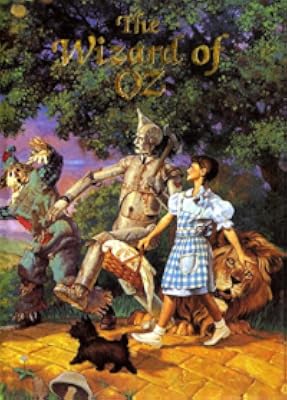

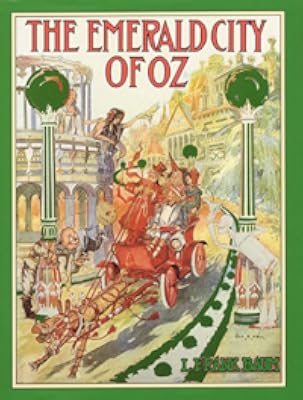


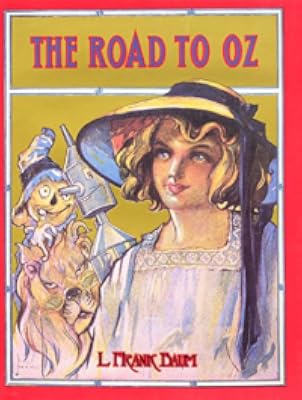

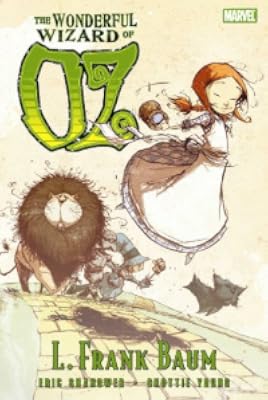


Member Recommendations

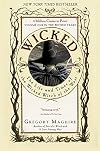
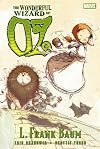

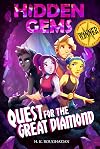
JenniferRobb Gem's quest to find the Great Diamond reminds me of Dorothy's quest to find the Wizard.
20


fulner Explore Bill Still's take on the symbolism within Baum's Wonderful Wizard of Oz and its relation to the global economic system amid Baum's bought with with several newspapers during the progressive era.
13
Othemts These books share a similar quest for self-knowledge with the ultimate realization that what one is looking for was with you all the time. After all, there's no place like Om
510
Member Reviews
I was pleasantly surprised by how much I enjoyed this book, especially in those subtle pieces that the movie didn't/couldn't hold:
"...for when he [The Scarecrow] found himself alone in his room he stood stupidly in one spot, just within the doorway, to wait till morning. It would not rest him to lie down, and he could not close his eyes; so he remained all night staring at a little spider which was weaving its web in a corner of the room, just as if it were not one of the most wonderful rooms in the world."
Didn't expect that I would be sucked into reading the series, but I've already downloaded the second book.
I love the somewhat haphazard feeling of the book; the fact that the wicked witch is not such a central character as in the show more movie; and the clever prose. show less
"...for when he [The Scarecrow] found himself alone in his room he stood stupidly in one spot, just within the doorway, to wait till morning. It would not rest him to lie down, and he could not close his eyes; so he remained all night staring at a little spider which was weaving its web in a corner of the room, just as if it were not one of the most wonderful rooms in the world."
Didn't expect that I would be sucked into reading the series, but I've already downloaded the second book.
I love the somewhat haphazard feeling of the book; the fact that the wicked witch is not such a central character as in the show more movie; and the clever prose. show less
Access a version of the below that includes illustrations on my blog.
I've been an Oz fan as long as I can remember, but the copy of the first book I had as a kid was kind of rubbish. A 1958 edition from Scholastic, it had new illustrations by Paul Granger obviously designed to remind you of the MGM film versions of the characters-- and even leaving that aside, they weren't very good. So after reading about it (Michael O. Riley discusses it in Oz and Beyond) and hearing about (Anne Philips presented on it at a conference I attended), I knew I needed to pick up a facsimile of the original book, and thankfully I found this 1987 Books of Wonder edition a few years later.
The original book is as much W. W. Denslow's as it is L. Frank Baum's I show more would argue (and indeed, Denslow and Baum split the copyright, whereas Baum was the sole owner of the later novels illustrated by John R. Neill). The original is an very visual experience. Far from just having pictures occasionally opposite or next to the text like my old Scholastic edition, in the original Denslow's pictures interact with the text. Take for example this illustration from when Dorothy and the Scarecrow find the Tin Woodman in the forest. As you can see, the Munchkin forest doesn't just surround the Tin Man, but it also surrounds the very words of the story itself-- the story is in the woods as much as the characters are. Like a lot of Oz books, the book features both a number of color plates and also black-and-white illustrations on the text pages, but uniquely, the black-and-white illustrations almost all have some kind of color accent. This color shifts throughout the story. You get the dark green above when the characters are in the Munchkin Country (I'm not sure why it's not in blue, though). This becomes light green in and near the environs of the Emerald City, while earlier in the book, in Kansas, a dismal brown was the accent color, and, appropriately, it keeps changing as the novel goes on: a sort of dark yellow as they travel into the Land of the Winkies, brown for the forests of south Oz, and orange-red in the Quadling Country (this color is also used during the poppy field incident). It's a cool touch, and one that as far as I know, the Oz books never made use of again. But this was a lavish edition, intended for gifting, and Denslow's star was arguably bigger than Baum's at the time.
The color plates are great, too. This one of the Cowardly Lion to dinner at a random house on the road is pretty nice, and the green wash Denslow covers the illustrations from the Emerald City chapters with nicely reproduces the effect of the green glasses everyone wears in the book.
Denslow's style works to keep Oz safe. As I've discussed before, Baum occasionally describes horrific violence: a lot of creatures fall victim to the Tin Man's axe, and a pair of Kalidahs-- themselves described as "monstrous" (79)-- are even "dashed to pieces" on rocks at the bottom of a chasm (81). Or there's the story the Tin Woodman tells of his own mutilation. But, Denslow never renders this violence directly. The plunging Kalidahs are almost comic, and this is all the illustration we get of the Tin Man killing an army of forty wolves in a nighttime battle.
I also like Denslow's cartoony, round-headed people. Almost everyone looks like a little kid in Oz, which seems appropriate. Glinda might be a young woman, but she's one of the only human beings in the book who is actually taller than Dorothy. The witches end up being the only characters with, well, stature, which seems appropriate for the way their capabilities tower across the plot of this novel. I know this draws on the way the Oz characters are described in the text of Wonderful Wizard, but I don't think Baum and Neill maintained these height distinctions in the later Oz novels, and I assume it was one of the inspirations behind casting people with dwarfism as the Munchkins in the MGM film. (Though, why are the Scarecrow and the Tin Man as tall as average human beings when they're both modeled on Munchkin men?)
Each chapter even gets both an illustration with its first word and a cool title page of its own, setting the atmosphere for the chapter ahead, like this one.
In short, Baum's original text has always been great, but pair it with Denslow's illustrations, and you have a journey into the fantastic that no one will ever be able to surpass. This is the definitive version of The Wizard of Oz and all others pale in comparison.
added May 2026:
I read this aloud to my elder child (now seven) back in 2021, when my younger child (now five) was six months old. I decided to reread it: Kid One barely remembers it (though they are still fairly familiar with its contents: they've heard the audiobook a couple times, read the Shanower/Young adaptation at least twice, and seen the MGM film) and Kid Two has never heard it all (though he's seen the MGM film).
It was well worth rereading. First off, it's just very good. The book has been often imitated, even (especially?) by Baum himself, but rarely bettered. Maybe it's the nostalgia, but I think the book has a sort of joy and a pleasure in it that has very rarely been captured by other Oz books. The Scarecrow, the Tin Woodman, the Cowardly Lion are all at the most themselves: each possessing a singular virtue that they don't believe themselves to possess. Oz itself is a land of wonders and marvels, full of unknown dangers and extraordinary beauties. The characters' problem-solving skills are at their most important, because the landscape they move through is full of mysteries, and there are no convenient Magic Belts or wishing pills that can save them. To a degree, anything can happen. But also problems can be solved through the rational application of thought; I think Baum very much gets the pleasure of what China Miéville calls "rationalized alienation": this world works different from ours, but you can figure it out. Things don't differ arbitrarily; if you accept his starting premises of how a living scarecrow or man of tin would work, then what follows on them those ideas makes sense. So there is pleasure to, say, the Scarecrow and company working out how to get the Cowardly Lion out of the deadly poppy field. And this would be hard to get back to in a later book, where these characters are all "celebrities" and have very powerful friends.
Partially, though, I don't think the other books ever could capture what made this one work so well. I am thinking of what Brian W. Aldiss says in The Trillion Year Spree about the difference between the original Dune and its sequels, a difference he said was "perhaps true of most series novels in SF. The first novel derives much of its power from our delight in and discovery of a new environment. The pleasure of future volumes is different in kind. Familiarity and complexity replace the higher satisfaction of revelation" (398).
It was also worth doing because of the increased age of the kids. Unlike on previous reads, I think they got that the Scarecrow, Tin Woodman, and Cowardly Lion are intelligent, kind, and brave even before they see the Wizard... though also Kid One insisted that the Wizard must not be a humbug because he did give the threesome what they wanted, so I don't think they totally got how (at least as I think the first book makes clear, though later ones seemingly walked this back a bit) the gifts were nothing more than placebos. What Kid One did grok on this reading was the fact that much of what appears in the Emerald City is not actually green, and that the Wizard is just tricking everyone through the use of the green spectacles.
And of course the illustrations of this one are so good. We usually read a chapter or two before bedtime, and the kids listen in their beds, with me coming to show them any pictures. But the original book (which we of course read in its Books of Wonder facsimile edition) has pictures on almost every page, so I let the kids sit next to me as I read it. show less
I've been an Oz fan as long as I can remember, but the copy of the first book I had as a kid was kind of rubbish. A 1958 edition from Scholastic, it had new illustrations by Paul Granger obviously designed to remind you of the MGM film versions of the characters-- and even leaving that aside, they weren't very good. So after reading about it (Michael O. Riley discusses it in Oz and Beyond) and hearing about (Anne Philips presented on it at a conference I attended), I knew I needed to pick up a facsimile of the original book, and thankfully I found this 1987 Books of Wonder edition a few years later.
The original book is as much W. W. Denslow's as it is L. Frank Baum's I show more would argue (and indeed, Denslow and Baum split the copyright, whereas Baum was the sole owner of the later novels illustrated by John R. Neill). The original is an very visual experience. Far from just having pictures occasionally opposite or next to the text like my old Scholastic edition, in the original Denslow's pictures interact with the text. Take for example this illustration from when Dorothy and the Scarecrow find the Tin Woodman in the forest. As you can see, the Munchkin forest doesn't just surround the Tin Man, but it also surrounds the very words of the story itself-- the story is in the woods as much as the characters are. Like a lot of Oz books, the book features both a number of color plates and also black-and-white illustrations on the text pages, but uniquely, the black-and-white illustrations almost all have some kind of color accent. This color shifts throughout the story. You get the dark green above when the characters are in the Munchkin Country (I'm not sure why it's not in blue, though). This becomes light green in and near the environs of the Emerald City, while earlier in the book, in Kansas, a dismal brown was the accent color, and, appropriately, it keeps changing as the novel goes on: a sort of dark yellow as they travel into the Land of the Winkies, brown for the forests of south Oz, and orange-red in the Quadling Country (this color is also used during the poppy field incident). It's a cool touch, and one that as far as I know, the Oz books never made use of again. But this was a lavish edition, intended for gifting, and Denslow's star was arguably bigger than Baum's at the time.
The color plates are great, too. This one of the Cowardly Lion to dinner at a random house on the road is pretty nice, and the green wash Denslow covers the illustrations from the Emerald City chapters with nicely reproduces the effect of the green glasses everyone wears in the book.
Denslow's style works to keep Oz safe. As I've discussed before, Baum occasionally describes horrific violence: a lot of creatures fall victim to the Tin Man's axe, and a pair of Kalidahs-- themselves described as "monstrous" (79)-- are even "dashed to pieces" on rocks at the bottom of a chasm (81). Or there's the story the Tin Woodman tells of his own mutilation. But, Denslow never renders this violence directly. The plunging Kalidahs are almost comic, and this is all the illustration we get of the Tin Man killing an army of forty wolves in a nighttime battle.
I also like Denslow's cartoony, round-headed people. Almost everyone looks like a little kid in Oz, which seems appropriate. Glinda might be a young woman, but she's one of the only human beings in the book who is actually taller than Dorothy. The witches end up being the only characters with, well, stature, which seems appropriate for the way their capabilities tower across the plot of this novel. I know this draws on the way the Oz characters are described in the text of Wonderful Wizard, but I don't think Baum and Neill maintained these height distinctions in the later Oz novels, and I assume it was one of the inspirations behind casting people with dwarfism as the Munchkins in the MGM film. (Though, why are the Scarecrow and the Tin Man as tall as average human beings when they're both modeled on Munchkin men?)
Each chapter even gets both an illustration with its first word and a cool title page of its own, setting the atmosphere for the chapter ahead, like this one.
In short, Baum's original text has always been great, but pair it with Denslow's illustrations, and you have a journey into the fantastic that no one will ever be able to surpass. This is the definitive version of The Wizard of Oz and all others pale in comparison.
added May 2026:
I read this aloud to my elder child (now seven) back in 2021, when my younger child (now five) was six months old. I decided to reread it: Kid One barely remembers it (though they are still fairly familiar with its contents: they've heard the audiobook a couple times, read the Shanower/Young adaptation at least twice, and seen the MGM film) and Kid Two has never heard it all (though he's seen the MGM film).
It was well worth rereading. First off, it's just very good. The book has been often imitated, even (especially?) by Baum himself, but rarely bettered. Maybe it's the nostalgia, but I think the book has a sort of joy and a pleasure in it that has very rarely been captured by other Oz books. The Scarecrow, the Tin Woodman, the Cowardly Lion are all at the most themselves: each possessing a singular virtue that they don't believe themselves to possess. Oz itself is a land of wonders and marvels, full of unknown dangers and extraordinary beauties. The characters' problem-solving skills are at their most important, because the landscape they move through is full of mysteries, and there are no convenient Magic Belts or wishing pills that can save them. To a degree, anything can happen. But also problems can be solved through the rational application of thought; I think Baum very much gets the pleasure of what China Miéville calls "rationalized alienation": this world works different from ours, but you can figure it out. Things don't differ arbitrarily; if you accept his starting premises of how a living scarecrow or man of tin would work, then what follows on them those ideas makes sense. So there is pleasure to, say, the Scarecrow and company working out how to get the Cowardly Lion out of the deadly poppy field. And this would be hard to get back to in a later book, where these characters are all "celebrities" and have very powerful friends.
Partially, though, I don't think the other books ever could capture what made this one work so well. I am thinking of what Brian W. Aldiss says in The Trillion Year Spree about the difference between the original Dune and its sequels, a difference he said was "perhaps true of most series novels in SF. The first novel derives much of its power from our delight in and discovery of a new environment. The pleasure of future volumes is different in kind. Familiarity and complexity replace the higher satisfaction of revelation" (398).
It was also worth doing because of the increased age of the kids. Unlike on previous reads, I think they got that the Scarecrow, Tin Woodman, and Cowardly Lion are intelligent, kind, and brave even before they see the Wizard... though also Kid One insisted that the Wizard must not be a humbug because he did give the threesome what they wanted, so I don't think they totally got how (at least as I think the first book makes clear, though later ones seemingly walked this back a bit) the gifts were nothing more than placebos. What Kid One did grok on this reading was the fact that much of what appears in the Emerald City is not actually green, and that the Wizard is just tricking everyone through the use of the green spectacles.
And of course the illustrations of this one are so good. We usually read a chapter or two before bedtime, and the kids listen in their beds, with me coming to show them any pictures. But the original book (which we of course read in its Books of Wonder facsimile edition) has pictures on almost every page, so I let the kids sit next to me as I read it. show less
The story is more complicated than I recall the movie version being. Better, scarier (lots more baddies than in the movie), but with some "how come?" moments due to internal logic inconsistencies. I can just hear a bright child asking, for instance, why the Wizard didn't make himself a balloon and fly off back home long ago, if that's all there was to it. But I quibble. It's a classic for a reason, and I'm glad to have read it now. The copy I had on hand was illustrated by Greg Hildebrandt, and he captures the characters very well I think. Most reviewers capsulize this story with some version of "There's no place like home." For me, the real theme here is "You have it within you to make your dreams and wishes reality."
What a fantastic read! I read this book during my first week of Christmas vacation while I sick and puking from stomach flu. Dorothy is so smart. I love that L. Frank Baum didn't make her some doofy little girl (like Stephanie Meyers did with Bella in Twilight - Steph, read Wizard of Oz and smarten up your girls!). Such a good book. I love how strong and capable all the characters were and yet they let little things make them self-concious. But then when needed their powers came out. The Tin Woodman not stepping on a bug. The cowardly lion pulling the raft ashore. The Scarecrow time and time again came up with ingenious ways to get them out of whatever trouble the group was in. Just a fabulous book. I think all kids should have to read show more this book and then have to read it again as high school students and then again as college students and one last time as adults. We all have our power inside us, we just have to trust ourselves and tap into it.
I read the book originally to just have something "light" while not feeling well. But I was so wrong, this book made me think so much. It also prepared me to reread "Wicked" by Gregory Maguire. Everything means so much more this time around as I read "Wicked". Dorothy - so smart and strong in Wizard of Oz, not some silly little girl singing along - can be seen, if from the Witch's point of view, as a threat. I just love both books. show less
I read the book originally to just have something "light" while not feeling well. But I was so wrong, this book made me think so much. It also prepared me to reread "Wicked" by Gregory Maguire. Everything means so much more this time around as I read "Wicked". Dorothy - so smart and strong in Wizard of Oz, not some silly little girl singing along - can be seen, if from the Witch's point of view, as a threat. I just love both books. show less
Almost everyone I know is familiar with the 1939 movie The Wizard of Oz starring Judy Garland, while far fewer are the people who’ve also read the book, The Wonderful Wizard of Oz. I read Ozma of Oz in 2003, thus familiarizing myself in the weird and wonderful ways that Oz exists. Ozma is book three in a series that began with Wonderful Wizard and continued on for thirteen more books. They are in the public domain and are frequently republished as classics and revisited as seen in the SyFy miniseries Tin Man or the book Wicked by Gregory Maguire.
I will provide a summary of the book for those who are unfamiliar with it. You can skip to the next paragraph if you’ve heard this before: there is a little girl, named Dorothy, who lives show more with her Aunt and Uncle in a very grey and flat part of Kansas, a state in the United States. A terrible twister comes upon their farm and before Dorothy can get into the storm cellar, she is knocked to the floor of her house and carried away, with the entire house, by the Twister. After a long time traveling in the quiet eye of the storm the house lands, and upon stepping outside in a bright and strange world she is heralded a heroine. Apparently her house landed on a wicked witch who had been terrorizing the inhabitants of Munchkinland. After taking the silver slippers from the witches feet and asking how she can get back to Kansas, she is directed to the Emerald City in which The Wonderful Wizard of Oz resides. If the Wizard cannot help her, no one can. Along the way she comes across a man made out of tin, a talking scarecrow and a lion who is the most cowardly beast in the forest. Together they make it to the Emerald City where nothing is exactly as it seems and they are sent on another quest, to kill the last wicked witch of Oz.
That isn’t even the end of the story — and it’s not a very long book!
The book and this particular audiobook, narrated by Anne Hathaway in Audible.com’s a-list series, where well-known actors and actresses read their favorite novels, really seems intended for children. Frank L. Baum reputedly wrote these books as modern fairy tales when he began in 1901. Anne Hathaway reportedly thought of her nieces when she recorded the audiobook. I wish I had gotten to these books a little earlier in my life.
Anne Hathaway does a wonderful job bringing all the characters and creatures along Dorothy’s journey to life. Her accents and flamboyance are colorful and right in line with the overall tenor of the book: variety is the spice. Particularly memorable are her raspy scarecrow and valley-girl flamingo. Unfortunately this audio version is only available from Audible as a download — no possibility to borrow from the library.
Considering how easy it is to get your hands on these books — here, links to the series on Gutenberg — I’m going to read the rest soon. Unlike other old children’s books, I find they hold up really well. A recent question about holding onto our childhood favorites for the wrong reasons, engraining in the young stories where girls are often passive, made me rethink my determination to read more of the older ‘classical’ books I’ve heard lauded for years. Here’s the quote:
Female characters in books that are for "everyone" are often marginalized, stereotyped or one-dimensional. Especially in traditional favorites that are commonly highlighted in schools and libraries. For example, Peter Pan's Wendy is a stick-in-the-mud mother figure and Tiger Lily is a jealous exotic. Or, take Kanga, from Winnie the Pooh. There is nothing wrong with these books per se; they are wonderful stories, and they reflect a reality of their times, but continuing to give them preference -- out of habit, tradition, nostalgia -- in light of newer, more relevant and equitable stories is really not doing anyone any favors.
Here’s the source: What Does it Mean that Most Children's Books Are Still About White Boys?
I see The Wonderful Wizard of Oz as a break from that generalization. It may not compare to Winnie the Pooh, but it certainly is a classic worth revisiting. show less
I will provide a summary of the book for those who are unfamiliar with it. You can skip to the next paragraph if you’ve heard this before: there is a little girl, named Dorothy, who lives show more with her Aunt and Uncle in a very grey and flat part of Kansas, a state in the United States. A terrible twister comes upon their farm and before Dorothy can get into the storm cellar, she is knocked to the floor of her house and carried away, with the entire house, by the Twister. After a long time traveling in the quiet eye of the storm the house lands, and upon stepping outside in a bright and strange world she is heralded a heroine. Apparently her house landed on a wicked witch who had been terrorizing the inhabitants of Munchkinland. After taking the silver slippers from the witches feet and asking how she can get back to Kansas, she is directed to the Emerald City in which The Wonderful Wizard of Oz resides. If the Wizard cannot help her, no one can. Along the way she comes across a man made out of tin, a talking scarecrow and a lion who is the most cowardly beast in the forest. Together they make it to the Emerald City where nothing is exactly as it seems and they are sent on another quest, to kill the last wicked witch of Oz.
That isn’t even the end of the story — and it’s not a very long book!
The book and this particular audiobook, narrated by Anne Hathaway in Audible.com’s a-list series, where well-known actors and actresses read their favorite novels, really seems intended for children. Frank L. Baum reputedly wrote these books as modern fairy tales when he began in 1901. Anne Hathaway reportedly thought of her nieces when she recorded the audiobook. I wish I had gotten to these books a little earlier in my life.
Anne Hathaway does a wonderful job bringing all the characters and creatures along Dorothy’s journey to life. Her accents and flamboyance are colorful and right in line with the overall tenor of the book: variety is the spice. Particularly memorable are her raspy scarecrow and valley-girl flamingo. Unfortunately this audio version is only available from Audible as a download — no possibility to borrow from the library.
Considering how easy it is to get your hands on these books — here, links to the series on Gutenberg — I’m going to read the rest soon. Unlike other old children’s books, I find they hold up really well. A recent question about holding onto our childhood favorites for the wrong reasons, engraining in the young stories where girls are often passive, made me rethink my determination to read more of the older ‘classical’ books I’ve heard lauded for years. Here’s the quote:
Female characters in books that are for "everyone" are often marginalized, stereotyped or one-dimensional. Especially in traditional favorites that are commonly highlighted in schools and libraries. For example, Peter Pan's Wendy is a stick-in-the-mud mother figure and Tiger Lily is a jealous exotic. Or, take Kanga, from Winnie the Pooh. There is nothing wrong with these books per se; they are wonderful stories, and they reflect a reality of their times, but continuing to give them preference -- out of habit, tradition, nostalgia -- in light of newer, more relevant and equitable stories is really not doing anyone any favors.
Here’s the source: What Does it Mean that Most Children's Books Are Still About White Boys?
I see The Wonderful Wizard of Oz as a break from that generalization. It may not compare to Winnie the Pooh, but it certainly is a classic worth revisiting. show less
This wonderful modern fairy tale is difficult to review: what can I say about such a well-loved classic? Only, perhaps, that it deserves all the praise it has earned. The author has removed much of the heavy-handed moralizing that was common in children's literature, and has instead focused on simply telling a good story. He gives a strong heroine who keeps her composure in tough situations and rescues her friends from various misfortunes. Many elements common to fairy tales appear here, but with a distinctly American flavor, making this magical adventure particularly memorable. Fans of the 1939 film will find here many of the elements they liked in the movie, and anyone enjoying this book will understand just how a seemingly simple show more magic tale has captured the hearts of readers for more than 100 years. show less
I just finished reading this book to my son, who is almost six. He really liked it, which sort of surprised me as it was more challenging for him to stay with than all the picture books and easy readers we usually share. I am very glad that my edition had all the old pictures in it so that it still had a little picture book flavor. That made the transition to more advanced reading easier.
The one thing I will note: As with the Beatrix Potter stories I also read in my childhood, I was a little surprised at the level of violence in this book. I guess it is just a reminder of how times have changed. But if you are at all worried about creatures of various sorts meeting a rather gruesome demise, I would sit this book out. But I truly believe show more you would be missing out on a really wonderful story.
Keep in mind as well that there are some MAJOR differences from the MGM movie -- the ruby slippers are silver, and Glinda is not the same Good Witch as the one at the beginning of the novel. (Spoiler: This change is what makes the movie Glinda seem so awful if you really think about it. She knew the whole time about the slippers and she never said anything?? Not cool.) show less
The one thing I will note: As with the Beatrix Potter stories I also read in my childhood, I was a little surprised at the level of violence in this book. I guess it is just a reminder of how times have changed. But if you are at all worried about creatures of various sorts meeting a rather gruesome demise, I would sit this book out. But I truly believe show more you would be missing out on a really wonderful story.
Keep in mind as well that there are some MAJOR differences from the MGM movie -- the ruby slippers are silver, and Glinda is not the same Good Witch as the one at the beginning of the novel. (Spoiler: This change is what makes the movie Glinda seem so awful if you really think about it. She knew the whole time about the slippers and she never said anything?? Not cool.) show less
Members
- Recently Added By
Lists

Read the book and saw the movie
1,170 works; 195 members

Favorite Childhood Books
1,646 works; 518 members

Best Fantasy Novels
821 works; 361 members

Best Children's Books You've Read
197 works; 75 members
1001 Children's Books You Must Read Before You Grow Up
774 works; 101 members

501 Must-Read Books
529 works; 72 members

Classics you know you should have read but probably haven't
421 works; 408 members

Radcliffe's 100 Best Novel of the 20th Century
100 works; 32 members
Best Books About Journeys and Quests
117 works; 30 members
NPRs Ultimate Backseat Bookshelf: 100 Must-Reads for kids 9-14
222 works; 30 members

Stories About Other Worlds
145 works; 13 members
New York Public Library's Books of the Century
120 works; 20 members

Female Protagonist
1,056 works; 57 members

Favourite Books
1,819 works; 316 members

School Library Journal - 2012 Top 100 Children's Novels
68 works; 8 members

1900s (Decade, not century)
73 works; 17 members
Childhood Favorites
427 works; 24 members

20th Century Literature
1,161 works; 54 members
Five books to read aloud to your kids
35 works; 17 members

Best middle grade books
130 works; 24 members
Survey of Science Fiction and Fantasy
101 works; 13 members
Survey of Fantasy Classics
111 works; 22 members

Best Friendship Stories
205 works; 16 members

Best Adventure Stories
66 works; 15 members
Mensa for Kids Excellence in Reading Award Program (Grades 4-6)
64 works; 9 members

Fantasy novels with a female protagonist
76 works; 15 members

Books I've Read More Than Once
602 works; 49 members
One Book, Many Authors
441 works; 40 members

The Seven-League Shelf
57 works; 3 members
Books tagged favorites
390 works; 30 members

Books Featured on Gilmore Girls
307 works; 21 members
Movie Adaptations
111 works; 4 members
LibraryThingers' 1001 Books You Must Read Before You Die
442 works; 30 members
Banned Books Week 2014
268 works; 63 members
Tagged Parallel Worlds
43 works; 11 members
Works That Inspired Disney Movies
119 works; 13 members
Satori Smiles Children's Book List
262 works; 7 members
Speculative Fiction to Read
706 works; 32 members

Top Five Books of 2022
736 works; 272 members

Children's Classics Worth Reading
68 works; 9 members
Travel from real to fantasy world -- children's/young adult fiction
125 works; 11 members
Page Turners
185 works; 11 members
Everybody Has A 'Best Books List'. Here is mine.
20 works; 1 member

Books Read in 2023
5,547 works; 145 members

Recommended Reading : 600 Classics Reviewed, Editors of Salem Press, 2015
634 works; 6 members

el
1,139 works; 1 member
The Complete Rory Gilmore Reading List
506 works; 5 members
Literature which inspired Pop songs
85 works; 9 members

Literary Works Read in College
316 works; 15 members
Books Mentioned in The Wedding Planner's Daughter series
107 works; 2 members

Books We Loved As Children
603 works; 252 members
School Made Us Read It
380 works; 196 members

Books Read in 2005
175 works; 7 members

.
396 works; 1 member

Favorite Kids Books (chapter, middle grade)
168 works; 4 members

Books Read in 2021
5,361 works; 114 members

Books mentioned in Fire and Hemlock by Diana Wynne Jones
33 works; 1 member

4th Grade Books
312 works; 5 members
All Things Oz
4 works; 1 member

Tagged Storms
31 works; 3 members
Novels/Poems/Short Stories/Anything Storytelling Related
112 works; 2 members

Rory Gilmore Book Club
193 works; 5 members
Books in Riverdale
123 works; 3 members

Before Austen Comes Aesop
318 works; 9 members

Recommended Reading List
219 works; 1 member

Books You Read For University
184 works; 3 members
Witchy Fiction
253 works; 126 members
Children's Literature 1900 - 1950 in order
413 works; 8 members

Mustich's 1000 Books to Read Before You Die: A Life Changing List
1,001 works; 19 members

um actually
76 works; 3 members

Books Read in 2024
4,623 works; 126 members
Book Worlds We'd Like To Visit
322 works; 158 members

Books Read in 2025
4,091 works; 97 members

Recommended Fantasy Books
77 works; 5 members
Victorian Period
113 works; 10 members
College Reads (Lit Edition)
75 works; 5 members

Read Aloud Revival
108 works; 4 members

DigitalDreamDoor top 300
300 works; 4 members

Build Your Library Level 4
23 works; 1 member
Five star books
1,767 works; 110 members

Books Read in 2019
4,052 works; 110 members

New York Public Library's Books of the Century - All
170 works; 14 members
Honey For a Child's Heart
1,152 works; 25 members

Carole's List
445 works; 13 members
Ambleside Books
459 works; 18 members
Books Set in Kansas
19 works; 7 members

Houses and Buildings as Characters in Fiction
182 works; 28 members

Books Read in 2013
1,630 works; 51 members

Best books I read in 2013
152 works; 3 members
Witches and Wizards Oh My
135 works; 12 members
Literature About Women and Girls
394 works; 39 members

Books About Girls
219 works; 17 members

Cyclones -- children's/young adult fiction
9 works; 2 members

Watched the Movie, Probably Won't Read the Book
185 works; 34 members
Out of Copyright
244 works; 14 members

Books Read in 2012
816 works; 34 members
Folio Society
831 works; 53 members

Unread books
1,063 works; 87 members

Geek Dad Read to Your Kids Additions List
66 works; 4 members

Brightly Beaming Curriculum Books
281 works; 8 members
BBC Top Books
78 works; 3 members

Books Read in 2015
3,299 works; 129 members

Books Read in 2017
4,249 works; 130 members

Penguin Random House
458 works; 4 members
Literary Travelogue of the United States Challenge
133 works; 6 members
First Novels
373 works; 17 members
Books on my Kindle
162 works; 3 members
Overdue Podcast
806 works; 9 members

PRC 2015 Years 7&8
50 works; 1 member

Books Featured on Readers' Review of the Diane Rehm Show
161 works; 8 members

Blue Pyramid 1,276 Best Books of All Time
1,248 works; 32 members
Novels of Great Adventures
34 works; 6 members
American Lit for Eng 11 Research Project
368 works; 6 members

All Things Oz
32 works; 2 members

BingoDOG - Books With Natural Disasters: Fiction
39 works; 11 members
Puffin Books 70th anniversary handbook recommendations
537 works; 10 members
CCE 1000 Good Books List
1,033 works; 12 members
Best Books of the 20th Century
193 works; 5 members

Sonlight Books
1,487 works; 25 members

Books referenced in the Astral Library
60 works; 1 member
1970s
657 works; 23 members
Talk Discussions
Past Discussions
Lyra's Press -- The Wonderful Wizard of Oz in Fine Press Forum (December 2024)
Author Information

Best known as the author of the Wizard of Oz series, Lyman Frank Baum was born on May 15, 1856, in New York. When Baum was a young man, his father, who had made a fortune in oil, gave him several theaters in New York and Pennsylvania to manage. Eventually, Baum had his first taste of success as a writer when he staged The Maid of Arran, a show more melodrama he had written and scored. Married in 1882 to Maud Gage, whose mother was an influential suffragette, the two had four sons. Baum often entertained his children with nursery rhymes and in 1897 published a compilation titled Mother Goose in Prose, which was illustrated by Maxfield Parrish. The project was followed by three other picture books of rhymes, illustrated by William Wallace Denslow. The success of the nursery rhymes persuaded Baum to craft a novel out of one of the stories, which he titled The Wonderful Wizard of Oz. Some critics have suggested that Baum modeled the character of the Wizard on himself. Other books for children followed the original Oz book, and Baum continued to produce the popular Oz books until his death in 1919. The series was so popular that after Baum's death and by special arrangement, Oz books continued to be written for the series by other authors. Glinda of Oz, the last Oz book that Baum wrote, was published in 1920. (Bowker Author Biography) show less
Some Editions
Awards and Honors
Series


Belongs to Publisher Series
Cucaña adaptados (10)
Project Gutenberg EBook (55, 21179, 43936)
Geração Público (6)
El País Aventuras (42)
Airmont Classics (69)
Reclams Universal-Bibliothek (9001)
Work Relationships
Is contained in
Children's Classic Compendium: Anne of Green Gables / Little Princess / Wizard of Oz by Lucy Maud Montgomery
Is retold in
Has the (non-series) sequel
Has the (non-series) prequel
Has the adaptation
Is abridged in
Inspired
Has as a study
Has as a supplement
Has as a student's study guide
Common Knowledge
- Canonical title
- The Wonderful Wizard of Oz
- Original title
- The Wonderful Wizard of Oz
- Alternate titles
- The Wizard of Oz
- Original publication date
- 1900-03-17
- People/Characters
- Dorothy Gale; Toto; Uncle Henry; Aunt Em; Good Witch of the North; Wicked Witch of the East (show all 30); Munchkins; Boq; Scarecrow [Oz]; Tin Woodman; Cowardly Lion; Kalidahs; The Stork; The Wildcat; Queen of the Field Mice; Field Mice; Guardian of the Gates; Soldier With the Green Whiskers; Jellia Jamb; Wizard of Oz; Wicked Witch of the West; Winged Monkeys; Winkies; Gayelette; Quelala; Fighting Trees; China Princess; Mr. Joker; Hammer-Heads; Glinda (The Good Witch of the South)
- Important places
- Kansas, USA; Oz; Munchkin Country; Yellow Brick Road; Emerald City; Winkie Country (show all 8); Quadling Country; China Country
- Related movies
- The Wizard of Oz (1939 | IMDb); The Wiz (1978 | IMDb); The Wonderful Wizard of Oz (1987 | IMDb); Tin Man (2007 | IMDb); Oz: The Great and Powerful (2013 | IMDb); Wicked (2021 | IMDb)
- Dedication
- This book is dedicated to my good friend and comrade, my wife L. F. B.
- First words
- Dorothy lived in the midst of the great Kansas prairies, with Uncle Henry, who was a farmer, and Aunt Em, who was the farmer's wife.
- Quotations
- "Take me home to Aunt Em!"
"Come along, Toto," she said. "We will go to the Emerald City and ask the great Oz how to get back to Kansas."
Finally, one of the biggest mice spoke.
‘Is there nothing we can do,’ it asked, ‘to repay you for saving the life of our Queen?’
‘Nothing that I know of,’ answered the Woodman; but the Scarecrow, who... (show all) had been trying to think, but could not because his head was stuffed with straw, said, quickly, ‘Oh, yes; you can save our friend, the Cowardly Lion, who is asleep in the poppy bed.’ - Last words
- (Click to show. Warning: May contain spoilers.)"I'm so glad to be at home again!"
- Publisher's editor*
- Fuente Dorada Ediciones. Valladolid
- Original language
- English
- Canonical DDC/MDS
- 813.52
- Canonical LCC
- PZ7.B327
- Disambiguation notice
- Please DO NOT combine film adaptations (DVDs, videos), or any abridged, young reader's, excerpted, anthologized, or other adaptations, with the work for the book. These are considered separate and distinct works for LibraryTh... (show all)ing cataloging. Also please be careful when editing and deleting information in Common Knowledge, since this is common data that affects everyone in LibraryThing.
*Some information comes from Common Knowledge in other languages. Click "Edit" for more information.
Classifications
Statistics
- Members
- 26,680
- Popularity
- 160
- Reviews
- 479
- Rating
- (3.87)
- Languages
- 34 — Arabic, Catalan, Chinese, Czech, Danish, Dutch, English, Esperanto, Estonian, Finnish, French, German, Scottish Gaelic, Galician, Greek, Hindi, Hungarian, Indonesian, Italian, Japanese, Korean, Norwegian (Bokmål), Norwegian, Polish, Romanian, Russian, Slovak, Spanish, Swedish, Thai, Turkish, Urdu, Portuguese (Portugal), Portuguese (Brazil)
- Media
- Paper, Audiobook, Ebook
- ISBNs
- 1,353
- UPCs
- 19
- ASINs
- 412