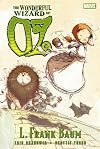
The Wonderful Wizard of Oz (Marvel Illustrated)
by Eric Shanower, Skottie Young (Illustrator)
Oz (Marvel Illustrated) (1), The Wonderful Wizard of Oz (Marvel Illustrated) (Collections and Selections — 1-8)
On This Page
Description
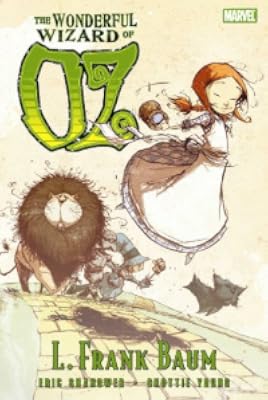
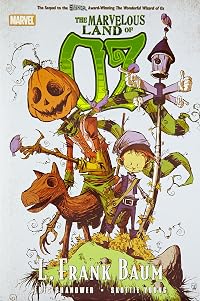
The premier American fantasy adventure gets the Merry Marvel treatment! Eisner Award-winning writer/artist Eric Shanower (Age of Bronze) teams up with fan-favorite artist Skottie Young (New X-Men) to bring L. Frank Baum's beloved classic to life! When Kansas farm girl Dorothy flies away to the magical Land of Oz, she fatally flattens a Wicket Witch, liberates a Scarecrow and is hailed by the Munchkin people as a great sorcerer...but all she really wants to know is: how does she get home?Tags
Recommendations

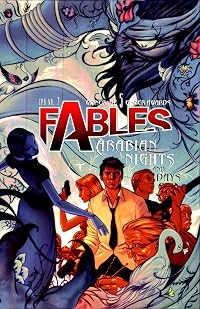
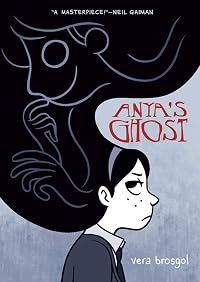
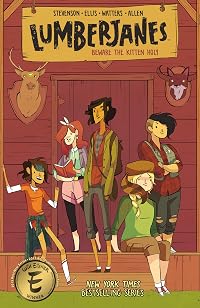
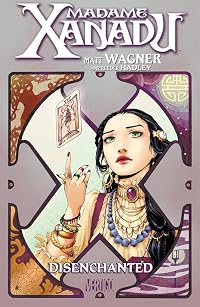
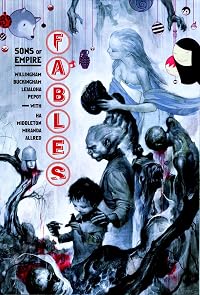
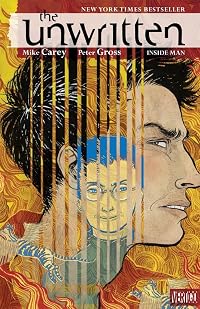
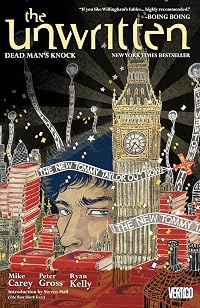
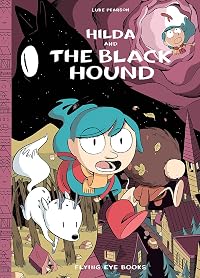
Member Recommendations
ryvre Both are whimsical stories with amazing art.
Member Reviews
Access a version of the below that includes illustrations on my blog.
I got this to write a paper about it a few years ago, but never sat down and read it properly until I was recovering from surgery last year-- it was a good choice for that. It's a really interesting kind of adaptation, and one you can only do in comics, in that it is simultaneously completely faithful to the original and wildly divergent. The marketing material and Shanower's preface and afterword explain how the adaptation honors the original text, and indeed it does, down to including (a shortened version of) Baum's own introduction to the novel before the story begins properly. This establishes the book firmly as the work of L. Frank Baum from the first page, as show more does the cover, which privileges his name significantly over those of the two people who actually made it!
The graphic novel renders a lot of textual details other adapters haven't bother with, and even uses Baum's own narration to populate the narration boxes. Sometimes Eric Shanower's script overdoes it, such as with the bit where the Good Witch of the North does a spell to find out what Dorothy should do to get home. I'm sure there's no other adaptation that bothers with the spinning-hat-transforming-into-a-slate bit, but Shanower's captions are largely redundant here-- I feel like he's not trusting the art enough. This is from (I think) the first issue, though, and I'd guess that Shanower hadn't yet learned just how incredible an artist Skottie Young is. They obviously develop an amazing working relationship with time, but here it was early days still. Young is a gifted artist who comes up with amazing character designs that capture the spirits of the characters. For example, I love how he depicts the Cowardly Lion as a giant ball of fluff.
But like I said, the comic can be both faithful and unfaithful at the same time. The divergences come from the visuals. In the original novel, illustrator W. W. Denslow's Tin Woodman is all straight lines and gleam. Young's Tin Woodman, on the other hand, is often hunched over and has very small eyes in very deep sockets, making him seem eternally depressed, which fits with Baum's depiction of a character who regrets even stepping on an insect, yet it is very different from Denslow's, who looks perpetually cocky and pleased with himself.
Young's depiction is faithful to the words of the novel, but not to its images. Baum is mentioned a lot in the paratext of the Marvel Wizard of Oz, but Denslow is hardly mentioned at all. Yet when the original novel came out, Baum and Denslow were about as equally famous. They had previously worked together on Father Goose: His Book, of which the real star is largely considered to be Denslow's work. The design of the first edition of Wonderful Wizard places a lot of emphasis on Denslow's pictures. But not only does Skottie Young ignore Denslow's design for the Tin Woodman, Shanower even mentions that Young bases the Woodman's appearance on Baum's actual appearance.
So the book is maybe not as pure as it claims to be, but this is not a bug, it's a feature. Shackled to Baum's depictions but freed from Denslow's, Young is free to do some magnificently imaginative work that captures the glory of Oz in a different way than Denslow did. The comics medium especially allows Young to bring out some of the violence implicit in the original text. Baum would commonly depict very macabre happenings in a very matter-of-fact way. In the original novel, the Tin Woodman is cursed so that he cuts off his limbs one by one, but he doesn't make this sound very distressing at all: "the axe slipped all at once and cut off my left leg. This at first seemed a great misfortune, for I knew a one-legged man could not do very well as a wood-chopper." Young includes a flashback that brings out the horror of the event. In this version, the Tin Woodman's matter-of-fact language comes across as emotional distance from what must have been a great trauma. Even in silhouette, it's horrifying-- there's blood and shit flying everywhere!
Similiarly, contrast Denslow's take on the Woodman's fight with the Wicked Witch of West's wolves to Young's. One will give you nightmares. One will not. One shows the triumphant aftermath of the battle, sanitizing it. One shows you its darkest, most horrific moment. This both is and is not there in the original text, and when Young draws it in this way, it allows him to be faithful and unfaithful at the same time. Even when the illustrations aren't particularly violent per se, he can still capture some of the violence through textbook use of the "gutter": when the Tin Woodman kills a wildcat, we don't actually see the wildcat's head get chopped off, but thanks to the way Shanower and Young panel it here, we imagine it a lot more vividly than we do in the Baum and Denslow version. As Scott McCloud would say, "To kill a man between panels is to condemn him to a thousand deaths."
Young's illustrations fill what Brian Thompson calls the "drive to concretise," the desire to see the original captured in its every detail in "an actual moving-image experience." Thompson was discussing motion picture adaptations of novels, but comics can sometimes fulfill the desire for concretization more strongly than film can. In providing a concretization that differs from the one suggested by Baum and Denslow, Shanower and Young have shown the true potential of the prose-to-comics adaptation. The Wonderful Wizard of Oz is largely faithful in terms of narrative to the original, but its tone is different: it is darker and lighter, with more of a sense of wonder at times. This kind of adaptation can easily recall the old and simultaneously do something new, a form of layered fidelity, simultaneously faithful and unfaithful in different registers. Which, one might argue, is the real goal of all adaption. Nostalgia and newness all at once. show less
I got this to write a paper about it a few years ago, but never sat down and read it properly until I was recovering from surgery last year-- it was a good choice for that. It's a really interesting kind of adaptation, and one you can only do in comics, in that it is simultaneously completely faithful to the original and wildly divergent. The marketing material and Shanower's preface and afterword explain how the adaptation honors the original text, and indeed it does, down to including (a shortened version of) Baum's own introduction to the novel before the story begins properly. This establishes the book firmly as the work of L. Frank Baum from the first page, as show more does the cover, which privileges his name significantly over those of the two people who actually made it!
The graphic novel renders a lot of textual details other adapters haven't bother with, and even uses Baum's own narration to populate the narration boxes. Sometimes Eric Shanower's script overdoes it, such as with the bit where the Good Witch of the North does a spell to find out what Dorothy should do to get home. I'm sure there's no other adaptation that bothers with the spinning-hat-transforming-into-a-slate bit, but Shanower's captions are largely redundant here-- I feel like he's not trusting the art enough. This is from (I think) the first issue, though, and I'd guess that Shanower hadn't yet learned just how incredible an artist Skottie Young is. They obviously develop an amazing working relationship with time, but here it was early days still. Young is a gifted artist who comes up with amazing character designs that capture the spirits of the characters. For example, I love how he depicts the Cowardly Lion as a giant ball of fluff.
But like I said, the comic can be both faithful and unfaithful at the same time. The divergences come from the visuals. In the original novel, illustrator W. W. Denslow's Tin Woodman is all straight lines and gleam. Young's Tin Woodman, on the other hand, is often hunched over and has very small eyes in very deep sockets, making him seem eternally depressed, which fits with Baum's depiction of a character who regrets even stepping on an insect, yet it is very different from Denslow's, who looks perpetually cocky and pleased with himself.
Young's depiction is faithful to the words of the novel, but not to its images. Baum is mentioned a lot in the paratext of the Marvel Wizard of Oz, but Denslow is hardly mentioned at all. Yet when the original novel came out, Baum and Denslow were about as equally famous. They had previously worked together on Father Goose: His Book, of which the real star is largely considered to be Denslow's work. The design of the first edition of Wonderful Wizard places a lot of emphasis on Denslow's pictures. But not only does Skottie Young ignore Denslow's design for the Tin Woodman, Shanower even mentions that Young bases the Woodman's appearance on Baum's actual appearance.
So the book is maybe not as pure as it claims to be, but this is not a bug, it's a feature. Shackled to Baum's depictions but freed from Denslow's, Young is free to do some magnificently imaginative work that captures the glory of Oz in a different way than Denslow did. The comics medium especially allows Young to bring out some of the violence implicit in the original text. Baum would commonly depict very macabre happenings in a very matter-of-fact way. In the original novel, the Tin Woodman is cursed so that he cuts off his limbs one by one, but he doesn't make this sound very distressing at all: "the axe slipped all at once and cut off my left leg. This at first seemed a great misfortune, for I knew a one-legged man could not do very well as a wood-chopper." Young includes a flashback that brings out the horror of the event. In this version, the Tin Woodman's matter-of-fact language comes across as emotional distance from what must have been a great trauma. Even in silhouette, it's horrifying-- there's blood and shit flying everywhere!
Similiarly, contrast Denslow's take on the Woodman's fight with the Wicked Witch of West's wolves to Young's. One will give you nightmares. One will not. One shows the triumphant aftermath of the battle, sanitizing it. One shows you its darkest, most horrific moment. This both is and is not there in the original text, and when Young draws it in this way, it allows him to be faithful and unfaithful at the same time. Even when the illustrations aren't particularly violent per se, he can still capture some of the violence through textbook use of the "gutter": when the Tin Woodman kills a wildcat, we don't actually see the wildcat's head get chopped off, but thanks to the way Shanower and Young panel it here, we imagine it a lot more vividly than we do in the Baum and Denslow version. As Scott McCloud would say, "To kill a man between panels is to condemn him to a thousand deaths."
Young's illustrations fill what Brian Thompson calls the "drive to concretise," the desire to see the original captured in its every detail in "an actual moving-image experience." Thompson was discussing motion picture adaptations of novels, but comics can sometimes fulfill the desire for concretization more strongly than film can. In providing a concretization that differs from the one suggested by Baum and Denslow, Shanower and Young have shown the true potential of the prose-to-comics adaptation. The Wonderful Wizard of Oz is largely faithful in terms of narrative to the original, but its tone is different: it is darker and lighter, with more of a sense of wonder at times. This kind of adaptation can easily recall the old and simultaneously do something new, a form of layered fidelity, simultaneously faithful and unfaithful in different registers. Which, one might argue, is the real goal of all adaption. Nostalgia and newness all at once. show less
I first read this adaptation of Baum's Wonderful Wizard of Oz in 2010, when it was first available as a collected graphic novel, in preparation for an academic conference presentation on comics/manga adaptations of the famous story. At the time, I compared it unfavorably to Le Magicien d'Oz, the French adaptation by David Chauvel and Enrique Fernandez, which had been translated to English a few years earlier. Looking at the two adaptations now, I see immediately why: the Fernandez art is strongly based in the use of curved lines, exaggerated perspectives, and bold color choices. It's an incredible piece of design, a polished children's fairy tale storybook full of curves and forward motion. It seems built on the Art Nouveau-inspired show more shoulders of the original Oz artists, W.W. Denslow and John R. Neill, without actually mimicking either of their styles. In short: despite a few new visual interpretations of characters, the Chauvel / Fernandez comic is a very classical presentation of Oz. It is sure to appeal to people like me who are already enamored of that kind of art.
That is not the case with the Eric Shanower / Skottie Young comic. To an older, more conservative audience, Young's art can look sketchy and unfinished, a mass of big simplistic circles and very straight lines. His characters have disproportionately giant heads and tiny features, with wisps of hair, fur, and straw frizzing out everywhere. His buildings and landscapes are equally cartoonish, with squared-off trees and an angled, monstrous moon that might be made out of some kind of cheese. The whimsy of Young's work is suffused with an enthusiastic energy that seems to electrify it and bounce it straight off the page. It's not pretty, per se, but it's enormously appealing, and I think it would much easier win the affection of a child.
Another point that plays only into a purist's favor is the Chauvel / Fernandez comic's amount of text. Yes, I love L. Frank Baum's narration as much as the next fan - in fact, I've memorized whole lines of it. But quoting it so often gives the pages a stuffy, overly complicated feel. Eric Shanower, a very famous Oz aficionado at this point, actually shows an admirable restraint in reducing the amount of narration from the book to a bare minimum. He lets Young's art tell most of the story, which is just as it should be. In fact, if I were to criticize Shanower at all, it's that he doesn't cut out enough of the actual dialogue, or modernize it; Baum's characters saying things like "I haven't the faintest notion" or "What must I do?" are perfectly reasonable in their original context, but alongside Young's art, it often seems incredibly formal and a real mouthful, to boot. Even some carefully modified contractions would probably have helped.
Yet there's a nice balance in the pace of the Shanower / Young graphic novel, too, which is only really apparent when you read it as a collection instead of individual issues. I've read the original novel any number of times, including once just a couple of months ago, and I don't think Shanower's removed even a single event from the narrative. He's made some very clever choices in which episodes to emphasize, though, and that includes the most oft-forgotten material: the scenes that focus on the little details of Dorothy and her friends' journey. Whether it's finding a bed for the night, eating food, or using tools to make travel easier, including the smaller moments of the story helps to give it a sense of completeness, and not - as a comic could so easily do -portray it simply as a collection of edited highlights.
My review has focused on the critical aspects of the work, and it hasn't really touched on the hundred and one completely subjective charms of the piece. Glinda's hair! The Wizard's giant head! Everybody's teeth! The Lion drawn as if he's an enormous, frightened pussycat! The best thing to do with this comic is, quite simply, to wrap yourself up in it. It isn't the kind of artistic work you step back and admire in a museum; it's a world in which you get lost. Thankfully, since my original, overly purist judgment, Shanower and Young were able to lose themselves in that world over five more volumes and a total of over 1000 pages of fun. show less
That is not the case with the Eric Shanower / Skottie Young comic. To an older, more conservative audience, Young's art can look sketchy and unfinished, a mass of big simplistic circles and very straight lines. His characters have disproportionately giant heads and tiny features, with wisps of hair, fur, and straw frizzing out everywhere. His buildings and landscapes are equally cartoonish, with squared-off trees and an angled, monstrous moon that might be made out of some kind of cheese. The whimsy of Young's work is suffused with an enthusiastic energy that seems to electrify it and bounce it straight off the page. It's not pretty, per se, but it's enormously appealing, and I think it would much easier win the affection of a child.
Another point that plays only into a purist's favor is the Chauvel / Fernandez comic's amount of text. Yes, I love L. Frank Baum's narration as much as the next fan - in fact, I've memorized whole lines of it. But quoting it so often gives the pages a stuffy, overly complicated feel. Eric Shanower, a very famous Oz aficionado at this point, actually shows an admirable restraint in reducing the amount of narration from the book to a bare minimum. He lets Young's art tell most of the story, which is just as it should be. In fact, if I were to criticize Shanower at all, it's that he doesn't cut out enough of the actual dialogue, or modernize it; Baum's characters saying things like "I haven't the faintest notion" or "What must I do?" are perfectly reasonable in their original context, but alongside Young's art, it often seems incredibly formal and a real mouthful, to boot. Even some carefully modified contractions would probably have helped.
Yet there's a nice balance in the pace of the Shanower / Young graphic novel, too, which is only really apparent when you read it as a collection instead of individual issues. I've read the original novel any number of times, including once just a couple of months ago, and I don't think Shanower's removed even a single event from the narrative. He's made some very clever choices in which episodes to emphasize, though, and that includes the most oft-forgotten material: the scenes that focus on the little details of Dorothy and her friends' journey. Whether it's finding a bed for the night, eating food, or using tools to make travel easier, including the smaller moments of the story helps to give it a sense of completeness, and not - as a comic could so easily do -portray it simply as a collection of edited highlights.
My review has focused on the critical aspects of the work, and it hasn't really touched on the hundred and one completely subjective charms of the piece. Glinda's hair! The Wizard's giant head! Everybody's teeth! The Lion drawn as if he's an enormous, frightened pussycat! The best thing to do with this comic is, quite simply, to wrap yourself up in it. It isn't the kind of artistic work you step back and admire in a museum; it's a world in which you get lost. Thankfully, since my original, overly purist judgment, Shanower and Young were able to lose themselves in that world over five more volumes and a total of over 1000 pages of fun. show less
For the most part, I am wary of comic book adaptations of works of literature. And for the most part, I am wary of adaptations of The Wonderful Wizard of Oz, which happens to be one of my favorite Children’s books.
However, when I cam across the comic book adaptation done by Shanower and Young, I was intrigued, and eventually bought it when it came out in a single volume edition. There it sat on my overburdened bookshelf until at last, I freed myself from my backlog and finally got around to reading something not sent to me by an author or publisher for to review.
The illustrations are crazy. A less-educated person might say they’re “Burton-esque.” What they mean to say is: “since I am an uncultured cur who has no understanding show more of anything beyond big-budget film adaptations of popular literary source, I automatically associate anything that has an atypical art style with wavy lines and jagged edges as looking like the art of Tim Burton, even though I’ve never actually seen anything actually drawn by him, but instead, things that have been drawn by people with more aesthetic strength than him or things touched up by computers after a very rough illustration, based loosely on something he may have sketched or otherwise explained to the artist at hand while waving his arms wildly in the air and pointing to Johnny Depp.”
If anything, the art style is more Watterson-esque.
Young does a wonderful job capturing the oddball world of Oz, introducing believable, quirky characters who totally fit their personalities. Some of the full-panel illustrations are mind-blowing in their complexity, and may cause weaker physicists to weep openly. And Shanower? Well, he stays perfectly true to the book, one thing many adaptations fail at (how many Oz adaptations have you seen with red slippers?).
I know I said it before, but it’s worth mentioning again: The character illustrations for this book are wonderful. Young truly excelled.
It’s wonderful that there exist other self-proclaimed fans of Oz such as Shanower, who have the drive and determination to bring the real Oz to the masses.
I strongly recommend this book if you are in any way a fan of anything to do with Oz, be it the original book by L. Frank Baum, the 1939 Victor Fleming film, Wicked (the book or the musical), or any other adaptation you may have encountered. show less
However, when I cam across the comic book adaptation done by Shanower and Young, I was intrigued, and eventually bought it when it came out in a single volume edition. There it sat on my overburdened bookshelf until at last, I freed myself from my backlog and finally got around to reading something not sent to me by an author or publisher for to review.
The illustrations are crazy. A less-educated person might say they’re “Burton-esque.” What they mean to say is: “since I am an uncultured cur who has no understanding show more of anything beyond big-budget film adaptations of popular literary source, I automatically associate anything that has an atypical art style with wavy lines and jagged edges as looking like the art of Tim Burton, even though I’ve never actually seen anything actually drawn by him, but instead, things that have been drawn by people with more aesthetic strength than him or things touched up by computers after a very rough illustration, based loosely on something he may have sketched or otherwise explained to the artist at hand while waving his arms wildly in the air and pointing to Johnny Depp.”
If anything, the art style is more Watterson-esque.
Young does a wonderful job capturing the oddball world of Oz, introducing believable, quirky characters who totally fit their personalities. Some of the full-panel illustrations are mind-blowing in their complexity, and may cause weaker physicists to weep openly. And Shanower? Well, he stays perfectly true to the book, one thing many adaptations fail at (how many Oz adaptations have you seen with red slippers?).
I know I said it before, but it’s worth mentioning again: The character illustrations for this book are wonderful. Young truly excelled.
It’s wonderful that there exist other self-proclaimed fans of Oz such as Shanower, who have the drive and determination to bring the real Oz to the masses.
I strongly recommend this book if you are in any way a fan of anything to do with Oz, be it the original book by L. Frank Baum, the 1939 Victor Fleming film, Wicked (the book or the musical), or any other adaptation you may have encountered. show less
I was browsing the library graphic novel section and found this little gem. This is a book I’ve picked up a number of times in bookstores but wasn’t quite sure I wanted to read it. It ended up being an excellent book with beautiful artwork and now I want to read all the books in this series. Right now there are five trade paperbacks total in this series.
Most people know the story of Oz. Dorothy gets whisked away by a tornado and her house lands on a Wicked Witch. In her quest to get back home she finds a Tin Man, a Scarecrow, and a Cowardly Lion. They must confront Oz the Great and Powerful. He gives them a quest to go on to destroy another Wicked Witch, which they must do if Dorothy is ever going to get home.
I read many of Frank show more Baum’s Oz books with my mom when I was younger. That was decades ago, so I don’t remember them completely, but I do remember them pretty well. This graphic novel does an excellent job following the first book accurately (based on my somewhat faulty memory). I really enjoyed the characterizations and depictions of Dorothy, the Tin Man, and the Cowardly Lion a lot.
The artwork here is full color and absolutely stunning. Skottie Young does it and he does a fantastic job.
It was fun for me to revisit the story of The Wonderful Wizard of Oz. I enjoyed the way the graphic novel stuck to the original novel’s storyline while improving on characterization and giving the story some style. I really enjoyed how beautiful the illustration was. This is a book that can, like the original book, be enjoyed by all ages.
Overall I loved this graphic novel. It’s an excellent retelling of The Wonderful Wizard of Oz with beautiful full color illustration. I loved how this story was translated into graphic novel format while still staying true to the original story. Highly recommended to everyone and a great way to get familiar with the original story! show less
Most people know the story of Oz. Dorothy gets whisked away by a tornado and her house lands on a Wicked Witch. In her quest to get back home she finds a Tin Man, a Scarecrow, and a Cowardly Lion. They must confront Oz the Great and Powerful. He gives them a quest to go on to destroy another Wicked Witch, which they must do if Dorothy is ever going to get home.
I read many of Frank show more Baum’s Oz books with my mom when I was younger. That was decades ago, so I don’t remember them completely, but I do remember them pretty well. This graphic novel does an excellent job following the first book accurately (based on my somewhat faulty memory). I really enjoyed the characterizations and depictions of Dorothy, the Tin Man, and the Cowardly Lion a lot.
The artwork here is full color and absolutely stunning. Skottie Young does it and he does a fantastic job.
It was fun for me to revisit the story of The Wonderful Wizard of Oz. I enjoyed the way the graphic novel stuck to the original novel’s storyline while improving on characterization and giving the story some style. I really enjoyed how beautiful the illustration was. This is a book that can, like the original book, be enjoyed by all ages.
Overall I loved this graphic novel. It’s an excellent retelling of The Wonderful Wizard of Oz with beautiful full color illustration. I loved how this story was translated into graphic novel format while still staying true to the original story. Highly recommended to everyone and a great way to get familiar with the original story! show less
I finally got a copy of this to look at through ILL and I am definitely buying it for our library! Our ancient but beloved Oz books still check out, so there will be interest. I consider Eric Shanower to be the only contemporary truly "Ozzy" author and so I am not surprised that his retelling perfectly captures the flavor of the original story and keeps all the best bits! The art recreates the creepy and weirdly logical world of Baum (although I found the Scarecrow's eyes a bit over the top freaky) without being flavored by the movie. I can't wait for the next adaptation!
Verdict: If you have Oz fans, go for it - if you don't, this is likely to make some!
ISBN: 978-0785129219; Published September 2009 by Marvel; Borrowed from the library; show more Purchased for the library; Purchased for my personal collection show less
Verdict: If you have Oz fans, go for it - if you don't, this is likely to make some!
ISBN: 978-0785129219; Published September 2009 by Marvel; Borrowed from the library; show more Purchased for the library; Purchased for my personal collection show less
I have read this to my children a handful of times since the beginning of the year, and I have to admit that I found the first read-through a bit of a chore.
But, their eagerness to re-read this every other night has worn me down.
I originally found the mix of Baum’s turn-of-the-century text and modern illustrations to be rough to read aloud, but over time, I have settled into a groove of performance.
Honestly, to a certain degree, most media created around 1900 was highly theatrical. So, reading about a nonsense world with nonsense creatures with nonsense rules, requires a bit of performance to truly appreciate.
I have only ever taken part in the Land of Oz via the quintessential film from ‘39; a twisted-but-great follow-up of Return show more to Oz in ‘85; and now this graphic novel, I have come to realize that Frank’s got a lot more still hiding in the original story that I may need to check out. show less
But, their eagerness to re-read this every other night has worn me down.
I originally found the mix of Baum’s turn-of-the-century text and modern illustrations to be rough to read aloud, but over time, I have settled into a groove of performance.
Honestly, to a certain degree, most media created around 1900 was highly theatrical. So, reading about a nonsense world with nonsense creatures with nonsense rules, requires a bit of performance to truly appreciate.
I have only ever taken part in the Land of Oz via the quintessential film from ‘39; a twisted-but-great follow-up of Return show more to Oz in ‘85; and now this graphic novel, I have come to realize that Frank’s got a lot more still hiding in the original story that I may need to check out. show less
¡Espectacular! Nada que ver con el musical de los años 30 (que por cierto a mí sí me gusta). Un cuento para niños, pero mucho más obscuro de lo que yo esperaba. Los personajes realmente conectan con el lector, y el arte genial, lleno de movimiento y vida. Muy, muy recomendable.
Members
- Recently Added By
Lists

Recommended Comics / Graphic Novels
595 works; 122 members

Best Books About Journeys and Quests
117 works; 30 members

Graphic Novels Adapted from Other Books
206 works; 1 member

Books Read in 2012
816 works; 34 members
Author Information

148+ Works 4,857 Members

All Editions
Awards and Honors
Notable Lists
Series

Oz (Marvel Illustrated)
6 works (1)

The Wonderful Wizard of Oz (Marvel Illustrated)
8 works (Collections and Selections — 1-8)
Belongs to Publisher Series
Work Relationships
Is contained in
Contains
Is an adaptation of
Common Knowledge
- Canonical title
- The Wonderful Wizard of Oz (Marvel Illustrated) (Marvel Illustrated)
- Original title
- The Wonderful Wizard of Oz
- Alternate titles
- The Wonderful Wizard of Oz [graphic novel]; Marvel Illustrated: The Wonderful Wizard of Oz
- Original publication date
- 2009
- People/Characters
- Dorothy Gale; Toto; Uncle Henry; Aunt Em; Good Witch of the North; Wicked Witch of the East (show all 30); Munchkins; Boq; Scarecrow [Oz]; Tin Woodman; Cowardly Lion; Kalidahs; The Stork; The Wildcat; Queen of the Field Mice; Field Mice; Guardian of the Gates; Soldier With the Green Whiskers; Jellia Jamb; Wizard of Oz; Wicked Witch of the West; Winged Monkeys; Winkies; Gayelette; Quelala; Fighting Trees; China Princess; Mr. Joker; Hammer-Heads; Glinda (The Good Witch of the South)
- Important places
- Kansas, USA; Oz; Munchkin Country; Yellow Brick Road; Emerald City, Oz; China Country (show all 7); Quadling Country
- First words
- Dorothy lived in the midst of the great Kansas prairies.
- Last words
- (Click to show. Warning: May contain spoilers.)"And oh, Aunt Em! I'm so glad to be home again!"
- Disambiguation notice
- This is the complete collection of the Marvel comics adapted by Eric Shanower, and should not be combined with the original novel by Baum, or individual issues of the comics.
Classifications
- Genres
- Tween, Graphic Novels & Comics
- DDC/MDS
- 741.5973 — Arts & recreation Drawing & decorative arts Drawing Comic books, graphic novels, fotonovelas, cartoons, caricatures, comic strips History, geographic treatment, biography North American United States (General)
- LCC
- PN6727 .S48 — Language and Literature Literature (General) Literature (General) Collections of general literature Comic books, strips, etc.
- BISAC
Statistics
- Members
- 706
- Popularity
- 40,405
- Reviews
- 28
- Rating
- (4.19)
- Languages
- 5 — English, German, Italian, Portuguese, Spanish
- Media
- Paper, Ebook
- ISBNs
- 18
- ASINs
- 7