
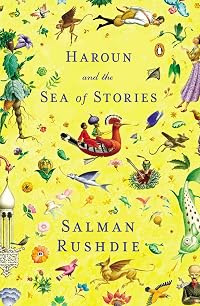
On This Page
Description
Discover Haroun and the Sea of Stories, Salman Rushdie's classic fantasy novel Set in an exotic Eastern landscape peopled by magicians and fantastic talking animals, Salman Rushdie's classic children's novel Haroun and the Sea of Stories inhabits the same imaginative space as The Lord of the Rings, The Alchemist, and The Wizard of Oz. In this captivating work of fantasy from the author of Midnight's Children and The Enchantress of Florence, Haroun sets out on an adventure to restore the show more poisoned source of the sea of stories. On the way, he encounters many foes, all intent on draining the sea of all its storytelling powers. show lessTags
Recommendations
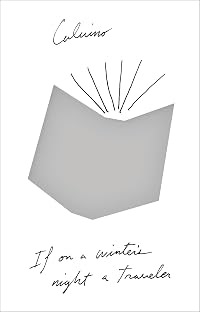
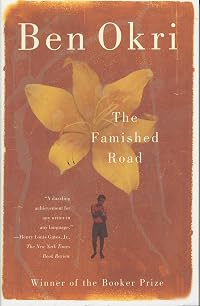
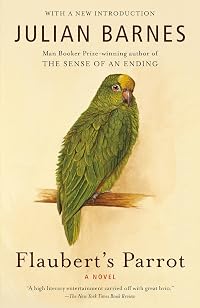
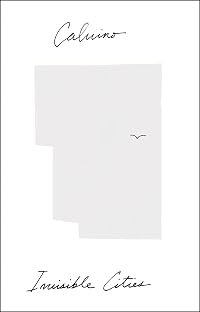
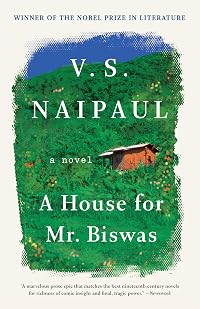
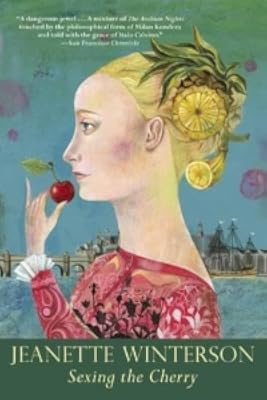
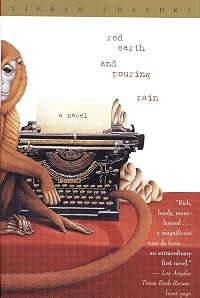
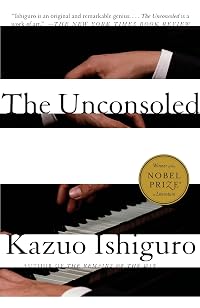

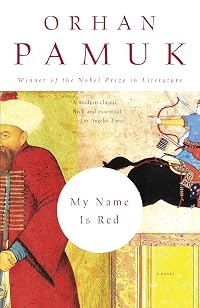
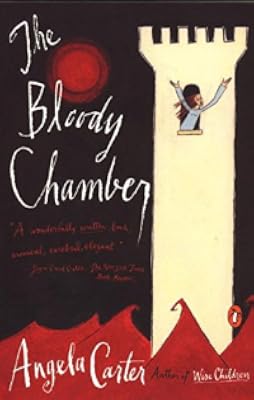
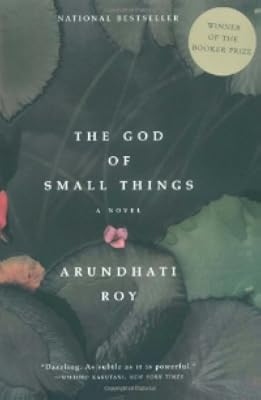
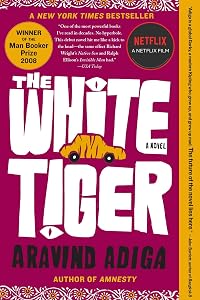



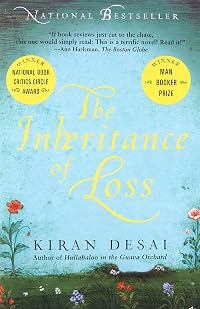
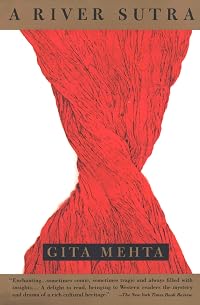

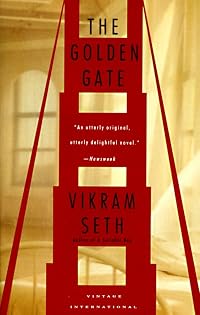
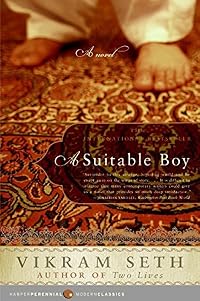
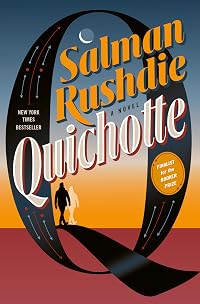
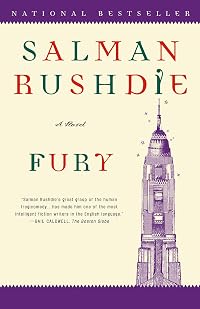
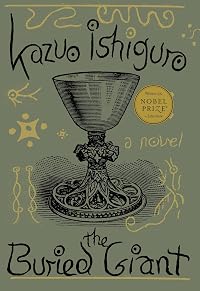
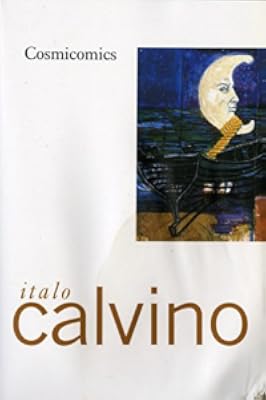
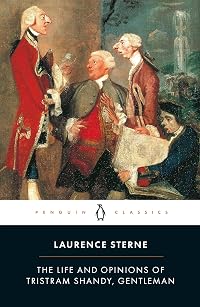
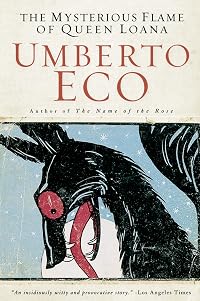
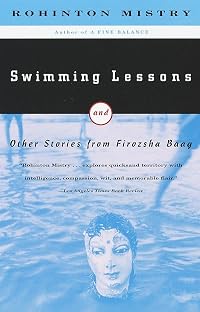
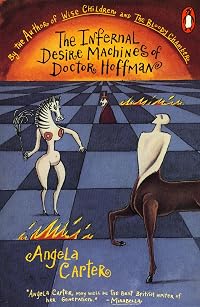
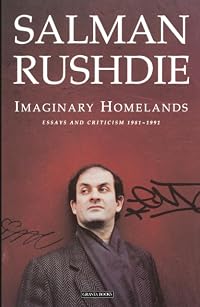
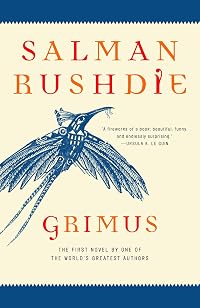
Member Recommendations

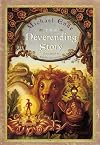
weeksj10 Rushdie's books focused around the Khalifa family are like a modern day Alice in Wonderland with a spicy bite from its Indian setting. The wordplay, characters, and plot all mirror those of Alice and like Carroll's book Rushdie's can and will be enjoyed by magic lovers of all ages.
91
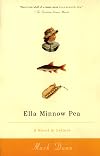
bookwoman247 Word play and language are an intregal part of both books. Ella Minnow Pea is a bit more sophisticated, but for adults or teens who enjoyed Haroun and the Sea of Stories, I think they will also find Ella Minnow Pea very enjoyable.
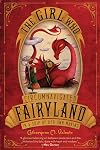
lorax Both are beautifully written fairy tales about young people traveling to another world, readable by kids but with much for adults to enjoy.
44
Member Reviews
A nice little political allegory that laughs at itself when it starts to get too serious. Rushdie breaks many of the children's story cliches and makes sure to poke as much fun at as many weighty contemporary worries as he can. In the end its not about "Why can't we all just get along?" but instead "Why are we so afraid of each other?" A much more important question. Rushdie is a beast!
"What's the use of stories that aren't even true?"
I'm not quite sure why I picked this up (it's a children's book, and my "child" was 21 last week - perhaps I'm hankering for times past), but I'm glad I did. It has the powerful mythical feel of traditional fairy tales, with plenty of nods to classics, and a political undercurrent that tells of the time he wrote it.
It would be perfect to read to a child of around 7 to 10, over a couple of weeks (twelve equal chapters), but as a solo adult, I enjoyed the wistfulness of a childish read, coupled with something much more profound.
Before you start
I vaguely knew this was dedicated to his son, but didn't notice the actual dedication or consider the timeline. However, I wasn't far into the show more book before I felt compelled to check. It was published the year after the fatwa that sent Rushdie into hiding (though he'd long since split from his wife). His son, Zafar, was 10 or 11. In that context, the dedication is heartbreaking:
Zembla, Zenda, Xanadu:
All our dream-worlds may come true.
Fairy lands are fearsome too.
As I wander far from view
Read, and bring me home to you.
I also wish I'd noticed the pages at the back that explain the names of many of the characters, most of which are derived from Hindustani [sic].
Story
The key message is the power and importance of stories, even if, or particularly because, they are not true. (You see the link to the fatwa?)
Haroun is the son of a great storyteller who loses the power of storytelling. The story is a quest to turn on the storywater tap. It is set in an "other" world, with a child as the hero. If this were an adult novel, it would be classed as magic realism. It has an old-fashioned and Indian feel, but also features robotic birds and passing mention of aliens, UFOs and moons.
I won't summarise the plot, but it has all the elements you want and expect from a book like this: fantastical creatures; enigmatic lyrical characters juxtaposed with logical prosaic ones; dashes of humour; a maze of corridors; mistaken identity; occasional puns and Malapropisms (pussy-collar-jee = psychology); love; betrayal; impossible dilemma; princess rescue; disorientation; lucid dreaming?; a battle; time dilation; derring-do; funny names; telepathy; wishes; a baddie who explains his plan to the captured hero; magic; a gadget (complete with arbitrary timeout).
Free speech - Je suis Haroun
This is about the fun of stories and the importance of believing even what you can't see, but it's not just about that. There is a clear message about the right to speak. The arch-enemy of all stories is also the arch-enemy of language itself - to the extent his followers have their lips stitched up. What could be a more powerful symbol of censorship that the "Sign of the Zipped Lips"?
"Is not the Power of Speech the greatest Power of all? Then surely it must be exercised to the full?"
Not forgetting this is a children's book, the example is a general who accepts insults and insubordination. The risk to those in power is that "inside every single story... there lies a world... that I cannot Rule."
But the importance of free speech doesn't mean one should always speak, unthinkingly. Haroun realises that "Silence has its own grace and beauty (just as speech can be graceless and ugly)... Actions could be as noble as words." As in so many things, we need discernment.
One of the problems Haroun encounters is the deliberate poisoning of the storywaters by dark forces. You can put an ecological spin on that, but it's not the main message.
Even a non-baddie has had some stories changed to make him the hero. Who owns our heritage? Can we rewrite it?
"The magic of the story can restore spirits."
Note: Although this was written in the aftermath of the fatwa, it's an issue Rushdie covered (less obviously) in his earlier novel Midnight's Children.
Literary links
These ones I spotted (there may well be others). It's only now I collate them that I realise quite how many I found; I may be guilty of over-analysing:
• Douglas Adams
People always trust Rashid the storyteller "because he always admitted that everything he told them was completely untrue". Unlike the politicians who want him to speak at their rallies. This logical inversion is slightly like Wonko the Sane from So Long, and Thanks for All the Fish.
There is also P2C2E - a Process Too Complicated To Explain, which summoned H2G2 to mind.
• Graham Green
On discovering his mother had left, Haroun's reaction was the rather tangential destruction of his clock. I was reminded of a short story called "A Shocking Accident" in which a boy, on learning his father was killed by a falling pig, asks what happened to the pig.
• The Beatles
There are eggheads and a character called Walrus, but I didn't spot the carpenter.
• Tolkien
The Floating Gardeners look rather like amphibious ents.
• Kafka
The Plentimaw Fishes are described as Hunger Artists (they swallow stories and then "create new stories in their digestive systems"). See A Hunger Artist.
The Shadow Warrior's first, spluttered utterances are "Googogol" and "Kafkafka".
• Gogol
His name is mentioned (alongside Kafka's). I've reviewed four of his tragi-comic and sometimes surreal stories HERE.
• Shakespeare
A boy page is actually a girl in disguise.
• Lewis Carroll
The pages dressed like pages (rather than playing cards) and associated trumpets brought Wonderland to mind, as did the logical illogicality of organisations.
One character asks Haroun "Why make a fuss about this particular impossible thing?" The Red Queen famously "believed as many as six impossible things before breakfast".
• Jonathan Swift
The antagonism between the Guppees and Chupwalas has echoes of that between the Houyhnhnms and the Yahoos.
• Mary Tourtel et al
The Plentimaw Fishes talk in rhyming couplets, like the captions underneath each picture in Rupert Bear stories.
• Philip Pullman
In the dark world, shadows can be separated from their owners - rather like Lyra and her daemon, Pantalaimon.
• Monty Python or JM Barrie
A knight fighting his own shadow made me think of the dark knight in The Holy Grail, but given that he's not fighting his shadow, I suppose Peter Pan is the more obvious connection.
• One Thousand and One Nights
There's a houseboat called Arabian Nights Plus One.
• Aladdin
The Water Genie has a magic wrench, which Haroun takes, so the genie follows him round, helping him out, trying to get it back.
• Joseph Conrad
The evil one "sits at the heart of darkness". (I might be trying too hard with that one; it's a common enough phrase.)
• The Duchess of York (aka Sarah Ferguson)!
Pollution of the storywaters includes "an outbreak of talking helicopter anecdotes" and Budgie the Little Helicopter was published the year before this.
Quotes
• The sad city, that had forgotten its name "stood by a mournful sea full of glumfish, which were so miserable to eat that they made people belch with melancholy even though the skies were blue."
• The Ocean of the Streams of Story: "because the stories were held here in fluid form, they retained the ability to change, to become new versions of themselves, to join up with other stories; so that unlike a library of books... [it] was not dead but alive."
• The Floating Gardeners do "maintenance... Untwisting twisted story streams. Also unlooping same. Weeding." They're also like hairdressers, because the longer stories are, the more likely they are to be tangled.
• "Pouring out of the portholes came darkness... [they] had invented artificial darkness." Shades(?) of the satrical Dark Sucker Theory: https://astro.uni-bonn.de/~dfischer/dark_sucker_2.html show less
I'm not quite sure why I picked this up (it's a children's book, and my "child" was 21 last week - perhaps I'm hankering for times past), but I'm glad I did. It has the powerful mythical feel of traditional fairy tales, with plenty of nods to classics, and a political undercurrent that tells of the time he wrote it.
It would be perfect to read to a child of around 7 to 10, over a couple of weeks (twelve equal chapters), but as a solo adult, I enjoyed the wistfulness of a childish read, coupled with something much more profound.
Before you start
I vaguely knew this was dedicated to his son, but didn't notice the actual dedication or consider the timeline. However, I wasn't far into the show more book before I felt compelled to check. It was published the year after the fatwa that sent Rushdie into hiding (though he'd long since split from his wife). His son, Zafar, was 10 or 11. In that context, the dedication is heartbreaking:
Zembla, Zenda, Xanadu:
All our dream-worlds may come true.
Fairy lands are fearsome too.
As I wander far from view
Read, and bring me home to you.
I also wish I'd noticed the pages at the back that explain the names of many of the characters, most of which are derived from Hindustani [sic].
Story
The key message is the power and importance of stories, even if, or particularly because, they are not true. (You see the link to the fatwa?)
Haroun is the son of a great storyteller who loses the power of storytelling. The story is a quest to turn on the storywater tap. It is set in an "other" world, with a child as the hero. If this were an adult novel, it would be classed as magic realism. It has an old-fashioned and Indian feel, but also features robotic birds and passing mention of aliens, UFOs and moons.
I won't summarise the plot, but it has all the elements you want and expect from a book like this: fantastical creatures; enigmatic lyrical characters juxtaposed with logical prosaic ones; dashes of humour; a maze of corridors; mistaken identity; occasional puns and Malapropisms (pussy-collar-jee = psychology); love; betrayal; impossible dilemma; princess rescue; disorientation; lucid dreaming?; a battle; time dilation; derring-do; funny names; telepathy; wishes; a baddie who explains his plan to the captured hero; magic; a gadget (complete with arbitrary timeout).
Free speech - Je suis Haroun
This is about the fun of stories and the importance of believing even what you can't see, but it's not just about that. There is a clear message about the right to speak. The arch-enemy of all stories is also the arch-enemy of language itself - to the extent his followers have their lips stitched up. What could be a more powerful symbol of censorship that the "Sign of the Zipped Lips"?
"Is not the Power of Speech the greatest Power of all? Then surely it must be exercised to the full?"
Not forgetting this is a children's book, the example is a general who accepts insults and insubordination. The risk to those in power is that "inside every single story... there lies a world... that I cannot Rule."
But the importance of free speech doesn't mean one should always speak, unthinkingly. Haroun realises that "Silence has its own grace and beauty (just as speech can be graceless and ugly)... Actions could be as noble as words." As in so many things, we need discernment.
One of the problems Haroun encounters is the deliberate poisoning of the storywaters by dark forces. You can put an ecological spin on that, but it's not the main message.
Even a non-baddie has had some stories changed to make him the hero. Who owns our heritage? Can we rewrite it?
"The magic of the story can restore spirits."
Note: Although this was written in the aftermath of the fatwa, it's an issue Rushdie covered (less obviously) in his earlier novel Midnight's Children.
Literary links
These ones I spotted (there may well be others). It's only now I collate them that I realise quite how many I found; I may be guilty of over-analysing:
• Douglas Adams
People always trust Rashid the storyteller "because he always admitted that everything he told them was completely untrue". Unlike the politicians who want him to speak at their rallies. This logical inversion is slightly like Wonko the Sane from So Long, and Thanks for All the Fish.
There is also P2C2E - a Process Too Complicated To Explain, which summoned H2G2 to mind.
• Graham Green
On discovering his mother had left, Haroun's reaction was the rather tangential destruction of his clock. I was reminded of a short story called "A Shocking Accident" in which a boy, on learning his father was killed by a falling pig, asks what happened to the pig.
• The Beatles
There are eggheads and a character called Walrus, but I didn't spot the carpenter.
• Tolkien
The Floating Gardeners look rather like amphibious ents.
• Kafka
The Plentimaw Fishes are described as Hunger Artists (they swallow stories and then "create new stories in their digestive systems"). See A Hunger Artist.
The Shadow Warrior's first, spluttered utterances are "Googogol" and "Kafkafka".
• Gogol
His name is mentioned (alongside Kafka's). I've reviewed four of his tragi-comic and sometimes surreal stories HERE.
• Shakespeare
A boy page is actually a girl in disguise.
• Lewis Carroll
The pages dressed like pages (rather than playing cards) and associated trumpets brought Wonderland to mind, as did the logical illogicality of organisations.
One character asks Haroun "Why make a fuss about this particular impossible thing?" The Red Queen famously "believed as many as six impossible things before breakfast".
• Jonathan Swift
The antagonism between the Guppees and Chupwalas has echoes of that between the Houyhnhnms and the Yahoos.
• Mary Tourtel et al
The Plentimaw Fishes talk in rhyming couplets, like the captions underneath each picture in Rupert Bear stories.
• Philip Pullman
In the dark world, shadows can be separated from their owners - rather like Lyra and her daemon, Pantalaimon.
• Monty Python or JM Barrie
A knight fighting his own shadow made me think of the dark knight in The Holy Grail, but given that he's not fighting his shadow, I suppose Peter Pan is the more obvious connection.
• One Thousand and One Nights
There's a houseboat called Arabian Nights Plus One.
• Aladdin
The Water Genie has a magic wrench, which Haroun takes, so the genie follows him round, helping him out, trying to get it back.
• Joseph Conrad
The evil one "sits at the heart of darkness". (I might be trying too hard with that one; it's a common enough phrase.)
• The Duchess of York (aka Sarah Ferguson)!
Pollution of the storywaters includes "an outbreak of talking helicopter anecdotes" and Budgie the Little Helicopter was published the year before this.
Quotes
• The sad city, that had forgotten its name "stood by a mournful sea full of glumfish, which were so miserable to eat that they made people belch with melancholy even though the skies were blue."
• The Ocean of the Streams of Story: "because the stories were held here in fluid form, they retained the ability to change, to become new versions of themselves, to join up with other stories; so that unlike a library of books... [it] was not dead but alive."
• The Floating Gardeners do "maintenance... Untwisting twisted story streams. Also unlooping same. Weeding." They're also like hairdressers, because the longer stories are, the more likely they are to be tangled.
• "Pouring out of the portholes came darkness... [they] had invented artificial darkness." Shades(?) of the satrical Dark Sucker Theory: https://astro.uni-bonn.de/~dfischer/dark_sucker_2.html show less
This is the first Rushdie book I've read & finished, and its a wonderful story - a fairy tales about where stories come from - with aspects of stories from all around the word. Even where Haroun's homeland is a fairytale, with dreary cities named only for letters, and politicians hire story tellers to tell wonderful fantasy's so that the populace will vote for them. It has hints of 'The Phantom Tool Booth', but while that book was written with a focus on wordplay, this book was written with a focus on stories and what they mean to people.
Suppose you are an internationally acclaimed novelist who has written a book that some people view as blasphemous to a revered figure in a major world religion. A leading cleric of the faith tries to silence your voice by issuing a fatwa calling for your immediate assassination. Such is the severity of this decree that your government puts you in protective custody, which effectively makes you a prisoner in your own land with a life sentence to serve. How do you respond to the devastation and turmoil that this oppressive order has caused?
If you are Salman Rushdie, you let your prose do the talking, with Haroun and the Sea of Stories being the result. This absolutely charming book is presented as a fable in which Haroun, a young man from show more a city so sad it has forgotten its name, embarks on a journey to help his father Rashid recover his gift for story-telling. In the process, both father and son become involved in fantastical endeavor to help the Land of Gup—a country which is the source of creativity in the world and is perpetually bathed in sunlight—defeat the evil lord from Chup, a dark and silent nation that sets out to destroy the Stream of Stories forever.
Although framed as a children’s (or, perhaps, young adult) tale, this book is very much in the tradition of Lewis Carroll’s Alice’s Adventures in Wonderland or Through the Looking Glass in that it can also be enjoyed by adults on a completely different level. It is commendable that the author responded to the personal upheaval the fatwa caused with such an upbeat affirmation of the power of imagination and free speech to affect lives for the better. The word play in the novel is also quite wonderful, with many of the character and place names being puns or double entendres in the Hindi language. This was a satisfying reading experience in so many ways, not the least of which was its ability to push the limits of what great fiction can be. show less
If you are Salman Rushdie, you let your prose do the talking, with Haroun and the Sea of Stories being the result. This absolutely charming book is presented as a fable in which Haroun, a young man from show more a city so sad it has forgotten its name, embarks on a journey to help his father Rashid recover his gift for story-telling. In the process, both father and son become involved in fantastical endeavor to help the Land of Gup—a country which is the source of creativity in the world and is perpetually bathed in sunlight—defeat the evil lord from Chup, a dark and silent nation that sets out to destroy the Stream of Stories forever.
Although framed as a children’s (or, perhaps, young adult) tale, this book is very much in the tradition of Lewis Carroll’s Alice’s Adventures in Wonderland or Through the Looking Glass in that it can also be enjoyed by adults on a completely different level. It is commendable that the author responded to the personal upheaval the fatwa caused with such an upbeat affirmation of the power of imagination and free speech to affect lives for the better. The word play in the novel is also quite wonderful, with many of the character and place names being puns or double entendres in the Hindi language. This was a satisfying reading experience in so many ways, not the least of which was its ability to push the limits of what great fiction can be. show less
Journeying through this novel was a weird and wonderfully humorous escape. In many ways, it took me back to when I fell in love with The Phantom Tollbooth, much as this may be more geared towards adults and that one wasn't. The humor here was so bubbling and natural to the story, the comparison was automatic, and many of Rushdie's images from this one will stay with me for years to come. I can't say it lived up to the longer works I've loved from him, but that's a high high bar, and I'm still very much looking forward to delving into the next work in this series.
Recommended.
Recommended.
There was once, in the country of Alifbay, a sad city, the saddest of cities, a city so ruinously sad that it had forgotten its name.
Haroun's family is the only exception to the sadness. Haroun's father is Rashid, a storyteller known for his cheerfulness. Everything changes when Haroun's mother leaves. Rashid is no longer cheerful, and he loses the power of story. In his determination to help his father recover his talent, Haroun undertakes a fantastical journey to the Ocean of the Streams of Story.
Underneath the layers of fantastical creatures and lands is a story of a young boy in a broken home. Haroun's mother left, Haroun's father is sad all the time, and Haroun blames himself. He thinks he needs to do something to fix things. Many show more children in broken homes will identify with Haroun's situation. Rushdie has the skill to combine message, characters, and plot without anything seeming forced. The language is simple enough for children to understand, and the allegories are complex enough to hold the interest of adult readers. show less
Haroun's family is the only exception to the sadness. Haroun's father is Rashid, a storyteller known for his cheerfulness. Everything changes when Haroun's mother leaves. Rashid is no longer cheerful, and he loses the power of story. In his determination to help his father recover his talent, Haroun undertakes a fantastical journey to the Ocean of the Streams of Story.
Underneath the layers of fantastical creatures and lands is a story of a young boy in a broken home. Haroun's mother left, Haroun's father is sad all the time, and Haroun blames himself. He thinks he needs to do something to fix things. Many show more children in broken homes will identify with Haroun's situation. Rushdie has the skill to combine message, characters, and plot without anything seeming forced. The language is simple enough for children to understand, and the allegories are complex enough to hold the interest of adult readers. show less
Haroun Khalifa is the son of the storyteller, Rashid and his wife, Soraya. They live in the country of Alifbay, in a city so sad it has forgotten its name. When Soraya runs off with a neighbor, Rashid loses the gift of storytelling, cancelling his subscription to to the invisible Tap, installed by Water Genies, from which he obtains the warm Story Waters.
But all ends well, with many adventures in between. A princess is rescued, a villain defeated, harmony is restored. Along the way, Haroun meets talking mechanical birds, Plentimaw fish in the sea, not to mention the water genie.
On one level, this is a lovely fairy tale for children. But on a deeper level, it is a story about the value of communication, and the need for balance, beauty show more and imagination in our lives.
And what gorgeous language! Full of humor and puns, graceful and elegant. Rushdie is having a love affair with words in this book. show less
But all ends well, with many adventures in between. A princess is rescued, a villain defeated, harmony is restored. Along the way, Haroun meets talking mechanical birds, Plentimaw fish in the sea, not to mention the water genie.
On one level, this is a lovely fairy tale for children. But on a deeper level, it is a story about the value of communication, and the need for balance, beauty show more and imagination in our lives.
And what gorgeous language! Full of humor and puns, graceful and elegant. Rushdie is having a love affair with words in this book. show less
Members
- Recently Added By
Published Reviews
". . . [a] remarkable new children's book . . . [T]he experiences that lie behind 'Haroun and the Sea of Stories' are nearly as fantastic as anything in the tale. . . . full of comic energy and lively verbal invention."
added by GYKM
Lists

Best books about books
209 works; 105 members

1001 Children's Books You Must Read Before You Grow Up
774 works; 100 members

The Guardian's 100 greatest novels of all time
100 works; 16 members

Childhood: Books for or about children in different cultures around the wor
345 works; 18 members

Books Read in 2023
5,547 works; 145 members

A Novel Cure
742 works; 23 members
The 100 Best Fantasy Books of All Time
100 works; 15 members

Top 50 Favourite Books
50 works; 2 members

Mythopoeic fantasy award winners - children literature
24 works; 1 member

recalling favorites...
105 works; 2 members

Books Read in 2022
5,166 works; 114 members

Books Read in 2015
3,299 works; 129 members

Books Read in 2018
4,360 works; 110 members

A Child's Book Tour of India
71 works; 3 members

Children's Books by Adult Authors
26 works; 2 members

Want to Read — open list
55 works; 2 members

Books recommended by Calgary Public Library staff
1,588 works; 4 members

Little Library finds
87 works; 2 members

Our Favorite Comfort Reads
334 works; 200 members

Books We Discovered On LibraryThing
530 works; 130 members

Books With Water Words in the Title
186 works; 12 members
Top-Rated Books on LibraryThing
272 works; 117 members
Author Information

89+ Works 69,817 Members
Salman Rushdie was born in India on June 19, 1947. He was raised in Pakistan and educated in England. His novels include Grimus, Shame, The Satanic Verses, Haroun and the Sea of Stories, The Moor's Last Sigh, The Ground Beneath Her Feet, Fury, Shalimar the Clown, The Enchantress of Florence, Luka and the Fire of Life, and The Golden House. His show more non-fiction works include Joseph Anton, Imaginary Homelands, The Jaguar Smile, and Step across This Line. He also wrote a collection of short stories entitled East, West. He has received numerous awards including the Whitbread Prize for Best Novel twice, the James Tait Black Prize, the French Prix du Meilleur Livre Étranger, the Booker Prize in 1981 for Midnight's Children, and the 2014 PEN/Pinter Prize. (Bowker Author Biography) show less
Some Editions
Awards and Honors
Awards
Series

Belongs to Publisher Series
Gallimard, Folio (5094)
Work Relationships
Is contained in
Contains
Has the adaptation
Has as a reference guide/companion
Has as a student's study guide
Has as a teacher's guide
Common Knowledge
- Canonical title*
- Haroen en de zee van verhalen
- Original title
- Haroun and the Sea of Stories
- Original publication date
- 1990
- People/Characters
- Rashid Khalifa; Haroun Khalifa; Blabbermouth; Mali; Butt the Hoopoe; Princess Batcheat (show all 12); Prince Bolo; Mudra; Khattam-Shud; Soraya; Mr Sengupta; Plentimaw fish
- Important places
- Alifbay; Dull Lake; Gup City; Land of Gup; Land of Chup
- Dedication
- Zembla, Zenda, Xanadu:
A ll our dream-worlds may come true.
F airy lands are fearsome too.
A s I wander far from view
R ead, and bring me home to you. - First words
- There was once, in the country of Alifbay, a sad city, the saddest of cities, a city so ruinously sad that it had forgotten its name.
- Quotations
- Still Haroun wanted to know why his parents hadn't had more children, but the only answer he ever got from Rashid was no answer at all:
'There's more to you, young Haroun Khalifa, than meets the blinking eye.'
W... (show all)ell, what was THAT supposed to mean? 'We used up our full quota of child-stuff just in making you,' Rashid explained. 'It's all packed in there, enough for maybe four-five kiddies. Yes, sir, more to you than the blinking eye can see.'
Straight answers were beyond the powers of Rashid Khalifa, who would never take a short cut if there was a longer, twistier road available. - Last words
- (Click to show. Warning: May contain spoilers.)Outside, in the living room, his mother had begun to sing.
- Blurbers
- King, Stephen; Wilson, A.N.; Lessing, Doris; Vargas Llosa, Mario; Gordimer, Nadine; Greene, Graham (show all 7); Hijuelos, Oscar
- Original language
- English
*Some information comes from Common Knowledge in other languages. Click "Edit" for more information.
Classifications
Statistics
- Members
- 5,432
- Popularity
- 2,465
- Reviews
- 95
- Rating
- (4.00)
- Languages
- 23 — Catalan, Czech, Danish, Dutch, English, Finnish, French, German, Greek, Hebrew, Hungarian, Icelandic, Italian, Latvian, Norwegian (Bokmål), Polish, Romanian, Croatian, Slovak, Spanish, Swedish, Turkish, Portuguese (Brazil)
- Media
- Paper, Audiobook, Ebook
- ISBNs
- 88
- UPCs
- 1
- ASINs
- 30