
Michael McCurdy (1942–2016)
Author of Trapped by the ice! : Shackleton's amazing Antarctic adventure
About the Author
Michael McCurdy was born in New York City on February 17, 1942. He studied at the School of the Museum of Fine Arts in Boston between 1960 and 1966. He received a B.F.A. in 1964 and a M.F.A. in 1971 from Tufts University. He taught drawing and printmaking at Concord Academy and Wellesley College. show more He also founded Penmaen Press. His wood engravings and scratchboard drawings have been published in more than 200 books for children and adults. His first illustrated children's book, Please Explain by Isaac Asimov, was published in 1973. His other illustration credits include The Owl-Scatterer by Howard Norman, The Seasons Sewn: A Year in Patchwork by Ann Whitford Paul, An Old-Fashioned Thanksgiving by Louisa May Alcott, American Tall Tales by Mary Pope Osborne, and The Sailor's Alphabet. He died on May 28, 2016 at the age of 74. (Bowker Author Biography) show less
Image credit: By Historical Perspective - Own work, CC BY-SA 3.0, https://commons.wikimedia.org/w/index.php?curid=21362829
Works by Michael McCurdy
Trapped by the Ice! 1 copy
American Buffalo: a play 1 copy
Associated Works
Johnny Tremain: A Story of Boston in Revolt (1943) — Illustrator, some editions — 10,880 copies, 90 reviews
The Soul of the Night: An Astronomical Pilgrimage (1985) — Wood Engravings, some editions — 179 copies, 4 reviews
Escape from Slavery: The Boyhood of Frederick Douglass in His Own Words (1993) — Editor/Illustrator — 125 copies, 2 reviews
American Fairy Tales: From Rip Van Winkle to the Rootabaga Stories (1996) — Illustrator — 122 copies, 2 reviews
The Berkshire Reader: Writings from New England's Secluded Paradise (1992) — Illustrator — 31 copies
Katahdin: An Historic Journey - Legends, Exploration, and Preservation of Maine's Highest Peak (2006) — Illustrator — 25 copies, 1 review
Tagged
Common Knowledge
- Birthdate
- 1942-02-17
- Date of death
- 2016-05-28
- Gender
- male
- Education
- School of the Museum of Fine Arts, Boston
Tufts University - Occupations
- illustrator
publisher - Organizations
- Penmaen Press (Boston, MA)
- Agent
- Susan Cohen
- Nationality
- USA
- Birthplace
- New York, New York, USA
- Places of residence
- New Rochelle, New York, USA
Marblehead, Massachusetts, USA
Lincoln, Massachusetts, USA
Great Barrington, Massachusetts, USA - Place of death
- Springfield, Massachusetts, USA
- Associated Place (for map)
- Massachusetts, USA
Members
Reviews
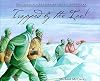
Beautifully illustrated picture book detailing the Shackleton expedition after being stuck in the Antarctic ice. The use of cool tones in the watercolor images help create a sense of cold that permeates the entire story. I liked how this book made the expedition accessible to younger students as it provides a basically factual, but less graphic explanation of the adventure than books geared at an older audience could be. This could fit nicely into a 3-4 grade unit on exploration that is show more looking to give an overview of impressive voyages in history to get students familiar with the idea that we didn't used to know where all of the continents and oceans were or how we would fare while there. show less
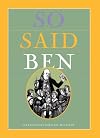
Ben here is Ben Franklin. I love Ben Franklin. He was our first real Renaissance Man, our own homegrown Leonardo da Vinci. Smart, compassionate, witty and full of all the faults and foibles one would expect from a human, and relatively open and honest about himself.
That's Ben, though, not this book. This book, a collection of Franklin's witticisms drawn mostly from his Poor Richard's Almanac days is a remarkably ugly book. Each spread features one of Ben's sayings on the left side in large show more see-them-from-the-back-of-the-room letters, paragraph at the bottom in sleazy-contract-small-print that either explains or expands on Ben's life or the expression, facing a black and white scratchboard-like illustration that illuminates (sometimes in the most general and puzzling sense) the expression at hand.
"Early to bed, early to rise makes a man healthy, wealthy and wise," is opposite an illustration of what looks like Ebenezer Scrooge shocked to find a cat and a chicken staring at him in his bead while some fresh-faced farm hand peers in the open window smiling like he just set a paper bag full of cow pies on fire on Scrooge's front step. There has to be a better way to illustrate this saying than to show an old man being harassed by farm animals -- where's the health, the wealth, where's the wisdom in this picture? Is it that the early bird gets to cruise for old men before they wake up and play pranks on them?
I'm guessing the book is for teachers who want to introduce Ben Franklin to younger audiences; that's how I read the disparity between the large type and illustrations against the small print with background. A teacher would show the spread and explain the situation or give a little history. Still, it's an ugly book and I think if I were back in the classroom I'd scrounge my own pictures and put together a better presentation before considering this book.
"A penny saved is a penny earned," was another of Ben's. No illustration necessary, save your pennies and buy a facsimile edition of Ben's Poor Richard's Almanac instead.
"Beer is living proof that God loves us and wants us to be happy." Or so said Ben. Don't worry, it's not in the book. show less
That's Ben, though, not this book. This book, a collection of Franklin's witticisms drawn mostly from his Poor Richard's Almanac days is a remarkably ugly book. Each spread features one of Ben's sayings on the left side in large show more see-them-from-the-back-of-the-room letters, paragraph at the bottom in sleazy-contract-small-print that either explains or expands on Ben's life or the expression, facing a black and white scratchboard-like illustration that illuminates (sometimes in the most general and puzzling sense) the expression at hand.
"Early to bed, early to rise makes a man healthy, wealthy and wise," is opposite an illustration of what looks like Ebenezer Scrooge shocked to find a cat and a chicken staring at him in his bead while some fresh-faced farm hand peers in the open window smiling like he just set a paper bag full of cow pies on fire on Scrooge's front step. There has to be a better way to illustrate this saying than to show an old man being harassed by farm animals -- where's the health, the wealth, where's the wisdom in this picture? Is it that the early bird gets to cruise for old men before they wake up and play pranks on them?
I'm guessing the book is for teachers who want to introduce Ben Franklin to younger audiences; that's how I read the disparity between the large type and illustrations against the small print with background. A teacher would show the spread and explain the situation or give a little history. Still, it's an ugly book and I think if I were back in the classroom I'd scrounge my own pictures and put together a better presentation before considering this book.
"A penny saved is a penny earned," was another of Ben's. No illustration necessary, save your pennies and buy a facsimile edition of Ben's Poor Richard's Almanac instead.
"Beer is living proof that God loves us and wants us to be happy." Or so said Ben. Don't worry, it's not in the book. show less
McCurdy's first (at least to my knowledge) effort at illustrating a book with full-color acrylic paintings is a wonderful example of the art that conceals art. There is nearly perfect haromonization between the plainspoken text and the, apparently, simple "kid's book" realism of the pictures. But look closer at the pictures; use a magnifying glass if you like. These are extraordinary. Do you suppose 3rd to 5th graders do this? I doubt it. But my guess is that the pictures make an impression show more that goes deeper than one might, at first, think. show less
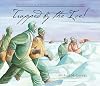
I find authors who write about difficult subjects like this to be quite intriguing. Shakleton's story is not for the faint of heart and I thought this author did a nice job of being honest about details like starvation, horrible uncleanliness, and true struggle to survive in unimaginable conditions. McCurdy puts us readers through several rise and falls, mirroring the trauma and uncertainty of the men's situation. There is not a distinct climax though other than these moments of excitement, show more though 'Shaks' final journey to the whaling island may have been intended to be the climax? I gave this book the rating of 3.5 stars, despite the fact I quite liked how it was written, because first, I wish McCurdy had given us more context on the environment. I do not think understanding the harsh conditions of Antarctica is something an average human really grasps, let alone a child. Second, this book really needed stronger illustrations because of the unimaginable qualities the story has. The fact that these men fought to survive for 2 years to return home while stranded in Antarctica with the technology of 1915 is incredible and I would have liked to see a better visual representation. show less
Lists
Awards


You May Also Like


Associated Authors
Statistics
- Works
- 15
- Also by
- 23
- Members
- 512
- Popularity
- #48,443
- Rating
- 3.9
- Reviews
- 19
- ISBNs
- 19
