
Verla Kay
Author of Gold Fever
About the Author
Works by Verla Kay
Tagged
Common Knowledge
Members
Reviews
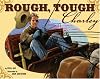
I like that this is a fresh story in that I've never heard of Charley before. This is a new bit of history for me and that's always something I like to come across in children's picture books. I also like the western theme of the story. I like the artwork quite a bit. I like the smoothness of the colors, but the coarse tone of them in some areas (facial shadows/blurred edges of shapes). I also like that the book leaves the twist for the very end, because it flips the reader on their head a show more bit and kind of makes you go back and reconsider everything that Charley was doing from a different perspective.
I half-enjoyed the "cryptic rhyme". I don't like how cryptic it can be when covering major plot points, because at times it can be frustrating to try to get the most out of the story with just the tiniest amount of wording available. I liked the rhythm of the rhyme throughout the story, because it was very smooth and driving. Some areas of the story were clearer than others, which was good, but some portions just take "cryptic rhyme" much too literally and created a feeling of stunted storytelling here and again. I would have preferred a rhyme scheme that allowed for a bit more length, to really get some of the more detailed parts of the plot covered, instead of having to read through a list of facts in the end. The end facts were really just a chronological overview of the book that was just read, with more context...so it is like retelling the story in a typical dry history manner, without any of the characterization of a picture book. I would have liked to have seen the prose and the facts blended more effectively to just tell the story in one broad swoop, instead of two alternate methodologies that ends up feeling like double reading instead of further information on what was just read and learned.
Overall though, a very intriguing book that provides a lesser known aspect of history to readers. show less
I half-enjoyed the "cryptic rhyme". I don't like how cryptic it can be when covering major plot points, because at times it can be frustrating to try to get the most out of the story with just the tiniest amount of wording available. I liked the rhythm of the rhyme throughout the story, because it was very smooth and driving. Some areas of the story were clearer than others, which was good, but some portions just take "cryptic rhyme" much too literally and created a feeling of stunted storytelling here and again. I would have preferred a rhyme scheme that allowed for a bit more length, to really get some of the more detailed parts of the plot covered, instead of having to read through a list of facts in the end. The end facts were really just a chronological overview of the book that was just read, with more context...so it is like retelling the story in a typical dry history manner, without any of the characterization of a picture book. I would have liked to have seen the prose and the facts blended more effectively to just tell the story in one broad swoop, instead of two alternate methodologies that ends up feeling like double reading instead of further information on what was just read and learned.
Overall though, a very intriguing book that provides a lesser known aspect of history to readers. show less
One-Eyed Charley. Not really somebody you see a lot of biographies about, especially for kids. For some reason we can't tell, Charley was a girl who decided to live her life as a man - and did. Popular and successful by most measurements, too, and that was a secret that stayed well hidden, nobody knew until Charley died.
This picture book is fast-paced, a good clean rhythm and rhyme scheme, very tight story... and it has a detailed afterword (with a map) for those of us who didn't catch all show more the information when it was written in short, catchy couplets. Good illustrations, a moral message (women can do what men can do, even if society says otherwise) that's factually based and not overstated, and a wonderfully flawed hero for kids - said to swear and be antisocial! What sort of kid isn't gonna eat that up?
A few points, though. First, the story itself is maybe a little *too* short and catchy at times. One particular verse - "Charley don't have/accidents/sprung those horses/he's got sense!" - springs to mind. Even with the illustration, this didn't make ANY sense until I read the afterword and found the event that verse was referring to. And of course you're not going to run to the afterword in the middle of a rhyming book - or any book! I'm not sure how this could be improved without drastically altering the book, though.
The other minor issue has to do with pronoun use. Mostly during the book, Charley is referred to as "he" when pronouns are used. This is appropriate, people no doubt referred to Charley in the masculine. However, after the discovery (after death), the pronoun "she" is used a few times to make the moral point. Nowadays, I'd say that if somebody chooses this or that pronoun, that's the one we use, regardless of genitals. That's just polite. And while we can't go back and ask Charley if he was just dressing like a guy for convenience or if he really felt himself to be male, it seems likely that people don't spend their entire lives hiding out just for the heck of it. At any rate, this is a minor quibble. The book seems very respectful of Charley, so it's not like I'm reading it going "Wow, they're making fun of this person's life" here. show less
This picture book is fast-paced, a good clean rhythm and rhyme scheme, very tight story... and it has a detailed afterword (with a map) for those of us who didn't catch all show more the information when it was written in short, catchy couplets. Good illustrations, a moral message (women can do what men can do, even if society says otherwise) that's factually based and not overstated, and a wonderfully flawed hero for kids - said to swear and be antisocial! What sort of kid isn't gonna eat that up?
A few points, though. First, the story itself is maybe a little *too* short and catchy at times. One particular verse - "Charley don't have/accidents/sprung those horses/he's got sense!" - springs to mind. Even with the illustration, this didn't make ANY sense until I read the afterword and found the event that verse was referring to. And of course you're not going to run to the afterword in the middle of a rhyming book - or any book! I'm not sure how this could be improved without drastically altering the book, though.
The other minor issue has to do with pronoun use. Mostly during the book, Charley is referred to as "he" when pronouns are used. This is appropriate, people no doubt referred to Charley in the masculine. However, after the discovery (after death), the pronoun "she" is used a few times to make the moral point. Nowadays, I'd say that if somebody chooses this or that pronoun, that's the one we use, regardless of genitals. That's just polite. And while we can't go back and ask Charley if he was just dressing like a guy for convenience or if he really felt himself to be male, it seems likely that people don't spend their entire lives hiding out just for the heck of it. At any rate, this is a minor quibble. The book seems very respectful of Charley, so it's not like I'm reading it going "Wow, they're making fun of this person's life" here. show less
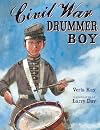
When the Civil War hits the south, Johnny joins the Confederates as a drummer boy. As a drummer, he must signal the army to certain commands. Only nine, Johnny witnesses the bloodiest war on American soil and when he returns home, everything he ever knew has changed.
Written in short poetic stanzas, this book is easy and quick to read for small readers. Even though the stanzas are short, they hold a lot of information. They are mostly written descriptively, but tell the story through sensory show more details. I liked that the very first and last stanzas were the same. Even though the war has torn Johnny's home apart, the magnolia trees and shady porches are still there to welcome him. The poetry is accompanied by gruesome images of fallen soldiers, gunfire, and destruction done in water colored sketches. The first images of Johnny's home show him and his (I'm assuming) siblings playing while the slaves work the cotton fields. In the last images, Johnny and his family are working together with the freed slaves, all piling cotton into a wagon and offering lemonade to one another. It's a good contrast and outcome to the devastation of the war. Not everything was bad, as these last images show, and it leaves a feeling of hope.
The author's note gives more background information on the role of drummer boys in the Civil War. This is good for introducing the war to young children and showing that even children were involved. show less
Written in short poetic stanzas, this book is easy and quick to read for small readers. Even though the stanzas are short, they hold a lot of information. They are mostly written descriptively, but tell the story through sensory show more details. I liked that the very first and last stanzas were the same. Even though the war has torn Johnny's home apart, the magnolia trees and shady porches are still there to welcome him. The poetry is accompanied by gruesome images of fallen soldiers, gunfire, and destruction done in water colored sketches. The first images of Johnny's home show him and his (I'm assuming) siblings playing while the slaves work the cotton fields. In the last images, Johnny and his family are working together with the freed slaves, all piling cotton into a wagon and offering lemonade to one another. It's a good contrast and outcome to the devastation of the war. Not everything was bad, as these last images show, and it leaves a feeling of hope.
The author's note gives more background information on the role of drummer boys in the Civil War. This is good for introducing the war to young children and showing that even children were involved. show less
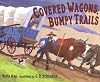
I can tell this book is about the Westward Expansion to California from my previous knowledge. I was able to follow the plot line better in this one of Kay's books. Maybe because it isn't the first book of hers or I just clicked with these rhyming words better. Many families are traveling but we're focusing on one family in this book. It tells of their obstacles and daily routines while on their journey. I'd like to read this in my classroom because of the way an effective teacher reads this show more aloud keeps their students attention. show less
Lists
Awards


You May Also Like


Associated Authors
Statistics
- Works
- 11
- Members
- 863
- Popularity
- #29,663
- Rating
- 4.0
- Reviews
- 81
- ISBNs
- 18