Creation: A Novel {original}
by Gore Vidal
On This Page
Description
Cyrus, a fifth century Persian, relates the story of his travels and encounters as an ambassador.Tags
Recommendations










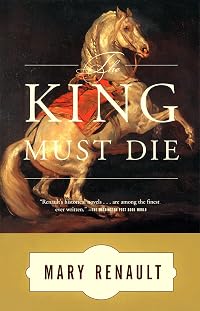

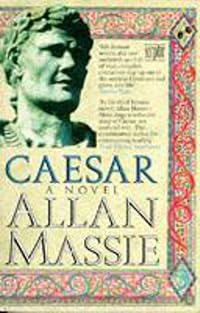
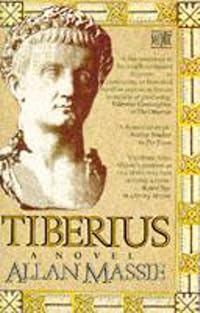
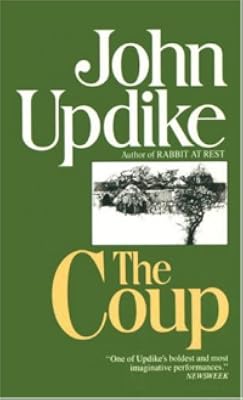







Member Recommendations
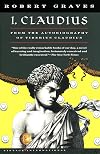
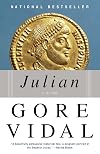
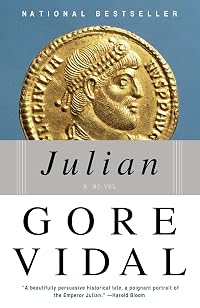
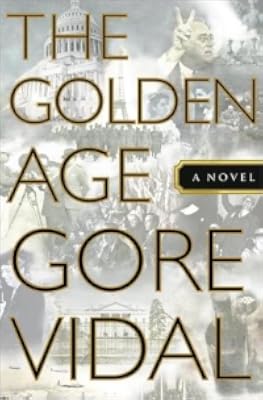
Julian by Gore Vidal
bookfitz Another historical novel set in the ancient world written with the author's same wit.
20
karatelpek Another epic set at interesting historical time period, this being the end of the Roman Empire.

mcenroeucsb Historical fiction journeys
mcenroeucsb Historical fiction journeys
Member Reviews
A long time ago I saw Gore Vidal on Bill Maher's show Politically Incorrect. I was very impressed with just about everything he said so when I saw this book at some used bookstore or thrift store (can't remember which) I picked it up. I actually started reading it and then the size of it scared me off. But now that he just died the other day I figured it would be a good time to read it.
This book took me 5 months to read (although I was reading other books at the same time). It's huge (593 pages) and the font is small. It wasn't action-packed. I never felt sad or happy for the characters. There weren't any aliens, magic or "lasers". No mind-blowing, extrapolated future technologies or cultures. BUT. I really liked it.
It really was like show more taking a tour through history. The main character meets Buddha, Confucius, and a host of other famous historical personages. Reading it feels like Vidal had some kind of time machine and just went back and took notes on everything. Complicated (royal) family trees, religious schisms, assassinations, coups, love affairs, wars etc...
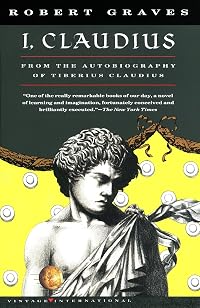
The closest thing I can compare it to is [book:I, Claudius|18765] but with a much larger scope and so a larger cast of characters and so (again) less intimacy with the characters.
Thank you Mr. Vidal for letting me take a ride in your time machine. show less
This book took me 5 months to read (although I was reading other books at the same time). It's huge (593 pages) and the font is small. It wasn't action-packed. I never felt sad or happy for the characters. There weren't any aliens, magic or "lasers". No mind-blowing, extrapolated future technologies or cultures. BUT. I really liked it.
It really was like show more taking a tour through history. The main character meets Buddha, Confucius, and a host of other famous historical personages. Reading it feels like Vidal had some kind of time machine and just went back and took notes on everything. Complicated (royal) family trees, religious schisms, assassinations, coups, love affairs, wars etc...
The closest thing I can compare it to is [book:I, Claudius|18765] but with a much larger scope and so a larger cast of characters and so (again) less intimacy with the characters.
Thank you Mr. Vidal for letting me take a ride in your time machine. show less
Cyrus Spitama is half-Greek half-Persian nobleman, who is the Great King's ambassador to Athens in the 5th century BC. He dictates his memoirs to his great-nephew Democritus in response to a reading of Herodotus's Histories.
Cyrus Spitama's grandfather was the prophet Zoroaster, and as he had previously undertaken diplomatic missions to India and the country to the East of the East, Cathay, he was able to meet everybody who was anybody in those days: Mahavira (the founder of Jainism), the Buddha, Lao Tzu, Confucius, Darius, and Xerxes. Pericles and the young Socrates get small parts. Cyrus's great-nephew who he is dictating his memoirs to was the inventor of atomic theory.
There's lots of palace intrigue and adventure as Cyrus tries to show more carry out his missions and just plain survive in a world where he doesn't really fit in any category, and intellectual and religious discussion as he pursues his main interest, the nature of creation, where did the world come from and why and how. All very enjoyable. show less
Cyrus Spitama's grandfather was the prophet Zoroaster, and as he had previously undertaken diplomatic missions to India and the country to the East of the East, Cathay, he was able to meet everybody who was anybody in those days: Mahavira (the founder of Jainism), the Buddha, Lao Tzu, Confucius, Darius, and Xerxes. Pericles and the young Socrates get small parts. Cyrus's great-nephew who he is dictating his memoirs to was the inventor of atomic theory.
There's lots of palace intrigue and adventure as Cyrus tries to show more carry out his missions and just plain survive in a world where he doesn't really fit in any category, and intellectual and religious discussion as he pursues his main interest, the nature of creation, where did the world come from and why and how. All very enjoyable. show less
Candidly a bit of a disappointment after the tour de force that was Julian. Biggest irritation: Why do authors of works of this sort have their narrator meet every single friggin' important person that existed in their era, a la John Jakes? But, Vidal is a good enough writer that it is possible to overlook this and enjoy this work as fiction, not as being remotely close to actual history.
Vidal's novel serves as a background for his exposition on the history and philosophy of the 5th Century. His knowledge is expansive and, while the breadth of experience for his main character is simply not believable, he does a reasonably effective job of entertaining the reader while commenting on political and religious isses (often inseprable) of the era. This is not a book for those who want their reading quick and easy and will be far more enjoyable for those who go into it with some knowledge of the era, of the development of the world's great relgiions and, particularly, of Periclean Greece.
A wonderful story about the "Axis Age" and one man's quest to understand the world by exploring the different ideas of the prominent people of the time. Pericles, Zoroaster, the Buddha, and Confucius - among others - figure prominently in this quest. It fit for me as a fictional equivalent of my own investigation into different philosophical and religious approaches to understanding.
This is a thick book, and it is largely about religion. Many will not read past this point, either of the review or the novel. But this is an area were many escapist readers feel uncomfortable. And religious fundamentalists have trouble dealing with the shared tenets of the major faiths. But Mr. Vidal is not a fundamentalist, but a humanist and his take on the divided world with shared truths is quite a nice way to spend a week of reading time. It's worth the effort, even though the body count is low.
Ciro Espitama, viejo y ciego, dicta sus memorias a su sobrino el joven filósofo Demócrito, para rebatir la visión que de las guerras entre griegos y persas tiene Herodoto. Nieto de Zoroastro, le fue trasnmitida la sabiduría de su abuelo; como embajador del rey Darío en la India y Catay, conoce tanto las filosofías orientales como las intrigas políticas que el gran imperio persa mantiene para afianzarse o conquistar nuevos pueblos. En el siglo V a.C., Oriente y Occidente dirimen su futuro en Maratón, Salamina o Termópilas; mientras, en Asia, se extienden las religiones de Buda y Confucio y, en Atenas, Sócrates y sus discípulos se preguntan por el origen del universo.
Mar 2, 2023Spanish
Members
- Recently Added By
Published Reviews
ThingScore 75
Mr. Vidal clearly enjoys discovering illustrious men in unlikely postures, and never more than in this novel. ''No other man alive has traveled in as many lands as I,'' Spitama says. He has been a friend to kings, philosophers, emperors, generals and sages; a school chum of Xerxes, employer of Socrates (''I hired him to repair the front wall of the house''), and has sat at the feet of both the show more Buddha and Confucius. To put it mildly, Spitama is like the ultimate performer in that old Skippy Peanut Butter television show ''You Are There.'' He is even as breezy and priggish as the historical narrators who figured on that program...
As a novel of ideas, its ambition and its cast of characters could not possibly be bolder, but I for one would have found the going easier if I had been admitted to anything like plain vulgar domesticity. Banquets, perorations and sanctimonious chat cannot entirely displace one's craving for so much of what Mr. Vidal, speaking through Spitama, has ignored: a sense of place and the uneven texture of common humanity. ''The journey from Lu to Magadha over the silk road took nearly one year. Much of the time, I was ill ... I no longer remember, in any detail, the exact route that we took. ...'' This sort of elision is fairly frequent in the novel, and I tend to think that if Spitama had remembered the more ordinary and perhaps more sensual occurences that lay between his meetings with the sages of the century, it would have been a far richer novel - a great one, instead of a good one that all too often fails to avoid the sort of patrician name-dropping that mars so many historical epics. show less
As a novel of ideas, its ambition and its cast of characters could not possibly be bolder, but I for one would have found the going easier if I had been admitted to anything like plain vulgar domesticity. Banquets, perorations and sanctimonious chat cannot entirely displace one's craving for so much of what Mr. Vidal, speaking through Spitama, has ignored: a sense of place and the uneven texture of common humanity. ''The journey from Lu to Magadha over the silk road took nearly one year. Much of the time, I was ill ... I no longer remember, in any detail, the exact route that we took. ...'' This sort of elision is fairly frequent in the novel, and I tend to think that if Spitama had remembered the more ordinary and perhaps more sensual occurences that lay between his meetings with the sages of the century, it would have been a far richer novel - a great one, instead of a good one that all too often fails to avoid the sort of patrician name-dropping that mars so many historical epics. show less
added by SnootyBaronet
Author Information

168+ Works 31,235 Members
Gore Vidal was born Eugene Luther Gore Vidal Jr. on October 3, 1925 at the U.S. Military Academy at West Point, New York. He did not go to college but attended St. Albans School in Washington and graduated from Phillips Exeter Academy in New Hampshire in 1943. He enlisted in the Army, where he became first mate on a freight supply ship in the show more Aleutian Islands. His first novel, Williwaw, was published in 1946 when he was twenty-one years old and working as an associate editor at the publishing company E. P. Dutton. The City and the Pillar was about a handsome, athletic young Virginia man who gradually discovers that he is homosexual, which caused controversy in the publishing world. The New York Times refused to advertise the novel and gave a negative review of it and future novels. He had such trouble getting subsequent novels reviewed that he turned to writing mysteries under the pseudonym Edgar Box and then gave up novel-writing altogether for a time. Once he moved to Hollywood, he wrote television dramas, screenplays, and plays. His films included I Accuse, Suddenly Last Summer with Tennessee Williams, Is Paris Burning? with Francis Ford Coppola, and Ben-Hur. His most successful play was The Best Man, which he also adapted into a film. He started writing novels again in the 1960's including Julian, Washington, D.C., Myra Breckenridge, Burr, Myron, 1876, Lincoln, Hollywood, Live From Golgotha: The Gospel According to Gore Vidal, and The Golden Age. He also published two collections of essays entitled The Second American Revolution, which won the National Book Critics Circle Award for criticism in 1982 and United States: Essays 1952-1992. In 2009, he received the National Book Awards lifetime achievement award. He died from complications of pneumonia on July 31, 2012 at the age of 86. (Bowker Author Biography) show less
Some Editions
Awards and Honors
Distinctions
Series
Belongs to Publisher Series
Work Relationships
Is contained in
Contains
Common Knowledge
- Canonical title
- Creation: A Novel {original}
- Original title
- Creation
- Original publication date
- 1981-02-12
- People/Characters
- Cyrus Spitama; Democritus; Anaxagoras; Pericles; Xerxes I; Atossa (show all 43); Darius the Great; Thucydides; Elpinice; Buddha; Confucius; Herodotus; Callias; Hystaspes; Lais; Mardonius; Artaphrenes; Thessalus; Histiaeus; Scylax; Caraka; Pasenadi; Varshakara; Mahavira; Gosala; Jeta; Ajatashatru; Fan Ch'ih; Huan; Master Li; Baron K'ang; Demaratus; Megabyzus; Masistes; Arnestris; Artabanus; Aspamitres; Artaxerxes; Themistocles; Cimon; Aspasia; Sophocles; Socrates (c. 470–399 BC)
- Important places
- Abdera, Thrace; Athens, Greece; Susa; Babylon; Ecbatana, Persia; Pasargade (show all 11); Persepolis; Bactra; Halicarnassus; Miletus; Rajagriha
- Important events
- Greco-Persian Wars; 6th century BCE; 5th century BCE
- Dedication
- FOR THOMAS PRYOR GORE
(1870–1949) - First words
- I am blind.
- Quotations
- I looked for signs of age, and found them – always an easy thing to do, except in one’s own mirror.
Although I have the Persian noble’s contempt for trade, I lack his passion for war and hunting and drinking wine to excess. Although I have a priest’s deep knowledge of religion, I am not certain what is true. Although I ... (show all)once heard the voice of the Wise Lord, I confess now in my old age that to hear and to listen are two different things. I am puzzled by creation.
The young mason is called Socrates. Uncommonly ugly, according to Democritus, he is uncommonly intelligent. Last summer, as a favor to Democritus, I hired him to repair the front wall of the house. He made such a botch of it ... (show all)that we now have a dozen new chinks through which the icy wind can whistle. - Last words
- (Click to show. Warning: May contain spoilers.)But I have written on these matters elsewhere and I mention them now only to express my gratitude to the old man whose life story I am pleased to dedicate to the last living survivor of a brilliant time, Aspasia, the wife of Lysicles, the sheep-dealer.
Classifications
Statistics
- Members
- 869
- Popularity
- 31,255
- Reviews
- 9
- Rating
- (3.93)
- Languages
- 9 — English, French, German, Greek, Hungarian, Italian, Polish, Portuguese, Spanish
- Media
- Paper, Audiobook, Ebook
- ISBNs
- 22
- ASINs
- 10