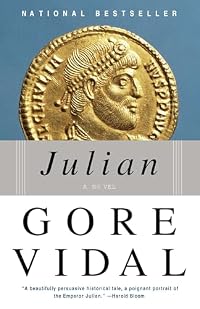
Julian
by Gore Vidal
On This Page
Description
The remarkable bestseller about the Roman emperor who famously tried to halt the spread of Christianity, "Julian" is widely regarded as one of Gore Vidal's finest historical novels.Tags
Recommendations
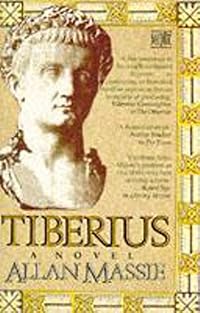
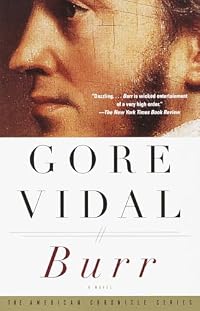
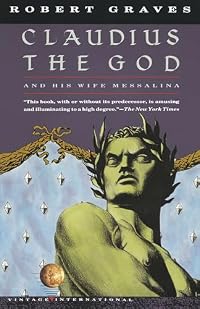
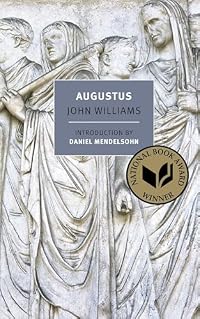









Member Recommendations

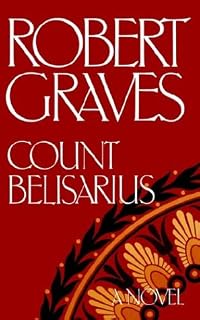
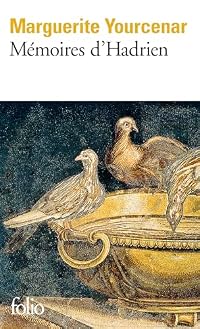
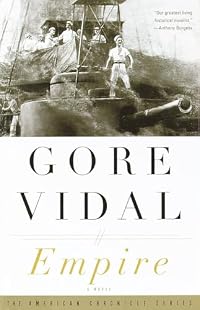
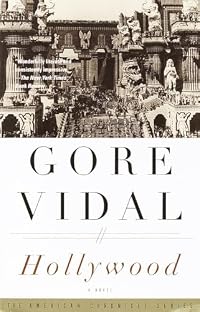
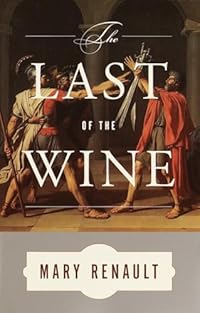
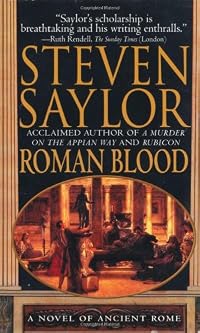
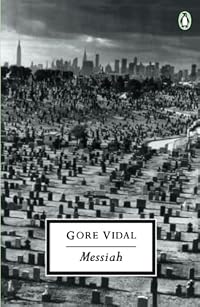
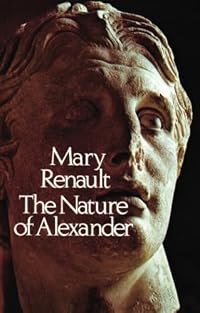
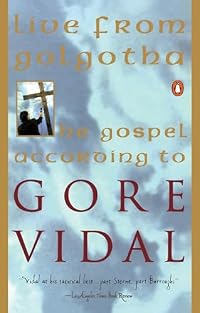
anonymous user By the same author and just as fascinating.
20
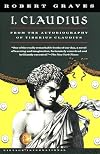
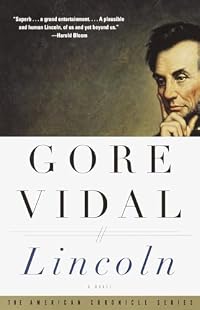
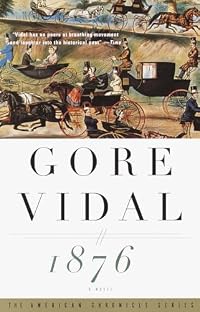
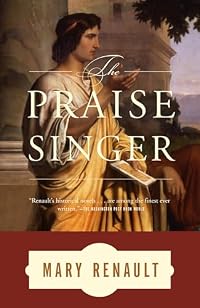
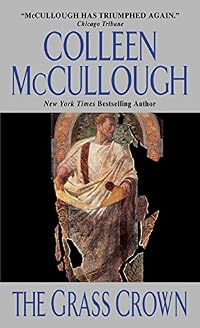
CurrerBell Both classical Roman subjects, and they share the style of an "autobiographical novel."
20
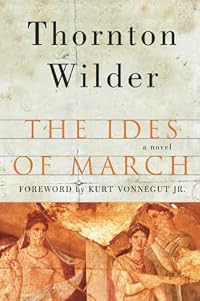
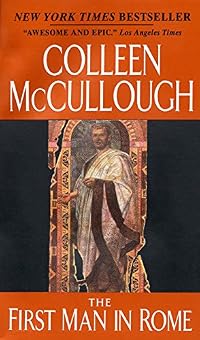
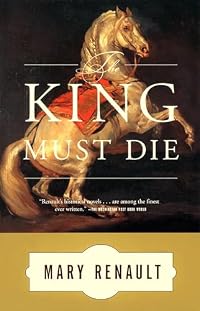
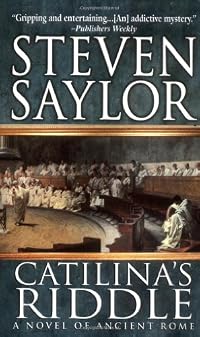
YossarianXeno Both excellent, very well researched and written fictional accounts of Roman Empire history, albeit of different periods
anonymous user Julian refers to Marcus.
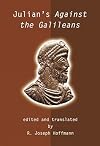
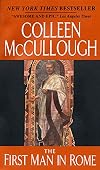
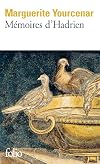
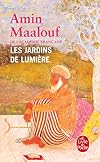
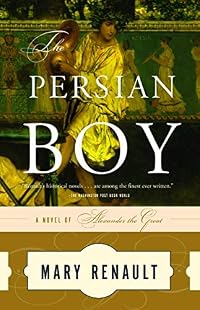
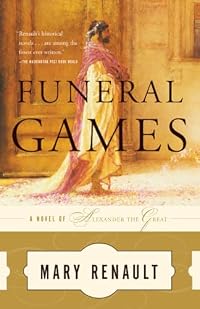
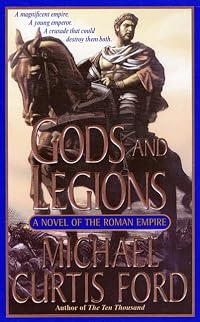
karatelpek Another interesting book about that important time in history before Christianity took over in the Roman empire. Much of the story takes place a century before this one, but the rivalry between Ancient Rome and Persia takes center stage here as well.
Member Reviews
Well, I thank Julian Barnes for this one. While many people were flummoxed by the lengthy central section of Barnes's recent Elizabeth Finch, I quite enjoyed that curious venture into the life of Julian, later known as "the Apostate." I didn't know about this Roman emperor who decided to push back against the inroads of what he called "the Galileans," and the Christianity imposed by Constantine as the official faith of the empire. Julian's goal was the restoration of the old Roman pantheon and the Mithraic cult (from which the Galileans appropriated a number of practices, holidays, and folklore), while still permitting freedom of worship for everyone.
Vidal's Julian is a bookish, nerdy kid who wants only to be left alone to study and show more read and talk philosophy. Alas, as the nephew of Constantine and cousin to Constantius, Constantine's son and heir to the imperial purple, he could not avoid the deadly pressures - as one in line for the throne, he would always be watched and suspected as conniving to take it for himself. He lived his youth striving to be inconspicuous, unobjectionable, and alive. His older brother, ambitious, scheming, but not too bright, serves as an object lesson when he gets on someone's bad side and is murdered. Julian just wants to live.
And live he does. Structured as excerpts from Julian's purported memoir and diary, Vidal leads him from his scholarly pursuits into the temptations of power and adulation, through mystical religious epiphany, to an obsessive reliance on omens and auguries (he was known as the Bull Burner for the numbers of animals he slaughtered in sacrifice), to a thundering ambition to exceed Alexander's conquests of, well, every place he can get to. And - of course - it ends badly. The memoir sections are leavened by marginal commentary made by two scholars and erstwhile friends of Julian, often with acerbic, sharply funny observations on Julian's own reliability.
Vidal is hard on the Galileans - there is plenty to complain of and discuss, and as a seasoned philosopher, Julian is an able disputant in the theological strife. He is likable, ebullient, quite smart about managing men and what will persuade or coerce them into doing what he wants. But for all his dismissal of Christian beliefs, his own beliefs lead him astray and let him down... with bloody consequences for thousands, and himself. Some criticize this novel as excessively anti-Christian, and so it is to some extent, but the Roman gods ain't much better, and all the worse when you start mixing religion with affairs of state. This book was published in 1964... we should still be paying careful attention today!
Talky, busy... don't even try to keep straight who all those other Romans are who people the pages. Just roll with it, and watch this basically decent, intelligent, ambitious, courageous young fellow on his progress through the messy, violent, foolish, unpredictable, dangerous world of the Roman empire in the 4th century. show less
Vidal's Julian is a bookish, nerdy kid who wants only to be left alone to study and show more read and talk philosophy. Alas, as the nephew of Constantine and cousin to Constantius, Constantine's son and heir to the imperial purple, he could not avoid the deadly pressures - as one in line for the throne, he would always be watched and suspected as conniving to take it for himself. He lived his youth striving to be inconspicuous, unobjectionable, and alive. His older brother, ambitious, scheming, but not too bright, serves as an object lesson when he gets on someone's bad side and is murdered. Julian just wants to live.
And live he does. Structured as excerpts from Julian's purported memoir and diary, Vidal leads him from his scholarly pursuits into the temptations of power and adulation, through mystical religious epiphany, to an obsessive reliance on omens and auguries (he was known as the Bull Burner for the numbers of animals he slaughtered in sacrifice), to a thundering ambition to exceed Alexander's conquests of, well, every place he can get to. And - of course - it ends badly. The memoir sections are leavened by marginal commentary made by two scholars and erstwhile friends of Julian, often with acerbic, sharply funny observations on Julian's own reliability.
Vidal is hard on the Galileans - there is plenty to complain of and discuss, and as a seasoned philosopher, Julian is an able disputant in the theological strife. He is likable, ebullient, quite smart about managing men and what will persuade or coerce them into doing what he wants. But for all his dismissal of Christian beliefs, his own beliefs lead him astray and let him down... with bloody consequences for thousands, and himself. Some criticize this novel as excessively anti-Christian, and so it is to some extent, but the Roman gods ain't much better, and all the worse when you start mixing religion with affairs of state. This book was published in 1964... we should still be paying careful attention today!
Talky, busy... don't even try to keep straight who all those other Romans are who people the pages. Just roll with it, and watch this basically decent, intelligent, ambitious, courageous young fellow on his progress through the messy, violent, foolish, unpredictable, dangerous world of the Roman empire in the 4th century. show less
We had an unexpectedly lively discussion about this book in one of our reading groups. At least it was unexpected by me, although I liked (didn't love) the novel. But the portrait of a man whose attempts to stay alive in the poisonous Roman Empire of the 4th Century CE, and how he was seduced, or perhaps revealed, as a leader and warrior, was very persuasive. Vidal gives us a very real man faced with the decrepitude of Rome's religious past and the growing power of Christianity. Ultimately his need to believe in the old gods traps him in a kind of vanity that leads to his destruction. Note this is not a spoiler - the Wikipedia page gives the clear history. Vidal gives us a man.
Muy buena novela histórica, con un protagonista diferente a cualquier otro emperador romano del que hayamos oído hablar. Juliano era un enamorado de la cultura griega, y como tal dedicará su vida a luchar contra los cristianos y declarará la libertad religiosa en el Imperio. También era un filósofo, y cuando recurría a tácticas insólitas como decir la verdad, renunciar a los harenes de esclavas o combatir a los especuladores de grano, conseguía dejar perplejos a todos sus súbditos.
El recurso de Gore Vidal de usar la correspondencia entre Libanio y Prisco para acompañar a las supuestas memorias en primera persona de Juliano le añade matices al personaje y unas buenas dosis de humor.
En definitiva, un retrato de la Roma show more antigua que indaga más allá de lo que estamos acostumbrados, sin miedo a mencionar la homosexualidad generalizada o las hipocresías de la naciente Iglesia. Más ameno en el inicio de la novela que hacia el final, ya en la campaña en Persia. show less
El recurso de Gore Vidal de usar la correspondencia entre Libanio y Prisco para acompañar a las supuestas memorias en primera persona de Juliano le añade matices al personaje y unas buenas dosis de humor.
En definitiva, un retrato de la Roma show more antigua que indaga más allá de lo que estamos acostumbrados, sin miedo a mencionar la homosexualidad generalizada o las hipocresías de la naciente Iglesia. Más ameno en el inicio de la novela que hacia el final, ya en la campaña en Persia. show less
Muy buena novela histórica, con un protagonista diferente a cualquier otro emperador romano del que hayamos oído hablar. Juliano era un enamorado de la cultura griega, y como tal dedicará su vida a luchar contra los cristianos y declarará la libertad religiosa en el Imperio. También era un filósofo, y cuando recurría a tácticas insólitas como decir la verdad, renunciar a los harenes de esclavas o combatir a los especuladores de grano, conseguía dejar perplejos a todos sus súbditos.
El recurso de Gore Vidal de usar la correspondencia entre Libanio y Prisco para acompañar a las supuestas memorias en primera persona de Juliano le añade matices al personaje y unas buenas dosis de humor.
En definitiva, un retrato de la Roma show more antigua que indaga más allá de lo que estamos acostumbrados, sin miedo a mencionar la homosexualidad generalizada o las hipocresías de la naciente Iglesia. Más ameno en el inicio de la novela que hacia el final, ya en la campaña en Persia. show less
El recurso de Gore Vidal de usar la correspondencia entre Libanio y Prisco para acompañar a las supuestas memorias en primera persona de Juliano le añade matices al personaje y unas buenas dosis de humor.
En definitiva, un retrato de la Roma show more antigua que indaga más allá de lo que estamos acostumbrados, sin miedo a mencionar la homosexualidad generalizada o las hipocresías de la naciente Iglesia. Más ameno en el inicio de la novela que hacia el final, ya en la campaña en Persia. show less
Finished this while on vacation in Italy working on an archaeology site of a Roman villa. Loved it! The structure is clever. Julian "The Apostate", Emperor of Rome is dead and a philosopher friend of his wants to edit and publish his memoirs in spite of pressure from the new Christian Emperor. The book opens with correspondence between two philosophers - one who has the much coveted papers and the other who wants them - bickering over the price of making copies. The book continues with the the first person account of Julian with "notes" by the one philosopher and additional comments on the "notes" by the other so we get a comprehensive look at the life of one of the most controversial Emperors of Rome - the man who wanted to turn back show more the clock on Christianity and restore the old gods. Vidal does a wonderful job of lampooning the early Christians and their beliefs with the foil of Julian. show less
I was studying Emperor Julian's writings in the past and consider myself relatively well-versed in what remained of Mithraic mysteries and those few scattered sources on other mystes' traditions. Since I studied middle neoplatonism in depth along with Chaldean theurgical underground - and I still humbly do not consider myself an expert - a friend of mine commended this book to me. He knew that I'm both pro-nobilitas, anti-christian, a history buff and looking at the golden times of high antique through the prism of a tear that was semblant of the one left behind in Alexandria when the "Dionisian company abandoned it", when Hypatia was murdered and Serapeion destroyed. I always found Julian the last hope of pagan Rome, a great potential show more reformer, unifier and a hope to plant seeds to renew the spirit of Rome. I read this book blushing with joy, like a little child, at times grave, at times uplifting with ethos, at times flirtatious or self-important and thinking "what would I do" from the perspective of each character in the book. Extremely well-researched, visible throughout the captivating narration, excellent grasp of human nature. As a sidenote, it also left a personal mark on me by situationalism. I finished the last two chapters at 4 AM in the morning, when an old acquaintance of mine - an underdeveloped love from years ago - that started blooming only recently was sleeping nearby. I looked at her from time to time with a smile on my face and then after finishing the book joined her in sleep, kissing her gently in the most gracious manner I could conjure with a simple gesture. For that, I will remember this book for the rest of my life. show less
https://nwhyte.livejournal.com/2996999.html
This helped make its author's reputation back in 1964, with the timely irreverence for Christians ("Galileans") and churches ("charnel-houses") and the depiction of a potential turning point in world history that in the end was not taken. The vibrancy of the fourth-century Roman empire, and the uncertainty of life at the top, are very well depicted, and there is a nice narrative frame of two of Julian's friends providing commentary on his memoirs. It's quite a long book but the story (whose facts don't need a lot of embellishment) holds very well. The one weak point is that Julian's own ideas aren't really expressed particularly well, other than that he hated Christianity; I understand that the show more real emperor left a much more convincing body of writing. show less
This helped make its author's reputation back in 1964, with the timely irreverence for Christians ("Galileans") and churches ("charnel-houses") and the depiction of a potential turning point in world history that in the end was not taken. The vibrancy of the fourth-century Roman empire, and the uncertainty of life at the top, are very well depicted, and there is a nice narrative frame of two of Julian's friends providing commentary on his memoirs. It's quite a long book but the story (whose facts don't need a lot of embellishment) holds very well. The one weak point is that Julian's own ideas aren't really expressed particularly well, other than that he hated Christianity; I understand that the show more real emperor left a much more convincing body of writing. show less
Members
- Recently Added By
Lists

Best Historical Fiction
620 works; 261 members

Best historical fiction set in the ancient world
126 works; 38 members
Best Roman Empire Books
49 works; 18 members

Books Set in Rome
98 works; 2 members

Blue Pyramid 1,276 Best Books of All Time
1,248 works; 32 members

once upon a time ~ ancient world
46 works; 7 members
Author Information

167+ Works 31,103 Members
Gore Vidal was born Eugene Luther Gore Vidal Jr. on October 3, 1925 at the U.S. Military Academy at West Point, New York. He did not go to college but attended St. Albans School in Washington and graduated from Phillips Exeter Academy in New Hampshire in 1943. He enlisted in the Army, where he became first mate on a freight supply ship in the show more Aleutian Islands. His first novel, Williwaw, was published in 1946 when he was twenty-one years old and working as an associate editor at the publishing company E. P. Dutton. The City and the Pillar was about a handsome, athletic young Virginia man who gradually discovers that he is homosexual, which caused controversy in the publishing world. The New York Times refused to advertise the novel and gave a negative review of it and future novels. He had such trouble getting subsequent novels reviewed that he turned to writing mysteries under the pseudonym Edgar Box and then gave up novel-writing altogether for a time. Once he moved to Hollywood, he wrote television dramas, screenplays, and plays. His films included I Accuse, Suddenly Last Summer with Tennessee Williams, Is Paris Burning? with Francis Ford Coppola, and Ben-Hur. His most successful play was The Best Man, which he also adapted into a film. He started writing novels again in the 1960's including Julian, Washington, D.C., Myra Breckenridge, Burr, Myron, 1876, Lincoln, Hollywood, Live From Golgotha: The Gospel According to Gore Vidal, and The Golden Age. He also published two collections of essays entitled The Second American Revolution, which won the National Book Critics Circle Award for criticism in 1982 and United States: Essays 1952-1992. In 2009, he received the National Book Awards lifetime achievement award. He died from complications of pneumonia on July 31, 2012 at the age of 86. (Bowker Author Biography) show less
Some Editions
Awards and Honors
Series
Belongs to Publisher Series
Work Relationships
Common Knowledge
- Canonical title
- Julian
- Original title
- Julian
- Original publication date
- 1964
- People/Characters
- Julian the Apostate; Libanius; Constantius II; Constantius Gallus; Priscus; Sosipatra (show all 21); Prohaeresius; Gregory of Nazianzus, c. 329-390; Macrina; Sallust; Aetius; Vadomar; Athanasius, c. 296-373; Saint Paul; Ormisda; Cybele; Procopius; Salutius; Jovian; Valentinian; Callistus
- Important places
- Constantinople; Ancient Rome; Antioch
- Important events
- 4th century
- Dedication
- For Lucien Price
- First words
- Yesterday morning as I was about to enter the lecture hall, I was stopped by a Christian student who asked me in voice eager with malice, "Have you heard about the Emperor Theodosius?"
- Quotations
- They are rich, well-organized. Most important, they educate the children.
We all believe — even the Galileans, despite their confused doctrine of trinity — that there is a single Godhead from which all life, divine and mortal, descends and to which all life must return. We may not know this cre... (show all)ator, though his outward symbol is the sun. But through intermediaries, human and devine, he speaks to us, shows us aspects of himself, prepares us for the next stage of the journey.
I seem to have missed the fault of avarice. I have no desire to own anything. No. On second thought, I am greedy about books. I do want to own them. I think I might commit a crime to possess a book. But otherwise, I am withou... (show all)t this strange passion which seems to afflict most men, even philosophers, some close to me.
I think it is always good to get as many viewpoints as possible of the same event, since there is no such thing as absolute human truth.
I do have some sight out of the corner of my left eye, and if I hold my head at a certain cocked angle I can see well enough to read for a short while, but the effort is so great that I prefer to spend my days in the cloudy s... (show all)ubaqueous world of the blind. - Last words
- (Click to show. Warning: May contain spoilers.)With Julian, the light went, and now nothing remains but to let the darkness come, and hope for a new sun and another day, born of time's mystery and man's love of light.
- Blurbers
- Burgess, Anthony; Barkham, John; Thorpe, Day; Dolbier, Maurice; Runciman, Steven; Fuller, Edward (show all 7); Auchincloss, Louis
Classifications
Statistics
- Members
- 2,069
- Popularity
- 9,920
- Reviews
- 38
- Rating
- (4.07)
- Languages
- 12 — Czech, Dutch, English, French, German, Italian, Polish, Portuguese, Romanian, Russian, Spanish, Turkish
- Media
- Paper, Audiobook, Ebook
- ISBNs
- 47
- ASINs
- 36