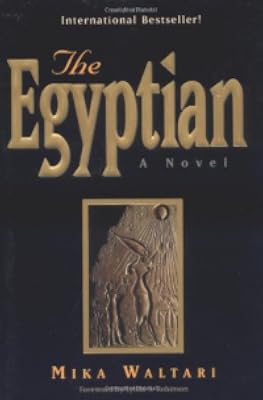
The Egyptian
by Mika Waltari
On This Page
Description
First published in the 1940s and widely condemned as obscene, The Egyptian outsold every other American novel published that same year, and remains a classic, readers worldwide have testified to its life-changing power. It is a full-bodied re-creation of a largely forgotten era in the world's history: an Egypt, when pharaohs contended with the near-collapse of history's greatest empire. This epic tale encompasses the whole of the then-known world, from Babylon to Crete, from Thebes to show more Jerusalem, while centering around one unforgettable figure: Sinuhe, a man of mysterious origins, who rises from the depths of degradation to get close to the P. show lessTags
Recommendations










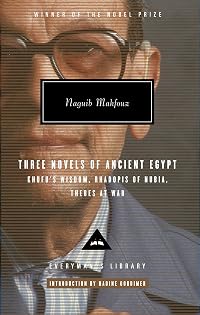


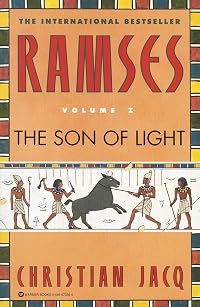
Member Recommendations

caimanjosh Both of these books are epic voyages through (at the time) largely unknown lands, with a great deal of historical detail thrown in.
20

mcenroeucsb Historical fiction journeys
mcenroeucsb Historical fiction journey
Member Reviews
“My name was once inscribed in Pharaoh’s golden book, and I dwelt at his right hand. My words outweighed those of the mighty in the land of Kem; nobles sent me gifts, and chains of gold were hung about my neck. I possessed all that a man can desire, but like a man I desired more—therefore, I am what I am. I was driven from Thebes in the sixth year of the reign of Pharaoh Horemheb, to be beaten to death like a cur if I returned—to be crushed like a frog between the stones if I took one step beyond the area prescribed for my dwelling place. This is by command of the King, of Pharaoh who was once my friend.”
First published in Finland in 1945, this novel is a sweeping classic historical saga that tells the story of Sinuhe, an show more Egyptian physician. He is writing his life story from an older age while living in exile. He starts at the beginning of his life, as an orphan adopted by a doctor and his wife. He tells of his family, adventures, journeys, wars, friendships, and relationships. He ends with how he became exiled. His story features real Egyptian leaders, such as Amenhotep III, Nefertiti, Horemheb, Eie, and Tutankhamun.
In addition to following Sinhue’s journeys, it depicts the rise and fall of Pharoah Akhnaton (Amenhotep IV). Akhnaton changed the primary Egyptian religion from Amon and the traditional gods, to Aton, the sun god and only god. This change to monotheism created much disruption, upheaval, and violence. It is ironic since Aton was supposed to be a god of peace. It reflects the ways in which wars tend to surface despite peaceful intentions.
It is an engaging story with deeply drawn characters, expressive writing, and emotional ups and downs. The first half reminds me a bit of The Odyssey, where the main character travels by ship and surmounts many obstacles, though The Egyptian is fully set in the real world and does not employ actions by mythological creatures. A bit of humor is introduced through the antics of Sinuhe’s slave, Kaptah. Over the course of the story, they form a close friendship.
Through Sinuhe’s adventures, the reader feels immersed in the customs, culture, religious beliefs, medical practices, politics, and society of ancient Egypt and the surrounding regions. He encounters people from Syria, Mitanni, Hattusa, Babylon, and Crete. It would have been even more enjoyable if it were shorter (the war scenes become a bit much after a while) but is definitely worth reading and highly recommended. This book was made into a Hollywood film in 1954.
4.5 show less
First published in Finland in 1945, this novel is a sweeping classic historical saga that tells the story of Sinuhe, an show more Egyptian physician. He is writing his life story from an older age while living in exile. He starts at the beginning of his life, as an orphan adopted by a doctor and his wife. He tells of his family, adventures, journeys, wars, friendships, and relationships. He ends with how he became exiled. His story features real Egyptian leaders, such as Amenhotep III, Nefertiti, Horemheb, Eie, and Tutankhamun.
In addition to following Sinhue’s journeys, it depicts the rise and fall of Pharoah Akhnaton (Amenhotep IV). Akhnaton changed the primary Egyptian religion from Amon and the traditional gods, to Aton, the sun god and only god. This change to monotheism created much disruption, upheaval, and violence. It is ironic since Aton was supposed to be a god of peace. It reflects the ways in which wars tend to surface despite peaceful intentions.
It is an engaging story with deeply drawn characters, expressive writing, and emotional ups and downs. The first half reminds me a bit of The Odyssey, where the main character travels by ship and surmounts many obstacles, though The Egyptian is fully set in the real world and does not employ actions by mythological creatures. A bit of humor is introduced through the antics of Sinuhe’s slave, Kaptah. Over the course of the story, they form a close friendship.
Through Sinuhe’s adventures, the reader feels immersed in the customs, culture, religious beliefs, medical practices, politics, and society of ancient Egypt and the surrounding regions. He encounters people from Syria, Mitanni, Hattusa, Babylon, and Crete. It would have been even more enjoyable if it were shorter (the war scenes become a bit much after a while) but is definitely worth reading and highly recommended. This book was made into a Hollywood film in 1954.
4.5 show less
“My name was once inscribed in Pharaoh’s golden book, and I dwelt at his right hand. My words outweighed those of the mighty in the land of Kem; nobles sent me gifts, and chains of gold were hung about my neck. I possessed all that a man can desire, but like a man I desired more—therefore, I am what I am. I was driven from Thebes in the sixth year of the reign of Pharaoh Horemheb, to be beaten to death like a cur if I returned—to be crushed like a frog between the stones if I took one step beyond the area prescribed for my dwelling place. This is by command of the King, of Pharaoh who was once my friend.”
First published in Finland in 1945, this novel is a sweeping classic historical saga that tells the story of Sinuhe, an show more Egyptian physician. He is writing his life story from an older age while living in exile. He starts at the beginning of his life, as an orphan adopted by a doctor and his wife. He tells of his family, adventures, journeys, wars, friendships, and relationships. He ends with how he became exiled. His story features real Egyptian leaders, such as Amenhotep III, Nefertiti, Horemheb, Eie, and Tutankhamun.
In addition to following Sinhue’s journeys, it depicts the rise and fall of Pharoah Akhnaton (Amenhotep IV). Akhnaton changed the primary Egyptian religion from Amon and the traditional gods, to Aton, the sun god and only god. This change to monotheism created much disruption, upheaval, and violence. It is ironic since Aton was supposed to be a god of peace. It reflects the ways in which wars tend to surface despite peaceful intentions.
It is an engaging story with deeply drawn characters, expressive writing, and emotional ups and downs. The first half reminds me a bit of The Odyssey, where the main character travels by ship and surmounts many obstacles, though The Egyptian is fully set in the real world and does not employ actions by mythological creatures. A bit of humor is introduced through the antics of Sinuhe’s slave, Kaptah. Over the course of the story, they form a close friendship.
Through Sinuhe’s adventures, the reader feels immersed in the customs, culture, religious beliefs, medical practices, politics, and society of ancient Egypt and the surrounding regions. He encounters people from Syria, Mitanni, Hattusa, Babylon, and Crete. It would have been even more enjoyable if it were shorter (the war scenes become a bit much after a while) but is definitely worth reading and highly recommended. This book was made into a Hollywood film in 1954.
4.5 show less
First published in Finland in 1945, this novel is a sweeping classic historical saga that tells the story of Sinuhe, an show more Egyptian physician. He is writing his life story from an older age while living in exile. He starts at the beginning of his life, as an orphan adopted by a doctor and his wife. He tells of his family, adventures, journeys, wars, friendships, and relationships. He ends with how he became exiled. His story features real Egyptian leaders, such as Amenhotep III, Nefertiti, Horemheb, Eie, and Tutankhamun.
In addition to following Sinhue’s journeys, it depicts the rise and fall of Pharoah Akhnaton (Amenhotep IV). Akhnaton changed the primary Egyptian religion from Amon and the traditional gods, to Aton, the sun god and only god. This change to monotheism created much disruption, upheaval, and violence. It is ironic since Aton was supposed to be a god of peace. It reflects the ways in which wars tend to surface despite peaceful intentions.
It is an engaging story with deeply drawn characters, expressive writing, and emotional ups and downs. The first half reminds me a bit of The Odyssey, where the main character travels by ship and surmounts many obstacles, though The Egyptian is fully set in the real world and does not employ actions by mythological creatures. A bit of humor is introduced through the antics of Sinuhe’s slave, Kaptah. Over the course of the story, they form a close friendship.
Through Sinuhe’s adventures, the reader feels immersed in the customs, culture, religious beliefs, medical practices, politics, and society of ancient Egypt and the surrounding regions. He encounters people from Syria, Mitanni, Hattusa, Babylon, and Crete. It would have been even more enjoyable if it were shorter (the war scenes become a bit much after a while) but is definitely worth reading and highly recommended. This book was made into a Hollywood film in 1954.
4.5 show less
"هیچ خدایی نمی تواند جهالت انسان را از بین ببرد"
تعریف این کتاب زیبا رو سال ها پیش از پدرم شنیده بودم و بعدها یکی از معلم های راهنماییم بهم گفت که هر موقع رفتی دانشگاه، بخون. با اختلاف چند ساله خونده شد و برای من تجربه ای بود از اتفاقات پر فراز و نشیب، با انواع احساسات متفاوت.
سینوهه در اول کتاب، خسته از خدایان و حاکمان، مشغول نوشتن کتاب و توصیف زندگی خودش می شه. و این داستانی شنیدنی می شه برای ساعت ها صحبت از انسان show more دوستی، رفاقت، زندگی در کنار فراعنه و مردم محروم، و نهایتا فریب و سو استفاده مستمر و مداوم از مردم و باورهاشون.
"احتمالا شما هم معرکه گیرهای ژنده پوشی را دیده اید که در کمال فقر از طلا و نقره، گشاده دستی و فراوانی نعمت ها حرف می زنند. به اطرافیان معرکه خود وعده گنج می دهند و مردم شیفته سخنان آنان می شوند. همیشه از دروغ نفرت داشته ام." show less
تعریف این کتاب زیبا رو سال ها پیش از پدرم شنیده بودم و بعدها یکی از معلم های راهنماییم بهم گفت که هر موقع رفتی دانشگاه، بخون. با اختلاف چند ساله خونده شد و برای من تجربه ای بود از اتفاقات پر فراز و نشیب، با انواع احساسات متفاوت.
سینوهه در اول کتاب، خسته از خدایان و حاکمان، مشغول نوشتن کتاب و توصیف زندگی خودش می شه. و این داستانی شنیدنی می شه برای ساعت ها صحبت از انسان show more دوستی، رفاقت، زندگی در کنار فراعنه و مردم محروم، و نهایتا فریب و سو استفاده مستمر و مداوم از مردم و باورهاشون.
"احتمالا شما هم معرکه گیرهای ژنده پوشی را دیده اید که در کمال فقر از طلا و نقره، گشاده دستی و فراوانی نعمت ها حرف می زنند. به اطرافیان معرکه خود وعده گنج می دهند و مردم شیفته سخنان آنان می شوند. همیشه از دروغ نفرت داشته ام." show less
The Egyptian is structured as a the first person account of the life of Sinuhe, and through this account the story of a short-lived episode in Egyptian history of a change in religious belief. I first read this book as a much younger man, some 40 years ago. I am now much closer to Sinuhe's age at the time the account was written, and have re-read the novel with as much pleasure and greater appreciation. It is neither a pretty nor a nice story, but it is a great story about how a life is lived in a time of change, how decisions can be made for the best or worst reasons and how difficult it is to imagine all of the personal and broader implications. Reading this novel in my relative youth has certainly informed my life and my own show more decisions. However I am hopeful my approaching age will be somewhat more edifying than poor Sinuhe endured. I highly recommend The Egyptian l to anyone interested in a thoughtful novel, placed in a context remote enough to be only as challenging as you allow. The novel is well written, I enjoyed the language as well as the themes. show less
This just misses five stars--because it took me a long time to warm up to the Sinuhe, the protagonist and narrator, and it's just a little bit too much of a downer. So no, I wouldn't call this a happy tale--but it is a rich epic and great historical fiction of Ancient Egypt under Akhenaton, its heretic pharaoh. Had I not known going in, I wouldn't have guessed this novel was written in 1945. Although that might explain some of its bleakness--I've read that when it was published, it resonated with people who had seen humanistic ideals collapse in the face of Stalin, Hitler, the Holocaust.
This is set in Ancient Egypt over 1,300 years before the birth of Christ. Akhenation is thought to be the first monotheist, so he holds some show more fascination for Jews, Christians and Muslims. Before this I had read Naguib Mahfouz's Akhenaten, Dweller in Truth. Mahfouz is a Muslim and I thought I could detect that coloring his novel. Waltari, for his part, was supposedly a believing Christian. His novel doesn't come across as Christian fiction though--at all. As I said, it doesn't come across as written in 1945. I didn't feel as if there was a overlay of a worldview alien to the time in which this was set--and for me that's the mark of great historical fiction, that you feel transported to another place and time, rather than reading modern people in historical costumes. In fact, I think Waltari did almost too well--as I said it took a long time for me to warm to Sinuhe. Especially in his youth he was arrogant, misogynist, and too-stupid-to-live. But there are positive, strong female characters in this novel--they're just not very apparent early on.
And Waltari set this not just in Egypt--this is like a grand tour of the Bronze Age world--Egypt, Canaan, Syria, Babylon, Hatti, Crete. There are allusions to both Biblical stories and Greek myth. Sinuhe was found as a baby floating in the river on a reed boat and Minea, one of the positive female characters, is a bull-leaper from Minoan Crete--and there is a minotaur and a labyrinth. According to what I gather from online, Waltari did extensive research for this book and garnered praise even from Egyptologists. So truly, this novel is a great ride I'd recommend to anyone looking for great historical fiction--even if I found it a rather melancholy read. show less
This is set in Ancient Egypt over 1,300 years before the birth of Christ. Akhenation is thought to be the first monotheist, so he holds some show more fascination for Jews, Christians and Muslims. Before this I had read Naguib Mahfouz's Akhenaten, Dweller in Truth. Mahfouz is a Muslim and I thought I could detect that coloring his novel. Waltari, for his part, was supposedly a believing Christian. His novel doesn't come across as Christian fiction though--at all. As I said, it doesn't come across as written in 1945. I didn't feel as if there was a overlay of a worldview alien to the time in which this was set--and for me that's the mark of great historical fiction, that you feel transported to another place and time, rather than reading modern people in historical costumes. In fact, I think Waltari did almost too well--as I said it took a long time for me to warm to Sinuhe. Especially in his youth he was arrogant, misogynist, and too-stupid-to-live. But there are positive, strong female characters in this novel--they're just not very apparent early on.
And Waltari set this not just in Egypt--this is like a grand tour of the Bronze Age world--Egypt, Canaan, Syria, Babylon, Hatti, Crete. There are allusions to both Biblical stories and Greek myth. Sinuhe was found as a baby floating in the river on a reed boat and Minea, one of the positive female characters, is a bull-leaper from Minoan Crete--and there is a minotaur and a labyrinth. According to what I gather from online, Waltari did extensive research for this book and garnered praise even from Egyptologists. So truly, this novel is a great ride I'd recommend to anyone looking for great historical fiction--even if I found it a rather melancholy read. show less
"Would that I had words that are unknown, utterances and sayings in new language, that hath not yet passed away, and without that which hath been said repeatedly, and without that which hath been said repeatedly - not an utterance that hath growth stale, what the ancestors have already said."
-Khekheperre-Sonbu, a learned man and priest of the reign of Senusret II, c. 2150 BCE
With all due respect to the complaints of millennia past, I must instead defer to Mark Twain. He offers that history does not repeat itself, but it rhymes.
Such is the story of Sinuhe, the royal physician to a heretic king, the Egyptian who wanders from Egypt to Babylon to Syria to the Hattusa to Crete. This is the archetypal story of love and loss, and yet it is new show more and familiar. He struggles for meaning and existence, both naive and sly, enduring the currents of dogma and war of history - all words repeated so much they are nearly meaningless, but still a cipher of every human being's story.
Waltari, though a rather astonishing depth of research, recreates a long-distant world, and dare I cliche - makes them Come Alive. A linear plot seldom exists, save for the wanderings of our eternal protagonist, and the surroundings and people around him, from his beginning to the end.
It is also an interesting coincidence that the author is Finnish - a country placed squarely in the middle of the most brutal conflict of the last century, between Nazi and Soviet, yet suffered far less than its southern neighbors. In that far country, they survived well enough to give warnings of war and dogma and tyrants, that we might learn from their history. show less
-Khekheperre-Sonbu, a learned man and priest of the reign of Senusret II, c. 2150 BCE
With all due respect to the complaints of millennia past, I must instead defer to Mark Twain. He offers that history does not repeat itself, but it rhymes.
Such is the story of Sinuhe, the royal physician to a heretic king, the Egyptian who wanders from Egypt to Babylon to Syria to the Hattusa to Crete. This is the archetypal story of love and loss, and yet it is new show more and familiar. He struggles for meaning and existence, both naive and sly, enduring the currents of dogma and war of history - all words repeated so much they are nearly meaningless, but still a cipher of every human being's story.
Waltari, though a rather astonishing depth of research, recreates a long-distant world, and dare I cliche - makes them Come Alive. A linear plot seldom exists, save for the wanderings of our eternal protagonist, and the surroundings and people around him, from his beginning to the end.
It is also an interesting coincidence that the author is Finnish - a country placed squarely in the middle of the most brutal conflict of the last century, between Nazi and Soviet, yet suffered far less than its southern neighbors. In that far country, they survived well enough to give warnings of war and dogma and tyrants, that we might learn from their history. show less
This book was nothing like I expected it to be. I think this review will manifest itself as basically a list of all the ways it surprised me and general observations.
It is a historical novel, but honestly it's more like an odyssey of mythology retellings, a travel diary, medicinal practices, explorations in philosophy and spirituality, discussions on social issues, the horrors of war, the complications and limitations of friendship and loyalty, and an autobiography (mostly of very unfortunate and cringeworthy choices, LOL).
I should probably say that I did listen to this and, while some reviewers did not like the narrator, particularly where the women's voices were concerned, it is because of this narrator that I was able to get through show more the book. The writing was just fine and very clean, but the book is long and fraught with unhappy topics and discussions. He did all of this very well and I felt that all the voices, even the women, matched the characters he was portraying. I think what people may really have been upset about was the fact that many (and perhaps all) women in this book were not portrayed in the best of light--I don't know if this is the author attempting to portray some sort of general impression of how women may have acted in the historical period, if it is part of the author's own bias, if it is a reflection of the time period in which the author himself wrote the book, or if the author only did so to allow the story to occur. Whatever the reason, I felt the narrator gave the women voices who suited their characters and purpose, so most of them sounded wheedling, petulant, manipulative, and greasy. But, it's not as though the men in this story, including the protagonist, were angels, either, LOL.
Other reviewers have stated the repetition of certain phrases, which could get tiresome. Notably, these were things like: "the sound of flies buzzing in my ears," "so much ash in my mouth," "as dust under my feet," and "though why so-and-so did this, I do not know." This repetition didn't bother me too much, but a little more variety might have been good.
As to historical accuracy, I know some of Egyptian history, more of Greek myth, and some of the Bible and there were familiar stories and people and happenings all throughout, but I do think some creative license was taken and I was fine with that, as it didn't seem out of place or like extreme liberties were taken. There were some slow parts, but I still wanted to know what happened and listened to the whole thing. I think my favorite part and one of the most riveting was when Sinuhe followed Minea into the labyrinth to see what had befallen her.
Despite all the tragedy and suffering, there were some pretty funny parts. I felt the funniest people tended to be Kaptah and Muti.
Overall, I am glad I read this, as I had been meaning to for a while. show less
It is a historical novel, but honestly it's more like an odyssey of mythology retellings, a travel diary, medicinal practices, explorations in philosophy and spirituality, discussions on social issues, the horrors of war, the complications and limitations of friendship and loyalty, and an autobiography (mostly of very unfortunate and cringeworthy choices, LOL).
I should probably say that I did listen to this and, while some reviewers did not like the narrator, particularly where the women's voices were concerned, it is because of this narrator that I was able to get through show more the book. The writing was just fine and very clean, but the book is long and fraught with unhappy topics and discussions. He did all of this very well and I felt that all the voices, even the women, matched the characters he was portraying. I think what people may really have been upset about was the fact that many (and perhaps all) women in this book were not portrayed in the best of light--I don't know if this is the author attempting to portray some sort of general impression of how women may have acted in the historical period, if it is part of the author's own bias, if it is a reflection of the time period in which the author himself wrote the book, or if the author only did so to allow the story to occur. Whatever the reason, I felt the narrator gave the women voices who suited their characters and purpose, so most of them sounded wheedling, petulant, manipulative, and greasy. But, it's not as though the men in this story, including the protagonist, were angels, either, LOL.
Other reviewers have stated the repetition of certain phrases, which could get tiresome. Notably, these were things like: "the sound of flies buzzing in my ears," "so much ash in my mouth," "as dust under my feet," and "though why so-and-so did this, I do not know." This repetition didn't bother me too much, but a little more variety might have been good.
As to historical accuracy, I know some of Egyptian history, more of Greek myth, and some of the Bible and there were familiar stories and people and happenings all throughout, but I do think some creative license was taken and I was fine with that, as it didn't seem out of place or like extreme liberties were taken. There were some slow parts, but I still wanted to know what happened and listened to the whole thing. I think my favorite part and one of the most riveting was when Sinuhe followed Minea into the labyrinth to see what had befallen her.
Despite all the tragedy and suffering, there were some pretty funny parts. I felt the funniest people tended to be Kaptah and Muti.
Overall, I am glad I read this, as I had been meaning to for a while. show less
Members
- Recently Added By
Lists

Best Historical Fiction
620 works; 259 members

Historical Fiction
889 works; 91 members

Best historical fiction set in the ancient world
126 works; 40 members

1940s
221 works; 25 members

Middle East Fiction
179 works; 15 members

Books You Read During High School (For School)
301 works; 53 members

Africa
109 works; 8 members

once upon a time ~ ancient world
46 works; 7 members

Publisher's Weekly Bestsellers - Part II - 1940 - 1979
355 works; 5 members

Books by Finnish Authors which are Adapted into Films or TV-series
11 works; 1 member
Author Information

152+ Works 6,994 Members
Born in Helsinki, Waltari went to Paris after receiving a university education. He published his first volume of poetry at 17. At the age of 20, his second novel, The Great Illusion (1928), brought him general recognition. Waltari returned to Helsinki from Paris in 1929 and continued to write poems, plays, novels, and fairy tales, a total of 80 show more texts during the next 20 years. The Egyptian (1945), a worldwide success, brought Waltari into prominence in other countries. His three-volume historical novel From Father to Son (1942) won the national Literary Prize and was filmed and translated into 14 languages. Unfortunately, 11 English translations of Waltari's work are out of print. (Bowker Author Biography) show less
Some Editions
Awards and Honors
Awards
Distinctions
Series
Belongs to Publisher Series
Work Relationships
Has the adaptation
Has as a student's study guide
Has as a teacher's guide
Common Knowledge
- Canonical title
- The Egyptian
- Original title
- Sinuhe egyptiläinen
- Alternate titles
- Sinuhe the Egyptian
- Original publication date
- 1945 (original Finnish) (original Finnish); 1949 (English) (English)
- People/Characters
- Sinuhe; Kaptah; Horemheb; Minea; Merit; Akhenaten (show all 7); Nefertiti
- Important places
- Egypt; Ancient Egypt; Thebes, Egypt; Syria; Babylon; Mitanni (show all 9); Anatolia; Crete; Akhetaten, Egypt
- Related movies
- The Egyptian (1954 | IMDb)
- First words
- I, Sinuhe, the son of Senmut and of his wife Kipa, write this.
- Last words
- (Click to show. Warning: May contain spoilers.)This was written by Sinuhe, the Egyptian, who lived alone all the days of his life.
- Original language
- Finnish
- Disambiguation notice
- The Egyptian (1945) is actually an abridged translation of the original work Sinuhe, egyptiläinen.
Classifications
- Genres
- Fiction and Literature, General Fiction, Historical Fiction
- DDC/MDS
- 894.54133 — Literature & rhetoric Literatures of other languages Literatures of Altaic, Uralic, Hyperborean, Dravidian languages; literatures of miscellaneous languages of south Asia Finno-Ugric languages Finnic languages Finnish Finnish fiction 1900–2000
- LCC
- PH355 .W3 .S513 — Language and Literature Uralic languages. Basque language Uralic. Basque Finnish
- BISAC
Statistics
- Members
- 2,443
- Popularity
- 7,961
- Reviews
- 59
- Rating
- (4.27)
- Languages
- 24 — Catalan, Czech, Danish, Dutch, English, Estonian, Finnish, French, German, Greek, Hungarian, Italian, Latvian, Lithuanian, Norwegian (Bokmål), Norwegian, Farsi/Persian, Polish, Romanian, Russian, Slovak, Spanish, Swedish, Portuguese (Portugal)
- Media
- Paper, Audiobook, Ebook
- ISBNs
- 150
- ASINs
- 68