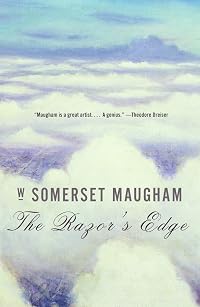
The Razor's Edge
by W. Somerset Maugham 
On This Page
Description
Classic Literature. Fiction. Literature. Larry Darrell is a young American in search of the absolute. The progress of this spiritual odyssey involves him with some of Maugham's most brillant characters - his fiancee Isabel, whose choice between love and wealth have lifelong repercussions, and Elliot Templeton, her uncle, a classic expatriate American snob. The most ambitious of Maugham's novels, this is also one in which Maugham himself plays a considerable part as he wanders in and out of show more the story, to observe his characters struggling with their fates. show lessTags
Recommendations


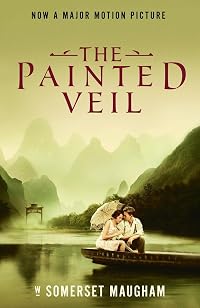











Member Recommendations
anabela_aguiar Um dos melhores livros sobre a chegada da idade adulta e todos os factores que influenciam a nossa actuação nesta sociedade.
20


CGlanovsky A young man on a journey, both literally and spiritually. Philosophical.
librorumamans Both Némirovsky and Maugham look at the effects of World War I on individuals and on social values. Both are fine novels.
Member Reviews
I found this book tremendously enjoyable. My prior impression of Somerset Maugham was that he was a good short story writer whose novels are looked down upon for being a bit plot-driven and a bit stylistically simple. I was thrilled to discover that neither of those (imagined?) criticisms is valid. I think Maugham is very good at all elements of the novel, without being excellent at any of them. The characterisation is mostly good, and when it leans a little bit toward cliche it's in a way that's still sympathetic. The prose is crystal clear, with just enough authorial voice to engage the reader. A lot happens in the book, but none of it is unrealistic and much of it is illustrative rather than integral to the story.
It helps that this show more book falls into just about my favourite genre of art, which doesn't so much ask the big questions as ask what would happen if we took the big questions seriously. The Good Place and I Heart Huckabees are two examples of this genre from other media, while books like [b:The Hitchhiker's Guide to the Galaxy|386162|The Hitchhiker's Guide to the Galaxy (Hitchhiker's Guide to the Galaxy, #1)|Douglas Adams|https://i.gr-assets.com/images/S/compressed.photo.goodreads.com/books/1559986152l/386162._SX50_.jpg|3078186] series play with the same ideas.
This is a tricky book to recommend, because I expect going into it with low expectations and no idea what it's about will greatly enhance the experience. Nevertheless, if you're considering reading it, do. show less
This is a tricky book to recommend, because I expect going into it with low expectations and no idea what it's about will greatly enhance the experience. Nevertheless, if you're considering reading it, do. show less
I read this one when I was a teenager. I didn't feel that I'd quite grasped what was going on, but certain parts of the book stuck with me anyway. Rereading it now, I can see why: Maugham has an almost preternatural ability to sketch realistic, memorable characters. There's hardly a line about Larry, Gray, Isobel and Sophie that doesn't hit its mark. They are, in the final telling, the only real reason to read this book. Maugham spends a lot of time on Larry's spiritual quest, and, -- much like Aldous Huxley in "Eyeless in Gaza" -- ends up with a kind of Westernized version of Eastern religions. This will likely be of limited interest to modern readers, but Larry's spiritual yearnings are real enough.
I found other aspects of the book show more more interesting. "The Razor's Edge" could be described as a Lost Generation novel: Larry is, after all, a veteran of he First World War, most of the characters in the book suffered some setbacks in the Great Depression. It's also an Englishman's attempt to grapple with the United States, then a country that felt young, confident, and very much on the rise. Though Maugham skillfully inserts himself into the narrative, I also felt that there might have been a lot of him in Eliot Templeton, the charming, cultured, and somewhat superficial character that helps bring these characters together. The foursome that make up the core of this novel are not nearly as cultured or as expensively educated as either Eliot or the narrator is -- but the novel forgives them easily. Larry is clearly a deeper, more complicated individual, but Maugham neither begrudges these young Americans their love of nice things or good times, nor does criticize them for their rather conventional goals. The novel takes them very much as they are, and makes them much more memorable by doing so.
For all of the money and high culture on display, "The Razor's Edge" also has a pleasantly seedy edge to it at times. We spend some time in Parisian dives, artist's cafés, and speakeasies. We meet a sympathetic artists' model and a varied cast of toughs and operators. Characters drink and smoke rather a lot and discuss sex and pleasure unblushingly. Readers who enjoy stories that describe the outlaw nightlife of interwar Europe will likely eat these scenes up. The narrator himself comes off as something of an Ian Flemming type, a writer of genre fiction who is well-acquainted with the underworld he writes about and could easily be a minor character in one of his own books. His frank assessments and dry demeanor provide a wonderful and necessary leavener to both Larry's account of his spiritual pilgrimage and Eliot's dandified lifestyle. Apparently they tried to make a movie out of this in the eighties involving, of all people, Bill Murray. It didn't work, and I can hardly say that I'm surprised. In fact, I'm rather surprised that someone even tried to film this one "The Razor's Edge" is best when it focuses on its characters; the rest is mostly talk. "The Razor's Edge" is still worth reading, though. show less
I found other aspects of the book show more more interesting. "The Razor's Edge" could be described as a Lost Generation novel: Larry is, after all, a veteran of he First World War, most of the characters in the book suffered some setbacks in the Great Depression. It's also an Englishman's attempt to grapple with the United States, then a country that felt young, confident, and very much on the rise. Though Maugham skillfully inserts himself into the narrative, I also felt that there might have been a lot of him in Eliot Templeton, the charming, cultured, and somewhat superficial character that helps bring these characters together. The foursome that make up the core of this novel are not nearly as cultured or as expensively educated as either Eliot or the narrator is -- but the novel forgives them easily. Larry is clearly a deeper, more complicated individual, but Maugham neither begrudges these young Americans their love of nice things or good times, nor does criticize them for their rather conventional goals. The novel takes them very much as they are, and makes them much more memorable by doing so.
For all of the money and high culture on display, "The Razor's Edge" also has a pleasantly seedy edge to it at times. We spend some time in Parisian dives, artist's cafés, and speakeasies. We meet a sympathetic artists' model and a varied cast of toughs and operators. Characters drink and smoke rather a lot and discuss sex and pleasure unblushingly. Readers who enjoy stories that describe the outlaw nightlife of interwar Europe will likely eat these scenes up. The narrator himself comes off as something of an Ian Flemming type, a writer of genre fiction who is well-acquainted with the underworld he writes about and could easily be a minor character in one of his own books. His frank assessments and dry demeanor provide a wonderful and necessary leavener to both Larry's account of his spiritual pilgrimage and Eliot's dandified lifestyle. Apparently they tried to make a movie out of this in the eighties involving, of all people, Bill Murray. It didn't work, and I can hardly say that I'm surprised. In fact, I'm rather surprised that someone even tried to film this one "The Razor's Edge" is best when it focuses on its characters; the rest is mostly talk. "The Razor's Edge" is still worth reading, though. show less
A bunch of people who know I'm a reader recommended this book to me. "It's amazing, a must read, wow!" It was okay. I don't get all the fuss, guess it just wasn't my style. Guess I'm more of a Larry Darrell, while the author and proposed audience was supposed to be more of an Elliot Templeton? (And that reference only works if you've also read the book) Maybe it's also that a lot of the book was centered around religion that kind of turned me off, but I read "The Shack" and really enjoyed that, so that couldn't be it. I guess it had to do with a lot of the characters snobbish qualities that irked me a lot, which, while a sign of the times (aka the settings and year, the book was written in) I found rather bothersome. All in all it was show more well written and had some rather enjoyable qualities, but not one I intend to ever pick up and read again. show less
Oh, Mr. Maugham, there are moments when I love you so much I could burst. Moments when I wish there were a six star rating, so I could put it into your hands and say "I got that part and it resonated with me." Moments when I want to say, "enough of that, get back to the story", only to find That is the story, That is the heart.
This novel made me wish to live in the post WWI twenties and have endless possibilities open to me. It made me examine the life I have lived and wonder if I couldn't have gotten more out of it if I had been bolder or less worried.
It's strange how many people suffer from it (fear). I don't mean fear of closed spaces and fear of heights, but fear of death and, what's worse, fear of life. Often they're people who show more seem in the best of health, prosperous, without any worry, and yet they're tortured by it. I've sometimes thought it was the most besetting humour of men, and I asked myself at one time if it was due to some deep animal instinct that man has inherited from that primeval something that first felt the thrill of life.
How any things have I not done in life because I was afraid to try them? More than a few I can remember. Here at the end, I wish I had been braver, bolder and, yes, a little crazier.
This is surely amongst the best, if not the best, of Maugham's works I have found so far. By inserting himself into the novel, he makes it seem so vital and real, and even while understanding it as a contrivance, it lends these characters heft and weight and importance. For each of them, life is about choices and one has to question which of these characters is the most fulfilled. In the end we are told they all got what they wanted, but did they? Eliot wants to be very important, but is he? Does anyone truly want death? Should we choose security over adventure and love? Is a higher truth worth striving for? Can a man ever identify and know God?
The Maugham who is a character in this book is only an observer, no wiser than the others, unable to give us the answers and willing to accept the failures. The Maugham who wrote this book is wise and savvy and enlightened. He knows. This book is like an onion. I kept peeling it back to find another layer, and another layer, and a layer deeper even than that.
Unless love is passion, it's not love, but something else, and passion thrives not on satisfaction, but on impediment. What d'you suppose Keats meant when he told the lover on his Grecian urn not to grieve? 'Forever wilt thou love, and she be fair!' Why? Because she was unattainable, and however madly the lover pursued she still eluded him.
Perhaps true knowledge is as unattainable as love, always more to know, always another place to seek in, always a little out of our reach. In the hands of God, who might reveal it to us at the moment of our deaths or might send us back to strive again and again until we have gotten it right. show less
This novel made me wish to live in the post WWI twenties and have endless possibilities open to me. It made me examine the life I have lived and wonder if I couldn't have gotten more out of it if I had been bolder or less worried.
It's strange how many people suffer from it (fear). I don't mean fear of closed spaces and fear of heights, but fear of death and, what's worse, fear of life. Often they're people who show more seem in the best of health, prosperous, without any worry, and yet they're tortured by it. I've sometimes thought it was the most besetting humour of men, and I asked myself at one time if it was due to some deep animal instinct that man has inherited from that primeval something that first felt the thrill of life.
How any things have I not done in life because I was afraid to try them? More than a few I can remember. Here at the end, I wish I had been braver, bolder and, yes, a little crazier.
This is surely amongst the best, if not the best, of Maugham's works I have found so far. By inserting himself into the novel, he makes it seem so vital and real, and even while understanding it as a contrivance, it lends these characters heft and weight and importance. For each of them, life is about choices and one has to question which of these characters is the most fulfilled. In the end we are told they all got what they wanted, but did they? Eliot wants to be very important, but is he? Does anyone truly want death? Should we choose security over adventure and love? Is a higher truth worth striving for? Can a man ever identify and know God?
The Maugham who is a character in this book is only an observer, no wiser than the others, unable to give us the answers and willing to accept the failures. The Maugham who wrote this book is wise and savvy and enlightened. He knows. This book is like an onion. I kept peeling it back to find another layer, and another layer, and a layer deeper even than that.
Unless love is passion, it's not love, but something else, and passion thrives not on satisfaction, but on impediment. What d'you suppose Keats meant when he told the lover on his Grecian urn not to grieve? 'Forever wilt thou love, and she be fair!' Why? Because she was unattainable, and however madly the lover pursued she still eluded him.
Perhaps true knowledge is as unattainable as love, always more to know, always another place to seek in, always a little out of our reach. In the hands of God, who might reveal it to us at the moment of our deaths or might send us back to strive again and again until we have gotten it right. show less
I picked up The Razor's Edge because my GR friend, Joe, called it possibly the best novel he's read since joining this site. I knew that I'd read a Maugham novel in high school, when I was going through my "I'm too cultured for this podunk town" phase, but I couldn't remember which one. I'm certain it was this one, because some scenes were so familiar ( Larry's encounter in the hayloft, the author's plan to convince Elliott he's been invited to Edna Novemali's party (which nearly backfires), and all the Eastern philosophy ). Although I enjoyed the novel both times, the more than 20 years (and many, many other books) between readings has changed my perspective. At 17 or 18, I was fascinated by the Yogi wisdom that Maugham expounds show more through the character of Larry. At 39, I'm more interested in the social relationships of the characters, the posturing, the manuevering, the consequences for characters who refuse to follow the rules of society.
The novel begins slowly, and with phrases like, "I suppose that by the exercise of invention I could fill the gaps plausibly enough and so make my narrative more coherent," I wasn't sure I'd be able to make it through the whole novel. Thankfully, after that very wordy introduction in which Maugham claims the tale is autiobiographical, even though it is actually fiction (as opposed to [b: Of Human Bondage|31548|Of Human Bondage|W. Somerset Maugham|https://i.gr-assets.com/images/S/compressed.photo.goodreads.com/books/1386924695l/31548._SY75_.jpg|2547187], which presents itself as a novel, but is actually aotobiographical), Maugham introduces us to Elliott Templeton, an American ex-pat living in France, and snob extraordinare:
He was a colossal snob. He was a snob without shame. He would put up with any affront, he would ignore any rebuff, he would swallow any rudeness to get asked to a party he wanted to go to or to make a connexion with some crusty old dowager of great name. He was indefatigable. When he had fixed his eye on his prey he hunted it with the persistence of a botanist who will expose himself to dangers of flood, earthquake, fever, and hostile natives to find an orchid of perculiar rarity.
By the fifth chapter, when Maugham and Elliott end up visiting Chicago at the same time, the story picks up pace. Elliott invites Maugham to meet his widowed sister and niece. At nineteen:
Isabel was a tall girl with the oval face, straight nose, fine eyes, and full mouth that appeared to be characteristic of the family. She was comely though on the fat side, which I ascribed to her age, and I guessed that she would fine down as she grew older. She had strong, good hands, though they also were a trifle fat, and her legs, displayed by her short skirt, were fat too. She had a good skin and a high colour, which exercise and the drive back in an open car had doubtless heightened. She was sparkling and vivacious. Her radiant health, her playful gaiety, her enjoyment of life, the happiness you felt in her were exhilarating. She was so natural that she made Elliott, for all his elegance, look rather tawdry. Her freshness made [her mother], with her pasty, lined face, look tired and old.
Isabel has a fiance, Larry, who Maugham describes as "in no way remarkable." He left school during The Great War, ran away to Canada where he convinced them he was 18, joined the air corps and was fighting in France at the time of the armistice. The war has changed him and now he has no desire to take a job and settle down as he's expected. Instead, he wants to travel and "loaf," satisfied to live off the modest allowance left to him by his deceased parents.
Elliott and his sister do not approve. They want Larry to take a job or for Isabel to find a more suitable husband, like Larry's best friend, Gray Maturin, the son of a successful investment broker, who is also in love with Isabel. At twenty:
Gray Maturin was striking rather than handsome. He had a rugged, unfinished look; a short blunt
nose, a sensual mouth, and the florid Irish complexion; a great quantity of raven black hair, very sleek, and under heavy eyebrows clear, very blue eyes. Though built on so large a scale, he was finely proportioned, and stripped he must have been a fine figure of a man. He was obviously very powerful. His virility was impressive. He made Larry who was sitting next to him, though only three or four inches shorter, look puny.
By the time Maugham departs Chicago, Larry has decided to spend two years in France. Isabel will remain engaged to him while he is away, with the condition that after those two years, he'll return to the U.S. and get a job. When Maugham next encounters Elliott back in France, he learns that Larry has rebuffed all of Elliott's attempts to integrate him into Parisian society, instead living in a tiny room and spending his days reading. When Isabel and her mother come to visit Elliott, intending to bring Larry back with them, he refuses, saying that he prefers his current life.
"You're so wrong, Larry. You're an American. Your place isn't here. Your place is in America."
"I shall come back when I'm ready."
"But you're missing so much. How can you bear to sit here in a backwater just when we're living through the most wonderful adventure the world has ever known? Europe's finished. We're the greatest, the most powerful people in the world. We're going forward by leaps and bounds. We've got everything. It's your duty to take part in the development of your country. You've forgotten, you don't know how thrilling life is in America today. Are you sure you're not doing this because you haven't the courage to stand up to the work that's before every American now? Oh, I know you're working in a way, but isn't it just an escape from your responsibilities? Is it more than just a sort of laborious idleness? What would happen to America if everyone shirked as you're shirking?"
He proposes a bohemian life to Isabel, traveling on the cheap, toting their babies with them, but she can't picture herself living that way and breaks the engagement. Although they remain on good terms, she returns to Chicago with her mother, Larry leaves Paris, and Maugham loses touch with both of them, although he hears from Elliott that Isabel has married Gray.
Ten years later, having lost everything in the wake of the stock market crash, Isabel and Gray move to Paris to live in Elliott's vacant apartment with their two young daughters. Maugham renews his acquaintance with them, finding them both much changed: Isabel has matured into a stunning (and no longer "fat"...::sigh::) lady, while Gray is a broken shell of the man he once was, balding and truly fat. And then Larry also returns to Paris, and the four become an odd little social group. Complications arise, of course, as Isabel struggles with her complicated feelings for Gray and Larry. Another woman from their old Chicago social circle shows up, broken from her own loss, and complicates things further.
I couldn't help but notice a few parallels between The Razor's Edge and The Great Gatsby. Both are told from the POV of a narrator who was in the midst of the action, but as much of an observer as an active participant, not wholly part of the society in which the main characters move. Both feature a young woman who chose money over love when choosing a husband. But that's where the simarities end.
Maugham's characters are more rounded and more likable than Fitzgerald's. While Isabel can be snobby and self-serving, she's nowhere near as vain and selfish as Daisy. Gray can be a bit thick, but he's a much better man than Tom Buchanen:
Gray's conversation was composed of clichés. However shop-worn, he uttered them with an obvious conviction that he was the first person to think of them. He never went to bed, but hit the hay, where he slept the sleep of the just; if it rained, it rained to beat the band and to the very end Paris to him was Gay Paree. But he was so kindly, so unselfish, so upright, so reliable, so unassuming that it was impossible not to like him.
And Larry, of course, is the anti-Gatsby. Instead of accumulating wealth and material possessions, Larry gathers knowledge and quests for universal truths. With many similarities to Maugham, some critics see Larry as an alter-ego of the author: a way for him to explain all the things he's learned through his own traveling and "loafing." Conversations between the characters of Maugham and Larry, especially the one which takes place over the course of a late night in a Parisian café, are really just literary soapboxes for Maughan the author. It's prefaced with this caution:
I feel it right to warn the reader than he can very well skip this chapter without losing the thread of such story as I have to tell, since for the most part it is nothing more than the account of a conversation that I had with Larry. I should add, however, that except for this conversation I should perhaps not have thought it worth while to write this book.
Even if Maugham's primary goal with this novel was to introduce the Vedanta, the Hindu religious system that Larry studies, and which Maugham himself studied in his own visits to an ashram, this novel is so much more. He takes on upper-class snobbery, societal expectations, personal fulfillment, female independence (this review hasn't even touched upon the characters of Suzanne and Sophie, but they are both fascinating), all within a well-crafted narrative. show less
The novel begins slowly, and with phrases like, "I suppose that by the exercise of invention I could fill the gaps plausibly enough and so make my narrative more coherent," I wasn't sure I'd be able to make it through the whole novel. Thankfully, after that very wordy introduction in which Maugham claims the tale is autiobiographical, even though it is actually fiction (as opposed to [b: Of Human Bondage|31548|Of Human Bondage|W. Somerset Maugham|https://i.gr-assets.com/images/S/compressed.photo.goodreads.com/books/1386924695l/31548._SY75_.jpg|2547187], which presents itself as a novel, but is actually aotobiographical), Maugham introduces us to Elliott Templeton, an American ex-pat living in France, and snob extraordinare:
He was a colossal snob. He was a snob without shame. He would put up with any affront, he would ignore any rebuff, he would swallow any rudeness to get asked to a party he wanted to go to or to make a connexion with some crusty old dowager of great name. He was indefatigable. When he had fixed his eye on his prey he hunted it with the persistence of a botanist who will expose himself to dangers of flood, earthquake, fever, and hostile natives to find an orchid of perculiar rarity.
By the fifth chapter, when Maugham and Elliott end up visiting Chicago at the same time, the story picks up pace. Elliott invites Maugham to meet his widowed sister and niece. At nineteen:
Isabel was a tall girl with the oval face, straight nose, fine eyes, and full mouth that appeared to be characteristic of the family. She was comely though on the fat side, which I ascribed to her age, and I guessed that she would fine down as she grew older. She had strong, good hands, though they also were a trifle fat, and her legs, displayed by her short skirt, were fat too. She had a good skin and a high colour, which exercise and the drive back in an open car had doubtless heightened. She was sparkling and vivacious. Her radiant health, her playful gaiety, her enjoyment of life, the happiness you felt in her were exhilarating. She was so natural that she made Elliott, for all his elegance, look rather tawdry. Her freshness made [her mother], with her pasty, lined face, look tired and old.
Isabel has a fiance, Larry, who Maugham describes as "in no way remarkable." He left school during The Great War, ran away to Canada where he convinced them he was 18, joined the air corps and was fighting in France at the time of the armistice. The war has changed him and now he has no desire to take a job and settle down as he's expected. Instead, he wants to travel and "loaf," satisfied to live off the modest allowance left to him by his deceased parents.
Elliott and his sister do not approve. They want Larry to take a job or for Isabel to find a more suitable husband, like Larry's best friend, Gray Maturin, the son of a successful investment broker, who is also in love with Isabel. At twenty:
Gray Maturin was striking rather than handsome. He had a rugged, unfinished look; a short blunt
nose, a sensual mouth, and the florid Irish complexion; a great quantity of raven black hair, very sleek, and under heavy eyebrows clear, very blue eyes. Though built on so large a scale, he was finely proportioned, and stripped he must have been a fine figure of a man. He was obviously very powerful. His virility was impressive. He made Larry who was sitting next to him, though only three or four inches shorter, look puny.
By the time Maugham departs Chicago, Larry has decided to spend two years in France. Isabel will remain engaged to him while he is away, with the condition that after those two years, he'll return to the U.S. and get a job. When Maugham next encounters Elliott back in France, he learns that Larry has rebuffed all of Elliott's attempts to integrate him into Parisian society, instead living in a tiny room and spending his days reading. When Isabel and her mother come to visit Elliott, intending to bring Larry back with them, he refuses, saying that he prefers his current life.
"You're so wrong, Larry. You're an American. Your place isn't here. Your place is in America."
"I shall come back when I'm ready."
"But you're missing so much. How can you bear to sit here in a backwater just when we're living through the most wonderful adventure the world has ever known? Europe's finished. We're the greatest, the most powerful people in the world. We're going forward by leaps and bounds. We've got everything. It's your duty to take part in the development of your country. You've forgotten, you don't know how thrilling life is in America today. Are you sure you're not doing this because you haven't the courage to stand up to the work that's before every American now? Oh, I know you're working in a way, but isn't it just an escape from your responsibilities? Is it more than just a sort of laborious idleness? What would happen to America if everyone shirked as you're shirking?"
He proposes a bohemian life to Isabel, traveling on the cheap, toting their babies with them, but she can't picture herself living that way and breaks the engagement. Although they remain on good terms, she returns to Chicago with her mother, Larry leaves Paris, and Maugham loses touch with both of them, although he hears from Elliott that Isabel has married Gray.
Ten years later, having lost everything in the wake of the stock market crash, Isabel and Gray move to Paris to live in Elliott's vacant apartment with their two young daughters. Maugham renews his acquaintance with them, finding them both much changed: Isabel has matured into a stunning (and no longer "fat"...::sigh::) lady, while Gray is a broken shell of the man he once was, balding and truly fat. And then Larry also returns to Paris, and the four become an odd little social group. Complications arise, of course, as Isabel struggles with her complicated feelings for Gray and Larry. Another woman from their old Chicago social circle shows up, broken from her own loss, and complicates things further.
I couldn't help but notice a few parallels between The Razor's Edge and The Great Gatsby. Both are told from the POV of a narrator who was in the midst of the action, but as much of an observer as an active participant, not wholly part of the society in which the main characters move. Both feature a young woman who chose money over love when choosing a husband. But that's where the simarities end.
Maugham's characters are more rounded and more likable than Fitzgerald's. While Isabel can be snobby and self-serving, she's nowhere near as vain and selfish as Daisy. Gray can be a bit thick, but he's a much better man than Tom Buchanen:
Gray's conversation was composed of clichés. However shop-worn, he uttered them with an obvious conviction that he was the first person to think of them. He never went to bed, but hit the hay, where he slept the sleep of the just; if it rained, it rained to beat the band and to the very end Paris to him was Gay Paree. But he was so kindly, so unselfish, so upright, so reliable, so unassuming that it was impossible not to like him.
And Larry, of course, is the anti-Gatsby. Instead of accumulating wealth and material possessions, Larry gathers knowledge and quests for universal truths. With many similarities to Maugham, some critics see Larry as an alter-ego of the author: a way for him to explain all the things he's learned through his own traveling and "loafing." Conversations between the characters of Maugham and Larry, especially the one which takes place over the course of a late night in a Parisian café, are really just literary soapboxes for Maughan the author. It's prefaced with this caution:
I feel it right to warn the reader than he can very well skip this chapter without losing the thread of such story as I have to tell, since for the most part it is nothing more than the account of a conversation that I had with Larry. I should add, however, that except for this conversation I should perhaps not have thought it worth while to write this book.
Even if Maugham's primary goal with this novel was to introduce the Vedanta, the Hindu religious system that Larry studies, and which Maugham himself studied in his own visits to an ashram, this novel is so much more. He takes on upper-class snobbery, societal expectations, personal fulfillment, female independence (this review hasn't even touched upon the characters of Suzanne and Sophie, but they are both fascinating), all within a well-crafted narrative. show less
For a work about self-absorbed characters on concurrent quests to attain enlightenment or materialism, the novel ignores the trope of complete condemnation of one and crowning of the other and is sparing in its use of metaphors and florid literary embellishments. Instead, the novel is Larry personified, quietly unassuming, sporadically appearing in the timeline to discourse on philosophical and existential ideals in its own conversational and non-judgmental way, accepting of its fellow character's flaws.
Undoubtedly the highlight of the novel is the characters. The best is, of course, Isabel whose self-awareness of her petty jealousies and spoiltness is a refreshing relief, standing out even in a cast of characters such as this one, each show more with their selfish desires and vices. With the exception of the Great Depression during which all the characters basically escaped unscathed, nothing of importance really happens, or at least, things happened but everybody still managed to live the life they wanted. Yet somehow, some inexplicable combination of ordinary prose, ordinary characters and ordinary plotting contrived to make this an extraordinary read.
Aside:
- how excellent is Suzanne Rouvier's way of referring to her illness as "my typhoid"?
- what is with the author-character's obsession with Isabel's "fat legs"?
- lots of typos in my Vintage Classics copy.
- on page 320, when Maugham tells Larry that "you're free, white and twenty-one.", isn't Larry in his thirties by then? show less
Undoubtedly the highlight of the novel is the characters. The best is, of course, Isabel whose self-awareness of her petty jealousies and spoiltness is a refreshing relief, standing out even in a cast of characters such as this one, each show more with their selfish desires and vices. With the exception of the Great Depression during which all the characters basically escaped unscathed, nothing of importance really happens, or at least, things happened but everybody still managed to live the life they wanted. Yet somehow, some inexplicable combination of ordinary prose, ordinary characters and ordinary plotting contrived to make this an extraordinary read.
Aside:
- how excellent is Suzanne Rouvier's way of referring to her illness as "my typhoid"?
- what is with the author-character's obsession with Isabel's "fat legs"?
- lots of typos in my Vintage Classics copy.
- on page 320, when Maugham tells Larry that "you're free, white and twenty-one.", isn't Larry in his thirties by then? show less
It is pleasant to give yourself over to the care of a master, or mistress, of craft. The Razor’s Edge is masterful. It is an expression of the mastery Maugham earned through many long years of novel-writing and mostly successful critical reception of his work that this book, which came almost twenty years into a career of more than forty years, feels as fresh as his first book (The Moon and Sixpence). It deals, as is the case with so many writers’ oeuvres, with many of the same themes and issues as the first book and most of his subsequent work.
A critic reviewing The Razor’s Edge today would likely fault the author for choosing to write the story from his own first-person point of view. The fashion today is for first-person show more narratives, it’s true, but Maugham uses a narrative device…the story told to the narrator by others…very much out of fashion in today’s world. It is accused, perhaps with justice, of taking the forward thrust out of a story. It makes the reader a follower, a passive observer of the story, instead of giving the presently fashionable sense of watching the story unfold before the reader’s eyes. In a world that craves “The Real World” and “Survivor,” the technique of the cicerone leading the reader around the story feels artificial and affected. That is too bad. The Razor’s Edge is a pleasant journey in the company of interesting people. It’s not a fast-lane zoom like Less Than Zero, in a car full of noisy meretricious mercenary monkey-boys. It is a subtler pleasure, a trip more akin to touring the blue roads of the American countryside than that superhighway journey. show less
A critic reviewing The Razor’s Edge today would likely fault the author for choosing to write the story from his own first-person point of view. The fashion today is for first-person show more narratives, it’s true, but Maugham uses a narrative device…the story told to the narrator by others…very much out of fashion in today’s world. It is accused, perhaps with justice, of taking the forward thrust out of a story. It makes the reader a follower, a passive observer of the story, instead of giving the presently fashionable sense of watching the story unfold before the reader’s eyes. In a world that craves “The Real World” and “Survivor,” the technique of the cicerone leading the reader around the story feels artificial and affected. That is too bad. The Razor’s Edge is a pleasant journey in the company of interesting people. It’s not a fast-lane zoom like Less Than Zero, in a car full of noisy meretricious mercenary monkey-boys. It is a subtler pleasure, a trip more akin to touring the blue roads of the American countryside than that superhighway journey. show less
Members
- Recently Added By
Lists

1001 Books You Must Read Before You Die
1,448 works; 1,134 members

Read the book and saw the movie
1,170 works; 195 members

Literature About Social Class
134 works; 19 members

20th Century Literature
1,161 works; 55 members

Top Five Books of 2013
1,562 works; 721 members

Recommend the 20 best books you've read in the last five years
2,168 works; 606 members
1940s
221 works; 25 members

Canon de la narrativa universal del siglo XX
254 works; 6 members

40 Books to Read Before You’re 40
40 works; 4 members

Top Five Books of 2020
982 works; 350 members

Books Featured on Gilmore Girls
307 works; 21 members

Anthony Burgess 99 Post War Novels
99 works; 7 members

Best First Lines
133 works; 8 members

A Novel Cure
742 works; 23 members

1,001 BYMRBYD Concensus
723 works; 27 members

Blue Pyramid 1,276 Best Books of All Time
1,248 works; 32 members

One Book, Many Authors
441 works; 40 members

Lives of the Poets (and Philosophers)
110 works; 5 members

real people in fiction circumstances
74 works; 10 members
The Novels of W. Somerset Maugham
22 works; 2 members

Publisher's Weekly Bestsellers - Part II - 1940 - 1979
355 works; 5 members

Rory Gilmore Book Club
193 works; 5 members

Authors from England
147 works; 4 members
Elegant Prose
80 works; 4 members

Paris, City of Lights
103 works; 17 members

Favorite Books from the 1940s
38 works; 3 members
Best Books of the 20th Century
193 works; 5 members

Retrospective of 20th- and 21st-century literature
154 works; 1 member
Canon de la narrativa universal del s. XX (cicutadry)
499 works; 3 members

Books Read in 2024
4,623 works; 126 members
The Complete Rory Gilmore Reading List
506 works; 5 members

Good Buddhist Novels
30 works; 4 members

Top Five Books of 2023
767 works; 317 members

Books Read in 2013
1,630 works; 51 members
Books available on Open Library
171 works; 4 members

Nonordinary States of Consciousness
184 works; 7 members

Books Read in 2026
1,931 works; 66 members

Unread books
1,063 works; 83 members
Author Information

701+ Works 46,615 Members
Writer William Somerset Maugham was born in Paris on January 25, 1874. He attended St. Thomas's Medical School in London. A prolific writer, Maugham produced novels, short stories, plays, and an autobiographical novel, "Of Human Bondage." Although he remains popular for his novels and short stories, when he was alive his plays, now dated, were show more also popular, and in 1908 four of his plays ran simultaneously. Maugham died in Nice, France, on December 16, 1965. (Bowker Author Biography) show less
W. Somerset Maugham has a Legacy Library. Legacy libraries are the personal libraries of famous readers, entered by LibraryThing members from the Legacy Libraries group.
Some Editions
Awards and Honors
Distinctions
Notable Lists
Series
Belongs to Publisher Series
Medusa [Mondadori] (167)
Ullstein Buch (201)
Biblioteca Folha (28)
Zephyr Books (71)
detebe (20088)
Biblioteca Adelphi (474)
Gli Adelphi [Adelphi] (355)
Work Relationships
Is contained in
Has the adaptation
Common Knowledge
- Canonical title*
- Auf Messers Schneide
- Original title
- The Razor's Edge
- Original publication date
- 1944
- People/Characters
- Larry Darrell; Elliott Templeton; Isabel Bradley; Sophie Macdonald; Suzanne Rouvier; W. Somerset Maugham (show all 8); Gray Maturin; Henry Maturin
- Important places
- India; London, England, UK; Paris, Île-de-France, France; Chicago, Illinois, USA; Antibes, Alpes-Maritimes, Provence-Alpes-Côte d'Azur, France
- Important events
- Wall Street Crash (1929)
- Related movies
- The Razor's Edge (1946 | IMDb); The Razor's Edge (1984 | IMDb)
- Epigraph
- The sharp edge of a razor is difficult to pass over;
thus the wise say the path to Salvation is hard.
~ Katha-Upanishad - First words
- I have never begun a novel with more misgiving. If I call it a novel it is only because I don't know what else to call it.
- Quotations
- A mother only does her children harm if she makes them the only concern of her life.
- Last words
- (Click to show. Warning: May contain spoilers.)And however superciliously the highbrows carp, we the public in our heart of hearts all like a success story; so perhaps my ending is not so unsatisfactory after all.
- Original language
- English
*Some information comes from Common Knowledge in other languages. Click "Edit" for more information.
Classifications
Statistics
- Members
- 6,939
- Popularity
- 1,716
- Reviews
- 129
- Rating
- (4.09)
- Languages
- 16 — Chinese, Czech, Danish, Dutch, English, Estonian, Finnish, French, German, Italian, Lithuanian, Norwegian (Bokmål), Portuguese, Russian, Spanish, Swedish
- Media
- Paper, Audiobook, Ebook
- ISBNs
- 102
- ASINs
- 121