On This Page
Description
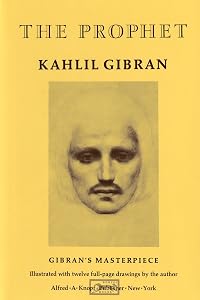
Kahlil Gibran-poet, philosopher, and artist-was born in Lebanon in 1883 but spent his final twenty years of life living in the United States. The three books that compose this audiobook are collections of Gibran's aphorisms, parables, and poetic essays.The first book, The Prophet, was originally published in 1923 and is considered Gibran's masterpiece. It is written in prose poetry in twenty-eight parts, and deals with such topics as love, freedom, good and evil, religion, and death. It is a show more mystical and intensely subjective work, presenting the human soul as essentially noble and good.In The Forerunner, originally published in 1920, Gibran asserts that "nobody is to be blamed for our 'being' and 'having' but ourselves." Gibran makes it clear that we are our own destiny and not the toy of a blind fate.Finally, the titular entity of The Madman, originally published in 1918, is not literally mentally unbalanced; on the contrary, he is perfectly healthy. His madness is only in the eyes of others. Gibran asserts that we tend to be what society expects from us, even though these expectations could be detrimental for the development of our self-identity. Oftentimes, we veil our true selves with masks out of fear of being ridiculed by others. show lessTags
Recommendations














Member Recommendations


Member Reviews
The language is poetic, but it is not poetry. It works as prose poetry, in fact some of the best in English. That is probably because Gibran somewhat mimics the poetry of the King James Version. Some phrases and turns and images are brilliant.
That said, what is the point of this book? There are some nice things. "Is not religion all deeds and all reflections.... Who can separate his faith from his actions.... Who can spread his hours before him, saying, 'This is for God and this is for myself; This for my soul, and this other for my body?'"
Good point. There are several such nuggets. But, you can tell why the hippie-set loved this book: it is spirituality devoid of religion. Namely, this book can make you feel all "cosmic" without all show more that pesky Christian morality. That bit quoted above, it is followed by: "He who wears his morality but as his best garment were better naked."
Ah. See what morals get you. On crime and punishment, we get this "It Takes a Village" gem: "And as a single leaf turns not yellow but with the silent knowledge of the whole tree, So the wrong-doer cannot do wrong without the hidden will of you all." See, crime is not the fault of the criminal, it is the fault of society. "The righteous is not innocent of the deeds of the wicked... Yea, the guilty is oftentimes the victim of the injured." See, if you self-righteous rich folk didn't oppress the meek poor folk, they wouldn't have to commit crime.
I wonder how the injured rape victim victimized her guilty rapist.
Generally, The Prophet's twin credos are (1) any path to God is the right path, and (2) if it feels good do it.
(1) Thus, the pluralistic relativism of lines like:
"Say not, 'I have found the truth,' but rather, 'I have found a truth.' Say not, 'I have found the path of the soul.' Say rather, 'I have met the soul walking upon my path.'"
Forget that Jesus said, "I am the way, the truth, and the life: no man cometh unto the Father, but by me." (John 14:6, by the way.) No, no, no. Many willfully ignore that Jesus said such un-ecumenical things like this. The hippie-Jesus thinks that there are many paths to God. The whole "one source, many wells" philosophy. Don't believe me? Why do you think the folks at the Jesus Seminar blackballed this very verse (John 14:6)? "Our great, loving, hippie-Jesus believes that everyone comes to 'god' in his own way! He would never say that!" Blackball. (That last quotation wasn't an actual quote, by the way.)
(2) And, though the nature of the good and evil chapter is tempered by a sort-of "love thy neighbor" philosophy, it still defines "good" not as following Judaeo-Christian morals, or even a "do unto others" prescription, but "You are good when you are one with yourself."
If it feels good to you, do it. Sure, Gibran later seems to warn against unbridled pleasure-seeking, "Pleasure is a freedom-song, But it is not freedom. It is the blossoming of your desires, But it is not their fruit." Later, however, such hedonism is considered a path ("a truth") to God:
"Some of your youth seek pleasure as if it were all, and they are judged and rebuked. I would not judge or rebuke them. I would have them seek."
Thus the paradox of liberalism: the Prophet rebukes you for rebuking those hedons amongst you. They are only on their path. "You are so wrong to tell them that they are wrong!" Ah, relativism! The problem with unchecked hedonism ("You are good when you are one with yourself," if you prefer) is that mankind always finds some inner reasoning to justify their evil actions. Man always finds a way to make pleasure-at-any-cost, devoid of anything else, his God.
I don't want to seem as if I am some stick in the mud, a prude, or an over-moralizing and self-righteous Christian. Christian I am, and hedon I sometimes am. I can get wheat from the chaff out of The Prophet. There is much here that is good, and some of it is artfully written. Some of Gibran's thoughts are even profound. Still, there is much here that is bad, there is still some shuck on the ear, so to speak. Sometimes you must take the wrong path which leads you to the right path, but there is just one right path, not several. Gibran never seems to say that, and, since he was a Lebanese Christian, I find that sad.
There is much here to lead you astray.
I will not hold it against Gibran that The Prophet has inspired numerous imitations of lesser-poetic talent, sad purveyances of even fewer truths. Yes, I am speaking of (amongst others) the trite, inane cacophonies of Paulo Coelho.
And, for those reviewers and readers who think that The Prophet is the most poetic, most enlightening, most cosmically spiritual tome of all time: try reading the Psalms in the KJV with an open mind.
(Yes. I invented the word "hedon." "Hedonist" sounds like a philosophical school, as does "epicurean." The latter, too, is for an aesthete. Let's say a hedon is a pleasure-seeker without the philosophy. A hedon is an unsophisticate. I probably made up that word too.) show less
That said, what is the point of this book? There are some nice things. "Is not religion all deeds and all reflections.... Who can separate his faith from his actions.... Who can spread his hours before him, saying, 'This is for God and this is for myself; This for my soul, and this other for my body?'"
Good point. There are several such nuggets. But, you can tell why the hippie-set loved this book: it is spirituality devoid of religion. Namely, this book can make you feel all "cosmic" without all show more that pesky Christian morality. That bit quoted above, it is followed by: "He who wears his morality but as his best garment were better naked."
Ah. See what morals get you. On crime and punishment, we get this "It Takes a Village" gem: "And as a single leaf turns not yellow but with the silent knowledge of the whole tree, So the wrong-doer cannot do wrong without the hidden will of you all." See, crime is not the fault of the criminal, it is the fault of society. "The righteous is not innocent of the deeds of the wicked... Yea, the guilty is oftentimes the victim of the injured." See, if you self-righteous rich folk didn't oppress the meek poor folk, they wouldn't have to commit crime.
I wonder how the injured rape victim victimized her guilty rapist.
Generally, The Prophet's twin credos are (1) any path to God is the right path, and (2) if it feels good do it.
(1) Thus, the pluralistic relativism of lines like:
"Say not, 'I have found the truth,' but rather, 'I have found a truth.' Say not, 'I have found the path of the soul.' Say rather, 'I have met the soul walking upon my path.'"
Forget that Jesus said, "I am the way, the truth, and the life: no man cometh unto the Father, but by me." (John 14:6, by the way.) No, no, no. Many willfully ignore that Jesus said such un-ecumenical things like this. The hippie-Jesus thinks that there are many paths to God. The whole "one source, many wells" philosophy. Don't believe me? Why do you think the folks at the Jesus Seminar blackballed this very verse (John 14:6)? "Our great, loving, hippie-Jesus believes that everyone comes to 'god' in his own way! He would never say that!" Blackball. (That last quotation wasn't an actual quote, by the way.)
(2) And, though the nature of the good and evil chapter is tempered by a sort-of "love thy neighbor" philosophy, it still defines "good" not as following Judaeo-Christian morals, or even a "do unto others" prescription, but "You are good when you are one with yourself."
If it feels good to you, do it. Sure, Gibran later seems to warn against unbridled pleasure-seeking, "Pleasure is a freedom-song, But it is not freedom. It is the blossoming of your desires, But it is not their fruit." Later, however, such hedonism is considered a path ("a truth") to God:
"Some of your youth seek pleasure as if it were all, and they are judged and rebuked. I would not judge or rebuke them. I would have them seek."
Thus the paradox of liberalism: the Prophet rebukes you for rebuking those hedons amongst you. They are only on their path. "You are so wrong to tell them that they are wrong!" Ah, relativism! The problem with unchecked hedonism ("You are good when you are one with yourself," if you prefer) is that mankind always finds some inner reasoning to justify their evil actions. Man always finds a way to make pleasure-at-any-cost, devoid of anything else, his God.
I don't want to seem as if I am some stick in the mud, a prude, or an over-moralizing and self-righteous Christian. Christian I am, and hedon I sometimes am. I can get wheat from the chaff out of The Prophet. There is much here that is good, and some of it is artfully written. Some of Gibran's thoughts are even profound. Still, there is much here that is bad, there is still some shuck on the ear, so to speak. Sometimes you must take the wrong path which leads you to the right path, but there is just one right path, not several. Gibran never seems to say that, and, since he was a Lebanese Christian, I find that sad.
There is much here to lead you astray.
I will not hold it against Gibran that The Prophet has inspired numerous imitations of lesser-poetic talent, sad purveyances of even fewer truths. Yes, I am speaking of (amongst others) the trite, inane cacophonies of Paulo Coelho.
And, for those reviewers and readers who think that The Prophet is the most poetic, most enlightening, most cosmically spiritual tome of all time: try reading the Psalms in the KJV with an open mind.
(Yes. I invented the word "hedon." "Hedonist" sounds like a philosophical school, as does "epicurean." The latter, too, is for an aesthete. Let's say a hedon is a pleasure-seeker without the philosophy. A hedon is an unsophisticate. I probably made up that word too.) show less
ეხლა რომ წარვიკითხო არ ვარ დარწმუნებული, რომ ისევ ისე მომეწონება, როგორც ადრე, მაგრამ ნებისმიერ შემთხვევაში ფაქტი ერთია - ეს არაა უბრალოდ დაწერილი მოთხრობა, ლექსი, ნაშრომი, სტატია, ტრაქტატი - ეს რაღაც სხვაა, რომელსაც შეუძლია ისეთ სიმს გამოკრას თითი (თუ წინადადება), რომელიც რიგითი show more გონებრივი ტალღების მიღმაა, რომელიც უფრო ნამდვილია, ვიდრე "ნმადვილი მე" და რომლის რეზონანსიც რელიქტური გამოსხივების დიაპაზონში ვიბრირებს. show less
I was overwhelmed and, putting it heavily I know, set adrift, after reading this book of poetry. I'd heard of Kahlil Gibran in passing and from some snippets of pop culture (I remember his poem from this collection 'Pain' being cited by Huey Freeman in the animated show 'The Boondocks') but this was my first complete jump into one of his works and it was more than worth it, so much so that I'd say that while I've read a number of fantastic books in the past few months and even going beyond that, the past year or so, I think only Portrait of the Artist as Young Man by James Joyce affected me with its imagery as deeply and left such a similarly evocative imprint on my memory and in my perceptions.
Reading The Prophet I felt as though I show more were reading the other side of Thus Spake Zarathustra, both works of otherworldly power but whereas one heralded the coming of the Ubermensch with bombastic fury and joyful abandon into the depths of nihilism and iconoclasm, the tone of The Prophet was more somber, calm, even resigned, as the eponymous Prophet is set to leave the land he has enlightened, but with a sense of a hope in not only the eternal cycle of birth and death but in the belief in mankind's potential, and that we ARE getting better, getting closer, and that maybe the mountains we have built aren't so high, or maybe, they are of nothing substantial only vaporous doubt and fear.
The final image of the book wherein (spoiler) the priestess of the people of orphalese stands alone on the shores of the sea thinking over Almustafa's last words, and the implications and beauty there, were such that it lifted my thoughts, so usually clouded and weighed by the useless mass of self destructive repetitions of doubt, fear, the like, the normal, that I was for the briefest and sweetest of times, lifted, up and out of myself and able to breath so deep of those ephemeral airs that I do think it may sustain me for some time to come. show less
Reading The Prophet I felt as though I show more were reading the other side of Thus Spake Zarathustra, both works of otherworldly power but whereas one heralded the coming of the Ubermensch with bombastic fury and joyful abandon into the depths of nihilism and iconoclasm, the tone of The Prophet was more somber, calm, even resigned, as the eponymous Prophet is set to leave the land he has enlightened, but with a sense of a hope in not only the eternal cycle of birth and death but in the belief in mankind's potential, and that we ARE getting better, getting closer, and that maybe the mountains we have built aren't so high, or maybe, they are of nothing substantial only vaporous doubt and fear.
The final image of the book wherein (spoiler) the priestess of the people of orphalese stands alone on the shores of the sea thinking over Almustafa's last words, and the implications and beauty there, were such that it lifted my thoughts, so usually clouded and weighed by the useless mass of self destructive repetitions of doubt, fear, the like, the normal, that I was for the briefest and sweetest of times, lifted, up and out of myself and able to breath so deep of those ephemeral airs that I do think it may sustain me for some time to come. show less
The other day, a student told me he was a poetry fan. Since you don't hear that often from a mathematics student, I asked for more details and learned Kahlil Gibran was at the top of this list. So, I decided to take in the threescore pages of poetic fable myself.
The 26 prose poetry fables written in English by the Lebanese-American poet and writer draw from Maronite Christian, Islam, and Sufi mysticism. Apparently, his knowledge of Lebanon's bloody history, with its destructive factional struggles, strengthened his belief in the fundamental unity of religions, which his parents exemplified by welcoming people of various religions in their home. This polyglot spirituality resulted in a text that like all good religious texts is a moving show more and enlightening read that can mean anything to anyone.
I can feel a measured support for Epicureanism
and even a Stoicism and the careful, defensive tend-your-own-garden warning from Candide:
and calming assurance for those in an existential crisis:
Heck, a blame-the-victim law & order extremist will find refuge in:
Indeed, there is a recurrent theme of personal responsibility:
Why not dream interpretation
and reincarnation
Something for everyone! Is it not the essential quality of a spiritual revelation written for the ages that it is a set of instruction closed under the operation of interpretation? That is, it supports all views? I very much respect Gibran for so early and his career and with such assurance and competence creating his own compact revealed document, something say Aleister Crowley failed to do over an entire life. show less
The 26 prose poetry fables written in English by the Lebanese-American poet and writer draw from Maronite Christian, Islam, and Sufi mysticism. Apparently, his knowledge of Lebanon's bloody history, with its destructive factional struggles, strengthened his belief in the fundamental unity of religions, which his parents exemplified by welcoming people of various religions in their home. This polyglot spirituality resulted in a text that like all good religious texts is a moving show more and enlightening read that can mean anything to anyone.
I can feel a measured support for Epicureanism
And in the sweetness of friendship let there be laughter, and sharing of pleasures.
For in the dew of little things the heart finds its morning and is refreshed.
and even a Stoicism and the careful, defensive tend-your-own-garden warning from Candide:
Go to your fields and your gardens, and you shall learn that it is the pleasure of
the bee to gather honey of the flower
and calming assurance for those in an existential crisis:
For life and death are one, even as the river and the sea are one.
Heck, a blame-the-victim law & order extremist will find refuge in:
The murdered is not unaccountable for his own murder,
And the robbed is not blameless in being robbed.
Indeed, there is a recurrent theme of personal responsibility:
Is not religion all deeds and all reflection,
And that which is neither deed nor reflection, but a wonder and a surprise ever
springing in the soul, even while the hands hew the stone or tend the loom?
...
Your daily life is your temple and your religion.
Why not dream interpretation
Trust the dreams, for in them is hidden the gate to eternity.
and reincarnation
‘A little while, a moment of rest upon the wind, and another woman shall bear
me.’
Something for everyone! Is it not the essential quality of a spiritual revelation written for the ages that it is a set of instruction closed under the operation of interpretation? That is, it supports all views? I very much respect Gibran for so early and his career and with such assurance and competence creating his own compact revealed document, something say Aleister Crowley failed to do over an entire life. show less
What [b:The Prophet|28461875|The Prophet|Kahlil Gibran|https://images.gr-assets.com/books/1452067735s/28461875.jpg|2938937] might lack in philosophical rigor or depth, it gains in beauty and feeling. I think it misses the point to say that Gibran's treatment of any of his topics, from justice, to death, to good and evil, are complete in the face of centuries of human thought and contemplation on these inherently human questions. I'd tender the suggestion that the Prophet of Orphalese doesn't need to be right, or even for the reader to agree with most of what he says, to have an impact. Yes, that's a little generic and not the most useful, but the takeaway is that I'm not going to judge the Prophet on its content per se but the show more experience of reading it and listening to it. I love these pieces because it provides a solid counterpoint to many of our prevailing modes of thinking; its tone and metaphor and imagery force you to go "wait, have I been doing it wrong the whole time?" Often I tell myself no, sometimes I tell myself yes, but either way I think it helped my "soul unfold itself, like a lotus of countless petals". show less
A fascinating book, and it is likely to be one of the only books in the self-help genre that will make a lasting impact on me. The Prophet is not preachy and doesn't aim to be. Contrary to what some people might think, I don't feel this book prompts you to believe in a Supreme Power ™ - if you believe in it, Gibran would be happier, of course – but at one point, Gibran states that, at the risk of not paraphrasing – 'better to concentrate on people here rather than the God above'.
There's also an insane number of quotes spread about like diamonds – memorable examples of which include -
I teach you not silence, but rather a song not over-loud.
Not yet have I been caged by wisdom. Too young am I and too verdant to speak of aught but show more self.
The space between you and your neighbour unbefriended is greater than those between you and your beloved who dwells beyond seven lands and seven seas.
Call nothing ugly, my friend, save the fear of a soul in the presence of its memories.
I also loved that it's so short, and today's self-help books should learn a thing or two about editing from this one. The Prophet, in its essence, is a mishmash of inspirational quotes attributed to a fictional prophet, and it somehow works – and it doesn't look to have aged at all. show less
There's also an insane number of quotes spread about like diamonds – memorable examples of which include -
I teach you not silence, but rather a song not over-loud.
Not yet have I been caged by wisdom. Too young am I and too verdant to speak of aught but show more self.
The space between you and your neighbour unbefriended is greater than those between you and your beloved who dwells beyond seven lands and seven seas.
Call nothing ugly, my friend, save the fear of a soul in the presence of its memories.
I also loved that it's so short, and today's self-help books should learn a thing or two about editing from this one. The Prophet, in its essence, is a mishmash of inspirational quotes attributed to a fictional prophet, and it somehow works – and it doesn't look to have aged at all. show less
Kahlil Gibran’s “The Prophet” is a mesmerizing collection of poetic essays that delve into the complexities of the human experience. Introduced to me by my wife, this book has been a beacon of wisdom in my literary journey. Gibran’s prose is both lyrical and profound, offering insights on love, work, joy, sorrow, freedom, and more—each chapter a gem that resonates with timeless relevance. The philosophical depth is matched by the sheer beauty of the language, making it a work that invites reflection and evokes emotion. While some may find the style overly didactic, the majority will appreciate the universal truths and the elegant simplicity with which they are conveyed. It’s a book that deserves a place on the shelf of any show more contemplative reader, earning a solid 4 out of 5 stars for its enduring ability to inspire and enlighten. show less
Members
- Recently Added By
Lists

Unread books
1,063 works; 87 members

Translingualism
191 works; 4 members

Men's healing resources
747 works; 1 member

Books talked about in Pamela Dean's Tam Lin
74 works; 1 member

Reading LIst
648 works; 1 member

Widely acclaimed, one book per year
105 works; 3 members

EGBERTINA'S List of childhood books worthy of merit or unspeakable delight
155 works; 6 members

spirituality & consciousness
22 works; 1 member

poetry
15 works; 1 member

Arab and Arab Diaspora Literature We Recommend
112 works; 53 members

1970s
657 works; 23 members

Books Read in 2022
5,168 works; 114 members

Books and authors mentioned by Le Clézio in his Nobel Prize speech
87 works; 3 members

Evan's Reading List 2019
15 works; 1 member

infjsarah's wishlist
408 works; 2 members
1920s
141 works; 6 members

Recommend the 20 best books you've read in the last five years
2,168 works; 606 members
Books That Changed Me
158 works; 47 members

Global Reads: Books Set in the Middle East and North Africa
50 works; 8 members

Best of World Literature
435 works; 52 members

20th Century Literature
1,161 works; 55 members
New York Public Library's Books of the Century
120 works; 20 members

New York Public Library's Books of the Century - All
170 works; 14 members

Middle East Fiction
179 works; 16 members

Poetry Corner
187 works; 15 members

Books Read in 2014
2,343 works; 89 members

Reading Globally
136 works; 16 members
In and About the 1920s
181 works; 31 members

Literature by People of Color
81 works; 9 members

Osho's "Books I Love"
1 work; 1 member

Five star books
1,767 works; 110 members
osho books i have loved
1 work; 1 member

Blue Pyramid 1,276 Best Books of All Time
1,248 works; 32 members

el
1,139 works; 1 member
Author Information

744+ Works 29,423 Members
Khalil Gibran, also known as Kahlil Gibran, was born on January 6, 1883 in Northern Lebanon. As a result of his family's poverty, he received no formal education as a small child but had regular visits from the local priest who taught him about the Bible as well as the Syrian and Arabic languages. After his father was imprisoned for embezzlement show more and his family's property was confiscated by the authorities, his mother decided to emigrate to the United States in 1895. They settled in Boston's South End. He attended public school and art school, where he was introduced to the artist, photographer, and publisher Fred Holland Day. A publisher used some of Gibran's drawings for book covers in 1898. His family forced him to return to Lebanon to complete his education and learn the Arabic language. He enrolled in Madrasat-al-Hikmah, a Maronite-founded school, which offered a nationalistic curriculum partial to church writings, history and liturgy. He learned Arabic, French, and exceled in poetry. He returned to the United States in 1902. In 1904, he hosted his first art exhibit, which featured his allegorical and symbolic charcoal drawings. During this exhibition, he met Mary Elizabeth Haskell, who would go on to fund Gibran's artistic development for nearly his entire life. Not only was he an artist, but he also wrote poetry and other works including The Madman, The Prophet, and Sand and Foam. He died of cirrhosis of the liver and tuberculosis on April 10, 1931. (Bowker Author Biography) show less
Some Editions
Awards and Honors
Awards
Notable Lists
Series

Belongs to Publisher Series
Mille et une nuits (13)
Work Relationships
Is contained in
Has the adaptation
Common Knowledge
- Canonical title
- The Prophet
- Original title
- The Prophet
- Original publication date
- 1923
- People/Characters
- Almustafa; Almitra
- Important places
- Orphalese (fictional city)
- Related movies
- The Prophet (2014 | IMDb); The Prophet (2011 | IMDb)
- First words
- Almustafa, the chosen and the beloved, who was a dawn unto his own day, had waited twelve years in the city of Orphalese for his ship that was to return and bear him back to the isle of his birth.
- Quotations
- You have been told that, even like a chain, you are as weak as your weakest link.
This is but half the truth. You are also as strong as your strongest link.
To measure you by your smallest deed is to reckon the power o... (show all)f the ocean by the frailty of its foam.
And ever has it been that love knows not its own depth until the hour of desperation.
When love beckons to you, follow him, though his ways are hard and steep. And when his wings enfold you yield to him, though the sword hidden among his pinions may wound you. And when he speaks to you believe in him...
Your children are not your children. They are the sons and daughters of Life's longing for itself. They come through you but not from you, and though they are with you yet they belong not to you.
You give but little when you give of your possessions. It is when you give of yourself that you truly give.
And what is fear of need but need itself? Is not dread of thirst when your well is full, the thirst that is unquenchable?
And in winter, when you draw the wine, let there be in your heart a song for each cup. And let there be in the song a remembrance for the autumn days, and for the vineyard, and for the winepress.
Work is love made visible. And if you cannot work with love but only with distaste, it is better that you should leave your work and sit at the gate of the temple and take alms of those who work with joy.
The deeper that sorrow carves into your being, the more joy you can contain.
When you are joyous, look deep into your heart and you shall find it is only that which has given you sorrow that is giving you joy. When you are sorrowful, look again in your heart, and you shall see that in truth you are we... (show all)eping for that which has been your delight.
Verily the lust for comfort murders the passion of the soul, and then walks grinning in the funeral.
And forget not that the earth delights to feel your bare feet and the winds long to play with your hair.
Your pain is the breaking of the shell that encloses your understand.
Say not, 'I have found the truth,' but rather, 'I have found a truth.'
The soul unfolds itself, like a lotus of countless petals.
No man can reveal to you aught but that which already lies half asleep in the dawning of your knowledge.
You talk when you cease to be at peace with your thoughts; and when you can no longer dwell in the solitude of your heart you live in your lips, and sound is a diversion and a pastime. And in much of your talking, thinking is... (show all) half murdered.
Yet the timeless in you is aware of life's timelessness, and knows that yesterday is but today's memory and tomorrow is today's dream.
And that which sings and contemplates in you is still dwelling within the bounds of that first moment which scattered the stars into space.
But regret is the beclouding of the mind and not its chastisement.
He who wears his morality but as his best garment were better naked.
Only when you drink from the river of silence shall you indeed sing. And when you have read the mountain top, then you shall begin to climb. And when the earth shall claim your limbs, than shall you truly dance. - Last words
- (Click to show. Warning: May contain spoilers.)"A little while, a moment of rest upon the wind, and another woman shall bear me."
- Blurbers
- Bragdon, Claude
- Original language
- English
- Canonical DDC/MDS
- 818.9956923
- Disambiguation notice
- Library of Congress please note: this is NOT a work written in Arabic and translated into English. It is a work written in English by a Lebanese poet.
Classifications
- Genres
- Poetry, Religion & Spirituality, Fiction and Literature
- DDC/MDS
- 818.9956923 — Literature & rhetoric American literature in English American miscellaneous writings in English --- American literature in English outside the USA (English speaking authors) Asia Middle East Levent Lebanon Fiction
- LCC
- PS3513 .I25 .P7 — Language and Literature American literature American literature Individual authors 1900-1960
- BISAC
Statistics
- Members
- 16,410
- Popularity
- 414
- Reviews
- 192
- Rating
- (4.09)
- Languages
- 34 — Afrikaans, Arabic, Bengali, Catalan, Chinese, Czech, Danish, Dutch, English, Esperanto, Estonian, Finnish, French, German, Greek, Hindi, Hungarian, Italian, Lithuanian, Marathi, Multiple languages, Norwegian (Bokmål), Norwegian, Farsi/Persian, Polish, Romanian, Russian, Serbian, Spanish, Swedish, Tamil, Thai, Turkish, Portuguese (Brazil)
- Media
- Paper, Audiobook, Ebook
- ISBNs
- 733
- UPCs
- 4
- ASINs
- 304