On This Page
Description
First published posthumously in 1933, this is the book Gibran was working on in the last years of his life. It is the follow-up to the New Age classic The Prophet, and as in The Prophet the humanity and wisdom of Gibran echo on every page.Tags
Recommendations


























Member Recommendations
Member Reviews
The Garden of the Prophet didn't strike me as profoundly as did The Prophet, but there are still plenty of thought-provoking and moving passages within it.
It seemed to me that the character of Almustafa was more closely drawn to that of Christ in this volume. The parallels are not, however, overplayed, and the message is a universal one of love, forbearance and simplicity.
Edit: On a second reading I feel I got more from Garden, and have increased my rating accordingly. Gibran deals here with cosmic themes than the personal, human-scale issues in The Prophet and, perhaps, this is the reason it has taken me longer to assimilate. I'm sure to be coming back to Gibran's Garden again.
It seemed to me that the character of Almustafa was more closely drawn to that of Christ in this volume. The parallels are not, however, overplayed, and the message is a universal one of love, forbearance and simplicity.
Edit: On a second reading I feel I got more from Garden, and have increased my rating accordingly. Gibran deals here with cosmic themes than the personal, human-scale issues in The Prophet and, perhaps, this is the reason it has taken me longer to assimilate. I'm sure to be coming back to Gibran's Garden again.
Almustafa in the Garden of the Prophet by Kahlil Gibran is the prophet who returned to the garden. Gibran’s writing is melodramatic and mystical. The prophet appears like a Christ-like figure with his disciples. I was particularly struck by the cosmic elements of the poetry. Undoubtedly most lines have rather deep psychological meanings.
The garden was a microcosm of the world. In it was not only water and trees, but a cemetery where the deceased was laid to rest. Gibran’s expressions were often sad and gloomy with glimmerings of wisdom. The writer had stirring messages formulated with nuances, challenges, and conflicts. Interesting was how the prophet related to his disciples by the way he answered their probing questions. But in show more the end they all dispersed, and the prophet appeared to have been absorbed with the elements. show less
The garden was a microcosm of the world. In it was not only water and trees, but a cemetery where the deceased was laid to rest. Gibran’s expressions were often sad and gloomy with glimmerings of wisdom. The writer had stirring messages formulated with nuances, challenges, and conflicts. Interesting was how the prophet related to his disciples by the way he answered their probing questions. But in show more the end they all dispersed, and the prophet appeared to have been absorbed with the elements. show less
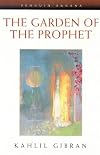
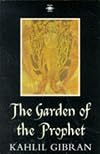
This paperback book, first published posthumously in 1933 to serve as a companion volume to the great Lebanese poet's more famous book 'The Prophet,' carries a strange painting on the cover by the great French Symbolist painter Odilon Redon, entitled 'The Priest of the Kabbala,' later changed to 'The Sphere,' 1895 in the Nigata City Art Museum, Japan.
Although beautiful and mysterious in its own haunting way, somehow it doesn't seem appropriate, and one wonders why the designers of the cover didn't use some of Kahlil Gibran's own sensuous Art-Nouveau-influenced watercolours or drawings?
There are seven of these lovely illustrations, painted by Gibran himself, reproduced here in black and white, and interspersed throughout the text of show more short melancholic Romantic and strangely haunting stories using the same framework as 'The Prophet:' nine disciples asking questions.
This slim 66 page volume has an introduction by Robin Waterfield, was typeset by Rowland Phototypesetting Ltd., of Bury St. Edmunds, Suffolk, was printed by Clays Ltd., St. Ives, England and was published in Penguin's Arkana series in 1998.
I bought this particular copy while on honeymoon with my dear wife Dawn in an underground bookshop in Agadir, Maroc in 2001. It still has the sticker from that shop showing the price to have been 68.00 dirhams.
I also bought Professor Said's 'Orientalism,' three novels by Amin Maalouf, 'Leo the African,' 'The Gardens of Light' and 'The First Century After Beatrice' and one by Naguib Mahfouz, 'Wedding Song' from the same Agadir bookshop, all in English translation, of course! show less
Although beautiful and mysterious in its own haunting way, somehow it doesn't seem appropriate, and one wonders why the designers of the cover didn't use some of Kahlil Gibran's own sensuous Art-Nouveau-influenced watercolours or drawings?
There are seven of these lovely illustrations, painted by Gibran himself, reproduced here in black and white, and interspersed throughout the text of show more short melancholic Romantic and strangely haunting stories using the same framework as 'The Prophet:' nine disciples asking questions.
This slim 66 page volume has an introduction by Robin Waterfield, was typeset by Rowland Phototypesetting Ltd., of Bury St. Edmunds, Suffolk, was printed by Clays Ltd., St. Ives, England and was published in Penguin's Arkana series in 1998.
I bought this particular copy while on honeymoon with my dear wife Dawn in an underground bookshop in Agadir, Maroc in 2001. It still has the sticker from that shop showing the price to have been 68.00 dirhams.
I also bought Professor Said's 'Orientalism,' three novels by Amin Maalouf, 'Leo the African,' 'The Gardens of Light' and 'The First Century After Beatrice' and one by Naguib Mahfouz, 'Wedding Song' from the same Agadir bookshop, all in English translation, of course! show less
More writings from Kahlil Gibran. This book was intended to be a companion piece to The Prophet, although I found it less inspiring. Still, I enjoy reading his writing. It's almost musical, and very poetic.
The sequel to Gibrans classic The Prophet. The Prophet Almustafa returns to his homeland. Gibran's writing is pure poetry. Just as good as the Prophet. A very short and wonderful read.
> Babelio : https://www.babelio.com/livres/Gibran-Le-jardin-du-prophete/20439
> Le jardin du prophète, de Khalil Gibran. — Ce livre fait suite au précédent et traite des relations de l'homme avec la nature. Tout comme le premier, il saura vous captiver.
—La presse, 4 décembre 1979
> Le jardin du prophète, de Khalil Gibran. — Ce livre fait suite au précédent et traite des relations de l'homme avec la nature. Tout comme le premier, il saura vous captiver.
—La presse, 4 décembre 1979
Jul 28, 2021 (Edited)French
Ratings
Members
- Recently Added By
Author Information

747+ Works 29,507 Members
Khalil Gibran, also known as Kahlil Gibran, was born on January 6, 1883 in Northern Lebanon. As a result of his family's poverty, he received no formal education as a small child but had regular visits from the local priest who taught him about the Bible as well as the Syrian and Arabic languages. After his father was imprisoned for embezzlement show more and his family's property was confiscated by the authorities, his mother decided to emigrate to the United States in 1895. They settled in Boston's South End. He attended public school and art school, where he was introduced to the artist, photographer, and publisher Fred Holland Day. A publisher used some of Gibran's drawings for book covers in 1898. His family forced him to return to Lebanon to complete his education and learn the Arabic language. He enrolled in Madrasat-al-Hikmah, a Maronite-founded school, which offered a nationalistic curriculum partial to church writings, history and liturgy. He learned Arabic, French, and exceled in poetry. He returned to the United States in 1902. In 1904, he hosted his first art exhibit, which featured his allegorical and symbolic charcoal drawings. During this exhibition, he met Mary Elizabeth Haskell, who would go on to fund Gibran's artistic development for nearly his entire life. Not only was he an artist, but he also wrote poetry and other works including The Madman, The Prophet, and Sand and Foam. He died of cirrhosis of the liver and tuberculosis on April 10, 1931. (Bowker Author Biography) show less
Some Editions
Series

Belongs to Publisher Series
Work Relationships
Is contained in
Common Knowledge
- Canonical title
- The Garden of the Prophet
- Original publication date
- 1933
- People/Characters
- Almustafa; Karima; Sarkis (the half-doubter); Mannus (the inquisitive); Phardrous (the Greek)
- First words
- Almustafa, the chosen and the beloved, who was a noon unto his own day, returned to the isle of his birth in the month of Tichreen, which is the month of remembrance.
- Quotations
- It is the unheard in us that nurses our deeper sorrow. Yet it is also the unheard which carves our soul to form and fashion our destiny. (p. 2)
Tell a lovely truth in little words, but never an ugly truth in any words. (p. 44) - Last words
- (Click to show. Warning: May contain spoilers.)The walls have fallen,
And the chains have broken;
I rise to you, a mist,
And together we shall float upon the sea until life's second day,
When dawn shall lay you, dewdrops in a garden,
And me a babe upon the breast of a woman.
Classifications
Statistics
- Members
- 501
- Popularity
- 60,377
- Reviews
- 6
- Rating
- (3.88)
- Languages
- 14 — Afrikaans, Catalan, Danish, Dutch, English, Finnish, French, German, Indonesian, Italian, Norwegian (Bokmål), Portuguese, Spanish, Turkish
- Media
- Paper, Ebook
- ISBNs
- 58
- ASINs
- 20