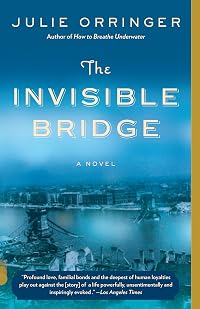
The Invisible Bridge
by Julie Orringer
On This Page
Description
Paris, 1937. Andras Lévi, a Hungarian-Jewish architecture student, arrives from Budapest with a scholarship, a single suitcase, and a mysterious letter he promised to deliver. But when he falls into a complicated relationship with the letter's recipient, he becomes privy to a secret that will alter the course of his--and his family's--history. From the small Hungarian town of Konyár to the grand opera houses of Budapest and Paris, from the despair of Carpathian winter to an unimaginable show more life in labor camps, The Invisible Bridge tells the story of a family shattered and remade in history's darkest hour. show lessTags
Recommendations






































Member Recommendations
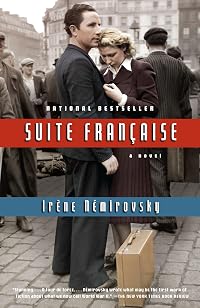
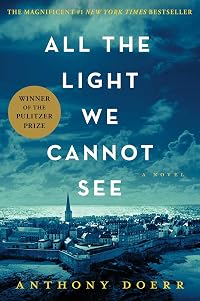
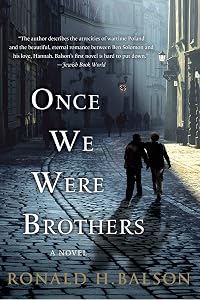
SimoneA Both of these books are beautifully told novels, set in World War II.
20

RidgewayGirl Both novels deal with Eastern Europe during WWII and with the stress that war and separation puts on a marriage.
20
Member Reviews
I LOVED this book -- the perfect immersive Christmas Day read. I know a bit about Hungary, so delving into the years immediately pre WWII was fascinating. The book had been dinged (unfairly) as being too descriptive or detailed. To the contrary, those details are essential to the rising dread Orringer is able to cultivate as we move toward the war we know is coming. The book is very persuasive in demonstrating how Hungary's (and France's) Jewish population could be so sanguine for so long about what was coming. Until the Hungarian leader was ousted by the Nazis in 1944, the Hungarian leadership really struggled over allowing what was a deep-seated anti-semitism to explode (Orringer handles the forced labor system in devastating detail) show more or protecting fellow citizens (there's a lovely couple of scenes showing how that could literally save lives). The takeaway is simple and brutal -- we will never truly be able to grasp what was lost in World War II, the Holocaust or the Soviet death camps. And all of us are on an invisible bridge of fate and circumstance we don't really see until we are across. If you loved [b:The Book Thief|19063|The Book Thief|Markus Zusak|https://images.gr-assets.com/books/1390053681s/19063.jpg|878368], [b:Sophie's Choice|228560|Sophie's Choice|William Styron|https://images.gr-assets.com/books/1356714742s/228560.jpg|2912834] or [b:All the Light We Cannot See|18143977|All the Light We Cannot See|Anthony Doerr|https://images.gr-assets.com/books/1451445646s/18143977.jpg|25491300], you may really enjoy this. show less
In many ways this book could have been titled "Innocence Lost": the innocence of the main character, Andras, the innocence of a continent that thought another World War could be averted through appeasement, the innocence of the Jewish people who thought their neighbors and countrymen would never allow the worst to happen.
The Invisible Bridge begins with a young Hungarian, Andras, going to Paris to begin architectural school. There he learns about anti-semitism, homosexuality, adultery, and love. For most of the book, life seems to continually astonish Andras. He is a country boy thrown into the cosmopolitan big city, the Hungarian confronted with Western ideas and ideals, and the uninitiated learning about the unexpected complexities show more of relationships. At times I became a bit frustrated with his naivete. Could anyone really be that wide-eyed and trusting?
Slowly though the book begins to gather momentum, and it was like being on a train gathering speed as it heads for a collapsed trestle that only we can foresee. Tension builds until Andras and his family and friends are confronted with the ugliest sides of human nature: violence, betrayal, and death. Unfortunately, nearly at the end, the book switches from a narration of the present to a condensed, backward-looking narrative that lost a lot of its impact due to the sudden distance between the reader and the action. It's still a powerful story, but I wonder at the author's rather abrupt wrap-up of the last year of the war. Was she afraid the book was getting too long? Too painful to read?
In any case, I found the novel to be a compelling read and an interesting look at the role of Hungary in first saving and then deporting its Jews to Nazi camps and death. Orringer balances the brutality of hatred with the power of family connections and the sacrifices people are willing to make for those they love. In doing so, she rescues the book from being grim and cynical to one of survival and hope. Recommended. show less
The Invisible Bridge begins with a young Hungarian, Andras, going to Paris to begin architectural school. There he learns about anti-semitism, homosexuality, adultery, and love. For most of the book, life seems to continually astonish Andras. He is a country boy thrown into the cosmopolitan big city, the Hungarian confronted with Western ideas and ideals, and the uninitiated learning about the unexpected complexities show more of relationships. At times I became a bit frustrated with his naivete. Could anyone really be that wide-eyed and trusting?
Slowly though the book begins to gather momentum, and it was like being on a train gathering speed as it heads for a collapsed trestle that only we can foresee. Tension builds until Andras and his family and friends are confronted with the ugliest sides of human nature: violence, betrayal, and death. Unfortunately, nearly at the end, the book switches from a narration of the present to a condensed, backward-looking narrative that lost a lot of its impact due to the sudden distance between the reader and the action. It's still a powerful story, but I wonder at the author's rather abrupt wrap-up of the last year of the war. Was she afraid the book was getting too long? Too painful to read?
In any case, I found the novel to be a compelling read and an interesting look at the role of Hungary in first saving and then deporting its Jews to Nazi camps and death. Orringer balances the brutality of hatred with the power of family connections and the sacrifices people are willing to make for those they love. In doing so, she rescues the book from being grim and cynical to one of survival and hope. Recommended. show less
One and a half million Jewish men and women and children. How was anyone to understand a number like that? Andras knew it took three thousand to fill the seats of the Dohany Street Synagogue. To accommodate a million and a half, one would have had to replicate that building , its arches and domes, its Moorish interior, its balcony, its dark wooden pews and gilded ark, five hundred times. And then to envision each man and woman and child inside as a unique and irreplaceable human being, the way he imagined Mendel Horovitz or the Ivory Tower or his brother Matyas, each of them with desires and fears, a mother and a father, a birthplace, a bed, a first love, a web of memories, a cache of secrets, a skin, a heart, an infinitely complicated show more brain – to imagine them that way, and then to imagine them dead, extinguished for all time – how could anyone begin to grasp it? – from The Invisible Bridge, page 536 -
Andras Levi, a Hungarian Jew, finds himself full of hope and excitement on a train to Paris in 1937. He has won a scholarship to a school of architecture, an unbelievable opportunity for a Jewish man living in the shadow of war. In Paris, he nurses his art and ambition, finds camaraderie with men who will change his life, and discovers love with a beautiful ballet teacher. He misses his brothers – Tibor, a medical student who finds opportunity in Italy, and Matyas, a boy who is on the brink of becoming a man and whose carefree spirit finds joy in theater. But as Europe becomes embroiled in war, all three young men will find themselves back in Hungary and struggling to survive the labor service and the steady erosion of human rights as Hitler’s influence and power come ever closer.
Julie Orringer’s novel The Invisible Bridge is a searing, sweeping, and ultimately triumphant story about love, war, survival and the endurance of the human spirit. Andras, his brothers, their wives, their children, their parents, and the friends they discover are all wonderfully developed by the talented Orringer. Paris with its noisy bars and beautiful architecture and radiant theaters and opera houses comes alive as Orringer’s characters establish their lives and nurse their dreams of a future.
The Invisible Bridge is a heartbreaking novel – how could it be anything less? One does not have to be a student of history to know the story of the Jewish people during WWII. But in this sprawling novel, Orringer puts a human face on the tragedy and gives her readers a glimpse of an often ignored part of the story – that of the Hungarian Jews whose government allied with the Germans early on and used its people as slave labor in the war machine. The sense of inevitability is strong as Orringer builds her story. I found myself breathless, emotional, wanting to stop the march forward as Andras and his brothers and the people they love are thrust into a world beyond their control.
He wanted to believe that someone could be watching in pity and horror, someone who could change things if he chose. He wanted to believe that men were not in charge. But in the center of his sternum he felt a cold certainty that told him otherwise. He believed in God, yes, the God of his fathers, the one to whom he’d prayed in Koyar and Debrecen and Paris and in the work service, but that God, the One, was not One who intervened in the way they needed someone to intervene just then. He had designed the cosmos and thrown its doors open to man, and man had moved in and begun a life there. But God could no more step inside and rearrange that life than an architect could rearrange the lives of a building’s inhabitants. - from The Invisible Bridge, page 432 -
As with all memorable works, The Invisible Bridge succeeds through its careful attention to detail, the development of its characters and the strength of its prose. Orringer has a finely honed sense of who her characters are – their fears, their vulnerabilities, their strengths, their dreams. She takes them to the edge, and then allows them to find their way back – battered, wiser, but never diminished.
There are big themes in this novel – the importance of art, the strength of familial bonds, the idea that we are but a speck in the universe being born along on a tide of which we have little control.
Of course. Why would a man not argue his own shameful culpability, why would he not crave responsibility for disaster, when the alternative was to find himself to be nothing more than a speck of human dust? - from The Invisible Bridge, page 489 -
It would be easy for an author to allow these themes to sink her novel into despair. But it is a testament to Orringer’s talent that she never vacates hope and a promise for something better for her characters.
It is no surprise that I loved this novel. I loved its scope, its humanity, and its honesty. I loved Orringer’s prose, and her ability to resurrect the feel of a generation marching towards war. I loved the characters – Andras with his generous heart, Tibor with his sensitivity and Matyas with his free spirit. I loved that Orringer did not abandon me in darkness, but lifted me into the light. This is a book that adds to our understanding of history and provides insight into the human side of war. It is remarkable. And you should read it.
Highly recommended. show less
Andras Levi, a Hungarian Jew, finds himself full of hope and excitement on a train to Paris in 1937. He has won a scholarship to a school of architecture, an unbelievable opportunity for a Jewish man living in the shadow of war. In Paris, he nurses his art and ambition, finds camaraderie with men who will change his life, and discovers love with a beautiful ballet teacher. He misses his brothers – Tibor, a medical student who finds opportunity in Italy, and Matyas, a boy who is on the brink of becoming a man and whose carefree spirit finds joy in theater. But as Europe becomes embroiled in war, all three young men will find themselves back in Hungary and struggling to survive the labor service and the steady erosion of human rights as Hitler’s influence and power come ever closer.
Julie Orringer’s novel The Invisible Bridge is a searing, sweeping, and ultimately triumphant story about love, war, survival and the endurance of the human spirit. Andras, his brothers, their wives, their children, their parents, and the friends they discover are all wonderfully developed by the talented Orringer. Paris with its noisy bars and beautiful architecture and radiant theaters and opera houses comes alive as Orringer’s characters establish their lives and nurse their dreams of a future.
The Invisible Bridge is a heartbreaking novel – how could it be anything less? One does not have to be a student of history to know the story of the Jewish people during WWII. But in this sprawling novel, Orringer puts a human face on the tragedy and gives her readers a glimpse of an often ignored part of the story – that of the Hungarian Jews whose government allied with the Germans early on and used its people as slave labor in the war machine. The sense of inevitability is strong as Orringer builds her story. I found myself breathless, emotional, wanting to stop the march forward as Andras and his brothers and the people they love are thrust into a world beyond their control.
He wanted to believe that someone could be watching in pity and horror, someone who could change things if he chose. He wanted to believe that men were not in charge. But in the center of his sternum he felt a cold certainty that told him otherwise. He believed in God, yes, the God of his fathers, the one to whom he’d prayed in Koyar and Debrecen and Paris and in the work service, but that God, the One, was not One who intervened in the way they needed someone to intervene just then. He had designed the cosmos and thrown its doors open to man, and man had moved in and begun a life there. But God could no more step inside and rearrange that life than an architect could rearrange the lives of a building’s inhabitants. - from The Invisible Bridge, page 432 -
As with all memorable works, The Invisible Bridge succeeds through its careful attention to detail, the development of its characters and the strength of its prose. Orringer has a finely honed sense of who her characters are – their fears, their vulnerabilities, their strengths, their dreams. She takes them to the edge, and then allows them to find their way back – battered, wiser, but never diminished.
There are big themes in this novel – the importance of art, the strength of familial bonds, the idea that we are but a speck in the universe being born along on a tide of which we have little control.
Of course. Why would a man not argue his own shameful culpability, why would he not crave responsibility for disaster, when the alternative was to find himself to be nothing more than a speck of human dust? - from The Invisible Bridge, page 489 -
It would be easy for an author to allow these themes to sink her novel into despair. But it is a testament to Orringer’s talent that she never vacates hope and a promise for something better for her characters.
It is no surprise that I loved this novel. I loved its scope, its humanity, and its honesty. I loved Orringer’s prose, and her ability to resurrect the feel of a generation marching towards war. I loved the characters – Andras with his generous heart, Tibor with his sensitivity and Matyas with his free spirit. I loved that Orringer did not abandon me in darkness, but lifted me into the light. This is a book that adds to our understanding of history and provides insight into the human side of war. It is remarkable. And you should read it.
Highly recommended. show less
Wow! This book was a surprise to me! I picked it up because I read Ms. Orringer's book of short stories and loved it. However, the stories did not prepare me for the polish and confidence of this novel's narrative.
Two Hungarian brothers spend their last night together at the opera. In the morning, Andras Levi is setting off for Paris to attend a school for architects. His brother, Tibor will soon leave their home in Budapest as well to study to be a doctor. Neither of them can guess what awaits them in only a few years. War threatens, but surely, Europe will not repeat it's mistakes so soon.
This sweeping tale of unlikely love and even less likely survival, sheds light upon a forgotten page of history. Hungarian Jews, though ostensibly show more among the Axis powers, find themselves more and more oppressed by their nation. The story of Andras and his family is a slice of life taken from this turbulent time. Horrifying in its tragedy, yet beautiful it its redemptive spirit. I loved this book. I loved the characters. A truly haunting epic. show less
Two Hungarian brothers spend their last night together at the opera. In the morning, Andras Levi is setting off for Paris to attend a school for architects. His brother, Tibor will soon leave their home in Budapest as well to study to be a doctor. Neither of them can guess what awaits them in only a few years. War threatens, but surely, Europe will not repeat it's mistakes so soon.
This sweeping tale of unlikely love and even less likely survival, sheds light upon a forgotten page of history. Hungarian Jews, though ostensibly show more among the Axis powers, find themselves more and more oppressed by their nation. The story of Andras and his family is a slice of life taken from this turbulent time. Horrifying in its tragedy, yet beautiful it its redemptive spirit. I loved this book. I loved the characters. A truly haunting epic. show less
Books about the Holocaust show us at our worse and our best. It's horrifying to read of the atrocities humans are capable of committing but it's also inspiring to read of the strength needed to survive those atrocities. What makes The The Invisible Bridge stand out for a lot of other Holocaust literature is that it's told from a point of view not often heard from; The Hungarian Jew. Hungary was an ally of Germany during World War Two but the Hungarian Jews were treated like animals and actually wished for Hitler's defeat. Sadly, when The Russians moved in and took over, it was a case of "Meet the New Boss, Same as the Old Boss"
This big yawning novel starts with a simple, young Jewish man named Andras. He’s an aspiring architect from Hungary, who moves to Paris to study. From there we meet Klara and the two begin a tumultuous affair. That covers a tiny splice of the beginning of the novel. After that it’s an exploration of Europe in the 1930s and ‘40s. We see the Germans rise to power, the change in attitude towards the Jewish community across the continent, the other people who are persecuted, etc. It reminded me in a lot of ways of Birdsong, another book that begins with a love story but quickly escalates into an exploration of war and its dehumanizing effect.
Andras and Klara’s romance is certainly central to the whole book, but life gets in the way show more of their little world. Their troubles and Klara’s past seem so unimportant in the larger scheme of things. As signs of war start building all around them, their options begin to disappear. They realize that whatever happens, if they can stay together they will be alright. Unfortunately, that’s not always possible when your country is at war.
It really feels like two very different books. One tells the story of an ambitious man who falls in love with an older woman. The other is about a Jewish man trying to survive the horrors of World War II in Budapest. Both books are beautiful, but by the end of the novel it’s hard to even recognize the characters you met at the beginning. I suppose that realistically that’s exactly what war does to people. It strips away the things that make them who they are and turns them into something harder. This book shows that transformation in heartbreaking way.
BOTTOM LINE: At times I felt like I couldn’t see the trees for the forest. The writing is beautiful, the story is powerful, but there’s just so much there that it’s easy to get a bit lost. I still loved reading it and would highly recommend it to anyone who loves WWII stories.
“Her starfish pin glittered like a beautiful mistake, a festive scrap torn from an ocean-liner ball, blown across the sea and caught by chance in the dark waves of her hair.”
“The scent of it blew through the channel of the Seine like the perfume of a girl on the threshold of a party. Her foot in its satin shoe had not yet crossed the sill, but everyone knew she was there. In another moment she would enter. All of Paris seemed to hold its breath, waiting.”
“I wouldn’t trade your complication for anyone else’s simplicity.”
“Strange that war could lead you involuntarily to forgive a person who didn’t deserve forgiveness, just as it might make you kill a man you didn’t hate.” show less
Andras and Klara’s romance is certainly central to the whole book, but life gets in the way show more of their little world. Their troubles and Klara’s past seem so unimportant in the larger scheme of things. As signs of war start building all around them, their options begin to disappear. They realize that whatever happens, if they can stay together they will be alright. Unfortunately, that’s not always possible when your country is at war.
It really feels like two very different books. One tells the story of an ambitious man who falls in love with an older woman. The other is about a Jewish man trying to survive the horrors of World War II in Budapest. Both books are beautiful, but by the end of the novel it’s hard to even recognize the characters you met at the beginning. I suppose that realistically that’s exactly what war does to people. It strips away the things that make them who they are and turns them into something harder. This book shows that transformation in heartbreaking way.
BOTTOM LINE: At times I felt like I couldn’t see the trees for the forest. The writing is beautiful, the story is powerful, but there’s just so much there that it’s easy to get a bit lost. I still loved reading it and would highly recommend it to anyone who loves WWII stories.
“Her starfish pin glittered like a beautiful mistake, a festive scrap torn from an ocean-liner ball, blown across the sea and caught by chance in the dark waves of her hair.”
“The scent of it blew through the channel of the Seine like the perfume of a girl on the threshold of a party. Her foot in its satin shoe had not yet crossed the sill, but everyone knew she was there. In another moment she would enter. All of Paris seemed to hold its breath, waiting.”
“I wouldn’t trade your complication for anyone else’s simplicity.”
“Strange that war could lead you involuntarily to forgive a person who didn’t deserve forgiveness, just as it might make you kill a man you didn’t hate.” show less
All too rarely a book comes along that carries you off on a journey of the senses. The Invisible Bridge was such a book for me. A breath-taking, romantic love story combined with a spell bounding historical epic, this book has cost me a few tears along with a few late nights recently.
Telling the story of Klara and Andras, set in Paris and Budapest during the late 1930’s and into the war years, the author weaves her tale through the political events that were taking place in Europe over these years. A young Hungarian student comes to Paris to study architecture. He meets and falls in love with the mysterious Claire (Klara). As Europe erupts around them their lives are threaded with disaster, despair and hope.
But this book is so much show more more than a war-torn romantic story. We follow many characters, see the struggle that families went through to survive these turbulent times. We also see that the Natzi policy toward the Jews was not a new thing, the Jews had been persecuted and discriminated against for centuries, and their being treated like lesser citizens was something they had come accustomed to. The Natzis took the treatment of Jews a step further, but many Europeans stood by in complacent silence.
Like painting a picture, the author’s beautiful writing and descriptive passages give depth and emotion to this story of love, courage, honor, and most importantly survival. Her ability to place you into this past time and make you feel such strong emotions is a testament to her talent. I highly recommend this book. show less
Telling the story of Klara and Andras, set in Paris and Budapest during the late 1930’s and into the war years, the author weaves her tale through the political events that were taking place in Europe over these years. A young Hungarian student comes to Paris to study architecture. He meets and falls in love with the mysterious Claire (Klara). As Europe erupts around them their lives are threaded with disaster, despair and hope.
But this book is so much show more more than a war-torn romantic story. We follow many characters, see the struggle that families went through to survive these turbulent times. We also see that the Natzi policy toward the Jews was not a new thing, the Jews had been persecuted and discriminated against for centuries, and their being treated like lesser citizens was something they had come accustomed to. The Natzis took the treatment of Jews a step further, but many Europeans stood by in complacent silence.
Like painting a picture, the author’s beautiful writing and descriptive passages give depth and emotion to this story of love, courage, honor, and most importantly survival. Her ability to place you into this past time and make you feel such strong emotions is a testament to her talent. I highly recommend this book. show less
Members
- Recently Added By
Published Reviews
ThingScore 88
"The Invisible Bridge" is a stunning first novel, not just in the manner that Orringer's acclaimed short stories seemed to predict, but in a wholly unexpected fashion. Her short fiction is resolutely contemporary, closely — almost obsessively — observed and firmly situated in the time and place we now inhabit. "The Invisible Bridge," by contrast, is in every admirable sense an "ambitious" show more historical novel, in which large human emotions — profound love, familial bonds and the deepest of human loyalties — play out against the backdrop of unimaginable cruelty that was the Holocaust. show less
added by Shortride
Ms. Orringer’s long, crowded book is its own kind of forest, and not every tree needs to be here; her novel’s dramatic power might have been greatly enhanced by pruning. But Andras’s most enduring wish, it turns out, is to create a kind of family memorial. And Ms. Orringer, writing with both granddaughterly reverence and commanding authority, has done it for him.
added by SimoneA
Lists

Favourite Women's Prize for Fiction, Orange & Bailey's Prize contenders
132 works; 52 members

ALA The Reading List
490 works; 28 members

Recommend the 20 best books you've read in the last five years
2,168 works; 606 members

Top Five Books of 2013
1,562 works; 721 members

Historical Fiction
889 works; 91 members

Favorite Literary Love Stories
182 works; 101 members

Books About World War II
102 works; 29 members

Book Riot's 100 must-read works of Jewish Fiction
100 works; 8 members

Books Set in France
13 works; 5 members

Books Read in 2017
4,249 works; 129 members
First Novels
373 works; 17 members

Judaism & Israel
104 works; 2 members

Holocaust
100 works; 13 members

Books I have Recommended
207 works; 1 member

KayStJ's to-read list
1,616 works; 11 members

A Novel Cure
742 works; 23 members

THE WAR ROOM
813 works; 24 members
Author Information

9+ Works 3,730 Members
Julie Orringer was born in Miami, Florida on June 12, 1973. She is a graduate of Cornell University and the Iowa Writers' Workshop. Her books include the short-story collection How to Breathe Underwater: Stories (2003) and the novel The Invisible Bridge (2010). Her stories have appeared in numerous publications including The Paris Review, show more McSweeney's, Ploughshares, The Pushcart Prize Anthology, and The Best New American Voices. She received the Paris Review's Discovery Prize and two Pushcart Prizes. (Bowker Author Biography) show less
Some Editions
Awards and Honors
Awards
Distinctions
Notable Lists
Common Knowledge
- Canonical title
- The Invisible Bridge
- Original title
- The Invisible Bridge
- Original publication date
- 2010
- People/Characters
- Andras Lévi; Klara Lévi; Tibor Lévi; Zoltan Novak; Marcelle Gerard; Pierre Vago (show all 13); Ben Yakov; Eli Polaner; Fernand Lemarque; Ilene; Elizabet Morgenstern; Jozsef Hasz; Mendel Horovitz
- Important places
- Budapest, Hungary; Paris, France
- Important events
- World War II; Holocaust
- Epigraph
- O tempora! O mores! O mekkora nagy córesz.
O the times! O the customs! O what tremendous tsuris.
-from Marsh Marigold,
a Hungarian Labor Service newspaper,
Banhida Labor Camp, 1939
From Bulgaria thick wild cannon pounding rolls
It strikes the mountain ridge, then hesitates and falls
A piled-up blockage of thoughts, animals, cars and men;
whinnying, the road rears up; the sky runs with ... (show all)its mane.
In this chaos of movement you're in me, permanent,
deep in my consciousness you shine, motion forever spent
and mute, like an angel awed by death's great carnival
or an insect in rotted tree pith, staging its funeral.
-Miklós Radnóti, from "Picture Postcards,"
written to his wife during his death march from Heidenau, 1944
It is
as though I lay
under a low
sky and breathed
through a needle's eye.
-W.G. Sebald
from Unrecounted) - Dedication
- For the Zahav brothers
- First words
- Later he would tell her that their story began at the Royal Hungarian Opera House, the night before he left for Paris on the Western Europe Express.
- Last words
- (Click to show. Warning: May contain spoilers.)She was old enough to know now.
- Blurbers
- Greer, Andrew Sean; Chabon, Michael; Diaz, Junot
- Canonical DDC/MDS
- 813.6
- Canonical LCC
- PS3615.R59
Classifications
Statistics
- Members
- 2,273
- Popularity
- 8,800
- Reviews
- 144
- Rating
- (4.16)
- Languages
- 13 — Dutch, English, Finnish, French, German, Hungarian, Italian, Norwegian (Bokmål), Norwegian, Polish, Portuguese, Spanish, Swedish
- Media
- Paper, Audiobook, Ebook
- ISBNs
- 33
- ASINs
- 13