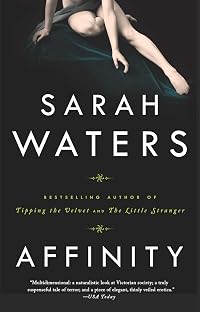
Affinity
by Sarah Waters
On This Page
Description
Once inside the concrete walls of Millbank Prison, Margaret Prior, hired to speak with the female inmates, becomes all too aware that what she perceives to be reality may not be so. Bringing new ideas to her mind is the beautiful, but dangerous criminal Selina Dawes.Tags
Recommendations


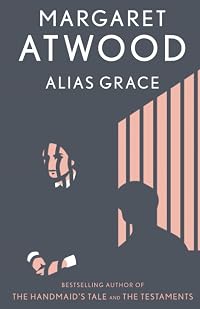

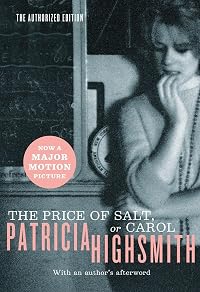


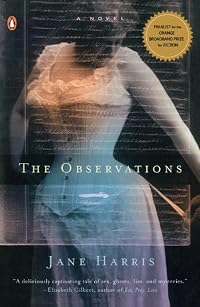
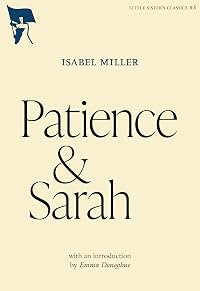






















Member Recommendations





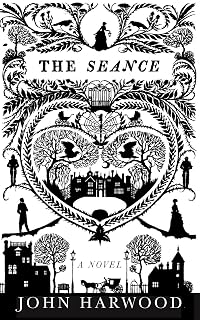
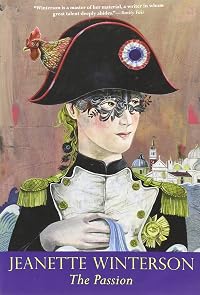
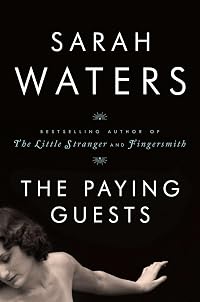
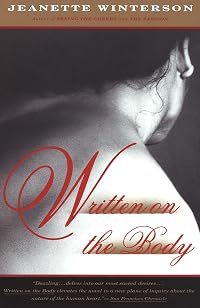
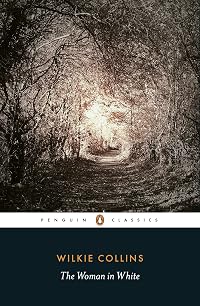
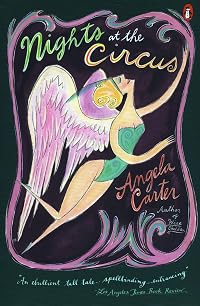
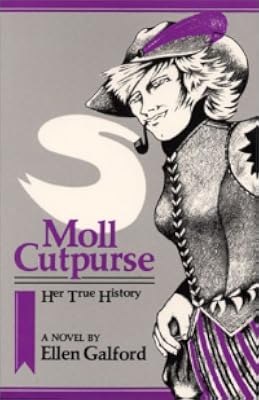
susanbooks The women’s relationship’s in these books were so similarly fraught; I read both books breathlessly.

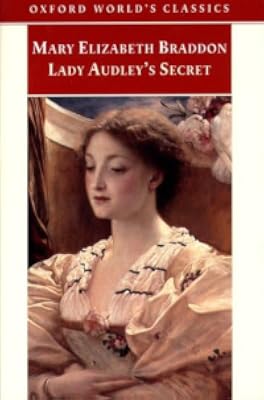
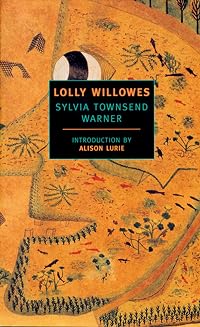
librorumamans Two different looks at mental illness in Victorian England.
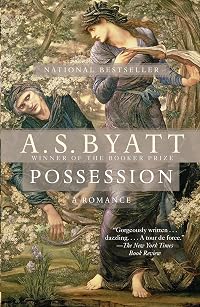
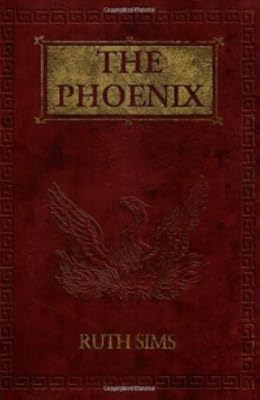
aulsmith Referred to in the text, this poem was clearly in Water's mind when writing parts of her book
Member Reviews
You were seeking me, your own affinity. And if you let them keep you from me now, I think we shall die', 2 Sept. 2012
By
sally tarbox
This review is from: Affinity (Kindle Edition)
The narrator of this novel is a troubled young woman in Victorian London. Living in a well to do household under her mother's thumb, bereft after her beloved father's death and lonely after the female she loved decided to marry...she is encouraged to become a Lady Visitor at Millbank Prison.
Waters' descriptions of prison life alone are fascinating:
'The towers seem to have grown higher and broader, and the windows to have shrunk...since I last went there- the grounds smelling of fog and of chimney smoke as well as of sedge, and the wards reeking of show more nuisance-buckets still, of cramped and unwashed hair and flesh and mouths, but also of gas and rust and sickness. There are great black, blistering radiators...the cells however remain so chill that the walls are wet with condensation, the lime upon them turned to a kind of bubbling curd...the women in them hunched, like goblins, over their sewing or their coir'.
As Margaret meets some of the inmates, she is drawn to one Selina Dawes, a beautiful spirit-medium, parts of whose own narrative are interspersed with the main one. Is she real or a fraud? As the cover blurb states: 'you'll find yourself desperately wanting to believe in magic'.
I couldn't put it down! show less
By
sally tarbox
This review is from: Affinity (Kindle Edition)
The narrator of this novel is a troubled young woman in Victorian London. Living in a well to do household under her mother's thumb, bereft after her beloved father's death and lonely after the female she loved decided to marry...she is encouraged to become a Lady Visitor at Millbank Prison.
Waters' descriptions of prison life alone are fascinating:
'The towers seem to have grown higher and broader, and the windows to have shrunk...since I last went there- the grounds smelling of fog and of chimney smoke as well as of sedge, and the wards reeking of show more nuisance-buckets still, of cramped and unwashed hair and flesh and mouths, but also of gas and rust and sickness. There are great black, blistering radiators...the cells however remain so chill that the walls are wet with condensation, the lime upon them turned to a kind of bubbling curd...the women in them hunched, like goblins, over their sewing or their coir'.
As Margaret meets some of the inmates, she is drawn to one Selina Dawes, a beautiful spirit-medium, parts of whose own narrative are interspersed with the main one. Is she real or a fraud? As the cover blurb states: 'you'll find yourself desperately wanting to believe in magic'.
I couldn't put it down! show less
The setting is London in the year 1874. Margaret Prior, a young woman from a wealthy family, has decided to become a “Lady Visitorâ€ù to the women’s ward at Millbank Prison. She is a deeply unhappy person, grief-stricken by her father’s death and bristling under life with her overbearing mother. The hope is that her charity-work will help with her recovery from a suicide attempt.
Margaret meets with the usual thieves and prostitutes but is particularly drawn to an enigmatic prisoner named Selina Dawes. Selina, she learns, is a spiritualist serving time after her last séance resulted in the death of her benefactress. Margaret gradually becomes obsessed with Selina and convinced of her innocence. As we read her show more increasingly desperate journal entries, we see Margaret cast the young woman as her savior, and herself as Selina’s.
Sarah Waters’ characters do silly things, selfish things, and even cruel things. But there is usually some redeeming quality that stops me from hating them entirely. Unfortunately the main character here is such a dipshit that I could not bring myself to care about her. At all. Just a disclaimer here, I do understand what a serious condition depression is. However, Margaret is the kind of person who wants everyone to be as miserable as she is. For instance, she insists on wearing mourning clothes at her sister's wedding. That has nothing to do with depression and everything to do with being a bitch.
I also disliked that the story boiled down to belief vs. skepticism. Either you think Selina is the real deal, or you think she is a con artist and spend the entire book waiting for the big reveal. Waters tries to keep it ambiguous by including excerpts from Selina’s own journal, but I found these passages unnecessary as well as illogical.Margaret never reads this journal. It was not presented at Serena’s trial, otherwise there would be no doubt about her guilt. And for God’s sake, if you are a con artist, why would you write your secrets down where anyone could read them? I guess Affinity itself is like a magic trick: depending on how cynical you are, you will see only what you want to see, and that will determine whether you see the ending coming or not. show less
Margaret meets with the usual thieves and prostitutes but is particularly drawn to an enigmatic prisoner named Selina Dawes. Selina, she learns, is a spiritualist serving time after her last séance resulted in the death of her benefactress. Margaret gradually becomes obsessed with Selina and convinced of her innocence. As we read her show more increasingly desperate journal entries, we see Margaret cast the young woman as her savior, and herself as Selina’s.
Sarah Waters’ characters do silly things, selfish things, and even cruel things. But there is usually some redeeming quality that stops me from hating them entirely. Unfortunately the main character here is such a dipshit that I could not bring myself to care about her. At all. Just a disclaimer here, I do understand what a serious condition depression is. However, Margaret is the kind of person who wants everyone to be as miserable as she is. For instance, she insists on wearing mourning clothes at her sister's wedding. That has nothing to do with depression and everything to do with being a bitch.
I also disliked that the story boiled down to belief vs. skepticism. Either you think Selina is the real deal, or you think she is a con artist and spend the entire book waiting for the big reveal. Waters tries to keep it ambiguous by including excerpts from Selina’s own journal, but I found these passages unnecessary as well as illogical.
I've always heard of Sarah Waters, but I've never actually read (or watched an adaptation) anything by her until now. It's the type of story that really doesn't leave your mind after you're done reading ... given that I stayed up googling "But did this REALLY ____", "Okay, but how did _____" etc. It's also a relatively slow book at first until suddenly things are going faster and faster until you're just as stunned as the protagonist at where/how things are going. But I'm not about to give anything away.
Book content warnings:
suicide
abuse
Margaret Prior, an upper-class lady recovering from a suicide attempt, is visiting the women of Millbank Prison in an act of charity and in hopes that she will also gain some benefit and ... show more "perspective". It's there she meets (and becomes more and more fascinated by) Selina Dawes, the Spiritualist, imprisoned after one of her Seances left a woman dead. Margaret doesn't believe in her powers at first, but as her visits to the women's wards grow more frequent, she becomes entangled in Selina's Spirits. It eventually manifests into a plot to free Selina, but the plot is much more complicated than Margaret thinks.
I was definitely not prepared for this book. It's not a fast read, and it's not a lightweight read, that's for sure. But wow, I didn't think it would be that intense, either. I really don't want to give anything away, though, so I won't spill anything about how it ends.
Is it a tragic lesbian book? Not quite. So don't be turned away by anyone who says that it's so. But it isn't a happy read either (then again if you're familiar with Sarah Waters, I think that's pretty clear anyway).
The book plays with "what-ifs" in almost every aspect. It's told through a series of journal entries in both Margaret and Selina's PoV's, so you're never sure what's true. Are Selina's spirits real? Is Peter Quick -- Selina's main Spirit -- real? You never find out, and after reading it really can go both ways. That's basically how the book reads. Many parts of it can go in several ways. It's up to you to decide how you want to view it.
I can't say I didn't enjoy the book, because it was just so well written! But it was just so heavy and dark that I think it wouldn't be something I'd read over and over again. show less
Book content warnings:
suicide
abuse
Margaret Prior, an upper-class lady recovering from a suicide attempt, is visiting the women of Millbank Prison in an act of charity and in hopes that she will also gain some benefit and ... show more "perspective". It's there she meets (and becomes more and more fascinated by) Selina Dawes, the Spiritualist, imprisoned after one of her Seances left a woman dead. Margaret doesn't believe in her powers at first, but as her visits to the women's wards grow more frequent, she becomes entangled in Selina's Spirits. It eventually manifests into a plot to free Selina, but the plot is much more complicated than Margaret thinks.
I was definitely not prepared for this book. It's not a fast read, and it's not a lightweight read, that's for sure. But wow, I didn't think it would be that intense, either. I really don't want to give anything away, though, so I won't spill anything about how it ends.
Is it a tragic lesbian book? Not quite. So don't be turned away by anyone who says that it's so. But it isn't a happy read either (then again if you're familiar with Sarah Waters, I think that's pretty clear anyway).
The book plays with "what-ifs" in almost every aspect. It's told through a series of journal entries in both Margaret and Selina's PoV's, so you're never sure what's true. Are Selina's spirits real? Is Peter Quick -- Selina's main Spirit -- real? You never find out, and after reading it really can go both ways. That's basically how the book reads. Many parts of it can go in several ways. It's up to you to decide how you want to view it.
I can't say I didn't enjoy the book, because it was just so well written! But it was just so heavy and dark that I think it wouldn't be something I'd read over and over again. show less
I first met Sarah Waters work in Fingersmith, her very Dickensian novel, and one that I adored. Affinity is even better.
Margaret Prior is a young upper-class Victorian woman. Following her recovery from a suicide attempt, she engages in the "good work" of a prison visitor to the women's prison at Millbank. There, she is drawn to Selina Dawes, a medium who has been convicted of assault following a séance that ended with her mentor dead and a young woman traumatized.
The book is told in two alternating stories: that of Selina, telling of the events leading to the fateful night, and that of Margaret, beginning as she starts her prison visits. Gradually, we learn a great deal about Margaret. Her father was a scholar of Renaissance art, she show more his amanuensis. Her intellectual leanings made her feel a bit out of place from the rest of her family, and her father's death hit her hard. The loss of the long longed-for trip to Italy is compounded by the fact that her about-to-be-married sister is to honeymoon there, and her socially conforming mother cannot provide the sympathy or empathy she needs. All the more so because yet another loss cannot be spoken of. How can she reveal that she and her brother's wife were once, it seems, more than friends? Her inner thoughts, her psychology, unfold.
Selina is not opened to us so much. Her story is more of action. "This is what happened, this is what I learned, this is what I did." Not so much of "this is what I thought", "this is how I feel". Miss Selina Dawes, medium, becomes aware of her spiritualist powers, is taken up by the community and learns how to use those powers, becomes the protegée of the wealthy Mrs. Brink and ends up in prison. Selina comes to us more through Margaret's reaction to her than through herself.
Waters' descriptive abilities are extraordinary. Her limning of the physical and psychological constraints of Millbank prison are dead on. And this book contains what may be one of the creepiest passages of writing I have ever read. Margaret has gone to a spiritualist society, where she has seen moulds of human parts, including one which is supposed to be the hand of Dawes' spirit guide, Peter Quick. She imagines that hand coming to visit Selina in prison. "It would be silent, dark and very still; the shelves of moulds, however, might not lie still. The wax might ripple. The lips upon the spirit-face might twitch, and the eyelids roll; the dimple upon the baby's arm would grow deeper as the arm unfolded -- so I saw it now, in Selina's cell, as I stepped form her and shuddered. The swollen fingers of Peter Quick's fist -- I saw, them, I saw them! -- were uncurling, and flexing. Now the hand was inching its way cross the shelf, the fingers drawing the palm over the wood. Now they were parting the cabinet doors -- they left smears upon the glass."
Note the name: Peter Quick. That's no accident. Affinity's ambivalence over the question of "ghosts or madness", its exploration of psychological control, of possession, of power relationships, owes a good deal to Henry James The Turn of the Screw.
This is a stunning novel. And the end will rip you up. show less
Margaret Prior is a young upper-class Victorian woman. Following her recovery from a suicide attempt, she engages in the "good work" of a prison visitor to the women's prison at Millbank. There, she is drawn to Selina Dawes, a medium who has been convicted of assault following a séance that ended with her mentor dead and a young woman traumatized.
The book is told in two alternating stories: that of Selina, telling of the events leading to the fateful night, and that of Margaret, beginning as she starts her prison visits. Gradually, we learn a great deal about Margaret. Her father was a scholar of Renaissance art, she show more his amanuensis. Her intellectual leanings made her feel a bit out of place from the rest of her family, and her father's death hit her hard. The loss of the long longed-for trip to Italy is compounded by the fact that her about-to-be-married sister is to honeymoon there, and her socially conforming mother cannot provide the sympathy or empathy she needs. All the more so because yet another loss cannot be spoken of. How can she reveal that she and her brother's wife were once, it seems, more than friends? Her inner thoughts, her psychology, unfold.
Selina is not opened to us so much. Her story is more of action. "This is what happened, this is what I learned, this is what I did." Not so much of "this is what I thought", "this is how I feel". Miss Selina Dawes, medium, becomes aware of her spiritualist powers, is taken up by the community and learns how to use those powers, becomes the protegée of the wealthy Mrs. Brink and ends up in prison. Selina comes to us more through Margaret's reaction to her than through herself.
Waters' descriptive abilities are extraordinary. Her limning of the physical and psychological constraints of Millbank prison are dead on. And this book contains what may be one of the creepiest passages of writing I have ever read. Margaret has gone to a spiritualist society, where she has seen moulds of human parts, including one which is supposed to be the hand of Dawes' spirit guide, Peter Quick. She imagines that hand coming to visit Selina in prison. "It would be silent, dark and very still; the shelves of moulds, however, might not lie still. The wax might ripple. The lips upon the spirit-face might twitch, and the eyelids roll; the dimple upon the baby's arm would grow deeper as the arm unfolded -- so I saw it now, in Selina's cell, as I stepped form her and shuddered. The swollen fingers of Peter Quick's fist -- I saw, them, I saw them! -- were uncurling, and flexing. Now the hand was inching its way cross the shelf, the fingers drawing the palm over the wood. Now they were parting the cabinet doors -- they left smears upon the glass."
Note the name: Peter Quick. That's no accident. Affinity's ambivalence over the question of "ghosts or madness", its exploration of psychological control, of possession, of power relationships, owes a good deal to Henry James The Turn of the Screw.
This is a stunning novel. And the end will rip you up. show less
Sarah just "gets it." She understands the feminine heart and has a wonderful way of telling a love story. This is a lesbian story told from a woman's perspective without the skewed perspective of the male gaze. I think that, straight or lesbian, readers will find themselves, like I did, experiencing the sweet-pangs of love themselves along with the character. The obsession, the difficulties that arise, the passion, the deep meaning of each glance and words... all these aspects of that breathless first love is portrayed here.
The story revolves around a woman who visits a woman's penitentary and falls madly in love with a mysterious and dark prisoner there. What follows is a dizzying dance between heaven and ruin on the thin and shakey show more tightrope of romance: it is dangerous, it is unique from any other experience, it is exhilarating and kind of exhausting... but damn, it feels SO good! show less
The story revolves around a woman who visits a woman's penitentary and falls madly in love with a mysterious and dark prisoner there. What follows is a dizzying dance between heaven and ruin on the thin and shakey show more tightrope of romance: it is dangerous, it is unique from any other experience, it is exhilarating and kind of exhausting... but damn, it feels SO good! show less
The last time I started this book, I couldn't get into it and ended up setting it aside for something else. Aparently this was a much better time for this book. The first 30 pages or so I was skeptical. After that I was sucked in to the point where I could barely wait to read more. The gothic tale of Margaret, the damaged spinster daughter, and Selina, the imprisoned spiritualist psychic, was so rich, detailed and complex and compelling. Waters writes beautifully, and I could visualize and, more importantly, feel every scene as it took place.
There were many emotional twists and turns as Margaret visited the prison, interacted with her mother and became enamored with Selina. The class and gender constraints were so well-depicted that I show more could feel myself straining against them. It was, at times, hard to read of a bright, curious and different young woman who after her beloved father's death was written off and stifled by everyone around her. Add the stigma against lesbianism, and poor Margaret was destined to have bouts of suicidal madness. I'm certainly not a person who romaniticizes previous eras and longs for 'simpler times'. This book reminded me why.
I've spent a little time thinking about the reviews that described this as slow-moving or overlong while I wish there had been at least another 100 pages. Recently I watched the TV show 'True Detective' with a family member. He found it frustrating and bloated while I loved it. We've been talking a lot about how this may be a product of my love of storytelling for its own sake while his enjoyment of fictional books and movies is largely plot-driven. I think that difference between readers/watchers may be a part of why there are such disparate experiences of Affinity.
This is likely to be one of my favorite books of the year. show less
There were many emotional twists and turns as Margaret visited the prison, interacted with her mother and became enamored with Selina. The class and gender constraints were so well-depicted that I show more could feel myself straining against them. It was, at times, hard to read of a bright, curious and different young woman who after her beloved father's death was written off and stifled by everyone around her. Add the stigma against lesbianism, and poor Margaret was destined to have bouts of suicidal madness. I'm certainly not a person who romaniticizes previous eras and longs for 'simpler times'. This book reminded me why.
I've spent a little time thinking about the reviews that described this as slow-moving or overlong while I wish there had been at least another 100 pages. Recently I watched the TV show 'True Detective' with a family member. He found it frustrating and bloated while I loved it. We've been talking a lot about how this may be a product of my love of storytelling for its own sake while his enjoyment of fictional books and movies is largely plot-driven. I think that difference between readers/watchers may be a part of why there are such disparate experiences of Affinity.
This is likely to be one of my favorite books of the year. show less
It’s 1874 and Margaret Prior is a spinster at only 29. She’s trapped in an oppressive life with her mother and sees no escape. She’s grieving the loss of her father and the end of a recent romance. She decides to begin visiting Millbank Prison as a “Lady Friend” giving comfort to the female prisons there. She forms a particular attachment with the prisoner Selina Dawes, a spiritualist jailed when she hosts a séance that ends badly.
This one started out pretty slow for me. Fingersmith and The Little Stranger were both more enthralling at the start, but I hung in there and the pay off was worth it. The beauty of Waters’ writing is the way it sneaks up on you and completely envelops you. Just when you think you have a pretty show more good idea how things are going to unfold, you get blindsided, but in a good way! I actually thought I knew exactly how it was going to end and I was a bit disappointed with what I thought was coming. Luckily for me I was completely wrong.
Calling this a mystery or ghost story would be ignoring the depth of the book. It is a gothic tale, but it also covers so many different topics: the vast divides in the Victorian class system, depression, sexuality, the nineteenth century obsession with spiritualism and so much more! While crafting this story, Waters lulls you into a false sense of security. You focus on the obvious things, the horrific scenes from the jail, Margaret’s struggle with her feelings for others, all of which are fascinating. But the whole time you’re looking right, a complex tale is being built off to your left and result is intense.
BOTTOM LINE: Waters has an incredible gift for crafting stories. Even if the story starts out slow, the end makes it all worthwhile. If you’re a fan of gothic stories this one is a safe bet. show less
This one started out pretty slow for me. Fingersmith and The Little Stranger were both more enthralling at the start, but I hung in there and the pay off was worth it. The beauty of Waters’ writing is the way it sneaks up on you and completely envelops you. Just when you think you have a pretty show more good idea how things are going to unfold, you get blindsided, but in a good way! I actually thought I knew exactly how it was going to end and I was a bit disappointed with what I thought was coming. Luckily for me I was completely wrong.
Calling this a mystery or ghost story would be ignoring the depth of the book. It is a gothic tale, but it also covers so many different topics: the vast divides in the Victorian class system, depression, sexuality, the nineteenth century obsession with spiritualism and so much more! While crafting this story, Waters lulls you into a false sense of security. You focus on the obvious things, the horrific scenes from the jail, Margaret’s struggle with her feelings for others, all of which are fascinating. But the whole time you’re looking right, a complex tale is being built off to your left and result is intense.
BOTTOM LINE: Waters has an incredible gift for crafting stories. Even if the story starts out slow, the end makes it all worthwhile. If you’re a fan of gothic stories this one is a safe bet. show less
Members
- Recently Added By
Lists

The Guardian's 1000 Novels Everyone Must Read
1,005 works; 551 members

Best Historical Fiction
620 works; 261 members

Fiction Set Primarily in a Prison
52 works; 24 members

Best Lesbian Fiction (And Narrative Non-Fiction)
155 works; 36 members

Books With a Twist
69 works; 46 members

Top Five Books of 2013
1,562 works; 721 members

Female Author
1,234 works; 67 members

Unreliable Narrators
170 works; 43 members

Best LGBT Fiction
144 works; 25 members

Best 21st Century Books (So Far)
670 works; 86 members

Dark Books for Winter Reading
71 works; 11 members

Top Five Books of 2017
757 works; 231 members

Literature About Women and Girls
394 works; 39 members

Expand Your Reading Demographics!
47 works; 15 members

Historical Fiction Lovers
88 works; 4 members

Books Read in 2023
5,638 works; 147 members

Authors from Wales
7 works; 1 member

Good LGBT fiction for LGBT folk and friends
551 works; 55 members

LGBTQ+ Speculative Fiction
821 works; 51 members

Top Five Books of 2012
55 works; 11 members

Books Read in 2015
3,299 works; 129 members

LGBTQIA Horror
172 works; 7 members

Romans
49 works; 1 member
Recommended Horror and Dark Fiction by Women
81 works; 13 members

Ghosts
278 works; 18 members

Horror Then & Now
44 works; 4 members

Top Five Books of 2024
795 works; 264 members

Books Read in 2013
1,630 works; 51 members
Kate & Cheyanne's Horror Extravaganza
144 works; 6 members

Books Read in 2011
684 works; 20 members

Retrospective of Historical Fiction
48 works; 7 members

Read in 2011
81 works; 1 member
Author Information

8+ Works 31,644 Members
Sarah Waters was born in Wales in 1966. She has a Ph.D. in English. She is the author of several books including Tipping the Velvet, Affinity, The Night Watch, and The Paying Guests. Fingersmith won the CWA Ellis Peters Dagger Award for Historical Crime Fiction and the South Bank Show Award for Literature. She has won a Betty Trask Award and the show more Somerset Maugham Award. In 2003, she was chosen as one of Granta's Best of Young British Novelists and was named Author of the Year by the British Book Awards, The Booksellers' Association and Waterstone's Booksellers. Several of her novels have been adapted for television. (Bowker Author Biography) show less
Some Editions
Awards and Honors
Awards
Distinctions
Series
Belongs to Publisher Series
Europese literatuurcollectie (dl. 8)
Aufbau Taschenbuch (1347)
Common Knowledge
- Canonical title*
- Affiniteit
- Original title
- Affinity
- Original publication date
- 1999
- People/Characters
- Margaret Prior; Selina Dawes; Mrs. Jelf
- Important places
- Millbank Prison, London, England, UK; London, England, UK
- Related movies
- Affinity (2008/I | IMDb)
- Epigraph*
- Een psychologische thriller, gothic spookverhaal en liefdesgeschiedenis in één.
- Dedication
- To Caroline Halliday
- First words
- I was never so frightened as I am now.
- Last words
- (Click to show. Warning: May contain spoilers.)"Remember," Ruth is saying, "whose girl you are."
- Blurbers
- Hennessy, Val
- Canonical DDC/MDS
- 823.914
- Canonical LCC
- PR6073.A828
*Some information comes from Common Knowledge in other languages. Click "Edit" for more information.
Classifications
Statistics
- Members
- 3,574
- Popularity
- 4,595
- Reviews
- 137
- Rating
- (3.72)
- Languages
- 18 — Danish, Dutch, English, French, German, Hebrew, Italian, Japanese, Korean, Norwegian (Bokmål), Norwegian, Polish, Russian, Slovenian, Spanish, Swedish, Portuguese (Portugal), Chinese, traditional
- Media
- Paper, Audiobook, Ebook
- ISBNs
- 40
- ASINs
- 10