The 2017 Nonfiction Challenge Part I: Prizewinners in January
This topic was continued by The 2017 Nonfiction Challenge Part Ii: Voyages of Exploration in February.
Talk 75 Books Challenge for 2017
This group has been archived. Find out more.
Join LibraryThing to post.
1Chatterbox
Last year witnessed the launch of the first "challenge" -- or group -- dedicated to trying to reading more non-fiction over the course of the year. When asked whether we should try again in 2017, the response from participants was an enthusiastic "yes, please!!" -- so here is the first month's thread, ready for anyone who wants to join in the fun!
It's all pretty straightforward, and hopefully not that much of a challenge. Lots of us would like to feel motivated to add more non-fiction to our literary diet, and of course, it's always great to discover what others are reading. Once again, each month will bring with it a new and different theme, but while I'd encourage you to keep your reading to the theme (there has to be some element of a challenge...), please don't feel under pressure to race to finish your book by the end of the month, just so that you'll be ready to start picking up the next one on the first day of the next month. I think I just saw someone post something in last April's thread -- toward the end of December, and that's great. Maybe you'll find that a book you start one month will tie into the next month's theme. Feel free to participate some months, but not in others, if you're finishing up a "chunkster" or if the theme doesn't appeal to you...
We're starting off in January with a new theme: prizewinners. I'm defining that is a non-fiction book that has been nominated or short-listed (and when info is available, long-listed) for any kind of significant literary prize anywhere in the world. (In other words, not one sponsored by your local library or high school; sorry...) But "significant" doesn't have to mean "large": there are regional prizes that are significant because they carry recognition with them. So if there's a Midwestern regional literary festival that awards a prize to nonfiction books, tell us about it. We'll all benefit from it! Please note that the prizewinners are the books and not the authors -- so if a prize has gone to an author for a lifetime of work (eg a Nobel), you'll need to find a prize that a work of theirs has won, and read that book. (Svetlana Alexeievech and Gabriel Garcia Marquez have both written non-fiction books, and the former certainly has won book-specific prizes, some for French translations and some for English translations.)
I'm looking forward to seeing all the familiar faces back here to join in the fun, posting details of the books they've chosen to read and the prizes the titles won -- and hope to see some newbies particpate as well!! If you have any questions, post them below, or send me a PM (which may be a bit faster), and I'll replay as rapidly as I can.
Books we're reading this month:








For those who want to plan ahead, and as posted in the December 2016 thread, here are the rest of the 2017 monthly themes:
February: Voyages of Exploration
You define it. It can be a literal voyage (travel) or an imaginary voyage into one's own psyche. The key words here are exploration and voyage -- the book must have some kind of journey, real or rhetorical, toward some kind of goal.
March: Heroes and Villains
People you admire or people you hate. Or people others admire or hate, and that you're just curious about.
April: Hobbies, Pastimes and Passions
Anything you want. People suggested categories about gardening, cooking, animals, sports, etc. Whatever excites and interests you. See if you can get the rest of us excited, too...
May: History
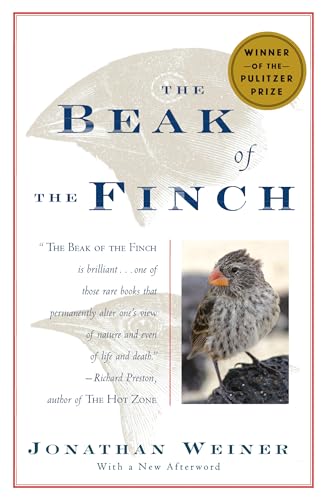
Pretty self explanatory. One of a few holdovers.
June: The Natural World
Another holdover. Anything about rocks, logs, the sea, the air we breathe, what grows around us, animal life, etc. And the pollution of same...
July: Creators and Creativity
Rather than just a category about the arts, I've broadened this. So, writing, books about books would qualify.
August: I’ve Always Been Curious About….
A catch-all category. If the topic of the book can complete the sentence, you can add it to the challenge.
September: Gods, Demons and Spirits
Religion, spirituality of al kinds; read about the Salem witch trials or animism in West Africa if you want.
October: The World We Live In: Current Affairs
It will be a year after Brexit; a year after Trump's election. What does the world look like? What forces are driving us? Find a book about some of the themes and issues that are at the top of the news by then.
November: Science and Technology
Probably self-explanatory, another holdover.
December: Out of Your Comfort Zone
A nonfiction book that isn't something that you would normally gravitate to, about a subject you'd never normally read about, or that is a "book bullet" you'd never previously heard about from another LT reader.
Happy 2017, and happy reading!
It's all pretty straightforward, and hopefully not that much of a challenge. Lots of us would like to feel motivated to add more non-fiction to our literary diet, and of course, it's always great to discover what others are reading. Once again, each month will bring with it a new and different theme, but while I'd encourage you to keep your reading to the theme (there has to be some element of a challenge...), please don't feel under pressure to race to finish your book by the end of the month, just so that you'll be ready to start picking up the next one on the first day of the next month. I think I just saw someone post something in last April's thread -- toward the end of December, and that's great. Maybe you'll find that a book you start one month will tie into the next month's theme. Feel free to participate some months, but not in others, if you're finishing up a "chunkster" or if the theme doesn't appeal to you...
We're starting off in January with a new theme: prizewinners. I'm defining that is a non-fiction book that has been nominated or short-listed (and when info is available, long-listed) for any kind of significant literary prize anywhere in the world. (In other words, not one sponsored by your local library or high school; sorry...) But "significant" doesn't have to mean "large": there are regional prizes that are significant because they carry recognition with them. So if there's a Midwestern regional literary festival that awards a prize to nonfiction books, tell us about it. We'll all benefit from it! Please note that the prizewinners are the books and not the authors -- so if a prize has gone to an author for a lifetime of work (eg a Nobel), you'll need to find a prize that a work of theirs has won, and read that book. (Svetlana Alexeievech and Gabriel Garcia Marquez have both written non-fiction books, and the former certainly has won book-specific prizes, some for French translations and some for English translations.)
I'm looking forward to seeing all the familiar faces back here to join in the fun, posting details of the books they've chosen to read and the prizes the titles won -- and hope to see some newbies particpate as well!! If you have any questions, post them below, or send me a PM (which may be a bit faster), and I'll replay as rapidly as I can.
Books we're reading this month:


For those who want to plan ahead, and as posted in the December 2016 thread, here are the rest of the 2017 monthly themes:
February: Voyages of Exploration
You define it. It can be a literal voyage (travel) or an imaginary voyage into one's own psyche. The key words here are exploration and voyage -- the book must have some kind of journey, real or rhetorical, toward some kind of goal.
March: Heroes and Villains
People you admire or people you hate. Or people others admire or hate, and that you're just curious about.
April: Hobbies, Pastimes and Passions
Anything you want. People suggested categories about gardening, cooking, animals, sports, etc. Whatever excites and interests you. See if you can get the rest of us excited, too...
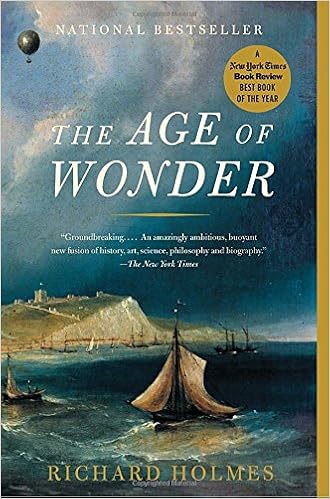
May: History
Pretty self explanatory. One of a few holdovers.
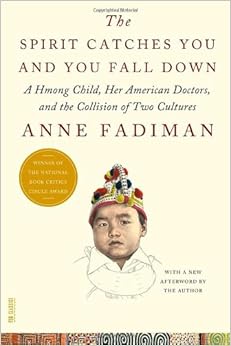
June: The Natural World
Another holdover. Anything about rocks, logs, the sea, the air we breathe, what grows around us, animal life, etc. And the pollution of same...
July: Creators and Creativity
Rather than just a category about the arts, I've broadened this. So, writing, books about books would qualify.
August: I’ve Always Been Curious About….
A catch-all category. If the topic of the book can complete the sentence, you can add it to the challenge.
September: Gods, Demons and Spirits
Religion, spirituality of al kinds; read about the Salem witch trials or animism in West Africa if you want.
October: The World We Live In: Current Affairs
It will be a year after Brexit; a year after Trump's election. What does the world look like? What forces are driving us? Find a book about some of the themes and issues that are at the top of the news by then.
November: Science and Technology
Probably self-explanatory, another holdover.
December: Out of Your Comfort Zone
A nonfiction book that isn't something that you would normally gravitate to, about a subject you'd never normally read about, or that is a "book bullet" you'd never previously heard about from another LT reader.
Happy 2017, and happy reading!
2amanda4242
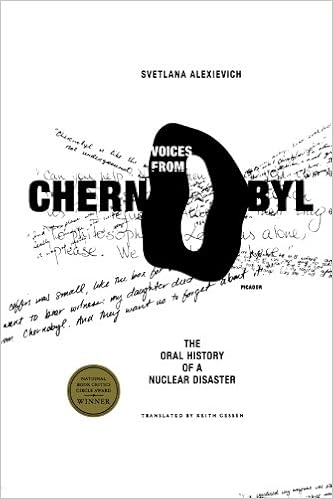
I'll be reading Voices from Chernobyl, which won the National Book Critics Circle Award for General Nonfiction in 2005.
3Chatterbox
A few suggestions for those looking for inspiration, but a far from complete list. I've pulled out a few of the bigger/better known prizes at random, and tossed in one or two lesser known ones to show how many there are out there. Some Googling will throw up even more. Amazon will note when a book has been nominated or won a prize, and so (sometimes) will LT's book page. LT itself is an exhausting source of info on literary prizes.
I'd note that some prizes can be awarded to either novels or non-fiction works (see the Orwell Prize and the Wellcome Book Prize), so if something catches your eye, make sure it's not a novel before ordering it, for instance...
The Baillie Gifford Prize (formerly the Samuel Johnson Prize)
This is perhapsthe premier non-fiction awared, rewarding a book published in English in the UK. (Behind the Beautiful Forevers by Katherine Boo, Black Earth by Timothy Snyder, H is for Hawk by Helen Macdonald, In These Times by Jenny Uglow, Why Homer Matters by Adam Nicolson, Village of Secrets by Caroline Moorehead, The Old Ways by Robert Macfarlane, Thinking, Fast and Slow by Daniel Kahneman
Pulitzer Prize for General nonfiction
This is US-specific prizeawarded to a distinguished work of non-fiction by an American author that doesn’t fit into another Pulitzer category (eg drama, etc.) (Black Flags: The Rise of ISIS by Joby Warrick; Between the World and Me by Ta-Nehisi Coates; Age of Ambition by Evan Osnos; The Swerve by Paul Greenblatt; The Shallows: What the Internet is Doing to Our Brains by Nicholas Carr; Gulag by Anne Applebaum; Guns, Germs and Steel by Jared Diamond; The Soul of a New Machine by Tracy Kidder.)
Ondaatje Prize
An Irish awardthat can be given either to works of non-fiction or fiction, awarded to a citizen or resident (past or present) of Ireland, for a work that best captures/evokes a “spirit of place”. Winners include mostly non fiction books. (The Discovery of France by Graham Robb; Baghdad: City of Peace, City of Blood by Justin Marozzi; The Places in Between by Rory Stewart; Nothing is True and Everything is Possible by Peter Pomerantsev.)
Hessell-Tiltman Prize
Sponsored by English PEN, this prizegoes to the best work of historical non-fiction covering the period up to WW2, published in the year of the award, of high literary merit, but not necessarily academic. (The Lunar Men by Jenny Uglow; The Sleepwalkers: How Europe Went to War in 1914 by Chris Clark.)
Wellcome Book Prize
This prize“celebrates topics of health and medicine in literature.” It includes many works of fiction as well as non-fiction. (NeuroTribes by Steve Silberman, The Iceberg by Marion Coutts; The Emperor of All Maladies by Siddhartha Mukherjee.)
Los Angeles Times Book Prizes
The four non-fiction prize categories here offer ample choice: prizes are awarded annually to top books in biography, current interest, history and science and technology. (Napoleon by Andrew Roberts, Young Stalin by Simon Sebag Montefiore; Thieves of State by Sarah Chayes; Murder in Amsterdam by Ian Buruma; The Big Short by Michael Lewis, Nickel and Dimed by Barbara Ehrenreich; The Spirit Catches You and You Fall Down by Anne Fadiman, Legacy of Ashes by Tim Weiner; Bury the Chains by Adam Hochschild; The Sixth Extinction by Elizabeth Kolbert, Grand Pursuit by Sylvia Nasar, Galileo’s Daughter by Dava Sobel.)
National Book Award for Non-Fiction
This award, judged by a panel of writers,recognizes outstanding works written by their peers. (The Worst Hard Time by Timothy Egan, Slaves in the Family by Edward Ball, The Unwinding by George Packer, Between the World and Me by Ta-Nehisi Coates.)
Governor General’s Award for Non-Fiction
One of Canada's top literary awards,handed to the Canadian author of a non-fiction work written in English. (Leonardo and the Last Supper by Ross King, A Place Within: Rediscovering India by M.G. Vassanji, Shake Hands with the Devil: The Failure of Humanity in Rwanda by Roméo Dallaire, Paris 1919 by Margaret Macmillan.)
National Book Critics Circle Award
Unlike other U.S. awards, not confined to US writers. This award honors the finest books published in the US in the preceding year; several categories would qualify, including nonfiction, memoir, biography and criticism. (Dreamland by Sam Quinones; Five Days at Memorial by Sheri Fink; The Warmth of Other Suns by Isabel Wilkerson; Voices from Chernobyl by Svetlana Alexeiveyech, Negroland by Margo Jefferson; Romantic Outlaws by Charlotte Gordon; Jonathan Swift by Leo Damrosch.)
CWA Dagger for Non-Fiction
The award for mystery afficionados, it goes to the best true mystery/crime book published. (Devil in the White City by Erik Larson (nominee), The Suspicions of Mr. Whicher by Kate Summerscale, The Death of Innocents by Helen Préjean, Death in Belmont by Sebastian Junger.)
The Orwell Prize
In the spirit of George Orwell, this prize is awarded to a book that “makes political writing into an art.” The occasional novel is among the nominees, so not all will qualify for this challenge. (The Invention of Russia by Arkady Ostrovsky; From the Ruins of Empire by Pankaj Mishra, Dark Market by Misha Glenny.)
https://www.theorwellprize.co.uk/
I'd note that some prizes can be awarded to either novels or non-fiction works (see the Orwell Prize and the Wellcome Book Prize), so if something catches your eye, make sure it's not a novel before ordering it, for instance...
The Baillie Gifford Prize (formerly the Samuel Johnson Prize)
This is perhapsthe premier non-fiction awared, rewarding a book published in English in the UK. (Behind the Beautiful Forevers by Katherine Boo, Black Earth by Timothy Snyder, H is for Hawk by Helen Macdonald, In These Times by Jenny Uglow, Why Homer Matters by Adam Nicolson, Village of Secrets by Caroline Moorehead, The Old Ways by Robert Macfarlane, Thinking, Fast and Slow by Daniel Kahneman
Pulitzer Prize for General nonfiction
This is US-specific prizeawarded to a distinguished work of non-fiction by an American author that doesn’t fit into another Pulitzer category (eg drama, etc.) (Black Flags: The Rise of ISIS by Joby Warrick; Between the World and Me by Ta-Nehisi Coates; Age of Ambition by Evan Osnos; The Swerve by Paul Greenblatt; The Shallows: What the Internet is Doing to Our Brains by Nicholas Carr; Gulag by Anne Applebaum; Guns, Germs and Steel by Jared Diamond; The Soul of a New Machine by Tracy Kidder.)
Ondaatje Prize
An Irish awardthat can be given either to works of non-fiction or fiction, awarded to a citizen or resident (past or present) of Ireland, for a work that best captures/evokes a “spirit of place”. Winners include mostly non fiction books. (The Discovery of France by Graham Robb; Baghdad: City of Peace, City of Blood by Justin Marozzi; The Places in Between by Rory Stewart; Nothing is True and Everything is Possible by Peter Pomerantsev.)
Hessell-Tiltman Prize
Sponsored by English PEN, this prizegoes to the best work of historical non-fiction covering the period up to WW2, published in the year of the award, of high literary merit, but not necessarily academic. (The Lunar Men by Jenny Uglow; The Sleepwalkers: How Europe Went to War in 1914 by Chris Clark.)
Wellcome Book Prize
This prize“celebrates topics of health and medicine in literature.” It includes many works of fiction as well as non-fiction. (NeuroTribes by Steve Silberman, The Iceberg by Marion Coutts; The Emperor of All Maladies by Siddhartha Mukherjee.)
Los Angeles Times Book Prizes
The four non-fiction prize categories here offer ample choice: prizes are awarded annually to top books in biography, current interest, history and science and technology. (Napoleon by Andrew Roberts, Young Stalin by Simon Sebag Montefiore; Thieves of State by Sarah Chayes; Murder in Amsterdam by Ian Buruma; The Big Short by Michael Lewis, Nickel and Dimed by Barbara Ehrenreich; The Spirit Catches You and You Fall Down by Anne Fadiman, Legacy of Ashes by Tim Weiner; Bury the Chains by Adam Hochschild; The Sixth Extinction by Elizabeth Kolbert, Grand Pursuit by Sylvia Nasar, Galileo’s Daughter by Dava Sobel.)
National Book Award for Non-Fiction
This award, judged by a panel of writers,recognizes outstanding works written by their peers. (The Worst Hard Time by Timothy Egan, Slaves in the Family by Edward Ball, The Unwinding by George Packer, Between the World and Me by Ta-Nehisi Coates.)
Governor General’s Award for Non-Fiction
One of Canada's top literary awards,handed to the Canadian author of a non-fiction work written in English. (Leonardo and the Last Supper by Ross King, A Place Within: Rediscovering India by M.G. Vassanji, Shake Hands with the Devil: The Failure of Humanity in Rwanda by Roméo Dallaire, Paris 1919 by Margaret Macmillan.)
National Book Critics Circle Award
Unlike other U.S. awards, not confined to US writers. This award honors the finest books published in the US in the preceding year; several categories would qualify, including nonfiction, memoir, biography and criticism. (Dreamland by Sam Quinones; Five Days at Memorial by Sheri Fink; The Warmth of Other Suns by Isabel Wilkerson; Voices from Chernobyl by Svetlana Alexeiveyech, Negroland by Margo Jefferson; Romantic Outlaws by Charlotte Gordon; Jonathan Swift by Leo Damrosch.)
CWA Dagger for Non-Fiction
The award for mystery afficionados, it goes to the best true mystery/crime book published. (Devil in the White City by Erik Larson (nominee), The Suspicions of Mr. Whicher by Kate Summerscale, The Death of Innocents by Helen Préjean, Death in Belmont by Sebastian Junger.)
The Orwell Prize
In the spirit of George Orwell, this prize is awarded to a book that “makes political writing into an art.” The occasional novel is among the nominees, so not all will qualify for this challenge. (The Invention of Russia by Arkady Ostrovsky; From the Ruins of Empire by Pankaj Mishra, Dark Market by Misha Glenny.)
https://www.theorwellprize.co.uk/
4Chatterbox
I'm listing:
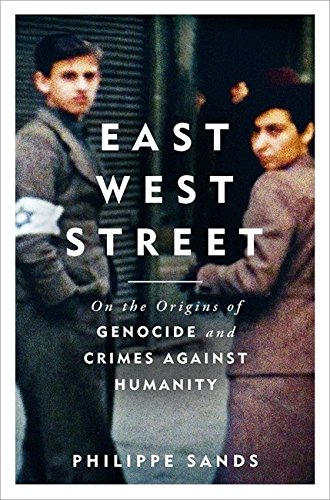
East West Street by Philippe Sands, which won the Baillie Gifford Prize for non-fiction in 2016, and was shortlisted for the Slightly Foxed Best First Biography Award.
Jonathan Swift: His Life and His World by Leo Damrosch, winner of the National Book Critics Circle Award for Biography in 2013.
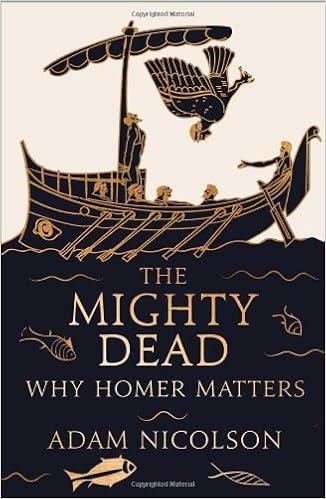
Why Homer Matters by Adam Nicolson, longlisted for Baillie Gifford Prize in 2014.
Evicted by Matthew Desmond, longlisted for PEN/John Kenneth Galbraith Prize in 2016
A diverse group of books... We'll see how it goes!
East West Street by Philippe Sands, which won the Baillie Gifford Prize for non-fiction in 2016, and was shortlisted for the Slightly Foxed Best First Biography Award.
Jonathan Swift: His Life and His World by Leo Damrosch, winner of the National Book Critics Circle Award for Biography in 2013.
Why Homer Matters by Adam Nicolson, longlisted for Baillie Gifford Prize in 2014.
Evicted by Matthew Desmond, longlisted for PEN/John Kenneth Galbraith Prize in 2016
A diverse group of books... We'll see how it goes!
5katiekrug
Thanks for setting us up again, Suz!
I'll be starting The Unwinding in January but may not finish it until February!
I'll be starting The Unwinding in January but may not finish it until February!
6Chatterbox
>5 katiekrug: I see there are group reads of both The Unwinding and Evicted scheduled to kick off in January, which may encourage people to jump in and read either of these. I do hope that folks who are participating in the group reads will think of coming back and sharing the discussions, or their views -- I'll try to post links to the threads for the group reads here if there seem to be a number of people reading those books, so that people can go back and forth between the two threads.
There may also be some overlap. For instance, a lot of books about income inequality and social justice have won prizes and would tie into both or either of these titles. Hillbilly Elegy was a finalist for the 2016 Kirkus Prize for nonfiction. (Yes, I'd count that, but not so much the Goodreads prizes, which are really just popularity votes...)
There may also be some overlap. For instance, a lot of books about income inequality and social justice have won prizes and would tie into both or either of these titles. Hillbilly Elegy was a finalist for the 2016 Kirkus Prize for nonfiction. (Yes, I'd count that, but not so much the Goodreads prizes, which are really just popularity votes...)
7Caroline_McElwee
Hi Suzanne, I discovered this group (well last year's version) recently on Linda's (Laytonwoman3rd) reading thread. 50% of my reading is non-fiction usually, so I thought I'd join your 2017 group.
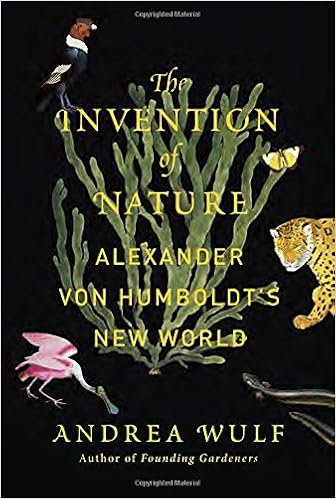
For January I'll read Andrea Wulf's The Invention of Nature which has been in the pile for a while, and possibly Matthew Desmond's Evicted, also in the pile. I'm aiming to read as many ROOT books as I can in 2017 too. Looking forward to hearing about everyone's reading.
For January I'll read Andrea Wulf's The Invention of Nature which has been in the pile for a while, and possibly Matthew Desmond's Evicted, also in the pile. I'm aiming to read as many ROOT books as I can in 2017 too. Looking forward to hearing about everyone's reading.
8Chatterbox
>7 Caroline_McElwee: Welcome!! The more the merrier... Hoping that this year we can get more chit chat going about the books as we read them, as well as when we choose them. I read the Wulf book this year (2016) and loved it; it may win a place on my "best of 2016" list.
9Oberon
I am thinking about White Mughals by William Dalrymple. Per LT it won the Wolfson History Prize, was the Scottish Arts Council Book of the Year, and was shortlisted for a couple of other prizes I haven't heard of. If those are not legitimate enough awards I have several other prize winners on the shelf.
I am excited to be back for this challenge.
I am excited to be back for this challenge.
10Chatterbox
>9 Oberon: Those def all qualify -- and welcome back to the non-fiction marathon for 2017!!
11ffortsa
Suzanne, I love the categories and you certainly have put in a lot of work on our behalf. I do intend to read more non-fiction this year, so I'll see if I can slip in to any of the categories as I go.
12charl08
I've just picked up a copy of Dalrymple's book The Last Mughal which won the Duff Cooper. Still trying to decide though!
13EBT1002
Thanks for setting this challenge up for a second year, Suzanne!
I'm one of those planning to read The Unwinding in January, though it may bleed over into February. In any case, I will post thoughts here as they develop and emerge.
I'm one of those planning to read The Unwinding in January, though it may bleed over into February. In any case, I will post thoughts here as they develop and emerge.
14PaulCranswick
Thanks for setting this up again Suz. As last year I will be along wherever possible.
For January, I will read The Hare with Amber Eyes by Edmund de Waal which won the Costa Biography Prize.
For January, I will read The Hare with Amber Eyes by Edmund de Waal which won the Costa Biography Prize.
15GerrysBookshelf
I plan on reading the 2008 Pulitzer winner for biography Eden's Outcasts: The Story of Louisa May Alcott and Her Father by John Matteson.
Like a lot of people this year, I am trying to make a dent in my TBR pile. I have about 10 other books that would fit this category. So if time permits, I may also try to read Tom's River: A Story of Science and Salvation, the 2014 Pulitzer winner for general non-fiction.
Like a lot of people this year, I am trying to make a dent in my TBR pile. I have about 10 other books that would fit this category. So if time permits, I may also try to read Tom's River: A Story of Science and Salvation, the 2014 Pulitzer winner for general non-fiction.
16Chatterbox
>15 GerrysBookshelf: Yes, once you start looking, there are a lot out there on the TBR mountain... :-) I'm sure that I have dozens of non-fiction books that won some kind of prize that I could add to this, but January does have only 31 days, and I know that I'll want a change of pace come February!
17Fourpawz2
Oh my - so many to choose from in my TBR piles for January! Don't know how to decide. Maybe I will just pull them all out, spread them out on the floor and let my cat, Jane, pick one.
18streamsong
>17 Fourpawz2: :-)
I'm joining with the group read of Evicted. I also have the audio of Guns, Germs and Steel home from the library and will start that next since it's been on MT TBR for several years, now.
I'm joining with the group read of Evicted. I also have the audio of Guns, Germs and Steel home from the library and will start that next since it's been on MT TBR for several years, now.
19weird_O
My daughter gave me two NF Pulitzer winners for Christmas. Perfect for January reading.
The Beak of the Finch: A Story of Evolution in Our Time by Jonathan Weiner; General NF winner in 1995
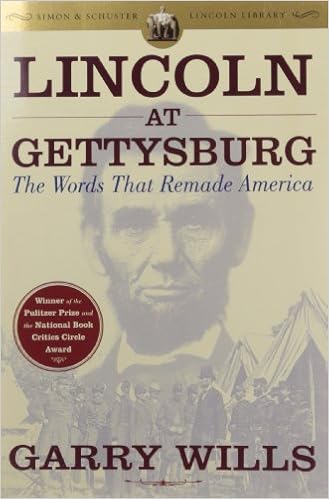
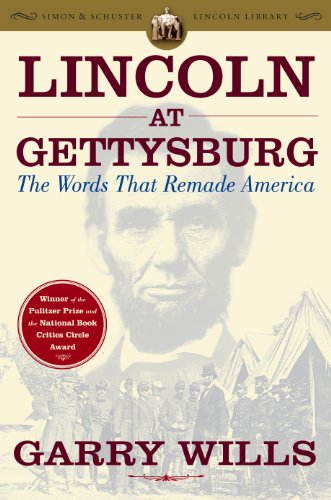
Lincoln at Gettysburg: The Words that Remade America by Garry Wills; General NF winner in 1993
The Beak of the Finch: A Story of Evolution in Our Time by Jonathan Weiner; General NF winner in 1995
Lincoln at Gettysburg: The Words that Remade America by Garry Wills; General NF winner in 1993
20banjo123
>19 weird_O: The Beak of the Finch is so good!
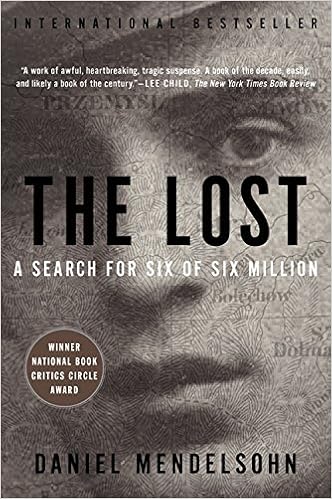
I am thinking of reading The Lost: A Search for Six of the Six Million which won the National Book Critics Circle Award, the National Jewish Book Award, and the Prix Médicis in France. Also I am going to read Fun Home which is a graphic memoir. In 2007, Fun Home won the GLAAD Media Award for Outstanding Comic Book, the Stonewall Book Award for non-fiction, the Publishing Triangle-Judy Grahn Nonfiction Award, and the Lambda Literary Award in the "Lesbian Memoir and Biography" category.Fun Home won the Eisner for Best Reality-Based Work.
I am thinking of reading The Lost: A Search for Six of the Six Million which won the National Book Critics Circle Award, the National Jewish Book Award, and the Prix Médicis in France. Also I am going to read Fun Home which is a graphic memoir. In 2007, Fun Home won the GLAAD Media Award for Outstanding Comic Book, the Stonewall Book Award for non-fiction, the Publishing Triangle-Judy Grahn Nonfiction Award, and the Lambda Literary Award in the "Lesbian Memoir and Biography" category.Fun Home won the Eisner for Best Reality-Based Work.
21qebo
>19 weird_O:, >20 banjo123: The Beak of the Finch is so good!
It is! (Though I preferred Time, Love, Memory.) I read it last year after it'd been sitting for awhile. I expected it to be too data centric for my taste, but it's more about theory informed by detail.
It is! (Though I preferred Time, Love, Memory.) I read it last year after it'd been sitting for awhile. I expected it to be too data centric for my taste, but it's more about theory informed by detail.
22Chatterbox
>20 banjo123: "The Lost" is amazing...
23cushlareads
>20 banjo123: Yep, what Suzanne said! The Lost is a fantastic book. I remember where I was when I read it, which is usually a good sign. (On a train from Paris to Basel for a good chunk of it.)
Aaaagh this thread is a shocker for my TBR list!!
Aaaagh this thread is a shocker for my TBR list!!
24cbl_tn
I'll be joining the Evicted group read, and I'll also be reading The Hare with Amber Eyes.
Another nudge for The Lost: A Search for Six of Six Million. It is one of the best books I've read in the last 10 years.
Another nudge for The Lost: A Search for Six of Six Million. It is one of the best books I've read in the last 10 years.
25torontoc
I have The Lost: A Search for Six of Six Million in my TBR pile-I should use the opportunity of this challenge to read it in Jan
26banjo123
Thanks for all the Lost boosters. I forget who book-bulleted me for that one, but I picked up a copy in a free bin, and it's been sitting on my shelves for quite a while.
This threat IS full of book bullets!
This threat IS full of book bullets!
27katiekrug
I have a copy of The Lost, too, and now I'm trying to figure out if I can "bookhorn" it in in January! Enablers....
28Chatterbox
>26 banjo123: My name is Suzanne, and I am a book enabler...
29Matke
Suzanne, thanks for the much-needed push to read more nonfiction! I've falle off in recent years, but still love it and would like to read more of it.
For January I'll be reading SPQR by Mary Beard. It was a finalist for the National Book Critics Circle Award.
For January I'll be reading SPQR by Mary Beard. It was a finalist for the National Book Critics Circle Award.
30Kristelh
I am going to follow a long and hopefully get some NF read. I am doing more on the 75 book challenge side this coming year.
32Fourpawz2
There was a nice biography of Samuel Pepys right on the top of my NF piles that fit the bill, but I want to read that more or less in concert with his diaries, so I have picked the Pulitzer-winning Founding Brothers by Joseph J. Ellis - which was also close to the top - for January's theme. Decided not to let Jane pick my read for this month as some of the candidates are way down at the bottom of their piles and I would have to move dozens of books to get at them. I really, really need more bookcases..
33Chatterbox
Welcome to all, and an early happy 2017!!
>32 Fourpawz2: Yes, I'm rather relieved you opted to do the picking rather than leaving it to Jane. The potential for havoc was just too significant... :-)
>32 Fourpawz2: Yes, I'm rather relieved you opted to do the picking rather than leaving it to Jane. The potential for havoc was just too significant... :-)
34Fourpawz2
>33 Chatterbox: - I expect you are right, Suzanne. I think she approves of my choice; I read the Preface to her and she seemed to be paying attention.
35Familyhistorian
I have Liberty's Exiles: American Loyalists in the Revolutionary World on tap for January. It was the winner of the National Book Critics Circle Award and the George Washington Book Prize.
36nittnut
I will be reading Founding Brothers, which goes along with my goal to get more of my US history collection OTS this year. :)
Thanks for setting this up Suzanne. It's a fabulous challenge. Happy New Year!
Thanks for setting this up Suzanne. It's a fabulous challenge. Happy New Year!
37rosalita
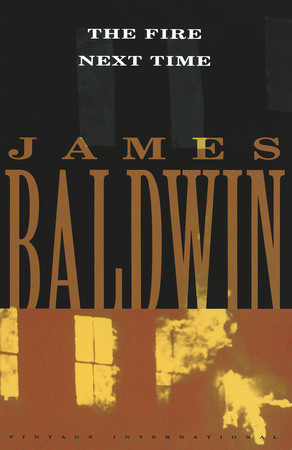
On the theory that it's never too late to read a classic bit of nonfiction, I'm contemplating The Fire Next Time, which was a finalist for the National Book Award in 1964. My only hesitation is that it is apparently two long essays rather than a single narrative, so perhaps it doesn't fit here?
38Chatterbox
>37 rosalita: If it's a prizewinner, or finalist or longlisted/shortlisted -- it fits!!! (as long as it's a piece of nonfiction, of course -- given the nature of the challenge -- no novels or short stories, please...)
39rosalita
>38 Chatterbox: Excellent! It may amuse you to know that in listing on my thread all of the challenges I want to participate in this year, and possible choices for each month, I mistakenly listed Station Eleven for this challenge instead of another one. Katie pointed out to me that although it certainly felt as if the apocalypse occurred in 2016, the book was still technically fiction. :-)
40laytonwoman3rd
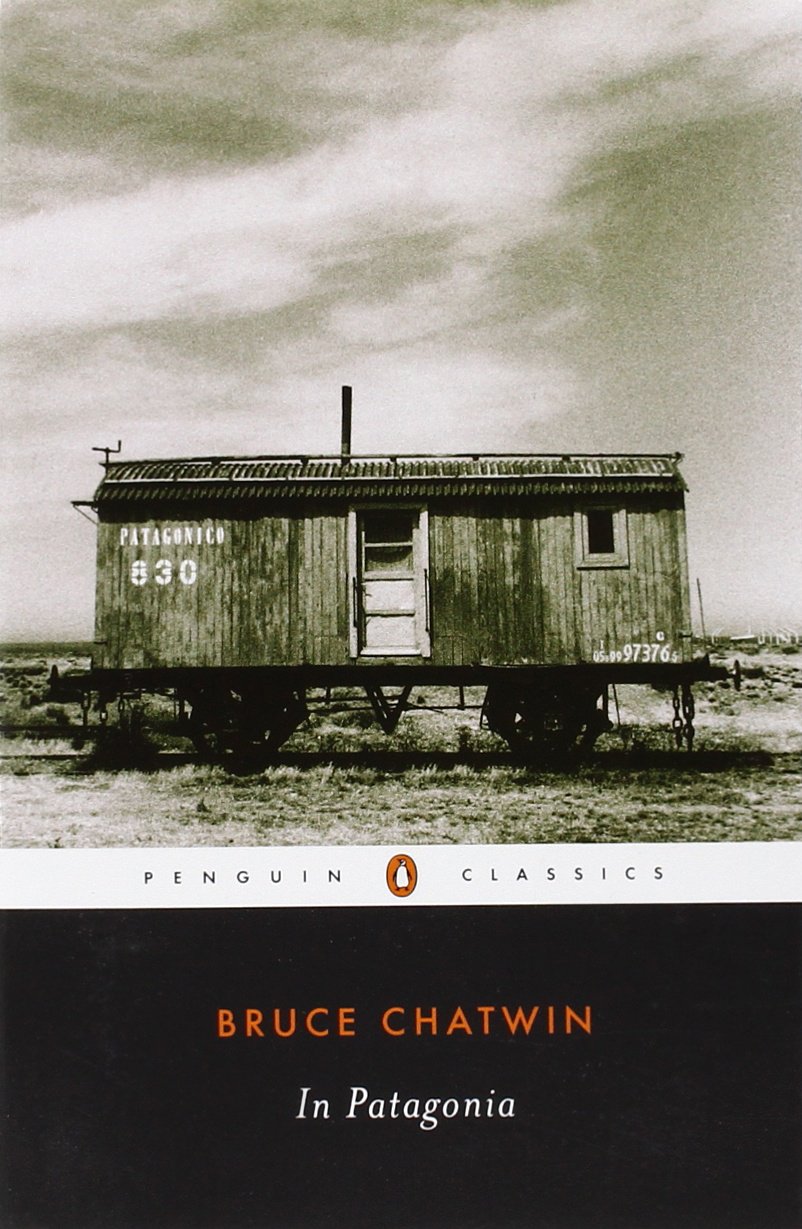
I'm thinking of reading In Patagonia by Bruce Chatwin, which should fit either January or February. It won the Hawthornden Prize, which is another of those that can be awarded to fiction, non-fiction, poetry, travel writing, etc. Still examining my shelves...
41karspeak
I plan to read One Hundred Names for Love, which was a finalist for the Pulitzer for General Non-Fiction.
42Kristelh
I would like to read The Unwinding: an inner history of the new America, I checked it out, now I need to find time to read it.
43Chatterbox
Lots of great choices here!! Don't forget to drop by and keep people posted as you are reading... It might encourage someone else to pick up the same book and join you in a de facto group read.
44qebo
I've just finished Gathering Moss by Robin Wall Kimmerer, which as it happens won the 2005 John Burroughs Medal (for "a distinguished book of nature writing that combines accurate scientific information with firsthand fieldwork and creative natural history writing"). Review posted on my Club Read thread here and copied below:
why now: Preparation for a brief presentation as required by a Master Gardener program. Also I've had it around for awhile; it was an inspiration/reference for The Signature of All Things which I read a few years ago and would recommend enthusiastically.
I'm seeking basic information about moss, and this is not exactly a how-to guide. The style is more mystical communing with nature. However, the author is a bryologist and knows her stuff in depth, so embedded within a context of evolution and ecosystems are botanical details relevant to gardening. As an anti-how-to, a chapter about a wealthy landowner whose ostensible "ecosystem restoration" consisted of extracting elements of existing ecosystems (mature trees with 20' root balls, rocks covered in moss) and transporting them to his property for admiration. The most enjoyable sections are descriptions of scientific experiments involving meticulous patience. And the line drawings are lovely.
why now: Preparation for a brief presentation as required by a Master Gardener program. Also I've had it around for awhile; it was an inspiration/reference for The Signature of All Things which I read a few years ago and would recommend enthusiastically.
I'm seeking basic information about moss, and this is not exactly a how-to guide. The style is more mystical communing with nature. However, the author is a bryologist and knows her stuff in depth, so embedded within a context of evolution and ecosystems are botanical details relevant to gardening. As an anti-how-to, a chapter about a wealthy landowner whose ostensible "ecosystem restoration" consisted of extracting elements of existing ecosystems (mature trees with 20' root balls, rocks covered in moss) and transporting them to his property for admiration. The most enjoyable sections are descriptions of scientific experiments involving meticulous patience. And the line drawings are lovely.
45Chatterbox
I have learned a new word: "bryologist"!
That sounds fascinating...
I started to listen to the audiobook of the Jonathan Swift bio, but it's annoying; the author does affected English and Irish accents for several of the characters. Grrr. So I may switch to reading it instead. It's actually an intriguing book, reminding me of how little I know about writers of that era. I can see why it walked off with an award.
That sounds fascinating...
I started to listen to the audiobook of the Jonathan Swift bio, but it's annoying; the author does affected English and Irish accents for several of the characters. Grrr. So I may switch to reading it instead. It's actually an intriguing book, reminding me of how little I know about writers of that era. I can see why it walked off with an award.
46harvey.g
New to the group and looking forward to participating in this challenge. I plan to read The Age of Wonder: How the Romantic Generation Discovered the Beauty and Terror of Science by Richard Holmes. It won the 2009 Royal Society Science Book Prize.
47fuzzi
Found one!
On my shelves is The Tapestry: The Life and Times of Francis and Edith Schaeffer, and it won the ECPA Gold Medallion Book Award for Biography/Autobiography in 1982.
On my shelves is The Tapestry: The Life and Times of Francis and Edith Schaeffer, and it won the ECPA Gold Medallion Book Award for Biography/Autobiography in 1982.
48Donna828
I am going to be reading The Spirit Catches You and You Fall Down, a book that has been languishing on my shelves since the local Borders went out of business years ago. It is a National Book Critics Circle award winner and first came to my attention by Brenzi, one of our former members.
49laytonwoman3rd
>48 Donna828: That was a very good read for me a couple years ago. Hope you enjoy it too.
I've decided to save In Patagonia for (maybe) February. I'm reading Tobias Wolff's This Boy's Life, which was a National Book Critics Circle Award finalist, and won the Los Angeles Times Book Prize for Biography in 1989.
I've decided to save In Patagonia for (maybe) February. I'm reading Tobias Wolff's This Boy's Life, which was a National Book Critics Circle Award finalist, and won the Los Angeles Times Book Prize for Biography in 1989.
50charl08
I'm reading Second-hand Time (by the recent Nobel winner). It's a brick, but the layered voices of the different people she speaks to are fascinating. I thought I knew what people who believed in Stalin were like - now I don't think I do. Kind of heartbreaking how much idealism just went out the window, despite the obvious joy of (some of) those who were dissidents.
51Kristelh
>48 Donna828:, excellent book.
52weird_O
My reading of The Beak of the Finch, Jonathan Weiner's 1995 Pulitzer Prize general NF book, has officially begun. Impressed, aren't you all? :-)
53banjo123
>48 Donna828: That is a really good book!
>49 laytonwoman3rd: I love Tobias Wolff!!!
>52 weird_O: Very impressed!
>49 laytonwoman3rd: I love Tobias Wolff!!!
>52 weird_O: Very impressed!
54EllaTim
Hi, I'm new to this challenge. I've already seen lots of interesting books in this thread. The other months look interesting as well!
I was looking to my own unread books, and found one that seems appropriate. It's in dutch, and unfortunately hasn't been translated. I own the only copy in the whole of Librarything. Still it has been rewarded, it received the Jan Wolkers prijs, 2015. This is a new reward for best dutch book about nature. Wolkers was a novelist, and sculpter, but he also wrote about nature, famous in the Netherlands;)
Niet zonder elkaar (Not without each other), about the interaction between flowers and insects. So far i'm reading chapter 1, the introduction, where the author writes about a student essay by Linnaeus. 'Amor unit plantas' that Wolkers would have loved.
It won't be a fast read, but this is a good motivation to have a go at it!
I was looking to my own unread books, and found one that seems appropriate. It's in dutch, and unfortunately hasn't been translated. I own the only copy in the whole of Librarything. Still it has been rewarded, it received the Jan Wolkers prijs, 2015. This is a new reward for best dutch book about nature. Wolkers was a novelist, and sculpter, but he also wrote about nature, famous in the Netherlands;)
Niet zonder elkaar (Not without each other), about the interaction between flowers and insects. So far i'm reading chapter 1, the introduction, where the author writes about a student essay by Linnaeus. 'Amor unit plantas' that Wolkers would have loved.
It won't be a fast read, but this is a good motivation to have a go at it!
55drneutron
>54 EllaTim: That one sounds good. I wish there was an English translation!
56Caroline_McElwee
I look forward to your review Ella. I'm new to this group too. And I know Wolkers work, have read several of his novels (in translation), and have seen some of his art. I'm a fan of Amsterdam, Dutch Art and writing.
57Matke
Reading two off my shelves, as it turns out.
The Mary Beard book, SPQR, is anything but dull and dreary. A very general knowledge of Roman History would be valuable while reading this, but not necessary. This is by no means a revisionist history, but Beard clearly enjoys pointing out certain discrepancies from the received view of Ancient Rome. The delightful part is that said discrepancies are in the writing of the Romans themselves. Scholarly but without pomp.
My other choice, Madwoman in the Attic, by Gilbert and Grubar, is a famous, early, and important work of feminist literary criticism. It was a finalist for the Pulitzer. While certainly enjoyable--not a word I often apply to literary criticism--and informative, it's a much more specialized work and requires some serious effort.
The Mary Beard book, SPQR, is anything but dull and dreary. A very general knowledge of Roman History would be valuable while reading this, but not necessary. This is by no means a revisionist history, but Beard clearly enjoys pointing out certain discrepancies from the received view of Ancient Rome. The delightful part is that said discrepancies are in the writing of the Romans themselves. Scholarly but without pomp.
My other choice, Madwoman in the Attic, by Gilbert and Grubar, is a famous, early, and important work of feminist literary criticism. It was a finalist for the Pulitzer. While certainly enjoyable--not a word I often apply to literary criticism--and informative, it's a much more specialized work and requires some serious effort.
59EllaTim
>55 drneutron: >56 Caroline_McElwee: I'll do my best for a review, but it will take time, the book is packed with information.
Hi Caroline, nice to see that someone here knows and has read Wolkers!
Hi Caroline, nice to see that someone here knows and has read Wolkers!
60Chatterbox
>54 EllaTim: Excellent! I'm glad it has given you the motivation to read this, even if the rest of us might have to learn a new language if you suddenly start raving about the book!!
And very nice to have new people in the group... Welkom! (which exhausts my Dutch -- except two or three more words, and some vulgarities in Flemish, thanks to a misspent youth at a high school in Belgium, with a few Dutch friends.)
>57 Matke: Glad to hear that SPQR is good. I picked that up in a Kindle sale, although I don't think I'll get to it immediately.
And very nice to have new people in the group... Welkom! (which exhausts my Dutch -- except two or three more words, and some vulgarities in Flemish, thanks to a misspent youth at a high school in Belgium, with a few Dutch friends.)
>57 Matke: Glad to hear that SPQR is good. I picked that up in a Kindle sale, although I don't think I'll get to it immediately.
61amanda4242
I finished Voices from Chernobyl and will be haunted by parts of it for the rest of my life.
from Part One: The Land of the Dead, "Soldiers' Chorus":
Don't write about the wonders of Soviet heroism. They existed--and they really were wonders. But first there had to be incompetence, negligence, and only after those did you get wonders: covering the embrasure, throwing yourself in front of a machine gun. But that those orders should never have been, that there shouldn't have been any need, no one writes about that. They flung us there, like sand onto the reactor. Every day they'd put out a new "Action Update": "men are working courageously and selflessly," "we will survive and triumph."
They gave me a medal and one thousand rubles.
from Part One: The Land of the Dead, "Soldiers' Chorus":
Don't write about the wonders of Soviet heroism. They existed--and they really were wonders. But first there had to be incompetence, negligence, and only after those did you get wonders: covering the embrasure, throwing yourself in front of a machine gun. But that those orders should never have been, that there shouldn't have been any need, no one writes about that. They flung us there, like sand onto the reactor. Every day they'd put out a new "Action Update": "men are working courageously and selflessly," "we will survive and triumph."
They gave me a medal and one thousand rubles.
62charl08
>61 amanda4242: Such a powerful book. I still can't believe (in the sense am amazed by) that they didn't give the workers the right shoes to stand on the roof. Or that they made them stand out for a parade on a rainy day after the explosion. Shocking.
63EllaTim
>61 amanda4242: Ouch. You make me want to read it...
64Fourpawz2
>61 amanda4242: - That one is on my wishlist. Really looking forward to reading it now. I don't imagine it will be an easy thing to get through.
65amanda4242
>64 Fourpawz2: If you can make it through the first story--a woman who nursed her husband through the two weeks it took him to die from radiation poisoning--you'll be able to get through the rest of it.
66Fourpawz2
>65 amanda4242: Oh my gosh! Thank goodness I have a weird love for disaster books, but I'm guessing I will be tested with this one.
67rosalita
>61 amanda4242: I join everyone else in saying that sounds like a harrowing but important book to read.
68jessibud2
>41 karspeak: - Oh, thanks for that suggestion. I love Ackerman's writing and have that one on my shelf but didn't realize it was a finalist for anything, as the cover of my copy makes no mention of that. So that will be my choice for this month, too! One Hundred Names for Love. I have read a few others by her and she is a wonderful writer.
>14 PaulCranswick:, >48 Donna828: - I have read and reviewed both those books and they are well worth reading.
>14 PaulCranswick:, >48 Donna828: - I have read and reviewed both those books and they are well worth reading.
69charl08
I'm slowly reading Second Hand Time (not least because my dad picked it up and started reading it, and I had to reclaim it!). I'm reading the section on the attempted putsch on Gorbachev (that I mostly remember as Yeltsin standing on a tank). I'd missed that plotters committed suicide afterwards, and that party officials were scared of a Romanian style execution of former bosses. The style of narrative (as in her book about Chernobyl) is powerful: hard to read about elderly people struggling because their pension is suddenly worth nothing.
70Chatterbox
I am enjoying the very detailed bio of Jonathan Swift by Leo Damrosch and picking up all kinds of intriguing tidbits, including the origin of the English phrase "loo", to describe the toilet. It arose in the early 18th century, Swift's era -- or at least its original phrase did: the French phrase, lieu d'aisance, or place of ease. Piccadilly, meanwhile, was named for pckadillies, Elizabethan ruffs that once were sold in the area, and Rotten Row in Hyde Park was once the Route du Roi (the King's route), where the king rode his horse... Bits of trivia I didn't know at all!!
71Caroline_McElwee
Love the trivia Suz. Now I just need to remember it ha!
72laytonwoman3rd
I finished This Boy's Life, and reviewed it on my thread. This was a good read, and it takes a lot for me to engage with a dysfunctional family with an abusive male in it. With this one it really helped that the author wasn't looking for sympathy or justification for "how he turned out".
73benitastrnad
I finally got around to looking at some awards and was surprised at how many of these I already have in my collection. Now I have to find one and start reading it.
74Chatterbox
>72 laytonwoman3rd: Sometimes the best books are those that engage you in spite of the fact that there are no sympathetic characters -- whether fiction or nonfiction. Either the story is so compelling/writing is so good (fiction) or the issue so important/writing so good (non-fiction) that the author sweeps you right past the question of whether you "like" or "dislike" the people in the book. You don't need to identify with them to see the book's value. It may make you angry or captivate you, or fascinate you -- but it doesn't rely on you being able to like the main personalities in it. I like it when that happens, as it's a reminder that we're all human beings with our unlikable sides and flaws, and an author who is able to keep us focused on the heart of the narrative and not have to get us liking that perfect character -- the person who is always moral, never makes mistakes, etc. -- is a reminder that there are people in our own lives who like us for who we are, warts and all. Sorry, I'm rambling, but this is something I relish about books! It's why I like unreliable narrators in novels, and complex characters in both fiction and non-fiction. I might not choose them as my closest friends, or want them at my dinner table, but they are somehow real in their complexity, however much I wince when reading about them; however uncomfortable I am with their truths.
75laytonwoman3rd
>74 Chatterbox: I agree completely, Suz. And I meant to mention in my review that even though Wolff didn't come off as self-serving in this memoir, I suspect he might be a bit unreliable as a narrator of his own childhood---after all, he makes a point of his lack of respect for the truth. The reader is fairly warned.
76streamsong
I've finished Evicted. Eye opening, and well written, I've left my review on the page.
Now I'm digging deep into my ROOTS and listening to Guns, Germs and Steel.
Now I'm digging deep into my ROOTS and listening to Guns, Germs and Steel.
77charl08
Still reading Second Hand Time
And now, there's no choice:you either feed your family or hold on to your sovok* ideals....
You can write poems, strum the guitar and people will pat you on the shoulder: 'Well, go on! Go on!' But your pockets are empty. The people who left? They sell pots and pans in other countries.... Assemble boxes at cardboard factories.... Do you understand what I've been trying to tell you?... About our lost generation - a communist upbringing and a capitalist life.
*Soviet
78jnwelch
Oh, Guns, Germs and Steel is another really good one, IMO, Janet. It's another eye-opening difference in perspective, on quite a different, macro, scale.
79banjo123
>75 laytonwoman3rd: I am a big fan of Tobias Wolff and loved This Boy's Life You might also want to pick up his brother Geoffrey Wolff's memoir about their father: The Duke of Deception. It's pretty fascinating how the brothers had the same father, different childhoods, and both grew up to be super-talented writers.
80Chatterbox
So far this year/month, I have read three non-fiction books, and completed my first one for this challenge: Leo Damrosch's prize-winning biography (the National Book Critics Circle Award for Biography in 2013) of Jonathan Swift.
This really was my model of an excellent literary biography, as it combined deft analysis of Swift's works, an analysis of the man (without becoming fixated on trying to give him some kind of Freudian analysis) and his friends and various circles, from his Tory political friends in London during the years of Queen Anne and George I, to the literary circles (John Gay, Alexander Pope) he was part of and those he wasn't (Daniel Defoe). Damrosch delves into the thorny issue of Swift's odd relationships with women, from the famous Stella to the much-overlooked Vanessa, and the problematic and scatological late-in-life poems dealing with women that Swift penned. Above all, Damrosch does a masterful job of painting the portrait of an era that I know too little of -- the transition from the Stuarts to the Hanoverians; the Glorious Revolution and Marlborough's continental wars with their bloody toll, to the looming Jacobite threat. I actually found a novel about Queen Anne (a rarity in historical fiction...) and will bump that up my TBR stack as a result of this. The bottom line? If you have read anything by Swift, or are interested in the literary figures of early English novelists or early 18th century history, this is a fascinating book. Damrosch himself is no mean stylist. At some point, I'll have to move on to his book about Tocqueville.
Meanwhile, my next book for this challenge will be East West Street, by Philippe Sands -- a change of pace, as it's about genocide and crimes against humanity, and the approach to making them legally punishable. It won last year's Baillie Gifford Prize (formerly the Samuel Johnson Prize -- so there's a kind of weird continuity -- reading about one great figure of 18th century literary history leads me to the winner of a prize named in honor of another literary giant of that era...)
How are others doing with their reading??
This really was my model of an excellent literary biography, as it combined deft analysis of Swift's works, an analysis of the man (without becoming fixated on trying to give him some kind of Freudian analysis) and his friends and various circles, from his Tory political friends in London during the years of Queen Anne and George I, to the literary circles (John Gay, Alexander Pope) he was part of and those he wasn't (Daniel Defoe). Damrosch delves into the thorny issue of Swift's odd relationships with women, from the famous Stella to the much-overlooked Vanessa, and the problematic and scatological late-in-life poems dealing with women that Swift penned. Above all, Damrosch does a masterful job of painting the portrait of an era that I know too little of -- the transition from the Stuarts to the Hanoverians; the Glorious Revolution and Marlborough's continental wars with their bloody toll, to the looming Jacobite threat. I actually found a novel about Queen Anne (a rarity in historical fiction...) and will bump that up my TBR stack as a result of this. The bottom line? If you have read anything by Swift, or are interested in the literary figures of early English novelists or early 18th century history, this is a fascinating book. Damrosch himself is no mean stylist. At some point, I'll have to move on to his book about Tocqueville.
Meanwhile, my next book for this challenge will be East West Street, by Philippe Sands -- a change of pace, as it's about genocide and crimes against humanity, and the approach to making them legally punishable. It won last year's Baillie Gifford Prize (formerly the Samuel Johnson Prize -- so there's a kind of weird continuity -- reading about one great figure of 18th century literary history leads me to the winner of a prize named in honor of another literary giant of that era...)
How are others doing with their reading??
81katiekrug
I've had to set The Unwinding aside to get to two book club picks, but I was enjoying it and know I'll get back to it....
82Fourpawz2
I'm exactly half way through Founding Brothers - not much of an accomplishment as it is not even 250 pages long, but I've got a couple of other things that must, must get done first. I'm liking FB a lot and I think that I should finally crack open The Federalist Papers and read a bit of that as well. Maybe after I clear the decks a bit.
83eclecticdodo
I'm reading The Emperor Of All Maladies.
So far it is utterly fascinating and I enjoy the writing style. I've been learning about the earliest discovered cancer treatments, anti-folates, which is particularly interesting for me since I was successfully treated with one in 2015.
It is quite a chunk of a book, and I tend to read several at once, so it remains to be seen if I complete it this month.
So far it is utterly fascinating and I enjoy the writing style. I've been learning about the earliest discovered cancer treatments, anti-folates, which is particularly interesting for me since I was successfully treated with one in 2015.
It is quite a chunk of a book, and I tend to read several at once, so it remains to be seen if I complete it this month.
84nittnut
I am also half way through Founding Brothers (>82 Fourpawz2:) and really liking it. It's quite chatty and informative, and very readable.
>82 Fourpawz2: The Federalist Papers is well worth the read. I did it a few years ago, just a few at a time. Somewhere I found a study guide that grouped certain ones together and it was very useful. I will have a look and see if I can find it. No promises though, due to temporary housing and all my stuff in storage situation. Sigh
>83 eclecticdodo: *Warble!* The Emperor of All Maladies is one of my favorite reads ever. It was so fascinating and so readable, especially considering the subject matter.
>82 Fourpawz2: The Federalist Papers is well worth the read. I did it a few years ago, just a few at a time. Somewhere I found a study guide that grouped certain ones together and it was very useful. I will have a look and see if I can find it. No promises though, due to temporary housing and all my stuff in storage situation. Sigh
>83 eclecticdodo: *Warble!* The Emperor of All Maladies is one of my favorite reads ever. It was so fascinating and so readable, especially considering the subject matter.
85EllaTim
I'm still working on niet zonder elkaar, but I can only do a few pages at a time. As it's a lot of facts, that I need to digest, though interesting.
So I started in Evicted, and finding that interesting but shocking as well. Hope to finish it, but for this I have to take time as well.
So I started in Evicted, and finding that interesting but shocking as well. Hope to finish it, but for this I have to take time as well.
86benitastrnad
I am going to start Big House which was a Pulitzer finalist, and the other book on my list for this month is Ghost Map which was a New York Times Notable Book and is a book my real life book discussion group selection for March. However, I haven't started either one at this point. But the month is still young.
87Donna828
I am halfway through The Spirit Catches You and You Fall down. I agree with those of you who assured me this was a very good book. It really digs deeply into communication problems between immigrants and overworked doctors. I hope to have some quality reading time this cold, rainy (and maybe icy) week end.
88benitastrnad
#87
Spirit Catches You and You Fall Down was required reading in our College of Education a few years ago. The students couldn't stop talking about it. One student told me that book was absolutely life changing for him.
Spirit Catches You and You Fall Down was required reading in our College of Education a few years ago. The students couldn't stop talking about it. One student told me that book was absolutely life changing for him.
89jessibud2
>87 Donna828: - I agree, it was excellent. One of my best reads in a long time. I read it I think it was 2 years ago
90Chatterbox
Somewhere I have The Spirit Catches You and You Fall Down and that may end up as a book bullet for this month... Unbelievably, I haven't read it. Ghost Map was a book I found fascinating -- and a fast read!
91laytonwoman3rd
>79 banjo123: I will be looking out for Geoffrey's Wolff's memoir, Rhonda. I'm sure reading and comparing the brothers' work will be fascinating.
92charl08
>83 eclecticdodo: I read his later book about the Gene and want to read this too. I admired how he managed to make complex science (mostly) comprehensible to this non-scientific reader.
Second-hand Time.
As in Alexievich's book about Chernobyl (variously translated as Chernobyl Prayer and Voices from Chernobyl), the style here is of many voices, with little or sometimes no editorial commentary. Unlike the Chernobyl book, which had a fairly specific focus, here she's trying to do something much more complex, talking about the vast changes that have taken place across the former USSR. As a result, it's a harder book to read (although ample footnotes are provided to keep track of pro-democracy campaigners and Soviet-era heroes referenced in the contributors' testimonies).
The bravery of those protesting, now and back in the '90s is often played down by those who were there:
Second-hand Time.
As in Alexievich's book about Chernobyl (variously translated as Chernobyl Prayer and Voices from Chernobyl), the style here is of many voices, with little or sometimes no editorial commentary. Unlike the Chernobyl book, which had a fairly specific focus, here she's trying to do something much more complex, talking about the vast changes that have taken place across the former USSR. As a result, it's a harder book to read (although ample footnotes are provided to keep track of pro-democracy campaigners and Soviet-era heroes referenced in the contributors' testimonies).
Where would I like to live? Inside my childhood... Back then it was just me and my mother in our little nest....In school I loved books about war. And films about it. I imagined it was a beautiful thing. That it made everything vivid.... Books about war are full of lies.One of the themes that comes through strongly is how many people have been left behind by the changes: the move away from socialism for some, has meant not only losing out financially but feeling that their belief system abd choices in life are no longer valued or worthwhile. I would have thought prior to reading this book that a lot of this was a rose tinted view of the past, but Alexievich makes clear that this is a loss of an intellectual culture, valuing reading, the theatre and music (and once perestroika began, new print media). The many different ways people have reacted and tried to deal with changes are highlighted in a range of stories. Heartbreaking accounts of refugees from those who lived in the former Soviet republics and now try to make their way as second class citizens in Moscow are accompanied by tales of apartment theft by unscrupulous gangsters taking advantage of the chaos in '90s Moscow.
... you can't buy democracy with oil and gas; you can't import it like bananas or Swiss chocolate.Older contributors remember being abandoned as a result of their parents being imprisoned by the Soviet state, one even recalling the gulag aged four.
The bravery of those protesting, now and back in the '90s is often played down by those who were there:
We went for fun, it wasn't serious. We were laughing, singing. All of us were really into each other that day... Our other friends would call us and tell us what they were saying online.... That's how we learned that the courtyards downtown were filled with military vehicles, soldiers, and police.Disillusionment with the results of protest is also a theme that cuts through these memories, although the last story of a young woman thrown out of university in Belarus for protesting, ends on a hopeful note: she has moved to Moscow where she is able to demonstrate again
93cbl_tn
I finished The Hare with Amber Eyes, winner of the 2010 Costa award for biography. It follows a collection of netsuke through members of the Ephrussi family in late 19th century Paris, early 20th century Vienna, and mid-20th century Japan. The illustrated edition saved me from getting sidetracked by Google searches for images of things mentioned in the text. However, it's not a book I could take with me to read in waiting rooms, etc. It's printed on high-quality glossy paper and it's a heavy book. If you get the illustrated edition, plan to read it at home!
94eclecticdodo
I've been fascinated with The Emperor Of All Maladies today. I didn't know that Choriocarcinoma (the type of cancer I had) was the first to be cured by chemotherapy, way back in the 1950s. Also the details about the mechanism by which most sufferers die explained some of my course through the disease. It was a little bit like when you're home town gets a mention in a book. Ok, that sounds weird....
95jessibud2
I am nearly half way through Diane Ackerman's One Hundred Names for Love and as expected from this author, her writing is gorgeous. It's a very personal story, of her husband's stroke and subsequent aphasia (loss of language) and his road to recovery. I have always found this brain/language and anything connected to the brain, actually, to be so very fascinating but Ackerman is so readable that I am just not even wanting to put the book down.
96eclecticdodo
>95 jessibud2: That sounds like a fascinating book. I am very interested in the study of linguistics via atypical brain function (nearly did a phd on it). I'll have to look out for it.
97Chatterbox
>94 eclecticdodo: I can actually understand that analogy (home town one) although yes, you might feel more prone to cheer with pride when you see your home town (or a friend/person you know) mentioned in a big versus "your" cancer. Hope you are firmly in remission...
Have launched solidly into East West Street, which links the history of the definition of genocide and crimes against humanity as applied to the Nuremberg trials, to a legal scholar whose origins lay in the same small central European community where the author can trace his own roots, and where his grandfather lost a sizable part of his own family during a WW2 murderous rampage by the Nazis. Still getting into it, but it's very well written. Can only digest small parts at a time...
Have launched solidly into East West Street, which links the history of the definition of genocide and crimes against humanity as applied to the Nuremberg trials, to a legal scholar whose origins lay in the same small central European community where the author can trace his own roots, and where his grandfather lost a sizable part of his own family during a WW2 murderous rampage by the Nazis. Still getting into it, but it's very well written. Can only digest small parts at a time...
98charl08
>95 jessibud2: I'm reminded of A Stitch of Time: the year a brain injury changed my life which I have stalled on, a memoir of a young woman who experienced aphasia after a brain injury. I'll add Ackerman's book to the wishlist.
>97 Chatterbox: I thought this sounded dry, and I could avoid it, but "very well written" makes me think not. I'll add it to the wishlist too.
>97 Chatterbox: I thought this sounded dry, and I could avoid it, but "very well written" makes me think not. I'll add it to the wishlist too.
99eclecticdodo
>97 Chatterbox: yes, completely cured thank you. The wonderful thing about choriocarcinoma is that there is a very simple blood test to detect a hormone produced by even tiny numbers of the cancer cells. In fact this is how it came to be the first cure - by continuing chemotherapy until that blood test returned to normal, well past the point at which no tumours could be detected by other means.
100torontoc
I am reading one of the finalists for the RBC Taylor Prize for Non-Fiction- Mad Enchantment:Claude Monet and the Painting of The Water Lilies by Ross King ( touchstones are sensitive tonight) The book covers a very intense period of time during the first World War in France.
I am enjoying this book so far.
I am enjoying this book so far.
101jessibud2
>100 torontoc: - Cyrel, have you seen the exhibit at the AGO yet, on the impressionists? Mystical Landscapes? I hear it's been extended and I am going on Thursday, this week
102torontoc
>yes - it is very good with an amazing trio of paintings by Gauguin as you enter the exhibit-
103Chatterbox
Ooooh, I may have to add that to my must read this month list... I love Ross King's writing. Quickly adding it to my bag of books to take back to NYC this evening...
104banjo123
I finished Lost: A Search for Six of Six Million, and you all were right:
Mendelsohn writes like old men tell stories; starting on one topic, and then veering off to two or three other stories, before circling back. He talks about his family history, the time he broke his brother, Matt's arm, the story of Cain and Abel, and then circles around back to his investigations. Mendelsohn had been close to his grandfather, who he describes as telling stories exactly like this.
I loved how much respect Mendelsohn had for the people he interviewed. He clearly really likes older people.
The story itself was interesting, and very affecting. It was hard to read, at times, because it was graphic in describing the horrors of the Holocaust. And those horrors mean more when personalized, to one family, or to one 16 year old girl.
Mendelsohn writes like old men tell stories; starting on one topic, and then veering off to two or three other stories, before circling back. He talks about his family history, the time he broke his brother, Matt's arm, the story of Cain and Abel, and then circles around back to his investigations. Mendelsohn had been close to his grandfather, who he describes as telling stories exactly like this.
I loved how much respect Mendelsohn had for the people he interviewed. He clearly really likes older people.
The story itself was interesting, and very affecting. It was hard to read, at times, because it was graphic in describing the horrors of the Holocaust. And those horrors mean more when personalized, to one family, or to one 16 year old girl.
105cbl_tn
>104 banjo123: So glad you liked this one!
106countrylife
My read for January's theme was The Invention of Nature by Andrea Wulf, which has won it's share of awards, one of which is Costa (Biography, 2015). Writing The Invention of Nature must have been quite an undertaking, covering, as it does, all of Alexander von Humboldt’s life and his adventures, discoveries, and writings. Plus the influence his thinking had on so many others and how they expounded upon his theories even more; from Charles Darwin, Henry David Thoreau, Ernst Haeckel, George Perkins Marsh, John Muir, Simon Bolivar and many others. This is a very interesting biography and a fascinating bit of history of science, too.
107Caroline_McElwee
>106 countrylife: I've just started this book myself, Cindy. I'm looking forward to getting my teeth into it more at the weekend, but she certainly took on a massive undertaking.
108nittnut
>94 eclecticdodo: Wow. That's kind of intense. A very personal connection to a very big story.
>104 banjo123: That's on my shelf. I'm so looking forward to it.
>104 banjo123: That's on my shelf. I'm so looking forward to it.
109rosalita
I finished The Fire Next Time for this challenge, which was a finalist for the National Book Award in 1964. I found it very interesting to read only a few months after reading Ta-Nehisi Coates' Between the World and Me. I began to get a sense of the long history behind Coates' attitude and the way he views race relations in the U.S. He and Baldwin are clearly on the same page! It was interesting to compare Baldwin's viewpoint from the early 1960s, within the heart of the burgeoning civil rights movement, when it was still unclear how much would actually be accomplished, to Coates' viewpoint from the other side, seeing how much truly was accomplished but at the same time how very much more there is to do. I'd like to read some of Baldwin's fiction at some point as well.
110jessibud2
>109 rosalita: - I also read Coates last year and was very impressed with his insights. I read a fair bit of this genre in the 70s, including a few by Baldwin, though I feel I would do well to go back and reread some of it now, to get the proper perspective and read it through *adult* eyes.
111Caroline_McElwee
>109 rosalita: >110 jessibud2: I'd always encourage anyone to read Baldwin. As well as the subject, he s such a great writer. I started reading him aged 14, and reread a number of the novels more than once. I'm about to reread the essays this year.
Concurring re the Ta-Nehisi Coates, though the quality of writing isn't as good as Baldwin IMO.
Concurring re the Ta-Nehisi Coates, though the quality of writing isn't as good as Baldwin IMO.
112rosalita
>111 Caroline_McElwee: Can you recommend any of his fiction, Caroline? I know Go Tell It On the Mountain is maybe the most famous one, but is there one that would be better to start with?
113benitastrnad
I have to confess that I am not making much progress on the book I picked for this month. I have narrowed it down to Big House: A Century in the Life of an American Summer Home andGreat Influenza: The Story of the Deadliest Pandemic in History. Then I couldn't find either one of those books and found Ghost Map: The Story of London's Most Terrifying Epidemic --and How It Changed Science, Cities, and the Modern World. This also happens to be a selection for my real life book discussion group, so I think that will be what I start this week.
114Oberon
>113 benitastrnad: Good choice. I love The Ghost Map.
115laytonwoman3rd
>109 rosalita:, >110 jessibud2: I would recommend Coates's article in the latest edition of The Atlantic..."My President Was Black". More insight into his view of our present state of affairs.
116rosalita
>115 laytonwoman3rd: I subscribe to The Atlantic so had already read it, but I'll second your recommendation. It's well worth reading.
117jessibud2
>115 laytonwoman3rd:, >116 rosalita: - Do either of you have a link to his article? I'd be interested in reading it.
119jessibud2
>118 rosalita: - Thanks!
120dallenbaugh
I finished The Unwinding by George Packer today (2013 National Book Award Winner). It seems appropriate that I finished it on this U.S. inauguration day.
121Kristelh
I started The Unwinding today.
122Chatterbox
I'm playing catchup on everything at the moment. Just arrived at the ALA Midwinter in Atlanta, where I met up briefly with Benita. Managed to find some good non-fiction advance review copies -- a book about Mozart, one about Machiavelli; something new coming from John Julius Norwich; a book about MI-5's spies; something called How to be a Stoic, about applying the philosophy of Marcus Aurelius and Seneca to modern life. Fodder for future challenges!
123Caroline_McElwee
>112 rosalita: That s tricky Julia, because Go a Tell It On the Mountain is probably the best novel to start with, but being his best novel, means you may be disappointed by others. Giovanni's Room is another favourite. Another Country is chewy, but has fine moments and a lot to think about once digested. It's years since I read the later novels, but these three I've read more than once.
124AnneDC
I am reading The Unwinding as well, maybe an appropriate way to mark this weekend.
I've also completed The Sixth Extinction by Elizabeth Kolbert, which won the Pulitzer Prize for General Nonfiction in 2015, followed by Pilgrim at Tinker Creek, which won the same prize in 1975. It was interesting for various reasons to read these two back to back. While Annie Dillard is a relentless and detailed observer of the natural world in her back yard and connects her observations with spiritual and mystical themes, I couldn't help but wonder as I read whether her frogs and birds and insects, which seem timeless in the context in which she is writing, will continue to thrive. One of the ideas Kolbert left me pondering is whether we are in fact an invasive species.
>109 rosalita: One of the things that struck me about The Fire Next Time, and Baldwin in general, is that though his anger shines through, he has extremely high expectations for America and seems to sincerely believe that we can and should do better. It's something that's always resonated with me and I don't find it so much in Between the World and Me. It's almost as if Coates has given up and no longer expects anything from America except more of the same. Not that I blame him, but it made for a bleak read for me.
I've also completed The Sixth Extinction by Elizabeth Kolbert, which won the Pulitzer Prize for General Nonfiction in 2015, followed by Pilgrim at Tinker Creek, which won the same prize in 1975. It was interesting for various reasons to read these two back to back. While Annie Dillard is a relentless and detailed observer of the natural world in her back yard and connects her observations with spiritual and mystical themes, I couldn't help but wonder as I read whether her frogs and birds and insects, which seem timeless in the context in which she is writing, will continue to thrive. One of the ideas Kolbert left me pondering is whether we are in fact an invasive species.
>109 rosalita: One of the things that struck me about The Fire Next Time, and Baldwin in general, is that though his anger shines through, he has extremely high expectations for America and seems to sincerely believe that we can and should do better. It's something that's always resonated with me and I don't find it so much in Between the World and Me. It's almost as if Coates has given up and no longer expects anything from America except more of the same. Not that I blame him, but it made for a bleak read for me.
125nittnut
I've finished Founding Brothers, and I thought it was fabulous. I expect I will re-read it every so often. I left a longish review on my thread. Mainly, I loved the realism of the narrative, realistic without defamation of character, that is. We do have a tendency to idolize historical figures and expect them to be perfect. It is refreshing to read a history that is quite balanced in its treatment.
126rosalita
>123 Caroline_McElwee: Thanks for those recommendations! I will look for those at the library.
>124 AnneDC: You're right, there is an underlying optimism to Baldwin's work even as he details all the terrible ways that America has failed the black community. If there's not as much optimism in Coates (and I do think you're right about that) consider that he wrote it 50 years after Baldwin and so much of what Baldwin detailed is still a problem. It's perhaps easier to feel optimistic in the midst of an active civil rights movement than it is 50 years on when no one even wants to talk about injustice, let alone try to do anything about it.
>124 AnneDC: You're right, there is an underlying optimism to Baldwin's work even as he details all the terrible ways that America has failed the black community. If there's not as much optimism in Coates (and I do think you're right about that) consider that he wrote it 50 years after Baldwin and so much of what Baldwin detailed is still a problem. It's perhaps easier to feel optimistic in the midst of an active civil rights movement than it is 50 years on when no one even wants to talk about injustice, let alone try to do anything about it.
127mdoris
>124 AnneDC:,
One of the ideas Kolbert left me pondering is whether we are in fact an invasive species.
That is a very interesting thought.
One of the ideas Kolbert left me pondering is whether we are in fact an invasive species.
That is a very interesting thought.
128nittnut
>126 rosalita: Interesting comparison between the Coates and Baldwin. I would, however, like to say that there are people talking about injustice, and there are groups working toward learning and sharing and discussing. I belong to one (see the link to the associated book club in my thread around comment 145 or so).
In Founding Brothers, there was a lengthy piece on the "political" impossibility of dealing with the slavery question in the early years of the United States. We make a big deal about it, but in the end, it wasn't so much the politicians who solved that problem as it was the people, abolitionists demanding change and pushing for it. So I'm back to this idea that has been percolating - that we should not rely on our president or maybe even our senators, as much as we should perhaps start the discussion in our own communities, and influence our local and state governments. We can make the most difference there, and it will eventually get to the national level. Just IMHO.
In Founding Brothers, there was a lengthy piece on the "political" impossibility of dealing with the slavery question in the early years of the United States. We make a big deal about it, but in the end, it wasn't so much the politicians who solved that problem as it was the people, abolitionists demanding change and pushing for it. So I'm back to this idea that has been percolating - that we should not rely on our president or maybe even our senators, as much as we should perhaps start the discussion in our own communities, and influence our local and state governments. We can make the most difference there, and it will eventually get to the national level. Just IMHO.
129Fourpawz2
I also finished Founding Brothers yesterday. Really, really, really liked this book and have written some stuff about it on my thread. I'm am usually kind of leery of prize winning books - some of them can be deadly dull - but this one surely deserved a prize. Or two or three.
130rosalita
>128 nittnut: I don't disagree that local, grassroots action is the most effective, Jenn. And there are some groups working toward that goal, and it's encouraging. But the way that the recent election season has brought people out of the woodwork feeling free to say the most vile and racist things that you can imagine makes it clear that there is a very long way to go.
131nittnut
>130 rosalita: This recent election has brought out the good, bad and ugly on all sides. It's been rough. My friend who got me involved in the discussion group I mentioned advocates just speaking up for what is right in our own families and circles. When we do, then others will have the courage to speak up also. I think a lot of people are doing that, it's just that we all don't always agree on what is right. At that point, we have a choice whether to hear their reasons for what others believe or not, I guess. The interesting thing about Founding Brothers, one thing I really liked, was that it showed that our founding fathers often disagreed, and sometimes (Adams and Jefferson) it took years for them to reconcile. But the discussion continued. Discussion is good! One of the things I love about LT. Lots of discussion, very nice people.
132ronincats
I'm working on Evicted and I bought The Unwinding when there was a Kindle special on it last week.
133rosalita
>133 rosalita: Discussion is absolutely good! I put Founding Brothers on my TBR list when you reviewed it. Looks very interesting.
134Chatterbox
Finishing East West Street by Philippe Sands. Brilliant, but intense. I'll post an update later -- but DEFINITELY add it to your TBR piles. Won the Samuel Johnson/Baillie Gifford non-fiction prize last year.
Time to start thinking about February... Ready to put your travel books on top of your lists? I'll be reading The Marches, by Rory Stewart. It's one of the ARCs I picked up at the ALA Midwinter fest in Atlanta.
Time to start thinking about February... Ready to put your travel books on top of your lists? I'll be reading The Marches, by Rory Stewart. It's one of the ARCs I picked up at the ALA Midwinter fest in Atlanta.
135benitastrnad
I finally settled on a title for this challenge and read the first chapter yesterday. Strangers in Their Own Land: Anger and Mourning on the American Right by Arlie Russell Hochschild was a finalist for the National Book Award in 2016. I ran across a reference to it in a column I read about Hillbilly Elegy and thought it looked interesting. I read the first chapter as a digital book from the library and decided that I liked it so well that I purchased a copy from Amazon. I won't finish it this month, but I will keep working on it and report back when I do finish it.
136benitastrnad
Suzanne pointed out to me while we were in Atlanta that I was having trouble with this category, and she is right. I did. I have started three books for this category this month, so we will see which one I actually finish.
137cbl_tn
I hope to read The Road to Oxiana from my TBR stash in February.
138Familyhistorian
I am close to finishing Liberty's Exiles: American Loyalists in the Revolutionary World. It is a comprehensive look at all the places that the loyalists ended up after the American Revolution. Very interesting and so strange that I am reading this now, so soon after reading The Book of Negroes as it covers some of the same ground.
139jessibud2
Yesterday, I finished One Hundred Names for Love by Diane Ackerman.
Highly acclaimed author Diane Ackerman has written many books about a wide variety of subjects, from science to poetry to gardening. She had just finished a book about the workings of the brain An Alchemy of Mind when, as fate would have it, her husband, also a very prolific author and wordsmith, suffered a massive stroke that left him aphasic. Aphasia is the loss of language, of the ability to speak, sometimes also the ability to read and write or even understand language. Devastating for any one of us to imagine, but for 2 people whose very lives revolve around words and language - hard to think of a worse fate.
This book is her chronicle of his rehabilitation, her own struggles as his primary caregiver and the creativity and energy she called on to help him recover. There is no *cure* for stroke but there is a lot of valuable insight, knowledge and work here for anyone who has been - or might one day have to be - faced with the daunting task of being a caregiver in such a situation. Ackerman draws on her own knowledge of the brain, and uses language that is readable and understandable to the lay reader, to explain the hows and whys and where (to the extent that we know these things) the brain processes and stores language, and habits and even movement. As a teacher of kids with brain injuries and language disorders, this covered a lot of areas of particular interest to me but also, I can see this book as being a valuable resource and roadmap for the medical profession and caregivers; and also, a source of hope and encouragement to think outside the box when it comes to tailoring a rehab program to fit the patient. One of Ackerman's main messages in this book, arrived at perhaps more by chance than design, was to focus on the interests of the patient, to appeal to what most excites them in order to get them actively participating in regaining their language and engaging in communication.
http://www.dianeackerman.com/one-hundred-names-for-love-by-diane-ackerman
If you scroll down a bit, there are 2 short videos with Diane and Paul, talking about the stroke.
I was surprised to learn that the stroke happened in 2003. The book was published in 2011. He died in 2015, of pneumonia, at age 85, a full 12 years after it happened.
This was really an excellent read.
Highly acclaimed author Diane Ackerman has written many books about a wide variety of subjects, from science to poetry to gardening. She had just finished a book about the workings of the brain An Alchemy of Mind when, as fate would have it, her husband, also a very prolific author and wordsmith, suffered a massive stroke that left him aphasic. Aphasia is the loss of language, of the ability to speak, sometimes also the ability to read and write or even understand language. Devastating for any one of us to imagine, but for 2 people whose very lives revolve around words and language - hard to think of a worse fate.
This book is her chronicle of his rehabilitation, her own struggles as his primary caregiver and the creativity and energy she called on to help him recover. There is no *cure* for stroke but there is a lot of valuable insight, knowledge and work here for anyone who has been - or might one day have to be - faced with the daunting task of being a caregiver in such a situation. Ackerman draws on her own knowledge of the brain, and uses language that is readable and understandable to the lay reader, to explain the hows and whys and where (to the extent that we know these things) the brain processes and stores language, and habits and even movement. As a teacher of kids with brain injuries and language disorders, this covered a lot of areas of particular interest to me but also, I can see this book as being a valuable resource and roadmap for the medical profession and caregivers; and also, a source of hope and encouragement to think outside the box when it comes to tailoring a rehab program to fit the patient. One of Ackerman's main messages in this book, arrived at perhaps more by chance than design, was to focus on the interests of the patient, to appeal to what most excites them in order to get them actively participating in regaining their language and engaging in communication.
http://www.dianeackerman.com/one-hundred-names-for-love-by-diane-ackerman
If you scroll down a bit, there are 2 short videos with Diane and Paul, talking about the stroke.
I was surprised to learn that the stroke happened in 2003. The book was published in 2011. He died in 2015, of pneumonia, at age 85, a full 12 years after it happened.
This was really an excellent read.
141streamsong
>140 jessibud2: No, I think the plan is to get this thread to 150 posts so the new thread can be a continuation.
142streamsong
I finished Guns Germs and Steel and am working on my review.
I won't finish The Unwinding of America this month, so I will have to continue on with it.
I hope to read Oliver Sacks' Island of the Color Blind for next month's theme. (if I figure out where I put it!)
I won't finish The Unwinding of America this month, so I will have to continue on with it.
I hope to read Oliver Sacks' Island of the Color Blind for next month's theme. (if I figure out where I put it!)
143cbl_tn
I had hoped to read a second book this month but I'll run out of month before I get to Evicted.
144jessibud2
>141 streamsong: - Fair enough, and easy too!
>142 streamsong: - Oh, I have that Sacks book on my shelf. But I don't think I will get to it as it may take me some time to get through the one I chose. I will be reading Explorers House by Robert M. Poole. It's the story of the National Geographic Society, how it got started and how it grew. I never knew that the Grosvenor family and the Alexander Graham Bell family were related and partners in the society. That, just from the blurb (I haven't started reading it yet). But I have skimmed and I love that the book begins with an extensive family tree *map* at the very beginning.
>142 streamsong: - Oh, I have that Sacks book on my shelf. But I don't think I will get to it as it may take me some time to get through the one I chose. I will be reading Explorers House by Robert M. Poole. It's the story of the National Geographic Society, how it got started and how it grew. I never knew that the Grosvenor family and the Alexander Graham Bell family were related and partners in the society. That, just from the blurb (I haven't started reading it yet). But I have skimmed and I love that the book begins with an extensive family tree *map* at the very beginning.
145eclecticdodo
I finished The Emperor Of All Maladies a couple of days ago. I've been really ill (stinking cold) and haven't managed to get my thoughts together on it properly yet, but here goes....
It is an absolutely fascinating book. It covers the history of cancer understanding of through the centuries. There is a lot to cover so it is a rather long book, but well worth the time investment.
As our knowledge about the disease, or should I say diseases, has grown, treatment has become more targeted. Initially the only treatment was surgery, which became more and more extensive and disfiguring in an attempt to stop spread, before then becoming more specific and localised again. With the discovery of anti-folate drugs chemotherapy was born. I was particularly interested to discover the type of cancer I had (choriocarcinoma) was the first to be cured by chemotherapy. From that modest beginning more and more toxic combination regimes were developed before also becoming less extreme and more intelligently targeted again. Similarly the use of radiotherapy has changed as our understanding of the mechanisms involved has developed.
The more recent developments are of course the most promising. Geneticists are working on the cancer genome project to catalogue the genetic abnormalities in different types of cancer. This has already led to the development of targeted therapies which can block the action of single protein pathways within certain types of cancer cell. The more is discovered the more these types of drugs will take over treatment.
The other topic considered is cancer prevention, through the avoidance of carcinogens and lifestyle risk factors, and through screening to provide treatment at the pre- or early cancerous stages. Of course one of the biggest causes is smoking so there is a long section on the history of that discovery and the despicable behaviour of the tobacco companies.
As I said, I found it a fascinating book. My only complaint is that it is very much centred on the United States. Even where progress elsewhere in the world is referred to, it is through the lens of how this impacted treatment in America. All the information about campaigning and fundraising is entirely American even on topics where the Americans trailed significantly behind the rest of the world (such as on tobacco). Where doctors and scientists from other nations are mentioned it is in the context of their interaction with American researchers, or their visits to American laboratories, as if little of significance happened elsewhere.
It is an absolutely fascinating book. It covers the history of cancer understanding of through the centuries. There is a lot to cover so it is a rather long book, but well worth the time investment.
As our knowledge about the disease, or should I say diseases, has grown, treatment has become more targeted. Initially the only treatment was surgery, which became more and more extensive and disfiguring in an attempt to stop spread, before then becoming more specific and localised again. With the discovery of anti-folate drugs chemotherapy was born. I was particularly interested to discover the type of cancer I had (choriocarcinoma) was the first to be cured by chemotherapy. From that modest beginning more and more toxic combination regimes were developed before also becoming less extreme and more intelligently targeted again. Similarly the use of radiotherapy has changed as our understanding of the mechanisms involved has developed.
The more recent developments are of course the most promising. Geneticists are working on the cancer genome project to catalogue the genetic abnormalities in different types of cancer. This has already led to the development of targeted therapies which can block the action of single protein pathways within certain types of cancer cell. The more is discovered the more these types of drugs will take over treatment.
The other topic considered is cancer prevention, through the avoidance of carcinogens and lifestyle risk factors, and through screening to provide treatment at the pre- or early cancerous stages. Of course one of the biggest causes is smoking so there is a long section on the history of that discovery and the despicable behaviour of the tobacco companies.
As I said, I found it a fascinating book. My only complaint is that it is very much centred on the United States. Even where progress elsewhere in the world is referred to, it is through the lens of how this impacted treatment in America. All the information about campaigning and fundraising is entirely American even on topics where the Americans trailed significantly behind the rest of the world (such as on tobacco). Where doctors and scientists from other nations are mentioned it is in the context of their interaction with American researchers, or their visits to American laboratories, as if little of significance happened elsewhere.
146laytonwoman3rd
>141 streamsong: If that's the plan, here's my contribution to getting the numbers up!
147Fourpawz2
Going very literal for February as I have picked out Sea of Glory:America's voyage of discovery: The U.S. Exploring Expedition, 1838-1842 by Nathaniel Philbrick from my Non-Fiction TBR piles.
148Familyhistorian
>145 eclecticdodo: The Emperor of All Maladies sounds like a fascinating book but I agree with you about how annoying American-centric writing can be. When researching a topic I often look at where books are published to see if I can get a relatively unbiased account. I sometimes pick up the American book and balance it out with books from other countries, particularly Britain and Canada, on the same subject to get a better picture. Books about WWI and WWII are particularly problematic.
149Familyhistorian
I had tagged The Oatmeal Ark: From the Western Isles to a Promised Sea by Rory MacLean for February's read but found out that it has fantasy interlaced in the factual account. I wanted something more non-fiction than that so settled on Road to the Isles: Travellers in the Hebrides 1770-1914 instead.
152jessibud2
>148 Familyhistorian: - I am not saying this from any knowledge base, just a hunch, but I think it may be more difficult for Americans to actually get hold of books (on any number of subjects) that aren't American. I know I have a friend who lives in Massachusetts who is always asking me to save my Canadian books for her because she just isn't always able to find them there. She asked me for a reading list recently as she is teaching a CanLit course
153charl08
>134 Chatterbox: I'm keen to read this after having seen Sands' documentary about his meetings with two sons of Nazi leaders. He came across as a very articulate thinker, as well as a generous man.
154mdoris
>139 jessibud2:. I was very interested in your book review and your response to One Hundred Names for Love.
I had a massive stroke 4 years ago that affected speech/language/writing and luckily have made an amazing recovery. There was a vastly reduced survival prediction for me (6%) but what made all the difference was the TPA drug that acts as a sort of "roto-rooter" in the brain for dissolving clots. This drug must be administered within 3 hours of the stroke for the best results. I am a retired Speech/Language Pathologist (also very interested of course in language) and to be able to see and understand the challenges I had, once out of ICU and conscious was in some ways very interesting if not horrifying. So while as you say there is no "cure" for a stroke, there is spontaneous and continuing improvement aided by intense therapy that has very positive results.
So I guess I would say when all is said and done is the URGENCY of IMMEDIATE TREATMENT. for medication! No dilly dallying! I will be reading the book you suggest!
Oh an add on.....my stroke was clot based not a hemorrhage based one. Treatments of course are different for different kinds of strokes.
I had a massive stroke 4 years ago that affected speech/language/writing and luckily have made an amazing recovery. There was a vastly reduced survival prediction for me (6%) but what made all the difference was the TPA drug that acts as a sort of "roto-rooter" in the brain for dissolving clots. This drug must be administered within 3 hours of the stroke for the best results. I am a retired Speech/Language Pathologist (also very interested of course in language) and to be able to see and understand the challenges I had, once out of ICU and conscious was in some ways very interesting if not horrifying. So while as you say there is no "cure" for a stroke, there is spontaneous and continuing improvement aided by intense therapy that has very positive results.
So I guess I would say when all is said and done is the URGENCY of IMMEDIATE TREATMENT. for medication! No dilly dallying! I will be reading the book you suggest!
Oh an add on.....my stroke was clot based not a hemorrhage based one. Treatments of course are different for different kinds of strokes.
155jessibud2
>154 mdoris: - Wow, your story is inspirational. My own personal biggest fear is that, if it were ever to happen to me, I would be done for, as I live alone and would not likely to be able to get that fast immediate treatment. Unless, of course, I happened to be with someone at that moment. However...
I have already recommended this Ackerman book to a few friends/former colleagues (I retired from teaching last year) who are Speech/Language pathologists and occupational therapists. I can only imagine how scary it must have been for you to not only know what had happened to you but to have the knowledge of its implications. It certainly seems that you have made a remarkable recovery, language-wise. How are you doing in other areas? I found it remarkable that Paul West (Ackerman's husband) actually went on to write a few books after his stroke, as well, once he began to get his language back.
I have already recommended this Ackerman book to a few friends/former colleagues (I retired from teaching last year) who are Speech/Language pathologists and occupational therapists. I can only imagine how scary it must have been for you to not only know what had happened to you but to have the knowledge of its implications. It certainly seems that you have made a remarkable recovery, language-wise. How are you doing in other areas? I found it remarkable that Paul West (Ackerman's husband) actually went on to write a few books after his stroke, as well, once he began to get his language back.
156mdoris
>155 jessibud2: Yes, it was all the ducks (luck) in a row kind of situation as my husband was right there when it happened but he could also have been away for the morning and he knew what it was. A helicopter landed to transport me within 20-30 min. to a hospital where a neurosurgeon was availble for diagnoses and for studies to be done. Yes, I am a lucky ducky! It does remain a shadow and I get easily overloaded and fatigue easily and my spelling was affected (was always a good speller but not anymore) and retrieval speed affected. You would know about all this from your teaching time with language challenged kids!
Now I just take the opportunity to tell people to PAY ATTENTION and GET SPEEDY TREATMENT! Do not ignore symptoms!
Now I just take the opportunity to tell people to PAY ATTENTION and GET SPEEDY TREATMENT! Do not ignore symptoms!
157streamsong
I don't have any say as to when Suzanne/Chatterbox will start the new thread - I believe that was the goal last year, so the threads would be connected. It's nice to see all the conversations here, however!
158Chatterbox
The February thread is up!! Just click on the link at the end of this thread and you'll get taken there.
FYI, I try to start the new thread between two and four days ahead of the start of the next month. A key factor is when the old thread reaches 150 posts, so that the link between them is seamless. Without that continuation, even when I post a link in a message, people last year found that they missed an entire month's worth of challenges.
FYI, I try to start the new thread between two and four days ahead of the start of the next month. A key factor is when the old thread reaches 150 posts, so that the link between them is seamless. Without that continuation, even when I post a link in a message, people last year found that they missed an entire month's worth of challenges.
159Familyhistorian
>152 jessibud2: When you think about it we are very privileged to be where we are with access to knowledge from any number of places. I wonder if that has anything to do with a government policy of multiculturalism?
Very interesting discussion brought about by the review for One Hundred Names for Love. The ability of the brain to recover is indeed remarkable with patience and stimulus that can reach the affected person. I was a caregiver in a similar situation but the injury was not due to stroke but a car accident that caused a catastrophic brain injury. It would be interesting to read this account from the caregiver's perspective.
Very interesting discussion brought about by the review for One Hundred Names for Love. The ability of the brain to recover is indeed remarkable with patience and stimulus that can reach the affected person. I was a caregiver in a similar situation but the injury was not due to stroke but a car accident that caused a catastrophic brain injury. It would be interesting to read this account from the caregiver's perspective.
160eclecticdodo
>148 Familyhistorian: That's a good idea. Unfortunately I'm not aware of a similar book by a British author, are you?
>156 mdoris: My gran had a stroke and similarly struggled when she was tired. In the evenings she couldn't remember words so conversation was difficult. She found it enormously frustrating and embarrassing (of course no-one else thought she needed to be embarrassed)
>156 mdoris: My gran had a stroke and similarly struggled when she was tired. In the evenings she couldn't remember words so conversation was difficult. She found it enormously frustrating and embarrassing (of course no-one else thought she needed to be embarrassed)
161jessibud2
>159 Familyhistorian: - In Ackerman's book, she does indeed talk about the caregiver's perspective. She also provides a bibliography and list of resources at the end of the book, that are available. The book was published in 2011, though, and there has been a lot of progress made in the area of knowledge of brain plasticity since then, already.
Also, you could be right, about our position in terms of multi-culturalism. But I think it also could be just where we are; we share equally, I think with both British and American cultures, when it comes to language, as well. Whatever it is, I am grateful!
Also, you could be right, about our position in terms of multi-culturalism. But I think it also could be just where we are; we share equally, I think with both British and American cultures, when it comes to language, as well. Whatever it is, I am grateful!
162Chatterbox
>100 torontoc: I just picked up Mad Enchantment by Ross King yesterday, and I'm about 120 pages into it. I should finish it by the end of the month, meaning that I will have read three books for the January challenge!
163benitastrnad
#162
You read three - and I didn't get one done. Oh well! that happens sometimes. I do have a good start on Strangers in Their Own Land and am really liking it. Done with chapter 1 and started on chapter 2.
You read three - and I didn't get one done. Oh well! that happens sometimes. I do have a good start on Strangers in Their Own Land and am really liking it. Done with chapter 1 and started on chapter 2.
164Chatterbox
>163 benitastrnad: And there will come a month when the reverse is true...
166Familyhistorian
>160 eclecticdodo: No, I don't know of a book on similar book about cancer by a British author but then again, I haven't looked.
>161 jessibud2: Having seen the results of the brain's healing, I became interested in brain plasticity and I probably have a more recent work in my stacks. No, The Brain that Changes Itself is actually a 2007 work.
Yes, I think in many ways we have the best of both worlds in that we can pick and chose.
>161 jessibud2: Having seen the results of the brain's healing, I became interested in brain plasticity and I probably have a more recent work in my stacks. No, The Brain that Changes Itself is actually a 2007 work.
Yes, I think in many ways we have the best of both worlds in that we can pick and chose.
167Familyhistorian
I read Liberty's Exiles: American Loyalists in the Revolutionary World which won the National Book Critics Circle award. The book is unique in that this history looks at all the places to which the Loyalist dispersed after the last of them left the newly independent American colonies in 1783. They sought refuge in many different places and some Loyalists even moved from one refuge to another. It is the story of the white, black and Indian peoples who left, the free and the enslaved, the upper and lower classes.
168jessibud2
>166 Familyhistorian: - Speaking of the brain and plasticity, I volunteer with a wonderful organization called Dancing with Parkinson's. It uses music and movement to help Parkinson's patients access and continue to use their mobility and balance skills, even as Parkinson's is working to diminish them. The organization began, I believe, in New York City but has spread to many other locations. We have about 6 or 7 locales here in Toronto alone. If you have the time, have a look at this piece that aired on CBC tv last week. Sarah Robichaud is the founder, here in Toronto. The group shown in the video is the downtown locale (I volunteer at a different location). There is an ongoing study being conducted right now with the group, by neurologists and students at York Unversity, and they speak about the study in this piece:
https://www.youtube.com/watch?v=5utV1ERgbs8&app=desktop
By the way, that Norman Doidge book you mentioned, was sited in Ackerman's bibliography.
https://www.youtube.com/watch?v=5utV1ERgbs8&app=desktop
By the way, that Norman Doidge book you mentioned, was sited in Ackerman's bibliography.
169ronincats
I have completed Evicted and it is an amazing chronicle of not only data gathering and analysis but a picture of the poorest of the poor who live in our cities. It is well deserving of the awards it has won (and not won but been nominated for) and I am glad this challenge motivated me to move ahead on reading it.
170Familyhistorian
>168 jessibud2: Thanks for the video clip, Shelley. It is amazing the role that music and dance play in the health of the brain. It is a very interesting field of study. I would like to read more on the subject of brain plasticity when I have the time.
171weird_O
My read for January was this Pulitzer-winner:

The Beak of the Finch, published in 1994, tells of a long-term (and still ongoing) research project that reveals evolution in action. Written by Jonathan Weiner, a teacher of science writing at Columbia University's Graduate School of Journalism, the book was awarded the Pulitzer Prize for general nonfiction on 1995. It's entirely readable. And it's an important report on what scientists now have observed about how natural selection works.
I can't speak too highly of this book. Well-written, readable, meticulously reported, and very pertinent (given the science deniers currently blowing up the government). This report on evolution science uses as its framework the remarkable, on-going research of Dr. Peter Grant and Dr. Rosemary Grant, both of Princeton University. At the time the book was written, the Grants and their daughters, along with an annually changing team of post-doctoral assistants, had been visiting Daphne Major, an uninhabited island in the Galápagos archipelago, every summer for 20 years. Methodically, they'd capture, measure, and band every finch on this island every year, focusing particularly on physical aspects that can be passed to the next generation, such as beak size and configuration. They documented how seasonal variation in, for example, rainfall impacted the birds. In drought years, finches with larger beaks were better adapted for survival because their beaks could open hard-cased seeds of drought-resistant cacti. Those big-beaked finches lived to breed and the next generation of finches had larger beaks. Just evidence of evolution by natural selection.
Embellishing this framework story are chapters on research in many countries, looking at other species of birds, as well as fish and insects. Scientists are looking into the evolution of DNA, which has a huge impact on agriculture (think resistance to pesticides). Climate change's impacts on evolution are also being documented.
A longer report on the book, including some photos, I've posted on my thread. https://www.librarything.com/topic/245031#5915553

The Beak of the Finch, published in 1994, tells of a long-term (and still ongoing) research project that reveals evolution in action. Written by Jonathan Weiner, a teacher of science writing at Columbia University's Graduate School of Journalism, the book was awarded the Pulitzer Prize for general nonfiction on 1995. It's entirely readable. And it's an important report on what scientists now have observed about how natural selection works.
I can't speak too highly of this book. Well-written, readable, meticulously reported, and very pertinent (given the science deniers currently blowing up the government). This report on evolution science uses as its framework the remarkable, on-going research of Dr. Peter Grant and Dr. Rosemary Grant, both of Princeton University. At the time the book was written, the Grants and their daughters, along with an annually changing team of post-doctoral assistants, had been visiting Daphne Major, an uninhabited island in the Galápagos archipelago, every summer for 20 years. Methodically, they'd capture, measure, and band every finch on this island every year, focusing particularly on physical aspects that can be passed to the next generation, such as beak size and configuration. They documented how seasonal variation in, for example, rainfall impacted the birds. In drought years, finches with larger beaks were better adapted for survival because their beaks could open hard-cased seeds of drought-resistant cacti. Those big-beaked finches lived to breed and the next generation of finches had larger beaks. Just evidence of evolution by natural selection.
Embellishing this framework story are chapters on research in many countries, looking at other species of birds, as well as fish and insects. Scientists are looking into the evolution of DNA, which has a huge impact on agriculture (think resistance to pesticides). Climate change's impacts on evolution are also being documented.
A longer report on the book, including some photos, I've posted on my thread. https://www.librarything.com/topic/245031#5915553
172Caroline_McElwee
Well my January read The a Invention of Nature is going to run over into February, but I'm enjoying it.
173EllaTim
I finally managed to finish a book for this challenge:
H is for Hawk
This book kept me reading, in one flow, without any problem. The account of taming a goshawk, dealing with grief at losing a parent, and the older book The Goshawk at the same time.
The importance of nature, and the wild, I couldn't agree with that more. I thought this a great read. The parts about T.H. White and his efforts at taming a goshawk were really interesting as well.
I can recommend this book sincerely.
Better reviews to be found elsewhere I guess!
Not making much headway in Niet zonder elkaar but reading small bits at a time, I might finish it sometime anyway.
H is for Hawk
This book kept me reading, in one flow, without any problem. The account of taming a goshawk, dealing with grief at losing a parent, and the older book The Goshawk at the same time.
The importance of nature, and the wild, I couldn't agree with that more. I thought this a great read. The parts about T.H. White and his efforts at taming a goshawk were really interesting as well.
I can recommend this book sincerely.
Better reviews to be found elsewhere I guess!
Not making much headway in Niet zonder elkaar but reading small bits at a time, I might finish it sometime anyway.
174streamsong
>169 ronincats: Totally agree about Evicted, Roni.
>171 weird_O: Great review, Bill. I've had Beak of the Finch high on my TBR list for several years now.
I added my review of Guns Germs and Steel to the work page.
>171 weird_O: Great review, Bill. I've had Beak of the Finch high on my TBR list for several years now.
I added my review of Guns Germs and Steel to the work page.
175Oberon

White Mughals by William Darymple
Full confession - I wanted to like this book more than I did. I read Dalrymple's City of the Djinns last year and it was one of my top reads for the year so I made a point of requesting more Dalrymple books for Christmas. White Mughals was by no means a bad book. It just wasn't as enchanting for me as I had hoped.
White Mughals is, in part, the story of the relationship between James Achilles Kirkpatrick, a British resident and high official of the British East Indian Company, and Khair-un-Nissa, a muslim noblewoman. The other part of the book is a detailed explanation of the social and political environment at this stage in India. Ultimately, I found this part more engaging that the love story.
White Mughals does a good job of making the point that the division between the English and Indians that characterized late Empire was a product of Victorian sensibilities and that the earlier encounters between the English and Indians were much less separate. Dalrymple's objective here is not to point the sexual contact between the English and Indians (which there was plenty of both before and after the English got a lot more prudish about such things) but rather that genuine love and respect could exist between the two worlds. Kirkpatrick and Khair's relationship is exhibit A to this point.
While serving as the British resident in Hyderbad at a Muslim Mogul court, Kirkpatrick meets and falls for Khair. The two secretly wed and proceed to have two children who are initially raised in Mogul court but are subsequently sent to England for school, never to see their parents again. Dalrymple does a good job of making the point that the marriage between these two people represented a blending of cultures. Kirkpatrick, while undeniably English, took a great interest in Indian culture, especially the Islamic culture of Northern India. He became fluent in the language, arts and courtly culture of where he lived and worked.
Ultimately, White Mughals is written as a tragedy. Kirkpatrick's embrace of the existing culture is juxtaposed with an increasingly puritan and rapacious view of India by the East India Company. Thus, Kirkpatrick is frequently at odds with his superiors over the East India Company's growing territorial expansion and its unfair trade agreements that are pushed on to the Indians at gunpoint. When Kirkpatrick protests, his adversaries use his relationship with Khair and his apparent conversion to Islam as proof that he is a traitor. The reader is left with the sense that Kirkpatrick is being dragged back by a receding tide against which he cannot prevail. There is also a sense that the English relationship with India could have gone in a very different relationship and could have been far more collaborative. Instead, we see the flowering of the idea that India and Indians are lesser people and thus properly subjugated by the English. Kirkpatrick sees the transformation of attitudes and attempts to stop the tide but to no avail.
White Mughals is an interesting book about an important inflection point. However, the grander scope of the issues are occasionally drowned in the minute details of the relationship between Kirkpatrick and Khair, making the narrative harder to follow.
176pizzadj2
I read Wild Grass by Ian Johnson for this month. It was great, probably the 15th non-fiction book on China I've read. It tells 3 stories about Chinese citizen(s) going up against the PRC government. The first story is about unfair taxation to rural communities, the second about the destruction of the hutong neighborhoods in Beijing, and the third about practicing Fulon Gong.
The author writes well and it is obvious he has lived in China for a while.
The author writes well and it is obvious he has lived in China for a while.
177m.belljackson
Hi - coming in a few months late to this challenge, I'm adding John Lewis' MARCH I from my reviewed books in January.
This topic was continued by The 2017 Nonfiction Challenge Part Ii: Voyages of Exploration in February.

