The 2017 Nonfiction Challenge Part Ii: Voyages of Exploration in February
This is a continuation of the topic The 2017 Nonfiction Challenge Part I: Prizewinners in January.
This topic was continued by The 2017 Nonfiction Challenge Part III: Heroes and Villains in March.
Talk 75 Books Challenge for 2017
This group has been archived. Find out more.
Join LibraryThing to post.
1Chatterbox
Welcome to the February thread!!
It's a short month, but that doesn't mean that you can't be ambitious, does it? The theme this month is "voyages of exploration", which can mean a conventional travel narrative or some other kind of voyage of discovery. Just make sure that the focus of the non-fiction book you read involves some kind of trip -- literal, or imagined (there's A Journey Around My Room by Xavier de Maistre, for instance...) -- and some kind of exploration, discovery or quest on the part of the author or the subject of the book. So, The Lost by Daniel Mendelsohn would qualify, as the author is searching for information about people from his family lost in the Holocaust and the truth about their fate. But it needs to be as specific as that, not esoteric and general. So, The Unwinding might be described as a quest to understand the new America, but that's too vague.
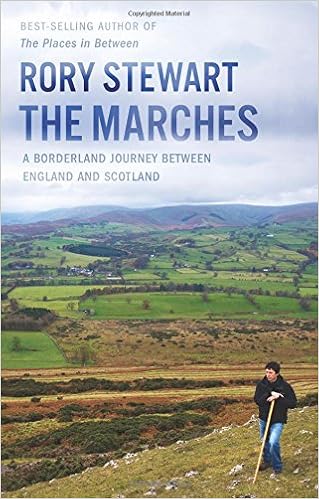
The starting point for this month's challenge was last year's travel challenge, and those books will fit most tidily into this category. But feel free to try to push the envelope a bit. I'll be reading The Marches by Rory Stewart.
As always, please drop by to tell us all about the progress you're making with your chosen book(s) and whether you'd recommend that we read it too!
What we're reading:








For those who like planning ahead, the rest of the year....
March: Heroes and Villains
People you admire or people you hate. Or people others admire or hate, and that you're just curious about.
April: Hobbies, Pastimes and Passions
Anything you want. People suggested categories about gardening, cooking, animals, sports, etc. Whatever excites and interests you. See if you can get the rest of us excited, too...
May: History
Pretty self explanatory. One of a few holdovers.
June: The Natural World
Another holdover. Anything about rocks, logs, the sea, the air we breathe, what grows around us, animal life, etc. And the pollution of same...
July: Creators and Creativity
Rather than just a category about the arts, I've broadened this. So, writing, books about books would qualify.
August: I’ve Always Been Curious About….
A catch-all category. If the topic of the book can complete the sentence, you can add it to the challenge.
September: Gods, Demons and Spirits
Religion, spirituality of al kinds; read about the Salem witch trials or animism in West Africa if you want.
October: The World We Live In: Current Affairs
It will be a year after Brexit; a year after Trump's election. What does the world look like? What forces are driving us? Find a book about some of the themes and issues that are at the top of the news by then.
November: Science and Technology
Probably self-explanatory, another holdover.
December: Out of Your Comfort Zone
A nonfiction book that isn't something that you would normally gravitate to, about a subject you'd never normally read about, or that is a "book bullet" you'd never previously heard about from another LT reader.
It's a short month, but that doesn't mean that you can't be ambitious, does it? The theme this month is "voyages of exploration", which can mean a conventional travel narrative or some other kind of voyage of discovery. Just make sure that the focus of the non-fiction book you read involves some kind of trip -- literal, or imagined (there's A Journey Around My Room by Xavier de Maistre, for instance...) -- and some kind of exploration, discovery or quest on the part of the author or the subject of the book. So, The Lost by Daniel Mendelsohn would qualify, as the author is searching for information about people from his family lost in the Holocaust and the truth about their fate. But it needs to be as specific as that, not esoteric and general. So, The Unwinding might be described as a quest to understand the new America, but that's too vague.
The starting point for this month's challenge was last year's travel challenge, and those books will fit most tidily into this category. But feel free to try to push the envelope a bit. I'll be reading The Marches by Rory Stewart.
As always, please drop by to tell us all about the progress you're making with your chosen book(s) and whether you'd recommend that we read it too!
What we're reading:


For those who like planning ahead, the rest of the year....
March: Heroes and Villains
People you admire or people you hate. Or people others admire or hate, and that you're just curious about.
April: Hobbies, Pastimes and Passions
Anything you want. People suggested categories about gardening, cooking, animals, sports, etc. Whatever excites and interests you. See if you can get the rest of us excited, too...
May: History
Pretty self explanatory. One of a few holdovers.
June: The Natural World
Another holdover. Anything about rocks, logs, the sea, the air we breathe, what grows around us, animal life, etc. And the pollution of same...
July: Creators and Creativity
Rather than just a category about the arts, I've broadened this. So, writing, books about books would qualify.
August: I’ve Always Been Curious About….
A catch-all category. If the topic of the book can complete the sentence, you can add it to the challenge.
September: Gods, Demons and Spirits
Religion, spirituality of al kinds; read about the Salem witch trials or animism in West Africa if you want.
October: The World We Live In: Current Affairs
It will be a year after Brexit; a year after Trump's election. What does the world look like? What forces are driving us? Find a book about some of the themes and issues that are at the top of the news by then.
November: Science and Technology
Probably self-explanatory, another holdover.
December: Out of Your Comfort Zone
A nonfiction book that isn't something that you would normally gravitate to, about a subject you'd never normally read about, or that is a "book bullet" you'd never previously heard about from another LT reader.
2amanda4242
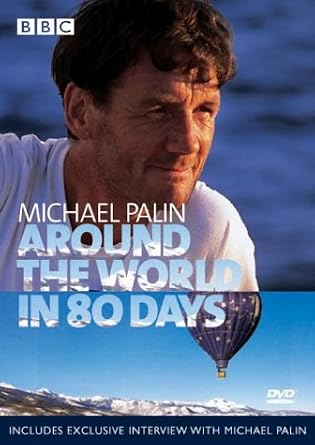
I think I'll pull Michael Palin's Around the World in 80 Days off the shelf for February.
3cbl_tn
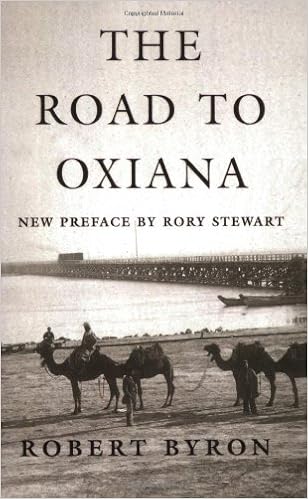
I plan to read The Road to Oxiana from my TBR stash.
4nittnut
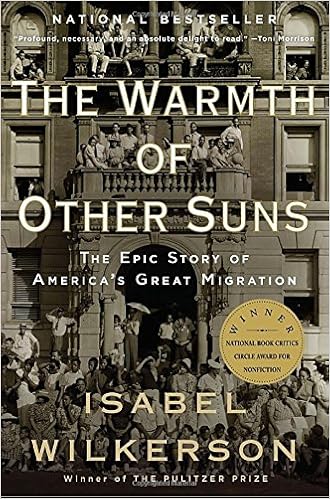
I'm thinking The Warmth of Other Suns? I just started it for a sort of race relations reading group I've joined, and I'm finding it un-put-downable.
5ronincats
Okay, Suz, I'm going to rely on your judgment on this one. The only book I have that comes close to this topic is: Wanderings: Chaim Potok's History of the Jews. Yea or nay?
6Chatterbox
>5 ronincats: Why not? The very title implies travel and voyages. Is there a sense of a quest or a goal behind it, do you think?
7ronincats
Just the quest of the Jews to find their Yahweh and their place, I would think. It's the title that made me think it might fit.
8charl08
>4 nittnut: That one has just arrived at the library for me. I like the idea of reading it for the challenge too.
9eclecticdodo
I am about to start Forever Young, the life story of astronaut John Young. My husband got it for Christmas along with Into The Black which covers much of the same events. He says Into the Black is a lot better written, by virtue of being by a professional author, but that Forever Young is the more interesting account, so I have chosen that one.
10Caroline_McElwee
Well I've barely started last month's read, which I hope to finish this week though, but my February read will be Christine Toomey's The Saffron Road: A Journey with Buddha's Daughters.
11jessibud2
I will be read Explorers House by Robert M. Poole. It's the story of the National Geographic Society which apparently started as a small *interest* group and is now nearly 150 years strong and one of the most recognizable organizations in the world. In reading the blurb on the dustjacket, I was surprised and tickled to learn that Alexander Graham Bell was a major player in the NG. I hadn't known that!
12jnwelch
>10 Caroline_McElwee: I'd never heard of this one, Caroline. I'll be following your reactions with interest.
13streamsong
I'll be going with Oliver Sacks 's Island of the Color Blind which also fits into a medicine/public health challenge that I'm also participating in.
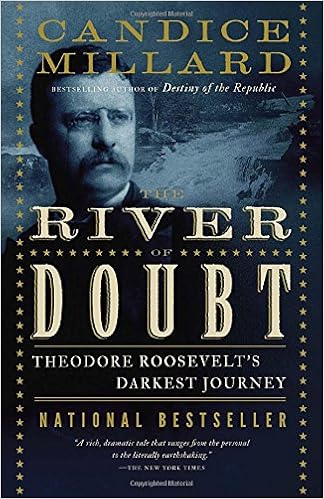
14rosalita
I've found a book on the shelf (hooray!) that I think fits this challenge: The Proving Ground is about the 1998 Sydney to Hobart yacht race which is considered the worst disaster in recent ocean racing history. Sounds harrowing!
15benitastrnad
I will be reading Ghost Train to the Eastern Star byPaul Theroux. I have had this one out on the table for a year, and it is time to tackle it. Of course, I am still reading Strangers in Their Own Land for last months, but I will get to this one this month.
Ghost train is the update on the earlier travel classic Great Railway Bazaar that I read a few years ago. It is about the changes in the world in 25 years and how his travel has also changed. I really liked the earlier book so have high hopes for this one as well.
Ghost train is the update on the earlier travel classic Great Railway Bazaar that I read a few years ago. It is about the changes in the world in 25 years and how his travel has also changed. I really liked the earlier book so have high hopes for this one as well.
16Chatterbox
>14 rosalita: On behalf of Bruce, a former colleague and a friend, thank you for choosing to read his book!! He is an avid sailor (to put it mildly...) himself.
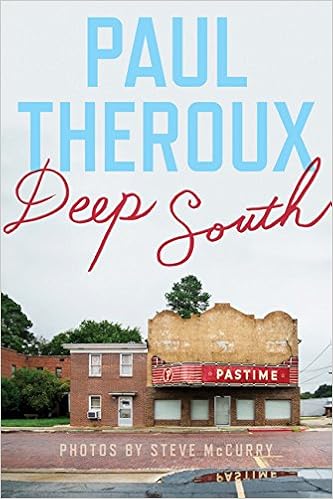
>15 benitastrnad: Haven't read "Ghost Train" but I probably should... In fact, for my third book I should probably add Theroux's most recent book about the Southern US.
>15 benitastrnad: Haven't read "Ghost Train" but I probably should... In fact, for my third book I should probably add Theroux's most recent book about the Southern US.
17benitastrnad
#16
The book on the American South Deep South: Four Seasons on Back Roads had really good reviews. I have it on my wishlist to purchase.
There is a local book reviewer, Don Noble, a former professor here at UA, who really liked this book. I think Noble is an excellent reviewer with a passion for literature by Southern Authors and books about the South in general.
The book on the American South Deep South: Four Seasons on Back Roads had really good reviews. I have it on my wishlist to purchase.
There is a local book reviewer, Don Noble, a former professor here at UA, who really liked this book. I think Noble is an excellent reviewer with a passion for literature by Southern Authors and books about the South in general.
18rosalita
>16 Chatterbox: Isn't that great that you know the author of the book I chose? Such a small world indeed. I must confess I don't know much about sailing but it sounds like a gripping tale, and I have faith that your friend Bruce has written it well.
19laytonwoman3rd
I haven't made up my mind, but am considering Bruce Chatwin's In Patagonia, or one of Patrick Leigh Fermor's books, which have been on my shelf a long time. I'm sure there are other qualifiers in my library too, if I give a look.
20Oberon
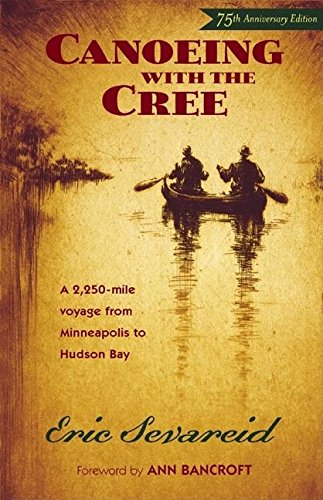
I am going to read Canoeing with the Cree for February.
21Familyhistorian
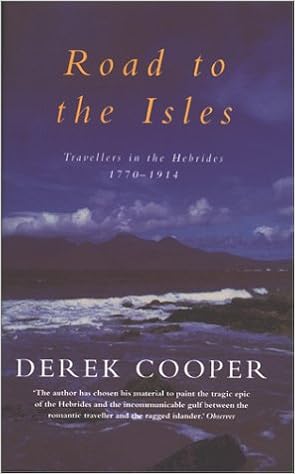
After some thought, I chose Road to the Isles: Travellers in the Hebrides 1770-1914. I started it a few years ago but stalled. That was before I visited Scotland. I hope that the book will jog some memories for me, help to motivate me to unpack my research from my journeys to Islay and Skye and give me a basis for a series of posts for my blog.
22mdoris
>21 Familyhistorian: Hi Meg, I wish I had been in your pocket when you traveled to Islay and Skye. It must have been wonderful. One of our daughters was studying in Edinburgh a few years ago and we did have a trip to the Orkneys but it just wet the appetite for more exploring in Scotland. Look forward to your review of the Hebrides book!
23Fourpawz2
I probably am being too literal, but I'm reading Sea of Glory by Nathaniel Philbrick which is about a voyage of exploration (says so right on the dust jacket) between 1838 and 1842 during which Antarctica was discovered. It is not a travel book - for some reason I did not get that from the name of the challenge. Does anybody want me to switch it to an actual travel book? I've got some of those, too.
24fuzzi
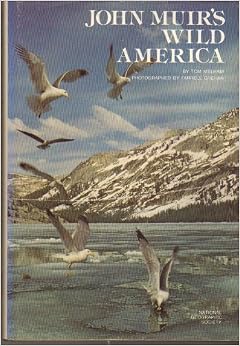
I'm thinking of reading John Muir's Wild America, which has been on my shelves for over a year.
26Chatterbox
>23 Fourpawz2: That is perfectly within the scope of the challenge!
27dallenbaugh
I will be reading Full Tilt about Dervla Murphy's trip from Ireland to India on a bicycle.
28Fourpawz2
>26 Chatterbox: - Oh, good! I'm so happy to be reading Nathaniel Philbrick. Just love Philbrick....
29katiekrug
I am hoping to get to River of Doubt by Candice Millard, about Teddy Roosevelt's journey on the Amazon.
30Oberon
>1 Chatterbox: I am looking forward to your thoughts on The Marches Suzanne. I really enjoy Rory Stewart.
31benitastrnad
I am enjoying the additions of all the covers at the top of the thread. I enjoy seeing them enough that I have stopped going to the first unread in the thread just to savor those covers.
32mdoris
>1 Chatterbox:, >31 benitastrnad: yes, the covers are stunning to look at! Agreed.

34cbl_tn
>33 weird_O: I loved that book!
35benitastrnad
#33
I liked that book. Lots of fun to read. And listen to. The recorded version is very well done. Horwitz's books are full of quirks. This one has Kansas in it, so that made my day when I read/listened to that portion.
I liked that book. Lots of fun to read. And listen to. The recorded version is very well done. Horwitz's books are full of quirks. This one has Kansas in it, so that made my day when I read/listened to that portion.
37Oberon

Canoeing with the Cree by Eric Sevareid
My February Non-Fiction Challenge book. This is the story of two boys, Eric Sevareid and Walter Port, aged 17 and 19, who decide that it would be a fun adventure to canoe from Minneapolis, Minnesota to York Factory on Hudson Bay. The book is relatively short and I found it to be gripping as I read it in a single sitting.
I have spent a decent amount of time canoeing and consider myself fairly good at it. So with that foundation, what these kids did was insane and borderline suicidal in my opinion and I am in awe of their endurance. I also have serious questions about where these kids parents were because I would lock my child up before they tried something like this.
Fortified with $50 from a Minneapolis paper, they conceive of this idea of starting from Minneapolis, proceeding southwest to the Minnesota river, canoeing northwest until they get to the Red River and then following that river all the way to Winnipeg. From there they crossed Lake Winnipeg (a huge body of water) and then following a series of smaller rivers and lakes back northeast to York Factory on Hudson Bay. Basically, this sort of journey is akin to what the original Voyageurs were doing when they were collecting beaver pelts for Europe (think The Revenant but a little further north and east). To do it, they paddle from eight to ten hours straight every day and when they aren't paddling they are portaging their canoe and supplies over some very rough terrain.
They do the whole trip in an d18 foot canoe. The boys do stop for provisions along the way and manage to get some necessary help like when one has infection and is treated by a kindly doctor. They also do "cheat" on Lake Winnipeg, when after encountering a constant, contrary wind they book a short passage on a lake steamer to complete their trip across Lake Winnipeg. Keep in mind that "Lake" Winnipeg is the size of some small seas being the 11th largest lake on the planet and extending 258 miles north to south. Having paddled on a few larger lakes in the Boundary Waters Canoe Area I can say that the idea that you would even think of venturing on to a lake of that size in an 18 foot canoe is crazy. Did I mention that by the time the boys made it this far north they were in a race against time as everyone they met told them that the waterways were going to freeze over before they made it to Hudson Bay?
By the time the boys depart Lake Winnipeg they are moving into largely uninhabited territory. They encounter a few Cree and the occasional Mountie but mostly they are alone. They are trying to navigate simply by compass and maps (I have done this too and it is really hard). Basically, when they leave the last community for the trip to the Bay they are vanishing into the wilderness with winter starting at any time. A different version of this story would have been that the boys disappear down the river to never be seen again. Certainly no search party would have found them. Shockingly, the boys make it to Hudson Bay alive and in one piece. It is an amazing accomplishment.
There are some portions of the book that sound off to modern ears. The depictions of the Cree are clearly tinged by ideas of the "noble savage" and there are frequent references to "half-breeds." However, there is little racial animus expressed. Mostly there is admiration for the people living in such a harsh and isolated area.
Canoeing with the Cree was a fun read and an engaging adventure.
38Chatterbox
>37 Oberon: Eric Sevareid went on to become one of "Murrow's boys" -- the reporters who made CBS radio (and later TV) an icon of real broadcast news that is still revered today. And he never lost that taste for danger. He hung around in Paris in 1940 to report its surrender to the Germans; then later on, he was on a plane flying over Burma (the so-called "Hump") to China from India when his plane crashed. He used to tell people he bailed out with a bottle of booze. A whole search and rescue mission was mounted to find him. He went behind enemy lines on other occasions -- in the Balkans, I think, and he may also have reported on D-Day? Can't remember the latter. He died in the early 90s; I think Howard Smith was the longest-lived of that group. (He wrote a good book, too, but not as full of derring-do as this reckless canoeing adventure! -- Last Train From Berlin)
39fuzzi
>37 Oberon: uh oh, book bullet...
40Oberon
>38 Chatterbox: I knew he went into journalism but didn't realize he was quite that illustrious. Thanks for letting me know.
41eclecticdodo
I've given up on Forever Young. It just didn't catch me, far too dry. I'm sure the man has had an interesting life, but that doesn't come across in the book.
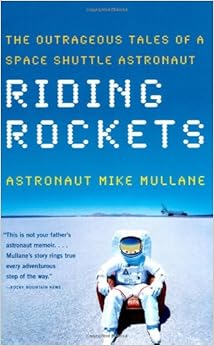
I've moved on to Riding Rockets instead. The subject is similar but it's much better written.
I've moved on to Riding Rockets instead. The subject is similar but it's much better written.
42nittnut
>37 Oberon: BB for me. Sounds like just the kind of crazy adventure I like to READ about.
I've finished The Warmth of Other Suns. It's fabulous. . I thought when I picked it up that it would be one I would read all month. My history chunkster. But I blew through it in about 4 days. I couldn't put it down, even when the reading was rough.
Isabel Wilkerson, herself a child of parents who left the South for a better life up North, said she wrote this book "because of what I saw as incomplete perceptions, outside of scholarly circles, of what the Great Migration was and how and why it happened, particularly through the eyes of those who experienced it."
Knowing this will in no way prepare the reader for the scope of research and time it must have taken to produce this book. I knew that black people had moved north to escape the abuses they were subject to in the south. I had no idea how many and for how long (roughly WWI - 1970). Wilkerson chose three main people to highlight, and moves between each of their stories to illustrate different decades of migration and different experiences. She talks about them as immigrants within their own country because of the commonalities between their experiences and those of immigrants from other countries. I almost see it as a new wave of pioneers. That's just semantics, I suppose, but it does solve one issue Wilkerson cited - that many of the people she interviewed did not want to be seen as immigrants. They are American. This is their country. This is not an easy book to read. The sheer weight of the injustice and abuse that led to the relocation of millions of people is overwhelming.
It was, if nothing else, an affirmation of the power of an individual decision, however powerless the individual might appear on the surface. "In the simple process of walking away one by one, " wrote the scholar Lawrence R. Rodgers, "millions of African-American southerners have altered the course of their own, and all of America's history."
Over the decades, perhaps the wrong questions have been asked about the Great Migration. Perhaps it is not a question of whether the migrants brought good or ill to the cities they fled to or were pushed or pulled to their destinations, but a question of how they summoned the courage to leave in the first place or how they found the will to press beyond the forces against them and the faith in a country that had rejected them for so long. By their actions, they did not dream the American dream, they willed it into being by a definition of their own choosing. They did not ask to be accepted but declared themselves the Americans that perhaps few other recognized but that they had always been deep within their hearts.
I've finished The Warmth of Other Suns. It's fabulous. . I thought when I picked it up that it would be one I would read all month. My history chunkster. But I blew through it in about 4 days. I couldn't put it down, even when the reading was rough.
Isabel Wilkerson, herself a child of parents who left the South for a better life up North, said she wrote this book "because of what I saw as incomplete perceptions, outside of scholarly circles, of what the Great Migration was and how and why it happened, particularly through the eyes of those who experienced it."
Knowing this will in no way prepare the reader for the scope of research and time it must have taken to produce this book. I knew that black people had moved north to escape the abuses they were subject to in the south. I had no idea how many and for how long (roughly WWI - 1970). Wilkerson chose three main people to highlight, and moves between each of their stories to illustrate different decades of migration and different experiences. She talks about them as immigrants within their own country because of the commonalities between their experiences and those of immigrants from other countries. I almost see it as a new wave of pioneers. That's just semantics, I suppose, but it does solve one issue Wilkerson cited - that many of the people she interviewed did not want to be seen as immigrants. They are American. This is their country. This is not an easy book to read. The sheer weight of the injustice and abuse that led to the relocation of millions of people is overwhelming.
It was, if nothing else, an affirmation of the power of an individual decision, however powerless the individual might appear on the surface. "In the simple process of walking away one by one, " wrote the scholar Lawrence R. Rodgers, "millions of African-American southerners have altered the course of their own, and all of America's history."
Over the decades, perhaps the wrong questions have been asked about the Great Migration. Perhaps it is not a question of whether the migrants brought good or ill to the cities they fled to or were pushed or pulled to their destinations, but a question of how they summoned the courage to leave in the first place or how they found the will to press beyond the forces against them and the faith in a country that had rejected them for so long. By their actions, they did not dream the American dream, they willed it into being by a definition of their own choosing. They did not ask to be accepted but declared themselves the Americans that perhaps few other recognized but that they had always been deep within their hearts.
43Chatterbox
>42 nittnut: I had the same experience with the book as you did -- it defied all my expectations. I think I had avoided reading it because everyone raved about it so much, and my response was, right, no book deserves THAT many plaudits. This one does. It's utterly brilliant.
44benitastrnad
#42
My Real Life book discussion group read this book, and everybody loved it except for one hold-out who thought it was a good example of qualitative research, but qualitative research isn't as good as quantitative research. However, even with her objections to qualitative research our group still rated it as excellent. I do think that it could have used some more scholarly content, but it was a very good book to read with lots of food for thought.
My Real Life book discussion group read this book, and everybody loved it except for one hold-out who thought it was a good example of qualitative research, but qualitative research isn't as good as quantitative research. However, even with her objections to qualitative research our group still rated it as excellent. I do think that it could have used some more scholarly content, but it was a very good book to read with lots of food for thought.
46Chatterbox
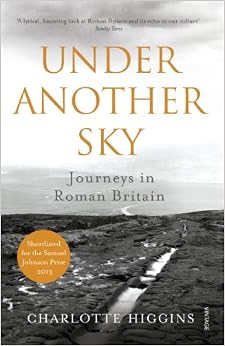
I've added Under Another Sky: Journeys in Roman Britain by Charlotte Higgins to my already very aspirational list of February non-fiction reads. I thought it would be a great counterpoint to The Marches by Rory Stewart, which is another book about walking in England, with an emphasis on history (at least partially) but what seems to be a very different focus, structure, etc. The Higgins book has been sitting on my Kindle for a little while now...
47dallenbaugh
I just finished Full Tilt Dervla Murphy's debut book about her adventures riding from Ireland to India on a bicycle in the early sixties. What a trip! She is rarely put off by the many trials she goes through and documents that most of the people she meets are unfailingly friendly and helpful. During this time of major cultural transitions for the tribal people she meets she is conflicted on whether the modern methods found in the cities will really improve most of their lives. A somewhat romantic view of life but it fit in with what she was experiencing.
48benitastrnad
I started reading Ghost Train to the Eastern Star yesterday. This is the book in which Theroux retraces his train trip route from which he wrote Great Railway Bazaar twenty-five years before. I have read the first book and thought it would be fun to read the sequel. So far, it is a typical Theroux travel book, which means that it is very interesting and full of his acerbic personality.
49Caroline_McElwee
I'm still only a third through January's read, so not sure if I will catch up, but as The Invention of Nature also fits February criteria I might be happy with that!
50Chatterbox
I keep picking up and putting down The Marches by Rory Stewart. It's good, but it rambles and digresses a fair amount, with Stewart talking about his father's history, his own experiences in Iraq, etc. It's all relevant, but it takes concentration, and large chunks of unbroken time when I feel like reading non-fiction, and those haven't been abundant thus far this month, alas. Plus, I am taking a course at the Providence Athenaeum that has a reasonably heavy reading requirement -- Metamorphosis and In the Penal Colony by Kafka this week alone, and then next week, a re-read of Disgrace by Coetzee. Last week, some Melville, and a re-read of Othello the week before, which I didn't complete (shamefully), so that's my "heavy" reading. Or at least some of it.
51banjo123
I have The old Patagonian Express by Paul Theroux, which I have just barely started. It's very good, but my reading this month is quite slow I am afraid.
52Chatterbox
>51 banjo123: I'm glad that I'm not the only one afflicted by slow non-fiction reading malaise!
53Oberon
>50 Chatterbox: I think the rambling and digressions are the part of the point to the book (as near as I can figure out). His theme seemed to me that we like to create narrative themes to connect things and categorize events to help us make sense of them and sometimes we can't connect the dots in our narrative.
Also, commiseration - I am trying to finish a book on the Opium War that I should have been able to finish a week ago and yet still isn't done.
Also, commiseration - I am trying to finish a book on the Opium War that I should have been able to finish a week ago and yet still isn't done.
54benitastrnad
I was just chugging through books earlier this year, but like many of you I have slowed. My weekend activities are taking up more time and that takes time away from reading. Plus, I am about to finish knitting a sweater and have been spending more time with needles than with books in the last week.
55nittnut
>54 benitastrnad: Pictures of the sweater Benita? Please?
56Chatterbox
Hmm, are we going to have 150 posts by the end of the month??
In any event, I'm closing in on the end of The Marches, and liking it better, though it still won't be a 5-star book for me. Debating whether to move on to Paddy Leigh Fermor or to Paul Theroux for the next book.
In any event, I'm closing in on the end of The Marches, and liking it better, though it still won't be a 5-star book for me. Debating whether to move on to Paddy Leigh Fermor or to Paul Theroux for the next book.
57eclecticdodo
Riding Rockets is entertaining and fairly well written but the author Mike Mullane is a bit of a jerk. He seems almost proud of his "arrested development" (as he calls it) towards the female astronauts. Still, I think he is growing on me.
58fuzzi
I cannot, CANNOT find my book for this challenge, so I'm looking around for a replacement. I'm thinking Poldark's Cornwall would qualify, what do y'all think?
59nittnut
Poldark's Cornwall sounds fun.
I don't know where this would fit in to the Non-fic challenge, but I just finished The Johnstown Flood, so I'm recommending it. I really liked it. The audio was pretty good, but there were occasional lengthy pauses that were kind of distracting.
I don't know where this would fit in to the Non-fic challenge, but I just finished The Johnstown Flood, so I'm recommending it. I really liked it. The audio was pretty good, but there were occasional lengthy pauses that were kind of distracting.
60Chatterbox
>58 fuzzi: Definitely, and it would be fun, and it's got great pictures! (It has won a permanent place on my shelves... I found a second hand copy decades ago...)
61ronincats
Working steadily on Wanderings--it's a tome!
62benitastrnad
#61
Wanderings is much like reading the Old Testament. That does indeed make it a tome.
Wanderings is much like reading the Old Testament. That does indeed make it a tome.
63benitastrnad
#59
I like anything by David McCullough but I reallly like his earlier works of non-fiction compared to his biographies. I know! I know!! Don't shoot me. His biographies are very thorough and that is probably the problem for me. His non-fiction is imbibed with a sense of wonder as well as admiration that makes it outstanding non-fiction. (I don't hold with this new term - narrative non-fiction. All fiction and non-fiction is narrative.)
I loved his McCoullough's book on the Panama Cannel. Path Between the Seas.
I like anything by David McCullough but I reallly like his earlier works of non-fiction compared to his biographies. I know! I know!! Don't shoot me. His biographies are very thorough and that is probably the problem for me. His non-fiction is imbibed with a sense of wonder as well as admiration that makes it outstanding non-fiction. (I don't hold with this new term - narrative non-fiction. All fiction and non-fiction is narrative.)
I loved his McCoullough's book on the Panama Cannel. Path Between the Seas.
64benitastrnad
I am making slow progress on Ghost Train to the Eastern Star. I think this one may be better than the original Great Railway Bazaar.
65Chatterbox
Finally finished The Marches, and I think I have managed to put a finger on some of what has annoyed me, to some degree, throughout. Together with the fascinating descriptions of Stewart's walks along the border areas and his encounters, there's a recurrent element of grumbling: he doesn't always find what he wants to find or thinks he should find, in the form of people who are deeply connected to their local ground, and he is disgruntled by this. He's also unhappy by the changing use to which land is being put -- i.e. the shift from intensive farming to return some of the land to wetlands. He mentions what is gained but emphasizes more what is lost, from habitats for voles (although there are gains for habitats for wetland birds) to family farms and bonds within the community. Since his voice predominates, it's hard to tell from reading this what the overall economic picture is: whether the community is better off, net/net; whether the succeeding generations of children from those family farms feel unhappy and as if they have been driven off or whether they are grateful for the opportunity to sell (given foot & mouth disease and other farming issues...) We just don't know, because we only see Stewart's own nostalgia for his own memories of growing up in his own Borders home and what he hoped to find, and didn't find. Oddly, it's his own nonagenerian father who somewhat brings him back down to earth, time and time again, prodding him to find the interesting stories, not to focus on what isn't there but what is, to look for the detail rather than the big sweeping theories. It's when Stewart tries to insist on his big sweeping theories that he starts getting on my nerves (and clearly on those of others, based on the interaction he reports with someone in this book, whom he ends up mocking.) I still liked the book and found it interesting, but the rambling and digressions -- accustomed as I am to this kind of book -- were less relevant and more frustrating than is typical and it required a lot of effort and focus on my part to tease out precisely what Stewart's point was. Did he intend to draw comparisons between border regions (eg Afghanistan, etc.) that feature fierce regional loyalties in their history? To explore the links between long-established peoples and the physical landscape to which they are attached? To look at how modern societies in which national borders become less relevant (as globalism grows) can still exert an unseen force? To determine whether there is a "Borderer" nationality? The answer could well be any, or all, of these -- if the former, it's too confusing; if the latter, that's simply over-ambitious and sprawling for a book of this length that takes as its main narrative structure a walk across Hadrian's Wall and along the Scottish/English border. So, while I enjoyed many parts and many details, I couldn't relish this book as much as I did others by Rory Stewart. I'm giving it 4 stars for the writing and micro insights, but not for its narrative arc or overall structure. Probably the book about which my opinion is most divided so far this year...
66Chatterbox
I'm discarding my previous reading plans, and moving on to a book I stumbled across last week and bought for my Kindle: The Unsettlers: In Search of the Good Life in Today's America by Mark Sundeen. It really is a "voyage of exploration" in a different context by both the author and his subjects: the latter are trying to build lives off the grid of radical simplicity, and Sundeen himself, who spent a decade as an Outward Bound instructor and who now is rebelling at the way his decision to opt for more comfort has ended up in a more consumer-oriented life, wants to find out what is possible, and what the tradeoffs are.
67Caroline_McElwee
>65 Chatterbox: very helpful review. It tells me that one day I'll be in the mood for it, but not at the minute! I did see and enjoy the TV version last year, I think called 'Borderland'.
68Chatterbox
>67 Caroline_McElwee: It might work better as a TV film or segment, with the need for visuals imposing some discipline on the narrative. I'm not saying it isn't worthwhile (eek, a double negative...), just that it too often felt like hard work, and too often Stewart ended up sounding like a curmudgeonly 70 year-old colonel, wondering what the world was coming to, and why things weren't the way he thought they should be.
69pizzadj2
I'm about halfway through Passage To Juneau by Jonathan Raban. It's great so far, deeper than I thought it was going to be. I was expecting a more on-the-surface adventure story. Never read anything from the author before. Previous to this I had just read Devil's Teeth by Susan Casey about studying great white sharks off the California coast, I wanted to stick with the Pacific ocean theme as I wasn't that impressed with Devil's Teeth.
Also, hi, by the way. This is my first post on librarything.
Also, hi, by the way. This is my first post on librarything.
70Chatterbox
>69 pizzadj2: I've read Coasting by Raban, also about sailing, which I loved/adored. Much prefer his travel writing to his more political stuff. Am I mistaken in thinking he has written for the LRB? I seem to recall that his most recent anthology was of pieces for them, but I may be mistaken. (Or it may have been the NYRB, for that matter.) But his writings about boats and adventure seem to delve far below the surface and into some very deep territory, without ever venturing into polemics. I'll have to look for this one...
71Fourpawz2
Finished Nathaniel Philbrick's Sea of Glory yesterday - a very literal voyage of exploration - about the U. S. Exploring Expedition of 1838-1842 during which the Antarctic was finally sighted, many, many islands in the South Pacific were charted and explored and the (I did not know this) extremely dangerous Columbia River was charted. Oddly this voyage of exploration can be considered one of the most successful ever - if one only takes into account the scientific discoveries and the collecting of botanical, marine, animal, ornithological, geological, ethnological information and samples. Otherwise the expedition was a horror. Led by Lt. Charles Wilkes, the four year trip was a mess. He was a flogging officer (and the sailors suffered frequently from this punishment), a jealous and petty man, arrogant, a liar, resentful, pretty cowardly, very quick to order officers and scientists off the expedition or confine them to quarters if he had problems with them and frequently interfering with scientists' work because he wanted to take credit for himself.
Philbrick does his usual great job with the story. Particularly harrowing are his descriptions of two different occasions when the Peacock - one of the original 6 ships of the expedition - is confronted by horrible weather with a sub-par commanding officer in charge. If I'd been an ocean-loving kind of person (which I'm not) before I read these accounts I'm pretty sure I wouldn't be one now. The ocean is not forgiving.
Philbrick does his usual great job with the story. Particularly harrowing are his descriptions of two different occasions when the Peacock - one of the original 6 ships of the expedition - is confronted by horrible weather with a sub-par commanding officer in charge. If I'd been an ocean-loving kind of person (which I'm not) before I read these accounts I'm pretty sure I wouldn't be one now. The ocean is not forgiving.
72Oberon
>67 Caroline_McElwee: I saw the Borderland show that Rory Stewart did. Other than the topic itself there are few similarities with the book. I get the impression that the book was maybe supposed to be like the two part series but it didn't come together for him and then his dad died so he wrote a very different sort of book.
73nittnut
>63 benitastrnad: I have the Panama Canal one on my to-read list. I suppose by narrative they mean that it reads easily? Like a story rather than a research paper? Hmmmm.
74nittnut
This is excellent - particularly if you've read The Warmth of Other Suns - but either way.
http://lawrencemigration.phillipscollection.org/
http://lawrencemigration.phillipscollection.org/
75laytonwoman3rd
>73 nittnut: Exactly...I've tried to read way too many non-fiction titles that simply had no "flow" to them, and in which the author did nothing to pull the reader in. JUST like reading a research paper.
76drneutron
Turns out that I managed to read one that fits here - In the Kingdom of Ice, Hampton Sides' exellent narrative nonfiction account of one of the last attempts to find an open sea, or perhaps a land mass in the Arctic. Sides is very good at storytelling; I read his Hellhound on His Trail some time ago and really enjoyed it too.
77Chatterbox
>76 drneutron: That's on my list of books to look for. I've got a longstanding interest in Arctic exploration, and particularly the Franklin voyage, and have been fascinated by the very recent discoveries of the Terror and the Erebus, sunk more or less precisely where the aboriginal inhabitants said they could be found. Except of course nobody wanted to listen to the locals... *eyes roll*
78banjo123
I am loving The Old Patagonia Express by Paul Theroux.
79Fourpawz2
>76 drneutron: - That one goes on the ol' wishlist. I dislike the ocean and the very idea of messing around in arctic ice is revolting to me, but for some reason I've read several arctic exploration things in recent years. I particularly enjoyed The Arctic Grail by Pierre Berton that I read for last year's CAC.
80amanda4242
I'm about halfway through Michael Palin's Around the World in Eighty Days and am really enjoying it. Even though he and his crew, referred to collectively as Passepartout, are dashing around desperately trying to get through customs and make connections, Palin takes the time to describe the sights and engage with the people he meets along the way.
81dallenbaugh
>76 drneutron: I read In the Kingdom of Ice last year. It was excellent.
82katiekrug
I had to hit Pause on The River of Doubt while I listened to something for book club, so I probably won't finish it this month...
83ronincats
Finished!

Book #29 Wanderings: Chaim Potok's History of the Jews by Chaim Potok (pp. 431)
This is an OLD book off my book shelf, over 10 years there but nearly 40 years old physically, given me by a friend who is now deceased. It is huge, weighing over 4 pounds, with the most gorgeous illustration plates, many in full color. It starts with Abraham, goes through the Jewish Bible and then all the way up to mid-twentieth century. Fascinating perspective and very readable, but did I mention BIG?
Book #29 Wanderings: Chaim Potok's History of the Jews by Chaim Potok (pp. 431)
This is an OLD book off my book shelf, over 10 years there but nearly 40 years old physically, given me by a friend who is now deceased. It is huge, weighing over 4 pounds, with the most gorgeous illustration plates, many in full color. It starts with Abraham, goes through the Jewish Bible and then all the way up to mid-twentieth century. Fascinating perspective and very readable, but did I mention BIG?
84Chatterbox
I finished reading Unsettlers: In Search of the Good Life in Today's America by Mark Sundeen. This is actually a theme I vaguely thought of trying to explore seven or eight years ago -- looking for people who were actually trying to reinvent the economic system in a more sustainable way. Sundeen has focused on a very particular aspect of this, honing in on three different families who have resolved to walk away from America's consumer-oriented society and live self-sufficiently, driven in part by his own questions about how to live. His own dithering about his lifestyle choices comes perilously close to navel gazing and is much less interesting than he thinks it is, but what is very interesting indeed are the three portraits he paints of the families in Missouri, Detroit and Montana who in their unique ways are reimagining what it means to be "un-American": to shun growth, consumerism, the "more is better" ethos. They are living the Occupy lifestyle, though most of them have little time for protesting because they are too busy just getting on with it. It's a simultaneously inspiring and daunting portrait of how difficult this life is and what it is that we've sacrificed in our pursuit of the latest gadgets and latest brand-names. Want the new iPhone? What kind of waste is the disposal of your old phone creating -- do you know? Have you asked? The people here have thought about hard questions like that, and decided what they will DO about it, in their own lives; what tradeoffs they will tolerate. In some cases, the motivation is economic and lifestyle; in others, it is political and spiritual. The book? It's fascinating, and from the hints that Sundeen drops of disciples and broader circles forming, it's part of a broader trend. The only reason this isn't a five-star book is that Sundeen sacrifices that broader context, and it screams out for it. Otherwise, it's highly recommended. 4.45 stars.
85Chatterbox
Not sure what my next book will be! Possibly Deep South by Paul Theroux. I know the Leigh Fermor book will be more dense as a read, and I'm not ready for that. I have to finish The Rings of Saturn by W.G. Sebald and Nightwood by Djuna Barnes, and the prose in both of those is dense.
86Chatterbox
And a quick reminder. While I'd prefer that people didn't have to make silly posts to drive the post count up toward 150, it is very helpful for folks to be able to keep track of the monthly threads if we do hit 150 posts and I can seamlessly make the leap to the March thread. Once or twice last year we didn't manage that, and I know of at least two occasions on which people lost track of an entire month's worth of of the challenge as a result. Yes, I know it's possible to do a search and find it, but this is a busy group, and it's just soooo much easier if there's an automatic follow-on at the top and bottom of each thread.
That's the end of this public service announcement. You may now return to filling up this thread with chit chat about the books you're reading. If you so desire...
>79 Fourpawz2: Meanwhile I'm thinking that I should have a month devoted to books about the ocean next year, just for Charlotte! :
That's the end of this public service announcement. You may now return to filling up this thread with chit chat about the books you're reading. If you so desire...
>79 Fourpawz2: Meanwhile I'm thinking that I should have a month devoted to books about the ocean next year, just for Charlotte! :
87amanda4242
I've just finished an enjoyable trip around the globe with Michael Palin.
88Caroline_McElwee
>86 Chatterbox: If the worst comes to the worse Suze you can just start a new thread and post the link at the bottom of this one (and the link to this one at the top of the new).
>85 Chatterbox: Sebald fan here.
>85 Chatterbox: Sebald fan here.
89Fourpawz2
>86 Chatterbox: - Very funny, Suzanne. :)
Isaac, Fred and George (my great-great-great whaling uncles) would be very amused!
Time to look for more ocean-going non-fiction.......
Isaac, Fred and George (my great-great-great whaling uncles) would be very amused!
Time to look for more ocean-going non-fiction.......
90rosalita
Since we need posts, I'll go ahead and confess that I have not yet gotten to Proving Ground, which is my intended read for this theme. However, I have not given up hope of at least starting it in February, though it might be finished in March. Speaking of March, it is Middlemarch that is sucking up all my reading time these days!
91Chatterbox
>88 Caroline_McElwee: Yup, that's what I had done, but we still managed to lose people, somehow! There just seems to be some magic about the auto-follow. Probably because it appears with a star already on it in the list....
>89 Fourpawz2: I love the ocean, but to the best of my knowledge have no family whaling tradition. I'm sure there's an inverse correlation.
>89 Fourpawz2: I love the ocean, but to the best of my knowledge have no family whaling tradition. I'm sure there's an inverse correlation.
92Fourpawz2
>91 Chatterbox: - I expect you are right, Suzanne. I think that part of my aversion comes from associating the ocean with hurricanes, fishing boats lost at sea, drowning, seafood (don't like it) and that ocean smell. (Not the nice one - the low-tide smell that smells like dead stuff.)
93ronincats
I'm not going to try to read another book on this theme with only a few days left in the month, so I need to start thinking about what book to read for next month's theme, Heroes and Villains. I have two books in my tbr pile that might qualify: Tesla: A Man Out of Time and Captain Sir Richard Francis Burton. Oh, I know I also have a biography of Isaac Asimov floating around as well. My LT catalog tells me it is Yours, Isaac Asimov: A Lifetime of Letters by his son.
94Fourpawz2
I've started the March read already. I was very unsure about what to read as I don't have opinions, pro or con, about the people whose biographies I have yet to read. Thought I was going to have to choose, willy-nilly, what to read and then decide after I was finished whether I thought them a Villain or Hero. Fortunately I decided to just take whichever book was the closest to the top of the NF piles and came up with someone who has a very bad reputation. I'm not going to decide which category this person should be in until after I am finished, though the author is making (so far) a pretty good case for the idea that this person is not as bad as history has judged him/her to be.
95laytonwoman3rd
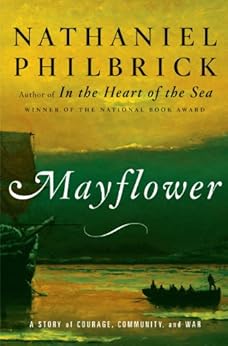
I have Philbrick's Mayflower on my "next" pile, hoping I might get to it for this month's NF challenge. But it's looking pretty unlikely right now that I will even start it in February. Hope springs, nevertheless!
96Chatterbox
>94 Fourpawz2: You don't have to put them in that category beforehand -- indeed, you can read the bio as a way of determining whether you tilt more toward hero or villain! I've got an e-galley about Osama bin Laden's final years in Pakistan, which is a fairly easy call, however...
97Chatterbox
>93 ronincats: I may still try to read the Theroux book, though I'm finding myself awash in "must read" tomes for various book groups, most of them fiction. Sebald, for my Athenaeum reading group tonight; then Coetzee's Disgrace (a re-read) for the seminar that I'm taking there led by a Brown University professor Saturday morning (it's the final day... sadz) and then Djuna Barnes and Paul Beatty for two book groups next week. Add in the books that I'll want to read as lightweight alternatives, and I don't know how I'll squeeze in Theroux, or at least finish it, this month.
98katiekrug
For next month, I think I am going to read Mountains Beyond Mountains, Tracy Kidder's book about Paul Farmer. I know very little about him, but have a feeling he'll be more hero than villain ;-)
99nittnut
I'm listening to Hillbilly Elegy now, which is not necessarily for this month, but it is very interesting in that some of it is analogous to The Warmth of Other Suns, at least in terms of the migration of a people and the challenges they faced. I was particularly struck by the section where he talks about how the Hill people were treated with suspicion and reserve by the working class white families in the neighborhoods of northern states. The hillbillies were white, and yet he says they had more characteristics in common with the Southern Blacks moving north than they did with the northern families. I don't know if this is an accurate comparison or a regional generalization, in the sense that his family's story started after WWII, but it's something to think about. I am considering the notion of being disturbed by seeing white people exhibit cultural behavior previously associated with Black migrants and having to adjust their paradigm. Sigh. Sometimes I get so overwhelmed at the unbelievable weight of Things To Think About. Don't you?
100nittnut
>98 katiekrug: I would vote more hero. I read that one a few years ago, and really liked it. Well, more than a few years ago.
I'm thinking I will carry on with my Black history by reading Giants: the Parallel Lives of Frederick Douglass and Abraham Lincoln Both quite heroic in my estimation, but perhaps not everyone's.
I'm thinking I will carry on with my Black history by reading Giants: the Parallel Lives of Frederick Douglass and Abraham Lincoln Both quite heroic in my estimation, but perhaps not everyone's.
101Oberon
>93 ronincats: I have read Captain Sir Richard Francis Burton and enjoyed it so I would give that a thumbs up.
102jnwelch
>98 katiekrug: Yes, Dr. Paul Farmer is a hero. Secular saint as far as I'm concerned, Katie. Mountains Beyond Mountains is a great book.
103benitastrnad
I am still reading Ghost Train to the Eastern Star by Paul Theroux and will not finish it this month. However, I am not going to quit and move on to the next theme because I am enjoying this book. Somehow Theroux has lost that super sharp snarky attitude that he had in the earlier book Great Railway Bazaar and that makes this book much more pleasant to read. It is also very interesting to note the big changes in some parts of the world and how little other parts have changed.
104benitastrnad
I forgot to mention that when I finish Ghost Train I will move on to the Villians and Heroes challenge. I will be reading something. Not sure what at this point.
105ronincats
>101 Oberon: Thanks for the feedback, Eric. It's also the biggest book of the three!
106Caroline_McElwee
Richard Burton will never be a dull read. I have several books by and about him. Mary Lovell wrote a great book about his relationship with his wife.
The more recent Richard Burton is interesting as well, and the voice! Shame he didn't read an audio book of the life of the other RB. He did read Under Milk Wood which I recommend.
The more recent Richard Burton is interesting as well, and the voice! Shame he didn't read an audio book of the life of the other RB. He did read Under Milk Wood which I recommend.
107brenpike
I just started The Lost City of the Monkey God by Douglas Preston. Looks promising . . .
108charl08
I've just picked up Roads to Berlin after a much slower reading month than usual. The author introduced the book by talking about going over the border in the 60s and the 80s, and comparing the two experiences. I find it really hard to think that this was in the (relatively) recent past.
Although at one point he does say only the Germans would deal with the problem of people leaving East Germany by putting up the wall.
I guess not.
Although at one point he does say only the Germans would deal with the problem of people leaving East Germany by putting up the wall.
I guess not.
109charl08
I also have The Warmth of other Suns to read, and must try and get on with it as it is an interlibrary loan.
>99 nittnut: I don't know enough about the poor white experience in the US to respond directly to your point, but have read other studies that suggest that poor communities tended to have less rigid attitudes to society's racial/racist boundaries.
>99 nittnut: I don't know enough about the poor white experience in the US to respond directly to your point, but have read other studies that suggest that poor communities tended to have less rigid attitudes to society's racial/racist boundaries.
110charl08
>100 nittnut: I've not heard of this one, will add it to the wishlist. I liked how Douglas appeared in TransAtlantic, although no idea how much of this was fiction (particularly since much of it was interior monologue).
>103 benitastrnad: I wonder how much of that was to do with his age? I read a couple of interviews, and recall that Theroux was acknowledging his own mortality/ fragility by the more recent book.
>103 benitastrnad: I wonder how much of that was to do with his age? I read a couple of interviews, and recall that Theroux was acknowledging his own mortality/ fragility by the more recent book.
111charl08
I think for the bio category I am hoping to read the bio of Alcotts which has been mentioned before on LT Eden's Outcasts.
If I had a bit more time, I'd dig out my copy of The Reckoning: The Murder of Christopher Marlowe, which fits the criteria really well I think - truly a difficult to judge character. And such a well written book. I'd also dig out Mandela: A Critical Life from the forgotten archives of my kindle!
If I had a bit more time, I'd dig out my copy of The Reckoning: The Murder of Christopher Marlowe, which fits the criteria really well I think - truly a difficult to judge character. And such a well written book. I'd also dig out Mandela: A Critical Life from the forgotten archives of my kindle!
112mdoris
Late to the game but started The Worst Hard Time (The Untold Story of Those Who Survived the Great American Dust Bowl) by Timothy Egan
113nittnut
>109 charl08: I would agree with you about poor communities having more similarities than differences. I think that was a large part of the conflict in the Southern US too - they were in direct competition for the same work after the Civil War, and there was a lot of resentment, but when they migrated North, they were both treated as lower class by the northerners (generally). Although, and this is just my opinion, I think it's possible that from WWI to WWII and maybe later, it could be argued that the Black population was more successful in upward mobility than the poor white. The difference between being oppressed and not having a choice vs. choosing a situation, I suppose. This is just me Thinking Things Through though.
114rosalita
>112 mdoris: I liked that one a lot when I read it last year.
115Chatterbox
>107 brenpike: Hmmm, maybe I should try that one as my final non-fiction read of the month?? Can't decide. Dithering.
116charl08
>113 nittnut: I'm looking forward to reading The Warmth of Other Suns, as I really know very little about this bit of history, and everyone seems so positive about the book.
117Chatterbox
>116 charl08: I'm glad that this book is getting another wave of love; it richly deserves it. It's just very, very good.
118Caroline_McElwee
I temporarily set aside last month's read and am galloping along with The Saffron Road which I will finish over the weekend. I'm fascinated by the wide and various ways that women (eastern and western) have come to become Buddhist nuns, and the varying levels of 'nunhood' that are open to them depending on where they are. What great suffering some endured too. Overall a heartbreaking yet optimistic read.
Next month I think I will read Nelson Mandela's Long Walk to Freedom. One of my heroes, and I was lucky enough to see him fleetingly, when he unveiled his statue in Parliament Square.
20 August 2007 - the photo is not great, but it is the best I got:

Next month I think I will read Nelson Mandela's Long Walk to Freedom. One of my heroes, and I was lucky enough to see him fleetingly, when he unveiled his statue in Parliament Square.
20 August 2007 - the photo is not great, but it is the best I got:
119banjo123
Cool! I liked Mandela's book.
I am thinking of reading the graphic novel about John Lewis for March, but will see what else I have.
I am thinking of reading the graphic novel about John Lewis for March, but will see what else I have.
120Oberon
>118 Caroline_McElwee: Very cool that you got to see him
121jessibud2
>118 Caroline_McElwee: - Very cool and lucky you!! I actually have several books by and about Mandela and am considering selecting one of those for March, as well
122Chatterbox
I have Dava Sobel's new book about the women who worked at the Harvard observatory doing pioneering stuff -- they would be heroines of mine for breaking new trails for women, and so would be candidates for this. Also a bio of Barney Rossett, who battled censorship at the helm of Grove Press. Both off the beaten track a bit! And I've got two biographies of Thomas Paine sitting here, one of which I'll def. read in March.
123Chatterbox
>118 Caroline_McElwee: Extremely cool!! This is making me think about whether I really have heroes, and what I even mean when I use the term. There are people I admire in certain areas, but hero is a step further -- somehow, it seems easier to find villains!
124Chatterbox
OK, here's a question. I have a book that I picked up at the library about Sherlock Holmes as a literary figure, and how he has been portrayed through time -- his symbolism, etc, from Conan Doyle right through to Benedict Cumberbatch. Holmes is definitely a heroic figure, does anyone object if I add that to my list of possible books for March? Yes, he's a fictional being, but it's about heroism and what that means? Thoughts?
126ronincats
Well, he's a literary hero (and Moriarty definitely a villain) so it would work from that angle. It's not like we have really strict and stringent regulations here...go for it!
127laytonwoman3rd
>124 Chatterbox: I think that's fascinating, and I'd love to hear what you think of the book.
128charl08
>125 katiekrug: I'm agreeing with Katie. Also a book about a little figure becomes nonfiction, doesn't it? (*Worries about my list categories...*)
129nittnut
>124 Chatterbox: What Katie said - Looks like a fascinating book.
130Caroline_McElwee
I'm sure many of us have literary heroes and heroines, so happy for the door to be opened to fictitious ones too.
Not sure I'll manage it (as the Mandela is a tome, and I have two other tomes on the pile for other challenges next month), but I'm hoping to do one of each.
Not sure I'll manage it (as the Mandela is a tome, and I have two other tomes on the pile for other challenges next month), but I'm hoping to do one of each.
131charl08
>130 Caroline_McElwee: If you don't want to read the autobiography because it is a tome Mandela: A Critical life is relatively brief. I've met the author and respect his work and approach.
132charl08
I'm reading Roads to Berlin rather slowly. It's like going back in time reading about a point when the wall seemed impregnable. He takes the train from West to East:
I take the S Bahn from Bahnhof zoo to Friedrichstraße, where the checkpoint is. Canopy, iron, long trains, subdued lighting and- I cannot help myself - always a touch of Graham Greene and John le Carré.
I take the S Bahn from Bahnhof zoo to Friedrichstraße, where the checkpoint is. Canopy, iron, long trains, subdued lighting and- I cannot help myself - always a touch of Graham Greene and John le Carré.
133Chatterbox
Thanks for being my enablers!! :-)
>132 charl08: I remember those days... It seemed so astonishing when the wall suddenly came down, literally overnight, when I was already an adult. It just felt like a reality, an inflexible reality, of my life.
>132 charl08: I remember those days... It seemed so astonishing when the wall suddenly came down, literally overnight, when I was already an adult. It just felt like a reality, an inflexible reality, of my life.
134Caroline_McElwee
>131 charl08: thanks Charlotte, I'll add that to the list, but I've been wanting to get to Long Walk to Freedom for a while.
135charl08
I should probably have said that there have been several published recently, so it's quite a crowded field. Not least by the man who ghost wrote Long Walk...
136Chatterbox
Well, it doesn't look as if I'll get a third book read for February's challenge. Absent a miracle. I do have my Kindle with me (I'm on the train to NYC, in thick fog) and could read the Douglas Preston book, so we'll see.
Speaking of voyages of discovery, this fog is really eerie. Right now we're running right along the seaboard, on the border between Rhode Island and Connecticut, (Mystic, Conn.) and every so often the fog will part just long enough to remind you that yup, you are literally right beside the sea. I wouldn't want to be out on the water in this!
Speaking of voyages of discovery, this fog is really eerie. Right now we're running right along the seaboard, on the border between Rhode Island and Connecticut, (Mystic, Conn.) and every so often the fog will part just long enough to remind you that yup, you are literally right beside the sea. I wouldn't want to be out on the water in this!
137amanda4242
I have Dan Jones's The Plantagenets : the warrior kings and queens who made England on deck for next month. That dynasty produced more than a few rulers who're considered villains.
138Chatterbox
>137 amanda4242: And some who are ambivalent. Some look on Edward I as a hero -- to me, he is the king who hung the women who supported Robert the Bruce (his daughter, sister and a distant relative who helped crown him) from cages on the walls of Berwick on Tweed's castle and forced them to live like that, pelted with filth by the English citizenry. Yup, a villain.
139Chatterbox
Incidentally, to fill up space (since we need another ten or so posts to reach the magic 150), I thought I would mention that I am giving up buying books for Lent... :-) Yes, really.
140amanda4242
>138 Chatterbox: Definitely villainous. I've always disliked Richard I myself--a lousy king who clearly had very good PR people.
ETA >139 Chatterbox: Ouch!
ETA >139 Chatterbox: Ouch!
141Familyhistorian
>69 pizzadj2: First post on LT? Welcome and I am sure that it will be the first of many.
142Familyhistorian
>22 mdoris: I have only been to Scotland twice but went to Islay both times (I couldn't get the accommodation I wanted.) They are interesting places and well worth a visit. Of course I am prejudiced since some of my ancestors came from there.
I am still reading through the Road to the Isles and should be finished by the end of the month. A lot of the travelers chose to go to Staffa. I just had to see what the attraction was. Here's a photo:

I am still reading through the Road to the Isles and should be finished by the end of the month. A lot of the travelers chose to go to Staffa. I just had to see what the attraction was. Here's a photo:

143mdoris
>142 Familyhistorian: I'll bump up the numbers to get to the magic 150. Apparently from way back folks on my mother's side came from small islands off the coast of Scotland. I will have to do some research!
144amanda4242
Just adding to the count.
145Familyhistorian
>143 mdoris: There are quite a few islands on the west coast some of which would be considered small, then there are the islands in the Orkneys and Shetland. I don't know what is on the east coast.
146charl08
Thinking of other books I've read that fit the theme. If anyone hasn't read The Black Count, which throws interesting light on Napoleon (as well as various Dumas).
147Caroline_McElwee
>146 charl08: I remember Rebecca loving that a couple of years back Charlotte, and it went on my book bullet list...
I have a suspicion 150 might not be the magic number, but here's hoping.
I have a suspicion 150 might not be the magic number, but here's hoping.
148charl08
I'm not sure if I will fit this book into this month's reading, but I do want to read Shirley Williams: the biography, a British politician who seems more ethical than most of her contemporaries. But who knows what I'll find out?!
151Caroline_McElwee
Just as I thought. I remember on another thread that it didn't give the link to create the next thread at that point, very frustrating. Still, we have a couple more days to go...
152Caroline_McElwee
I really enjoyed The Saffron Road. I can't remember now how I stumbled upon it. Like many books with spirituality and mindfulness at their heart, the reading of them tends to bring the reader a calm, thoughtful state of mind.
In many instances the women who became nuns were drawn to it because of harrowing life experiences, but far from all. There were nuns who became nuns as early as ten years old and as late as their sixties. Toomey travels and meets with nuns of all Buddhist stripes, and hears about contemplatory orders, or active orders in the community.
Aside from a couple of instances, the nuns found their lives to be deeply satisfying, with only a small amount of discontent about inequalities rearing its head here and there. The fact that in some orders becoming a nun is not necessarily a lifetime commitment, offers more women the opportunity to undertake periods of deep contemplation without feeling they are committed for life.
In many instances the women who became nuns were drawn to it because of harrowing life experiences, but far from all. There were nuns who became nuns as early as ten years old and as late as their sixties. Toomey travels and meets with nuns of all Buddhist stripes, and hears about contemplatory orders, or active orders in the community.
Aside from a couple of instances, the nuns found their lives to be deeply satisfying, with only a small amount of discontent about inequalities rearing its head here and there. The fact that in some orders becoming a nun is not necessarily a lifetime commitment, offers more women the opportunity to undertake periods of deep contemplation without feeling they are committed for life.
153eclecticdodo
I'm no-where near finishing a book for this months challenge. I eventually settled on Riding Rockets but it's been slow progress. Mainly because I keep getting annoyed at the author's attitudes. He's currently on a rant about "part time" astronauts and politicians in space.
154Chatterbox
OK, ready to roll! Setting up the March challenge now; stay tuned...
155Familyhistorian
Road to the Isles: Travellers in the Hebrides 1770 – 1914 was not the story of one voyage but of many voyages. The date span probably gave that away. Outsiders started to visit the Hebrides in 1770 and gradually the islands became a draw for travellers, tourists and great white hunters.
It was interesting to see the history of the area through the eyes of the people who visited and wrote about their exploits. Things changed greatly over this time period for the visitors, unfortunately for the natives of the islands, things didn't change so much.
It was interesting to see the history of the area through the eyes of the people who visited and wrote about their exploits. Things changed greatly over this time period for the visitors, unfortunately for the natives of the islands, things didn't change so much.
156banjo123
I finished The Old Patagonian Express by Paul Theroux. I love this book. (no time now for further comment.)
157jessibud2
So, I am a few days late. But I finally finished Explorers House by Robert M. Poole
I have always been a fan of National Geographic. One of the very first things I did with part of my first paycheck, from my very first full-time job, was take out a subscription to the NG magazine which I kept up for several years. The iconic yellow border was always, in my mind, a symbol of high quality photojournalism. And of course, it helped launch the career of Jane Goodall, one of my heroes, among many others.
I found this book to be a fascinating history of the Society and I learned so much that I never knew and never imagined, including some things I wish I hadn't known. I love that at the very beginning of the book, there is a family tree map that shows how the three families (Hubbard, Bell, and Grosvenor) came together to create this organization and how the direct line of this family-run, non-profit organization remained true for 5 generations, over 100 years.
I never knew that Alexander Graham Bell was even involved in the NGS, let alone a one-time president of it! I was somewhat shocked to find out just how close the ties were between the NGS and the government(s) of the early part of the twentieth century. "So many bylines from so many bureaucrats and military officials appeared in the magazine that it sometimes seemed like an extension of the government". National Geographic cooperated and participated with the CIA and FBI, and supplied maps to the armed forces during both World Wars and several other wars, as well.
Worst of all, in my eyes, however, was the overt racism and bigotry that was evident in the early part of the 1900s among the top echelon of the NGS. Membership into the Society was restricted and denied to Blacks, there was blatant anti-Semitism and the elder Grosvenor was a Nazi sympathizer. There are even some passages quoting contributors to the magazine in those early days whose words ring in my ears today, and sound frighteningly like the current Washington administration. I find that terrifying.
This was a fascinating read, on many levels, even if it was not always a comfortable one.
I have always been a fan of National Geographic. One of the very first things I did with part of my first paycheck, from my very first full-time job, was take out a subscription to the NG magazine which I kept up for several years. The iconic yellow border was always, in my mind, a symbol of high quality photojournalism. And of course, it helped launch the career of Jane Goodall, one of my heroes, among many others.
I found this book to be a fascinating history of the Society and I learned so much that I never knew and never imagined, including some things I wish I hadn't known. I love that at the very beginning of the book, there is a family tree map that shows how the three families (Hubbard, Bell, and Grosvenor) came together to create this organization and how the direct line of this family-run, non-profit organization remained true for 5 generations, over 100 years.
I never knew that Alexander Graham Bell was even involved in the NGS, let alone a one-time president of it! I was somewhat shocked to find out just how close the ties were between the NGS and the government(s) of the early part of the twentieth century. "So many bylines from so many bureaucrats and military officials appeared in the magazine that it sometimes seemed like an extension of the government". National Geographic cooperated and participated with the CIA and FBI, and supplied maps to the armed forces during both World Wars and several other wars, as well.
Worst of all, in my eyes, however, was the overt racism and bigotry that was evident in the early part of the 1900s among the top echelon of the NGS. Membership into the Society was restricted and denied to Blacks, there was blatant anti-Semitism and the elder Grosvenor was a Nazi sympathizer. There are even some passages quoting contributors to the magazine in those early days whose words ring in my ears today, and sound frighteningly like the current Washington administration. I find that terrifying.
This was a fascinating read, on many levels, even if it was not always a comfortable one.
158eclecticdodo
I've finally admitted defeat on Riding Rockets. I started off thinking the author is kind of a jerk, then he grew on me, but then it just got boring. I got three quarters of the way through at the end of February and have barely managed to bring myself to read a few pages since then. He goes on and on about the politics within NASA and the management failings. And while I know it is important for those issues to be exposed, that isn't what I was looking to read. Something else which I didn't realise but my husband pointed out, is that two of his three missions were military, meaning he can't really talk about them anyway.
159amanda4242
I've just finished Bruce Chatwin's In Patagonia and seem to be in the minority who dislike it. It's focused very much on Europeans and North Americans who went to the region and was pretty light on the traveling aspect.
160m.belljackson
Again, late to the show > adding CROW AND WEASEL and Barry Lopez
ABOUT THIS LIFE from February reviews.
ABOUT THIS LIFE from February reviews.
161amanda4242
I've just finished Robert Louis Stevenson's Travels with a Donkey in the Cevennes, which was quite fun. It slows down a bit in the second half, but the elan with which Stevenson describes everything from his battles with his donkey to his attempts to avoid conversion at a Trappist monastery more than make up for the slow bits.
This topic was continued by The 2017 Nonfiction Challenge Part III: Heroes and Villains in March.

