Sir Furboy's 75 Books in 2017 - Part 4
This is a continuation of the topic Sir Furboy's 75 Books in 2017 - Part 3.
This topic was continued by Sir Furboy's 75 Books in 2017 - Part 5.
Talk 75 Books Challenge for 2017
This group has been archived. Find out more.
Join LibraryThing to post.
1sirfurboy
This is part 4 of my 2017 reading adventure.
I have read 157 books so far this year in a range of categories including Children & Young Adult, Fantasy, Science Fiction, Historical, and Non Fiction. I have read a number of geographical reads, including plenty from Italy and France as per my virtual walk (below) and I have read books in English, Welsh, French, German, Dutch, Italian, Old English and Greek (but only easy stuff in Greek so far).
Since I have a Fitbit exercise tracker, I have been keeping an eye on how far I have walked all year and then mapping the mileage against the European Union Long Distance Path network, starting in Palermo Italy. I aim to reach Gibralter by December 31st.
Here is my progress to date:

You can also take a look at that map on Google maps here.
As I travel through each country I have been flavouring my reading with books about, or set in, or in the language of the country I have been travelling through. I am still in France but rapidly approaching Spain now.
I have read 157 books so far this year in a range of categories including Children & Young Adult, Fantasy, Science Fiction, Historical, and Non Fiction. I have read a number of geographical reads, including plenty from Italy and France as per my virtual walk (below) and I have read books in English, Welsh, French, German, Dutch, Italian, Old English and Greek (but only easy stuff in Greek so far).
Since I have a Fitbit exercise tracker, I have been keeping an eye on how far I have walked all year and then mapping the mileage against the European Union Long Distance Path network, starting in Palermo Italy. I aim to reach Gibralter by December 31st.
Here is my progress to date:

You can also take a look at that map on Google maps here.
As I travel through each country I have been flavouring my reading with books about, or set in, or in the language of the country I have been travelling through. I am still in France but rapidly approaching Spain now.
3sirfurboy
>2 drneutron: Thanks.
On my virtual walk, I have passed Montpelier, but as I am away from home at the moment, the full update will have to wait. In the meantime, I finished another book:
158. Interdit! by Florence Jenner Metz
(No touchstone. Title translates as "Forbidden!")
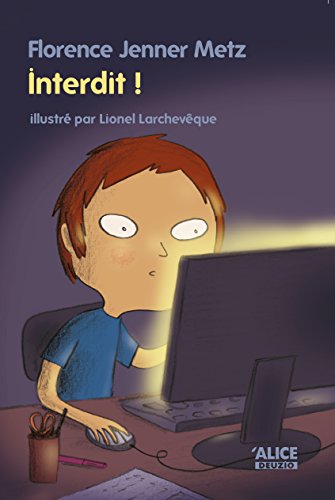
A delightful cautionary tale of a boy, Anatole, who likes to do whatever is forbidden, and then, with his friend, finds a forbidden site on the Internet where he can purchase magical items. He starts with a pen that writes by itself, deferring payment until later. Well you just know that is going to lead to trouble!
When the boys find they are in over their head, where will they turn for help?
On my virtual walk, I have passed Montpelier, but as I am away from home at the moment, the full update will have to wait. In the meantime, I finished another book:
158. Interdit! by Florence Jenner Metz
(No touchstone. Title translates as "Forbidden!")
A delightful cautionary tale of a boy, Anatole, who likes to do whatever is forbidden, and then, with his friend, finds a forbidden site on the Internet where he can purchase magical items. He starts with a pen that writes by itself, deferring payment until later. Well you just know that is going to lead to trouble!
When the boys find they are in over their head, where will they turn for help?
5PaulCranswick
Happy new thread Sir F. I look forward to seeing where this latest thread will take you!
7FAMeulstee
Happy new thread, you are doing well both with books and walking :-)
8sirfurboy
Thanks all. Sorry for not visiting your threads lately but as I am away this week I have just been checking in very occasionally. Normal service will resume shortly!
In the meantime, my next book:
159. Vingt milliards sous la terre - (La Patrouille des Castors 19) - Mitacq
Title translates to: Twenty thousand million underground. However I believe this is a play on words with the Jules Verne classic "Vingt mille lieues sous les mers" (20,000 leagues under the sea). La terre and les mers rhyme as in French you would not sound out the S. In this title "milliards*" is not a depth underground, but an amount of money.
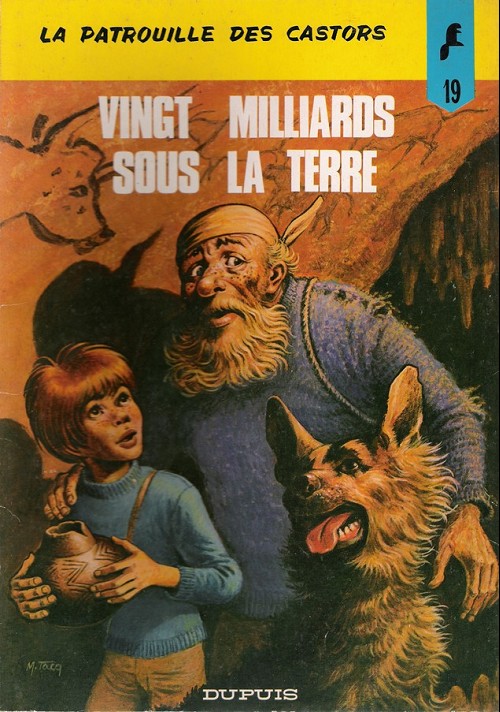
Another two parter, it turns out. This one published in 1974 but the second part had to wait until 1977 for publication!
The scouts travel to the Pyrenees where they climbe a mountain and make camp closet to the famous "Hole of Hell". This has a the sinister reputation. It served as a den for a famous bandit in the seventeenth century:"El Demonio". Since then, there are many stories, and the scouts start getting strange visits. There is the crazy old man who warns of the ghost of El Demonio, there is the helicopter flying man who claims to be a secret agent on the trail of a double agent, a dead body is found on the mountain, and there is an archeologist. Mouche makes friends with a dog and wins over the heart of the crazy old man, but as usual there are dark dealings and quite a mystery to unfold.
*
Milliards. I will put this as a footnote as it has nothing to do with the book:
A milliard is what Americans call a billion as they count on the short scale. British English used to count on the long scale and so also had the word "milliard" but nowadays British usage has largely adopted American, despite the fact that it is less logical. Many people today would probably not know what a milliard is. However, pretty much every other language I have encountered seems to count on the long scale, so a milliard is 1,000,000,000 and a billion is 1,000,000,000,000. Then you get billiard, trillion, trilliard, quadrillion etc.
Why is this more logical? because each "-illion" is 10^6 times the last:
1 million = 10^6
1 billion = 10^12
1 trillion= 10^18
On the short scale, the increments are 10^3, but we start counting properly at the second of them:
(1 thousand = 10^3)
1 million = 10^6
1 billion = 10^9
1 trillion = 10^12
As this makes "bi-illion" the third number, "tri-illion" the fourth number, "quad-rillion" the fifth etc., it is clearly less logical.
When the above book was written (1974), milliard was still in standard British usage too and can be found in E F Schumacher's excellent book Small is Beautiful.
In the meantime, my next book:
159. Vingt milliards sous la terre - (La Patrouille des Castors 19) - Mitacq
Title translates to: Twenty thousand million underground. However I believe this is a play on words with the Jules Verne classic "Vingt mille lieues sous les mers" (20,000 leagues under the sea). La terre and les mers rhyme as in French you would not sound out the S. In this title "milliards*" is not a depth underground, but an amount of money.
Another two parter, it turns out. This one published in 1974 but the second part had to wait until 1977 for publication!
The scouts travel to the Pyrenees where they climbe a mountain and make camp closet to the famous "Hole of Hell". This has a the sinister reputation. It served as a den for a famous bandit in the seventeenth century:"El Demonio". Since then, there are many stories, and the scouts start getting strange visits. There is the crazy old man who warns of the ghost of El Demonio, there is the helicopter flying man who claims to be a secret agent on the trail of a double agent, a dead body is found on the mountain, and there is an archeologist. Mouche makes friends with a dog and wins over the heart of the crazy old man, but as usual there are dark dealings and quite a mystery to unfold.
*
Milliards. I will put this as a footnote as it has nothing to do with the book:
A milliard is what Americans call a billion as they count on the short scale. British English used to count on the long scale and so also had the word "milliard" but nowadays British usage has largely adopted American, despite the fact that it is less logical. Many people today would probably not know what a milliard is. However, pretty much every other language I have encountered seems to count on the long scale, so a milliard is 1,000,000,000 and a billion is 1,000,000,000,000. Then you get billiard, trillion, trilliard, quadrillion etc.
Why is this more logical? because each "-illion" is 10^6 times the last:
1 million = 10^6
1 billion = 10^12
1 trillion= 10^18
On the short scale, the increments are 10^3, but we start counting properly at the second of them:
(1 thousand = 10^3)
1 million = 10^6
1 billion = 10^9
1 trillion = 10^12
As this makes "bi-illion" the third number, "tri-illion" the fourth number, "quad-rillion" the fifth etc., it is clearly less logical.
When the above book was written (1974), milliard was still in standard British usage too and can be found in E F Schumacher's excellent book Small is Beautiful.
9sirfurboy
160. El Demonio - (La Patrouille des Castors 20) - Mitacq
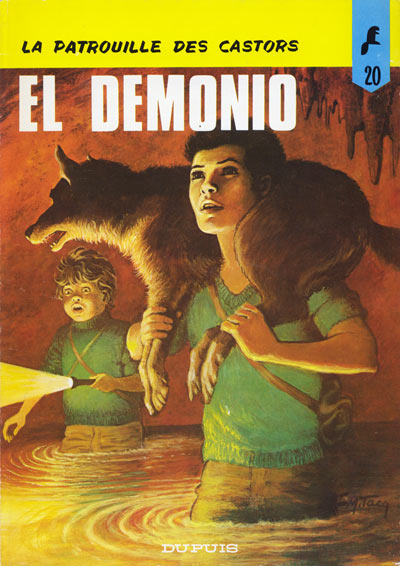
Part two of this story, this one published in 1977. The scouts contend with gangsters, missing diamonds and huge underground cave systems. When people start shooting up and blowing up the caves, some part of me winced at the damage done to the pristine and ancient stalagmites and stalactites.
Part two of this story, this one published in 1977. The scouts contend with gangsters, missing diamonds and huge underground cave systems. When people start shooting up and blowing up the caves, some part of me winced at the damage done to the pristine and ancient stalagmites and stalactites.
10sirfurboy
161. How to write fiction - The Guardian

I have always liked writing as well as reading, but never put the effort into writing a book. Would I do so one day? Maybe. If so, this book would help me not do it too badly. A set of articles on things like characterisation, dialogue etc. All good stuff and also useful for readers who want to understand why some stuff just sounds so amateur.
Still, reading a book is not going to make anyone an expert overnight. This book, however, also provides various writing exercises and for anyone serious about their writing, these are great because nothing breeds competence like practice, practice and practice.
I found this in the e-library. I wouldn't have bought it unless I was serious about writing, but if you are serious about writing then this is a good book to find.

I have always liked writing as well as reading, but never put the effort into writing a book. Would I do so one day? Maybe. If so, this book would help me not do it too badly. A set of articles on things like characterisation, dialogue etc. All good stuff and also useful for readers who want to understand why some stuff just sounds so amateur.
Still, reading a book is not going to make anyone an expert overnight. This book, however, also provides various writing exercises and for anyone serious about their writing, these are great because nothing breeds competence like practice, practice and practice.
I found this in the e-library. I wouldn't have bought it unless I was serious about writing, but if you are serious about writing then this is a good book to find.
11sirfurboy
162. Pathfinder - Angie Sage
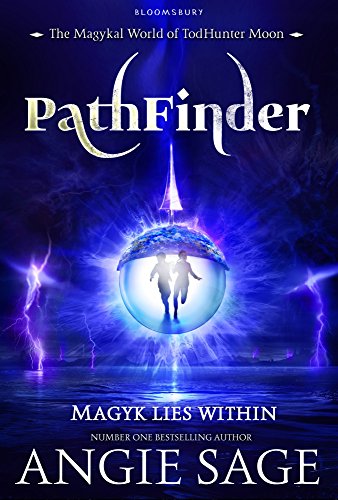
The first in a new series in the world of Magyk, but with a new heroine, TodHunter Moon. Many old friends return in this book, which retains its quirky feel mixed with good characterisation and enjoyable stories. This book also reveals much more about how the world of Magyk came to be, but in doing so perhaps it loses some of the mystery. Nevermind though, as much mystery remains. Good enjoyable stuff for children and young adults (and older readers of the genre).
The first in a new series in the world of Magyk, but with a new heroine, TodHunter Moon. Many old friends return in this book, which retains its quirky feel mixed with good characterisation and enjoyable stories. This book also reveals much more about how the world of Magyk came to be, but in doing so perhaps it loses some of the mystery. Nevermind though, as much mystery remains. Good enjoyable stuff for children and young adults (and older readers of the genre).
12EllaTim
>8 sirfurboy: Good explanation about the million/billion/trillion confusion! I guess lots of people would have to look those up anyway, at least I never owned any million/billion of anything, but it doesn't help when use of the terms is not consistent as well.
Not to talk about the rest of the confusing stuff, when it comes to measuring things...
Not to talk about the rest of the confusing stuff, when it comes to measuring things...
13sirfurboy
>12 EllaTim: Ah yes, there are many cautionary tales of things that went badly wrong because of incorrect conversion of measurements. Especially confusing when measures share the same name (e.g. US and British Gallons, Tons and Tonnes, or Miles (Statute, Roman, Nautical... the last of which varies in distance depending on where you are!)
14PawsforThought
>13 sirfurboy: Don't forget the Swedish/Norwegian mil (mile), which is 10 km.
15sirfurboy
>14 PawsforThought: Yep, that one too. :)
16sirfurboy
So as I mentioned, last week I reached Montpelier:

Creative Commons Image from Wikipedia.
Montpellier is one of the few large cities in France without any Roman heritage and also one of the few cities in southern France without a Greek foundation. nevertheless it is a well known resort, and has a huge student population with three universities and other higher education institutions in the vicinity. About one third of the population are students.
I have since been walking through Narbonne and the parc naturel régional narbonnaise.
Created in 2003, the Regional Natural Park of the Narbonnaise en Méditerranée extends over 80 000 hectares along the coastline of the Aude.
Narbonne is the port town of the Regional Natural Park and the majority of the town's territory is inside the park

Image Creative Commons, by-nc, (c) Lionel Maraval.

Creative Commons Image from Wikipedia.
Montpellier is one of the few large cities in France without any Roman heritage and also one of the few cities in southern France without a Greek foundation. nevertheless it is a well known resort, and has a huge student population with three universities and other higher education institutions in the vicinity. About one third of the population are students.
I have since been walking through Narbonne and the parc naturel régional narbonnaise.
Created in 2003, the Regional Natural Park of the Narbonnaise en Méditerranée extends over 80 000 hectares along the coastline of the Aude.
Narbonne is the port town of the Regional Natural Park and the majority of the town's territory is inside the park

Image Creative Commons, by-nc, (c) Lionel Maraval.
17sirfurboy
163. The Ring of Allaire - Susan Dexter
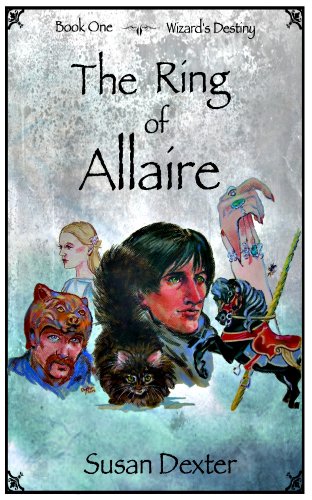
Roni mentioned this one so I added it to my list earlier this year.
Tristan is a young man, apprenticed to a wizard, who finds himself dropped unceremoniously into a classic quest adventure. The book is actually from the early 1980s but has been converted to ebook format more recently. It doesn't feel that dated, but there have been a large number of similar plots to this one since it came out. As it predates them, however, I would credit this with more originality than it seems.
That is not to say it was ever wholly original. Tristan is the classic young and inexperienced hero who can hardly get any magic right, thrust into an adventure to retrieve a magical item because there is no one else to do it. He gains travelling companions, and other quests spin off from the first, but we have been here before with this kind of plot.
What makes this book enjoyable, however, is the nicely contemplated and developed character of Tristan himself. Here is a protagonist with faults a plenty, and with much self doubt as whether he is up to the task at hand, but he brings determination and a good heart. Tristan is a hero you can get behind.
Other characters were perhaps not as well developed, but this was till an enjoyable tale. Not my favourite in the genre but a good solid read.
Roni mentioned this one so I added it to my list earlier this year.
Tristan is a young man, apprenticed to a wizard, who finds himself dropped unceremoniously into a classic quest adventure. The book is actually from the early 1980s but has been converted to ebook format more recently. It doesn't feel that dated, but there have been a large number of similar plots to this one since it came out. As it predates them, however, I would credit this with more originality than it seems.
That is not to say it was ever wholly original. Tristan is the classic young and inexperienced hero who can hardly get any magic right, thrust into an adventure to retrieve a magical item because there is no one else to do it. He gains travelling companions, and other quests spin off from the first, but we have been here before with this kind of plot.
What makes this book enjoyable, however, is the nicely contemplated and developed character of Tristan himself. Here is a protagonist with faults a plenty, and with much self doubt as whether he is up to the task at hand, but he brings determination and a good heart. Tristan is a hero you can get behind.
Other characters were perhaps not as well developed, but this was till an enjoyable tale. Not my favourite in the genre but a good solid read.
18EllaTim
>16 sirfurboy: Montpellier looks nice! That street I wouldn't mind taking a stroll in. And why three universities?
19sirfurboy
>18 EllaTim: I am not sure why they need three, although the University of Montpelier, founded 1160, is one of the oldest in the world.
The other two universities are perhaps an academic example of the phenomenon in economics of clustering:
http://www.economist.com/node/14292202
The other two universities are perhaps an academic example of the phenomenon in economics of clustering:
http://www.economist.com/node/14292202
20PawsforThought
>18 EllaTim: Why not?
21EllaTim
>20 PawsforThought: well, here in Amsterdam there are two universities, separated by religion, I thought this was a Dutch habit, all this separating. And I thought the French were more rational than that?
>19 sirfurboy: That is old! Interesting! Now wouldn't it have been even more economical to have them fuse into one? not saying they should do that, mind.
>19 sirfurboy: That is old! Interesting! Now wouldn't it have been even more economical to have them fuse into one? not saying they should do that, mind.
22PawsforThought
>21 EllaTim: I suppose if you stick to the "university" label only, Stockholm only has one (?), but universities (universitet) and colleges (högskola) are considered equal except universities have research grants. The education is just as good at both, though (and people make no difference in daily speech). Here they are generally just divided up between different areas of study - though many have varying areas of study to choose from and several that coincide with other colleges.
There's the big Stockholm University which has all sorts, Handels is mainly trade/business, Royal Institute of Technology is obv. tech, Karolinska Institutet is medicine, and then there are Försvarshögskolan (Defense), Polishögskolan (Police), and specific ones for the dramatic arts (opera, music, dance, theatre) and sports/gymnastics. There are also a bunch of smaller colleges. I counted 27 colleges and universities in Stockholm, though I might have missed a few.
There's the big Stockholm University which has all sorts, Handels is mainly trade/business, Royal Institute of Technology is obv. tech, Karolinska Institutet is medicine, and then there are Försvarshögskolan (Defense), Polishögskolan (Police), and specific ones for the dramatic arts (opera, music, dance, theatre) and sports/gymnastics. There are also a bunch of smaller colleges. I counted 27 colleges and universities in Stockholm, though I might have missed a few.
23EllaTim
>22 PawsforThought: Ah, that makes sense! I was only counting things that were actually called university. But of course there are more options. There has been a large wave of fusing schools, and universities, here in Holland, the idea being that bigger should be better, (and cheaper of course). Hasn't always improved things, though.
24sirfurboy
In the UK we had polytechnics that could award degrees of supposed equal value to universities (although there was always an academic snobbery around where you get a degree). Margaret Thatcher shook up the UK university system by allowing all of these polytechnics to incorporate as universities, creating the so called "new universities".
In Oxford, for instance, Oxford Polytechnic became Oxford Brookes University. How many universities in Oxford then? Well at least two, but if you count all the colleges as universities in their own right, the answer is 41:
http://www.oxfordcity.co.uk/oxford/home_education_universities.html
Various other cities in the UK have more than one university because of the new universities, but some, like Manchester, for instance, always had two (or more).
In Oxford, for instance, Oxford Polytechnic became Oxford Brookes University. How many universities in Oxford then? Well at least two, but if you count all the colleges as universities in their own right, the answer is 41:
http://www.oxfordcity.co.uk/oxford/home_education_universities.html
Various other cities in the UK have more than one university because of the new universities, but some, like Manchester, for instance, always had two (or more).
25sirfurboy
164. Children of the Lost - David Whitley
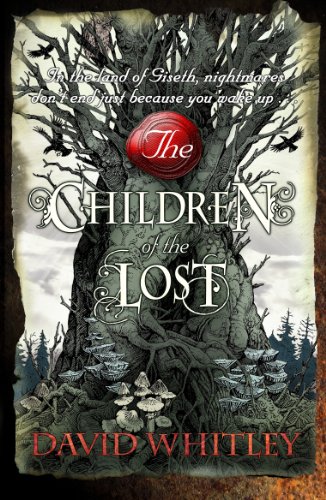
Book 2 of a trilogy that began with The Midnight Charter, which I read several years back. There was no good reason for me to take so long on this sequel, as the Midnight Charter is a good book with a very interesting polemic. I think I described the first book as a young adult antidote to Atlas Shrugged!. Book 2 continues where the first left off, but becomes doubly interesting, because now as the two young people, Mark and Lily, escape the city of Agora (where everything can be bought or sold, even your memories), they find people beyond the city in a place called Aecer, where there is no money or trade and everything is held in common. At first this appears to be an idyllic perfect place, but all is not as it seems.
Just as book one picked apart a dystopia of rampant capitalism, book two shows that the author is no socialist trying to sell his dreams either. No, the books are much more intelligent than this, and there is some pretty deep metaphor and philosophy in these books.
Despite their depth, these are not dull stories, and the adventure continues apace. We are kept abreast of developments in Agora even though Mark and Lily are outside the city, and it all comes together with a suitably good climax that leads inexorably to the last book of the trilogy.
This is a good read. One of the most intelligent young adult reads I have read in a long while, and a good story despite perhaps not being quite as action packed and suspenseful as some others.
Book 2 of a trilogy that began with The Midnight Charter, which I read several years back. There was no good reason for me to take so long on this sequel, as the Midnight Charter is a good book with a very interesting polemic. I think I described the first book as a young adult antidote to Atlas Shrugged!. Book 2 continues where the first left off, but becomes doubly interesting, because now as the two young people, Mark and Lily, escape the city of Agora (where everything can be bought or sold, even your memories), they find people beyond the city in a place called Aecer, where there is no money or trade and everything is held in common. At first this appears to be an idyllic perfect place, but all is not as it seems.
Just as book one picked apart a dystopia of rampant capitalism, book two shows that the author is no socialist trying to sell his dreams either. No, the books are much more intelligent than this, and there is some pretty deep metaphor and philosophy in these books.
Despite their depth, these are not dull stories, and the adventure continues apace. We are kept abreast of developments in Agora even though Mark and Lily are outside the city, and it all comes together with a suitably good climax that leads inexorably to the last book of the trilogy.
This is a good read. One of the most intelligent young adult reads I have read in a long while, and a good story despite perhaps not being quite as action packed and suspenseful as some others.
26sirfurboy
165. The Druid's Son - G R Grove
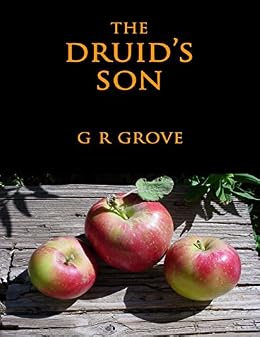
G R Grove is a LT author, who writes historical fiction set in Wales and Ireland. Although self published, her writing is very good. She is a professional non fiction writer, and knows her craft. The books are thoroughly edited, and really demonstrate what is possible (if rare) in self published fiction.
She asked me to read this book several years ago, and I confess that I have only just read it through. That is a pity because the book is very good.
Togi is born the son of an archdruid at a time when the Romans are invading and subduing Britain. He was born at the time of the first assault in 61AD on Ynys Môn (Anglesey, where I have just returned from, having been there all last week). We follow his coming of age, learning of Druid lore in the shadow of the Romans, before things come to a head in the uprising of the Ordovices of 77-78 AD.
One problem of any history of this time is that our sources are scant and we are very largely reliant on the Romans for all we know of the period. Grove is clearly familiar with all those sources, but also fills in detail with use of the Coligny calendar and a fair bit of Irish Gaelic language and lore. It is fiction, but it is as well researched fiction as one could get for the time and she does a good job with it. The story leads to the inevitable conflict we know from history but has a twist to it that makes it less of a defeat than the Roman descriptions suggest.
G R Grove is a LT author, who writes historical fiction set in Wales and Ireland. Although self published, her writing is very good. She is a professional non fiction writer, and knows her craft. The books are thoroughly edited, and really demonstrate what is possible (if rare) in self published fiction.
She asked me to read this book several years ago, and I confess that I have only just read it through. That is a pity because the book is very good.
Togi is born the son of an archdruid at a time when the Romans are invading and subduing Britain. He was born at the time of the first assault in 61AD on Ynys Môn (Anglesey, where I have just returned from, having been there all last week). We follow his coming of age, learning of Druid lore in the shadow of the Romans, before things come to a head in the uprising of the Ordovices of 77-78 AD.
One problem of any history of this time is that our sources are scant and we are very largely reliant on the Romans for all we know of the period. Grove is clearly familiar with all those sources, but also fills in detail with use of the Coligny calendar and a fair bit of Irish Gaelic language and lore. It is fiction, but it is as well researched fiction as one could get for the time and she does a good job with it. The story leads to the inevitable conflict we know from history but has a twist to it that makes it less of a defeat than the Roman descriptions suggest.
27EllaTim
>165 sirfurboy: A well researched book about those times, very interesting. It must be challenging to write. What were people like, how would they have thought?
The BBC had a series called Time Team, if I remember right, where people went to excavations, and tried to reconstruct what a site would have been like. Or they tried to replicate old techniques, for making bronze for example, it was fascinating.
The BBC had a series called Time Team, if I remember right, where people went to excavations, and tried to reconstruct what a site would have been like. Or they tried to replicate old techniques, for making bronze for example, it was fascinating.
28sirfurboy
>27 EllaTim: Yes, the Time Team is great. There is also a site in Pembrokeshire called Castell Henllys where they have reconstructed an iron age hillfort, and on e one occasion the BBC did a series of programmes around modern families living there for a while. The series was called Surviving the Iron Age.
29ronincats
Glad you enjoyed The Ring of Allaire. I'll grant you the trilogy is classic epic fantasy but I'm glad you note that it was an early example. There were many worse attempts to follow in Tolkien's footsteps in the decade and a half after his publication in the US. And yes, Dexter's characters are what make her books keepers for me. Although the flip in the first book is a favorite feature for me as well. My favorite is actually The Wizard's Shadow, which takes place after the events of the trilogy by some 20 years and is only tangentially related. If you ever get a chance to pick that up, I'd recommend it.
30sirfurboy
The Wizard's shadow seems to have a much more up to date cover too and is available on Kindle so I should get to that eventually :) Thanks again.
31sirfurboy
166. Passeport pour le néant (La patrouille des castors, 21) - Mitacq
Title translates to "Passport to the void (Beaver Patrol 21)"
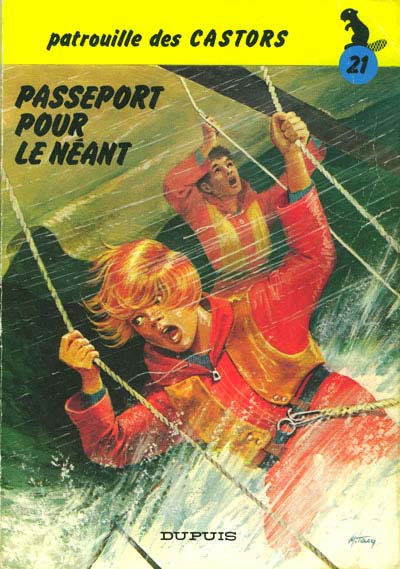
Yet another two parter, this one published in 1979 and the sequel in 1980.
The scouts impress in a sailing competition but miss out on the first prize when they rescue a crew who capsize, having carried out a highly dangerous and illegal manoeuvre to beat the Beaver patrol. The Greek skipper then, in gratitude, offers them a cruise in one of his boats, but the scouts decline as they want to use their own yacht, which mysteriously sinks. Our trusting scouts then fly off to Turkey to crew the Greek man's boat after all, but the Greek skipper won't let them use the sextant, and they become convinced they are off their route. Then they are chased down by a motorised launch, and the plot thickens.
What is the skipper trying to hide? Who is chasing them? These questions get an answer, but not a resolution, as that will have to wait for the next book.
Title translates to "Passport to the void (Beaver Patrol 21)"
Yet another two parter, this one published in 1979 and the sequel in 1980.
The scouts impress in a sailing competition but miss out on the first prize when they rescue a crew who capsize, having carried out a highly dangerous and illegal manoeuvre to beat the Beaver patrol. The Greek skipper then, in gratitude, offers them a cruise in one of his boats, but the scouts decline as they want to use their own yacht, which mysteriously sinks. Our trusting scouts then fly off to Turkey to crew the Greek man's boat after all, but the Greek skipper won't let them use the sextant, and they become convinced they are off their route. Then they are chased down by a motorised launch, and the plot thickens.
What is the skipper trying to hide? Who is chasing them? These questions get an answer, but not a resolution, as that will have to wait for the next book.
32lkernagh
Happy new thread and congratulations on your walking progress! Great batch of reading, too. ;-)
33EllaTim
>28 sirfurboy: That series must have been interesting. Maybe I can still find it on YouTube? I have seen some of the series they made on living in the Victorian age, but the challenge of surviving in prehistoric times is a lot bigger.
I know one can try it out for oneself, living in a prehistoric farm, there's some kind of summer camps, I guess, but I don't think I could handle it. :)
I know one can try it out for oneself, living in a prehistoric farm, there's some kind of summer camps, I guess, but I don't think I could handle it. :)
34PawsforThought
>33 EllaTim: You mean the "Victorian Farm" and "Edwardian Farm" shows? (Those are the only ones I've watched, but I know there are others) I loved those.
35EllaTim
>34 PawsforThought: Yes, those, I did find some stuff on YouTube. So I 'll be watching some of it. I think it 's fascinating to see how people lived without our technology.
36PawsforThought
>35 EllaTim: It's a great show. I thoroughly enjoyed watching one of the people on it mashing up almonds to make marzipan for a cake. It took her all day.
37EllaTim
>36 PawsforThought: Wow, you'd have to want to eat that cake very much!
38PawsforThought
>37 EllaTim: It was for a feast. So many of the things they were doing were like that, though. Needed water for a bath? 10+ trips to the nearest water source with a carrying pole on your shoulders and two small buckets hanging from it.
39sirfurboy
>32 lkernagh: Thanks Lori
>33 EllaTim: "Maybe I can still find it on YouTube?".
I see that you say later that you found something on Youtube. Searching "Surviving the Iron Age" immediately turned up the 1978 "living in the iron age" which appears to be much the same idea, although the series I recalled was from 2001 and I cannot find that on Youtube. Not to worry though, as both see to cover much of the same ground. Indeed, Wikipedia tells me that:
"In 2001 the BBC repeated the experiment with Surviving the Iron Age, which included three children of Living in the Past's castmembers."
>33 EllaTim: "Maybe I can still find it on YouTube?".
I see that you say later that you found something on Youtube. Searching "Surviving the Iron Age" immediately turned up the 1978 "living in the iron age" which appears to be much the same idea, although the series I recalled was from 2001 and I cannot find that on Youtube. Not to worry though, as both see to cover much of the same ground. Indeed, Wikipedia tells me that:
"In 2001 the BBC repeated the experiment with Surviving the Iron Age, which included three children of Living in the Past's castmembers."
40sirfurboy
>34 PawsforThought: Those living on a farm programs were great reconstructions too. Others that the BBC have covered include the children's series "Evacuation" which relived the experience of children being evacuated in the war, as well as "The Victorian House", reconstructing living in the Victoria era and another one in a Welsh Victorian slate mining community.
41sirfurboy
>38 PawsforThought: Hmm, I think if I wanted a bath, I would have gone and bathed in the river rather than carry the bath water all that way!
Then again, that could be perilous in winter!
I was also struck by just how much time was spent just fetching water.
On Sunday I walked up to an Iron Age hill fort near where I live. It was about 200 metres above the river, and the slope was pretty steep so the iron age path would probably follow the modern path somewhat, zigzagging down the hill side. That is a long hard walk to fetch water.
Then again, that could be perilous in winter!
I was also struck by just how much time was spent just fetching water.
On Sunday I walked up to an Iron Age hill fort near where I live. It was about 200 metres above the river, and the slope was pretty steep so the iron age path would probably follow the modern path somewhat, zigzagging down the hill side. That is a long hard walk to fetch water.
42sirfurboy
167. Prisonniers du large - (La patrouille des castors, 22) - Jean-Michel Charlier, Mitacq

Title translates as "Prisoners offshore".
Part 2 of this story, and the scouts find themselves prisoners of gangsters, but will the Girl Guides save the day?
This story is set off and on the Spanish coast which makes it somewhat relevant to my virtual walk, as I have just crossed the border into Spain on that.

Title translates as "Prisoners offshore".
Part 2 of this story, and the scouts find themselves prisoners of gangsters, but will the Girl Guides save the day?
This story is set off and on the Spanish coast which makes it somewhat relevant to my virtual walk, as I have just crossed the border into Spain on that.
43PawsforThought
>41 sirfurboy: Well, often it wasn't *you* taking the bath, it was a member of the family who owned the house. And rivers are cold - not that nice in winter; a warm bath is preferable, imo.
The WW2 evacuation show sounds interesting - I'm going to look for that one.
There's a reconstructed Iron Age village in my home town, just next to the spot where a real Iron Age village lay. It's pretty close to a river, so wouldn't be that long a walk, especially 1500 years ago when the water level was way higher.
The WW2 evacuation show sounds interesting - I'm going to look for that one.
There's a reconstructed Iron Age village in my home town, just next to the spot where a real Iron Age village lay. It's pretty close to a river, so wouldn't be that long a walk, especially 1500 years ago when the water level was way higher.
44sirfurboy
168. L'esclave: Prince Captif - C S Pacat
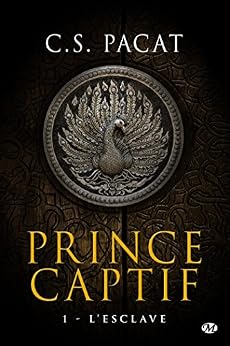
Hmm... not my usual kind of thing. When Roni pointed out a sale of French language books I snapped this one up without too much thought. It is, on the face of it, a story about a prince who is deposed in a palace coup and sent off to a hostile foreign land as a slave, from where he must work his way back to regaining his kingdom.
What I had not appreciated is that the kind of slavery envisaged by the author is perhaps not the most historically accurate representation of that estate, but owes rather more to modern..er..interpretations.
In its favour, the book is quite well written, and although there are pleasure slaves and "mignon" (favourites, or perhaps pets, although I like how that sounds like minion!) there is not too much sex in it - although what there is is almost all male/male, which I hope I don't have a problem with, but is not something I choose to read about.
Anyway I won't carry on with the series. If you want to read a male/male romance though, then this may be just the book!
Hmm... not my usual kind of thing. When Roni pointed out a sale of French language books I snapped this one up without too much thought. It is, on the face of it, a story about a prince who is deposed in a palace coup and sent off to a hostile foreign land as a slave, from where he must work his way back to regaining his kingdom.
What I had not appreciated is that the kind of slavery envisaged by the author is perhaps not the most historically accurate representation of that estate, but owes rather more to modern..er..interpretations.
In its favour, the book is quite well written, and although there are pleasure slaves and "mignon" (favourites, or perhaps pets, although I like how that sounds like minion!) there is not too much sex in it - although what there is is almost all male/male, which I hope I don't have a problem with, but is not something I choose to read about.
Anyway I won't carry on with the series. If you want to read a male/male romance though, then this may be just the book!
46sirfurboy
>43 PawsforThought: That is interesting, thanks.
Here nearly all the iron age settlements are on hills. We have a lot of ancient hillforts!
A friend of mine, who is an archaeologist and has written a text book on our local hill forts, argues that many of the defences of hill forts were for show. They had hugely impressive gates but often a back entrance that was much more lightly defended. Still, it cannot all have been show because surely if you had to carry water up there all the time, someone would have the sense to say "hey, let's build a flashy settlement down by the river!"
Here nearly all the iron age settlements are on hills. We have a lot of ancient hillforts!
A friend of mine, who is an archaeologist and has written a text book on our local hill forts, argues that many of the defences of hill forts were for show. They had hugely impressive gates but often a back entrance that was much more lightly defended. Still, it cannot all have been show because surely if you had to carry water up there all the time, someone would have the sense to say "hey, let's build a flashy settlement down by the river!"
47sirfurboy
>45 Berly: Very wise :)
48sirfurboy
169. See you in the Cosmos - Jack Cheng
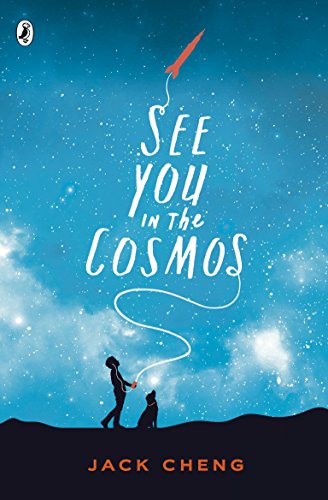
Far and away my best book of the weekend! Maybe one of my favourites this year (but I think it is best to wait a week or two before deciding that).
Alex is 11 and mad about space, astronomy and rockets. His grand ambition is to follow in the footsteps of his hero, Carl Sagan, and to launch his golden iPod into space with a series of audio messages for whatever alien race finds it.
We follow him as he sets off to a rocket convention on his own (or at least, with the companionship of Carl Sagan, his dog), determined to record a slice of human life and blast it into the cosmos. However there are hints that things are not as they should be. Why is he alone? His brother lives in another state, his mother has "quiet days" and lets him do pretty much all he wants as long as he fixes her meals, and his dad is long dead.
En route Alex starts to collect friends who will help him and he also starts to uncover secrets from his past.
I won't say more to avoid spoilers, but what I loved about this book was the way that the author really gets into the head of 11 year old Alex. Alex is an authentic voice, and although some of the adventures might seem unlikely, it is all written plausibly and well.
The story is told entirely through Alex's audio recordings. That is a clever device, which works well.
The adults he finds are, on the whole, good and decent people, although each character is well thought out, and they have their own flaws and journeys to make.
The story thus managed to avoid the potential for darkness and instead produced something that was both very real, and yet heart warming too.
Thoroughly recommended to readers of children and young adult fiction and I think it is a good one to try even if you don't read the genre.
Far and away my best book of the weekend! Maybe one of my favourites this year (but I think it is best to wait a week or two before deciding that).
Alex is 11 and mad about space, astronomy and rockets. His grand ambition is to follow in the footsteps of his hero, Carl Sagan, and to launch his golden iPod into space with a series of audio messages for whatever alien race finds it.
We follow him as he sets off to a rocket convention on his own (or at least, with the companionship of Carl Sagan, his dog), determined to record a slice of human life and blast it into the cosmos. However there are hints that things are not as they should be. Why is he alone? His brother lives in another state, his mother has "quiet days" and lets him do pretty much all he wants as long as he fixes her meals, and his dad is long dead.
En route Alex starts to collect friends who will help him and he also starts to uncover secrets from his past.
I won't say more to avoid spoilers, but what I loved about this book was the way that the author really gets into the head of 11 year old Alex. Alex is an authentic voice, and although some of the adventures might seem unlikely, it is all written plausibly and well.
The story is told entirely through Alex's audio recordings. That is a clever device, which works well.
The adults he finds are, on the whole, good and decent people, although each character is well thought out, and they have their own flaws and journeys to make.
The story thus managed to avoid the potential for darkness and instead produced something that was both very real, and yet heart warming too.
Thoroughly recommended to readers of children and young adult fiction and I think it is a good one to try even if you don't read the genre.
50sirfurboy
>49 Berly: Thanks Berly.
51sirfurboy
My August Summary:
169 books completed this year, 27 of them in August, the same as for July. I was managing a book a day until this week when it all fell apart!
All 17 out of 17 categories started in my category challenge ( https://www.librarything.com/topic/243521 )
9 categories complete (+1 in August)
5 books read in Welsh (none this month)
27 books read in French (+14 in August - this has been French month!)
2 book read in Dutch (none this month)
5 books read in German (none this month)
8 books read in Italian (none this month)
2 books read in Greek (none this month)
2 books read in Old English (+1 in August).
My TBR list is currently 79 books long. That is 18 down this month and real progress on finishing up some books that have been sitting around for too long.
1708 Miles (2749 km) walked. Most of this month was in France but I have just crossed into Spain.
169 books completed this year, 27 of them in August, the same as for July. I was managing a book a day until this week when it all fell apart!
All 17 out of 17 categories started in my category challenge ( https://www.librarything.com/topic/243521 )
9 categories complete (+1 in August)
5 books read in Welsh (none this month)
27 books read in French (+14 in August - this has been French month!)
2 book read in Dutch (none this month)
5 books read in German (none this month)
8 books read in Italian (none this month)
2 books read in Greek (none this month)
2 books read in Old English (+1 in August).
My TBR list is currently 79 books long. That is 18 down this month and real progress on finishing up some books that have been sitting around for too long.
1708 Miles (2749 km) walked. Most of this month was in France but I have just crossed into Spain.
52sirfurboy
Looks like I took over half a million steps in August according to my fitbit (523,429 to be exact) and walked 245 miles. I think that is a new record for me.
In August I also climbed 7 mountain peaks of over 3,000 feet (1000 metres), and visited about 5 or 6 hill forts. I am not sure how to sum the heights without counting them by hand, but it is a lot.
(Edit: Worked it out. Under Settings/Data Export I was able to export the data to a spreadsheet and sum it. Total height in August was 2799 floors, which equates to 27,990 feet or about 9,000 metres. So that is Everest climbed!)
Here is a picture from my walk last Sunday, looking down the valley from Castell Grogwynion iron age hill fort (a few miles from where I live):

In August I also climbed 7 mountain peaks of over 3,000 feet (1000 metres), and visited about 5 or 6 hill forts. I am not sure how to sum the heights without counting them by hand, but it is a lot.
(Edit: Worked it out. Under Settings/Data Export I was able to export the data to a spreadsheet and sum it. Total height in August was 2799 floors, which equates to 27,990 feet or about 9,000 metres. So that is Everest climbed!)
Here is a picture from my walk last Sunday, looking down the valley from Castell Grogwynion iron age hill fort (a few miles from where I live):

53PawsforThought
>52 sirfurboy: 27? That's three times more than I read, and I hit a record!
54sirfurboy
>53 PawsforThought: I expect you were reading weightier tomes than me :)
55PawsforThought
>54 sirfurboy: Ah, some of them probably were, but I did have four books that were lewss than 120 pages.
56EllaTim
>52 sirfurboy: Wow, that is one beautiful place there. I am in awe and total envy... Not only do you live in such a place, but you also walked up (and down) 2799 floors. That number is the easiest for me to relate to, as I live up 3 floors.
I saw one of those shows about the Iron Age on YouTube. People that were in the early show talked about their experiences. Funny detail: they started out in spring, with modern equipment, living in tents, and had 6 weeks to make themselves independent of that. In those first weeks they were cold all the time, building the round house they were going to live in. Once they had that they had a fire going and things improved, they were finally warm.
>51 sirfurboy: Congratulations for making it to Spain!
I saw one of those shows about the Iron Age on YouTube. People that were in the early show talked about their experiences. Funny detail: they started out in spring, with modern equipment, living in tents, and had 6 weeks to make themselves independent of that. In those first weeks they were cold all the time, building the round house they were going to live in. Once they had that they had a fire going and things improved, they were finally warm.
>51 sirfurboy: Congratulations for making it to Spain!
57sirfurboy
>56 EllaTim: Thanks, yes, we are privileged with our location.
Celtic roundhouses would have been very warm, but also quite smoky places.
Celtic roundhouses would have been very warm, but also quite smoky places.
58FAMeulstee
>51 sirfurboy: & >52 sirfurboy: So both in your virtual walk and IRL you have been climbing ;-)
The picture of the vally is beautiful!
The picture of the vally is beautiful!
59sirfurboy
>58 FAMeulstee: Thanks :)
170. L'envers du décor - (La Patrouille des castors, 23) - Jean-Michel Charlier, Mitacq
Title translates to "Behind the scenes"
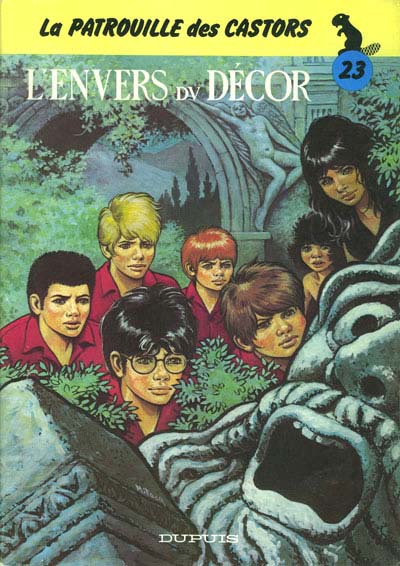
Number 23 in this series, and this one was published in the early 1980s. The scouts go to the fictional town of Elcasino in an unspecified country although the mafia are involved and there is a volcano and Roman ruins. On the other hand, the language on the signs appears to be Spanish, and a spoken language at one point was unrecognisable by me although Google Translate suggested one of the words was Basque. Usually I can work out where the setting is meant to be, but not this one.
The scouts stumble upon a mafia operation involving a secret factory of child slave labour. Once again they only resolve half of the story in this book, and book 24 contains the continuation.
170. L'envers du décor - (La Patrouille des castors, 23) - Jean-Michel Charlier, Mitacq
Title translates to "Behind the scenes"
Number 23 in this series, and this one was published in the early 1980s. The scouts go to the fictional town of Elcasino in an unspecified country although the mafia are involved and there is a volcano and Roman ruins. On the other hand, the language on the signs appears to be Spanish, and a spoken language at one point was unrecognisable by me although Google Translate suggested one of the words was Basque. Usually I can work out where the setting is meant to be, but not this one.
The scouts stumble upon a mafia operation involving a secret factory of child slave labour. Once again they only resolve half of the story in this book, and book 24 contains the continuation.
60sirfurboy
171. Souvenirs d'Elcasino - (La Patrouille des castors, 24) - Jean-Michel Charlier, Mitacq
Title translates to "Memories of Elcasino", but there is a play on words here as Souvenirs as English speakers think of them play a part in the story.
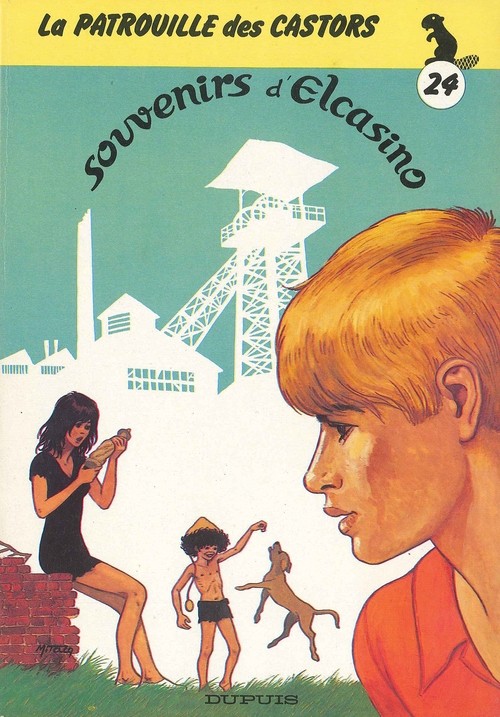
Part two of this story, and there are attempted murders and other dark dealings amongst the gangsters, as they seek to cover their tracks from those meddling kids. Will the bad guys be brought to justice? Well you can probably guess the answer :)
Title translates to "Memories of Elcasino", but there is a play on words here as Souvenirs as English speakers think of them play a part in the story.
Part two of this story, and there are attempted murders and other dark dealings amongst the gangsters, as they seek to cover their tracks from those meddling kids. Will the bad guys be brought to justice? Well you can probably guess the answer :)
61sirfurboy
172. l'empreinte - (La Patrouille des castors, 25) - Jean-Michel Charlier, Mitacq
Title translates to "the footprint".
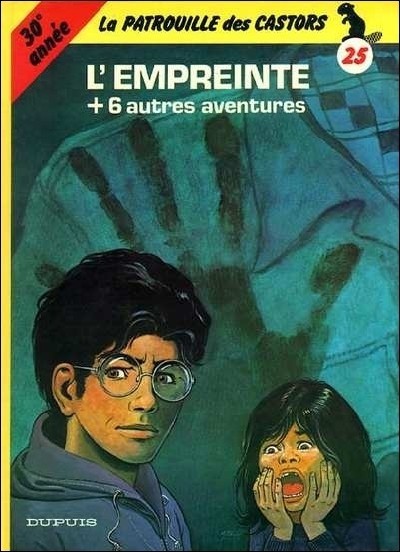
This book is a collection of short stories about the Beaver Patrol over the years. It was a bit strange to start at the first story and see it was back to the 1950s uniforms. Also interesting to see how the style has developed over the years. Subtle changes book by book became very evident in this book when it would jump a decade.
The stories were... meh. One (the totem story) was downright weird and the others were okay - better for jokes than for the tension.
Title translates to "the footprint".
This book is a collection of short stories about the Beaver Patrol over the years. It was a bit strange to start at the first story and see it was back to the 1950s uniforms. Also interesting to see how the style has developed over the years. Subtle changes book by book became very evident in this book when it would jump a decade.
The stories were... meh. One (the totem story) was downright weird and the others were okay - better for jokes than for the tension.
62sirfurboy
After my third best walking week so far, I have arrived at Calella, a seaside resort north of Barcelona:

Also I don't think I mentioned Perpignan, the last large town in France that I passed through last week.

Perpignan has a bout a third of a million people in its larger metropolitan area, and is the capital of the Pyrénées-Orientales department of Southern France.
Though settlement in the area goes back to Roman times, the medieval town of Perpignan seems to have been founded around the beginning of the 10th century.
When James I the Conqueror, king of Aragon and count of Barcelona, founded the Kingdom of Majorca in 1276, Perpignan became the capital of the mainland territories of the new state.

Also I don't think I mentioned Perpignan, the last large town in France that I passed through last week.

Perpignan has a bout a third of a million people in its larger metropolitan area, and is the capital of the Pyrénées-Orientales department of Southern France.
Though settlement in the area goes back to Roman times, the medieval town of Perpignan seems to have been founded around the beginning of the 10th century.
When James I the Conqueror, king of Aragon and count of Barcelona, founded the Kingdom of Majorca in 1276, Perpignan became the capital of the mainland territories of the new state.
63sirfurboy
173. A Christmas Carol - Charles Dickens
I suspect I don't need to say much about this classic Dickens tale, as most people will have seen many adaptions of this story - although usually around Christmas time!
Certainly I was familiar with the story and overall there were no major surprises, but reading the original text (I think perhaps for the first time) I did find some things I had not known were there.
This is a readable Dickens story, but there was in interesting polemic against those who wished to make the lighting of bakers ovens on a Sunday illegal. Dickens weighs in against these people with an impassioned and distinctive "the Sabbath was made for man" world view, and then adds this observation, as pertinent now as ever:
`There are some upon this earth of yours,' returned the Spirit, `who lay claim to know us, and who do their deeds of passion, pride, ill-will, hatred, envy, bigotry, and selfishness in our name, who are as strange to us and all our kith and kin, as if they had never lived. Remember that, and charge their doings on themselves, not us.'
I suspect I don't need to say much about this classic Dickens tale, as most people will have seen many adaptions of this story - although usually around Christmas time!
Certainly I was familiar with the story and overall there were no major surprises, but reading the original text (I think perhaps for the first time) I did find some things I had not known were there.
This is a readable Dickens story, but there was in interesting polemic against those who wished to make the lighting of bakers ovens on a Sunday illegal. Dickens weighs in against these people with an impassioned and distinctive "the Sabbath was made for man" world view, and then adds this observation, as pertinent now as ever:
`There are some upon this earth of yours,' returned the Spirit, `who lay claim to know us, and who do their deeds of passion, pride, ill-will, hatred, envy, bigotry, and selfishness in our name, who are as strange to us and all our kith and kin, as if they had never lived. Remember that, and charge their doings on themselves, not us.'
64EllaTim
>62 sirfurboy: Perpignan looks interesting, I would not mind spending some time there.
65lkernagh
>52 sirfurboy: - Fabulous picture. Everything looks so lush and green. Love your stats and Yahoo for having virtually climbed Everest!
66sirfurboy
>64 EllaTim: Indeed, so many places on this virtual walk that I would like to visit in reality!
>65 lkernagh: Thanks. Yes, Wales is very green. Of course, there is a reason for that... it can also be quite damp!
>65 lkernagh: Thanks. Yes, Wales is very green. Of course, there is a reason for that... it can also be quite damp!
67Berly
<51 I had no idea you read in that many languages!! Let alone a book a day for most of the month. Very impressive. Love the scenery of your walks, both real and imagined. >52 sirfurboy: That is one gorgeous view! I took my Fitbit off this past week--no walking outside with the air quality we've been having and I knew it would just frustrate me to have such low stats. I'll start up again next week.
68sirfurboy
>67 Berly: Thanks :)
I can understand the frustration at low stats.
An issue I have with my Fitbit Surge is that the battery is clearly not holding charge like it used to. It needs charging every day right now, and soon, if this continues, I won't be able to wear it at night.
If I wanted an Apple watch...!
I have been researching battery replacement. It appears I can do it as long as I am prepared to cut off and replace the strap too, and even then it is as fiddly as an iPhone repair.
I am probably going to get the Ionic, so I think I will postpone the repair until I have that, just in case I break it and end up with nothing to track my stats.
Then I will have to decide whether I keep it as a spare device or whether I pass it on to a new home!
I do love my Fitbit, but I resent having technology that is considered "disposable" after a few years.
I can understand the frustration at low stats.
An issue I have with my Fitbit Surge is that the battery is clearly not holding charge like it used to. It needs charging every day right now, and soon, if this continues, I won't be able to wear it at night.
If I wanted an Apple watch...!
I have been researching battery replacement. It appears I can do it as long as I am prepared to cut off and replace the strap too, and even then it is as fiddly as an iPhone repair.
I am probably going to get the Ionic, so I think I will postpone the repair until I have that, just in case I break it and end up with nothing to track my stats.
Then I will have to decide whether I keep it as a spare device or whether I pass it on to a new home!
I do love my Fitbit, but I resent having technology that is considered "disposable" after a few years.
69EllaTim
>I completely agree with resenting disposable technology. I want to be able to repair my stuff. To change a battery when it' necessary, and that it's for me to decide when I want to throw something out. Hint: when it's really broken.
Good development: there are more and more phone, tablet, laptop repair shops appearing in town, I guess there are more people who don't want to buy new all the time. Don't know if they repair fitbits!
Good development: there are more and more phone, tablet, laptop repair shops appearing in town, I guess there are more people who don't want to buy new all the time. Don't know if they repair fitbits!
70sirfurboy
174. L'Île du Crabe - (La patrouille des castors, 26)
Translates to: The island of the crab.
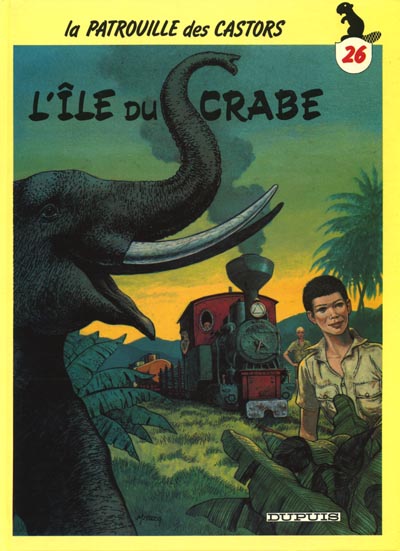
There are thirty of these books in all, so I am nearing the end of the series. In this tale, Tapir starts oof witha tempter tantrum, storms out of the house and ends up meeting some refugees from a crab shaped island called L'Île du Crabe, located next to a crocodile shaped island known as Croco.
The scouts go on to get involved in an international aid effort and foiling criminals stealing the aid, and pirates intent on taking over their ship and other such adventures.
The French in this story felt a bit more up to date than previous stories. The slang was stuff I actuallt recognised as French slang now!
Translates to: The island of the crab.
There are thirty of these books in all, so I am nearing the end of the series. In this tale, Tapir starts oof witha tempter tantrum, storms out of the house and ends up meeting some refugees from a crab shaped island called L'Île du Crabe, located next to a crocodile shaped island known as Croco.
The scouts go on to get involved in an international aid effort and foiling criminals stealing the aid, and pirates intent on taking over their ship and other such adventures.
The French in this story felt a bit more up to date than previous stories. The slang was stuff I actuallt recognised as French slang now!
71sirfurboy
175. Blocus - (La patrouille des castors, 27) - Mitacq
Title translates as "Blockade"
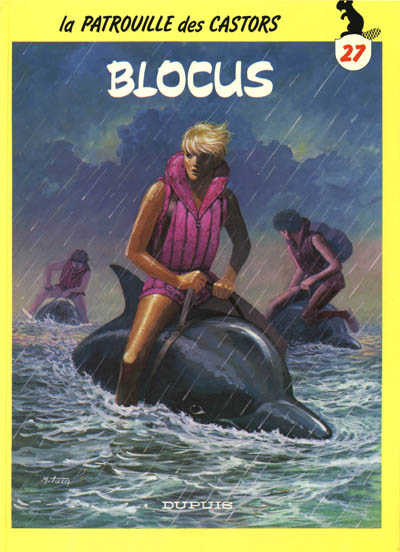
Once again, a second part to a previous book. The scouts are still on the Crab island, still oppressed and then blockaded by the evil regime on the Crocodile island, "Croco". Germ warfare and an attempt to starve a populace leads to more daring escapades, including riding tamed dolphins to avoid the sea mines.
Once again, these books are feling much more up to date now. This one was written in 1987 and the font style is clearer, and the language feels more modern.
Title translates as "Blockade"
Once again, a second part to a previous book. The scouts are still on the Crab island, still oppressed and then blockaded by the evil regime on the Crocodile island, "Croco". Germ warfare and an attempt to starve a populace leads to more daring escapades, including riding tamed dolphins to avoid the sea mines.
Once again, these books are feling much more up to date now. This one was written in 1987 and the font style is clearer, and the language feels more modern.
72sirfurboy
176. Boudica: Dreaming the Eagle - Manda Scott

Some years ago I read a book by this author called Rome: The Emperor's Spy. I enjoyed the book overall despite some rather sensationalist liberties taken with first century history, but discovered it was actually a follow on from a series about the British warrior queen, Boudicca. I thus got hold of the whole of the preceding series, intending to read them.
So much for good intentions. I have only just, several years on, finished the first of these books. Some of the fault is my own, but I think some fault lies with the story too, which is extremely slow getting going.
Manda Scott is a good enough writer, but she neither has the punchiness and power of Conn Iggulden's writing, nor the meticulous research and historical knowledge of Harry Sidebottom. Her characterisations are okay, but really only one of them came to grip me, and even that one not until the chapters were well into double digits.
Manda Scott has clearly read all the extant information about the first century Roman invasion of Britain, and has inserted every major character of the time into her story. However there is a paucity of actual information, so she fills in the gaps with some extremely fanciful interpretations, and has the intertwining of every major figure of history happen in a series of truly Dickensian and counter historical circumstances.
She ignores what we actually know about Boudicca, and places her heroine into a kind of native American shamanistic animist society. The society does not really ring true, and will greatly annoy Celtic historians and archaeologists. She also imports rather a lot of Irish language and names into her story, despite the fact that insular Brythonic is really not that closely related to the language of Hibernia.
Caradoc (Caratacus) appears in this story despite having nothing much to do with Boudicca in history. And it goes on...
On the other hand, Manda Scott is strong on talk about the animals. She was a vet, and it shows in her descriptions. A far better vet than a historian perhaps.
Oh, and what is with all the descriptions of hair colour when describing new characters? I don't get it!
Not a terrible story but far from the best in the genre.

Some years ago I read a book by this author called Rome: The Emperor's Spy. I enjoyed the book overall despite some rather sensationalist liberties taken with first century history, but discovered it was actually a follow on from a series about the British warrior queen, Boudicca. I thus got hold of the whole of the preceding series, intending to read them.
So much for good intentions. I have only just, several years on, finished the first of these books. Some of the fault is my own, but I think some fault lies with the story too, which is extremely slow getting going.
Manda Scott is a good enough writer, but she neither has the punchiness and power of Conn Iggulden's writing, nor the meticulous research and historical knowledge of Harry Sidebottom. Her characterisations are okay, but really only one of them came to grip me, and even that one not until the chapters were well into double digits.
Manda Scott has clearly read all the extant information about the first century Roman invasion of Britain, and has inserted every major character of the time into her story. However there is a paucity of actual information, so she fills in the gaps with some extremely fanciful interpretations, and has the intertwining of every major figure of history happen in a series of truly Dickensian and counter historical circumstances.
She ignores what we actually know about Boudicca, and places her heroine into a kind of native American shamanistic animist society. The society does not really ring true, and will greatly annoy Celtic historians and archaeologists. She also imports rather a lot of Irish language and names into her story, despite the fact that insular Brythonic is really not that closely related to the language of Hibernia.
Caradoc (Caratacus) appears in this story despite having nothing much to do with Boudicca in history. And it goes on...
On the other hand, Manda Scott is strong on talk about the animals. She was a vet, and it shows in her descriptions. A far better vet than a historian perhaps.
Oh, and what is with all the descriptions of hair colour when describing new characters? I don't get it!
Not a terrible story but far from the best in the genre.
73EllaTim
>72 sirfurboy: That's a pity, that it's not really what you were hoping for. I would be annoyed by obvious inaccuracy as well. Reading historical novels is in part a way to get to know more about the past
74PaulCranswick
>73 EllaTim: Really enjoyed your review even though it probably won't result in me seeking out the book. Agree with you on the writing of Conn Iggulden who I always enjoy - especially his Genghis books.
Have a great weekend.
Have a great weekend.
75ronincats
Just catching up after my trip. My Fitbit is acting up too so I won't get credit for much of it.
76Berly
My Fitbit, just this hour, came apart! I have to see if I can glue the strap part back on. Sadness.
77LovingLit
>24 sirfurboy: interesting! We have (had?) the same system here. Polytechnics still exist here, their qualifications are seen increasingly more robust, and of a more practical nature than University qualifications.
78sirfurboy
>73 EllaTim: Yes I found the inaccuracies quite annoying. I understand, however, that any story about the Britons of that time are going to be full of conjecture, because the Britons themselves left no written record, so we only have Roman sources and archaeology to fall back on. However this one went beyond conjecture by ignoring the evidence that we do have.
It would have been more forgivable if the story had been punchier, but this one dragged quite a bit. Still I have all the sequels so I will keep going for now.
I was hoping I would be ready to report the sequel now, but I had a busy weekend which cut back on reading time, and book 2 is still a bit long winded!
It would have been more forgivable if the story had been punchier, but this one dragged quite a bit. Still I have all the sequels so I will keep going for now.
I was hoping I would be ready to report the sequel now, but I had a busy weekend which cut back on reading time, and book 2 is still a bit long winded!
79sirfurboy
>74 PaulCranswick: Thanks Paul. the weekend was productive, even if it meant I did less walking and reading than usual. My daughter has some nice new furniture though.
>75 ronincats: Sorry to hear the Fitbit is acting up. I hope you had a good time away though.
>76 Berly: And sorry to hear about your Fitbit too. Still, it may well count steps if you keep it in your pocket? I am not sure gluig a strap would work... would it be strong enough? But you can buy replacement straps for them. Some models have an official one and there are unofficial straps for all models I think.
>75 ronincats: Sorry to hear the Fitbit is acting up. I hope you had a good time away though.
>76 Berly: And sorry to hear about your Fitbit too. Still, it may well count steps if you keep it in your pocket? I am not sure gluig a strap would work... would it be strong enough? But you can buy replacement straps for them. Some models have an official one and there are unofficial straps for all models I think.
80sirfurboy
>77 LovingLit: I think its a pity we don't still have polytechnics here too. Incorporating them all as new universities was good for them, I suppose, but it really just played into the academic snobbery over the qualifications, rather than challenging it.
81EllaTim
>78 sirfurboy: Good luck ploughing on with your reading.
I admire the archaeologists who have so little to go on, and still can make a picture for us.
By coincidence I visited a barrow site yesterday. Just a small mound on the earth. But it had been there from 2000 B.C. Does make you wonder.
I admire the archaeologists who have so little to go on, and still can make a picture for us.
By coincidence I visited a barrow site yesterday. Just a small mound on the earth. But it had been there from 2000 B.C. Does make you wonder.
82The_Hibernator
I've enjoyed A Christmas Carol on a few occasions. My favorite was when I listened to Tim Curry's narration of it. Another favorite was watching A Klingon Christmas Carol. I hope I can go to that one again this year - if only I can remember which theater played it. :)
83sirfurboy
>81 EllaTim: Yes, archaeology is fascinating, and I have a couple of friends who are archaeologists. One of them wrote the book on hill forts of Cardigan Bay that I reviewed earlier this year.
He has an interesting job, because he gets to charter planes to fly over Wales, particularly when there has been drought or snowfall, and to conduct aerial surveys looking for lost structures on the ground.
Drought is useful for finding them because ancient ditches retain more moisture and show up as greener in drought, and likewise, covered over walls show up as browner.
The mound you saw sounds like a bronze age cairn, although it would be even more exciting if it were a Neolithic passage tomb.
He has an interesting job, because he gets to charter planes to fly over Wales, particularly when there has been drought or snowfall, and to conduct aerial surveys looking for lost structures on the ground.
Drought is useful for finding them because ancient ditches retain more moisture and show up as greener in drought, and likewise, covered over walls show up as browner.
The mound you saw sounds like a bronze age cairn, although it would be even more exciting if it were a Neolithic passage tomb.
84sirfurboy
>82 The_Hibernator: A Klingon Christmas carol sounds like an interesting experience! Do the Klingons become er... friendly at the end?
85sirfurboy
I have reached Barcelona on my virtual walk.
Barcelona is home to several world heritage sights, but perhaps particularly the awesome but still unfinished Sagrada Família church, which has been under construction since 1882, and is currently slated for completion by 2026.
And I thought I had trouble with builders estimates!

Barcelona is also capital of the Spanish autonomous region of Catalonia. Catalonia has its own language, spoken widely in Catalonia, and down into Valencia but also in adjoining areas of Andorra, southern France and off shore in the Balearic islands. The language is a Romance language closely related (or perhaps even a type of) Occitan. This probably makes it closer to French than to Spanish. For that reason (and because I have a big list of French books to read still) I am still reading in French :)... there is also the small problem that I don't speak any Spanish so reading in Spanish is not going to happen any time soon.
Catalan is a compulsory subject in schools, just as Welsh is in Wales. I am not sure if Catalonia has the same system as us, where there are Welsh medium and English medium schools, with the English ones teaching Welsh as a second language. If anyone knows, I would be curious to know if there are Spanish medium and Catalan medium schools.
Here is another creative commons picture from Wikipedia of Barcelona.

Catalonia is a region in Europe that is seeking independence. It is also the industrial powerhouse of Spain, so independence would be bad for the rest of Spain, whereas Catalonia could almost certainly make a success of independence. It is a hot political topic at the current time.
Barcelona is home to several world heritage sights, but perhaps particularly the awesome but still unfinished Sagrada Família church, which has been under construction since 1882, and is currently slated for completion by 2026.
And I thought I had trouble with builders estimates!

Barcelona is also capital of the Spanish autonomous region of Catalonia. Catalonia has its own language, spoken widely in Catalonia, and down into Valencia but also in adjoining areas of Andorra, southern France and off shore in the Balearic islands. The language is a Romance language closely related (or perhaps even a type of) Occitan. This probably makes it closer to French than to Spanish. For that reason (and because I have a big list of French books to read still) I am still reading in French :)... there is also the small problem that I don't speak any Spanish so reading in Spanish is not going to happen any time soon.
Catalan is a compulsory subject in schools, just as Welsh is in Wales. I am not sure if Catalonia has the same system as us, where there are Welsh medium and English medium schools, with the English ones teaching Welsh as a second language. If anyone knows, I would be curious to know if there are Spanish medium and Catalan medium schools.
Here is another creative commons picture from Wikipedia of Barcelona.

Catalonia is a region in Europe that is seeking independence. It is also the industrial powerhouse of Spain, so independence would be bad for the rest of Spain, whereas Catalonia could almost certainly make a success of independence. It is a hot political topic at the current time.
87sirfurboy
Anyone else having trouble posting? It seems I can only post short messages and cannot edit them. I also cannot post the long review I wrote :(
88sirfurboy
177. Boudica: Dreaming the Bull - Manda Scott
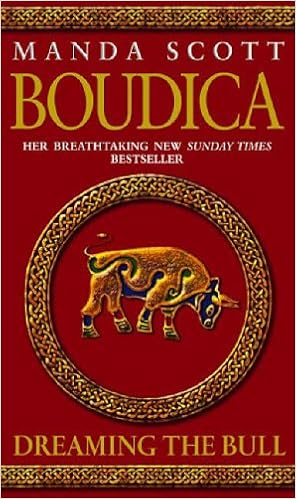
The second of this somewhat underwhelming series. The story telling is not so bad that I am ready to give up yet (as I already have the books), but I will still fall short of recommending them.
Book 2 has second book syndrome. It is all about setting up the characters and putting them in place, and lacks a truly coherent narrative of its own. The first half of the book describes the slide of Ban into an objectionable Romanised officer who fights against his own people, and becomes sadistic and nasty. The character study is overlong, but deep and probably the best characterisation of the book. Nevertheless I could not really quite understand why this descent should happen - particularly after it was already clear that his enemy of book 1 had lied to him about the death of his sister.
As with book 1, this book was a slow starte, and it was really only in the second half that we got some action, describing the capture of Caradoc, and his being taken to Rome. This story adds the fictional hypothesis that he later escaped Rome.
The closing words of the book, in the afterword, read:
"It should be remembered, above all, that this is fiction. The skeleton of known fact is very thin and disjointed and the fantasy woven around it is designed to fill in those gaps in as compelling a way as possible. Don’t take any of it as sworn fact. It won’t be."
It is good that she added that disclaimer, because there is some very fanciful stuff in this work. I don't really have a problem with a fictional thesis of Caradoc escaping Rome, but to be honest, this work does not feel like a filling out of a skeleton of known fact. It is more like someone has removed various parts of the skeleton and replaced them with parts from a totally different animal, and *then* added on the flesh.
Language continues to annoy me. The author does not appear to know that Brythonic was a widely spoken common language at the time of the Roman invasion. Although there were no doubt dialects, the language was mutually intelligible across most of the island. She also confuses Irish and Welsh, perhaps deliberately, but even in her notes in book 1, she seems to assume the languages are closer than they really are.
Boudica as a great warrior at this period is also very counter historical. Maybe this book would have been better as a fantasy. Especially so as it is so filled with shamanistic magic, "true dreams", communing with the dead and other such magical elements.
Still, historical inaccuracies aside, this story is okay. It is slow off the mark, but has some strengths. It is a very long way from the best in the genre, but it is not terrible.
Oh and the bull in the title refers to Mithras, just in case you were wondering.
The second of this somewhat underwhelming series. The story telling is not so bad that I am ready to give up yet (as I already have the books), but I will still fall short of recommending them.
Book 2 has second book syndrome. It is all about setting up the characters and putting them in place, and lacks a truly coherent narrative of its own. The first half of the book describes the slide of Ban into an objectionable Romanised officer who fights against his own people, and becomes sadistic and nasty. The character study is overlong, but deep and probably the best characterisation of the book. Nevertheless I could not really quite understand why this descent should happen - particularly after it was already clear that his enemy of book 1 had lied to him about the death of his sister.
As with book 1, this book was a slow starte, and it was really only in the second half that we got some action, describing the capture of Caradoc, and his being taken to Rome. This story adds the fictional hypothesis that he later escaped Rome.
The closing words of the book, in the afterword, read:
"It should be remembered, above all, that this is fiction. The skeleton of known fact is very thin and disjointed and the fantasy woven around it is designed to fill in those gaps in as compelling a way as possible. Don’t take any of it as sworn fact. It won’t be."
It is good that she added that disclaimer, because there is some very fanciful stuff in this work. I don't really have a problem with a fictional thesis of Caradoc escaping Rome, but to be honest, this work does not feel like a filling out of a skeleton of known fact. It is more like someone has removed various parts of the skeleton and replaced them with parts from a totally different animal, and *then* added on the flesh.
Language continues to annoy me. The author does not appear to know that Brythonic was a widely spoken common language at the time of the Roman invasion. Although there were no doubt dialects, the language was mutually intelligible across most of the island. She also confuses Irish and Welsh, perhaps deliberately, but even in her notes in book 1, she seems to assume the languages are closer than they really are.
Boudica as a great warrior at this period is also very counter historical. Maybe this book would have been better as a fantasy. Especially so as it is so filled with shamanistic magic, "true dreams", communing with the dead and other such magical elements.
Still, historical inaccuracies aside, this story is okay. It is slow off the mark, but has some strengths. It is a very long way from the best in the genre, but it is not terrible.
Oh and the bull in the title refers to Mithras, just in case you were wondering.
90EllaTim
>85 sirfurboy: Wonderful pictures of Barcelona. Nice contrast between the two. Fancy starting a building project like that, lasting over a century, I shudder to think about budgets!
>83 sirfurboy: my cairn was just a single grave, nothing extra found in it, just the impression of one buried person. I looked it up, it was supposed to be late neolithicum, bell beaker culture.
>83 sirfurboy: my cairn was just a single grave, nothing extra found in it, just the impression of one buried person. I looked it up, it was supposed to be late neolithicum, bell beaker culture.
91FAMeulstee
>85 sirfurboy: The building of the Sagrada Família is indeed a long term project, in its kind similair to many cathedrals build in the Middle Ages.
After the recent visits to Barcelona by Darryl (@kidzdoc) and Joe (@jnwelch) & Debbi my interest to visit it one day has increased.
>87 sirfurboy: Yes, some others were complaining abou it too. The problem seems to be solved now.
After the recent visits to Barcelona by Darryl (@kidzdoc) and Joe (@jnwelch) & Debbi my interest to visit it one day has increased.
>87 sirfurboy: Yes, some others were complaining abou it too. The problem seems to be solved now.
92sirfurboy
>91 FAMeulstee: I am glad the posting issue was not just me then. Thanks.
Barcelona definitely seems like an interesting place to visit, and of course the Catalan question is especially prominent right now with the tussle between the Catalan lawmakers, calling a referendum for 1st October, and the Spanish court that has ruled this illegal and ordered the voting papers seized.
Interesting times...
Barcelona definitely seems like an interesting place to visit, and of course the Catalan question is especially prominent right now with the tussle between the Catalan lawmakers, calling a referendum for 1st October, and the Spanish court that has ruled this illegal and ordered the voting papers seized.
Interesting times...
93sirfurboy
178. Dreaming the Hound - Manda Scott
Book three of this trilogy in four parts (thanks, Douglas Adams :) ).
This book is better than the mess that was Dreaming the Bull. Now we have some action, but without being so overwritten in the way of Dreaming the Eagle. This book actually seemed to get a bit of pace, although it still could have been edited down quite a lot and carried the story better.
Manda Scott's writing is a little stodgy. I have said for each book that they lack punch, and that is true again, despite the fact that in this book things move forward better. The action covers the few years leading up to the outrage that caused Boudica to raise an army against the Romans, and when we get to that event, Manda Scott makes full use of the limited historical accounts we have to put together a narrative that is at last convincing... in parts.
What is unconvincing is her description of the Eceni society. Indeed, she seems to have read this from Julius Caesar:
Caesar also says that among the Britons, up to a dozen men (father, sons and brothers) could jointly possess their women. The resulting children would be assigned to whichever man was willing to marry the woman. Today this is seen as a common cliche of ancient barbarian ethnography and political propaganda intended by Caesar to provide a moral justification for his campaigns. For Manda Scott though, it is justification for creating a society that is matriarchal, and that has no real sense of marriage (despite the historical sources agreeing that the real Boudica was the wife of Prasutagus).
The other area that really throws this whole series into the realm of fantasy rather than historical fiction is the nature of the dreaming and associated magics, which seem to be neo-pagan rather than based on any celtic history, and here are shown as not merely pagan belief but actually efficacious. It is a potential huge deus ex machine, although she is careful not to allow the magical interventions to quite ruin the plot.
More worrying was the author's forward where she makes clear that she herself believes in these true dreams and runs dream workshops. Magical elements in a historical fantasy are one thing, but as soon as an author starts telling me that these magical elements are true in the real world, I reach for my anti-unicorn spray!
The other element I found unconvincing in this book was Ban's redemption. Book 2 had his long and unconvincing slide into a great moral monster, and then suddenly he is redeemed in this book. Obvious, yes, but clunky and unconvincing.
This story remains good in places, particularly when describing animals and animal husbandry, on which the author is clearly both an expert and about which she is passionate.
Nevertheless I am now of the firm opinion that, if you read the author's later works and enjoy them, you should by no means go back and read the earlier stuff, even if that will explain who the characters are!
Book three of this trilogy in four parts (thanks, Douglas Adams :) ).
This book is better than the mess that was Dreaming the Bull. Now we have some action, but without being so overwritten in the way of Dreaming the Eagle. This book actually seemed to get a bit of pace, although it still could have been edited down quite a lot and carried the story better.
Manda Scott's writing is a little stodgy. I have said for each book that they lack punch, and that is true again, despite the fact that in this book things move forward better. The action covers the few years leading up to the outrage that caused Boudica to raise an army against the Romans, and when we get to that event, Manda Scott makes full use of the limited historical accounts we have to put together a narrative that is at last convincing... in parts.
What is unconvincing is her description of the Eceni society. Indeed, she seems to have read this from Julius Caesar:
Caesar also says that among the Britons, up to a dozen men (father, sons and brothers) could jointly possess their women. The resulting children would be assigned to whichever man was willing to marry the woman. Today this is seen as a common cliche of ancient barbarian ethnography and political propaganda intended by Caesar to provide a moral justification for his campaigns. For Manda Scott though, it is justification for creating a society that is matriarchal, and that has no real sense of marriage (despite the historical sources agreeing that the real Boudica was the wife of Prasutagus).
The other area that really throws this whole series into the realm of fantasy rather than historical fiction is the nature of the dreaming and associated magics, which seem to be neo-pagan rather than based on any celtic history, and here are shown as not merely pagan belief but actually efficacious. It is a potential huge deus ex machine, although she is careful not to allow the magical interventions to quite ruin the plot.
More worrying was the author's forward where she makes clear that she herself believes in these true dreams and runs dream workshops. Magical elements in a historical fantasy are one thing, but as soon as an author starts telling me that these magical elements are true in the real world, I reach for my anti-unicorn spray!
The other element I found unconvincing in this book was Ban's redemption. Book 2 had his long and unconvincing slide into a great moral monster, and then suddenly he is redeemed in this book. Obvious, yes, but clunky and unconvincing.
This story remains good in places, particularly when describing animals and animal husbandry, on which the author is clearly both an expert and about which she is passionate.
Nevertheless I am now of the firm opinion that, if you read the author's later works and enjoy them, you should by no means go back and read the earlier stuff, even if that will explain who the characters are!
94sirfurboy
179. Le calvaire du mort pendu - (La patrouille des castors, 28) - Mitacq
Title translates as "The ordeal of the hanged man." The word calvaire appears to derive from Calvary.
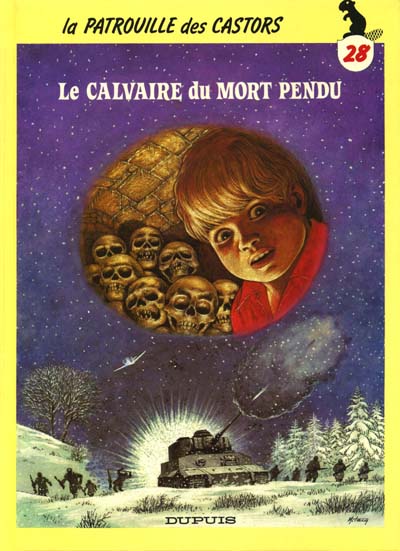
Written in 1989, and progressively more up to date, this adventure involves an American teenage girl travelling with a French friend and looking to find a secret treasure that her father uncovered when he was posted to the Ardennes forest of Belgium in the Second World War. Meanwhile there are gangsters in the vicinity, and the scouts must look after a camp full of cubs and keep them safe.
There was a touching moment at the end of the book where Tapir writes a long letter to his new American girlfriend (who has returned home), explaining that he keeps her photo under his pillow.
Title translates as "The ordeal of the hanged man." The word calvaire appears to derive from Calvary.
Written in 1989, and progressively more up to date, this adventure involves an American teenage girl travelling with a French friend and looking to find a secret treasure that her father uncovered when he was posted to the Ardennes forest of Belgium in the Second World War. Meanwhile there are gangsters in the vicinity, and the scouts must look after a camp full of cubs and keep them safe.
There was a touching moment at the end of the book where Tapir writes a long letter to his new American girlfriend (who has returned home), explaining that he keeps her photo under his pillow.
95sirfurboy
180. Beginners' French: Food and drink - Open University
I have made a fantastic discovery on Amazon that will appeal to anyone else who likes learning stuff. The Open University is a university in Britain that is designed to facilitate self study and distance learning, and to allow people to study on their own for degrees and other qualifications. To get a degree you have to pay course fees and the learning is structured with assessments and set work.
However the Open University also provides some free access courses, designed as tasters, or else as part of a wider educational remit to make education available to all. You can enrol for these courses on their OpenLearn platform.
I was aware of these already, and when I started learning Italian, I used one of their open courses.
The new discovery, however, is that they have made all their course material for some 285 such courses available for free in the form of ebooks on Amazon. I was not sure if this was UK only (the Open University receives UK taxpayer funding), but on checking Amazon.com, I see the titles there too.
The course material is best used in conjunction with the OpenLearn platform itself, but works pretty well as a standalone book.
This first title was really too easy for me, but it contained some interesting background information in any case. I have added a lot of their titles to my TBR now, so no doubt will be reviewing more soon.
I have made a fantastic discovery on Amazon that will appeal to anyone else who likes learning stuff. The Open University is a university in Britain that is designed to facilitate self study and distance learning, and to allow people to study on their own for degrees and other qualifications. To get a degree you have to pay course fees and the learning is structured with assessments and set work.
However the Open University also provides some free access courses, designed as tasters, or else as part of a wider educational remit to make education available to all. You can enrol for these courses on their OpenLearn platform.
I was aware of these already, and when I started learning Italian, I used one of their open courses.
The new discovery, however, is that they have made all their course material for some 285 such courses available for free in the form of ebooks on Amazon. I was not sure if this was UK only (the Open University receives UK taxpayer funding), but on checking Amazon.com, I see the titles there too.
The course material is best used in conjunction with the OpenLearn platform itself, but works pretty well as a standalone book.
This first title was really too easy for me, but it contained some interesting background information in any case. I have added a lot of their titles to my TBR now, so no doubt will be reviewing more soon.
96PawsforThought
>95 sirfurboy: Oh, how great! I've listened to a few Open University lectures as podcasts, but had no idea that they'd released their material as ebooks. Will definitely have a look at the language section and see what they have re: French and German.
97EllaTim
>96 PawsforThought: Thanks for mentioning this. I will certainly have a look. And at the OpenLearn platform as well.
98sirfurboy
You are welcome. I did notice that the Amazon ebooks did not allow interactive exercises even though the text mentions matching French and English words or phrases. However you can do the exercises on OpenLearn, and if you don't want to do that, then you could just use a scrap of note paper. I would be annoyed if the books cost money, but as they are free, it was not a problem at all.
99EllaTim
>98 sirfurboy: Yes, I understand that. Maybe making them interactive would be complicated.
I'll certainly have a look at OpenLearn, but I hope it's accessible for non-UK learners
I'll certainly have a look at OpenLearn, but I hope it's accessible for non-UK learners
100EllaTim
>99 EllaTim: I checked it out by signing up. Internationally accessible, that's great, thanks Stephen!
101sirfurboy
>100 EllaTim: Thanks for confirming that. I am glad it is accessible to you.
102sirfurboy
181. Dreaming the Serpent Spear - Manda Scott
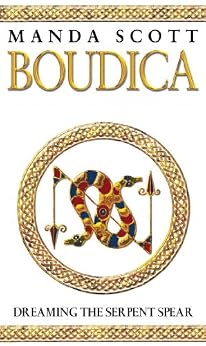
I recycled the Douglas Adams joke about this series being a trilogy in four parts when I reviewed the last book. This book kind of proves the point I was making. The fourth and final book of this series should march boldly into the final climatic Boudica rebellion, recounting the few areas of which we have good historical and archaeological evidence in a compelling clash of Britons and Romans. Instead the book meanders along in character development, which borders on melodrama. It seems to want to be a steamy romance, but the attempt falls rather flat, and with some good editing, could have all been contained quite happily in book 3.
Some of the characters are developed in wholly unconvincing ways too, and she was rather unsubtle in her characterisation of the unremittingly terrible Romans and the brave and noble warrior Britons resisting them.
When we finally get to the battle scenes, they are opaquely described and it would be easy to lose track of what is going on. When the climax does come it does not feel much like a climax, and then the book fizzles out, primarily because we know from history that Boudica has to lose, and when she does... I found I did not much care.
Indeed, having watched and read what Mary Beard has said about the historical figure of Boudicca, I am inclined to agree with her (and disagree with Manda Scott's afterword) that I am quite glad that her rebellion failed. This historical figure of Boudicca is a million light year's from Manda Scott's neo pagan new age "the Boudica" (as she insists on calling her).
Still, it is fiction. The author admits it is fiction, so why am I so down on it?
I think because when I usually think of Historical fiction, I think of Bernard Cornwell or Harry Sidebottom. I know their accounts are fictional, but I also know they have tried to be quite faithful with the facts. Conn Iggulden messes with facts but always owns up to it in his afterword. Historical fiction is fiction, yes, but it is fiction that you can imagine as describing the events as they happened...perhaps.
This series, however, is really fantasy. The magical elements became successively overpowering in the story, and because they are so clearly counter historical, and related to a kind of modern celtic romantic myth with new age trimmings, it ended up just annoying me in a way that I would not have been annoyed if the whole story had been set in some mythical land of Celteros or something.
I like fantasy, I like historical fiction, but I don't want to mix my George Martin with my Bernard Cornwell.
The author is also a frustrating writer. Sometimes I really enjoy what she writes, but other times I find her prose to be stodgy, and perhaps a fine example of purple prose.
I have said several times that she clearly cares about and knows about the animals well too, and that is true of this book, but here is the thing... why is it that I know more about what the horse looks like than the rider (whose description is usually limited to hair colour?)
Also, although she understands the animals well enough, she perhaps does not understand the Romans use of animals quite so well. Romans did not have much time for horses, and certainly preferred oxen as draft animals.
Also, what was with descriptions of the "she-boar"? I presume she meant the sow!
Anyway I am glad I have finally cleared this series from my TBR. I don't expect I will read any more from this author.
I recycled the Douglas Adams joke about this series being a trilogy in four parts when I reviewed the last book. This book kind of proves the point I was making. The fourth and final book of this series should march boldly into the final climatic Boudica rebellion, recounting the few areas of which we have good historical and archaeological evidence in a compelling clash of Britons and Romans. Instead the book meanders along in character development, which borders on melodrama. It seems to want to be a steamy romance, but the attempt falls rather flat, and with some good editing, could have all been contained quite happily in book 3.
Some of the characters are developed in wholly unconvincing ways too, and she was rather unsubtle in her characterisation of the unremittingly terrible Romans and the brave and noble warrior Britons resisting them.
When we finally get to the battle scenes, they are opaquely described and it would be easy to lose track of what is going on. When the climax does come it does not feel much like a climax, and then the book fizzles out, primarily because we know from history that Boudica has to lose, and when she does... I found I did not much care.
Indeed, having watched and read what Mary Beard has said about the historical figure of Boudicca, I am inclined to agree with her (and disagree with Manda Scott's afterword) that I am quite glad that her rebellion failed. This historical figure of Boudicca is a million light year's from Manda Scott's neo pagan new age "the Boudica" (as she insists on calling her).
Still, it is fiction. The author admits it is fiction, so why am I so down on it?
I think because when I usually think of Historical fiction, I think of Bernard Cornwell or Harry Sidebottom. I know their accounts are fictional, but I also know they have tried to be quite faithful with the facts. Conn Iggulden messes with facts but always owns up to it in his afterword. Historical fiction is fiction, yes, but it is fiction that you can imagine as describing the events as they happened...perhaps.
This series, however, is really fantasy. The magical elements became successively overpowering in the story, and because they are so clearly counter historical, and related to a kind of modern celtic romantic myth with new age trimmings, it ended up just annoying me in a way that I would not have been annoyed if the whole story had been set in some mythical land of Celteros or something.
I like fantasy, I like historical fiction, but I don't want to mix my George Martin with my Bernard Cornwell.
The author is also a frustrating writer. Sometimes I really enjoy what she writes, but other times I find her prose to be stodgy, and perhaps a fine example of purple prose.
I have said several times that she clearly cares about and knows about the animals well too, and that is true of this book, but here is the thing... why is it that I know more about what the horse looks like than the rider (whose description is usually limited to hair colour?)
Also, although she understands the animals well enough, she perhaps does not understand the Romans use of animals quite so well. Romans did not have much time for horses, and certainly preferred oxen as draft animals.
Also, what was with descriptions of the "she-boar"? I presume she meant the sow!
Anyway I am glad I have finally cleared this series from my TBR. I don't expect I will read any more from this author.
103EllaTim
>102 sirfurboy: Congratulations on finishing it! I know what you mean about fantasy-new age-Celtic myth-romances. There are more of those around.
104sirfurboy
>103 EllaTim: Thanks, and yes, far too many of those around. :)
105Berly
>85 sirfurboy: I cannot imagine a building timeline that spans 150 years!! That's incredible. But I have to say the church looks amazing and I would love to visit it. Congrats on walking that far and finishing the series. √ box.
106sirfurboy
>105 Berly: Yes, you can see why the church is a world heritage site. Thanks for the comments.
107sirfurboy
182. The Demon Haunted World: Science as a Candle in the Dark - Carl Sagan
Having recently read the wonderful See you in the Cosmos, it was only natural that I should then read some Carl Sagan! In this book, Sagan debunks pseudoscience, but also comes across as rather fair in his approach, arguing for a scientific approach to questions but not rejecting beliefs simply because they arose from superstition. He also makes a distinction between pseudoscience, which claims to be science but is demonstrably not, and the supernatural, about which science can make no claims, because it is by nature beyond the natural.
He is spot on in his debunking of the pseudoscience and his toolkit for evaluating the claims of pseudoscientists. He also worries about America, which he saw as becoming increasingly anti-intellectual.
This page pretty much sums up his fears (not my photo but it is from the books and the perfect quote):

Having recently read the wonderful See you in the Cosmos, it was only natural that I should then read some Carl Sagan! In this book, Sagan debunks pseudoscience, but also comes across as rather fair in his approach, arguing for a scientific approach to questions but not rejecting beliefs simply because they arose from superstition. He also makes a distinction between pseudoscience, which claims to be science but is demonstrably not, and the supernatural, about which science can make no claims, because it is by nature beyond the natural.
He is spot on in his debunking of the pseudoscience and his toolkit for evaluating the claims of pseudoscientists. He also worries about America, which he saw as becoming increasingly anti-intellectual.
This page pretty much sums up his fears (not my photo but it is from the books and the perfect quote):

108PaulCranswick
>107 sirfurboy: That looks a thought provoking read.
Quiet here this week, Sir F.
What did you think to May's speech yesterday in Florence?
Have a great weekend.
Quiet here this week, Sir F.
What did you think to May's speech yesterday in Florence?
Have a great weekend.
109sirfurboy
>108 PaulCranswick: Yes, sorry, a quiet week in which I read very little, although that is because it was quite a hectic week in other ways!
May's Florence speech was unimpressive. Widely leaked, it contained nothing unexpected. A 2 year transitional deal merely postpones the harm of chaotic Brexit, and she does not speak for me, nor half of the country when she says we never felt European.
Florence is a nice place though.
May's Florence speech was unimpressive. Widely leaked, it contained nothing unexpected. A 2 year transitional deal merely postpones the harm of chaotic Brexit, and she does not speak for me, nor half of the country when she says we never felt European.
Florence is a nice place though.
110sirfurboy
183. Torrents sur Mesin - (La patrouille des castors, 29) - Mitacq
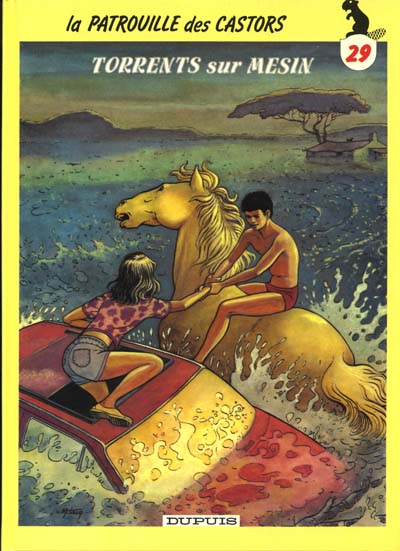
The Beaver Patrol assist when there is a large flood and set up a temporary refugee camp for affected children. In this they join forces with the Baboon patrol, who live up to their name, acting out like the archetypal teenage layabouts (although friendly enough). This provides much of the humour of the book.
In this setting, the scouts discover villains attempting to dump dioxin in the sea - which would be an environmental catastrophe but doubly so during the floods.
In the end, of course, they win the day, but when they read the newspaper, the journalists have picture of the hapless Baboon patrol instead of the Beavers.
The Beaver Patrol assist when there is a large flood and set up a temporary refugee camp for affected children. In this they join forces with the Baboon patrol, who live up to their name, acting out like the archetypal teenage layabouts (although friendly enough). This provides much of the humour of the book.
In this setting, the scouts discover villains attempting to dump dioxin in the sea - which would be an environmental catastrophe but doubly so during the floods.
In the end, of course, they win the day, but when they read the newspaper, the journalists have picture of the hapless Baboon patrol instead of the Beavers.
111LovingLit
>107 sirfurboy: I saw this on facebook recently, and isn't it shockingly accurate! Scarily so....I liked Carl Sagan's work, particularly the debunking pseudoscience aspect of it.
113sirfurboy
On my virtual walk I have passed the 3,000 KM mark this week. I have now completed 3029 KM this year (1882 miles). This puts me at the Montañas de Tivissa-Vandellòs. My walking route took me over the mountains rather than straight along the coastal route.
As this google view shows, This would be much more beautiful without the power lines
Still in Catalonia, and my timing continues to be interesting on this virtual walk. Catalonia has been in the world news recently (moreso in France than in Brexit consumed UK mind). The independence referendum they have called for 1 October was declared illegal by the Spanish courts, and the Spanish government have been uncompromising in their insistence that it will not go ahead, nor will they authorise a referendum, nor even consider the possibility of Catalan independence.
The devolved Catalan government claim that direct rule from Madrid has been de-facto reimposed. There is also a cat and mouse game going on with alleged piles of hidden ballot papers evading seizure by the Spanish authorities.
I can't help think that such heavy handed tactics actually drive more people to the independence cause.
As this google view shows, This would be much more beautiful without the power lines
Still in Catalonia, and my timing continues to be interesting on this virtual walk. Catalonia has been in the world news recently (moreso in France than in Brexit consumed UK mind). The independence referendum they have called for 1 October was declared illegal by the Spanish courts, and the Spanish government have been uncompromising in their insistence that it will not go ahead, nor will they authorise a referendum, nor even consider the possibility of Catalan independence.
The devolved Catalan government claim that direct rule from Madrid has been de-facto reimposed. There is also a cat and mouse game going on with alleged piles of hidden ballot papers evading seizure by the Spanish authorities.
I can't help think that such heavy handed tactics actually drive more people to the independence cause.
114EllaTim
>113 sirfurboy: Hi Stephen. Congratulations on passing the 3000 km boundary!
...'alleged piles of hidden ballot papers', that doesn't sound good.
Yes, you might be right. Of course Spain wouldn't want Catalonia to leave, but the Spanish authorities are providing reasons to leave by how they handle it.
Though I must say that at least they are being honest about it, here in Holland the government says yes to a referendum, and then just doesn't implement it when they don't like the results. Is also a good way to get people angry.
...'alleged piles of hidden ballot papers', that doesn't sound good.
Yes, you might be right. Of course Spain wouldn't want Catalonia to leave, but the Spanish authorities are providing reasons to leave by how they handle it.
Though I must say that at least they are being honest about it, here in Holland the government says yes to a referendum, and then just doesn't implement it when they don't like the results. Is also a good way to get people angry.
115sirfurboy
>114 EllaTim: I think the ballot papers are just hidden to prevent them being confiscated. However, it is hard to see how a referendum in such a background can truly be free and fair. No doubt that is part of the Spanish plan.
There was a referendum in the UK that I wish the government would not implement :)
And indeed an argument for not doing so: referenda in the UK are consultations only... and this consultation failed to consult the people most affected by the result.
There was a referendum in the UK that I wish the government would not implement :)
And indeed an argument for not doing so: referenda in the UK are consultations only... and this consultation failed to consult the people most affected by the result.
116sirfurboy
184. Lockwood & Co: The Empty Grave - Jonathan Stroud

Jonathan Stroud is one of my favourite orders, and for the very good reason that he is a genius! He has been writing for many years but when he wrote his Bartimeus series he unlocked a rare and hilarious talent for humour, deep and clever plot, great characters and all in a snappy, fast paced, action packed young adult adventure.
The Lockwood series was more of the same. A beautifully imagined alternative contemporary London haunted at night by ghosts that only children and young adults can see, but that will happily kill anyone who crosses their path.
Lockwood runs an independent psychic detective agency that struggles for survival against large corporate interests, various crooked characters and legions of ghosts. Through their adventures we got to know first Lucy, the books narrator, who has an extremely rare talent for hearing and even communicating with the ghosts. We also encountered George, the dogged and often egg stained researcher, and then came Holly, Flo Bones, the skull in the jar and a wonderful cast of other actors.
In this book the agency finally square up against the mighty Fittes agency. They start off by breaking into agency founder's Marissa Fittes' grave, on the hunch that the long dead founder of the agency may not be quite as dead as everyone thinks. That experience sends them hurtling down a path with many twists and turns and some extraordinary discoveries and even more extraordinary danger.
This is a stunning and thoroughly enjoyable climax to the Lockwood series. I will be sad to see it end (although perhaps the author left the possibility open that we may meet some of the characters again in a spin off).
Few books have me laughing out loud, but this one did. Jonathan Stroud's writing is real treat and these books are thoroughly recommended.

Jonathan Stroud is one of my favourite orders, and for the very good reason that he is a genius! He has been writing for many years but when he wrote his Bartimeus series he unlocked a rare and hilarious talent for humour, deep and clever plot, great characters and all in a snappy, fast paced, action packed young adult adventure.
The Lockwood series was more of the same. A beautifully imagined alternative contemporary London haunted at night by ghosts that only children and young adults can see, but that will happily kill anyone who crosses their path.
Lockwood runs an independent psychic detective agency that struggles for survival against large corporate interests, various crooked characters and legions of ghosts. Through their adventures we got to know first Lucy, the books narrator, who has an extremely rare talent for hearing and even communicating with the ghosts. We also encountered George, the dogged and often egg stained researcher, and then came Holly, Flo Bones, the skull in the jar and a wonderful cast of other actors.
In this book the agency finally square up against the mighty Fittes agency. They start off by breaking into agency founder's Marissa Fittes' grave, on the hunch that the long dead founder of the agency may not be quite as dead as everyone thinks. That experience sends them hurtling down a path with many twists and turns and some extraordinary discoveries and even more extraordinary danger.
This is a stunning and thoroughly enjoyable climax to the Lockwood series. I will be sad to see it end (although perhaps the author left the possibility open that we may meet some of the characters again in a spin off).
Few books have me laughing out loud, but this one did. Jonathan Stroud's writing is real treat and these books are thoroughly recommended.
117EllaTim
>115 sirfurboy: Yes, Brexit was a very radical step. So how did they fail to consult people most affected? And could a course have been taken where everybody would have felt heard?
And now there's not only Catalonia, but also Kurdistan.
And now there's not only Catalonia, but also Kurdistan.
118sirfurboy
>117 EllaTim: Two groups of people were deliberately excluded from the referendum: British nationals living abroad who have been abroad for more than 10 years, and EU citizens living in the UK.
These two groups, more than anyone, have been held hostage by the Brexit process, but they were not given a vote.
EU citizens can vote in the UK on many issues - just not for national government. The decision was taken to use the restricted voting list deliberately to exclude them from this vote. Because the vote was a public consultation, and because they are as much a part of British life as anyone else, I find that decision to be iniquitous.
These two groups, more than anyone, have been held hostage by the Brexit process, but they were not given a vote.
EU citizens can vote in the UK on many issues - just not for national government. The decision was taken to use the restricted voting list deliberately to exclude them from this vote. Because the vote was a public consultation, and because they are as much a part of British life as anyone else, I find that decision to be iniquitous.
119EllaTim
>118 sirfurboy: I see what you mean Stephen. Strange decision to exclude certain groups of voters. For the EU citizens living and working in the UK, yes it involves them very much, so seems pretty unfair.
120sirfurboy
185. Statistics for the Curious: Why Study Statistics? - Eric Smith
I picked this one up by accident, as I was looking at some other books. I am not about to embark on a study of statistics but I have long thought that the discipline is undervalued in schools and should have a higher prominence in the maths syllabus, or exist as a standalone compulsory subject. In Wales a new numeracy exam has been added alongside mathematics, focusing on mathematics for everyday life, and there is an element of statistics in that, but I still feel the subject is not being given enough prominence.
The reason for that is that statistics is the one field of mathematics that nearly everyone will use, and probably on an almost daily basis. We may not understand that is what we are doing, but when our weather forecaster tells us there is a 40% chance of rain, or a government says we should accept intervention X because it causes a 40% drop in infant mortality/road accidents/airborne cows etc., then we are using statistics, and very often the claims made for the statistics are just downright wrong.
A common example: "We took all the sites in the last year that had road accidents, and then removed the speed limit signs on these roads, and accidents fell. Therefore we should remove all speed limit signs". This is the well known "regression to the mean" effect. It is also seen when someone says "When I praise a student for doing well, more often than not, the next time he performs, he does not do as well. However when I discipline him for doing badly he nearly always gets better. Therefore the stick is better than the carrot".
The observation is correct but the inference is wrong. All the evidence is that students respond to praise far better than they do to discipline, but that pernicious regression towards the mean error causes people to think the opposite.
So statistics are really very important, and I would not fault anything in this book. All the same, it is heavily skewed to undergraduates looking towards studying the subject and making a career from it. Thus this book is great for the target audience, with plenty of excellent reasons to study statistics, but perhaps not of much interest to a wider readership.
I picked this one up by accident, as I was looking at some other books. I am not about to embark on a study of statistics but I have long thought that the discipline is undervalued in schools and should have a higher prominence in the maths syllabus, or exist as a standalone compulsory subject. In Wales a new numeracy exam has been added alongside mathematics, focusing on mathematics for everyday life, and there is an element of statistics in that, but I still feel the subject is not being given enough prominence.
The reason for that is that statistics is the one field of mathematics that nearly everyone will use, and probably on an almost daily basis. We may not understand that is what we are doing, but when our weather forecaster tells us there is a 40% chance of rain, or a government says we should accept intervention X because it causes a 40% drop in infant mortality/road accidents/airborne cows etc., then we are using statistics, and very often the claims made for the statistics are just downright wrong.
A common example: "We took all the sites in the last year that had road accidents, and then removed the speed limit signs on these roads, and accidents fell. Therefore we should remove all speed limit signs". This is the well known "regression to the mean" effect. It is also seen when someone says "When I praise a student for doing well, more often than not, the next time he performs, he does not do as well. However when I discipline him for doing badly he nearly always gets better. Therefore the stick is better than the carrot".
The observation is correct but the inference is wrong. All the evidence is that students respond to praise far better than they do to discipline, but that pernicious regression towards the mean error causes people to think the opposite.
So statistics are really very important, and I would not fault anything in this book. All the same, it is heavily skewed to undergraduates looking towards studying the subject and making a career from it. Thus this book is great for the target audience, with plenty of excellent reasons to study statistics, but perhaps not of much interest to a wider readership.
121FAMeulstee
I have always loved statistics, if my in high school math exam hadn't been 20% of the questions about statistics, I would have failed completely ;-)
122norabelle414
>120 sirfurboy: Ugh I agree with all of that SO MUCH. I studied genetics in college and had to take 3 calculus classes (almost completely useless) and only 1 statistics class ... when about 75% of genetics is just statistics. I only took algebra and calculus in high school, because while statistics was offered it was not considered a top-tier course.
Getting home DNA tests is very popular with my family and friends right now, and I am always getting questions from them about things they don't understand, that come down to statistics. For example, a friend asked me if her DNA test was wrong because it said she had a 90% chance of having straight hair but her hair is very curly.
Especially with the increase in availability of data and data analysis, everyone uses statistics all the time now.
Getting home DNA tests is very popular with my family and friends right now, and I am always getting questions from them about things they don't understand, that come down to statistics. For example, a friend asked me if her DNA test was wrong because it said she had a 90% chance of having straight hair but her hair is very curly.
Especially with the increase in availability of data and data analysis, everyone uses statistics all the time now.
123ronincats
>120 sirfurboy: This is a classic cartoon in my field of school psychology, which due to its use of standardized tests relies heavily on statistical data AND the correct interpretation.
However, I also found this one delightful!

>184 I need to get back to that series now that it's wrapped up. I have this one and the one before to read.
So, are we supposed to be addressing you as Star Lord now? Inquiring minds want to know.
However, I also found this one delightful!

>184 I need to get back to that series now that it's wrapped up. I have this one and the one before to read.
So, are we supposed to be addressing you as Star Lord now? Inquiring minds want to know.
124PawsforThought
>120 sirfurboy: Oh, I quite like statistics - they're interesting. I'm a lot more interested in maths than my grades from school would make you think (I just really hate algebra, which for some reason made up abot 80% of maths in high school, even though I'm less likely to need to know 3x-(4y*12x) than I am interpreting statistics or reading charts, for instance).
125sirfurboy
>121 FAMeulstee: I am glad you had enough statistics to carry you through then :)
>122 norabelle414: I nearly mentioned calculus! Yes, so true. In the UK I took A level maths (A levels are advanced studies beyond the general certificates you get at age 16. You take a 2 year course looking in depth at the subjects and these can then be used as evidence for University entry. The theory is that these are worth the first year of University study and thus why UK degree courses are three years long and not four.
My A level maths was very heavily skewed to calculus, as I recall. We did some stats and probability stuff too, but calculus was the lions share of the subject. When I got to university I had to study mathematics modules (in American terminology, I did a mathematics minor and Computer Science major) and again there was a lot of calculus in these.
Since graduating I cannot recall ever needing to use calculus. Not once.
Statistics, on the other hand, I use all the time.
>122 norabelle414: I nearly mentioned calculus! Yes, so true. In the UK I took A level maths (A levels are advanced studies beyond the general certificates you get at age 16. You take a 2 year course looking in depth at the subjects and these can then be used as evidence for University entry. The theory is that these are worth the first year of University study and thus why UK degree courses are three years long and not four.
My A level maths was very heavily skewed to calculus, as I recall. We did some stats and probability stuff too, but calculus was the lions share of the subject. When I got to university I had to study mathematics modules (in American terminology, I did a mathematics minor and Computer Science major) and again there was a lot of calculus in these.
Since graduating I cannot recall ever needing to use calculus. Not once.
Statistics, on the other hand, I use all the time.
126sirfurboy
>123 ronincats: Hi Roni,
The first quote is so very true.
And I love XKCD :)
I hope you enjoy Lockwood & Co. as much as I did when you get back to it.
My plans for interstellar conquest are falling behind schedule (trouble with the death star suppliers - you know how it goes), but as soon as I have assumed the title of First Star Lord, I will be sure to let you know. :)
The first quote is so very true.
And I love XKCD :)
I hope you enjoy Lockwood & Co. as much as I did when you get back to it.
My plans for interstellar conquest are falling behind schedule (trouble with the death star suppliers - you know how it goes), but as soon as I have assumed the title of First Star Lord, I will be sure to let you know. :)
127EllaTim
Interesting discussion. I quite agree that it's very useful to understand what statistics mean, and can be used for.
I forgot the title, but i heard of a book that's about the misuse of statistics to "prove" things, would like to read something like that sometimes.
I forgot the title, but i heard of a book that's about the misuse of statistics to "prove" things, would like to read something like that sometimes.
128sirfurboy
>124 PawsforThought: Sorry to hear about your problems with algebra. Algebra is actually an area of maths that I do use quite a bit, although that is probably because of the relationship between algebra and programming, vectors and other more mathematical areas of my work. I can understand that it is not something everyone will use all the time.
129PawsforThought
>128 sirfurboy: Yeah, it's perfectly understandable you'd use it if you work with programming or physics or something, but maybe extra algebra could be an electable for those who are interested in those subjects, instead of a must for everyone. My teacher tried to get me to want to learn algebra by claiming that I'd need it when doing groceries, Yeah, no, I just do regular calculus and problem solving if I'm shopping, thanks.
I would have loved it if our maths courses had included more calculus, geometry, statistics and probability.
I would have loved it if our maths courses had included more calculus, geometry, statistics and probability.
130sirfurboy
>129 PawsforThought: I should explain that in English, calculus refers to a particular subject concerned with continuous rates of change, and the operations of integration and differentiation. It is algebra on steroids!
What you mean by everyday calculus is probably what we would call arithmetic in English usage.
Of course, if you are using the differential calculus when doing your groceries, I am very impressed :)
But yes, I agree about the applicability argument. That is what is behind the new Welsh numeracy qualification. The idea of numeracy is all of it is applicable mathematics for everyday life.
What you mean by everyday calculus is probably what we would call arithmetic in English usage.
Of course, if you are using the differential calculus when doing your groceries, I am very impressed :)
But yes, I agree about the applicability argument. That is what is behind the new Welsh numeracy qualification. The idea of numeracy is all of it is applicable mathematics for everyday life.
131sirfurboy
186. Jérémie - Luis Segond version of the Bible
Having caught up with my group read through the Bible, I then hit a hiatus and am now behind again. Just finished the book of Jeremiah, an important prophet who went into captivity in Babylon.
Having caught up with my group read through the Bible, I then hit a hiatus and am now behind again. Just finished the book of Jeremiah, an important prophet who went into captivity in Babylon.
132PawsforThought
>130 sirfurboy: O knew that. Don't know why I wrote calculus instead of arithmetic. I blame my pre-lunch non-functioning brain.
133EllaTim
>131 sirfurboy: I missed that you were reading the bible in French. Does that mean you're reading a catholic bible? And what's it like, I'm not asking for a detailed analysis, just your general experience of it.
134PawsforThought
>133 EllaTim: Forgive my probably very stupid question, but are there separate Catholic and Protestant bibles? I thought it was just the interpretations of the bible (and the rites and sacraments) that were different. I went to confirmation class and they said nothing about different bibles.
I know there are different translations, but didn't think the Catholics and Protestants used different ones. (I understand if the Catholics during the 15th/16th century weren't keen on the King James bible, though.)
I know there are different translations, but didn't think the Catholics and Protestants used different ones. (I understand if the Catholics during the 15th/16th century weren't keen on the King James bible, though.)
135EllaTim
>134 PawsforThought: Well, I always assumed there was a difference, but I just tried looking it up, and found a rather inconclusive answer, yes and no, and a bit. There seem to be some parts called apocryphal, six books, that are part of the bible in the catholic version, that according to protestants are not real parts of the bible, so not in it, but still included in most versions (if you can still follow me)
And then there are differences in translation and language.
And then there are differences in translation and language.
136PawsforThought
>135 EllaTim: Ah, as clear and concise as most things involving religion, then.
138sirfurboy
>133 EllaTim: (and following...)
I am using the Louis Segond version at the moment, although I may switch to Parole de vie when I start on the New Testament, primarily because there is a great audio app to go with that version, NT only, with dramatized readings.
The Louis Segond version is a protestant version of the Bible in the public domain. Louis Segond was a Swiss protestant pastor and theologian according to his Wikipedia entry here:
https://fr.wikipedia.org/wiki/Louis_Segond
I did get hold of a Bible with French apocrypha, but decided not to read the deuterocanonical books as I am following the Bible as Literature" group read that uses the protestant list.
The next bit of this message may be too long... I hope not, but if long explanations are boring, stop reading here...you have been warned!
*
You already answered Paws on the difference between Bibles. To add to your answer, the deuterocanonical books are:
Tobit
Judith
Six extra chapters of Esther
The Wisdom of Solomon
Sirach/Ecclesiasticus
Baruch (and perhaps some additions to Jeremiah)
1 Maccabees
2 Maccabees
And these additions to Daniel: Prayer of Azariah and Song of the Three Holy Children,
Susanna,
and my favourite title:
Bel and the Dragon (also appended to Daniel)
Why the difference though? Well the Protestant list follows closely, but not precisely, a list first circulated in the Easter letter of Athanasius in 367 AD. Athanasius was bishop of Alexandria, the ancient centre of learning where the famous great library could be found. The Easter letter of the Bishop of Alexandria was very important because it contained the calculation for the date of Easter. Easter follows the so called Paschal moon, which is the first full moon after the Spring Equinox. Because the crucifixion happened over the Passover period, Easter has always followed a calculation of the Paschal moon ever since. (Although when I say "a calculation", I don't get into the fact that there may be other calculations!)
Because this important letter was thus circulated across Christendom, it would come attached with as sermon or other information, knowing that the accompanying information would be widely - almost universally - circulated.
In 367 AD, Athanasius sent a letter that listed the books Christians would consider canonical, consisting of the Old Testament books that Jews themselves considered canonical (although "canonical" does not mean the same in that context). However he added the Book of Baruch and the Letter of Jeremiah, but excluded the Book of Esther.
He also lists the New Testament exactly as we have it.
The Deuterocanonical works above were also found in Hebrew scriptures, but only in the Greek translation of Hebrew scripture, known as the Septuagint. Over time, and particularly as there was greater knowledge of the Hebrew texts, the Church settled on only those books found in Hebrew (Masoretic) texts as being canonical in the old testament, which also seems to be largely the intent of Athanasius, and thus excluded the deuterocanonical works above. Nevertheless the Catholic church was always aware of these extra works in the Septuagint and held that they were not canonical in the way the Hebrew works are, but that they did contain information useful for teaching.
In the reformation, support was drawn from some of these works for doctrines that protestants held to be unacceptable, because they were at odds with the central reformation doctrine of justification by faith alone. Thus protestant bibles would not list these works any longer.
(Protestants also argued that the New Testament writers only quoted the canonical works... but then, they never quoted from Esther, and there are places where they do seem to refer to or even quote some of these works, so the argument has merit but is hardly foolproof).
Note, however, that neither protestants nor catholics ever held that these were canonical works of scripture. Catholic bibles contain them but they are called "deuterocanonical" because Catholics hold that they are useful but not canonical works.
Which was all fine until some fragments of these works showed up in Hebrew in the Dead Sea Scrolls in 1956...!
I am using the Louis Segond version at the moment, although I may switch to Parole de vie when I start on the New Testament, primarily because there is a great audio app to go with that version, NT only, with dramatized readings.
The Louis Segond version is a protestant version of the Bible in the public domain. Louis Segond was a Swiss protestant pastor and theologian according to his Wikipedia entry here:
https://fr.wikipedia.org/wiki/Louis_Segond
I did get hold of a Bible with French apocrypha, but decided not to read the deuterocanonical books as I am following the Bible as Literature" group read that uses the protestant list.
The next bit of this message may be too long... I hope not, but if long explanations are boring, stop reading here...you have been warned!
*
You already answered Paws on the difference between Bibles. To add to your answer, the deuterocanonical books are:
Tobit
Judith
Six extra chapters of Esther
The Wisdom of Solomon
Sirach/Ecclesiasticus
Baruch (and perhaps some additions to Jeremiah)
1 Maccabees
2 Maccabees
And these additions to Daniel: Prayer of Azariah and Song of the Three Holy Children,
Susanna,
and my favourite title:
Bel and the Dragon (also appended to Daniel)
Why the difference though? Well the Protestant list follows closely, but not precisely, a list first circulated in the Easter letter of Athanasius in 367 AD. Athanasius was bishop of Alexandria, the ancient centre of learning where the famous great library could be found. The Easter letter of the Bishop of Alexandria was very important because it contained the calculation for the date of Easter. Easter follows the so called Paschal moon, which is the first full moon after the Spring Equinox. Because the crucifixion happened over the Passover period, Easter has always followed a calculation of the Paschal moon ever since. (Although when I say "a calculation", I don't get into the fact that there may be other calculations!)
Because this important letter was thus circulated across Christendom, it would come attached with as sermon or other information, knowing that the accompanying information would be widely - almost universally - circulated.
In 367 AD, Athanasius sent a letter that listed the books Christians would consider canonical, consisting of the Old Testament books that Jews themselves considered canonical (although "canonical" does not mean the same in that context). However he added the Book of Baruch and the Letter of Jeremiah, but excluded the Book of Esther.
He also lists the New Testament exactly as we have it.
The Deuterocanonical works above were also found in Hebrew scriptures, but only in the Greek translation of Hebrew scripture, known as the Septuagint. Over time, and particularly as there was greater knowledge of the Hebrew texts, the Church settled on only those books found in Hebrew (Masoretic) texts as being canonical in the old testament, which also seems to be largely the intent of Athanasius, and thus excluded the deuterocanonical works above. Nevertheless the Catholic church was always aware of these extra works in the Septuagint and held that they were not canonical in the way the Hebrew works are, but that they did contain information useful for teaching.
In the reformation, support was drawn from some of these works for doctrines that protestants held to be unacceptable, because they were at odds with the central reformation doctrine of justification by faith alone. Thus protestant bibles would not list these works any longer.
(Protestants also argued that the New Testament writers only quoted the canonical works... but then, they never quoted from Esther, and there are places where they do seem to refer to or even quote some of these works, so the argument has merit but is hardly foolproof).
Note, however, that neither protestants nor catholics ever held that these were canonical works of scripture. Catholic bibles contain them but they are called "deuterocanonical" because Catholics hold that they are useful but not canonical works.
Which was all fine until some fragments of these works showed up in Hebrew in the Dead Sea Scrolls in 1956...!
139sirfurboy
>133 EllaTim: Oh and I just realised, I did not answer how I was finding reading it.
The Louis Segond version was released in 1910, so there are old fashioned elements to the translation, but it remains easily understandable. I learned some old fashioned phrasings in French (such as ne ... point as and alternative to ne ... pas) but all in all it is a good version to read.
The Louis Segond version was released in 1910, so there are old fashioned elements to the translation, but it remains easily understandable. I learned some old fashioned phrasings in French (such as ne ... point as and alternative to ne ... pas) but all in all it is a good version to read.
140Berly
>116 sirfurboy: Love Jonathan Stroud!! But I have yet to read Lockwood & Co, so I have that to look forward to. : )
Loved calculus in high school and college! Like the rest of you, I have used Stats much more in RL. >123 ronincats: LOL!
Loved calculus in high school and college! Like the rest of you, I have used Stats much more in RL. >123 ronincats: LOL!
141ronincats
>138 sirfurboy: A masterful summary!
142drneutron
>140 Berly: I've done lots of math over my life, and am something of a math fan. But I completely agree that statistics is way undertaught - especially how one interprets statistical analysis. How to Lie with Statistics should be required in high school.
143EllaTim
>138 sirfurboy: That's a very complete answer, Stephen! Thanks, I didn't know about any of this.
>139 sirfurboy: The older bible versions that I know have some beautiful language. I was wondering if you found that true in the French version you were reading as well.
>142 drneutron: Hi Jim. Yes, that's the book I was thinking of!
>139 sirfurboy: The older bible versions that I know have some beautiful language. I was wondering if you found that true in the French version you were reading as well.
>142 drneutron: Hi Jim. Yes, that's the book I was thinking of!
144PawsforThought
>138 sirfurboy: I skimmed, because my head will just start to spin otherwise. Very good summation and explanation, thought, thanks. Some of this does sound familiar.
This maths discussion has made me look at the maths section of the library - I might pick up a a few books and refresh my skills.
This maths discussion has made me look at the maths section of the library - I might pick up a a few books and refresh my skills.
145sirfurboy
>143 EllaTim: In terms of older language, the Louis Segond bible certainly has some older phrasings and a feel about the French that is more formal and elegant, and has its own beauty, but I am not really qualified to say just how beautiful this is. I tend to think all French is beautiful, but I am not so adept in the language that I can fully appreciate the older forms.
>142 drneutron: I have heard of that book before and really should get hold of it and read it. I have been on a couple of stats courses in the past that could loosely be described as "how not to lie with statistics".
>144 PawsforThought: A maths book bullet...that is new :)
A teacher friend of mine shared one of the ways that teachers can encourage children to get excited by a maths test. He said that you should not say "who wants to do a maths test?" because that will usually elicit a fairly negative response. Instead, he explained, the trick is to photocopy the maths test using, say, green and blue paper. Half the tests on one colour, half on the other. Then he says "who wants a blue maths test, and who wants a green one?" and suddenly all the children are excited about choosing their own maths test!
>142 drneutron: I have heard of that book before and really should get hold of it and read it. I have been on a couple of stats courses in the past that could loosely be described as "how not to lie with statistics".
>144 PawsforThought: A maths book bullet...that is new :)
A teacher friend of mine shared one of the ways that teachers can encourage children to get excited by a maths test. He said that you should not say "who wants to do a maths test?" because that will usually elicit a fairly negative response. Instead, he explained, the trick is to photocopy the maths test using, say, green and blue paper. Half the tests on one colour, half on the other. Then he says "who wants a blue maths test, and who wants a green one?" and suddenly all the children are excited about choosing their own maths test!
146sirfurboy
This week, on my virtual walk, I walked out of Catalonia, and crossed into Valencia. Once again, Catalonia has been in the news, with some terrible scenes of violence. I will avoid making any direct judgements on the situation, but note the following points:
1. Recent polling suggested that about 60% of Catalans probably wished to remain Spanish.
2. The vote was illegal under Spanish law, but then that is because the Spanish constitution makes the state indivisible, so a legal vote is impossible. This creates a democratic impasse, which is not a good situation.
3. There has been violence on both sides, but surely there can be no excuse for the coercive apparatus of state to be used with such force against people wishing to exercise a peaceful choice.
Not Spain's finest hour, but I feel no need to come down firmly on one side or the other.
Anyway, in Valencia I have just reached Peniscola:

Known as the Gibralter of Valencia, this is a fortified headland and seaport. I suspect Florida's Pensicola is named after this location, although have not checked that out. If I am correct, I wonder if the letter transposition was deliberate to avoid smutty jokes by English speakers (or, indeed, by Cola companies wanting to avoid some possible bad publicity. I also wonder if Pensicola inspired the name of Pepsi Cola. Inquiring minds want to know...)
1. Recent polling suggested that about 60% of Catalans probably wished to remain Spanish.
2. The vote was illegal under Spanish law, but then that is because the Spanish constitution makes the state indivisible, so a legal vote is impossible. This creates a democratic impasse, which is not a good situation.
3. There has been violence on both sides, but surely there can be no excuse for the coercive apparatus of state to be used with such force against people wishing to exercise a peaceful choice.
Not Spain's finest hour, but I feel no need to come down firmly on one side or the other.
Anyway, in Valencia I have just reached Peniscola:

Known as the Gibralter of Valencia, this is a fortified headland and seaport. I suspect Florida's Pensicola is named after this location, although have not checked that out. If I am correct, I wonder if the letter transposition was deliberate to avoid smutty jokes by English speakers (or, indeed, by Cola companies wanting to avoid some possible bad publicity. I also wonder if Pensicola inspired the name of Pepsi Cola. Inquiring minds want to know...)
147sirfurboy
187. La pierre de foudre- (La patrouille des castors, 30) - Mitacq
(Title translates as "the Lightning Stone")
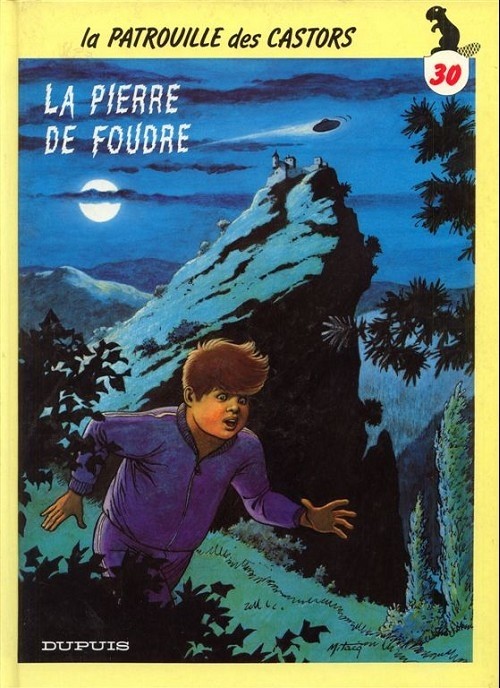
The last story in this series, published in 1993. The author/illustrator, Mitcaq (Michel Tacq) died the following year, apparently with the next story still in production but unfinished.
This story has a strange old castle ruin on a rocky outcrop, and some caves that have a reputation for strange echoes and sounds. The scouts enter one area that makes them feel very sick, and there are stories of flying saucers and aliens... and then they encounter creatures that look just like space aliens from the movies, as well as three eyed dogs and other monsters.
A strange story, although it is given a rational (and not extra-terrestrial) resolution. In some ways it perhaps explores issues around our fear of difference. Still, the story did not exactly grip me... it was more a small mystery that was then just explained.
Interesting, though, that this was published in 1993. I wondered whether the author had been inspired by the X files, but that series first aired (according to Wikipedia) at the end of 1993, so Mitacq perhaps anticipated the renewed interest in all things alien-abduction with this story. On the other hand, there was plenty about UFOs in popular culture before the X files, so perhaps he was just tapping into the same current as the X files writers.
So, at long last, I have reached the end of this series. Now, perhaps I will look at reading my way through Asterix... but maybe next year.
(Title translates as "the Lightning Stone")
The last story in this series, published in 1993. The author/illustrator, Mitcaq (Michel Tacq) died the following year, apparently with the next story still in production but unfinished.
This story has a strange old castle ruin on a rocky outcrop, and some caves that have a reputation for strange echoes and sounds. The scouts enter one area that makes them feel very sick, and there are stories of flying saucers and aliens... and then they encounter creatures that look just like space aliens from the movies, as well as three eyed dogs and other monsters.
A strange story, although it is given a rational (and not extra-terrestrial) resolution. In some ways it perhaps explores issues around our fear of difference. Still, the story did not exactly grip me... it was more a small mystery that was then just explained.
Interesting, though, that this was published in 1993. I wondered whether the author had been inspired by the X files, but that series first aired (according to Wikipedia) at the end of 1993, so Mitacq perhaps anticipated the renewed interest in all things alien-abduction with this story. On the other hand, there was plenty about UFOs in popular culture before the X files, so perhaps he was just tapping into the same current as the X files writers.
So, at long last, I have reached the end of this series. Now, perhaps I will look at reading my way through Asterix... but maybe next year.
148EllaTim
>145 sirfurboy: Well formal and elegant, sounds like it it's beautiful enough.
That's a good trick. Actually of course this is a false choice;) But I understand that children would like it.
Can't remember a teacher ever asking us who wanted to do a math test, or any test, none would have been popular. You just had to do them. But i guess that says something about my age.
That's a good trick. Actually of course this is a false choice;) But I understand that children would like it.
Can't remember a teacher ever asking us who wanted to do a math test, or any test, none would have been popular. You just had to do them. But i guess that says something about my age.
149EllaTim
>146 sirfurboy: I have been following the news yesterday. No, not Spain's finest hour, shooting at your own people with rubber bullets. I saw some interviewed people who said that now they knew they are not living in a democracy. And of course the Franco age is not so long ago.
And this 102 year old woman who said "off course I'm going to vote!"
And well, recent polling, at this point I wouldn't trust any of it, I've heard 90% of Catalans want to leave. But I'd wonder who says what and why.
Beautiful picture!
>147 sirfurboy: Congratulations on finishing this complete series, not a small feat!
The theme must have been in the air at that time.
And this 102 year old woman who said "off course I'm going to vote!"
And well, recent polling, at this point I wouldn't trust any of it, I've heard 90% of Catalans want to leave. But I'd wonder who says what and why.
Beautiful picture!
>147 sirfurboy: Congratulations on finishing this complete series, not a small feat!
The theme must have been in the air at that time.
150sirfurboy
>149 EllaTim: Thanks, and yes it is really hard to be certain what the Catalan referendum tells us (which is what Spain wanted, of course), but 90% for independence with apparently 40% of the electorate voting is quite significant. Although we can assume many who were against independence would just stay away (so the 90% is unsurprising), the 40% turn out is pretty huge and would suggest that of the previous polling were accurate in saying only 40% wanted independence, then nearly all of them felt strongly enough about the issue to defy the Spanish authorities and cast their votes too.
In view of the level of state sponsored interference, which must surely have had some considerable effect on turnout, there must be a real indication there that the support for remaining in Spain has softened, and the support for independence has hardened. That does indeed suggest that the heavy handed tactics of the Spanish government has backfired.
In view of the level of state sponsored interference, which must surely have had some considerable effect on turnout, there must be a real indication there that the support for remaining in Spain has softened, and the support for independence has hardened. That does indeed suggest that the heavy handed tactics of the Spanish government has backfired.
151sirfurboy
My September Summary:
187 books completed this year, 18 of them in September.
All 17 out of 17 categories started in my category challenge ( https://www.librarything.com/topic/243521 )
9 categories complete (unchanged)
5 books read in Welsh (none this month)
35 books read in French (+7 in September)
2 book read in Dutch (none this month)
5 books read in German (none this month)
8 books read in Italian (none this month)
2 books read in Greek (none this month)
2 books read in Old English (none this month).
My TBR list has (sadly) grown again to 95 books. That is 16 up this month.
1925 Miles (3099 km) walked. I am still on target to reach Gibralter by the end of the year.
187 books completed this year, 18 of them in September.
All 17 out of 17 categories started in my category challenge ( https://www.librarything.com/topic/243521 )
9 categories complete (unchanged)
5 books read in Welsh (none this month)
35 books read in French (+7 in September)
2 book read in Dutch (none this month)
5 books read in German (none this month)
8 books read in Italian (none this month)
2 books read in Greek (none this month)
2 books read in Old English (none this month).
My TBR list has (sadly) grown again to 95 books. That is 16 up this month.
1925 Miles (3099 km) walked. I am still on target to reach Gibralter by the end of the year.
152EllaTim
>151 sirfurboy: 187 books finished, that is a lot!
Good luck with that TBR list, it can grow to immense proportions here on LT. Mine is growing rapidly, what with all the lists of bests people here have been making. but I like to think of it as a list of options for reading, makes it feel more of a good thing.
Good luck with that TBR list, it can grow to immense proportions here on LT. Mine is growing rapidly, what with all the lists of bests people here have been making. but I like to think of it as a list of options for reading, makes it feel more of a good thing.
153PawsforThought
>151 sirfurboy: Only 95 books on the TBR list? I'm impressed. My official LT to read-list only contains 78 titles (plus the 7 that are in my "TBR in the forseeable future"-list - which is books I have home from the library). But there are hundreds and hundreds more that I just haven't added.
154sirfurboy
Thanks both, and apologies for my sporadic attendance on LT just now. It is a busy time of year for me and I am not getting much reading or LTing done. My October numbers are going to look poorer than the previous 6 months or so!
But, I still finished one book:
188. The Feast of Ravens (The Battles of Ben Kingdom #2) - Andrew Beasley
Set in an alternative Victorian London, this is the second in the series about Ben Kingdom, an ordinary "artful dodger" style poor London boy who finds himself swept up into the ultimate battle of good against evil.
Plenty of action and adventure, a little bit of humour and a good, if somewhat predictable storyline. What ultimately lets this book down is weak characterisation, although as it is aimed at mid grade children, you have to bear in mind that the author wanted to keep the story succinct.
Not the best book I have read in this genre, but not bad either. This is number 2 of a trilogy, but I don't think I will bother with the third book.
But, I still finished one book:
188. The Feast of Ravens (The Battles of Ben Kingdom #2) - Andrew Beasley
Set in an alternative Victorian London, this is the second in the series about Ben Kingdom, an ordinary "artful dodger" style poor London boy who finds himself swept up into the ultimate battle of good against evil.
Plenty of action and adventure, a little bit of humour and a good, if somewhat predictable storyline. What ultimately lets this book down is weak characterisation, although as it is aimed at mid grade children, you have to bear in mind that the author wanted to keep the story succinct.
Not the best book I have read in this genre, but not bad either. This is number 2 of a trilogy, but I don't think I will bother with the third book.
155EllaTim
>154 sirfurboy: Hi Stephen, Thanks for letting us know!
Well, you're on book 188, so slowing down won't keep you from reaching 75;)
I'm having a busy time as well, so less reading, less LT.
Well, you're on book 188, so slowing down won't keep you from reaching 75;)
I'm having a busy time as well, so less reading, less LT.
156LovingLit
>123 ronincats: ha ha, that's a funny one. :)
I am shy of stats (and not just cos it was my only ever fail grade in any paper), as feel that like anything, they are so easily manipulated.
I am shy of stats (and not just cos it was my only ever fail grade in any paper), as feel that like anything, they are so easily manipulated.

158Berly
October seems to be a busy time for many here on LT. And at 188 books read this year, your stats for the month will undoubtably be higher than mine in any case!
159sirfurboy
Thanks both. Still no more, completed books to report but I thought I should update my virtual walk information. It is almost two weeks since I reached Valencia.
Valencia, the city, is the capital of the autonomous community of the same name and the third-largest city in Spain after Madrid and Barcelona.
Wikipedia has some creative commons images, as always, including this one of a station (The North Station) there:

Valencia was founded as a Roman colony by the consul Decimus Junius Brutus Callaicus in 138 BC, and called Valentia Edetanorum. That, perhaps, explains a difference between how the Spanish and English speakers pronounce the C in Valencia. Spanish speakers don't all speak with a lisp :)
In 714 Moroccan and Arab Moors occupied the city, and one of the things they introduced was new crop cultivation, including oranges. Oranges are my daily link to Valencia as I like Valencia oranges and eat them daily when in season.
I was looking at my route in Google maps, and although I can't now find the link, the area I was looking at was a large, flat cultivated area (with some distant hills) and many many well tended orange groves.
Valencia, the city, is the capital of the autonomous community of the same name and the third-largest city in Spain after Madrid and Barcelona.
Wikipedia has some creative commons images, as always, including this one of a station (The North Station) there:

Valencia was founded as a Roman colony by the consul Decimus Junius Brutus Callaicus in 138 BC, and called Valentia Edetanorum. That, perhaps, explains a difference between how the Spanish and English speakers pronounce the C in Valencia. Spanish speakers don't all speak with a lisp :)
In 714 Moroccan and Arab Moors occupied the city, and one of the things they introduced was new crop cultivation, including oranges. Oranges are my daily link to Valencia as I like Valencia oranges and eat them daily when in season.
I was looking at my route in Google maps, and although I can't now find the link, the area I was looking at was a large, flat cultivated area (with some distant hills) and many many well tended orange groves.
160EllaTim
Hi Stephen, you're still keeping up with your walking, I see. Heading for Gibraltar?
Nice picture of the station of Valencia. I might eat those oranges as well!
Nice picture of the station of Valencia. I might eat those oranges as well!
161ronincats
I want to throw out a request for participants in a group read of one of my favorite but relatively unknown fantasy novels, God Stalk by P. C. Hodgell. The "stalk" refers to stalking gods, not a stem. It is the first of a still ongoing series, but it is a complete story and easy to walk away from after the first book if you wish--indeed, all of us had to wait many years after this one to get a sequel. I am looking at possibly November, December or January for the time frame, but the actual month will depend on what those interested work out. If you would be at all interested, please PM me or drop by my thread and let me know.
http://www.librarything.com/topic/270239
http://www.librarything.com/topic/270239
162sirfurboy
>160 EllaTim: Yes, my aim is to reach Gibralter by the end of the year and I am on target for this.
I have just been to Paris for a week. I will hopefully put up some pictures soon, but I thought I should mention a conversation I had with a Dutch family from Limburg. It was funny because when I heard them talking, I thought they were speaking German! The Limburg dialect really is very different from what I would think of as the Standard Dutch dialect. It was like I was hearing German - but German I did not quite understand.
I asked him in German whether he would like to speak German or French, and he responded that French was fine, but he could also speak English or even Nederlands! (Yes, being Dutch, he was fluent in 4 languages of course).
Anyway I did get to speak a little Dutch with him, but our conversation was mostly in English. He said the difference between the Limburg dialect and standard Dutch was a bit like the difference between British and American English. Not sure if you would agree, but it was clearly very different (although once I knew it was Dutch I started picking out Dutch words after all).
This experience of having most of my conversations in English was a bit of a persistent theme. Before travelling I had worked quite hard on my French accent, attempting to perfect my guttural R and nasal n sounds, but no one was fooled. I would speak in French and they would reply in English!
Still, there were some people who did not speak English, so I had some French conversations.
I have just been to Paris for a week. I will hopefully put up some pictures soon, but I thought I should mention a conversation I had with a Dutch family from Limburg. It was funny because when I heard them talking, I thought they were speaking German! The Limburg dialect really is very different from what I would think of as the Standard Dutch dialect. It was like I was hearing German - but German I did not quite understand.
I asked him in German whether he would like to speak German or French, and he responded that French was fine, but he could also speak English or even Nederlands! (Yes, being Dutch, he was fluent in 4 languages of course).
Anyway I did get to speak a little Dutch with him, but our conversation was mostly in English. He said the difference between the Limburg dialect and standard Dutch was a bit like the difference between British and American English. Not sure if you would agree, but it was clearly very different (although once I knew it was Dutch I started picking out Dutch words after all).
This experience of having most of my conversations in English was a bit of a persistent theme. Before travelling I had worked quite hard on my French accent, attempting to perfect my guttural R and nasal n sounds, but no one was fooled. I would speak in French and they would reply in English!
Still, there were some people who did not speak English, so I had some French conversations.
163sirfurboy
>161 ronincats:. Yes, I could be up for this. Maybe not this month but hopefully December o January. I will drop a line on your thread too in case you miss it here.
164PawsforThought
>162 sirfurboy: When I was studying linguistics, our textbooks talked a lot about languages that are on a spectrum (can't tell where one ends and another begins, what's a language and what's a dialect, etc.) and Dutch/German was the prime example. Where exactly does the Eastern Dutch dialects become separate from the neighbouring West German dialects, and so on. It was very interesting. Same with Dutch and Flemish, and Finnish and Meänkieli.
165sirfurboy
>164 PawsforThought: Yes, I knew this about German within Germany too. There are many dialects and although I don't know any but Hochdeutsch, I have seen maps showing word variations by region and it is interesting to see West German dialects that have words that look like Dutch.
Other languages have this too, of course. Italian has many regional variations, and they don't derive from the standard Italian, which is just the Tuscan dialect. Instead they all developed separately in their regions.
Catalan is not a language I know at all, but just looking at it, it appears close to French but with a strong Spanish influence and also an Italian influence.
Other languages have this too, of course. Italian has many regional variations, and they don't derive from the standard Italian, which is just the Tuscan dialect. Instead they all developed separately in their regions.
Catalan is not a language I know at all, but just looking at it, it appears close to French but with a strong Spanish influence and also an Italian influence.
166PawsforThought
>165 sirfurboy: From what I've read, Catalan is more closely related to Occitan than Spanish (sometimes even counted as a "sub-langauge" of Occitan).
167EllaTim
>162 sirfurboy: A week in Paris, lovely, yes to some pictures of course.
Yes, the Limburger dialect is quite different from the standard dutch, there's the soft g, in pronunciation, There must be lots more.
And speaking four languages, well Limburg is sort of wedged in between the French speaking part of Belgium, and Germany. People can go shopping in Liège, and have to speak French, or in Aachen and speak German. Both cities a lot closer to Limburg than Amsterdam.
Paris gets a lot of international tourists of course, so people get used to speaking English if necessary. When you visit a town that's less touristy there's usually more opportunity to practice some French.
Yes, the Limburger dialect is quite different from the standard dutch, there's the soft g, in pronunciation, There must be lots more.
And speaking four languages, well Limburg is sort of wedged in between the French speaking part of Belgium, and Germany. People can go shopping in Liège, and have to speak French, or in Aachen and speak German. Both cities a lot closer to Limburg than Amsterdam.
Paris gets a lot of international tourists of course, so people get used to speaking English if necessary. When you visit a town that's less touristy there's usually more opportunity to practice some French.
168FAMeulstee
>162 sirfurboy: When I lived in The Hague in the 1980s, I had some English friends. They all complained it was near impossible to learn Dutch, as everyone hearing their English accent would reply to them in English.
169PawsforThought
>168 FAMeulstee: My Belgian friend complained about the same thing when she lived here in Sweden some years ago - really hard to learn because everyone immediately switches to English when they notise that the person they're talking to isn't fluent in Swedish!
170Berly
>162 sirfurboy: Can't wait to see your pictures. Interesting about the Limberg dialect. When the French replied to me in English, I just kept going in French. That way we both got to practice!! LOL
171PaulCranswick
Wishing a great Sunday to you dear fellow.
This topic was continued by Sir Furboy's 75 Books in 2017 - Part 5.

