
Folio Archives 87: St.Peter’s Umbrella by Kálmán Mikszáth 1966
Talk Folio Society Devotees
Join LibraryThing to post.
This topic is currently marked as "dormant"—the last message is more than 90 days old. You can revive it by posting a reply.
1wcarter
St.Peter’s Umbrella by Kálmán Mikszáth 1966
First published in 1895, this delightful small 218 page book describes how a tattered red umbrella affects the lives of all who come into contact with it over several decades. Set in northern Hungary in the latter half of the 19th.C., it contrasts life in the very primitive and barely accessible villages in the mountains along the Slovak border, with the sophistication of larger cities and the almost unattainable paradise of Budapest, only a hundred kilometres away.
It is a Hungarian classic, with many unexpected twists and turns, human stories and the usual love and crime scenes, that neatly completes a circle in the end, as indicated by the first and last chapters having the same title. A very easy and pleasant read.
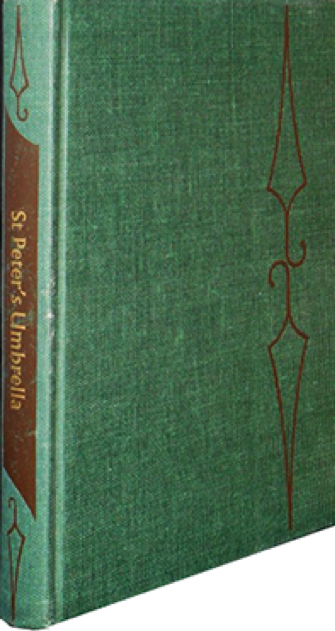
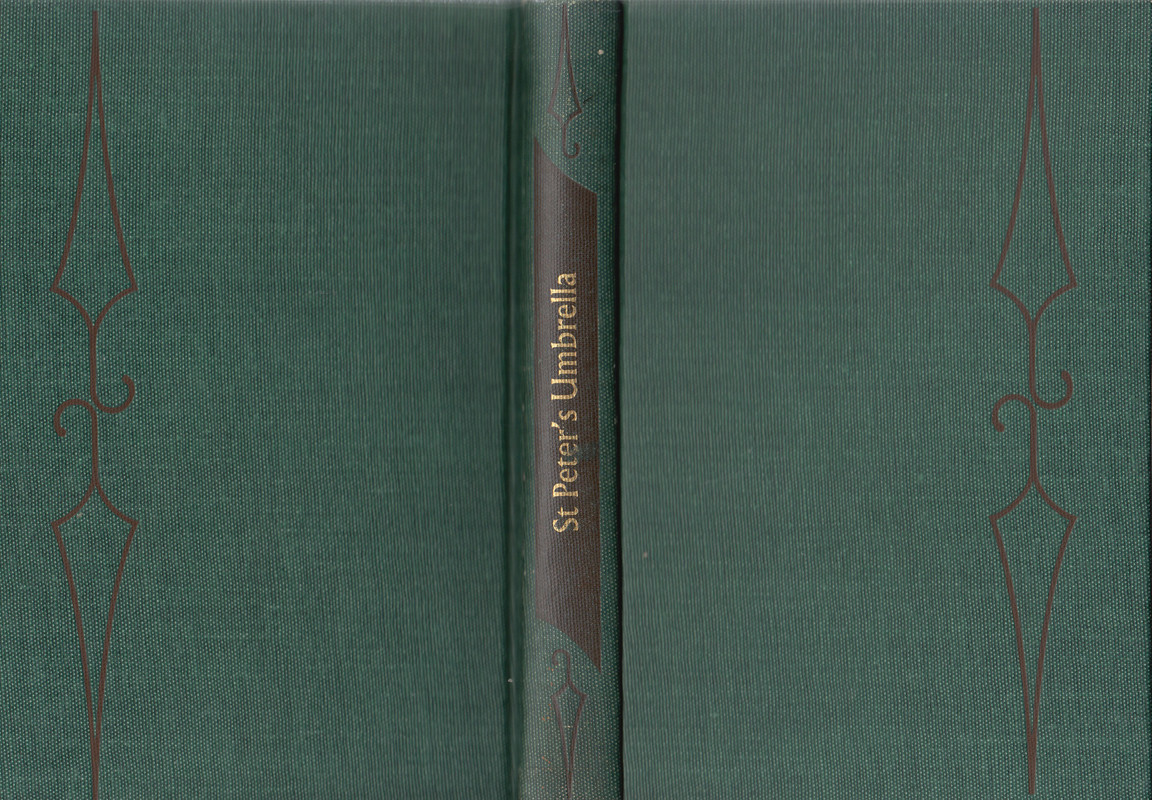
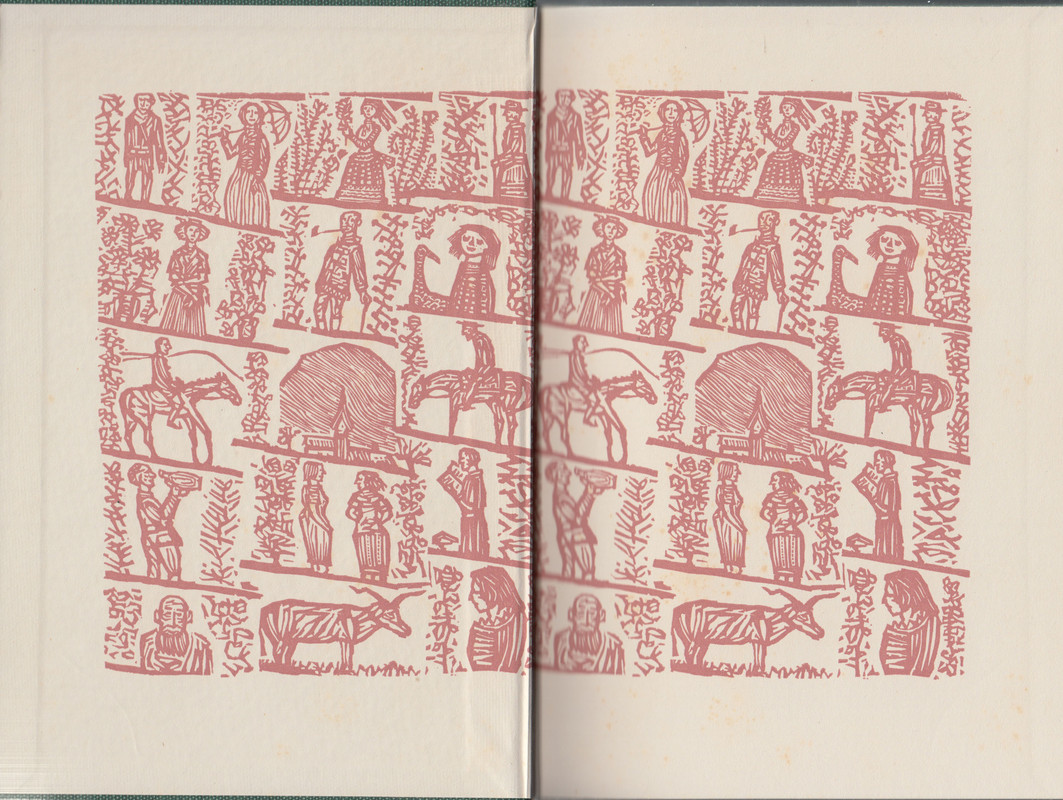
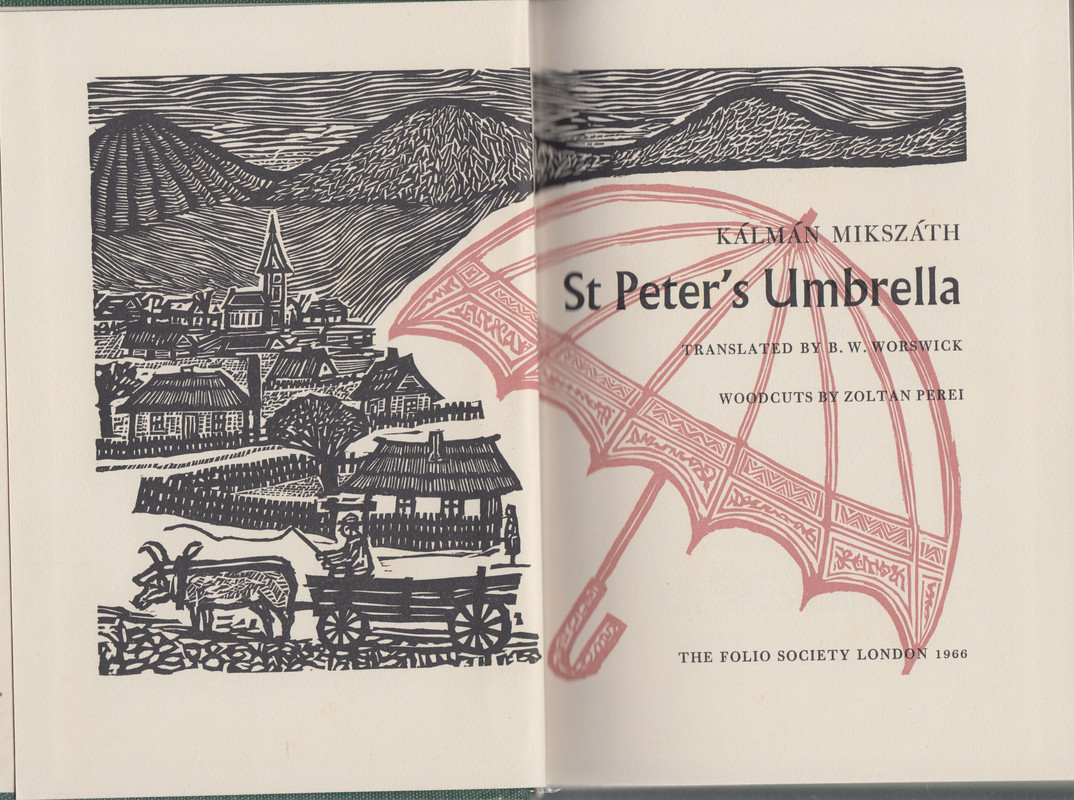
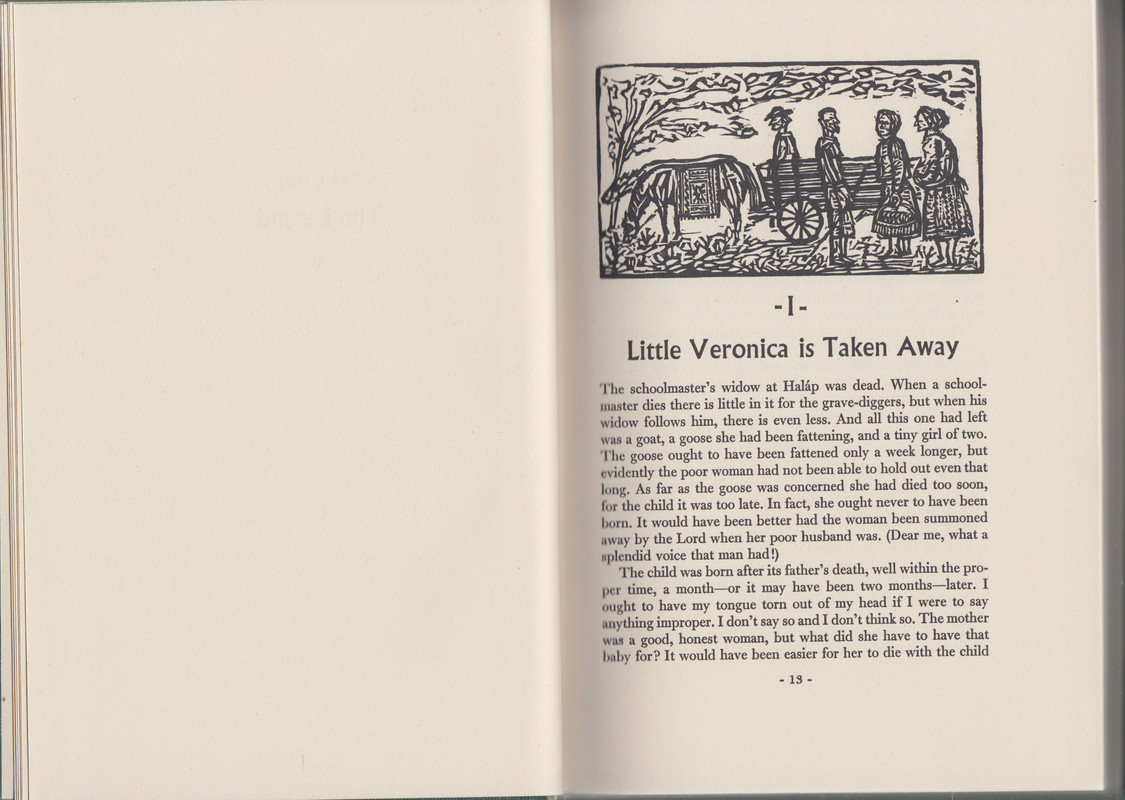
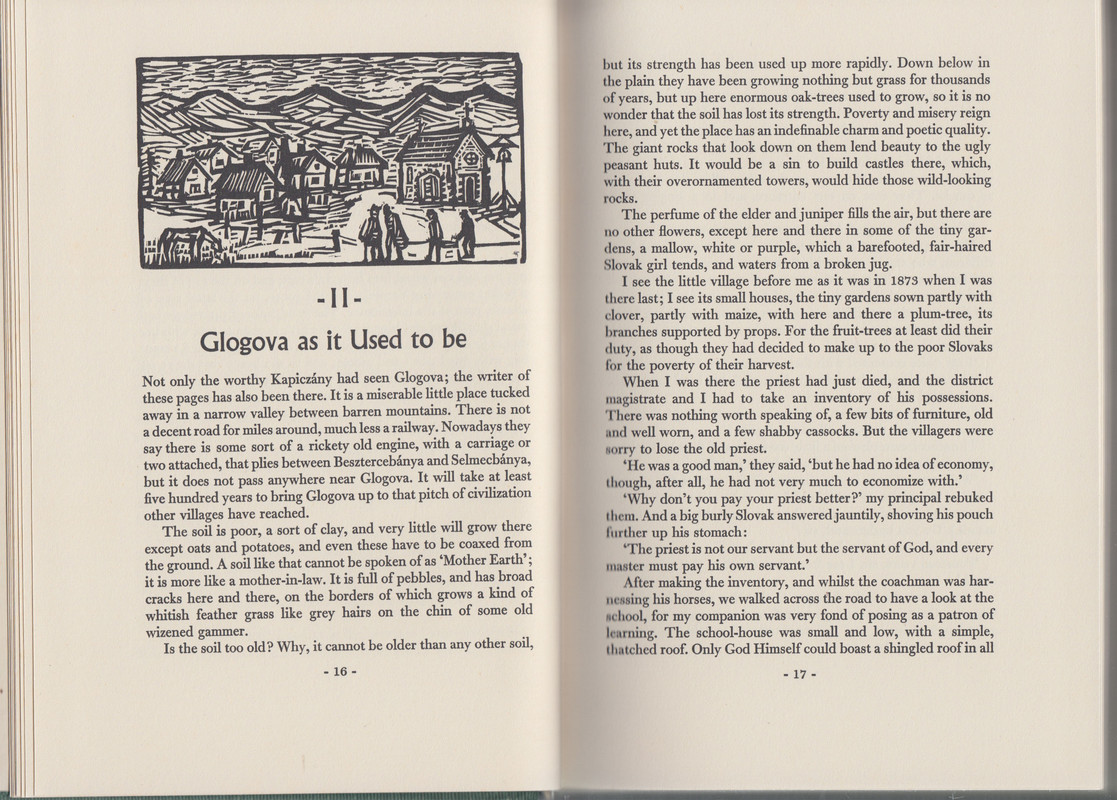
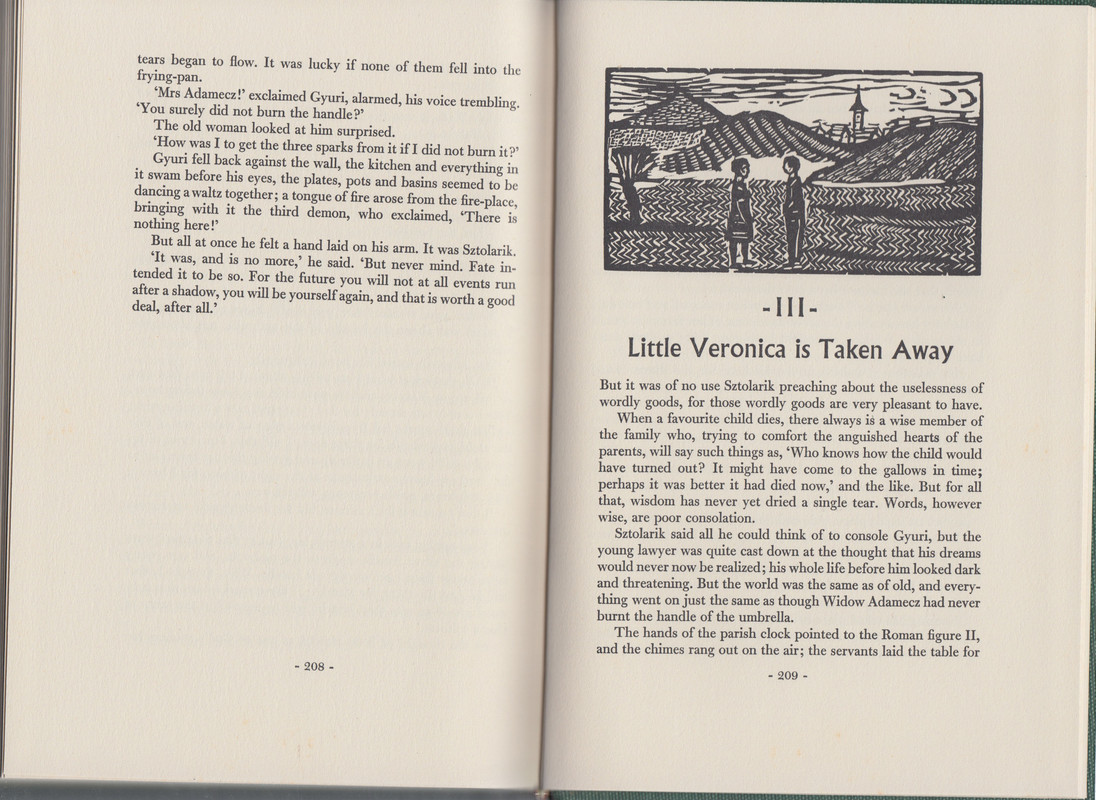
The book is presented in one of the smallest formats used by the Folio Society being only 21.2x14.5cm. in its plain brown slipcase. It is bound in dark green cloth, blocked on covers and spine with a dark brown umbrella motif. There are 17 woodcuts by Zoltan Perei that act as headpieces for each chapter, as well as a frontispiece and pictorial endpapers. It was translated from the Hungarian by B.W.Worswick. I purchased my copy quite recently for a mere £9.
Endpapers
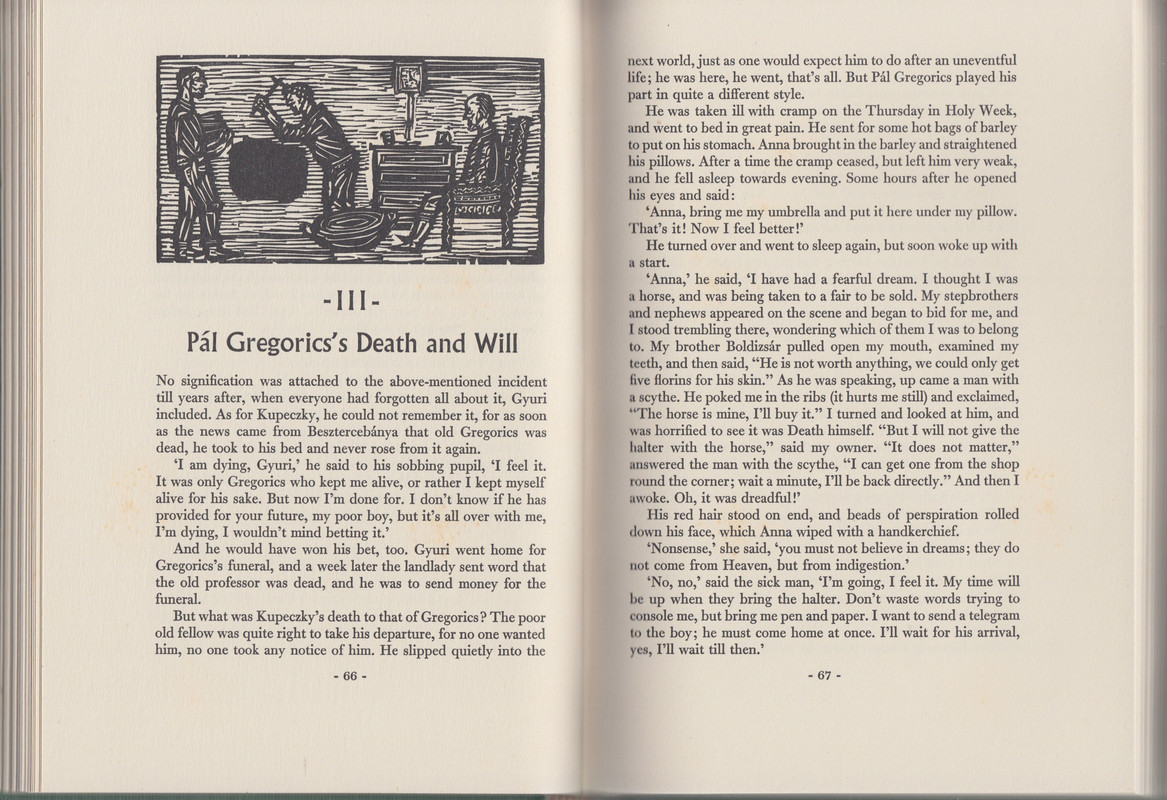
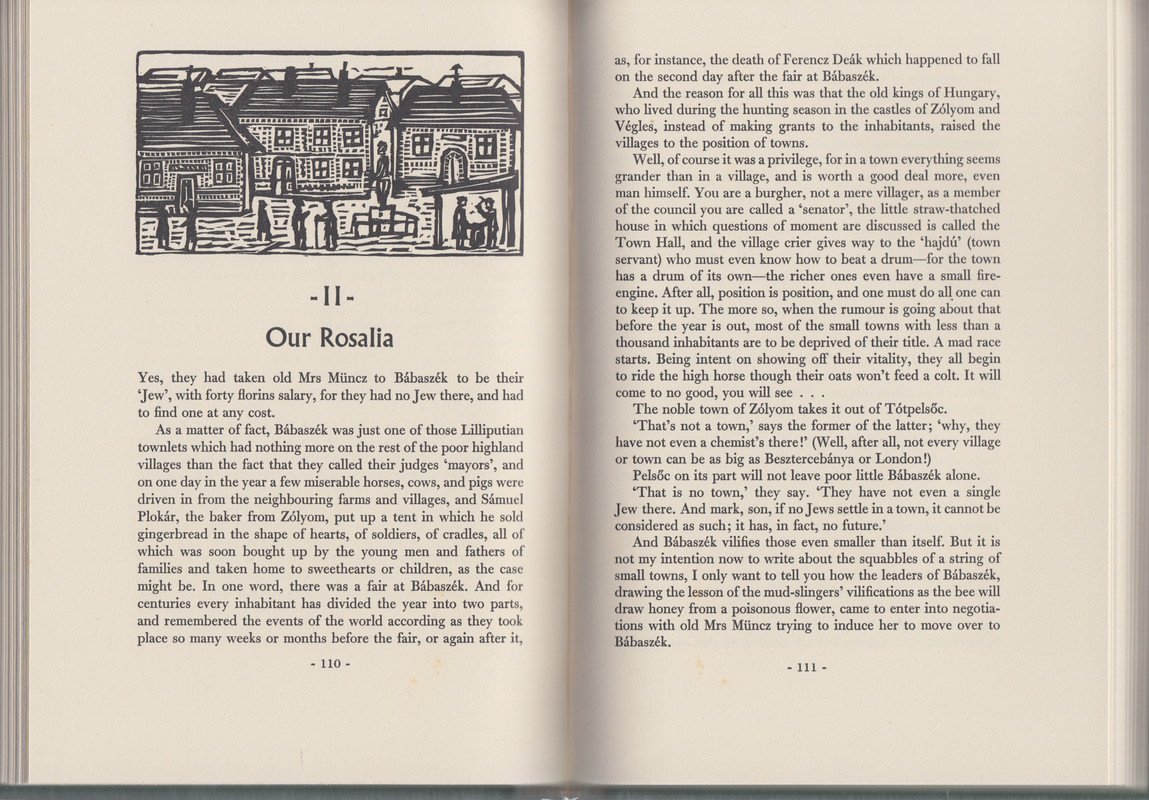
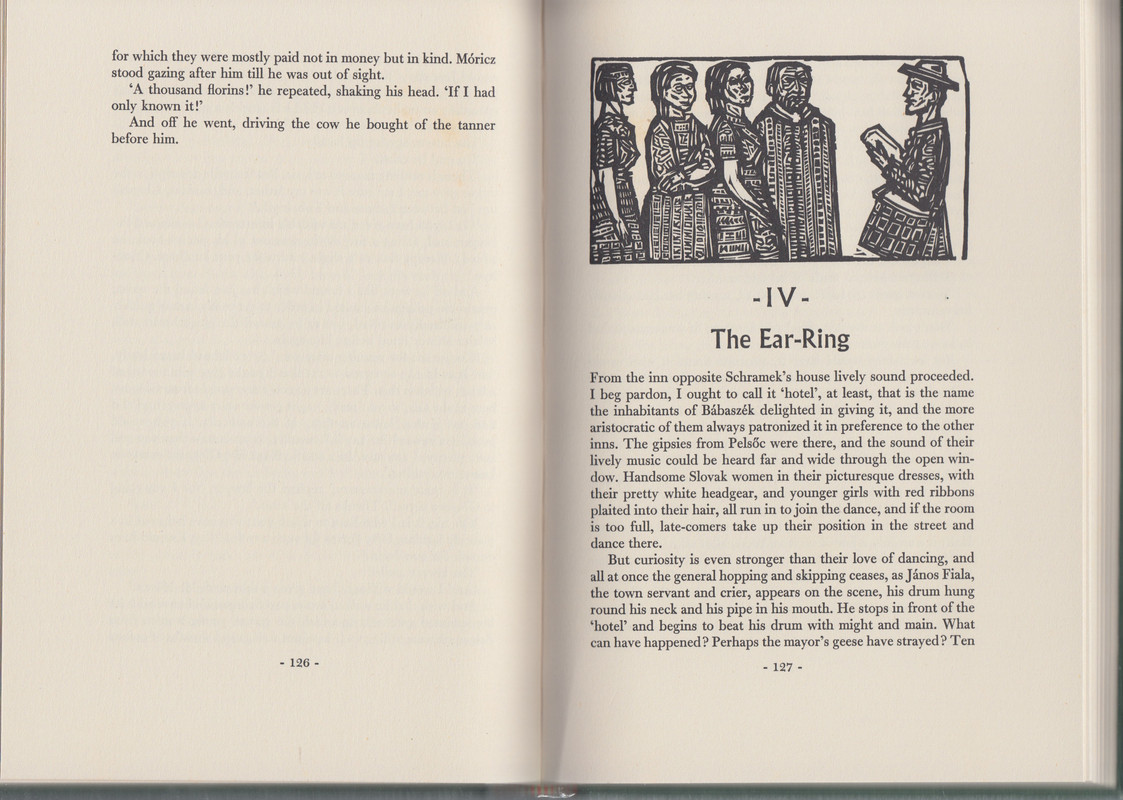
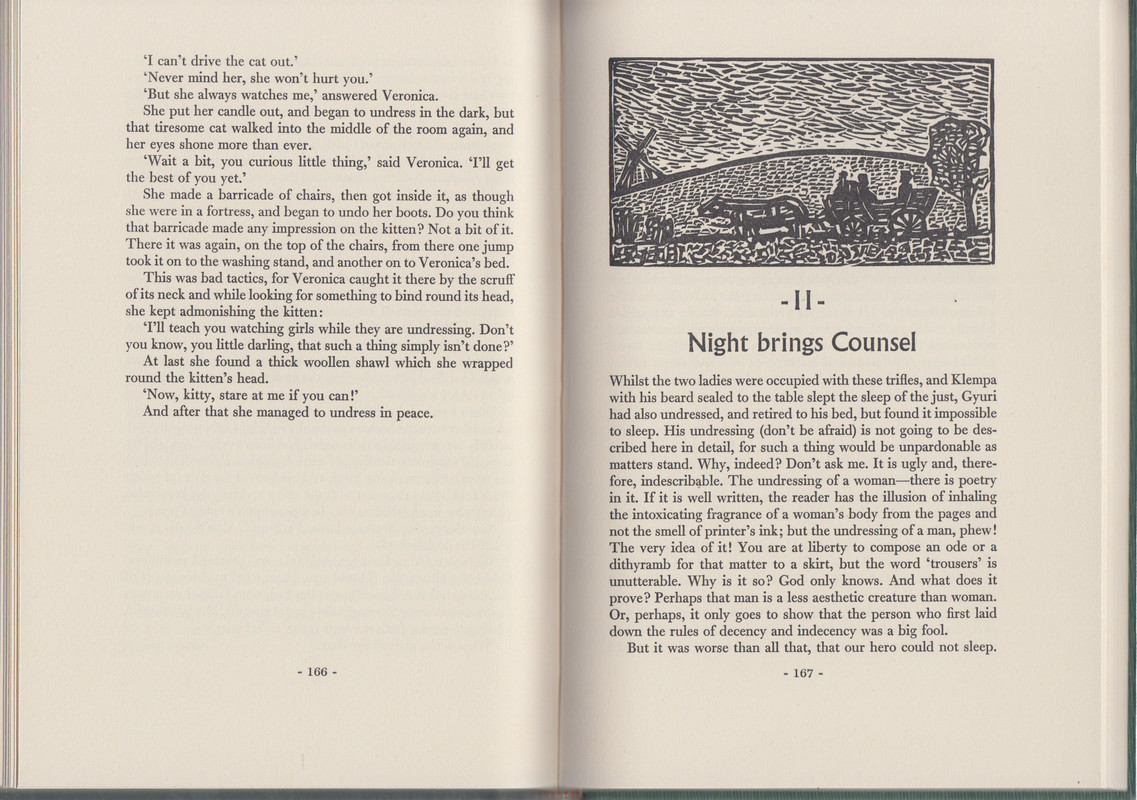
An index of the other illustrated reviews in the "Folio Archives" series can be viewed here.
First published in 1895, this delightful small 218 page book describes how a tattered red umbrella affects the lives of all who come into contact with it over several decades. Set in northern Hungary in the latter half of the 19th.C., it contrasts life in the very primitive and barely accessible villages in the mountains along the Slovak border, with the sophistication of larger cities and the almost unattainable paradise of Budapest, only a hundred kilometres away.
It is a Hungarian classic, with many unexpected twists and turns, human stories and the usual love and crime scenes, that neatly completes a circle in the end, as indicated by the first and last chapters having the same title. A very easy and pleasant read.
The book is presented in one of the smallest formats used by the Folio Society being only 21.2x14.5cm. in its plain brown slipcase. It is bound in dark green cloth, blocked on covers and spine with a dark brown umbrella motif. There are 17 woodcuts by Zoltan Perei that act as headpieces for each chapter, as well as a frontispiece and pictorial endpapers. It was translated from the Hungarian by B.W.Worswick. I purchased my copy quite recently for a mere £9.
Endpapers
An index of the other illustrated reviews in the "Folio Archives" series can be viewed here.
2folio_books
It's a charming little volume from the most consistently underrated period of Folio's history.
3Raenas
In Hungary, this was a compulsory reading when I was 15. I hated it with my guts. Mikszath is NOT for teenagers.
The Hungarian education system has this nasty habit of forcing books meant for adults with experience from the 18-19th century onto young kids, and basically nothing form the 20-21th century they could relate with. Only because they are classics. The only thing they can achieve with this intransigent practice is that many kids will hate reading for life. I almost became one of them. Everything has its order. Let kids have a childhood, and let them read Harry Potter and the modern teen classics. 500-page complex dramas (looking at you Mor Jokai) have no place in that age, especially multiple of them in a single year, not matter how great they are.
/venting OFF
The Hungarian education system has this nasty habit of forcing books meant for adults with experience from the 18-19th century onto young kids, and basically nothing form the 20-21th century they could relate with. Only because they are classics. The only thing they can achieve with this intransigent practice is that many kids will hate reading for life. I almost became one of them. Everything has its order. Let kids have a childhood, and let them read Harry Potter and the modern teen classics. 500-page complex dramas (looking at you Mor Jokai) have no place in that age, especially multiple of them in a single year, not matter how great they are.
/venting OFF
4overthemoon
thanks for the reminder, I need to read it again. I remember liking it very much.
>3 Raenas: Analyzing compulsory books at school for exams put me off a lot of literature: Bleak House was such a drag, I don't think I could bear to read it again. Fortunately, we had a lot of Penguin paperbacks in the 1960s to read at leisure and discuss with friends.
>3 Raenas: Analyzing compulsory books at school for exams put me off a lot of literature: Bleak House was such a drag, I don't think I could bear to read it again. Fortunately, we had a lot of Penguin paperbacks in the 1960s to read at leisure and discuss with friends.
5RRCBS
Thank you for another beautiful post. I really enjoy reading these posts, reminds me how beautiful the older FS books are...and often results in me buying the book of I don’t already have it!
7coynedj
I was made aware of this edition on an old thread here, and picked it up for a pittance. It was quite an enjoyable book.
8LG2
A charming little book. I read it a few years ago and being Hungarian, I'm struck by how few Hungarian authors, besides Mikszath, Folio has published. It would be nice to see something by Imre Kertesz or Gyula Krudy or Antal Szerb or Sandor Marai or Laszlo Krasznahorkai, to name a few, being given the Folio treatment.

