thorold looks for plenitude of peace in Q1 2019
This topic was continued by thorold enjoys shoures soote in Q2 2019.
Talk Club Read 2019
Join LibraryThing to post.
This topic is currently marked as "dormant"—the last message is more than 90 days old. You can revive it by posting a reply.
1thorold
I, singularly moved
To love the lovely that are not beloved,
Of all the seasons, most
Love Winter, and to trace
The sense of the Trophonian pallor in her face.
It is not death, but plentitude of peace;
And the dim cloud that does the world enfold
Hath less the characters of dark and cold
Than warmth and light asleep,
And corespondent breathing seems to keep
With the infant harvest, breathing soft below
Its eider coverlet of snow.
Coventry Patmore
"Winter" in The Unknown Eros
(Coventry Patmore (1823-1896) is a Victorian poet who often gets overlooked these days - he's most often encountered only through "The Angel in the house", which modern teachers use as a convenient summary of all that was wrong (and superficially attractive) about the Victorian middle-class attitude to women. He was an admirer of Tennyson and was close to several of the members of the Pre-Raphaelite Brotherhood.
Trophonius is a semi-obscure figure of Greek mythology, builder amongst other things of the temple of Apollo at Delphi, who somehow became a poetic byword for scariness in 18th century England.)
2thorold

- No, it isn't quite that cold at the time I'm posting this - the picture was taken near where I live in February 2012.
3thorold
Continued from my 2018 Q4 thread, which was here: https://www.librarything.com/topic/296979#
Reading stats from 2018
170 books read in 2018 - looks as though this is the largest number I've read in one year since joining LT. Not altogether surprising as this was also my first calendar year as a pensioner, but the difference from other peak years like 2012 (when I was still working) isn't all that big. I don't keep track of pages read, so I can't tell whether there were more or fewer long books this year - I suspect more.
Year by year:

2018 by month:

The graphs above show book language - the one below gives the "translation matrix" for books read in 2018, with original language along the x-axis and reading language indicated by the colour (note that the one labelled "Swahili" was actually translated from Kikerewe, but there doesn't seem to be a code for that):

2019 goals
As always, I’m not too keen to commit myself to anything, but some ideas that are floating around include:
-pursue Old English a bit further, e.g. have a proper go at Beowulf
- dip a toe into Middle English(Sir Gawain?)
- Chaucer
- Zolathon, second leg
- a bit more Balzac
- the RG Mediterranean theme read, which I’m moderating
- Boswell in the next part of his travels
- 14th century Italy - Petrarch and maybe Boccaccio and Dante?
...
- the TBR shelf !
Reading stats from 2018
170 books read in 2018 - looks as though this is the largest number I've read in one year since joining LT. Not altogether surprising as this was also my first calendar year as a pensioner, but the difference from other peak years like 2012 (when I was still working) isn't all that big. I don't keep track of pages read, so I can't tell whether there were more or fewer long books this year - I suspect more.
Year by year:

2018 by month:

The graphs above show book language - the one below gives the "translation matrix" for books read in 2018, with original language along the x-axis and reading language indicated by the colour (note that the one labelled "Swahili" was actually translated from Kikerewe, but there doesn't seem to be a code for that):

2019 goals
As always, I’m not too keen to commit myself to anything, but some ideas that are floating around include:
-
- dip a toe into Middle English
- Chaucer
- Zolathon, second leg
- a bit more Balzac
- the RG Mediterranean theme read, which I’m moderating
- Boswell in the next part of his travels
- 14th century Italy - Petrarch and maybe Boccaccio and Dante?
...
- the TBR shelf !
5Dilara86
>4 rocketjk: Concurring!
6thorold
>4 rocketjk: >5 Dilara86: Thanks!
Only a few hours into the new year, and I’ve already finished a book - this is an audiobook I’ve been listening to before breakfast for the last few days. I read the second part of Dawkins’s memoirs last week, then noticed that the first part was available on Scribd.
An appetite for wonder: the making of a scientist (2013) by Richard Dawkins (UK, 1941- ) Audiobook read by the author
In this first part of his memoirs, Dawkins describes his life up to the publication of The selfish gene with all the clarity, wit and modest authority you would expect. He talks about his empire-building, botanising ancestors, his early childhood in Africa, his schools, and his development as a biologist at Oxford. And of course he has fun showing how likely or unlikely it is from a scientific point of view that any of those influences were what shaped the sort of scientist he became.
This is more of a conventional narrative autobiography than Brief Candle, with less actual science and fewer anecdotes and famous names (but oddly it does include several anecdotes that also appear in the other book). I don’t know if this is the sort of inspirational autobiography you would put in the Christmas stocking of a budding young scientist, but it is a lively and interesting read.
Dawkins describes in Brief Candle how much he enjoyed recording audio versions of his books, and that pleasure comes over very clearly in the way he reads this one. He’s an excellent, fluent reader, who seems to intrude his own personality just to the right amount, without any distracting theatrics.
Only a few hours into the new year, and I’ve already finished a book - this is an audiobook I’ve been listening to before breakfast for the last few days. I read the second part of Dawkins’s memoirs last week, then noticed that the first part was available on Scribd.
An appetite for wonder: the making of a scientist (2013) by Richard Dawkins (UK, 1941- ) Audiobook read by the author
In this first part of his memoirs, Dawkins describes his life up to the publication of The selfish gene with all the clarity, wit and modest authority you would expect. He talks about his empire-building, botanising ancestors, his early childhood in Africa, his schools, and his development as a biologist at Oxford. And of course he has fun showing how likely or unlikely it is from a scientific point of view that any of those influences were what shaped the sort of scientist he became.
This is more of a conventional narrative autobiography than Brief Candle, with less actual science and fewer anecdotes and famous names (but oddly it does include several anecdotes that also appear in the other book). I don’t know if this is the sort of inspirational autobiography you would put in the Christmas stocking of a budding young scientist, but it is a lively and interesting read.
Dawkins describes in Brief Candle how much he enjoyed recording audio versions of his books, and that pleasure comes over very clearly in the way he reads this one. He’s an excellent, fluent reader, who seems to intrude his own personality just to the right amount, without any distracting theatrics.
7dchaikin
Was wondering if it might begin with the ancestral genes themselves. Happy New Year, Mark. Quick start.
8tonikat
Happy New Year - thanks for the Coventry Patmore quote and about Trophonius, who I've been reading about. All the best for that plenitude and some reading and good things within.
9thorold
>7 dchaikin: :-) - No, he seems to be more preoccupied with trying to get us to understand what it means for family history that the individual organism has to be seen as just a vehicle for the gene, rather than its expression. At least I think that's what I understood when I was reading it. In any case, he argues that the fact that he is a biologist and several other Dawkinses have been prominent biologists has far more to do with social factors than genetic ones. And he's not the same sort of biologist, anyway.
First novel of the year:
L'exposition coloniale (1988; Love and empire) by Érik Orsenna (France, 1947- )


The economist and international development expert Éric Arnoult held government office under François Mitterand and is a member of the Académie Française and of a whole string of cultural and development organisations. He's been writing fiction for both adults and children under the pen-name Érik Orsenna since the mid-1970s. I read his historical novel about Columbus, L'entreprise des Indes, in 2016.
Orsenna's novel L'exposition coloniale won both the main Prix Goncourt and the Goncourt des Lycéens in 1988. It's a book full of half-buried jokes and false trails, from the title down - although the great Paris Colonial Exhibition of 1931 does (eventually) play a small part in the book, it's the book itself that is an "exhibition" of the history of the foolishly optimistic dreams that were behind the notion of French colonialism from its early days in the 1880s to its collapse at Dien Bien Phu in 1954.
That history is mirrored by the life of the main character and sometimes narrator, Gabriel Orsenna, whose father, the dreamy bookseller Louis, spent his early life preparing for a career in the colonies but resigned on the eve of being sent overseas, driven into a panic by everything he had read about tropical diseases.
Gabriel is a little man with a bouncy personality who finds himself attracted from an early age by one of the key colonial commodity products, rubber, and makes his career with a large Clermont-Ferrand-based tyre company, "La Manufacture", which gives Orsenna plenty of opportunities to show us French colonial failures in action. (Obviously, Orsenna doesn't want to infringe the trademarks of any real companies that might be manufacturing tyres in that part of France, but he does drop a few hints that we might find a resemblance between Gabriel and a certain official mascot...) In 1913, he's in Brazil, trying to bring rubber-growing back to life there after it has been all-but wiped out by competition from British plantations in Asia; in the early 50s, he's in the collapsing colony of Indochina, and in between he's with the company's motor-sport department, trying to prove French superiority over the Germans and Italians on the Grand Prix circuit.
However big and all-embracing this book appears to be, it is primarily a book about how the metropolitan French thought of their colonies, not about how colonialism was experienced by the people whose countries they were colonising. Which means that some of the most obvious things you would expect to be said in a book about colonialism simply don't arise: it is normally only with hindsight that large-scale abuses of human rights become part of the general perceptions of people in the countries in whose names they are perpetrated. Although there are good plot reasons for such things not being there, it does occasionally give you an uncomfortable feeling.
This is a lively, chatty sort of book, and it certainly doesn't have the kind of gravitas you might expect from a major doorstep novel by a heavy-duty French intellectual. Everywhere you look, there are querulous footnotes, as Gabriel's wife and sister-in-law read through the manuscript and cast doubt on his assertions; when that joke is wearing a bit thin and we have got used to the false trails that might make this a history of the Orsenna family, had an Orsenna family ever really existed, the author simply throws in some joke character-names. On arrival in England during WWII, for instance, Gabriel is interviewed by an MI5 officer called Cornwell - we're led on along a bogus trail of associations for several pages before he gives the officer the first name "George" and we remember that the real David Cornwell would still have been at school in 1943...
Fun, but perhaps hasn't aged quite as well as it might have.
First novel of the year:
L'exposition coloniale (1988; Love and empire) by Érik Orsenna (France, 1947- )


The economist and international development expert Éric Arnoult held government office under François Mitterand and is a member of the Académie Française and of a whole string of cultural and development organisations. He's been writing fiction for both adults and children under the pen-name Érik Orsenna since the mid-1970s. I read his historical novel about Columbus, L'entreprise des Indes, in 2016.
Orsenna's novel L'exposition coloniale won both the main Prix Goncourt and the Goncourt des Lycéens in 1988. It's a book full of half-buried jokes and false trails, from the title down - although the great Paris Colonial Exhibition of 1931 does (eventually) play a small part in the book, it's the book itself that is an "exhibition" of the history of the foolishly optimistic dreams that were behind the notion of French colonialism from its early days in the 1880s to its collapse at Dien Bien Phu in 1954.
That history is mirrored by the life of the main character and sometimes narrator, Gabriel Orsenna, whose father, the dreamy bookseller Louis, spent his early life preparing for a career in the colonies but resigned on the eve of being sent overseas, driven into a panic by everything he had read about tropical diseases.
Gabriel is a little man with a bouncy personality who finds himself attracted from an early age by one of the key colonial commodity products, rubber, and makes his career with a large Clermont-Ferrand-based tyre company, "La Manufacture", which gives Orsenna plenty of opportunities to show us French colonial failures in action. (Obviously, Orsenna doesn't want to infringe the trademarks of any real companies that might be manufacturing tyres in that part of France, but he does drop a few hints that we might find a resemblance between Gabriel and a certain official mascot...) In 1913, he's in Brazil, trying to bring rubber-growing back to life there after it has been all-but wiped out by competition from British plantations in Asia; in the early 50s, he's in the collapsing colony of Indochina, and in between he's with the company's motor-sport department, trying to prove French superiority over the Germans and Italians on the Grand Prix circuit.
However big and all-embracing this book appears to be, it is primarily a book about how the metropolitan French thought of their colonies, not about how colonialism was experienced by the people whose countries they were colonising. Which means that some of the most obvious things you would expect to be said in a book about colonialism simply don't arise: it is normally only with hindsight that large-scale abuses of human rights become part of the general perceptions of people in the countries in whose names they are perpetrated. Although there are good plot reasons for such things not being there, it does occasionally give you an uncomfortable feeling.
This is a lively, chatty sort of book, and it certainly doesn't have the kind of gravitas you might expect from a major doorstep novel by a heavy-duty French intellectual. Everywhere you look, there are querulous footnotes, as Gabriel's wife and sister-in-law read through the manuscript and cast doubt on his assertions; when that joke is wearing a bit thin and we have got used to the false trails that might make this a history of the Orsenna family, had an Orsenna family ever really existed, the author simply throws in some joke character-names. On arrival in England during WWII, for instance, Gabriel is interviewed by an MI5 officer called Cornwell - we're led on along a bogus trail of associations for several pages before he gives the officer the first name "George" and we remember that the real David Cornwell would still have been at school in 1943...
Fun, but perhaps hasn't aged quite as well as it might have.
10dchaikin
Sounds like he would have had to have written it differently if he were writing it today.
11thorold
>10 dchaikin: To be fair, he's written several other books about colonialism since then, only one of which I've read so far.
12auntmarge64
>1 thorold: Lovely poem by Coventry Patmore.
13thorold
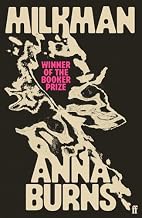
I don't usually rush out to read Booker winners, but this latest one sounded intriguing, so I didn't object when it was nominated for our next read by the Northern Ireland member of our book club. And I'm glad, because Burns seems to be a very interesting (if not exactly prolific) writer I might never have come across without the extra publicity of a big prize.
Fun to see that the reviews on LT so far are divided about 2:1 between those who absolutely hated it and those who loved it:
Milkman (2018) by Anna Burns (UK, 1962- )
![]()
Burns uses her experience of growing up in a republican neighbourhood of Belfast in the seventies to explore how a sense of conflict and embattlement can distort values in a small community. When the community detaches itself from the surrounding state and all authority and status are transferred to the men who have the guns (or are believed to be in touch with the men who have the guns...), violence - political, sexual, or just casual - becomes the default way of exercising power, and the community runs on gossip, suspicion and fear. I was expecting this to be a very dark and bitter sort of book, but it deals with the claustrophobia and constant presence of sudden death in a surprisingly upbeat, often very funny, way, without in any way seeming to belittle the horror of what went on in those days.
The names you use for people, things and places become incredibly important in conflict situations - they are one of the most direct ways for people to tell whether you are "one of us" or "one of them". Burns foregrounds this by stripping names out of her story altogether, substituting her own system of epithets (the narrator is "middle sister", the IRA are "renouncers", etc.) to reinforce the strangeness of what's going on. And she carefully sets middle sister just far enough outside the community norm to be aware of its strangeness, but not far enough out that she isn't constantly pulled back by her fear of cutting herself off altogether.
Some reviewers seem to have a hard time with the unusual, very turned-in-on-itself style of this book, but I found that it really drew me in and made me want to go on reading for longer than I had intended.
The story of middle sister's stalking by the sinister milkman - we know from the outset how it's going to end - is much less important here than the insight we get into the bizarre details of middle sister's world and how it works. Anyone who reads this book is likely to be stuck for life with the visual image of middle sister reading nineteenth-century novels whilst walking across town (complete with "desk lamp" for after dark), or of the wee sisters and their friends en masse in the street in their glitziest dressing-up clothes to re-enact the moment when a famous Northern Ireland ballroom-dancing pair fell whilst waltzing. This is obviously going to be a film and that will be the key image in the final montage!
(You might have thought that Toni Morrison cornered the market in characters called Milkman with Song of Solomon, but here's Anna Burns going one better - two Milkmen in the same book!)
Guardian review: https://www.theguardian.com/books/2018/may/31/milkman-anna-burns-review-northern...
Follow-up when it won the Booker: https://www.theguardian.com/books/2018/oct/16/anna-burns-wins-man-booker-prize-f...
Fun to see that the reviews on LT so far are divided about 2:1 between those who absolutely hated it and those who loved it:
Milkman (2018) by Anna Burns (UK, 1962- )
Burns uses her experience of growing up in a republican neighbourhood of Belfast in the seventies to explore how a sense of conflict and embattlement can distort values in a small community. When the community detaches itself from the surrounding state and all authority and status are transferred to the men who have the guns (or are believed to be in touch with the men who have the guns...), violence - political, sexual, or just casual - becomes the default way of exercising power, and the community runs on gossip, suspicion and fear. I was expecting this to be a very dark and bitter sort of book, but it deals with the claustrophobia and constant presence of sudden death in a surprisingly upbeat, often very funny, way, without in any way seeming to belittle the horror of what went on in those days.
The names you use for people, things and places become incredibly important in conflict situations - they are one of the most direct ways for people to tell whether you are "one of us" or "one of them". Burns foregrounds this by stripping names out of her story altogether, substituting her own system of epithets (the narrator is "middle sister", the IRA are "renouncers", etc.) to reinforce the strangeness of what's going on. And she carefully sets middle sister just far enough outside the community norm to be aware of its strangeness, but not far enough out that she isn't constantly pulled back by her fear of cutting herself off altogether.
Some reviewers seem to have a hard time with the unusual, very turned-in-on-itself style of this book, but I found that it really drew me in and made me want to go on reading for longer than I had intended.
The story of middle sister's stalking by the sinister milkman - we know from the outset how it's going to end - is much less important here than the insight we get into the bizarre details of middle sister's world and how it works. Anyone who reads this book is likely to be stuck for life with the visual image of middle sister reading nineteenth-century novels whilst walking across town (complete with "desk lamp" for after dark), or of the wee sisters and their friends en masse in the street in their glitziest dressing-up clothes to re-enact the moment when a famous Northern Ireland ballroom-dancing pair fell whilst waltzing. This is obviously going to be a film and that will be the key image in the final montage!
(You might have thought that Toni Morrison cornered the market in characters called Milkman with Song of Solomon, but here's Anna Burns going one better - two Milkmen in the same book!)
Guardian review: https://www.theguardian.com/books/2018/may/31/milkman-anna-burns-review-northern...
Follow-up when it won the Booker: https://www.theguardian.com/books/2018/oct/16/anna-burns-wins-man-booker-prize-f...
Asked about how she had filled the long gap since her 2002 Orange prize listing for No Bones, she said she had done commercial events and moved houses. What will she do with the money? “I’ll clear my debts and live on what’s left.”
14thorold
Another Eric, another Goncourt winner...
Not planned, but this one happened to catch my eye in the library just after I saw a review in the paper.
L'ordre du jour: récit (2017; The order of the day) by Éric Vuillard (France, 1968- )


Éric Vuillard is a film-maker from Lyon. He has published a number of récits(*), mostly on historical themes, over the last 20 years.
Les plus grandes catastrophes s'annoncent souvent à petits pas.
This is an odd little book - the French edition is 150 pages in a weird 2:1 format (19x10cm) so that you are reading the text in a very narrow column, like a cut-up newspaper. And with a curious full-length photo of a politician in a wing-collar on the front cover - not Chamberlain, as you might think from a first glance, but Austrian chancellor Schuschnigg, who turns out to be one of the principal villains of Vuillard's story.
For this is the story of the Anschluss of 1938, dramatically reimagined as a series of semi-farcical tableaux of human cowardice, self-interest and incompetence, in support of Vuillard's argument that history is not about the inevitable progression of big, unstoppable forces, but about fallible humans taking bad decisions (rather like what Christopher Clark did in The sleepwalkers, but on a much smaller scale).
Vuillard starts off with a meeting of prominent German industrialists convened by Goering in Berlin in February 1933 to raise the funds the Nazi party needs for its coming election campaign - he wants us to appreciate that none of these men was under any obligation to contribute, but that they all did so, calculating just as their present-day counterparts would that it is good business to have the next government - whatever its political colour - owing you a favour. And of course, being a novelist not a historian, Vuillard doesn't need to go into the difficult question of "what if?" - would the Nazis have found another source of funds, would they have come to power anyway without the support of industry..? - for him, what matters is that there was a decision point and those present took a bad decision. And - perhaps more to the point - that all those present did benefit from the Nazis coming to power, and all of their companies in various combinations and under various names are still with us and doing well to this day (also possibly debatable...).
The farce continues with the Anschluss itself - Schuschnigg (who wasn't exactly a poster-boy for democracy to start with, having presided over the banning of trade unions and the social-democratic party, the suspension of parliament, etc.) fails to call Hitler's bluff when he is summoned to Berchtesgaden, and, despite a last-minute change of heart, doesn't take any decisive action that would have undermined Hitler's pretence that Austria has voluntarily merged itself into the Reich. Ribbentrop, meanwhile, has invited himself to lunch with Chamberlain (from whom he rented a flat whilst in London as German ambassador) on the day the Germans are to march into Austria, and draws out the meal as long as possible to reduce the risk of any precipitate British reaction. Austrians - and the rest of the world - buy into the myth of Blitzkrieg and the jubilant reception of German troops by the Austrian people, as promoted in German reporting carefully managed by Goebbels, and apparently no-one notices the lines of broken-down Panzer columns blocking the roads into Austria.
Interesting, and certainly written with plenty of sense for the entertainment value of history, but I don't know whom he is trying to convince. If you already know something about the history, it comes over as too fragmented and incomplete to prove anything; if you don't, then there are far better, more comprehensive accounts available in conventional history books. But it got very good reviews in the press, and obviously impressed the Goncourt judges. I suppose that, in these times, we should be prepared to welcome anything that reminds us how idiocy, weakness and self-interest could open the gates to totalitarian abuse of power.
According to Wikipedia, this is the first Goncourt winner to have been translated into Esperanto. So now you know!
---
(*) Récit - "tale, account" - is a French critical term that started with people like Gide and Camus but has become a bit vaguer over the years. It tends to refer, broadly-speaking, to narrative texts that can't quite be classed as novels and are mostly about themselves: cf. https://en.wikipedia.org/wiki/Récit
Not planned, but this one happened to catch my eye in the library just after I saw a review in the paper.
L'ordre du jour: récit (2017; The order of the day) by Éric Vuillard (France, 1968- )


Éric Vuillard is a film-maker from Lyon. He has published a number of récits(*), mostly on historical themes, over the last 20 years.
Les plus grandes catastrophes s'annoncent souvent à petits pas.
This is an odd little book - the French edition is 150 pages in a weird 2:1 format (19x10cm) so that you are reading the text in a very narrow column, like a cut-up newspaper. And with a curious full-length photo of a politician in a wing-collar on the front cover - not Chamberlain, as you might think from a first glance, but Austrian chancellor Schuschnigg, who turns out to be one of the principal villains of Vuillard's story.
For this is the story of the Anschluss of 1938, dramatically reimagined as a series of semi-farcical tableaux of human cowardice, self-interest and incompetence, in support of Vuillard's argument that history is not about the inevitable progression of big, unstoppable forces, but about fallible humans taking bad decisions (rather like what Christopher Clark did in The sleepwalkers, but on a much smaller scale).
Vuillard starts off with a meeting of prominent German industrialists convened by Goering in Berlin in February 1933 to raise the funds the Nazi party needs for its coming election campaign - he wants us to appreciate that none of these men was under any obligation to contribute, but that they all did so, calculating just as their present-day counterparts would that it is good business to have the next government - whatever its political colour - owing you a favour. And of course, being a novelist not a historian, Vuillard doesn't need to go into the difficult question of "what if?" - would the Nazis have found another source of funds, would they have come to power anyway without the support of industry..? - for him, what matters is that there was a decision point and those present took a bad decision. And - perhaps more to the point - that all those present did benefit from the Nazis coming to power, and all of their companies in various combinations and under various names are still with us and doing well to this day (also possibly debatable...).
The farce continues with the Anschluss itself - Schuschnigg (who wasn't exactly a poster-boy for democracy to start with, having presided over the banning of trade unions and the social-democratic party, the suspension of parliament, etc.) fails to call Hitler's bluff when he is summoned to Berchtesgaden, and, despite a last-minute change of heart, doesn't take any decisive action that would have undermined Hitler's pretence that Austria has voluntarily merged itself into the Reich. Ribbentrop, meanwhile, has invited himself to lunch with Chamberlain (from whom he rented a flat whilst in London as German ambassador) on the day the Germans are to march into Austria, and draws out the meal as long as possible to reduce the risk of any precipitate British reaction. Austrians - and the rest of the world - buy into the myth of Blitzkrieg and the jubilant reception of German troops by the Austrian people, as promoted in German reporting carefully managed by Goebbels, and apparently no-one notices the lines of broken-down Panzer columns blocking the roads into Austria.
Interesting, and certainly written with plenty of sense for the entertainment value of history, but I don't know whom he is trying to convince. If you already know something about the history, it comes over as too fragmented and incomplete to prove anything; if you don't, then there are far better, more comprehensive accounts available in conventional history books. But it got very good reviews in the press, and obviously impressed the Goncourt judges. I suppose that, in these times, we should be prepared to welcome anything that reminds us how idiocy, weakness and self-interest could open the gates to totalitarian abuse of power.
According to Wikipedia, this is the first Goncourt winner to have been translated into Esperanto. So now you know!
---
(*) Récit - "tale, account" - is a French critical term that started with people like Gide and Camus but has become a bit vaguer over the years. It tends to refer, broadly-speaking, to narrative texts that can't quite be classed as novels and are mostly about themselves: cf. https://en.wikipedia.org/wiki/Récit
15dchaikin
>13 thorold: terrific review. Might have to find a way to slip this one in.
>14 thorold: Interesting, but I’ll take home your definition of récit, and leave this book for others.
>14 thorold: Interesting, but I’ll take home your definition of récit, and leave this book for others.
16rocketjk
>13 thorold: My wife has been reading and very much loving Milkman. Before that she read Burns' No Bones and thought it was very good, although she says Milkman is the better of the two.
17thorold
Before Christmas I had a little dive into Old English. Needless to say, that rather lost momentum as I got involved with other things over the holiday period, but I wanted to give it some sort of closure before giving up altogether. And it's an opportunity to bring in another famous Northern Ireland writer...
I read through and enjoyed the Heaney translation, and I looked at a few short passages in the Old English original to get a feel for the language and the problems of translation.
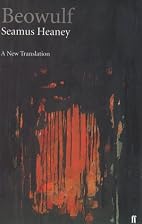
Beowulf: a new translation (1999) translated by Seamus Heaney (UK, 1939-2013)
Beowulf : with the Finnesburg fragment (1953, 1988) edited by C.L. Wrenn (UK, 1895-1969) & W.F. Bolton (US, 1930- )


The poem
Beowulf is a tough sell. Not only has it traditionally been used by English departments around the world to break the spirit of newly-recruited undergraduates (who thought they had signed up for three years of Emily Dickinson and Virginia Woolf, only to find themselves out on the parade-ground practicing their Old English sound-shifts for month after month...), but also, when you get down to it, it turns out to be a poem about a macho muscle-man who spends his time - when not quaffing mead - either ripping monsters limb from limb or swimming long distances in full armour. Told completely straight, without any discernible trace of irony. Well, not exactly my cup of tea...
Skimming through the introduction of the Bolton & Wrenn critical text, it turns out that we know surprisingly little about what must be one of the most-studied poems in the canon. It has survived in only one manuscript, the famous "British Museum Cotton Vitellius A XV" (bizarrely, the emperor Vitellius comes into it because it's his bust that stands on top of that particular bookcase). In fact, there are very few Old English texts that survive as multiple copies, so this uniqueness isn't unusual in itself. The manuscript seems to have been written around the year 1000, and textual evidence suggests that it's at least the third generation of copies since the poem was first written down. When and where that was is hotly disputed, but Mercia in the second half of the 8th century is a strong possibility. The action of the poem is set in a pre-Christian past in Denmark and Southern Sweden (with some mention of actual historical figures from the time), whilst the poet is obviously from a Christian background and refers quite freely to the Old Testament.
What I found most surprising was to discover that the poem was not conspicuously a "classic" in its own time: we don't have any other contemporary references to it (apart from the "Finnesburg fragment", a single page of MS that seems to come from a different version of part of the same story), and as far as anyone can tell it fell completely off the radar of English literature between the end of the Old English period and the time around 650 years later when the first modern scholars became interested in Old English manuscripts and discovered this poem, bound in with a prose translation of St Augustine. So Beowulf is only part of the history of English literature with hindsight.
The translation
Seamus Heaney, of course, saw it as rather more than a philological crossword puzzle or a Boys' Own adventure story, otherwise he wouldn't have bothered with it. He points us in particular at the last part of the poem, where the elderly (70+) hero decides that he owes it to his people to take on one last dragon, even though it will certainly cost him his life. And indeed, the anonymous poet deals with the complex emotions involved here a little less brusquely than he does elsewhere - but this isn't Shakespearean drama, and we shouldn't expect it to be.
What Heaney is really interested in, I think, is the poetical challenge of finding something in modern English that has the same magically seductive sound quality as Old English alliterative verse (which always sounds magnificent, even if you haven't a clue what it means...). And, of course, being Seamus Heaney, he decides to imagine the voices of the poem as if they came from the Northern Ireland farmers of his own sound-world, puts these into a slightly looser form of the Old English two-stress half-lines, and succeeds brilliantly. This translation is a poem that you just have to read aloud, even if there's no way that you can find any sympathy for Beowulf as a character.
Short sample (ll. 1888-91):
I read through and enjoyed the Heaney translation, and I looked at a few short passages in the Old English original to get a feel for the language and the problems of translation.
Beowulf: a new translation (1999) translated by Seamus Heaney (UK, 1939-2013)
Beowulf : with the Finnesburg fragment (1953, 1988) edited by C.L. Wrenn (UK, 1895-1969) & W.F. Bolton (US, 1930- )


The poem
Beowulf is a tough sell. Not only has it traditionally been used by English departments around the world to break the spirit of newly-recruited undergraduates (who thought they had signed up for three years of Emily Dickinson and Virginia Woolf, only to find themselves out on the parade-ground practicing their Old English sound-shifts for month after month...), but also, when you get down to it, it turns out to be a poem about a macho muscle-man who spends his time - when not quaffing mead - either ripping monsters limb from limb or swimming long distances in full armour. Told completely straight, without any discernible trace of irony. Well, not exactly my cup of tea...
Skimming through the introduction of the Bolton & Wrenn critical text, it turns out that we know surprisingly little about what must be one of the most-studied poems in the canon. It has survived in only one manuscript, the famous "British Museum Cotton Vitellius A XV" (bizarrely, the emperor Vitellius comes into it because it's his bust that stands on top of that particular bookcase). In fact, there are very few Old English texts that survive as multiple copies, so this uniqueness isn't unusual in itself. The manuscript seems to have been written around the year 1000, and textual evidence suggests that it's at least the third generation of copies since the poem was first written down. When and where that was is hotly disputed, but Mercia in the second half of the 8th century is a strong possibility. The action of the poem is set in a pre-Christian past in Denmark and Southern Sweden (with some mention of actual historical figures from the time), whilst the poet is obviously from a Christian background and refers quite freely to the Old Testament.
What I found most surprising was to discover that the poem was not conspicuously a "classic" in its own time: we don't have any other contemporary references to it (apart from the "Finnesburg fragment", a single page of MS that seems to come from a different version of part of the same story), and as far as anyone can tell it fell completely off the radar of English literature between the end of the Old English period and the time around 650 years later when the first modern scholars became interested in Old English manuscripts and discovered this poem, bound in with a prose translation of St Augustine. So Beowulf is only part of the history of English literature with hindsight.
The translation
Seamus Heaney, of course, saw it as rather more than a philological crossword puzzle or a Boys' Own adventure story, otherwise he wouldn't have bothered with it. He points us in particular at the last part of the poem, where the elderly (70+) hero decides that he owes it to his people to take on one last dragon, even though it will certainly cost him his life. And indeed, the anonymous poet deals with the complex emotions involved here a little less brusquely than he does elsewhere - but this isn't Shakespearean drama, and we shouldn't expect it to be.
What Heaney is really interested in, I think, is the poetical challenge of finding something in modern English that has the same magically seductive sound quality as Old English alliterative verse (which always sounds magnificent, even if you haven't a clue what it means...). And, of course, being Seamus Heaney, he decides to imagine the voices of the poem as if they came from the Northern Ireland farmers of his own sound-world, puts these into a slightly looser form of the Old English two-stress half-lines, and succeeds brilliantly. This translation is a poem that you just have to read aloud, even if there's no way that you can find any sympathy for Beowulf as a character.
Short sample (ll. 1888-91):
Cwóm þá tó flóde fela módigra
hægstealdra· hringnet baéron
locene leoðosyrcan· landweard onfand
eftsíð eorla, swá hé aér dyde·
Heaney:
Down to the waves then, dressed in the web
Of their chain-mail and war-shirts, the young men marched
in high spirits. The coast-guard spied them
Thanes setting forth, the same as before.
18RidgewayGirl
I'm excited about Milkman and plan to start it soon. The writing sounds like Eimear McBride's.
19thorold
>18 RidgewayGirl: I’ve only seen short excerpts from A girl is a half-formed thing, but from that little bit I get the impression that they are quite different. Burns is more like Iris Murdoch would be if she tried to write like Beckett. Stream-of-consciousness, making her own rules, but also quite witty, elegant and literary. McBride seems to be a lot more raw and painful. Still starting from Beckett, but going in the opposite direction. If that makes any sense.
But you should still be excited about it!
But you should still be excited about it!
20dchaikin
>17 thorold: a post to keep in mind. Someone recommended the Swanton translation as “best for understanding the Old English”. Appreciate the quote in two languages.
21lisapeet
>19 thorold: Burns is more like Iris Murdoch would be if she tried to write like Beckett.
Well I'm pretty sure that just sold me.
Well I'm pretty sure that just sold me.
22thorold
>20 dchaikin: Yes, I think the Heaney is more to be read for its own sake. He doesn’t deviate gratuitously from the original, but he has some quite inventive word-choices, and doesn’t go to any great effort to keep in sync line-by-line within a sentence, so it isn’t a huge help if you’re trying to use it to follow the OE. But you should definitely read Heaney’s introduction - that’s very interesting, both for his thoughts on the poem and his description of his process for the translation.
23SassyLassy
>14 thorold: Luckily I have my grandfather's Esperanto dictionary to help! He was a great promoter of the idea.
>17 thorold: You remind me that this is still in a moving box, but your review is inspiration to find it.
>17 thorold: You remind me that this is still in a moving box, but your review is inspiration to find it.
24baswood
>17 thorold: Yes the Seamus Heaney translation is an excellent poem even if know nothing about Beowulf.
I also enjoyed Charles Scott Moncreiff's translation from 1921. His is a more traditional translation keeping to the alliteration and the 'broken backed' feel of the original. Of course Heaney does this as well but with the use of modern punctuation.
I also enjoyed Charles Scott Moncreiff's translation from 1921. His is a more traditional translation keeping to the alliteration and the 'broken backed' feel of the original. Of course Heaney does this as well but with the use of modern punctuation.
25rocketjk
>14 thorold: Vuillard's argument that history is not about the inevitable progression of big, unstoppable forces, but about fallible humans taking bad decisions
On a non-fiction variation of this theme, but regarding the identical historical moment, I have been gradually reading through The Secret History of the War, Volume 1 by Waverly Root. This is a very long volume of articles about the conditions leading up to WW2 and conditions in the various occupied regions during the war, written by Root, an American journalist who was in Europe right up to the war's outbreak and returned right after its conclusion. The articles were written with the help of French journalist Pierre Lazareff. This first volume was published during the months between V-E Day and the dropping of the atomic bomb, but most of the chapters appear to have been written while the war and the occupation were still ongoing. At any rate, and what made me think of this, is Root's 80-page chapter on the fall of France, and the ways in which the defeatism and even acquiescence by important French politicians, both before (years before) and during the German invasion ensured the quick French defeat. We tend to think of the French army's apparent helplessness before the German blitzkrieg as a "big, unstoppable" event. If Root and Lazareff are to be believed, this was far from a preordained outcome, even once the actual fighting had begun. Root uses the word "treason."
On a non-fiction variation of this theme, but regarding the identical historical moment, I have been gradually reading through The Secret History of the War, Volume 1 by Waverly Root. This is a very long volume of articles about the conditions leading up to WW2 and conditions in the various occupied regions during the war, written by Root, an American journalist who was in Europe right up to the war's outbreak and returned right after its conclusion. The articles were written with the help of French journalist Pierre Lazareff. This first volume was published during the months between V-E Day and the dropping of the atomic bomb, but most of the chapters appear to have been written while the war and the occupation were still ongoing. At any rate, and what made me think of this, is Root's 80-page chapter on the fall of France, and the ways in which the defeatism and even acquiescence by important French politicians, both before (years before) and during the German invasion ensured the quick French defeat. We tend to think of the French army's apparent helplessness before the German blitzkrieg as a "big, unstoppable" event. If Root and Lazareff are to be believed, this was far from a preordained outcome, even once the actual fighting had begun. Root uses the word "treason."
26thorold
>25 rocketjk: Thanks - sounds interesting!
When I was reading more about WWII a few years ago I saw several books making similar arguments for the importance of a widespread belief in German unstoppability. I think the Ian Kershaw Hitler biography was one.
Modern French history is a rabbit-hole I want to go down at some point soon - reading Zola has made me more curious about Napoleon III, so when I get there I’ll probably want to start before 1848...
When I was reading more about WWII a few years ago I saw several books making similar arguments for the importance of a widespread belief in German unstoppability. I think the Ian Kershaw Hitler biography was one.
Modern French history is a rabbit-hole I want to go down at some point soon - reading Zola has made me more curious about Napoleon III, so when I get there I’ll probably want to start before 1848...
27thorold
>24 baswood: Hmm. Quite a contrast to doing Proust, I should think! I found some excerpts from it here http://www.paddletrips.net/beowulf/html/monc.html - it is certainly at the opposite extreme from Heaney. But I don’t think it’s much easier to read than the OE text itself - he’s ignored modern English word-order to keep as close to the original as he can, and puts in all kinds of archaic words.
L.196 :
sé wæs moncynnes mægenes strengest (OE)
He was of man-kind’s / meiny the strongest (Moncrieff)
There was no-one else like him alive (Heaney)
- ok, that’s probably an extreme example, but there’s a lot of that kind of thing.
I suppose it would be quite interesting to make a list of important literary figures who have not published a translation of Beowulf - I saw a comment somewhere that there are nine different ones to choose from in Japanese, and hundreds in English. I wonder if Beckett ever did one...?
L.196 :
sé wæs moncynnes mægenes strengest (OE)
He was of man-kind’s / meiny the strongest (Moncrieff)
There was no-one else like him alive (Heaney)
- ok, that’s probably an extreme example, but there’s a lot of that kind of thing.
I suppose it would be quite interesting to make a list of important literary figures who have not published a translation of Beowulf - I saw a comment somewhere that there are nine different ones to choose from in Japanese, and hundreds in English. I wonder if Beckett ever did one...?
28thorold
Another audiobook, and my first pick for the Mediterranean theme-read. I've read a couple of other novels by Kazantzakis, and I thought I'd read this one before as well, but if I had, I must have had a quite different idea of what it was about the previous time...
Zorba the Greek (1946) by Nikos Kazantzakis (Greece, 1883-1957) audiobook read by George Guidall
(No translator credited, it seems to be using the 1952 translation from French to English by Carl Wildman - apparently there's now a better, more recent one, based on the original Greek, by the American Kazantzakis scholar Peter Bien)


Nikos Kazantzakis, who narrowly missed the Nobel Prize on at least nine occasions, counts as the most famous modern Greek writer internationally, although his left-wing politics and his frequent battles with the Orthodox Church made him a controversial figure in Greece itself. Ironically, much of his fame outside Greece is down to two successful films, neither of which bears more than a passing resemblance to the novel it's based on...
Forget Anthony Quinn and Alan Bates in their smart suits - there's no-one even remotely Mexican or British in this novel. Although ... Alan Bates does have more than a whiff of D.H. Lawrence about him, and what with coal-mining, homosocial bonding, fights, sexually-charged scenery, cycle-of-the-seasons, and intellectuals trying to get in touch with their human side, this sometimes does feel like Women in Love with added citrus trees ...
The narrator is a young writer who, still smarting at being accused of being a mere bookworm by his best friend (who has gone off to do humanitarian work in the Caucasus), decides to take a break from intellectual life and have a go at "being a capitalist" in the real world by running a lignite mine he's inherited on the Cretan shore. As sidekick and adviser on practical matters, he recruits a working man he's picked up in a bar in Piraeus, the gloriously muscled and moustached Alexis Zorbas.
The two of them rapidly become close friends as they move into their hut on the beach and connect with the local Cretan villagers. The narrator enjoys Zorba's stories of his long and varied life, in the course of which he has formed his own eccentric moral system, based not on any arbitrary rules or conventions but on his unmediated experience of what gives pain or pleasure to himself and the people around him. And when he runs out of words, he picks up his santuri or starts to dance.
But the narrator is tortured by a growing appreciation of the sterility of his own book-learning. Fortunately, he doesn't just have to sit there and enjoy vicarious experience through Zorba - the two of them get involved with the cycle of village life, with the Cretan scenery, with the mine, with the monks up on top of the mountain, and with relationships with two local women. Or rather non-relationships: the real conversations in this book are always between men, whilst interactions between men and women are only ever about food or sex...
Lots of sunshine, olive and citrus trees, beaches, caiques, moustaches, passion, poverty, tragedy-of-war, evocations of Greek, Cretan, Ottoman and Slav culture and the glorious past, and lots of juxtaposition of complex, transcendental experiences of God with the prosaic, smelly detail of everyday Orthodox religious practice. Whatever else you might say about Kazantzakis - and there are a lot of good things you need to say about him - rather like Lawrence, he is not a writer you will ever catch out understating something. Whenever he gets the adjectives out, you need the subwoofer engaged and the dial turned to eleven.

Zorba the Greek (1946) by Nikos Kazantzakis (Greece, 1883-1957) audiobook read by George Guidall
(No translator credited, it seems to be using the 1952 translation from French to English by Carl Wildman - apparently there's now a better, more recent one, based on the original Greek, by the American Kazantzakis scholar Peter Bien)


Nikos Kazantzakis, who narrowly missed the Nobel Prize on at least nine occasions, counts as the most famous modern Greek writer internationally, although his left-wing politics and his frequent battles with the Orthodox Church made him a controversial figure in Greece itself. Ironically, much of his fame outside Greece is down to two successful films, neither of which bears more than a passing resemblance to the novel it's based on...
Forget Anthony Quinn and Alan Bates in their smart suits - there's no-one even remotely Mexican or British in this novel. Although ... Alan Bates does have more than a whiff of D.H. Lawrence about him, and what with coal-mining, homosocial bonding, fights, sexually-charged scenery, cycle-of-the-seasons, and intellectuals trying to get in touch with their human side, this sometimes does feel like Women in Love with added citrus trees ...
The narrator is a young writer who, still smarting at being accused of being a mere bookworm by his best friend (who has gone off to do humanitarian work in the Caucasus), decides to take a break from intellectual life and have a go at "being a capitalist" in the real world by running a lignite mine he's inherited on the Cretan shore. As sidekick and adviser on practical matters, he recruits a working man he's picked up in a bar in Piraeus, the gloriously muscled and moustached Alexis Zorbas.
The two of them rapidly become close friends as they move into their hut on the beach and connect with the local Cretan villagers. The narrator enjoys Zorba's stories of his long and varied life, in the course of which he has formed his own eccentric moral system, based not on any arbitrary rules or conventions but on his unmediated experience of what gives pain or pleasure to himself and the people around him. And when he runs out of words, he picks up his santuri or starts to dance.
But the narrator is tortured by a growing appreciation of the sterility of his own book-learning. Fortunately, he doesn't just have to sit there and enjoy vicarious experience through Zorba - the two of them get involved with the cycle of village life, with the Cretan scenery, with the mine, with the monks up on top of the mountain, and with relationships with two local women. Or rather non-relationships: the real conversations in this book are always between men, whilst interactions between men and women are only ever about food or sex...
Lots of sunshine, olive and citrus trees, beaches, caiques, moustaches, passion, poverty, tragedy-of-war, evocations of Greek, Cretan, Ottoman and Slav culture and the glorious past, and lots of juxtaposition of complex, transcendental experiences of God with the prosaic, smelly detail of everyday Orthodox religious practice. Whatever else you might say about Kazantzakis - and there are a lot of good things you need to say about him - rather like Lawrence, he is not a writer you will ever catch out understating something. Whenever he gets the adjectives out, you need the subwoofer engaged and the dial turned to eleven.

29dchaikin
Funny last sentence. Guidall is a fantastic narrator, hopefully is good here too. Enjoyed your review, which leaves me wondering about the book and author.
30thorold
>29 dchaikin: Yes, I should have said something about that: Guidall does a really good job.
31rocketjk
Re: Kazantzakis, it's been many years, now, but I remember very much enjoying Freedom or Death, his novel about the fighting in 1889 between the Greeks and Turks of Crete.
32thorold
>31 rocketjk: Yes - I want to get to both Freedom or death and The Odyssey, a modern sequel
And now for something completely different, as they say...
This was a Christmas present - a book I probably wouldn't have picked by myself, but quite fun in its way. Maybe I should have put it aside for the RG Speculative Fiction theme later this year:
Alles außer irdisch (2016) by Horst Evers (Germany, 1967- )
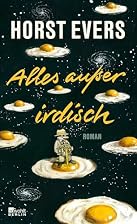

Horst Evers (Gerd Winter), originally from Diepholz in Lower Saxony, is a cabaret performer based in Berlin who's won quite a few prizes for his monologues and comic songs. This was his second novel - he's published a few other books since.
If you ask any Berliner, you'll probably be told that they rate the opening of the new Berlin-Brandenburg Airport (originally planned for 2011...) about as likely to happen in their lifetime as the arrival in Berlin of an alien spacecraft. And that's the joke that gives Evers the starting-point for this book, a science-fiction novel in the general tradition of The Hitchhiker's Guide.
The undistinguished perpetual student and general layabout Goiko Schulz, who has improbably (and slightly dishonourably) won a place on the first aircraft to take off from the new airport, instead finds himself whisked on board a spaceship manned by a selection of alien misfits (and with a ship's computer that has adopted the voice and mannerisms of a BVG bus driver). He has been picked to plead the cause of humanity in a galactic court, after human life has been jeopardised by a bureaucratic decision of the aliens who have quietly taken over the Earth by exploiting various internet scams. Unfortunately, the spaceship has a door problem and can't actually leave the Earth until the crew can get hold of an exotic substance that takes 130 years to prepare.
Cue for a complex and intriguing plot, full of time-travel paradoxes, jokey references to science-fiction classics, and satirical allusions to the foibles of 21st century life on earth. And a walk-on part for Friedrich Nietzsche and his twenty ninja kittens...
Entertaining, fast-moving and often quite funny at a superficial level, but without any real character development to keep the reader interested in the outcome. Goiko is just as much of a zero at the end of the story as he was at the beginning, whilst most of the other characters display whatever intriguing attributes have been defined for that particular type of alien, but rapidly become dull as soon as we've worked out what that means.
And now for something completely different, as they say...
This was a Christmas present - a book I probably wouldn't have picked by myself, but quite fun in its way. Maybe I should have put it aside for the RG Speculative Fiction theme later this year:
Alles außer irdisch (2016) by Horst Evers (Germany, 1967- )

Horst Evers (Gerd Winter), originally from Diepholz in Lower Saxony, is a cabaret performer based in Berlin who's won quite a few prizes for his monologues and comic songs. This was his second novel - he's published a few other books since.
If you ask any Berliner, you'll probably be told that they rate the opening of the new Berlin-Brandenburg Airport (originally planned for 2011...) about as likely to happen in their lifetime as the arrival in Berlin of an alien spacecraft. And that's the joke that gives Evers the starting-point for this book, a science-fiction novel in the general tradition of The Hitchhiker's Guide.
The undistinguished perpetual student and general layabout Goiko Schulz, who has improbably (and slightly dishonourably) won a place on the first aircraft to take off from the new airport, instead finds himself whisked on board a spaceship manned by a selection of alien misfits (and with a ship's computer that has adopted the voice and mannerisms of a BVG bus driver). He has been picked to plead the cause of humanity in a galactic court, after human life has been jeopardised by a bureaucratic decision of the aliens who have quietly taken over the Earth by exploiting various internet scams. Unfortunately, the spaceship has a door problem and can't actually leave the Earth until the crew can get hold of an exotic substance that takes 130 years to prepare.
Cue for a complex and intriguing plot, full of time-travel paradoxes, jokey references to science-fiction classics, and satirical allusions to the foibles of 21st century life on earth. And a walk-on part for Friedrich Nietzsche and his twenty ninja kittens...
Entertaining, fast-moving and often quite funny at a superficial level, but without any real character development to keep the reader interested in the outcome. Goiko is just as much of a zero at the end of the story as he was at the beginning, whilst most of the other characters display whatever intriguing attributes have been defined for that particular type of alien, but rapidly become dull as soon as we've worked out what that means.
33thorold
This was something that caught my eye in passing on Scribd, and looked as though it would fit into the Mediterranean theme read. The English translation comes from the interesting independent publisher And Other Stories. (I didn't notice until too late that Dones writes in Italian as well as Albanian - if I'd known I'd have looked for this in the original...).
Sworn virgin (2014) by Elvira Dones (Albania, 1960- ), translated by Clarissa Botsford
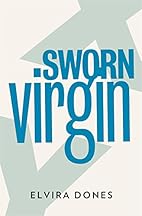
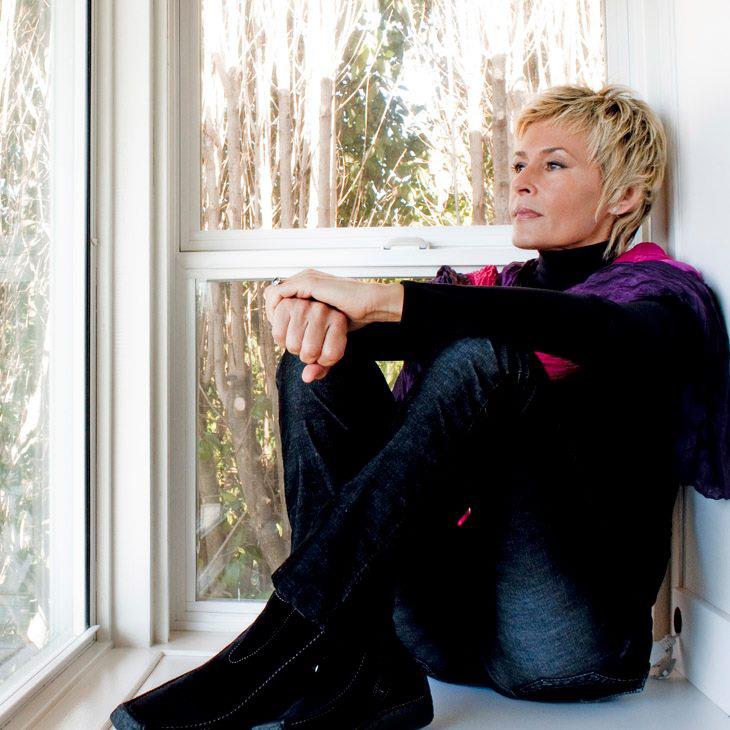
Elvira Dones is a film-maker and TV presenter as well as a novelist. Since leaving Albania in 1988 she's lived in Switzerland and the US.
The Kanun, the code of customary law that has regulated rural life in northern Albania for centuries, includes an unusual provision that makes it possible - in very specific circumstances - for someone born female to adopt male gender by formal declaration. In most cases they do this when a family would otherwise be left without a male head. The declaration includes an oath of perpetual virginity. The people who do this (burrneshas, or sworn virgins) dress and act as men, and are treated in all respects (except sex and marriage) as though they are men.
I didn't know about burrneshas, but I see that it's become a "colourful cultural phenomenon" with a slew of magazine articles and documentary films made about the handful of people who still live this way over the last few years. Looking back, I see there's even a passing mention in John Boswell's encyclopaedic The marriage of likeness, which I read twenty years ago. Dones has also made a documentary film on the subject.
The novel follows the life of Hana/Mark, a young woman who has to give up her studies in Tirana, around the end of the communist era, to look after her uncle and aunt in a remote village in the mountains when they become ill. She adopts male gender when her uncle's death leaves her without a male protector, and lives in this way for some fourteen years - driving a truck, carrying a rifle, drinking raki, etc. - until a cousin persuades her to join the rest of the family in Washington, DC, where she finds herself faced with the tricky process of adapting to life in a new country at the same time as trying to piece together a female identity again.
Perhaps inevitably, this is a book that often feels rather didactic - it's hard to stop ourselves seeing Hana/Mark as an anthropological case-study, even though Dones works hard to make her an individual character. Other characters, such as the beloved-but-old-fashioned uncle, the various not-quite-boyfriends, the motherly cousin and her American-teen daughter, all feel rather sketched-in in consequence. And it was disappointing that the story jumped straight from Hana's decision to become a man to the plane to Washington, without telling us much about the process of adopting another gender and maintaining it. Obviously there are good reasons why Dones might not feel competent to put herself into the character's head once she has taken her decision, but from the reader's point of view that's really the part we're most curious about...
Still, an interesting little book that manages to dig into a relatively obscure corner of Balkan culture without coming across as either patronising or voyeuristic. And probably a writer to follow up further.
Sworn virgin (2014) by Elvira Dones (Albania, 1960- ), translated by Clarissa Botsford
Elvira Dones is a film-maker and TV presenter as well as a novelist. Since leaving Albania in 1988 she's lived in Switzerland and the US.
The Kanun, the code of customary law that has regulated rural life in northern Albania for centuries, includes an unusual provision that makes it possible - in very specific circumstances - for someone born female to adopt male gender by formal declaration. In most cases they do this when a family would otherwise be left without a male head. The declaration includes an oath of perpetual virginity. The people who do this (burrneshas, or sworn virgins) dress and act as men, and are treated in all respects (except sex and marriage) as though they are men.
I didn't know about burrneshas, but I see that it's become a "colourful cultural phenomenon" with a slew of magazine articles and documentary films made about the handful of people who still live this way over the last few years. Looking back, I see there's even a passing mention in John Boswell's encyclopaedic The marriage of likeness, which I read twenty years ago. Dones has also made a documentary film on the subject.
The novel follows the life of Hana/Mark, a young woman who has to give up her studies in Tirana, around the end of the communist era, to look after her uncle and aunt in a remote village in the mountains when they become ill. She adopts male gender when her uncle's death leaves her without a male protector, and lives in this way for some fourteen years - driving a truck, carrying a rifle, drinking raki, etc. - until a cousin persuades her to join the rest of the family in Washington, DC, where she finds herself faced with the tricky process of adapting to life in a new country at the same time as trying to piece together a female identity again.
Perhaps inevitably, this is a book that often feels rather didactic - it's hard to stop ourselves seeing Hana/Mark as an anthropological case-study, even though Dones works hard to make her an individual character. Other characters, such as the beloved-but-old-fashioned uncle, the various not-quite-boyfriends, the motherly cousin and her American-teen daughter, all feel rather sketched-in in consequence. And it was disappointing that the story jumped straight from Hana's decision to become a man to the plane to Washington, without telling us much about the process of adopting another gender and maintaining it. Obviously there are good reasons why Dones might not feel competent to put herself into the character's head once she has taken her decision, but from the reader's point of view that's really the part we're most curious about...
Still, an interesting little book that manages to dig into a relatively obscure corner of Balkan culture without coming across as either patronising or voyeuristic. And probably a writer to follow up further.
35thorold
>34 dchaikin: Good to know :-)
Another Christmas present. This was a huge success in the UK last year, apparently, but passed me by somehow. Sometimes the obvious is not such a bad thing after all!
This is going to hurt: secret diaries of a junior doctor (2017) by Adam Kay (UK, 1980- )

Adam Kay is currently a comedy scriptwriter and is said to be a familiar face at the Edinburgh Fringe and on television (which I obviously don't watch often enough). Between 2004 and 2010, he was working as a "junior doctor" (which in the UK means anything short of a consultant) in the NHS in the South-East of England.
As the subtitle implies, this book is a summary of his experiences. And, as anyone who knows anything about the NHS would expect, that means not just a juicy selection of the obligatory comic hospital anecdotes ("things I've removed from people's orifices...") but also an outpouring of frustration over the conditions in which most medical professionals in Britain have to work.
Kay tells us the familiar story of ridiculously long working hours (that would be illegal in any other profession), hourly pay rates that work out to be little better than those in fast food outlets, a work culture of chronic understaffing that expects staff to drop everything in their private lives (planned holidays, sleep, important family events, illness, their partners and children) at a moment's notice if the service needs it, that shunts them around arbitrarily from one hospital to another every six months or so (and charges them the same astronomical parking fees as patients if they should be so rash as to come to work by car). And so on.
If you've ever had anything to do with the NHS or the people who work in it you'll know about all that in general terms, but it's salutary to to hear a connected account of the impact that it has on someone's life and their ability to do a proper job. It increases your admiration for the doctors and other medical professionals who somehow do manage to go on working under those conditions. And your astonishment that health ministers can sleep at night...
Another Christmas present. This was a huge success in the UK last year, apparently, but passed me by somehow. Sometimes the obvious is not such a bad thing after all!
This is going to hurt: secret diaries of a junior doctor (2017) by Adam Kay (UK, 1980- )

Adam Kay is currently a comedy scriptwriter and is said to be a familiar face at the Edinburgh Fringe and on television (which I obviously don't watch often enough). Between 2004 and 2010, he was working as a "junior doctor" (which in the UK means anything short of a consultant) in the NHS in the South-East of England.
As the subtitle implies, this book is a summary of his experiences. And, as anyone who knows anything about the NHS would expect, that means not just a juicy selection of the obligatory comic hospital anecdotes ("things I've removed from people's orifices...") but also an outpouring of frustration over the conditions in which most medical professionals in Britain have to work.
Kay tells us the familiar story of ridiculously long working hours (that would be illegal in any other profession), hourly pay rates that work out to be little better than those in fast food outlets, a work culture of chronic understaffing that expects staff to drop everything in their private lives (planned holidays, sleep, important family events, illness, their partners and children) at a moment's notice if the service needs it, that shunts them around arbitrarily from one hospital to another every six months or so (and charges them the same astronomical parking fees as patients if they should be so rash as to come to work by car). And so on.
If you've ever had anything to do with the NHS or the people who work in it you'll know about all that in general terms, but it's salutary to to hear a connected account of the impact that it has on someone's life and their ability to do a proper job. It increases your admiration for the doctors and other medical professionals who somehow do manage to go on working under those conditions. And your astonishment that health ministers can sleep at night...
36thorold
And back to the Mediterranean. For some reason I'd never read anything by Amos Oz, the great Israeli writer who died two weeks ago. This book caught my eye as the 2010 winner of the Prix Méditerranée étranger.
Scenes from village life (2009; English 2011) by Amos Oz (Israel, 1939-2018), translated by Nicholas de Lange

This is a very delicate little book, in which nothing much seems to be happening - we get seven snippets from the ordinary lives of ordinary people in a village called Tel Ilan, created as a farming community by Jewish pioneers a century ago, and now slowly turning into a "beauty spot". The characters from each story pop up in the background of one or two of the others, but there isn't anything like a connected plot; even within the stories themselves there's no conventional dramatic resolution. And there are borderline strange things going on that are never quite explored or explained. But we learn a good deal from the "throwaway" background details about how small communities work, about families, about the state of Israel and its relationship with its history, about art and work and culture, about life and death and old age, and much else.
Another writer I will have to read more of. And almost a motivation to try to learn Hebrew...
Scenes from village life (2009; English 2011) by Amos Oz (Israel, 1939-2018), translated by Nicholas de Lange

This is a very delicate little book, in which nothing much seems to be happening - we get seven snippets from the ordinary lives of ordinary people in a village called Tel Ilan, created as a farming community by Jewish pioneers a century ago, and now slowly turning into a "beauty spot". The characters from each story pop up in the background of one or two of the others, but there isn't anything like a connected plot; even within the stories themselves there's no conventional dramatic resolution. And there are borderline strange things going on that are never quite explored or explained. But we learn a good deal from the "throwaway" background details about how small communities work, about families, about the state of Israel and its relationship with its history, about art and work and culture, about life and death and old age, and much else.
Another writer I will have to read more of. And almost a motivation to try to learn Hebrew...
37dchaikin
I’m a huge fan of Amos Oz and I’ve only read three of his books, including his powerful (and long) autobiography A Tale of Love and Darkness. Will look forward to seeing him pop up here more. Maybe I need to fit something from him in this year.
>35 thorold: sounds like a sad commentary on the NHS. I’m always curious how that works, given the usa system I deal with.
>35 thorold: sounds like a sad commentary on the NHS. I’m always curious how that works, given the usa system I deal with.
38thorold
Left the radio on at the end of the concert last night and accidentally found myself listening to Ian McMillan hosting the T.S. Eliot Prize readings from the Royal Festival Hall. Which turned out to be a rather wonderful new poetry sampler, and I ended up ordering two of the shortlisted books...
https://www.bbc.co.uk/programmes/m00020s1
(Odd, too, just after reading all about Adam Kay’s experiences of performing caesareans >35 thorold:, to hear the winner, Hannah Sullivan, reading about her experience of having one performed on her.)
https://www.bbc.co.uk/programmes/m00020s1
(Odd, too, just after reading all about Adam Kay’s experiences of performing caesareans >35 thorold:, to hear the winner, Hannah Sullivan, reading about her experience of having one performed on her.)
39baswood
>35 thorold: I wonder how much of this is really true. I understand that the NHS is chronically underfunded and that is a national disgrace and there are frequent stories popping up in the National press on similar lines to Adam Kay's book. You say that Kay is now a comedy script writer hmm.........................
40thorold
>39 baswood: This isn't the place for an informed discussion about the current state of the NHS - like you, I don't know much more than what I read in the papers and happen to hear from friends and family members in the UK. I assume what Kay says is accurate as far as it goes, because it doesn't contradict what I've heard and read elsewhere and because it would have been pointless for him to make it up, but of course it is localised, selective and talking about things that happened at least eight years ago.
But it matches my own experience of how large public-service organisations work - everyone in the organisation knows about the big things that are wrong with the system, but assumes that they must be insoluble "otherwise someone else would have fixed them by now", and more and more precarious workarounds are found to keep things just about working. Until someone from outside is dropped in to "reform" things, which generally wastes endless time, destroys staff motivation and merely shifts the problems from one area to another (or defers their effects until after the Great Reformer is long gone...).
---
Another novel by Daniel Kehlmann, whose most recent book, Tyll, I enjoyed a couple of months ago:
F (2013) by Daniel Kehlmann (Germany, 1975- )

This is a complicated, postmodern sort of novel, dipping into philosophical questions about who we are and who we pretend to be, whether our identities are imposed on us by genetics, environment or God, or are freely chosen in some way, what art is, whether what you see might really be what you get, and so on.
Arthur is drifting through life doing nothing in particular until an encounter with a stage hypnotist leads him to the decision to abandon both his families and go off to write a bestseller. One of Arthur's sons, Martin, becomes a (non-believing) Catholic priest when his dream of a career as a Rubik's-Cube-solver evaporates; one of Martin's twin half-brothers becomes a crooked financial adviser who is only saved from exposure and disgrace by the 2008 crash; the other twin uses his knowledge of the art market to manipulate critics into declaring his mediocre-but-contented partner a genius.
And in between all this we get the traces of two of Arthur's successful stories, one of which hits the headlines by apparently driving a wave of suicides among its readers, and the other of which creates an entirely mythical family history of Arthur's ancestors (because the past, after all, is simply what we say it is...), including a sinister messenger-of-death who then apparently turns up in the actual story, if not quite in the right places in it.
Fun, and cleverly done, but I think I enjoy Kehlmann more in his role as a historical novelist.
But it matches my own experience of how large public-service organisations work - everyone in the organisation knows about the big things that are wrong with the system, but assumes that they must be insoluble "otherwise someone else would have fixed them by now", and more and more precarious workarounds are found to keep things just about working. Until someone from outside is dropped in to "reform" things, which generally wastes endless time, destroys staff motivation and merely shifts the problems from one area to another (or defers their effects until after the Great Reformer is long gone...).
---
Another novel by Daniel Kehlmann, whose most recent book, Tyll, I enjoyed a couple of months ago:
F (2013) by Daniel Kehlmann (Germany, 1975- )

This is a complicated, postmodern sort of novel, dipping into philosophical questions about who we are and who we pretend to be, whether our identities are imposed on us by genetics, environment or God, or are freely chosen in some way, what art is, whether what you see might really be what you get, and so on.
Arthur is drifting through life doing nothing in particular until an encounter with a stage hypnotist leads him to the decision to abandon both his families and go off to write a bestseller. One of Arthur's sons, Martin, becomes a (non-believing) Catholic priest when his dream of a career as a Rubik's-Cube-solver evaporates; one of Martin's twin half-brothers becomes a crooked financial adviser who is only saved from exposure and disgrace by the 2008 crash; the other twin uses his knowledge of the art market to manipulate critics into declaring his mediocre-but-contented partner a genius.
And in between all this we get the traces of two of Arthur's successful stories, one of which hits the headlines by apparently driving a wave of suicides among its readers, and the other of which creates an entirely mythical family history of Arthur's ancestors (because the past, after all, is simply what we say it is...), including a sinister messenger-of-death who then apparently turns up in the actual story, if not quite in the right places in it.
Fun, and cleverly done, but I think I enjoy Kehlmann more in his role as a historical novelist.
41thorold
...and back to the Med-Thread! I wanted to revisit Cavafy at some point anyway, and he fitted in nicely with this novel, which won the 2017 Prix Méditerranée étranger.
What's left of the night (2015; English 2018) by Ersi Sotiropoulos (Greece, 1953- ) translated by Karen Emmerich (USA)
The complete poems of Cavafy (1949, 1976) by C.P. Cavafy (Egypt, Greece, etc., 1863-1933) translated by Rae Dalven (Greece, USA, 1904-1992)



Cavafy
Constantine Cavafy (Κωνσταντίνος Π. Καβάφης) grew up in Constantinople (Istanbul), Liverpool and Alexandria, the youngest son of a prosperous Constantinople-Greek family. When the family's cotton-export business collapsed at his father's death, he took a job as a clerk in the Irrigation Ministry in Alexandria, where he remained until his retirement in 1922. In his spare time, he built up a considerable reputation as a poet in Greece. This reputation rapidly spread to the English-speaking world as well after he made friends with E.M. Forster, who was in Alexandria working for the Red Cross (and seducing tram-conductors) during the First World War.
Forster famously described Cavafy as "a Greek gentleman in a straw hat, standing absolutely motionless at a slight angle to the universe." About 80% of his poems explore themes taken from his extensive reading in classical and Byzantine (Greek) history and literature; most of the remainder are about his encounters with beautiful young men. In both cases he has a sharp eye for what's really going on behind the history or the transitory desire. It's not hard to see how his subject-matter alone would have captured the imagination of Forster, W.H. Auden, D.H. Lawrence, Lawrence Durrell, and many other British writers of the mid-20th century, even if it hadn't been for his remarkably dry, ironic voice, his precise insight, and the unexpected way his sober rejection of lyrical excesses actually seems to hint at lurid middle-eastern atmosphere much more effectively than if he'd been a steamy French imagist.
There are stacks of different English translations of Cavafy out there - I happen to have grown up with those by Rae Dalven. She was a professor of Greek literature in New York and came from a Greek-diaspora family herself, so presumably had a reasonably clear idea of the right register for Cavafy in English. Her version comes with a nice introductory essay by Auden as well as Dalven's own notes on Cavafy's language and the decisions she had to make in translation.
Other "standard" translations include those of John Mavrogordato, Daniel Mendelsohn, Edmund Keeley, and Cavafy's brother John (some of the early poems). Take your pick!
What's left of the night
Ersi Sotiropoulos puts herself inside Cavafy's head during a short stay in Paris, whilst he and his brother John are on their way home from a trip to visit relatives in Britain in June 1897. The newspapers are full of the Dreyfus Affair, there is talk of Proust and Wilde and Baudelaire, the streets are full of distracting life and movement and beautiful young men, and Cavafy is struggling to find the self-confidence to carry on with his poetry. On the third night, after a grotesque and not very arousing visit to a notorious private club on the fringes of Paris (his guide insists on a stop at an equally notorious "cottage" on the way back), the poet rips up his work-in-progress and starts to get a clear sense of a voice that is recognisably his own.
This is probably a book to read when you are already fairly familiar with Cavafy as a poet - it's full of half-buried references to his poems and the subjects he deals with in them, many of which will probably pass you by if you haven't read them. It's an enjoyable historical novel with lots of very authentic-sounding but not unduly laboured period detail. And it gives us an interesting insight into what it might be like to be a modest genius who isn't quite sure that he is as clever as people tell him.
I don't know enough about Cavafy's biography to judge whether he really did have this kind of epiphany in 1897, but the book conveys a strong impression that Sotiropoulos must have immersed herself in everything written by and about him, so I imagine that it must be at least plausible in the context of what is known. Although I'm pretty sure she made up the bit about the single irritating pubic hair...
One oddity about this book - which otherwise ticks all the boxes for an LGBT-interest historical novel, right down to the strategically placed text over the genitals in the cover art - is that it doesn't appear to have an introduction by Edmund White. Surely New Vessel Press must have realised that that is a legal requirement when publishing a book of this kind in English? (Happily, White's name is prominent amongst the blurbers, and he has been doing promotional events together with the author and the translator, so it looks as though this omission was only a minor hiccup in the fabric of reality.)
---
"The god abandons Antony" - Keeley translation: https://www.poets.org/poetsorg/poem/god-abandons-antony
"The god forsakes Antony" - Dalven translation: http://inwardboundpoetry.blogspot.com/2007/09/492-god-forsakes-antony-2-c-p-cava...
What's left of the night (2015; English 2018) by Ersi Sotiropoulos (Greece, 1953- ) translated by Karen Emmerich (USA)
The complete poems of Cavafy (1949, 1976) by C.P. Cavafy (Egypt, Greece, etc., 1863-1933) translated by Rae Dalven (Greece, USA, 1904-1992)


Cavafy
Constantine Cavafy (Κωνσταντίνος Π. Καβάφης) grew up in Constantinople (Istanbul), Liverpool and Alexandria, the youngest son of a prosperous Constantinople-Greek family. When the family's cotton-export business collapsed at his father's death, he took a job as a clerk in the Irrigation Ministry in Alexandria, where he remained until his retirement in 1922. In his spare time, he built up a considerable reputation as a poet in Greece. This reputation rapidly spread to the English-speaking world as well after he made friends with E.M. Forster, who was in Alexandria working for the Red Cross (and seducing tram-conductors) during the First World War.
Forster famously described Cavafy as "a Greek gentleman in a straw hat, standing absolutely motionless at a slight angle to the universe." About 80% of his poems explore themes taken from his extensive reading in classical and Byzantine (Greek) history and literature; most of the remainder are about his encounters with beautiful young men. In both cases he has a sharp eye for what's really going on behind the history or the transitory desire. It's not hard to see how his subject-matter alone would have captured the imagination of Forster, W.H. Auden, D.H. Lawrence, Lawrence Durrell, and many other British writers of the mid-20th century, even if it hadn't been for his remarkably dry, ironic voice, his precise insight, and the unexpected way his sober rejection of lyrical excesses actually seems to hint at lurid middle-eastern atmosphere much more effectively than if he'd been a steamy French imagist.
There are stacks of different English translations of Cavafy out there - I happen to have grown up with those by Rae Dalven. She was a professor of Greek literature in New York and came from a Greek-diaspora family herself, so presumably had a reasonably clear idea of the right register for Cavafy in English. Her version comes with a nice introductory essay by Auden as well as Dalven's own notes on Cavafy's language and the decisions she had to make in translation.
Other "standard" translations include those of John Mavrogordato, Daniel Mendelsohn, Edmund Keeley, and Cavafy's brother John (some of the early poems). Take your pick!
What's left of the night
Ersi Sotiropoulos puts herself inside Cavafy's head during a short stay in Paris, whilst he and his brother John are on their way home from a trip to visit relatives in Britain in June 1897. The newspapers are full of the Dreyfus Affair, there is talk of Proust and Wilde and Baudelaire, the streets are full of distracting life and movement and beautiful young men, and Cavafy is struggling to find the self-confidence to carry on with his poetry. On the third night, after a grotesque and not very arousing visit to a notorious private club on the fringes of Paris (his guide insists on a stop at an equally notorious "cottage" on the way back), the poet rips up his work-in-progress and starts to get a clear sense of a voice that is recognisably his own.
This is probably a book to read when you are already fairly familiar with Cavafy as a poet - it's full of half-buried references to his poems and the subjects he deals with in them, many of which will probably pass you by if you haven't read them. It's an enjoyable historical novel with lots of very authentic-sounding but not unduly laboured period detail. And it gives us an interesting insight into what it might be like to be a modest genius who isn't quite sure that he is as clever as people tell him.
I don't know enough about Cavafy's biography to judge whether he really did have this kind of epiphany in 1897, but the book conveys a strong impression that Sotiropoulos must have immersed herself in everything written by and about him, so I imagine that it must be at least plausible in the context of what is known. Although I'm pretty sure she made up the bit about the single irritating pubic hair...
One oddity about this book - which otherwise ticks all the boxes for an LGBT-interest historical novel, right down to the strategically placed text over the genitals in the cover art - is that it doesn't appear to have an introduction by Edmund White. Surely New Vessel Press must have realised that that is a legal requirement when publishing a book of this kind in English? (Happily, White's name is prominent amongst the blurbers, and he has been doing promotional events together with the author and the translator, so it looks as though this omission was only a minor hiccup in the fabric of reality.)
---
"The god abandons Antony" - Keeley translation: https://www.poets.org/poetsorg/poem/god-abandons-antony
"The god forsakes Antony" - Dalven translation: http://inwardboundpoetry.blogspot.com/2007/09/492-god-forsakes-antony-2-c-p-cava...
42baswood
The God Abandons Antony, when reading the Rae Dalven translation the ghosts of Leonard Cohen and Adrian Henri immediately spring to mind.
43tonikat
>41 thorold: fascinating, I only know a few of Cavafy's poems (Leonard Cohen, yes and consideration of Ithaka on my counselling course, and a few others) -- and this novel looks very interesting. There seems quite a lot of such novels in recent years . . . or was it ever the same, but Charyn on Dickinson, the novel about Clare by Foulds, I thought I'd thought of others but have gone blank now. Anyway, good. I liked your comment about being as clever as people tell him - and other things, not clever, I wonder, but other ways of being worthy (?), maybe - and for some not not a poet (like Edward Thomas), I suppose wider things than just cleverness, or was it just cleverness needing to be accepted for Cavafy?
44thorold
>43 tonikat: Tagmash to the rescue: https://www.librarything.com/tag/historical+fiction,+poets
There seem to be a lot more than we ever imagined...
On Cavafy, the novel only looks at him at that one moment in his life - I get the impression from the little bit I’ve read about him otherwise that he was pretty confident in his own ability later in life, as long as he was within his own circle, but was never very happy about circulating his work to strangers.
There seem to be a lot more than we ever imagined...
On Cavafy, the novel only looks at him at that one moment in his life - I get the impression from the little bit I’ve read about him otherwise that he was pretty confident in his own ability later in life, as long as he was within his own circle, but was never very happy about circulating his work to strangers.
45tonikat
>44 thorold: nice one, tag mash is a datadoingthingummybob that had hitherto escaped me - but wow, yes of course Regeneration (read) and The Blue Flower (unread), but Possession is that not entirely fictional as far as poets go? (unread but liked the film). I thought of Chatterton but he does the Ackroyd time shift thingummy in that, though that is at least playful and not just linear demonstration of whatever's being demonstrated. Quite a few to read or think about reading, i suppose Dr Zhivago might fit with tagmash, but again, fiction (faction? could this be, though that's probably for something else). I read Mrs Shakespeare by Robert Nyein last few years, also fits - and takes us back to lgbt themes. Someone somewhere must be working on one on Auden, maybe several people are, Auden in Iceland, NY, Germany etc. -- or maybe I am just being a cynic now. It does strike me from the list that some of the biggies in the tagmash might be inspiring the others? But the idea of poet a a turning point dong something important to them and then writing on it, is a bit of a gift to a novelist isn't it, so much coherence to structure possible out of the chaos and with first class poetic sense to boot.
I like that about Cavafy and that sensitivity then, she says, mourning her own loss of it in having to be out there in the world -- losing it seems to imply a loss of sensitivity to self, which may be a face of poetry.
I like that about Cavafy and that sensitivity then, she says, mourning her own loss of it in having to be out there in the world -- losing it seems to imply a loss of sensitivity to self, which may be a face of poetry.
46thorold
Well, yes, tag mash can't tell the difference between real poets and invented ones, and anyway, Byatt's poets are guaranteed to contain at least 66% Browning and Rossetti...
The blue flower is a clever one because it steadfastly refuses to treat Novalis as a (future) poet - he's a clumsy young trainee mine inspector who's got himself into a peculiarly ridiculous emotional situation. The reader has to do all the work of imagining what that says about him as a poet.
Don't know about Auden, but David Leavitt got his hand slapped for publishing a (not very good) Isherwood/Spender novel, While England sleeps, when Spender was still around to sue him. Maybe that discouraged others.
And, as if by chance, along comes another book about being out there in the world or not. This is only 140 pages, but I've been taking it slowly over several days, because it's worth it:
Un homme qui dort (1967; A man asleep) by Georges Perec (France, 1936-1982)


Perec was one of the core members of the Oulipo experimental writing group. He worked in a science research library, and sadly died very young from lung cancer. His other works I've read include La vie, mode d'emploi - a novel in which everything happens simultaneously. And La Disparition, a 300-page novel not using the letter "e", which I read two years ago. I've still got his memoir W ou le souvenir d'enfance sitting on the TBR shelf.
Tu as vint-cinq ans et vingt-neuf dents, trois chemises et huit chaussettes, quelques livres que tu ne lis plus, quelques disques que tu n'écoutes plus. Tu n'as pas envie de te souvenir d'autre chose, ni de ta famille, ni de tes études, ni de tes amours, ni de tes amis, ni de tes vacances, ni de tes projets.
Un homme qui dort is a Bartlebyish novella (it brings in Bartleby himself at one point, but without mentioning him by name) about a student who decides one morning to ignore the alarm-clock and not sit the exam that is waiting for him, and continues by attempting to withdraw himself from all social engagement with the world, staring for hours at the cracks in the ceiling of his Paris garret or taking long solitary walks through the city streets. Perec's language draws us magnificently into the seductive lure of lengthy contemplation of unimportant details - the pink plastic bowl with the six socks soaking in it; the lukewarm cup of Nescafé, etc. And he spends a lot of time on the pleasures of perceiving the world through a state partway between waking and dreaming, where the pillow can take on frighteningly mountainous dimensions, or the question of whether we should move a leg to a more comfortable position can become a matter for protracted debate at the highest levels...
But we see from the start that the narrator is always keeping a certain distance from the subject, addressed throughout in the second person of the present tense. Sooner or later, he's going to realise that his "indifference" to the world is just a meaningless pose, he's not a Meursault or a Sisyphus, nor any other kind of heroic figure, he's not even sick or short of money. Whatever he's not doing, Bartleby already didn't do it far more ineffectively than he ever won't, so he may as well pull himself together and rejoin the mainstream.
A little book that really gave Perec the chance to demonstrate the pleasure he has in using and sharing language, whilst at the same time warning the reader not to be taken in by the tricks that language can play. Well worth a look, if you're not feeling quite ready to take on one of his bigger books.
The blue flower is a clever one because it steadfastly refuses to treat Novalis as a (future) poet - he's a clumsy young trainee mine inspector who's got himself into a peculiarly ridiculous emotional situation. The reader has to do all the work of imagining what that says about him as a poet.
Don't know about Auden, but David Leavitt got his hand slapped for publishing a (not very good) Isherwood/Spender novel, While England sleeps, when Spender was still around to sue him. Maybe that discouraged others.
And, as if by chance, along comes another book about being out there in the world or not. This is only 140 pages, but I've been taking it slowly over several days, because it's worth it:
Un homme qui dort (1967; A man asleep) by Georges Perec (France, 1936-1982)


Perec was one of the core members of the Oulipo experimental writing group. He worked in a science research library, and sadly died very young from lung cancer. His other works I've read include La vie, mode d'emploi - a novel in which everything happens simultaneously. And La Disparition, a 300-page novel not using the letter "e", which I read two years ago. I've still got his memoir W ou le souvenir d'enfance sitting on the TBR shelf.
Tu as vint-cinq ans et vingt-neuf dents, trois chemises et huit chaussettes, quelques livres que tu ne lis plus, quelques disques que tu n'écoutes plus. Tu n'as pas envie de te souvenir d'autre chose, ni de ta famille, ni de tes études, ni de tes amours, ni de tes amis, ni de tes vacances, ni de tes projets.
Un homme qui dort is a Bartlebyish novella (it brings in Bartleby himself at one point, but without mentioning him by name) about a student who decides one morning to ignore the alarm-clock and not sit the exam that is waiting for him, and continues by attempting to withdraw himself from all social engagement with the world, staring for hours at the cracks in the ceiling of his Paris garret or taking long solitary walks through the city streets. Perec's language draws us magnificently into the seductive lure of lengthy contemplation of unimportant details - the pink plastic bowl with the six socks soaking in it; the lukewarm cup of Nescafé, etc. And he spends a lot of time on the pleasures of perceiving the world through a state partway between waking and dreaming, where the pillow can take on frighteningly mountainous dimensions, or the question of whether we should move a leg to a more comfortable position can become a matter for protracted debate at the highest levels...
But we see from the start that the narrator is always keeping a certain distance from the subject, addressed throughout in the second person of the present tense. Sooner or later, he's going to realise that his "indifference" to the world is just a meaningless pose, he's not a Meursault or a Sisyphus, nor any other kind of heroic figure, he's not even sick or short of money. Whatever he's not doing, Bartleby already didn't do it far more ineffectively than he ever won't, so he may as well pull himself together and rejoin the mainstream.
A little book that really gave Perec the chance to demonstrate the pleasure he has in using and sharing language, whilst at the same time warning the reader not to be taken in by the tricks that language can play. Well worth a look, if you're not feeling quite ready to take on one of his bigger books.
47dchaikin
Very interesting about Perec and this novel. Funny how Bartleby might work as well or better today than when he was originally written.
48tonikat
>46 thorold: yes it occurred to me that much respect was due to inventors of poets where the poetry is good and I see about ASB's poets. Dr Zhivago of course, but by a poet (cheating? - kudos to novelists that take it on and discover an inner poet) (sorry for use of the word kudos, man.) I think I like the poem at the start of Pale Fire (and in a second language, extra points), not that I finished it. the blue flower idea seems good, it at once detaches from the burden of the work and at the same time may release us into considering the person as a whole still there despite the utterances (?) yet at the same time no doubt a bit in view in that light. I've not read PF yet, did she write poetry?
As for Perec I have a translation of La Vie, mode d'emploi - and highly recommended it is too - and you're only increasing my wish to read him. The state between waking and dreaming, yes. I wonder if there is a word for a sort of need to break out of everyday routines and straight lines and find life under the life we're so often given now -- it seems less readily available, pret a porter maybe than the way life is now suggests things are, rituals not what they were, westerners needing to reinvent walkabout (and doing it all over the place, but officially (?) ignored, has no status, recognition? Am I wittering the obvious over a cuppa as I wind down from work? (in a state between work and meandering.) I suppose many easterners now too.
As for Perec I have a translation of La Vie, mode d'emploi - and highly recommended it is too - and you're only increasing my wish to read him. The state between waking and dreaming, yes. I wonder if there is a word for a sort of need to break out of everyday routines and straight lines and find life under the life we're so often given now -- it seems less readily available, pret a porter maybe than the way life is now suggests things are, rituals not what they were, westerners needing to reinvent walkabout (and doing it all over the place, but officially (?) ignored, has no status, recognition? Am I wittering the obvious over a cuppa as I wind down from work? (in a state between work and meandering.) I suppose many easterners now too.
49thorold
This one doesn't really fit into any kind of plan - it's one of those books you just pick up in the library out of curiosity, perhaps. I wouldn't go quite as far as the reviewer who said "bei weitem nicht so langatmig wie die Romane seines Vaters" - but there is something in that. Just imagine how long Thomas's Alexander-novel would have been, if it took him four thick volumes for Joseph and his brothers...
Alexander: Roman der Utopie (1929) by Klaus Mann (Germany, Czechoslovakia, USA, 1906-1949)


Klaus Mann was the son of Thomas, nephew of Heinrich, brother of Erika, and (nominally) the brother-in-law of W.H. Auden. Not an easy background to live up to! He's most remembered for his novel Mephisto (1936) and his memoir The turning-point (1942). But he also wrote stage works for the revue company he formed with Erika, Pamela Wedekind (who also had a famous daddy) and Gustaf Gründgens (who sued Klaus when he recognised himself in Mephisto). And a couple of historical novels, one about Alexander and the other about Tchaikowsky (hands up anyone who can see a pattern emerging...). Klaus became a US citizen in 1943, and served in the US army during and after World War II.
As you would expect, Klaus Mann's Alexander covers roughly the same ground as all the other Alexander novels out there, but the emphasis is rather different. The great battles and epic marches are barely footnotes in this story: everything is about the struggle for Alexander's soul between, on the good side: Aristotle's Hellenic (read: Germanic) rationalism and healthy outdoor activity in the nude; on the bad side: Philip's macho ranting, Olympias and the cult of the Mother Goddess, and perfumed Persian sophistication in baggy trousers. Lovely writing, but there's something rather disturbing about seeing someone you're used to thinking of as a political opponent of the Nazis going into ecstasies about the Macedonians' short skirts and hard, sunburned bodies...
Alexander: Roman der Utopie (1929) by Klaus Mann (Germany, Czechoslovakia, USA, 1906-1949)


Klaus Mann was the son of Thomas, nephew of Heinrich, brother of Erika, and (nominally) the brother-in-law of W.H. Auden. Not an easy background to live up to! He's most remembered for his novel Mephisto (1936) and his memoir The turning-point (1942). But he also wrote stage works for the revue company he formed with Erika, Pamela Wedekind (who also had a famous daddy) and Gustaf Gründgens (who sued Klaus when he recognised himself in Mephisto). And a couple of historical novels, one about Alexander and the other about Tchaikowsky (hands up anyone who can see a pattern emerging...). Klaus became a US citizen in 1943, and served in the US army during and after World War II.
As you would expect, Klaus Mann's Alexander covers roughly the same ground as all the other Alexander novels out there, but the emphasis is rather different. The great battles and epic marches are barely footnotes in this story: everything is about the struggle for Alexander's soul between, on the good side: Aristotle's Hellenic (read: Germanic) rationalism and healthy outdoor activity in the nude; on the bad side: Philip's macho ranting, Olympias and the cult of the Mother Goddess, and perfumed Persian sophistication in baggy trousers. Lovely writing, but there's something rather disturbing about seeing someone you're used to thinking of as a political opponent of the Nazis going into ecstasies about the Macedonians' short skirts and hard, sunburned bodies...
50dchaikin
Your both challenging and fascinating to try to keep up with. Klaus Mann... very nice to read your review.
51Dilara86
Your review of Alexander made me laugh!
>41 thorold: This is probably a book to read when you are already fairly familiar with Cavafy as a poet - it's full of half-buried references to his poems and the subjects he deals with in them, many of which will probably pass you by if you haven't read them. It's an enjoyable historical novel with lots of very authentic-sounding but not unduly laboured period detail. And it gives us an interesting insight into what it might be like to be a modest genius who isn't quite sure that he is as clever as people tell him.
I was thinking of borrowing What's left of the night from the library - it's the only novel by Ersi Sotiropoulos they have - even though it takes place in a very non-Mediterranean Paris, but since I'm not familiar with Cavafy, I'll heed your warning and start with him.
>41 thorold: This is probably a book to read when you are already fairly familiar with Cavafy as a poet - it's full of half-buried references to his poems and the subjects he deals with in them, many of which will probably pass you by if you haven't read them. It's an enjoyable historical novel with lots of very authentic-sounding but not unduly laboured period detail. And it gives us an interesting insight into what it might be like to be a modest genius who isn't quite sure that he is as clever as people tell him.
I was thinking of borrowing What's left of the night from the library - it's the only novel by Ersi Sotiropoulos they have - even though it takes place in a very non-Mediterranean Paris, but since I'm not familiar with Cavafy, I'll heed your warning and start with him.
52thorold
>48 tonikat: Dr Zhivago - now there's a book I haven't read since time immemorial ... I can't remember at all clearly now what was book and what was film. I don't know of any poetry by Penelope Fitzgerald, but it's not unlikely that she wrote some. An interesting writer in a very modestly English way, worth exploring if you have time. But Perec is probably more important!
I wonder if there is a word for a sort of need to break out of everyday routines - something along the lines of a Tarzan yell in the middle of the office would convey that quite effectively, I think.
>51 Dilara86: Cavafy's 150 or so lyrics shouldn't take you anywhere near as long as 800 pages of Arab poetry :-)
---
This is an author I heard about from @LolaWalser in the Med Thread - I was intrigued for similar reasons to Lola - there's not a whole lot of postcolonial LGBT writing out there, and almost none of it is from Arab writers. According to his English Wikipedia page, Taïa is the only openly gay Moroccan intellectual - it doesn't look as though that page has been updated in some years, though...
Taïa originally comes from Salé, which - rather disappointingly for us - turns out to be on Morocco's Atlantic coast. He has a doctorate in 18th century French literature from the Sorbonne - something you might not guess from his books - and now lives in Paris.
This is the novel that immediately preceded Celui qui est digne d'être aimé:
Un pays pour mourir : roman (2015) by Abdellah Taïa (Morocco, 1973- )

Zahira tells us about the death of her father in the family home in the Moroccan city of Salé, and about how she became a prostitute and moved to Paris; on the eve of surgery, her Algerian friend Aziz - another sex-worker - tells us about his experiences and why he feels he needs to become a woman; Mojtaba, an Iranian exile, writes to his mother to tell her that he's on the run from the Iranian secret services because of his role in student protests against the regime, and rather incautiously asks her to check up on the boyfriend he left behind; and we find out part of what happened to Zahira's aunt Zinab after she disappeared.
Taïa's style takes a bit of getting used to. His main characters in this book are angry, poorly educated people who speak French as a second language and use intonation and repetition to make their points, not sophisticated literary language. At first it feels a bit like being trapped next to a crazy person on the bus, but you soon get beyond that and start to see how Taïa is unpacking their complex personalities through the rant. It's all rather cleverer than it looks.
On the other hand, I'm not too sure that this really works as a novel. He picks up and drops his characters rather arbitrarily, and none of them finds any kind of closure within the text, not even implicitly. He's more interested in digging out the underlying problems that got them where they are than in telling us whether they stand a chance of arriving where they would like to be. And those problems are pretty much the ones we would expect: homophobia, oppression of women, colonialism, and racial prejudice between Arab and Black Moroccans. Obviously, having had first-hand experience, he's in a good position to tell us more about these issues than we could guess from our general knowledge, but there isn't space in this book for a huge amount of that sort of detail.
And I had one pretty big caveat: this is a book by a male writer in which two women talk in the first person about how being sex-workers has had a perversely empowering effect on their lives. I can understand how that could be, in the specific context of the book where the women wouldn't have had any control over their own lives if they'd stayed within the family, but all the same I think I would be more inclined to trust that sort of statement if it came from a female author.
So, having picked it up for the subject-matter, it turns out that it's the style I found more interesting...
I wonder if there is a word for a sort of need to break out of everyday routines - something along the lines of a Tarzan yell in the middle of the office would convey that quite effectively, I think.
>51 Dilara86: Cavafy's 150 or so lyrics shouldn't take you anywhere near as long as 800 pages of Arab poetry :-)
---
This is an author I heard about from @LolaWalser in the Med Thread - I was intrigued for similar reasons to Lola - there's not a whole lot of postcolonial LGBT writing out there, and almost none of it is from Arab writers. According to his English Wikipedia page, Taïa is the only openly gay Moroccan intellectual - it doesn't look as though that page has been updated in some years, though...
Taïa originally comes from Salé, which - rather disappointingly for us - turns out to be on Morocco's Atlantic coast. He has a doctorate in 18th century French literature from the Sorbonne - something you might not guess from his books - and now lives in Paris.
This is the novel that immediately preceded Celui qui est digne d'être aimé:
Un pays pour mourir : roman (2015) by Abdellah Taïa (Morocco, 1973- )

Zahira tells us about the death of her father in the family home in the Moroccan city of Salé, and about how she became a prostitute and moved to Paris; on the eve of surgery, her Algerian friend Aziz - another sex-worker - tells us about his experiences and why he feels he needs to become a woman; Mojtaba, an Iranian exile, writes to his mother to tell her that he's on the run from the Iranian secret services because of his role in student protests against the regime, and rather incautiously asks her to check up on the boyfriend he left behind; and we find out part of what happened to Zahira's aunt Zinab after she disappeared.
Taïa's style takes a bit of getting used to. His main characters in this book are angry, poorly educated people who speak French as a second language and use intonation and repetition to make their points, not sophisticated literary language. At first it feels a bit like being trapped next to a crazy person on the bus, but you soon get beyond that and start to see how Taïa is unpacking their complex personalities through the rant. It's all rather cleverer than it looks.
On the other hand, I'm not too sure that this really works as a novel. He picks up and drops his characters rather arbitrarily, and none of them finds any kind of closure within the text, not even implicitly. He's more interested in digging out the underlying problems that got them where they are than in telling us whether they stand a chance of arriving where they would like to be. And those problems are pretty much the ones we would expect: homophobia, oppression of women, colonialism, and racial prejudice between Arab and Black Moroccans. Obviously, having had first-hand experience, he's in a good position to tell us more about these issues than we could guess from our general knowledge, but there isn't space in this book for a huge amount of that sort of detail.
And I had one pretty big caveat: this is a book by a male writer in which two women talk in the first person about how being sex-workers has had a perversely empowering effect on their lives. I can understand how that could be, in the specific context of the book where the women wouldn't have had any control over their own lives if they'd stayed within the family, but all the same I think I would be more inclined to trust that sort of statement if it came from a female author.
So, having picked it up for the subject-matter, it turns out that it's the style I found more interesting...
53baswood
Enjoyed your review of Un Homme qui dort - tempted
54dchaikin
>52 thorold: interesting. I've found some terribly written women by male authors, but sometimes the flipped-gender perspective is warranted. Also your review has me thinking about trust in fiction writing.
55AlisonY
Catching up on your thread.
>35 thorold: I've had this on order from the library for a while. I was 75th in the queue when I ordered, so it's obviously popular! I think I'm sitting at 5 now...
>35 thorold: I've had this on order from the library for a while. I was 75th in the queue when I ordered, so it's obviously popular! I think I'm sitting at 5 now...
56thorold
>53 baswood: Go for it - it's not a very big time-investment, unless you end up reading everything else Perec wrote...
>54 dchaikin: I suppose, if we were really dogmatic about it, we'd never be allowed to read any book that had both male and female characters in it, unless it was a Sjöwall & Wahlöö story...
---
I watched the recent BBC adaptation of this, where they hired John Malkovich to play Poirot and then discovered that had to give him a complicated personal crisis to deal with to make it worth his while. Like almost everyone else (of course, the people who enjoyed it aren't the ones who comment on it on the internet), I found it artistically and technically inept, but I kept watching because there was a kind of fatal fascination in waiting to see where the next ludicrously inappropriate piece of railway footage would be taken from...
It made me realise, though, that I'd never read the book, which is one that has quite pleasant associations in my mind - my mother often mentions it as the first book she bought to improve her English when she came to work in Torquay in the fifties. Presumably the booksellers there were pushing it because of the local connection.
And it was an excuse to use up some more audiobook credits:
The ABC Murders (1936) by Agatha Christie (UK, 1890-1976),
Audiobook, narrated by Hugh Fraser

Serial-killer stories and golden-age private detectives don't often intersect, for obvious reasons - tracking down a serial killer normally requires the kind of large-scale teamwork that makes police-procedurals so interesting. So Christie has to play a few tricks here to finagle Poirot into investigating a set-up that rapidly turns into a template for so many later serial-killer stories - victims widely separated in location, social class and personal situation, but linked by a bizarre "signature" element - in this case Alice Asscher in Andover, Betty Barnard in Bexhill, and so on, are all found with an "ABC Railway Guide" next to them.
The police steadily plough through the process of amassing clues, whilst Poirot focusses on what today's crime novelists would call the forensic psychology aspect of the case, trying to work out what it could be that motivates the killer. And of course has plenty of opportunities along the way for chaffing his sidekick, Captain Hastings, about the conventions of detective fiction. He pours particular scorn on the importance of the Clue, in particular the "curiously-twisted dagger" or the "little-known oriental poison". (And a few passing references along the way to past and future Poirot books.)
There's also a lot of interesting discussion calling into question our preconceptions about crime and madness - you can't help wondering if there's some biographical significance to the way the main suspect himself has a genuine doubt in his mind about whether or not he committed the crimes, bearing in mind Christie's high-profile fugue ten years earlier. But the seriousness of the discussions is a little undermined by the way characters seem to keep saying "homicidal murderer" when they presumably mean "homicidal maniac"...
Fun, even if not without a few big flaws, and I'm glad to have read it at last. And obviously an influential crime story, since it launched a major plot convention re-used by many other writers since.
>54 dchaikin: I suppose, if we were really dogmatic about it, we'd never be allowed to read any book that had both male and female characters in it, unless it was a Sjöwall & Wahlöö story...
---
I watched the recent BBC adaptation of this, where they hired John Malkovich to play Poirot and then discovered that had to give him a complicated personal crisis to deal with to make it worth his while. Like almost everyone else (of course, the people who enjoyed it aren't the ones who comment on it on the internet), I found it artistically and technically inept, but I kept watching because there was a kind of fatal fascination in waiting to see where the next ludicrously inappropriate piece of railway footage would be taken from...
It made me realise, though, that I'd never read the book, which is one that has quite pleasant associations in my mind - my mother often mentions it as the first book she bought to improve her English when she came to work in Torquay in the fifties. Presumably the booksellers there were pushing it because of the local connection.
And it was an excuse to use up some more audiobook credits:
The ABC Murders (1936) by Agatha Christie (UK, 1890-1976),
Audiobook, narrated by Hugh Fraser

Serial-killer stories and golden-age private detectives don't often intersect, for obvious reasons - tracking down a serial killer normally requires the kind of large-scale teamwork that makes police-procedurals so interesting. So Christie has to play a few tricks here to finagle Poirot into investigating a set-up that rapidly turns into a template for so many later serial-killer stories - victims widely separated in location, social class and personal situation, but linked by a bizarre "signature" element - in this case Alice Asscher in Andover, Betty Barnard in Bexhill, and so on, are all found with an "ABC Railway Guide" next to them.
The police steadily plough through the process of amassing clues, whilst Poirot focusses on what today's crime novelists would call the forensic psychology aspect of the case, trying to work out what it could be that motivates the killer. And of course has plenty of opportunities along the way for chaffing his sidekick, Captain Hastings, about the conventions of detective fiction. He pours particular scorn on the importance of the Clue, in particular the "curiously-twisted dagger" or the "little-known oriental poison". (And a few passing references along the way to past and future Poirot books.)
There's also a lot of interesting discussion calling into question our preconceptions about crime and madness - you can't help wondering if there's some biographical significance to the way the main suspect himself has a genuine doubt in his mind about whether or not he committed the crimes, bearing in mind Christie's high-profile fugue ten years earlier. But the seriousness of the discussions is a little undermined by the way characters seem to keep saying "homicidal murderer" when they presumably mean "homicidal maniac"...
Fun, even if not without a few big flaws, and I'm glad to have read it at last. And obviously an influential crime story, since it launched a major plot convention re-used by many other writers since.
57NanaCC
>56 thorold: Your comments about the BBC adaptation made me chuckle. I really enjoyed this book, and your review, as yours always are, was very good.
Do we know when the term ‘homicidal maniac’ was first used?
Do we know when the term ‘homicidal maniac’ was first used?
58thorold
And on to something suitably wintery, since the snow seems to have got here...
Moving on from Beowulf (>17 thorold:), another milestone of the traditional Eng Lit course that I managed to detour around in my student days. My ignorance here wasn't quite so total, since I'd already read Simon Armitage's translation, and seen his interesting TV reconstruction of Gawain's journey for BBC Four, in which talks a lot about how he approached the translation. But this was the first time I had a proper go at reading the Middle English original:
Sir Gawain and the Green Knight (1967) edited by Norman Davis (New Zealand, 1913-1989) (revised from the 1925 edition of J.R.R. Tolkien and E.V. Gordon)
Sir Gawain and the Green Knight (2007) translated by Simon Armitage (Marsden, 1963- )


The poem
The only known manuscript of the poem known as Sir Gawain and the Green Knight comes, oddly enough, from Sir Robert Cotton's collection, the same source as the Beowulf MS. But the Gawain MS was filed there under the bust of the emperor Nero, rather than Vitellius...
We know next to nothing about the poet - there are three other poems in the same MS that look to be stylistically linked and are assumed to be by the same poet ("The Pearl", "Purity", and "Patience"), and a separate poem, "St Erkenwald", that has also been suggested to be by the Gawain poet, although Davis doesn't find the evidence for this convincing. The MS is dated to around 1400, and the poem seems to have been written sometime in the second half of the 14th century.
In form, it's a classic Arthurian romance, taking up two themes that appear in several other texts of the period - the beheading contest, and the (attempted) seduction of the knight by his host's wife. What's unusual about it, though, is that the two themes are rather tightly linked, and that the story sticks closely to what all this is doing to Gawain's state of mind, and doesn't ramble off into other embedded narratives as medieval texts tend to do. Very little happens in the poem that isn't obviously relevant to the main storyline in some way (apart from a few little things that look relevant, but the poet appears to have forgotten to come back to). So it feels like a very modern story, in many ways. Gawain is a man who has an appointment with almost certain death coming up in a few days (as a result of a foolish bet that he can't honourably back out of), and he finds himself the guest of a generous and affable stranger who breezily goes off hunting saying "look after my wife whilst I'm out". Gawain is perhaps a little more surprised than we are when the wife turns up in the guest-room in her nightie as soon as the coast is clear, and the handsome young knight has a hard time defending his virtue...
The language of the poem - as well as the places referred to in it - places it in the north-west of England, probably somewhere around Cheshire or North Staffordshire. The poet obviously knows his French romances, but the language feels solid and earthy, even when you compare it to Chaucer. There were a surprising number of words that I recognised as (cousins to-) dialect words still in use in the north-west when I was growing up - bonke (bank) for a hill, for example. And it was a surprise to discover that "bird", the coarse word for a girl we were brought up not to use, has its entirely respectable roots in Middle English burde, which originally meant "someone who does embroidery", i.e. a young lady. And much else of the same kind.
Because the language is quite close to Old English and doesn't have much French or Latin in it to guide us, there are a few places where it's hard to make sense of it on a first read-through, but there are plenty of other parts where you get a good idea of what's going on even if you don't recognise absolutely all the words. And the Davis edition comes with a comprehensive word-list and good, clear notes, so it didn't take me long to get to grips with even the most obscure parts.
Simon Armitage's translation
For those who are primarily interested in the story, and want something that reads naturally, the Armitage translation is a good bet. It's written with a clear sense of the "northernness" of the poem (even though he's from the "wrong" side of the Pennines...), and Armitage is even happier to include modern dialect expressions than Heaney was in his Beowulf, even when it means leaving the literal sense of the original behind (e.g. in l.2002, where he is so gleeful about rediscovering "nithering" that he drops the slightly puzzling but memorable image "to harass the naked" in the original. But his is a great line, and definitely in the spirit of the original (I'm not going to quibble about nithering being a Yorkshire word, so technically out of place here...). But occasionally he seems to get the tone slightly wrong, making it just a bit too modern-informal, e.g. "He leaps from where he lies at a heck of a lick" (l.1309) which was "..he ryches hym to rise and rapes hym sone" (he decides to get up and hastens himself at once). Sometimes the drive to alliterate seems to be a bit too much.
But on the whole it's a very lively, consistent translation, giving the progress of the story priority over the shape of the words and drawing the reader on with the energy that a text like this needs. Now I've read the original I wonder whether this is a text that really needs translating, but if you want a translation to read in isolation, this is the one to go for. It's not much use as a literal crib for the Middle English, though.
ll.1998-2005, Davis edition and Armitage:
Moving on from Beowulf (>17 thorold:), another milestone of the traditional Eng Lit course that I managed to detour around in my student days. My ignorance here wasn't quite so total, since I'd already read Simon Armitage's translation, and seen his interesting TV reconstruction of Gawain's journey for BBC Four, in which talks a lot about how he approached the translation. But this was the first time I had a proper go at reading the Middle English original:
Sir Gawain and the Green Knight (1967) edited by Norman Davis (New Zealand, 1913-1989) (revised from the 1925 edition of J.R.R. Tolkien and E.V. Gordon)
Sir Gawain and the Green Knight (2007) translated by Simon Armitage (Marsden, 1963- )


The poem
The only known manuscript of the poem known as Sir Gawain and the Green Knight comes, oddly enough, from Sir Robert Cotton's collection, the same source as the Beowulf MS. But the Gawain MS was filed there under the bust of the emperor Nero, rather than Vitellius...
We know next to nothing about the poet - there are three other poems in the same MS that look to be stylistically linked and are assumed to be by the same poet ("The Pearl", "Purity", and "Patience"), and a separate poem, "St Erkenwald", that has also been suggested to be by the Gawain poet, although Davis doesn't find the evidence for this convincing. The MS is dated to around 1400, and the poem seems to have been written sometime in the second half of the 14th century.
In form, it's a classic Arthurian romance, taking up two themes that appear in several other texts of the period - the beheading contest, and the (attempted) seduction of the knight by his host's wife. What's unusual about it, though, is that the two themes are rather tightly linked, and that the story sticks closely to what all this is doing to Gawain's state of mind, and doesn't ramble off into other embedded narratives as medieval texts tend to do. Very little happens in the poem that isn't obviously relevant to the main storyline in some way (apart from a few little things that look relevant, but the poet appears to have forgotten to come back to). So it feels like a very modern story, in many ways. Gawain is a man who has an appointment with almost certain death coming up in a few days (as a result of a foolish bet that he can't honourably back out of), and he finds himself the guest of a generous and affable stranger who breezily goes off hunting saying "look after my wife whilst I'm out". Gawain is perhaps a little more surprised than we are when the wife turns up in the guest-room in her nightie as soon as the coast is clear, and the handsome young knight has a hard time defending his virtue...
The language of the poem - as well as the places referred to in it - places it in the north-west of England, probably somewhere around Cheshire or North Staffordshire. The poet obviously knows his French romances, but the language feels solid and earthy, even when you compare it to Chaucer. There were a surprising number of words that I recognised as (cousins to-) dialect words still in use in the north-west when I was growing up - bonke (bank) for a hill, for example. And it was a surprise to discover that "bird", the coarse word for a girl we were brought up not to use, has its entirely respectable roots in Middle English burde, which originally meant "someone who does embroidery", i.e. a young lady. And much else of the same kind.
Because the language is quite close to Old English and doesn't have much French or Latin in it to guide us, there are a few places where it's hard to make sense of it on a first read-through, but there are plenty of other parts where you get a good idea of what's going on even if you don't recognise absolutely all the words. And the Davis edition comes with a comprehensive word-list and good, clear notes, so it didn't take me long to get to grips with even the most obscure parts.
Simon Armitage's translation
For those who are primarily interested in the story, and want something that reads naturally, the Armitage translation is a good bet. It's written with a clear sense of the "northernness" of the poem (even though he's from the "wrong" side of the Pennines...), and Armitage is even happier to include modern dialect expressions than Heaney was in his Beowulf, even when it means leaving the literal sense of the original behind (e.g. in l.2002, where he is so gleeful about rediscovering "nithering" that he drops the slightly puzzling but memorable image "to harass the naked" in the original. But his is a great line, and definitely in the spirit of the original (I'm not going to quibble about nithering being a Yorkshire word, so technically out of place here...). But occasionally he seems to get the tone slightly wrong, making it just a bit too modern-informal, e.g. "He leaps from where he lies at a heck of a lick" (l.1309) which was "..he ryches hym to rise and rapes hym sone" (he decides to get up and hastens himself at once). Sometimes the drive to alliterate seems to be a bit too much.
But on the whole it's a very lively, consistent translation, giving the progress of the story priority over the shape of the words and drawing the reader on with the energy that a text like this needs. Now I've read the original I wonder whether this is a text that really needs translating, but if you want a translation to read in isolation, this is the one to go for. It's not much use as a literal crib for the Middle English, though.
ll.1998-2005, Davis edition and Armitage:
Now neȝez þe Nw Ȝere, and þe nyȝt passez,
Þe day dryuez to þe derk, as Dryȝtyn biddez;
Bot wylde wederez of þe worlde wakned þeroute,
Clowdes kesten kenly þe colde to þe erþe,
Wyth nyȝe inoghe of þe norþe, þe naked to tene;
Þe snawe snitered ful snart, þat snayped þe wylde.
Þe werbelande wynde wapped fro þe hyȝe,
And drof vche dale ful of dryftes ful grete.
Now night passes and the New Year draws near,
drawing off darkness as our Deity decrees.
But wild-looking weather was about in the world:
clouds decanted their cold rain earthwards;
the nithering north needled man's very nature;
creatures were scattered by the stinging sleet.
Then a whip-cracking wind comes whistling between hills
driving snow into deepening drifts in the dales.
59thorold
>57 NanaCC: Google has a few examples of "homicidal maniac" from medical journals in the 1830s and 40s, so that's probably roughly when it appeared. Most examples of "homicidal murderer" relate either to Christie or to Zola, interestingly enough!
Google n-gram
Google n-gram
60thorold
>56 thorold: ...afterthought: One of the things that allowed Poirot to identify the murderer as a person of criminal character was the suspicious habit of continuing to read E. Nesbit books as an adult. I think Christie might have had a hard time putting up with the modern cult of children’s books!
61rhian_of_oz
>56 thorold: I read a lot of my mum's Agatha Christies when I was in my early teens (maybe even a bit younger). I especially liked Crooked House due to the nature of the culprit and And Then There Were None (though the copy I read wasn't called that) due to the excellence of the resolution.
I haven't read them as an adult as I'm not sure how well they would stand up to modern sensibilities. I've also read many more mystery novels since then and am therefore not as naïve a reader as I was back then (my prior mystery reading consisted of Trixie Belden).
I haven't read them as an adult as I'm not sure how well they would stand up to modern sensibilities. I've also read many more mystery novels since then and am therefore not as naïve a reader as I was back then (my prior mystery reading consisted of Trixie Belden).
62baswood
>58 thorold: I loved Armitage's translation of Sir Gawain even if there are a few too modern phrases, I remember 'the mother of all axes'. The story in Armitage's hands races along at a terrific pace.
63thorold
>62 baswood: Yes, “mother of all axes” was another one that made me stop for a moment to giggle, but I think it works.
64thorold
>61 rhian_of_oz: I’ve also read hardly any Christies since my teens - I used to enjoy going to terrible (but funny) seaside rep or am-dram productions of her plays, though. The ones where the scenery wobbles when someone tries to open a door, or the telephone is picked up before it rings, or the corpse gets a giggling fit... I don’t suppose people do those any more.
65thorold
Another one from the Med-thread:
Pierre Assouline won the 2011 Prix Mediterranée for Vies de Job (which I still want to read, because I've also read Job novels by Joseph Roth and Muriel Spark fairly recently). But his most recent book was the one that came to hand first, and it seems to fit in very well with the theme:
Retour à Séfarad (2018) by Pierre Assouline (France, Morocco, 1953- )


1492, as we all know, was the year when Columbus sailed the ocean blue. But it was also the year when the Catholic monarchs Ferdinand & Isabella conquered Granada, the last Islamic stronghold on the western European mainland, and issued the Alhambra Decree under which Spanish Jews were forced to choose between conversion and exile. The 100,000 or so who chose to go into exile (estimates of the number vary and are hotly disputed), mostly to North Africa or the Ottoman Empire, maintained strong emotional and linguistic links with their former homeland in Iberia, which they traditionally referred to as Sepharad (in the Hebrew scriptures, Sepharad was the most distant country Jews lived in during the Babylonian exile - probably not Iberia, but Sardis).
In the process of post-Franco reconciliation, Spain has taken its time to normalise its relations with Jews - recognising Israel in 1986, apologising for (but not rescinding) the Alhambra Decree on its 500th anniversary in 1992, and offering Jews with ties to Spain a simplified route to Spanish citizenship in 2015. "How we've missed you," King Felipe VI said in his speech at a reception for Sephardi Jews to mark the passing into law of this new measure.
The French writer Pierre Assouline, a lifelong hispanophile who was born in Casablanca into a Sephardi family that fled from Seville after the pogroms of the late 14th century, decided to take the King's invitation literally and immediately made an appointment with the Spanish consulate in Paris to apply for a passport. His novel Retour à Séfarad engagingly chronicles his experience of navigating the bureaucratic hurdles involved in this process in parallel with a detailed analysis of Spain's relationship with Jews, his friends' views about what he's doing, and the way the process has affected his own notions about his identity and his complicated relationship with a "homeland" from which he has been excluded for five centuries.
For Assouline, Spain is above all the country of Cervantes, Goya, Miguel de Unamuno, Federico García Lorca and Andrés Segovia. The whole book is one long succession of affectionate Quijote references, down to the chapter-headings. But of course it's also the country of the Inquisition, the Civil War and Franco. And a food-culture that revolves almost entirely around ham-worship. And a conversational style that has much in common with bullfighting. And a village that has only very recently changed its name from Castrillo Matajudíos (Castrillo kill-the-Jews). And a new cult of philosephardism that seems to have nothing to do with actual Jews and everything to do with PR and tourism.
This sometimes comes over as a slightly precious book, but Assouline also clearly enjoys sending up his own image as a hardcore French intellectual. In between meetings with famous names, he has strangers ask him if he's a librarian or bookseller, because of the way he keeps quoting from books. Others embarrassingly mistake him for the ultra-glossy publisher of art books, Prosper Assouline ("no relation, but from the same tribe"). He frequently tells us about unrealised plans - places he didn't go to and people he didn't interview because he was afraid of the way he would react to them. Well-meaning friends try to introduce him to influential people who could give his passport application a nudge forward, but he turns shy and runs away at the last minute. I was amused when he meets Javier Cercas to discuss his ideas for the book, and Cercas suggests to him that he should treat it as a cocido (a traditional Iberian hotpot that can contain an astonishing variety of different ingredients) - Cercas went on to use the very same image himself to describe the process of writing one of his recent books.
One of the most memorable anecdotes (in a book that sometimes seems to be nothing but anecdotes) has nothing to do with Spain at all - Assouline recalls an article he wrote in the late 1970s about antisemitism in France. His technique was to interview prominent people associated with antisemitic views and ask them the single question "What did the Jews ever do to you?". Most of the responses he gets are fairly predictable and formulaic, and then it occurs to him that he ought to interview at least one Muslim. The most prominent he could find was an Iranian exile called Ruhollah Khomeini - he asks him the question and gets the one-word answer: "Nothing". End of interview.
I found this a very interesting and enjoyable book to read, but I'm not really sure if it took me anywhere in particular, apart from clarifying and deepening some of the impressions I've already formed about Spanish culture. It's not really a book about Sephardi culture, although that does come into it, of course. But I did, slightly unexpectedly, find myself engaging with Assouline's reflections on the notions of nationality and identity and to what extent they are things we can determine for ourselves. Very relevant in these times. One of Assouline's friends tells him, quite seriously, that a second passport is never a luxury for a Jew. I think you could easily extend that and say that in these times, it's not a luxury for any of us...
Pierre Assouline won the 2011 Prix Mediterranée for Vies de Job (which I still want to read, because I've also read Job novels by Joseph Roth and Muriel Spark fairly recently). But his most recent book was the one that came to hand first, and it seems to fit in very well with the theme:
Retour à Séfarad (2018) by Pierre Assouline (France, Morocco, 1953- )


1492, as we all know, was the year when Columbus sailed the ocean blue. But it was also the year when the Catholic monarchs Ferdinand & Isabella conquered Granada, the last Islamic stronghold on the western European mainland, and issued the Alhambra Decree under which Spanish Jews were forced to choose between conversion and exile. The 100,000 or so who chose to go into exile (estimates of the number vary and are hotly disputed), mostly to North Africa or the Ottoman Empire, maintained strong emotional and linguistic links with their former homeland in Iberia, which they traditionally referred to as Sepharad (in the Hebrew scriptures, Sepharad was the most distant country Jews lived in during the Babylonian exile - probably not Iberia, but Sardis).
In the process of post-Franco reconciliation, Spain has taken its time to normalise its relations with Jews - recognising Israel in 1986, apologising for (but not rescinding) the Alhambra Decree on its 500th anniversary in 1992, and offering Jews with ties to Spain a simplified route to Spanish citizenship in 2015. "How we've missed you," King Felipe VI said in his speech at a reception for Sephardi Jews to mark the passing into law of this new measure.
The French writer Pierre Assouline, a lifelong hispanophile who was born in Casablanca into a Sephardi family that fled from Seville after the pogroms of the late 14th century, decided to take the King's invitation literally and immediately made an appointment with the Spanish consulate in Paris to apply for a passport. His novel Retour à Séfarad engagingly chronicles his experience of navigating the bureaucratic hurdles involved in this process in parallel with a detailed analysis of Spain's relationship with Jews, his friends' views about what he's doing, and the way the process has affected his own notions about his identity and his complicated relationship with a "homeland" from which he has been excluded for five centuries.
For Assouline, Spain is above all the country of Cervantes, Goya, Miguel de Unamuno, Federico García Lorca and Andrés Segovia. The whole book is one long succession of affectionate Quijote references, down to the chapter-headings. But of course it's also the country of the Inquisition, the Civil War and Franco. And a food-culture that revolves almost entirely around ham-worship. And a conversational style that has much in common with bullfighting. And a village that has only very recently changed its name from Castrillo Matajudíos (Castrillo kill-the-Jews). And a new cult of philosephardism that seems to have nothing to do with actual Jews and everything to do with PR and tourism.
This sometimes comes over as a slightly precious book, but Assouline also clearly enjoys sending up his own image as a hardcore French intellectual. In between meetings with famous names, he has strangers ask him if he's a librarian or bookseller, because of the way he keeps quoting from books. Others embarrassingly mistake him for the ultra-glossy publisher of art books, Prosper Assouline ("no relation, but from the same tribe"). He frequently tells us about unrealised plans - places he didn't go to and people he didn't interview because he was afraid of the way he would react to them. Well-meaning friends try to introduce him to influential people who could give his passport application a nudge forward, but he turns shy and runs away at the last minute. I was amused when he meets Javier Cercas to discuss his ideas for the book, and Cercas suggests to him that he should treat it as a cocido (a traditional Iberian hotpot that can contain an astonishing variety of different ingredients) - Cercas went on to use the very same image himself to describe the process of writing one of his recent books.
One of the most memorable anecdotes (in a book that sometimes seems to be nothing but anecdotes) has nothing to do with Spain at all - Assouline recalls an article he wrote in the late 1970s about antisemitism in France. His technique was to interview prominent people associated with antisemitic views and ask them the single question "What did the Jews ever do to you?". Most of the responses he gets are fairly predictable and formulaic, and then it occurs to him that he ought to interview at least one Muslim. The most prominent he could find was an Iranian exile called Ruhollah Khomeini - he asks him the question and gets the one-word answer: "Nothing". End of interview.
I found this a very interesting and enjoyable book to read, but I'm not really sure if it took me anywhere in particular, apart from clarifying and deepening some of the impressions I've already formed about Spanish culture. It's not really a book about Sephardi culture, although that does come into it, of course. But I did, slightly unexpectedly, find myself engaging with Assouline's reflections on the notions of nationality and identity and to what extent they are things we can determine for ourselves. Very relevant in these times. One of Assouline's friends tells him, quite seriously, that a second passport is never a luxury for a Jew. I think you could easily extend that and say that in these times, it's not a luxury for any of us...
66rhian_of_oz
>65 thorold: Your review makes this sound very appealing but sadly I don't read French.
67dchaikin
One of these days I hope to read the Green Knight, although whatever bravery I had to try the original faded upon your quote. Hmm
Enjoyed learning about Pierre Assouline.
Enjoyed learning about Pierre Assouline.
68thorold
>67 dchaikin: It’s not as bad as it looks. Except for two or three words that have disappeared since then (e.g. “Dryȝtyn” - God and “nyȝe” - harm) most of that excerpt is essentially the same as modern English but with strange spellings and sometimes slightly shifted meanings. Once you get the hang of the changes it’s not too hard to puzzle out.
69thorold
>66 rhian_of_oz: Some of Assouline's biographies (e.g. Simenon, Hergé and Gaston Gallimard) have appeared in English, but not his novels, as far as I can see. Realistically I doubt if this one stands much chance of getting translated into any other language than Spanish.
70thorold
Random observation of the day: Spotify is telling me that my most played track in 2018 was John Dowland’s Frogg Galliard (played by Hopkinson Smith). I’m sure that should tell me something deep and enlightening about myself, but I’ve no idea what, other than that there’s something in the way I use Spotify that makes English renaissance earworms float to the top...
71thorold
I have the feeling that I'm reading too many books at the moment - a combination of unattractive weather and an overambitious stack of library books seems to be making me race to finish stuff that I'd otherwise perhaps enjoy lingering over.
Another Med-Thread choice - @SassyLassy mentioned Sciascia there and reminded me that I've never read any of his books. And it's ages since I've tried to read anything more substantial than a menu in Italian (although - to be fair - some of those menus were nearly as long as this very short novel, and far richer in adjectives...):
Il giorno della civetta (1961; The day of the owl, 1964) by Leonardo Sciascia (Italy, 1921-1989)

Leonardo Sciascia wrote extensively about Sicilian history, geography and politics as well as publishing the occasional crime novel. He was active in local and national politics for much of his career, and served as a left-wing deputy in the Italian parliament.
Il giorno della civetta is an unusual sort of crime novel - it comes with an afterword in which the author explains that he spent nearly a year on "making it shorter", and it's hard to spot anything in this 140-page story that isn't absolutely essential. We don't get to see the detective choosing his lunch, rippling his chest muscles or juggling four girlfriends (as we would expect to in a Montalbano story), characters simply don't exist outside the context of the case (and in many cases don't even have names), and descriptions of people and places are stripped down to the barest minimum we need to follow the story. In the one place where Sciascia allows himself to dwell for a paragraph or so on the architecture of a police station it turns out that it's crucial for us to know that you can see into one particular room from another, for example.
In the fifties and sixties the received opinion in northern Italy seems to have been that the Sicilian Mafia had been wiped out before the War, under the Fascist police chief Mora (who was not bound by any finicky little constitutional limitations of power), and that Sicily was now a quiet, civilised province, albeit not the sort of place respectable people were likely to have any reason to visit. If northern Italians ever thought about the Mafia at all, then it was as operatic brigands or as a kind of rural benevolent society helping peasant farmers to survive.
What Sciascia wants to do with this book is to shake that complacency and show people outside Sicily what organised crime really means, and the nasty things that happen to a society when a criminal organisation is allowed to take over the role normally filled by government and the rule of law. And how difficult it is to get out of that situation.
A local building contractor is gunned down in a Sicilian village square on his way to take the early-morning bus into town (fascinating to reflect that there was a time before the age of the White Van when builders actually travelled on public transport...). The Carabinieri investigate, and soon find out that he has been shot after refusing an invitation to pay protection money. They get a name for the assassin, and Captain Bellodi arrests him and even manages to persuade him to make a statement confessing the murder, but then the case hits a brick wall - any further action by the police is blocked by politicians in Rome who clearly owe favours to the same people as paid for the killing. Bellodi quietly goes on sick-leave whilst his deputy recategorises the crime as the result of sexual jealousy.
But this isn't just a political lesson - Sciascia is clearly a very competent writer, and sometimes - as in the dialogues between Bellodi and the three Mafia figures he has to interrogate - displays remarkable technical skill as well as subtlety and efficiency in the way he characterises people.
I was impressed by a wonderful description of a farcical parliamentary debate in which the secretary of state barefacedly denies the existence of the Mafia (we have previously seen the same man giving a speech on a balcony with the local Capo on one side of him and a notorious hitman on the other) and is saved from any actual questioning when the right-wing deputies get into a slanging match with the Communists. This struck me as owing a lot to Zola when I read it, but according to Sciascia it's the one scene in the book that was taken directly from life.
- Interesting how this book brought out some of the same ideas as Milkman, even if in Sicily it was crime driving politics and in Belfast politics driving crime...
Another Med-Thread choice - @SassyLassy mentioned Sciascia there and reminded me that I've never read any of his books. And it's ages since I've tried to read anything more substantial than a menu in Italian (although - to be fair - some of those menus were nearly as long as this very short novel, and far richer in adjectives...):
Il giorno della civetta (1961; The day of the owl, 1964) by Leonardo Sciascia (Italy, 1921-1989)

Leonardo Sciascia wrote extensively about Sicilian history, geography and politics as well as publishing the occasional crime novel. He was active in local and national politics for much of his career, and served as a left-wing deputy in the Italian parliament.
Il giorno della civetta is an unusual sort of crime novel - it comes with an afterword in which the author explains that he spent nearly a year on "making it shorter", and it's hard to spot anything in this 140-page story that isn't absolutely essential. We don't get to see the detective choosing his lunch, rippling his chest muscles or juggling four girlfriends (as we would expect to in a Montalbano story), characters simply don't exist outside the context of the case (and in many cases don't even have names), and descriptions of people and places are stripped down to the barest minimum we need to follow the story. In the one place where Sciascia allows himself to dwell for a paragraph or so on the architecture of a police station it turns out that it's crucial for us to know that you can see into one particular room from another, for example.
In the fifties and sixties the received opinion in northern Italy seems to have been that the Sicilian Mafia had been wiped out before the War, under the Fascist police chief Mora (who was not bound by any finicky little constitutional limitations of power), and that Sicily was now a quiet, civilised province, albeit not the sort of place respectable people were likely to have any reason to visit. If northern Italians ever thought about the Mafia at all, then it was as operatic brigands or as a kind of rural benevolent society helping peasant farmers to survive.
What Sciascia wants to do with this book is to shake that complacency and show people outside Sicily what organised crime really means, and the nasty things that happen to a society when a criminal organisation is allowed to take over the role normally filled by government and the rule of law. And how difficult it is to get out of that situation.
A local building contractor is gunned down in a Sicilian village square on his way to take the early-morning bus into town (fascinating to reflect that there was a time before the age of the White Van when builders actually travelled on public transport...). The Carabinieri investigate, and soon find out that he has been shot after refusing an invitation to pay protection money. They get a name for the assassin, and Captain Bellodi arrests him and even manages to persuade him to make a statement confessing the murder, but then the case hits a brick wall - any further action by the police is blocked by politicians in Rome who clearly owe favours to the same people as paid for the killing. Bellodi quietly goes on sick-leave whilst his deputy recategorises the crime as the result of sexual jealousy.
But this isn't just a political lesson - Sciascia is clearly a very competent writer, and sometimes - as in the dialogues between Bellodi and the three Mafia figures he has to interrogate - displays remarkable technical skill as well as subtlety and efficiency in the way he characterises people.
I was impressed by a wonderful description of a farcical parliamentary debate in which the secretary of state barefacedly denies the existence of the Mafia (we have previously seen the same man giving a speech on a balcony with the local Capo on one side of him and a notorious hitman on the other) and is saved from any actual questioning when the right-wing deputies get into a slanging match with the Communists. This struck me as owing a lot to Zola when I read it, but according to Sciascia it's the one scene in the book that was taken directly from life.
- Interesting how this book brought out some of the same ideas as Milkman, even if in Sicily it was crime driving politics and in Belfast politics driving crime...
72thorold
This is one of the books I ordered after listening to the T.S. Eliot Prize readings on the radio (see >38 thorold:):
Soho (2018) by Richard Scott (UK, 1981- )
It's quite something to be shortlisted for the T.S. Eliot Prize for your first collection of poetry, but it's not difficult to see why this caught the judges' eye - or indeed why Fabers published it. Scott may be young enough not to be afraid of shocking us and doing wild, transgressive things with his choice of subject-matter, but he's also a very intelligent, self-confident writer with a sure feeling for language and an enormous stylistic range. He could well turn out to be the James Kirkup or Gerard Reve of the Grindr generation.
The poems in this collection are all, in one way or another, about the poet's experience as a gay man - personal or sympathetically imagined, it doesn't really matter to the reader, although in "Admission" the speaker of the poem anxiously asks "now that you know do you still like me", and it obviously does matter very much to him. And we go from glorious, painful but exciting encounters in public toilets to Greek art and citations from Freud, Michel Foucault and Eve Sedgwick. Sex is exhilarating and beautiful and dangerous, queer existence for Scott is never something you merely are, it's about what you do and with whom and about the people and places in the past that it connects you with, it's something that others have fought to make acceptable in the world and that you still have to fight for. And in many ways he seems to regret the passing of the old surreptitiousness that his generation never really experienced.
The real highlight of the collection is the title poem, a long walk through night-time Soho, reflecting on the area's queer history and how that interferes with its present in strange and unexpected ways when you know about it, and the joy and anger and grief that goes with that. This is a nine-page summary of what was missing from Peter Ackroyd's half-baked Queer city - in fact it's a good substitute for that book. The opening lines give a feeling for Scott's amazing range (and his debt to Whitman?):
Apart from "Soho" itself, another poem that's bound to turn up in anthologies is "museum", a glorious Kirkup-style sexual fantasy about a Greek sculpture, presumably the Marion Kouros in the British Museum, with more than a hint of self-parody about it.
There's perhaps a lot in this collection that you'll not be able to make much sense of if you don't have at least a superficial knowledge of London gay male culture, and you should be asking for your money back if you don't find at least some of it extremely shocking, but this is definitely worth a look if you're open to that.
(You can hear Scott reading a couple of poems from the collection in the radio programme I linked to in >38 thorold:)
Soho (2018) by Richard Scott (UK, 1981- )
It's quite something to be shortlisted for the T.S. Eliot Prize for your first collection of poetry, but it's not difficult to see why this caught the judges' eye - or indeed why Fabers published it. Scott may be young enough not to be afraid of shocking us and doing wild, transgressive things with his choice of subject-matter, but he's also a very intelligent, self-confident writer with a sure feeling for language and an enormous stylistic range. He could well turn out to be the James Kirkup or Gerard Reve of the Grindr generation.
The poems in this collection are all, in one way or another, about the poet's experience as a gay man - personal or sympathetically imagined, it doesn't really matter to the reader, although in "Admission" the speaker of the poem anxiously asks "now that you know do you still like me", and it obviously does matter very much to him. And we go from glorious, painful but exciting encounters in public toilets to Greek art and citations from Freud, Michel Foucault and Eve Sedgwick. Sex is exhilarating and beautiful and dangerous, queer existence for Scott is never something you merely are, it's about what you do and with whom and about the people and places in the past that it connects you with, it's something that others have fought to make acceptable in the world and that you still have to fight for. And in many ways he seems to regret the passing of the old surreptitiousness that his generation never really experienced.
The real highlight of the collection is the title poem, a long walk through night-time Soho, reflecting on the area's queer history and how that interferes with its present in strange and unexpected ways when you know about it, and the joy and anger and grief that goes with that. This is a nine-page summary of what was missing from Peter Ackroyd's half-baked Queer city - in fact it's a good substitute for that book. The opening lines give a feeling for Scott's amazing range (and his debt to Whitman?):
Urine-lashed maze of cobble and hay-brick! Oh
chunder-fogged, rosy-lit, cliché-worthy quadrant. I
could not call you beauteous but nightly I've strolled your
Shaftesbury slums for a bout of wink and fumble.
Apart from "Soho" itself, another poem that's bound to turn up in anthologies is "museum", a glorious Kirkup-style sexual fantasy about a Greek sculpture, presumably the Marion Kouros in the British Museum, with more than a hint of self-parody about it.
...bending my head
like a boyfriend
towards the reliquary
of your earth-
scarred sternum I
kiss your chiselled
flesh...
There's perhaps a lot in this collection that you'll not be able to make much sense of if you don't have at least a superficial knowledge of London gay male culture, and you should be asking for your money back if you don't find at least some of it extremely shocking, but this is definitely worth a look if you're open to that.
(You can hear Scott reading a couple of poems from the collection in the radio programme I linked to in >38 thorold:)
73baswood
>72 thorold: That looks like its worth a look, but whenever I think of Soho (an old stomping ground) I think of the poet Pete Brown https://www.youtube.com/watch?v=mWgknCVCuvY
74dchaikin
Soho is something over there across the pond, well there’s a soho in NYC too, but I couldn’t tell you anything about it either. Still, really interesting and happy to read your review. Not reading poetry these days, I should fix that. Also, the Sciascia sounds like the type of crime novel I might take to...and one that might have some impact.
75lisapeet
>74 dchaikin: I could tell you plenty about the Soho in NYC, but most of it's boring. Used to be a fascinating neighborhood, now it's upscale touristy and fairly uninteresting.
76thorold
I last had a night out in London’s Soho ... well, let’s say “some years ago” ... so I’m not really au fait with how it is now, but it’s one of those areas where writers have been complaining since about the 1890s that it’s becoming gentrified and the squalor that they used to enjoy as young men has disappeared. In the 40’s and 50’s it was the cheap place to eat, in the 60’s and 70’s it was sex-shops and strip-clubs, in the 80’s it was turning into the gay paradise. And so on. Also at various times home of the music business, advertising, and all sorts of other sordid things.
77thorold
Further to the T.S. Eliot Prize, the Guardian has a nice cartoon by Tom Gauld on the dark side of the poetry boom:
https://www.theguardian.com/books/picture/2019/jan/26/tom-gauld-on-the-dark-side...
https://www.theguardian.com/books/picture/2019/jan/26/tom-gauld-on-the-dark-side...
78thorold
Distracted again! Burns (Robert, not Anna...) last night, and today I came across a passing reference in the Angus Wilson biography I'm meant to be reading to what sounded like an interesting bywater of Victorian poetry, and of course got sucked in:
Amours de Voyage (written 1849, first published 1858) by Arthur Hugh Clough (UK, 1819-1861)
(Read as an etext from archive.org, but I see there's a recent Persephone edition of this, which is obviously the one I should have read...)


Arthur Hugh Clough, perhaps even more than Coventry Patmore, would make a great example if you were looking for a paradigm of the not-quite-top-rank Victorian poet. He was at Rugby under Dr Arnold and at Balliol with Benjamin Jowett, Matthew Arnold, Frederick Temple and all the rest; he had Doubts that ruled him out of academic life; he became a civil servant in the Education office (like Matthew Arnold); he had one foot in North America; he even had some pretty robust feminist credentials, by the standards of the time - his sister and his daughter were both principals of Newnham, and he himself worked for years as unpaid secretary to Florence Nightingale (a relative of his wife's). He died of malaria whilst on a tour of Italy in 1861.
Clough even had his own Wordsworthian "bliss was it in that dawn" moments, being in Paris for the événements of 1848 and in Rome for those of 1849. The latter gave him the inspiration for Amours de Voyage.
Quite why Clough thought the world needed a romantic tragi-comedy framed as an epistolary novel in verse is not entirely clear, and Clough, notoriously shy of publishing his work, perhaps didn't really care what the world needed - in any case he kept it in a drawer for nine years before sending it off to a magazine. It's astonishingly low-key verse: apart from the passages in italics that top and tail the five cantos, Clough rigorously avoids any suggestion of high poetic style, sticking to very everyday and somewhat long-winded mid-Victorian English shoehorned cunningly into his free-running hexameters (usually a very difficult meter to get away with in English - for some reason we always feel more comfortable with an odd number of stresses). Clough is possibly the only serious poet ever to attempt to get away with using words like "superincumbent" and "juxtaposition" in metrical verse:
Letters from a young man called Claude to his offstage friend Eustace(*) are interspersed with others between various English young ladies. Claude is holidaying in Rome in the spring of 1849, trying to devote himself to the study of classical antiquities and develop the proper protestant indignation at Catholic excesses, but he keeps getting distracted from his aesthetic pursuits by sex, in the shape of the young English Trevellyn sisters, and by politics, in the euphoria of the new anticlerical, anti-absolutist Roman Republic and the panic due to the approach of the French army on its way to put it down. His serious reflections on Roman art and architecture comically alternate with letters in which he pours his heart out to the long-suffering Eustace in a rather endearingly immature way - am I in love or just imagining it? should I not stay single and devote myself to art? but becoming a bachelor uncle can't be much fun, can it? am I just being snobbish because their daddy's a provincial banker? - and so on. And then he's suddenly brought down to earth by witnessing, with his guidebook still under his arm, a riot in which a priest believed to be an Austrian spy is killed by a republican mob.
But it's not long before he's off again - his Mary has left town for the comparative safety of Florence, and he hurries to catch her up and explain that he wasn't being standoffish, just shy. But by the time he gets to Florence her party has moved on, and there's a comic and increasingly frenetic chase around Northern Italy, interspersed with the growingly depressing political news as the French and Austrians wipe out remaining pockets of political freedom...
A lovely little, very approachable Victorian period piece.

----
(*) I'm sure this must be where P.G. Wodehouse got the names for Bertie Wooster's irresponsible cousins from!
Amours de Voyage (written 1849, first published 1858) by Arthur Hugh Clough (UK, 1819-1861)
(Read as an etext from archive.org, but I see there's a recent Persephone edition of this, which is obviously the one I should have read...)


Arthur Hugh Clough, perhaps even more than Coventry Patmore, would make a great example if you were looking for a paradigm of the not-quite-top-rank Victorian poet. He was at Rugby under Dr Arnold and at Balliol with Benjamin Jowett, Matthew Arnold, Frederick Temple and all the rest; he had Doubts that ruled him out of academic life; he became a civil servant in the Education office (like Matthew Arnold); he had one foot in North America; he even had some pretty robust feminist credentials, by the standards of the time - his sister and his daughter were both principals of Newnham, and he himself worked for years as unpaid secretary to Florence Nightingale (a relative of his wife's). He died of malaria whilst on a tour of Italy in 1861.
Clough even had his own Wordsworthian "bliss was it in that dawn" moments, being in Paris for the événements of 1848 and in Rome for those of 1849. The latter gave him the inspiration for Amours de Voyage.
Quite why Clough thought the world needed a romantic tragi-comedy framed as an epistolary novel in verse is not entirely clear, and Clough, notoriously shy of publishing his work, perhaps didn't really care what the world needed - in any case he kept it in a drawer for nine years before sending it off to a magazine. It's astonishingly low-key verse: apart from the passages in italics that top and tail the five cantos, Clough rigorously avoids any suggestion of high poetic style, sticking to very everyday and somewhat long-winded mid-Victorian English shoehorned cunningly into his free-running hexameters (usually a very difficult meter to get away with in English - for some reason we always feel more comfortable with an odd number of stresses). Clough is possibly the only serious poet ever to attempt to get away with using words like "superincumbent" and "juxtaposition" in metrical verse:
Well, I know there are thousands as pretty and hundreds as pleasant,
Girls by the dozen as good, and girls in abundance with polish
Higher and manners more perfect than Susan or Mary Trevellyn.
Well, I know, after all, it is only juxtaposition,—
Juxtaposition, in short; and what is juxtaposition?
Letters from a young man called Claude to his offstage friend Eustace(*) are interspersed with others between various English young ladies. Claude is holidaying in Rome in the spring of 1849, trying to devote himself to the study of classical antiquities and develop the proper protestant indignation at Catholic excesses, but he keeps getting distracted from his aesthetic pursuits by sex, in the shape of the young English Trevellyn sisters, and by politics, in the euphoria of the new anticlerical, anti-absolutist Roman Republic and the panic due to the approach of the French army on its way to put it down. His serious reflections on Roman art and architecture comically alternate with letters in which he pours his heart out to the long-suffering Eustace in a rather endearingly immature way - am I in love or just imagining it? should I not stay single and devote myself to art? but becoming a bachelor uncle can't be much fun, can it? am I just being snobbish because their daddy's a provincial banker? - and so on. And then he's suddenly brought down to earth by witnessing, with his guidebook still under his arm, a riot in which a priest believed to be an Austrian spy is killed by a republican mob.
You didn't see the dead man? No;—I began to be doubtful;
I was in black myself, and didn't know what mightn't happen,—
But a National Guard close by me, outside of the hubbub,
Broke his sword with slashing a broad hat covered with dust,—and
Passing away from the place with Murray under my arm, and
Stooping, I saw through the legs of the people the legs of a body.
But it's not long before he's off again - his Mary has left town for the comparative safety of Florence, and he hurries to catch her up and explain that he wasn't being standoffish, just shy. But by the time he gets to Florence her party has moved on, and there's a comic and increasingly frenetic chase around Northern Italy, interspersed with the growingly depressing political news as the French and Austrians wipe out remaining pockets of political freedom...
A lovely little, very approachable Victorian period piece.

----
(*) I'm sure this must be where P.G. Wodehouse got the names for Bertie Wooster's irresponsible cousins from!
79dchaikin
>78 thorold: fun review, and interesting time he covered, in the moment, apparently. Wondering what the painting is of.
80thorold
>79 dchaikin: Sorry, that’s meant to be Garibaldi defending Rome. Courtesy of Wikipedia.
81thorold
Seeing this in the library (when I was looking for Sir Gawain...) reminded me that I read The middle age of Mrs Eliot a while ago and was thinking about a proper (re-)read of Sir Angus. Of course, I've still read far more of Drabble's books than of his...
Angus Wilson: a biography (1995) by Margaret Drabble (UK, 1939- )


Angus Wilson (1913-1991) is one of those writers you hardly ever see mentioned these days without some sort of apologetic qualifier like "under-appreciated" or "unfairly overlooked". Meaning that the author of the piece approves of him in theory but hasn't actually got around to reading all his novels yet, I suppose. In the early fifties, Wilson was unquestionably one of the leading British novelists. Everyone was talking about Hemlock and after (1952) and Anglo-Saxon attitudes (1956), and you can still find a few copies those books in Penguin on the shelves of just about any secondhand bookshop in the British isles (probably also in North America). But the chance of coming across any of the six other novels he wrote up to 1980 is much smaller. The coming of the Angry Young Men in the late fifties, the feminists in the sixties, and the postmodernists in the seventies and eighties made his kind of intellectually and morally demanding well-made bourgeois novel a tough sell, despite a few successful TV adaptations. And of course he came across as male, white and patrician - none of them qualities that were particularly saleable in those days.
On the other hand, Wilson always had a very high reputation in his own lifetime for his engagement for the profession: he gave innumerable lectures, taught at least one term a year (often more) at UEA from its foundation until his retirement, was heavily involved in setting up UEA's pioneering Creative Writing programme (famous for its first graduate, Ian McEwan), spent at least a term every year teaching in the US, was active in the Dickens, Kipling, and John Cowper Powys Societies, and worked at various times for the Arts Council, the RSL, PEN, and all the rest, as well as being a leading campaigner for the introduction of a Public Lending Right scheme. He seems to have been enormously generous with his time in helping young writers - former students or complete strangers - and you often see his name in the acknowledgements of books by the most unlikely people.
And of course he was also a fairly determined campaigner for gay rights - Vice-President of the Campaign for Homosexual Equality, giving evidence to the Wolfenden Committee, protesting outside BHS about discrimination against gay employees, and so on. One of his last political acts was an open letter of support for the famous London bookshop Gay's the Word when it was raided by Customs & Excise in 1984. In the good old days of the Open Secret, Angus Wilson and Tony Garrett (together from 1950 until Angus's death) were probably the most visible gay couple in Britain after Britten and Pears - they even let the BBC film a profile of them for its series on Couples.
Drabble investigates, as a biographer should, the threads in Wilson's background and upbringing that made him what he was, whilst with her novelist's instinct, she is fascinated by the story of Angus as a human being - and as her friend for 20 years. So we get more than we really need of the depressing, but beautifully told, account of his decline into sickness and old age, and Drabble evidently has a hard time resisting getting sucked down too many of the rabbit holes of fascinatingly eccentric characters who appear in his life-story. (Still, at 650 pages this is a much more manageable proposition than her husband's four volumes on George Bernard Shaw...!)
What soon becomes clear in her account of Wilson is that there was never any danger of him turning out boringly respectable. His remote Scottish ancestors the Johnstones were notoriously reckless cattle-raiding and woman-stealing Border landowners; the Edwardian Johnstone-Wilson family into which he was born had long since used up any land and money that remained on racecourses and actresses. His father, Willie, had been sent off to the colonies when he landed in the soup back home (like a character from an early P.G. Wodehouse story) and had come back with a South African wife whose money he soon got through as well. Angus was "an afterthought", by far the youngest of six brothers - you often hear from youngest children that their big sisters played with them as though they were dolls (cf. Abdellah Taïa, >52 thorold:), but in Angus's case it was his ultra-camp teenage brothers Pat and Colin who got out the make-up and fancy clothes for him.
Drabble introduces an unnecessary confusing note here - we are presented with quite a bit of evidence about Angus's childhood that is said to come from Colin's novels. But stop: surely Colin Wilson the novelist was (a) a young writer Angus mentored and (b) not related...? It turns out that whilst some of the brothers stuck to "Johnstone-Wilson" all their lives and Angus dropped the "Johnstone" bit as soon as he started to publish, Pat and Colin went the other way and dropped the "Wilson". Moreover brother Colin was often known as "David Johnstone" in later life, and his unpublished novels were only found in a trunk long after his death. But this isn't clarified until about 500 pages further on in the biography.
By a mixture of astonishing good luck and knowing the right people, Wilson avoided the painful process of being forced into social norms that most unconventional young people go through - he went to a prep school on the South coast run by one of his brothers and to Westminster School, probably the one major public school of the day where it was more acceptable to be clever than to be athletic. After that, Oxford (Merton) was no problem, and the British Museum, where he started to work as a cataloguer in 1937, was hardly a hotbed of macho conventionality either, nor was Bletchley Park, where he did his war service. (It's notable that when she was researching this book in the early nineties, much of what went on at Bletchley was still officially secret, and Drabble had a hard time getting either GCHQ or his former colleagues to say anything about Wilson's time there - if she'd been writing a decade or so later she'd probably have heard rather more from those witnesses who were still around to talk about it.)
Wilson went back to the Museum after the war, eventually becoming deputy superintendent of the Reading Room, a familiar figure to all the writers and academics (and dotty eccentrics) who did research there. He stayed until 1955, when he left to write his second novel. After a few false starts he and Tony moved to a cottage in Suffolk, which turned out to be conveniently located for the future UEA when he was headhunted to join its staff in 1962. Tony had a career as a parole officer, but was forced to give that up in 1960 when gossip reached his bosses that he was living with another man - then as now, people who worked in the criminal justice system were expected not to break the law themselves, and before 1967 anything two men might choose to do in bed in private was (technically at least) a crime. This seems to have been the only time that overt discrimination on the grounds of sexuality interfered seriously with their life together.
The second half of Drabble's account of Wilson's life, from the sixties on, turns into a bewildering succession of foreign trips, conferences, books, lectures, dinners and receptions, with famous names showering down from all sides. Drabble herself first comes directly into the story in the late sixties, joining Wilson on what seems to have been a memorable Arts Council writers' tour of North Wales. In an unusual lapse of self-confidence, she never quite seems to be able to make her mind up whether to talk about herself in the first or the third person, which is a little disorientating as she cycles apparently arbitrarily through "Drabble", "Maggie", "MD" and "I".
Apart from a couple of very minor reservations, this is an extremely readable biography, and would probably be enjoyable even if you hadn't ever read any of Angus Wilson's books. Although 650 pages is quite an investment of time...
Angus Wilson: a biography (1995) by Margaret Drabble (UK, 1939- )


Angus Wilson (1913-1991) is one of those writers you hardly ever see mentioned these days without some sort of apologetic qualifier like "under-appreciated" or "unfairly overlooked". Meaning that the author of the piece approves of him in theory but hasn't actually got around to reading all his novels yet, I suppose. In the early fifties, Wilson was unquestionably one of the leading British novelists. Everyone was talking about Hemlock and after (1952) and Anglo-Saxon attitudes (1956), and you can still find a few copies those books in Penguin on the shelves of just about any secondhand bookshop in the British isles (probably also in North America). But the chance of coming across any of the six other novels he wrote up to 1980 is much smaller. The coming of the Angry Young Men in the late fifties, the feminists in the sixties, and the postmodernists in the seventies and eighties made his kind of intellectually and morally demanding well-made bourgeois novel a tough sell, despite a few successful TV adaptations. And of course he came across as male, white and patrician - none of them qualities that were particularly saleable in those days.
On the other hand, Wilson always had a very high reputation in his own lifetime for his engagement for the profession: he gave innumerable lectures, taught at least one term a year (often more) at UEA from its foundation until his retirement, was heavily involved in setting up UEA's pioneering Creative Writing programme (famous for its first graduate, Ian McEwan), spent at least a term every year teaching in the US, was active in the Dickens, Kipling, and John Cowper Powys Societies, and worked at various times for the Arts Council, the RSL, PEN, and all the rest, as well as being a leading campaigner for the introduction of a Public Lending Right scheme. He seems to have been enormously generous with his time in helping young writers - former students or complete strangers - and you often see his name in the acknowledgements of books by the most unlikely people.
And of course he was also a fairly determined campaigner for gay rights - Vice-President of the Campaign for Homosexual Equality, giving evidence to the Wolfenden Committee, protesting outside BHS about discrimination against gay employees, and so on. One of his last political acts was an open letter of support for the famous London bookshop Gay's the Word when it was raided by Customs & Excise in 1984. In the good old days of the Open Secret, Angus Wilson and Tony Garrett (together from 1950 until Angus's death) were probably the most visible gay couple in Britain after Britten and Pears - they even let the BBC film a profile of them for its series on Couples.
Drabble investigates, as a biographer should, the threads in Wilson's background and upbringing that made him what he was, whilst with her novelist's instinct, she is fascinated by the story of Angus as a human being - and as her friend for 20 years. So we get more than we really need of the depressing, but beautifully told, account of his decline into sickness and old age, and Drabble evidently has a hard time resisting getting sucked down too many of the rabbit holes of fascinatingly eccentric characters who appear in his life-story. (Still, at 650 pages this is a much more manageable proposition than her husband's four volumes on George Bernard Shaw...!)
What soon becomes clear in her account of Wilson is that there was never any danger of him turning out boringly respectable. His remote Scottish ancestors the Johnstones were notoriously reckless cattle-raiding and woman-stealing Border landowners; the Edwardian Johnstone-Wilson family into which he was born had long since used up any land and money that remained on racecourses and actresses. His father, Willie, had been sent off to the colonies when he landed in the soup back home (like a character from an early P.G. Wodehouse story) and had come back with a South African wife whose money he soon got through as well. Angus was "an afterthought", by far the youngest of six brothers - you often hear from youngest children that their big sisters played with them as though they were dolls (cf. Abdellah Taïa, >52 thorold:), but in Angus's case it was his ultra-camp teenage brothers Pat and Colin who got out the make-up and fancy clothes for him.
Drabble introduces an unnecessary confusing note here - we are presented with quite a bit of evidence about Angus's childhood that is said to come from Colin's novels. But stop: surely Colin Wilson the novelist was (a) a young writer Angus mentored and (b) not related...? It turns out that whilst some of the brothers stuck to "Johnstone-Wilson" all their lives and Angus dropped the "Johnstone" bit as soon as he started to publish, Pat and Colin went the other way and dropped the "Wilson". Moreover brother Colin was often known as "David Johnstone" in later life, and his unpublished novels were only found in a trunk long after his death. But this isn't clarified until about 500 pages further on in the biography.
By a mixture of astonishing good luck and knowing the right people, Wilson avoided the painful process of being forced into social norms that most unconventional young people go through - he went to a prep school on the South coast run by one of his brothers and to Westminster School, probably the one major public school of the day where it was more acceptable to be clever than to be athletic. After that, Oxford (Merton) was no problem, and the British Museum, where he started to work as a cataloguer in 1937, was hardly a hotbed of macho conventionality either, nor was Bletchley Park, where he did his war service. (It's notable that when she was researching this book in the early nineties, much of what went on at Bletchley was still officially secret, and Drabble had a hard time getting either GCHQ or his former colleagues to say anything about Wilson's time there - if she'd been writing a decade or so later she'd probably have heard rather more from those witnesses who were still around to talk about it.)
Wilson went back to the Museum after the war, eventually becoming deputy superintendent of the Reading Room, a familiar figure to all the writers and academics (and dotty eccentrics) who did research there. He stayed until 1955, when he left to write his second novel. After a few false starts he and Tony moved to a cottage in Suffolk, which turned out to be conveniently located for the future UEA when he was headhunted to join its staff in 1962. Tony had a career as a parole officer, but was forced to give that up in 1960 when gossip reached his bosses that he was living with another man - then as now, people who worked in the criminal justice system were expected not to break the law themselves, and before 1967 anything two men might choose to do in bed in private was (technically at least) a crime. This seems to have been the only time that overt discrimination on the grounds of sexuality interfered seriously with their life together.
The second half of Drabble's account of Wilson's life, from the sixties on, turns into a bewildering succession of foreign trips, conferences, books, lectures, dinners and receptions, with famous names showering down from all sides. Drabble herself first comes directly into the story in the late sixties, joining Wilson on what seems to have been a memorable Arts Council writers' tour of North Wales. In an unusual lapse of self-confidence, she never quite seems to be able to make her mind up whether to talk about herself in the first or the third person, which is a little disorientating as she cycles apparently arbitrarily through "Drabble", "Maggie", "MD" and "I".
Apart from a couple of very minor reservations, this is an extremely readable biography, and would probably be enjoyable even if you hadn't ever read any of Angus Wilson's books. Although 650 pages is quite an investment of time...
82thorold
P.S. It’s fascinating just how many unrelated Wilsons pop up in this story - at one point Drabble makes a flippant comment about “the Wilson years”, as references to Colin (The outsider), Sandy (The boy friend), Edmund (Axel’s castle), Harold (Prime Minister), A.N. (Wise virgin) and a few others appear in quick succession.
83SassyLassy
>81 thorold: Fascinating account of someone about whom for some unknown reason I always thought I should know more.
>82 thorold: re Wilsons: I had thought it was the most common family name in Scotland, but it turns out it is only the third most common, ranked 7th in the UK. Johnson and its variants is up there too, although not as common.
Love that bit about Drabble trying to decide how to refer to herself. How great to have her as your biographer!
>78 thorold: Garibaldi is look a bit "boys own" there.
>82 thorold: re Wilsons: I had thought it was the most common family name in Scotland, but it turns out it is only the third most common, ranked 7th in the UK. Johnson and its variants is up there too, although not as common.
Love that bit about Drabble trying to decide how to refer to herself. How great to have her as your biographer!
>78 thorold: Garibaldi is look a bit "boys own" there.
84LolaWalser
Hmmm, I recall being entertained by Anglo-Saxon attitudes but I'm puzzled that its author could be described as "intellectually and morally demanding". Maybe that novel's an exception. As I recall it features the usual well-fed, well-educated rich white middle-aged pater familias still frisky for the adulterous affair with girls about the age of his daughter and no older. And was he neglected after the fifties because he was male, white and "patrician" (maybe one out of those three, but not male or white) and not because, as is usual for every generation, he aged out of sync and sympathy with the times? He was 50-something in 1960-something; plenty of younger white men were busily replacing his model.
I love those biographies were the subjects knew everyone and mingled so much, they resemble novels themselves.
I love those biographies were the subjects knew everyone and mingled so much, they resemble novels themselves.
85thorold
>84 LolaWalser: Yes, “male, white & patrician” was a bit too flip. And the age thing definitely did count - he got started as a writer when the next generation was already on the way. On the other hand, if you think about Iris Murdoch, she was only 6 years younger than Wilson, also lost quite a few years due to wartime work, and didn’t publish a novel until 1954. And no-one’s saying she was overtaken by the younger generation...
I’ll come back to the later novels when I’ve read/re-read them, but the critics’ perception as Drabble reports it was that they got more and more difficult as he went on.
I’ll come back to the later novels when I’ve read/re-read them, but the critics’ perception as Drabble reports it was that they got more and more difficult as he went on.
86baswood
>81 thorold: I thought I had a family connection with your review having read relatively recently The Outsider, Colin Wilson, but of course this is not the case.
87thorold
>86 baswood: - unless you count Colin W treating Angus W as mentor as constituting a "literary family"
It seems to be (auto-)biography season at the moment - I thought this one was going to be a novel, but it turns out to be a memoir. Even more coincidentally, it's a memoir dealing with the suicide of a parent, like the other book I'm reading at the moment, A tale of love and darkness (see below when I finish it...). I'm sure there's an Oscar Wilde joke in there somewhere, but if I find it, it will only turn out to be in bad taste...
Reason for giving Landero a try: he won the Prix Méditerranée étranger in 1992 with Juegos de la edad tardía. That wasn't available in the library, but this more recent book was. Neither Madrid nor the bit of Extremadura where Landero grew up is very Mediterranean, but there are plenty of donkeys, goats and chickpeas in the book, so maybe it counts...
El balcón en invierno (2014) by Luis Landero (Spain, 1948- )


Landero describes sitting down to write a novel (he even gives us the first few pages of it) and then, as he looks down into the street from his Madrid balcony, having one of those "life's too short" moments that we all have from time to time as we get older. He feels that he's only going through the motions with fiction, and that he has something more important, more uniquely his own, that he needs to commit to paper before he gets to the end of his writing career.
Through a series of vignettes taken from his own memories and the testimony of his elderly mother and other family members and friends, he draws a picture of his family's life on the farm and in the small country town where he spent his early childhood (Alburquerque, on the Portuguese border in Extremadura), their migration to Madrid in 1960 and the various jobs he had as a teenager - shop-worker, apprentice mechanic, clerk, guitarist - and the slow discovery of the pleasures of the written word that eventually made him become first a student and then a teacher of literature.
Landero is not, of course, the first writer to come to the conclusion that the past is a foreign country, but he does give us a very clear insight into the astonishing and irreversible way that the world can change within a single lifetime, from the essentially illiterate, unmechanised peasant culture he was born into, in which oral storytelling and the passing on of knowledge from generation to generation was so central and papers, machines, and travel were things reserved for "la gente gorda" (the fat people - i.e. non-peasants), to the world he lives in now, where everything is written down and his most important manual skill is changing printer cartridges. The adult Luis can watch people passing in the street without knowing anything about them, and he can reflect on the beauty of the countryside he grew up in - both things that would have been incomprehensible to his grandparents.
For Luis's father, the discovery of the opportunities offered by the modern world outside the village seems to have far outweighed the horror of the things he experienced whilst serving in the Civil War, and in his ambitious mind it was Luis who was going to benefit from those opportunities and become one of the fat people, even if it meant that his mother and sisters had to turn their own Madrid apartment into a sweat-shop and work all hours of the day and night at their irons and their sewing-machines. But the father himself never manages to come to terms with the new life his ambitions have brought the family into - he can't find a job in the city that suits his idea of who he should be, he becomes a feared domestic tyrant instead of the loving husband and father Luis is sure he would have liked to be, he sleeps with a Chekhovian pistol under his pillow, and eventually depression gets the better of him.
Although some of the subject-matter of this story is pretty grim, it is really the childhood memories of peasant life before 1960 that shine through and stick in your mind after reading it. The grandmother's stories, the life of the farmyard and chicken-run, the magic of the journey between campo and pueblo and the plants, birds and landscape that served as landmarks along it, the pedlars who take the track over the border from Portugal with their donkeys and bicycles, the awful realisation that it will soon be October and time to go back to school. All wonderful, ordinary things it would be impossible to go back to without this kind of record of the memories of the dwindling group of people who can still remember them.
It seems to be (auto-)biography season at the moment - I thought this one was going to be a novel, but it turns out to be a memoir. Even more coincidentally, it's a memoir dealing with the suicide of a parent, like the other book I'm reading at the moment, A tale of love and darkness (see below when I finish it...). I'm sure there's an Oscar Wilde joke in there somewhere, but if I find it, it will only turn out to be in bad taste...
Reason for giving Landero a try: he won the Prix Méditerranée étranger in 1992 with Juegos de la edad tardía. That wasn't available in the library, but this more recent book was. Neither Madrid nor the bit of Extremadura where Landero grew up is very Mediterranean, but there are plenty of donkeys, goats and chickpeas in the book, so maybe it counts...
El balcón en invierno (2014) by Luis Landero (Spain, 1948- )


Landero describes sitting down to write a novel (he even gives us the first few pages of it) and then, as he looks down into the street from his Madrid balcony, having one of those "life's too short" moments that we all have from time to time as we get older. He feels that he's only going through the motions with fiction, and that he has something more important, more uniquely his own, that he needs to commit to paper before he gets to the end of his writing career.
Through a series of vignettes taken from his own memories and the testimony of his elderly mother and other family members and friends, he draws a picture of his family's life on the farm and in the small country town where he spent his early childhood (Alburquerque, on the Portuguese border in Extremadura), their migration to Madrid in 1960 and the various jobs he had as a teenager - shop-worker, apprentice mechanic, clerk, guitarist - and the slow discovery of the pleasures of the written word that eventually made him become first a student and then a teacher of literature.
Landero is not, of course, the first writer to come to the conclusion that the past is a foreign country, but he does give us a very clear insight into the astonishing and irreversible way that the world can change within a single lifetime, from the essentially illiterate, unmechanised peasant culture he was born into, in which oral storytelling and the passing on of knowledge from generation to generation was so central and papers, machines, and travel were things reserved for "la gente gorda" (the fat people - i.e. non-peasants), to the world he lives in now, where everything is written down and his most important manual skill is changing printer cartridges. The adult Luis can watch people passing in the street without knowing anything about them, and he can reflect on the beauty of the countryside he grew up in - both things that would have been incomprehensible to his grandparents.
For Luis's father, the discovery of the opportunities offered by the modern world outside the village seems to have far outweighed the horror of the things he experienced whilst serving in the Civil War, and in his ambitious mind it was Luis who was going to benefit from those opportunities and become one of the fat people, even if it meant that his mother and sisters had to turn their own Madrid apartment into a sweat-shop and work all hours of the day and night at their irons and their sewing-machines. But the father himself never manages to come to terms with the new life his ambitions have brought the family into - he can't find a job in the city that suits his idea of who he should be, he becomes a feared domestic tyrant instead of the loving husband and father Luis is sure he would have liked to be, he sleeps with a Chekhovian pistol under his pillow, and eventually depression gets the better of him.
Although some of the subject-matter of this story is pretty grim, it is really the childhood memories of peasant life before 1960 that shine through and stick in your mind after reading it. The grandmother's stories, the life of the farmyard and chicken-run, the magic of the journey between campo and pueblo and the plants, birds and landscape that served as landmarks along it, the pedlars who take the track over the border from Portugal with their donkeys and bicycles, the awful realisation that it will soon be October and time to go back to school. All wonderful, ordinary things it would be impossible to go back to without this kind of record of the memories of the dwindling group of people who can still remember them.
89thorold
I came to this as an indirect result of reading the Angus Wilson biography (>81 thorold:). Drabble talks about Christine Brooke-Rose as a colleague of Wilson's at Bletchley Park, and the way she's mentioned makes her sound like someone interesting, even though no real connection with Wilson comes up. I hadn't heard of her, and therefore looked her up, and what I found made her sound odd enough to be worth following up in her own right...
Brooke-Rose seems to be chiefly famous for not being famous, in the English-speaking world at least. She had a British father and Swiss-American mother, grew up in Switzerland and Belgium, but moved to Britain before the war and served as a WAAF officer at Bletchley Park. Drabble speculates that her work there may have inspired the "cryptographic" nature of much of her fiction. After the war she studied English in Oxford, published her first few novels to good reviews and poor sales, got married a couple of times, and then in 1968 moved to France to teach at Paris Vincennes University (not known as a hotbed of conservative ideas). After her retirement she continued to live in France. As well as writing sixteen increasingly experimental novels, she published several well-regarded academic books and translated Robbe-Grillet into English.
This is the best-known of Brooke-Rose's novels, which currently has 73 copies on LT:
Textermination (1991) by Christine Brooke-Rose (UK, 1923-2012)


If you thought you were reasonably well-read, Textermination will soon convince you of the contrary, as you're bombarded with characters and lines from great works of literature only about 80% of which you will recognise without resorting to Google. You're slewed around without any warning from nineteenth-century classics to Carlos Fuentes and Ivo Andric, then just when you think you know where you are someone pops up from medieval Japanese or Persian literature.
Chapter One is already a rocky ride, as Emma (Woodhouse? Bovary?) gets into Mr Knightley's carriage, only to discover that it is actually a Landauer she's sharing in Weimar with Goethe, which soon becomes a fiacre in the streets of Paris and then a calèche belonging to an honorary canon of the cathedral at Toledo ... and after a little diversion to Spain and the Balkans somehow becomes a flight to San Francisco with a change of planes within sight of the burning city of Atlanta. Or possibly Troy. Or Moscow.
Things become a little clearer in Chapter Two, when we start to work out that these heterogeneous fictional characters from all over the world and every period of history are assembling for an MLA-style literary conference. They are there to do the things that people normally do at conferences (drink, fornicate, argue, etc.) as well as to perform their religious duty towards the Reader, in whom they live and move and have their being. And to worry about what happens when readers start to forget about them and give up on the books they appear in.
Needless to say, it doesn't all go smoothly - there seems to be a terrorist plot linked to the presence at the conference of Gibreel Farishta (from The Satanic Verses), the conference is invaded by uninvited TV and film characters protesting against their exclusion, there's a stray Chinese emperor who insists on going around in the nude, and something has gone wrong with the invitations so that both Thomas Mann's Lotte and Goethe's are there, as are the older and younger David Copperfield, as well as both Broch's and Dante's Vergil, neither of whom is quite sure where Christa Wolf's Kassandra fits into things. And there's a Viennese sinologist with a set of library steps who seems on the point of causing chaos...
If this all sounds a little bit like a Jasper fforde novel - yes, it is rather, but the references are several notches more recondite, and the logic is built to challenge your ideas about literature and how it works rather than to create a consistent fantasy-world (so in fact it doesn't need to be all that logical, and isn't). A closer parallel is probably David Lodge's conference-circuit novel, Small world, but Brooke-Rose has her fun by putting the professional literary critics ("interpreters" here) in a situation where they are no longer in charge of things.
Probably too clever for its own good, but great fun.
Guardian Obituary: https://www.theguardian.com/books/2012/mar/23/christine-brooke-rose1
Brooke-Rose seems to be chiefly famous for not being famous, in the English-speaking world at least. She had a British father and Swiss-American mother, grew up in Switzerland and Belgium, but moved to Britain before the war and served as a WAAF officer at Bletchley Park. Drabble speculates that her work there may have inspired the "cryptographic" nature of much of her fiction. After the war she studied English in Oxford, published her first few novels to good reviews and poor sales, got married a couple of times, and then in 1968 moved to France to teach at Paris Vincennes University (not known as a hotbed of conservative ideas). After her retirement she continued to live in France. As well as writing sixteen increasingly experimental novels, she published several well-regarded academic books and translated Robbe-Grillet into English.
This is the best-known of Brooke-Rose's novels, which currently has 73 copies on LT:
Textermination (1991) by Christine Brooke-Rose (UK, 1923-2012)


If you thought you were reasonably well-read, Textermination will soon convince you of the contrary, as you're bombarded with characters and lines from great works of literature only about 80% of which you will recognise without resorting to Google. You're slewed around without any warning from nineteenth-century classics to Carlos Fuentes and Ivo Andric, then just when you think you know where you are someone pops up from medieval Japanese or Persian literature.
Chapter One is already a rocky ride, as Emma (Woodhouse? Bovary?) gets into Mr Knightley's carriage, only to discover that it is actually a Landauer she's sharing in Weimar with Goethe, which soon becomes a fiacre in the streets of Paris and then a calèche belonging to an honorary canon of the cathedral at Toledo ... and after a little diversion to Spain and the Balkans somehow becomes a flight to San Francisco with a change of planes within sight of the burning city of Atlanta. Or possibly Troy. Or Moscow.
Things become a little clearer in Chapter Two, when we start to work out that these heterogeneous fictional characters from all over the world and every period of history are assembling for an MLA-style literary conference. They are there to do the things that people normally do at conferences (drink, fornicate, argue, etc.) as well as to perform their religious duty towards the Reader, in whom they live and move and have their being. And to worry about what happens when readers start to forget about them and give up on the books they appear in.
Needless to say, it doesn't all go smoothly - there seems to be a terrorist plot linked to the presence at the conference of Gibreel Farishta (from The Satanic Verses), the conference is invaded by uninvited TV and film characters protesting against their exclusion, there's a stray Chinese emperor who insists on going around in the nude, and something has gone wrong with the invitations so that both Thomas Mann's Lotte and Goethe's are there, as are the older and younger David Copperfield, as well as both Broch's and Dante's Vergil, neither of whom is quite sure where Christa Wolf's Kassandra fits into things. And there's a Viennese sinologist with a set of library steps who seems on the point of causing chaos...
If this all sounds a little bit like a Jasper fforde novel - yes, it is rather, but the references are several notches more recondite, and the logic is built to challenge your ideas about literature and how it works rather than to create a consistent fantasy-world (so in fact it doesn't need to be all that logical, and isn't). A closer parallel is probably David Lodge's conference-circuit novel, Small world, but Brooke-Rose has her fun by putting the professional literary critics ("interpreters" here) in a situation where they are no longer in charge of things.
Probably too clever for its own good, but great fun.
Guardian Obituary: https://www.theguardian.com/books/2012/mar/23/christine-brooke-rose1
90Dilara86
>89 thorold: This is going straight into my wishlist!
91LolaWalser
To add a tidbit to an already interesting personality, her father, Alfred Rose, was a notable collector and bibliographer of erotica. It's not every household that boasts a dad with a magnum opus called Register of erotic books. (Although I believe the first pre-WWII edition was published under a pseudonym.)
I think she's more than fun, legitimately an important postmodernist writer.
I think she's more than fun, legitimately an important postmodernist writer.
92thorold
>91 LolaWalser: >90 Dilara86: Definitely someone I mean to explore further. I got the four-novel Christine Brooke-Rose Omnibus at the same time as Textermination.
It still rather astonishes me that I'd never heard of her, but I suppose there's always a lot of chance in that sort of thing - as soon as you become aware of a writer you start seeing references to them everywhere you look, which presumably you've been seeing all along but filtering out as noise...
I've definitely seen her name at least once before, in distinguished company, and not noticed it: in Small World, when Morris Zapp and Fulvia Morgana discuss the lucrative UNESCO Chair of Literary Criticism:
It still rather astonishes me that I'd never heard of her, but I suppose there's always a lot of chance in that sort of thing - as soon as you become aware of a writer you start seeing references to them everywhere you look, which presumably you've been seeing all along but filtering out as noise...
I've definitely seen her name at least once before, in distinguished company, and not noticed it: in Small World, when Morris Zapp and Fulvia Morgana discuss the lucrative UNESCO Chair of Literary Criticism:
“Will he have the job for life, or for a limited tenure?” Morris asked.
“I think she will be appointed for three years, on secondment from ’er own university.”
“She?” Morris repeated, alarmed. Had Julia Kristeva or Christine Brooke-Rose already been lined up for the job? “Why do you say, ‘she’?”
“Why do you say ‘e’?”
93thorold
Scenes from village life (>36 thorold: above) and the reactions I got to my review of that made me want to read more by Oz, especially this one, which I've been taking slowly over the last week or so.
By pure accident, it turned out to be an interesting complement to El balcón en invierno - both memoirs in which the authors deal with the suicide of a parent, one by someone who's coming to literature from a non-literate, peasant world; the other from someone who discovers a resolution in writing fiction in the course of his attempt to get away from his over-scholarly family of prominent intellectuals and discover the sunburnt pioneer he hopes is lurking inside him...
Interesting to see that Oz cites Winesburg, Ohio as the book that gave him a model for the sort of writer he aspired to be - that obviously resonates very strongly with Scenes from village life.
A tale of love and darkness (2002) by Amos Oz (Israel, 1939-2018)
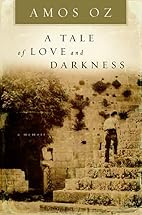
Oz writes about his parents, their background in Russia and how they came to Palestine in the thirties; about his childhood in a suburb of Jerusalem, the creation of the state of Israel and the war of 1948; about his mother's illness and death, and his decision to leave home in his early teens and move to a kibbutz, and - indirectly - about how all that shaped the kind of writer he became.
This is already a fascinating story from the purely historical point of view - I knew very little about Israel, and most of what I've read about the Jewish experience in the 20th century has been by people who either experienced the Nazi terror at first hand or who emigrated to Britain or the US. So it was very interesting to read about the Zionist movement in the early 20th century, Tarbut schools, the politics surrounding the creation of the new state, and all the rest. And particularly about the role played by the reinvention of Hebrew as a modern language. It's not many writers who get to work in a language on which the ink is still wet - Oz records that his father's uncle, Joseph Klausner, was responsible for devising the Hebrew words for such basic concepts as "shirt", "pencil" and "rhinoceros". Oz himself was brought up speaking only Hebrew, but his parents and most of their neighbours still used Russian, Yiddish, and various other European languages between themselves, especially when something had to be said that wasn't for the boy's ears.
The way emigration to Palestine worked also meant that Oz grew up in a very odd social environment in which almost every adult in the very poor neighbourhood where they lived seemed to be a poet, scholar, physician or politician of some kind. His father was a literary scholar, working as an academic librarian since there weren't enough students to provide employment for more than a small fraction of the teachers. One of young Amos's early memories is of being told off very firmly for arranging his little collection of picture books on the shelf by size. We don't do that sort of thing in this house!
Then there's the whole theme of the cultures that are competing to define the new nation - all the different permutations of secular humanism versus orthodox Judaism, suits and ties vs. suntans and shorts, Tel Aviv vs. Jerusalem, shtetl vs. kibbutz, left vs. right, peaceful coexistence vs. permanent war, one state vs. two, and so on - none of them a straightforward choice.
But even if you start reading this book for its subject-matter, you will probably go on because of Oz's extraordinary skill as a storyteller. Every little anecdote is a joy in itself, but it also draws you in further along the carefully constructed path of the story, bringing you towards the narrative crux, the key event in his childhood, his mother's death. But not actually reaching it until the very end of the book - each time the story approaches this key moment, it swerves off in a different direction, and these moments of not telling turn out to be some of the most expressive in the book. Very moving.
I was also struck by the ease with which Oz switches between the narrative voice of the observant child and that of the analytical adult, which is often something that gives memoirs an awkwardly disjointed feel - most writers are much better at one than the other. Here we hardly notice the joins, as he tells us about what he remembers seeing and hearing, then moves on seamlessly to reflect with hindsight on the wider context. He even manages to do this convincingly in the secondhand account of his mother's childhood in Rovno, as told him many years afterwards by her sister.
I was hoping that I could say that I've done Oz by reading this one, but it looks as though I'll have to go on...
By pure accident, it turned out to be an interesting complement to El balcón en invierno - both memoirs in which the authors deal with the suicide of a parent, one by someone who's coming to literature from a non-literate, peasant world; the other from someone who discovers a resolution in writing fiction in the course of his attempt to get away from his over-scholarly family of prominent intellectuals and discover the sunburnt pioneer he hopes is lurking inside him...
Interesting to see that Oz cites Winesburg, Ohio as the book that gave him a model for the sort of writer he aspired to be - that obviously resonates very strongly with Scenes from village life.
A tale of love and darkness (2002) by Amos Oz (Israel, 1939-2018)
Oz writes about his parents, their background in Russia and how they came to Palestine in the thirties; about his childhood in a suburb of Jerusalem, the creation of the state of Israel and the war of 1948; about his mother's illness and death, and his decision to leave home in his early teens and move to a kibbutz, and - indirectly - about how all that shaped the kind of writer he became.
This is already a fascinating story from the purely historical point of view - I knew very little about Israel, and most of what I've read about the Jewish experience in the 20th century has been by people who either experienced the Nazi terror at first hand or who emigrated to Britain or the US. So it was very interesting to read about the Zionist movement in the early 20th century, Tarbut schools, the politics surrounding the creation of the new state, and all the rest. And particularly about the role played by the reinvention of Hebrew as a modern language. It's not many writers who get to work in a language on which the ink is still wet - Oz records that his father's uncle, Joseph Klausner, was responsible for devising the Hebrew words for such basic concepts as "shirt", "pencil" and "rhinoceros". Oz himself was brought up speaking only Hebrew, but his parents and most of their neighbours still used Russian, Yiddish, and various other European languages between themselves, especially when something had to be said that wasn't for the boy's ears.
The way emigration to Palestine worked also meant that Oz grew up in a very odd social environment in which almost every adult in the very poor neighbourhood where they lived seemed to be a poet, scholar, physician or politician of some kind. His father was a literary scholar, working as an academic librarian since there weren't enough students to provide employment for more than a small fraction of the teachers. One of young Amos's early memories is of being told off very firmly for arranging his little collection of picture books on the shelf by size. We don't do that sort of thing in this house!
Then there's the whole theme of the cultures that are competing to define the new nation - all the different permutations of secular humanism versus orthodox Judaism, suits and ties vs. suntans and shorts, Tel Aviv vs. Jerusalem, shtetl vs. kibbutz, left vs. right, peaceful coexistence vs. permanent war, one state vs. two, and so on - none of them a straightforward choice.
But even if you start reading this book for its subject-matter, you will probably go on because of Oz's extraordinary skill as a storyteller. Every little anecdote is a joy in itself, but it also draws you in further along the carefully constructed path of the story, bringing you towards the narrative crux, the key event in his childhood, his mother's death. But not actually reaching it until the very end of the book - each time the story approaches this key moment, it swerves off in a different direction, and these moments of not telling turn out to be some of the most expressive in the book. Very moving.
I was also struck by the ease with which Oz switches between the narrative voice of the observant child and that of the analytical adult, which is often something that gives memoirs an awkwardly disjointed feel - most writers are much better at one than the other. Here we hardly notice the joins, as he tells us about what he remembers seeing and hearing, then moves on seamlessly to reflect with hindsight on the wider context. He even manages to do this convincingly in the secondhand account of his mother's childhood in Rovno, as told him many years afterwards by her sister.
I was hoping that I could say that I've done Oz by reading this one, but it looks as though I'll have to go on...
94thorold
After that I felt as though I needed something free of any kind of emotional engagement, so I took another Adventurous Victorian off the TBR shelf.
Small-boat sailing; an explanation of the management of small yachts, half-decked and open sailing-boats of various rigs (1901) by Edward Frederick Knight (UK, 1852-1925)


(That's the cover of my copy of the 1905 reprint, complete with paint-splatters - I suspect that it's spent a good few years on board someone's yacht.
The flags on the front cover are "CODE" above "KILO WHISKY NOVEMBER" - as far as I can work out that doesn't mean anything in International Code.)
E.F. Knight had the usual sort of background for a young man of his time and class - Westminster School, Caius, and Lincoln's Inn - but instead of practicing at the bar he divided his time between adventurous travel, mostly in small boats, and working as a war correspondent for the Times and Morning Post. He was on the spot for just about every important conflict from the Franco-Prussian to the Russo-Japanese war, losing an arm in the second Boer war. Both Erskine Childers and Arthur Ransome acknowledged him as a major influence for their sailing stories.
Small-boat sailing is a collection of good advice obviously based on decades of practical experience. To those who say "you can't learn seamanship from a book", Knight's response is that they may be right, but that the right book can at least save you a lot of time during the learning process. However, it's probably also fair to say that boats and equipment have changed so much in the last century that there's not a huge amount in this book that will be of any practical value to a modern reader, unless they are involved in sailing or restoring historic vessels. For the rest of us, it's mostly interesting as a period piece, and occasionally helpful in giving an explanation for some of the things mentioned in Victorian and Edwardian sailing books that we find puzzling - what's the difference between a sliding gunter and a balance-lug, how to set a topsail on a cutter, what's meant by "scandalising the mainsail", how to arrive at and depart from a mooring under sail, how to measure depths and speeds without electronic instruments, what papers you need when arriving in foreign ports, and so on.
Actually, the chapter on coastal navigation, which is reassuringly coarse and unmathematical, has a lot of sensible advice that would probably still be useful to modern sailors for those days when the electronics go wrong at a bad moment. But I did stop and do a double-take when he airily mentioned 25 degrees as the correction for magnetic variation to apply in British waters. It's more like 1 degree at present, so for yachting purposes you can safely ignore it. A century is a long time!
Of course, there are also a lot of little anecdotes from Knight's colourful career along the way - the (unsuccessful) treasure-hunting expedition off the coast of Brazil that inspired Peter Duck; running the US blockade to land in Cuba by canoe during the Spanish-American war; sailing on the Red Sea and on the Nile in local craft during the Sudan campaign; and so on. Although he has clearly developed a journalist's hard-nosed instinct for self-promotion over the years, you do occasionally get a little hint that Knight may have a sense of the ridiculous tucked away somewhere ("No girl over her doll can contrive to make herself more perfectly happy than is the true yachtsman over his little ship").
However, I did find it interesting - and a little bit disturbing - that he never bothers to find an alternative expression for "singlehanded", a word that appears very frequently in the book. He could easily have said "alone on board" or "without a crew", or something of the sort. For a man who lost his right arm shortly before writing this book, it must have been a very painful word to use. Maybe he is doing it to demonstrate how tough he is?
Small-boat sailing; an explanation of the management of small yachts, half-decked and open sailing-boats of various rigs (1901) by Edward Frederick Knight (UK, 1852-1925)


(That's the cover of my copy of the 1905 reprint, complete with paint-splatters - I suspect that it's spent a good few years on board someone's yacht.
The flags on the front cover are "CODE" above "KILO WHISKY NOVEMBER" - as far as I can work out that doesn't mean anything in International Code.)
E.F. Knight had the usual sort of background for a young man of his time and class - Westminster School, Caius, and Lincoln's Inn - but instead of practicing at the bar he divided his time between adventurous travel, mostly in small boats, and working as a war correspondent for the Times and Morning Post. He was on the spot for just about every important conflict from the Franco-Prussian to the Russo-Japanese war, losing an arm in the second Boer war. Both Erskine Childers and Arthur Ransome acknowledged him as a major influence for their sailing stories.
Small-boat sailing is a collection of good advice obviously based on decades of practical experience. To those who say "you can't learn seamanship from a book", Knight's response is that they may be right, but that the right book can at least save you a lot of time during the learning process. However, it's probably also fair to say that boats and equipment have changed so much in the last century that there's not a huge amount in this book that will be of any practical value to a modern reader, unless they are involved in sailing or restoring historic vessels. For the rest of us, it's mostly interesting as a period piece, and occasionally helpful in giving an explanation for some of the things mentioned in Victorian and Edwardian sailing books that we find puzzling - what's the difference between a sliding gunter and a balance-lug, how to set a topsail on a cutter, what's meant by "scandalising the mainsail", how to arrive at and depart from a mooring under sail, how to measure depths and speeds without electronic instruments, what papers you need when arriving in foreign ports, and so on.
Actually, the chapter on coastal navigation, which is reassuringly coarse and unmathematical, has a lot of sensible advice that would probably still be useful to modern sailors for those days when the electronics go wrong at a bad moment. But I did stop and do a double-take when he airily mentioned 25 degrees as the correction for magnetic variation to apply in British waters. It's more like 1 degree at present, so for yachting purposes you can safely ignore it. A century is a long time!
Of course, there are also a lot of little anecdotes from Knight's colourful career along the way - the (unsuccessful) treasure-hunting expedition off the coast of Brazil that inspired Peter Duck; running the US blockade to land in Cuba by canoe during the Spanish-American war; sailing on the Red Sea and on the Nile in local craft during the Sudan campaign; and so on. Although he has clearly developed a journalist's hard-nosed instinct for self-promotion over the years, you do occasionally get a little hint that Knight may have a sense of the ridiculous tucked away somewhere ("No girl over her doll can contrive to make herself more perfectly happy than is the true yachtsman over his little ship").
However, I did find it interesting - and a little bit disturbing - that he never bothers to find an alternative expression for "singlehanded", a word that appears very frequently in the book. He could easily have said "alone on board" or "without a crew", or something of the sort. For a man who lost his right arm shortly before writing this book, it must have been a very painful word to use. Maybe he is doing it to demonstrate how tough he is?
95SassyLassy
>94 thorold: Where did you ever find this - it's wonderful!
Following on your thoughts on "singlehanded", maybe the loose translation of KWN was "I wish to communicate: I require medical assistance: Not" - more denial, but then this is really farfetched.
Your reviews often send me off into odd searches. This one led to discussions of "scandalising the mainsail" vs "brailing up the luff" with reference to this painting "Shipping off Birkenhead" (the sailboat to the left of the centre ship)
http://www.artnet.com/WebServices/images/ll00098lldRS9GFg03G72CfDrCWvaHBOc96EE/r...
Following on your thoughts on "singlehanded", maybe the loose translation of KWN was "I wish to communicate: I require medical assistance: Not" - more denial, but then this is really farfetched.
Your reviews often send me off into odd searches. This one led to discussions of "scandalising the mainsail" vs "brailing up the luff" with reference to this painting "Shipping off Birkenhead" (the sailboat to the left of the centre ship)
http://www.artnet.com/WebServices/images/ll00098lldRS9GFg03G72CfDrCWvaHBOc96EE/r...
96rocketjk
>93 thorold: My wife read A tale of Love and Darkness a year or two or so and found it be quite moving. It's on my "must read soon" list. I also have a couple of his novels waiting form me on the shelf.
97thorold
>95 SassyLassy: It was one of those cases where I found something else I was looking for cheaply but with expensive postage on ABE Books and realised that I could get a second book from the same seller for very little more - this was the first interesting thing that popped up. It should be pretty easy to find - it went through four reprints between May 1901 and October 1905, and I'm sure it didn't end there. I think I've seen it on archive.org as well.
Thanks - I looked at the discussion as well. It's amazing how many experts you can find on the web...
What Knight describes is tricing up the tack and lowering the peak as a way of quickly reducing sail, e.g. when about to jibe or on the approach of a squall.
Thanks - I looked at the discussion as well. It's amazing how many experts you can find on the web...
What Knight describes is tricing up the tack and lowering the peak as a way of quickly reducing sail, e.g. when about to jibe or on the approach of a squall.
98thorold
>95 SassyLassy: I require medical assistance: Not - I never realised that there's a whole section of the International Code book with charts of the human body so that you can signal every possible medical condition with a minimal combination of flags. Not something I've ever needed to know, thankfully...
99thorold
>94 thorold: >95 SassyLassy: More fun - I realised when I went to put this away on the shelf that I've got another, quite different book called Knight's modern seamanship (17th edition, 1984) which tells you useful things like how to park an aircraft carrier and how to refuel a destroyer at sea. It turns out that that book in its original incarnation also appeared in 1901, and its author, Admiral Austin M. Knight, US Navy, was an almost exact contemporary of E F Knight. What with the two of them and the Green Knight from a week ago, I've almost got enough for a round table...
100Jim53
Oh my. I wandered in all suspecting and took bullets for Milkman and A Tale of Love and Darkness. Thanks, I think ;-)
101thorold
>100 Jim53: Well, you have Mrs @rocketjk's word for it as well...
Milkman isn't to everyone's taste, but those who like it - including me - seem to like it very much. I'm looking forward to hearing what my book-club thought about it in a week's time.
---
This is one that was recommended to me by a number of people last year - as it turned out I read another of Chraïbi's books first, Une enquête au pays, a kind of witty north-African subversion of the crime-story. This one is also witty and north African, but quite different otherwise...
La Civilisation, ma Mère !... (1972; Mother comes of age) by Driss Chraïbi (Morocco, 1926-2007)


In 1930s Casablanca, two teenage boys decide to treat their mother to new shoes and a dress and take her out to the park for the afternoon. They have no idea what far-reaching consequences this simple act of kindness is going to have...
Chraïbi wittily and sensitively charts the process through which a woman who's been locked up in domestic servitude for the first 35 years of her life discovers the world she's been excluded from and embraces it with both hands. At first we see her needlessly reinventing basic technologies for herself, or ludicrously misunderstanding the modern world (putting the electric iron on the stove to heat up, saying goodnight to the magic voice in the radio...), but it's not long before she has taken control of her own life and is having a good go at making the world a better place for other women in her situation, and knocking on De Gaulle's door to try to convince him of the need for a new future for colonial countries in the post-war world.
Of course, Chraïbi might be treading on tricky ground by writing a feminist book from a male point of view, but he's obviously well aware of this and makes sure we get to see through the patronising assumptions of his male narrators as quickly as Mother does. There's a telling scene where the teacher in whose class Mother is preparing to take the Baccalaureate comes to see the narrator-son and complains to him that she's undermining his authority by questioning the flaws and inconsistencies in what he teaches. The son has no helpful advice to offer, other than that he could try the traditional teacher's response, sarcasm...
Entertaining and heart-warming, and a well-meant reminder of the way patriarchy habitually and needlessly wastes the contribution that women should be making to society, but maybe all a little bit too rosy-eyed: Mother is able to escape from her kitchen only thanks to the assistance of enlightened (or simply reckless!) men, and once out she encounters only token resistance. This is more of a manifesto than a guide to practical revolution.
Milkman isn't to everyone's taste, but those who like it - including me - seem to like it very much. I'm looking forward to hearing what my book-club thought about it in a week's time.
---
This is one that was recommended to me by a number of people last year - as it turned out I read another of Chraïbi's books first, Une enquête au pays, a kind of witty north-African subversion of the crime-story. This one is also witty and north African, but quite different otherwise...
La Civilisation, ma Mère !... (1972; Mother comes of age) by Driss Chraïbi (Morocco, 1926-2007)


In 1930s Casablanca, two teenage boys decide to treat their mother to new shoes and a dress and take her out to the park for the afternoon. They have no idea what far-reaching consequences this simple act of kindness is going to have...
Chraïbi wittily and sensitively charts the process through which a woman who's been locked up in domestic servitude for the first 35 years of her life discovers the world she's been excluded from and embraces it with both hands. At first we see her needlessly reinventing basic technologies for herself, or ludicrously misunderstanding the modern world (putting the electric iron on the stove to heat up, saying goodnight to the magic voice in the radio...), but it's not long before she has taken control of her own life and is having a good go at making the world a better place for other women in her situation, and knocking on De Gaulle's door to try to convince him of the need for a new future for colonial countries in the post-war world.
Of course, Chraïbi might be treading on tricky ground by writing a feminist book from a male point of view, but he's obviously well aware of this and makes sure we get to see through the patronising assumptions of his male narrators as quickly as Mother does. There's a telling scene where the teacher in whose class Mother is preparing to take the Baccalaureate comes to see the narrator-son and complains to him that she's undermining his authority by questioning the flaws and inconsistencies in what he teaches. The son has no helpful advice to offer, other than that he could try the traditional teacher's response, sarcasm...
Entertaining and heart-warming, and a well-meant reminder of the way patriarchy habitually and needlessly wastes the contribution that women should be making to society, but maybe all a little bit too rosy-eyed: Mother is able to escape from her kitchen only thanks to the assistance of enlightened (or simply reckless!) men, and once out she encounters only token resistance. This is more of a manifesto than a guide to practical revolution.
102thorold
Back to "Eng-Lit classics you may not have read" - of course I have read large chunks of the Canterbury Tales at one time or another, but I've never really had a proper go at looking at them in some sort of context. First step:
Chaucer (2004) by Peter Ackroyd (UK, 1949- )


This was the first in Ackroyd's series of "brief lives" (of eight, to date) - a 170-page summary of everything you really need to know about the subject, with plenty of nice pictures but no unnecessary detail. A nice idea - there aren't enough biographies of that kind around.
Chaucer isn't the first identifiable English poet, of course, nor does Ackroyd try to force the meaningless "Father of English poetry" label on us, but he is one of the first major English writers about whom we know enough outside their works to be able to write a biography that isn't just speculation. And that's not because he was an important poet, but because he came from a social class where things tend to get written down and had the sort of career (in his day-jobs) that leaves a paper-trail in official records.
Of course, what especially interests the London-obsessed Ackroyd about Chaucer is the way he was a London poet. And that his generation really marked the historical moment at which English literature became a specifically metropolitan activity, focussed on the court rather than the scriptoria of remote monasteries.
Chaucer was the son of a London wine-merchant with a court appointment, and as a boy became a page in the household of a prince, getting a court education in consequence, as well as establishing a contact network for his future career. When he grew up, he was employed by the court on various diplomatic missions, including several lengthy stays in Italy where he had the opportunity to get to know the works of Dante, Petrarch and Boccaccio (Ackroyd speculates that he might already have learnt Italian in childhood from the Genoese merchants who would have been the Chaucers' London neighbours). He then got a post collecting customs duties in the Port of London, which came with an official residence, and later in life seems to have moved out of the city to Kent, where he was a justice of the peace and served as an MP for a while.
Of course, there is still a lot about Chaucer's life that lends itself to speculation - his slightly odd marital circumstances, for instance - his wife Philippa was a lady-in-waiting in John of Gaunt's household, permanently on tour with the court, and never seems to have spent much time with him. Given that Philippa's sister was John's official mistress, there is even some speculation that Chaucer's son and daughter were actually royal bastards. There's also the mystery of the rape charge laid against Chaucer by Cecily Champain in 1380 and subsequently withdrawn - was Chaucer an early "me too" offender? Is he about to be struck out of the canon at any moment...?
Things to take from this biography into a reading of Chaucer's work: obviously, one key thing is not to assume that London was an out of the way provincial spot in the 14th century. Chaucer was clearly well aware of what was going on in the mainstream of European culture of the time, and engaged in it. And - like most medieval writers - wasn't averse to recycling other people's work in his own. Another thing Ackroyd finds important is the question of how his poetry was consumed - if we are to believe all the famous pictures (most of them much later...) showing Chaucer reading his work aloud to the court, then we can take it that many of the "ambiguities" in the text would have been resolved by the way he read it. On the other hand, in some of his works he seems to address the reader directly as reader, rather than listener. Something to look out for.
Chaucer (2004) by Peter Ackroyd (UK, 1949- )


This was the first in Ackroyd's series of "brief lives" (of eight, to date) - a 170-page summary of everything you really need to know about the subject, with plenty of nice pictures but no unnecessary detail. A nice idea - there aren't enough biographies of that kind around.
Chaucer isn't the first identifiable English poet, of course, nor does Ackroyd try to force the meaningless "Father of English poetry" label on us, but he is one of the first major English writers about whom we know enough outside their works to be able to write a biography that isn't just speculation. And that's not because he was an important poet, but because he came from a social class where things tend to get written down and had the sort of career (in his day-jobs) that leaves a paper-trail in official records.
Of course, what especially interests the London-obsessed Ackroyd about Chaucer is the way he was a London poet. And that his generation really marked the historical moment at which English literature became a specifically metropolitan activity, focussed on the court rather than the scriptoria of remote monasteries.
Chaucer was the son of a London wine-merchant with a court appointment, and as a boy became a page in the household of a prince, getting a court education in consequence, as well as establishing a contact network for his future career. When he grew up, he was employed by the court on various diplomatic missions, including several lengthy stays in Italy where he had the opportunity to get to know the works of Dante, Petrarch and Boccaccio (Ackroyd speculates that he might already have learnt Italian in childhood from the Genoese merchants who would have been the Chaucers' London neighbours). He then got a post collecting customs duties in the Port of London, which came with an official residence, and later in life seems to have moved out of the city to Kent, where he was a justice of the peace and served as an MP for a while.
Of course, there is still a lot about Chaucer's life that lends itself to speculation - his slightly odd marital circumstances, for instance - his wife Philippa was a lady-in-waiting in John of Gaunt's household, permanently on tour with the court, and never seems to have spent much time with him. Given that Philippa's sister was John's official mistress, there is even some speculation that Chaucer's son and daughter were actually royal bastards. There's also the mystery of the rape charge laid against Chaucer by Cecily Champain in 1380 and subsequently withdrawn - was Chaucer an early "me too" offender? Is he about to be struck out of the canon at any moment...?
Things to take from this biography into a reading of Chaucer's work: obviously, one key thing is not to assume that London was an out of the way provincial spot in the 14th century. Chaucer was clearly well aware of what was going on in the mainstream of European culture of the time, and engaged in it. And - like most medieval writers - wasn't averse to recycling other people's work in his own. Another thing Ackroyd finds important is the question of how his poetry was consumed - if we are to believe all the famous pictures (most of them much later...) showing Chaucer reading his work aloud to the court, then we can take it that many of the "ambiguities" in the text would have been resolved by the way he read it. On the other hand, in some of his works he seems to address the reader directly as reader, rather than listener. Something to look out for.
103rocketjk
>101 thorold: "Well, you have Mrs rocketjk's word for it as well... "
Ha! Yes, it's funny that you keep reading books that my wife (who has, obviously, very fine taste in books) has liked (Milkman and A Tale of Love and Darkness). For the record, though, I'm just past the halfway point in Milkman myself, now.* It's not an easy reading experience, by any means, but I'm finding both the stunning quality of the writing and the depth of insight to be well worth the concentration the book demands and the darkness the story often entails.
* My wife and I began a new tradition this year, of once a year swapping recent favorites to read. She assigned me Milkman. It so happens the book I gave her is just as dark: Every Man Dies Alone by Hans Fallada.
eta: finished Milkman, review here: http://www.librarything.com/topic/301698
Ha! Yes, it's funny that you keep reading books that my wife (who has, obviously, very fine taste in books) has liked (Milkman and A Tale of Love and Darkness). For the record, though, I'm just past the halfway point in Milkman myself, now.* It's not an easy reading experience, by any means, but I'm finding both the stunning quality of the writing and the depth of insight to be well worth the concentration the book demands and the darkness the story often entails.
* My wife and I began a new tradition this year, of once a year swapping recent favorites to read. She assigned me Milkman. It so happens the book I gave her is just as dark: Every Man Dies Alone by Hans Fallada.
eta: finished Milkman, review here: http://www.librarything.com/topic/301698
104dchaikin
I have to come back and catch up, but wanted to say I loved your Oz review. AToLaD is one my favorite books.
105dchaikin
>102 thorold: all that from Ackroyd. When I get to Chaucer, maybe this will be a good reference. Anyway, enjoyed what I gleaned from your review. (enjoyed the other new-ish reviews here too.)
106thorold
Following on from >102 thorold: - I've been firmly in the middle ages since last week. Meanwhile, a stack of books about Petrarch (not Plutarch, although it was a close-run thing...) has been building up on the TBR shelf, so I'm really doing this in the wrong order, since Petrarch and Boccaccio count as big sources of inspiration for Chaucer. But anyway, I've been meaning to do a cover-to-cover of the Canterbury Tales since forever...
The Canterbury Tales (around 1394) by Geoffrey Chaucer (UK, 1343-1400)
A companion to Chaucer's Canterbury tales (1995) by Margaret Hallissy (USA, - )


![]()
Hallissy
Because my Everyman edition of the Canterbury Tales doesn't have much support material apart from a few glosses of difficult words in the margin (and some student's handwritten annotations on the first three pages of the General Prologue), I borrowed Hallissy's Companion from the library to get a bit of historical and critical background for what I was reading. It turned out to be only moderately useful - Hallissy, who teaches at Long Island University, evidently had the needs of her own students (of the MTV generation) in mind, and didn't set the bar very high. She doesn't assume any knowledge of medieval history or literature, or even very much knowledge of 1990s society (there are a lot of sentences that start "Many people today still..."). In fact, she's not even really counting on the student reading the actual text, because every chapter includes a lengthy précis of the Tale in question and a few selected quotations to use in your essay. Hallissy's strength is in analysing Chaucer's social and religious attitudes (especially about marriage and the role of women in society) in the context of 14th century beliefs, and it's probably worth reading the book for this, but there's a lot of chaff to get through, and sadly she only pays very minimal attention to Chaucer's language or use of verse-forms. Not the waste of space I was afraid it might be when I opened it, but probably not the most useful guide unless you are an American undergraduate who thinks of the middle ages as the pre-smartphone era...
Chaucer
The Canterbury Tales is by a wide margin the best-known work of English literature from the medieval period. It's not only enshrined in the school History syllabus between Crop Rotation, Monasticism and Castles, but it's a book that many modern readers still seem to turn to for pleasure, despite the obvious difficulties caused by the linguistic and cultural distance of six centuries. I've often dipped into it pleasurably before, and I've had a copy sitting on my shelves for many years, but this is the first time I've tried a cover-to-cover read.
I found the language easier to deal with than I expected - Chaucer's version of southern English is a lot more straightforward for the modern reader than the nearly contemporary Sir Gawain and the Green Knight. Anyone who knows a bit of French or Latin and a bit of German or Dutch ought to be able to read it fairly easily with the help of the marginal glosses. Especially with 600 pages to practice on, you soon get the hang of what it means and a rough idea of how it sounds (I listened to an audio recording of the General Prologue for help with this). In fact, the pronunciation of Middle English is usually more logical than that of Modern English. If what's written is "knight", it makes far more sense to say cnicht (or kerniggut if you're John Cleese) than nite...
Like most people, I had mixed reactions to the Tales. The bawdy ones were fun - it's always interesting to see that people enjoyed fart-jokes as much (or perhaps even more) in those days as they do now. The chivalric-romance style of several other Tales was colourful but sometimes a bit slow for modern tastes (some of the descriptions in the "Knight's Tale" seem to go on for ever), but it was revealing to see that Chaucer was well aware of that and was prepared to make fun of it in the mock-heroic "Nun's Priest's Tale" and the deliberately boring and directionless "Tale of Sir Thopas", which is supposedly being told by the poet's narrator-persona, "Chaucer", until he's cut off by the Host.
There are several "high-minded" religious Tales that look as though they are meant to be taken straight - the blatantly antisemitic - "Prioress's Tale" is perhaps best ignored; the "Physician's Tale", a gruesome story about an honour-killing, is not much better, except that there at least the narrator seems to distance himself a little from the idea that it's better to kill your (innocent) daughter than risk shame attaching to her; the "Second Nun's Tale" (the gloriously over-the-top martyrdom of St Cecilia) is almost readable, but even I was forced into skimming by the "Parson's Tale", a lengthy and very dry sermon on the subject of "penance" (it does get a bit livelier when it's discussing the Seven Deadly Sins...).
Probably the most interesting aspect of the Tales overall is what Chaucer has to say about the relations between men and women. Several Tales deal with this topic explicitly in various different ways, and the core of the argument is obviously in the "Wife of Bath's Prologue and Tale" - she argues powerfully and directly that the world will not collapse into disorder if women are allowed to decide the course of their own lives. The "Franklin's Tale" also takes up the idea of an equitable marriage in which neither partner owes obedience to the other and presents it in a positive light. It's tempting to read something of the Chaucers' domestic situation into this, but of course we don't have the slightest bit of evidence for anything other than that Philippa Chaucer had a career of her own.
We read this for its scope, vitality and colour, and for the liveliness of Chaucer's verse, which manages to jump the centuries without any problem. It's striking how we're so used to groaning and expecting dullness or difficulty when we see a passage of verse in a modern prose novel - here it's precisely the opposite; we (rightly) groan when we see the prose text of the "Parson's Tale" and the "Tale of Melibee" coming up, and are relieved when we get back to verse again...
One - irrelevant - thought that struck me for the first time on this reading was to wonder how the practicalities of storytelling on horseback work out. Even on foot, it's difficult to talk to more than two or three people at once whilst walking along, and when riding you can't get as close together as you can on foot, plus you've got the noise of the horses. So I don't know how you would go about telling a story to a group of 29 riders in a way that they can all hear it. If they were riding two abreast, they would be spread out over something like 50m of road, and it's unlikely that the A2 was more than two lanes wide in the 14th century...
The Canterbury Tales (around 1394) by Geoffrey Chaucer (UK, 1343-1400)
A companion to Chaucer's Canterbury tales (1995) by Margaret Hallissy (USA, - )


Hallissy
Because my Everyman edition of the Canterbury Tales doesn't have much support material apart from a few glosses of difficult words in the margin (and some student's handwritten annotations on the first three pages of the General Prologue), I borrowed Hallissy's Companion from the library to get a bit of historical and critical background for what I was reading. It turned out to be only moderately useful - Hallissy, who teaches at Long Island University, evidently had the needs of her own students (of the MTV generation) in mind, and didn't set the bar very high. She doesn't assume any knowledge of medieval history or literature, or even very much knowledge of 1990s society (there are a lot of sentences that start "Many people today still..."). In fact, she's not even really counting on the student reading the actual text, because every chapter includes a lengthy précis of the Tale in question and a few selected quotations to use in your essay. Hallissy's strength is in analysing Chaucer's social and religious attitudes (especially about marriage and the role of women in society) in the context of 14th century beliefs, and it's probably worth reading the book for this, but there's a lot of chaff to get through, and sadly she only pays very minimal attention to Chaucer's language or use of verse-forms. Not the waste of space I was afraid it might be when I opened it, but probably not the most useful guide unless you are an American undergraduate who thinks of the middle ages as the pre-smartphone era...
Chaucer
The Canterbury Tales is by a wide margin the best-known work of English literature from the medieval period. It's not only enshrined in the school History syllabus between Crop Rotation, Monasticism and Castles, but it's a book that many modern readers still seem to turn to for pleasure, despite the obvious difficulties caused by the linguistic and cultural distance of six centuries. I've often dipped into it pleasurably before, and I've had a copy sitting on my shelves for many years, but this is the first time I've tried a cover-to-cover read.
I found the language easier to deal with than I expected - Chaucer's version of southern English is a lot more straightforward for the modern reader than the nearly contemporary Sir Gawain and the Green Knight. Anyone who knows a bit of French or Latin and a bit of German or Dutch ought to be able to read it fairly easily with the help of the marginal glosses. Especially with 600 pages to practice on, you soon get the hang of what it means and a rough idea of how it sounds (I listened to an audio recording of the General Prologue for help with this). In fact, the pronunciation of Middle English is usually more logical than that of Modern English. If what's written is "knight", it makes far more sense to say cnicht (or kerniggut if you're John Cleese) than nite...
Like most people, I had mixed reactions to the Tales. The bawdy ones were fun - it's always interesting to see that people enjoyed fart-jokes as much (or perhaps even more) in those days as they do now. The chivalric-romance style of several other Tales was colourful but sometimes a bit slow for modern tastes (some of the descriptions in the "Knight's Tale" seem to go on for ever), but it was revealing to see that Chaucer was well aware of that and was prepared to make fun of it in the mock-heroic "Nun's Priest's Tale" and the deliberately boring and directionless "Tale of Sir Thopas", which is supposedly being told by the poet's narrator-persona, "Chaucer", until he's cut off by the Host.
There are several "high-minded" religious Tales that look as though they are meant to be taken straight - the blatantly antisemitic - "Prioress's Tale" is perhaps best ignored; the "Physician's Tale", a gruesome story about an honour-killing, is not much better, except that there at least the narrator seems to distance himself a little from the idea that it's better to kill your (innocent) daughter than risk shame attaching to her; the "Second Nun's Tale" (the gloriously over-the-top martyrdom of St Cecilia) is almost readable, but even I was forced into skimming by the "Parson's Tale", a lengthy and very dry sermon on the subject of "penance" (it does get a bit livelier when it's discussing the Seven Deadly Sins...).
Probably the most interesting aspect of the Tales overall is what Chaucer has to say about the relations between men and women. Several Tales deal with this topic explicitly in various different ways, and the core of the argument is obviously in the "Wife of Bath's Prologue and Tale" - she argues powerfully and directly that the world will not collapse into disorder if women are allowed to decide the course of their own lives. The "Franklin's Tale" also takes up the idea of an equitable marriage in which neither partner owes obedience to the other and presents it in a positive light. It's tempting to read something of the Chaucers' domestic situation into this, but of course we don't have the slightest bit of evidence for anything other than that Philippa Chaucer had a career of her own.
We read this for its scope, vitality and colour, and for the liveliness of Chaucer's verse, which manages to jump the centuries without any problem. It's striking how we're so used to groaning and expecting dullness or difficulty when we see a passage of verse in a modern prose novel - here it's precisely the opposite; we (rightly) groan when we see the prose text of the "Parson's Tale" and the "Tale of Melibee" coming up, and are relieved when we get back to verse again...
One - irrelevant - thought that struck me for the first time on this reading was to wonder how the practicalities of storytelling on horseback work out. Even on foot, it's difficult to talk to more than two or three people at once whilst walking along, and when riding you can't get as close together as you can on foot, plus you've got the noise of the horses. So I don't know how you would go about telling a story to a group of 29 riders in a way that they can all hear it. If they were riding two abreast, they would be spread out over something like 50m of road, and it's unlikely that the A2 was more than two lanes wide in the 14th century...
107thorold
PS: I should, of course, have read The Canterbury Tales in April, but my planning skills aren’t what they might be...
In my defence, I could mention that Ackroyd credits Chaucer, in The parliament of fowls, with introducing the English-speaking world to the Genoese idea of celebrating St. Valentine’s Day - “It is one of his greatest, if least-known, benefactions to the English”.
In my defence, I could mention that Ackroyd credits Chaucer, in The parliament of fowls, with introducing the English-speaking world to the Genoese idea of celebrating St. Valentine’s Day - “It is one of his greatest, if least-known, benefactions to the English”.
108thorold
One of the names of people I hadn't read that came up in Textermination was the Mexican writer Carlos Fuentes. Terra Nostra looks like the one I really ought to read (fitting in with Philip II from last year's thread...), but it's a big investment of time, and my pile of library books last week was already quite tall by the time I got to the Spanish section, so I took this rather more harmless-looking one instead. But, as one of the other reviewers here already said, this turns out to be a novella-length book with all the depth and complexity of a full-length novel. So I'm not sure if I saved anything...
Instinto de Inez (2000; Inez) by Carlos Fuentes (Mexico, 1928-2012)


A French conductor, Gabriel, and a Mexican singer, Inez, have an intense sexual and emotional relationship that only seems to exist whilst they are working together on performances of Berlioz's La damnation de Faust, which they do in London in 1940, in Mexico City in 1949, and again in London in 1967. A primeval woman sings to her baby whilst her man paints animals on the wall of the cave, perhaps in Inez's dream, or in a reality that starts to cross over into the other reality of the opera. There's a fragile glass seal that seems to have been a love-token from Inez to Gabriel, but also seems to be an icon of the Mother-Goddess, who also appears as the woman's mother in the dream and as the elderly Gabriel's Austrian housekeeper. And there's a mysterious blond, bare-chested man who crosses over into the dream from a photo where he appears with Gabriel, but then turns up playing a bone flute in the pit at Covent Garden...
So there's a lot of - explicit or implicit - general stuff going on here about matriarchy/patriarchy, colonialism, the aftermath of the Mexican Civil War and World War II, power-relations in the arts and between men and women, symbols and archetypes, and so on. But there's also another thread to the book which is all about music and performance, where it's not always obvious whether the relationship between Gabriel and Inez is a metaphor for (or an ironic commentary on) the music they are making together, or vice-versa. Fuentes stresses how music can only be performed as it should be if the performer can do the impossible and combine dispassionate serenity with passionate engagement. He wants us to understand the transience of musical performance, too: Gabriel refuses to have his work recorded, so the performance only exists whilst it's being performed (like the sex?), whereas the Platonic ideal of the music as expressed in Berlioz's score always exists, but is never realised (like the love?).
And there's obviously a reason for bringing in not simply Faust, but Berlioz's Faust in particular. (If Gabriel were simply any old opera conductor, he'd be far more likely to be performing Gounod's Faust.) Presumably that means we have to take as read all the Thomas Mann stuff about mortgaging future salvation to obtain creativity, and the way the Goethe/Marlowe Faust story brings together ideas from the baroque, enlightenment and romantic eras, plus things specific to Berlioz, which I assume means the supremely confident way he harnessed the musical technology of the industrial age to produce sounds that tap into our most primitive emotions...
All very interesting to read, but definitely the sort of book that asks a lot of questions but doesn't answer many of them.
Instinto de Inez (2000; Inez) by Carlos Fuentes (Mexico, 1928-2012)


A French conductor, Gabriel, and a Mexican singer, Inez, have an intense sexual and emotional relationship that only seems to exist whilst they are working together on performances of Berlioz's La damnation de Faust, which they do in London in 1940, in Mexico City in 1949, and again in London in 1967. A primeval woman sings to her baby whilst her man paints animals on the wall of the cave, perhaps in Inez's dream, or in a reality that starts to cross over into the other reality of the opera. There's a fragile glass seal that seems to have been a love-token from Inez to Gabriel, but also seems to be an icon of the Mother-Goddess, who also appears as the woman's mother in the dream and as the elderly Gabriel's Austrian housekeeper. And there's a mysterious blond, bare-chested man who crosses over into the dream from a photo where he appears with Gabriel, but then turns up playing a bone flute in the pit at Covent Garden...
So there's a lot of - explicit or implicit - general stuff going on here about matriarchy/patriarchy, colonialism, the aftermath of the Mexican Civil War and World War II, power-relations in the arts and between men and women, symbols and archetypes, and so on. But there's also another thread to the book which is all about music and performance, where it's not always obvious whether the relationship between Gabriel and Inez is a metaphor for (or an ironic commentary on) the music they are making together, or vice-versa. Fuentes stresses how music can only be performed as it should be if the performer can do the impossible and combine dispassionate serenity with passionate engagement. He wants us to understand the transience of musical performance, too: Gabriel refuses to have his work recorded, so the performance only exists whilst it's being performed (like the sex?), whereas the Platonic ideal of the music as expressed in Berlioz's score always exists, but is never realised (like the love?).
And there's obviously a reason for bringing in not simply Faust, but Berlioz's Faust in particular. (If Gabriel were simply any old opera conductor, he'd be far more likely to be performing Gounod's Faust.) Presumably that means we have to take as read all the Thomas Mann stuff about mortgaging future salvation to obtain creativity, and the way the Goethe/Marlowe Faust story brings together ideas from the baroque, enlightenment and romantic eras, plus things specific to Berlioz, which I assume means the supremely confident way he harnessed the musical technology of the industrial age to produce sounds that tap into our most primitive emotions...
All very interesting to read, but definitely the sort of book that asks a lot of questions but doesn't answer many of them.
109baswood
Enjoyed reading your thoughts on The Canterbury Tales. Are you tempted to read anymore Chaucer?
110thorold
>109 baswood: Thanks! Tempted - yes; about to - probably not for a while. Italy is calling to me from the TBR shelf...
But medieval England has turned out to be more interesting than I was expecting, so I'm sure I will get back to Chaucer, also probably Dream of the Rood and Piers Plowman.
---
Albania, again, and a sort of love story for sort-of St Valentine's Day:
The accident (2008; English 2011) by Ismail Kadare (Albania, 1936- ), translated by John Hodgson


A taxi goes off the road near Vienna airport, and the passengers, a man and woman, both Albanians, are killed. It looks like a tragic but banal road accident, but the file stays open, since on the one hand the Serbian and Albanian secret services are taking an interest - the man was a senior official of the Council of Europe - and on the other hand two friends have reported that the woman had told them she was afraid that the man, her lover, was about to murder her.
As we dig deeper and deeper into the couple's back-story, we never seem to get any nearer to a coherent explanation of the facts. It is almost as though some novelist might be using them to make a satirical point about Albanian history: if intimate relationships reflect the societies they come out of, then a relationship between two modern Albanians must be grounded in abuse of power, weapons, role-playing, suspicion, betrayal (real, pretended, imagined), jealousy, historical guilt, atavistic fear of "The Hague", galloping horses, and a non-realist narrative logic derived from old ballads.
I'm not sure about this book: Kadare is very good at what he does, and the way the story slides between factual crime-story, psychological reconstruction and bizarre magic-realism is very clever. However, the mix of politics and transgressive clandestine sex often makes you feel you're back in the bad old macho days of Milan Kundera, and then there's the narrator's curious obsession with lesbians... It's all presented ironically and critically from the woman's point-of-view, but I was left feeling that the irony was a bit half-hearted, and the voyeurism was what the author was really counting on to sell the book.
But medieval England has turned out to be more interesting than I was expecting, so I'm sure I will get back to Chaucer, also probably Dream of the Rood and Piers Plowman.
---
Albania, again, and a sort of love story for sort-of St Valentine's Day:
The accident (2008; English 2011) by Ismail Kadare (Albania, 1936- ), translated by John Hodgson


A taxi goes off the road near Vienna airport, and the passengers, a man and woman, both Albanians, are killed. It looks like a tragic but banal road accident, but the file stays open, since on the one hand the Serbian and Albanian secret services are taking an interest - the man was a senior official of the Council of Europe - and on the other hand two friends have reported that the woman had told them she was afraid that the man, her lover, was about to murder her.
As we dig deeper and deeper into the couple's back-story, we never seem to get any nearer to a coherent explanation of the facts. It is almost as though some novelist might be using them to make a satirical point about Albanian history: if intimate relationships reflect the societies they come out of, then a relationship between two modern Albanians must be grounded in abuse of power, weapons, role-playing, suspicion, betrayal (real, pretended, imagined), jealousy, historical guilt, atavistic fear of "The Hague", galloping horses, and a non-realist narrative logic derived from old ballads.
I'm not sure about this book: Kadare is very good at what he does, and the way the story slides between factual crime-story, psychological reconstruction and bizarre magic-realism is very clever. However, the mix of politics and transgressive clandestine sex often makes you feel you're back in the bad old macho days of Milan Kundera, and then there's the narrator's curious obsession with lesbians... It's all presented ironically and critically from the woman's point-of-view, but I was left feeling that the irony was a bit half-hearted, and the voyeurism was what the author was really counting on to sell the book.
111thorold
Another Spanish author I've been meaning to get to for a while. I resisted the temptation to go for Sefarad, I thought that would be a mite too obvious having just read Retour à Séfarad (>65 thorold:)...
Carlota Fainberg (1999) by Antonio Muñoz Molina (Spain, 1956- )


We've all been there: you're stuck in an airport somewhere for a few hours, you've got a pile of books and your laptop and you're looking forward to enjoying a bit of peace and quiet, and then someone (a stranger, an acquaintance you normally avoid...) pops up and engages you in conversation, and you know you aren't going to be able to get rid of them until your flight leaves and/or they've told you the story of their lives. (Mutatis mutandis for the old version of this social nightmare with wedding guests and albatrosses.)
In the case of Muñoz's narrator, a Spanish academic on his way to a Borges conference in Buenos Aires from the US college where he teaches, the culprit is a businessman who identifies him as a compatriot from the copy of El Pais sticking out of his pocket. "I will never return to Buenos Aires," he tells the narrator, and proceeds to explain why. The story - of a transient fling with a woman he met in a crumbling grand hotel there - isn't a particularly long or complicated one, but both the businessman and the narrator know how to stretch out the tension with cunningly placed digressions and reflections on airports, America versus Europe, the way narrative works, the hotel trade, and so on. And of course the narrator eventually gets to Buenos Aires and discovers something that puts the whole story he was told into a quite different, and very Borgesian light.
Apart from a lot of allusions to Borges (some of which I was able to spot), there's also a Treasure Island theme running through the book, introduced by Borges's sonnet "Blind Pew", and there's also a satirical subplot of campus intrigue. We've been fearing the worst ever since we discovered that the narrator's institution is Humbert College, in Humbert Pa., where he lives on Humbert Lane and attends colloquia in Humbert Hall, and we know he's in trouble when he meets his nemesis, the redoubtable Professor Ann Gadea Simpson Mariátegui, the Terminator of New Lesbian Criticism, "who displays the surnames of her ex-husbands like a head-hunter's trophies"...
A clever, entertaining little book that sneaks in a very RLS-ish plot under a smokescreen of postmodernism.
“Blind Pew”: https://www.escritas.org/pt/t/50928/blind-pew
Borges reading it: https://youtu.be/KiviBhuEW7E (scroll forward to 1:32:00)
Carlota Fainberg (1999) by Antonio Muñoz Molina (Spain, 1956- )


We've all been there: you're stuck in an airport somewhere for a few hours, you've got a pile of books and your laptop and you're looking forward to enjoying a bit of peace and quiet, and then someone (a stranger, an acquaintance you normally avoid...) pops up and engages you in conversation, and you know you aren't going to be able to get rid of them until your flight leaves and/or they've told you the story of their lives. (Mutatis mutandis for the old version of this social nightmare with wedding guests and albatrosses.)
In the case of Muñoz's narrator, a Spanish academic on his way to a Borges conference in Buenos Aires from the US college where he teaches, the culprit is a businessman who identifies him as a compatriot from the copy of El Pais sticking out of his pocket. "I will never return to Buenos Aires," he tells the narrator, and proceeds to explain why. The story - of a transient fling with a woman he met in a crumbling grand hotel there - isn't a particularly long or complicated one, but both the businessman and the narrator know how to stretch out the tension with cunningly placed digressions and reflections on airports, America versus Europe, the way narrative works, the hotel trade, and so on. And of course the narrator eventually gets to Buenos Aires and discovers something that puts the whole story he was told into a quite different, and very Borgesian light.
Apart from a lot of allusions to Borges (some of which I was able to spot), there's also a Treasure Island theme running through the book, introduced by Borges's sonnet "Blind Pew", and there's also a satirical subplot of campus intrigue. We've been fearing the worst ever since we discovered that the narrator's institution is Humbert College, in Humbert Pa., where he lives on Humbert Lane and attends colloquia in Humbert Hall, and we know he's in trouble when he meets his nemesis, the redoubtable Professor Ann Gadea Simpson Mariátegui, the Terminator of New Lesbian Criticism, "who displays the surnames of her ex-husbands like a head-hunter's trophies"...
A clever, entertaining little book that sneaks in a very RLS-ish plot under a smokescreen of postmodernism.
“Blind Pew”: https://www.escritas.org/pt/t/50928/blind-pew
Borges reading it: https://youtu.be/KiviBhuEW7E (scroll forward to 1:32:00)
112rocketjk
>111 thorold: FYI, I read Sepharad about five years ago and found it to be entirely brilliant. My review is on the book's work page.
113thorold
>112 rocketjk: Yes, I saw that - it was one of the things that nudged me to give him a try. I certainly intend to read it sooner or later (our library's copy of Sefarad in Spanish was out last time I looked, which was another reason for picking Carlotta...).
114thorold
This is one that was mentioned a couple of times in the Med Thread; our normally excellent city library doesn't have anything by Butor, but it occurred to (eventually) to try ebooks...
Le génie du lieu (1958; The spirit of Mediterranean places) by Michel Butor (France, 1926-2016)


This was the first of five books Butor published under this general title, and includes short pieces on Cordoba, Istanbul, Thessaloniki, Delphi, Ferrara and Mantua, as well as a much longer piece based on Butor's time working as a teacher in a small town in Egypt. They aren't really "travel pieces" or "essays" in the conventional sense: Butor is trying to find a new way to knit together his subjective impressions of a place with more objective observation and with cultural and historical background material, without allowing any of these separate threads to have more weight than the others. He does this partly by shuffling around the order in which he presents different classes of ideas to us, but he's also relying on some odd grammatical tricks. He uses conjunctions and demonstratives in places where we don't expect them, and instead of the conventional hierarchy of paragraphs, sentences and clauses, he is trying out a new way of writing based on long sentences split up into paragraph-length clauses.
Except that this last bit isn't really new - after a few pages I realised where I'd seen this structure before: it's exactly the way that the preambles of documents like international treaties are written (in French, at least; in English drafters tend to rely on the deadly word "whereas" to start each clause). Possibly just the effect of déformation professionelle in my case, but after the penny dropped it was difficult to look at Butor's "comma, new paragraph" jumps without thinking of contracting states meeting in diplomatic conference...
That silly quibble apart, Butor's prose is seductive, and it's sometimes hard to avoid reading it for its sound rather than its sense. But it is worth trying to do both: he has a lot of interesting things to say about places and how they reflect the different stages in their history, and how important it is to see history in a holistic, continuous and local way, not as a bunch of irreconcilable "periods" invented by historians from elsewhere. Especially in the Egyptian piece, he is concerned about the way the education system tries to impose a Eurocentric view of the past that doesn't at all reflect the experience of the ordinary people living there. It's also telling, in this context, that he chose to follow the Cordoba piece, in which he reminds us how the beauty of the city's Islamic architecture barely managed to survive attempts to Christianise it, with the Istanbul piece, where things are of course precisely the other way round. The Delphi piece is also interesting: Delphi would strike most people as a perfect example of a place which revolves completely around one tradition from one historical moment, but Butor takes the time to dig out traces of at least five previous cults which shaped the Apollo tradition. Obviously we should never take anything for granted.
Le génie du lieu (1958; The spirit of Mediterranean places) by Michel Butor (France, 1926-2016)


This was the first of five books Butor published under this general title, and includes short pieces on Cordoba, Istanbul, Thessaloniki, Delphi, Ferrara and Mantua, as well as a much longer piece based on Butor's time working as a teacher in a small town in Egypt. They aren't really "travel pieces" or "essays" in the conventional sense: Butor is trying to find a new way to knit together his subjective impressions of a place with more objective observation and with cultural and historical background material, without allowing any of these separate threads to have more weight than the others. He does this partly by shuffling around the order in which he presents different classes of ideas to us, but he's also relying on some odd grammatical tricks. He uses conjunctions and demonstratives in places where we don't expect them, and instead of the conventional hierarchy of paragraphs, sentences and clauses, he is trying out a new way of writing based on long sentences split up into paragraph-length clauses.
Except that this last bit isn't really new - after a few pages I realised where I'd seen this structure before: it's exactly the way that the preambles of documents like international treaties are written (in French, at least; in English drafters tend to rely on the deadly word "whereas" to start each clause). Possibly just the effect of déformation professionelle in my case, but after the penny dropped it was difficult to look at Butor's "comma, new paragraph" jumps without thinking of contracting states meeting in diplomatic conference...
That silly quibble apart, Butor's prose is seductive, and it's sometimes hard to avoid reading it for its sound rather than its sense. But it is worth trying to do both: he has a lot of interesting things to say about places and how they reflect the different stages in their history, and how important it is to see history in a holistic, continuous and local way, not as a bunch of irreconcilable "periods" invented by historians from elsewhere. Especially in the Egyptian piece, he is concerned about the way the education system tries to impose a Eurocentric view of the past that doesn't at all reflect the experience of the ordinary people living there. It's also telling, in this context, that he chose to follow the Cordoba piece, in which he reminds us how the beauty of the city's Islamic architecture barely managed to survive attempts to Christianise it, with the Istanbul piece, where things are of course precisely the other way round. The Delphi piece is also interesting: Delphi would strike most people as a perfect example of a place which revolves completely around one tradition from one historical moment, but Butor takes the time to dig out traces of at least five previous cults which shaped the Apollo tradition. Obviously we should never take anything for granted.
115thorold
The last five evenings I’ve been at our local winter chamber music festival in the Nieuwe Kerk in Den Haag, in its second run this year, which was focussing on Brahms. Last year it was the Mendelssohns and the Schumanns, so this was a logical follow-up, given that the young Brahms hooked onto Clara Schumann and adopted her as his mentor (and general-purpose mother-figure). They haven’t said what next year will be, but if they carry on in the same direction it could well be Schönberg, Berg and Webern...
Lots of excellent music, much of it new to me, some very talented musicians, and a very nice atmosphere. I really enjoyed it. It does make me want to read more about Clara - she seems to be one of the very few people in musical history who was both incredibly gifted and notoriously sane and sensible.
Lots of excellent music, much of it new to me, some very talented musicians, and a very nice atmosphere. I really enjoyed it. It does make me want to read more about Clara - she seems to be one of the very few people in musical history who was both incredibly gifted and notoriously sane and sensible.
116dchaikin
>106 thorold: Got a little behind here and way up there you have a really fun review of The Canterbury Tales. I wonder how I should approach them, next year, having no familiarity with anything second languages. Anyway, enjoyed your comments.
>108 thorold: this was fun. I have a copy in Inez collecing dust somewhere. Had no idea what was inside.
>114 thorold: last paragraph makes Butor’s book appeal, but not sure I could do that style, or how is was/would be translated anyway.
Enjoyed catching up, M.
>108 thorold: this was fun. I have a copy in Inez collecing dust somewhere. Had no idea what was inside.
>114 thorold: last paragraph makes Butor’s book appeal, but not sure I could do that style, or how is was/would be translated anyway.
Enjoyed catching up, M.
117thorold
>116 dchaikin: Yes, I suspect the best approach to Chaucer is to have a go and see how you get on - try a sample of the original (together with audio of someone reading it, if you can) before you commit yourself to the original or a translation. Oddly enough, the General Prologue is a good place to start - plenty of variety, and no complex storyline to get lost in.
---
On to my first steps with the next Big Poet Project. And they don't come much bigger than Francesco Petrarca...
Oddly enough, although Petrarch comes into a lot of general books about the period (e.g. Barbara Tuchman's classic A distant mirror), there seem to be very few dedicated biographies. This was the most recent one in English I came across, by the American humanist scholar Morris Bishop of Cornell University. He seems to have written about practically every subject from medieval and renaissance literature to the 17th century European exploration of North America, as well as being a prolific author of light verse and the obligatory (pseudonymous) detective story...
Petrarch and his world (1964) by Morris Bishop (USA, 1893-1973), illustrated by Alison Mason Kingsbury (USA, 1898-1988)
Petrarch : The Canzoniere, or Rerum Vulgarium Fragmenta (completed 1368; this edition 1996) by Francesco Petrarca (Italy, 1304-1374), edited with parallel text translation by Mark Musa (USA, 1934-2014)


This turns out to be a rather charming and chatty study of Petrarch's life and works, quaintly illustrated with tongue-in-cheek "medieval" line-drawings in a cod William Morris style by Bishop's wife, the artist Alison Mason Kingsbury. But don't be fooled by the charm: Bishop is a sharp and critical reader, and he doesn't hesitate to draw our attention to his subject's weaknesses as well as his strengths. On what should have been Petrarch's magnum opus, the epic Africa, which its author felt would be best appreciated by future ages, Bishop says:
Petrarch is one of those historical characters it's somehow difficult to put your finger on, because of the way he pops up in so many different and not obviously resolvable categories. He was the son of an exiled Florentine notary, and spent most of his formative years in and around Avignon, where his father was working at the papal court, thus being exposed to both the Italian and the Provençal literary traditions, and he became almost obsessively interested in Latin literature whilst supposedly studying law in Montpellier and Bologna. Like most of his contemporaries, he seems to have been most comfortable writing in Latin, even for his private correspondence, but he chose to write his most famous work, his lyric poetry, in Italian, following the example of Dante (whose work he claimed not to have read, for fear that it might influence his style: a claim Bishop doesn't take very seriously).
In his famous collection of 366 Italian poems, the Canzoniere, Petrarch effectively sets out a template for how a lyric poet should operate in the modern world, a model that is in many ways still followed to this day. Each poem takes some small, everyday event or observation and uses it to dig down into and expose the poet's emotional state, in particular in Petrarch's case charting the progress of his famously grand and hopeless love affair.
We can't help feeling that what went on between the real Petrarch and the real Laura during the 21 years he knew her was at least faintly ridiculous - if we accept the usual identification of "Laura" as Laurette de Sade (yes, she seems to have been an ancestor of the Marquis), then she was a respectable married lady who didn't even think of deceiving her husband and brought eleven children into the world during those 21 years before the plague claimed her, whilst Petrarch was a cleric, bound by a vow of chastity (which didn't stop him having two illegitimate children with women/a woman whose name(s) we don't know, but who presumably didn't belong to the same social class as Mme de Sade). Even in the poems, Petrarch is honest enough to make it clear that Laura thought of him mostly as a minor nuisance (and sometimes accuses him of using her name to camouflage poems about other women...), but he doesn't tell us what her husband thought. In the great Provençal tradition he should have been flattered to have a great poet immortalising his lady, but who knows?
Despite the absurdities in the external set-up, the way Petrarch reveals his fluctuating and far from idealised feelings in the poems often comes across as very modern, and there's a lot that still resonates with anyone who's been hopelessly in love (or thinks themself to be so...). We go up and down, round and round, as the poet sees signs that things are going better, then realises that they aren't, then gets distracted by something else, then sees something that reminds him of the beloved again. Then the plague hits Avignon whilst the poet is elsewhere, Laura is no more, and the poet has to deal with all the process of loss and grieving. Even if the actual technique of the poems - the highly stylised conceits, the involved wordplay, and so on, were already being mocked by Shakespeare's time, you don't often hear such savage criticism of them as an emotional document.
But it does seem all-too convenient for the poet that the beloved had a name like Laura which can make at least three useful puns in Italian:
L'aura che 'l verde lauro et l'aureo crine
soavamente sospirando move
(Opening of the sonnet numbered 246, which Musa translates: "The aura sighing softly as it moves the verdant laurel and her golden hair")
Bishop quotes a lot of the poems in his own translation, but I found Musa's versions a lot more useful: Bishop tends to get a bit too lyrical, and often drifts away from the direct sense of what Petrarch was saying in the process, whilst Musa, who doesn't attempt to make his translations rhyme, is able to stick quite closely to the movement of the original without twisting the sense or becoming unduly flat. And of course, these are poems you want to read in the original as far as possible, with the parallel translation there as a lifebelt.
Apart from the Canzoniere, Petrarch is interesting in particular for two things: firstly as a pioneer of humanism, promoting the idea of proper scholarly practice in preserving and critically reading classical texts - he found and edited quite a number of "lost" texts himself, and encouraged others to follow his example; and secondly as a pioneer of the idea of rustic seclusion and self-contemplation. With his retreat at Vaucluse, he provided a template for people like Montaigne and Rousseau to follow. And of course he's the first person known to have climbed a mountain for no good reason other than "because it's there". For that alone we would respect his memory, even if all the rest were lost!
As a person, Petrarch seems rather less sympathetic (to us: he had plenty of intimate friends in his own time). He energetically promoted himself as a "great poet", even successfully lobbying various rulers to become the first officially recognised Poet Laureate of the post-classical age. Where contemporaries like Chaucer had demanding and responsible day-jobs, Petrarch intrigued like mad to get himself appointed to a string of clerical sinecures that allowed him to work on his poetry whilst living in comfort and taking lots of expenses-paid trips. He was forever boosting his own self-importance by sending off letters with unsolicited good advice to the Pope, Emperor and other rulers (and he was the first modern writer to prepare an edition of his own letters for later publication). Like some modern writers, he had a soft spot for dictators, and was rather too happy to sing the praises of people like the proto-fascist Cola di Rienzo. Especially in later life, everything seems to have revolved around the idea of maintaining his standing as the greatest poet of his time - he got on well with Boccaccio, because Boccaccio was always happy to talk about Petrarch when they met, but he doesn't seem to have been very happy about any mention of Dante.
---
Sorry, this is another overlong review - there's such a lot to say about Petrarch. I'm not there yet...
I was also struck by the amount and quality of the marginalia in my secondhand copy of the Bishop biography - someone had been through the whole text with pencil in hand, marking interesting passages, summarising the topics treated, challenging possibly questionable statements, and correcting all the typos. Not the usual student notes that rarely extend beyond the one chapter they need for their essay: this looked like the work of a professional. Fortunately the previous owner had put her name on the flyleaf, so I was able to look her up - the book was from the library of the late Dr Barbara Reynolds (1914-2015) of Nottingham University, a Dante scholar also known as the official biographer of her godmother, Dorothy L. Sayers (whose translation of Dante she completed). That explains the multiple question-marks in the margin whenever Bishop gave Petrarch credit for something that Dante might have had a claim to have done before him...
---
On to my first steps with the next Big Poet Project. And they don't come much bigger than Francesco Petrarca...
Oddly enough, although Petrarch comes into a lot of general books about the period (e.g. Barbara Tuchman's classic A distant mirror), there seem to be very few dedicated biographies. This was the most recent one in English I came across, by the American humanist scholar Morris Bishop of Cornell University. He seems to have written about practically every subject from medieval and renaissance literature to the 17th century European exploration of North America, as well as being a prolific author of light verse and the obligatory (pseudonymous) detective story...
Petrarch and his world (1964) by Morris Bishop (USA, 1893-1973), illustrated by Alison Mason Kingsbury (USA, 1898-1988)
Petrarch : The Canzoniere, or Rerum Vulgarium Fragmenta (completed 1368; this edition 1996) by Francesco Petrarca (Italy, 1304-1374), edited with parallel text translation by Mark Musa (USA, 1934-2014)


This turns out to be a rather charming and chatty study of Petrarch's life and works, quaintly illustrated with tongue-in-cheek "medieval" line-drawings in a cod William Morris style by Bishop's wife, the artist Alison Mason Kingsbury. But don't be fooled by the charm: Bishop is a sharp and critical reader, and he doesn't hesitate to draw our attention to his subject's weaknesses as well as his strengths. On what should have been Petrarch's magnum opus, the epic Africa, which its author felt would be best appreciated by future ages, Bishop says:
It would be pleasant to announce that such an age has dawned, and that the Africa is about to burst forth on the world in glory. But the fact is that to this heedless generation the book is balefully, Cyclopeanly dull. It is duller than Voltaire's Henriade, duller than the Faerie Queene. Even those who are accustomed to reading unreadable books in the line of business have to fight their way through it...
Petrarch is one of those historical characters it's somehow difficult to put your finger on, because of the way he pops up in so many different and not obviously resolvable categories. He was the son of an exiled Florentine notary, and spent most of his formative years in and around Avignon, where his father was working at the papal court, thus being exposed to both the Italian and the Provençal literary traditions, and he became almost obsessively interested in Latin literature whilst supposedly studying law in Montpellier and Bologna. Like most of his contemporaries, he seems to have been most comfortable writing in Latin, even for his private correspondence, but he chose to write his most famous work, his lyric poetry, in Italian, following the example of Dante (whose work he claimed not to have read, for fear that it might influence his style: a claim Bishop doesn't take very seriously).
In his famous collection of 366 Italian poems, the Canzoniere, Petrarch effectively sets out a template for how a lyric poet should operate in the modern world, a model that is in many ways still followed to this day. Each poem takes some small, everyday event or observation and uses it to dig down into and expose the poet's emotional state, in particular in Petrarch's case charting the progress of his famously grand and hopeless love affair.
We can't help feeling that what went on between the real Petrarch and the real Laura during the 21 years he knew her was at least faintly ridiculous - if we accept the usual identification of "Laura" as Laurette de Sade (yes, she seems to have been an ancestor of the Marquis), then she was a respectable married lady who didn't even think of deceiving her husband and brought eleven children into the world during those 21 years before the plague claimed her, whilst Petrarch was a cleric, bound by a vow of chastity (which didn't stop him having two illegitimate children with women/a woman whose name(s) we don't know, but who presumably didn't belong to the same social class as Mme de Sade). Even in the poems, Petrarch is honest enough to make it clear that Laura thought of him mostly as a minor nuisance (and sometimes accuses him of using her name to camouflage poems about other women...), but he doesn't tell us what her husband thought. In the great Provençal tradition he should have been flattered to have a great poet immortalising his lady, but who knows?
Despite the absurdities in the external set-up, the way Petrarch reveals his fluctuating and far from idealised feelings in the poems often comes across as very modern, and there's a lot that still resonates with anyone who's been hopelessly in love (or thinks themself to be so...). We go up and down, round and round, as the poet sees signs that things are going better, then realises that they aren't, then gets distracted by something else, then sees something that reminds him of the beloved again. Then the plague hits Avignon whilst the poet is elsewhere, Laura is no more, and the poet has to deal with all the process of loss and grieving. Even if the actual technique of the poems - the highly stylised conceits, the involved wordplay, and so on, were already being mocked by Shakespeare's time, you don't often hear such savage criticism of them as an emotional document.
But it does seem all-too convenient for the poet that the beloved had a name like Laura which can make at least three useful puns in Italian:
L'aura che 'l verde lauro et l'aureo crine
soavamente sospirando move
(Opening of the sonnet numbered 246, which Musa translates: "The aura sighing softly as it moves the verdant laurel and her golden hair")
Bishop quotes a lot of the poems in his own translation, but I found Musa's versions a lot more useful: Bishop tends to get a bit too lyrical, and often drifts away from the direct sense of what Petrarch was saying in the process, whilst Musa, who doesn't attempt to make his translations rhyme, is able to stick quite closely to the movement of the original without twisting the sense or becoming unduly flat. And of course, these are poems you want to read in the original as far as possible, with the parallel translation there as a lifebelt.
Apart from the Canzoniere, Petrarch is interesting in particular for two things: firstly as a pioneer of humanism, promoting the idea of proper scholarly practice in preserving and critically reading classical texts - he found and edited quite a number of "lost" texts himself, and encouraged others to follow his example; and secondly as a pioneer of the idea of rustic seclusion and self-contemplation. With his retreat at Vaucluse, he provided a template for people like Montaigne and Rousseau to follow. And of course he's the first person known to have climbed a mountain for no good reason other than "because it's there". For that alone we would respect his memory, even if all the rest were lost!
As a person, Petrarch seems rather less sympathetic (to us: he had plenty of intimate friends in his own time). He energetically promoted himself as a "great poet", even successfully lobbying various rulers to become the first officially recognised Poet Laureate of the post-classical age. Where contemporaries like Chaucer had demanding and responsible day-jobs, Petrarch intrigued like mad to get himself appointed to a string of clerical sinecures that allowed him to work on his poetry whilst living in comfort and taking lots of expenses-paid trips. He was forever boosting his own self-importance by sending off letters with unsolicited good advice to the Pope, Emperor and other rulers (and he was the first modern writer to prepare an edition of his own letters for later publication). Like some modern writers, he had a soft spot for dictators, and was rather too happy to sing the praises of people like the proto-fascist Cola di Rienzo. Especially in later life, everything seems to have revolved around the idea of maintaining his standing as the greatest poet of his time - he got on well with Boccaccio, because Boccaccio was always happy to talk about Petrarch when they met, but he doesn't seem to have been very happy about any mention of Dante.
---
Sorry, this is another overlong review - there's such a lot to say about Petrarch. I'm not there yet...
I was also struck by the amount and quality of the marginalia in my secondhand copy of the Bishop biography - someone had been through the whole text with pencil in hand, marking interesting passages, summarising the topics treated, challenging possibly questionable statements, and correcting all the typos. Not the usual student notes that rarely extend beyond the one chapter they need for their essay: this looked like the work of a professional. Fortunately the previous owner had put her name on the flyleaf, so I was able to look her up - the book was from the library of the late Dr Barbara Reynolds (1914-2015) of Nottingham University, a Dante scholar also known as the official biographer of her godmother, Dorothy L. Sayers (whose translation of Dante she completed). That explains the multiple question-marks in the margin whenever Bishop gave Petrarch credit for something that Dante might have had a claim to have done before him...
118thorold
Petrarch's modest little tomb, outside the church in the village of Arquà Petrarca, near Padua, where he lived for the last five years of his life. I remember the lunch from that excursion, last October, much better than its more literary moments...


119baswood
>117 thorold: 366 poems one for each day of the year. I read the translations by David Young and like you read them straight through. it was a wonderful experience. Of course some poems are better than others, but I think there is a sort of accumulative effect - all that outpouring of passion and then towards the end a sadness and acceptance. These poems can leap across the centuries, however they take on added depth if you are in tune with the 'amour courtois' literary conception.
Fascinating to read about your second hand copy of Morris Bishop's book. Many of the books I read are second hand copies and the marginalia can be very interesting.
Fascinating to read about your second hand copy of Morris Bishop's book. Many of the books I read are second hand copies and the marginalia can be very interesting.
120AlisonY
>117 thorold: fascinating review. I love the fact that he had taken a vow of chastity yet still managed to father two children. I think these passionate poets of old rather often seemed to make up the rules as they went along, actively seeking out these forbidden angst experiences so they could write wonderfully about their passions of woe.
121LolaWalser
>117 thorold:
he doesn't tell us what her husband thought. In the great Provençal tradition he should have been flattered to have a great poet immortalising his lady, but who knows?
Don't know about the husband but de Sades were flattered enough by the association to adopt the tradition of adding "Laure" to the names of their daughters--or, as the most notorious marquis himself did for his daughter, use it as the primary name. Speaks to the power of a great literary reputation over mere aristocratic privilege, I guess. ;)
he doesn't tell us what her husband thought. In the great Provençal tradition he should have been flattered to have a great poet immortalising his lady, but who knows?
Don't know about the husband but de Sades were flattered enough by the association to adopt the tradition of adding "Laure" to the names of their daughters--or, as the most notorious marquis himself did for his daughter, use it as the primary name. Speaks to the power of a great literary reputation over mere aristocratic privilege, I guess. ;)
122thorold
>120 AlisonY: Yes - there's also a fascinating Secret Book in which he has a long argument with himself about all his failings, mostly lust and pride - Bishop quotes a long excerpt from it. Petrarch loved being in a state of mental turmoil nearly as much as he enjoyed reflecting on the world in tranquility from his garden in Vaucluse...
But the chastity thing is probably a bigger deal to us than it would have been to contemporaries. Taking orders was a necessary career move, and lots of people went into the church without the kind of vocation we'd expect nowadays (cf. Canterbury Tales). In practice the rule seems to have been that you could get away with most things, provided you didn't cause a scandal that would force the hierarchy to take notice. Sleeping with lower-class women didn't count as "scandal".
But the chastity thing is probably a bigger deal to us than it would have been to contemporaries. Taking orders was a necessary career move, and lots of people went into the church without the kind of vocation we'd expect nowadays (cf. Canterbury Tales). In practice the rule seems to have been that you could get away with most things, provided you didn't cause a scandal that would force the hierarchy to take notice. Sleeping with lower-class women didn't count as "scandal".
123thorold
>121 LolaWalser: Bishop mentions that it was one of the de Sade family who "discovered" the identity of Laura, in the 17th C, I think.
124LolaWalser
I think the implication of your quotation marks is needlessly harsh. As far as I know, this family legend has not been seriously academically contested, and the interesting thing is surely that they cared enough about Petrarch to cherish it through centuries. At least, that's how I look at it... :)
125tonikat
Nice Big Poet Progress. I started looking at Petrarch last year, but am diverted. His letter about climbing Mt Ventoux is very interesting.
That thing about doing whatever needed to get the space he needed makes me think of others, Wordsworth (big time), but also Nietzsche somehow. Or how Kierkegaard had time. And that makes me wonder how many have not had that, whom we may have respected very much. And a shadow to that. And now it makes me think of how so much seems to operate to deliberately load us so we don’t have time to get anywhere near such feelings. I don’t think I even have to be paranoid to wonder that. But hey, it’s saturday, let me do something else.
edit - the subtitle just struck me, thinking on it and your point about the lyrical method, at least as my dodgy Latin is translating it, as an assertion. I wanted to try Musa but bought Mortimer (budgetary reasons), but also went to the library, I thin i only read he first twenty but my head spun at many different translations, including of the lovely first.
That thing about doing whatever needed to get the space he needed makes me think of others, Wordsworth (big time), but also Nietzsche somehow. Or how Kierkegaard had time. And that makes me wonder how many have not had that, whom we may have respected very much. And a shadow to that. And now it makes me think of how so much seems to operate to deliberately load us so we don’t have time to get anywhere near such feelings. I don’t think I even have to be paranoid to wonder that. But hey, it’s saturday, let me do something else.
edit - the subtitle just struck me, thinking on it and your point about the lyrical method, at least as my dodgy Latin is translating it, as an assertion. I wanted to try Musa but bought Mortimer (budgetary reasons), but also went to the library, I thin i only read he first twenty but my head spun at many different translations, including of the lovely first.
126thorold
>124 LolaWalser: The only other theory that seems to have had any serious weight in Bishop's time was the notion that Laura was purely a literary conceit, not a real person - Bishop doesn't find that convincing (and Petrarch himself insisted in one of his letters that there was a real Laura), and from my reading of the poems so far I don't either. The scare quotes were there more to signal that the surviving external evidence is scanty, and it will probably never be proved conclusively one way or the other. The only really precise detail that might serve to identify Laura in the poems is the date of death, and unfortunately that was in the middle of a plague epidemic when large numbers of people in Avignon were dying and records were not necessarily being kept well.
>125 tonikat: Yes, Wordsworth especially really seems to pick up a lot from Petrarch's way of being a poet. And you can probably draw links to just about any introspective writer.
"Fragments of vulgar things" - but disappointingly, "vulgar" really means "in the vernacular", i.e. Italian not Latin.
I actually found Musa's book on Scribd and liked the format and translations, but was frustrated by the way the Scribd app didn't let me see the facing pages the right way round for the parallel text to work, so I ordered a paper copy. I've still got some more translations of selected poems to compare, and the Cambridge companion to Petrarch, which is a bit more up-to-date than Bishop.
---
Something completely different - I'm going to an event next month where Jonathan Coe will be reading, so I wanted to catch up, only having read The Rotters' Club up to now:
The closed circle (2004) by Jonathan Coe (UK, 1961- )


Coe catches up with the characters from The Rotters' Club and fills in the blanks we need to get us back to the puzzling Prologue of the earlier book, with the previously unexplained Sophie and Patrick sitting in the revolving restaurant in Berlin and telling each other the story.
It's twenty-five years after Benjamin and his friends left school, and we're rolling over into that damp squib that Victoria Wood unforgettably reinvented as the "Minnellium". It's the age of public-private partnerships, Blair's Bush-fetish and his crazy colonial war, celebrity culture, expensive restaurants, BMW's abandonment of Longbridge, and all the rest. Benjamin's brother Paul is now an up-and-coming MP, morally vacuous even by the standards of New Labour, Clare is a translator, just back from a long stay in Italy, and Phil and Doug are both journalists, but Benjamin himself is getting nowhere with his writing or his music, stuck in a second-choice marriage and a second-choice career. The key plot events of The Rotters' Club are still working out their destructive influence, and nothing has been resolved.
Coe's a great storyteller, and he is very good at evoking periods and places, but I found that this book didn't grab me quite as much as The Rotters' Club did. Obviously that's in part due to simple nostalgia - this book didn't overlap with my own experience in the same way that the first one did - but I also felt that this book was a bit too structure-driven. Circles needed to be closed, and several potentially interesting characters and plot lines that didn't happen to contribute to that closure were left out in the cold to fend for themselves.
>125 tonikat: Yes, Wordsworth especially really seems to pick up a lot from Petrarch's way of being a poet. And you can probably draw links to just about any introspective writer.
"Fragments of vulgar things" - but disappointingly, "vulgar" really means "in the vernacular", i.e. Italian not Latin.
I actually found Musa's book on Scribd and liked the format and translations, but was frustrated by the way the Scribd app didn't let me see the facing pages the right way round for the parallel text to work, so I ordered a paper copy. I've still got some more translations of selected poems to compare, and the Cambridge companion to Petrarch, which is a bit more up-to-date than Bishop.
---
Something completely different - I'm going to an event next month where Jonathan Coe will be reading, so I wanted to catch up, only having read The Rotters' Club up to now:
The closed circle (2004) by Jonathan Coe (UK, 1961- )


Coe catches up with the characters from The Rotters' Club and fills in the blanks we need to get us back to the puzzling Prologue of the earlier book, with the previously unexplained Sophie and Patrick sitting in the revolving restaurant in Berlin and telling each other the story.
It's twenty-five years after Benjamin and his friends left school, and we're rolling over into that damp squib that Victoria Wood unforgettably reinvented as the "Minnellium". It's the age of public-private partnerships, Blair's Bush-fetish and his crazy colonial war, celebrity culture, expensive restaurants, BMW's abandonment of Longbridge, and all the rest. Benjamin's brother Paul is now an up-and-coming MP, morally vacuous even by the standards of New Labour, Clare is a translator, just back from a long stay in Italy, and Phil and Doug are both journalists, but Benjamin himself is getting nowhere with his writing or his music, stuck in a second-choice marriage and a second-choice career. The key plot events of The Rotters' Club are still working out their destructive influence, and nothing has been resolved.
Coe's a great storyteller, and he is very good at evoking periods and places, but I found that this book didn't grab me quite as much as The Rotters' Club did. Obviously that's in part due to simple nostalgia - this book didn't overlap with my own experience in the same way that the first one did - but I also felt that this book was a bit too structure-driven. Circles needed to be closed, and several potentially interesting characters and plot lines that didn't happen to contribute to that closure were left out in the cold to fend for themselves.
127tonikat
>126 thorold: -- I caved in and got a kindle copy yesterday at a good reduction, that made it possible. I know not Scribd. I remembered abut vernacular, but I like for me anyway that it has that resonance, and need to know for sure whether that resonance was there for their usage at all -- and then its interesting thinking of the whole language thing about any privileging of Latin, what that meant / means -- and can't help think, whether for them or not, but this must relate to the vulgar thing. And in fact must remain a live issue in some ways between high art and low art, or science or politics too (think of French in Norman England, maybe in Tsarist Russia), what is this interaction between what may be said in what tongue, might think of Mandarin too, or I guess many many examples - in India too I'm sure.
128thorold
>127 tonikat: It occurred to me while I was reading Bishop that the Italian/Latin thing in the 14th century was probably a bit like Schwyzerdütsch/Hochdeutsch in modern Switzerland. Latin wasn’t a remote dead language, it was the standard for anything written, and it was the language of official business. So Petrarch quite naturally wrote to his (educated) friends in Latin, and wrote prose in that language, but using Italian would have given his lyrics just that important bit of extra character and life, and allowed him to be a bit more playful and inventive.
129thorold
>126 thorold: I should have added that Coe got several bonus points from me for drawing attention to the Landmark Trust logbook entry, an often-overlooked literary genre that's overdue for satirical attention (but, sadly, it turns out to be as impossible to parody as the family Christmas circular: the reality is always a few notches more horrific than the satirist can imagine):
(That's a castle I haven't stayed at yet - 14th century in reality, but I suppose Coe changed it to protect the guilty: https://www.landmarktrust.org.uk/search-and-book/properties/woodsford-castle-132...
Benjamin, Lois and Sophie were staying with his parents for a week at a fifteenth-century castle a few miles east of Dorchester, rented out by the Landmark Trust. On arrival they had found in a drawer, among the old jigsaw puzzles, packs of cards and tourist leaflets, four substantial log-books, running to several hundred pages each, bound in green vellum, recording the experiences of every visitor to the castle for the last twenty years. The people who had stayed here seemed to conform, on the whole, to a very particular type: conservative in their values, intellectual even in their leisure pursuits.
Sophie had picked up the log books out of nothing more than passing curiosity, but had soon started to find them fascinating, as social documents if nothing else.
“If I ever do become a therapist,” she said, “I’m going to use that stuff as source material. What you’ve got there is a record of decades of systematic abuse. Powerless children subjected to the whims of parents who won’t let them do anything for a whole week except . . . make tapestries and sing madrigals. I mean, can you imagine? Or that one who says that he got his eight-year-old son to dress up in Tudor costume and spend four days trying to learn how to play ‘Greensleeves’ on the sackbut. What do you think he’s going to be like when he grows up? Whatever happened to Game Boys and Playstations? Don’t any of these people do anything normal, like watch television or go to McDonald’s?”
“What about that couple—the one you read out to me last night?”
“The bondage guy? The one who complained that there wasn’t a proper dungeon, and left the address of a place in Weymouth that sold chain mail and branding irons?”
“And his wife sounded so sweet. She put all those pressed flowers into the log-book, and wrote that little poem: ‘Sonnet to the Castle.’ The one with twenty-three lines.”
“It takes all sorts, Benjamin. All human life is in those books.”
“I bloody hope not. God help us if that’s true.”
(That's a castle I haven't stayed at yet - 14th century in reality, but I suppose Coe changed it to protect the guilty: https://www.landmarktrust.org.uk/search-and-book/properties/woodsford-castle-132...
130tonikat
>128 thorold: -- yes I get that about it not being dead -- and a lot of that has to do with the Church bringing down what it wanted (not Sappho (grr)) from antiquity. Later still many still wrote in Latin. Maybe it was just that this (his subject) was such an earthly thing - a beloved, but outside of Church, or earthly in dialogue with heavenly . . . but even then, that he is making eternal in a way, tapping into the eternal, and he so enamoured of the antique, this a statement of confidence in his now. All this very modern - and yes also very Wordsworth (and many others). Suddenly the keepers of the Queens English loom into view too, in my imagination.
I do think there seems to be a human respect for ancient language, maybe a hope someone once knew what it was all about, proper like.
(and enjoy your Coe thoughts, thanks, landmark trust and all)
I do think there seems to be a human respect for ancient language, maybe a hope someone once knew what it was all about, proper like.
(and enjoy your Coe thoughts, thanks, landmark trust and all)
131dchaikin
“duller than the Faerie Queene” - but, FQ?! Noting Petrach’s Africa, which I didn’t know existed.
This is a great review and a noting your comments on Musa (although I own the Young translation). Not sure how easy the Bishop might be to get ahold of, but i’ll keep it in mind.
>129 thorold: this was entertaining!
This is a great review and a noting your comments on Musa (although I own the Young translation). Not sure how easy the Bishop might be to get ahold of, but i’ll keep it in mind.
>129 thorold: this was entertaining!
132thorold
>131 dchaikin: That struck me as well - lots of people do moan about FQ, but usually about its length, not dullness. Keep an eye on the secondhand sites for Bishop - I suspect they don't exactly fly off the counter when they come in, so you might be lucky and find one for a sensible price. Or try the reserve collection at your local academic library.
Javier Marías's previous novel Así empieza lo malo spent a ridiculously long time on my TBR pile - so long that he'd written another by the time I got around to reading it - so I decided to put myself under moral pressure by getting this new one from the public library.
Berta Isla (2017) by Javier Marías (Spain, 1951- )


Berta Isla takes Marías back to his exploration of the damage done by the secrecy and deception of espionage, begun in Tu rostro mañana, and links it to the idea of a character who comes back from presumed death after a long absence, previously explored in Los enamoramientos. It's a spy-story where all the actual espionage happens offstage and in secret, and we are left only with its indirect effects on those involved. Berta discovers a couple of years after her marriage that there is more than meets the eye to her husband's job in the British Embassy in Madrid. She has started to get used to not being allowed to ask where he goes or what he does when he disappears for months at a time; but then he goes off on a mission at the start of the Falklands War and never comes back. It's a bit like what Le Carré did in The spy who came in from the cold, only more so. Much, much, more so.
And it's also classic Marías, taking us though a rich landscape of obscure corners of modern history, word-games, philosophical digressions, doorbell-scenes, B-movie references, a famous Oxford policeman, sex, some minor characters from earlier books, and more literary texts than you can shake a stick at: apart from a book-length riff on T.S. Eliot's "Little Gidding", a seminar-level discussion of a couple of scenes from Henry V, there's a comprehensive quick-fire anthology of "recalled to life" texts taking us from Martin Guerre and Colonel Chabert right through to the opening of A Tale of Two Cities on which the book ends. No time for nodding off in the back row!
I think this is possibly Marías's best to date, certainly at least on a par with the Trilogy. But then I always seem to think that when I've just finished one of his novels, no matter what order I read them in. In any case, Berta is interesting as a character and felt like a more convincing and more rounded female narrator than María in Los enamoramientos, and she made a refreshing change from the oversexed Juan who narrates Así empieza lo malo. But he wouldn't be Marías if he didn't tease the critics by killing off a female character in the first 100 pages...
Javier Marías's previous novel Así empieza lo malo spent a ridiculously long time on my TBR pile - so long that he'd written another by the time I got around to reading it - so I decided to put myself under moral pressure by getting this new one from the public library.
Berta Isla (2017) by Javier Marías (Spain, 1951- )


A wonderful fact to reflect upon, that every human creature is constituted to be that profound secret and mystery to every other. A solemn consideration, when I enter a great city by night, that every one of those darkly clustered houses encloses its own secret; that every room in every one of them encloses its own secret; that every beating heart in the hundreds of thousands of breasts there, is, in some of its imaginings, a secret to the heart nearest it!
(A tale of two cities, Ch.III)
Berta Isla takes Marías back to his exploration of the damage done by the secrecy and deception of espionage, begun in Tu rostro mañana, and links it to the idea of a character who comes back from presumed death after a long absence, previously explored in Los enamoramientos. It's a spy-story where all the actual espionage happens offstage and in secret, and we are left only with its indirect effects on those involved. Berta discovers a couple of years after her marriage that there is more than meets the eye to her husband's job in the British Embassy in Madrid. She has started to get used to not being allowed to ask where he goes or what he does when he disappears for months at a time; but then he goes off on a mission at the start of the Falklands War and never comes back. It's a bit like what Le Carré did in The spy who came in from the cold, only more so. Much, much, more so.
And it's also classic Marías, taking us though a rich landscape of obscure corners of modern history, word-games, philosophical digressions, doorbell-scenes, B-movie references, a famous Oxford policeman, sex, some minor characters from earlier books, and more literary texts than you can shake a stick at: apart from a book-length riff on T.S. Eliot's "Little Gidding", a seminar-level discussion of a couple of scenes from Henry V, there's a comprehensive quick-fire anthology of "recalled to life" texts taking us from Martin Guerre and Colonel Chabert right through to the opening of A Tale of Two Cities on which the book ends. No time for nodding off in the back row!
I think this is possibly Marías's best to date, certainly at least on a par with the Trilogy. But then I always seem to think that when I've just finished one of his novels, no matter what order I read them in. In any case, Berta is interesting as a character and felt like a more convincing and more rounded female narrator than María in Los enamoramientos, and she made a refreshing change from the oversexed Juan who narrates Así empieza lo malo. But he wouldn't be Marías if he didn't tease the critics by killing off a female character in the first 100 pages...
133thorold
I realised that I'd started this audiobook about a year ago, then got distracted somewhere and never finished listening to it. So I found time to finish it whilst relaxing in between chapters of Berta Isla...
Too much happiness (2009) by Alice Munro (Canada, 1931- )
Audiobook read by Kimberly Farr and Arthur Morey


As usual I'm a bit stuck to know what to say about this collection: it's great in the way that all Munro's short stories are, there are plenty of fireworks and no damp squibs in the box. And all the usual glee in luring us gently down into the darkness that lurks just below the surface of "normal" life. In Canada, at least...
The non-compliant duckling in this clutch is the title story, a longer-than-usual piece based on the life of the late-19th century Russian mathematician and novelist, Sofia Kovalevskaya, the first woman in (modern) Europe to be appointed to a chair in mathematics. Possibly this suffers a little bit from Munro's excitement at having found out about Kovalevskaya and wanting to tell us everything she could about her, but she sounds to have been a very interesting woman, so I didn't feel robbed of my time. And the nightmare rail and ferry journey at the core of the story is Munro at her best.
The audiobook read by Kimberly Farr and Arthur Morey (for two stories with male narrators) is pleasant listening on the whole, but someone really should tell Ms Farr not to try to do non-Canadian accents. This time she creates a bizarre "Allo Allo" atmosphere by putting unnecessary and rather offensive Herr Flick accents in the mouths of the refined Weierstrass household...
Too much happiness (2009) by Alice Munro (Canada, 1931- )
Audiobook read by Kimberly Farr and Arthur Morey


As usual I'm a bit stuck to know what to say about this collection: it's great in the way that all Munro's short stories are, there are plenty of fireworks and no damp squibs in the box. And all the usual glee in luring us gently down into the darkness that lurks just below the surface of "normal" life. In Canada, at least...
The non-compliant duckling in this clutch is the title story, a longer-than-usual piece based on the life of the late-19th century Russian mathematician and novelist, Sofia Kovalevskaya, the first woman in (modern) Europe to be appointed to a chair in mathematics. Possibly this suffers a little bit from Munro's excitement at having found out about Kovalevskaya and wanting to tell us everything she could about her, but she sounds to have been a very interesting woman, so I didn't feel robbed of my time. And the nightmare rail and ferry journey at the core of the story is Munro at her best.
The audiobook read by Kimberly Farr and Arthur Morey (for two stories with male narrators) is pleasant listening on the whole, but someone really should tell Ms Farr not to try to do non-Canadian accents. This time she creates a bizarre "Allo Allo" atmosphere by putting unnecessary and rather offensive Herr Flick accents in the mouths of the refined Weierstrass household...
134Jim53
>132 thorold: I took a bullet on this one.
135thorold
>134 Jim53: At your own risk!
I was just having a look at the reviews of the English translation, which came out in October - I put links to the two Guardian reviews on the work page. Anthony Cummins, treating it as a spy-story in a short review for the “Thrillers” section, seems to have loved it, but Marcel Theroux a week later, reviewing it as a literary novel, apparently found it long-winded and self-indulgent. Go figure!
I was just having a look at the reviews of the English translation, which came out in October - I put links to the two Guardian reviews on the work page. Anthony Cummins, treating it as a spy-story in a short review for the “Thrillers” section, seems to have loved it, but Marcel Theroux a week later, reviewing it as a literary novel, apparently found it long-winded and self-indulgent. Go figure!
136thorold
Having just read a book that previously belonged to Barbara Reynolds (>117 thorold:), this caught my eye in the library:
Dorothy L. Sayers : her life and soul (1993) by Barbara Reynolds (UK, 1914-2015)


Barbara Reynolds taught Italian at LSE, Cambridge and then Nottingham, and was chief editor of the Cambridge Italian Dictionary. Shortly after World War II, she invited Sayers to Cambridge to give a lecture on her work on Dante: the two women soon became close friends, to the extent that Sayers stood as Reynolds's godmother when she was received into the (Anglo-Catholic branch of) the church, and it was Reynolds who completed Sayers's translation of the Divine Comedy after her untimely death.
Reynolds wrote about Sayers and her encounter with Dante in The passionate intellect (1989) before embarking on this more general biography; she later edited Sayers's letters and unpublished manuscripts, and ran the Dorothy L. Sayers Society for many years.
Much as I love the Lord Peter Wimsey stories, I've never really been able to visualise their author as someone I would find especially likeable - clever, knowledgeable and witty, yes, but also the sort of conservative, Anglo-Catholic intellectual who is happy to discuss the doctrine of the Trinity for hours on end but is rather inclined to believe that poverty can be blamed on the idleness of the poor.
Reynolds's account helps a bit - it's nice to see the young Dorothy acting out stories from Dumas in the rectory garden (she always got to be Athos, the rector played Louis XIII...), and it does make her seem rather more attractive when you know that she rode a motorcycle for a long time in the 1920s (shocking her father's parishioners by roaring up to the rectory in her dusty, oily, leathers) and that her time as an advertising copywriter was not just a temporary office job, as I'd always imagined, but something she worked at seriously for over nine years, enjoying the creativity and teamwork. Also fun to see how much she enjoyed literary games like the invention of the Wimsey family's back-story, contrived over a lengthy correspondence with various friends interested in heraldry and medieval history.
On the other hand, it's a bit chilling to see the efficiency with which Sayers dealt with her unplanned "out of wedlock" pregnancy and farmed her baby out to a convenient cousin. To be fair, it's difficult to know what else she could have done in the conditions of the time without destroying her own reputation and causing major embarrassment to her parents. And she does seem to have done her best to see that her son had as normal a life as possible, without actually going as far as to admit to anyone that he was her son.
Reynolds seems to be too close to Sayers in her political and religious convictions to comment critically on the period in the late thirties and forties when she found herself projected into the role of a Christian apologist (rather like T.S. Eliot, C.S. Lewis, and other prominent conservative intellectuals of the time). And I have to admit that I've never made the effort to look into her writings from this period, so I can't really comment either... Perhaps it is something we should write off as an aberration of the peculiar conditions of the time, when intelligent people who could not stomach fascism or Stalinism found some kind of intellectual foothold in the historical continuity of Christian dogma and the opportunities for philosophical gymnastics it offered?
A good, solid biography if you want to know the background against which the Wimsey stories were written, and an important one when it was written because of the extent to which it could draw on unpublished material, but perhaps not the best place to look for an independent, critical view of Sayers.
---
Telegraph obituary for Barbara Reynolds (most of which is talking about this book): https://www.telegraph.co.uk/news/obituaries/11706348/Barbara-Reynolds-Dante-scho...
Dorothy L. Sayers : her life and soul (1993) by Barbara Reynolds (UK, 1914-2015)


Barbara Reynolds taught Italian at LSE, Cambridge and then Nottingham, and was chief editor of the Cambridge Italian Dictionary. Shortly after World War II, she invited Sayers to Cambridge to give a lecture on her work on Dante: the two women soon became close friends, to the extent that Sayers stood as Reynolds's godmother when she was received into the (Anglo-Catholic branch of) the church, and it was Reynolds who completed Sayers's translation of the Divine Comedy after her untimely death.
Reynolds wrote about Sayers and her encounter with Dante in The passionate intellect (1989) before embarking on this more general biography; she later edited Sayers's letters and unpublished manuscripts, and ran the Dorothy L. Sayers Society for many years.
Much as I love the Lord Peter Wimsey stories, I've never really been able to visualise their author as someone I would find especially likeable - clever, knowledgeable and witty, yes, but also the sort of conservative, Anglo-Catholic intellectual who is happy to discuss the doctrine of the Trinity for hours on end but is rather inclined to believe that poverty can be blamed on the idleness of the poor.
Reynolds's account helps a bit - it's nice to see the young Dorothy acting out stories from Dumas in the rectory garden (she always got to be Athos, the rector played Louis XIII...), and it does make her seem rather more attractive when you know that she rode a motorcycle for a long time in the 1920s (shocking her father's parishioners by roaring up to the rectory in her dusty, oily, leathers) and that her time as an advertising copywriter was not just a temporary office job, as I'd always imagined, but something she worked at seriously for over nine years, enjoying the creativity and teamwork. Also fun to see how much she enjoyed literary games like the invention of the Wimsey family's back-story, contrived over a lengthy correspondence with various friends interested in heraldry and medieval history.
On the other hand, it's a bit chilling to see the efficiency with which Sayers dealt with her unplanned "out of wedlock" pregnancy and farmed her baby out to a convenient cousin. To be fair, it's difficult to know what else she could have done in the conditions of the time without destroying her own reputation and causing major embarrassment to her parents. And she does seem to have done her best to see that her son had as normal a life as possible, without actually going as far as to admit to anyone that he was her son.
Reynolds seems to be too close to Sayers in her political and religious convictions to comment critically on the period in the late thirties and forties when she found herself projected into the role of a Christian apologist (rather like T.S. Eliot, C.S. Lewis, and other prominent conservative intellectuals of the time). And I have to admit that I've never made the effort to look into her writings from this period, so I can't really comment either... Perhaps it is something we should write off as an aberration of the peculiar conditions of the time, when intelligent people who could not stomach fascism or Stalinism found some kind of intellectual foothold in the historical continuity of Christian dogma and the opportunities for philosophical gymnastics it offered?
A good, solid biography if you want to know the background against which the Wimsey stories were written, and an important one when it was written because of the extent to which it could draw on unpublished material, but perhaps not the best place to look for an independent, critical view of Sayers.
---
Telegraph obituary for Barbara Reynolds (most of which is talking about this book): https://www.telegraph.co.uk/news/obituaries/11706348/Barbara-Reynolds-Dante-scho...
137AlisonY
> Thoroughly enjoyed your review. Probably not a biography I'll ever get to, but a great summation of your thoughts on it.
138thorold
And back to another distinguished Somerville alumna, Christine Brooke-Rose (see >89 thorold:). This is her fifth novel, the first of four in the doorstep-sized CBR Omnibus:
Out (1964) in The Christine Brooke-Rose Omnibus (1986) by Christine Brooke-Rose (UK, 1923-2012)


After some kind of catastrophe referred to only as "the displacement", an unnamed country, apparently somewhere in East Africa, finds itself coping with a big influx of Colourless refugees, most of them former Ukayans or Uessayans. The government does its best to retrain them to useful trades like welding and gardening, but the Labour Exchange still has to overcome a lot of prejudice to find them work - respectable local people are convinced that the Colourless are genetically inclined to be work-shy, unclean in their personal habits, and so on. Moreover, they are subject to a mysterious illness of the mind...
It's pretty obvious what point this novel is making, seen from the point of view of British (or American) society in the early sixties, but there's a lot more going here than dystopia and crude political satire. The book is written in a peculiar style where the narrator makes repeated attempts to re-write essentially the same scene, changing it a little bit each time and reapplying key words and bits of descriptive language in completely different contexts to undermine what has just been written and remind us that this is all happening in someone's imagination (ours and the writer's), not in the real world. There's a kind of three-steps-forward, two-steps-back progress that eventually makes up something like a story, although it's never quite complete and logical, and we gradually get a sense of who the characters are and what the situation is, but it isn't at all obvious. It reminded me a little bit of the way villanelle form works in poetry - you keep bringing back the repeated lines, but make sure they mean something quite different each time they come back.
There's also another oddly disturbing stylistic game played by introducing very precise and carefully-used scientific language at unexpected points - hexagonal paving stones become benzene rings and the movement of a character's feet across them turns into a lesson in advanced organic chemistry, for instance. And there are a lot of Kafkaesque echoes of the bureaucratic jungle that you can't help thinking of as coming from the author's time at Bletchley Park. And the glamorous Mrs Mgulu, who introduces an oddly Firbankian note into postnuclear Africa.
Very strange and disturbing, but also strangely absorbing, and it managed to overcome my prejudice against dystopian fiction for the space of 200 pages...
Out (1964) in The Christine Brooke-Rose Omnibus (1986) by Christine Brooke-Rose (UK, 1923-2012)


After some kind of catastrophe referred to only as "the displacement", an unnamed country, apparently somewhere in East Africa, finds itself coping with a big influx of Colourless refugees, most of them former Ukayans or Uessayans. The government does its best to retrain them to useful trades like welding and gardening, but the Labour Exchange still has to overcome a lot of prejudice to find them work - respectable local people are convinced that the Colourless are genetically inclined to be work-shy, unclean in their personal habits, and so on. Moreover, they are subject to a mysterious illness of the mind...
It's pretty obvious what point this novel is making, seen from the point of view of British (or American) society in the early sixties, but there's a lot more going here than dystopia and crude political satire. The book is written in a peculiar style where the narrator makes repeated attempts to re-write essentially the same scene, changing it a little bit each time and reapplying key words and bits of descriptive language in completely different contexts to undermine what has just been written and remind us that this is all happening in someone's imagination (ours and the writer's), not in the real world. There's a kind of three-steps-forward, two-steps-back progress that eventually makes up something like a story, although it's never quite complete and logical, and we gradually get a sense of who the characters are and what the situation is, but it isn't at all obvious. It reminded me a little bit of the way villanelle form works in poetry - you keep bringing back the repeated lines, but make sure they mean something quite different each time they come back.
There's also another oddly disturbing stylistic game played by introducing very precise and carefully-used scientific language at unexpected points - hexagonal paving stones become benzene rings and the movement of a character's feet across them turns into a lesson in advanced organic chemistry, for instance. And there are a lot of Kafkaesque echoes of the bureaucratic jungle that you can't help thinking of as coming from the author's time at Bletchley Park. And the glamorous Mrs Mgulu, who introduces an oddly Firbankian note into postnuclear Africa.
Very strange and disturbing, but also strangely absorbing, and it managed to overcome my prejudice against dystopian fiction for the space of 200 pages...
139baswood
Of the 55 members of LT who own a copy of The Christine Brooke-Rose omnibus it would be interesting to know if anyone has read all four.
140thorold
I (re-)read many of Muriel Spark's novels last year - there are a few more still to come, and I'll certainly get to those soon - so it's logical to have a look at this memoir too.
Given how tied up I've been in Spark's writing, it's perhaps not so surprising that this overlaps with other things I've been reading recently, but I was a bit shaken to see how many apparently unrelated boxes it ticks, for example:
- Spark was a close friend of Christine Brooke-Rose and her then husband in the fifties (>89 thorold: and >138 thorold:)
- She mentions Clough's Amours de voyage as a major influence (>78 thorold:)
- In 1944-45 she worked for MI6 in Sefton Delmer's "black propaganda" unit, extensively discussed by Javier Marías (>132 thorold:)
- ...and of course her time in Southern Rhodesia (Zimbabwe) between 1937 and 1944 has a lot of parallels with Doris Lessing's experience which I've been reading about over the past several years
Curriculum vitae (1992) by Muriel Spark (UK, 1918-2006)


Spark writes engagingly and concisely about her childhood in Edinburgh, her disastrous flit to Southern Rhodesia (Zimbabwe) to marry (and subsequently divorce) an imperfectly-vetted fiancé, her work for MI6 in the closing stages of the war, and her literary career in the London of the forties and fifties, up to the publication of her first novel The Comforters. She says that her main motivation in writing this memoir was to correct false information about her in other people's books, but, especially in the early chapters, the book reads as though she must have had a lot of fun putting it together, chasing up old acquaintances who could confirm or correct her distant memories. And of course it's a great pleasure to us to share in her rediscovery of the delights of growing up in the Edinburgh of the 20s and 30s, especially since it also involves meeting "the real Miss Jean Brodie" - as we might have guessed, Spark is at pains to assure us that the teacher who was the source for many of Brodie's eccentricities and verbal mannerisms was nothing like the manipulative monster she turned into in the novel, but someone remembered with love and affection by her old pupils. But she did call them the "crème de la crème".
In Southern Rhodesia, her caustic observations of the European settlers have a lot in common with what Doris Lessing says about them, but of course she would have read Lessing's books by the time she wrote this. One of Spark's lasting regrets (and one of the great literary might-have-beens) is that the two future novelists, both young mothers going through similar marital difficulties, didn't meet until much later, after they'd both left Africa.
After the war, Spark's reminiscences become a bit sketchier, probably because so many of the people concerned were still around and capable of taking offence, but she does slip in a few hard hits here and there when she gets the chance. I was amused to read her version of her brief spell as General Secretary of the Poetry Society, which ended in acrimony after she managed to offend a significant number of the committee dinosaurs who were used to running things their own way - they thought a docile young woman would be a safe choice, but found her to have a mind of her own and a fierce desire to drag Poetry Review kicking and screaming into the 20th century. A familiar kind of story to anyone who's ever been involved in running any kind of voluntary organisation!
Something that hadn't occurred to me before, which Spark talks about here, is the overlap between The Comforters and Evelyn Waugh's The ordeal of Gilbert Pinfold, written shortly after Spark's novel but before it was published. Both were based on frightening hallucinatory experiences that later turned out to be side-effects of prescription drugs the authors were taking (combined with under-eating in Spark's case) - Waugh must have been annoyed by the unfortunate coincidence, but despite that reviewed Spark's book very favourably and said he wished he'd thought of the typewriter device she uses to convey the effect of the hallucinations.
I only knew vaguely about Spark's background as a poet and her training as a commercial writer (she studied what we would now call "business English" at Herriot-Watt), but it makes perfect sense that she attributes her success as a novelist to these factors. Both are disciplines that force you to pay close attention to efficient and precise use of words, and that's exactly where Spark's novels - and this memoir - really score.
Given how tied up I've been in Spark's writing, it's perhaps not so surprising that this overlaps with other things I've been reading recently, but I was a bit shaken to see how many apparently unrelated boxes it ticks, for example:
- Spark was a close friend of Christine Brooke-Rose and her then husband in the fifties (>89 thorold: and >138 thorold:)
- She mentions Clough's Amours de voyage as a major influence (>78 thorold:)
- In 1944-45 she worked for MI6 in Sefton Delmer's "black propaganda" unit, extensively discussed by Javier Marías (>132 thorold:)
- ...and of course her time in Southern Rhodesia (Zimbabwe) between 1937 and 1944 has a lot of parallels with Doris Lessing's experience which I've been reading about over the past several years
Curriculum vitae (1992) by Muriel Spark (UK, 1918-2006)


Spark writes engagingly and concisely about her childhood in Edinburgh, her disastrous flit to Southern Rhodesia (Zimbabwe) to marry (and subsequently divorce) an imperfectly-vetted fiancé, her work for MI6 in the closing stages of the war, and her literary career in the London of the forties and fifties, up to the publication of her first novel The Comforters. She says that her main motivation in writing this memoir was to correct false information about her in other people's books, but, especially in the early chapters, the book reads as though she must have had a lot of fun putting it together, chasing up old acquaintances who could confirm or correct her distant memories. And of course it's a great pleasure to us to share in her rediscovery of the delights of growing up in the Edinburgh of the 20s and 30s, especially since it also involves meeting "the real Miss Jean Brodie" - as we might have guessed, Spark is at pains to assure us that the teacher who was the source for many of Brodie's eccentricities and verbal mannerisms was nothing like the manipulative monster she turned into in the novel, but someone remembered with love and affection by her old pupils. But she did call them the "crème de la crème".
In Southern Rhodesia, her caustic observations of the European settlers have a lot in common with what Doris Lessing says about them, but of course she would have read Lessing's books by the time she wrote this. One of Spark's lasting regrets (and one of the great literary might-have-beens) is that the two future novelists, both young mothers going through similar marital difficulties, didn't meet until much later, after they'd both left Africa.
After the war, Spark's reminiscences become a bit sketchier, probably because so many of the people concerned were still around and capable of taking offence, but she does slip in a few hard hits here and there when she gets the chance. I was amused to read her version of her brief spell as General Secretary of the Poetry Society, which ended in acrimony after she managed to offend a significant number of the committee dinosaurs who were used to running things their own way - they thought a docile young woman would be a safe choice, but found her to have a mind of her own and a fierce desire to drag Poetry Review kicking and screaming into the 20th century. A familiar kind of story to anyone who's ever been involved in running any kind of voluntary organisation!
Something that hadn't occurred to me before, which Spark talks about here, is the overlap between The Comforters and Evelyn Waugh's The ordeal of Gilbert Pinfold, written shortly after Spark's novel but before it was published. Both were based on frightening hallucinatory experiences that later turned out to be side-effects of prescription drugs the authors were taking (combined with under-eating in Spark's case) - Waugh must have been annoyed by the unfortunate coincidence, but despite that reviewed Spark's book very favourably and said he wished he'd thought of the typewriter device she uses to convey the effect of the hallucinations.
I only knew vaguely about Spark's background as a poet and her training as a commercial writer (she studied what we would now call "business English" at Herriot-Watt), but it makes perfect sense that she attributes her success as a novelist to these factors. Both are disciplines that force you to pay close attention to efficient and precise use of words, and that's exactly where Spark's novels - and this memoir - really score.
141thorold
>139 baswood: Interesting, indeed! I expect at least some of those are people who bought it back in the eighties and read all four eagerly right away. It's good to see that Carcanet have had the faith to keep it in print, anyway, even if they are still selling from the pile they printed 13 years ago. Probably there are still one or two 20th century literature courses that have CBR on the reading list.
142thorold
A slight sidetrack, but after reading quite a bit about this both in Spark's memoirs and in Berta Isla, I was curious. It turns out that this book is rather hard to find as a physical copy (silly prices on ABE Books), but there's an online archive of all Sefton Delmer's writings here: https://www.psywar.org/seftondelmer
Black Boomerang (1962) by Sefton Delmer (UK, 1904-1979)


Sefton Delmer spent his early years in Berlin, where his Australian father was professor of English before World War I. He was educated in the UK and went into journalism, becoming one of the main foreign correspondents for Beaverbrook's (popular, right-wing) Daily Express. As Berlin correspondent of the Express in the 1930s, he got to know Hitler and the rest of the Nazi leadership personally.
This second volume of Delmer's autobiography opens with him leaving Bordeaux to return to the UK after the fall of France and describes his wartime work for "a department of the Foreign Office", running psychological warfare operations against Germany and German-occupied Europe. His speciality was "black" propaganda. In the jargon of the time, it seems that "white" propaganda is material which is open about where it comes from (e.g. BBC broadcasts and leaflets dropped by the RAF), whilst "black" propaganda is meant to deceive you into thinking it is something else. Delmer's main product was radio - first shortwave transmissions from a station calling itself Gustaf Siegfried Eins (GS1) that purported to be part of an underground resistance movement of army officers and broadcast a mixture of bogus coded signals and subversive gossip about people in authority, then, once they had access to more powerful transmitters, a fake naval entertainment station Deutscher Kurzwellensender Atlantik aimed at demoralising German submarine crews, and, most famously, the medium-wave station Soldatensender Calais which pretended to be a Wehrmacht station broadcasting to troops in France, but was also meant to be "overheard" by civilian listeners in Germany.
Delmer brought his popular press experience to bear: he insisted that his fake stations had to supply higher quality news and entertainment than the real thing. News stories had to be accurate, relevant and up-to-date, with the deliberately false or misleading items buried between genuine, verifiable ones. Listeners had to be allowed to feel that they were drawing their own conclusions, not being told what to think - he specialised in techniques like "accidentally" juxtaposing an official statement with a news item that undermined or contradicted it, or burying a negative message in an ostensibly positive item. Where necessary, a short piece of music could be brought in to give listeners time to work out what it was that was wrong with what they'd just heard. Presenters had to use informal, direct language (a lesson that many German radio stations still haven't learnt...) - he favoured NCOs with reassuring regional accents and a good command of current military slang. And the music had to be top-notch - MI6 had a team buying up the latest German hit records in neutral Stockholm, and Delmer also had access to specially commissioned recordings from exiled and PoW German musicians. Even Marlene Dietrich recorded some German songs for him, although she wasn't told what they were to be used for.
Like everything else you read about World War II, the scale of all this is astonishing. Just to create believable false news broadcasts required a team of hundreds of people analysing intelligence reports, monitoring German press and radio, interrogating prisoners of war (and bugging their conversations), liaising with allied forces, and collating it all with information from a huge library of German street-plans, directories, old newspapers and all the rest. And towards the end of the war they were doing it in German, Italian, Romanian, Hungarian and Bulgarian (the Bulgarian station was particularly subtle - they found presenters who could speak Bulgarian with a strong German accent and used the station to transmit the crudest and clumsiest Nazi propaganda they could come up with...). And printing a German-language newspaper (in an edition of up to 2 million copies a day) for the RAF to drop to frontline troops.
The objective of it all was to demoralise and confuse German troops and civilians, convincing them that the war was lost and that the suffering they were enduring was the fault of those in authority over them, and thus - it was hoped - making them more likely to perform acts of subversion and sabotage or to desert or surrender when the opportunity arose. One particular strand of this was to implant the idea that there was a significant anti-Nazi movement in the military - Delmer claims that this propaganda encouraged the participants in the 20th of July assassination plot, although to him the success or failure of the plot wasn't the point: what mattered was that resources were dissipated due to distrust between the political leadership and experienced military commanders.
In the last third of the book, Delmer discusses one of the big problems with any kind of propaganda: that false stories can take on a life of their own, outside the control of those who initially release them, the boomerang of his title. Germans (as he sees it) have retrospectively fixed on this quite false notion that there was a credible opposition to the Nazis, and that they themselves were (passive) supporters of this opposition and are therefore exonerated from the nasty stuff that happened between 1933 and 1945 and can carry on as though nothing had happened, with ex-Nazis in positions of authority again and a legal code that has barely changed since the Third Reich. This leads him into hitting Adenauer with a J'accuse about the Otto John case, which will interest few present-day readers, but was important to Delmer because John was a personal friend who had worked with him after escaping from Germany in the aftermath of the 20th of July plot.
Modern British representatives of the popular press might be a little startled at the key things Delmer believes necessary for a well-functioning free press: firstly, an English-style libel law that means that newspapers have to be prepared to take responsibility for the accuracy of what they print; and secondly, proper respect for the presumption of innocence, so that people accused of crimes get their fair trial in court, not on the front page.
An interesting historical document, but also a rather disturbing and fascinating primer on how to do "fake news" that has sadly not gone altogether out of date yet.
Black Boomerang (1962) by Sefton Delmer (UK, 1904-1979)


Sefton Delmer spent his early years in Berlin, where his Australian father was professor of English before World War I. He was educated in the UK and went into journalism, becoming one of the main foreign correspondents for Beaverbrook's (popular, right-wing) Daily Express. As Berlin correspondent of the Express in the 1930s, he got to know Hitler and the rest of the Nazi leadership personally.
This second volume of Delmer's autobiography opens with him leaving Bordeaux to return to the UK after the fall of France and describes his wartime work for "a department of the Foreign Office", running psychological warfare operations against Germany and German-occupied Europe. His speciality was "black" propaganda. In the jargon of the time, it seems that "white" propaganda is material which is open about where it comes from (e.g. BBC broadcasts and leaflets dropped by the RAF), whilst "black" propaganda is meant to deceive you into thinking it is something else. Delmer's main product was radio - first shortwave transmissions from a station calling itself Gustaf Siegfried Eins (GS1) that purported to be part of an underground resistance movement of army officers and broadcast a mixture of bogus coded signals and subversive gossip about people in authority, then, once they had access to more powerful transmitters, a fake naval entertainment station Deutscher Kurzwellensender Atlantik aimed at demoralising German submarine crews, and, most famously, the medium-wave station Soldatensender Calais which pretended to be a Wehrmacht station broadcasting to troops in France, but was also meant to be "overheard" by civilian listeners in Germany.
Delmer brought his popular press experience to bear: he insisted that his fake stations had to supply higher quality news and entertainment than the real thing. News stories had to be accurate, relevant and up-to-date, with the deliberately false or misleading items buried between genuine, verifiable ones. Listeners had to be allowed to feel that they were drawing their own conclusions, not being told what to think - he specialised in techniques like "accidentally" juxtaposing an official statement with a news item that undermined or contradicted it, or burying a negative message in an ostensibly positive item. Where necessary, a short piece of music could be brought in to give listeners time to work out what it was that was wrong with what they'd just heard. Presenters had to use informal, direct language (a lesson that many German radio stations still haven't learnt...) - he favoured NCOs with reassuring regional accents and a good command of current military slang. And the music had to be top-notch - MI6 had a team buying up the latest German hit records in neutral Stockholm, and Delmer also had access to specially commissioned recordings from exiled and PoW German musicians. Even Marlene Dietrich recorded some German songs for him, although she wasn't told what they were to be used for.
Like everything else you read about World War II, the scale of all this is astonishing. Just to create believable false news broadcasts required a team of hundreds of people analysing intelligence reports, monitoring German press and radio, interrogating prisoners of war (and bugging their conversations), liaising with allied forces, and collating it all with information from a huge library of German street-plans, directories, old newspapers and all the rest. And towards the end of the war they were doing it in German, Italian, Romanian, Hungarian and Bulgarian (the Bulgarian station was particularly subtle - they found presenters who could speak Bulgarian with a strong German accent and used the station to transmit the crudest and clumsiest Nazi propaganda they could come up with...). And printing a German-language newspaper (in an edition of up to 2 million copies a day) for the RAF to drop to frontline troops.
The objective of it all was to demoralise and confuse German troops and civilians, convincing them that the war was lost and that the suffering they were enduring was the fault of those in authority over them, and thus - it was hoped - making them more likely to perform acts of subversion and sabotage or to desert or surrender when the opportunity arose. One particular strand of this was to implant the idea that there was a significant anti-Nazi movement in the military - Delmer claims that this propaganda encouraged the participants in the 20th of July assassination plot, although to him the success or failure of the plot wasn't the point: what mattered was that resources were dissipated due to distrust between the political leadership and experienced military commanders.
In the last third of the book, Delmer discusses one of the big problems with any kind of propaganda: that false stories can take on a life of their own, outside the control of those who initially release them, the boomerang of his title. Germans (as he sees it) have retrospectively fixed on this quite false notion that there was a credible opposition to the Nazis, and that they themselves were (passive) supporters of this opposition and are therefore exonerated from the nasty stuff that happened between 1933 and 1945 and can carry on as though nothing had happened, with ex-Nazis in positions of authority again and a legal code that has barely changed since the Third Reich. This leads him into hitting Adenauer with a J'accuse about the Otto John case, which will interest few present-day readers, but was important to Delmer because John was a personal friend who had worked with him after escaping from Germany in the aftermath of the 20th of July plot.
Modern British representatives of the popular press might be a little startled at the key things Delmer believes necessary for a well-functioning free press: firstly, an English-style libel law that means that newspapers have to be prepared to take responsibility for the accuracy of what they print; and secondly, proper respect for the presumption of innocence, so that people accused of crimes get their fair trial in court, not on the front page.
An interesting historical document, but also a rather disturbing and fascinating primer on how to do "fake news" that has sadly not gone altogether out of date yet.
143thorold
Slightly more mainstream, although Paul Auster is a writer I seem to keep circling round without ever reaching. This one happened to come up in my audiobook recommendations, so I thought I'd give it a try:
Oracle Night (2003) by Paul Auster (USA, 1947- )
Audiobook read by the author
All I really know about Paul Auster is that he's married to Siri Hustvedt, a novelist I've admired for some time. Which makes me curious, at least. And several friends have been telling me I should read him.


A complicated novel about an author who's writing a book about an author who's reading a book about another author (etc...) and in the process finds himself digging unexpected stuff about his own life out of his subconscious. But there's also a Magic Notebook and a Mysterious Chinaman (do they really still have those?) and it all somehow boils down to a fistfight between two men about a woman.
Very stylish, but I'm not sure what it did for me, if anything.
Oracle Night (2003) by Paul Auster (USA, 1947- )
Audiobook read by the author
All I really know about Paul Auster is that he's married to Siri Hustvedt, a novelist I've admired for some time. Which makes me curious, at least. And several friends have been telling me I should read him.


A complicated novel about an author who's writing a book about an author who's reading a book about another author (etc...) and in the process finds himself digging unexpected stuff about his own life out of his subconscious. But there's also a Magic Notebook and a Mysterious Chinaman (do they really still have those?) and it all somehow boils down to a fistfight between two men about a woman.
Very stylish, but I'm not sure what it did for me, if anything.
144rocketjk
>142 thorold: Fascinating. Thanks!
>143 thorold: "All I really know about Paul Auster is that he's married to Siri Hustvedt. . . "
Almost as important, Auster went to the same high school I did, though he is a few years older than I am, so we weren't there at the same time. I highly recommend The Invention of Solitude, which contains two essays/memoirs, "Portrait of an Invisible Man," Auster's reminiscences about his difficult-to-pin-down father, and "The Book of Memory," an intoxicating longer memoir about memory, writing and experience. {That's an edited quote from my own LT review of the volume.} I also thought his novel The Book of Illusions was quite good.
>143 thorold: "All I really know about Paul Auster is that he's married to Siri Hustvedt. . . "
Almost as important, Auster went to the same high school I did, though he is a few years older than I am, so we weren't there at the same time. I highly recommend The Invention of Solitude, which contains two essays/memoirs, "Portrait of an Invisible Man," Auster's reminiscences about his difficult-to-pin-down father, and "The Book of Memory," an intoxicating longer memoir about memory, writing and experience. {That's an edited quote from my own LT review of the volume.} I also thought his novel The Book of Illusions was quite good.
145edwinbcn
Great review about Sefton Delmer book and the war propaganda machine.
Paul Auster is one of my favourite authors, I have read 19 of his books so far, and three more on my TBR pile. What I like about his early novels (1987 - 1994) is their boundless, spontaneous and lively creativity which always reminds me of Kafka's Amerika. The origins of that style can already be found in the The New York Trilogy, but those novels have some characteristics of a more symbolic Expressionism. It seems to me that Auster had a dark period of less productivity or less interesting works from about 1995 till 2004. He only published three novels during this period of ten years, and Oracle Night is one of them. The novels written subsequently seem to have more depth, and are more preoccupied with Jewish and personal identity.
Paul Auster is one of my favourite authors, I have read 19 of his books so far, and three more on my TBR pile. What I like about his early novels (1987 - 1994) is their boundless, spontaneous and lively creativity which always reminds me of Kafka's Amerika. The origins of that style can already be found in the The New York Trilogy, but those novels have some characteristics of a more symbolic Expressionism. It seems to me that Auster had a dark period of less productivity or less interesting works from about 1995 till 2004. He only published three novels during this period of ten years, and Oracle Night is one of them. The novels written subsequently seem to have more depth, and are more preoccupied with Jewish and personal identity.
146thorold
>144 rocketjk: >145 edwinbcn: Thanks, both!
I’ll certainly give Auster another go - especially now I know about his schooling :-)
The narrator of Oracle nights is going through a patch of serious self-doubt about his own creativity, and it’s hard not to jump to conclusions about the author’s state of mind when he wrote it. Probably a bad choice to start with.
Apparently Monica Ali overlapped with me at school, but given that we were several years apart and on opposite sides of a rigidly enforced barrier between the boys’ and girls’ schools, I don’t think either of us can have been aware of the other’s existence. Oddly, although there’s a long list of judges, cricketers, bishops, ambassadors and TV gardeners on the Wikipedia page for the school, she’s the only well-known writer of fiction.
I’ll certainly give Auster another go - especially now I know about his schooling :-)
The narrator of Oracle nights is going through a patch of serious self-doubt about his own creativity, and it’s hard not to jump to conclusions about the author’s state of mind when he wrote it. Probably a bad choice to start with.
Apparently Monica Ali overlapped with me at school, but given that we were several years apart and on opposite sides of a rigidly enforced barrier between the boys’ and girls’ schools, I don’t think either of us can have been aware of the other’s existence. Oddly, although there’s a long list of judges, cricketers, bishops, ambassadors and TV gardeners on the Wikipedia page for the school, she’s the only well-known writer of fiction.
147dukedom_enough
>142 thorold: Most interesting. A book of lessons more people should have known in 2016.
148dchaikin
Enjoyed catching up, M. Delmer sounds quite fascinating and I feel I need to read Spark.
149baswood
Enjoyed your review of Black Boomerang. That was all new to me. I also like Paul Auster, although he has been criticised for writing variations on the same book, but Edwin will be able to answer that one, having read 19 of them
150edwinbcn
I think the criticism that an author repeats himself in his books is quite irrelevant, and could be said of many other authors. I have never given much thought to the idea what would be the overacrching theme of Auster's oevre.
Auster's main theme seems to be the endless variety and possibilities in the people you meet, and the seredipiteous nature of meeting people. Although family relations are part of that, Auster seems more interested in the confluence of strangers. The preferred situation for this to happen seems when his main characters have lost evertything, lost their jobs, family relations, lost their possessions, etc, so they are totally stripped from conventional ties.
Above, I have suggested that Auster's work can be divided into three periods: his early novels (1987 - 1994), a dark period from about 1995 till 2004, and his subsequent work from 2004 till now. The difference between the earlier period and his current writing is that the sense of infinite possibilities and optimism, has made place for pessimism and nostalgia. The works from the decade 1995-2005 tend be be introspective. The later works also seem to be less experimental, and easier to read.
Good books to start with on Auster's early period would be: The music of chance, In the country of last things or Moon Palace.
Good books from the later period would be: The Brooklyn follies or Sunset Park.
It must be said that search for own identity is an important part of Auster's work, as it is in the work of Philip Roth. Both writers are inspired by Kafka.
Auster's main theme seems to be the endless variety and possibilities in the people you meet, and the seredipiteous nature of meeting people. Although family relations are part of that, Auster seems more interested in the confluence of strangers. The preferred situation for this to happen seems when his main characters have lost evertything, lost their jobs, family relations, lost their possessions, etc, so they are totally stripped from conventional ties.
Above, I have suggested that Auster's work can be divided into three periods: his early novels (1987 - 1994), a dark period from about 1995 till 2004, and his subsequent work from 2004 till now. The difference between the earlier period and his current writing is that the sense of infinite possibilities and optimism, has made place for pessimism and nostalgia. The works from the decade 1995-2005 tend be be introspective. The later works also seem to be less experimental, and easier to read.
Good books to start with on Auster's early period would be: The music of chance, In the country of last things or Moon Palace.
Good books from the later period would be: The Brooklyn follies or Sunset Park.
It must be said that search for own identity is an important part of Auster's work, as it is in the work of Philip Roth. Both writers are inspired by Kafka.
151thorold
>150 edwinbcn: Thanks, that's helpful!
Back to the German Romantics for a moment - this might have been a good pick for St Valentine's day, if I'd thought about it earlier...
Robert und Clara Schumann : Briefe einer Liebe (1982) by Robert Schumann (Germany, 1810-1856) & Clara Schumann (Wieck) (Germany, 1819-1896), edited by Hanns-Josef Ortheil (Germany, 1951- )


Hanns-Josef Ortheil is a Köln-based writer, whose gloriously romantic novel Das Kind, das nicht fragte I enjoyed a few years ago; he originally trained as a pianist, but, like Robert Schumann, had to give it up due to a hand injury.
Robert Schumann first met Clara Wieck when he started piano lessons with her father in 1828. He was 18 and she 9, but this was never a Novalis-style cradle-snatching romance: in the first place they were playmates and best buddies in a brother-and-sister way - neither of them had had much other opportunity to be a "normal" child up to that point. It was only after Clara's first big concert tour, when she was 16, that Robert started to fall in love with her, and a couple of years more before they both felt ready to commit themselves to each other.
By that time Clara was earning big money as one of the top concert pianists in Europe, whilst Robert's earning capacity as a music-journalist and struggling composer was barely sufficient to support himself as a bachelor. So it was perhaps understandable that Friedrich Wieck was unwilling to let go of the daughter he'd been training up to be a genius since she was five. But he let his jealousy (whether it was motivated by money or by concern for his daughter) get out of hand, trying to blackmail Clara, blacken Robert's name, and generally cause trouble. (But, astonishingly, he never seems to have managed to prevent them from exchanging letters in secret, and even meeting from time to time.) Eventually, he pushed them so far that they were left with no choice but to take him to court, and they got married on the day before Clara's 21st birthday.
Ortheil's edition of the letters between Robert and Clara is fun, but sometimes rather frustrating: he compiled it from published sources, and (at the time) there were not so many of Clara's letters available, so we often get long stretches of Robert-to-Clara and just have to imagine the replies. The letters are mostly from the period between 1832 and their marriage in 1840, but there is a handful in the closing pages of the book from periods when Clara was on tour by herself and some rather sad letters from Robert's time in the mental hospital in Endenich.
As a correspondent, Robert is the more entertaining of the two - his letters are full of the complicated up and down of his emotions and his imagined presence in Clara's life, wherever she was, interspersed with bits and pieces of musical gossip about his Leipzig friends and occasional jealousy about the people Clara was meeting. Clara is - as we would expect - much more sober and to-the-point, very much the professional musician complaining about bad instruments, noisy or passive audiences, ticket receipts and the rest. But it's fascinating to watch her grow up over the course of the book, moving from what seems to be not much more than a polite echoing of Robert's sentiments to a real feeling that she's as dependent on his love as he is on hers.
——
Grillparzer’s slightly patronising description of his reaction to hearing Clara play Beethoven at one of her Vienna concerts. Robert loved the image of Clara as a simple shepherdess who just had to stick her hand in the water to pull out the key to Beethoven’s enigmatic music; Clara was polite about it (presumably on the basis that all publicity is good publicity).
Back to the German Romantics for a moment - this might have been a good pick for St Valentine's day, if I'd thought about it earlier...
Robert und Clara Schumann : Briefe einer Liebe (1982) by Robert Schumann (Germany, 1810-1856) & Clara Schumann (Wieck) (Germany, 1819-1896), edited by Hanns-Josef Ortheil (Germany, 1951- )


Hanns-Josef Ortheil is a Köln-based writer, whose gloriously romantic novel Das Kind, das nicht fragte I enjoyed a few years ago; he originally trained as a pianist, but, like Robert Schumann, had to give it up due to a hand injury.
Robert Schumann first met Clara Wieck when he started piano lessons with her father in 1828. He was 18 and she 9, but this was never a Novalis-style cradle-snatching romance: in the first place they were playmates and best buddies in a brother-and-sister way - neither of them had had much other opportunity to be a "normal" child up to that point. It was only after Clara's first big concert tour, when she was 16, that Robert started to fall in love with her, and a couple of years more before they both felt ready to commit themselves to each other.
By that time Clara was earning big money as one of the top concert pianists in Europe, whilst Robert's earning capacity as a music-journalist and struggling composer was barely sufficient to support himself as a bachelor. So it was perhaps understandable that Friedrich Wieck was unwilling to let go of the daughter he'd been training up to be a genius since she was five. But he let his jealousy (whether it was motivated by money or by concern for his daughter) get out of hand, trying to blackmail Clara, blacken Robert's name, and generally cause trouble. (But, astonishingly, he never seems to have managed to prevent them from exchanging letters in secret, and even meeting from time to time.) Eventually, he pushed them so far that they were left with no choice but to take him to court, and they got married on the day before Clara's 21st birthday.
Ortheil's edition of the letters between Robert and Clara is fun, but sometimes rather frustrating: he compiled it from published sources, and (at the time) there were not so many of Clara's letters available, so we often get long stretches of Robert-to-Clara and just have to imagine the replies. The letters are mostly from the period between 1832 and their marriage in 1840, but there is a handful in the closing pages of the book from periods when Clara was on tour by herself and some rather sad letters from Robert's time in the mental hospital in Endenich.
As a correspondent, Robert is the more entertaining of the two - his letters are full of the complicated up and down of his emotions and his imagined presence in Clara's life, wherever she was, interspersed with bits and pieces of musical gossip about his Leipzig friends and occasional jealousy about the people Clara was meeting. Clara is - as we would expect - much more sober and to-the-point, very much the professional musician complaining about bad instruments, noisy or passive audiences, ticket receipts and the rest. But it's fascinating to watch her grow up over the course of the book, moving from what seems to be not much more than a polite echoing of Robert's sentiments to a real feeling that she's as dependent on his love as he is on hers.
——
Grillparzer’s slightly patronising description of his reaction to hearing Clara play Beethoven at one of her Vienna concerts. Robert loved the image of Clara as a simple shepherdess who just had to stick her hand in the water to pull out the key to Beethoven’s enigmatic music; Clara was polite about it (presumably on the basis that all publicity is good publicity).
Clara Wieck und Beethoven
(F-moll-Sonate)
Ein Wundermann, der Welt, des Lebens satt,
Schloß seine Zauber grollend ein
In festverwahrten, demantharten Schrein,
Und warf den Schlüssel in das Meer und starb.
Die Menschlein mühen sich geschäftig ab,
Umsonst! kein Sperrzeug löst das harte Schloß,
Und seine Zauber schlafen wie ihr Meister.
Ein Schäferkind, am Strand des Meeres spielend,
Sieht zu der hastig unberufnen Jagd.
Sinnvoll gedankenlos, wie Mädchen sind,
Senkt sie die weißen Finger in die Flut
Und faßt, und hebt, und hats. – Es ist der Schlüssel!
Auf springt sie, auf, mit höhern Herzensschlägen,
Der Schrein blinkt wie aus Augen ihr entgegen,
Der Schlüssel paßt. Der Deckel fliegt. Die Geister,
Sie steigen auf und senken dienend sich
Der anmutreichen, unschuldsvollen Herrin,
Die sie mit weißen Fingern, spielend, lenkt.
(Wien am 7. Jänner 1838)
152thorold
...and a recently-published book that's got a lot of attention from CR lately:
The great believers (2018) by Rebecca Makkai (USA, 1978- )
Audiobook, read by Michael Crouch


Oh, well, there's another box of tissues I'll never see again...
I had some misgivings about this book, despite the good things other people have said - I wasn't really keen to go back to all that emotional trauma, and I didn't altogether like the idea of belonging to a generation that has become the subject of historical fiction, but I was curious to see what a young writer could find to say about the AIDS crisis with the advantage of thirty years of hindsight.
The answer seems to be: not all that much. Makkai's heart is clearly in the right place, and she's a competent, if rather long-winded, storyteller, but in the parts of the story where she's talking about what it was like to be in the middle of the Chicago gay community with your friends dying all around you, it's just as though you're back in a slightly more generic version of a 1980s novel by Edmund White, Paul Monette, David Feinberg, or one of the many others who wrote about that time from the front line. It works, and it was quite moving to read it, but it didn't give me any sort of lightbulb moment. What can there be to say that hasn't already been said? The real story of AIDS, seen in the longer perspective, should surely be the many millions of people still affected by the disease in Africa and elsewhere, a point Makkai buries in a single brief passing mention. However much the early casualties in the gay community affected us personally, when we look back now we have to see them as only the tiniest tip of the iceberg.
I should say that there were some unfortunate editing slip-ups in the early part of the book that probably prejudiced me against it from the start. One sentence that is going to haunt me for the rest of my life is "They sat in Denver Airport with bags under their eyes."
The great believers (2018) by Rebecca Makkai (USA, 1978- )
Audiobook, read by Michael Crouch


Oh, well, there's another box of tissues I'll never see again...
I had some misgivings about this book, despite the good things other people have said - I wasn't really keen to go back to all that emotional trauma, and I didn't altogether like the idea of belonging to a generation that has become the subject of historical fiction, but I was curious to see what a young writer could find to say about the AIDS crisis with the advantage of thirty years of hindsight.
The answer seems to be: not all that much. Makkai's heart is clearly in the right place, and she's a competent, if rather long-winded, storyteller, but in the parts of the story where she's talking about what it was like to be in the middle of the Chicago gay community with your friends dying all around you, it's just as though you're back in a slightly more generic version of a 1980s novel by Edmund White, Paul Monette, David Feinberg, or one of the many others who wrote about that time from the front line. It works, and it was quite moving to read it, but it didn't give me any sort of lightbulb moment. What can there be to say that hasn't already been said? The real story of AIDS, seen in the longer perspective, should surely be the many millions of people still affected by the disease in Africa and elsewhere, a point Makkai buries in a single brief passing mention. However much the early casualties in the gay community affected us personally, when we look back now we have to see them as only the tiniest tip of the iceberg.
I should say that there were some unfortunate editing slip-ups in the early part of the book that probably prejudiced me against it from the start. One sentence that is going to haunt me for the rest of my life is "They sat in Denver Airport with bags under their eyes."
153thorold
For a complete change, a newly-published first novel that looked as though it would be mindless fun, just what I needed after The great believers. And a book I couldn't very well dislike after I discovered that the central character was a complaints handler, the bit of my old job I always used to find most enjoyable...
Hmm. Not sure if this would have been quite the book I would have chosen to read yesterday if I'd known it was International Women's Day, but it was quite appropriate really!
In at the deep end (2019) by Kate Davies (UK, ?1990s- )


Julia, frustrated dancer and depressed office-worker with the world's least exciting sex-life, suddenly finds her life taking a new and exciting turn after she agrees to go on a date with a woman for the first time. Within a matter of days she's joined a queer dance-class, made a bunch of new lesbian friends, and is cruising the scary butch artist Sam at a gay bar. The sex is miles better than anything she has ever experienced before, but it soon turns out that relationships with women are just as fraught with difficulty as those with men were...
This is one of those very funny books where you can never be quite sure how far the author is pulling your leg, written in a "Bridget Jones" comic mood but interspersed with episodes of very graphic S/M sex that swerve unpredictably back and forth between farce and seriously erotic. Davies obviously wants to subvert our expectations about lesbian fiction and the chicklit genre, at the same time as exploiting the conventions of romantic comedy mercilessly - there are chapters with headings like "No weddings and a funeral", "A dykey French lieutenant's woman" and "Love, actually?". And yes, the second of these involves a scene on the Cobb in Lyme Regis.
Great fun.
Hmm. Not sure if this would have been quite the book I would have chosen to read yesterday if I'd known it was International Women's Day, but it was quite appropriate really!
In at the deep end (2019) by Kate Davies (UK, ?1990s- )


Julia, frustrated dancer and depressed office-worker with the world's least exciting sex-life, suddenly finds her life taking a new and exciting turn after she agrees to go on a date with a woman for the first time. Within a matter of days she's joined a queer dance-class, made a bunch of new lesbian friends, and is cruising the scary butch artist Sam at a gay bar. The sex is miles better than anything she has ever experienced before, but it soon turns out that relationships with women are just as fraught with difficulty as those with men were...
This is one of those very funny books where you can never be quite sure how far the author is pulling your leg, written in a "Bridget Jones" comic mood but interspersed with episodes of very graphic S/M sex that swerve unpredictably back and forth between farce and seriously erotic. Davies obviously wants to subvert our expectations about lesbian fiction and the chicklit genre, at the same time as exploiting the conventions of romantic comedy mercilessly - there are chapters with headings like "No weddings and a funeral", "A dykey French lieutenant's woman" and "Love, actually?". And yes, the second of these involves a scene on the Cobb in Lyme Regis.
Great fun.
154thorold
One that I've been meaning to read for a while, which caught my eye in the library:
The pigeon tunnel: stories from my life (2016) by John Le Carré (UK, 1931- )


A nice collection of short autobiographical pieces from the established master of the spy-story. No big revelations, of course - he's still as professionally tight-lipped as ever about what was involved in the "bit of this and that" he did for MI5 and MI6 in his time - but a lot of charming little anecdotes about his experiences as a working novelist, mostly cast in the classic English self-deprecatory mould where the name-dropping is always balanced by some kind of embarrassment - an invitation to No. 10 from Mrs Thatcher, when it turns out that the real guest of honour (the recently-elected Ruud Lubbers) has never heard of him; meetings with Arafat who treats him with great affection one day and has forgotten him the next; encounters with famous film directors who go on not to make films of his books; leaders who wrongly assume that he's an expert they can consult about espionage and security; hotel concierges who don't know him but still remember his conman father with affection, and so on.
All written with his characteristic economy and eye for jargon and dialogue, and very entertaining.
The pigeon tunnel: stories from my life (2016) by John Le Carré (UK, 1931- )


A nice collection of short autobiographical pieces from the established master of the spy-story. No big revelations, of course - he's still as professionally tight-lipped as ever about what was involved in the "bit of this and that" he did for MI5 and MI6 in his time - but a lot of charming little anecdotes about his experiences as a working novelist, mostly cast in the classic English self-deprecatory mould where the name-dropping is always balanced by some kind of embarrassment - an invitation to No. 10 from Mrs Thatcher, when it turns out that the real guest of honour (the recently-elected Ruud Lubbers) has never heard of him; meetings with Arafat who treats him with great affection one day and has forgotten him the next; encounters with famous film directors who go on not to make films of his books; leaders who wrongly assume that he's an expert they can consult about espionage and security; hotel concierges who don't know him but still remember his conman father with affection, and so on.
All written with his characteristic economy and eye for jargon and dialogue, and very entertaining.
155edwinbcn
Well, when I saw you were reading this book yesterday, I was tempted to suggest that the title In at the deep end was suggestively camp if neither fish nor fowl, but I decided to bite my tongue.
156AlisonY
>153 thorold: now that cover gives Tampa a run for its money!
157thorold
>155 edwinbcn: >156 AlisonY: Yes, definitely a good one for reading on public transport. :-)
This next one also goes in for chili peppers as a design element, but only as text ornaments, not on the cover (although, oddly enough, it calls them "chile" peppers in the text). It's a blast from the 1980s that I didn't hear about at the time, but discovered through Kay's thread (thanks!).
Another first novel, another novel about gay men written by a woman, and another book about a pianist...
It's the only novel Lovenheim has written, although she's still around, so you never know - Kay tracked her down through a South-West blog and exchanged messages with her.
Desert Fabuloso (1987) by Lisa Lovenheim (USA, - )

![]()
On his way home from his father's funeral, John Aaron, a Santa Fe property developer, picks up a stranger in a leather bar in New York and takes him back to his hotel. The devastatingly beautiful stranger turns out not to be the hustler John had taken him for, but Bradley Roberson III, wealthy young man about town and Juilliard dropout, and he ends up coming back to New Mexico with John, to cause chaos in the small and rather select gay community there. And to run away with a wooden Indian...
This starts out as a rather savagely Gore-Vidalish satire of the members of the chattering classes - gay and straight - who've retreated to the artistic oasis of Santa Fe to commune with their trust funds. I'm sure that there must be some roman-à-clef stuff going on here, and that some of the characters Lovenheim sticks her claws into would have recognised themselves (but not necessarily to the extent of actually blushing), but it's still very funny even if you don't know them and have never been to Santa Fe.
However, you need something more than this one joke to build a novel on, and Lovenheim does this by allowing a few of her characters to develop a little bit more depth as we go along, and turning the book into something of a study of mother-child relationships and some of the ways they can go wrong (more parallels with The great believers...!). The transition between pure satire and the more thoughtful side of the book felt a little bit clumsy, but once we were over the hump, things started to trundle along nicely again, and overall it was quite an enjoyable read, with a lot of nice original touches.
Probably not quite worth building a time machine and travelling back to 1987 for, but a pleasant period piece if you happen to come across it.
This next one also goes in for chili peppers as a design element, but only as text ornaments, not on the cover (although, oddly enough, it calls them "chile" peppers in the text). It's a blast from the 1980s that I didn't hear about at the time, but discovered through Kay's thread (thanks!).
Another first novel, another novel about gay men written by a woman, and another book about a pianist...
It's the only novel Lovenheim has written, although she's still around, so you never know - Kay tracked her down through a South-West blog and exchanged messages with her.
Desert Fabuloso (1987) by Lisa Lovenheim (USA, - )

On his way home from his father's funeral, John Aaron, a Santa Fe property developer, picks up a stranger in a leather bar in New York and takes him back to his hotel. The devastatingly beautiful stranger turns out not to be the hustler John had taken him for, but Bradley Roberson III, wealthy young man about town and Juilliard dropout, and he ends up coming back to New Mexico with John, to cause chaos in the small and rather select gay community there. And to run away with a wooden Indian...
This starts out as a rather savagely Gore-Vidalish satire of the members of the chattering classes - gay and straight - who've retreated to the artistic oasis of Santa Fe to commune with their trust funds. I'm sure that there must be some roman-à-clef stuff going on here, and that some of the characters Lovenheim sticks her claws into would have recognised themselves (but not necessarily to the extent of actually blushing), but it's still very funny even if you don't know them and have never been to Santa Fe.
However, you need something more than this one joke to build a novel on, and Lovenheim does this by allowing a few of her characters to develop a little bit more depth as we go along, and turning the book into something of a study of mother-child relationships and some of the ways they can go wrong (more parallels with The great believers...!). The transition between pure satire and the more thoughtful side of the book felt a little bit clumsy, but once we were over the hump, things started to trundle along nicely again, and overall it was quite an enjoyable read, with a lot of nice original touches.
Probably not quite worth building a time machine and travelling back to 1987 for, but a pleasant period piece if you happen to come across it.
158thorold
Can't you just smell the 1980s from the advert page at the back of Desert Fabuloso?
The only one of these titles and authors that doesn't ring a bell for me is Montgomery's children (given that there are only 30 copies on LT, Perry probably doesn't share quite all of Toni Morrison's gifts); most of the others are already on my shelves - I'll probably end up chasing that one down as well, I suppose...

...I can't remember ever feeling the urge to cut up my book and use the Convenient Coupon - I wonder if anyone ever did?
The only one of these titles and authors that doesn't ring a bell for me is Montgomery's children (given that there are only 30 copies on LT, Perry probably doesn't share quite all of Toni Morrison's gifts); most of the others are already on my shelves - I'll probably end up chasing that one down as well, I suppose...

...I can't remember ever feeling the urge to cut up my book and use the Convenient Coupon - I wonder if anyone ever did?
159thorold
>138 thorold: >139 baswood: Back to the enigmatic CBR - second of four in the omnibus.
Such (1966) in The Christine Brooke-Rose Omnibus (1986) by Christine Brooke-Rose (UK, 1923-2012)
This novel uses similar non-linear techniques to Out, but applies them to a completely different setting, a first-person view by a narrator who has been resuscitated after his heart stopped during surgery, and is now trying to make sense of the experience of "dying" and coming back to life, which amongst other things seems to have upset his concept of time and his grasp of the relation of names to things and people. He is a psychiatrist responsible for treating the science faculty members at a university (where his wife is a computer scientist working in the astrophysics department), and the text keeps spinning off into images and language taken from astrophysics, quantum mechanics, complex-number theory, computing and medicine. And there's jazz music, B-movies and T.S. Eliot in there somewhere as well. Astonishingly enough, it all reads as though it hangs logically together at a certain level, and is written by someone who originally knew what all those words mean, but then goes on to improvise and bring them together in interesting new combinations. More like experimental jazz than narrative, and might work a little better read aloud in a smoke-filled basement than it does on the cold page, but still fun to read if you don't allow yourself to get too distracted into trying to look for narrative sense.
Such (1966) in The Christine Brooke-Rose Omnibus (1986) by Christine Brooke-Rose (UK, 1923-2012)
This novel uses similar non-linear techniques to Out, but applies them to a completely different setting, a first-person view by a narrator who has been resuscitated after his heart stopped during surgery, and is now trying to make sense of the experience of "dying" and coming back to life, which amongst other things seems to have upset his concept of time and his grasp of the relation of names to things and people. He is a psychiatrist responsible for treating the science faculty members at a university (where his wife is a computer scientist working in the astrophysics department), and the text keeps spinning off into images and language taken from astrophysics, quantum mechanics, complex-number theory, computing and medicine. And there's jazz music, B-movies and T.S. Eliot in there somewhere as well. Astonishingly enough, it all reads as though it hangs logically together at a certain level, and is written by someone who originally knew what all those words mean, but then goes on to improvise and bring them together in interesting new combinations. More like experimental jazz than narrative, and might work a little better read aloud in a smoke-filled basement than it does on the cold page, but still fun to read if you don't allow yourself to get too distracted into trying to look for narrative sense.
160auntmarge64
>152 thorold: re: The Great Believers. Like you, I lived it, and I'm always reluctant to go back, but I had thought after all this time I'd give this one a try. Well, maybe..... But I did laugh at that one sentence you quoted :). Don't publishers use proof-readers any more?
161lilisin
>152 thorold:
One sentence that is going to haunt me for the rest of my life is "They sat in Denver Airport with bags under their eyes."
Have I been in Japan too long? It's a clunky sentence but I don't see what is grammatically wrong with it. Help please?
One sentence that is going to haunt me for the rest of my life is "They sat in Denver Airport with bags under their eyes."
Have I been in Japan too long? It's a clunky sentence but I don't see what is grammatically wrong with it. Help please?
162thorold
>161 lilisin: It’s the classic pitfall of using a figure of speech in a context that unintentionally brings the literal meaning of the image into play as well as its conventional metaphorical sense. A variant of the old problem of “mixed metaphor”.
Everyone knows that she must have meant “they sat there looking very tired”, but some readers (like Margaret and me) will be triggered by seeing “airport” close to “bags” into thinking about luggage as well.
Incidentally, one of the things Christine Brooke-Rose likes to do is set up this kind of conflict deliberately to make the reader think more closely about the words she’s using. The first time she brings a cliché in it might be used in its usual sense, so that we don’t even notice that it’s an image, but when it comes back a few pages later it’s put into a context where we can only read it literally - or the other way round - but either way we still have the previous use in our mind and that destabilises what we’ve just read.
Everyone knows that she must have meant “they sat there looking very tired”, but some readers (like Margaret and me) will be triggered by seeing “airport” close to “bags” into thinking about luggage as well.
Incidentally, one of the things Christine Brooke-Rose likes to do is set up this kind of conflict deliberately to make the reader think more closely about the words she’s using. The first time she brings a cliché in it might be used in its usual sense, so that we don’t even notice that it’s an image, but when it comes back a few pages later it’s put into a context where we can only read it literally - or the other way round - but either way we still have the previous use in our mind and that destabilises what we’ve just read.
163lilisin
>162 thorold:
Okay then I'm not entirely off my rocker! I thought that was what it was but I must admit I was really second guessing myself! Thank you.
Okay then I'm not entirely off my rocker! I thought that was what it was but I must admit I was really second guessing myself! Thank you.
164thorold
>163 lilisin: P.S. I hope I’m not misquoting! It occurs to me that I listened to this as an audiobook, so I couldn’t easily go back to check the text before exposing it to ridicule.
165thorold
A few days after I was reading about WWII psychological warfare (>142 thorold:), the Guardian has a report that humanities departments in British universities have been falling over themselves to compete to take part in a big defence research project to develop new psychological warfare techniques for the military. With the gloriously Kafkaesque feature that part of the funding would be earmarked for propaganda work to mitigate the inevitable damage to the university’s reputation from being connected with such work...
https://www.theguardian.com/uk-news/2019/mar/13/uk-military-mod-universities-res...
https://www.theguardian.com/uk-news/2019/mar/13/uk-military-mod-universities-res...
166lisapeet
>162 thorold: Either that or it's really genius, playful writing. Depends on the context (and the rest of the writing), I guess.
167thorold
>166 lisapeet: No, in context it looked more like something roughed in at the first draft stage and overlooked during editing. Could happen to anyone, but it shouldn't have got through to the published text.
Auster 2.0, following up one of Edwin's suggestions for the "early period". And it turns out to be yet another book about a pianist...
The music of chance (1990) by Paul Auster (USA, 1947- )

This turned out to be an engagingly offbeat novel about the pleasures of going with the flow of random events, which manages to convey a counterintuitively positive, upbeat message, even as we see the main character engaged in behaviour that any sensible outside observer would call self-destructive.
Nashe is a bookish, musical, college dropout who took up a career as a firefighter on a whim, worked at it for seven years, then gave it up when his family fell apart and an inheritance dropped into his lap. Since then he's been driving around randomly, using up his money; as the book opens he finds himself taking a crazy chance by investing the last chunk of it in a promising young poker player, Jack. By all the logic of the Great American Narrative, the young man should turn out to be Robert Redford and make Nashe's fortune for him, but apparently it doesn't work like that in Austerland, and instead Jack and Nashe find themselves trapped in a Pinteresque situation, living in a caravan in a field cut off from the rest of the world and building a useless wall for a couple of millionaires.
This obviously isn't a book that's meant to be taken too literally - Auster doesn't seem to have thought much about what it would actually be like to work for seven years as a fireman, and what that would do to your tastes and social attitudes, for instance, nor would it be very wise to follow his advice on the building of stone walls. But that sort of thing obviously isn't the point - this is a kind of anti-fable, a complete inversion of the social and economic rules of life in American society. And maybe a little dig at Robert Frost's elevation of the stone wall to mythical status at the same time?
Auster 2.0, following up one of Edwin's suggestions for the "early period". And it turns out to be yet another book about a pianist...
The music of chance (1990) by Paul Auster (USA, 1947- )

This turned out to be an engagingly offbeat novel about the pleasures of going with the flow of random events, which manages to convey a counterintuitively positive, upbeat message, even as we see the main character engaged in behaviour that any sensible outside observer would call self-destructive.
Nashe is a bookish, musical, college dropout who took up a career as a firefighter on a whim, worked at it for seven years, then gave it up when his family fell apart and an inheritance dropped into his lap. Since then he's been driving around randomly, using up his money; as the book opens he finds himself taking a crazy chance by investing the last chunk of it in a promising young poker player, Jack. By all the logic of the Great American Narrative, the young man should turn out to be Robert Redford and make Nashe's fortune for him, but apparently it doesn't work like that in Austerland, and instead Jack and Nashe find themselves trapped in a Pinteresque situation, living in a caravan in a field cut off from the rest of the world and building a useless wall for a couple of millionaires.
This obviously isn't a book that's meant to be taken too literally - Auster doesn't seem to have thought much about what it would actually be like to work for seven years as a fireman, and what that would do to your tastes and social attitudes, for instance, nor would it be very wise to follow his advice on the building of stone walls. But that sort of thing obviously isn't the point - this is a kind of anti-fable, a complete inversion of the social and economic rules of life in American society. And maybe a little dig at Robert Frost's elevation of the stone wall to mythical status at the same time?
168thorold
And back to the Schumanns (>151 thorold:) - having read the letters, I was looking for a bit more perspective and found this in the library. Oddly enough, it turns out to be another biography by a professor from Nottingham University (cf. >136 thorold:). Connections, connections, everywhere we look...
Robert Schumann : life and death of a musician (2007) by John Worthen (UK, 1943- )


Perhaps even more than his standing as a musical genius, Robert Schumann's life is a gift to biographers: his courtship of and marriage with Clara Wieck can be played as Great Romance and/or Feminist Cautionary Tale; his illness and tragic early death present almost unlimited scope for after-the-fact diagnosis. Not surprisingly, a great deal has been written about him since the 1850s. No programme-note to a concert or CD is complete without a reference to his "madness", no travel article about Düsseldorf fails to mention the spot where he jumped into the Rhine in his bedroom slippers...
John Worthen, however, is neither a musicologist nor a medic, but a literary scholar who spent most of his career working on D.H. Lawrence and has also written biographical books about the English romantic poets (and can thus be presumed to know a thing or two about self-mythologisers...). He shifts the focus away from the romantic myths surrounding Schumann to look critically at what we actually know from the written record, and comes up with some surprisingly prosaic answers. In particular, he argues fairly convincingly that the evidence 20th century biographers have found for a history of either bipolar disorder or schizophrenia stretching back to the 1820s is no more than hindsight. On the other hand, there is very clear evidence in Schumann's diaries (only published in the 1980s) of Schumann seeking treatment for a sexually-transmitted disease, presumably syphilis, in 1831. The infection resulted from a liaison with a woman only referred to by her first name, Christel, who (Worthen concludes) must have been a servant in the house where Schumann was living. Contemporary medicine didn't know about tertiary syphilis, but the long-term effects of this infection would account for a slow accumulation of damage to his body and brain over a period of several decades, causing the odd succession of minor ailments Schumann experienced in the 1840s and the "madness" that ultimately destroyed his life.
Of course, the Christel episode does its bit to undermine the conventional narrative of Schumann's lifelong devotion to Clara. Worthen stresses, however, that having sex with working-class women would have been perfectly normal behaviour for a middle-class young man at the time. It wouldn't have been something he would have felt he needed to feel especially guilty about, any more than getting drunk every night (which he also did). And it certainly wouldn't have been perceived by Schumann, Christel, or anyone else as having anything to do with romantic love. But Worthen also spends more time on the surprisingly large number of middle-class young women (single and married) that Schumann did fall in love with before committing himself to Clara. Several of them, including the most serious, Ernestine von Fricken, were piano pupils of Clara's father, and Worthen has fun deconstructing what Clara wrote to Robert to show us how much it pained her to watch him falling in love with all these grown women while treating her as just a little girl.
Worthen tells us a lot about the circumstances of Schumann's work as a composer, but doesn't go very deeply into the music itself, reasonably enough, as there are plenty of other writers better qualified to do that. But I was a bit disappointed that he says almost nothing about Schumann's journalism except how much he earned by it - I would have welcomed a bit of context and analysis there, as it does seem to have been something that took up a big chunk of his working life, and as he was one of the few major composers of his time who had the taste and talent for expressing himself in printed words.
All in all, this seems to be an interesting and worthwhile biography.
Robert Schumann : life and death of a musician (2007) by John Worthen (UK, 1943- )


Perhaps even more than his standing as a musical genius, Robert Schumann's life is a gift to biographers: his courtship of and marriage with Clara Wieck can be played as Great Romance and/or Feminist Cautionary Tale; his illness and tragic early death present almost unlimited scope for after-the-fact diagnosis. Not surprisingly, a great deal has been written about him since the 1850s. No programme-note to a concert or CD is complete without a reference to his "madness", no travel article about Düsseldorf fails to mention the spot where he jumped into the Rhine in his bedroom slippers...
John Worthen, however, is neither a musicologist nor a medic, but a literary scholar who spent most of his career working on D.H. Lawrence and has also written biographical books about the English romantic poets (and can thus be presumed to know a thing or two about self-mythologisers...). He shifts the focus away from the romantic myths surrounding Schumann to look critically at what we actually know from the written record, and comes up with some surprisingly prosaic answers. In particular, he argues fairly convincingly that the evidence 20th century biographers have found for a history of either bipolar disorder or schizophrenia stretching back to the 1820s is no more than hindsight. On the other hand, there is very clear evidence in Schumann's diaries (only published in the 1980s) of Schumann seeking treatment for a sexually-transmitted disease, presumably syphilis, in 1831. The infection resulted from a liaison with a woman only referred to by her first name, Christel, who (Worthen concludes) must have been a servant in the house where Schumann was living. Contemporary medicine didn't know about tertiary syphilis, but the long-term effects of this infection would account for a slow accumulation of damage to his body and brain over a period of several decades, causing the odd succession of minor ailments Schumann experienced in the 1840s and the "madness" that ultimately destroyed his life.
Of course, the Christel episode does its bit to undermine the conventional narrative of Schumann's lifelong devotion to Clara. Worthen stresses, however, that having sex with working-class women would have been perfectly normal behaviour for a middle-class young man at the time. It wouldn't have been something he would have felt he needed to feel especially guilty about, any more than getting drunk every night (which he also did). And it certainly wouldn't have been perceived by Schumann, Christel, or anyone else as having anything to do with romantic love. But Worthen also spends more time on the surprisingly large number of middle-class young women (single and married) that Schumann did fall in love with before committing himself to Clara. Several of them, including the most serious, Ernestine von Fricken, were piano pupils of Clara's father, and Worthen has fun deconstructing what Clara wrote to Robert to show us how much it pained her to watch him falling in love with all these grown women while treating her as just a little girl.
Worthen tells us a lot about the circumstances of Schumann's work as a composer, but doesn't go very deeply into the music itself, reasonably enough, as there are plenty of other writers better qualified to do that. But I was a bit disappointed that he says almost nothing about Schumann's journalism except how much he earned by it - I would have welcomed a bit of context and analysis there, as it does seem to have been something that took up a big chunk of his working life, and as he was one of the few major composers of his time who had the taste and talent for expressing himself in printed words.
All in all, this seems to be an interesting and worthwhile biography.
169auntmarge64
>162 thorold: This is completely off the topic but came to mind with the airport bit. I live in the NYC metro area, and among other airports we have one named for JFK. So one day my nephew calls and says, "Aunt Marge, I don't know who to call...Mom's at JFK and I can't reach Dad." So I replied, "What's she doing at the airport? Is your Dad flying in? Where is he?"
My nephew says: "Aunt Marge, JFK is the name of our hospital." ........
Of course, now it's a big joke - whenever my sister is at the hospital, she calls to say she's at the airport.
My nephew says: "Aunt Marge, JFK is the name of our hospital." ........
Of course, now it's a big joke - whenever my sister is at the hospital, she calls to say she's at the airport.
170thorold
>169 auntmarge64: Fun! And with all those long corridors, coffee shops, flower stalls, and people rushing around with trolleys, you could easily get confused when you were actually there! At my local hospital they even have a system of gate numbers (“take a seat in area E16”).
Hmm. I wonder if they have a John Lennon Hospital in Liverpool to match the airport?
Hmm. I wonder if they have a John Lennon Hospital in Liverpool to match the airport?
171auntmarge64
>170 thorold: I was at my own local hospital recently for a nuclear MRI, and the instructions were to go in via the Children's wing, go through the Apple A Day Café, turn right, etc. etc. A few weeks later I had to get to the electrophysiology department and they said to me, the department isn't well marked, so go in the door near the parking lot, turn right, go through the Apple A Day Café, etc., etc. And I'm saying, so, is it closer if I go in the Children's wing? Well, no, because those Apple A Day Cafés are apparently sprinkled all over the hospital. I remember the first time I saw a MacDonald's at a hospital (the same one, I think). It's like going to a mall these days.
Love the gate number idea, though. It's really gotten confusing with the way they add on, and on, and on. What used to be a regular hospital now has a cardio building, an oncology building, a large children's wing/building, and several others. At least there are valets for the parking if you get really confused.
Love the gate number idea, though. It's really gotten confusing with the way they add on, and on, and on. What used to be a regular hospital now has a cardio building, an oncology building, a large children's wing/building, and several others. At least there are valets for the parking if you get really confused.
172kac522
>168 thorold: There's an interesting radio series produced around 2004 called "The World of Robert Schumann" by John Tibbetts. I had found the CDs at a library sale. Tibbetts, a Schumann scholar from the University of Kansas, narrates with contributions from other experts. If I remember correctly, he did go into the substance of some of Schumann's articles and reactions to them.
It's a great series if you can find it. I think it was broadcast on our local classical station (WFMT Chicago), and the copy I found was probably one of those thank-you gifts for donating to the station.
About Tibbetts: https://en.m.wikipedia.org/wiki/John_C._Tibbetts
It's a great series if you can find it. I think it was broadcast on our local classical station (WFMT Chicago), and the copy I found was probably one of those thank-you gifts for donating to the station.
About Tibbetts: https://en.m.wikipedia.org/wiki/John_C._Tibbetts
173AlisonY
>168 thorold: just loved that review. You can always rely on these intellectuals from several centuries ago to have some wonderful sexual scandals or deviancies to spice up their life stories.
174thorold
>172 kac522: Thanks! Found it here:
https://www.instantencore.com/contributor/music/works.aspx?CId=5126272
I listened to the first part - I think I might go a bit further with it, but it would have been better to listen to it before reading Worthen, because it gives a lot of space to Eric Sams and Peter Ostwald, whose work I’ve just been prejudiced against by reading Worthen’s contrary ideas. (As far as I can tell, it was made at around the same time Worthen was writing.)
But there are very obvious advantages to radio when discussing music, and I found the illustrated interviews with performers very interesting. On the other hand Tibbetts seems to have allowed his producer a free hand in dramatising the excerpts from the diaries and letters, with unfortunately childish results - all the striking clocks, coconut shells, carriage wheels, marching troops, and alphorns they could find in the sound-effects library come out in force at the slightest provocation.
https://www.instantencore.com/contributor/music/works.aspx?CId=5126272
I listened to the first part - I think I might go a bit further with it, but it would have been better to listen to it before reading Worthen, because it gives a lot of space to Eric Sams and Peter Ostwald, whose work I’ve just been prejudiced against by reading Worthen’s contrary ideas. (As far as I can tell, it was made at around the same time Worthen was writing.)
But there are very obvious advantages to radio when discussing music, and I found the illustrated interviews with performers very interesting. On the other hand Tibbetts seems to have allowed his producer a free hand in dramatising the excerpts from the diaries and letters, with unfortunately childish results - all the striking clocks, coconut shells, carriage wheels, marching troops, and alphorns they could find in the sound-effects library come out in force at the slightest provocation.
175thorold
>173 AlisonY: Yes, it’s funny how you never get biographies of really boring, conventional people, isn’t it? ;-)
Having watched Joann Sfarr’s biopic about Serge Gainsbourg last night, I feel compelled to say that Schumann doesn’t really score very highly in the scandal-stakes, though...
>154 thorold: Whilst looking for something else I came across a lovely half-hour TV interview John le Carré did with Malcolm Muggeridge in 1966, not long after the film of The spy who came in from the cold. Amusing to see how Muggeridge carefully sustained the official fiction that le Carré had never had anything to do with actual spies, apart from serving in Intelligence during his national service: Muggeridge had been in MI6 during the war himself, he must have known that wasn’t true. Le Carré was insisting that he’d written enough spy stories anyway, and was going to try something different... obviously it’s always a mistake for a writer to talk about future plans in public! Otherwise fairly predictable - worries that marketing and the TV publicity circus might be killing literature, a joint hatchet job on Ian Fleming (“James Bond isn’t a spy”), praise for Graham Greene (with the interesting comment that no-one else could get away with a spy story as true to the absurdities of real life as Our man in Havana - ridiculous though it seems, in The pigeon tunnel le Carré talks about how close Greene came to being prosecuted under the Official Secrets Act).
Having watched Joann Sfarr’s biopic about Serge Gainsbourg last night, I feel compelled to say that Schumann doesn’t really score very highly in the scandal-stakes, though...
>154 thorold: Whilst looking for something else I came across a lovely half-hour TV interview John le Carré did with Malcolm Muggeridge in 1966, not long after the film of The spy who came in from the cold. Amusing to see how Muggeridge carefully sustained the official fiction that le Carré had never had anything to do with actual spies, apart from serving in Intelligence during his national service: Muggeridge had been in MI6 during the war himself, he must have known that wasn’t true. Le Carré was insisting that he’d written enough spy stories anyway, and was going to try something different... obviously it’s always a mistake for a writer to talk about future plans in public! Otherwise fairly predictable - worries that marketing and the TV publicity circus might be killing literature, a joint hatchet job on Ian Fleming (“James Bond isn’t a spy”), praise for Graham Greene (with the interesting comment that no-one else could get away with a spy story as true to the absurdities of real life as Our man in Havana - ridiculous though it seems, in The pigeon tunnel le Carré talks about how close Greene came to being prosecuted under the Official Secrets Act).
176AlisonY
>175 thorold: ha, yes Serge Gainsbourg was in a whole league of his own. His epic TV interview with Whitney Houston is hard to forget.
177RidgewayGirl
>142 thorold: Excellent review of Black Boomerang. It's all so fascinating. And I enjoyed reading your comments on Auster. Like you, I'm a fan of his wife but I have yet to read anything by him.
179thorold
A little bit of self-indulgence over the weekend: I saw the new TV version of this last year (the BBC recklessly getting its entire stock of brown crockery and orange wallpaper out of storage...) and realised that it's one of the few le Carré novels I never got around to reading. Then The pigeon tunnel had a lot of interesting stuff in it about the research le Carré did for this book in Lebanon and Israel...
The little drummer girl (1983) by John le Carré (UK, 1931- )
We're in the late 70s, and a Palestinian terrorist group has been making a series of successful attacks on Israeli and Jewish targets in Western Europe. The Israelis recruit a young British woman, the radical actor Charlie, and set up an ingenious and complicated backstory that will allow her to infiltrate the group and lead them to Khalil, its elusive leader.
As usual in le Carré, this is not so much an action thriller as a dark study of the psychology of deception, especially about the deep need we have to believe in something, and about the complicated relationship between personal love and affection and the loyalty we have to ideologies and nations. Charlie has no particular affection for the state of Israel, but is led into the Israeli service by the bond she has built up with her handlers; when she finds herself in Lebanon with the Palestinians she starts to build up equally strong personal bonds of loyalty and affection with them, until she's in a situation where she is going to have to betray one or both. I suppose you could say that le Carré has been writing different versions of the same book ever since The spy who came in from the cold, but there's nothing necessarily wrong with that (cf. >150 edwinbcn:!)...
This is obviously le Carré trying to get away from George Smiley and the Cold War after Smiley's people, and he's careful to distance himself from the safe home ground of his earlier books, bringing the British spy agencies in only to remind us what a mess they made in Palestine in the 1940s. Equally, he tries to avoid taking sides in the Middle East, showing us what the conflict looks like both from the Palestinian point of view and the Israeli point of view. If he is pushing a moral line, it's in a rather low-key way: Both sides have suffered appalling wrongs which can't sensibly be compared, and both sides are committing further unjustifiable atrocities in trying to avenge those wrongs, but the Israelis are doing so from a position of overwhelming force, making their actions far worse. Which is about the level of moral guidance we are entitled to expect from popular fiction. And we can't really criticise John le Carré for not coming up with a solution to the Middle East crisis in 1983, given that 35 years later, and several wars and Nobel Peace Prizes further on, the situation still seems as irreconcilable as ever.
Not one of his most successful books, perhaps, but it has some very good bits in it, notably the big scene where the Israeli agent Kurtz persuades Charlie to work for him.
Le Carré has said in interviews and in The pigeon tunnel that the character of Charlie was loosely inspired by his sister the actress Charlotte Cornwell. However, there's a weird twist to this: the fictional Charlie claims to have had a childhood that has a lot in common with the real background of the Cornwell family - con-man father going to prison, unpaid school fees, bankruptcy, etc. - but it turns out that this is just a romantic fiction she has made up because she found her real middle-class, suburban background too ordinary for drama-school.
Another oddity: Charlie is said at one point to be repairing "an embroidery picture ... showing Lotte in Weimar pining to death over Werther’s tomb." This is obviously meant as some sort of sophisticated joke for readers "in the know" - le Carré studied German and is not the sort of person to get his German literature mixed up unintentionally - but there's no kind of follow-up to it, it simply sits there. Strange.
The little drummer girl (1983) by John le Carré (UK, 1931- )
We're in the late 70s, and a Palestinian terrorist group has been making a series of successful attacks on Israeli and Jewish targets in Western Europe. The Israelis recruit a young British woman, the radical actor Charlie, and set up an ingenious and complicated backstory that will allow her to infiltrate the group and lead them to Khalil, its elusive leader.
As usual in le Carré, this is not so much an action thriller as a dark study of the psychology of deception, especially about the deep need we have to believe in something, and about the complicated relationship between personal love and affection and the loyalty we have to ideologies and nations. Charlie has no particular affection for the state of Israel, but is led into the Israeli service by the bond she has built up with her handlers; when she finds herself in Lebanon with the Palestinians she starts to build up equally strong personal bonds of loyalty and affection with them, until she's in a situation where she is going to have to betray one or both. I suppose you could say that le Carré has been writing different versions of the same book ever since The spy who came in from the cold, but there's nothing necessarily wrong with that (cf. >150 edwinbcn:!)...
This is obviously le Carré trying to get away from George Smiley and the Cold War after Smiley's people, and he's careful to distance himself from the safe home ground of his earlier books, bringing the British spy agencies in only to remind us what a mess they made in Palestine in the 1940s. Equally, he tries to avoid taking sides in the Middle East, showing us what the conflict looks like both from the Palestinian point of view and the Israeli point of view. If he is pushing a moral line, it's in a rather low-key way: Both sides have suffered appalling wrongs which can't sensibly be compared, and both sides are committing further unjustifiable atrocities in trying to avenge those wrongs, but the Israelis are doing so from a position of overwhelming force, making their actions far worse. Which is about the level of moral guidance we are entitled to expect from popular fiction. And we can't really criticise John le Carré for not coming up with a solution to the Middle East crisis in 1983, given that 35 years later, and several wars and Nobel Peace Prizes further on, the situation still seems as irreconcilable as ever.
Not one of his most successful books, perhaps, but it has some very good bits in it, notably the big scene where the Israeli agent Kurtz persuades Charlie to work for him.
Le Carré has said in interviews and in The pigeon tunnel that the character of Charlie was loosely inspired by his sister the actress Charlotte Cornwell. However, there's a weird twist to this: the fictional Charlie claims to have had a childhood that has a lot in common with the real background of the Cornwell family - con-man father going to prison, unpaid school fees, bankruptcy, etc. - but it turns out that this is just a romantic fiction she has made up because she found her real middle-class, suburban background too ordinary for drama-school.
Another oddity: Charlie is said at one point to be repairing "an embroidery picture ... showing Lotte in Weimar pining to death over Werther’s tomb." This is obviously meant as some sort of sophisticated joke for readers "in the know" - le Carré studied German and is not the sort of person to get his German literature mixed up unintentionally - but there's no kind of follow-up to it, it simply sits there. Strange.
180thorold
By accident, I found myself immersed simultaneously in two gloriously doom-laden books about recent events on opposite sides of the Atlantic, one as an ebook, the other as audio. As if the news over the last few days wasn't depressing enough...
At least the first one turned out to have a pleasing Petrarch connection (his name is never mentioned, but the closing scene of the book is set on the banks of the Sorgue, just downstream from Petrarch's country place at Fontaine de Vaucluse):
Middle England (2018) by Jonathan Coe (UK, 1961- )

Coe explains in a note to this book that he had not planned to bring the characters from The Rotters' Club back after The closed circle, but he let himself be talked into it somehow. I wonder if this is going to turn into another Dance to the music of time...?
We pick up Benjamin and his friends in 2010, and follow their progress against the unedifying political background of the Old School Tie Coalition, David Cameron's grand gestures of self-harm and the inexplicable rise and even more puzzling survival of the Maybot. And we see the dangers of writing about very recent events - Coe leaves the story in Autumn 2018 with a general feeling that politics can't get much sillier than that. How wrong can you be...?
Benjamin becomes a published author at last, his niece Sophie finds the man of her dreams (probably) and experiences the frustrations of academic life in the 21st century, Doug tries to keep the values of liberal journalism alive, and all around them we see dreams being shattered, hatred bubbling over, and the fantasy of nice, safe, moderate, tolerant middle-England coming unravelled.
As with The closed circle, this is an engaging, if somewhat depressing book that seems to have a lot of perceptive things to say about the state of British society - but not many suggestions for how to fix them. Once again, there seemed to be rather too many plot-lines and it felt as if some of the characters didn't get quite as much attention from the writer as they deserved. But the focus on Sophie, Benjamin and Doug worked quite well. And there were some nice bits of comedy, including a ludicrous reprise of the wardrobe scene from The Rotters' Club that looks like a transparent attempt to get nominated for the Bad Sex Awards...
At least the first one turned out to have a pleasing Petrarch connection (his name is never mentioned, but the closing scene of the book is set on the banks of the Sorgue, just downstream from Petrarch's country place at Fontaine de Vaucluse):
Middle England (2018) by Jonathan Coe (UK, 1961- )

Coe explains in a note to this book that he had not planned to bring the characters from The Rotters' Club back after The closed circle, but he let himself be talked into it somehow. I wonder if this is going to turn into another Dance to the music of time...?
We pick up Benjamin and his friends in 2010, and follow their progress against the unedifying political background of the Old School Tie Coalition, David Cameron's grand gestures of self-harm and the inexplicable rise and even more puzzling survival of the Maybot. And we see the dangers of writing about very recent events - Coe leaves the story in Autumn 2018 with a general feeling that politics can't get much sillier than that. How wrong can you be...?
Benjamin becomes a published author at last, his niece Sophie finds the man of her dreams (probably) and experiences the frustrations of academic life in the 21st century, Doug tries to keep the values of liberal journalism alive, and all around them we see dreams being shattered, hatred bubbling over, and the fantasy of nice, safe, moderate, tolerant middle-England coming unravelled.
As with The closed circle, this is an engaging, if somewhat depressing book that seems to have a lot of perceptive things to say about the state of British society - but not many suggestions for how to fix them. Once again, there seemed to be rather too many plot-lines and it felt as if some of the characters didn't get quite as much attention from the writer as they deserved. But the focus on Sophie, Benjamin and Doug worked quite well. And there were some nice bits of comedy, including a ludicrous reprise of the wardrobe scene from The Rotters' Club that looks like a transparent attempt to get nominated for the Bad Sex Awards...
181thorold
...and the American version of the same thing:
The Golden house (2017) by Salman Rushdie (UK, 1947- )
Audiobook narrated by Vikas Adam


Rushdie's most recent novel seems to be a kind of moral fairy tale about how, in real life, the bad guys (Trump, in this case) always win, and how the only real weapons we have to protect ourselves against the ultimate triumph of evil are love and truth. But, in case we start wondering whether he's got religion in his old age, that's carefully buried under a ton of references to Suetonius, Great Cinema, Shakespeare, Bollywood, Edgar Allan Poe, Chekhov, Flaubert, Matthias Grünewald, and much else.
A father, Nero Golden, and three sons with equally Roman names, arrive to live in a grand house in Greenwich Village at the time of Obama's inauguration. Their neighbour, a young film-maker called René, is intrigued by the absence of any information about where they have come from and gradually starts to see them as the subject of an epic movie, with himself, naturally, cast as the narrator. But he can't help getting drawn into the tragic course of the action himself. Meanwhile, in another part of the city, the evil, cackling, green-haired, white-faced figure of the Joker, Nero's rival in the real-estate business... (you can see where this is going).
Rushdie isn't always totally convincing in capturing the voice of his millennial narrator, and he occasionally strains the joke of René's obsessive way of seeing everything in movie terms beyond the plausible elastic limit of 2000% or so, but of course it's still always Rushdie talking and we want to listen to him, so he just about gets away with the hyperbole.
The Golden house (2017) by Salman Rushdie (UK, 1947- )
Audiobook narrated by Vikas Adam


Rushdie's most recent novel seems to be a kind of moral fairy tale about how, in real life, the bad guys (Trump, in this case) always win, and how the only real weapons we have to protect ourselves against the ultimate triumph of evil are love and truth. But, in case we start wondering whether he's got religion in his old age, that's carefully buried under a ton of references to Suetonius, Great Cinema, Shakespeare, Bollywood, Edgar Allan Poe, Chekhov, Flaubert, Matthias Grünewald, and much else.
A father, Nero Golden, and three sons with equally Roman names, arrive to live in a grand house in Greenwich Village at the time of Obama's inauguration. Their neighbour, a young film-maker called René, is intrigued by the absence of any information about where they have come from and gradually starts to see them as the subject of an epic movie, with himself, naturally, cast as the narrator. But he can't help getting drawn into the tragic course of the action himself. Meanwhile, in another part of the city, the evil, cackling, green-haired, white-faced figure of the Joker, Nero's rival in the real-estate business... (you can see where this is going).
Rushdie isn't always totally convincing in capturing the voice of his millennial narrator, and he occasionally strains the joke of René's obsessive way of seeing everything in movie terms beyond the plausible elastic limit of 2000% or so, but of course it's still always Rushdie talking and we want to listen to him, so he just about gets away with the hyperbole.
182thorold
Just after all the discussion about Paul Auster above, I noticed that there was a new Siri Hustvedt novel out, so I let myself be tempted into buying the ebook...
(I see from the touchstone pop-up that there are at least 20 other books that have used this clever title!)
Memories of the future (2019) by Siri Hustvedt (USA, 1955- )


The comic, erotic, distressing, or character-building experiences of the gauche young intellectual, alone in the big city for the first time, pretending unsuccessfully not to be a self-portrait - we've all read dozens of first novels like that. But it's unusual to come across it as the theme for a mature novel by an experienced writer. Hustvedt's hook for this book, which follows her narrator "S.H." through a year out between college and postgraduate work in 1978-79, is the narrator's rediscovery of a forgotten diary from forty years ago as she's clearing out some of her mother's stuff. The book turns into a kind of conversation, moderated by the analytical "old woman" S.H. of the present day, between her remaining memories of that time, her experiences as she recorded them in the diary, and the way she reworked them fictionally in a couple of (unfinished) novels she was trying to write.
So there's a lot about the nature of memory, the way we unknowingly discard large amounts of information and retrospectively rewrite other experiences to suit the patterns we expect to find, and the way incidents move up and down in the scale of importance in unpredictable ways. It soon becomes clear that neither the diary nor the narrator's memory is entirely trustworthy, but as well as upsetting our preconceptions about whether it's possible to construct an authoritative version of past events, Hustvedt also has a lot of fun playing with our assumptions about how much her fictional S.H. (decoded for us variously as "Standard Hero", "Sherlock Holmes", etc.) can be identified with the author, throwing in a baffling mixture of real and fictional biographical details cunningly designed to prevent us from settling on either side of the fence.
Thrown into the mixture is the narrator's encounter with the papers of the then-forgotten dadaist, Baroness Elsa von Freytag-Loringhoven (1874-1927; she's now become famous as the probable real author of the celebrated conceptual artwork Fountain previously claimed by Marcel Duchamp). The bad Baroness's ribald anger gives S.H. a kind of virtual outlet for her frustration at the dismissive way she herself is often treated by a world that doesn't really expect blonde young women to have an opinion about Wittgenstein.
And of course this is also a very engaging novel about what it's like to be a young woman setting out with high expectations into the exciting world of New York in 1978. Making friends, partying, running out of money, going hungry, getting into trouble and out of it, making up stories about strangers and then discovering that the truth is both stranger than you imagined and more banal, deciding whether to put up with casual sexism or fight back against it, and all the rest of the weird world of being 23.
(I see from the touchstone pop-up that there are at least 20 other books that have used this clever title!)
Memories of the future (2019) by Siri Hustvedt (USA, 1955- )


The comic, erotic, distressing, or character-building experiences of the gauche young intellectual, alone in the big city for the first time, pretending unsuccessfully not to be a self-portrait - we've all read dozens of first novels like that. But it's unusual to come across it as the theme for a mature novel by an experienced writer. Hustvedt's hook for this book, which follows her narrator "S.H." through a year out between college and postgraduate work in 1978-79, is the narrator's rediscovery of a forgotten diary from forty years ago as she's clearing out some of her mother's stuff. The book turns into a kind of conversation, moderated by the analytical "old woman" S.H. of the present day, between her remaining memories of that time, her experiences as she recorded them in the diary, and the way she reworked them fictionally in a couple of (unfinished) novels she was trying to write.
So there's a lot about the nature of memory, the way we unknowingly discard large amounts of information and retrospectively rewrite other experiences to suit the patterns we expect to find, and the way incidents move up and down in the scale of importance in unpredictable ways. It soon becomes clear that neither the diary nor the narrator's memory is entirely trustworthy, but as well as upsetting our preconceptions about whether it's possible to construct an authoritative version of past events, Hustvedt also has a lot of fun playing with our assumptions about how much her fictional S.H. (decoded for us variously as "Standard Hero", "Sherlock Holmes", etc.) can be identified with the author, throwing in a baffling mixture of real and fictional biographical details cunningly designed to prevent us from settling on either side of the fence.
Thrown into the mixture is the narrator's encounter with the papers of the then-forgotten dadaist, Baroness Elsa von Freytag-Loringhoven (1874-1927; she's now become famous as the probable real author of the celebrated conceptual artwork Fountain previously claimed by Marcel Duchamp). The bad Baroness's ribald anger gives S.H. a kind of virtual outlet for her frustration at the dismissive way she herself is often treated by a world that doesn't really expect blonde young women to have an opinion about Wittgenstein.
And of course this is also a very engaging novel about what it's like to be a young woman setting out with high expectations into the exciting world of New York in 1978. Making friends, partying, running out of money, going hungry, getting into trouble and out of it, making up stories about strangers and then discovering that the truth is both stranger than you imagined and more banal, deciding whether to put up with casual sexism or fight back against it, and all the rest of the weird world of being 23.
183raton-liseur
>182 thorold: An author I had never heard of, and I must admit that I have never read Paul Auster and am not inclined to do so. But you don't judge someone by their partner, right?
After reading your review, I am tempted. But a question remains. Auster and Hustvedt seem to explore the same themes. Is there really a difference in their writting?
And if I let myself be tempted, what would you recommand to start discovering Siri Hustvedt?
After reading your review, I am tempted. But a question remains. Auster and Hustvedt seem to explore the same themes. Is there really a difference in their writting?
And if I let myself be tempted, what would you recommand to start discovering Siri Hustvedt?
184thorold
>183 raton-liseur: I haven’t read enough Auster yet to risk a real comparison. Hustvedt maybe comes across as a professor first and a novelist second. She has a strong interest in philosophical and psychological questions about the role of women in the arts that comes into all her books that I’ve read up to now.
The blazing world and What I loved are both excellent, but pretty demanding - you have to be ready for a lot of philosophy of art and psychology of perception. And What I loved is also hard work emotionally. Tissues essential...
The summer without men, The enchantment of Lily Dahl, and Memories of the future are all a bit lighter, so maybe a safer place to start. I haven’t read The sorrows of an American yet.
The blazing world and What I loved are both excellent, but pretty demanding - you have to be ready for a lot of philosophy of art and psychology of perception. And What I loved is also hard work emotionally. Tissues essential...
The summer without men, The enchantment of Lily Dahl, and Memories of the future are all a bit lighter, so maybe a safer place to start. I haven’t read The sorrows of an American yet.
185thorold
Since I hadn't read an Anne Tyler novel for a while...
Searching for Caleb (1975) by Anne Tyler (USA, 1941- )


This was Tyler's sixth novel, from 1975, when she was starting to become well-known - Wikipedia tells us that this one was favourably reviewed by John Updike. We're initially wrong-footed by being introduced on the New York train to some characters who live in Virginia and are on the point of moving to a small town in Maryland, and we have to wonder whether this can really be a proper Anne Tyler novel at all, but it soon becomes clear that Justine and her grandfather are actually fugitives from a complicated extended family that lives in a couple of big houses in Baltimore, as is the grandfather's elusive brother Caleb, who hasn't been seen since 1912. So all is as it should be!
It turns out to be a touching and often very amusing story about whether it's better to live our lives according to preset rules and patterns, or to be open to the whims of chance. Justine, like her missing great uncle, is an extreme case of the follow-the-whims school of thought; the rest of the Peck family are so afraid of any randomness in their lives that they have great difficulty in ever leaving the family home in Roland Park, Baltimore. Not as hard-edged as some of her later books, perhaps, but there are some great scenes (especially the one where a young clergyman comes to ask Justine and Duncan for their daughter's hand, and everyone is so distracted by other things that they hardly even notice him until he resorts to eloping with her) and some very memorable bits of observation - the Peck obsession with not forgetting to write a thank-you note after a visit, even if you have decamped through the window, for instance...
Nothing very profound, but worthwhile as always.
Searching for Caleb (1975) by Anne Tyler (USA, 1941- )


This was Tyler's sixth novel, from 1975, when she was starting to become well-known - Wikipedia tells us that this one was favourably reviewed by John Updike. We're initially wrong-footed by being introduced on the New York train to some characters who live in Virginia and are on the point of moving to a small town in Maryland, and we have to wonder whether this can really be a proper Anne Tyler novel at all, but it soon becomes clear that Justine and her grandfather are actually fugitives from a complicated extended family that lives in a couple of big houses in Baltimore, as is the grandfather's elusive brother Caleb, who hasn't been seen since 1912. So all is as it should be!
It turns out to be a touching and often very amusing story about whether it's better to live our lives according to preset rules and patterns, or to be open to the whims of chance. Justine, like her missing great uncle, is an extreme case of the follow-the-whims school of thought; the rest of the Peck family are so afraid of any randomness in their lives that they have great difficulty in ever leaving the family home in Roland Park, Baltimore. Not as hard-edged as some of her later books, perhaps, but there are some great scenes (especially the one where a young clergyman comes to ask Justine and Duncan for their daughter's hand, and everyone is so distracted by other things that they hardly even notice him until he resorts to eloping with her) and some very memorable bits of observation - the Peck obsession with not forgetting to write a thank-you note after a visit, even if you have decamped through the window, for instance...
Nothing very profound, but worthwhile as always.
186raton-liseur
>184 thorold: Thanks for your answer. It's interesting, but maybe not for the near future. Taking notes.
187AlisonY
Enjoyed catching up on your reviews. I've still not read anything by Anne Tyler - I tried to start A Spool of Blue Thread on holiday a few years ago but after a few pages felt it wasn't going to be my thing and abandoned it. Should I give her another chance?
188thorold
>187 AlisonY: If you didn’t like one Tyler book, the chances are you won’t like any - they don’t vary much in style or subject. She’s very good at what she does, and I enjoy them as long as I leave reasonable gaps between them, but it’s not really life-changing literature.
189thorold
And another one from Mr S.H. - this is one of those that >150 edwinbcn: recommended as representing the "later period". Another upbeat book about opening up to the randomness of life - interesting to see how many of the reviews on LT criticise it for being too optimistic...
The Brooklyn Follies (2005) by Paul Auster (USA, 1947- )

After a divorce and a cancer scare, Nathan Glass, in search of "a quiet place to die", has moved into a bachelor apartment in Brooklyn. But cutting himself off in urban solitude doesn't seem to be all that easy - in no time at all he's bumped into his long-lost nephew Tom, who turns out to be living in the same neighbourhood, and, despite himself, becomes the centre of a new extended family network, part elective and part biological.
Like The music of chance, it's a fantasy, written in a style that's superficially realistic but turns out to be merrily skipping over all sorts of difficulties when you look at it more closely. Auster clearly doesn't care that there's a real world adjacent to that of his fiction in which Coca-Cola in the fuel-tank would not immediately disable a car, or in which the addition of an unexplained little girl to your household would set off alarm bells with school authorities, social workers, and the like, or in which an heir has to do a bit more than swan off to Jamaica saying he doesn't want the money before probate can be granted. That's our problem, not his. And of course that's part of the reason he can get away with writing such an upbeat book: it's a comedy, we're not meant to think that the world is actually like that, but we are meant to conclude something about human nature and the way we need other people's support to deal with the nasty stuff that is always lurking round the corner.
The Brooklyn Follies (2005) by Paul Auster (USA, 1947- )

After a divorce and a cancer scare, Nathan Glass, in search of "a quiet place to die", has moved into a bachelor apartment in Brooklyn. But cutting himself off in urban solitude doesn't seem to be all that easy - in no time at all he's bumped into his long-lost nephew Tom, who turns out to be living in the same neighbourhood, and, despite himself, becomes the centre of a new extended family network, part elective and part biological.
Like The music of chance, it's a fantasy, written in a style that's superficially realistic but turns out to be merrily skipping over all sorts of difficulties when you look at it more closely. Auster clearly doesn't care that there's a real world adjacent to that of his fiction in which Coca-Cola in the fuel-tank would not immediately disable a car, or in which the addition of an unexplained little girl to your household would set off alarm bells with school authorities, social workers, and the like, or in which an heir has to do a bit more than swan off to Jamaica saying he doesn't want the money before probate can be granted. That's our problem, not his. And of course that's part of the reason he can get away with writing such an upbeat book: it's a comedy, we're not meant to think that the world is actually like that, but we are meant to conclude something about human nature and the way we need other people's support to deal with the nasty stuff that is always lurking round the corner.
190thorold
And time for another gratuitous technical book that caught my eye in the library. Another one I'd never be likely to buy myself, though ($170 on the publisher's website!):
The vertical transportation handbook (3rd edition, 1998) edited by George R Strakosch (USA, 1924-2013)

![]()
Apparently this started out, ca. 1960, as a minor rewrite of an Otis information brochure - by the time this third edition came out (since superseded by a fourth edition in 2010), Wiley were modestly describing it as "the bible of elevator and escalator design for more than three decades". And certainly, whilst it doesn't go into absolutely all the nitty-gritty of mechanical and electrical details, this must count as practically everything you didn't know about lifts and escalators and were afraid to ask...
The book seems to be aimed mostly at engineers and architects who need to work out what vertical transport systems they are going to need for people and materials in a building, and there's a lot of emphasis on what general types of technical and control solutions are available, how to estimate demand and throughput, what level of service is acceptable and when users are likely to start complaining (after 30 seconds waiting for a lift at work; after 60 seconds at home or in a hotel, apparently), how much space different systems take up and what services they will need, and similar planning questions.
All very fascinating, as it always is to look over the shoulder of someone doing a job you know very little about, and certainly a book that makes you realise how much more complicated it all is than our average daily interactions with lifts might lead us to suppose.
One thing that really struck me is how much of the planning process is to do with psychology rather than engineering. I already had an inkling of this from a colleague who used to work for a lift company and told me that in certain countries they always have to install buttons labelled "close door" - which don't actually do anything other than beep when pressed - just so that impatient users can have the feeling of being in control. But Strakosch goes a lot further than that, with detailed numbers showing - for instance - how control systems have to account for the fact that office workers going to their offices in the morning are much less likely to squeeze into a nearly-full lift than when they are leaving work in the afternoon. And how it takes them each a fraction of a second longer to pass through the lift doors in the mornings as well. I suppose we all know that subjectively, but who would have thought it would be an actual measurable effect?
Something else I never knew, and which Strakosch keeps coming back to - he's obviously had a lot of fights with architects in his time - is that for a lift system to work efficiently, there should be one and only one floor in the building where all big traffic flows originate. If a high-rise office building has an additional building exit, parking garage, cafeteria or conference room that's not on the main lobby floor, then Strakosch insists it should be linked to the lobby by a separate lift or escalator, not served by the main group of lifts. The building I worked in for twenty years rather splendidly incorporated all these "errors" at once, and that may well be why the lift system sometimes seemed to have ground to a halt altogether. But one thing Strakosch doesn't seem to take into account is how valuable an inefficient lift system can be as a meeting-place - if there was someone you needed to talk to but it wasn't quite important enough to schedule a formal meeting or go and disturb them in their office, sooner or later you knew you would run into them in the lift or waiting for it...
This book is twenty years out of date by now, probably a deal-breaker for professional use but not really a problem for those who are just curious about how lifts and escalators work. Predictably, there seem to be some new trends the book says a lot about that haven't really had all that much impact - inclined lifts, for instance, are still pretty much confined to a few special applications - and some others that it didn't see coming. Use of voice announcements in lifts never gets mentioned at all, for instance, but it's become almost ubiquitous in new installations. And Strakosch only talks about glass in lifts as something exotic for glamorous installations in fancy hotels or observation towers, whilst these days we see transparent materials used as a simple way to discourage (fear of) criminal or antisocial behaviour in places like metro stations and car parks.
Strakosch seems to have written about half the book himself, and commissioned the remainder of the chapters from experts in their own fields (escalators, goods lifts, automated handling systems and so on). Not surprisingly, given the author's background, the focus is on the USA, and there's a lot of reference to American codes and standards, but European equivalents are mentioned and differences in practice at least sketched in. Quantities in Imperial units are mostly also given in SI (unusually, the conversions are rounded off in sensible ways where exact numbers are not important, but this well-intentioned policy seems to have made it difficult to check them at proof-reading stage, so they are occasionally spectacularly wrong...).
Fascinating!
The vertical transportation handbook (3rd edition, 1998) edited by George R Strakosch (USA, 1924-2013)

Apparently this started out, ca. 1960, as a minor rewrite of an Otis information brochure - by the time this third edition came out (since superseded by a fourth edition in 2010), Wiley were modestly describing it as "the bible of elevator and escalator design for more than three decades". And certainly, whilst it doesn't go into absolutely all the nitty-gritty of mechanical and electrical details, this must count as practically everything you didn't know about lifts and escalators and were afraid to ask...
The book seems to be aimed mostly at engineers and architects who need to work out what vertical transport systems they are going to need for people and materials in a building, and there's a lot of emphasis on what general types of technical and control solutions are available, how to estimate demand and throughput, what level of service is acceptable and when users are likely to start complaining (after 30 seconds waiting for a lift at work; after 60 seconds at home or in a hotel, apparently), how much space different systems take up and what services they will need, and similar planning questions.
All very fascinating, as it always is to look over the shoulder of someone doing a job you know very little about, and certainly a book that makes you realise how much more complicated it all is than our average daily interactions with lifts might lead us to suppose.
One thing that really struck me is how much of the planning process is to do with psychology rather than engineering. I already had an inkling of this from a colleague who used to work for a lift company and told me that in certain countries they always have to install buttons labelled "close door" - which don't actually do anything other than beep when pressed - just so that impatient users can have the feeling of being in control. But Strakosch goes a lot further than that, with detailed numbers showing - for instance - how control systems have to account for the fact that office workers going to their offices in the morning are much less likely to squeeze into a nearly-full lift than when they are leaving work in the afternoon. And how it takes them each a fraction of a second longer to pass through the lift doors in the mornings as well. I suppose we all know that subjectively, but who would have thought it would be an actual measurable effect?
Something else I never knew, and which Strakosch keeps coming back to - he's obviously had a lot of fights with architects in his time - is that for a lift system to work efficiently, there should be one and only one floor in the building where all big traffic flows originate. If a high-rise office building has an additional building exit, parking garage, cafeteria or conference room that's not on the main lobby floor, then Strakosch insists it should be linked to the lobby by a separate lift or escalator, not served by the main group of lifts. The building I worked in for twenty years rather splendidly incorporated all these "errors" at once, and that may well be why the lift system sometimes seemed to have ground to a halt altogether. But one thing Strakosch doesn't seem to take into account is how valuable an inefficient lift system can be as a meeting-place - if there was someone you needed to talk to but it wasn't quite important enough to schedule a formal meeting or go and disturb them in their office, sooner or later you knew you would run into them in the lift or waiting for it...
This book is twenty years out of date by now, probably a deal-breaker for professional use but not really a problem for those who are just curious about how lifts and escalators work. Predictably, there seem to be some new trends the book says a lot about that haven't really had all that much impact - inclined lifts, for instance, are still pretty much confined to a few special applications - and some others that it didn't see coming. Use of voice announcements in lifts never gets mentioned at all, for instance, but it's become almost ubiquitous in new installations. And Strakosch only talks about glass in lifts as something exotic for glamorous installations in fancy hotels or observation towers, whilst these days we see transparent materials used as a simple way to discourage (fear of) criminal or antisocial behaviour in places like metro stations and car parks.
Strakosch seems to have written about half the book himself, and commissioned the remainder of the chapters from experts in their own fields (escalators, goods lifts, automated handling systems and so on). Not surprisingly, given the author's background, the focus is on the USA, and there's a lot of reference to American codes and standards, but European equivalents are mentioned and differences in practice at least sketched in. Quantities in Imperial units are mostly also given in SI (unusually, the conversions are rounded off in sensible ways where exact numbers are not important, but this well-intentioned policy seems to have made it difficult to check them at proof-reading stage, so they are occasionally spectacularly wrong...).
Fascinating!
191AlisonY
>189 thorold: you've piqued my interest on Auster. I've not read anything of his, but I think he might be an author I'd enjoy.
192rocketjk
fwiw, I highly recommend Auster's The Book of Illusions, a well told "story with a story" about writer's search for the truth about a mostly forgotten but once famous silent movie actor. Not a flawless novel, by any means, but one which I found quite enjoyable.
193thorold
>192 rocketjk: Keep on recommending it, I’m sure I’ll get to it sooner or later. :-)
I still don’t really have a sense of what Auster is about, after three books, but it is clear to me that I had a wrong preconception about him - I had him filed away as just another of those American-adultery-novelists in the tradition of Bellow, P. Roth, Updike and all the rest, none of whom I’ve ever really been able to work up much interest in. He’s obviously not quite in that line, but then again he’s not all that far away from it.
I still don’t really have a sense of what Auster is about, after three books, but it is clear to me that I had a wrong preconception about him - I had him filed away as just another of those American-adultery-novelists in the tradition of Bellow, P. Roth, Updike and all the rest, none of whom I’ve ever really been able to work up much interest in. He’s obviously not quite in that line, but then again he’s not all that far away from it.
194AlisonY
>193 thorold: I love Updike and don't take his subject matter too seriously, so Auster would probably work for me.
195rocketjk
>193 thorold: "Keep on recommending it, I’m sure I’ll get to it sooner or later. :-)"
Waddaya think? Is once a week enough?
Waddaya think? Is once a week enough?
196edwinbcn
Thanks for taking my recommendations so seriously.
The unbridled enthusiams and optimism is exactly what I like so much about the novels of Paul Auster a kind of hemmungslose imagination. When I first started reading Auster, I saw elements of German expressionism in his first work, The New York trilogy and later felt his bubbling optimism resembled Franz Kafka's short novel Amerika (which I would recommend if you haven't already read it).
I don't see how you can associate Auster with "American-adultery-novelists," as I think women do not feature much in his work, however, there is some similarity with Philip Roth in the sense of brooding about (Jewish) identity, and increasingly looking towards Prague and Kafka.
The unbridled enthusiams and optimism is exactly what I like so much about the novels of Paul Auster a kind of hemmungslose imagination. When I first started reading Auster, I saw elements of German expressionism in his first work, The New York trilogy and later felt his bubbling optimism resembled Franz Kafka's short novel Amerika (which I would recommend if you haven't already read it).
I don't see how you can associate Auster with "American-adultery-novelists," as I think women do not feature much in his work, however, there is some similarity with Philip Roth in the sense of brooding about (Jewish) identity, and increasingly looking towards Prague and Kafka.
197thorold
>195 rocketjk: :-)
>196 edwinbcn: Yes, hemmungslos makes sense, certainly for The Brooklyn follies and The music of chance.
Some Kafka re-reads are definitely on the cards as well...
Just for fun, a bit of recent French light fiction. I saw the English version of Puértolas's Fakir novel somewhere a few days ago, and it looked fun, but the library's copy of the original was out on loan, so I picked up another one instead:
La petite fille qui avait avalé un nuage grand comme la Tour Eiffel (2015) by Romain Puértolas (France, 1975- )


Romain Puértolas is yet another French writer of Spanish descent - he seems to have had many jobs, including a spell as an air traffic controller and another as a police officer, and had a YouTube channel debunking illusionists and conjurors (shut down on the insistence of David Copperfield, apparently), before his unexpected success in finding the crossover point between Indian mystics and Swedish furniture with his second novel. This was his third.
Providence, who normally delivers the mail in the Orly district, has promised to go to Morocco to take her chronically-ill adopted daughter from the Marrakesh hospital where she's been since birth and help her to start training for her chosen career as a space-patissière. But it looks as though her hope of keeping her promise is going to be thwarted by an Icelandic volcano that has grounded all flights.
The story of her determined attempt to get to Marrakesh and save little Zahera - as Léo, the air traffic controller, tells it to his barber - is a glorious comic fantasy in the best traditions of Tintin and Saint-Exupéry, with pirates, Tibetan monks, Berber raiders on camels, balloons, and all the rest of it. But then Léo tries to persuade his listener that it was all a fantasy (he cites Boris Vian - "it's true, because I made it all up myself"), and that there is a much more prosaic and sadder explanation behind things. But he refuses to go along with it - Occam's razor is not a tool used in his trade. It looks as though Puértolas might have made him a barber solely to enable this joke, but it's an important one - this turns out to be a book about the healing power of stories, and about how we need the happy-end, even when we know the world doesn't really work that way.
Fun, with a lot of good jokes, but probably not a book you would read more than once.
>196 edwinbcn: Yes, hemmungslos makes sense, certainly for The Brooklyn follies and The music of chance.
Some Kafka re-reads are definitely on the cards as well...
Just for fun, a bit of recent French light fiction. I saw the English version of Puértolas's Fakir novel somewhere a few days ago, and it looked fun, but the library's copy of the original was out on loan, so I picked up another one instead:
La petite fille qui avait avalé un nuage grand comme la Tour Eiffel (2015) by Romain Puértolas (France, 1975- )


Romain Puértolas is yet another French writer of Spanish descent - he seems to have had many jobs, including a spell as an air traffic controller and another as a police officer, and had a YouTube channel debunking illusionists and conjurors (shut down on the insistence of David Copperfield, apparently), before his unexpected success in finding the crossover point between Indian mystics and Swedish furniture with his second novel. This was his third.
Providence, who normally delivers the mail in the Orly district, has promised to go to Morocco to take her chronically-ill adopted daughter from the Marrakesh hospital where she's been since birth and help her to start training for her chosen career as a space-patissière. But it looks as though her hope of keeping her promise is going to be thwarted by an Icelandic volcano that has grounded all flights.
The story of her determined attempt to get to Marrakesh and save little Zahera - as Léo, the air traffic controller, tells it to his barber - is a glorious comic fantasy in the best traditions of Tintin and Saint-Exupéry, with pirates, Tibetan monks, Berber raiders on camels, balloons, and all the rest of it. But then Léo tries to persuade his listener that it was all a fantasy (he cites Boris Vian - "it's true, because I made it all up myself"), and that there is a much more prosaic and sadder explanation behind things. But he refuses to go along with it - Occam's razor is not a tool used in his trade. It looks as though Puértolas might have made him a barber solely to enable this joke, but it's an important one - this turns out to be a book about the healing power of stories, and about how we need the happy-end, even when we know the world doesn't really work that way.
Fun, with a lot of good jokes, but probably not a book you would read more than once.
198thorold
>138 thorold: >139 baswood: >159 thorold: CBR time again - third of four in the omnibus. My favourite so far, because it fits right in with the sort of life I happen to have led, but the way it's written will shut a lot of readers out.
Between (1968) in The Christine Brooke-Rose Omnibus (1986) by Christine Brooke-Rose (UK, 1923-2012)
This one explores language itself, looking especially at the liminal zones where different languages meet - bilingualism, translation, travel vocabulary, Your lifebelt is under your seat, mineral water labels, toilet doors, menus, shopfronts in foreign cities, and all the rest of it.
The central character (who, as usual, only starts to emerge clearly from the circling clouds of words about halfway through the book) is an interpreter on the conference and international-organisation circuit, who spends a lot of her time in aeroplanes and hotels on the way from one glass box to the next. She's never quite certain when she wakes up whether the person who brings her breakfast will be saying buenos días, Morgen, bonjour Madame, kalimera, or günaydın. And of course, her mind is full of different language equivalents for the little texts seen on notices wherever you go - safety instructions, customs regulations, use the bag provided for sanitary towels, breakfast is served from to, OMO washes whiter, please use the postcode - and those phrases keep popping up unexpectedly, in between (apparently) random snatches of the speeches she is translating, documents she receives from the Vatican concerning the annulment of her marriage, love letters from an unknown admirer, tourist brochures and informal conversations with colleagues, conference delegates, and hotel staff.
This must be a very niche sort of book. About a third of the text is in languages other than English - mostly French and German, but also quite a lot of Italian, and odd words and phrases from (at least) Romanian, Spanish, Dutch, Russian, Greek, Turkish, and Polish. And you need to understand at least French and German pretty well to be able to follow the story. The rest are mostly obvious from context, especially if you've been a business traveller. If you happen to have the right background to follow it, it's great fun - even though the texts of many of the little notices have changed in the meantime (we would have to add "no smoking" and "save the environment: re-use your towels"), her boring speeches in French are still exactly the same boring speeches in French that open every international meeting I ever went to, and the conversations in the conference foyers still take place in the same mish-mash of languages.
One word that had me puzzled in this book was tutungerie. I noticed it several times, slipped into spots that don't seem to have any relation to each other semantically ("la Verité, la Justice, l'Humanité, Tutungerie"), and I was guessing by the end of the book that it must be a made-up word put in to check if we're awake. Not so - I googled it afterwards, and it turns out to be Romanian for tobacconist. Checking back, I saw that the first time it appeared in the book it was actually in a list of Romanian shopfront texts, so it's disappointingly legitimate!
Between (1968) in The Christine Brooke-Rose Omnibus (1986) by Christine Brooke-Rose (UK, 1923-2012)
This one explores language itself, looking especially at the liminal zones where different languages meet - bilingualism, translation, travel vocabulary, Your lifebelt is under your seat, mineral water labels, toilet doors, menus, shopfronts in foreign cities, and all the rest of it.
The central character (who, as usual, only starts to emerge clearly from the circling clouds of words about halfway through the book) is an interpreter on the conference and international-organisation circuit, who spends a lot of her time in aeroplanes and hotels on the way from one glass box to the next. She's never quite certain when she wakes up whether the person who brings her breakfast will be saying buenos días, Morgen, bonjour Madame, kalimera, or günaydın. And of course, her mind is full of different language equivalents for the little texts seen on notices wherever you go - safety instructions, customs regulations, use the bag provided for sanitary towels, breakfast is served from to, OMO washes whiter, please use the postcode - and those phrases keep popping up unexpectedly, in between (apparently) random snatches of the speeches she is translating, documents she receives from the Vatican concerning the annulment of her marriage, love letters from an unknown admirer, tourist brochures and informal conversations with colleagues, conference delegates, and hotel staff.
This must be a very niche sort of book. About a third of the text is in languages other than English - mostly French and German, but also quite a lot of Italian, and odd words and phrases from (at least) Romanian, Spanish, Dutch, Russian, Greek, Turkish, and Polish. And you need to understand at least French and German pretty well to be able to follow the story. The rest are mostly obvious from context, especially if you've been a business traveller. If you happen to have the right background to follow it, it's great fun - even though the texts of many of the little notices have changed in the meantime (we would have to add "no smoking" and "save the environment: re-use your towels"), her boring speeches in French are still exactly the same boring speeches in French that open every international meeting I ever went to, and the conversations in the conference foyers still take place in the same mish-mash of languages.
One word that had me puzzled in this book was tutungerie. I noticed it several times, slipped into spots that don't seem to have any relation to each other semantically ("la Verité, la Justice, l'Humanité, Tutungerie"), and I was guessing by the end of the book that it must be a made-up word put in to check if we're awake. Not so - I googled it afterwards, and it turns out to be Romanian for tobacconist. Checking back, I saw that the first time it appeared in the book it was actually in a list of Romanian shopfront texts, so it's disappointingly legitimate!
199dchaikin
Just posting to say I enjoyed catching up and enjoyed all the talk about Auster, and SH. Thoroughly intimidated by Between just above. And wondering how many of those close-door buttons I've pressed in elevators were inactive. Based on the results, probably all of them...but still I continue to try them.
200RidgewayGirl
>190 thorold: That was the most fascinating review I have read about a book I would not even pause long enough to read the entire title of in a library.
201thorold
Before I tie up the Q1 thread and move on to Q2, there's just time for the last of the four novels in the CBR Omnibus:
Thru (1975) in The Christine Brooke-Rose Omnibus (1986) by Christine Brooke-Rose (UK, 1923-2012)
Where Such deals with collisions between language registers, and Between with collisions between different languages, Thru could be said to be exploring what happens when language meets meta-language. The story of Larissa and Armel is being analysed and criticised in real time, as it is written, by an assorted cast of professors and students, in a crazy mix of every kind of analytical approach from classical rhetoric through to Lacan and Chomsky. But the students also seem to be writing the story, or perhaps living it, and their contributions carry the professor's handwritten comments and marks. And from time to time the layout of the prose text itself jumps over into concrete poetry, acrostics, lecture-timetables, and diagrams from the professor's overhead slides (which she writes with a Spirit Pen). And things keep getting interrupted from all directions - faculty meetings, student protests, interventions from Jacques le Fataliste and from professors Brillig, Slithy and Tove. And there's a running joke about the alphabet (A for 'orses, C for yourself, I for Novello, etc.). And much more craziness, including a joke index with greek-letter student marks (α+, β-, etc.) instead of page references.
Having presented us with rather more than seven varieties of pastoral (or rather past-oral), having killed off various authors and narrators, Brooke-Rose also seems to be asking not so much whether there is a class in this text, but rather whether there is a text in this text. And coming up with no clear answer... (and so on)
Probably even more niche than Between, as most of it will be unintelligible to anyone who hasn't served a sentence in a literature faculty at some point (and quite a lot of it - intentionally - even to those who have). This seems to be CBR at her most cryptographic, but it's also a lot of fun, even if you don't quite know what's going on - the puns and mangled quotations keep taking you enjoyably by surprise, and you'll find yourself holding the book at strange angles to try to make sense of the acrostics. Less scary than it looks, but only a little bit.
Thru (1975) in The Christine Brooke-Rose Omnibus (1986) by Christine Brooke-Rose (UK, 1923-2012)
Where Such deals with collisions between language registers, and Between with collisions between different languages, Thru could be said to be exploring what happens when language meets meta-language. The story of Larissa and Armel is being analysed and criticised in real time, as it is written, by an assorted cast of professors and students, in a crazy mix of every kind of analytical approach from classical rhetoric through to Lacan and Chomsky. But the students also seem to be writing the story, or perhaps living it, and their contributions carry the professor's handwritten comments and marks. And from time to time the layout of the prose text itself jumps over into concrete poetry, acrostics, lecture-timetables, and diagrams from the professor's overhead slides (which she writes with a Spirit Pen). And things keep getting interrupted from all directions - faculty meetings, student protests, interventions from Jacques le Fataliste and from professors Brillig, Slithy and Tove. And there's a running joke about the alphabet (A for 'orses, C for yourself, I for Novello, etc.). And much more craziness, including a joke index with greek-letter student marks (α+, β-, etc.) instead of page references.
Having presented us with rather more than seven varieties of pastoral (or rather past-oral), having killed off various authors and narrators, Brooke-Rose also seems to be asking not so much whether there is a class in this text, but rather whether there is a text in this text. And coming up with no clear answer... (and so on)
Probably even more niche than Between, as most of it will be unintelligible to anyone who hasn't served a sentence in a literature faculty at some point (and quite a lot of it - intentionally - even to those who have). This seems to be CBR at her most cryptographic, but it's also a lot of fun, even if you don't quite know what's going on - the puns and mangled quotations keep taking you enjoyably by surprise, and you'll find yourself holding the book at strange angles to try to make sense of the acrostics. Less scary than it looks, but only a little bit.

203RidgewayGirl
>202 thorold: Ha! That page had me flashing back to my college epistemology classes. I wonder how much of it I remember today. I suspect very little.
204thorold
>203 RidgewayGirl: Yes. I don't think I ever really understood those diagrams with the crossed arrows, but I never let on, and it didn't seem to matter much...
This topic was continued by thorold enjoys shoures soote in Q2 2019.

