This topic is currently marked as "dormant"—the last message is more than 90 days old. You can revive it by posting a reply.
1bragan
Hello all. Good to be back with you for another year of reading! My first book of the year is kind of long, so it might take me a while to finish it. (Or it might not, as I'm required to be at work tonight, even though it's a holiday, but have very, very little to do, so I guess I'll get a lot of reading done.) In any case, I thought I'd pop in and set up my new thread for the new year.
As usual, I'm anticipating reading an eclectic assortment of books, both fiction and non-fiction. In 2018 I read fewer than my average for recent years. I blame a combination of non-book distractions and the fact that too often when I settle onto my favorite spot on my comfy sofa to read, I find my eyes drifting shut instead. (Shift work will do that do you, and it seems to do it more and more the older I get.) But I'm hoping to spend more of my time reading this year, instead of whatever less rewarding stuff I've been doing with too much of it.
I'm also hoping to continue last year's trend of making slow but steady inroads on my out-of-control TBR shelves. It's amazing how effective this one-in/two-out ledger system I've adopted has been at that. I ended 2018 with 34 fewer unread books than I started it, even despite the fact that I shamelessly abused the "gift books don't count" loophole in the system. I'm hoping for fewer opportunities for abuse and even more progress this year. And, of course, I'm hoping to read lots of good books in the process.
And I think that's more than enough rambling! I'm going to go back to my book now...
As usual, I'm anticipating reading an eclectic assortment of books, both fiction and non-fiction. In 2018 I read fewer than my average for recent years. I blame a combination of non-book distractions and the fact that too often when I settle onto my favorite spot on my comfy sofa to read, I find my eyes drifting shut instead. (Shift work will do that do you, and it seems to do it more and more the older I get.) But I'm hoping to spend more of my time reading this year, instead of whatever less rewarding stuff I've been doing with too much of it.
I'm also hoping to continue last year's trend of making slow but steady inroads on my out-of-control TBR shelves. It's amazing how effective this one-in/two-out ledger system I've adopted has been at that. I ended 2018 with 34 fewer unread books than I started it, even despite the fact that I shamelessly abused the "gift books don't count" loophole in the system. I'm hoping for fewer opportunities for abuse and even more progress this year. And, of course, I'm hoping to read lots of good books in the process.
And I think that's more than enough rambling! I'm going to go back to my book now...
3bragan
>2 dchaikin: You will find out! Although I don't know that it's actually that exciting. :)
Happy New Year!
Happy New Year!
4bragan
And the first book of the year is:
1. Inkdeath by Cornelia Funke
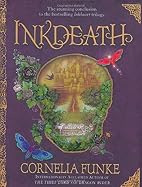
This is the third book in the Inkheart trilogy, featuring people who can read themselves and others into or out of books, including the fictional fantasy world of Inkheart.
It's an enjoyable series, overall, with the kind of writing that's primarily aimed at young people but is sophisticated enough to be satisfying for adults. It's all rather charmingly meta, not to mention carefully calculated to appeal to those of us with bookish souls. And it's a pretty good fantasy story, too. But... Well, it has one major flaw, and that's that it's too darned long, much longer that it really ought to be. This final volume is the worst offender on that score, at nearly 700 pages, leaving me far too often feeling torn between enjoying the story and running out of patience with it.
Rating: This is difficult, because there is definitely a four-star story here, but I feel like I'm just going to have to dock it half a star for dragging along too slowly. So, 3.5/5.
1. Inkdeath by Cornelia Funke
This is the third book in the Inkheart trilogy, featuring people who can read themselves and others into or out of books, including the fictional fantasy world of Inkheart.
It's an enjoyable series, overall, with the kind of writing that's primarily aimed at young people but is sophisticated enough to be satisfying for adults. It's all rather charmingly meta, not to mention carefully calculated to appeal to those of us with bookish souls. And it's a pretty good fantasy story, too. But... Well, it has one major flaw, and that's that it's too darned long, much longer that it really ought to be. This final volume is the worst offender on that score, at nearly 700 pages, leaving me far too often feeling torn between enjoying the story and running out of patience with it.
Rating: This is difficult, because there is definitely a four-star story here, but I feel like I'm just going to have to dock it half a star for dragging along too slowly. So, 3.5/5.
5valkyrdeath
Just stopping by on my rounds to start following the 2019 threads. I'll be looking forward to following your reading again this year despite the amount I'm sure it'll expand my "to read" list!
6bragan
>5 valkyrdeath: Hello! I'll try to read lots of interesting things, just for you. :)
7bragan
2. A Man of Shadows by Jeff Noon
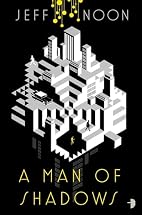
This odd, fascinating novel has a lot of the standard setup of a noirish detective story: a burned-out private eye takes on the case of a missing young woman and becomes entirely too invested in her for his own good. But nothing else about this story is standard. It's set in a bizarre city in a version of the 1950s that never was, a city half of which is constantly illuminated by a sky made of glaring light bulbs and half perpetually covered in artificial night. A city that is a jumble of shifting, fragmented time zones, where time itself behaves strangely.
None of this makes any real sense, even internal sense, except in a dreamlike sort of way that just gets more and more dreamlike as the novel progresses. But I'm amazed by how well it works. Jeff Noon does a great job of bringing this impossible world vividly to life, despite suffering from an annoying stylistic quirk that kept threatening to throw me out of the story. (Seriously, man, there is a reason why your English teachers tried to warn you about overusing the passive voice!)
Mind you, it's entirely possible that the reason it worked so well for me, and why I enjoyed it as much as I did, has a lot to do with my own relationship to time. I've worked rotating shifts for many, many years, and I know all too well the feeling of shifting constantly between time zones without really going anywhere, the feeling of living on a clock time different from that of those around you, the feeling of not being tied to the cycles of the sun. I also know the feeling -- the deeply surreal, disconnected, timeless feeling -- that comes when the clock inside your brain finally just gives up and stops completely. And this... Well, I think this basically is that feeling translated into book form.
Rating: 4/5, although I'm tempted to rate it half a star higher just for how powerful that sense of recognition was for me.
This odd, fascinating novel has a lot of the standard setup of a noirish detective story: a burned-out private eye takes on the case of a missing young woman and becomes entirely too invested in her for his own good. But nothing else about this story is standard. It's set in a bizarre city in a version of the 1950s that never was, a city half of which is constantly illuminated by a sky made of glaring light bulbs and half perpetually covered in artificial night. A city that is a jumble of shifting, fragmented time zones, where time itself behaves strangely.
None of this makes any real sense, even internal sense, except in a dreamlike sort of way that just gets more and more dreamlike as the novel progresses. But I'm amazed by how well it works. Jeff Noon does a great job of bringing this impossible world vividly to life, despite suffering from an annoying stylistic quirk that kept threatening to throw me out of the story. (Seriously, man, there is a reason why your English teachers tried to warn you about overusing the passive voice!)
Mind you, it's entirely possible that the reason it worked so well for me, and why I enjoyed it as much as I did, has a lot to do with my own relationship to time. I've worked rotating shifts for many, many years, and I know all too well the feeling of shifting constantly between time zones without really going anywhere, the feeling of living on a clock time different from that of those around you, the feeling of not being tied to the cycles of the sun. I also know the feeling -- the deeply surreal, disconnected, timeless feeling -- that comes when the clock inside your brain finally just gives up and stops completely. And this... Well, I think this basically is that feeling translated into book form.
Rating: 4/5, although I'm tempted to rate it half a star higher just for how powerful that sense of recognition was for me.
8dchaikin
Worried about your brain clock. I fear the book would just confuse me. I read something once on an author who spent a month on overseas cargo planes, hence never in a set time zone for any 24 hour period. I can’t remember where, anymore (was in John Krakauer? Not sure). Hopefully you’re better off than that.
9bragan
>8 dchaikin: Yes, better off than that, at least most of the time, because I'm generally spending a week, or at least a few days, in the same stationary time zone. But it's still decidedly bad for the health and not great for the psyche, either. The sacrifices I make for science...
10bragan
3. Calypso by David Sedaris

I have somewhat variable feelings about David Sedaris. Occasionally, I find him slightly annoying or silly. Often, I find him really astute and funny. There is a little bit of that first thing in here, including a piece about phrases he hates that kind of made me roll my eyes and some stuff about clothes shopping that feels just a little too "look how quirky I am!" But there's some of the second thing, too: a hilarious bit about cursing in various countries, for instance, and a painfully funny piece on Donald Trump.
Much of this collection, though, is something else entirely, a surprisingly effective blend of the irreverently humorous and the deeply poignant, as he talks about things like spending time at a beach house with his family shortly after his estranged sister's suicide, his relationship with his beloved mother that included never mentioning her alcoholism, and the worrying experience of watching his father age.
I may have laughed a number of times while reading it, but in the end I'm left feeling genuinely kind of sad. But the right kind of sad, I think.
Rating: 4/5

I have somewhat variable feelings about David Sedaris. Occasionally, I find him slightly annoying or silly. Often, I find him really astute and funny. There is a little bit of that first thing in here, including a piece about phrases he hates that kind of made me roll my eyes and some stuff about clothes shopping that feels just a little too "look how quirky I am!" But there's some of the second thing, too: a hilarious bit about cursing in various countries, for instance, and a painfully funny piece on Donald Trump.
Much of this collection, though, is something else entirely, a surprisingly effective blend of the irreverently humorous and the deeply poignant, as he talks about things like spending time at a beach house with his family shortly after his estranged sister's suicide, his relationship with his beloved mother that included never mentioning her alcoholism, and the worrying experience of watching his father age.
I may have laughed a number of times while reading it, but in the end I'm left feeling genuinely kind of sad. But the right kind of sad, I think.
Rating: 4/5
11Petroglyph
>10 bragan:
Nice review!
Nice review!
12bragan
>11 Petroglyph: Thank you!
13rhian_of_oz
>10 bragan: I like your review. My brief note about Calypso states "Another set of fun, funny and at times poignant stories". I mostly like David Sedaris but I remember after reading one of his books (possibly Barrel Fever) thinking that it was mean and nasty and not funny.
14avaland
Just checking in to see how your reading year has started off. The Jeff Noon sounds intriguing (I think I had a copy of his Automated Alice at one point...).
16AlisonY
I have a love / hate relationship with Sedaris. I agree his writing makes me laugh out loud at times which doesn't happen with too many books, but sometimes he's just too sardonic and wears me down.
17bragan
>13 rhian_of_oz: "Poignant" is definitely the best word for much of the stuff in Calypso. And, yeah, I think some of the stories in Barrel Fever are Sedaris at... Well, I don't want to say at his worst, I guess, but definitely at his most not-at-all-to-my-taste. From my review of it when I read it a few years ago: "The stories are mostly short character pieces about truly awful people, and tend to sit uncomfortably on the line between blackly humorous and simply unpleasant." I like blackly humorous, but way too many of them fell on the unpleasant side of that line for me.
>14 avaland: Hello! It's shaping up to be a pretty good reading year so far.
The only book I'd read by Jeff Noon was Vurt, sometime back in the 90s, and I vaguely remember thinking it seemed like it ought to be cool but mostly just finding it dull. So I'd probably have been unlikely to pick up another of his books on my own initiative, and I'd never even heard of A Man of Shadows. So I'm really grateful to my SantaThing Santa for picking it out for me, given how much I ended up enjoying it.
>15 dchaikin: It's much better than the wrong kind of sad! :)
>16 AlisonY: That describes my own reaction to Sedaris exactly.
>14 avaland: Hello! It's shaping up to be a pretty good reading year so far.
The only book I'd read by Jeff Noon was Vurt, sometime back in the 90s, and I vaguely remember thinking it seemed like it ought to be cool but mostly just finding it dull. So I'd probably have been unlikely to pick up another of his books on my own initiative, and I'd never even heard of A Man of Shadows. So I'm really grateful to my SantaThing Santa for picking it out for me, given how much I ended up enjoying it.
>15 dchaikin: It's much better than the wrong kind of sad! :)
>16 AlisonY: That describes my own reaction to Sedaris exactly.
18bragan
4. There but for the by Ali Smith
Between the main course and dessert of a dinner party at the fancy house of a couple he doesn't really know, a man goes upstairs, shuts himself into his hosts' spare room, and doesn't come out for months. But this novel isn't his story, exactly, even if he's in the center of it; it instead focuses on the stories of four people who have only slight acquaintances with him.
It's an interesting setup for a novel, structurally. And I'd heard a lot of praise for Ali Smith, so I went into this expecting, or at least wanting, to like it a lot. But I have to say, by and large it kind of left me cold. It's not that there isn't good stuff in it. There are certainly moments of interesting characterization or insight, some good turns of phrase and moments of humor (although the dinner party itself was a little too cringe-comedy for my tastes). But on the whole it just feels too self-consciously clever. (It even gets a bit meta, I think, about how self-consciously clever it is, which didn't help me feel any better about it.)
I'm wondering now if I didn't start with the right Ali Smith book, or if her writing maybe just isn't quite for me.
Rating: 3.5/5
Between the main course and dessert of a dinner party at the fancy house of a couple he doesn't really know, a man goes upstairs, shuts himself into his hosts' spare room, and doesn't come out for months. But this novel isn't his story, exactly, even if he's in the center of it; it instead focuses on the stories of four people who have only slight acquaintances with him.
It's an interesting setup for a novel, structurally. And I'd heard a lot of praise for Ali Smith, so I went into this expecting, or at least wanting, to like it a lot. But I have to say, by and large it kind of left me cold. It's not that there isn't good stuff in it. There are certainly moments of interesting characterization or insight, some good turns of phrase and moments of humor (although the dinner party itself was a little too cringe-comedy for my tastes). But on the whole it just feels too self-consciously clever. (It even gets a bit meta, I think, about how self-consciously clever it is, which didn't help me feel any better about it.)
I'm wondering now if I didn't start with the right Ali Smith book, or if her writing maybe just isn't quite for me.
Rating: 3.5/5
19.Monkey.
>18 bragan: Very interesting review, and I'm always glad to see a little less enthusiastic reviews of books that get such heaps of praise, provides a bit of balance and all. I will very likely still get around to it myself someday, but feel a little less bad that it won't likely be for years, lol.
20bragan
>19 .Monkey.: It really is one of those books where I can see there's a certian kind of skill in it, but it's just that the things it's doing don't consistently work for me. Which is no doubt at least partly a matter of taste, so you might like it a lot better when you get to it.
Mind you, I now maybe feel less guilty, myself, for taking years to get to it. :)
Mind you, I now maybe feel less guilty, myself, for taking years to get to it. :)
21dchaikin
wondering what the right Ali Smith book is to start with, myself. (Thinking of going with Autumn as an audiobook.)
22bragan
>21 dchaikin: I certainly have heard a lot of praise for Autumn.
23valkyrdeath
>7 bragan: I'm not particularly familiar with Jeff Noon, but the strangeness with time appeals to me with this one. I might have to give it a go. Definitely one I'll be considering.
>18 bragan: I've not yet got to that book, though I do love Ali Smith. On the other hand, I can also see that her writing is something that isn't going to be for everyone. I've read other authors with writing styles that I've not liked at all but other people loved, (I found Toni Morrison virtually unreadable though I can't work out why) so it's certainly a matter of taste. I'm hoping to get to this one this year, but from the other books I've read she does seem to have a particular style throughout her books.
>18 bragan: I've not yet got to that book, though I do love Ali Smith. On the other hand, I can also see that her writing is something that isn't going to be for everyone. I've read other authors with writing styles that I've not liked at all but other people loved, (I found Toni Morrison virtually unreadable though I can't work out why) so it's certainly a matter of taste. I'm hoping to get to this one this year, but from the other books I've read she does seem to have a particular style throughout her books.
24bragan
>23 valkyrdeath: If the Jeff Noon sounds appealing to you in its strangeness, I'd say it's worth a read. It's definitely not one for everybody, either, but I think you might like it.
I will admit, I've been second-guessing myself a bit with the Ali Smith, wondering if I'd been in a different mood while reading it, or if I'd had clearer expectations going in, whether I'd have liked it more. So I might give her another try sometime, even if her other books have the same kind of style. I'm not at all sure, though. It really might just be one of those hard-to-explain reader/writer mismatches.
I will admit, I've been second-guessing myself a bit with the Ali Smith, wondering if I'd been in a different mood while reading it, or if I'd had clearer expectations going in, whether I'd have liked it more. So I might give her another try sometime, even if her other books have the same kind of style. I'm not at all sure, though. It really might just be one of those hard-to-explain reader/writer mismatches.
25avaland
>18 bragan: Interesting discussion following your Ali Smith review. I read some of her early books and liked them well enough, and have been given some of the newer books but have not picked them up. Considering the hundreds of authors out there to choose from, I don't feel guilty (well, maybe a little guilty as they were gifts). Don't second guess yourself and move on :-) How boring would Club Read be if we all just read and liked the same books, eh?
26thorold
My choice of Ali Smith novel for a newcomer would be the irresistible How to be both. But Autumn probably works well too.
But you could make a good case for The girls of slender means, since there’s so much of Smith’s way of seeing the world that has its roots in Muriel Spark...
But you could make a good case for The girls of slender means, since there’s so much of Smith’s way of seeing the world that has its roots in Muriel Spark...
27dchaikin
>26 thorold: I picked up Autumn from the library yesterday. It's not very long. I'm might try How to Be Both on audio, seeing your post. (Autumn is kind of short to use a credit on - will only last me a week of commutes. A credit needs to last me a month...kinda/sorta)
28Petroglyph
>18 bragan: (and following messages re: Ali Smith)
The only Ali Smith I have is There but for the, since it was a recommendation by a colleague. So that is the one I'll be reading first by her. Curiously, you review might have bumped it higher up the ladder: I kind of want to know whether I, too, think it insufferable. Cheers for that!
The only Ali Smith I have is There but for the, since it was a recommendation by a colleague. So that is the one I'll be reading first by her. Curiously, you review might have bumped it higher up the ladder: I kind of want to know whether I, too, think it insufferable. Cheers for that!
29bragan
>25 avaland: True, and good point! I'm always sad when other people enjoy things more than I do, though. I want to enjoy them, too! :)
>26 thorold: I've never read any Muriel Spark, either. I'm not sure if that comment moves me towards or away from wanting to.
>28 Petroglyph: I'll be interested to see what you think! Who knows, you might love it. And I wouldn't remotely say I found it insufferable, anyway. It was entirely sufferable, it just mostly didn't connect with me at all the way I wanted it to. Although it is true that something clever that falls flat with you might be a special kind of irritating. Mildly so, in this case, but still.
>26 thorold: I've never read any Muriel Spark, either. I'm not sure if that comment moves me towards or away from wanting to.
>28 Petroglyph: I'll be interested to see what you think! Who knows, you might love it. And I wouldn't remotely say I found it insufferable, anyway. It was entirely sufferable, it just mostly didn't connect with me at all the way I wanted it to. Although it is true that something clever that falls flat with you might be a special kind of irritating. Mildly so, in this case, but still.
30lisapeet
Wow, I just checked my shelves and I have a ton of Ali Smith I haven't read: The Accidental, Hotel World, Autumn, Winter, and Public Library and Other Stories. I need to get cracking! I think I'll probably start with Autumn. I'm definitely a fan of Muriel Spark (and have a few of hers lying around unread or deserving a reread as well).
31bragan
>30 lisapeet: Checking the TBR shelves and realizing you have a tone of one author's stuff you still haven't read is far too familiar a feeling for me. :)
32bragan
5. The Iliad by Gareth Hinds
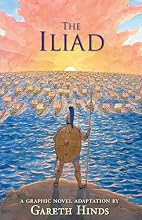
I recently read Madeline Miller's The Song of Achilles -- I haven't yet gotten to Circe -- and after I was done, I found myself thinking that it might be nice to go back and re-read The Iliad, or at least parts it, to compare it to the novel. Then I remembered how tedious I found much of the Iliad to get through and thought better of it. But shortly after that, I saw this graphic novel adaptation offered via Early Reviewers, and figured that might be a fun way to re-visit the story.
And I'm glad I did! It's a good adaptation, and those interminable battle scenes go by much faster in graphic format. Well, and also because Hinds did abridge and condense them quite a bit. But that aside, it's a very faithful adaptation, with both the battle action and the human parts of the story coming through well. The art is good, and Hinds has taken a lot of pains to make it easy to tell the various important characters apart, which I really appreciated. I am a little disappointed, though, by the fact that my advance copy is in black-and-white, when the finished version, so a sticker on the front tells me, will be in full color. I bet that will look really good, and it will almost certainly fix my only dissatisfaction with the art, which is that sometimes it's a little dark and hard to make out details. I'd like to see it!
Hinds also includes some notes. There are occasional footnotes, which I found a little distracting, but which do provide some useful clarifications and explanations of words and names and other things that need explaining outside the text. Then, at the end, there are a couple of pages on the importance and historical context of Homer, and about the adaptation and its historical accuracy and such. That's followed by some page-by-page annotations giving some bits of background and discussion what was left out of the adaptation and why. All of these notes are very readable and interesting, and make a nice supplement to the narrative.
Apparently Gareth Hinds has already done a graphic adaptation of The Odyssey. I think I might be interested in checking that out, too. Maybe after I read Circe...
Rating: 4/5
(Note: As mentioned above, this was a LibraryThing Early Reviewers book.)
I recently read Madeline Miller's The Song of Achilles -- I haven't yet gotten to Circe -- and after I was done, I found myself thinking that it might be nice to go back and re-read The Iliad, or at least parts it, to compare it to the novel. Then I remembered how tedious I found much of the Iliad to get through and thought better of it. But shortly after that, I saw this graphic novel adaptation offered via Early Reviewers, and figured that might be a fun way to re-visit the story.
And I'm glad I did! It's a good adaptation, and those interminable battle scenes go by much faster in graphic format. Well, and also because Hinds did abridge and condense them quite a bit. But that aside, it's a very faithful adaptation, with both the battle action and the human parts of the story coming through well. The art is good, and Hinds has taken a lot of pains to make it easy to tell the various important characters apart, which I really appreciated. I am a little disappointed, though, by the fact that my advance copy is in black-and-white, when the finished version, so a sticker on the front tells me, will be in full color. I bet that will look really good, and it will almost certainly fix my only dissatisfaction with the art, which is that sometimes it's a little dark and hard to make out details. I'd like to see it!
Hinds also includes some notes. There are occasional footnotes, which I found a little distracting, but which do provide some useful clarifications and explanations of words and names and other things that need explaining outside the text. Then, at the end, there are a couple of pages on the importance and historical context of Homer, and about the adaptation and its historical accuracy and such. That's followed by some page-by-page annotations giving some bits of background and discussion what was left out of the adaptation and why. All of these notes are very readable and interesting, and make a nice supplement to the narrative.
Apparently Gareth Hinds has already done a graphic adaptation of The Odyssey. I think I might be interested in checking that out, too. Maybe after I read Circe...
Rating: 4/5
(Note: As mentioned above, this was a LibraryThing Early Reviewers book.)
33AlisonY
Just joining in on the Ali Smith discussion, the only book of hers I've tried to read is The Accidental and I couldn't get past the first few pages. It was a good few years ago, and I've noticed how so many people in CR have loved Autumn, etc., so I keep meaning to go back and try it again, but I must admit I'm still a but reluctant.
34dchaikin
>32 bragan: hmm. Noting
35bragan
>32 bragan: Well, it's kind of nice to know I'm not the only one who didn't get a top-notch first impression of Ali Smith, I guess.
36bragan
6. The Skeptics' Guide to the Universe: How to Know What's Really Real in a World Increasingly Full of Fake by Dr. Steven Novella, with Bob Novella, Cara Santa Maria, Jay Novella, & Evan Bernstein
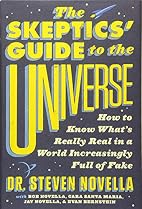
The Skeptics' Guide to the Universe is an entertaining, interesting, and useful podcast about science and scientific skepticism (and also nerdy sci-fi references), and it's one I've enjoyed listening to for years. So I was happy to pick up this volume that marks "the skeptical rogues'" first foray into print.
I will say, I don't think the book is quite as fun as the podcast. There are plenty of little humorous asides and some personal anecdotes, but it's not nearly as lively. Which probably makes sense. It covers a lot of ground, and has to deal with a lot of complicated concepts carefully but concisely. It's hard to do that without being at least a little drier than the generally very breezily informal podcast.
Much of the book focuses on ways in which humans can go wrong when it comes to figuring out what's true, including cognitive biases and logical fallacies. It also talks about various specific pseudosciences and what makes them unscientific, discusses problems with science reporting and how to skeptically approach things you read online, and showcases the darker side of pseudoscience and why putting one's faith in the wrong things can be dangerous and even deadly.
I'm not sure if this is the very best book for someone to whom these concepts are totally new, as it's possible it might all be a little overwhelming, at least for some readers. And I'm not sure how necessary it is for the kind of person who's spent years listening to skeptical podcasts and reading similar books, since at some point you probably already know most of this stuff, even if it's a very good thing to be reminded of some of it. But I think it is absolutely ideal as a handbook for people who have decided they want to become good critical thinkers but are still figuring out what that means and how to develop and apply those skills. I particularly appreciate the way Novella emphasizes that the most important thing about understanding cognitive biases and logical fallacies is to use them to scrutinize and improve your own thinking, not to deploy them as gotchas to win an argument. (Indeed, as he points out, to declare "you just used a logical fallacy, therefore your entire argument is wrong" is in itself a logical fallacy!) It's a very well-taken piece of advice from someone who knows what he's talking about. Not that you should take his word for things, of course.
Rating: 4/5
The Skeptics' Guide to the Universe is an entertaining, interesting, and useful podcast about science and scientific skepticism (and also nerdy sci-fi references), and it's one I've enjoyed listening to for years. So I was happy to pick up this volume that marks "the skeptical rogues'" first foray into print.
I will say, I don't think the book is quite as fun as the podcast. There are plenty of little humorous asides and some personal anecdotes, but it's not nearly as lively. Which probably makes sense. It covers a lot of ground, and has to deal with a lot of complicated concepts carefully but concisely. It's hard to do that without being at least a little drier than the generally very breezily informal podcast.
Much of the book focuses on ways in which humans can go wrong when it comes to figuring out what's true, including cognitive biases and logical fallacies. It also talks about various specific pseudosciences and what makes them unscientific, discusses problems with science reporting and how to skeptically approach things you read online, and showcases the darker side of pseudoscience and why putting one's faith in the wrong things can be dangerous and even deadly.
I'm not sure if this is the very best book for someone to whom these concepts are totally new, as it's possible it might all be a little overwhelming, at least for some readers. And I'm not sure how necessary it is for the kind of person who's spent years listening to skeptical podcasts and reading similar books, since at some point you probably already know most of this stuff, even if it's a very good thing to be reminded of some of it. But I think it is absolutely ideal as a handbook for people who have decided they want to become good critical thinkers but are still figuring out what that means and how to develop and apply those skills. I particularly appreciate the way Novella emphasizes that the most important thing about understanding cognitive biases and logical fallacies is to use them to scrutinize and improve your own thinking, not to deploy them as gotchas to win an argument. (Indeed, as he points out, to declare "you just used a logical fallacy, therefore your entire argument is wrong" is in itself a logical fallacy!) It's a very well-taken piece of advice from someone who knows what he's talking about. Not that you should take his word for things, of course.
Rating: 4/5
37dchaikin
>36 bragan: sounds like a book I could use...or a podcast.
38valkyrdeath
>36 bragan: This sounds like something I would like. I'm not sure it's a book I need to read but I do enjoy reading something along those lines every so often.
39bragan
>37 dchaikin: The podcast is a lot of fun. It's kind of long, though -- usually something like an hour and a half -- which makes it a little challenging to keep up with. I think I'm two weeks behind right now.
>38 valkyrdeath: I think it's less enjoyable than some telling-me-things-I-already-know skeptical books, and more so than others. But probably worth a look if you're into this sort of thing.
>38 valkyrdeath: I think it's less enjoyable than some telling-me-things-I-already-know skeptical books, and more so than others. But probably worth a look if you're into this sort of thing.
40bragan
7. Arrival by Ted Chiang
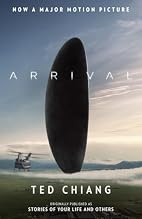
This story collection was originally published under the title Stories of Your Life and Others, but that was changed after the movie based on "Story of Your Life" came out. Which seems like something of a pity, as I think the original title is a lot better, but, hey, Hollywood sells books. (Somewhat more amusing is the still from the movie on the cover of the edition I have, depicting a spaceship that appears nowhere in the actual story.)
Anyway. There are eight stories in here, and the commonality between all of them seems to be Ted Chiang taking a strange, impossible, unlikely, or discredited idea (or, in some cases, several of them at once), asking "what if this were really true?" and exploring the results in fascinating detail, often while taking them to the furthest logical extreme. What if the cosmology envisioned by the people who wrote the Old Testament was accurate and something like the tower of Babel could literally reach the heavens? What if human intelligence could be augmented without bounds? What if ancient ideas about reproduction like the homunculus theory and spontaneous generation were true (and also golems)?
What Chiang gets out of these intellectual exercises is always fascinating, smart, thought-provoking, and really, really cool.
I even feel like I have better appreciation for the movie Arrival now. Before, my attitude was basically, "Well, this is an interesting and well-done movie, but I feel like I ought to be disturbed by the way it takes an idea in linguistics that was so extreme that modern linguists mostly seem embarrassed that anyone ever took it seriously, and not only accepts it, but makes it even more ridiculously extreme and adds in some dubious physics, as well." But watching someone deliberately playing yes-but-what-if? with a wrong idea is way more interesting and fun than if they just don't know or care that it's wrong, so I was delighted to realize that's basically what Chiang was doing.
Bottom line: this is a book full of great stories, and I thoroughly enjoyed it.
Rating: 4.5/5
This story collection was originally published under the title Stories of Your Life and Others, but that was changed after the movie based on "Story of Your Life" came out. Which seems like something of a pity, as I think the original title is a lot better, but, hey, Hollywood sells books. (Somewhat more amusing is the still from the movie on the cover of the edition I have, depicting a spaceship that appears nowhere in the actual story.)
Anyway. There are eight stories in here, and the commonality between all of them seems to be Ted Chiang taking a strange, impossible, unlikely, or discredited idea (or, in some cases, several of them at once), asking "what if this were really true?" and exploring the results in fascinating detail, often while taking them to the furthest logical extreme. What if the cosmology envisioned by the people who wrote the Old Testament was accurate and something like the tower of Babel could literally reach the heavens? What if human intelligence could be augmented without bounds? What if ancient ideas about reproduction like the homunculus theory and spontaneous generation were true (and also golems)?
What Chiang gets out of these intellectual exercises is always fascinating, smart, thought-provoking, and really, really cool.
I even feel like I have better appreciation for the movie Arrival now. Before, my attitude was basically, "Well, this is an interesting and well-done movie, but I feel like I ought to be disturbed by the way it takes an idea in linguistics that was so extreme that modern linguists mostly seem embarrassed that anyone ever took it seriously, and not only accepts it, but makes it even more ridiculously extreme and adds in some dubious physics, as well." But watching someone deliberately playing yes-but-what-if? with a wrong idea is way more interesting and fun than if they just don't know or care that it's wrong, so I was delighted to realize that's basically what Chiang was doing.
Bottom line: this is a book full of great stories, and I thoroughly enjoyed it.
Rating: 4.5/5
41valkyrdeath
>40 bragan: I've had this for a while and still haven't got to it, but I've loved every story I've read by Chiang. It was interesting to read your perspective on the common themes of the stories since it's something I'd never picked up on. I wonder if that theme continues for the other few stories he's written. I'm going to be thinking about it when I read them.
42bragan
>41 valkyrdeath: It's not a common theme that I expected, but it's one that hit me suddenly as being very, very obvious partway through the collection, and it was a realization that made me strangely happy.
43lisapeet
>40 bragan: He's an author I really want to try. I have a galley of his newest book, but am wondering if I shouldn't start with the one you read.
44bragan
>43 lisapeet: Oh, he has a new one coming out? Color me interested. He's definitely someone I want to read more of.
45dukedom_enough
>40 bragan: >41 valkyrdeath: >43 lisapeet:
Ted Chiang basically owned the 1990s in SF short fiction, and rightly so. Somewhere Charles Stross has written that, in any year in which Chiang had a story published, the other short-tiction writers might as well have given up on hopes for awards. One of my fellow Readercon committee members commented (OK, hyperbolically) that she thought of Chiang as an angel sent to save us. I don't hear as much about him in recent years. Maybe the new collection will change that.
Ted Chiang basically owned the 1990s in SF short fiction, and rightly so. Somewhere Charles Stross has written that, in any year in which Chiang had a story published, the other short-tiction writers might as well have given up on hopes for awards. One of my fellow Readercon committee members commented (OK, hyperbolically) that she thought of Chiang as an angel sent to save us. I don't hear as much about him in recent years. Maybe the new collection will change that.
46lisapeet
>44 bragan: It's called Exhalation, coming out from Knopf in May.
47bragan
>45 dukedom_enough: I don't know about a savior angel (especially not having read his take on angels, which does not depict them as entities I'd want to be compared to!), but, boy, did this collection hit me like a breath of fresh air.
The only one of the stories I'd read before was "The Tower of Babylon," which was in an anthology called (rather ridiculously) The Mammoth Book of Extreme Fantasy. I recall liking that volume overall, but that was the only story from it that has really stuck with me. Anyway, the editor of that anthology described it as consisting of stories where the author took a fantastic idea and then tried to see how far they could push it. It occurs to me that every single one of Chiang's stories in Arrival could have qualified. I am very impressed by his ability to consistently pull that off.
>46 lisapeet: I have already tracked it down and added it to the wishlist. Thanks!
The only one of the stories I'd read before was "The Tower of Babylon," which was in an anthology called (rather ridiculously) The Mammoth Book of Extreme Fantasy. I recall liking that volume overall, but that was the only story from it that has really stuck with me. Anyway, the editor of that anthology described it as consisting of stories where the author took a fantastic idea and then tried to see how far they could push it. It occurs to me that every single one of Chiang's stories in Arrival could have qualified. I am very impressed by his ability to consistently pull that off.
>46 lisapeet: I have already tracked it down and added it to the wishlist. Thanks!
48dukedom_enough
>47 bragan: Right, you don't want to meet one of Chiang's angels.
49bragan
8. Goodbye, Vitamin by Rachel Khong

Ruth comes home to spend Christmas with her parents and ends up agreeing to stay for a year to help out with her father as he experiences growing symptoms of dementia. While there, she tries to get over a bad breakup, and learns some things about her parents' marriage.
Despite some heavy subject matter, this is a very light-feeling, very quick-reading novel. A little too much so for me, to be honest. And it's written in a disjointed, causal style full of random thoughts that pop into the main character's head, which is something that often works well for me, but seemed kind of unsatisfying here. It's not bad. Occasionally it's quite charming, and there are moments of poignancy toward the end. But it did leave me kind of wishing I'd just read something with a little more heft.
Rating: 3.5/5

Ruth comes home to spend Christmas with her parents and ends up agreeing to stay for a year to help out with her father as he experiences growing symptoms of dementia. While there, she tries to get over a bad breakup, and learns some things about her parents' marriage.
Despite some heavy subject matter, this is a very light-feeling, very quick-reading novel. A little too much so for me, to be honest. And it's written in a disjointed, causal style full of random thoughts that pop into the main character's head, which is something that often works well for me, but seemed kind of unsatisfying here. It's not bad. Occasionally it's quite charming, and there are moments of poignancy toward the end. But it did leave me kind of wishing I'd just read something with a little more heft.
Rating: 3.5/5
50bragan
9. The Skeleton Crew: How Amateur Sleuths are Solving America's Coldest Cases by Deborah Halber
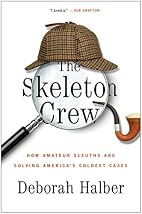
There is, it turns out, an entire subculture of people on the internet obsessed with cold case crimes in which the bodies were never identified, often people who themselves have had family members disappear. They've even had some real successes at solving some of these old cases, which is maybe less surprising when you realize how disorganized law enforcement can be when it comes to coordinating missing persons reports with records of unidentified bodies.
It's a really interesting (if very, very gruesome) topic, but, honestly, I found this book disappointing. Halber's prose is vivid enough, but the structure of her writing is terrible, jumping around from topic to topic and presenting events out of order in a way that I found deeply frustrating, making what should have been a fascinating account more annoying than compelling.
Rating: I did learn some interesting things, and I suspect that on a less distracting week I'd have had more patience with it, so I'm going to give it 3/5, but I really do kind of want to rate it lower.
There is, it turns out, an entire subculture of people on the internet obsessed with cold case crimes in which the bodies were never identified, often people who themselves have had family members disappear. They've even had some real successes at solving some of these old cases, which is maybe less surprising when you realize how disorganized law enforcement can be when it comes to coordinating missing persons reports with records of unidentified bodies.
It's a really interesting (if very, very gruesome) topic, but, honestly, I found this book disappointing. Halber's prose is vivid enough, but the structure of her writing is terrible, jumping around from topic to topic and presenting events out of order in a way that I found deeply frustrating, making what should have been a fascinating account more annoying than compelling.
Rating: I did learn some interesting things, and I suspect that on a less distracting week I'd have had more patience with it, so I'm going to give it 3/5, but I really do kind of want to rate it lower.
51Petroglyph
>50 bragan:
It sucks when a book with such a promising pitch ends up a disappointment. I know that I at lease would want to read something better about the same topic, else it would continue to nag at me (waste of money, waste of time).
It sucks when a book with such a promising pitch ends up a disappointment. I know that I at lease would want to read something better about the same topic, else it would continue to nag at me (waste of money, waste of time).
52bragan
>51 Petroglyph: I have no idea if there even are other books about the same topic!
But, yeah, always a disappointment. Sigh.
But, yeah, always a disappointment. Sigh.
53bragan
10. Brown Girl in the Ring by Nalo Hopkinson
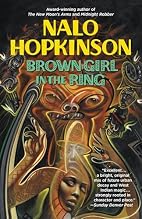
The tale of a Carribean healer-woman, her granddaughter, and a gangster who maintains his power with the help of a hungry spirit, set in the decaying remains of an inner-city Toronto that's been cut off from the suburban world outside it.
And an enjoyable tale it was. The West Indian magic and traditions were fascinating and vividly rendered, the main character was believable, and the plot engaging. There's also a lovely sense of humanity underlying it all. I may have to check out more by this author.
Rating: 4/5
The tale of a Carribean healer-woman, her granddaughter, and a gangster who maintains his power with the help of a hungry spirit, set in the decaying remains of an inner-city Toronto that's been cut off from the suburban world outside it.
And an enjoyable tale it was. The West Indian magic and traditions were fascinating and vividly rendered, the main character was believable, and the plot engaging. There's also a lovely sense of humanity underlying it all. I may have to check out more by this author.
Rating: 4/5
54Petroglyph
>53 bragan:
That sounds like a fascinating read!
That sounds like a fascinating read!
55bragan
>54 Petroglyph: It certainly seemed to hit the spot for me, after a couple of not-quite-what-I-wanted books.
56bragan
11. The Magic Misfits by Neil Patrick Harris

A young street magician runs away from his con man uncle, attracts the attention of unscrupulous carnival folk, and makes a bunch of new friends.
It's an okay but pretty forgettable kids' book. I do imagine that as a kid I would have enjoyed the simple magic tricks and hidden message puzzles it includes, though.
Rating: 3/5

A young street magician runs away from his con man uncle, attracts the attention of unscrupulous carnival folk, and makes a bunch of new friends.
It's an okay but pretty forgettable kids' book. I do imagine that as a kid I would have enjoyed the simple magic tricks and hidden message puzzles it includes, though.
Rating: 3/5
57bragan
12. The Shelf: From LEQ to LES: Adventures in Extreme Reading by Phyllis Rose
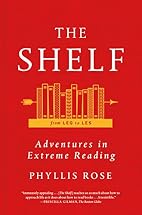
Phyllis Rose, a literary critic, found herself thinking about how many books -- surely including many very good books -- are never paid any attention by critics and are unfairly doomed to obscurity. Almost on a whim, she decided on a project to explore this wider world of literature, at least a little bit: she chose a single shelf from a library and (mostly) read every book on that shelf, no matter what it was. (It's worth noting that the library was a private lending library, and the shelf was carefully chosen, so this isn't a scientific random sampling or anything, but that's not really the point.) She ended up reading an interesting variety of fiction, some more obscure than others, from an 18th century picaresque tome to contemporary women's fiction.
This sounds very much like the sort of thing that's likely to appeal to me, but I was still surprised by how much I enjoyed this book. Rose thinks very deeply about everything she reads, but the way she writes about those thoughts is wonderfully accessible. And she really goes above and beyond with this project, exploring the works she reads thoroughly, doing research on them, even sometimes contacting (and, in one case, striking up an odd friendship with) the authors. You'd think all of that might get a little tedious, actually, or that listening to someone talk about books you've never read (and, for the most part, have no desire to read) would get dull after a while, but it never does. I now sort of feel as if all these books are old friends of mine, and maybe Phyllis Rose is, too. The whole thing just made me one happy little book-lover.
Ratin: 4.5/5
Phyllis Rose, a literary critic, found herself thinking about how many books -- surely including many very good books -- are never paid any attention by critics and are unfairly doomed to obscurity. Almost on a whim, she decided on a project to explore this wider world of literature, at least a little bit: she chose a single shelf from a library and (mostly) read every book on that shelf, no matter what it was. (It's worth noting that the library was a private lending library, and the shelf was carefully chosen, so this isn't a scientific random sampling or anything, but that's not really the point.) She ended up reading an interesting variety of fiction, some more obscure than others, from an 18th century picaresque tome to contemporary women's fiction.
This sounds very much like the sort of thing that's likely to appeal to me, but I was still surprised by how much I enjoyed this book. Rose thinks very deeply about everything she reads, but the way she writes about those thoughts is wonderfully accessible. And she really goes above and beyond with this project, exploring the works she reads thoroughly, doing research on them, even sometimes contacting (and, in one case, striking up an odd friendship with) the authors. You'd think all of that might get a little tedious, actually, or that listening to someone talk about books you've never read (and, for the most part, have no desire to read) would get dull after a while, but it never does. I now sort of feel as if all these books are old friends of mine, and maybe Phyllis Rose is, too. The whole thing just made me one happy little book-lover.
Ratin: 4.5/5
58AlisonY
>57 bragan: hmmm - sounds like an interesting read. Must look out for that title.
59baswood
>57 bragan: Thats just the sort of Project that I could find myself getting involved in. I think I did it once but a long time ago, probably easier now that there is so much more information to hand even on some of the most obscure authors.
60bragan
>59 baswood: It's the sort of thing I might fantasize about doing, but know I would never actually commit myself to. So it was very nice that someone else did it for me.
61dchaikin
>59 baswood:, >60 bragan: seriously considering something like this is a real danger of spending time in a library. Somehow it doesn’t work, in practice, with my own shelves.
Enjoyed your review, Betty.
Enjoyed your review, Betty.
62bragan
>61 dchaikin: I actually went and stared at my own TBR shelves for a while and imagined reading from one particular shelf, and that did not seem like something that would work at all.
63auntmarge64
>57 bragan: Sounds like something I'd like to think I'd actually do.
But one thing I've always worried about is the randomness of books placed on the bottom shelf or two in libraries. They don't move around from year to year much, unless there's a major weeding or the entire collection is shifted to different size shelving, so once there they are doomed to being weeded themselves sooner than they might be because of disuse. This is especially true of books that don't get requested and rely on serendipity for an audience. Kind of sad.
But one thing I've always worried about is the randomness of books placed on the bottom shelf or two in libraries. They don't move around from year to year much, unless there's a major weeding or the entire collection is shifted to different size shelving, so once there they are doomed to being weeded themselves sooner than they might be because of disuse. This is especially true of books that don't get requested and rely on serendipity for an audience. Kind of sad.
64japaul22
>57 bragan: Oh, I love that idea. I'm so tempted to pick a bottom shelf at the library and try this!
65bragan
>63 auntmarge64: That is a terribly sad thought! Although even Rose's shelf fluctuated a bit while she was in the middle of the reading project, due to normal weeding and acquisitions and reshelving, so I suppose there's at least a little hope for them to move to a better spot.
Mind you, books being on the bottom shelf never stopped me from squatting down and looking at them, but I can see where it might be an obstacle to others.
>64 japaul22: Well, if you do, you must report back! :)
Mind you, books being on the bottom shelf never stopped me from squatting down and looking at them, but I can see where it might be an obstacle to others.
>64 japaul22: Well, if you do, you must report back! :)
66lisapeet
>57 bragan: Happy memories of just pulling stuff of the library shelves as a kid with zero expectations or context... Choosing books is such a different thing now.
67bragan
>66 lisapeet: I know! Every once in a great while, I'll go to a bookstore and try to re-create that experience, sort of, and that's fun, but never exactly the same.
68bragan
13. The Oracle Year by Charles Soule

Small-time musician Will Dando wakes up one day with 108 predictions of the future inexplicably in his head and quickly discovers that all of them are coming true, even the ones that he tries to prevent. With the help of a business-savvy friend, he soon makes a lot of cash selling information about the future, but then events set in motion by the predictions begin to spiral off in directions he never could have predicted.
It's funny. Almost the entire time I was reading this book, I was thinking of things to be critical of. The writing is unexceptional and a little too full of "As you know, Bob" dialog. Tons of ridiculous stuff happens, and I'm genuinely not sure whether it's meant to be satirical or we're meant to take it all seriously. Soule is primarily a writer of comics, apparently, and he may just be bringing some of the slightly over-the-top, larger-than-life sensibilities of superhero comics to the story, but they may not work quite as well here as in the comics.
And, above and beyond all of that, the story touches on all kinds of potentially really interesting philosophical territory involving free will, the nature of time, and the interconnectedness of things in ways that seem like they could have provided good fodder for a much more serious, more meaty, more grounded story than this. Sure, it's fun, I thought to myself, but maybe it's a waste to use a setup like this one on something that feels... well, a little bit silly.
But you know what? The truth is, this is fun. It was a really fast, entertaining read with a good premise, and, having shut the book on the last page, I find myself wanting to wave away all those criticisms and just think about how much I enjoyed it. The fact that it avoided giving us the ending I was dreading, in which all is explained and the explanation is stupid, helped with that, too. Plus, I give Soule extra points for giving us some elderly women as significant, competent characters in roles that you never get to see old ladies in. (Old men, yes. Young and beautiful women, yes. But never old ladies. And there really should be more awesome old ladies in fiction.)
Rating: What the heck. I'm going to go with my gut instead of my brain and give this a 4/5. Shut up, brain.

Small-time musician Will Dando wakes up one day with 108 predictions of the future inexplicably in his head and quickly discovers that all of them are coming true, even the ones that he tries to prevent. With the help of a business-savvy friend, he soon makes a lot of cash selling information about the future, but then events set in motion by the predictions begin to spiral off in directions he never could have predicted.
It's funny. Almost the entire time I was reading this book, I was thinking of things to be critical of. The writing is unexceptional and a little too full of "As you know, Bob" dialog. Tons of ridiculous stuff happens, and I'm genuinely not sure whether it's meant to be satirical or we're meant to take it all seriously. Soule is primarily a writer of comics, apparently, and he may just be bringing some of the slightly over-the-top, larger-than-life sensibilities of superhero comics to the story, but they may not work quite as well here as in the comics.
And, above and beyond all of that, the story touches on all kinds of potentially really interesting philosophical territory involving free will, the nature of time, and the interconnectedness of things in ways that seem like they could have provided good fodder for a much more serious, more meaty, more grounded story than this. Sure, it's fun, I thought to myself, but maybe it's a waste to use a setup like this one on something that feels... well, a little bit silly.
But you know what? The truth is, this is fun. It was a really fast, entertaining read with a good premise, and, having shut the book on the last page, I find myself wanting to wave away all those criticisms and just think about how much I enjoyed it. The fact that it avoided giving us the ending I was dreading, in which all is explained and the explanation is stupid, helped with that, too. Plus, I give Soule extra points for giving us some elderly women as significant, competent characters in roles that you never get to see old ladies in. (Old men, yes. Young and beautiful women, yes. But never old ladies. And there really should be more awesome old ladies in fiction.)
Rating: What the heck. I'm going to go with my gut instead of my brain and give this a 4/5. Shut up, brain.
69rhian_of_oz
>68 bragan: I *love* this review. "Shut up, brain" :-D.
70bragan
>69 rhian_of_oz: Sometimes, you just gotta tell your brain where to get off. :)
71OscarWilde87
Your thread is intriguing as always! Some really interesting reads here. I'm a little late to the group in 2019 but dropping my star here now.
72bragan
>71 OscarWilde87: Thanks and hello!
73valkyrdeath
>68 bragan: You've definitely made this one sound fun. If it's enjoyable to read then that's the most important thing!
74Yells
>57 bragan: Cool! I just bought a copy of that one.
75bragan
>73 valkyrdeath: If it's more fun that it seems like it ought to be, well, that's certainly better than the reverse, right?
>74 Yells: Hope you enjoy it too!
>74 Yells: Hope you enjoy it too!
76janeajones
Love your review of Oracle Year. Enjoyment of a book should be the ultimate goal. Begone brain!
77bragan
>76 janeajones: There were points where my brain was maybe keeping me from enjoying it as much as I might have, but in the end, it was entertaining, so I won and my brain lost. Or, really, maybe we both won. :)
78dchaikin
>68 bragan: fun review, and great concept. And my brain needs a mute button, too.
79bragan
>78 dchaikin: I think all our brains need one of those, at some point or another.
80bragan
14. The City of Mirrors by Justin Cronin
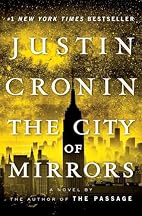
This is the third book in Justin Cronin's Passage trilogy. I read the first two a while back, and, I'm sorry to say, I was not impressed with them. I only finished the series, finally, out of some stubborn sense of completism, which is really not a very good reason to read a 600 page book. But I figured, hey, maybe he'd saved the best for last and would pull off a really engaging conclusion.
No such luck. I knew I was in trouble when, after about 80 pages in which not a whole lot happens, we then drop even that much of the story to spend fully a hundred pages on a detailed history of the bad guy's college days and unconvincing tragic love story. Which is clearly meant to make him seem more well-rounded and human, and even somewhat sympathetic, but as far as I'm concerned, it succeeds on that first thing only in as far as it makes him at least slightly less of a non-entity, and fails spectacularly on the second.
Honestly, I think the problem with these books is that Cronin is trying very hard to write something that is simultaneously character-based literary fiction and an apocalyptic action/horror story, and in trying to do both at once, he ends up doing neither well. Which isn't to say it can't be done. It certainly can, but it's hard, and Cronin does not pull it off. What makes this even more frustrating is that, while this was never going to be good litfic, it had the potential to be a decent apocalyptic action/horror story, if it weren't so thoroughly bogged down with things like 100-page flashbacks to make sure we know important details like what kind of sandwich the villain's mother packed for him on his first day of college.
As it is, well, this is just going to have to remain one of those works whose popularity is truly inexplicable to me.
Rating: 2.5/5
This is the third book in Justin Cronin's Passage trilogy. I read the first two a while back, and, I'm sorry to say, I was not impressed with them. I only finished the series, finally, out of some stubborn sense of completism, which is really not a very good reason to read a 600 page book. But I figured, hey, maybe he'd saved the best for last and would pull off a really engaging conclusion.
No such luck. I knew I was in trouble when, after about 80 pages in which not a whole lot happens, we then drop even that much of the story to spend fully a hundred pages on a detailed history of the bad guy's college days and unconvincing tragic love story. Which is clearly meant to make him seem more well-rounded and human, and even somewhat sympathetic, but as far as I'm concerned, it succeeds on that first thing only in as far as it makes him at least slightly less of a non-entity, and fails spectacularly on the second.
Honestly, I think the problem with these books is that Cronin is trying very hard to write something that is simultaneously character-based literary fiction and an apocalyptic action/horror story, and in trying to do both at once, he ends up doing neither well. Which isn't to say it can't be done. It certainly can, but it's hard, and Cronin does not pull it off. What makes this even more frustrating is that, while this was never going to be good litfic, it had the potential to be a decent apocalyptic action/horror story, if it weren't so thoroughly bogged down with things like 100-page flashbacks to make sure we know important details like what kind of sandwich the villain's mother packed for him on his first day of college.
As it is, well, this is just going to have to remain one of those works whose popularity is truly inexplicable to me.
Rating: 2.5/5
81RidgewayGirl
I read The Passage way back when it first came out and liked it well enough, but have never managed to pick up the next book. Thanks for letting me know that I'm not missing anything by stopping after the first book.
82bragan
>81 RidgewayGirl: Yeah, don't be like me and read the rest if the first one didn't grab you enough to make you immediately want to.
83bragan
15. The Museum of Words: A Memoir of Language, Writing, and Mortality by Georgia Blain
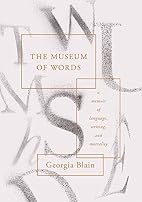
This memoir was written shortly before the author's death from a brain tumor, a tumor that not only took her life, but diminished her facility with words, a truly horrifying thing for someone whose passion and livelihood revolved around language, reading, and writing. At the same time, in a coincidence that she points out would never fly in fiction, a dear friend of hers, also a writer, was diagnosed with the same kind of tumor. Meanwhile, her mother, once an erudite author and well-regarded broadcaster, was descending into dementia, increasingly unable to communicate her own disordered thoughts.
It's a sad, painful story, but one that Georgia Blain writes about with honesty, gentleness, and insight as she reflects on on her life, her illness, and her family, as well as on words, writing, and language. Whatever her difficulties in writing might be, I don't think you can tell it from her prose, which is clean and elegant. She is sincere and open, but also restrained and thoughtful. It is not, perhaps, the kind of deathbed memoir that leaves one in floods of tears, but it did make my throat tighten up a time or two. As a fellow lover of words and books, I find her plight, and that of her friend and her mother, both deeply horrific and poignantly easy to relate to.
Rating: 4/5
(Note: This was a LibraryThing Early Reviewer's book.)
This memoir was written shortly before the author's death from a brain tumor, a tumor that not only took her life, but diminished her facility with words, a truly horrifying thing for someone whose passion and livelihood revolved around language, reading, and writing. At the same time, in a coincidence that she points out would never fly in fiction, a dear friend of hers, also a writer, was diagnosed with the same kind of tumor. Meanwhile, her mother, once an erudite author and well-regarded broadcaster, was descending into dementia, increasingly unable to communicate her own disordered thoughts.
It's a sad, painful story, but one that Georgia Blain writes about with honesty, gentleness, and insight as she reflects on on her life, her illness, and her family, as well as on words, writing, and language. Whatever her difficulties in writing might be, I don't think you can tell it from her prose, which is clean and elegant. She is sincere and open, but also restrained and thoughtful. It is not, perhaps, the kind of deathbed memoir that leaves one in floods of tears, but it did make my throat tighten up a time or two. As a fellow lover of words and books, I find her plight, and that of her friend and her mother, both deeply horrific and poignantly easy to relate to.
Rating: 4/5
(Note: This was a LibraryThing Early Reviewer's book.)
84bragan
16. Stories by O. Henry by O. Henry
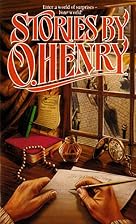
Like many people, the only O. Henry story I'd read before, or was in any way familiar with, was "The Gift of the Magi," which I had as assigned reading in school (and would have known by sheer osmosis anyway, even if I hadn't). Interested to sample his stuff beyond that, I picked this volume up at a library sale a while back.
If you've read "The Gift of the Magi," you probably have a fairly good idea what this collection in general is like: very short stories, generally with some little ironic twist, although some of them are much twistier than others. Which is a story structure I rather like, if it's done well. And some of the stories here are indeed entertainingly constructed, while others just seem a bit pointless or silly. I did find I enjoyed them less as I went on, which I think is an indication that this sort of thing is best taken in smallish doses.
I also think that, through no fault of the author's, these haven't necessarily aged all that well. The style is mostly very light and humorous, with lots of playing around with dialog and narrative, mixing fancy and casual speech and peppering in malapropisms and things, and lots of little references to various cultural and, I think, pop-cultural things. Which I'm sure was all lots of fun at the time it was written, and is still sometimes kind of fun, but some of it is opaque enough, a century and change later, that I had to stop cold and take time to parse it, which does rather kill the momentum and the dimisnish the amusement value.
Anyway. I'm not sorry I've sampled these, but I think it's probably enough O. Henry to last me.
I do have to add, though, that the introduction to this 1989 volume, which features a lot of obnoxious ranting at some straw man Fancy College Professor who mocks O. Henry's supposed lack of literary value, does not do the man or his writing any favors, and certainly didn't help to put me in the right mindset for what I was about to read.
Rating: 3/5
Like many people, the only O. Henry story I'd read before, or was in any way familiar with, was "The Gift of the Magi," which I had as assigned reading in school (and would have known by sheer osmosis anyway, even if I hadn't). Interested to sample his stuff beyond that, I picked this volume up at a library sale a while back.
If you've read "The Gift of the Magi," you probably have a fairly good idea what this collection in general is like: very short stories, generally with some little ironic twist, although some of them are much twistier than others. Which is a story structure I rather like, if it's done well. And some of the stories here are indeed entertainingly constructed, while others just seem a bit pointless or silly. I did find I enjoyed them less as I went on, which I think is an indication that this sort of thing is best taken in smallish doses.
I also think that, through no fault of the author's, these haven't necessarily aged all that well. The style is mostly very light and humorous, with lots of playing around with dialog and narrative, mixing fancy and casual speech and peppering in malapropisms and things, and lots of little references to various cultural and, I think, pop-cultural things. Which I'm sure was all lots of fun at the time it was written, and is still sometimes kind of fun, but some of it is opaque enough, a century and change later, that I had to stop cold and take time to parse it, which does rather kill the momentum and the dimisnish the amusement value.
Anyway. I'm not sorry I've sampled these, but I think it's probably enough O. Henry to last me.
I do have to add, though, that the introduction to this 1989 volume, which features a lot of obnoxious ranting at some straw man Fancy College Professor who mocks O. Henry's supposed lack of literary value, does not do the man or his writing any favors, and certainly didn't help to put me in the right mindset for what I was about to read.
Rating: 3/5
85shadrach_anki
>84 bragan: Introductions to books can really be a hit or miss sort of thing, in my experience. And at least for classics, are usually best read after one has read the work they are introducing, since they are almost invariably written with the assumption that the reader is already familiar with the work in question. Unfortunate that the introduction to the O. Henry volume didn't help put you in the right mindset for the stories.
86bragan
>85 shadrach_anki: Yeah, I really wish those kinds of introductions were placed as afterwords instead. They'd make a lot more sense that way, not to mention the fact that, why, yes, it is still possible to spoil a hundred-year-old story for people who haven't read it yet. This one didn't have that particular issue so much. The author of the introduction does talk about "Gift of the Magi," but at least has the sense to say that if you haven't read it or don't remember it, you should go read it first and then come back to the introduction. (And that of all stories is a pretty reasonable one to assume people are already likely to be familiar with. )
But it was still a terrible introduction. Overblown defensiveness about something new you're about to read is never a good preparation for actually enjoying it, and it boggles me slightly that anybody thought it would be.
But it was still a terrible introduction. Overblown defensiveness about something new you're about to read is never a good preparation for actually enjoying it, and it boggles me slightly that anybody thought it would be.
87shadrach_anki
>86 bragan: Well, you can see that sort of overblown defensiveness in fandom all the time. So it doesn't entirely surprise me that an introduction of that sort would be written. Actually, it almost sounds like the introduction was more of a "preaching to the choir" sort of thing, which has the unfortunate potential to alienate people who aren't already part of the fandom just because it is overblown and defensive.
Yes, it is totally possible to spoil a hundred-year-old (or more) story for people. Sometimes it isn't too bad, other times one finds oneself wondering why reading the book is necessary at all after reading the introduction. So I would much rather have afterwords than introductions in pretty much every case. A possible exception may be introductions written by the author of the work, and even there it is a fine line.
Yes, it is totally possible to spoil a hundred-year-old (or more) story for people. Sometimes it isn't too bad, other times one finds oneself wondering why reading the book is necessary at all after reading the introduction. So I would much rather have afterwords than introductions in pretty much every case. A possible exception may be introductions written by the author of the work, and even there it is a fine line.
88bragan
>87 shadrach_anki: Ha! Well, I'll admit, I might have been guilty of that kind of overblown defensiveness in fandom a time or three, myself, so I know how it happens, but I'd like to think I'd have the self-awareness and self-control to keep it out of a book introduction. And I do try not to do it with people I'm trying to introduce to something I love, in general.
The kinds of introductions/forewords to classic works that I find genuinely helpful and desirable are the kind that put things in a bit of historical and cultural context in a general way, maybe explain a few things you might need to know going in, without getting too detailed about what's to come in the text itself. I genuinely don't know why that's not the standard way of doing things. And then if the editor or whoever simply can't resist the chance to throw in their own analysis, let them do it at the end.
Well, when I am master of the literary world... :)
The kinds of introductions/forewords to classic works that I find genuinely helpful and desirable are the kind that put things in a bit of historical and cultural context in a general way, maybe explain a few things you might need to know going in, without getting too detailed about what's to come in the text itself. I genuinely don't know why that's not the standard way of doing things. And then if the editor or whoever simply can't resist the chance to throw in their own analysis, let them do it at the end.
Well, when I am master of the literary world... :)
89bragan
17. Alice Isn't Dead by Joseph Fink
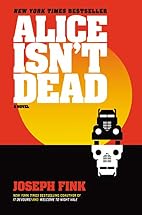
This is the novel version of the fiction podcast Alice Isn't Dead, which told the story of Keisha, who takes to the highway in a truck searching for her wife, Alice, who she believed was dead until she randomly showed up in the background of a TV news story. On those roads, Keisha encounters monsters and secrets, strangeness and violence. For those familiar with the podcast version, it's worth pointing out that this is basically the same story, albeit with some editing, changed details, and things left out. It's not a transcript of the podcast, and it's been translated from the first-person narrative of the original into a third-person one.
I had somewhat mixed feelings about the podcast, myself. From the beginning, there were things I really liked about it. The monsters are genuinely creepy and threatening and even compelling, in a disturbing sort of way. The weirdness is definitely to my taste. The idea that it was trying to say something about America through the medium of a fictional road trip was intriguing. And there were moments of really good, almost poetic insight.
But, I must confess, the shine wore off it a bit as it went along, for me. Even as I still rather liked it, I also got a bit tired of it. The plot went to a conspiracy-theory kind of place that didn't entirely work for me. And the ending felt anticlimactic, its commentary on political activism well-meaning but entirely too heavy-handed.
And I think I felt most of the same things about the novel. Well, more or less. The monsters maybe don't feel quite as creepy, meeting them for the second time, but the ending maybe feels less anticlimactic after three hundred pages of buildup rather than three years. The moments of poetic insight perhaps feel a bit muted, or maybe some of them just don't work quite as well on the page as they do delivered in Jasika Nicole's voice. I'm not sure. And, funnily enough, while the podcast felt to me like it dragged on just a little too long, the novel actually feels rather too fast, too compressed. Which just goes to show you how the sense of pacing can vary with the medium.
In the end, I'd say that both the podcast and the novel feel like they're grasping towards brilliance but not really making it there. The place they do make it to is interesting, but inevitably leaves me with the feeling that there's potential here that was never quite fulfilled.
That truck/skull logo featured on the cover, though, is freaking amazing. I love it so much that, despite my mixed feelings about the story, I bought it on a t-shirt.
Rating: 3.5/5
This is the novel version of the fiction podcast Alice Isn't Dead, which told the story of Keisha, who takes to the highway in a truck searching for her wife, Alice, who she believed was dead until she randomly showed up in the background of a TV news story. On those roads, Keisha encounters monsters and secrets, strangeness and violence. For those familiar with the podcast version, it's worth pointing out that this is basically the same story, albeit with some editing, changed details, and things left out. It's not a transcript of the podcast, and it's been translated from the first-person narrative of the original into a third-person one.
I had somewhat mixed feelings about the podcast, myself. From the beginning, there were things I really liked about it. The monsters are genuinely creepy and threatening and even compelling, in a disturbing sort of way. The weirdness is definitely to my taste. The idea that it was trying to say something about America through the medium of a fictional road trip was intriguing. And there were moments of really good, almost poetic insight.
But, I must confess, the shine wore off it a bit as it went along, for me. Even as I still rather liked it, I also got a bit tired of it. The plot went to a conspiracy-theory kind of place that didn't entirely work for me. And the ending felt anticlimactic, its commentary on political activism well-meaning but entirely too heavy-handed.
And I think I felt most of the same things about the novel. Well, more or less. The monsters maybe don't feel quite as creepy, meeting them for the second time, but the ending maybe feels less anticlimactic after three hundred pages of buildup rather than three years. The moments of poetic insight perhaps feel a bit muted, or maybe some of them just don't work quite as well on the page as they do delivered in Jasika Nicole's voice. I'm not sure. And, funnily enough, while the podcast felt to me like it dragged on just a little too long, the novel actually feels rather too fast, too compressed. Which just goes to show you how the sense of pacing can vary with the medium.
In the end, I'd say that both the podcast and the novel feel like they're grasping towards brilliance but not really making it there. The place they do make it to is interesting, but inevitably leaves me with the feeling that there's potential here that was never quite fulfilled.
That truck/skull logo featured on the cover, though, is freaking amazing. I love it so much that, despite my mixed feelings about the story, I bought it on a t-shirt.
Rating: 3.5/5
90valkyrdeath
I've avoided reading any introductions that aren't by the authors for quite some time now after getting annoyed by them too often. I've read ones that are being defensive about the author as if that's needed for someone who's gone ahead and bought the book and ones that are criticism that makes no sense until you've read it, but when I read one that revealed something that was supposed to be a surprise about half way through the book, that was it. I still can't quite understand why publishers do this sort of thing.
>89 bragan: Much as I love Night Vale, I never did listen to Alice Isn't Dead. From what you've said, it doesn't sound essential, though I did really like the concept of it when I heard about it. I agree with you on the brilliance of that cover though, it's very cleverly designed.
>89 bragan: Much as I love Night Vale, I never did listen to Alice Isn't Dead. From what you've said, it doesn't sound essential, though I did really like the concept of it when I heard about it. I agree with you on the brilliance of that cover though, it's very cleverly designed.
91bragan
>90 valkyrdeath: In my experience more introductions than not for "classics" reveal major plot stuff that's better encountered in context, and discuss things that make no sense before you've read the book. It's like they can't conceive that not everyone has read the thing already, even though everybody has to read it for the first time sometime.
The thing to do really is to go back and read them after you've read the text, but having to read a book backwards offends my sensibilities.
I never thought Alice Isn't Dead was nearly as engaging as Night Vale, and I definitely wouldn't call it essential. Despite my somewhat lukewarm reaction, though, if you like Night Vale, I'd say it's probably at least worth a shot. It absolutely has its moments.
The thing to do really is to go back and read them after you've read the text, but having to read a book backwards offends my sensibilities.
I never thought Alice Isn't Dead was nearly as engaging as Night Vale, and I definitely wouldn't call it essential. Despite my somewhat lukewarm reaction, though, if you like Night Vale, I'd say it's probably at least worth a shot. It absolutely has its moments.
92valkyrdeath
>91 bragan: I used to say to myself I'd go back to read the introductions after I'd finished the book, but usually it was fairly dull anyway and I ultimately decided that I don't need a random person telling me about the book I've just read.
I'll probably still give Alice Isn't Dead a go eventually, I just won't rush for it. I've fallen a long way behind Night Vale as it is!
I'll probably still give Alice Isn't Dead a go eventually, I just won't rush for it. I've fallen a long way behind Night Vale as it is!
93bragan
18. The Earth After Us: What Legacy Will Humans Leave in the Rocks? by Jan Zalasiewicz

If aliens visited the Earth 100,000,000 years from now, long after humanity has passed away, would they be able to detect any signs that we were ever here at all? The answer is yes, but much less than you might think. They'd have to really be looking, and to know exactly what they were doing, and even then, the record would be hard to piece together and would leave an awful lot out. At the very least, they could learn from the geologic record that there was an odd little warming period that didn't fit the usual pattern of Earth's warming and cooling cycles, but they might or might not ever understand what caused it.
I find this question, and its possible answers, fascinating. Contemplating this really gives one a sense of the vastness of geologic time, and how fleeting human timescales are in the scheme of things. Thinking about how little will be left of us a hundred millions years from now also brings home just how little we can actually know of the world of a hundred million years ago. How many creatures were alive then that we will never find fossils of at all?
So, the parts of this book that dealt directly with the question in the title were really interesting to me. Unfortunately, there was a lot of the book that didn't. I had the feeling I was in trouble when, skimming over the acknowledgements, I saw the author explain the idea behind it: "to explain the workings of stratigraphy through the future of humankind and the fruits of its industry." That is basically what he does: uses this question as a launching point to talk about geology and the science of how we understand the history of geology, complete with very long explanations of things like exactly how new seafloor is formed. But, I have to say, while I find geology interesting in theory, the details of it quickly get boring to me. What I was hoping for, really, was a book that would explain the fossilized future of humanity via the workings of statigraphy, and not vice versa.
For those who are interested both in pondering the question of the title and getting some detailed lessons on geology, though, it may be more interesting overall.
Rating: a very subjective 3/5

If aliens visited the Earth 100,000,000 years from now, long after humanity has passed away, would they be able to detect any signs that we were ever here at all? The answer is yes, but much less than you might think. They'd have to really be looking, and to know exactly what they were doing, and even then, the record would be hard to piece together and would leave an awful lot out. At the very least, they could learn from the geologic record that there was an odd little warming period that didn't fit the usual pattern of Earth's warming and cooling cycles, but they might or might not ever understand what caused it.
I find this question, and its possible answers, fascinating. Contemplating this really gives one a sense of the vastness of geologic time, and how fleeting human timescales are in the scheme of things. Thinking about how little will be left of us a hundred millions years from now also brings home just how little we can actually know of the world of a hundred million years ago. How many creatures were alive then that we will never find fossils of at all?
So, the parts of this book that dealt directly with the question in the title were really interesting to me. Unfortunately, there was a lot of the book that didn't. I had the feeling I was in trouble when, skimming over the acknowledgements, I saw the author explain the idea behind it: "to explain the workings of stratigraphy through the future of humankind and the fruits of its industry." That is basically what he does: uses this question as a launching point to talk about geology and the science of how we understand the history of geology, complete with very long explanations of things like exactly how new seafloor is formed. But, I have to say, while I find geology interesting in theory, the details of it quickly get boring to me. What I was hoping for, really, was a book that would explain the fossilized future of humanity via the workings of statigraphy, and not vice versa.
For those who are interested both in pondering the question of the title and getting some detailed lessons on geology, though, it may be more interesting overall.
Rating: a very subjective 3/5
94ELiz_M
Have you read The World Without Us? It's on my radar as something to read someday, but it sounds like it might be more in the vein of what you found interesting in The Earth After Us.
95bragan
>94 ELiz_M: I have! And, yeah, I think that was more along the lines of what I was hoping for from this one, only on a longer time scale. I did enjoy that one (more than you would expect to enjoy a work of non-fiction about the end of humanity. :))
96dchaikin
>93 bragan: I might find that quite interesting. The question I always wonder is, what if the dinosaurs had a brief burst of culture and technology, say that developed and collapsed over a ten thousand year period. Would we ever figure out it happened? Perhaps the answer is yes. I’m a little skeptical, though.
97bragan
>96 dchaikin: You know, I'm a big fan of Doctor Who, and Doctor Who has featured, basically, a race of humanoid dinosaurs that had advanced culture and technology that we humans never knew about. I used to think that was unrealistic, that of course lots of obvious traces of that would remain. Now, I think that's a lot less of a given.
On the other hand, the idea that some small population of them survived for tens of millions of years in hibernation, as they did on the show, now seems entirely ridiculous. :)
On the other hand, the idea that some small population of them survived for tens of millions of years in hibernation, as they did on the show, now seems entirely ridiculous. :)
98Jim53
>4 bragan: Hi Betty, I'm finally getting around to reading some of the 2019 journals. I haven't read Funke, but what you described reminds me of Jasper Fforde's Thursday Next series. Have you read those, and can you make any comparisons? I'll probably check out Funke anyway.
And I definitely took a bullet on The Oracle Year. I argue with my brain quite a bit, so I really liked your review.
And I definitely took a bullet on The Oracle Year. I argue with my brain quite a bit, so I really liked your review.
99dchaikin
>97 bragan: well...i’ll give the Doctor some slack.
100bragan
>98 Jim53: I haven't read those yet, but I have the first couple on my TBR shelves. I have read and enjoyed his Nursery Crimes books.
And I hope you like The Oracle Year, or at least manage to win an argument with your brain about it.
>99 dchaikin: It would be a losing proposition to expect strict realism from Doctor Who, anyway.
And I hope you like The Oracle Year, or at least manage to win an argument with your brain about it.
>99 dchaikin: It would be a losing proposition to expect strict realism from Doctor Who, anyway.
101bragan
19. The Monster Baru Cormorant by Seth Dickinson
This is the second book in the Masquerade series, and clearly not the last, as the story is still very much developing as this installment ends.
The series focuses, unsurprisingly, on Baru Cormorant, a woman whose tranquil island home has been oppressed by a colonialist empire. Recognized as a savant and regarded as loyal to the principles of that empire, she was granted entry to its upper echelons and embarked on a far-reaching plan to take it down from the inside. But the cost of her schemes is very, very high.
I think I feel about this volume much the same as I did about the first one. It is annoyingly difficult to keep all the people, places, plots, and motivations remotely straight. Even more so this time, in fact, since it's been long enough since I've read the first book that I've forgotten much of what I was able to follow there. But it remains an extremely interesting read. The world-building is deep, rich, and fascinating, and the themes it deals with are complex and appropriately disturbing. This one does introduce some plot elements that are very, um... weird, and I haven't made up my mind yet whether they're weird in a good or a bad way. But I will be interested to see what the next volume does with them.
Rating: 4/5
This is the second book in the Masquerade series, and clearly not the last, as the story is still very much developing as this installment ends.
The series focuses, unsurprisingly, on Baru Cormorant, a woman whose tranquil island home has been oppressed by a colonialist empire. Recognized as a savant and regarded as loyal to the principles of that empire, she was granted entry to its upper echelons and embarked on a far-reaching plan to take it down from the inside. But the cost of her schemes is very, very high.
I think I feel about this volume much the same as I did about the first one. It is annoyingly difficult to keep all the people, places, plots, and motivations remotely straight. Even more so this time, in fact, since it's been long enough since I've read the first book that I've forgotten much of what I was able to follow there. But it remains an extremely interesting read. The world-building is deep, rich, and fascinating, and the themes it deals with are complex and appropriately disturbing. This one does introduce some plot elements that are very, um... weird, and I haven't made up my mind yet whether they're weird in a good or a bad way. But I will be interested to see what the next volume does with them.
Rating: 4/5
102bragan
20. Love: Ruining Everything Since 12 Billion B.C. by Zach Weinersmith

This is the latest collection of comics from Zach Weinersmith's goofy, geeky, smart, and offbeat webcomic Saturday Morning Breakfast Cereal, which I just got in the mail today because I backed it on Kickstarter. This one revolves around the theme of love, relationships, dating, and sex -- possibly mostly sex -- and the humor ranges from way-out-there to funny-because--it's-true.
For instance, here's a link to one that's included in the book that made me laugh out loud.
Rating: 4/5

This is the latest collection of comics from Zach Weinersmith's goofy, geeky, smart, and offbeat webcomic Saturday Morning Breakfast Cereal, which I just got in the mail today because I backed it on Kickstarter. This one revolves around the theme of love, relationships, dating, and sex -- possibly mostly sex -- and the humor ranges from way-out-there to funny-because--it's-true.
For instance, here's a link to one that's included in the book that made me laugh out loud.
Rating: 4/5
103dchaikin
>103 dchaikin: that was a nice excuse to scan through smbc (although, ow!)
104bragan
>103 dchaikin: It's never a bad time to scan through SMBC! (Although it's always a bad time to date Medusa. :))
105haydninvienna
>102 bragan: dammit, there went the morning!
106bragan
>105 haydninvienna: Sorry! But only a little bit. :)
107bragan
21. Peeps by Scott Westerfeld
Cal is a carrier for a parasite that causes symptoms that may sound a little familiar, such as a hatred of sunlight, superhuman strength and senses, and a desire to feed off of other human beings. But they really don't like the V-word, preferring the term "parasite positives," or peeps for short. Fortunately, Cal, being a carrier and not a full-blown victim, got most of the useful parts of the condition without the irresistible urge to violence, and he now works for an organization of other carriers, hunting down the more dangerous infected.
The idea of vampirism as a parasitic disease isn't remotely a new one, but Westerfeld does put some genuinely new and interesting touches on the idea, and I'm always kind of impressed when a writer finds something even slightly different to do with a subject as well-used as vampires. And the plot is fun. Completely and utterly ridiculous, but fun. The novel also includes a lot of little interludes describing real-world parasites. Enough so that I half think Westerfeld wrote the whole novel just as an excuse to ramble on about various weird and disturbing parasites, but, you know, I'm okay with that. Because it is fascinating, in a repulsive sort of way, and he writes about it quite entertainingly.
Rating: 4/5
Cal is a carrier for a parasite that causes symptoms that may sound a little familiar, such as a hatred of sunlight, superhuman strength and senses, and a desire to feed off of other human beings. But they really don't like the V-word, preferring the term "parasite positives," or peeps for short. Fortunately, Cal, being a carrier and not a full-blown victim, got most of the useful parts of the condition without the irresistible urge to violence, and he now works for an organization of other carriers, hunting down the more dangerous infected.
The idea of vampirism as a parasitic disease isn't remotely a new one, but Westerfeld does put some genuinely new and interesting touches on the idea, and I'm always kind of impressed when a writer finds something even slightly different to do with a subject as well-used as vampires. And the plot is fun. Completely and utterly ridiculous, but fun. The novel also includes a lot of little interludes describing real-world parasites. Enough so that I half think Westerfeld wrote the whole novel just as an excuse to ramble on about various weird and disturbing parasites, but, you know, I'm okay with that. Because it is fascinating, in a repulsive sort of way, and he writes about it quite entertainingly.
Rating: 4/5
108bragan
22. Educated: A Memoir by Tara Westover
Tara Westover grew up on a mountain in Idaho, in a family of fundamentalist Mormons who were regarded as extreme even by other fundamentalist Mormons. Her father believed schools were instruments of government brainwashing, doctors were murderous tools of the Illuminati, and the apocalypse was looming at any moment. Her mother believed she could treat any ailment with faith, magic, and herbs. Her older brother was terrifyingly violent and abusive. She and her siblings were denied an education. They were put to work in her father's junkyard under incredibly unsafe conditions. They were denied medical attention for life-altering injuries. And they were repeatedly told that everything that happened to them was God's will, or even that it never happened at all.
Somehow, Tara got out. Through a combination of high ACT scores and lying about the quality of her almost nonexistent homeschooling, she got into college. She eventually ended up earning a PhD in history from Cambridge. But truly leaving the mountain and her family behind was never anywhere near as easy.
The story of Westover's academic accomplishments, given where she started from, is impressive, perhaps even inspiring. But mostly what this book was for me, was upsetting. Deeply, viscerally upsetting. I've read some disturbing books in my life, both fiction and non-fiction, but I have never so desperately wanted to somehow reach through the pages of a book and hit people. Which is, of course, a testament to its effectiveness, made even more effective, I think, by the heartbreakingly restrained, thoughtful way that Westover tells the story, as she reflects on issues of family, history, memory, and self.
Rating: 4.5/5
Tara Westover grew up on a mountain in Idaho, in a family of fundamentalist Mormons who were regarded as extreme even by other fundamentalist Mormons. Her father believed schools were instruments of government brainwashing, doctors were murderous tools of the Illuminati, and the apocalypse was looming at any moment. Her mother believed she could treat any ailment with faith, magic, and herbs. Her older brother was terrifyingly violent and abusive. She and her siblings were denied an education. They were put to work in her father's junkyard under incredibly unsafe conditions. They were denied medical attention for life-altering injuries. And they were repeatedly told that everything that happened to them was God's will, or even that it never happened at all.
Somehow, Tara got out. Through a combination of high ACT scores and lying about the quality of her almost nonexistent homeschooling, she got into college. She eventually ended up earning a PhD in history from Cambridge. But truly leaving the mountain and her family behind was never anywhere near as easy.
The story of Westover's academic accomplishments, given where she started from, is impressive, perhaps even inspiring. But mostly what this book was for me, was upsetting. Deeply, viscerally upsetting. I've read some disturbing books in my life, both fiction and non-fiction, but I have never so desperately wanted to somehow reach through the pages of a book and hit people. Which is, of course, a testament to its effectiveness, made even more effective, I think, by the heartbreakingly restrained, thoughtful way that Westover tells the story, as she reflects on issues of family, history, memory, and self.
Rating: 4.5/5
109AlisonY
>108 bragan: great review. So looking forward to this one - I think I'm in single figure digits now in terms of my place in the queue for it at the library.
110dukedom_enough
>108 bragan: Horrifying to think of how many people live such stories.
111bragan
>109 AlisonY: It is worth waiting for, but brace yourself for a difficult ride.
>110 dukedom_enough: I know! There were many moments in there where I just boggled at the thought that people could be forcing their kids to live like this -- in the 21st century! -- and nobody did anything about it. And other moments where, depressingly, the kind of abuse she was describing felt very much like the kind that could be suffered by anybody, anywhere.
>110 dukedom_enough: I know! There were many moments in there where I just boggled at the thought that people could be forcing their kids to live like this -- in the 21st century! -- and nobody did anything about it. And other moments where, depressingly, the kind of abuse she was describing felt very much like the kind that could be suffered by anybody, anywhere.
112lisapeet
>108 bragan: I'm really, really interested to see what she writes next. So much of what she went through didn't get addressed at the book's end—which is a good thing, I think, because it really stayed on message and wasn't long or rambling or sanctimonious—but it left me with a lot of questions about where she wold go from there. Which is the sign of a good memoir, I guess. Often I'm just done with a subject after 300 pages and am happy not to have to hear from them again.
113bragan
>112 lisapeet: She did leave me wondering about a lot of things, too. In particular, I'd like to hear more about her historical work and how she relates to it, although not delving into that too far was probably the right call for the memoir.
114bragan
23. Time Traders by Andre Norton
Andre Norton was a very prolific writer, and I read a lot of her novels in my youth, but I hadn't revisited her in many years. This volume consists of the first two books in her Time Traders series, SF adventure stories written in the 1950s. I'm fairly sure I'd read both of them before, but I didn't remember much of anything about them, and I thought it would be interesting to see what I thought of them now.
The first installment is The Time Traders, in which it's the 21st century, time travel has recently been invented, and the Russians have been showing up with some surprisingly advanced pieces of technology. Which, since you can't time travel into your own future, they must somehow have been getting from the past. So US time agents have been sent back to various periods, trying to figure out what the Russians have found, and when.
It's a good premise (if rather dated in its cold-war sensibilities), but I felt the story really never lived up to it. The problem is that even if you're happy to accept time travel as a concept (which I am), the plot is still full of details that are utterly unconvincing. It could still have been interesting if the societies of prehistoric Britain that the time agents infiltrate for their mission had been really brought to life, but they're not. There are complexities there that are hinted at a little, but they're never delved into. So even though it's readable enough and there are some not-bad action scenes, this one just never held my attention all that well.
In the second novel, Galactic Derelict, the time agents find a crashed spaceship in the past, and, after being brought forward into the present, it takes off with them on it. I enjoyed this one a lot more than the first one. Once you get past the beginning, in which a completely random guy is brought in on a secret mission and told all about it just because he happens to stumble across it, this installment doesn't have the same plot difficulties and implausibilities the first one did. Maybe because it doesn't really have all that much of a plot, but I was mostly okay with that. Also, the alien planets that our protagonists end up on really aren't fleshed out any better than the bronze-age civilization of the first novel, but in this case it feels like more of a feature then a bug, as we're supposed to only be getting little glimpses of places that are intended to be mysterious. Not that any of it was super-exciting, but there was something at least a little pleasantly nostalgic about revisiting this kind of old-fashioned story I used to enjoy as a kid.
Although it may be old-fashioned in a slightly less pleasant way, too. Because the POV character in this one is an Apache. The way he's written is actually really well-meaning and pretty good for the 1950s, I guess. Norton is clearly actively trying to de-exoticize the guy for readers who are mostly familiar with Native Americans from 50s TV Westerns, while still honoring his heritage. But what was good for the 1950s is still not exactly up to 21st century standards of sensitivity and cluefulness when writing about other cultures, especially when you also factor in some unrelated comments about "civilized" vs "primitive" people. I found it didn't bother me enough that I couldn't shrug it off easily, but then, Native American stereotypes aren't personal for me, so other readers' mileage may vary.
Rating: I'm going to give it a perhaps overly generous 3/5, mostly on the strength of Galactic Derelict and the nostalgic appeal it had for my inner 12-year old.
Andre Norton was a very prolific writer, and I read a lot of her novels in my youth, but I hadn't revisited her in many years. This volume consists of the first two books in her Time Traders series, SF adventure stories written in the 1950s. I'm fairly sure I'd read both of them before, but I didn't remember much of anything about them, and I thought it would be interesting to see what I thought of them now.
The first installment is The Time Traders, in which it's the 21st century, time travel has recently been invented, and the Russians have been showing up with some surprisingly advanced pieces of technology. Which, since you can't time travel into your own future, they must somehow have been getting from the past. So US time agents have been sent back to various periods, trying to figure out what the Russians have found, and when.
It's a good premise (if rather dated in its cold-war sensibilities), but I felt the story really never lived up to it. The problem is that even if you're happy to accept time travel as a concept (which I am), the plot is still full of details that are utterly unconvincing. It could still have been interesting if the societies of prehistoric Britain that the time agents infiltrate for their mission had been really brought to life, but they're not. There are complexities there that are hinted at a little, but they're never delved into. So even though it's readable enough and there are some not-bad action scenes, this one just never held my attention all that well.
In the second novel, Galactic Derelict, the time agents find a crashed spaceship in the past, and, after being brought forward into the present, it takes off with them on it. I enjoyed this one a lot more than the first one. Once you get past the beginning, in which a completely random guy is brought in on a secret mission and told all about it just because he happens to stumble across it, this installment doesn't have the same plot difficulties and implausibilities the first one did. Maybe because it doesn't really have all that much of a plot, but I was mostly okay with that. Also, the alien planets that our protagonists end up on really aren't fleshed out any better than the bronze-age civilization of the first novel, but in this case it feels like more of a feature then a bug, as we're supposed to only be getting little glimpses of places that are intended to be mysterious. Not that any of it was super-exciting, but there was something at least a little pleasantly nostalgic about revisiting this kind of old-fashioned story I used to enjoy as a kid.
Although it may be old-fashioned in a slightly less pleasant way, too. Because the POV character in this one is an Apache. The way he's written is actually really well-meaning and pretty good for the 1950s, I guess. Norton is clearly actively trying to de-exoticize the guy for readers who are mostly familiar with Native Americans from 50s TV Westerns, while still honoring his heritage. But what was good for the 1950s is still not exactly up to 21st century standards of sensitivity and cluefulness when writing about other cultures, especially when you also factor in some unrelated comments about "civilized" vs "primitive" people. I found it didn't bother me enough that I couldn't shrug it off easily, but then, Native American stereotypes aren't personal for me, so other readers' mileage may vary.
Rating: I'm going to give it a perhaps overly generous 3/5, mostly on the strength of Galactic Derelict and the nostalgic appeal it had for my inner 12-year old.
115dukedom_enough
>114 bragan: Good to see you reading this. Galactic Derelict was one of my two absolutely favorite books when I was 10 years old. Space travel! Time travel! Dawn age hunters! Evil Galactic Empire! Runaway spaceship! Aliens! A simultaneous volcanic eruption and stampede of wooly mammoths! What 10 (or 12) year old could resist? I'm also fond of the cover - of the library copy I read first, and the paperback I later owned:

All your critiques apply, of course.

All your critiques apply, of course.
116bragan
>115 dukedom_enough: You know, the entire time I was reading Galactic Derelict, I kept thinking about that old quip that the golden age of science fiction is twelve. I think Norton's stuff really epitomizes that. And not in a bad way. She certainly knew how to pitch a novel to the sense of wonder and adventure that youngsters have, whether or not they entirely hold up when you read them decades later.
And that is quite a cover! And one that actually at least sort of depicts something that happens in the book, unlike the cover on the omnibus volume I have. That one looks like the artist was given the idea that the books involved some combination of derelict spaceships and people dressed in clothing from sometime in the past, but never bothered with any of the actual details.
And that is quite a cover! And one that actually at least sort of depicts something that happens in the book, unlike the cover on the omnibus volume I have. That one looks like the artist was given the idea that the books involved some combination of derelict spaceships and people dressed in clothing from sometime in the past, but never bothered with any of the actual details.

118bragan
>117 dukedom_enough: I like that title for an anthology.
119bragan
24. The Love of a Good Woman by Alice Munro
This is a collection of short stories. All of them are set in Canada, often in small towns or summer cottages, most of them in the 1950s or 60s, and feature love and sex, affairs and babies, and people who sometimes feel almost painfully realistic.
The title story was actually the first thing of Alice Munro's I ever read, in some anthology or other, and I was immediately impressed by it, particularly by all the tiny little details that simultaneously seemed so true to familiar human experience and so utterly original. What strikes me now, having read the rest of the stories in this collection, is how often Munro provides us with these deft little details while simultaneously leaving the big emotional stuff that's actually at the heart of the story mostly implicit and hinted at. This doesn't always entirely work for me; there are pieces in here that I find a little unsatisfying, no matter how well-written they are. But when it works, it really works.
Rating: I'm giving this one a 4/5, but the best stories definitely rate higher than that.
This is a collection of short stories. All of them are set in Canada, often in small towns or summer cottages, most of them in the 1950s or 60s, and feature love and sex, affairs and babies, and people who sometimes feel almost painfully realistic.
The title story was actually the first thing of Alice Munro's I ever read, in some anthology or other, and I was immediately impressed by it, particularly by all the tiny little details that simultaneously seemed so true to familiar human experience and so utterly original. What strikes me now, having read the rest of the stories in this collection, is how often Munro provides us with these deft little details while simultaneously leaving the big emotional stuff that's actually at the heart of the story mostly implicit and hinted at. This doesn't always entirely work for me; there are pieces in here that I find a little unsatisfying, no matter how well-written they are. But when it works, it really works.
Rating: I'm giving this one a 4/5, but the best stories definitely rate higher than that.
120bragan
25. Fear: Trump in the White House by Bob Woodward

Bob Woodward's portrait of Trump and account of the first year or so of his presidency starts out kind of disjointed and a little dry. But by the end, like Trump himself, it compels a certain trainwreck fascination. Nothing in it is particularly surprising, though. Woodward's portrait of Trump reveals him as exactly the person he appears to be (and god help us all). And even though I go through long periods where I cannot stomach keeping up with the news, I can't say there was very much in here that was new to me, other than some insights into Trump's ill-informed and intractable ideas on the economy and free trade. Which sort of makes me wonder why I put myself through reading it. (Which is a commentary not on Woodward, but on his subject matter.)
I suppose it could be appreciated as an interesting historical look at a truly weird time in American history, if only we didn't have to live through it all.
Rating: 3.5/5

Bob Woodward's portrait of Trump and account of the first year or so of his presidency starts out kind of disjointed and a little dry. But by the end, like Trump himself, it compels a certain trainwreck fascination. Nothing in it is particularly surprising, though. Woodward's portrait of Trump reveals him as exactly the person he appears to be (and god help us all). And even though I go through long periods where I cannot stomach keeping up with the news, I can't say there was very much in here that was new to me, other than some insights into Trump's ill-informed and intractable ideas on the economy and free trade. Which sort of makes me wonder why I put myself through reading it. (Which is a commentary not on Woodward, but on his subject matter.)
I suppose it could be appreciated as an interesting historical look at a truly weird time in American history, if only we didn't have to live through it all.
Rating: 3.5/5
122bragan
>121 avidmom: And yet, I don't think any of them are going to make any actual sense of him. *sigh*
123dchaikin
>120 bragan: if only we didn’t have to live through it. Yes (hmmm or anyone else had to live through it either.)
Enjoyed your Alice Munro commentary, and another Educated review. Might have to get that on audio sometime.
Enjoyed your Alice Munro commentary, and another Educated review. Might have to get that on audio sometime.
124avaland
>53 bragan: I remember I really enjoyed Nalo's first book (and many others). I;m glad it's still being read. Enjoyed your thoughts on it.
125valkyrdeath
>119 bragan: Once again I'm reminded of how I've been meaning to read Alice Munro for years and still haven't. I really need to try get to one soon, though she has so many it's hard to decide which one to start with.
126bragan
>123 dchaikin: I still want to figure out how to get off this timeline.
>124 avaland: I'm not positive, but I think Brown Girl in the Ring was reissued recently, and that's how I became aware of it. And very glad I was of that, too. I definitely should read more by her.
>125 valkyrdeath: The first Munro I read, other than that one anthologized story, was Lives of Girls and Women. Which was unusual for her in that it's a novel rather than a story collection (although it's a novel that's structured like a story collection). But I definitely recommend it, and it seems to me like it was a great place to start. I'd definitely recommend it over The Love of a Good Woman as a starting place, since my reactions to the stories in that collection were a little variable, but I was impressed with every part of the novel.
>124 avaland: I'm not positive, but I think Brown Girl in the Ring was reissued recently, and that's how I became aware of it. And very glad I was of that, too. I definitely should read more by her.
>125 valkyrdeath: The first Munro I read, other than that one anthologized story, was Lives of Girls and Women. Which was unusual for her in that it's a novel rather than a story collection (although it's a novel that's structured like a story collection). But I definitely recommend it, and it seems to me like it was a great place to start. I'd definitely recommend it over The Love of a Good Woman as a starting place, since my reactions to the stories in that collection were a little variable, but I was impressed with every part of the novel.
127bragan
26. The Missy Chronicles by James Goss et al.

A collection of short Doctor Who stories focusing on Missy, aka the latest incarnation of the Master, the Doctor's old friend and long-term nemesis. Personally I adore Missy; I think she's enormous fun, and the best version of the Master since the original. So how could I resist?
To address each of the six stories included here individually:
"Dismemberment" by James Goss: Shortly after regenerating, Missy visits her favorite evil gentlemen's club, discovers she is no longer welcome as a member, and wreaks horrible vengeance on the people who kicked her out. There's some genuinely funny moments, and some darkly satiric sensibilities. And Missy gets some great lines. But the sheer levels of horror and gruesomeness to some of her actions actually made me feel a little uncomfortable by the end. I think this particular kind of villainous depravity might almost be a little over the top, even for Missy.
"Lords and Masters" by Cavan Scott: The Time Lords send Missy off on an assignment for them. They really ought to know better. I liked the concept of this one, and the way it offers up some rather dark little details about how things have been going on Gallifrey. I do wish the "companion" she was given for the job felt less two-dimensional, though. And it's genuinely a little unsettling to get a Doctor Who story like this where the Doctor doesn't get to show up to make things right in the end.
"Teddy Sparkles Must Die!" by Paul Magrs: A weird, weird little send-up of kids' adventure stories, featuring evil governess Missy and a magical talking teddy bear. I honestly can't quite decide whether this one is pleasantly ridiculous or just plain ridiculous.
"The Liar, the Glitch and the War Zone" by Peter Anghelides: An adventure in Venice featuring a damaged TARDIS, a temporal rift, and an army of angry space gryphons. But despite the fact that there's a lot going on here, I found it a bit dull. There's less good Missy dialog here than in the other stories, too. I did like her villainous plan to flood Venice, though.
"Girl Power!" by Jacqueline Rayner: An epistolary story, also featuring the Twelfth Doctor and Nardole, in which Missy hatches a plan that gives new meaning to the phrase "smash the patriarchy.". Now, this one was pleasantly ridiculous. Delightfully ridiculous, even. I was laughing out loud through pretty much the whole thing.
"Alit in Underland" by Richard Dinnick: This one is told from the POV of Alit, the little girl from the episodes "World Enough and Time"/The Doctor Falls," and is set during the period between those episodes when the Doctor is unconscious. I don't know that it's a bit from that story that really needed filling in, but it does give us the opportunity for a little more interaction between Missy and her previous incarnation, and I will never say no to that.
Rating: It's enough of a mixed bag that I'm going to call it 3.5/5, but the best stories are fun enough thatI'd say it's worth checking out if you're a fan of the character.

A collection of short Doctor Who stories focusing on Missy, aka the latest incarnation of the Master, the Doctor's old friend and long-term nemesis. Personally I adore Missy; I think she's enormous fun, and the best version of the Master since the original. So how could I resist?
To address each of the six stories included here individually:
"Dismemberment" by James Goss: Shortly after regenerating, Missy visits her favorite evil gentlemen's club, discovers she is no longer welcome as a member, and wreaks horrible vengeance on the people who kicked her out. There's some genuinely funny moments, and some darkly satiric sensibilities. And Missy gets some great lines. But the sheer levels of horror and gruesomeness to some of her actions actually made me feel a little uncomfortable by the end. I think this particular kind of villainous depravity might almost be a little over the top, even for Missy.
"Lords and Masters" by Cavan Scott: The Time Lords send Missy off on an assignment for them. They really ought to know better. I liked the concept of this one, and the way it offers up some rather dark little details about how things have been going on Gallifrey. I do wish the "companion" she was given for the job felt less two-dimensional, though. And it's genuinely a little unsettling to get a Doctor Who story like this where the Doctor doesn't get to show up to make things right in the end.
"Teddy Sparkles Must Die!" by Paul Magrs: A weird, weird little send-up of kids' adventure stories, featuring evil governess Missy and a magical talking teddy bear. I honestly can't quite decide whether this one is pleasantly ridiculous or just plain ridiculous.
"The Liar, the Glitch and the War Zone" by Peter Anghelides: An adventure in Venice featuring a damaged TARDIS, a temporal rift, and an army of angry space gryphons. But despite the fact that there's a lot going on here, I found it a bit dull. There's less good Missy dialog here than in the other stories, too. I did like her villainous plan to flood Venice, though.
"Girl Power!" by Jacqueline Rayner: An epistolary story, also featuring the Twelfth Doctor and Nardole, in which Missy hatches a plan that gives new meaning to the phrase "smash the patriarchy.". Now, this one was pleasantly ridiculous. Delightfully ridiculous, even. I was laughing out loud through pretty much the whole thing.
"Alit in Underland" by Richard Dinnick: This one is told from the POV of Alit, the little girl from the episodes "World Enough and Time"/The Doctor Falls," and is set during the period between those episodes when the Doctor is unconscious. I don't know that it's a bit from that story that really needed filling in, but it does give us the opportunity for a little more interaction between Missy and her previous incarnation, and I will never say no to that.
Rating: It's enough of a mixed bag that I'm going to call it 3.5/5, but the best stories are fun enough thatI'd say it's worth checking out if you're a fan of the character.
128janeajones
Great reviews of Educated and the Munroe stories. I've been meaning to read Educated for awhile --need to get my hands on a copy.
129bragan
>128 janeajones: It seems like everyone who hasn't read Educated yet is hoping to get to it soon! And for good reason, too.

