1dlphcoracl
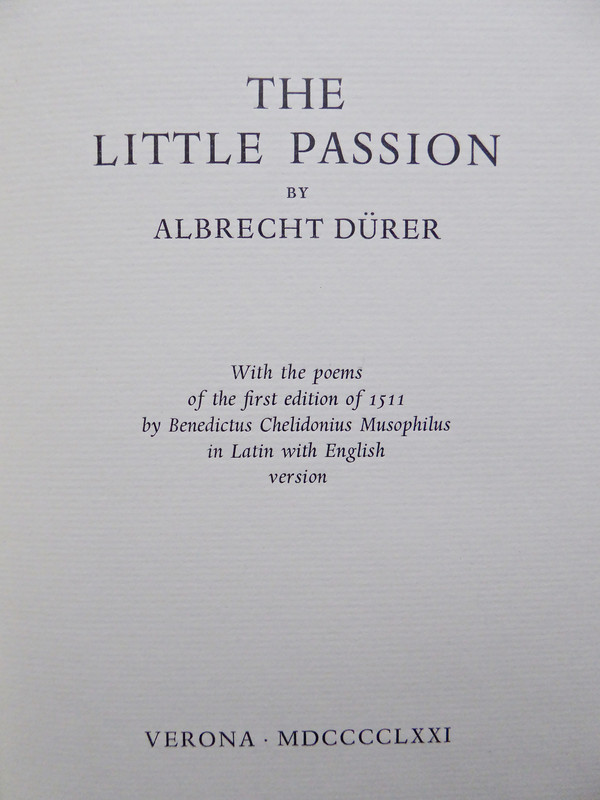
The Little Passion. With the poems of the first edition of 1511 by Benedictus Chelidonius Musophilus in Latin with English version. Officina Bodoni (Verona), 1971. 9 x 6 1/4 inches, 214 pages. Illustrated with 36 wood engravings by Abrecht Dürer. Limited edition of 140 copies.
Note: The following introduction incorporates portions of the prospectus written by Giovanni (Hans) Mardersteig.
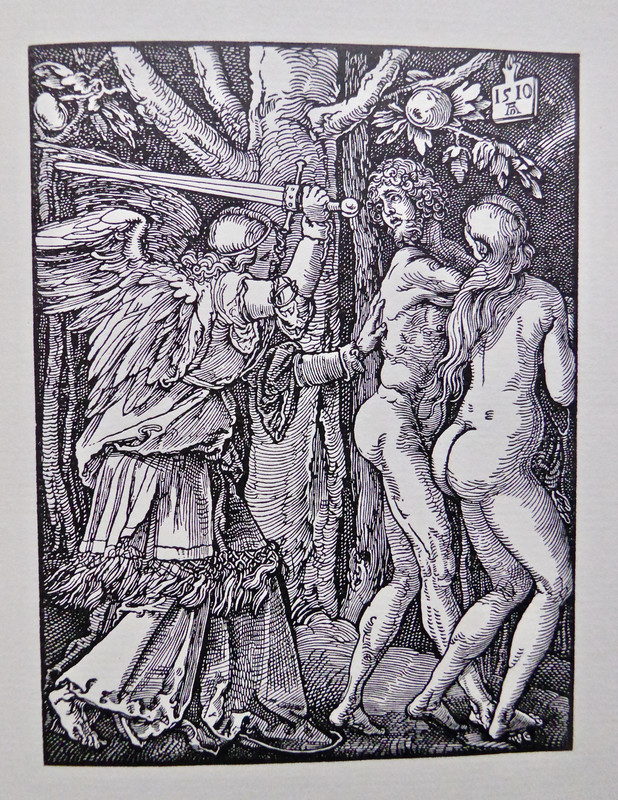
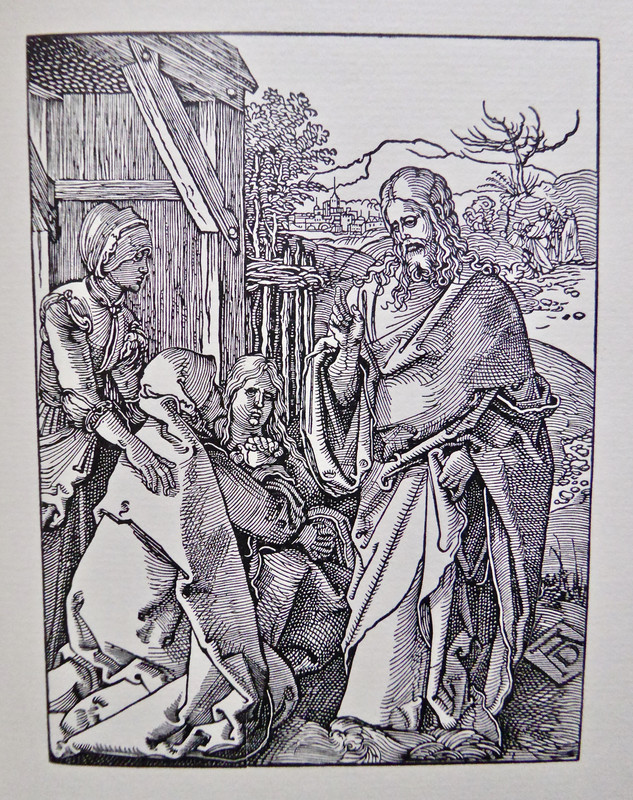
The years 1508 and 1511 were the most important and productive years of Albrecht Dürer's graphic work on religious subjects. In 1511 he published the three great cycles: The Great Passion, The Life of the Virgin and, named due to its smaller format, The Little Passion (Passio Christi). The latter, with its thirty-six woodcuts and the "Ecce Homo" on the title page, is widely regarded as his masterpiece. To celebrate the 500th anniversary of Durer's birth in 1471, the Officina Bodoni (OB) published a new edition of The Little Passion. As mentioned earlier in my article COVID-19 Eye Candy #4, which featured the OB masterwork edition of The Holy Gospel, some of the most beautiful and important OB publications involved recreation of medieval works with recarving of their wood engravings by a modern Italian master. Dürer's wood engravings were re-engraved by Leonardo Farina, the pre-eminent Italian master in this field at time of publication.
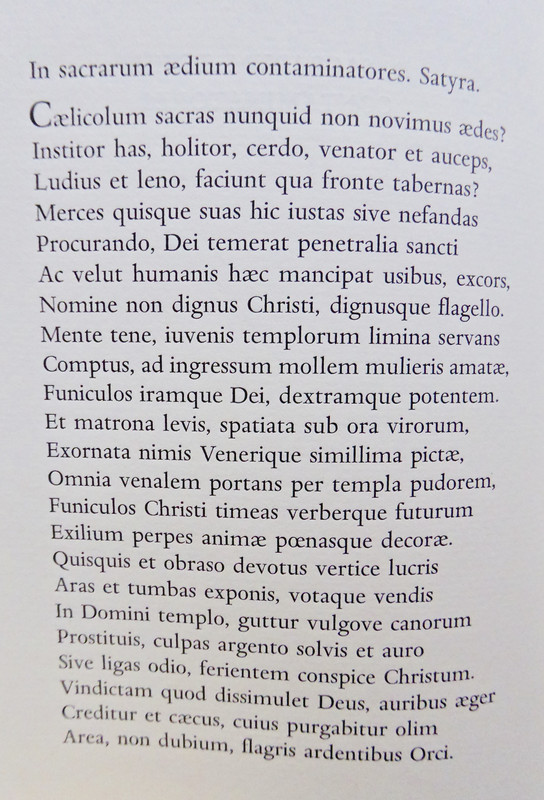
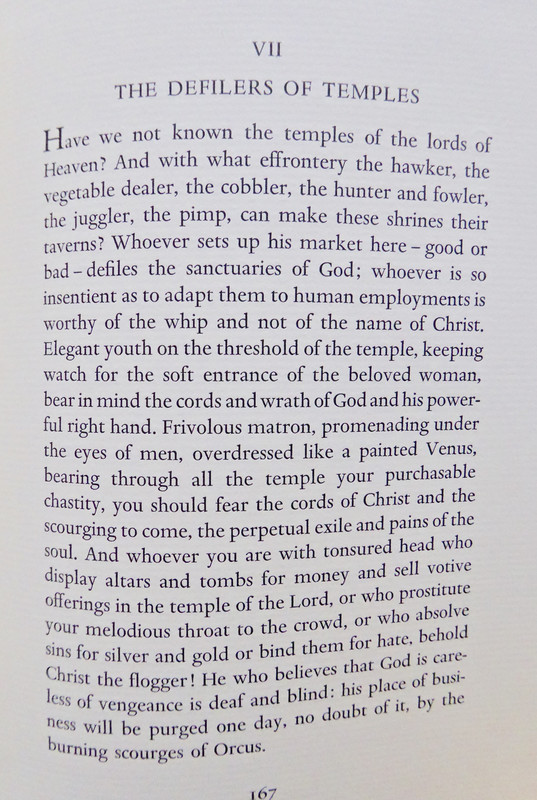
Dürer is thought to have commissioned these poems to complement his thirty-six wood engravings, enlisting poet and humanist Fr. Benedictus Chelidonius Musophilus (real name: Benedikt Schwalbe) to write the verses for each work. The beauty of his poetry had been overshadowed by Dürer's towering achievement and remained under-appreciated until publication of this OB edition. As in the original edition of 1511, the OB edition reprints the original Latin verses on the verso page immediately followed by the appropriate Dürer wood engraving on the recto page. The woodcuts are printed with the following verso page left blank so there would be no show through of text - "an imperfection which frequently mars the original" according to Mardersteig.
Mardersteig simultaneously published editions in Italian and German as well as the original Latin but in this instance, at its conclusion, the second part of the book contains a literal prose translation in English by Robert Fitzgerald (himself a poet) so that the English-speaking reader can appreciate the poetic content of Fr. Benedictus Chelonius' original Latin verse. This edition concludes with a postscript of fifteen pages written by Mardersteig entitled 'Dürer's Little Passion and the Humanist Benedictus Chelidonius'. As in nearly all of the OB's finest work, the book is printed on the hand-press - in this instance using the Dante type on dampened Magnani handmade paper of Pescia.
Photos with captions above.
Title page.
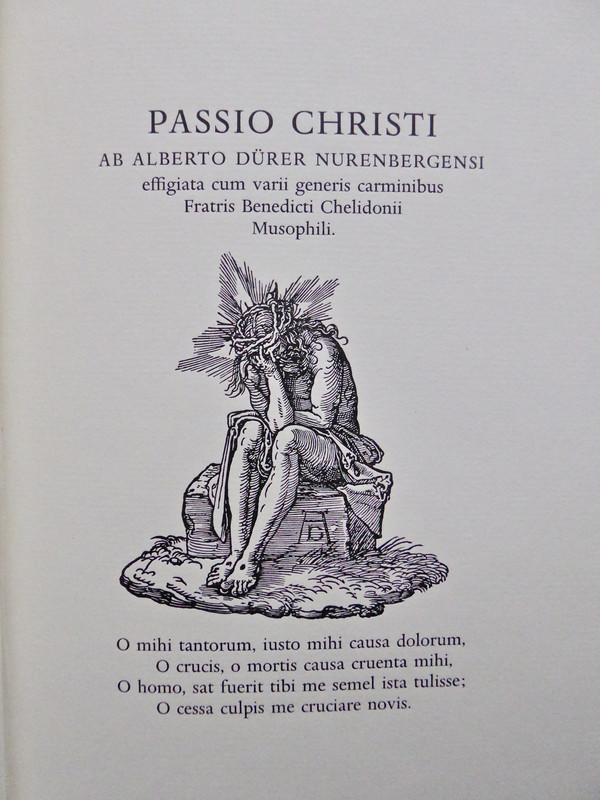
Durer's "Ecce Homo"
Sample text page in Latin: Poem VII - In Sacrarum Aedium Contaminatores.
Poem VII English translation - The Defilers of Temples.
Poem II: The Expulsion of the First Parents
Poem V: Lord Jesus Taking Leave of His Mother on the Way to His Passion.
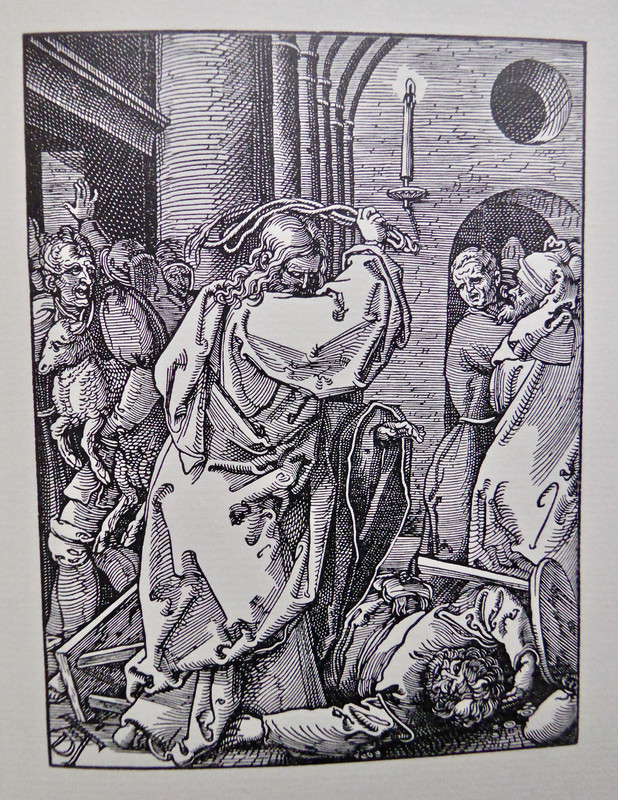
Poem VII: The Defilers of Temples
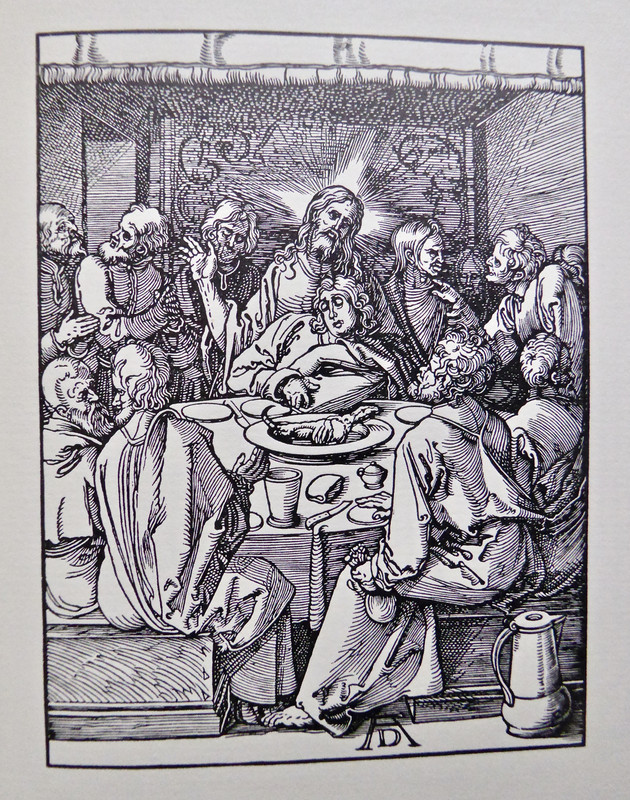
Poem VIII: The Lord's Supper
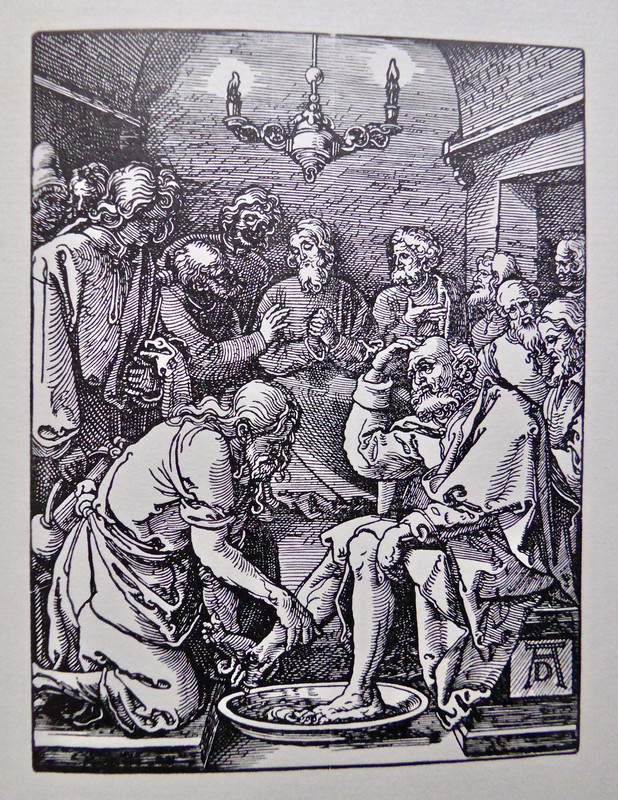
Poem IX: Jesus Washing the feet of the Disciples
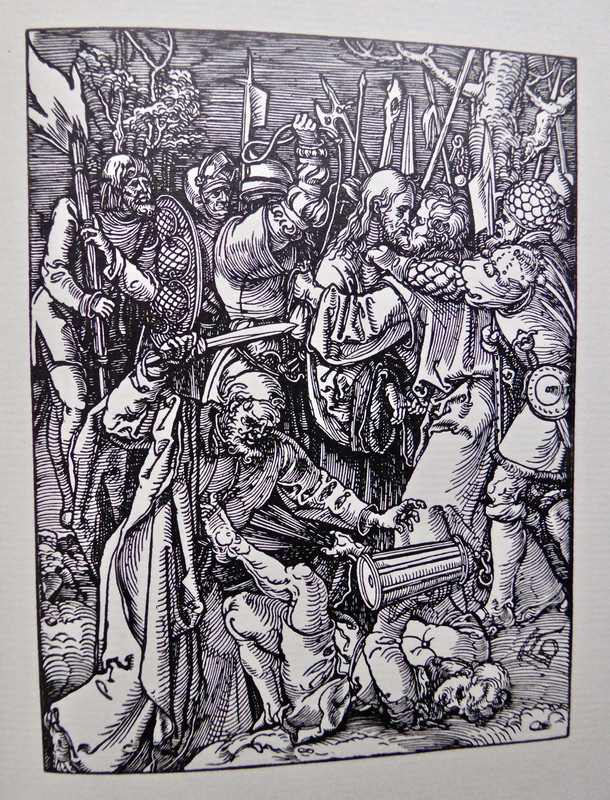
Poem Xi: Christ Taken Captive on the Mount of Olives
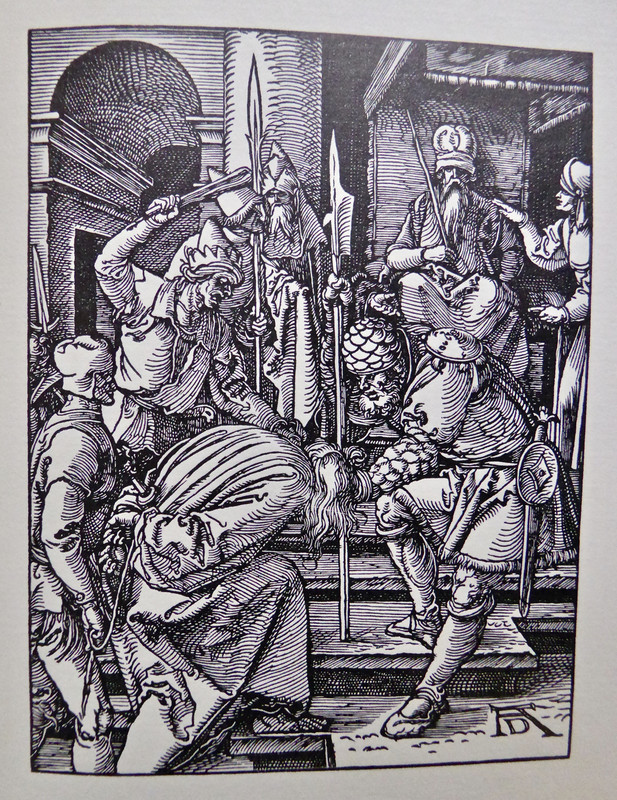
Poem XII: Jesus Before the Chief Magistrate Annas
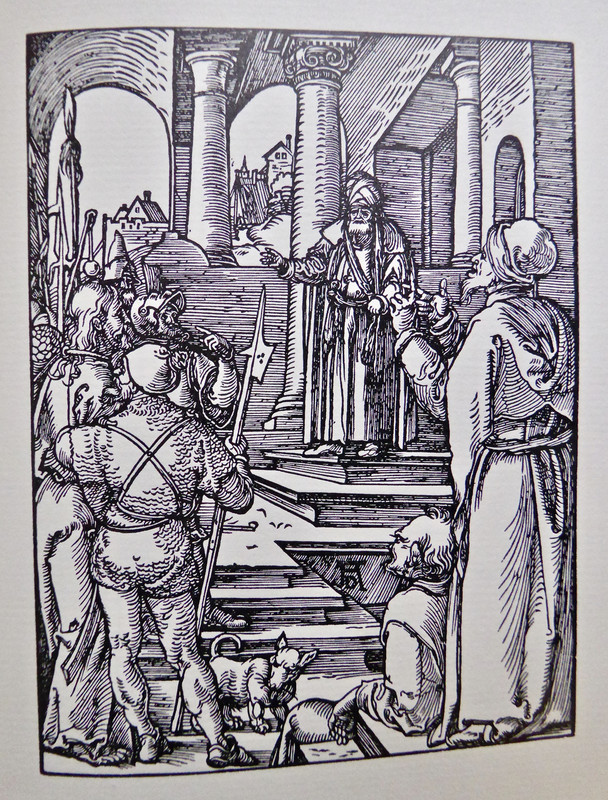
Poem XV: Jesus Brought Before Pilate
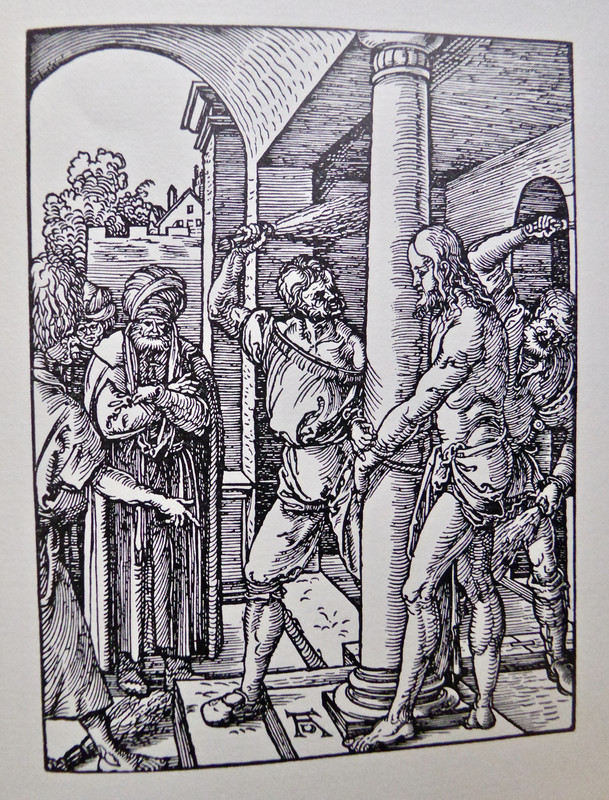
Poem XVII: Jesus Scourged
Note: The following introduction incorporates portions of the prospectus written by Giovanni (Hans) Mardersteig.
The years 1508 and 1511 were the most important and productive years of Albrecht Dürer's graphic work on religious subjects. In 1511 he published the three great cycles: The Great Passion, The Life of the Virgin and, named due to its smaller format, The Little Passion (Passio Christi). The latter, with its thirty-six woodcuts and the "Ecce Homo" on the title page, is widely regarded as his masterpiece. To celebrate the 500th anniversary of Durer's birth in 1471, the Officina Bodoni (OB) published a new edition of The Little Passion. As mentioned earlier in my article COVID-19 Eye Candy #4, which featured the OB masterwork edition of The Holy Gospel, some of the most beautiful and important OB publications involved recreation of medieval works with recarving of their wood engravings by a modern Italian master. Dürer's wood engravings were re-engraved by Leonardo Farina, the pre-eminent Italian master in this field at time of publication.
Dürer is thought to have commissioned these poems to complement his thirty-six wood engravings, enlisting poet and humanist Fr. Benedictus Chelidonius Musophilus (real name: Benedikt Schwalbe) to write the verses for each work. The beauty of his poetry had been overshadowed by Dürer's towering achievement and remained under-appreciated until publication of this OB edition. As in the original edition of 1511, the OB edition reprints the original Latin verses on the verso page immediately followed by the appropriate Dürer wood engraving on the recto page. The woodcuts are printed with the following verso page left blank so there would be no show through of text - "an imperfection which frequently mars the original" according to Mardersteig.
Mardersteig simultaneously published editions in Italian and German as well as the original Latin but in this instance, at its conclusion, the second part of the book contains a literal prose translation in English by Robert Fitzgerald (himself a poet) so that the English-speaking reader can appreciate the poetic content of Fr. Benedictus Chelonius' original Latin verse. This edition concludes with a postscript of fifteen pages written by Mardersteig entitled 'Dürer's Little Passion and the Humanist Benedictus Chelidonius'. As in nearly all of the OB's finest work, the book is printed on the hand-press - in this instance using the Dante type on dampened Magnani handmade paper of Pescia.
Photos with captions above.
Title page.
Durer's "Ecce Homo"
Sample text page in Latin: Poem VII - In Sacrarum Aedium Contaminatores.
Poem VII English translation - The Defilers of Temples.
Poem II: The Expulsion of the First Parents
Poem V: Lord Jesus Taking Leave of His Mother on the Way to His Passion.
Poem VII: The Defilers of Temples
Poem VIII: The Lord's Supper
Poem IX: Jesus Washing the feet of the Disciples
Poem Xi: Christ Taken Captive on the Mount of Olives
Poem XII: Jesus Before the Chief Magistrate Annas
Poem XV: Jesus Brought Before Pilate
Poem XVII: Jesus Scourged
2ultrarightist
Amazing. The quality of the printed wood blocks is exceptional. I wonder if anyone but an expert could tell the difference between Durer's originals and the re-engravings by Leonardo Farina.
3ultrarightist
Were all 36 of Durer's engravings included in the OB edition?
4dlphcoracl
>3 ultrarightist:
Yes.
36 Dürer wood engravings with 36 poems by Fr. Benedictus Chelidonius Musophilus.
Yes.
36 Dürer wood engravings with 36 poems by Fr. Benedictus Chelidonius Musophilus.

