1dlphcoracl
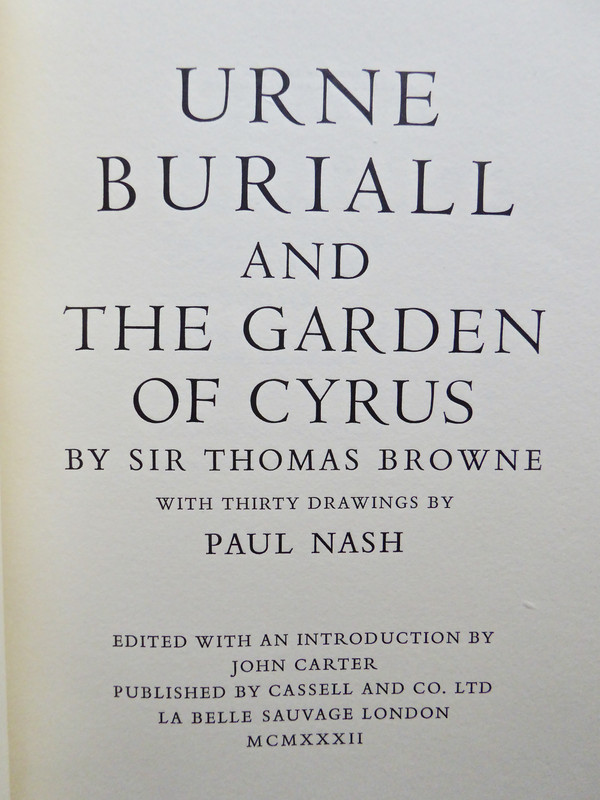
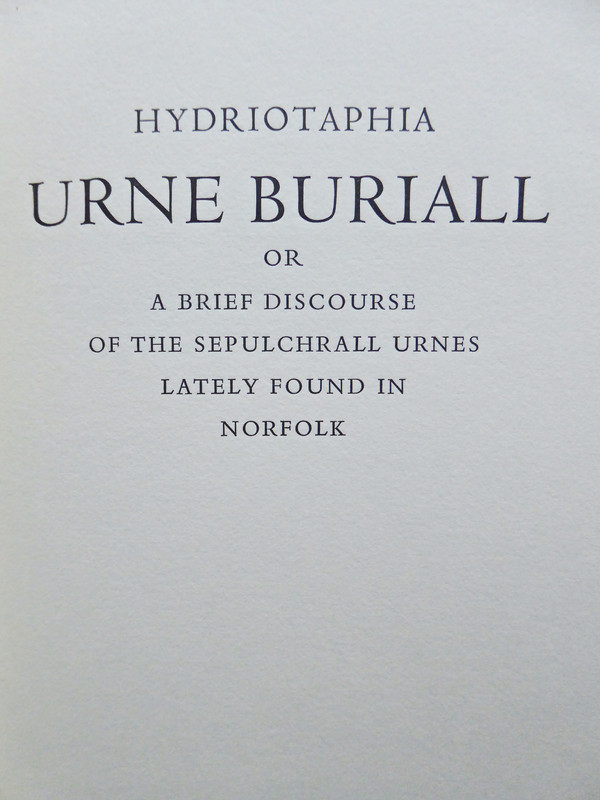
Urne Buriall and The Garden of Cyrus by Sir Thomas Browne. Edited with an introduction by John Carter. Large quarto (4to, 312 x 230 mm,) printed at the Curwen Press, Published by Cassell and Co Ltd, La Belle Sauvage, London, 1932.
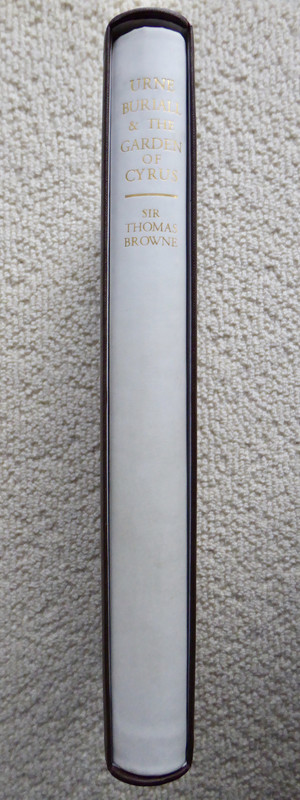
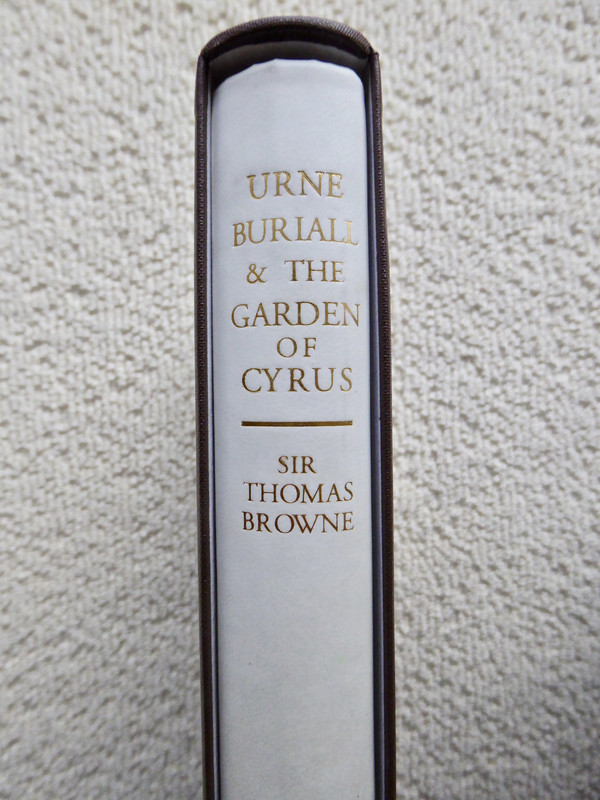
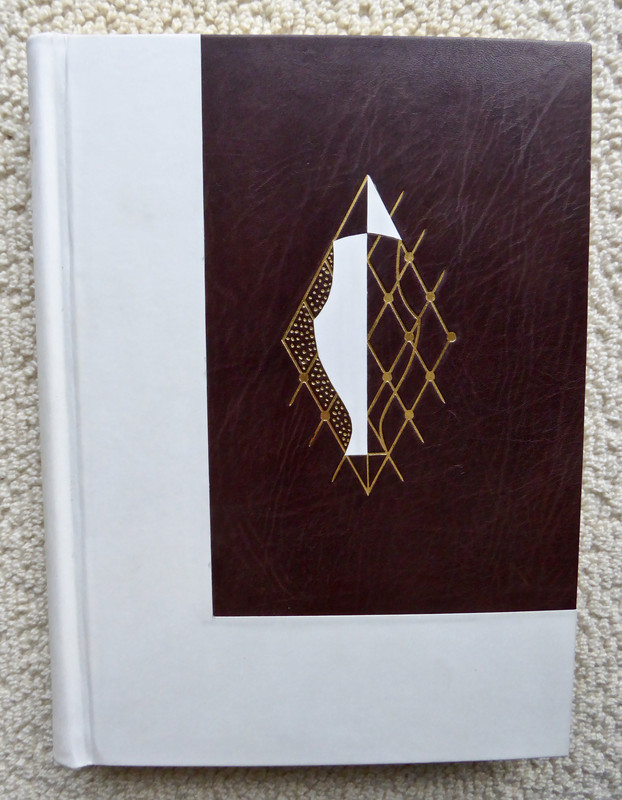
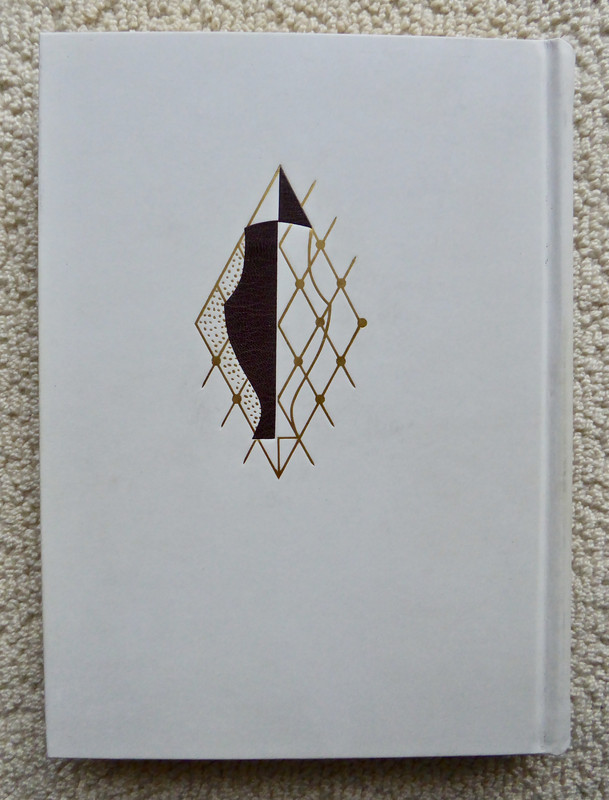
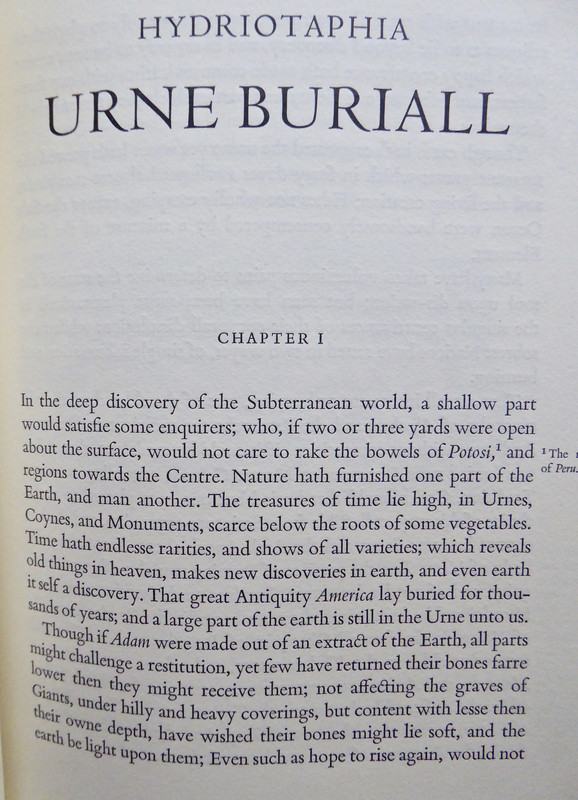
Edition of 215 copies set in large Bembo type, printed on J. Barcham Green handmade paper, with 15 full-page and 17 half-page pochoir illustrations by Paul Nash. Elaborate binding designed by Paul Nash (this is the second state of the binding by Sangorski & Sutcliffe) with brown morocco, central design with gilt quincunx and vellum inlay. Remainder of binding is ivory vellum with gilt lettering on the spine, all edges gilt. Custom slipcase by Sangorski & Sutcliffe.
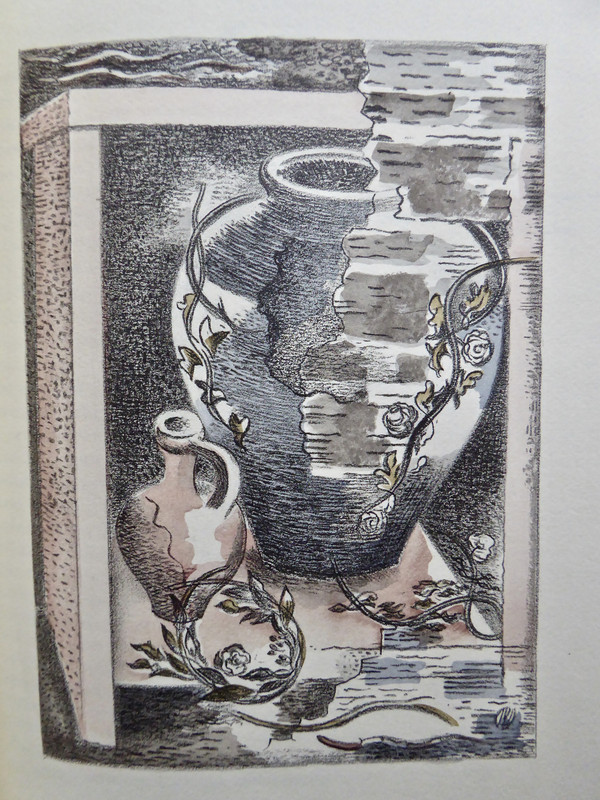
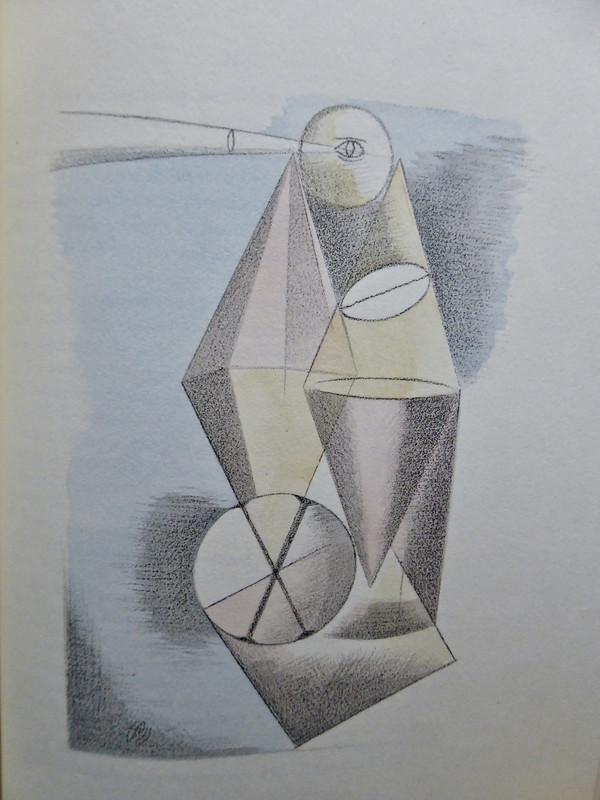
This edition is widely considered by collectors to be one of the most distinctive illustrated private press books of the twentieth century, with inclusion in the Grolier Club (NYC) exhibition and catalogue book 'A Century for the Century:Fine Printed Books 1900-1999'. It is a perfect marriage between a classic work of literature and artist/illustrator, not surprising in this case because when specifically asked in 1932 which book he would like to illustrate, Paul Nash immediate chose this one, reflecting his knowledge of and admiration for Sir Thomas Browne's erudite discourses. Even so, Nash would revisit and study 'Urne Buriall' and 'The Garden of Cyrus' again to thoroughly familiarize himself with the work prior to creating the thirty-two original illustrations. Nash's goal was to take Sir Thomas Browne's major themes (the themes of death, myriad burial rites and mortality in Urne Buriall and the themes of optics, the geometry of nature and the interrelationship between geometry, art and nature, especially through an appreciation of the quincunx form) and bring them outside the page to the reader through his use of surrealist and abstract art.
Paul Nash (1899-1946) was a major British artist during and between the Great Wars. He began his artistic career painting traditional landscapes with elements of ancient history, then enlisted for World War I in 1914. He was a combatant until 1917 when he was discharged for medical reasons, a combination of severe lung damage following a gas attack at the Passchendaele (the Third Battle of Ypres) in 1917 and post-traumatic stress disorder ("shell shock") resulting from his years of experience in the trenches, becoming an official war artist later that year. In 1917 and 1918 Nash was a uniformed observer during some of WW I's most intense and destructive battles and the resulting carnage to both human and the natural world resulted in anger, disillusionment and despair regarding the folly of World War I. This was reflected in his artwork which, by now, had undergone a radical change showing stark, barren, apocalyptic landscapes of waste and destruction.
Between the wars Nash became influenced by Giorgio de Chirico's art following his London exhibition in 1928 and he became a pioneer of modernism in Great Britain, co-founding the influential modernist art movement Unit One with Henry Moore, Ben Nicholson and Barbara Hepworth. During World War II he would reprise his role an an official war artist, attached to the Royal Air Force and the Air Ministry. In tune with the change in the nature of combat between WW I and WW II, from the former's emphasis on trench warfare and the latter's emphasis on aerial warfare, his stark surrealistic, abstract art now featured airplanes and airplane wreckage set amidst barren landscapes. He painted his masterwork entitled 'Totes Meer' (Dead Sea) in 1941, an allegorical painting in which wrecked German planes and wings stacked upon each other simulate the waves of a bleak sea and English coastline.
The 1932 edition of 'Urne Buriall and The Garden of Cyrus' was destined to become an important private press book from the outset, pairing a quirky work of mid-seventeenth century literature and a talented, equally quirky artist with a thorough knowledge and appreciation of it. The highly unlikely mating of 'Urne Buriall and the Garden of Cyrus' with twentieth century surrealistic art succeeded beyond expectations. All aspects of this book's design and production were carefully considered. The unique binding executed by Sangorski & Sutcliffe was designed by Paul Nash himself, incorporating the quincunx design central to 'The Garden of Cyrus' into both front and rear covers, the paper is J. Barcham Green hand-made, and Nash's thirty-two illustrations were printed in collotype and hand-colored using a pochoir stenciling technique developed at the Curwen Press. Nash was so pleased with the Curwen Press work that he wrote to Harold Curwen 'I must say I think your people surpassed themselves'. The book was instantly recognized as a modern private press classic but it proved to be the "right" book at the wrong time. It was published just after the start of the Great Depression and the market for expensive books evaporated. The book sold poorly and as a result only eighty of the original 215 copies were bound for sale by the original bindery (Nevetts) with the remaining 135 copies sent unbound to Sangorski & Sutcliffe for binding at a later date.
Photographs below with captions above the full-page illustrations.
Tokens
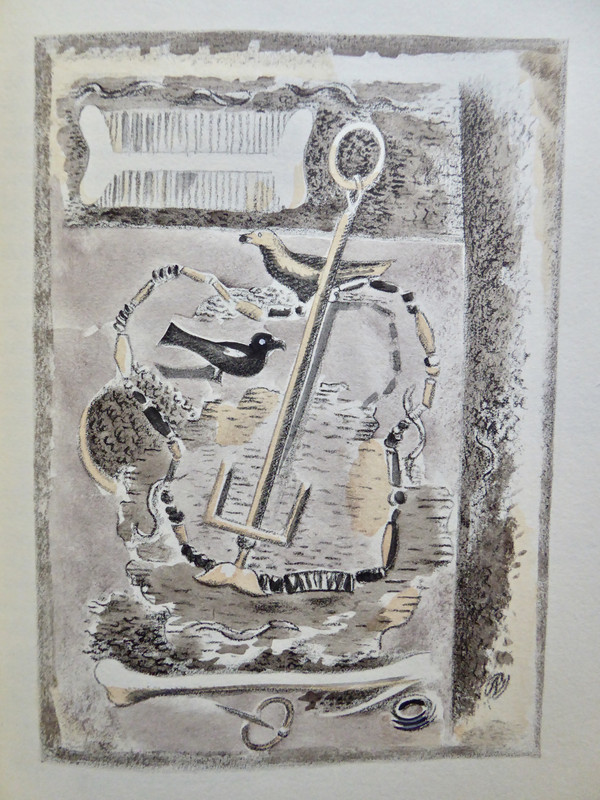
Buried Urne
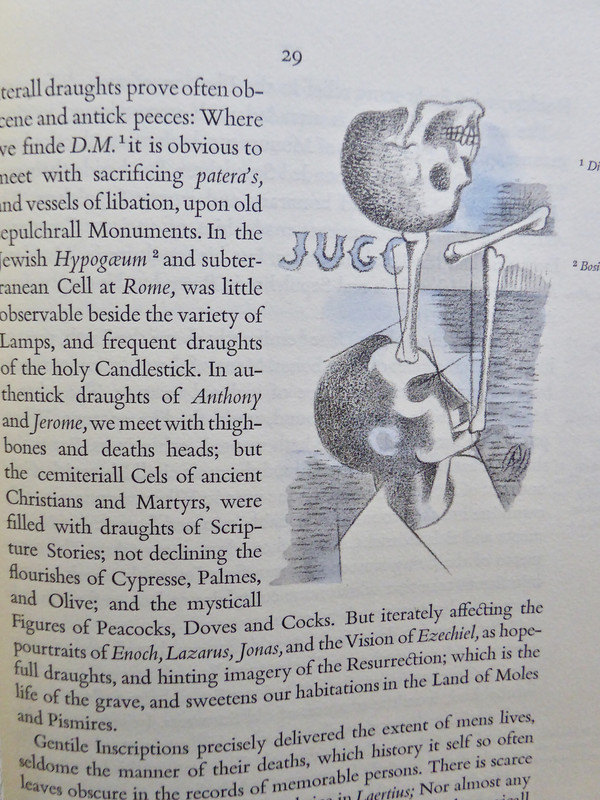
Funeral Pyre
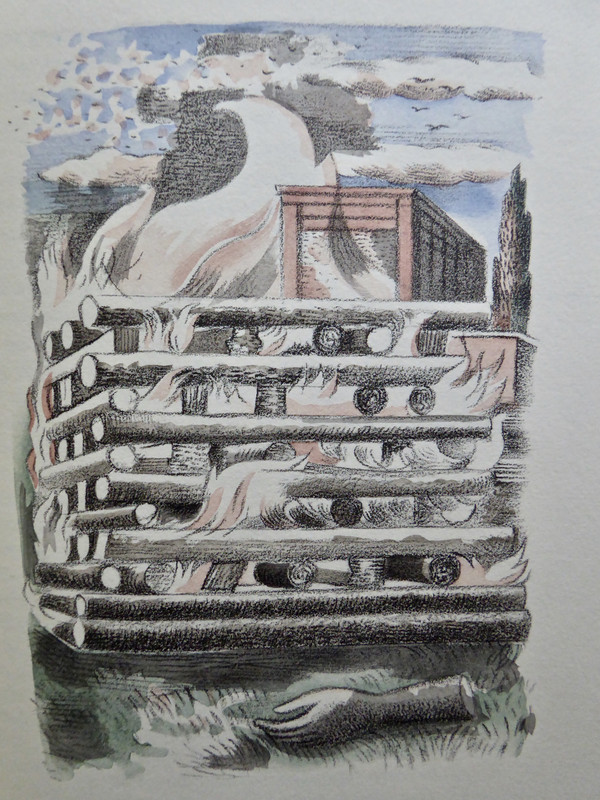
Mansions of the Dead
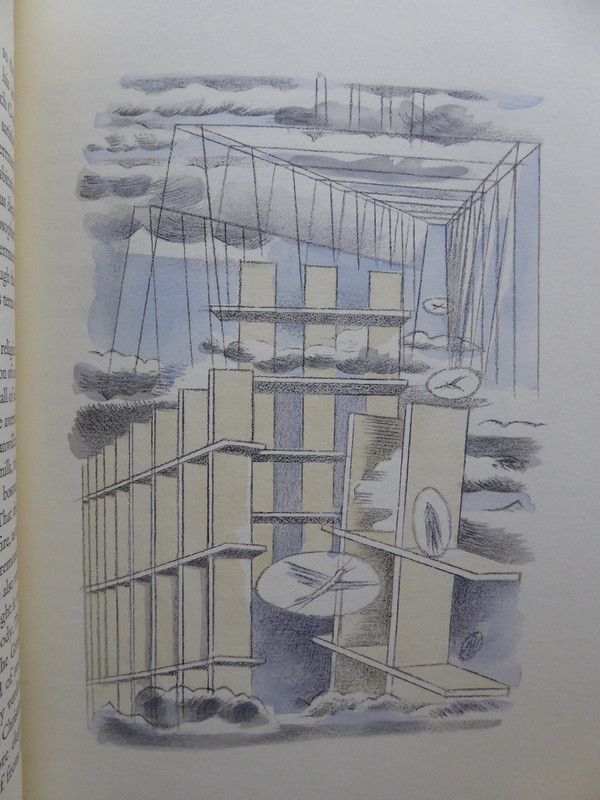
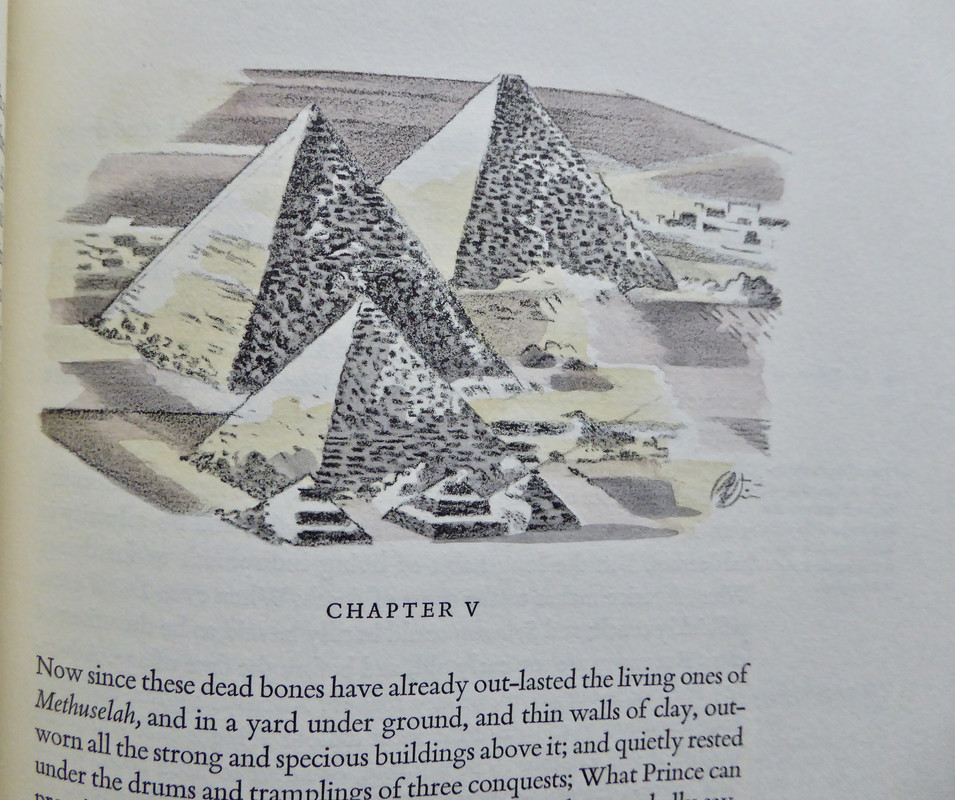
Ghosts
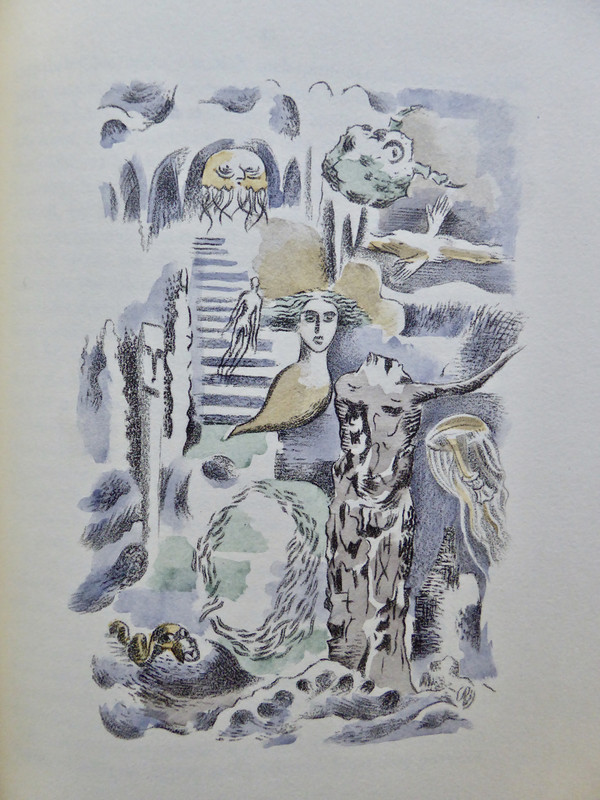
Sorrow
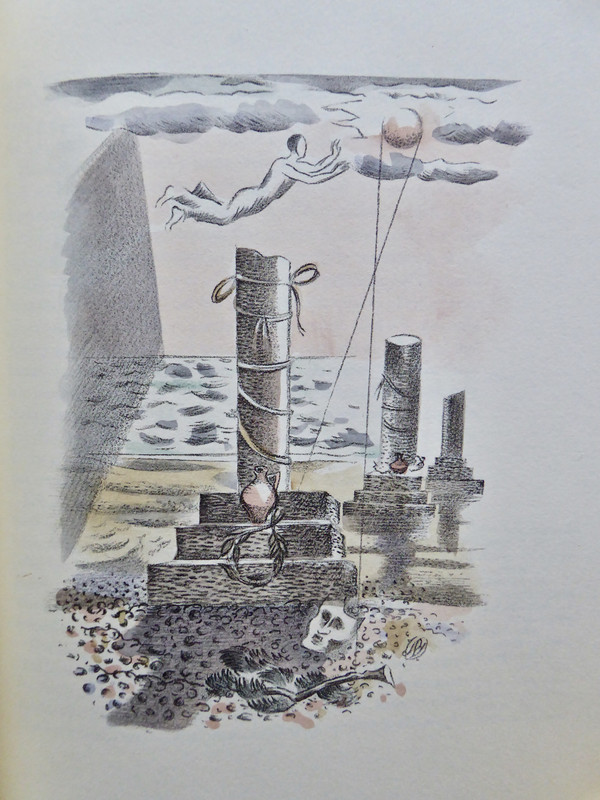
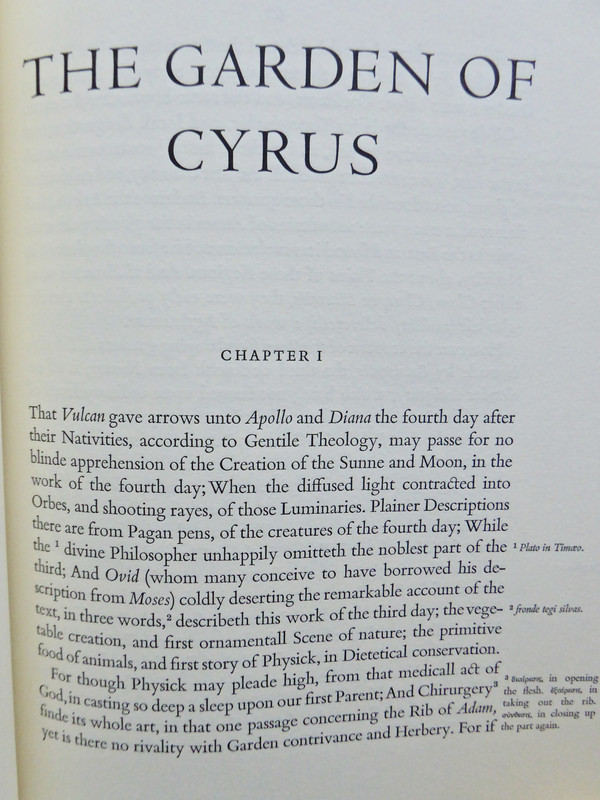
Vegetable Creation
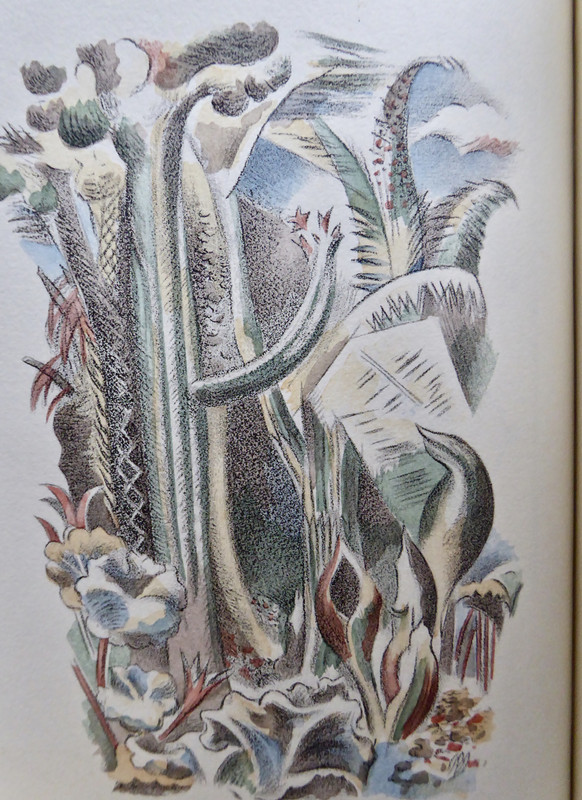
Poisonous Plants
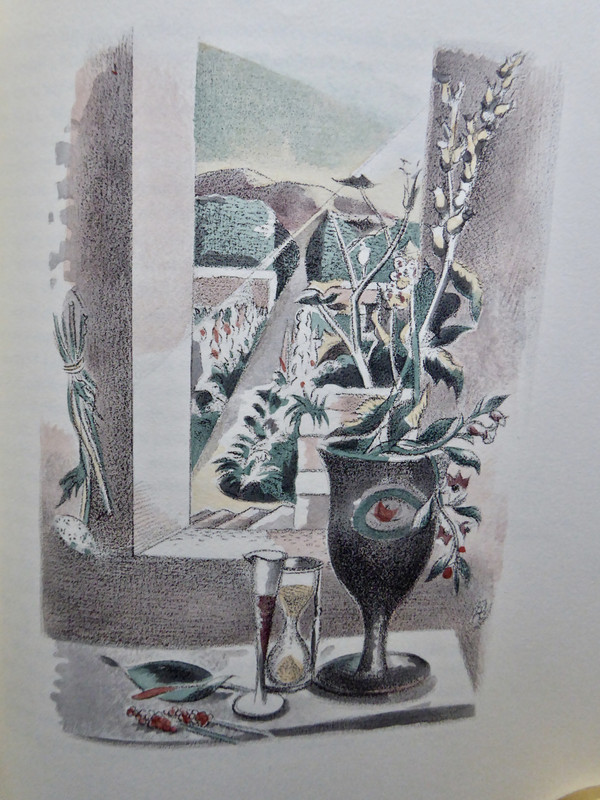
The Quincunx Naturally Considered
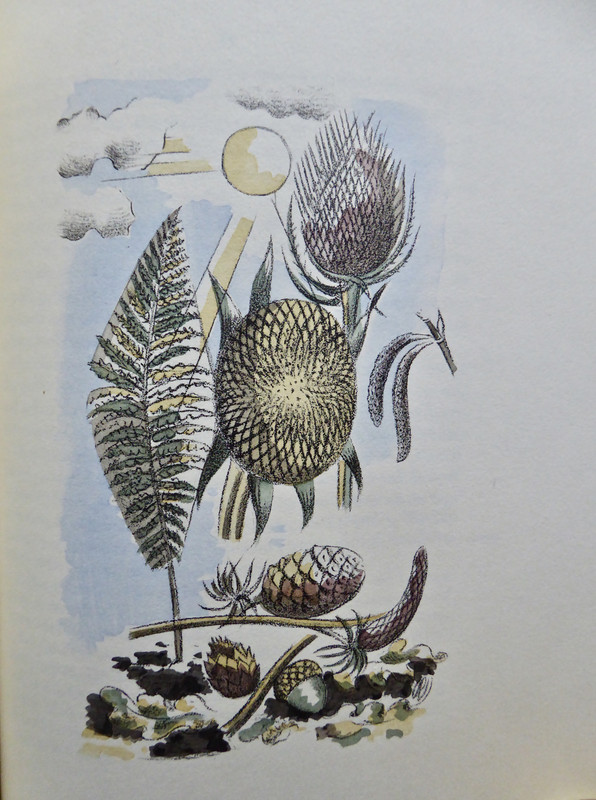
The Quincunx Mystically Considered
Edition of 215 copies set in large Bembo type, printed on J. Barcham Green handmade paper, with 15 full-page and 17 half-page pochoir illustrations by Paul Nash. Elaborate binding designed by Paul Nash (this is the second state of the binding by Sangorski & Sutcliffe) with brown morocco, central design with gilt quincunx and vellum inlay. Remainder of binding is ivory vellum with gilt lettering on the spine, all edges gilt. Custom slipcase by Sangorski & Sutcliffe.
This edition is widely considered by collectors to be one of the most distinctive illustrated private press books of the twentieth century, with inclusion in the Grolier Club (NYC) exhibition and catalogue book 'A Century for the Century:Fine Printed Books 1900-1999'. It is a perfect marriage between a classic work of literature and artist/illustrator, not surprising in this case because when specifically asked in 1932 which book he would like to illustrate, Paul Nash immediate chose this one, reflecting his knowledge of and admiration for Sir Thomas Browne's erudite discourses. Even so, Nash would revisit and study 'Urne Buriall' and 'The Garden of Cyrus' again to thoroughly familiarize himself with the work prior to creating the thirty-two original illustrations. Nash's goal was to take Sir Thomas Browne's major themes (the themes of death, myriad burial rites and mortality in Urne Buriall and the themes of optics, the geometry of nature and the interrelationship between geometry, art and nature, especially through an appreciation of the quincunx form) and bring them outside the page to the reader through his use of surrealist and abstract art.
Paul Nash (1899-1946) was a major British artist during and between the Great Wars. He began his artistic career painting traditional landscapes with elements of ancient history, then enlisted for World War I in 1914. He was a combatant until 1917 when he was discharged for medical reasons, a combination of severe lung damage following a gas attack at the Passchendaele (the Third Battle of Ypres) in 1917 and post-traumatic stress disorder ("shell shock") resulting from his years of experience in the trenches, becoming an official war artist later that year. In 1917 and 1918 Nash was a uniformed observer during some of WW I's most intense and destructive battles and the resulting carnage to both human and the natural world resulted in anger, disillusionment and despair regarding the folly of World War I. This was reflected in his artwork which, by now, had undergone a radical change showing stark, barren, apocalyptic landscapes of waste and destruction.
Between the wars Nash became influenced by Giorgio de Chirico's art following his London exhibition in 1928 and he became a pioneer of modernism in Great Britain, co-founding the influential modernist art movement Unit One with Henry Moore, Ben Nicholson and Barbara Hepworth. During World War II he would reprise his role an an official war artist, attached to the Royal Air Force and the Air Ministry. In tune with the change in the nature of combat between WW I and WW II, from the former's emphasis on trench warfare and the latter's emphasis on aerial warfare, his stark surrealistic, abstract art now featured airplanes and airplane wreckage set amidst barren landscapes. He painted his masterwork entitled 'Totes Meer' (Dead Sea) in 1941, an allegorical painting in which wrecked German planes and wings stacked upon each other simulate the waves of a bleak sea and English coastline.
The 1932 edition of 'Urne Buriall and The Garden of Cyrus' was destined to become an important private press book from the outset, pairing a quirky work of mid-seventeenth century literature and a talented, equally quirky artist with a thorough knowledge and appreciation of it. The highly unlikely mating of 'Urne Buriall and the Garden of Cyrus' with twentieth century surrealistic art succeeded beyond expectations. All aspects of this book's design and production were carefully considered. The unique binding executed by Sangorski & Sutcliffe was designed by Paul Nash himself, incorporating the quincunx design central to 'The Garden of Cyrus' into both front and rear covers, the paper is J. Barcham Green hand-made, and Nash's thirty-two illustrations were printed in collotype and hand-colored using a pochoir stenciling technique developed at the Curwen Press. Nash was so pleased with the Curwen Press work that he wrote to Harold Curwen 'I must say I think your people surpassed themselves'. The book was instantly recognized as a modern private press classic but it proved to be the "right" book at the wrong time. It was published just after the start of the Great Depression and the market for expensive books evaporated. The book sold poorly and as a result only eighty of the original 215 copies were bound for sale by the original bindery (Nevetts) with the remaining 135 copies sent unbound to Sangorski & Sutcliffe for binding at a later date.
Photographs below with captions above the full-page illustrations.
Tokens
Buried Urne
Funeral Pyre
Mansions of the Dead
Ghosts
Sorrow
Vegetable Creation
Poisonous Plants
The Quincunx Naturally Considered
The Quincunx Mystically Considered
2ultrarightist
Exquisite. A true masterwork deserving of its given superlatives. Normally, I am not a fan of avant-guard bindings, but this binding combines an apposite design with an expert craftsmanship that exudes from your photos. I assume you consider it one of the gems of your collection.
3MobyRichard
Definitely a top 10 for me, but sadly I will never be able to afford it.
For a cheaper alternative, Chiswick Press also did an 'Urne Buriall.'
For a cheaper alternative, Chiswick Press also did an 'Urne Buriall.'
4Lukas1990
Reviving this thread for those of you who haven't seen it. Have a nice Sunday checking out one of the most stunning books that has ever been featured on this forum.
5dlphcoracl
>4 Lukas1990:
One of the greatest illustrated books of the twentieth century, with pochoir illustrations no less.
One of the greatest illustrated books of the twentieth century, with pochoir illustrations no less.
6wcarter
Well, as the cheapest I can find is nearly US$7700, it ought to be one of the greatest illustrated books of the twentieth century!
7dlphcoracl
>6 wcarter:
LOL.
The crowning irony is, the copy you are referring to being offered by Bow Windows Bookshop in the U.K. is not collectible (imho). The original and iconic full morocco binding with brown morocco onlays and gilt-blocked quincunx designed by Paul Nash himself and executed by Sangorski & Sutcliffe has been replaced by a plain-jane limp vellum binding. This is one of a handful of private press books in which the original binding is an integral part of the edition and cannot/should not be replaced.
LOL.
The crowning irony is, the copy you are referring to being offered by Bow Windows Bookshop in the U.K. is not collectible (imho). The original and iconic full morocco binding with brown morocco onlays and gilt-blocked quincunx designed by Paul Nash himself and executed by Sangorski & Sutcliffe has been replaced by a plain-jane limp vellum binding. This is one of a handful of private press books in which the original binding is an integral part of the edition and cannot/should not be replaced.
8wcarter
>7 dlphcoracl:
So we are looking at US$10,000 for a collectible edition. Just a fraction out of my range :-)
So we are looking at US$10,000 for a collectible edition. Just a fraction out of my range :-)
9dlphcoracl
>8 wcarter:
That is correct.
It also explains why this book is rarely offered by fine & rare booksellers in the secondary market. The few times it has come up for auction over the past 5-6 years, it has sold (including Buyer's Premium) in the $7000 - $8500 range depending on book condition. Booksellers will not purchase a book at auction unless they believe they can double the price when they offer it, i.e., the mandatory 100% profit booksellers almost always aim for. Booksellers would have to offer this in the $14,000 - $15,000 range which, of course, will not sell. As a result, this book is almost always acquired by individual collectors when offered at auction.
That is correct.
It also explains why this book is rarely offered by fine & rare booksellers in the secondary market. The few times it has come up for auction over the past 5-6 years, it has sold (including Buyer's Premium) in the $7000 - $8500 range depending on book condition. Booksellers will not purchase a book at auction unless they believe they can double the price when they offer it, i.e., the mandatory 100% profit booksellers almost always aim for. Booksellers would have to offer this in the $14,000 - $15,000 range which, of course, will not sell. As a result, this book is almost always acquired by individual collectors when offered at auction.
10Lukas1990
Even with the buyer's premium the starting price is not THAT frightening and the book looks in excellent condition. Not in my lifetime but maybe yours, dear FPF members?
https://www.invaluable.com/auction-lot/_8CD4079B9D
https://www.invaluable.com/auction-lot/_8CD4079B9D

