September HistoryCAT - Religion/Philosophy/Politics/Law
Talk 2021 Category Challenge
Join LibraryThing to post.
1thornton37814


September's HistoryCAT focuses on four areas: Religion, Philosophy, Politics, and Law. Sometimes we can find books that fit more than one of the four areas. At other times, we may find books that fit only one of the areas well.
Please feel free to choose either a single category, multiple ones, or books combining more than one of the areas.
I'll post some suggestions from each area as well as some books dealing with more than one category over the next few posts. I will begin with a few for each category and then go back and add so be sure to visit later.
2thornton37814
Religion
A few suggestions:



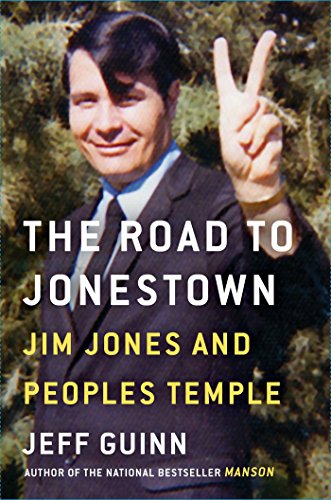


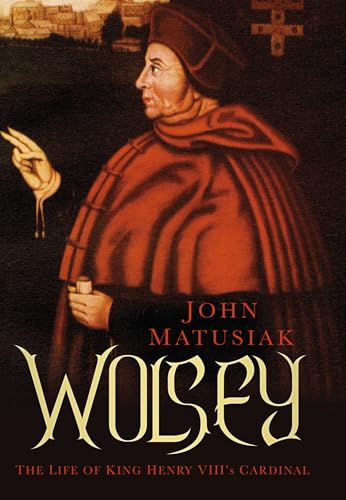

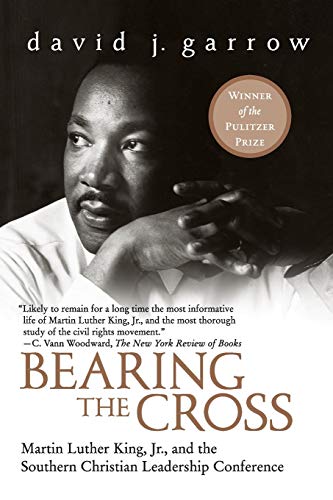
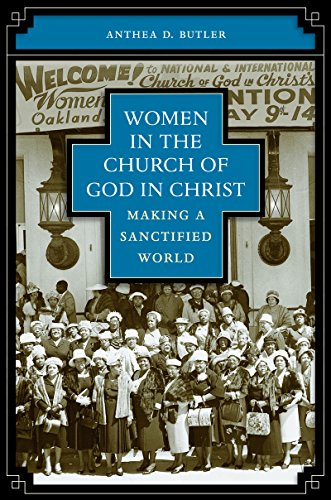
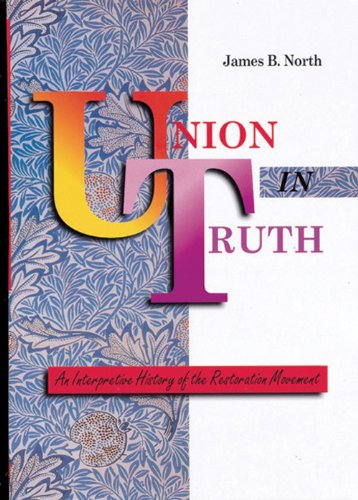
A few suggestions:


3thornton37814
Philosophy
A few suggestions:
A few suggestions:
4thornton37814
Politics
A few suggestions:




A few suggestions:


5thornton37814
The Law
A few suggestions:
A few suggestions:
6thornton37814
Combinations of the Four Categories
A few suggestions:



A few suggestions:

7thornton37814
I'm fairly certain one of the books I'll read this month is Brabbling Women: Disorderly Speech and the Law in Early Virginia by Terri L. Snyder. I'll probably also grab a religious history off my shelves to read, but I'm not sure which one yet.
8pamelad
Thank you for this wide range of suggestions.
I am thinking of reading The Case of Comrade Tulayev by Victor Serge, which is about the Stalinist Purges so could be classified as political. Anna Funder's Stasiland is another possibility.
I am thinking of reading The Case of Comrade Tulayev by Victor Serge, which is about the Stalinist Purges so could be classified as political. Anna Funder's Stasiland is another possibility.
9Robertgreaves
I'm thinking of Claudius, a biography of the Roman emperor by Barbara Levick. There is bound to be plenty of politics in there.
Alternatively, if our host allows, and since the history of science isn't really covered in another category I might go back to the earlier term and call it natural philosophy so I can read The Glass Universe by Dava Sobel
Alternatively, if our host allows, and since the history of science isn't really covered in another category I might go back to the earlier term and call it natural philosophy so I can read The Glass Universe by Dava Sobel
10LibraryCin
I have quite a few options. I'm not sure how many of them also include history, but I'll hope whatever I choose does! (Found via tagmash)
- The Road to Jonestown / Jeff Guinn
- When Men Become Gods / Stephen Singular
- Going Clear: Scientology, Hollywood... / Lawrence Wright
- Notorious RBG / Irin Carmon, S.K.
- Just Mercy / Bryan Stevenson
- The Autobiography of an Execution / David R. Dow
- The Road to Jonestown / Jeff Guinn
- When Men Become Gods / Stephen Singular
- Going Clear: Scientology, Hollywood... / Lawrence Wright
- Notorious RBG / Irin Carmon, S.K.
- Just Mercy / Bryan Stevenson
- The Autobiography of an Execution / David R. Dow
11Tess_W
I think for this CAT I will read The Cost of Discipleship by Dietrich Bonhoffer.
12thornton37814
>9 Robertgreaves: Robert, if you want to interpret it that way, you may do so.
13pamelad
>8 pamelad: I've finished Stasiland early, and can recommend it.
14jeanned
I won't have the time or concentration for nonfiction in September as we are moving to online learning and nearing year-end exams in New Zealand, so I am going for something different with The Testament of Mary by Colm Tóibín.
15sallylou61
I'm planning to read something about the history of Quakers. Books from which I will choose:
Remaking Friends: How Progressive Friends Changed Quakerism & Helped Save America by Chuck Fager
A Procession of Friends: Quakers in America by Daisy Newman.
Fit for Freedom, Not for Friendship: Quakers, African Americans, and the Myth of Racial Justice by Donna McDaniel and Vanessa Julye
Remaking Friends: How Progressive Friends Changed Quakerism & Helped Save America by Chuck Fager
A Procession of Friends: Quakers in America by Daisy Newman.
Fit for Freedom, Not for Friendship: Quakers, African Americans, and the Myth of Racial Justice by Donna McDaniel and Vanessa Julye
17LibraryCin
The Road to Jonestown / Jeff Guinn
4 stars
Jim Jones was the leader of the Peoples’ Temple. This is the group that, in November 1978, committed mass suicide in Guyana, by “drinking the Kool Aid” (it wasn’t actually Kool Aid, but a similar flavoured drink, laced with cyanide). Over 900 people died that day. This book is actually a biography of Jim Jones, so it looks at his entire life. When he was starting out, he was charismatic, he believed in a world (in the 50s) where races mixed freely, and he believed in socialism, where everyone helped everyone else. The socialism attracted some to his group, as did his so-called healing powers. As his group got bigger, he moved them from Indiana to California, and of course, later to Guyana. He was married, but had several affairs and children.
This was really good. I didn’t realize until I checked it out of the library that the author is Jeff Guinn. It was just last year that I read his book on Bonnie and Clyde and I thought it was so well-researched, as was this one. I actually didn’t know much about Jim Jones or his followers, so this was new to me (except the “Kool Aid” suicide). I can see where he would have been very charismatic and appealing with his outlook on life, initially, at least. I would have liked to know more of the aftermath and the people left behind; I suppose that would have been somewhat extraneous, though, since the book is a biography of Jim.
I listened to the audio, and I do wonder if the book might have some photos (I suspect so – his Bonnie and Clyde book did), so I may have missed out on that, but the narrator was good. It was long, so yes, I did lose interest occasionally, but not often and overall, I thought it was well done.
4 stars
Jim Jones was the leader of the Peoples’ Temple. This is the group that, in November 1978, committed mass suicide in Guyana, by “drinking the Kool Aid” (it wasn’t actually Kool Aid, but a similar flavoured drink, laced with cyanide). Over 900 people died that day. This book is actually a biography of Jim Jones, so it looks at his entire life. When he was starting out, he was charismatic, he believed in a world (in the 50s) where races mixed freely, and he believed in socialism, where everyone helped everyone else. The socialism attracted some to his group, as did his so-called healing powers. As his group got bigger, he moved them from Indiana to California, and of course, later to Guyana. He was married, but had several affairs and children.
This was really good. I didn’t realize until I checked it out of the library that the author is Jeff Guinn. It was just last year that I read his book on Bonnie and Clyde and I thought it was so well-researched, as was this one. I actually didn’t know much about Jim Jones or his followers, so this was new to me (except the “Kool Aid” suicide). I can see where he would have been very charismatic and appealing with his outlook on life, initially, at least. I would have liked to know more of the aftermath and the people left behind; I suppose that would have been somewhat extraneous, though, since the book is a biography of Jim.
I listened to the audio, and I do wonder if the book might have some photos (I suspect so – his Bonnie and Clyde book did), so I may have missed out on that, but the narrator was good. It was long, so yes, I did lose interest occasionally, but not often and overall, I thought it was well done.
18thornton37814
>17 LibraryCin: That tragedy happened when I was in high school. We had to do presentations in our American history course on topics since 1945. I chose the "cults" topic. Although much of it focused on the Moonies, Hare Krishnas, and others that made waves earlier, I included Jim Jones and Peoples' Temple because the tragedy was fresh on the minds of everyone. Needless to say I didn't have the things at my disposal Jeff Guinn had, but I was able to uncover a lot that came out during the year between the event and my report. I really need to read Guinn's report. I'll opt for print!
19LibraryCin
>18 thornton37814: Oh, yeah. This will definitely be interesting for you!
I would have been almost 6 years old (within a couple of weeks) when I happened, so I don't really remember.
I do remember cults being a thing in the 70s. When I was a kid, there was a group that moved to my small town in Saskatchewan. I don't remember how long they were there, but it wasn't long. I remember having one of the kids over to my house, and after that my parents wouldn't allow anyone (outside our family) in the house if one of them wasn't home; apparently some of mom's jewellry had gone missing.
I would have been almost 6 years old (within a couple of weeks) when I happened, so I don't really remember.
I do remember cults being a thing in the 70s. When I was a kid, there was a group that moved to my small town in Saskatchewan. I don't remember how long they were there, but it wasn't long. I remember having one of the kids over to my house, and after that my parents wouldn't allow anyone (outside our family) in the house if one of them wasn't home; apparently some of mom's jewellry had gone missing.
20Tess_W
I finished Dietrich Bonhoeffer's The Cost of Discipleship. What a brilliant mind!
21thornton37814
I just read one that I really didn't expect to fit here, but it does! I highly recommend The Woman They Could Not Silence by Kate Moore. It deals with both law (women under coverture) and politics (a woman working for social reform within the political system). Although this is non-fiction, it reads like a novel. I couldn't put it down.
22pamelad
I have started The History of Philosophy by A. C. Grayling.
23Robertgreaves
COMPLETED The Liars' Gospel by Naomi Alderman
My review:
Stories of Yehoshuah/Jesus from Miryam/Mary, Iehouda/Judas, Caiaphas, and Bar-Avo/Barrabas.
The stories are firmly rooted in the Jewish context of a land occupied by the Romans but show a figure different but recognisably extrapolated from the stories in the New Testament. Fascinating.
My review:
Stories of Yehoshuah/Jesus from Miryam/Mary, Iehouda/Judas, Caiaphas, and Bar-Avo/Barrabas.
The stories are firmly rooted in the Jewish context of a land occupied by the Romans but show a figure different but recognisably extrapolated from the stories in the New Testament. Fascinating.
24LibraryCin
Notorious RBG / Irin Carmon, Shana Knizhnik
3 stars
The RBG in the title is, of course, Ruth Bader Ginsburg, one of the first women lawyers in the US, and later Supreme Court judge.
She was an amazing woman who brought about a lot of good for women, but I was a bit disappointed that this wasn’t really a biography as much as a look at her work and career, and the changes she brought to US law. There were bits and pieces of her personal life, but not a lot. I listened to the audio and it was not interesting to listen to various laws being read. It was pretty short – it felt like it was abridged but it wasn’t. This was published in 2015, before her death… and also before Trump made it into office. For me, this was simply “ok”.
3 stars
The RBG in the title is, of course, Ruth Bader Ginsburg, one of the first women lawyers in the US, and later Supreme Court judge.
She was an amazing woman who brought about a lot of good for women, but I was a bit disappointed that this wasn’t really a biography as much as a look at her work and career, and the changes she brought to US law. There were bits and pieces of her personal life, but not a lot. I listened to the audio and it was not interesting to listen to various laws being read. It was pretty short – it felt like it was abridged but it wasn’t. This was published in 2015, before her death… and also before Trump made it into office. For me, this was simply “ok”.
25threadnsong
My contribution to this month's challenge is a great excuse to bring The Tragedy of the Templars off the shelves and onto my reading piles. I started a couple of days ago and it is very well-researched and well-written.
History + religion
History + religion
26threadnsong
>17 LibraryCin: >18 thornton37814: I was also in high school when Jonestown happened, and this book was absolutely fascinating. I saw a PBS documentary in November of 2018? 2019? that really made me go out and grab the book.
I attended Earlham College in Richmond, Indiana (yes, the same Richmond!) and I remember seeing his wife's headstone in the graveyard and wondering why she would be openly buried there. Now having read the book and understanding the tragedy that went on in her life by marrying Jim Jones, I can also understand why her family would want her close by. What a loss for them as well.
I attended Earlham College in Richmond, Indiana (yes, the same Richmond!) and I remember seeing his wife's headstone in the graveyard and wondering why she would be openly buried there. Now having read the book and understanding the tragedy that went on in her life by marrying Jim Jones, I can also understand why her family would want her close by. What a loss for them as well.
27MissWatson
I finally tackled Götter und Mythen des Nordens for this which looks at Norse mythology and religion strictly as it can be found in the literary sources. Which is very little, apparently, the most frequently used words are possibly and its synonyms. Useful as a reference book, though, so I am keeping it.
28LibraryCin
Smoke Gets in Your Eyes and Other Lessons from the Crematory / Caitlyn Doughty
4 stars
Fascinated with death since she was a child, at 23-years old, after completing her medieval history degree, the author worked at a crematorium where she learned a lot and it prompted her to go to mortuary school, though she hated embalming with a passion! But she wanted to learn what the majority in the industry were taught. In addition to stories she tells of her coworkers, and incidents and stories with the dead bodies she worked with, she looks at the history of death rituals in various places and times.
Loved some of the quirky people she worked with! I enjoyed reading about the different death/dying rituals through time and place. She does throw some humour in there – I suppose to work in the industry one must possess some humour to lighten things up. Like her, I have been wanting to have a green burial for a long time now. It was just about a week ago that a new cemetery opened in my city with a green burial option, so I’m happy about that.
4 stars
Fascinated with death since she was a child, at 23-years old, after completing her medieval history degree, the author worked at a crematorium where she learned a lot and it prompted her to go to mortuary school, though she hated embalming with a passion! But she wanted to learn what the majority in the industry were taught. In addition to stories she tells of her coworkers, and incidents and stories with the dead bodies she worked with, she looks at the history of death rituals in various places and times.
Loved some of the quirky people she worked with! I enjoyed reading about the different death/dying rituals through time and place. She does throw some humour in there – I suppose to work in the industry one must possess some humour to lighten things up. Like her, I have been wanting to have a green burial for a long time now. It was just about a week ago that a new cemetery opened in my city with a green burial option, so I’m happy about that.
29susanna.fraser
I read Adams vs. Jefferson: The Tumultuous Election of 1800, which, among other things, convinced me that the Electoral College was never, ever a good idea, given that it almost broke the country in the second ever contested presidential election. (Yes, I know they made some adjustments afterward. Didn't go nearly far enough IMHO.)
30VivienneR
I read Nineteen Eighty-four by George Orwell.
Considering this was written in 1948 it is a sort of backward look at history, formed of what Orwell imagined at the time might form the future. In the political and social unrest of the 1930s and 1940s this was a dystopian view understandably envisioned by someone with Orwell's perception and experience. Not a pleasant story, but for political junkies of today, a must-read book.
I haven't read this for many years yet was surprised by how much detail I remembered.
Considering this was written in 1948 it is a sort of backward look at history, formed of what Orwell imagined at the time might form the future. In the political and social unrest of the 1930s and 1940s this was a dystopian view understandably envisioned by someone with Orwell's perception and experience. Not a pleasant story, but for political junkies of today, a must-read book.
I haven't read this for many years yet was surprised by how much detail I remembered.
31pamelad
I am reading The Curate in Charge by Margaret Oliphant, which was first published in 1875. It isn't historical fiction because it's set in the time it was written, but it's about the past and is concerned with the Church of England. Readers of The Barsetshire Chronicles will be familiar with the roles of rectors, vicars and curates and the disposition of livings.
I am also reading The History of Philosophy by A. C. Grayling but it's going very slowly and won't be finished this month. I'm up to Plato.
I am also reading The History of Philosophy by A. C. Grayling but it's going very slowly and won't be finished this month. I'm up to Plato.
32MissWatson
Die Welt aus den Angeln looks at the Little Ice Age and how it transformed the societies of Europe (Western Europe, mostly, as that is where the author knows his stuff). Religion and Philosophy play a big role in people's efforts to understand and come to terms with the changes.
34pammab
I finished Antisocial: Online Extremists, Techno-Utopians, and the Hijacking of the American Conversation. It was very good, but I noticed a (downward) correlation with my mood while I was reading it.
35sallylou61
This evening I read "Westtown's Integration: 'A Natural and Fruitful Enlargement of Our Lives'" by Margaret Morris Haviland, an article which appeared in Quaker History, Fall 2006, pp.19-33. I'm a graduate of Westtown School and recently the Westtown Community -- students, faculty, staff, students' parents, alumni, etc. -- have been addressing the issue of making minority groups, especially black people, more welcome in our school. We want to combat any kind racism (BIPOC) in all forms. (This is being addressed by many private schools along the eastern U.S. coast and probably elsewhere.) Now there are a large number of minority students, but they still feel as if they are mistreated. My class, the class of 1961, held a zoom discussion on this topic yesterday afternoon. This article was suggested as helpful reading. It just gives the history until the first black students were admitted in the mid-1940s; it does not go beyond then. However, in my class of approximately 95 students we had one black student, one Native American student, and one student of Oriental descent so that it was just token integration. Interestingly, two issues of integration are addressed in the article: admitting nonQuaker students, and admitting black students. Now Quakers make up a very small minority of the student body.
I had hoped to read a book on Quaker history or political history this month, but, unfortunately, this is not going to happen.
I had hoped to read a book on Quaker history or political history this month, but, unfortunately, this is not going to happen.
36pamelad
>35 sallylou61: Is it respectful to call Black people "blacks" ?
37jeanned
I read Don Winslow's The Power of the Dog, a well-researched saga of DEA versus state-approved narcotraffickers, Vatican power plays, and the politics of the "war on drugs" from Reagan to Clinton.
38sallylou61
>36 pamelad: Thanks for pointing that out. I meant to say black people; I've corrected it.
39sallylou61
I had not been planning to read anything else for this challenge, but today I reread Thee, Hannah, a children's novel by Marguerite de Angeli. Hannah was a young Quaker girl living in Philadelphia prior to the Civil War. This time I read it, I noted how often the underground railroad, which plays an important part at the end of the story was referred it earlier in the book. In addition to Quakers helping with the underground railroad, 19th century Quaker dress is prominently featured.
40threadnsong
I'm so very, very close to finishing The Tragedy of the Templars that I'll go ahead and post it here to this thread. It is perhaps the most historically comprehensive book I've read about the Knights Templar: it starts with 0 A.D. and discusses how Outremar was a strongly Christian area within the larger Graeco-Roman Empires. Very strong historical, political, and religious threads.

