1John5918
The topic of inculturation has come up from time to time in passing, and I know that at least one regular poster here has concerns about it. It's of great interest to me, living as I do on a continent which has a non-European culture and history, and to which modern Christianity was brought by European missionaries, mostly within the last two centuries, although there were many earlier non-European manifestations, from New Testament times (cf Acts 8:26-40), through the era of the early Church Fathers and Mothers (including St Augustine of Hippo, that great Doctor of the Church whose African origin is often overlooked), the Christian kingdom in Sudan from about the 4th to 15th centuries CE, and early European missionary activities - Fort Jesus in the Kenyan town of Mombasa was built by the Portuguese at the end of the 16th century. I focus on inculturation in Africa because that is where I am situated and it is most immediate for me, but of course it's also an imperative in all cultures to which Christianity has been introduced, and we can explore any and all forms of inculturation.
Currently I'm reading Theology Brewed in an African Pot by the Nigerian Jesuit theologian Fr Agbonkhianmeghe E Orobator, a very readable little book. I'm also editing the manuscript of an as yet unpublished work by a Kenyan Opus Dei priest - two extremes, one might say! Yet although they disagree on some technical details, nevertheless there is broad agreement. The Opus Dei author takes pains to situate inculturation firmly within the Tradition of the Church beginning with scripture, using St Thomas Aquinas and Scholastic theological method, referencing the Councils of Chalcedon and both Vatican I and Vatican II (between the two of which he sees no contradiction, incidentally), and making extensive use of Pope St John Paul II's 1998 encyclical Fides et ratio. Tanzanian Fr Laurenti Magesa is another theologian who writes extensively on inculturation, particularly in the African context. And for a non-academic resource, Orobator highly recommends Chinua Achebe's famous novel Things Fall Apart, which tells the story of a Nigerian village's reaction to British missionaries and colonial authorities.
Inculturation in a Christian context might be defined as a process of engagement between the Christian Gospel and a particular culture. It is intended both to safeguard the integrity of the Gospel (cf the Opus Dei author above) and to encourage sensitivity to various cultural contexts. It is "the incarnation of the Gospel in native cultures and also the introduction of these cultures into the life of the Church" (Faith and Inculturation, International Theological Commission (1988), 11, quoting Pope St John Paul II'sSlavorum apostoli (1985), 21, which praises Saints Cyril and Methodius for their work of inculturation more than a thousand years earlier).
In the words of recent popes, "In preaching the Gospel, Christianity first encountered Greek philosophy; but this does not mean at all that other approaches are precluded. Today, as the Gospel gradually comes into contact with cultural worlds which once lay beyond Christian influence, there are new tasks of inculturation, which mean that our generation faces problems not unlike those faced by the Church in the first centuries... it is the duty of Christians now to draw from this rich heritage the elements compatible with their faith, in order to enrich Christian thought" (John Paul II, Fides et ratio, 72). And "the First Synodal Assembly for Africa spoke of the need for an in-depth study of African traditions and cultures... the Church needs to carry out a thorough discernment in order to identify those aspects of the culture which represent an obstacle to the incarnation of Gospel values, as well as those aspects which promote them. Nonetheless, we must always remember that the Holy Spirit is the true agent of inculturation, 'presiding in a fruitful way at the dialogue between the word of God, revealed in Christ, and the deepest questions which arise among the multitude of human beings and cultures. In this way, the Pentecost-event continues in history, in the unity of one and the same faith, enriched by the diversity of languages and cultures.' The Holy Spirit enables the Gospel to permeate all cultures, without becoming subservient to any" (Benedict XVI, Africae Munus, 36, 37).
Before I write more, I wonder whether there is any interest amongst members of this group in a conversation on this topic of inculturation? We don't seem to get much active conversation here - most of it is just posting news and occasional short bursts of agreement or disagreement which hardly merits the description "conversation". Any takers?
Currently I'm reading Theology Brewed in an African Pot by the Nigerian Jesuit theologian Fr Agbonkhianmeghe E Orobator, a very readable little book. I'm also editing the manuscript of an as yet unpublished work by a Kenyan Opus Dei priest - two extremes, one might say! Yet although they disagree on some technical details, nevertheless there is broad agreement. The Opus Dei author takes pains to situate inculturation firmly within the Tradition of the Church beginning with scripture, using St Thomas Aquinas and Scholastic theological method, referencing the Councils of Chalcedon and both Vatican I and Vatican II (between the two of which he sees no contradiction, incidentally), and making extensive use of Pope St John Paul II's 1998 encyclical Fides et ratio. Tanzanian Fr Laurenti Magesa is another theologian who writes extensively on inculturation, particularly in the African context. And for a non-academic resource, Orobator highly recommends Chinua Achebe's famous novel Things Fall Apart, which tells the story of a Nigerian village's reaction to British missionaries and colonial authorities.
Inculturation in a Christian context might be defined as a process of engagement between the Christian Gospel and a particular culture. It is intended both to safeguard the integrity of the Gospel (cf the Opus Dei author above) and to encourage sensitivity to various cultural contexts. It is "the incarnation of the Gospel in native cultures and also the introduction of these cultures into the life of the Church" (Faith and Inculturation, International Theological Commission (1988), 11, quoting Pope St John Paul II'sSlavorum apostoli (1985), 21, which praises Saints Cyril and Methodius for their work of inculturation more than a thousand years earlier).
In the words of recent popes, "In preaching the Gospel, Christianity first encountered Greek philosophy; but this does not mean at all that other approaches are precluded. Today, as the Gospel gradually comes into contact with cultural worlds which once lay beyond Christian influence, there are new tasks of inculturation, which mean that our generation faces problems not unlike those faced by the Church in the first centuries... it is the duty of Christians now to draw from this rich heritage the elements compatible with their faith, in order to enrich Christian thought" (John Paul II, Fides et ratio, 72). And "the First Synodal Assembly for Africa spoke of the need for an in-depth study of African traditions and cultures... the Church needs to carry out a thorough discernment in order to identify those aspects of the culture which represent an obstacle to the incarnation of Gospel values, as well as those aspects which promote them. Nonetheless, we must always remember that the Holy Spirit is the true agent of inculturation, 'presiding in a fruitful way at the dialogue between the word of God, revealed in Christ, and the deepest questions which arise among the multitude of human beings and cultures. In this way, the Pentecost-event continues in history, in the unity of one and the same faith, enriched by the diversity of languages and cultures.' The Holy Spirit enables the Gospel to permeate all cultures, without becoming subservient to any" (Benedict XVI, Africae Munus, 36, 37).
Before I write more, I wonder whether there is any interest amongst members of this group in a conversation on this topic of inculturation? We don't seem to get much active conversation here - most of it is just posting news and occasional short bursts of agreement or disagreement which hardly merits the description "conversation". Any takers?
2brone
I'll always take you on (where two or more are gathered in My Name) If by inculturation you mean a repetition of the fiasco in the Vatican gardens brought about by tolerating srycretism (that word again) I won't go into all the baloney brought about by this foolishness. Syncretism is practiced here in the US Voodooism is a blend of devil worship an Roman Catholicism, I hope the Pope won't invite them to the garden, The symbol of this inculturation got thrown in the Tiber by angry parishoners who had to endure it in their church, lo and behold a duplicate Pachamama was rushed into service (much like the replacing of the son's dead pet Hamster). Voices from the progressive left were heard all over the World, even Cupcake Cupich cried vandalism coining the word quip inculteration which brings to mind another quiping Cardinal from Chicago seamless garment Bernardin, more on his illustrious legacy later....JMJ....
3John5918
>2 brone:
Do you really have to use derogatory terms when you refer to a cardinal, or indeed any other human being?
Fortunately inculturation has nothing to do with syncretism, so apparently we are not in disagreement.
I'm not an expert on inculturation in Latin America, so I don't know all the background of the Pachamama statue. What I do know is that most of the images of the Blessed Virgin Mary which we grew up with in Europe and north America bear no resemblance whatsoever to what the real Mary would have looked like. We (or our artistic forerunners) created these images of Mary in a way that made sense to our cultures, ie in our own image and likeness, an early form of inculturation before the term gained currency. Africans have great respect for motherhood, but a thin pale white woman in a blue robe and veil means very little to them, so African artists have created some beautiful, meaningful, respectful and culturally appropriate representations of the Mother of God. Presumably the same is true in Latin America. These images might seem meaningless and alien, even threatening, to some European or white north American Catholics, but they are as authentic as the ones that we grew up with.
Do you really have to use derogatory terms when you refer to a cardinal, or indeed any other human being?
Fortunately inculturation has nothing to do with syncretism, so apparently we are not in disagreement.
I'm not an expert on inculturation in Latin America, so I don't know all the background of the Pachamama statue. What I do know is that most of the images of the Blessed Virgin Mary which we grew up with in Europe and north America bear no resemblance whatsoever to what the real Mary would have looked like. We (or our artistic forerunners) created these images of Mary in a way that made sense to our cultures, ie in our own image and likeness, an early form of inculturation before the term gained currency. Africans have great respect for motherhood, but a thin pale white woman in a blue robe and veil means very little to them, so African artists have created some beautiful, meaningful, respectful and culturally appropriate representations of the Mother of God. Presumably the same is true in Latin America. These images might seem meaningless and alien, even threatening, to some European or white north American Catholics, but they are as authentic as the ones that we grew up with.
4Crypto-Willobie
>3 John5918: Well said.
5brone
I prefer To think of Christ interms of the Incarnation, I don't care what he looked like....JMJ....

8John5918
A few from Africa:
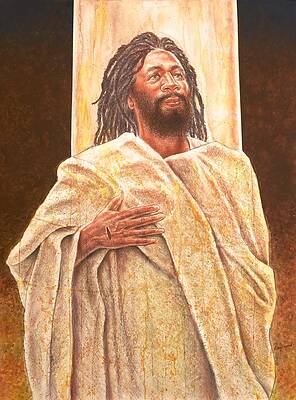
https://render.fineartamerica.com/images/images-profile-flow/400/images/artworki...

https://i.pinimg.com/736x/1d/4d/b4/1d4db41aba4aa02a345513f37ccd9ce9.jpg

https://i.pinimg.com/736x/e3/0a/06/e30a06ee2023c40fc805b556cd93676f.jpg

https://cdn3.volusion.com/tjcdu.wajco/v/vspfiles/photos/x61-810-D-2.jpg?v-cache=...

https://d2y1pz2y630308.cloudfront.net/22800/pictures/2021/9/26%20sunday-1.jpg
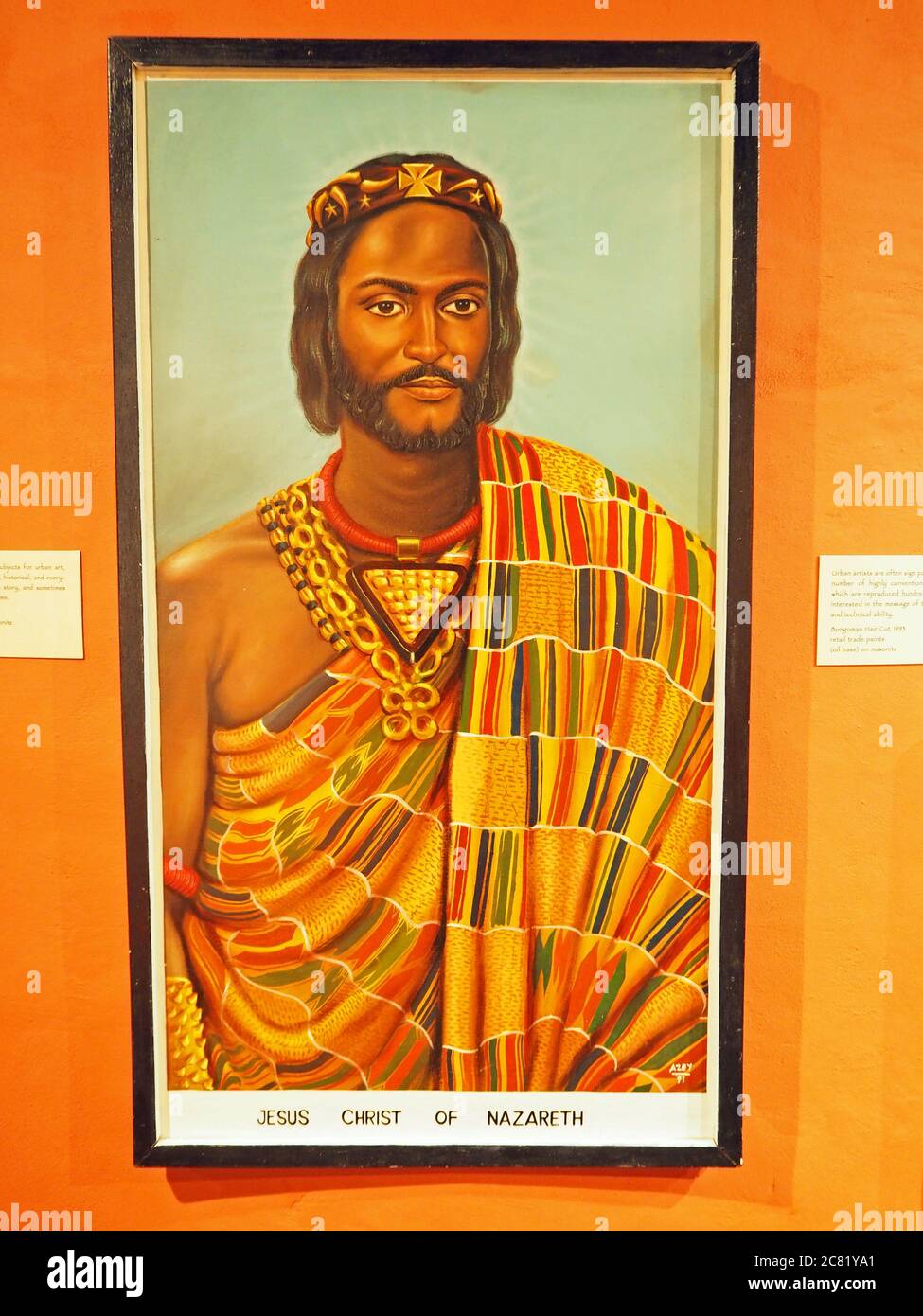
https://c8.alamy.com/comp/2C81YA1/black-african-jesus-of-nazareth-painting-calga...
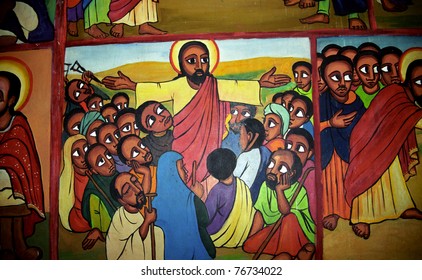
https://image.shutterstock.com/image-photo/kalacha-kenya-december-25-black-260nw...
Incidentally, many of the Ethiopian images long pre-date the modern inculturation process, as Christianity has been in Ethiopia since at least the 4th century CE.
https://render.fineartamerica.com/images/images-profile-flow/400/images/artworki...

https://i.pinimg.com/736x/1d/4d/b4/1d4db41aba4aa02a345513f37ccd9ce9.jpg

https://i.pinimg.com/736x/e3/0a/06/e30a06ee2023c40fc805b556cd93676f.jpg

https://cdn3.volusion.com/tjcdu.wajco/v/vspfiles/photos/x61-810-D-2.jpg?v-cache=...

https://d2y1pz2y630308.cloudfront.net/22800/pictures/2021/9/26%20sunday-1.jpg
https://c8.alamy.com/comp/2C81YA1/black-african-jesus-of-nazareth-painting-calga...
https://image.shutterstock.com/image-photo/kalacha-kenya-december-25-black-260nw...
Incidentally, many of the Ethiopian images long pre-date the modern inculturation process, as Christianity has been in Ethiopia since at least the 4th century CE.
9John5918
And a few of the madonna and child.

https://images.fineartamerica.com/images-medium-large-5/african-madonna-lisa-fra...
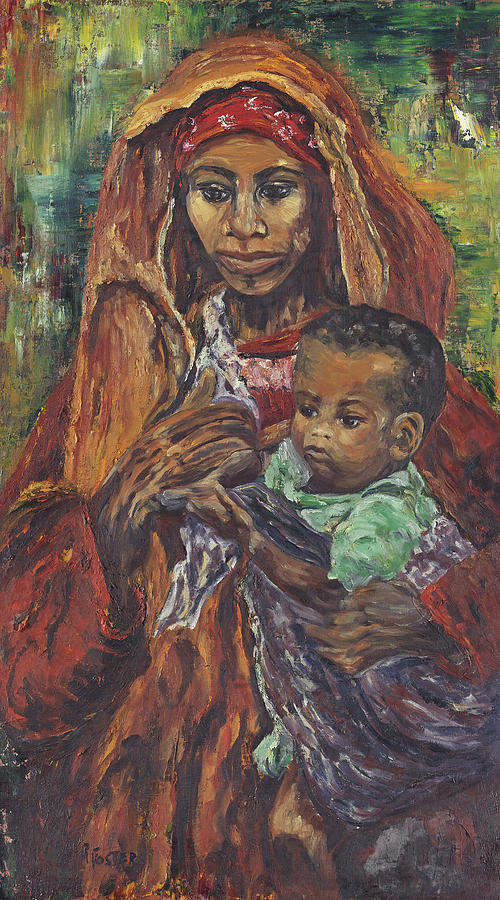
https://images.fineartamerica.com/images-medium-large/african-madonna-ruth-g-fos...

http://theblackchrist.co.za/wp-content/uploads/2015/03/Luthuli-007-African-Madon...

https://i.pinimg.com/474x/f8/c2/4b/f8c24bfa818cd92f008d784b95dcf4e5--madonna-art...
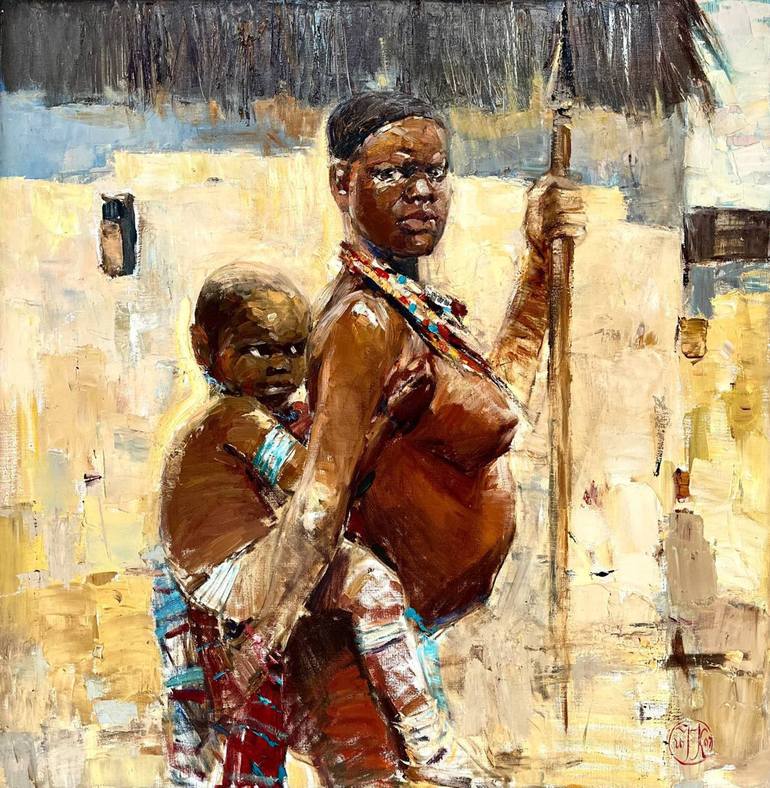
https://images.saatchiart.com/saatchi/1911749/art/9052115/8115293-DDKWVAWX-7.jpg
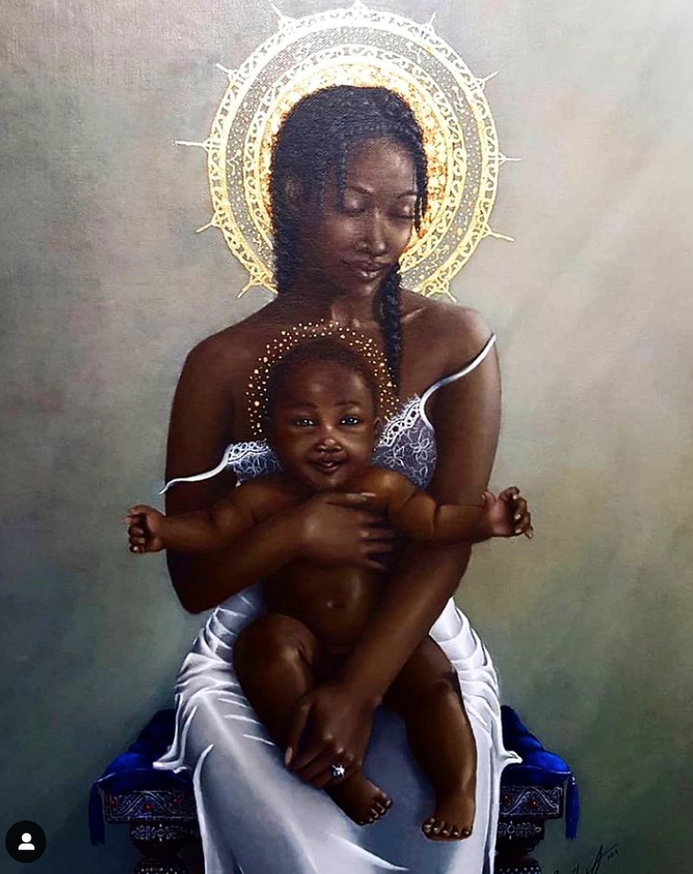
https://www.theburninghand.com/uploads/5/2/2/9/5229596/published/f05fb310-82e8-4...
I particularly like the last two images.

https://images.fineartamerica.com/images-medium-large-5/african-madonna-lisa-fra...
https://images.fineartamerica.com/images-medium-large/african-madonna-ruth-g-fos...

http://theblackchrist.co.za/wp-content/uploads/2015/03/Luthuli-007-African-Madon...

https://i.pinimg.com/474x/f8/c2/4b/f8c24bfa818cd92f008d784b95dcf4e5--madonna-art...
https://images.saatchiart.com/saatchi/1911749/art/9052115/8115293-DDKWVAWX-7.jpg
https://www.theburninghand.com/uploads/5/2/2/9/5229596/published/f05fb310-82e8-4...
I particularly like the last two images.
10MarthaJeanne
Mine is from New Zealand. Christ is not only wearing Maori tattoos, look at the globe. New Zealand takes up a lot more space than normal.
If anyone knows Maori and can translate the words around the outside, I would be grateful.
I shouldn't be lazy. Google says it means
praise the god who is the hope of the prisoner:
If anyone knows Maori and can translate the words around the outside, I would be grateful.
I shouldn't be lazy. Google says it means
praise the god who is the hope of the prisoner:
11John5918
>10 MarthaJeanne:
Funny, I thought it was probably New Zealand. I don't speak any Te Reo but those words around the edge just struck me as being from that language.
I have a copy of A New Zealand Prayer Book, He Karakia Mihinare o Aotearoa, a 1989 version of the Anglican Book of Common Prayer which has many beautiful prayers appropriate to the Pacific culture. The introduction tells us that it "preserves the ethos of Anglican spirituality and incorporates the best liturgical insights modern scholarship provides. It is also more faithful to the earliest liturgical tradition of the Church and allows more flexibility than the book of 1662" (the same could be said of the Catholic liturgical reforms of Vatican II!) "More importantly, the New Zealand Prayer Book has been created in our own Pacific cultural setting, and shaped by our own scholarship. It belongs to our environment and our people". Catholics are not the only ones doing inculturation!
Funny, I thought it was probably New Zealand. I don't speak any Te Reo but those words around the edge just struck me as being from that language.
I have a copy of A New Zealand Prayer Book, He Karakia Mihinare o Aotearoa, a 1989 version of the Anglican Book of Common Prayer which has many beautiful prayers appropriate to the Pacific culture. The introduction tells us that it "preserves the ethos of Anglican spirituality and incorporates the best liturgical insights modern scholarship provides. It is also more faithful to the earliest liturgical tradition of the Church and allows more flexibility than the book of 1662" (the same could be said of the Catholic liturgical reforms of Vatican II!) "More importantly, the New Zealand Prayer Book has been created in our own Pacific cultural setting, and shaped by our own scholarship. It belongs to our environment and our people". Catholics are not the only ones doing inculturation!
12MarthaJeanne
I have quite a collection of Anglican prayer books. That one, and also from Kenya Our Modern Services, The Book of Worship of the Church of North India, Canada, Australia, as well as US and England. The Kenyan one is very interesting to leaf through, as it includes a variety of special services.
132wonderY
Lordy! I’m glad someone encouraged me to return. Those are gorgeous. They certainly portray love incarnate.
14John5918
A few thoughts which struck me from Orobator's book which I mentioned in the OP, from pp 120-125.
He again links inculturation to incarnation, and states, "Word does not suppress flesh; it becomes flesh and dwells in our midst". He also reflects on the verb "becomes" - it is not static, but is a dynamic process.
He recalls Pope Paul VI's visit to Uganda in 1969 when the Holy Father reportedly said, "You {Africans} may, and must have an African Christianity"*.
He quotes another Jesuit, the late Fr Pedro Arrupe: "Inculturation is the Incarnation of Christian life and of the Christian message in a particular cultural context, in such a way that this experience not only finds expression through elements proper to the culture in question, but becomes a principle that animates, directs and unifies the culture, transforming it so as to bring about 'new creation'".
Orobator touches on some of those "elements proper to the culture", and points out that they are not only apparently "superficial" elements such as song, dance, musical instruments, images, statues and the like, although these are definitely included and in many ways are not superficial.
There is no single monolithic African culture, but there are various elements which are common to many African cultures. These include community (ubuntu), extended family, veneration of ancestors, respect for elders, hospitality, an oral tradition based on story-telling, and a holistic attitude which does not separate religion (or the sacred or spiritual) from ordinary everyday life. African traditional religions tend to worship a single God, perhaps the same "unknown God" that St Paul discovered in Athens (Acts 17:23). Incidentally many African cultures are still far closer to the simple pastoralist lifestyle of the Old Testament and of Jesus' era, and they may instinctively understand parts of the bible better than we Europeans and north Americans do. Parables about the good shepherd mean a lot to people who subsist on livestock (although cow- or camel-herd might be more recognisable to many!); the desert wanderings of the people of Israel are very real to African semi-nomadic pastoralists; parables about light and water mean a lot to people who don't have electricity or running water; and until very recently most of Africa lived under oppressive foreign regimes, just as Jesus did, and indeed many still live under oppressive homegrown regimes.
All of these elements of African culture can provide a lens through which to view Christianity differently from that of the strands of Christianity formed by European culture and "civilisation". The western world is highly individualistic and its Christianity has largely followed suit. Extended family gives us new ways of looking at the Trinity and the Church. Veneration of ancestors is little different from the veneration of saints, but the concept is much more real in many African cultures than it is to most modern western Catholics. The story-telling culture favours forms of narrative theology. And so on.
* He may be paraphrasing Pope Paul VI's words here. The Holy Father's concluding homily in Uganda can be found here.
He again links inculturation to incarnation, and states, "Word does not suppress flesh; it becomes flesh and dwells in our midst". He also reflects on the verb "becomes" - it is not static, but is a dynamic process.
He recalls Pope Paul VI's visit to Uganda in 1969 when the Holy Father reportedly said, "You {Africans} may, and must have an African Christianity"*.
He quotes another Jesuit, the late Fr Pedro Arrupe: "Inculturation is the Incarnation of Christian life and of the Christian message in a particular cultural context, in such a way that this experience not only finds expression through elements proper to the culture in question, but becomes a principle that animates, directs and unifies the culture, transforming it so as to bring about 'new creation'".
Orobator touches on some of those "elements proper to the culture", and points out that they are not only apparently "superficial" elements such as song, dance, musical instruments, images, statues and the like, although these are definitely included and in many ways are not superficial.
There is no single monolithic African culture, but there are various elements which are common to many African cultures. These include community (ubuntu), extended family, veneration of ancestors, respect for elders, hospitality, an oral tradition based on story-telling, and a holistic attitude which does not separate religion (or the sacred or spiritual) from ordinary everyday life. African traditional religions tend to worship a single God, perhaps the same "unknown God" that St Paul discovered in Athens (Acts 17:23). Incidentally many African cultures are still far closer to the simple pastoralist lifestyle of the Old Testament and of Jesus' era, and they may instinctively understand parts of the bible better than we Europeans and north Americans do. Parables about the good shepherd mean a lot to people who subsist on livestock (although cow- or camel-herd might be more recognisable to many!); the desert wanderings of the people of Israel are very real to African semi-nomadic pastoralists; parables about light and water mean a lot to people who don't have electricity or running water; and until very recently most of Africa lived under oppressive foreign regimes, just as Jesus did, and indeed many still live under oppressive homegrown regimes.
All of these elements of African culture can provide a lens through which to view Christianity differently from that of the strands of Christianity formed by European culture and "civilisation". The western world is highly individualistic and its Christianity has largely followed suit. Extended family gives us new ways of looking at the Trinity and the Church. Veneration of ancestors is little different from the veneration of saints, but the concept is much more real in many African cultures than it is to most modern western Catholics. The story-telling culture favours forms of narrative theology. And so on.
* He may be paraphrasing Pope Paul VI's words here. The Holy Father's concluding homily in Uganda can be found here.
152wonderY
>14 John5918: A very good reflection.
16John5918
A few striking quotes from the chapter on African spirituality (especially pp 130-135).
"Religion in Africa takes place as a daily and public affair... a powerful sense of the divine permeates the lives of Africans. African spirituality recognises the presence of God even in the most basic events and experiences of everyday life... there is no aspect of the life of an African that is unknown or alien to the divine... African spirituality brings home the divine in a very concrete sense of the term 'home'. We live with the divine in our homes, our occupations, our joys, our sorrows, our play, our work". Reminds me somewhat of Celtic spirituality, which can probably still be found amongst many Irish and other Celts. The interface between the divine and daily life is porous and allows for overlapping.
"From the moment a child is conceived until birth, that child and mother receive special care and attention in the community", as part of a consistent ethic of life.
"The expanded belief in the sacredness of life, along with the threat to life under various circumstances, has facilitated the emergence of a true spirituality of the cross and martyrdom in Africa". Orobator highlights one particular story of courage and martyrdom in Rwanda during the 1994 genocide; in another thread (link, posts ##172 and 174) I have mentioned the Uganda martyrs, whose feast day it is today, 3rd June.
"Another important aspect of African spirituality comes from the emphasis on community and relationship. African spirituality is a community-based spirituality". I already mentioned ubuntu earlier.
"In Africa, worship is never complete without singing and dancing; otherwise that worship would be considered cold and dead."
"To sum up... African spirituality is an expressive and lively spirituality. As our way to God, this spirituality is strongly rooted in the daily experiences of human life... We believe that it is in the ordinary experiences of life that we encounter God... a spirituality of the Magnificat... a joyful declaration and celebration of the great things the Mighty One has done for us (Luke 1:49)".
"Religion in Africa takes place as a daily and public affair... a powerful sense of the divine permeates the lives of Africans. African spirituality recognises the presence of God even in the most basic events and experiences of everyday life... there is no aspect of the life of an African that is unknown or alien to the divine... African spirituality brings home the divine in a very concrete sense of the term 'home'. We live with the divine in our homes, our occupations, our joys, our sorrows, our play, our work". Reminds me somewhat of Celtic spirituality, which can probably still be found amongst many Irish and other Celts. The interface between the divine and daily life is porous and allows for overlapping.
"From the moment a child is conceived until birth, that child and mother receive special care and attention in the community", as part of a consistent ethic of life.
"The expanded belief in the sacredness of life, along with the threat to life under various circumstances, has facilitated the emergence of a true spirituality of the cross and martyrdom in Africa". Orobator highlights one particular story of courage and martyrdom in Rwanda during the 1994 genocide; in another thread (link, posts ##172 and 174) I have mentioned the Uganda martyrs, whose feast day it is today, 3rd June.
"Another important aspect of African spirituality comes from the emphasis on community and relationship. African spirituality is a community-based spirituality". I already mentioned ubuntu earlier.
"In Africa, worship is never complete without singing and dancing; otherwise that worship would be considered cold and dead."
"To sum up... African spirituality is an expressive and lively spirituality. As our way to God, this spirituality is strongly rooted in the daily experiences of human life... We believe that it is in the ordinary experiences of life that we encounter God... a spirituality of the Magnificat... a joyful declaration and celebration of the great things the Mighty One has done for us (Luke 1:49)".
17John5918
There are many names, descriptions or images that we use about God. In western Christianity we are familiar with terms like father, mother, son, holy spirit, trinity, lord, king, judge, creator, almighty, eternal, shepherd, potter, abba, all-powerful, omnipotent, omnipresent, omniscient, lamb, love, dove, logos, word, Sophia, paraclete, advocate, wisdom, etc. It is said that Islam has ninety nine names for God (and that only the camel knows the hundredth!), and some of the most familiar to westerners are great (as in allahu akbar, الله أكبر), merciful (ar-rahman, الرحمان ) and compassionate ( ar-rahim, الرحيم). Fr Orobator, also drawing on other authors, has compiled a litany of some of the names of God found in Africa (op cit, pp 31-33):
Ancient deity,
Unbreakable stone,
Consoler and comforter providing salvation,
Grandfather who alone is the great one,
Watcher of everything who is not surprised by anything,
Piler of rocks into towering mountains,
Divider of night and day,
We praise you!
Sun too bright for our gaze,
Eye of the sun,
Artist-in-chief,
Drummer of life,
Owner of our head,
Large and deep pot,
My feathered one,
Mother of people,
Bless us!
Great nursing mother,
Great eye,
Great rainbow,
Great personal guardian spirit,
Unsurpassed great spirit,
Great source of being,
Great mantle which covers us,
Great leopard with its own forest,
Great healer of eternal life,
Great water-giver,
Great well,
Greatest of friends,
Great spider, the all-wise one,
Enlighten us!
Controller of destiny in the universe,
All-powerful, never defeated,
Father of laughter,
King without blemish,
Possessor of radiance,
Brightness without patterns,
Caller-forth of the branching trees,
Unique great one to whom one can take petitions and requests for counsel,
Hear us!
The first who always existed and will never die,
The only one bull in the world,
The one who sees both the inside and the outside,
The one we meet everywhere,
The one who is in all ages, everywhere and at all times,
The one who turns things upside down,
The one who has power to destroy completely,
The one who makes the sun set,
The one who gave everything on this earth and can take everything away,
Guide us!
Axe that fears no thistle,
Hoe that fears no soil,
Ram of majestic sinews and majestic carriage,
Hero who never flees before the enemy,
Big boundless hut,
Victor over death,
Protect us!
I've taken to using this litany from time to time in my own morning prayer.
Ancient deity,
Unbreakable stone,
Consoler and comforter providing salvation,
Grandfather who alone is the great one,
Watcher of everything who is not surprised by anything,
Piler of rocks into towering mountains,
Divider of night and day,
We praise you!
Sun too bright for our gaze,
Eye of the sun,
Artist-in-chief,
Drummer of life,
Owner of our head,
Large and deep pot,
My feathered one,
Mother of people,
Bless us!
Great nursing mother,
Great eye,
Great rainbow,
Great personal guardian spirit,
Unsurpassed great spirit,
Great source of being,
Great mantle which covers us,
Great leopard with its own forest,
Great healer of eternal life,
Great water-giver,
Great well,
Greatest of friends,
Great spider, the all-wise one,
Enlighten us!
Controller of destiny in the universe,
All-powerful, never defeated,
Father of laughter,
King without blemish,
Possessor of radiance,
Brightness without patterns,
Caller-forth of the branching trees,
Unique great one to whom one can take petitions and requests for counsel,
Hear us!
The first who always existed and will never die,
The only one bull in the world,
The one who sees both the inside and the outside,
The one we meet everywhere,
The one who is in all ages, everywhere and at all times,
The one who turns things upside down,
The one who has power to destroy completely,
The one who makes the sun set,
The one who gave everything on this earth and can take everything away,
Guide us!
Axe that fears no thistle,
Hoe that fears no soil,
Ram of majestic sinews and majestic carriage,
Hero who never flees before the enemy,
Big boundless hut,
Victor over death,
Protect us!
I've taken to using this litany from time to time in my own morning prayer.
18John5918
Pope welcomes French translation of book on Congolese Missal (Vatican News)
Pope Francis has penned the preface for a French translation of a book by a Congolese nun on the Missal for the Zaire Usage of the Roman Rite, which was presented on Monday in the Vatican. The Missal for use in former Zaire (now Democratic Republic of Congo - DRC) was introduced after the Second Vatican Council to adapt the Roman liturgy to the Congolese language and culture, as instructed by the Constitution “Sacrosanctum Concilium” on the Sacred Liturgy (1963)...
19John5918
Wasn't sure where to post this, but I think the emphasis on dance as prayer is part of inculturation.
Dancing for peace in Malakal (Friends in Solidarity)
Full disclosure - I know both the writer, Paul Jeffreys, and the missionary priest, Mike Bassano, and have worked with both over the years.
Dancing for peace in Malakal (Friends in Solidarity)
“In our Catholic Church we incorporate all the aspects of African culture, which include singing, praying with your hands and body, as well as dancing,” Bassano said. “Over the years we established a group of dancers who meet every day to practice for the liturgy on Sunday and special occasions. The idea of the dance is to express our worship to God through our whole body. And to show unity. Our dancers are from different ethnic groups, but since catholic means universal, incorporating everyone, the dancers express that unity that’s needed for peace in South Sudan”...
Full disclosure - I know both the writer, Paul Jeffreys, and the missionary priest, Mike Bassano, and have worked with both over the years.
20John5918
“Agents of evangelization should be theologically formed within the African context” (ACI Africa)
There is need to prepare those involved in evangelization in Africa in theological studies that are relevant for their ministry among the people of God on the continent... He underscored the need to consider the African context in preparing pastoral agents for Africa, saying, “Every formation takes place within a context, and that of religious evangelization is not exceptional”... “Priests, Catechists and all agents of evangelization must be formed in a way that is distinctively African,” he emphasized, adding that such a contextualized formation would facilitate their coping “with the challenges of the time”. Fr. Kubi explained, “We need to worship God as Africans, so the agents of evangelization including leaders of various societies need to design a formation with high standards with effective related and comprehensive goals”...
21John5918
From Pope Benedict XVI's opening homily at the 2nd African Synod, Sunday, 4 October 2009.
Now, recognition of the absolute lordship of God is certainly one of the salient and unifying features of the African culture... From this viewpoint Africa constitutes an immense spiritual "lung" for a humanity that appears to be in a crisis of faith and hope.
22John5918
A retired Mennonite missionary colleague has just drawn my attention to two global conferences on mission which the protestant churches held in Edinburgh in 1910 and 2010, which I had not even heard of. It's worth looking up online and reading some of the papers. The difference that a century makes is quite interesting.
23John5918
Kenya- based Maryknoll Missionary Appreciates Growing number of African Theologians in the Church (AMECEA)
The increasing number of African theologians in the Church as compared to the previous years has been applauded by a Maryknoll missionary priest who has expressed that, “African Theologians are now writing their own histories and theologies”... Fr. Joseph Graham Healey narrated that in the past generations “most writers of African history and African Theology were Westerners,” and the few African Theologians were “mainly trained in the West.” He underscored while addressing participants during the second biannual Pan-African Catholic Congress on Theology, Society and Pastoral Life, “You are the lions and lionesses of contemporary Africa. You have passed from being younger brother or younger sister to being equal partners in the exciting enterprise of World Theology and World Catholicism”... “Until the lions have their own historians the history of the hunt will always glorify the hunter,” Fr. Healey disclosed the proverb noting that currently African theologians are writing their own African Catholic theology includes “writing African narrative theology also called African story theology.” He added,” This is connected to African palaver theology that is also called African baraza theology and African conversation theology”... According to the Maryknoll Missionary, “Christianity’s center of gravity has shifted in the modern world from the Northern continents to the South, with Africa playing a dominant role in the resurgence of the faith”...
a new book “Handbook of African Catholicism,” is a clear “witness to the growth and maturity of African Theology and African Theologians.” the book is arranged in five sections: History and Mission; Formation, Education and Communications; Church and Society; The Body, Health and Healing; and Catholic Theological and Philosophical Traditions in Africa and contains chapters written by 50 scholars, specialists and practitioners. “The book provides a disciplinary map for understanding African Catholicism today by engaging some of the most pressing and pertinent issues, topics, and conversations in diverse fields of studies in African Catholicism,” Fr. Healey said. He added, “It is a road map for scholars in following the development of African Christian thought, the current state of research in specific areas, and methodological approaches being employed in understanding the Christian movement as it crosses different cultural, religious, theological and social frontiers in Africa”... As the US born missionary appreciates the African theologians, he acknowledges that “an increasing number are the women theologians.”
24John5918
'We are part of a living nature': Parallels in pope's, Indigenous views of humanity's relationship with creation (NCR)
"I consider it essential to begin creating institutional expressions of respect, recognition and dialogue with the native peoples, acknowledging and recovering their native cultures, languages, traditions, rights and spirituality," the pope told those gathered in Puerto Maldonado. "Help your bishops, and help your men and women missionaries, to be one with you, and in this way, by an inclusive dialogue, to shape a Church with an Amazonian face, a Church with a native face," he added, as he announced that a Synod for the Amazon would be held at the Vatican the following year. The synod — generally, a worldwide meeting of Catholic bishops — and the papal exhortation that followed it, titled Querida Amazonia, were milestones in the development of Francis' understanding of both ecological and Indigenous issues, which are also reflected in his 2015 encyclical "Laudato Si', on Care for Our Common Home"...
25brone
Go Francis save the indigenous language, and let the 150,000 out of 70million American Roman Catholics have their Latin....AMDG.... Mirror of Justice Pray for US.
26John5918
>25 brone:
Last time I looked, Latin was not an indigenous language in the USA. But why do you keep pretending that you can't have a Latin mass? You can. There are no restrictions on celebrating mass in Latin using the ordinary rite; indeed Latin is the normative language of the mass from which all vernacular translation stem. What is restricted is use of a defunct rite, the Tridentine rite, not use of the Latin language for mass.
150,000 out of 70 million is, I think, one fifth of one percent, hardly a significant proportion of the US Catholic population.
Last time I looked, Latin was not an indigenous language in the USA. But why do you keep pretending that you can't have a Latin mass? You can. There are no restrictions on celebrating mass in Latin using the ordinary rite; indeed Latin is the normative language of the mass from which all vernacular translation stem. What is restricted is use of a defunct rite, the Tridentine rite, not use of the Latin language for mass.
150,000 out of 70 million is, I think, one fifth of one percent, hardly a significant proportion of the US Catholic population.
27brone
So whats the complaint about them, you don't worry about Hydra masses,and water raft ceremonies....AMDG....Virgin Most Merciful Pray for US
28John5918
>27 brone:
The complaint appears to be that they are deliberately spurning the ordinary rite of the Church and insisting on using a defunct one, while pretending that it is about the Latin language. As far as I could see from the HolyHydra youth event (link) it was a youth event in a church, not a mass nor a rejection of a rite. It was aimed at young people, not old fogies like you and me. The mass held on a floating mattress has been criticised by the archdiocese concerned, is under investigation, and the priest concerned has admitted that it was imprudent. Nobody is saying mass should be celebrated like that. Why do you keep harping on about it?
The complaint appears to be that they are deliberately spurning the ordinary rite of the Church and insisting on using a defunct one, while pretending that it is about the Latin language. As far as I could see from the HolyHydra youth event (link) it was a youth event in a church, not a mass nor a rejection of a rite. It was aimed at young people, not old fogies like you and me. The mass held on a floating mattress has been criticised by the archdiocese concerned, is under investigation, and the priest concerned has admitted that it was imprudent. Nobody is saying mass should be celebrated like that. Why do you keep harping on about it?
29John5918
“African culture more receptive to gift of Eucharist”: Comboni Missionary in New Book (ACI Africa)
An Italian-born member of the Comboni Missionaries of the Heart of Jesus (MCCJ) who has ministered in Kenya since …. has, in a new book, expressed appreciation for cultures in Africa, saying that they are “more receptive to the gift of the Eucharist”. Speaking during the launch of his book published under the title, “The Gift of the Sunday Eucharist in the African Perspective”, Fr. Rinaldo Ronzani recognized the fact that the people of God in Africa value the celebration of Holy Eucharist. “I think that Africa has something to offer to the whole Church. Just to give you an example, several of my friends who happened to visit me while I was in Kenya, were surprised about the way in which we celebrate the Mass in Africa,” Fr. Ronzani who ministered in Kenya’s Marsabit Diocese said during the August 31 book launch. He added, “The singing, the dancing, the joy, the fact that nobody looks at the watch, and the fact that people come in their hundreds and you can feel the atmosphere of the presence of the Holy Spirit in the people who gathered together is different from the experience in Europe,” the Editor of Liturgical books with Paulines Publications Africa said. “I think that the African perspective is in the fact that the African culture is more receptive, in to the gift of the Eucharist,” he further said, and continued, “I think that the universal Church is enriched when a variety of ways of celebrating the Eucharist is shared among ourselves for us to become more aware of that gift and to see how the cultural context helps us to offer to the whole church something beautiful that others can take"...
30brone
You love the word defunct may be you wish it but it is far from defunct, Old fogie speak for yourself, Thursday night I will lead young people on a journey into the One True Church of ours as the Rite of Christian Initiation begins for another year for all that is said and done I will count on your prayers that our evangelization will be successful....JMJ.... Our Lady seat of Wisdom Pray for Us.
31John5918
>30 brone:
Good to hear that you will be leading the Rite of Christian Initiation. It goes without saying that my thoughts and prayers are with you and the new catechumens. I just wonder why you have to be so dismissive of other youth initiatives in other parts of the world. As I rejoice in your efforts at evangelisation, can you not rejoice in others' efforts, even if you don't understand or like them?
Good to hear that you will be leading the Rite of Christian Initiation. It goes without saying that my thoughts and prayers are with you and the new catechumens. I just wonder why you have to be so dismissive of other youth initiatives in other parts of the world. As I rejoice in your efforts at evangelisation, can you not rejoice in others' efforts, even if you don't understand or like them?
32John5918
From Pope Francis (link):
Speaking about World Youth Day, Pope Francis said: “When you go to a meeting with young people, you have to be prepared to listen to another language. Young people have their own language. And that comes from their own culture because there is a youth culture. And that also comes from their own creativity.” He added: “We must speak with the youth language … They have their culture and a progressive language that goes forward, right? So, you have to listen to them in their way of interpreting things and answer to them in ways that they can understand. I cannot answer to a young person facing a difficulty with an old theology book… They won’t understand … you have to answer them in a language that they understand and according to the experiences they are living, right?”...
33John5918
I've just come across a neat little list of features of African traditional religion in a manuscript authored by a Tanzanian Catholic priest which I am currently editing, as yet unpublished so I can't cite a reference.
1. Belief in the Creator God.
2. Belief in Spirits, both good and bad (cf Christian angels and demons).
3. Veneration of Ancestors (cf Christian saints)
4. A Sense of Belonging and Community Life.
5. The Sacredness of All Reality.
6. A Holistic View of Life.
7. Life is the Ultimate Gift.
8. Ubuntu.
I'd also like to draw attention to a paper entitled The theology of inculturation and the African church by Sussy Gumo Kurgat of Maseno University, Kenya.
1. Belief in the Creator God.
2. Belief in Spirits, both good and bad (cf Christian angels and demons).
3. Veneration of Ancestors (cf Christian saints)
4. A Sense of Belonging and Community Life.
5. The Sacredness of All Reality.
6. A Holistic View of Life.
7. Life is the Ultimate Gift.
8. Ubuntu.
I'd also like to draw attention to a paper entitled The theology of inculturation and the African church by Sussy Gumo Kurgat of Maseno University, Kenya.
Abstract: This paper investigated the theology of inculturation and the African Church. Specifically, the study set to examined the demand and relevance of inculturation for cultural development, assess inculturation message to Africa, determine the role of Small Christian Communities and examine the impact of inculturation in African Church. The study was based on both primary and secondary data collected for a period of two years. The study was principally qualitative in nature based on qualitative techniques of data analysis. The results of the study indicated that for an effective inculturation, facilitation of active local participation motivated and controlled from bottom-up approach through Small Christian Communities has been very crucial for a sustainable inculturation process. This approach has led to successful inculturation especially in areas of liturgy, moral theology, African leadership and the Church-as-family. The study recommended that to establish an authentic African Church, there is need to emphasize on the role of Small Christian Communities.
34brone
Western culture of veneration of a saint's relics was once again realized in spectacular form a few days ago in London England. 50,000 people filed pass the encased reliquary of St Bernadette of Lourdes, at the Mother Church of recusant and other Catholics of England at Winchester Cathedral. Some times the English surprise us....JMJ....Vessel of Honor Pray for Us.
35John5918
>34 brone:
Don't be surprised at English Catholicism. It includes families who survived the persecutions of the reformation period, people who survived the ongoing anti-Catholic laws and attitudes until relatively recent times, and many people of Irish and working class descent who suffered poverty and discrimination. It has now received a boost from African, Indian, Polish and Caribbean Catholics.
The Shrine of Our Lady of Walsingham was founded more than a thousand years ago, and although suppressed in the 16th century it is this year celebrating the centenary of its reactivation. Many pilgrims go there. There are other religious pilgrimage routes - I've been a pilgrim on St Cuthbert's Way along the English-Scottish border, ending on Holy Island (Lindisfarne), where Cuthbert spent much of his life as monk, bishop and hermit. You'll also find many English people on the Camino to Santiago de Compostela in Spain - I've done two stints as a pilgrim on that one.
We have a whole load of our own local saints, going back to Roman, Celtic and Saxon eras. We venerate St Alban, St Augustine (of Canterbury, not Hippo), St Bede the Venerable, St Hild(a) of Whitby (who played a major role in the Synod of Whitby in 664 CE, which resolved tensions between the Celtic and Roman Christian traditions in Britain), Julian of Norwich, St Aelred of Rievaulx, St John Henry Newman, our many many martyrs, our national patron Saints George, Andrew and David, and a whole host of Irish saints, plus, of course, St Patrick, who was not Irish. England was dedicated to Our Lady nearly seven hundred years ago, and was rededicated in 2020. A few of us perhaps also remember the only English pope, Pope Adrian IV, Nicholas Breakspear. There is a brewery of that name (spelt Brakspear) which produces excellent beer, but I doubt if it was named after him.
Don't be surprised at English Catholicism. It includes families who survived the persecutions of the reformation period, people who survived the ongoing anti-Catholic laws and attitudes until relatively recent times, and many people of Irish and working class descent who suffered poverty and discrimination. It has now received a boost from African, Indian, Polish and Caribbean Catholics.
The Shrine of Our Lady of Walsingham was founded more than a thousand years ago, and although suppressed in the 16th century it is this year celebrating the centenary of its reactivation. Many pilgrims go there. There are other religious pilgrimage routes - I've been a pilgrim on St Cuthbert's Way along the English-Scottish border, ending on Holy Island (Lindisfarne), where Cuthbert spent much of his life as monk, bishop and hermit. You'll also find many English people on the Camino to Santiago de Compostela in Spain - I've done two stints as a pilgrim on that one.
We have a whole load of our own local saints, going back to Roman, Celtic and Saxon eras. We venerate St Alban, St Augustine (of Canterbury, not Hippo), St Bede the Venerable, St Hild(a) of Whitby (who played a major role in the Synod of Whitby in 664 CE, which resolved tensions between the Celtic and Roman Christian traditions in Britain), Julian of Norwich, St Aelred of Rievaulx, St John Henry Newman, our many many martyrs, our national patron Saints George, Andrew and David, and a whole host of Irish saints, plus, of course, St Patrick, who was not Irish. England was dedicated to Our Lady nearly seven hundred years ago, and was rededicated in 2020. A few of us perhaps also remember the only English pope, Pope Adrian IV, Nicholas Breakspear. There is a brewery of that name (spelt Brakspear) which produces excellent beer, but I doubt if it was named after him.
36MarthaJeanne
From https://brakspear.co.uk/about-us/
"1154 - THE BRAKSPEAR BEE
Nicholas Breakspear, a distant relative of the Brakspear family, was the only Englishman to ever be elected as pope and was also known as Pope Adrian IV. Elected pope on the 3rd December 1154, his papal seal contained the image of a bee, and so that's where our bee logo comes from."
"1154 - THE BRAKSPEAR BEE
Nicholas Breakspear, a distant relative of the Brakspear family, was the only Englishman to ever be elected as pope and was also known as Pope Adrian IV. Elected pope on the 3rd December 1154, his papal seal contained the image of a bee, and so that's where our bee logo comes from."
37brone
Breakspear also authorized the invasion of Ireland over a controversy about Easter. 900 years later they are still there. I am heartened to see the English have pride in their noble land especially in these sad days ahead. Americans who patriotically support or do not support their country thats a different story here....AMDG....AMDG.... St John Fisher and Archbishop Fulton J Sheen pray for us.
38John5918
I've just become aware of an interesting paper by Kenyan Dr. Humphrey Mwangi Waweru entitled "African Theology in the 21st Century: Mapping Out Critical Priorities", published in 2018. I only have a pdf copy of it so I can't post it, but the citation is European Scientific Journal March 2018 edition Vol.14, No.8 ISSN: 1857 – 7881 (Print) e - ISSN 1857- 7431 in case anyone wants to search for it and read it.
It focuses mainly on non-Catholic Christian theology, although it gives credit to French-speaking Catholic missionary Pere Placide Tempels for his 1945 book Bantu Philosophy which had a huge influence.
Waweru identifies several aspects of African theology. The first is "Africanisation of Christianity", which is probably closest to what we would call inculturation, "giving African expression to the Christian faith" , while insisting on its "Biblical basis": "nothing
can substitute for the Bible". Others include Liberation Theology, Reconstruction Theology and Poverty Reduction Theology. He affirms that African theology is largely praxis theology, considers some of the challenges facing African theology today, and goes on to suggest three priorities:
1. "A dialogue that protects the Bible... This has to be done through a theological consultation that considers the context in which the Bible texts were written; the Historical Jesus and the Jesus of Faith; the African church's issues and how to keep alive the Memories of those gone before us..."
2. "African Theological consultations have to challenge African Christians to live their faith authentically based on their cultural, social, and political context."
3. "African theological dialogue is a methodology in which theological reflection takes place. African theology is political in the sense that it assumes and promotes a vision of African political, economic and social life, a notion of the fully human life, and the concrete social and economic tools to sustain this life... African Theologians usually connect with the suffering of the African people, making theology to feel the claim of the relatively deprived members of the society within its own technical theological discourse..."
It focuses mainly on non-Catholic Christian theology, although it gives credit to French-speaking Catholic missionary Pere Placide Tempels for his 1945 book Bantu Philosophy which had a huge influence.
Waweru identifies several aspects of African theology. The first is "Africanisation of Christianity", which is probably closest to what we would call inculturation, "giving African expression to the Christian faith" , while insisting on its "Biblical basis": "nothing
can substitute for the Bible". Others include Liberation Theology, Reconstruction Theology and Poverty Reduction Theology. He affirms that African theology is largely praxis theology, considers some of the challenges facing African theology today, and goes on to suggest three priorities:
1. "A dialogue that protects the Bible... This has to be done through a theological consultation that considers the context in which the Bible texts were written; the Historical Jesus and the Jesus of Faith; the African church's issues and how to keep alive the Memories of those gone before us..."
2. "African Theological consultations have to challenge African Christians to live their faith authentically based on their cultural, social, and political context."
3. "African theological dialogue is a methodology in which theological reflection takes place. African theology is political in the sense that it assumes and promotes a vision of African political, economic and social life, a notion of the fully human life, and the concrete social and economic tools to sustain this life... African Theologians usually connect with the suffering of the African people, making theology to feel the claim of the relatively deprived members of the society within its own technical theological discourse..."
39John5918
A Message From Your Group AdminI will be travelling overseas for the next few weeks, so I will only be able to monitor this group intermittently and probably won't post much. Perhaps it would be a good time to remind ourselves of the guidelines for posting in this group.
The group is for conversations about anything to do with our Catholic Tradition. It is not for partisan politics, rants, innuendo, gossip, rumours, "fake news", culture war slogans, conspiracy theories, hate speech of any sort, ad hominem attacks, nor for disparaging and denigrating any other human being. There is a group called Pro and Con on LT where that sort of behaviour is commonplace and anybody can post there, but it is not welcome in the Catholic Tradition group.
I will remove posts if they blatantly fail to respect these guidelines. I dislike having to do so, and I have refrained up to now, but I receive private messages from people suggesting that the amount of toxic negativity which has crept into the group is "off-putting" and indeed that we need to "save the group". I have mentioned before that a few years ago this group was a very toxic environment caused by just one or two posters; let's hope we don't return to that dysfunctional dynamic. Let me emphasise that posts will not be removed because I disagree with their content, but rather because they fail to respect the group.
May I also repeat my frequent request that if you directly quote a text you should include a citation. This is normal practice in most circles, as it is only fair and just for the author and publisher of the work to receive credit. Some online fora have a strict policy on this in order to protect themselves from copyright infringement lawsuits. But in addition, this is a group for conversations about Catholic Tradition, and these will be better conversations if everybody can read for themselves the texts in their original context.
And above all, let's try to keep it positive and friendly, even when disagreeing. We are all sisters and brothers in Christ. There are no enemies in this group, no "us" v "them"; we are all Catholics (or others who are interested in Catholic Tradition) trying to understand each other better and to seek greater unity; "May they all be one, just as, Father, you are in me and I am in you, so that they also may be in us" (John 17:21). And above all, let us always post with charity.
The group is for conversations about anything to do with our Catholic Tradition. It is not for partisan politics, rants, innuendo, gossip, rumours, "fake news", culture war slogans, conspiracy theories, hate speech of any sort, ad hominem attacks, nor for disparaging and denigrating any other human being. There is a group called Pro and Con on LT where that sort of behaviour is commonplace and anybody can post there, but it is not welcome in the Catholic Tradition group.
I will remove posts if they blatantly fail to respect these guidelines. I dislike having to do so, and I have refrained up to now, but I receive private messages from people suggesting that the amount of toxic negativity which has crept into the group is "off-putting" and indeed that we need to "save the group". I have mentioned before that a few years ago this group was a very toxic environment caused by just one or two posters; let's hope we don't return to that dysfunctional dynamic. Let me emphasise that posts will not be removed because I disagree with their content, but rather because they fail to respect the group.
May I also repeat my frequent request that if you directly quote a text you should include a citation. This is normal practice in most circles, as it is only fair and just for the author and publisher of the work to receive credit. Some online fora have a strict policy on this in order to protect themselves from copyright infringement lawsuits. But in addition, this is a group for conversations about Catholic Tradition, and these will be better conversations if everybody can read for themselves the texts in their original context.
And above all, let's try to keep it positive and friendly, even when disagreeing. We are all sisters and brothers in Christ. There are no enemies in this group, no "us" v "them"; we are all Catholics (or others who are interested in Catholic Tradition) trying to understand each other better and to seek greater unity; "May they all be one, just as, Father, you are in me and I am in you, so that they also may be in us" (John 17:21). And above all, let us always post with charity.
40John5918
Wasn't sure whether to post this under ecumenism or inculturation, but here will do, as translating the Bible and other Church documents into local languages is a key part of incarnating Christ into any time and place. Protestant missionaries played a major role in this, but so did many Catholics, including some of my own colleagues. Most of these languages did not exist in written form, only orally, and missionaries were often the first people to write them down, to develop dictionaries and grammar textbooks, and to publish collections of sayings and songs.
South African Society Recognition of Catholic Biblical Scholars “very significant” (ACI Africa)
South African Society Recognition of Catholic Biblical Scholars “very significant” (ACI Africa)
42John5918
A Native Catholic asks: What do we mean by 'heathen'? (NCR)
As a Native Catholic, I often run into one particular accusation lingering beneath conversations about the incorporation of culture into religious practice; one word ever-present yet amorphous: "heathen." But how to know what counts as "heathen"? When I press, the qualifications always seem to change. For instance, I am told my traditional plant-based smoke cleansing — like with cedar, sage, or sweetgrass — is something to avoid for prayer. And yet European-style incense smoke cleansing is fine. Then there are the warnings without specific distinctions at all; the ones that slip and slide until they fall into the category of Just Not European White Enough...
43John5918
Strong Enculturation in Liturgy of 1980s “has not developed”: South African Bishop (ACI Africa)
Initiatives towards enculturation in liturgy witness in the 1980s in Southern Africa eclipsed, Bishop Sithembele Sipuka of South Africa’s Umtata Diocese has been quoted as saying... “Enculturation in terms of the liturgy was stronger in the 80s, then it stopped; we are doing liturgy as enculturated from those experiences, it has not developed,” Bishop Sipuka told South Africa’s Radio Veritas. He added in reference to enculturation, “We are trying to understand it in its traditional context so that we can see how we merge it with faith.” “The principle is that, in culture, there are a lot of things that are good; so it is not in our view that anything cultural must be thrown away, but we also know that there are elements in the culture that are contrary to the faith and so we shall see how to deal with that,” he said. Bishop Sipuka highlighted Ubungoma, divination in the Zulu culture, as one of the traditions that the Church is looking into. “Now we are dealing with Ubungoma, which we hope to complete the research by the end of this year and then hopefully by next year maybe we can be able to give some direction”...
44John5918
I can highly recommend Evangelization of Cultures : Reflections on Inculturation by Bishop Rodrigo Mejia Saldarriaga. He has been a missionary for over fifty years in Congo, Kenya and Ethiopia.
45John5918
SECAM: Commission to Reflect on Polygamous Unions in Africa Set (AMECEA)
Following the Vatican’s directives in the Synthesis Report compiled from the first session of the XVI Ordinary General Assembly of the Synod of Bishops in October 2023, for the people of God in Africa to discern pastoral care towards persons in polygamous unions, the Symposium of Episcopal Conferences of Africa and Madagascar (SECAM) has already constituted a commission to discuss polygamy, a Church official has said. The Synthesis Report Chapter 16 which focused on the topic ‘Towards a listening and accompanying Church,’ synod delegates proposed that the continental body of the bishops in Africa and the Islands which is SECAM “Promote a theological and pastoral discernment on the question of polygamy and the accompaniment of people in polygamous unions who are coming to faith”... As the commission of theologians deliberates on the issue of polygamy raised during synod assembly, the synthesis report posed a question in the same chapter 16 which members of the commission need to reflect on, “What would need to change for those who feel excluded to experience the Church as more welcoming?...
46John5918
Integrating African Cultural Values in Counselling Practice among Objectives of New MA Program at Catholic Institute (ACI Africa)
The new Master of Arts Degree in Psycho-Spiritual Therapy program set to begin in August at the Abuja Centre of the Psycho-Spiritual Institute (PSI) is designed to realize some five objectives, one of which is training enrolled candidates “to integrate African cultural values in their psycho-spiritual counselling practice”...
47John5918
Religious sisters work for an indigenous Church with an Amazonian face (Vatican News)
The Peruvian Amazon is a vast territory characterized by an immense biodiversity, Indigenous communities, and a rich cultural patrimony. It is a place of spirituality, where nature and the sacred are intertwined everywhere. In this context, the mission to live and announce the Gospel takes on special value, as it requires listening, contemplating, and respecting God’s presence in all things. For seven years, Sr. Giovanna Llerena Alfaro, a Dominican Missionary of the Rosary, has had the grace of living in a corner of the jungle of Cuzco, Peru, in a privileged environment, which allows her to continue to carry on the mission of the first missionaries who reached these lands. “We are three religious sisters, Dominican Missionaries of the Rosary, and two Dominican friars who share our vocation,” she explains. “We are on a mission to accompany the Indigenous people of Bajo Urubamba, promoting an Indigenous Church with an Amazon face, starting with the formation of pastoral agents in the different communities we visit.” In a spirit of communion, Sr. Giovanna’s mission recalls the importance of “removing one’s shoes, because the place you are standing on is sacred.” “It is important to remove one’s ideas and mindsets of protagonism, and to recognize that we are in a sacred place, a place of encounter, of interconnection, of cultural and spiritual wealth; a place filled with God,” she says...
482wonderY
An interesting take
The Catholic Church was the first Feminist organization
https://www.tiktok.com/t/ZTreFnFm4/
The Catholic Church was the first Feminist organization
https://www.tiktok.com/t/ZTreFnFm4/
Join to post

