SassyLassy Trying for Six in Six
This is a continuation of the topic SassyLassy Seeing the Trees and the Forest.
Talk Club Read 2022
Join LibraryThing to post.
1SassyLassy
Why start a new thread at this time of the year? Well I finally finished the first six months, so here's hoping I can manage talking about the last six months in the six weeks remaining in the year. The odds don't look good:
2SassyLassy
What I read in the last six months, more like five, as I only read one book in June:
In Translation
Phenotypes by Paulo Scott
Frog by Mo Yan
The Three Arched Bridge by Ismail Kadare
Unknown Soldiers by Vaino Linna
Flights by Olga Tokarczuk
No Room at the Morgue by Jean-Patrick Manchette
Victorians
David Copperfield by Charles Dickens
Villette by Charlotte Bronte
Jude the Obscure by Thomas Hardy
Jezebel's Daughter by Wilkie Collins
North and South by Elizabeth Gaskell
NonFiction
Among Flowers by Jamaica Kincaid
Surfacing by Kathleen Jamie
The Floating Brothel by Sian Rees (from rebeccanyc's list)
Other Fiction
Dante's Indiana by Randy Boyagoda
Foregone by Russell Banks
Slough Horses by Mick Herron
The Secret Garden by Frances Hodgson Burnett
The Birds Fall Down by Rebecca West
David Balfour by Robert Louis Stevenson
The Sense of an Ending by Julian Barnes
A Rising Man by Abir Mukherjee
The Promise by Damon Galgut
Spring by Ali Smith
Dead Lions by Mick Herron
In Translation
Phenotypes by Paulo Scott
Frog by Mo Yan
The Three Arched Bridge by Ismail Kadare
Unknown Soldiers by Vaino Linna
Flights by Olga Tokarczuk
No Room at the Morgue by Jean-Patrick Manchette
Victorians
David Copperfield by Charles Dickens
Villette by Charlotte Bronte
Jude the Obscure by Thomas Hardy
Jezebel's Daughter by Wilkie Collins
North and South by Elizabeth Gaskell
NonFiction
Among Flowers by Jamaica Kincaid
Surfacing by Kathleen Jamie
The Floating Brothel by Sian Rees (from rebeccanyc's list)
Other Fiction
Dante's Indiana by Randy Boyagoda
Foregone by Russell Banks
Slough Horses by Mick Herron
The Secret Garden by Frances Hodgson Burnett
The Birds Fall Down by Rebecca West
David Balfour by Robert Louis Stevenson
The Sense of an Ending by Julian Barnes
A Rising Man by Abir Mukherjee
The Promise by Damon Galgut
Spring by Ali Smith
Dead Lions by Mick Herron
3SassyLassy
Books from others' threads this year:
Le Tour du monde d'un épicier by Albert Seigneurie raton-liseur
Things that Are: Encounters with Plants, Stars and Animals by Amy Leach wandering_star
Edward VI: The Lost King of England AnnieMod
England's Boy King: The Diary of Edward VI, 1547 -1553 AnnieMod
Unthinkable: Trauma, Truth, and the Trials of American Democracy Cariola
The Genius of Shakespeare by Jonathan Bate baswood
I Will Never See The World Again labfs39
China in Ten Words by Yu Hua AnnieMod
1000 Years of Joys and Sorrows by Ai Weiwei rocketjk
Secret Lives of Colour by Kassia St Clair nickelini
FICTION
A King Alone by Jean Giono nickelini
By the Sea by Abdulrazak Gurnah AnnieMod
An Unnecessary Woman by Rabih Alameddine labfs39
Frog by Mo Yan automatic recommendation ✔
Last Words on Earth by Javier Serena AnnieMod
The Colonel by Mahmoud Dowlatabadi labs39 ✔
Lenin's Kisses by Yan Lianke AnnieMod
The Song of Everlasting Sorrow by Wang Anyi AnnieMod
Le Tour du monde d'un épicier by Albert Seigneurie raton-liseur
Things that Are: Encounters with Plants, Stars and Animals by Amy Leach wandering_star
Edward VI: The Lost King of England AnnieMod
England's Boy King: The Diary of Edward VI, 1547 -1553 AnnieMod
Unthinkable: Trauma, Truth, and the Trials of American Democracy Cariola
The Genius of Shakespeare by Jonathan Bate baswood
I Will Never See The World Again labfs39
China in Ten Words by Yu Hua AnnieMod
1000 Years of Joys and Sorrows by Ai Weiwei rocketjk
Secret Lives of Colour by Kassia St Clair nickelini
FICTION
A King Alone by Jean Giono nickelini
By the Sea by Abdulrazak Gurnah AnnieMod
An Unnecessary Woman by Rabih Alameddine labfs39
Frog by Mo Yan automatic recommendation ✔
Last Words on Earth by Javier Serena AnnieMod
The Colonel by Mahmoud Dowlatabadi labs39 ✔
Lenin's Kisses by Yan Lianke AnnieMod
The Song of Everlasting Sorrow by Wang Anyi AnnieMod
4SassyLassy
An actual review:

A Guest of Honour by Nadine Gordimer
first published 1970
finished reading July 3, 2022
James Bray had been a senior civil servant in the colonial administration of an unnamed African country. That was before he was expelled for supporting black nationalists seeking independence for their country.
Ten years on, he was contemplating an invitation from Adamson Mweta, one of those nationalists, to return for the celebration of Independence. The prospect of work was there too, as the newly independent country would be establishing its own civil service, but would need experienced people in senior positions while things got going. Such posts when held by Europeans were always contracts with the expectation that the consultant go home at the expiration of the contract. Bray's wife, so comfortable in their elegant Wiltshire manor, would not accompany him, at least not yet.
Bray did make the trip. He worked to set up educational facilities. His friendship with Mweta underwent the expected shifts from the change in their mutual balance of power. Expectations in the country were high and unrealistic. There was no infrastructure to meet the people's hopes. The idea that years would be required to reach their economic goals was not a popular message, and politicians who delivered it suffered.
Resistance movements sprang up, led by those independence leaders left out of the new status quo. Over time they were joined by the disillusioned in the new government.
Bray, who had lost so much for his pre-independence support of the movement, understood the mechanics of the turmoil, however it didn't make it any easier for him, especially as the European community fractured itself around him, as it began the process of leaving. Isolation didn't help. Separation from his wife and home made them seem more unreal as the two fo them reached an implicit understanding that she would not be joining him.
Gordimer's book is an exploration of the promise and the possibilities that accompanied the process of independence. Written in 1971 at a time when so many former colonies were struggling to find a new peaceful way of life with opportunities for all now that the initial liberation conflicts were ending, it has an immediacy and a prescience later treatments of the era can't match.
_____________
I started this book at a wonderful vacation rental full of books. Unfortunately I had to leave it there unfinished. When I got home, I discovered there were no North American rights to it. However, my amazing local bookstore had a copy in its amazing second hand section. Sold!

A Guest of Honour by Nadine Gordimer
first published 1970
finished reading July 3, 2022
James Bray had been a senior civil servant in the colonial administration of an unnamed African country. That was before he was expelled for supporting black nationalists seeking independence for their country.
Ten years on, he was contemplating an invitation from Adamson Mweta, one of those nationalists, to return for the celebration of Independence. The prospect of work was there too, as the newly independent country would be establishing its own civil service, but would need experienced people in senior positions while things got going. Such posts when held by Europeans were always contracts with the expectation that the consultant go home at the expiration of the contract. Bray's wife, so comfortable in their elegant Wiltshire manor, would not accompany him, at least not yet.
Bray did make the trip. He worked to set up educational facilities. His friendship with Mweta underwent the expected shifts from the change in their mutual balance of power. Expectations in the country were high and unrealistic. There was no infrastructure to meet the people's hopes. The idea that years would be required to reach their economic goals was not a popular message, and politicians who delivered it suffered.
Resistance movements sprang up, led by those independence leaders left out of the new status quo. Over time they were joined by the disillusioned in the new government.
Bray, who had lost so much for his pre-independence support of the movement, understood the mechanics of the turmoil, however it didn't make it any easier for him, especially as the European community fractured itself around him, as it began the process of leaving. Isolation didn't help. Separation from his wife and home made them seem more unreal as the two fo them reached an implicit understanding that she would not be joining him.
Gordimer's book is an exploration of the promise and the possibilities that accompanied the process of independence. Written in 1971 at a time when so many former colonies were struggling to find a new peaceful way of life with opportunities for all now that the initial liberation conflicts were ending, it has an immediacy and a prescience later treatments of the era can't match.
_____________
I started this book at a wonderful vacation rental full of books. Unfortunately I had to leave it there unfinished. When I got home, I discovered there were no North American rights to it. However, my amazing local bookstore had a copy in its amazing second hand section. Sold!
5cindydavid4
her name sounds very familiar but I cant remember what I would have read of her. That does look interesting
6SassyLassy
>4 SassyLassy: She won the Nobel Prize in 1991. You may have read other of her books usually situated in South Africa.
7SassyLassy
I posted this next review on my previous thread, as it was a featured Q3 book in the Victorian Readalong. However, since my reading journal lists books by date completed, I would be looking in this thread for it in future, and would be perplexed if it wasn't here. So here it is.
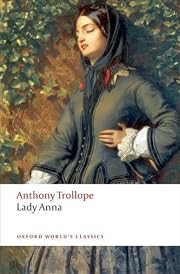
Lady Anna by Anthony Trollope
first published in serial form in the Fortnightly Review from April 1873 to April 1874, then in book form in 1874
finished reading July 10, 2022
What do you do on an eight week voyage from England to Australia? If you're Anthony Trollope, you write a novel. That novel was Lady Anna. Once again, Trollope addresses the questions of marriage, money, and class, separately and in combination. It's not a dry predictable drone though; there is humour here too, especially when he feels his characters are taking themselves too seriously.
The woman who insisted on calling herself Countess Lovel, had been abandoned by the Earl shortly after their marriage. She was subsequently thrown out of their home penniless, with her infant daughter. Worse, the Earl announced he already had a wife in Sicily , so that theirs was no real marriage.
The friendless Countess insisted for twenty years that she was the lawful wife and his daughter was the Lady Anna, much to the scorn of those around. The Countess was given shelter and money by the tailor Thomas Thwaite. Anna and young Daniel Thwaite grew up together and in their late teens became engaged secretly. Then the Earl died. His title went to a nephew. His huge monetary assets had to be allocated somewhere. The nephew's family naturally felt he was the rightful beneficiary; the Countess believed the Lady Anna was.
So began a battle with many twists and turns through the legal system. If the Countess's marriage had not been legitimate, the Lady Anna would be a bastard as most already believed, and would inherit nothing. If the marriage had been legitimate, the Lady Anna would be the rightful legatee when she came of age.
Trollope skilfully presents the lawyers' machinations on both sides, and presents a Solicitor -General who ranks as one of the best characters in the book for his admirable ability to be all things to all concerned.
If the Lady Anna was legitimate and an heiress though, how could she possibly marry a tailor's son? Daniel considered himself a Radical and would have nothing to do with the Lovel family, giving Trollope the opportunity to explore hereditary titles and wealth. Then there was the thorny question of whether or not an engagement could be broken, something that seemed to be alright for a man to do, but not for a woman.
Although Lady Anna is the title of the book, it is really the Countess who steals the novel. She is forceful, focussed, and relentless in her pursuit of what she wants. Lovel family politics were nothing to her. This was a woman with nothing to lose. How was it all resolved? - no spoilers here.
Lady Anna by Anthony Trollope
first published in serial form in the Fortnightly Review from April 1873 to April 1874, then in book form in 1874
finished reading July 10, 2022
What do you do on an eight week voyage from England to Australia? If you're Anthony Trollope, you write a novel. That novel was Lady Anna. Once again, Trollope addresses the questions of marriage, money, and class, separately and in combination. It's not a dry predictable drone though; there is humour here too, especially when he feels his characters are taking themselves too seriously.
The woman who insisted on calling herself Countess Lovel, had been abandoned by the Earl shortly after their marriage. She was subsequently thrown out of their home penniless, with her infant daughter. Worse, the Earl announced he already had a wife in Sicily , so that theirs was no real marriage.
The friendless Countess insisted for twenty years that she was the lawful wife and his daughter was the Lady Anna, much to the scorn of those around. The Countess was given shelter and money by the tailor Thomas Thwaite. Anna and young Daniel Thwaite grew up together and in their late teens became engaged secretly. Then the Earl died. His title went to a nephew. His huge monetary assets had to be allocated somewhere. The nephew's family naturally felt he was the rightful beneficiary; the Countess believed the Lady Anna was.
So began a battle with many twists and turns through the legal system. If the Countess's marriage had not been legitimate, the Lady Anna would be a bastard as most already believed, and would inherit nothing. If the marriage had been legitimate, the Lady Anna would be the rightful legatee when she came of age.
Trollope skilfully presents the lawyers' machinations on both sides, and presents a Solicitor -General who ranks as one of the best characters in the book for his admirable ability to be all things to all concerned.
If the Lady Anna was legitimate and an heiress though, how could she possibly marry a tailor's son? Daniel considered himself a Radical and would have nothing to do with the Lovel family, giving Trollope the opportunity to explore hereditary titles and wealth. Then there was the thorny question of whether or not an engagement could be broken, something that seemed to be alright for a man to do, but not for a woman.
Although Lady Anna is the title of the book, it is really the Countess who steals the novel. She is forceful, focussed, and relentless in her pursuit of what she wants. Lovel family politics were nothing to her. This was a woman with nothing to lose. How was it all resolved? - no spoilers here.
8SassyLassy
A book picked up at a newstand, one I haven't seen anywhere since:
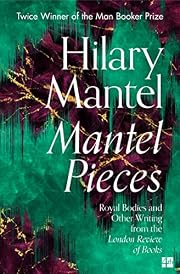
Mantel Pieces: Royal Bodies and Other Writing from the London Review of Books by Hilary Mantel
first published 2020
finished reading July 17, 2020
A good book review never goes out of date. Hilary Mantel has written a number of them, some from the London Review of Books are collected here. Presented chronologically starting in 1988 and continuing to 2017, the reader can see Mantel's style and confidence building over time. Interspersed with the reviews, is correspondence between Mantel and her LRB editor Mary-Kay Wilmers. Their relationship too grows over time, starting with a 1988 letter and a 'kill' cheque for £150, with Wilmers saying somewhat impersonally "we value your contribution to the paper a great deal", and ending with an email from Mantel to Wilmers in 2019, 'sent from my iPad', signed "Love, Hilary".
Mantel discusses reviewing in her introduction, saying when she began, "I was in awe of my paymasters, and at the same time I was uneasy." Juggling reviews for several periodicals in the late 1980s was challenging. Once she started writing for the LRB, she reviewed mostly nonfiction: longer reviews with more scope for development. Over time, now able to choose her books, she expanded her reviews to an essay format, quoting other writers, adding to the topic. The background reading she did "to fix a book in context" is impressive, showing a real desire not only to learn more about her topic, but to share what she learned with her readers, so that they too could have the context in a review of a book that might be far outside their usual reading scope. One of the most unexpected pairings is the linking of a book ("it is beautifully composed and beautifully shaped") on the two young boys who murdered James Bulger* with the two books by Rousseau that Morrison took with him to their trial.
Reading the first review from 1988 is a real "Where are they now?" moment. Shere Hite may have disappeared from the public consciousness, but the review of Women and Love: The New Hite Report: A Cultural Revolution in Progress is still entertaining. Mantel quibbles with Hite's respondents, saying they all sound alike. The book's tone is homogeneous, dull, flat: all these thousands of women sound like one woman, one awful person, droning on and on.
After this initial foray, most of the remaining titles reviewed relate to background for Mantel's own writing, her novels that would become modern classics like A Place of Greater Safety, or Wolf Hall and its sequels.
An essay titled 'Frock and Shocks', a review of Jane Boleyn: The Infamous Lady Rochford** takes on the whole Tudor fiction industry. The subject of this biography has already been fearlessly minced into fiction by the energetic Philippa Gregory. Mantel makes it clear right away that this is not one of those books: ...there is no sign so far that another inert and vacuous feature film will be clogging up the multiplexes. She credits Fox, a historian, for not supplementing the lack of information about Jane with imaginative speculation, for being honest with the reader, saying Jane's motivations can never be known.
The later excerpts include essays. One of the most interesting is a 2013 examination of the treatment of royal women, 'Royal Bodies: From Anne Boleyn to Kate Middleton'. Through the centuries, the questions have always been the same: Are they healthy, are they sick, can they breed? Mantel asks "Is monarchy a suitable institution for a grown-up nation?" Examining the extraordinary obsessive attention paid to the facade of royal appearances, she also looks behind the scenes at the 'charade', at the after the party debris that trails in their wake. As for those royal bodies,
__________________
*As If by Blake Morrison 1997 - If you were in the UK in 1993, you could not escape the images of the two ten year old boys leading the two year old away
** Julia Fox 2008
Mantel Pieces: Royal Bodies and Other Writing from the London Review of Books by Hilary Mantel
first published 2020
finished reading July 17, 2020
A good book review never goes out of date. Hilary Mantel has written a number of them, some from the London Review of Books are collected here. Presented chronologically starting in 1988 and continuing to 2017, the reader can see Mantel's style and confidence building over time. Interspersed with the reviews, is correspondence between Mantel and her LRB editor Mary-Kay Wilmers. Their relationship too grows over time, starting with a 1988 letter and a 'kill' cheque for £150, with Wilmers saying somewhat impersonally "we value your contribution to the paper a great deal", and ending with an email from Mantel to Wilmers in 2019, 'sent from my iPad', signed "Love, Hilary".
Mantel discusses reviewing in her introduction, saying when she began, "I was in awe of my paymasters, and at the same time I was uneasy." Juggling reviews for several periodicals in the late 1980s was challenging. Once she started writing for the LRB, she reviewed mostly nonfiction: longer reviews with more scope for development. Over time, now able to choose her books, she expanded her reviews to an essay format, quoting other writers, adding to the topic. The background reading she did "to fix a book in context" is impressive, showing a real desire not only to learn more about her topic, but to share what she learned with her readers, so that they too could have the context in a review of a book that might be far outside their usual reading scope. One of the most unexpected pairings is the linking of a book ("it is beautifully composed and beautifully shaped") on the two young boys who murdered James Bulger* with the two books by Rousseau that Morrison took with him to their trial.
Reading the first review from 1988 is a real "Where are they now?" moment. Shere Hite may have disappeared from the public consciousness, but the review of Women and Love: The New Hite Report: A Cultural Revolution in Progress is still entertaining. Mantel quibbles with Hite's respondents, saying they all sound alike. The book's tone is homogeneous, dull, flat: all these thousands of women sound like one woman, one awful person, droning on and on.
After this initial foray, most of the remaining titles reviewed relate to background for Mantel's own writing, her novels that would become modern classics like A Place of Greater Safety, or Wolf Hall and its sequels.
An essay titled 'Frock and Shocks', a review of Jane Boleyn: The Infamous Lady Rochford** takes on the whole Tudor fiction industry. The subject of this biography has already been fearlessly minced into fiction by the energetic Philippa Gregory. Mantel makes it clear right away that this is not one of those books: ...there is no sign so far that another inert and vacuous feature film will be clogging up the multiplexes. She credits Fox, a historian, for not supplementing the lack of information about Jane with imaginative speculation, for being honest with the reader, saying Jane's motivations can never be known.
The later excerpts include essays. One of the most interesting is a 2013 examination of the treatment of royal women, 'Royal Bodies: From Anne Boleyn to Kate Middleton'. Through the centuries, the questions have always been the same: Are they healthy, are they sick, can they breed? Mantel asks "Is monarchy a suitable institution for a grown-up nation?" Examining the extraordinary obsessive attention paid to the facade of royal appearances, she also looks behind the scenes at the 'charade', at the after the party debris that trails in their wake. As for those royal bodies,
Marie Antoinette as a royal consort was a gliding, smiling disaster, much like Diana in another time and another country. But Kate Middleton, as she was, appears to have been designed by a committee and built by craftsmen, with a perfect plastic smile and the spindles of her limbs hand-turned and gloss-varnished.This is a book that definitely prompts more reading, that makes you want to know so much more about the people here. The place to start is with the books reviewed. What more could an author or reader want from an essayist reviewer?
__________________
*As If by Blake Morrison 1997 - If you were in the UK in 1993, you could not escape the images of the two ten year old boys leading the two year old away
** Julia Fox 2008
9lisapeet
>8 SassyLassy: I'd like to read that one... it was all over the place here a few years ago, then dropped out of sight. I've always really liked Mantel's writing for LRB.
10cindydavid4
>8 SassyLassy: very good read (and I loved the title, play on words). Found it very interesting
11cushlareads
Just caught up on your reading this year (6 months late) and saw your reviews of Slow Horses and Dead Lions. I love these books - have got Bad Actors, his latest one, out of the library at the moment. Guaranteed to make a bad day at school (of which there are thankfully few) seem so much better than alternative careers!
12SassyLassy
>9 lisapeet: It's excellent, and one of those books you can delve into as the mood takes you - no pressures.
>10 cindydavid4: The title was well done.
>11 cushlareads: Book three is up for early in the new year. January for me is probably like your bad days at school.
>10 cindydavid4: The title was well done.
>11 cushlareads: Book three is up for early in the new year. January for me is probably like your bad days at school.
13SassyLassy
I had thought The Colony of Unrequited Dreams was Wayne Johnston's masterpiece, but this is even better.

The Custodian of Paradise by Wayne Johnston
first published 2006
finished rereading July 18, 2022
The Colony of Unrequited Dreams (1999) was Wayne Johnston's wonderful fictional treatment of the young Joseph R Smallwood. Smallwood, 'Joey' to all Newfoundlanders and Labradorians, was the man who brought Newfoundland into Canada in 1949, after a bitterly fought and hugely debated referendum.
In that novel, Smallwood had a fictional friend, Sheilagh Fielding. Separated by class and gender in a city where schools worked hard to reenforce such distinctions, the two were united as highly intelligent misfits, scorned by their peers. Smallwood though was the main character in that novel.
The Custodian of Paradise is Sheilagh's novel. It starts in WWII, still preConfederation for Newfoundland. Sheilagh, now in her forties, is a physical wreck, broken by alcohol and disease. Her mind, however, is still brilliant, much to her detriment. Over the past few years, she had exiled herself to solitary places seeking what: solitude, sobriety, self knowledge? Maybe there was too much of the latter. Now her quest has taken her to an abandoned island off the coast of Newfoundland. Completely alone, she could look back and try to work out what had brought her to this.
Sheilagh was all too aware of having sinned and been sinned against. This is not a woman to wallow in self pity though. There was absolutely no point in it. Recollect what happened. Work it out. Get on with it.
Despite what she thought, she had not been completely alone, not completely unobserved. Over the years, at rare intervals, a letter would mysteriously appear without a postmark, and signed only 'Your Provider'. By the end of the book, the Provider's identity is known. Sheilagh has successfully battled enough demons to face returning to St. John's and her life there as an off and on journalist. 'Healed' is not a word in her vocabulary, and is not what she is, but life can and must go on.
Sheilagh Fielding is probably Johnston's best character, one who reflects everything he loves about Newfoundland and Labrador, harsh and difficult yet steadfast, with her own savage beauty.

The Custodian of Paradise by Wayne Johnston
first published 2006
finished rereading July 18, 2022
The Colony of Unrequited Dreams (1999) was Wayne Johnston's wonderful fictional treatment of the young Joseph R Smallwood. Smallwood, 'Joey' to all Newfoundlanders and Labradorians, was the man who brought Newfoundland into Canada in 1949, after a bitterly fought and hugely debated referendum.
In that novel, Smallwood had a fictional friend, Sheilagh Fielding. Separated by class and gender in a city where schools worked hard to reenforce such distinctions, the two were united as highly intelligent misfits, scorned by their peers. Smallwood though was the main character in that novel.
The Custodian of Paradise is Sheilagh's novel. It starts in WWII, still preConfederation for Newfoundland. Sheilagh, now in her forties, is a physical wreck, broken by alcohol and disease. Her mind, however, is still brilliant, much to her detriment. Over the past few years, she had exiled herself to solitary places seeking what: solitude, sobriety, self knowledge? Maybe there was too much of the latter. Now her quest has taken her to an abandoned island off the coast of Newfoundland. Completely alone, she could look back and try to work out what had brought her to this.
Sheilagh was all too aware of having sinned and been sinned against. This is not a woman to wallow in self pity though. There was absolutely no point in it. Recollect what happened. Work it out. Get on with it.
Despite what she thought, she had not been completely alone, not completely unobserved. Over the years, at rare intervals, a letter would mysteriously appear without a postmark, and signed only 'Your Provider'. By the end of the book, the Provider's identity is known. Sheilagh has successfully battled enough demons to face returning to St. John's and her life there as an off and on journalist. 'Healed' is not a word in her vocabulary, and is not what she is, but life can and must go on.
Sheilagh Fielding is probably Johnston's best character, one who reflects everything he loves about Newfoundland and Labrador, harsh and difficult yet steadfast, with her own savage beauty.
14dchaikin
>8 SassyLassy: terrific on Mantel (i’m a little slow to catch up these days)
15cindydavid4
>13 SassyLassy: Oh my goodness completely forgotten about that book! Loved it, will have to look for this next one (tho its been forever since the first one,wonder if it needs a reread to refresh my memory)
16labfs39
>13 SassyLassy: ooh, double book bullet
17avaland
Glad to see your excellent reviews. I'm hoping to get a few more done before the new year. I have Johnston's The Navigator of New York on my TBR shelves.
18SassyLassy
>14 dchaikin: It was an excellent book, creating all kinds of book bullets.
>15 cindydavid4: I don't think you need to reread the first one; the two can be read independently, but it would certainly be a good reread.
>16 labfs39: I love giving book bullets!
>17 avaland: That's on my TBR pile too. Actually it's on one of the lost TBR piles, the kind where you find the book from time to time, but it's not the right time to read it, and then when you want it, it's no longer visible. I do hope to get back to Newfoundland again in summer 2023, and it would be a good one to take with me.
See below for yet another Johnston.
>15 cindydavid4: I don't think you need to reread the first one; the two can be read independently, but it would certainly be a good reread.
>16 labfs39: I love giving book bullets!
>17 avaland: That's on my TBR pile too. Actually it's on one of the lost TBR piles, the kind where you find the book from time to time, but it's not the right time to read it, and then when you want it, it's no longer visible. I do hope to get back to Newfoundland again in summer 2023, and it would be a good one to take with me.
See below for yet another Johnston.
19SassyLassy
I hadn't heard of this Wayne Johnston book before I found it in a local bookstore in May. I took it to Newfoundland with me in June to read there, but then discovered A Guest of Honour (>4 SassyLassy: above) which I had to try to read there.
When I came home again, I decided to reread The Custodian of Paradise (>13 SassyLassy:) first, followed by this.
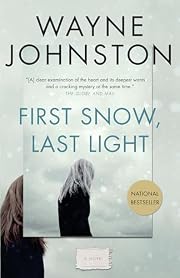
First Snow, Last Light by Wayne Johnston
first published 2017
finished reading July 28, 2022
Imagine walking home from school ... as you have every afternoon for years, along the same streets whose every detail you have memorized without trying to, whose every house and yard and tree you know by heart, and finding your whole world has changed: locked door, no lights, no note. That was what happened to fourteen year old Ned Vatcher one November day in 1936, just as the first snow storm of the season swept into St. John's. His parents had vanished.
Forty years later, Vatcher was still haunted by it all, and was no closer to knowing what had happened. First Snow, Last Light tells the story of those years, not only for Ned, but for Newfoundland. Ned's father had been the senior civil servant under the Commission of Government, which effectively reduced Newfoundland to a British colony, controlled by unelected officials. There had been hints of scandal associated with the elder Vatcher, but nothing proven. Although the senior Vatcher had been a Rhodes scholar, his family was thoroughly questionable, dismissed by all.
The story is told alternately by Ned and Sheilagh Fielding. Ned had known Sheilagh since he was a child. In her role as political columnist, she had written much about the lead up to and imposition of the Commission, as Newfoundland lurched through the desolate 1930s. As Ned became a force to be reckoned with, she held him to account too.
This is a complex plot. Readers familiar with Newfoundland will know much of the history here. They will recognize a certain resemblance between Ned and one Geoff Stirling*, the billionaire broadcaster, and media rival to Joey Smallwood. However, Johnston's writing is such that although his settings and characters are immediately recognizable to people there, his plots have a universality that appeal no matter where the reader is.
___________
* One of Stirling's escapades was a trip to Cuba with Joey Smallwood, in an attempt to interview Fidel Castro, who had invited Stirling, and then never showed up. It was made into an hour long NFB documentary in which the two argue over and discuss Castro's options: Waiting for Fidel https://www.youtube.com/watch?v=DT_TmGgNB_o
When I came home again, I decided to reread The Custodian of Paradise (>13 SassyLassy:) first, followed by this.
First Snow, Last Light by Wayne Johnston
first published 2017
finished reading July 28, 2022
Imagine walking home from school ... as you have every afternoon for years, along the same streets whose every detail you have memorized without trying to, whose every house and yard and tree you know by heart, and finding your whole world has changed: locked door, no lights, no note. That was what happened to fourteen year old Ned Vatcher one November day in 1936, just as the first snow storm of the season swept into St. John's. His parents had vanished.
Forty years later, Vatcher was still haunted by it all, and was no closer to knowing what had happened. First Snow, Last Light tells the story of those years, not only for Ned, but for Newfoundland. Ned's father had been the senior civil servant under the Commission of Government, which effectively reduced Newfoundland to a British colony, controlled by unelected officials. There had been hints of scandal associated with the elder Vatcher, but nothing proven. Although the senior Vatcher had been a Rhodes scholar, his family was thoroughly questionable, dismissed by all.
The story is told alternately by Ned and Sheilagh Fielding. Ned had known Sheilagh since he was a child. In her role as political columnist, she had written much about the lead up to and imposition of the Commission, as Newfoundland lurched through the desolate 1930s. As Ned became a force to be reckoned with, she held him to account too.
This is a complex plot. Readers familiar with Newfoundland will know much of the history here. They will recognize a certain resemblance between Ned and one Geoff Stirling*, the billionaire broadcaster, and media rival to Joey Smallwood. However, Johnston's writing is such that although his settings and characters are immediately recognizable to people there, his plots have a universality that appeal no matter where the reader is.
___________
* One of Stirling's escapades was a trip to Cuba with Joey Smallwood, in an attempt to interview Fidel Castro, who had invited Stirling, and then never showed up. It was made into an hour long NFB documentary in which the two argue over and discuss Castro's options: Waiting for Fidel https://www.youtube.com/watch?v=DT_TmGgNB_o
21SassyLassy
>20 avaland: Holidays are coming - maybe an escape is in order then.
22SassyLassy
Now for a complete change:
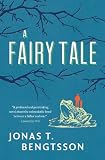
A Fairy Tale by Jonas T Bengtsson translated from the Danish by Charlotte Barslund (2014)
first published as Et eventyr 2011
finished reading July 30, 2022
I've just turned six when Olaf Palme is shot.* So begins A Fairy Tale.
The young boy's father said
Father and son moved again the next year, from the sea to a squalid apartment in Copenhagen, an enormous scary place for a seven year old. The child did not attend school. The father dealt only in cash. He had terrible nightmares which frightened the boy. It doesn't sound much like a fairy tale.
Each night though, the father added a bit to the story he was weaving for his son. A homeless King and Prince are the last people who can see the world as it really is. The White Queen has put a curse on the world so that most people only see what they want to see - they are too afraid to see the world as it is. Thus, the King and Prince must find the White Queen and kill her with a single blow to the heart to remove the curse.
A child of seven can easily be persuaded that such a quest is a good thing; after all, it's a fairy tale. Real life too was a fairy tale in which the father was able to keep form the child the reality that their life is exceptionally marginal, that outings like Christmas dinner in a shelter are a treat, even though the child wondered why everyone else there was alone. As the boy grew older, he still wanted to believe, but doubt crept in.
There was a brief interlude of happiness and security for a while. The nightmares stopped, but then real life intruded once more, and it was back to the transient existence, made harder by that taste of how life could be. Suddenly, in 1989, their lives came to a shocking crossroads. The boy didn't pick up his story again until 1996, when a brief interlude explained some of his father's behaviour.
Then it's 1999, and the roles are reversed. The boy is telling his father a fairy tale as they travel out in the world together. This time the father accepts it with serenity, but the boy will have nightmares.
As I read this book, I kept being thrown off by the Olaf Palme reference. It was clear the father wasn't the assassin, but I kept searching for its relevance. This probably detracted from my reading. However, going over the book again for this post, I left that reference aside, and felt better about the book. It still nags though. I have a possible idea about it, but I would like to know more.
______________
* February 28, 1986
A Fairy Tale by Jonas T Bengtsson translated from the Danish by Charlotte Barslund (2014)
first published as Et eventyr 2011
finished reading July 30, 2022
I've just turned six when Olaf Palme is shot.* So begins A Fairy Tale.
The young boy's father said
"They got him... The bastards finally got him." I don't remember ever seeing my dad cry. I ask him if Palme was someone he knew but he makes no reply. ...
"They got him" he says again.
The wind whips the sea into foam.
"I think we're going to have to move again."
Father and son moved again the next year, from the sea to a squalid apartment in Copenhagen, an enormous scary place for a seven year old. The child did not attend school. The father dealt only in cash. He had terrible nightmares which frightened the boy. It doesn't sound much like a fairy tale.
Each night though, the father added a bit to the story he was weaving for his son. A homeless King and Prince are the last people who can see the world as it really is. The White Queen has put a curse on the world so that most people only see what they want to see - they are too afraid to see the world as it is. Thus, the King and Prince must find the White Queen and kill her with a single blow to the heart to remove the curse.
A child of seven can easily be persuaded that such a quest is a good thing; after all, it's a fairy tale. Real life too was a fairy tale in which the father was able to keep form the child the reality that their life is exceptionally marginal, that outings like Christmas dinner in a shelter are a treat, even though the child wondered why everyone else there was alone. As the boy grew older, he still wanted to believe, but doubt crept in.
There was a brief interlude of happiness and security for a while. The nightmares stopped, but then real life intruded once more, and it was back to the transient existence, made harder by that taste of how life could be. Suddenly, in 1989, their lives came to a shocking crossroads. The boy didn't pick up his story again until 1996, when a brief interlude explained some of his father's behaviour.
Then it's 1999, and the roles are reversed. The boy is telling his father a fairy tale as they travel out in the world together. This time the father accepts it with serenity, but the boy will have nightmares.
As I read this book, I kept being thrown off by the Olaf Palme reference. It was clear the father wasn't the assassin, but I kept searching for its relevance. This probably detracted from my reading. However, going over the book again for this post, I left that reference aside, and felt better about the book. It still nags though. I have a possible idea about it, but I would like to know more.
______________
* February 28, 1986
23labfs39
>22 SassyLassy: Did you like it? Would you recommend it? I'm intrigued but ambiguity can drive me nuts.
24SassyLassy
>23 labfs39: Well I had to think about this one. I did like it, but liked different parts from different perspectives.
The early part with the young boy as narrator I really like, as it kept that idea of a tale, or weaving a story really well, with the simple language and understanding of a child. That's not to say it was simple declarative sentences. It wasn't, but it was a definitely well written point of view.
I didn't like the adolescent years so much. The voice didn't seem to relate to the person the child had been. I wonder if Bengtsson himself had trouble with these years, as this section is much shorter.
Then as the child matures into an very young adult, he seems to be an older version of his younger self, and so more credible. The story itself becomes darker based on the role reversal and its consequences, but that feeling of a fairy tale returns.
The only part I didn't like was the revelation of the reason for some of the father's problems. This was in the adolescent section. It seemed to me somewhat expected, although that doesn't take away from the damage done, and the spell was lost for a time.
Would I recommend it? Well, I would like to read more of the author and would recommend him. It's hard to say if I would recommend the book or not. I think I would, since you don't mind some dark in your reading. There were five months between the time I finished it and the time I wrote the post on it, and it did stay in my mind, which is a recommendation in itself. Although I hate being behind, having to go over books again with a bit of time in between reading and posting is a bonus for writing late reviews!
As for any ambiguity, apart from the Palme bit, I don't think there was any that couldn't be untangled.
The early part with the young boy as narrator I really like, as it kept that idea of a tale, or weaving a story really well, with the simple language and understanding of a child. That's not to say it was simple declarative sentences. It wasn't, but it was a definitely well written point of view.
I didn't like the adolescent years so much. The voice didn't seem to relate to the person the child had been. I wonder if Bengtsson himself had trouble with these years, as this section is much shorter.
Then as the child matures into an very young adult, he seems to be an older version of his younger self, and so more credible. The story itself becomes darker based on the role reversal and its consequences, but that feeling of a fairy tale returns.
The only part I didn't like was the revelation of the reason for some of the father's problems. This was in the adolescent section. It seemed to me somewhat expected, although that doesn't take away from the damage done, and the spell was lost for a time.
Would I recommend it? Well, I would like to read more of the author and would recommend him. It's hard to say if I would recommend the book or not. I think I would, since you don't mind some dark in your reading. There were five months between the time I finished it and the time I wrote the post on it, and it did stay in my mind, which is a recommendation in itself. Although I hate being behind, having to go over books again with a bit of time in between reading and posting is a bonus for writing late reviews!
As for any ambiguity, apart from the Palme bit, I don't think there was any that couldn't be untangled.
25SassyLassy
Moving into August now - making progress!
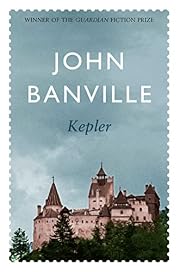
Kepler by John Banville
first published 1981
finished reading August 3, 2022
Having read John Banville's Doctor Copernicus last year, and now Kepler, I'm left wondering how western science was ever developed. Both books take place in a Middle Europe of dirt, dark, disease, poverty, and strife, both religious and political. Add in the search for a wealthy patron to subsidize your work, well how there was ever time to work out a cogent theory, let alone get it accepted is a mystery. Then there was the sheer drag of ordinary day to day life.
Kepler felt this too.
Kepler followed the ideas of Copernicus, dead for fifty years. However, he felt there was a flaw in them, that perhaps the great doctor had fitted his model to his theory. Yes, the six planets did revolve around the sun, but not in perfect circles, with each planetary orbit at all times equidistant from the centre. Kepler, a mathematician and astronomer, had worked out that earth's orbit, if circular, did not agree with the calendar. He agreed there was a mathematical pattern to it, but how to express that pattern was his great pursuit.
Forced out of his position in Graz by religious differences, Kepler took a research position with the great Tycho Brahe at the court of the Emperor Rudolph in Prague. Brahe's magnificent scientific instruments would be at his disposal. Benevolence came at a cost though, and it was the competitive Brahe who demanded any recognition received for himself. Then Brahe died, and Kepler succeeded him as imperial mathematician.
This may all sound somewhat dull, but Banville's great skill lies in making his characters live for the reader. Kepler's doubts and insecurities as imagined by Banville make him real.
__________
Kepler did succeed, even before calculus. He worked out that planets orbit the sun in an elliptical path. His Third Law stated "The squares of the periodic times are to each other as the cubes of the mean distances." Basically, he was saying that the pull of gravitational attraction of the sun decreased as each planet moved further away in its elliptical orbit, decreasing with the square of the distance between them. Isaac Newton, developing mathematics further into calculus, and working on gravitation, would be able to prove this. The Newton Letter is the third book in Banville's Revolutions Trilogy - something for next year.
Kepler by John Banville
first published 1981
finished reading August 3, 2022
Having read John Banville's Doctor Copernicus last year, and now Kepler, I'm left wondering how western science was ever developed. Both books take place in a Middle Europe of dirt, dark, disease, poverty, and strife, both religious and political. Add in the search for a wealthy patron to subsidize your work, well how there was ever time to work out a cogent theory, let alone get it accepted is a mystery. Then there was the sheer drag of ordinary day to day life.
Kepler felt this too.
He was after the eternal laws that govern the harmony of the world. Through awful thickets, in darkest night, he stalked his fabulous prey. Only the stealthiest of hunters had been vouchsafed a shot at it, and he, grossly armed with his defective mathematics, what chance had he? crowded round by capering clowns hallooing and howling and banging their bells whose names were Paternity, and Responsibility, and Domestgoddammedicity.
Kepler followed the ideas of Copernicus, dead for fifty years. However, he felt there was a flaw in them, that perhaps the great doctor had fitted his model to his theory. Yes, the six planets did revolve around the sun, but not in perfect circles, with each planetary orbit at all times equidistant from the centre. Kepler, a mathematician and astronomer, had worked out that earth's orbit, if circular, did not agree with the calendar. He agreed there was a mathematical pattern to it, but how to express that pattern was his great pursuit.
Forced out of his position in Graz by religious differences, Kepler took a research position with the great Tycho Brahe at the court of the Emperor Rudolph in Prague. Brahe's magnificent scientific instruments would be at his disposal. Benevolence came at a cost though, and it was the competitive Brahe who demanded any recognition received for himself. Then Brahe died, and Kepler succeeded him as imperial mathematician.
This may all sound somewhat dull, but Banville's great skill lies in making his characters live for the reader. Kepler's doubts and insecurities as imagined by Banville make him real.
Perhaps he was wrong, perhaps the world was not an ordered construct governed by immutable laws? Perhaps God, after all, like the creatures of his making, prefers the temporal to the eternal, the makeshift to the perfected, the toy bugles and bravos of misrule to the music of the spheres. But no, no, despite these doubts, no: his God was above all a God of order. The world works by geometry, for geometry is the earthly paradigm of divine thought.
__________
Kepler did succeed, even before calculus. He worked out that planets orbit the sun in an elliptical path. His Third Law stated "The squares of the periodic times are to each other as the cubes of the mean distances." Basically, he was saying that the pull of gravitational attraction of the sun decreased as each planet moved further away in its elliptical orbit, decreasing with the square of the distance between them. Isaac Newton, developing mathematics further into calculus, and working on gravitation, would be able to prove this. The Newton Letter is the third book in Banville's Revolutions Trilogy - something for next year.
26cindydavid4
I hope some day to use the word 'Domestgoddammedicity' in a sentence. Certainly its a sentence for many people:)
27cindydavid4
>25 SassyLassy: I read his The Sea ages ago. Didn't realize he had books about science. Will have to read those!
28labfs39
>24 SassyLassy: Thank you for taking the time to respond so thoroughly to my question. I'm going to let this one stay in my tickler file, but not actively seek it out.
>25 SassyLassy: Fantastic review.
>25 SassyLassy: Fantastic review.
29SassyLassy
>26 cindydavid4: I had that same thought. What a great word!
>28 labfs39: I like that "tickler file" idea.
Answering questions is a great way to think more about a book and put in things that would otherwise interrupt the flow of post about it, so thanks for letting me think about it some more.
>28 labfs39: I like that "tickler file" idea.
Answering questions is a great way to think more about a book and put in things that would otherwise interrupt the flow of post about it, so thanks for letting me think about it some more.
30avaland
>22 SassyLassy:, >24 SassyLassy: Very interesting observations....
>25 SassyLassy: While I am unlikely to pick up Banville at this point, that was a fabulous and thoroug review!
>25 SassyLassy: While I am unlikely to pick up Banville at this point, that was a fabulous and thoroug review!
31SassyLassy
Chinese novels have been strangely absent from my threads this year, with only the odd exception. Here's another one:
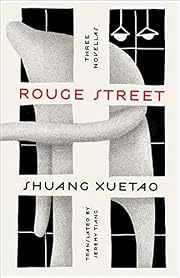
Rouge Street by Shuang Xuetao translated from the Chinese by Jeremy Tiang (2022)
first published separately in Chinese: Moses on the Plain (2016), The Aeronaut (2017) and Bright Hall (2017)
finished reading August 3, 2022
Shenyang, China, is probably not on many people's vacation list. Once a thriving industrial city, it has now become part of China's Rust Belt. It's also Shuang Xuetao's hometown.
Shuang grew up in the already declining city, so tales of its glory days to him were just old people talking. What he saw in its future appeared to be utter hopelessness, with random moments of grace.
In her Foreward Madeleine Thien says Rouge Street (Yanfen Street)
These are the people who inhabit these three novellas. Each interweaves past and present. Family members appear and disappear, sometimes in an incarnation in the next generation, still carrying the burdens of the last. Resentment and revenge are never far from the surface. Some commit terrible crimes and seek redemption, others have no remorse. There's a dream like quality to much of the writing, allowing the narratives to ebb and flow.
Shuang Xuetao has been compared to Hemingway and Murakami. However, to me he most recalls another great writer from north eastern China, Mo Yan, with a gallows humour that adds an earthiness and richness to a distinctly Chinese voice.
Rouge Street by Shuang Xuetao translated from the Chinese by Jeremy Tiang (2022)
first published separately in Chinese: Moses on the Plain (2016), The Aeronaut (2017) and Bright Hall (2017)
finished reading August 3, 2022
Shenyang, China, is probably not on many people's vacation list. Once a thriving industrial city, it has now become part of China's Rust Belt. It's also Shuang Xuetao's hometown.
Shuang grew up in the already declining city, so tales of its glory days to him were just old people talking. What he saw in its future appeared to be utter hopelessness, with random moments of grace.
In her Foreward Madeleine Thien says Rouge Street (Yanfen Street)
was settled by people thrown unceremoniously together - alleged class enemies and their equally despised children, former felons, hooligans, peasants, migrant workers, and the poor. Together, they formed a vast labour pool, disappearing into mines, smelters, and machine factories, ...building tractors or transformers, cleaning toilets or making cigarettes.... All must settle, and attempt to thrive, in jobs they have not chosen.
These are the people who inhabit these three novellas. Each interweaves past and present. Family members appear and disappear, sometimes in an incarnation in the next generation, still carrying the burdens of the last. Resentment and revenge are never far from the surface. Some commit terrible crimes and seek redemption, others have no remorse. There's a dream like quality to much of the writing, allowing the narratives to ebb and flow.
Shuang Xuetao has been compared to Hemingway and Murakami. However, to me he most recalls another great writer from north eastern China, Mo Yan, with a gallows humour that adds an earthiness and richness to a distinctly Chinese voice.
32SassyLassy

An Audience of Chairs by Joan Clark
first published 2005
finished reading August 13, 2022
This book just appeared in my house one day; I have no idea how or why. It wandered around for a couple of years, moving from pile to pile. Finally it was decision time - read it or let it go. It was strongly weighted to let it go, when I realized it mostly took place in Cape Breton, one of my favourite places. I had driven through Cape Breton twice in the past month, and this looked like a good relaxing summer read after entertaining summer house visitors, so it got a reprieve.
Moranna MacKenzie is first seen at the piano board on her kitchen table playing some Rachmaninov. Lifting her hands from the board she begins conducting the orchestra, combing and parting the air, keeping time as she leads the musicians toward the finale, which she plays with a burst of energy, thumping her hands on the piano board, bringing the moderato to a satisfying end. It is then that Moranna hears the audience's thunderous applause, and bows to the audience of empty chairs. It is then that the reader realizes something is not quite right.
As a child, Moranna was a gifted pianist and artist. She continued to develop her talents as a young adult. Then they turned into obsessions. Moranna lost the ability to live everyday life alongside her passions. Now thirty years later, she was living alone in an old farmhouse on the edge of a village.
Clark's portrayal of Moranna is compelling and sympathetic, while at the same time not disguising the damage she has done. There's the questions here of how to treat people capable of looking after themselves, but who don't conform to the expectations of family or society at large. How far does each side have to go to find common ground without losing something of themselves in the process?
It was an interesting book. However, Moranna's travels were all to places familiar to me, and I could see the story in my mind. This made me wonder if I would have been as sympathetic to her in another setting, perhaps say Arizona, or whether I would have lost patience with her. In the end it didn't matter because it was a good summer read and I could just leave it at that.
33avaland
>31 SassyLassy: Very nice review. I think I have that book on one of my wishlists ... (so many books....)
>32 SassyLassy: That fourth paragraph is a real kicker. But I also liked the honesty in the last paragraph. Interesting story.
>32 SassyLassy: That fourth paragraph is a real kicker. But I also liked the honesty in the last paragraph. Interesting story.
34SassyLassy
>33 avaland: Seems we posted at the same time above about the Bengtsson.
As to An Audience of Chairs, it does stay with me.
As to An Audience of Chairs, it does stay with me.
35SassyLassy
This year I was part of the Victorian Tavern reading group. I wanted to read some more non fiction about the era, and was lucky enough to find this next book.
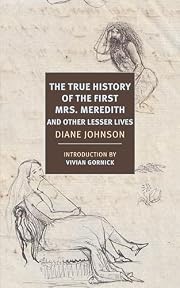
The True History of the First Mrs Meredith and Other Lesser Lives by Diane Johnson
first published 1972, this NYRB edition 2020
finished reading August 15, 2022
Mary Ellen Peacock Needles Meredith was married to a man the Victorians considered one of the 'Great Men' of their time, the writer George Meredith. Meredith was someone Virginia Woolf in a later age considered "the most grown up of the Victorian novelists". This book is not about George though. It is about Mary Ellen, his first wife, one of those in the orbit of the famous, but not famous herself, and so destined to be a "lesser life".
Briefly, Mary Ellen was educated well by her father the writer Thomas Peacock. Married at twenty-three, two months later she was a pregnant widow. Four years later she met and married Meredith, who was seven years her junior. Thus began a life of drudgery, while George wrote. Ten years later, at thirty-seven, she had an affair with Henry Wallis and left the marriage. Pregnant once more, she found herself alone and dying of the kidney disease that would kill her at forty. She died alone and in debt, for as Johnson tells us Because of course, as every Victorian knew, if you have sinned you cannot, cannot possibly, expect to die surrounded by your family and friends. George had refused permission for their son to see his mother ever again, and relented only when it was too late.
Johnson describes George as "momentarily afflicted" by Mary Ellen's death. He wrote to a friend following a vacation when I entered the world again... I found that one had quitted it who bore my name: and this filled my mind with melancholy recollections which I rarely give way to. Thomas Peacock was devastated and never fully recovered.
What Diane Johnson has done is write a biography where there are no lesser lives. As she says, But we know a lesser life does not seem lesser to the person who leads one. She looks at as many of Mary Ellen and George's family and social circles as she can, and then fits them together in an inspired and delightful fashion, so demonstrating some of the complexity of Victorian life.
Johnson says she became interested in Mary Ellen
The True History of the First Mrs Meredith and Other Lesser Lives by Diane Johnson
first published 1972, this NYRB edition 2020
finished reading August 15, 2022
Mary Ellen Peacock Needles Meredith was married to a man the Victorians considered one of the 'Great Men' of their time, the writer George Meredith. Meredith was someone Virginia Woolf in a later age considered "the most grown up of the Victorian novelists". This book is not about George though. It is about Mary Ellen, his first wife, one of those in the orbit of the famous, but not famous herself, and so destined to be a "lesser life".
Briefly, Mary Ellen was educated well by her father the writer Thomas Peacock. Married at twenty-three, two months later she was a pregnant widow. Four years later she met and married Meredith, who was seven years her junior. Thus began a life of drudgery, while George wrote. Ten years later, at thirty-seven, she had an affair with Henry Wallis and left the marriage. Pregnant once more, she found herself alone and dying of the kidney disease that would kill her at forty. She died alone and in debt, for as Johnson tells us Because of course, as every Victorian knew, if you have sinned you cannot, cannot possibly, expect to die surrounded by your family and friends. George had refused permission for their son to see his mother ever again, and relented only when it was too late.
Johnson describes George as "momentarily afflicted" by Mary Ellen's death. He wrote to a friend following a vacation when I entered the world again... I found that one had quitted it who bore my name: and this filled my mind with melancholy recollections which I rarely give way to. Thomas Peacock was devastated and never fully recovered.
What Diane Johnson has done is write a biography where there are no lesser lives. As she says, But we know a lesser life does not seem lesser to the person who leads one. She looks at as many of Mary Ellen and George's family and social circles as she can, and then fits them together in an inspired and delightful fashion, so demonstrating some of the complexity of Victorian life.
Johnson says she became interested in Mary Ellen
...resenting on her behalf the way she was always dismissed in biographies of George Meredith: the unhappy wife who had left him and, of course, died, as if death were the deserved fate for Victorian wives who broke the rules.She managed to track down the house where Mary Ellen and Henry's son had lived. The couple who had just inherited it let her go through the box room, and there she found letters from Mary Ellen to Henry. Fifty years later, this biography has certainly stood the test of time. Ironically, George Meredith himself hasn't fared as well.
36SassyLassy
Looking around in that box room (>35 SassyLassy: above) Johnson also found drawings by Rossetti, Beardsley, and Bourne-Jones. Henry Wallis had been an artist and later a collector. He drew this portrait of Mary Ellen:


37Caroline_McElwee
>36 SassyLassy: I was lucky to see this portrait in September at an exhibition here.
The book drops in my post Christmas basket.
The book drops in my post Christmas basket.
38SassyLassy
>37 Caroline_McElwee: Was it an exhibition from the period?
Love the idea of a "post Christmas basket"
Love the idea of a "post Christmas basket"
39baswood
Enjoyed your review of The True History of The First Mrs Meredith and Other Lesser Lives
40lisapeet
Glad to read your review of The True History of the First Mrs. Meredith—I've had the galley for a while, but hadn't heard much about it from any of my usual trusted sources, so I'll bump it up the virtual pile. You've got some really interesting reading here!
Good wishes to you for the holidays!
Good wishes to you for the holidays!
41Caroline_McElwee
>38 SassyLassy: It was this exhibition: https://www.ashmolean.org/pre-raphaelites
As someone who loves and has seen many PR exhibitions, there were quite a few new to me exhibits.
>35 SassyLassy: I realised I bought this last year. Just got to track it down now.
As someone who loves and has seen many PR exhibitions, there were quite a few new to me exhibits.
>35 SassyLassy: I realised I bought this last year. Just got to track it down now.
42SassyLassy
>39 baswood: >40 lisapeet: Johnson's writing was just so enjoyable and made Mary Ellen come alive. There are so many more Mary Ellens out there whom we'll never hear of, just like those "lesser" characters in some novels, who always seem to need a more full treatment.
>41 Caroline_McElwee: What a wonderful exhibition. Thanks for that link. The velvet crab is amazing.
Good luck with the search.
>41 Caroline_McElwee: What a wonderful exhibition. Thanks for that link. The velvet crab is amazing.
Good luck with the search.
43SassyLassy
A book seen in a post by labs39 and noted
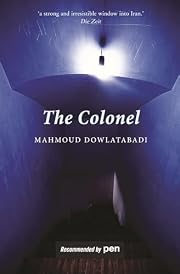
The Colonel by Mahmoud Dowlatabadi translated from the Persian by Tom Patterdale 2011
first published 2011
finished reading August 18, 2022
Despite the title, there are two colonels here: 'Colonel', and 'the colonel'. Colonel is the real life Colonel Mohammad Taqi Khan Pesyan (1892 - 1921). Peysan was a nationalist hero, killed trying to prevent Iran from becoming a satellite state in the wake of WWI. His memory and example were an inspiration to the colonel, an officer under the last Shah at the time of the 1978 Iranian Revolution. Ten years later the Islamists under Ayatollah Khomeini were in charge, and the once promising revolution had now become co-opted as a vehicle for Islamist ideology. the colonel believed this ideology to be contrary to his country's needs, but somehow although cashiered, he was still alive and in his own home.
The book takes place in a single night, with the colonel going back and forth in his mind between past and present.
This night saw him listening to the knock on the door. How to respond? Invite them in; there's nothing you can do anyway. Now, whatever I do I mustn't look surprised or appear indignant. I need to behave myself. ... I mustn't let anything faze me ever again. No, whatever happens, I mustn't be surprised. It's the only way of steeling yourself against nasty bombshells. ... But the butterflies in my stomach I can't do anything about. Not a thing! So began the colonel's denouement. Mentally he bade farewell to Colonel watching events from his framed photograph in its position of honour.
All five of the colonel's children had been irrevocably changed by the revolution and the subsequent Iran-Iraq war, each in a different manner according to the times. Two sons were dead; another was hidden in the basement, tortured to derangement; a daughter was married to a member of the new regime and forced to conform. Now, they had come for him. Tonight he would discover the fate of his youngest, his thirteen year old daughter Parvaneh, and bury her.
Dowlatabadi has compressed decades of Iranian history into the story of this one night. He hasn't held back in his revelations of life in Iran during that time, nor of what it does to people.
____________
Tom Patterdale tells us in his Translator's Note that Dowlatabadi avoids the use of Arabic words imported into Persian in his writing, using instead the language of the streets. Patterdale has tried to emulate this, using English words from Anglo-Saxon, rather that from Latin.
He also provides an excellent Glossary of Names and Terms without which I would not have known the story of Peysan and its significance to the book, as well as an Afterward.The censor has not allowed publication of this book in Iran, to no one's surprise.
The Colonel by Mahmoud Dowlatabadi translated from the Persian by Tom Patterdale 2011
first published 2011
finished reading August 18, 2022
Despite the title, there are two colonels here: 'Colonel', and 'the colonel'. Colonel is the real life Colonel Mohammad Taqi Khan Pesyan (1892 - 1921). Peysan was a nationalist hero, killed trying to prevent Iran from becoming a satellite state in the wake of WWI. His memory and example were an inspiration to the colonel, an officer under the last Shah at the time of the 1978 Iranian Revolution. Ten years later the Islamists under Ayatollah Khomeini were in charge, and the once promising revolution had now become co-opted as a vehicle for Islamist ideology. the colonel believed this ideology to be contrary to his country's needs, but somehow although cashiered, he was still alive and in his own home.
The book takes place in a single night, with the colonel going back and forth in his mind between past and present.
This night saw him listening to the knock on the door. How to respond? Invite them in; there's nothing you can do anyway. Now, whatever I do I mustn't look surprised or appear indignant. I need to behave myself. ... I mustn't let anything faze me ever again. No, whatever happens, I mustn't be surprised. It's the only way of steeling yourself against nasty bombshells. ... But the butterflies in my stomach I can't do anything about. Not a thing! So began the colonel's denouement. Mentally he bade farewell to Colonel watching events from his framed photograph in its position of honour.
All five of the colonel's children had been irrevocably changed by the revolution and the subsequent Iran-Iraq war, each in a different manner according to the times. Two sons were dead; another was hidden in the basement, tortured to derangement; a daughter was married to a member of the new regime and forced to conform. Now, they had come for him. Tonight he would discover the fate of his youngest, his thirteen year old daughter Parvaneh, and bury her.
Dowlatabadi has compressed decades of Iranian history into the story of this one night. He hasn't held back in his revelations of life in Iran during that time, nor of what it does to people.
Mankind spends all its life in a state of permanent insecurity, knowing no peace, and it never knows why. And in the end, your die, but you don't take that fear with you to the grave as you should. No, you pass it on to the next generation. When I became aware of fear, I had to accept it and gradually come to terms with it and split it up into different elements.
____________
Tom Patterdale tells us in his Translator's Note that Dowlatabadi avoids the use of Arabic words imported into Persian in his writing, using instead the language of the streets. Patterdale has tried to emulate this, using English words from Anglo-Saxon, rather that from Latin.
He also provides an excellent Glossary of Names and Terms without which I would not have known the story of Peysan and its significance to the book, as well as an Afterward.The censor has not allowed publication of this book in Iran, to no one's surprise.
44cindydavid4
>43 SassyLassy: oh that one looks like one Id like to read, thanks (and also to lisa!)
45labfs39
>43 SassyLassy: >44 cindydavid4: I can't take credit. Rebeccanyc recommended it to me, and I only got to it this year. I hope you liked it though, Sassy.
46SassyLassy
>45 labfs39: Definitely one of the top books from this year.
47kidzdoc
Great review of The Colonel, Sassy. I enjoyed it as well, and I think Rebeccanyc also recommended it to me.
48SassyLassy
>45 labfs39: >47 kidzdoc: Good to see that those recommendations are still being followed up.
49SassyLassy

The Return of the Soldier by Rebecca West
first published 1918
finished reading August 19, 2022
Whenever I read Rebecca West I wonder why I don't read more Rebecca West. The Return of the Soldier certainly had that effect. Only her second book, and her first published novel at that, it tells a difficult story against a background of Edwardian wealth and privilege with an almost clinical insight.
As the novel opens, Captain Christopher Baldry, away at the war, has not been heard from for a fortnight. His wife Kitty, elegant but brittle, and his cousin Jenny, the narrator, wait for news at Baldry Court in all its perfection. Their lives revolved around Chris, yet right away Jenny hints that appearances are deceiving. Even now, when spending seemed a little disgraceful, I could think of that beauty with nothing but pride. I was sure that we were preserved from the reproach of luxury because we had made a fine place for Chris, one little part of the world that was, so far as surfaces could make it so, good enough for his amazing goodness. Even Jenny didn't know then that their world, so carefully built around Chris, had no meaning for him.
Early on a woman came to the door asking to see Mrs Baldry. She was repulsively furred with neglect and poverty. Yet it was this woman the War Office had notified about Captain Baldry's injury and hospitalization in France. She and Chris had had a romance fifteen years earlier, and he had lost all memory of the intervening years. Kitty, the beautiful house, his successful civilian life and more: none of it registered with him anymore.
As for Kitty and Jenny, how were they to deal with this news and this woman? Jenny said I hated her as the rich hate the poor, as insect things that will struggle out of the crannies that are their decent home, and introduce ugliness to the light of day. And Kitty said in a voice shaken with pitilessness: You are impertinent.
Chris came home to Baldry Court. How his shell shock was dealt with, how the relations among the three women shifted over time, and how each responded to Chris in his time of need and he to them, is the heart of the novel.
50Nickelini
>22 SassyLassy: & >24 SassyLassy:
I read A Fairy Tale a few years ago. I tried it once and it was too dark for that moment in my life, but then I restarted it a few months later and really liked it. I've never known anyone else who has read it so it's nice to see another review
I read A Fairy Tale a few years ago. I tried it once and it was too dark for that moment in my life, but then I restarted it a few months later and really liked it. I've never known anyone else who has read it so it's nice to see another review
51Nickelini
>49 SassyLassy: I loved, loved, loved Return of the Soldier when I read it at university. I've never read anything else by her. What do you recommend?
52japaul22
>49 SassyLassy: >51 Nickelini: I also loved Return of the Soldier, but then was sadly disappointed by both The Thinking Reed and Harriet Hume. Both felt pretentious and over-written. In my review of The Thinking Reed, I described it as "lifestyles of the rich and boring". And the vocabulary she used in that book was off-putting and felt like it was there just to impress. This was a list I noted: Plangency, inchoateness, erethic, lickerish (used twice!), inspissated, frangible, coprophilists
Rebecca West really drives me crazy because I can't wrap my head around my wildly different reactions to her books!
Rebecca West really drives me crazy because I can't wrap my head around my wildly different reactions to her books!
53cindydavid4
>49 SassyLassy: I was eager to read black lamb and grey falcon at a time when I was learning about the balkan wars. Despite her good writing I couldn't get into to her BB; would like to try again sometime. will take a look at the return of the soldier maybe a smaller bite of her work will get me into the larger one
54SassyLassy
>50 Nickelini: Went back and found your review of A Fairy Tale, and was struck by your comment above about others not reading it in conjunction with your comment I can confidently say that I think most of my LT friends would also like this novel. It's one of those books you read and think "why isn't everyone talking about this?" - one of those odd unexplained conundrums.
Then I read your comment about the YouTube interview with Bengtsson who said that he ended this novel with the most hopeful note of anything he's written. I watched this before I finished the book, so when I read the end, I laughed out loud. Which was probably inappropriate. I would definitely have laughed at that too, but it does make me interested in what else he's written.
>51 Nickelini: >52 japaul22: >53 cindydavid4: One I would recommend as a quick read is The Birds Fall Down, based on a true episode from the Russian Revolution era. There's lots of psychology and thriller aspects to it.
>52 japaul22: Harriet Hume was a bit of an oddity which I'm not sure was meant to be taken at face value. I haven't read The Thinking Reed. Love the word list, but I must confess that 'frangible' is a word I like for its descriptive qualities, a word I first encountered in a soil science course in university, not in a literary context at all! Plangency and inchoateness remind me of a phase in my dreamy teen years when idle dissipation seemed an appealing way to live.
>53 cindydavid4: Black Lamb and Grey Falcon is a doorstopper by anyone's definition. While I can't say I've read it cover to cover, I have read large chunks of it at various times when I am reading other books where its background is useful. Plus, I just love reading her comments on people.
Then I read your comment about the YouTube interview with Bengtsson who said that he ended this novel with the most hopeful note of anything he's written. I watched this before I finished the book, so when I read the end, I laughed out loud. Which was probably inappropriate. I would definitely have laughed at that too, but it does make me interested in what else he's written.
>51 Nickelini: >52 japaul22: >53 cindydavid4: One I would recommend as a quick read is The Birds Fall Down, based on a true episode from the Russian Revolution era. There's lots of psychology and thriller aspects to it.
>52 japaul22: Harriet Hume was a bit of an oddity which I'm not sure was meant to be taken at face value. I haven't read The Thinking Reed. Love the word list, but I must confess that 'frangible' is a word I like for its descriptive qualities, a word I first encountered in a soil science course in university, not in a literary context at all! Plangency and inchoateness remind me of a phase in my dreamy teen years when idle dissipation seemed an appealing way to live.
>53 cindydavid4: Black Lamb and Grey Falcon is a doorstopper by anyone's definition. While I can't say I've read it cover to cover, I have read large chunks of it at various times when I am reading other books where its background is useful. Plus, I just love reading her comments on people.
55SassyLassy
Fat City was one of Criterion's featured films in August, so remembering it was in a TBR pile, I dug it out after watching the film.
Fat City by Leonard Gardner
first published 1969
finished reading August 21, 2022
Stockton, California in the 1950s was a place of desperation for those who lived there and those who drifted through. It was a place where ... men passed between bars and liquor stores, cafés, secondhand stores and walkup hotels.
Billy Tully, not really a washed up boxer at twenty-nine, because he had never had what could be called a career, still sparred at his local gym, and was available when a card needed to be filled. One day he met nineteen year old Ernie Munger there, a kid who had never had a fight. After a few rounds of sparring, Tully sent Ernie to Ruben Luna, his former trainer, for a chance at a career.
So began yet another cycle of hope, promise, and ultimate defeat of body and soul. Gardner draws his characters and their lives with an economy that is pitch perfect. As Denis Johnson, the natural choice to write the Introduction to the NYRB edition said, it is ...a book so precisely written and giving such value to its words that I felt I could almost read it with my fingers, like Braille.
Gardner also wrote the screenplay for John Huston's 1972 film, starring a startlingly young Jeff Bridges as Ernie, and Stacy Keach as Tully. The script was true to the novel right up to about the last ten minutes, when it changed completely.
Fat City by Leonard Gardner
first published 1969
finished reading August 21, 2022
Stockton, California in the 1950s was a place of desperation for those who lived there and those who drifted through. It was a place where ... men passed between bars and liquor stores, cafés, secondhand stores and walkup hotels.
Billy Tully, not really a washed up boxer at twenty-nine, because he had never had what could be called a career, still sparred at his local gym, and was available when a card needed to be filled. One day he met nineteen year old Ernie Munger there, a kid who had never had a fight. After a few rounds of sparring, Tully sent Ernie to Ruben Luna, his former trainer, for a chance at a career.
So began yet another cycle of hope, promise, and ultimate defeat of body and soul. Gardner draws his characters and their lives with an economy that is pitch perfect. As Denis Johnson, the natural choice to write the Introduction to the NYRB edition said, it is ...a book so precisely written and giving such value to its words that I felt I could almost read it with my fingers, like Braille.
Gardner also wrote the screenplay for John Huston's 1972 film, starring a startlingly young Jeff Bridges as Ernie, and Stacy Keach as Tully. The script was true to the novel right up to about the last ten minutes, when it changed completely.
56avaland
I'm all caught up on your thread and now feel I can move on to 2023 :-) Return of the Soldier intrigues...
57labfs39
>49 SassyLassy: I liked Return of the Soldier too. in particular the moral dilemma: is it better to preserve life and love or reality and truth?
58SassyLassy
>56 avaland: There will still be more here, as I'm nowhere near caught up!
>57 labfs39: That moral dilemma intrigued me too, especially given the last glimpse we have.
>57 labfs39: That moral dilemma intrigued me too, especially given the last glimpse we have.
59SassyLassy
The Victorian Tavern theme prompted this long overdue reread of an old favourite, a book Dickens considered the best he had written.
A Tale of Two Cities by Charles Dickens
first published in serial form in All the Year Round from April 20 - November 26, 1859
finished rereading August 27, 2022
It was the best of times, it was the worst of times... Even those who've never read A Tale of Two Cities will recognize these opening lines. They refer to the year 1775, a year of massive unrest not only in France, but also in England. They also refer to the time when Dickens was writing the book, for as he said, the poles of hope and despair, wisdom and foolishness, Light and Darkness, are with us always.
In typical fashion, Dickens dives right into the action. Seventeen year old Lucy Manette and Jarvis Lorry, a senior person at Tellson's Bank met by arrangement at Dover to cross to Calais together and thence to Paris. Mr Lorry first had to tell Lucy that her father, whom she had always believed to be dead, was in fact alive, and had been incarcerated in the Bastille for most of her life. Their trip to France was to bring him to England in the hopes of providing safety for him and restoring his health. Almost eighteen years of solitary confinement had left him a broken man.
This isn't the place to review this well known plot. Two things stood out for me in this reread. One was the extraordinarily sympathetic treatment of Dr Manette's struggle to regain his former equilibrium through all the trials that lay ahead.
The other was how right from the beginning the dichotomies Dickens had started with narrowed down to his specialties: character and identity. Starting with Lucy herself, with one French parent and one English, there are multiple facets to almost all of the major characters, allowing for the multiple plot lines so beloved by Dickens.
Lucy's father was the respected Dr Manette of Beauvais, but he was also the nameless prisoner 'One Hundred and Five, North Tower'. Charles Darnay, if he wasn't concealing his identity, could have used his French title of Marquis d'Evrémonde in England; in France he could only be Citizen Evrémonde. M Defarge was both loyal servant and master conspirator. His cadre of revolutionaries made themselves indistinguishable one from another by all using the name Jacques. Even Miss Pross and Mme Defarge in many ways are two opposing sides of the same person, locked in mortal combat. Only Jarvis Lorry, whose motto was Courage! Business! whenever he wanted to disguise emotion, remained steadfastly the same.
Then there is the pair of Charles Darnay and Sydney Carton with their very different personalities, but very similar appearances. As their fates are resolved and Carton makes his final decision, Dickens's final words echo the cadence of the beginning sentences, this time offering hope without despair: It is a far, far better thing that I do, than I have ever done; it is a far, far better rest that I go to than I have ever known.
A Tale of Two Cities by Charles Dickens
first published in serial form in All the Year Round from April 20 - November 26, 1859
finished rereading August 27, 2022
It was the best of times, it was the worst of times... Even those who've never read A Tale of Two Cities will recognize these opening lines. They refer to the year 1775, a year of massive unrest not only in France, but also in England. They also refer to the time when Dickens was writing the book, for as he said, the poles of hope and despair, wisdom and foolishness, Light and Darkness, are with us always.
In typical fashion, Dickens dives right into the action. Seventeen year old Lucy Manette and Jarvis Lorry, a senior person at Tellson's Bank met by arrangement at Dover to cross to Calais together and thence to Paris. Mr Lorry first had to tell Lucy that her father, whom she had always believed to be dead, was in fact alive, and had been incarcerated in the Bastille for most of her life. Their trip to France was to bring him to England in the hopes of providing safety for him and restoring his health. Almost eighteen years of solitary confinement had left him a broken man.
This isn't the place to review this well known plot. Two things stood out for me in this reread. One was the extraordinarily sympathetic treatment of Dr Manette's struggle to regain his former equilibrium through all the trials that lay ahead.
The other was how right from the beginning the dichotomies Dickens had started with narrowed down to his specialties: character and identity. Starting with Lucy herself, with one French parent and one English, there are multiple facets to almost all of the major characters, allowing for the multiple plot lines so beloved by Dickens.
Lucy's father was the respected Dr Manette of Beauvais, but he was also the nameless prisoner 'One Hundred and Five, North Tower'. Charles Darnay, if he wasn't concealing his identity, could have used his French title of Marquis d'Evrémonde in England; in France he could only be Citizen Evrémonde. M Defarge was both loyal servant and master conspirator. His cadre of revolutionaries made themselves indistinguishable one from another by all using the name Jacques. Even Miss Pross and Mme Defarge in many ways are two opposing sides of the same person, locked in mortal combat. Only Jarvis Lorry, whose motto was Courage! Business! whenever he wanted to disguise emotion, remained steadfastly the same.
Then there is the pair of Charles Darnay and Sydney Carton with their very different personalities, but very similar appearances. As their fates are resolved and Carton makes his final decision, Dickens's final words echo the cadence of the beginning sentences, this time offering hope without despair: It is a far, far better thing that I do, than I have ever done; it is a far, far better rest that I go to than I have ever known.
60SassyLassy
An aside: In the Oxford World Classics edition of A Tale of Two Cities, the Introduction by Andrew Sanders, discussing the plot device of Dr Manette's letter, which caused so much grief, tells of last letters written by prisoners condemned to the guillotine during the French Revolution. They were retained by the Public Prosecutor, and are now in the Archives Nationales, never having reached their intended recipients.
Then, in 1984, Olivier Blanc published a selection of these letters in La Dernière Lettre: Prisons et Condamnées de la Révolution 1793 - 1794
_________________________
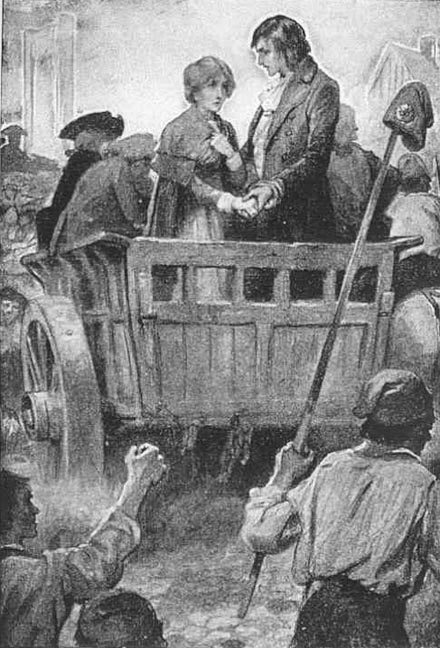
Sydney Carton and the seamstress from the Collins Pocket Edition of A Tale of Two Cities, 1905
image from the Victorian Web
Then, in 1984, Olivier Blanc published a selection of these letters in La Dernière Lettre: Prisons et Condamnées de la Révolution 1793 - 1794
_________________________
Sydney Carton and the seamstress from the Collins Pocket Edition of A Tale of Two Cities, 1905
image from the Victorian Web
63cindydavid4
Read it in HS, Loved it even more a few decades later when it was read for a book group. Such a well written story of the time, and of course the wonderful characters.
64japaul22
I also love A Tale of Two Cities. It is definitely my favorite Dickens. I can’t imagine there is another book out there that has a better first and last line.
65SassyLassy
>61 labfs39: Good idea!
>62 AlisonY: It's well worth it.
>63 cindydavid4: >64 japaul22: So happy to see others who have loved this book too.
>62 AlisonY: It's well worth it.
>63 cindydavid4: >64 japaul22: So happy to see others who have loved this book too.
66SassyLassy
A book discovered on nickelini's thread:
Rizzio by Denise Mina
first published 2021
finished reading August 28, 2022
If ever a life was meant for fictional treatment, it is that of David Rizzio, the Milanese confidant and personal secretary to Mary Queen of Scots, a man brutally murdered in front of his Queen and her ladies one cold March night in 1566. Like Thomas Cromwell, there are enough gaps in his history to give the novelist's imagination free rein.
Denise Mina is a perfect choice by Darkland Tales to write his story. Caustic, funny, and steeped in what she calls the "binary" of Scottish history, her narrative compels the reader on.
Rizzio's murder was not a sudden crime, but rather a plot with many participants, each in it for different motives.
David Rizzio has fascinated me since I was a small child. Back then, my grandmother took me to the Palace of Holyrood to show me the blood stains on the floor as she told me her version of the story. She followed it up with a copy of Scott's Tales of a Grandfather. I've been reading various versions of the story ever since. This is the best.
Rizzio by Denise Mina
first published 2021
finished reading August 28, 2022
If ever a life was meant for fictional treatment, it is that of David Rizzio, the Milanese confidant and personal secretary to Mary Queen of Scots, a man brutally murdered in front of his Queen and her ladies one cold March night in 1566. Like Thomas Cromwell, there are enough gaps in his history to give the novelist's imagination free rein.
Denise Mina is a perfect choice by Darkland Tales to write his story. Caustic, funny, and steeped in what she calls the "binary" of Scottish history, her narrative compels the reader on.
Rizzio's murder was not a sudden crime, but rather a plot with many participants, each in it for different motives.
... Rizzio had not fully understood the intricate disputational customs here. In Savonese courts a coup d'état is a hot fight, a charge and call to arms. It is not preceded by months spent drawing up legally binding contracts, negotiating the spoils, redrafting, getting their secretary to read over the proposals before they sign.
David Rizzio has fascinated me since I was a small child. Back then, my grandmother took me to the Palace of Holyrood to show me the blood stains on the floor as she told me her version of the story. She followed it up with a copy of Scott's Tales of a Grandfather. I've been reading various versions of the story ever since. This is the best.
67lisapeet
I've still never read A Tale of Two Cities—it's definitely on the bucket list. And I've had a copy of The Return of the Soldier forever, without knowing much of the details (or if I did, I forgot them), so I'm bumping it up after your intriguing review.
68labfs39
I have a four volume set of Tales of a Grandfather up on a very high shelf, unread. Did you enjoy it?
69Caroline_McElwee
>66 SassyLassy: I enjoyed that one too.
70Nickelini
>66 SassyLassy: I’m happy you enjoyed Rizzio. So lucky to have visited the castle!
71SassyLassy
>6y Hope you get to both of them. I'd like to hear what you think.
>68 labfs39: That sounds wonderful. I knew of the multiple volumes, but when my grandmother gave me the book, I was nine, so it is an abridged edition. It does have wonderful illustrations, one of them being the one on my profile page (more blood and gore). I did enjoy it, and it definitely did what my grandmother intended - get me interested in the history.
>69 Caroline_McElwee: It must have been you I was thinking of. I knew someone else had read it, but couldn't remember who. I should get better at noting these things.
>70 Nickelini: I try to get there whenever I'm in Edinburgh.
I see you've ordered the next two Darkland books. I'll be doing the same.
>68 labfs39: That sounds wonderful. I knew of the multiple volumes, but when my grandmother gave me the book, I was nine, so it is an abridged edition. It does have wonderful illustrations, one of them being the one on my profile page (more blood and gore). I did enjoy it, and it definitely did what my grandmother intended - get me interested in the history.
>69 Caroline_McElwee: It must have been you I was thinking of. I knew someone else had read it, but couldn't remember who. I should get better at noting these things.
>70 Nickelini: I try to get there whenever I'm in Edinburgh.
I see you've ordered the next two Darkland books. I'll be doing the same.
72Nickelini
>71 SassyLassy: I read Hex this past autumn. It was disturbing. Is the 3rd book out now?
73SassyLassy
>72 Nickelini: It was scheduled for publication this past fall, but I just checked the publisher's website and Book Depository and it doesn't appear to be out yet: Nothing Left to Fear from Hell by Alan Warner - Charles Edward Stuart in exile. I do like Warner's writing. Oh well, something to look forward to.
74SassyLassy
The last book for August, a very good reading month:
Islands of Abandonment by Cal Flyn
first published 2021
finished reading August 29, 2022
As the world's population booms, one of the demographic paradoxes is the amount of land abandoned by populations as they move to urban areas. Cal Flyn spent two years travelling to places abandoned by humans. Some of these places had been abandoned for economic reasons, some for the health of the peoples, some by war. All had been rendered unliveable by human intervention. Flyn set out to see what was happening to the natural world in these spaces.
One of the most obvious sites to visit was Chernobyl. In the city of Pripyat, the evacuated residents had expected to return in three days. That was in 1986 and the area is still officially a no go zone, a rule Flyn says is not truly enforced, as she was able to wander from one building to another. In an apartment building
Seventy per cent of the region is now covered in forest filled with wildlife, but the health and longevity of the flora and fauna is a matter of debate.
Although Chernobyl is the most contaminated, there are other sites where radioactive contamination has created so called 'radiation reserves'. There is one surrounding Hanford Washington, where 586 square miles are still cordoned off after the release of 685,000 curies of radioactive iodine during WWII.
It doesn't take a war though to make a city look like it has experienced one. Detroit Michigan has lost two thirds of its peak population through economic decline. Tens of thousands of houses stand empty and falling apart, shingles melting from the roofs like hot icing, brick-effect tiles sliding from alignment, sharp-edged gaps where rotten buildings have been pulled like teeth.. One word used to describe Detroit's decay is blight. Flyn, a Scot, had not heard the word used in that context before, familiar instead with its agricultural usage, which the OED defines as any baleful influence of atmospheric or invisible origin that suddenly blasts, nips, or destroys plants. Of its usage in urban situations, she says,
It's writing like this that makes Islands of Abandonment such a thought provoking book, as it takes you down byroads to a place where you can ponder the interactions between humans and the natural world. Whether it be the Place à Gaz bare patch in the middle of the Verdun forest, where almost nothing will grow because of arsenic and heavy metals buried there over one hundred years ago post WWI, or Newark Bay in New Jersey, humans have wreaked havoc on the globe.
Flyn's subtitle is 'Rebounding in the Post Human Landscape', which indicates a measure of hope. She offers examples of these areas, like the buffer zones in Cyprus or Estonia. However, I suspect she is more of an optimist than I as to what will ultimately emerge.
Islands of Abandonment by Cal Flyn
first published 2021
finished reading August 29, 2022
As the world's population booms, one of the demographic paradoxes is the amount of land abandoned by populations as they move to urban areas. Cal Flyn spent two years travelling to places abandoned by humans. Some of these places had been abandoned for economic reasons, some for the health of the peoples, some by war. All had been rendered unliveable by human intervention. Flyn set out to see what was happening to the natural world in these spaces.
One of the most obvious sites to visit was Chernobyl. In the city of Pripyat, the evacuated residents had expected to return in three days. That was in 1986 and the area is still officially a no go zone, a rule Flyn says is not truly enforced, as she was able to wander from one building to another. In an apartment building
Birds' nests balance in unlikely places: in fuse boxes, on bookshelves, in desk drawers. Sprays of ferns sprout in damp corners. Paint demonstrates a thousand different ways of peeling, flaking, curling, crumpling to dust. Masonry and glass crunch underfoot. The linoleum of the stairs is coming away in sections from the tread, wet and flimsy like the skin of a rotten apple, the skin of a corpse. ... I make it up three flights of stairs before I lose my nerve.
Seventy per cent of the region is now covered in forest filled with wildlife, but the health and longevity of the flora and fauna is a matter of debate.
Although Chernobyl is the most contaminated, there are other sites where radioactive contamination has created so called 'radiation reserves'. There is one surrounding Hanford Washington, where 586 square miles are still cordoned off after the release of 685,000 curies of radioactive iodine during WWII.
It doesn't take a war though to make a city look like it has experienced one. Detroit Michigan has lost two thirds of its peak population through economic decline. Tens of thousands of houses stand empty and falling apart, shingles melting from the roofs like hot icing, brick-effect tiles sliding from alignment, sharp-edged gaps where rotten buildings have been pulled like teeth.. One word used to describe Detroit's decay is blight. Flyn, a Scot, had not heard the word used in that context before, familiar instead with its agricultural usage, which the OED defines as any baleful influence of atmospheric or invisible origin that suddenly blasts, nips, or destroys plants. Of its usage in urban situations, she says,
Locals speak of blight the way one might speak of a malevolent spirit that stalks the halls at night. It felt at once inarguable and indecent; fitting metaphor, and yet when applied to a living community, almost impossibly provocative. Though many voiced its name, I found myself unable to do so in company.
It's writing like this that makes Islands of Abandonment such a thought provoking book, as it takes you down byroads to a place where you can ponder the interactions between humans and the natural world. Whether it be the Place à Gaz bare patch in the middle of the Verdun forest, where almost nothing will grow because of arsenic and heavy metals buried there over one hundred years ago post WWI, or Newark Bay in New Jersey, humans have wreaked havoc on the globe.
Flyn's subtitle is 'Rebounding in the Post Human Landscape', which indicates a measure of hope. She offers examples of these areas, like the buffer zones in Cyprus or Estonia. However, I suspect she is more of an optimist than I as to what will ultimately emerge.
75bragan
>74 SassyLassy: That sounds really interesting. Onto the wishlist it goes!
76SassyLassy
>75 bragan: I found it so. It was one of those books where I would find myself saying to people "Did you know...?"
77SassyLassy
Briefly skipping over September here as I haven't written those reviews yet, and on to October. I wrote a review for this back then because the book had to go back to the library. It's another book from my bookclub.

The Day the World Stops Shopping by J B MacKinnon
first published 2021
finished reading October 13, 2022
Quick! Look in your closets. Now check your chest(s) of drawers. Excluding socks, underwear, and possibly footwear, how long could you go without having to buy more clothes?
It's not an idle question. The world is drowning in clothes. MacKinnon quotes a consulting firm study saying that within a year of manufacture, in western economies six out of ten clothing items will be trashed. Many items are worn only five times before being relegated to the back of the closet or the bin.
It's not just clothes MacKinnon discusses though. There are the signature items of 'positional wealth': cars, houses, watches, phones, just about anything by which we measure ourselves against our peer group. Countries whose citizens have greater degrees of social equality than say the US, countries like Finland, are less likely to get caught up in the success signalling game.
A measure of consumption you might not think of right away is lighting. The world is getting brighter, so much so that the amount of brightness as lighted area often corresponds to the size of the economy, not the population. The most brightly lit country is the US, at a cost of $140 billion a year (2017).
LED lights were designed to save energy and reduce light pollution. Yet instead of simply enjoying these positive features, people started buying more lighting. Advertising media on buildings, floodlighting in empty arenas, lights left on at home - it all adds up. Are all those lights necessary? Not at all.
MacKinnon has example after example of excess. He discusses the goal of continued economic growth as measured by GDP, of growth at all costs, as a mistake. Should military spending and financial speculation really be included in what a country views as positive economic growth? New Zealand has dropped GDP as a principal economic measure, preferring instead, along with Scotland, Iceland, and the state of Maryland, to focus on the well being of citizens instead, using the GPI, or Genuine Progress Indicator. This subtracts adverse social and economic costs like air pollution from the production measurement, focussing more on citizen wellbeing.
It's not news that the burden of the production of many items, and the pollution it entails, is borne by some of the poorest countries on earth. MacKinnon is definitely aware of this. However, for me, this is where the book falls down. After a deluge of facts, he seemed lost in the morass. How consumption can halt without further impoverishing millions is not a conundrum easily solved. Yes, the environment will improve, improving part of everyone's life and that of the planet, but what will sustain displaced workers economically seems to be an unanswerable question.
There's lots to think about here. Each of us can buy less and buy better, but not everyone will. Mackinnon quotes the historian David Shi, saying simplicity is destined to be 'a minority ethic'. Mackinnon feels poliices have to be introduced which would have farther reaching effects than individuals can achieve acting on their own. Carbon taxes, lifespan labelling, incentives to repair rather than replace, are a few of his suggestions. However, unlike the rest of the book, MacKinnon seems at a loss for words here.
____________________
The cover image on this edition is 5000 lost soles by liina klaus

The Day the World Stops Shopping by J B MacKinnon
first published 2021
finished reading October 13, 2022
Quick! Look in your closets. Now check your chest(s) of drawers. Excluding socks, underwear, and possibly footwear, how long could you go without having to buy more clothes?
It's not an idle question. The world is drowning in clothes. MacKinnon quotes a consulting firm study saying that within a year of manufacture, in western economies six out of ten clothing items will be trashed. Many items are worn only five times before being relegated to the back of the closet or the bin.
It's not just clothes MacKinnon discusses though. There are the signature items of 'positional wealth': cars, houses, watches, phones, just about anything by which we measure ourselves against our peer group. Countries whose citizens have greater degrees of social equality than say the US, countries like Finland, are less likely to get caught up in the success signalling game.
A measure of consumption you might not think of right away is lighting. The world is getting brighter, so much so that the amount of brightness as lighted area often corresponds to the size of the economy, not the population. The most brightly lit country is the US, at a cost of $140 billion a year (2017).
LED lights were designed to save energy and reduce light pollution. Yet instead of simply enjoying these positive features, people started buying more lighting. Advertising media on buildings, floodlighting in empty arenas, lights left on at home - it all adds up. Are all those lights necessary? Not at all.
MacKinnon has example after example of excess. He discusses the goal of continued economic growth as measured by GDP, of growth at all costs, as a mistake. Should military spending and financial speculation really be included in what a country views as positive economic growth? New Zealand has dropped GDP as a principal economic measure, preferring instead, along with Scotland, Iceland, and the state of Maryland, to focus on the well being of citizens instead, using the GPI, or Genuine Progress Indicator. This subtracts adverse social and economic costs like air pollution from the production measurement, focussing more on citizen wellbeing.
It's not news that the burden of the production of many items, and the pollution it entails, is borne by some of the poorest countries on earth. MacKinnon is definitely aware of this. However, for me, this is where the book falls down. After a deluge of facts, he seemed lost in the morass. How consumption can halt without further impoverishing millions is not a conundrum easily solved. Yes, the environment will improve, improving part of everyone's life and that of the planet, but what will sustain displaced workers economically seems to be an unanswerable question.
There's lots to think about here. Each of us can buy less and buy better, but not everyone will. Mackinnon quotes the historian David Shi, saying simplicity is destined to be 'a minority ethic'. Mackinnon feels poliices have to be introduced which would have farther reaching effects than individuals can achieve acting on their own. Carbon taxes, lifespan labelling, incentives to repair rather than replace, are a few of his suggestions. However, unlike the rest of the book, MacKinnon seems at a loss for words here.
____________________
The cover image on this edition is 5000 lost soles by liina klaus
78raton-liseur
>77 SassyLassy: Great review and interesting facts ant thoughts! The book seems interesting, but the conclusion remarks seem so depressing (and probably realistic, unfortunately).
Some of the incentives recommended by tha author are starting to be implemented in France, for example the lifespan labelling and financial incentives to repair. We'll see how it works. I tend to think I adhere to this "minority ethic" of simplicity, despite having progress to make on that front. It would be great if simplicity became trendy (and maybe a marker of social status?).
Some of the incentives recommended by tha author are starting to be implemented in France, for example the lifespan labelling and financial incentives to repair. We'll see how it works. I tend to think I adhere to this "minority ethic" of simplicity, despite having progress to make on that front. It would be great if simplicity became trendy (and maybe a marker of social status?).
79japaul22
Putting Islands of Abandonment on my wish list. Sounds very interesting.
80lisapeet
>74 SassyLassy: I like the sound of that one. I'm always interested in reading about urban animal and bird rewilding, and that hits the right notes. Onto the wishlist it goes.
81SassyLassy
This next is out of order, but I'm procrastinating on the next book in order, one by Jaan Kross. This is much easier:

Duck Hill Journal by Page Dickey
first published 1991
finished reading October 6, 2022
Back in 2012 I reviewed Page Dickey's Embroidered Ground: Revisiting the Garden, published in 2011. At that time I said I have two rules when it comes to buying "garden books":
1. it can't tell me "how to" unless it is a specific text or manual on say, propagation
2. it can't fill a lot of space with long lists of plants, no matter how pretty the pictures are
I also said that that book met the criteria, being written for those who live their gardens. I thoroughly enjoyed it.
Well Duck Hill Journal was written some twenty years earlier, when the Duck Hill garden was only ten years old and Dickey was a novice writer. As the subtitle 'A Year in a Country Garden' suggests, Dickey goes through the gardening year in upper New York state month by month. Each month is filled with lists and lists of plants padding out the chapter. There is nothing here that any number of other books wouldn't provide. However, if you garden in a similar climate, and are looking for new plants or combinations, this might be of help.
The good news is the book got Dickey started, winning her an award from the Garden Writers Association of America. Her writing has developed along with her garden. Visiting her website, I see there is a relatively new book Uprooted: A Gardener Reflects on Beginning Again about her move from her thirty-four years at Duck Hill to a new garden and starting one all over again. I'm always interested in how people cope with these kind of moves, and will look for that one.
____________
My copy of Duck Hill Journal was a lovely hardcover edition, bought second hand. I believe it had never been read, which was sad, as someone had inscribed it with a warm Christmas note, obviously believing the recipient would cherish it.

Duck Hill Journal by Page Dickey
first published 1991
finished reading October 6, 2022
Back in 2012 I reviewed Page Dickey's Embroidered Ground: Revisiting the Garden, published in 2011. At that time I said I have two rules when it comes to buying "garden books":
1. it can't tell me "how to" unless it is a specific text or manual on say, propagation
2. it can't fill a lot of space with long lists of plants, no matter how pretty the pictures are
I also said that that book met the criteria, being written for those who live their gardens. I thoroughly enjoyed it.
Well Duck Hill Journal was written some twenty years earlier, when the Duck Hill garden was only ten years old and Dickey was a novice writer. As the subtitle 'A Year in a Country Garden' suggests, Dickey goes through the gardening year in upper New York state month by month. Each month is filled with lists and lists of plants padding out the chapter. There is nothing here that any number of other books wouldn't provide. However, if you garden in a similar climate, and are looking for new plants or combinations, this might be of help.
The good news is the book got Dickey started, winning her an award from the Garden Writers Association of America. Her writing has developed along with her garden. Visiting her website, I see there is a relatively new book Uprooted: A Gardener Reflects on Beginning Again about her move from her thirty-four years at Duck Hill to a new garden and starting one all over again. I'm always interested in how people cope with these kind of moves, and will look for that one.
____________
My copy of Duck Hill Journal was a lovely hardcover edition, bought second hand. I believe it had never been read, which was sad, as someone had inscribed it with a warm Christmas note, obviously believing the recipient would cherish it.

