
Yu Hua
Author of To Live
About the Author
Image credit: © dpa
Works by Yu Hua
To Live (Chinese Edition) This Edition is out of print, pls search ISBN 9787530221532 for the new edition (2017) 4 copies
Brothers-babel 1003 2 copies
许三观卖血记 (余华作品系列 3) (Chinese Edition) 2 copies
(124) 活着 2 copies
活着 (余华作品系列 1) (Chinese Edition) 2 copies
(122) 兄弟 上 1 copy
活着 (Chinese Edition) 1 copy
战栗 1 copy
(125) 许三观卖血记 1 copy
Yedinci Gün 1 copy
Chiny w dziesieciu slowach 1 copy
රුහිරු විකුණා යැපුණ මිනිසෙක් 1 copy
දිවි සටනක අන්දරය 1 copy
I Am Who I Am 1 copy
The boy in the evening(2012 version) (Chinese edidion) Pinyin: huang hun li de nan hai ( 2012 nian ban ) (2012) 1 copy
Ziua a șaptea 1 copy
第七天 1 copy
Yagmur Altinda Çigliklar 1 copy
余华作品:没有一条道路是重复的 1 copy
Associated Works
Tagged
Common Knowledge
- Legal name
- 余華
- Birthdate
- 1960-04-03
- Gender
- male
- Short biography
- Mae Yu Hua (1960-) yn un o awduron cyfoes mwyaf dylanwadol Tsieina. Cyhoeddir yma ddarn o ysgrif o'i gyfrol 'Tsieina mewn deg gair' (2010), lle mae'r olrhain esblygiad ystyr y geiriau hyn a'r newyddiadau a fu yn ei wlad dros y degawdau diwethaf. Cyfieithwyd ei waith i dros 40 o ieithoedd.
(O'r pedwar gwynt, Haf 2019). - Nationality
- China
- Associated Place (for map)
- China
Members
Reviews
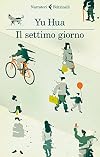
Ho un debole per le storie nelle quali si dispiega tutta la potenza della vita: Il settimo giorno è triste e divertente, terribile e speranzoso, crudele e dolce, tutto mischiato per creare quell’effetto unico che si prova quando si è davanti a un libro che racconta l’esperienza di vivere una vita. Non è importante che le nostre esperienze siano simili a quella del protagonista e dei vari personaggi che incontra: proviamo empatia per il solo fatto di essere umanə e di riconoscere show more quello stesso arrabattarsi nel percorrere bene il tempo a nostra disposizione.
Ovviamente, come ogni buona storia di questo tipo, si parla molto di morte: anzi, Yu Hua parte proprio dalla morte del suo protagonista e dai sette giorni in cui vagherà nell’aldiquà e incontrerà altre persone defunte con le loro storie. D’altronde quale altro momento se non quello seguente alla morte per poter trovare il senso di una vita?
In un aldilà molto burocratico e freddo, non molto diverso dalla freddezza dell’aldiquà, Yang Fei ripercorre la sua vita e lascia che questa si intrecci con i racconti delle altre persone incontrate durante il suo viaggio, che siano conosciute o nuove conoscenze. È ovvio che in un mondo così spietato il solo modo per resistere e opporsi sia curare i rapporti umani. Se niente vale davanti al denaro e al profitto, prendersi cura dellə altrə è un atto rivoluzionario.
L’unico aspetto che mi ha lasciata perplessa è stato la storia di Topina, che comprende una bella dose di violenza domestica e che mi è sembrata gestita con una fastidiosa mancanza di sensibilità sul tema. E prima che mi parliate di culture diverse, vorrei farvi notare che il femminismo è anche in Cina – e ho la sensazione che tra gli uomini susciti le stesse reazioni scomposte alle quali siamo abituatə nel nostro angolo di mondo; mentre tra le donne non sia abbastanza diffuso, con le solite devastanti conseguenze. show less
Ovviamente, come ogni buona storia di questo tipo, si parla molto di morte: anzi, Yu Hua parte proprio dalla morte del suo protagonista e dai sette giorni in cui vagherà nell’aldiquà e incontrerà altre persone defunte con le loro storie. D’altronde quale altro momento se non quello seguente alla morte per poter trovare il senso di una vita?
In un aldilà molto burocratico e freddo, non molto diverso dalla freddezza dell’aldiquà, Yang Fei ripercorre la sua vita e lascia che questa si intrecci con i racconti delle altre persone incontrate durante il suo viaggio, che siano conosciute o nuove conoscenze. È ovvio che in un mondo così spietato il solo modo per resistere e opporsi sia curare i rapporti umani. Se niente vale davanti al denaro e al profitto, prendersi cura dellə altrə è un atto rivoluzionario.
L’unico aspetto che mi ha lasciata perplessa è stato la storia di Topina, che comprende una bella dose di violenza domestica e che mi è sembrata gestita con una fastidiosa mancanza di sensibilità sul tema. E prima che mi parliate di culture diverse, vorrei farvi notare che il femminismo è anche in Cina – e ho la sensazione che tra gli uomini susciti le stesse reazioni scomposte alle quali siamo abituatə nel nostro angolo di mondo; mentre tra le donne non sia abbastanza diffuso, con le solite devastanti conseguenze. show less

Yu Hua takes 10 words which define the thinking of the modern Chinese people and takes us on a trip down memory lane - both his and his country's - defining and illustrating the words. Born in 1960, he ended up in school during most of the Cultural revolution and that shaped how he looks at language and words - their meaning changes and gets redefined but the old meanings never get forgotten.
If you are expecting a history of modern China, look somewhere else. Yes, there is a lot of history show more in this book but it is a mix between personal recollections and personal observations of other stories than a proper story. The 10 essays (some of them more connected with each others that others) all start with the Cultural revolution and end up today (well, the today of 2010) and they all draw comparisons between the two eras that should be as different from each other as humanly possible. And yet, they are not. Because they are old part of the same.
Some of the anecdotes being told were amusing (how to find a book to read in China when all books were banned and burned for example or where to find a cold place in a hot day), some made me rethink what I thought I knew about China (hitting a teacher was something I did not expect - especially in a society known for teacher' veneration). They all add up to a picture of a China that Yu Hua wants us to see. And that is as important to remember as is what we do actually see in the text.
The book was banned in China (it is still not published there - the Chinese version is published in Taiwan; parts of it were reworked into a different book in 2015 and that was published). And that is not surprising - the China of this book is ugly and not what the leadership would like to present to the world.
One thing that he mentions as part of his exploration of the words usage in Chinese but which is also highlighted by his choice of words is how the same words may hint at different things depending on who uses them. The last two "copycat" and "bamboozle", especially the last one, have very different connotations in English that some of the ones that apparently are there in Chinese (but also some similar ones). And for others, the meaning comes from history. That made me thing about my struggle with English occasionally (less and less as time passes and I live in an English speaking country now) - when I see a word or an expression from the prism of my Bulgarian viewpoint.
And just as a last note, at the very end of the essay about Reading , I found one of the best definitions of literature I had seen lately:
"If literature truly possesses a mysterious power, I think perhaps it is precisely this: that one can read a book by a writer of a different time, a different country, a different race, a different language, and a different culture and there encounter a sensation that is one's very own."
He was talking about the German poet Heine - but I suspect that any reader has their own example of this.
Not a perfect book by any means (and the constant bringing up of the Cultural revolution as a parallel of the current times did get a bit annoying at parts and made me wonder if it was designed to provoke) but an entertaining one nevertheless. show less
If you are expecting a history of modern China, look somewhere else. Yes, there is a lot of history show more in this book but it is a mix between personal recollections and personal observations of other stories than a proper story. The 10 essays (some of them more connected with each others that others) all start with the Cultural revolution and end up today (well, the today of 2010) and they all draw comparisons between the two eras that should be as different from each other as humanly possible. And yet, they are not. Because they are old part of the same.
Some of the anecdotes being told were amusing (how to find a book to read in China when all books were banned and burned for example or where to find a cold place in a hot day), some made me rethink what I thought I knew about China (hitting a teacher was something I did not expect - especially in a society known for teacher' veneration). They all add up to a picture of a China that Yu Hua wants us to see. And that is as important to remember as is what we do actually see in the text.
The book was banned in China (it is still not published there - the Chinese version is published in Taiwan; parts of it were reworked into a different book in 2015 and that was published). And that is not surprising - the China of this book is ugly and not what the leadership would like to present to the world.
One thing that he mentions as part of his exploration of the words usage in Chinese but which is also highlighted by his choice of words is how the same words may hint at different things depending on who uses them. The last two "copycat" and "bamboozle", especially the last one, have very different connotations in English that some of the ones that apparently are there in Chinese (but also some similar ones). And for others, the meaning comes from history. That made me thing about my struggle with English occasionally (less and less as time passes and I live in an English speaking country now) - when I see a word or an expression from the prism of my Bulgarian viewpoint.
And just as a last note, at the very end of the essay about Reading , I found one of the best definitions of literature I had seen lately:
"If literature truly possesses a mysterious power, I think perhaps it is precisely this: that one can read a book by a writer of a different time, a different country, a different race, a different language, and a different culture and there encounter a sensation that is one's very own."
He was talking about the German poet Heine - but I suspect that any reader has their own example of this.
Not a perfect book by any means (and the constant bringing up of the Cultural revolution as a parallel of the current times did get a bit annoying at parts and made me wonder if it was designed to provoke) but an entertaining one nevertheless. show less
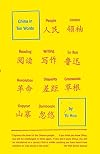
A fascinating and dryly amusing set of essays, Yu Hua's China in Ten Words mixes the author's boyhood experiences of the Cultural Revolution with reflections on the mores of contemporary China. Tonally, each essay wobbles a bit internally—from wry raconteur to irritated polemicist and back again—but each provides a marvellous glimpse at the complexities and contradictions of life in modern China.
I have read Yu Hua's columns in the New York Times for some years and enjoy and learn from his lens on modern China. For some reason I have not read his books before this one though this book and two of his novels, To Live, and Chrinicle of a Blood Merchant, have been in my TBR for years. I am so glad I finally got to this smart, painful, sometimes sweet (but not saccharine) eye-opening essay collection. China in Ten Words offers something hard to come by, cultural criticism anchored with show more memoir from China. While I admit that sometimes this reads a little moralistic -- this is especially true in the section on love and romance -- mostly it is just good storytelling with loads of personality that walks us through the seismic shifts in China from the Cultural Revolution (the time during which Yu grew up) to the current obsessive amoral money-obsessed economic powerhouse. It is strongest when Yu shares his childhood experiences to illustrate the ways in which human impulses to do good have been subverted.
In addition to cultural criticism, there is a linguistics angle to these essays, about how we turn words describing bad things into good or neutral words and thereby erode the moral fabric of a place and a people. So much of what he discusses in early 21st century China can be applied to 2015-present America. Yu's perspective is illuminating.
Published in 2010 this book uses 10 common Chinese words to illustrate the points mentioned above. Surprisingly, though the shift seems revolutionary it turns out that many things haven't changed as much as you might think. The stated goals are 100% different, but the people's behaviors and choices not so much. I was particularly taken by the "Copycat" and "Bamboozle" sections which takes us down the road to post-truth China (though China has been sort of post-truth for nearly a century.)
Unsurprisingly, this book is banned in China. I am surprised and pleased Yu Hua is allowed to write and live in China (and travel abroad in support of his books.) I will be moving on to other works. show less
In addition to cultural criticism, there is a linguistics angle to these essays, about how we turn words describing bad things into good or neutral words and thereby erode the moral fabric of a place and a people. So much of what he discusses in early 21st century China can be applied to 2015-present America. Yu's perspective is illuminating.
Published in 2010 this book uses 10 common Chinese words to illustrate the points mentioned above. Surprisingly, though the shift seems revolutionary it turns out that many things haven't changed as much as you might think. The stated goals are 100% different, but the people's behaviors and choices not so much. I was particularly taken by the "Copycat" and "Bamboozle" sections which takes us down the road to post-truth China (though China has been sort of post-truth for nearly a century.)
Unsurprisingly, this book is banned in China. I am surprised and pleased Yu Hua is allowed to write and live in China (and travel abroad in support of his books.) I will be moving on to other works. show less
Lists
Awards


You May Also Like


Associated Authors
Statistics
- Works
- 67
- Also by
- 4
- Members
- 2,888
- Popularity
- #8,873
- Rating
- 3.9
- Reviews
- 105
- ISBNs
- 243
- Languages
- 20
- Favorited
- 3