Boccaccios Buch von den fürnembsten Weibern (Potsdam, Kiepenheuer, 1924)
Talk Fine Press Forum
Join LibraryThing to post.
1Lukas1990
Our exchange on Weimar period facsimiles reminded me about one beautiful example from my modest collection.
It is called Boccaccios Buch von den fürnembsten Weibern (Potsdam, Kiepenheuer, 1924).
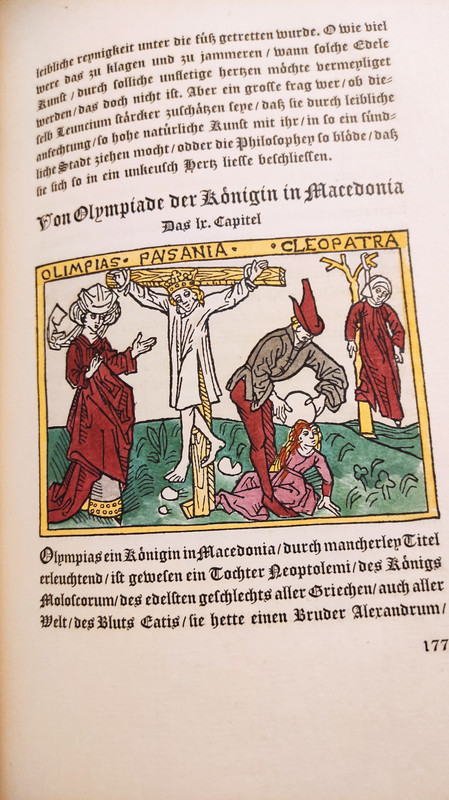
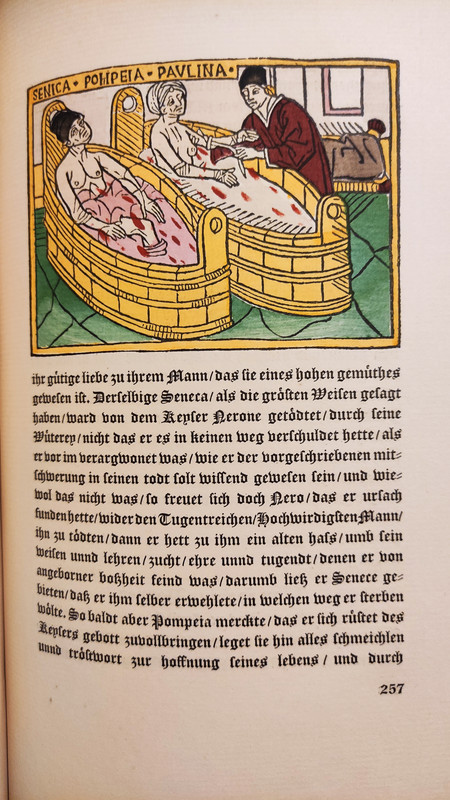
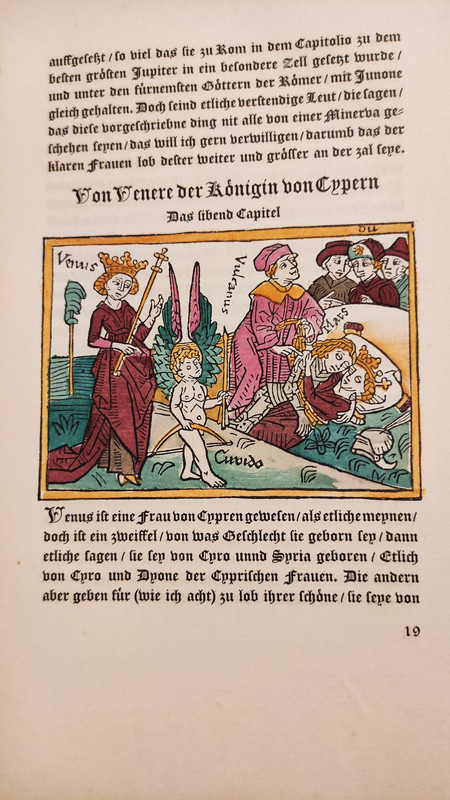
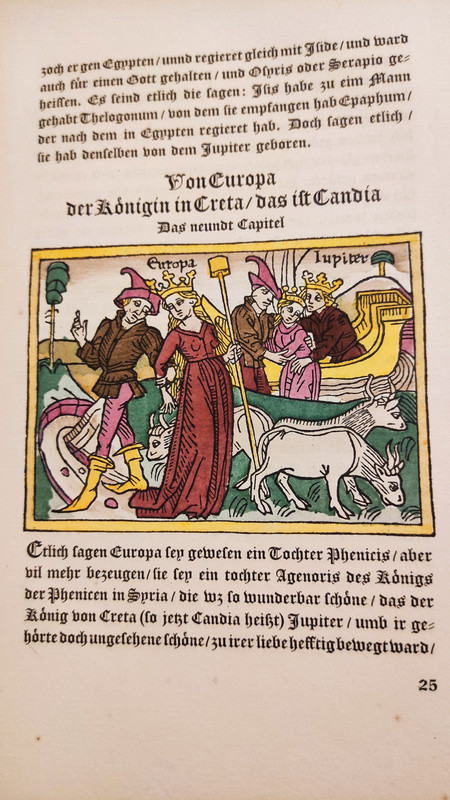
De Mulieribus Claris or De Claris Mulieribus (Latin for "Concerning Famous Women") is a collection of biographies of historical and mythological women by the Florentine author Giovanni Boccaccio, composed in Latin prose in 1361–1362. It is notable as the first collection devoted exclusively to biographies of women in post-ancient Western literature. The book contains short descriptions or biographies of the first woman Eve, Cleopatra, Europa, Semiramis, Isis, one of my favorites Joan (according to legend, a woman who reigned as pope for two years during the Middle Ages) and many others.
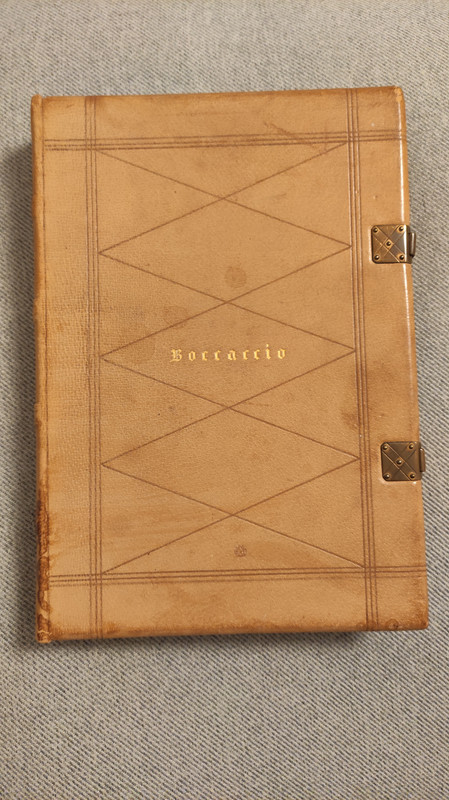
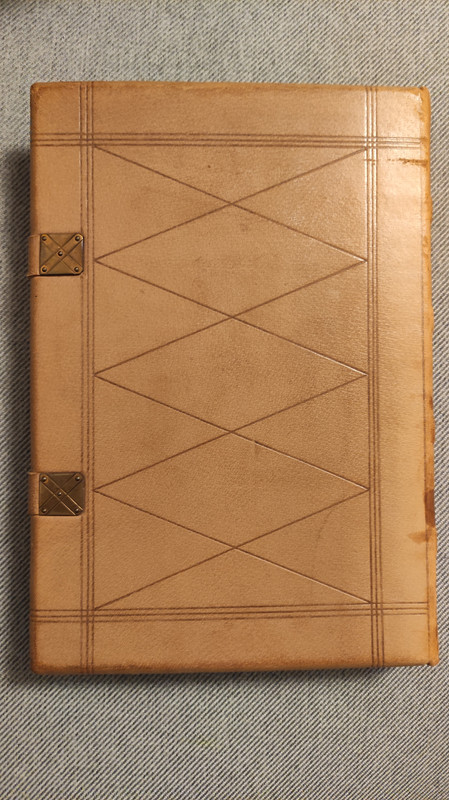
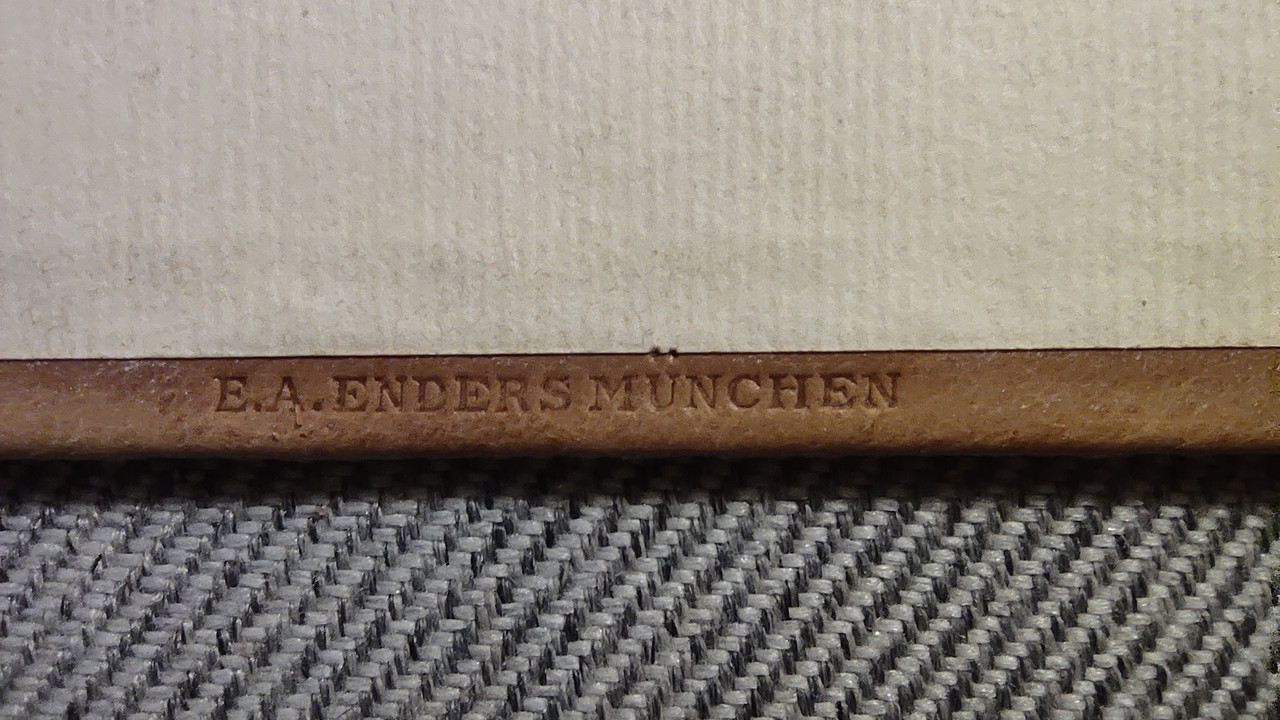
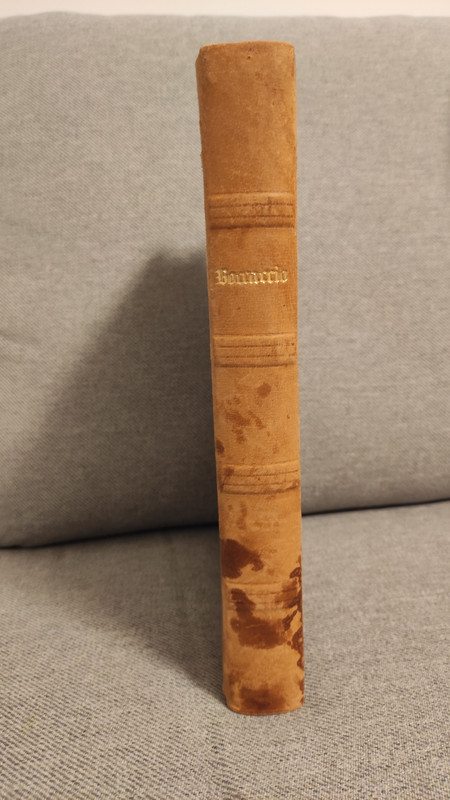
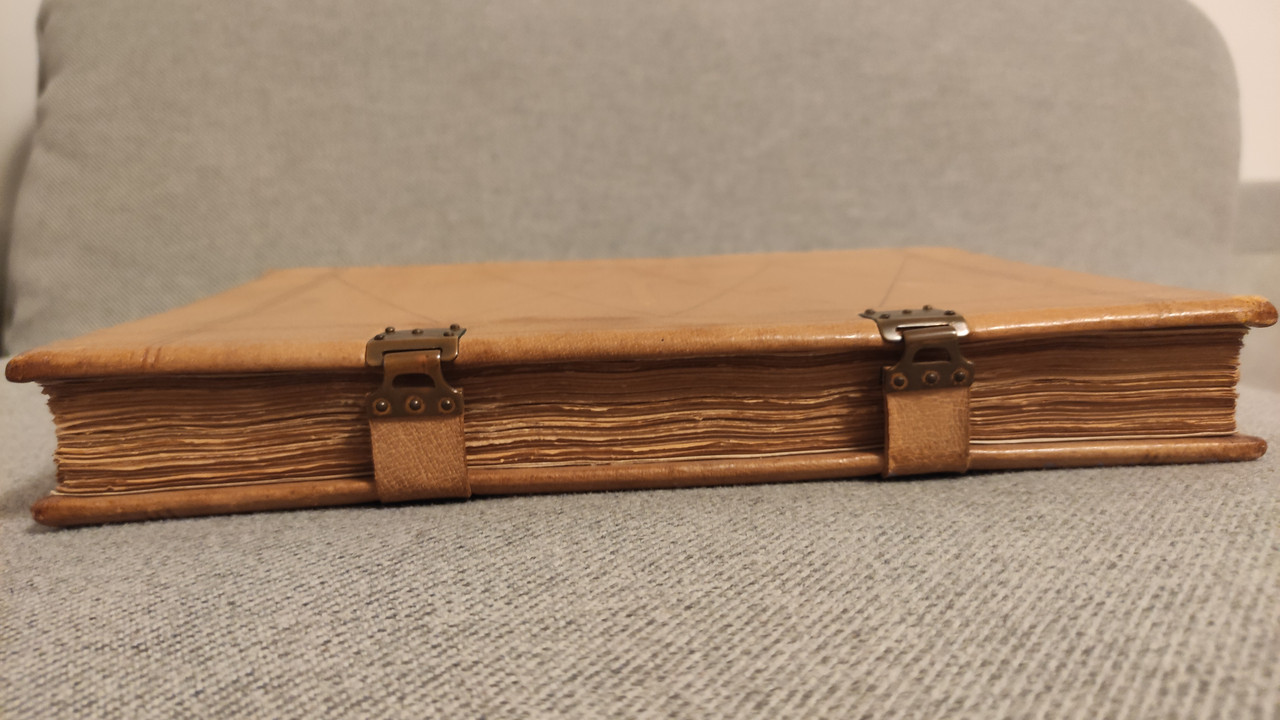
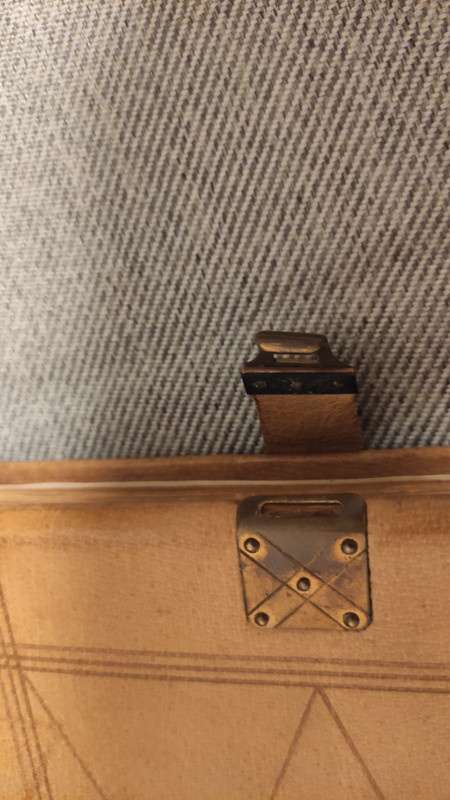
My book is a facsimile of a German edition printed in 1473 by Johann Zainer in Ulm. It is one of only 50 deluxe copies with a full pigskin binding, printed on Zanders hand-made paper. The hand coloring of the 78 woodcuts was done by Beger & Röckel, Munich. The cover was hand-bound by a famous bookbinder (or company?) EA Enders. I got this book for a very good price because of the dirty binding. No regrets!
William Morris owned a copy of the original Zainer's 1473 edition and wrote this: “To turn back to the books numbered above as the most important of the school, I should call John Zainer’s De Claris mulieribus, and the Æsop, and Günther Zainer’s Spiegel des menschlichen Lebens the most characteristic. Of these my own choice would be the De Claris mulieribus, partly perhaps because it is a very old friend of mine, and perhaps the first book that gave me a clear insight into the essential qualities of the mediaeval design of that period. The subject-matter of the book also makes it one of the most interesting, giving it opportunity for setting forth the mediaeval reverence for the classical period, without any of the loss of romance on the one hand, and epical sincerity and directness on the other, which the flood-tide of Renaissance rhetoric presently inflicted on the world. No story-telling could be simpler and more straightforward, and less dependent on secondary help, than that of these curious, and, as people phrase it, rude cuts. And in spite (if you please it) of their rudeness, they are by no means lacking in definite beauty: the composition is good everywhere, the drapery well designed, the lines rich, which shows of course that the cutting is good. Though there is no ornament save the beautiful initial S and the curious foliated initials above mentioned, the page is beautifully proportioned and stately, when, as in the copy before me, it has escaped the fury of the bookbinder. ¶ The great initial S I claim to be one of the very best printers’ ornaments ever made, one which would not disgrace a thirteenth-century manuscript. Adam and Eve are standing on a finely-designed spray of poppy-like leafage, and behind them rise up the boughs of the tree. Eve reaches down an apple to Adam with her right hand, and with her uplifted left takes another from the mouth of the crowned woman’s head of the serpent, whose coils, after they have performed the duty of making the S, end in a foliage scroll, whose branches enclose little medallions of the seven deadly sins. All this is done with admirable invention and romantic meaning, and with very great beauty of design and a full sense of decorative necessities. ¶ As to faults in this delightful book, it must be said that it is somewhat marred by the press-work not being so good as it should have been even when printed by the weak presses of the fifteenth century; but this, though a defect, is not, I submit, an essential one.” (Ideal book, p. 52.)
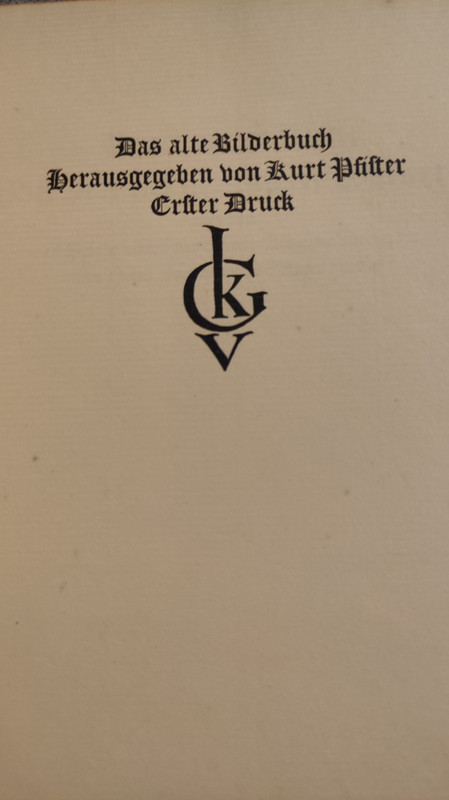
There's another beautiful example from the publisher Kiepenheuer's series "The Old Picture Book" ("Das alte Bilderbuch") bound by hand by Otto Dorfner:
https://www.abebooks.com/servlet/BookDetailsPL?bi=1387459465
https://www.wortwelle.com/dorfner-augsburger-passion-von-1480/ (a little article and gallery)
Now my photos (warning: LOTS OF BLOOD IN THOSE WOODCUTS):
That initial S that so impressed William Morris
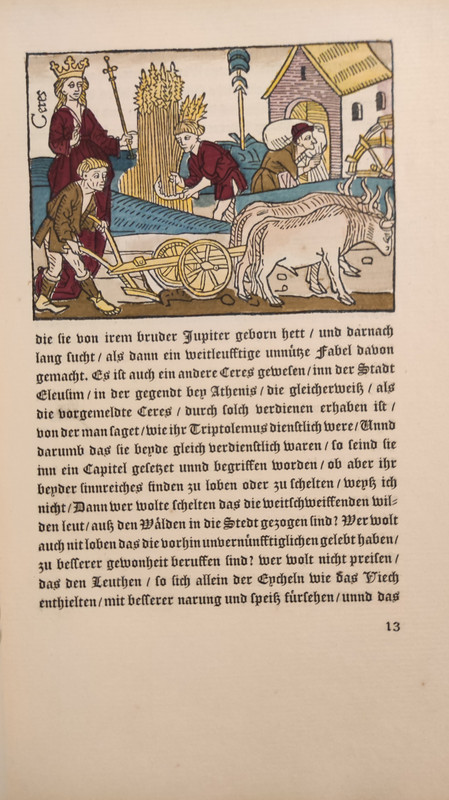
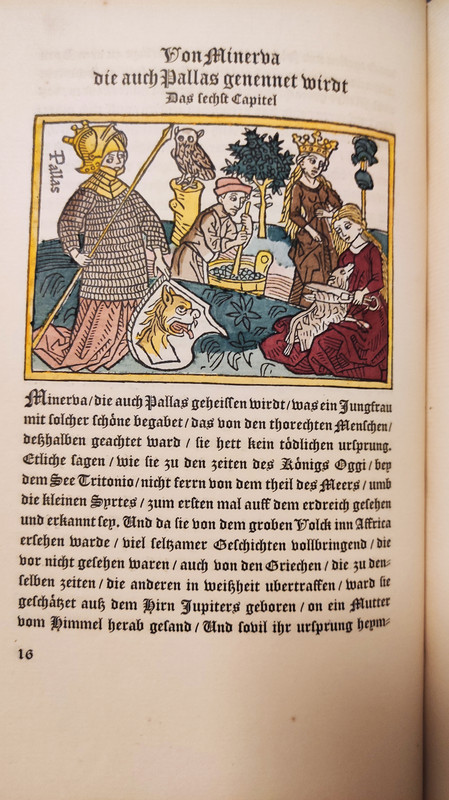
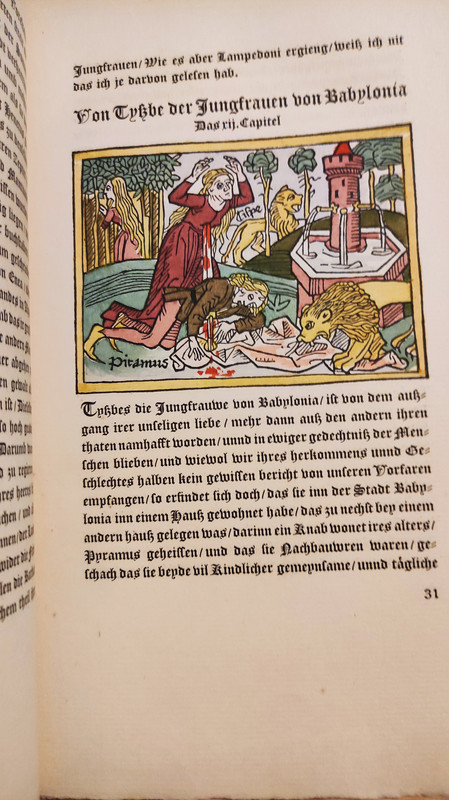
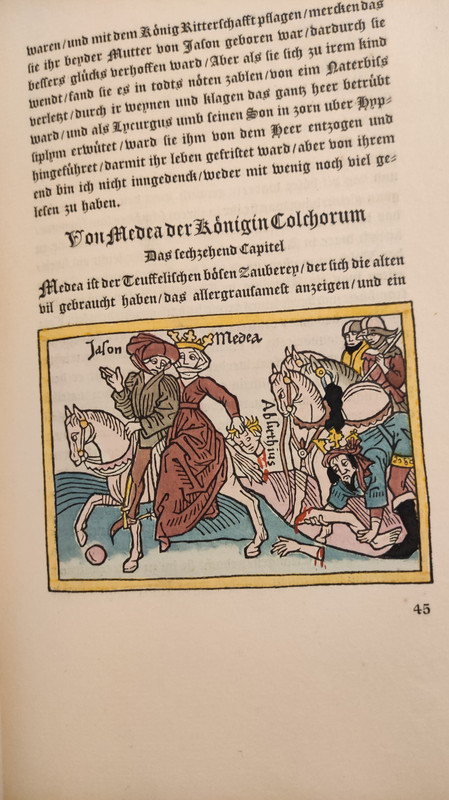
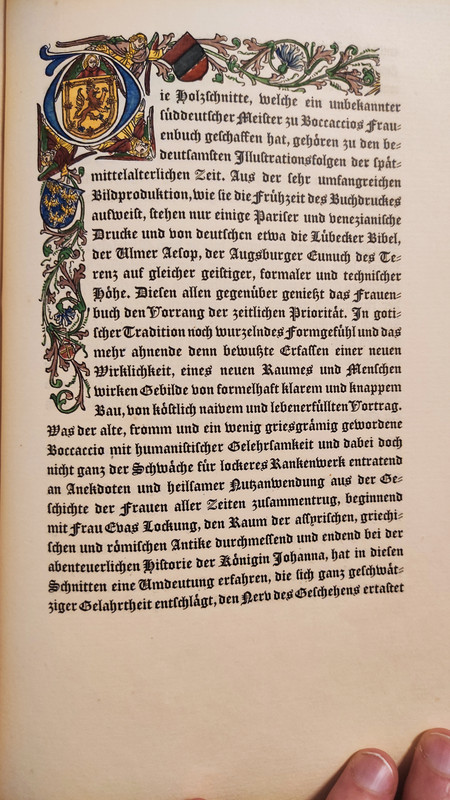
Modern day afterword by Kurt Pfister.
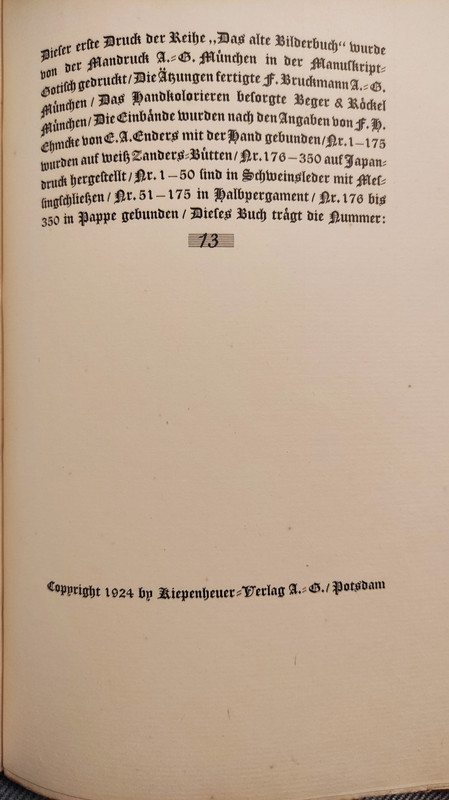
Colophon
It is called Boccaccios Buch von den fürnembsten Weibern (Potsdam, Kiepenheuer, 1924).
De Mulieribus Claris or De Claris Mulieribus (Latin for "Concerning Famous Women") is a collection of biographies of historical and mythological women by the Florentine author Giovanni Boccaccio, composed in Latin prose in 1361–1362. It is notable as the first collection devoted exclusively to biographies of women in post-ancient Western literature. The book contains short descriptions or biographies of the first woman Eve, Cleopatra, Europa, Semiramis, Isis, one of my favorites Joan (according to legend, a woman who reigned as pope for two years during the Middle Ages) and many others.
My book is a facsimile of a German edition printed in 1473 by Johann Zainer in Ulm. It is one of only 50 deluxe copies with a full pigskin binding, printed on Zanders hand-made paper. The hand coloring of the 78 woodcuts was done by Beger & Röckel, Munich. The cover was hand-bound by a famous bookbinder (or company?) EA Enders. I got this book for a very good price because of the dirty binding. No regrets!
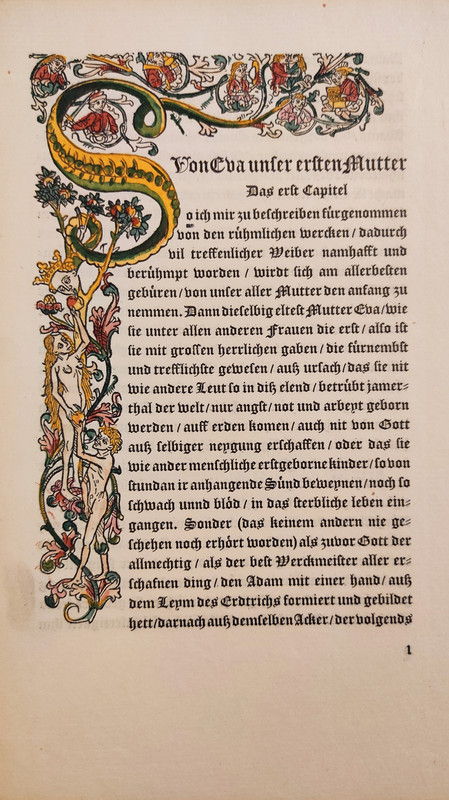
William Morris owned a copy of the original Zainer's 1473 edition and wrote this: “To turn back to the books numbered above as the most important of the school, I should call John Zainer’s De Claris mulieribus, and the Æsop, and Günther Zainer’s Spiegel des menschlichen Lebens the most characteristic. Of these my own choice would be the De Claris mulieribus, partly perhaps because it is a very old friend of mine, and perhaps the first book that gave me a clear insight into the essential qualities of the mediaeval design of that period. The subject-matter of the book also makes it one of the most interesting, giving it opportunity for setting forth the mediaeval reverence for the classical period, without any of the loss of romance on the one hand, and epical sincerity and directness on the other, which the flood-tide of Renaissance rhetoric presently inflicted on the world. No story-telling could be simpler and more straightforward, and less dependent on secondary help, than that of these curious, and, as people phrase it, rude cuts. And in spite (if you please it) of their rudeness, they are by no means lacking in definite beauty: the composition is good everywhere, the drapery well designed, the lines rich, which shows of course that the cutting is good. Though there is no ornament save the beautiful initial S and the curious foliated initials above mentioned, the page is beautifully proportioned and stately, when, as in the copy before me, it has escaped the fury of the bookbinder. ¶ The great initial S I claim to be one of the very best printers’ ornaments ever made, one which would not disgrace a thirteenth-century manuscript. Adam and Eve are standing on a finely-designed spray of poppy-like leafage, and behind them rise up the boughs of the tree. Eve reaches down an apple to Adam with her right hand, and with her uplifted left takes another from the mouth of the crowned woman’s head of the serpent, whose coils, after they have performed the duty of making the S, end in a foliage scroll, whose branches enclose little medallions of the seven deadly sins. All this is done with admirable invention and romantic meaning, and with very great beauty of design and a full sense of decorative necessities. ¶ As to faults in this delightful book, it must be said that it is somewhat marred by the press-work not being so good as it should have been even when printed by the weak presses of the fifteenth century; but this, though a defect, is not, I submit, an essential one.” (Ideal book, p. 52.)
There's another beautiful example from the publisher Kiepenheuer's series "The Old Picture Book" ("Das alte Bilderbuch") bound by hand by Otto Dorfner:
https://www.abebooks.com/servlet/BookDetailsPL?bi=1387459465
https://www.wortwelle.com/dorfner-augsburger-passion-von-1480/ (a little article and gallery)
Now my photos (warning: LOTS OF BLOOD IN THOSE WOODCUTS):
That initial S that so impressed William Morris
Modern day afterword by Kurt Pfister.
Colophon
2ultrarightist
Fantastic! The illumination on the first page is stunning. You're fortunate to have such a gem in your collection.

